14.8 C
London
Saturday, June 6, 2026
Home Blog

Ballot fiasco shakes faith in South Korea’s electoral system

0
ballot-fiasco-shakes-faith-in-south-korea’s-electoral-system
Ballot fiasco shakes faith in South Korea’s electoral system

Free and fair elections are the foundation of liberal democracy, and South Korea has long been regarded as one of Asia’s democratic success stories.

Power changes hands peacefully between conservative and progressive governments, civic engagement remains robust, and even presidents have been held accountable before the courts.

Yet the June 3, 2026 nationwide local elections exposed an election administration failing at its most basic task. The warning signs had appeared a year earlier, when mismanaged early voting in the presidential election stirred public distrust.

This time, the system did not merely wobble. It broke.

Polling stations that ran out of paper

The simplest requirement of any election is that citizens who show up are able to vote. On June 3, that requirement was not always met. The National Election Commission (NEC) acknowledged ballot shortages at 50 polling stations.

The emergency deliveries that followed may themselves have violated Article 151 of election law, which requires ballots to be delivered by the day before voting.

At 22 stations, voting was suspended while citizens stood in line, 19 of them in Seoul, concentrated in affluent southeastern districts such as Songpa and Gangnam.

One Songpa polling station remained open until 10 p.m., four hours past the legal closing time.

Others simply gave up. A 70-year-old resident told Reuters, after waiting for ballots that never arrived, “I was so frustrated – this shouldn’t happen in this day and age.”

Youtube video

A ballot box under siege

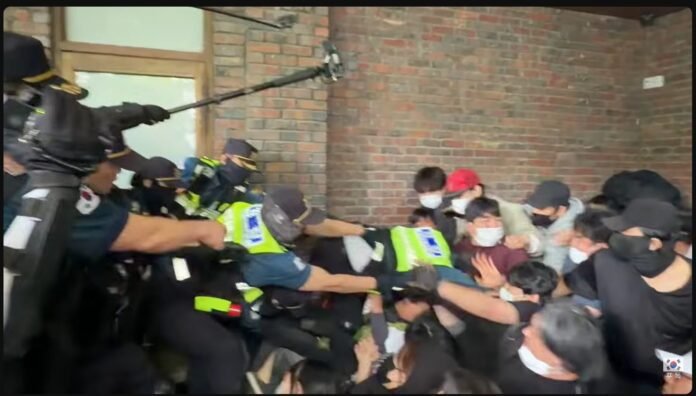
Residents alleging fraud blockaded a Songpa ballot box for two nights. An election worker trapped inside for 22 hours ultimately left on a stretcher.

Only after roughly 1,000 riot police were deployed on June 5 did the ballot box reach the counting center, 35 hours after voting ended.

By then, more than 6,000 protesters had gathered outside demanding a revote.

Half the ballots, by design

The NEC’s explanations shifted over time: first unexpectedly high turnout, then the claim that Songpa had enough paper overall but voters were unevenly distributed among its 146 polling stations.

The commission has since confirmed a deeper cause. Its own guideline, revised after the 2025 presidential election, permitted election-day printing for only 50% of eligible voters in local elections. Songpa printed at that minimum even though only 23.3% of its electorate had voted early.

More troubling still, the commission asked for a budget sufficient to print ballots for 110% of registered voters while instructing local offices that half would suffice. It also admitted it had no procedure for polling stations that exhausted their supply, despite internal projections forecasting turnout of 73.6%.

A precaution that backfired

The bitter irony is that the 50% floor was reportedly adopted in part to minimize leftover ballots and deny election-fraud conspiracy theorists a talking point. An institution that planned for scarcity despite having the resources to plan for abundance instead manufactured a genuine crisis of confidence.

The optics made matters worse. The shortages were concentrated in conservative-leaning districts, and voters casting ballots after 6 pm did so after broadcasters had already aired exit-poll projections. The People Power Party (PPP) consequently argued that the election had been “tainted.”

A result that changed two days later

The controversy outlasted election night. SBS reported that some Songpa ballots were not counted, or at least not reflected in the official tally, until two days after voting concluded.

Once those ballots were included, the Seoul Metropolitan Council proportional representation race flipped to a PPP lead of 44.00% to 43.96%, and this shifted a council seat between parties.

The council subsequently corrected its own press release. Asked why uncounted ballots existed in the first place, NEC officials reportedly told SBS that the reason “could not be ascertained.”

The Seoul mayoral race, ultimately won by incumbent Oh Se-hoon, was likewise not finalized until June 5.

Smaller lapses compounded the damage. One voter cast a ballot using her cousin’s identification; another was nearly issued ballot papers twice.

Individually, such incidents were minor. Collectively, they suggested a fundamental systematic failure.

Resignations and recriminations

NEC Chairman Noh Tae-ak and the head of the Seoul election commission resigned on June 5, while the commission established a fact-finding committee composed of outside experts.

The PPP demanded a revote and pledged litigation; party figures floated a special counsel investigation and even impeachment of election commissioners. A citizen filed a constitutional complaint.

International attention grows

The fiasco traveled beyond Korea within hours. International wire services carried images of riot police and blockaded ballot boxes, while the Washington Times observed that the vote could become “a plebiscite on electoral oversight.”

Fraud narratives have circulated since former president Yoon Suk Yeol invoked them to justify martial law. AFP quoted one commentator warning that the NEC had handed “ammunition to election-fraud conspiracy theorists.”

Thin margins demand thick competence

No evidence has emerged that the election was deliberately manipulated, and the headline result remains unchanged: the Democratic Party swept most of the country’s 16 metropolitan races while the PPP narrowly retained Seoul.

But that is precisely the point. The Seoul Metropolitan Council proportional representation seat that changed hands was decided by just 0.14 percentage points.

When margins are that narrow, an administration that prints only half the ballots it budgeted for, cannot explain uncounted ballot boxes and nearly permits proxy voting forfeits the benefit of the doubt, from both sides.

What must happen now

The NEC, a constitutionally independent institution that has long presented itself as a model of election administration, failed at the elementary task of supplying enough paper.

The fact-finding committee must determine who adopted the 50% printing floor, why ballots in Songpa remained uncounted and what accountability follows.

The National Assembly should mandate minimum ballot-supply standards, require real-time reporting of counting irregularities and establish external audits of the NEC.

South Koreans earned their democracy the hard way, and its custodians owe them elections run so competently that even the losing side accepts the result.

The danger now is not that one side doubts an outcome but that both sides begin to doubt the system that produced it. The next time an election is close, the question may not be who won, but whether anyone believes it.

Hanjin Lew is a South Korean political commentator specializing in alliance politics and East Asian security affairs.
Israeli settlers attack West Bank town of Huwara, wounding five Palestinians

0
israeli-settlers-attack-west-bank-town-of-huwara,-wounding-five-palestinians
Israeli settlers attack West Bank town of Huwara, wounding five Palestinians

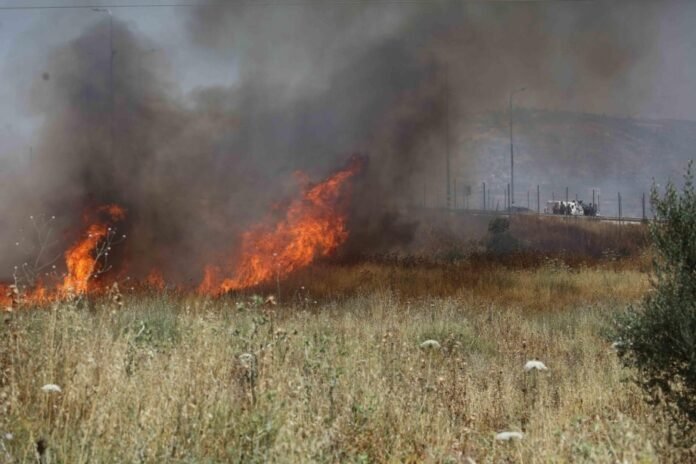
Dozens of Israeli settlers attacked the Palestinian town of Huwara south of Nablus on Saturday, wounding several residents and vandalizing local property.

The attackers targeted the Huwara municipal building and targeted multiple Palestinian homes, according to the local sources.

During the raid, settlers stole a car, a bicycle, and approximately 35 livestock animals belonging to local residents.

The official Palestinian news agency WAFA stated that the wounded included a member of the Huwara municipal council who sustained a shrapnel wound to the leg.

READ: Palestinian infant killed, parents wounded in Israeli fire in occupied West Bank

Huwara Municipality public relations officer Rana Abu Haniyeh said settlers directly attacked the municipal building and several houses in the town.

The occupied West Bank, including East Jerusalem, has seen a surge in Israeli military operations, including raids, arrests, shootings, and excessive use of force, alongside rising attacks by Israeli occupiers on Palestinians and their property.

Attacks by the Israeli army and occupiers have killed at least 1,155 Palestinians, wounded about 11,750, and led to the arrest of nearly 22,000 since October 2023, according to official Palestinian figures.

READ: Israeli strike on tent sheltering displaced Palestinians kills 6 in Gaza City

Safety officials finally have a good idea of what a big rocket explosion can do

0
safety-officials-finally-have-a-good-idea-of-what-a-big-rocket-explosion-can-do
Safety officials finally have a good idea of what a big rocket explosion can do

Last week’s explosion of a New Glenn rocket at Cape Canaveral, Florida, was clearly a setback for Blue Origin and NASA, but it was a learning experience for safety officials looking to open up the spaceport to hundreds more launches per year.

The launch base on Florida’s Space Coast is gearing up for a flurry of new arrivals. SpaceX is building multiple launch pads for its super-heavy Starship rocket, which will operate within a few miles of launch pads operated by SpaceX rivals Blue Origin and United Launch Alliance. Two other companies, Stoke Space and Relativity Space, are also developing launch sites along a narrow stretch of coastline at Cape Canaveral Space Force Station.

All of them have, or will soon have, rockets burning methane or liquified natural gas, replacing legacy launch vehicles fueled by kerosene, liquid hydrogen, or solid propellants. There are good technical reasons for making the switch, but until last week, engineers had scant real-world data on the damage that millions of pounds of methane and liquid oxygen would cause if a fully loaded rocket exploded on the launch pad or soon after liftoff.

By 2036, the Space Force projects that the spaceport could support up to 500 launches per year, five times last year’s total. The combination of these lofty launch forecasts and the Space Force’s conservative safety protocols has caused some tension at the Cape Canaveral spaceport.

Competitors of SpaceX have worried that daily launches and landings of the company’s reusable super-heavy Starship rocket might force evacuations of their own facilities for safety reasons. The US Space Force, which runs the spaceport, maintains strict rules for methane/liquid oxygen, or methalox, rockets. Comparatively, kerosene and hydrogen are known quantities.

For now, military officials are treating any methalox rocket with “100 percent TNT blast equivalency” and maintaining wide keep-out zones around their launch pads when the rockets are loaded with propellant. Their intention is to ensure the safety of the public and workers at the spaceport. With more data on how methane-fueled rockets explode, officials expect the keep-out zones to get smaller over time. To this end, NASA, the Space Force, the FAA, and SpaceX have conducted sub-scale ground tests to gather measurements on methane’s explosive yield.

Artist’s illustration of Starships stacked on two launch pads at the Space Force’s Space Launch Complex 37 at Cape Canaveral, Florida.

Artist’s illustration of Starships stacked on two launch pads at the Space Force’s Space Launch Complex 37 at Cape Canaveral, Florida. Credit: SpaceX

Real-world data

The 100 percent blast equivalency policy was in effect at Cape Canaveral last Thursday, when Blue Origin loaded its New Glenn booster full of methane and liquid oxygen at Launch Complex 36. The smaller second stage was filled with liquid hydrogen and liquid oxygen as Blue Origin’s launch team counted down to a brief test-firing of the rocket’s seven BE-4 engines.

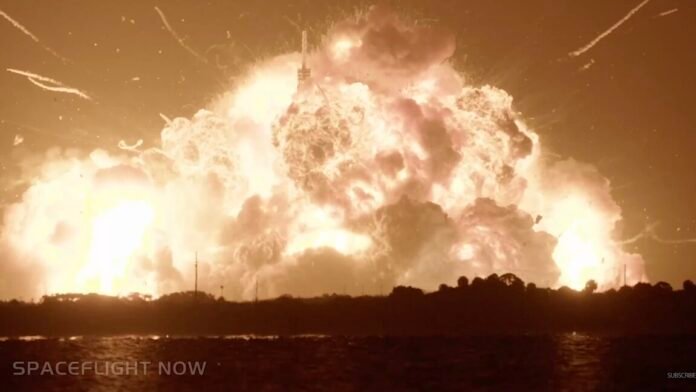
A fireball enveloped the rocket as the engines lit, destroying the launch vehicle and much of the launch pad. The explosion knocked Blue Origin’s only launch facility out of commission. The company says it aims to repair the site and resume launching by the end of the year, but past launch pad rebuilds have taken at least twice as long. It took SpaceX about 15 months to return one of its launch pads to service after a Falcon 9 rocket exploded during a similar test in 2016. That event was not as powerful as the Blue Origin incident last week.

“New Glenn is the biggest rocket we’ve launched here off the Eastern Range, and with that, it had the most fuel,” said Col. Brian Chatman, commander of the Space Force unit that operates the Cape Canaveral spaceport. “That makes it the largest explosion that we’ve had out here.”

There were no injuries to any personnel. The explosion destroyed Blue Origin’s transporter-erector that supports the rocket during horizontal rollout and raises it vertically on the pad. Blue Origin says it won’t replace the transporter-erector and will instead employ an “alternative vertical conop” (concept of operations) when it resumes New Glenn operations at Launch Complex 36, which the company leases from the Space Force.

Exploding rockets are nothing new in the launch business. Launch vehicles routinely blew up on the launch pad in the early years of the Space Age. The only rocket bigger than New Glenn to fail with a full load of fuel on or near its launch pad was the Soviet Union’s N1 rocket more than 50 years ago.

The Blast Danger Area (BDA) for last week’s ill-fated New Glenn test—based on the assumption of 100 percent blast equivalencyspanned a diameter of 7,174 feet, or an average distance of 3,587 feet from the pad, according to the Space Force. That is approximately two-thirds of a mile. All personnel were evacuated from this area before Blue Origin started fueling the rocket.

The farthest debris found so far was thrown a half-mile from the launch pad, Chatman said. He said engineers collected “phenomenal data” from the explosion, and officials will use the measurements to improve models on methalox rocket explosions. “As the teams are now going out and looking at the surrounding area, we’ll have a good feel for what overpressure impacts look like across the range and what that explosion looked like in and around the area,” Chatman said.

“Blue Origin also had some sensors and collected some data inside their integration facility and is working in lock step with the government, both on the Space Force side and on the NASA side, to help us evaluate and work that data into our models.”

SpaceX’s combined Starship and Super Heavy booster is the only methane-fueled rocket larger than New Glenn with plans to launch from Cape Canaveral. Starship already flies from SpaceX’s private base in South Texas, which operates under guidelines set by the Federal Aviation Administration. The only launch facilities there are owned by SpaceX, eliminating any concern about interference with competitors.

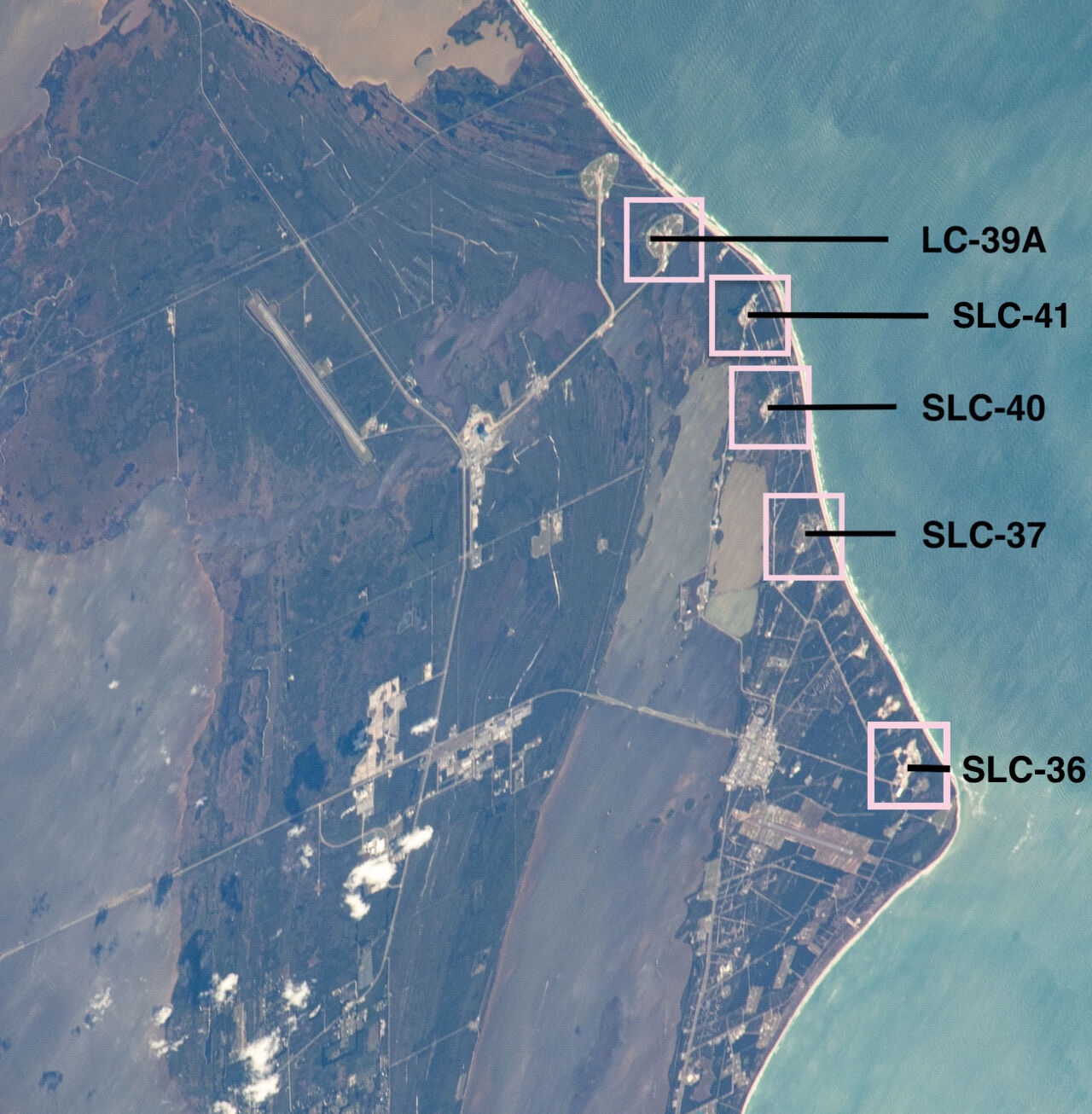
SpaceX is developing Starship launch infrastructure at Pad 37 and Pad 39A, also used by the company’s Falcon Heavy rocket. SpaceX launches Falcon 9s from Pad 40. United Launch Alliance flies Vulcan and Atlas V rockets from Pad 41, and Blue Origin has based its New Glenn rocket at Pad 36. Stoke and Relativity are building pads between Pad 36 and Pad 37.

SpaceX is developing Starship launch infrastructure at Pad 37 and Pad 39A, also used by the company’s Falcon Heavy rocket. SpaceX launches Falcon 9s from Pad 40. United Launch Alliance flies Vulcan and Atlas V rockets from Pad 41, and Blue Origin has based its New Glenn rocket at Pad 36. Stoke and Relativity are building pads between Pad 36 and Pad 37. Credit: NASA (labels by Ars Technica)

When Starship comes to Florida, Chatman said the initial BDA in place when the rocket is fueled will extend an average distance of about 6,000 feet from the pad, for a total diameter of roughly 12,000 feet. The exact size can change based on environmental conditions each day. Roads, waterways, and facilities within that footprint will be inaccessible during Starship tests, launches, and returns.

The Commercial Space Federation, a lobbying group whose members include SpaceX, Blue Origin, and other companies with methane-fueled rockets, has argued the government should set its TNT blast equivalency to no greater than 25 percent, a change that would greatly reduce the size of keep-out zones around launch pads.

“We know we have a conservative approach,” Chatman said. “We know that we will be able to bring in that BDA… We don’t know how far we’ll be able to bring that in. We are going to make a data-driven decision on how much we reduce the BDA, but until we have all that data fed into the models and that true analysis done, we’re going to continue with the conservative approach that we have with that 100 percent blast TNT equivalency because we just validated that (with the Blue Origin explosion) … We had zero casualties, zero injuries across the board.”

Outside of the launch pad itself, Chatman said the overpressure from the New Glenn blast shattered windows at a Space Force hangar now used as a museum about a mile away from the pad. There was also damage to a weather balloon facility at the base. Blue Origin is on the hook to pay for any repairs to property outside of the pad, as it is for the build of the pad itself, Chatman said.

“The Launch Complex 36 rebuild, that’s on Blue, and we’ll look to Blue to be able to support them to continue to work as they rebuild that pad,” Chatman said.

Story updated at 3 pm EST (20:00 UTC) to include FAA’s role in methane explosive analysis.

Libyans block off UN refugee office in protest against migrants

0
libyans-block-off-un-refugee-office-in-protest-against-migrants
Libyans block off UN refugee office in protest against migrants


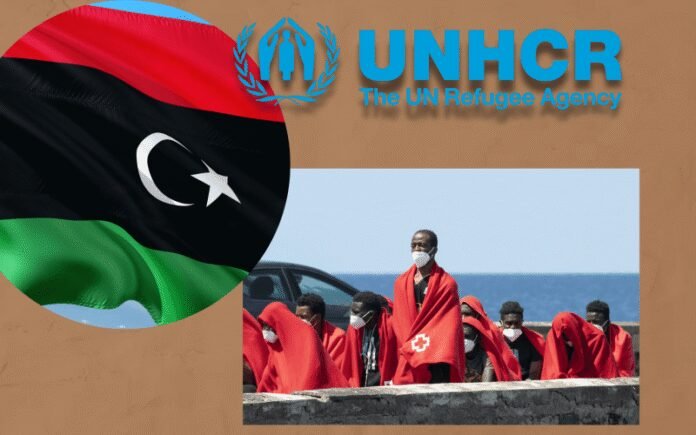
Hundreds of Libyan demonstrators blocked off the office ​of the U.N. refugee agency in the capital Tripoli on Thursday during a protest against migrants ‌who have travelled to the country in search of work or passage to Europe.

The demonstrators gathered in front of UNHCR’s main office in Tripoli’s Sarraj neighbourhood, chanting slogans such as “No, No to settlement, Libya only for Libyans” and “Get out of Libya, take them ​all out of Libya.”

They erected tents then brought a truck full of sand and closed the main ​gate of the building with a barrier, shouting, “The Libyan people have said their word”, ⁠and carrying signs reading “No to intruders in our country, take them out.”

Since a NATO-backed uprising in 2011, Libya ​has become a North African transit route for hundreds of thousands of migrants fleeing conflict and poverty, often in sub-Saharan Africa, ​with many risking dangerous journeys across the desert or the Mediterranean.

The oil-dependent Libyan economy is also a draw for migrants seeking work, and many do menial jobs in sectors including cleaning and construction that Libyans are reluctant to fill.

Thursday’s was the largest ​of several recent demonstrations against migrants, who are blamed by some Libyans for social and economic problems that ​have become more visible during 15 years of conflict and political division in the North African country.

Some demonstrators later marched to the office ‌of the ⁠U.N. mission in Libya.

The United Nations Support Mission in Libya said it affirmed Libyans’ right to peaceful expression based on accurate information and condemned any incitement to violence against U.N. staff or premises.

It said there is no U.N. resettlement programme in Libya. It added that UNHCR works to help people fleeing war with solutions outside ​Libya, including evacuation to third ​countries and voluntary return ⁠when conditions allow.

UNHCR did not respond to a request for comment.

Libya, with an estimated total population of about 7 million, harbours well over 900,000 migrants, according to the ​U.N.

One of the demonstrators, Ahmad al-Ghasa, said he blamed migrants for break-ins and assaults, ​and complained ⁠that they slept in the streets. “These phenomena were not present in Libyan society before,” he said.

On Wednesday, the acting foreign minister in Libya’s internationally recognised government, Taher al-Baour, said in a TV interview that there was no project “to settle ⁠migrants in ​Libya”.

“Libya is not capable of handling these numbers,” he told the ​Libya Alahrar channel, adding that Libyans should not blame others for political and security problems leading to higher migrant numbers.

Source:  Reuters

Fiesta Mango Black Bean Quinoa Salad

0
fiesta-mango-black-bean-quinoa-salad
Fiesta Mango Black Bean Quinoa Salad

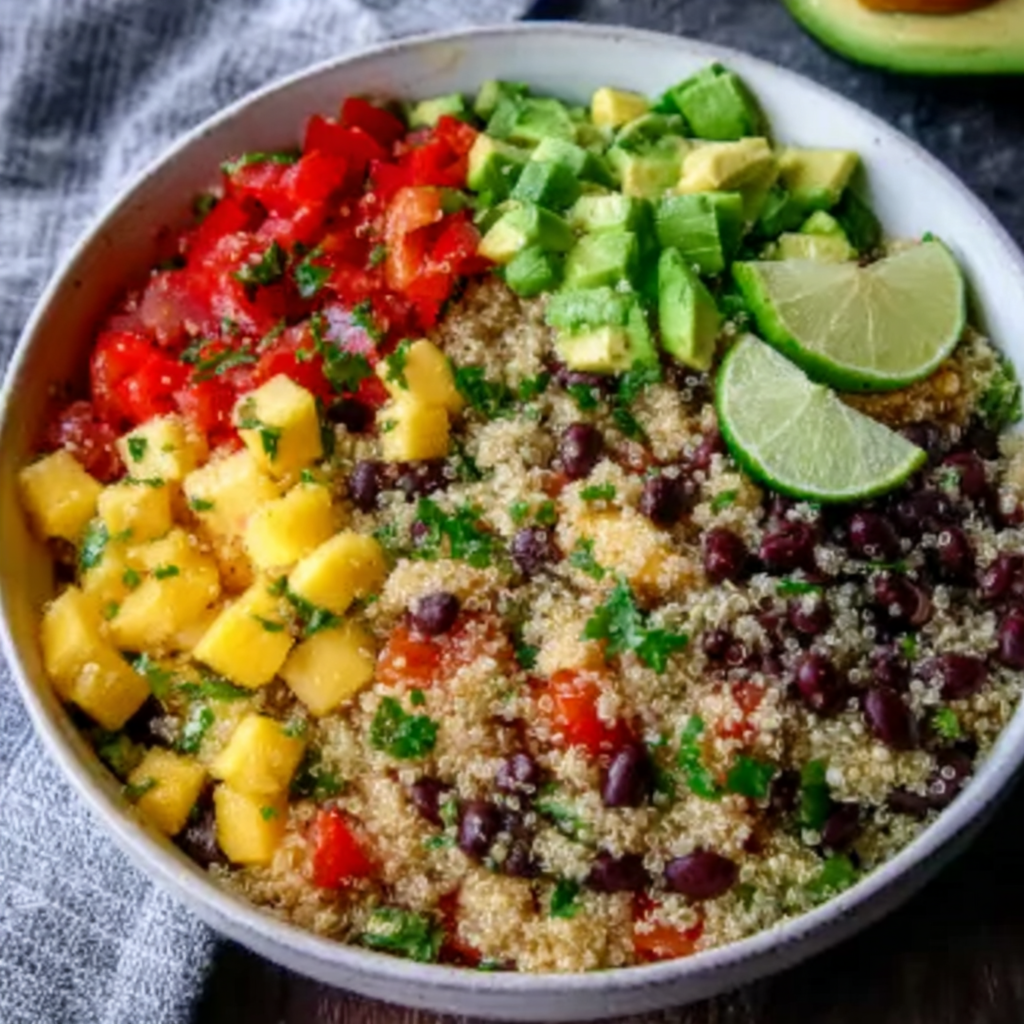
This Fiesta Mango Black Bean Quinoa Salad is fresh, colorful, healthy, and full of bright summer flavor. Fluffy quinoa is tossed with black beans, juicy mango, creamy avocado, crunchy bell pepper, fresh cilantro, red onion, and jalapeño, then finished with a sweet and smoky honey chipotle lime dressing.

It’s the perfect salad for meal prep, lunch, summer parties, barbecues, potlucks, or a light vegetarian dinner. Every bite is a mix of sweet, tangy, creamy, crunchy, and slightly spicy flavors.

Best of all, this quinoa salad stays delicious in the fridge for days, making it a great make-ahead recipe for busy weeks.

Why You’ll Love This Mango Black Bean Quinoa Salad

  • Fresh, colorful, and packed with flavor
  • Ready in about 25 minutes
  • Great for meal prep
  • Perfect for summer lunches and parties
  • Naturally vegetarian
  • Easy to make vegan
  • Full of fiber and plant-based protein
  • Sweet, smoky, tangy, and slightly spicy
  • Delicious served cold or at room temperature
  • Easy to customize with your favorite ingredients

What Makes This Salad So Good?

This salad has the perfect balance of textures and flavors. The quinoa is light and fluffy, the black beans add heartiness, the mango brings natural sweetness, and the avocado makes every bite creamy.

The dressing is what brings everything together. It’s made with olive oil, fresh lime juice, honey, Dijon mustard, chipotle chili powder, garlic, salt, and pepper. It tastes bright, smoky, sweet, and zesty all at once.

This is the kind of salad that feels fresh and healthy but still satisfying enough to enjoy as a full meal.

Ingredients

For the Quinoa

  • ¾ cup uncooked quinoa
  • 1½ cups water

For the Salad

  • 1 can black beans, drained and rinsed
  • 1 large mango, diced
  • 1 red bell pepper, diced
  • 1 avocado, diced
  • ½ cup fresh cilantro, chopped
  • ¼ cup red onion, finely diced
  • 1 jalapeño, seeded and diced

For the Honey Chipotle Lime Dressing

  • 2 tablespoons olive oil
  • 2 tablespoons fresh lime juice
  • 1 tablespoon honey
  • 1 teaspoon Dijon mustard
  • ½ teaspoon chipotle chili powder
  • 1 garlic clove, minced
  • ½ teaspoon salt
  • Freshly ground black pepper, to taste

For Garnish

  • Extra fresh cilantro
  • Pepitas, optional

Ingredient Notes

Quinoa

Quinoa makes this salad hearty, fluffy, and protein-packed. Be sure to rinse it before cooking to remove any bitterness.

Black Beans

Black beans add fiber, plant-based protein, and a creamy texture. Drain and rinse them well before adding to the salad.

Mango

Use a ripe but firm mango so it adds sweetness without becoming mushy. Pineapple also works if you want a tropical swap.

Avocado

Avocado adds creaminess and healthy fats. If making the salad ahead, you can add the avocado right before serving to keep it extra fresh.

Red Bell Pepper

Bell pepper adds crunch, color, and natural sweetness.

Jalapeño

Jalapeño gives the salad a little kick. Remove the seeds for mild heat, or leave some seeds in if you like it spicy.

Cilantro

Fresh cilantro makes the salad taste bright and fresh. If you don’t love cilantro, use parsley instead.

Chipotle Chili Powder

Chipotle chili powder adds smoky heat to the dressing. Start with ½ teaspoon and add more if you like spice.

How to Make Mango Black Bean Quinoa Salad

Step 1: Cook the Quinoa

Add the quinoa and water to a medium pot.

Bring to a boil over high heat.

Once boiling, cover the pot, reduce the heat to low, and cook for 15 minutes.

Remove from the heat and fluff the quinoa with a fork.

Let it cool slightly before adding it to the salad.

Step 2: Prepare the Salad Ingredients

While the quinoa cooks, dice the mango, red bell pepper, avocado, red onion, jalapeño, and cilantro.

Add the chopped ingredients to a large mixing bowl.

Add the drained and rinsed black beans.

Step 3: Make the Dressing

In a small bowl, whisk together olive oil, lime juice, honey, Dijon mustard, chipotle chili powder, minced garlic, salt, and black pepper.

Taste and adjust as needed.

For more sweetness, add a little extra honey.

For more heat, add more chipotle chili powder.

For more brightness, add another squeeze of lime juice.

Step 4: Toss the Salad

Add the cooked quinoa to the bowl with the vegetables, mango, avocado, and black beans.

Pour the dressing over the salad.

Gently toss everything together until well combined.

Step 5: Garnish and Serve

Top with extra cilantro and pepitas if desired.

Serve immediately at room temperature, or chill before serving.

Tips for the Best Quinoa Salad

Rinse the Quinoa

Rinsing quinoa removes its natural bitter coating and gives it a cleaner flavor.

Let the Quinoa Cool

Avoid adding hot quinoa directly to the avocado and mango. Let it cool slightly first so the salad stays fresh.

Use Fresh Lime Juice

Fresh lime juice gives the dressing the best bright, citrusy flavor.

Dice Ingredients Evenly

Small, even pieces make every bite balanced.

Add Avocado Last

If you are meal prepping, add the avocado right before serving to keep it from browning.

Adjust the Spice

For a mild salad, use less chipotle chili powder and remove all jalapeño seeds. For extra heat, add more chipotle or a pinch of cayenne.

Easy Variations

Make It Vegan

Swap the honey for maple syrup or coconut palm syrup.

Add Cheese

Add crumbled feta, goat cheese, or cotija for a salty, creamy flavor.

Add More Protein

Top with grilled chicken, shrimp, salmon, or extra black beans.

Use Another Grain

Swap quinoa for farro, barley, pearl couscous, or orzo.

Use Pineapple Instead of Mango

Pineapple gives the salad a sweet tropical twist.

Add Corn

Fresh, grilled, or canned corn adds extra sweetness and crunch.

Make It Spicier

Add extra jalapeño, chipotle chili powder, or a pinch of chili flakes.

What to Serve with Mango Black Bean Quinoa Salad

This salad is delicious on its own, but it also pairs well with:

  • Grilled chicken
  • Shrimp skewers
  • Salmon
  • Tacos
  • Burrito bowls
  • Quesadillas
  • Grilled vegetables
  • Tortilla chips
  • BBQ dishes
  • Roasted sweet potatoes
  • Lettuce wraps

Storage Instructions

Store leftovers in an airtight container in the refrigerator for up to 4 to 5 days.

The lime juice in the dressing helps slow the avocado from browning, but for the freshest look, add avocado just before serving.

Make-Ahead Tips

You can cook the quinoa and make the dressing up to 2 days ahead.

You can also chop the bell pepper, red onion, jalapeño, and cilantro in advance.

For best results, add mango and avocado closer to serving time.

Frequently Asked Questions

Can I Make This Salad Ahead of Time?

Yes. This salad is great for meal prep and stays good in the fridge for several days.

Can I Make It Vegan?

Yes. Use maple syrup instead of honey in the dressing.

Can I Use Frozen Mango?

Yes, but thaw it first and drain any excess liquid before adding it to the salad.

Can I Use Canned Corn?

Yes. Canned corn, frozen corn, or grilled corn all work well in this recipe.

Is This Salad Spicy?

It has a mild smoky heat from chipotle chili powder and jalapeño. You can reduce or omit them for a milder version.

Can I Add Chicken?

Yes. Grilled chicken, cilantro lime chicken, or shredded rotisserie chicken would all be delicious.

Can I Serve This Warm?

This salad is best served chilled or at room temperature, but slightly warm quinoa works if serving immediately.

Recipe Information

Prep Time: 10 minutes
Cook Time: 15 minutes
Total Time: 25 minutes
Servings: 4

Nutrition Information

Approximate nutrition per serving:

  • Calories: 415
  • Carbohydrates: 58g
  • Protein: 13g
  • Fat: 16g
  • Fiber: 11g
  • Sugar: 12g

Nutrition may vary depending on ingredient brands and portion sizes.

Final Thoughts

This Fiesta Mango Black Bean Quinoa Salad is fresh, filling, and full of bold flavor. The combination of fluffy quinoa, juicy mango, black beans, avocado, crunchy vegetables, and smoky honey lime dressing makes it perfect for summer meals, healthy lunches, and party side dishes.

It’s colorful, easy to prepare, and tastes even better after chilling in the fridge. Whether you serve it as a light meal or a vibrant side dish, this quinoa salad is a recipe you’ll want to make again and again.

‘Pig Feast’: the film Jakarta doesn’t want you to see

0
‘pig-feast’:-the-film-jakarta-doesn’t-want-you-to-see
‘Pig Feast’: the film Jakarta doesn’t want you to see

The release of the investigative documentary “Pesta Babi” (Pig Feast) has triggered an unusually intense wave of public debate and political unease across Indonesia.

Directed by Dandhy Dwi Laksono and Cypri Jehan Paju Dale, the film captures the systemic collision between Indonesia’s ambition for national food security and the survival of indigenous communities in South Papua.

Focusing on the regencies of Merauke, Boven Digoel, Mappi and Asmat, the documentary reveals how forests, wetlands and savannahs are being converted on a massive scale to accommodate state-backed National Strategic Projects (PSN).

Amid a growing number of independent screenings that have frequently faced intimidation and forced dispersal by security forces, the film has become a fractured mirror reflecting the trajectory of development in Indonesia’s eastern frontier.

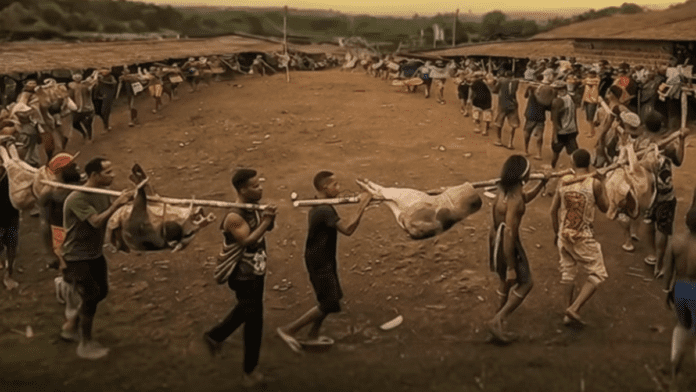
The documentary’s title is rooted in a deeply layered sociological metaphor derived from the Awon Atatbon ritual tradition of the Muyu people in Boven Digoel. Within the social structure of Papua’s interior communities, the ritual is led by tribal elders to safeguard ancestral rights, historical memory, lineage and the cosmological balance between humans and the forest.

The ceremony involves the slaughter of sacred pigs (ámín áwon) by ritual custodians (amín bòn tíbrí) under strict customary regulations (amop), the planting of sacred trees (waruk) and the chanting of ritual songs (kondum) intended to summon prosperity.

The entire tradition depends on ecological continuity. Without intact forests, wild pigs disappear. Without pigs, the Muyu people’s cultural existence begins to collapse.

Yet under the shadow of contemporary agrarian expansion, the meaning of “pig feast” has undergone a tragic symbolic inversion. The phrase has increasingly become a metaphor for the greed of political elites and transnational capital exploiting Papua’s customary lands.

What emerges is a portrait of how Indigenous living spaces and cultures are reduced to speculative commodities by development regimes in Jakarta that claim to be pursuing national progress.

At the same time, the struggle to defend customary land has not been free from internal tensions over representation and consent. The protest raised by Mama Yasinta, a 61-year-old Indigenous woman from Wogikel village in Ilwayab District who objected to the use of her image in the documentary without her approval, underscores the ethical dilemmas surrounding visual advocacy in remote Indigenous communities.

That conflict is now materializing on an enormous scale through Indonesia’s national food and energy development agenda. Through central government regulations such as Coordinating Minister for Economic Affairs Regulation No. 8/2023 and Presidential Decree No. 15/2024, millions of hectares in South Papua have been earmarked for sugarcane plantations, bioethanol factories and industrial-scale rice estates.

The policy has effectively created a new territorial frontier where customary land ownership collides directly with large-scale capital penetration.

Development machinery

The agrarian landscape of South Papua is increasingly dominated by giant corporations orchestrating colossal land-clearing operations.

In Merauke, conglomerates such as Jhonlin Group, owned by Andi Syamsuddin Arsyad, alongside PT Global Papua Abadi, PT Murni Nusantara Mandiri, KPN Corp and First Resources Group, have emerged as the dominant actors on the ground. PT Global Papua Abadi alone is targeting annual production of 2.6 million tons of sugar and 244 million liters of bioethanol.

To support the government’s 1 million-hectare rice estate project in Wanam, Ilwayab District, Jhonlin Group has imported large quantities of heavy machinery from Chinese manufacturer SANY Group.

By the end of 2024, hundreds of excavators had reportedly arrived at the ports of Wanam and Merauke. Even more strikingly, the project’s road infrastructure is being built with mining tailings supplied by PT Freeport Indonesia, illustrating the tight integration of Indonesia’s extractive industries.

This alliance of capital has grown even more entrenched through the active involvement of the military in securing and implementing projects on the ground. The establishment of PT Agro Industri Nasional by Indonesia’s Ministry of Defense in 2020 — staffed largely by retired military officers and political figures — signaled the deepening involvement of defense institutions in the business of food security.

Under the supervision of the XVII/Cenderawasih Regional Military Command, the armed forces have assumed oversight roles in land-clearing operations. Indonesia’s military commander has also inaugurated five “buffer battalions” for conflict-prone areas, including Infantry Battalion 804/Dharma Bhakti Asasta Yudha, stationed directly in Merauke.

The deployment of thousands of armed troops has generated an atmosphere of intimidation that suppresses critical voices among Indigenous communities. As a result, the principle of Free, Prior and Informed Consent (FPIC) has effectively been discarded in favor of accelerating capital accumulation along Indonesia’s eastern frontier.

Shadow of the palms

The environmental transformation unfolding in South Papua carries devastating sociological consequences for the Indigenous Marind people. In Marind cosmology, as explored by Sophie Chao in her 2022 book “In the Shadow of the Palms: More-Than-Human Becomings in West Papua,” humanity is not understood as separate from nature.

Marind existence is woven through intimate relationships with non-human entities within the forest, particularly the sago palm (Metroxylon sagu), regarded as an ancestor (amai) or sibling (namek). These spiritual kinships are sustained through bodily intimacy, symbolized through concepts such as wetness (dubadub) and skin (igid). The dense and humid sago forest is where social life itself flows and regenerates.

Palm oil, by contrast, is perceived by the Marind as a destructive and selfish entity. The crop is described as something “always hungry, without friends or family,” because of its massive extraction of groundwater and its destruction of surrounding ecosystems. Monoculture oil palm plantations are viewed as lifeless spaces, silent landscapes where traditional navigation and social orientation become impossible.

The disappearance of customary forests has triggered profound social and psychological trauma, manifested through collective nightmares among residents of Khalaoyam village. Many dream of their bodies being invaded by oil palms, with sharp palm thorns protruding from their muscles like bayonets and palm fruits growing beneath their skin like malignant tumors.

This social disintegration has been intensified by the arrival of new cultural practices brought by transmigrants and industrial workers. Packaged instant foods such as instant noodles and biscuits are referred to by Indigenous communities as “plastic food” because they do not naturally decompose like sago.

Consuming such food is seen as severing bodily ties to ancestral land, a gradual degradation of identity that unfolds alongside the growing sale of customary land under short-term economic pressures. Within these spaces of compromise and ambivalence, social fragmentation between clans has become increasingly unavoidable.

Rhetoric of backwardness, erasure of sovereignty

The dispossession of customary land in South Papua does not operate solely through physical coercion. It is also sustained through narratives and cultural representations produced by outside actors.

In her 2016 book “Dispossession and the Environment: Rhetoric and Inequality in Papua New Guinea,” anthropologist Paige West argues that racialized representations are frequently deployed by transnational capitalism to justify developmental inequality.

When journalists, developers and international conservation institutions portray remote Indigenous communities as societies “living in the past” or “pre-capitalist,” they systematically delegitimize local knowledge systems and facilitate land dispossession.

Within Melanesian agrarian politics, accusations that Indigenous communities “lack capacity” are often used by international organizations and large corporations to take unilateral control over environmental compensation funds and land registration systems. A similar pattern is unfolding in South Papua.

Government officials and business consortia routinely frame Indigenous Papuans as lacking the agronomic or technological capabilities needed to manage wetlands and forests productively. This discursive construction of “backwardness” becomes the justification for stripping away customary rights, ignoring genuine consent and paving the way for industrial-scale bulldozers.

Highways as territorial spears

Physical infrastructure in Papua’s interior has never functioned purely as an instrument of civilian welfare. Rather, it also operates as a mechanism of military penetration and territorial conquest.

According to John Martinkus in his 2021 book “The Road: Uprising in West Papua,” the 4,300-kilometer Trans-Papua Highway, designed to connect Sorong to Merauke, demonstrates how logistical corridors carve through pristine rainforest and damage sacred customary territories.

For indigenous communities in both the highlands and lowlands, the highway resembles a spear piercing the heart of their traditional defenses. Rather than delivering prosperity, the road has facilitated the tactical mobilization of security forces deep into remote regions and accelerated deadly cycles of conflict.

Escalating armed conflict linked to infrastructure expansion has frequently culminated in large-scale security operations, forcing tens of thousands of civilians to flee into forests where many endure hunger and displacement. That same spiral of violence now looms over South Papua’s food estate projects.

A similar security-centered approach is being deployed to suppress local resistance, secure extractive capital and marginalize the fundamental sovereignty of Indigenous Papuans over their customary lands. Development imposed from above ultimately transforms into a via dolorosa — a road of suffering — for indigenous communities rendered strangers on their own land.

To prevent further collapse, agrarian governance in South Papua requires urgent and radical restructuring. The central government should impose a comprehensive moratorium on all National Strategic Projects in the region to allow for independent environmental and social audits.

Ending the militarized approach and withdrawing security forces from concession areas are essential prerequisites for restoring public safety and trust. Legal recognition of customary territories through regional regulations, alongside the genuine implementation of FPIC protocols, must become non-negotiable priorities.

Only by decolonizing Indonesia’s development paradigm and returning to sustainable models rooted in local ecological wisdom — such as sago cultivation and traditional agroforestry — can the dignity and survival of indigenous Papuans be protected from ecological and cultural extinction.

Dr. Jannus TH Siahaan is an analyst and observer of green economics and Indonesia’s political economy. He is a doctoral alumnus of Padjadjaran University.

Israel and US Open Talks on New Reciprocal Defense Partnership 

0
israel-and-us-open-talks-on-new-reciprocal-defense-partnership 
Israel and US Open Talks on New Reciprocal Defense Partnership 


Israel and the United States have begun formal negotiations on a new security cooperation framework that will replace the current memorandum of understanding before it expires in 2028, the Israel Ministry of Defense announced. 

Talks are intended to establish a new foundation for defense cooperation between the two countries and to redefine elements of the bilateral security relationship in the coming years. 

The announcement comes as Prime Minister Benjamin Netanyahu has repeatedly stated his intention to gradually phase out US military assistance to Israel. 

This week, the first formal meeting between the two sides took place. Additional rounds of discussions are scheduled to be held in both Israel and the United States in the coming weeks. 

Israel Ministry of Defense Director General Maj. Gen. (Res.) Amir Baram, who was appointed to lead the effort by the Prime Minister and Minister of Defense will head the Israeli delegation. Baram will coordinate closely with Israel’s ambassador to the United States, Yechiel Leiter. 

The American team is being led by Counselor of the Department of State Daniel Holler and US Ambassador to Israel Mike Huckabee. 

According to the Israel Ministry of Defense, the proposed framework is intended to strengthen the Israel Defense Forces’ qualitative military edge through broader cooperation in research, development and co-production programs. 

The ministry said the initiative is also designed to expand strategic cooperation between the two countries and build on the partnership demonstrated during “Operation Roaring Lion/Epic Fury.” 

Under the concept presented by the ministry, the future framework would gradually move the relationship away from a model based on aid and toward what it described as a completely reciprocal partnership. 

The ministry said the effort reflects the strategic vision of Israel’s Prime Minister and Minister of Defense and is aimed at creating a long-term structure for defense cooperation beyond the expiration of the current memorandum of understanding. 


Not the next R8? Audi reveals mid-engined plug-in hybrid V8 Nuvolari.

0
not-the-next-r8?-audi-reveals-mid-engined-plug-in-hybrid-v8-nuvolari.
Not the next R8? Audi reveals mid-engined plug-in hybrid V8 Nuvolari.

A couple of weeks ago, we learned from Audi CEO Gernot Döllner that the automaker was likely working on a replacement for its R8 supercar. We now know what it will probably look like, as the brand unveiled the Nuvolari concept in Southern France yesterday on the eve of the Monaco Grand Prix.

The Nuvolari’s styling is a departure from Audi’s current design language, though it remains consistent with the Concept C, a more compact coupe that will use the same underpinnings as Porsche’s electric Boxster. Similarly, the Nuvolari leverages another of Audi’s stablemates within the Volkswagen Group empire: Lamborghini. As with both generations of R8, the Nuvolari uses Lamborghini’s smaller mid-engined platform.

Audi Nuvolari from the rear

Dare I say the carbon bodywork is a bit slab-like?

Audi Nuvolari interior

The Nuvolari’s interior.

In the past, that meant a wonderful-sounding naturally aspirated V10 lived behind the cockpit within the aluminum space frame chassis. But the Huracán is gone now, and with it, that engine. Now it’s time for the Temerario, which amazed our reviewer when we tested one in February due to the accessibility of its performance and the improvements over its predecessor. The Nuvolari may even eclipse the Lamborghini for performance; with 987 hp (736 kW), it equals the Bugatti Veyron’s output.

So it will be really quite quick. Zero to 62 mph (100 km/h) takes 2.6 seconds. Zero to 125 mph (200 km/h) is just 6.8 seconds. Don’t expect a Veyron-rivaling top speed, but Audi says it will do more than 217 mph (350 km/h, assuming you have somewhere to try those kinds of top speeds.

The powertrain combines three 148 hp (110 kW) axial flux electric motors—two for the front wheels and one for the rear axle—with the 788 hp (588 kW) V8, which still manages to rev to 10,000 rpm despite a pair of turbochargers. The lithium-ion traction battery has a gross capacity of 7.3 kWh, but if it’s provisioned anything like the Temerario, only half of that may be available during driving.

Audi is playing up its new Formula 1 team when describing the Nuvolari. We’re told its F1 drivers “provided targeted feedback” during the car’s aerodynamic development and that it features high- and low-downforce settings for the active rear wing. Audi says the brakes are also F1-derived, though they are still carbon-ceramic disks rather than the carbon-carbon type used by race cars (which would be extremely unsuitable for road use).

Audi's 2003 Nuvolari concept

And it’s used the name Nuvolari before, too: This is the Nuvolari concept from 2003.

Three-quarter front view of the 1991 Audi Avus quattro.

The Avus ring was a prewar circuit formed by two stretches of autobahn linked by hairpins. This is the Audi Avus concept, from 1991.

Instead of aluminum, the bodywork is carbon fiber, a first for Audi for a production car. Because this is no mere styling concept, it’s committed to building 499 Nuvolaris, beginning in the first half of next year.

US-Europe split on Belarus is a gift to Putin

0
us-europe-split-on-belarus-is-a-gift-to-putin
US-Europe split on Belarus is a gift to Putin

When it comes to relations with Belarus, the Trump administration has been pursuing a dual approach of late.

In May 2026, President Donald Trump renewed the US national emergency on Belarus, noting that the government of longtime Belarusian leader Alexander Lukashenko still posed an “unusual and extraordinary threat” to US security and foreign policy.

The emergency, which in practice underpins the legal basis for targeted US sanctions on the former Soviet republic, has been in force since June 2006, when President George W. Bush imposed it after a Belarusian election widely seen as undemocratic.

But just weeks before the latest renewal, the Trump administration eased US sanctions on Belarus, including those affecting the country’s financial and fertilizer industries, in exchange for the release of 250 political prisoners.

This bargaining logic has history. Lukashenko has ruled Belarus since 1994 and has used political prisoners as bargaining assets with both Europe and the US before, including in 2008 and 2015.

The US also tested engagement with the Moscow-aligned nation during Trump’s first term, when his then-secretary of state visited Belarus in February 2020 — the first such visit in 26 years. But the mixed signals Washington is giving to Belarus stand in contrast to the US’s allies in Europe.

Amid renewed concerns that Belarus could once again serve as a springboard for Russian attacks on Ukraine, the European Union has taken a harder line than the US. The bloc in April adopted a sanctions package aimed at Belarus and its ally Russian, with a strong focus on sanctions evasion, financial channels, trade restrictions and crypto.

Not only does this differ from the two-track US approach of sanctions and engagement, but it is also emblematic of the widening gulf of priorities between the US and Europe under Trump.

As a scholar of Eastern Europe, I see the difference between US and European views on Belarus as tactical in form and strategic in effect. Europe wants sanctions to constrain Belarus as part of the threat emanating from Russia.

The Trump administration, however, wants sanctions flexible enough to produce visible deals. That mismatch gives Lukashenko more room to bargain and tests how much common ground remains between Europe and the US on Russia.

Soldiers stands next to a securitized border wall.
Polish border guards are seen at a fence on the border between Poland and Belarus. Photo: AP via The Conversation / Czarek Sokolowski

Europe’s security concerns

Since Russia’s full-scale invasion of Ukraine in 2022, Belarus has become far more central to European security. In the eys of the EU, Belarus as a neighbor tied closely to Russia’s economy, military logistics and search for ways around Western sanctions.

The EU’s April 2026 package continued the bloc’s alignment of Belarus-related measures with Russia sanctions, especially in regard to enforcement and circumvention.

For the EU nations closest to Belarus, this is also about border security. In 2025, Lithuania took Belarus to the International Court of Justice, accusing the Lukashenko government of organizing large-scale migrant smuggling into Lithuania.

Meanwhile, Lithuania, along with Estonia, Latvia and Poland, has existing or planned defense programs along NATO’s eastern flank, aimed in part at deterring potential Russian or Belarusian military incursions.

Poland’s East Shield program commits US$2.7 billion to fortifications and terrain obstacles, while Estonia, Latvia and Lithuania are developing the Baltic Defense Line, which includes bunkers and obstruction elements near Russia and Belarus.

Further, in May 2026, Lithuania’s leaders were moved to bunkers after a suspected drone incursion linked to Russia’s war in Ukraine triggered an airspace alert — a reminder that border security is now a daily governance problem, not just a military planning issue.

That’s why the US request in May for Lithuania, Poland and Ukraine to allow Belarusian potash transit was interpreted as pressure to carve out exceptions to the sanctions regime and reopen export corridors for potash fertilizer producer Belaruskali, rather than keep Belarus economically cut off.

For Lithuania, Poland, and Ukraine, reopening transit would revive a revenue channel for Lukashenko through countries already worried about their borders with Belarus and Russia.

US desire for quid pro quos

For the US, Belarus is part of a wider problem involving Russia’s war against Ukraine and the perceived danger that Belarus becomes so dependent on Russia — or China — that Western governments lose influence over its choices.

Europe’s approach continues a policy of keeping pressure on Belarus tied to pressure on Russia in a bid to restrict Russia’s options. Since the beginning of the full-scale invasion of Ukraine in 2022, and even before, Russian President Vladimir Putin has looked to Belarus to advance Russia’s strategic goals.

Those include using the country as a staging ground against Ukraine and a way to force Ukraine and NATO’s eastern flank to devote resources to the Belarusian border.

The Trump administration has kept the legal sanctions framework in place. However, it is using it more flexibly than the Biden administration, whose approach was more closely aligned with the EU’s current sanctions-first view of Belarus as both a domestic repression problem and an extension of Russia’s war architecture.

A man in a suit sits at a desk.
President Donald Trump speaks to reporters as he signs executive orders in the White House. Photo: AP via The Conversation / Evan Vucci

The shift under Trump is driven in part by broader trends. Years of pressure have pushed Belarus further toward non-Western partners. Belarusian trade with Russia doubled from US$29.5 billion in 2020 to $62 billion in 2025. Meanwhile, trade with China rose from $4.6 billion to more than $8.8 billion over the same period.

The same shift can be seen in the potash industry, a major source of fertilizer. Western sanctions began hitting Belarus’ potash sector in 2021, after Lukashenko’s crackdown on the 2020 protest movement, with the US targeting major state-linked potash companies and Lithuania later halting transit of the fertilizer through the Baltic port of Klaipėda.

Before those restrictions on leading Belarusian potash companies, Belarus exported roughly 10 million to 11 million tons of the mineral a year through established routes to global markets. By 2025, the volume had recovered – but via alternative routes, largely through Russia.

Belarus exported 11.6 million tons of potash fertilizers through Russian ports, and China became a major buyer, making Belarus Beijing’s second-largest potash supplier after Russia.

That gives the Trump administration a political and economic argument at home. It can say that the Biden-era expansion of sanctions produced few immediate political changes inside Belarus, while targeted relief has produced visible prisoner releases.

Trump’s team can also present potash relief as practical at a moment when fertilizer costs are sensitive for US farmers facing fertilizer shortages exacerbated by the war in Iran. This all means the Trump administration is treating sanctions less as a stable wall of pressure and more as a lever for visible results.

Exploiting the EU-US split

For Lukashenko, the benefit of the transatlantic split is concrete. With the US, prisoners become the bargaining asset. If some are released, the US can claim a result.

If others remain jailed, Lukashenko keeps something to trade later. The human rights organization Viasna still counts more than 870 political prisoners in Belarus after earlier releases, which shows why the tactic works.

Lukashenka’s leverage with Europe, meanwhile, comes from perceptions of risk. In May 2026, French President Emmanuel Macron called Lukashenko and warned him against deeper involvement in Russia’s war. The call showed that Belarus has become too important to European security for European leaders to ignore.

Amid these transatlantic divergences, Belarus has been increasingly tied to Russia’s war-making capacity. Satellite imagery in early 2026 pointed to a possible Russian Oreshnik missile site in Belarus.

Ukrainian officials have also said missile fragments from a May strike contained Belarusian microchips. And finally, more than 500 Belarusian industrial sites are reportedly involved in weapons production, military repairs, ammunition or logistics.

This is particularly where tactical differences between the US and Europe begin to harden into a political divide. The US search for leverage appears to undercut Europe’s demand for pressure. Lukashenko gains bargaining power, and the West’s common position becomes harder to sustain.

Tatsiana Kulakevich is associate professor of instruction in the School of Interdisciplinary Global Studies, University of South Florida

This article is republished from The Conversation under a Creative Commons license. Read the original article.

Epstein Mystery Explodes After Prison Guard’s Shocking Testimony

0
epstein-mystery-explodes-after-prison-guard’s-shocking-testimony
Epstein Mystery Explodes After Prison Guard’s Shocking Testimony


The questions surrounding Jeffrey Epstein’s jailhouse death just got even darker.

A former correction officer who was on duty the night Epstein died has now told congressional investigators that she was not the mysterious figure seen on surveillance footage approaching his cell tier — and she says she has no idea who it was.

Tova Noel, who worked at the Metropolitan Correctional Center in Manhattan, testified before the House Oversight Committee that she never went back to Epstein’s tier around 10:39 p.m. on the night before his body was found in August 2019.

That matters because the orange-colored figure seen moving near Epstein’s cell may have been the last person to approach the area before the disgraced financier was discovered dead.

“To be very honest, I don’t know what it is, who it is,” Noel told investigators, according to a transcript released this week.

For years, Americans have been told Epstein’s death was a suicide. But this latest testimony is only adding fuel to suspicions that the public still has not been given the full truth.

Noel also said she was not carrying anything orange and never issued anything orange to Epstein or anyone else in the Special Housing Unit that night.

Even more troubling, most of the jail’s cameras were reportedly not recording because of a hard drive failure. The only available footage showed a partial view of the staircase near Epstein’s housing unit.

CBS News previously reported that neither the FBI nor the Justice Department Inspector General had questioned Noel about the mysterious shape. The Inspector General’s report suggested the figure was likely Noel, but she has now flatly denied it under congressional questioning.

Noel admitted she failed to perform required inmate checks that night, but denied any involvement in Epstein’s death. She said she did not even know who Epstein was when he arrived and was unaware of any special conditions surrounding his confinement.

Investigators also pressed Noel about 12 cash deposits made to her bank account starting in 2018. She refused to identify the source of the money but denied it had anything to do with Epstein.

“No one has ever approached me about money or given me money in reference to Mr. Epstein at all, ever,” she testified.

Noel also denied knowing anything about an alleged $6,500 payment to her and another officer to allow a man named Michael Rose access to Epstein’s cell to kill him.

Her attorney said she testified voluntarily because she wanted to help provide clarity to Epstein’s victims.

But for many Americans, this testimony raises more questions than answers. A mysterious figure. Failed camera systems. Missed inmate checks. Cash deposits. And a high-profile prisoner with ties to some of the most powerful people in the world dead in federal custody.

Nearly seven years later, the Epstein case still refuses to stay buried.

0FansLike
0FollowersFollow
0FollowersFollow
0SubscribersSubscribe
- Advertisement -
Google search engine

Recent Posts