16.1 C
London
Friday, June 5, 2026
Home Blog

Egypt Rejects Guardian Report on Sudanese Refugees, Says It Ignored Cairo’s Efforts

0
egypt-rejects-guardian-report-on-sudanese-refugees,-says-it-ignored-cairo’s-efforts
Egypt Rejects Guardian Report on Sudanese Refugees, Says It Ignored Cairo’s Efforts

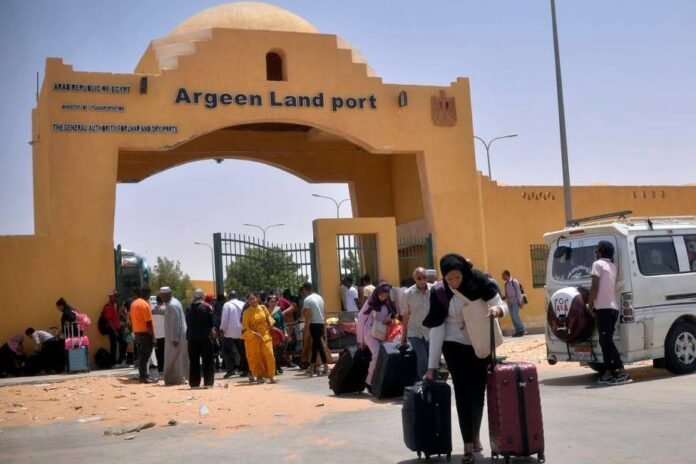
Egypt has formally rejected a report published by the British newspaper The Guardian on the situation of Sudanese refugees in the country, arguing that it presented an incomplete picture and failed to acknowledge Egypt’s role in hosting people displaced by the war in Sudan.

The response came in a letter sent by Alaa Youssef, head of Egypt’s State Information Service, to the newspaper following publication of an article titled Poverty, racism and forced disappearances: why Sudanese war refugees are leaving Egypt for Europe. 

In the letter, Youssef challenged what he described as the report’s conclusions and argued that it overlooked key aspects of Egypt’s response since the outbreak of the conflict in Sudan in April 2023.

According to Youssef, Egypt has been among the countries receiving the largest number of people fleeing the war despite facing its own economic and regional pressures.

READ: Egyptian billionaire Sawiris sparks debate after calling for closure of state TV

He said millions of Sudanese live in Egypt, including about one million who arrived after the conflict began, and noted that many are integrated into education, employment and business activities.

Youssef said Egypt’s approach has been guided by humanitarian considerations and the historical ties between the Egyptian and Sudanese peoples.

He also highlighted what he described as a distinct Egyptian model for hosting displaced populations. Rather than placing refugees in camps, Egypt has allowed Sudanese arrivals to settle in cities and towns and access public services, including healthcare and education.

According to the State Information Service chief, this approach has helped integrate displaced Sudanese into local communities while preserving their dignity.

Youssef added that Egyptian institutions, working alongside international organizations, have continued to provide services to Sudanese families despite increasing pressure on national resources.

READ: Egypt reaffirms support for Sudanese army and unity in joint statement

It doesn’t feel very agricultural: The 2026 Subaru Solterra review

0
it-doesn’t-feel-very-agricultural:-the-2026-subaru-solterra-review
It doesn’t feel very agricultural: The 2026 Subaru Solterra review

After a slow start, Subaru’s electrification journey picked up a bit this year with the debut of a pair of new electric vehicles, the Uncharted and the Trailseeker. Neither is truly an in-house Subaru—like the Solterra EV before them, they use Toyota’s e-TNGA platform. The Solterra remains on sale alongside the two new EVs—it’s bigger than the Uncharted and less off-roady than the Trailseeker—and like the closely related Toyota bZ, the Solterra recently got its midlife update. And since it had been a while since Ars had last driven a Solterra, we decided to spend a week with one.

The original Solterra was a rather underwhelming effort. It looked OK, and it was recognizable as a Subaru from the outside, even if the interior was pure Toyota. But it was inefficient and slow to charge, and in 2024, it was a tough value proposition compared to something like a Hyundai Ioniq 5. For Solterra version 1.1, there’s a new visage—does it remind anyone else of an Autobot?—and the tech specs look much improved. At 74.7 kWh, the battery capacity has increased by less than 2 kWh, but its EPA range estimate leaps from 227 miles (365 km) to 288 miles (463 km).

A Subaru Solterra parked underground, its Subaru logo is illuminated.

The logo illuminates now.

Subaru Solterra in profile

From the side, it’s nearly identical to the bZ.

The range increase didn’t require something like a decrease in power—in fact, the standard Solterra got a few extra horsepower, taking it to 233 hp (174 kW) from a pair of identical front and rear motors. But alongside the standard powertrain, Subaru now offers the Solterra XT. It almost doubles power to the front motor—it now makes 223 hp (167 kW) to go with the rear’s 117 hp (87 kW), for a combined 338 hp (252 kW). There’s a small range toll to pay, with an EPA estimate of 278 miles (447 km) for the XT. There’s also a slightly larger price tag: The base Solterra starts at $38,495, but the cheapest Solterra XT costs $42,895.

There are plenty more changes beneath the skin. The suspension and chassis control software has been revised. Subaru says it does a better job of handling rougher terrain and lower-grip environments, though our time with the car did not involve any forest roads or mountain trails. It rode well on imperfect roads, though, and its increased body stiffness and added sound-absorbing material do a decent job of canceling any noise, vibration, or harshness that would ruin the EV driving experience.

Not very agricultural

Ironically, that extra refinement makes the Solterra feel less like a true Subaru, at least to me. Its distinctive boxer engines aren’t the most refined in the world, but they do add character, as does the mechanical all-wheel drive. Here, the drive experience is rather anodyne, albeit entirely acceptable for a daily driver.

Subaru Solterra infotainment screen showing CarPlay.

Apple CarPlay is present and correct.

Subaru Solterra main instrument display

I wasn’t trying very hard, but I also didn’t get that close to the car’s official efficiency.

In any case, it usually only takes a false alarm from the overeager EyeSight driver assist to remind you that, as with the Chevy Blazer/Honda Prologue pair, some automaker quirks still cross badge-engineered boundaries.

While the extra power of the XT lets it sprint to 60 mph (97 km/h) in less than five seconds, I’m not sure I ever really needed the extra power over the regular car. Then again, I was entirely content with the front-wheel-drive, single-motor bZ—late spring in the Washington area doesn’t require much all-wheel drive. But if you want a FWD Subaru EV, you’re limited to the smaller Uncharted; all Solterras are AWD.

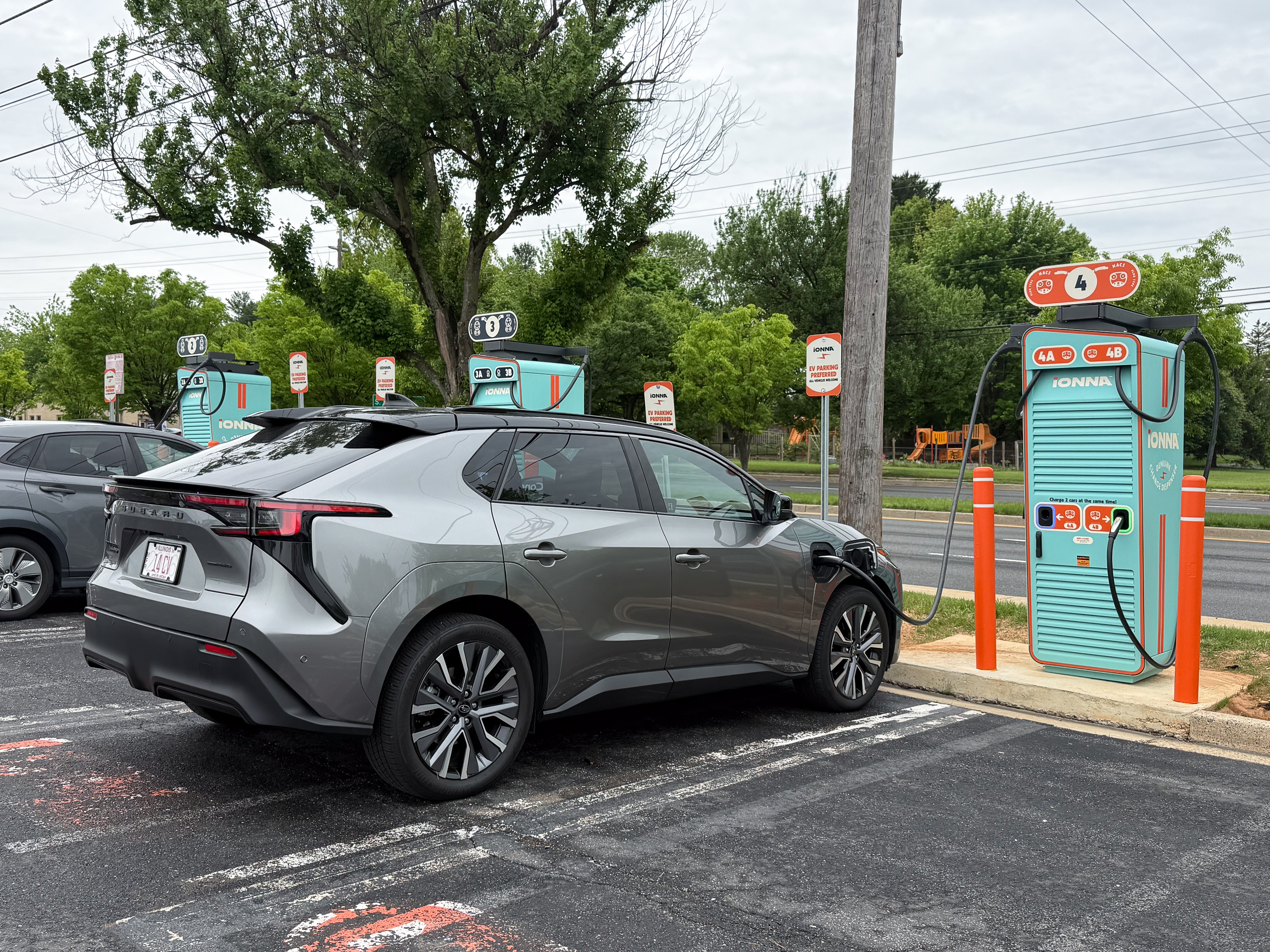
The Solterra now boasts a native NACS port, which replaces the previous model year’s CCS1 socket, and DC fast charging tops out at 150 kW rather than the old car’s 100 kW. Subaru says a 10–80 percent charge should take as little as 30 minutes, and you can now manually precondition the battery for optimal fast-charging performance. However, if you pull up to a charger with more than 50 percent state of charge, as I did, you should expect things to take a little longer.

An IONNA charger screen showing $13.99 for 33.8 kWh.

This wasn’t a great test of charging times because I started with a battery already more than half full and ran it well past 80 percent. But it’s rude to give the car back without a decent state of charge.

An IONNA charger screen showing $13.99 for 33.8 kWh.

By quirk of fate, that is 0.1 kWh more energy than you’d find in a gallon of gasoline. Sure, it cost a lot more than a gallon of gas and took a lot longer to deliver, but even at a not-amazing 3.2 miles/kWh, that’s still enough to go 108 miles.

In terms of value, the Solterra XT might be a wash with the top-spec bZ Limited. The Subaru has a bit more power and a little less range for a few hundred dollars less. And like the bZ, it’s a solid driving appliance. But now that the brand has an electric don’t-call-it-an-Outback Trailseeker, will any Subaru buyers really want the Solterra anymore? I’m not so sure.

House Dems Coming Around on Iran War — But Won’t Vote to Stop Israel’s Destruction of Lebanon

0
house-dems-coming-around-on-iran-war-—-but-won’t-vote-to-stop-israel’s-destruction-of-lebanon
House Dems Coming Around on Iran War — But Won’t Vote to Stop Israel’s Destruction of Lebanon


House Democrats voted unanimously on Wednesday against continuing the Iran war without congressional approval — but a day later, Democratic leaders helped defeat a similar measure aimed at Israel’s parallel war in Lebanon.

The second measure failed 324-92 Thursday afternoon, a day after passage of a war powers resolution focused on Iran sent a message to the Trump administration.

Ninety-one Democrats voted for the measure sponsored by Rep. Rashida Tlaib, D-Mich., to block U.S. support for Israel’s assault on Lebanon. 117 Democrats voted against.

Citing a range of drafting concerns, Democratic leaders voted against the resolution but promised to support a tweaked version from Tlaib in the future.

At least some pro-Israel Democrats, however, said they opposed to anything that would tie Israel’s hands in Lebanon.

Tlaib’s measure would have halted U.S. involvement in the Israeli assault on Lebanon without further congressional approval. The Israeli attacks have claimed at least 3,500 lives, displaced over 1 million people, and left wide swaths of the country, including entire towns, in ruins.

The war in Lebanon, which Israel had continued over reported objections from President Donald Trump, is widely seen as an obstacle to a deal with Iran to end the U.S. war there. Iranian officials have excoriated the Israeli attacks and threatened to suspend talks because of them.

U.S Aid for Israel War?

The Trump administration has not explained the extent of its involvement in the war being waged by right-wing Israeli Prime Minister Benjamin Netanyahu. Israel says its attacks are aimed at Hezbollah fighters despite the growing civilian death toll.

There are widespread suspicions that the U.S. government has provided support for the attack in the form of intelligence sharing and other coordination. The administration has not responded to a May 4 letter from Sen. Pete Welch, D-Vt., about whether and how the U.S. is aiding Israel.

“This vote on the Lebanon war powers resolution is a clear moral choice.”

Tlaib spoke out in support of her measure during a debate on the House floor on Wednesday.

“This vote on the Lebanon war powers resolution is a clear moral choice: Do you stand with the Netanyahu government and Trump’s endless war crimes, or do you stand with human life, peace, and justice?” she said.

In response, House Foreign Affairs Committee Chair Brian Mast, R-Fla., accused supporters of the measure of serving as “proxies for Hezbollah.”

That kind of language was not limited to the GOP. It echoed a similar statement made by Rep. Josh Gottheimer, D-N.J., on social media last month.

“Hezbollah is evil — kneecapping our ability to track and respond to their terror serves nobody except Hezbollah and its Iranian overlords,” he said about Tlaib’s resolution.

Other Democrats said they were opposed to the measure on more technical grounds. In a joint statement Thursday, House Democratic leaders said they were worried that it might prevent the U.S. from securing its embassy in Beirut or assisting the country’s official military, the Lebanese Armed Forces.

House Minority Leader Hakeem Jeffries, D-N.Y.; Whip Katherine Clark, D-Mass.; and Caucus Chair Pete Aguilar, D-Calif., said they were opposed to the measure that was up for a vote Thursday, but would support another one that Tlaib has introduced addressing those concerns.

Hassan El-Tayyab, the legislative director for Middle East policy at the Friends Committee on National Legislation, said he was optimistic that support for halting U.S. involvement in the Lebanon war would grow in a future vote.

“If we don’t stop what’s going on in Lebanon, getting a true and lasting ceasefire with Iran is virtually impossible,” he said. “So it is critical we try to curtail U.S. involvement in any operations in Lebanon.”

Trump’s tariffs are back – and the timing couldn’t be worse for Asia

0
trump’s-tariffs-are-back-–-and-the-timing-couldn’t-be-worse-for-asia
Trump’s tariffs are back – and the timing couldn’t be worse for Asia

TOKYO — Like a horror film villain everyone thought was dead, Donald Trump’s tariffs are suddenly back — and the timing couldn’t be more unsettling for Asia’s embattled economies.

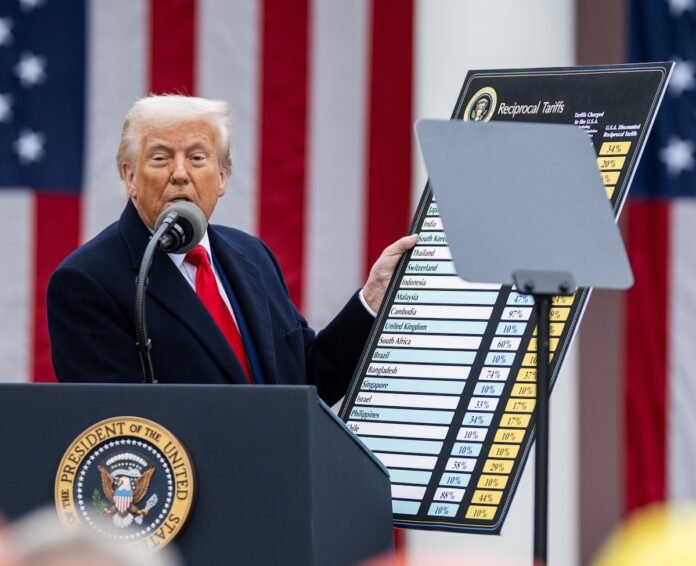
Despite the US Supreme Court striking down his “Liberation Day” tariffs, Trump has wasted no time reloading. He’s imposed fresh levies of at least 10% on 60 countries, sweeping up China, India, Japan, South Korea, Taiwan and the European Union in one broad stroke.

The stated rationale: punishing nations that his trade team accuses of using forced labor, or of importing from countries that do. China is the marquee target — its Xinjiang province is home to state-run forced labor factories at a scale the world can’t ignore.

But the timing couldn’t be worse. From Japan to India to Indonesia, Asian economies are already buckling under the twin shocks of the Iran war and its economic fallout — oil stubbornly near $100 a barrel, fertilizer costs spiraling, inflation gnawing at whatever growth remained.

Now throw US import taxes into the mix. The Supreme Court setback clearly hasn’t neutralized Trump’s trade agenda, as Nick Marro of the Economist Intelligence Unit puts it: the tariffs are coming back, just through a different door.

This is Trump trying to resurrect the import levies struck down as unconstitutional last year — and a signal that his decades-long fixation with “reindustrializing” America behind towering tariff walls is winning out over the more immediate political pressure to keep everyday goods affordable.

The legal vehicle this time is Section 301 of the Trade Act of 1974, invoked through fresh investigations by the Trump administration. Other statutes — some decades old, some older still — are reportedly under exploration too. The message is clear: this is not the end of it.

“Investors should be prepared for headline risk of rising tariffs across these countries,” notes economist Henrietta Treyz at advisory Veda Partners.

John Denton, secretary-general at International Chamber of Commerce, notes that “applying a single investigatory framework across 60 economies, including longstanding US allies and parties to existing bilateral trade agreements, will create significant compliance uncertainty for businesses operating in global supply chains.”

The tariffs arrive on top of another deepening crisis: a currency rout sweeping the region. Since the US and Israel attacked Iran on February 28, Asian currencies have been in free fall. As the dollar surges and inflation runs hot globally, the Japanese yen, Indonesian rupiah, Indian rupee and Philippine peso are all under severe strain.

Tokyo is feeling it most acutely. Japan’s Ministry of Finance and the Bank of Japan are mounting their most aggressive defense of the yen since 1991.

On June 3, Prime Minister Sanae Takaichi issued a pointed warning: authorities are prepared to intervene. “Speculative trading that is not based on real demand is having a big impact on the currency market,” she said.

All this means Tokyo officials “have definitely put 160 in neon as a level” to watch for fresh yen-buying efforts, notes Bart ​Wakabayashi, strategist at State Street. Brent Donnelly, president at analytics firm Spectra Markets, adds that intervention odds “click substantially higher if 162 trades.”

The problem is that Japan gets at least 95% of its oil from the Middle East. The longer oil trades near $100 a barrel, the more Asia’s second-biggest economy is at risk of importing even higher inflation. Food prices, too, are expected to tick higher in the months ahead, even if the Strait of Hormuz is reopened in short order.

This dynamic is exacerbated by the weak-yen policy Japan has pursued since the late 1990s, especially since 2013 under then-Prime Minister Shinzo Abe, Takaichi’s mentor.

“The war in Iran not only directly raises global commodity prices but also puts downward pressure on the yen,” notes economist Richard Katz, author of the Japan Economy Watch newsletter.

Katz adds that Japan’s “foodflation is caused not only by rising commodity prices in global markets but also by the sharp depreciation of the yen triggered by the monetary ‘arrow’ of Abenomics.”

As Katz points out, “food is highly import-intensive, from food itself to feed grains, energy, fertilizer, etc. Depending on how long the Iran standoff lasts, prices will take another hit. It’s not just energy but also petrochemicals.” Katz points to Zen-Noh, the farm cooperative, saying it will likely raise fertilizer prices 14% for the autumn planting.

But the yen isn’t even Asia’s most dramatic currency story right now. That distinction belongs to Indonesia, where the rupiah crashed past 18,000 per dollar for the first time this week, thrusting Southeast Asia’s largest economy into global headlines for all the wrong reasons.

Weak current account figures and budget concerns had already rattled investors. What’s accelerating the selloff is something more corrosive: a systematic assault on Bank Indonesia’s independence.

Indonesian President Prabowo Subianto has been chipping away at the central bank’s autonomy since taking office in October 2024. The first major blow came in September 2025, when he ousted Finance Minister Sri Mulyani Indrawati — the former World Bank managing director who had long been seen as the primary check on fiscal overreach.

Now parliament has approved an amendment expanding BI’s mandate to encompass economic growth, effectively opening the door to political interference in monetary policy.

The danger, as economist Yose Rizal Damuri of the Centre for Strategic and International Studies warns, is that government meddling in rate decisions becomes normalized — routine, in his word. Caught between a weakening currency and a weakening institutional framework, Bank Indonesia is now scrambling to stabilize both.

In Mumbai, the Reserve Bank of India is engaged in an intense battle with currency speculators as the rupee falls to all-time lows. While “inflation pressure is building,” the “bigger concern is external stability,” says economist Gaurav Ganguly at Moody’s Analytics. “A weaker rupee, higher oil prices, and current account pressure have pulled foreign exchange management to the center of the policy debate.”

In 2025, the rupee’s 5% decline made it Asia’s worst-performing currency. Less than six months into 2026, the rupee is already down 6.5%, despite aggressive RBI intervention. All this challenges the “Goldilocks moment” spin that Prime Minister Narendra Modi’s Bharatiya Janata Party promulgated at the start of the year. If Indian growth and inflation were really as perfectly aligned as Modi claims, the exchange rate wouldn’t be in freefall.

Enter new US tariffs, which are sure to ratchet up the tension for Asian markets.

US officials are struggling to explain why tariffs are bursting back onto the scene. US Trade Representative Jamieson Greer argues that current global conditions “create a dynamic where American workers are forced to compete globally on an unlevel playing field. We will no longer tolerate this disparity.”

Yet many key US allies have been quick to register their displeasure. The EU slammed the new tariff as “unjustified.” Australia’s trade ministry said that “any tariffs on Australian exports to the United States are unjustified and inconsistent with our free trade agreement.”

Nor is Japan’s government happy about facing a 12.5% US tariff. “The tariff policies of the second Trump administration are creating significant uncertainty in the global economy,” says Toshihiro Okubo, economist at Tokyo’s Keio University. “The imposition of additional tariffs and reciprocal duties is undermining the stability of the multilateral free trade system and forcing countries to respond to it.”

Okubo explains that Japan’s globalization has followed a different path from that of Europe and the US, thanks to an aging population and a declining birthrate.

“Maintaining free trade, promoting inward investment, and redesigning labor mobility all involve balancing economic rationality with social acceptability. Amidst a shaky global economy, Japan should pursue neither extreme openness nor isolation, but rather a sustainable globalization strategy shaped by thorough deliberation.”

There’s a further wrinkle, notes Madeline Chalecki, economist at the Atlantic Council’s GeoEconomics Centre: what happens to the earlier tariff deals Trump struck under the International Emergency Economic Powers Act?

Countries that thought they had secured favorable terms may find the ground shifting beneath them. Japan, South Korea, Switzerland, and Liechtenstein all negotiated agreements capping tariffs at 15%.

The critical unknown is whether the new Section 301 levies will stack on top of existing most-favored-nation rates — as they do for all China-related tariffs. The situation is further complicated by the EU, which is still in the process of ratifying its own deal with Washington.

If the tariffs do stack, Chalecki warns, the fallout could be swift. The EU agreement could collapse, triggering retaliation. That’s likely why, she argues, the administration will probably hold the line at 15% — stacking tariffs above that threshold would generate significant revenue ($34 billion annually from EU imports, $6.3 billion from Japan, $4.3 billion from Korea, $3.2 billion from Switzerland) but at a potentially destabilizing political cost few in Washington want to pay right now.

The strategy may also backfire at home. Economist Jenny Gordon of the Lowy Institute points to a telling precedent: in November 2025, the Trump administration quietly backed down on tariffs covering imported bananas, coffee, and beef after pushback from MAGA voters feeling the pinch at the grocery store. The same political pressure hasn’t gone away. “The Trump administration has a problem with some MAGA constituents,” she says.

UBS economist Paul Donovan sees a structural problem compounding it. Previous Trump tariffs were largely passed through to consumers — but when many of those levies were later lifted, retail prices didn’t follow. Companies pocketed the difference.

That pattern has consequences: consumers may now reflexively blame tariffs for any future price increases, whether or not tariffs are actually the cause. In an environment already thick with inflation anxiety, that perception risk alone could prove politically costly.

With new tariffs unlikely to make Trump any friends abroad or at home, the timing – and the logic behind them – is hard to square. All that is clear is that Asian economies will spend the second half of 2026 looking over their shoulders. 

Follow William Pesek on X at @WilliamPesek

Another serious drone incident in Romania

0
another-serious-drone-incident-in-romania
Another serious drone incident in Romania


A naval drone exploded in the Romanian port city of Constanta on Friday morning.

In a statement, the Romanian Ministry of National Defence said the drone detonated at around 10:30 a.m. and that it was thought to be “of the type used in the war in Ukraine”.

“The area had already been secured and cordoned off by forces from the Romanian Intelligence Service, the Coast Guard, and the Ministry of National Defense; at that time, the object was undergoing assessment and being secured,” the ministry said.

It also confirmed that the drone was not part of the Romanian Army’s inventory and that it had not been involved in recent military exercises in the Black Sea area.

No injuries have been reported so far. An investigation into the incident is ongoing.

It comes after a Russian drone carrying explosives crashed in the eastern Romanian city of Galați last week, causing a fire on the roof of a residential apartment block and injuring two people.

President Trump Says US Could Extract Iran’s Uranium as Ceasefire Negotiations Remain Uncertain 

0
president-trump-says-us-could-extract-iran’s-uranium-as-ceasefire-negotiations-remain-uncertain 
President Trump Says US Could Extract Iran’s Uranium as Ceasefire Negotiations Remain Uncertain 


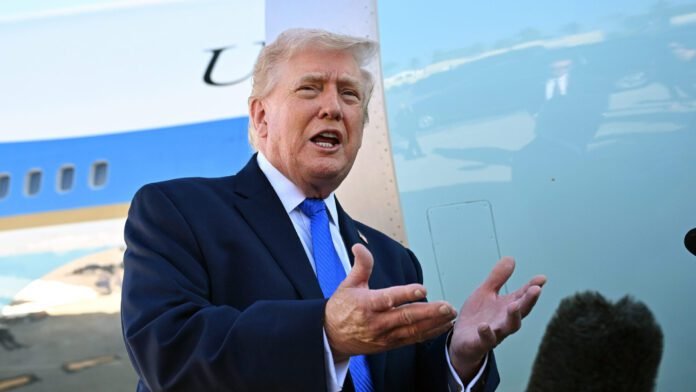
The United States could remove Iran’s enriched uranium even without Tehran’s agreement, President Trump said, as negotiations between Washington and Tehran continued amid conflicting assessments on the likelihood of a timely agreement.  

Speaking to reporters on Thursday, President Trump said extracting the material would be difficult and require significant resources.”Getting there [Iran] is not like Venezuela. You have to be there for two weeks. You need a lot of equipment,” he said. “There was a time at the beginning [of the war] when we thought about doing it.” 

President Trump explained that the uranium remains under close US monitoring and suggested Washington retains the ability to act if necessary: “It’s being photographed from every angle. We can get it out now – if anyone gets close to it, we will know what to do.” 

Asked whether he would meet Iran’s Supreme Leader Mojtaba Khamenei, President Trump at first said he would prefer not to, but left open the possibility if an agreement is reached between the two countries: “If it happened … I’d be respectful.” 

The president’s remarks came as the United States and Iran continued to offer differing views of the status of ongoing negotiations. He has indicated that an agreement could be achieved in the near future, possibly this weekend,  while Iranian officials have said the talks have produced “no tangible progress.” 

Meanwhile, a statement issued in the name of Iran’s supreme leader on Thursday said that Israel and Washington, after “facing a decisive blow,” are now “experiencing a deeply meaningful and profound humiliation.” 

Ayatollah Mojtaba Khamenei has remained out of public view since the opening day of the US-Israeli war with Iran on February 28, when strikes killed his father and predecessor, Ali Khamenei, and left him wounded. 

On Wednesday, The Wall Street Journal reported, citing several US officials, that Trump told aides he would only end the ceasefire with Iran if Tehran kills American troops. 

The developments reflected continuing uncertainty surrounding both the ceasefire and negotiations between Washington and Tehran, as officials on both sides continued to present sharply different accounts of progress toward a potential agreement. 

Bumblebees can spontaneously solve problems, study finds

0
bumblebees-can-spontaneously-solve-problems,-study-finds
Bumblebees can spontaneously solve problems, study finds

Despite having tiny brains, bumblebees have demonstrated a remarkable ability to socially learn how to use tools, solve simple puzzles, and cooperate to achieve a goal. It seems they can also solve object-manipulation tasks without any previous training, according to a new paper published in the journal Science. According to the authors, it’s the first time this kind of spontaneous problem-solving has been demonstrated in an insect.

In 2024, Olli Loukola of the University of Finland co-authored a study demonstrating that bumblebees could cooperate to solve complex challenges. It’s the kind of cognitive task scientists had previously only observed in large-brained mammals like humans and chimpanzees. Loukola et al. trained pairs of bees to push a Lego block to the middle of a mini-arena or push against a door at the end of a tunnel to get a reward.

The team noticed that the bees were more likely to engage in the tasks if their partners also participated, compared to untrained control groups. They concluded that bees can learn to solve novel cooperative tasks outside the hive and may even be intentionally working together, although the researchers cautioned that more detailed monitoring of the behavior was needed to fully understand the partners’ roles.

For this latest study, Loukola was interested in whether bees could spontaneously solve problems. The first experiment featured an artificial flower placed above a pit in the floor so that there was insufficient space for a bee to hover to reach the flower. The bee would have to roll a small ball into the pit and climb on top to reach the flower. “This is essentially an insect version of the classic ‘box-and-banana’ problem,” said Loukola. “The animal must realize that an object can be repositioned and then used as a tool to reach an otherwise inaccessible goal.”

One set of bees was trained to recognize the flower as a source of sugary reward and that the ball could be moved into the pit, but they were not trained to solve the experimental conundrum. “They only learned the properties of the individual elements and success would therefore reflect spontaneous problem-solving rather than gradual reinforcement learning,” the authors wrote. A second group was trained that the flower was a source of reward but not that the ball was movable. And a third group received no training at all.

Bees in the first group solved the problem at a much higher rate than those in the other two groups, whose poorer performances were similar. The first group also made more attempts at working the problem, and the bees interacted with the ball more efficiently and in a more structured way than those in the other two groups.

To bee or not to bee

Credit: Olli Loukola / University of Oulu

Those initial results were interesting, but Loukola et al. wanted to rule out the possibility that bees might have an inherent preference for rolling balls, such that perceptual feedback may influence their actions, i.e., rolling the ball might be rewarding on its own. So the team performed a second version of the experiment in which a barrier with a small opening blocked the bees’ view of the flower. The bees had to roll the ball through the opening to climb on top and reach the flower.

“This design assessed whether bees could solve the task without continuous perceptual feedback,” the authors wrote. All told, 16 of 22 bees succeed in this task. Granted, the bees could still potentially catch a glimpse of the flower once the ball was near the opening, so the team repeated the experiment with three openings in the barrier to further limit visual feedback. This time, there were no significant differences in performance between trained and untrained (control group) bees.

In one last experiment, Loukola et al. sought to isolate the bees’ goal-directed performance from accidental success and from visual feedback cues. This time, the testing apparatus featured a rectangular arena with two compartments, both invisible to the bees. During pretraining, 30 bees were shown the flower positioned above one of those compartments. For the actual test, the flower was not visible from the ball’s starting location, and the bees had to move the ball into the correct compartment. The results: 23 of the 30 bees succeeded at the task, and 16 of the successful 23 bees did so without first moving the ball to the incorrect compartment.

The team acknowledged that the experimental setups had no way to track the bees’ gaze, posture, or other behavioral cues that might have let them pinpoint the precise “Eureka!” moment when the bees “understood” the problem. Further experiments should test how well bees grasp causal relationships. “Nonetheless, the present design provides the clearest evidence to date that bumblebees are capable of generating novel, goal-directed solutions, establishing a foundation for future studies to further investigate the cognitive processes underlying insight in insects,” the authors concluded.

Science, 2026. DOI: 10.1126/science.ady1618 (About DOIs).

Priest Who Battles Demons Booted After Wild UFO Claim

0
priest-who-battles-demons-booted-after-wild-ufo-claim
Priest Who Battles Demons Booted After Wild UFO Claim


A famous Catholic exorcist has been kicked out of his demon-fighting role after publicly suggesting that UFO sightings may actually be demons in disguise.

Monsignor Stephen Rossetti, one of America’s best-known exorcists, was removed from his position with the Archdiocese of Washington after making the eyebrow-raising claim in a now-deleted social media video.

Cardinal Robert McElroy announced the decision after Rossetti said he believed many UFO sightings could be linked to demonic activity.

“There’s a danger here. Demons like to hide,” Rossetti said in the May 29 video. “It’s my personal belief that probably many if not most of these UFO sightings are in fact demons.”

The explosive remarks quickly sparked controversy inside the Catholic world.

McElroy said Rossetti had been stripped of his role as an exorcist for the archdiocese. He also cut ties with Rossetti’s St. Michael Center for Spiritual Renewal, a group focused on spiritual healing, deliverance, and exorcism-related ministry.

According to the archdiocese, the problem was not just one video. Church officials said Rossetti’s comments “linking UFOs to demonic presence,” along with social media activity from the St. Michael Center, undermined Catholic teaching on demons and exorcism.

Rossetti later apologized and said he was “saddened” by the archdiocese’s decision.

He also asked forgiveness for any ways he may not have been faithful to Catholic Church teaching.

The controversy is especially stunning because Rossetti was not some obscure priest making strange comments from the sidelines. He has more than 148,000 followers on Instagram and has become one of the most recognizable exorcists in the United States.

He previously told the Associated Press that public interest in demonic possession and exorcism has been growing.

Now, the priest known for fighting evil spirits has found himself at the center of a church storm over aliens, demons, and what Catholics are supposed to believe about both.

The archdiocese’s move sends a clear message: when it comes to exorcism, church leaders do not want speculation about flying saucers mixed with official Catholic ministry.

Gulf expat reactions to Iran war show us how countries instil loyalty in western migrants

0
gulf-expat-reactions-to-iran-war-show-us-how-countries-instil-loyalty-in-western-migrants
Gulf expat reactions to Iran war show us how countries instil loyalty in western migrants

When the US and Israel launched their strikes on Iran on February 28 and Iran retaliated by targeting the Gulf Arab states, I was closely monitoring social media accounts from the region. I research Middle East politics, with a focus on the Gulf, and the social media platforms I use are full of people living in the region – including western migrants, or as they tend to style themselves, expats. To my surprise, from many of them I saw the same message: “It is safe and normal here.”

This was not a trivial claim – these messages were sent as the countries they live in came under attack. But the attitudes they exhibited reflect a broad strategy long cultivated by Gulf Arab regimes. This aims to instil in the people that opt to live there a sense of security, as well as aspiration for the lifestyle on offer and loyalty towards the country for making that lifestyle available.

More importantly, the expats’ reactions exposed the role that foreign residents and influencers have played in advancing a particular understanding of “normality”. Not only do they accept authoritarian rule in the Gulf, they have been pushing out messages about insecurity elsewhere.

To be clear, a lot of foreign workers did leave the Gulf, reportedly in the tens of thousands, when the conflict began. But even so, many of the initial reactions on social media, whether people stayed or opted to leave, projected this sense of security.

Part of the US security hub

These regimes have developed an image designed to attract global connectivity, foreign capital and flows of people and goods. The UAE, especially Dubai, has become a symbol of tax-free residency and luxury tourism. Qatar has established itself as reliable gas exporter and world-class mediator. Saudi Arabia has launched a sweeping reform project recasting national identity and the kingdom’s global role in championing “moderate Islam”, while Bahrain has worked early since independence to become a regional banking hub.

These state-building processes thrived under the security umbrella of US and other western military bases across the Middle East. Firmly embedded in the US sphere of influence, Gulf monarchies have benefited from precious diplomatic cover and access to global markets. Other regional regimes, meanwhile – notably Iran – were excluded. This was more often due to their hostility towards the US than for their brutal repression and disastrous governance at home.

By directing global attention to threats such as Iran, Gulf regimes forged a strong sense of domestic normality. But in recent years, a less reliable US regional policy has made the security arrangement increasingly uncertain, prompting Gulf regimes to explore alternatives. Without renouncing deeper engagement with the US, they welcomed cooperation with other powers outside the region, like China, as well as the possibility of closer relations with Israel and even a modus vivendi with Iran.

Despite ongoing rivalries, including within the regional forum, the Gulf Cooperation Council (GCC), regional conflict de-escalation and management appeared to be the preferred means to continue insulating the Gulf normality. Yet the ongoing destruction in Gaza, closer US-Israeli alignment in the latter’s pursuit of regional dominance, and the ensuing pressure on Iran’s network of proxies has undermined this delicate balance.

A US warplane refuels above Palm Islands, Dubai, March 2026

A US warplane refuels above Palm Islands, Dubai, March 2026 – the US has been instrumental in providing security for Gulf nations. But is that now under threat? SSgt. Paige Weldon/U.S. Air Force Photo/Alamy Live News

Expats get political

The attack on Iran exposed foreign residents’ role in sustaining the image of “normality”. Until then, expats and influencers embodied this normality by displaying safe, privileged and apolitical lives.

I saw posts attempting to divert attention from the threat of war in the Gulf by people claiming to feel safer under missile attacks in Dubai and Doha than “after 9pm” in London or Manchester. Other posts preferred the prospect of missile attacks to being “bombed by 50% taxes”.

These sorts of comments tend to mimic narratives pushed by far-right movements in the west around crime, taxation and immigration.

A viral trend concentrated in the UAE but replicated across other Gulf countries featured influencers responding to the question “Aren’t you scared?” with imagery of members of the ruling families and messages such as: “No, because I know who protects us.” The UAE president’s much-publicised walk in Dubai Mall followed this paternalistic framing of security.

After the initial shock, many influencers returned to the old form of messaging, not posting about the war and focusing on showing their privileged “everyday” lives.

Controlling the message

It’s important to remember that Gulf Arab regimes possess robust censorship apparatuses and broad national security and anti-cybercrime laws that penalise content deemed to “cause panic” or “disturb public order”.

Authorities in Saudi Arabia were swift to remind residents that “photography serves the enemy”, banning unofficial sharing of damage caused by the war, while the UAE threatened severe sentences for people posting negative messages. There have been reports of people detained for posting the wrong content – more than 300 in Qatar alone. Heightened security concerns exposed western expats to coercive practices typically reserved to political dissidents.

Having invested efforts in insulating their domestic projects from external threats through seeking political accommodation with neighbours, including Iran, Gulf leaders may now pursue a different strategy. In fact, we’re already seeing some different approaches as various Gulf countries work out their own best approach to the changing situation in their region. Some, like Bahrain, remain hostile to Iran. Others, including Saudi Arabia, are more nuanced in their approach, looking overall to ensure security in the region.

But for regimes and expats alike, this is a time of reckoning for the parameters sustaining “normality” in the Gulf. Most certainly, the region will never be the same.

Water wars washing away South Asia’s fragile peace

0
water-wars-washing-away-south-asia’s-fragile-peace
Water wars washing away South Asia’s fragile peace

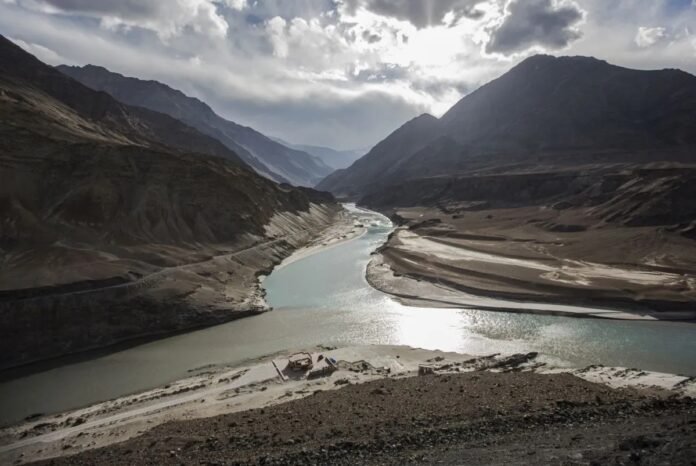
On June 4, Pakistan said what most analysts had been thinking for over a year: India is weaponizing water.

The trigger was a pair of infrastructure projects on the Chenab River — a ₹2,352 crore (US$246 million) tunnel to divert surplus Chenab water into the Beas basin in Himachal Pradesh, and a ₹268 crore sediment bypass at the Salal Dam in Jammu — both to be executed by India’s National Hydroelectric Power Corporation.

Pakistan’s foreign ministry spokesperson, Tahir Andrabi, said the projects were confirmation that New Delhi “seems to weaponize water,” adding that they carry dangerous implications not only for Pakistan’s economy but also for regional stability and international peace and security.

What India has set in motion since placing the Indus Waters Treaty (IWT) in abeyance in April last year is much more than a bilateral water dispute. Rather, it is the systematic dismantling of the cooperative architecture that governed South Asia’s most critical shared resources for over six decades.

And it is being replaced with something more naked and dangerous: the assertion that water is an instrument of state power to be allocated, withheld and redirected according to the upstream sovereign’s political calculus.

The consequences of that assertion will not stop at the India-Pakistan border. They will flow downstream into Bangladesh, upstream into Nepal and outward into every transboundary water negotiation on earth.

To understand the scale of what has been destroyed, one must recall what the IWT actually represented.

Signed in 1960 after nine years of World Bank-brokered negotiation, the treaty allocated the western rivers — Indus, Jhelum, Chenab — to Pakistan, and the eastern rivers — Ravi, Beas, Sutlej — to India.

The IWT survived three full-scale wars, the nuclear tests of 1998, the Kargil conflict, the 2001 Parliament attack, the 2008 Mumbai massacre and the 2019 Pulwama bombing.

Its survival reflected a genuine, if unsentimental, recognition on both sides that some frameworks are too fundamental to sacrifice at the altar of domestic politics. US President Dwight Eisenhower, present at the treaty’s signing, called it “one bright spot in a very depressing world picture.”

India blotted out that bright spot on April 23 last year, one day after the Pahalgam terror attack killed 26 tourists in Indian-administered Kashmir. Soon thereafter, hydrological data-sharing stopped.

The Permanent Indus Commission went dark. And within weeks, India had conducted reservoir flushing operations at Salal and Baglihar dams without notifying Pakistan.

India then launched Operation Sindoor on May 7 last year, striking nine targets in Pakistan and Pakistan-occupied Kashmir. A ceasefire was reached three days later. But while the shooting stopped, the water dispute did not.

By December, Pakistan’s foreign ministry was formally reporting that Chenab flows had plunged to 870 cusecs between December 10 and 16 — against a historical minimum for that period of over 4,000 cusecs, a drop of nearly 80%. Satellite imagery confirmed a significant reduction followed by a sudden increase in the surface area of the Baglihar reservoir.

The two Chenab projects announced in recent weeks are consistent with this trend. Since the IWT’s suspension, India has fast-tracked the Pakal Dul, Kiru, Kwar, Ratle, Dulhasti Stage-II and Sawalkote projects, a ramped up portfolio of infrastructure on rivers that the treaty designated for Pakistan’s unrestricted use.

The Chenab-Beas diversion tunnel is the most structurally significant among these because it does not merely harness the Chenab’s flow for run-of-river power generation, but it also physically transfers water out of Pakistan’s allocated western river basin into an eastern basin that is entirely India’s to use as it sees fit. The tunnel effectively redraws the hydraulic partition of 1960.

The Permanent Court of Arbitration in The Hague has ruled against India twice — in August last year and again on May 15 this year, when it issued a supplemental award on pondage limits at Ratle and Kishanganga, affirming that the treaty places substantive limits on India’s water-control capability on the western rivers.

India has categorically rejected both rulings, calling the court illegally constituted and its awards null and void. The legal architecture intended to resolve exactly this kind of dispute is being demolished by the same country that helped design it.

Pakistan’s position — that the treaty remains fully in force and that India’s abeyance declaration is unlawful — may be correct, but in the absence of enforcement mechanisms, it is a paper shield.

What Pakistan now confronts is an upstream state with vastly greater economic capacity, a decisive conventional military advantage demonstrated in May last year and a government that has made water nationalism part of its electoral identity.

Pakistan’s water storage covers roughly 30 days of river flow. Its agricultural sector accounts for 80% of irrigation and nearly a quarter of GDP. Nearly 11 million Pakistanis were in acute food insecurity in 2025.

When the Chenab’s timing is manipulated — water withheld during sowing season, released without warning during harvest — the consequences are often severe.

To be sure, this is not merely an India-Pakistan issue and conflict. Bangladesh shares 54 rivers with India. And the 1996 Ganga Water Sharing Treaty — governing dry-season flow allocations at the Farakka Barrage — expires in December this year.

India has indicated that it will not renew the treaty in its current form and is seeking to renegotiate on modified terms. The new Bangladesh Nationalist Party-led government in Dhaka has publicly linked the entire trajectory of India-Bangladesh relations to the outcome of negotiations over an equitable replacement.

In the Bangladeshi delta, reduced upstream flow means salinity intrusion, disrupted agriculture, degraded fisheries and the accelerating advance of a coastal crisis that climate change is already making catastrophic.

The farmers of Pakistan’s Punjab and the farmers of Bangladesh’s northwest are not in their daily experience connected. However, in the hydraulic logic now unfolding across South Asia, they are living the same story.

Nepal, further upstream and differently positioned, is living a version of it too. It sits on roughly 40,000 megawatts of untapped hydropower potential and a set of water agreements with India — the Koshi, Gandak, and Mahakali treaties — that Nepali critics have, for decades, described as arrangements that formalize Indian extraction of Himalayan hydraulic resources while constraining Kathmandu’s ability to monetize them on its own terms.

The IWT’s collapse strengthens the hand of those in Kathmandu who argue that Chinese investment in Nepali hydropower infrastructure is preferable to Indian investment, which comes with structural dependencies and a pattern of asymmetric benefit-sharing.

China has been delighted to oblige. And this is where the regional picture becomes not merely complex but structurally vertiginous, because directly above all of this — above Nepal, above Bangladesh, above the entire Gangetic plain, above the Indus basin itself — China is building what will be the world’s largest dam on the Brahmaputra in southern Tibet. The $168 billion project, targeting completion in 2033, will give Beijing unparalleled hydraulic leverage over India and Bangladesh.

India’s response has been to announce a $77 billion initiative to build more than 200 dams in Arunachal Pradesh — territory that China claims as part of southern Tibet — in a hydropower arms race that mirrors, in the Brahmaputra basin, exactly what India is doing to Pakistan in the Indus basin.

The symmetry is precise while the irony is total. India claims sovereign upstream rights over Pakistan while simultaneously claiming equitable downstream entitlements against China.

It invokes its right as the upper riparian to divert western rivers away from Pakistani agriculture, while relying on the principle that upstream states must protect downstream flows to challenge Chinese dam-building above the northeastern Indian state of Assam.

The doctrinal contradiction is not merely philosophical. It is the operational logic of a region in which every state is upstream of someone and downstream of someone else, and in which the collective failure to establish cooperative governance is producing a cascading series of unilateral assertions that ultimately make every state less secure.

What makes this cascade so difficult to arrest is not a shortage of legal frameworks or technical solutions. It is the domestic political economy of water nationalism, which in every South Asian country produces vocal constituencies for confrontation and systematically marginalizes voices for cooperation.

In India, redirecting water from rivers allocated to Pakistan in 1960 resonates with a Hindu nationalist narrative that views the partition settlement itself as unjust. In Pakistan, water becomes the site of existential victimhood and the justification for military spending and a stronger nuclear posture.

In Bangladesh, Farakka and the Teesta are perennial symbols of India’s indifference to the downstream needs of Bangladesh. In Nepal, the Koshi Agreement is a textbook case study in hydro-hegemony.

Each domestic politics generates its own self-reinforcing logic, while technical experts who understand the genuine mutual dependence at stake are routinely drowned out. The very crises that make cooperation most necessary are the ones that make it most politically impossible.

Beneath all of this, and accelerating every dimension of it, is a climate emergency. The Himalayan glaciers — the freshwater reserve that feeds the Indus, the Ganges, and the Brahmaputra simultaneously — could lose up to two-thirds of their volume by 2100. River flows will peak mid-century as melt accelerates, then decline permanently as the ice runs out.

Every dam India is building now to capture current meltwater will become a more fiercely contested piece of infrastructure as total basin flows shrink in the decades ahead. The geopolitical competition today is, in part, a race to lock in hydraulic infrastructure before the basin’s long-term carrying capacity falls — a race in which winning now means that someone else loses everything tomorrow.

The lesson being taught in the Indus basin — that a sufficiently powerful state can suspend its transboundary water commitments by declaring a security emergency, reject binding international arbitration with impunity, and build infrastructure that permanently alters downstream hydrology while the international community watches in silence — will not be confined to South Asia.

It is already being studied in Cairo, in Ankara, in Addis Ababa and in every capital that sits upstream of a weaker neighbor and downstream of a stronger one.

The World Bank, which is a signatory to the IWT and played a decisive mediating role in its negotiation, has issued no meaningful response to the treaty’s systematic dismemberment. The precedent hardens with every passing month of institutional silence.

What is needed — and what does not exist — is a multilateral water governance architecture that incorporates China, binds upstream rights to downstream obligations across the full Himalayan system, accounts for glacial retreat and shifting monsoon patterns, and treats Himalayan water as a regional common on which hundreds of millions of people across multiple states rely.

The Chenab is running on the basis of a political decision made in New Delhi. The Padma is running on a treaty that expires in six months. The Brahmaputra is running under what will be China’s and world’s largest dam. And the glaciers that feed them all are melting and running out.

Jannatul Naym Pieal is a Dhaka-based journalist, writer and researcher with over a decade of experience in professional journalism. He is also the author of 10 published books and a researcher focusing on Bangladesh’s media industry and its intersections with broader social and academic fields.

0FansLike
0FollowersFollow
0FollowersFollow
0SubscribersSubscribe
- Advertisement -
Google search engine

Recent Posts