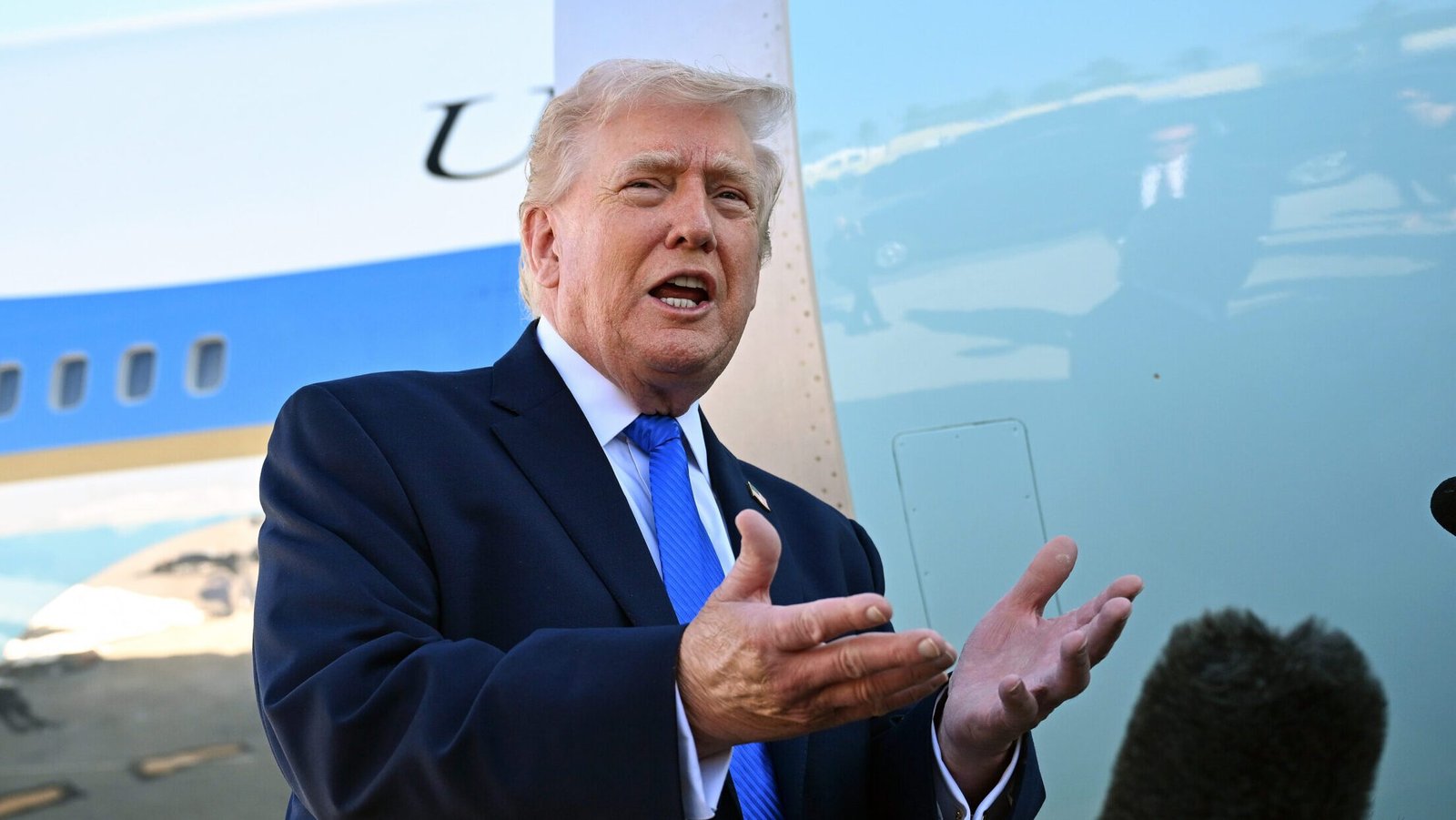
The United States could remove Iran’s enriched uranium even without Tehran’s agreement, President Trump said, as negotiations between Washington and Tehran continued amid conflicting assessments on the likelihood of a timely agreement.
Speaking to reporters on Thursday, President Trump said extracting the material would be difficult and require significant resources.”Getting there [Iran] is not like Venezuela. You have to be there for two weeks. You need a lot of equipment,” he said. “There was a time at the beginning [of the war] when we thought about doing it.”
President Trump explained that the uranium remains under close US monitoring and suggested Washington retains the ability to act if necessary: “It’s being photographed from every angle. We can get it out now – if anyone gets close to it, we will know what to do.”
Asked whether he would meet Iran’s Supreme Leader Mojtaba Khamenei, President Trump at first said he would prefer not to, but left open the possibility if an agreement is reached between the two countries: “If it happened … I’d be respectful.”
The president’s remarks came as the United States and Iran continued to offer differing views of the status of ongoing negotiations. He has indicated that an agreement could be achieved in the near future, possibly this weekend, while Iranian officials have said the talks have produced “no tangible progress.”
Meanwhile, a statement issued in the name of Iran’s supreme leader on Thursday said that Israel and Washington, after “facing a decisive blow,” are now “experiencing a deeply meaningful and profound humiliation.”
Ayatollah Mojtaba Khamenei has remained out of public view since the opening day of the US-Israeli war with Iran on February 28, when strikes killed his father and predecessor, Ali Khamenei, and left him wounded.
On Wednesday, The Wall Street Journal reported, citing several US officials, that Trump told aides he would only end the ceasefire with Iran if Tehran kills American troops.
The developments reflected continuing uncertainty surrounding both the ceasefire and negotiations between Washington and Tehran, as officials on both sides continued to present sharply different accounts of progress toward a potential agreement.