12.5 C
London
Friday, June 5, 2026
Home Blog

Gulf expat reactions to Iran war show us how countries instil loyalty in western migrants

0
gulf-expat-reactions-to-iran-war-show-us-how-countries-instil-loyalty-in-western-migrants
Gulf expat reactions to Iran war show us how countries instil loyalty in western migrants

When the US and Israel launched their strikes on Iran on February 28 and Iran retaliated by targeting the Gulf Arab states, I was closely monitoring social media accounts from the region. I research Middle East politics, with a focus on the Gulf, and the social media platforms I use are full of people living in the region – including western migrants, or as they tend to style themselves, expats. To my surprise, from many of them I saw the same message: “It is safe and normal here.”

This was not a trivial claim – these messages were sent as the countries they live in came under attack. But the attitudes they exhibited reflect a broad strategy long cultivated by Gulf Arab regimes. This aims to instil in the people that opt to live there a sense of security, as well as aspiration for the lifestyle on offer and loyalty towards the country for making that lifestyle available.

More importantly, the expats’ reactions exposed the role that foreign residents and influencers have played in advancing a particular understanding of “normality”. Not only do they accept authoritarian rule in the Gulf, they have been pushing out messages about insecurity elsewhere.

To be clear, a lot of foreign workers did leave the Gulf, reportedly in the tens of thousands, when the conflict began. But even so, many of the initial reactions on social media, whether people stayed or opted to leave, projected this sense of security.

Part of the US security hub

These regimes have developed an image designed to attract global connectivity, foreign capital and flows of people and goods. The UAE, especially Dubai, has become a symbol of tax-free residency and luxury tourism. Qatar has established itself as reliable gas exporter and world-class mediator. Saudi Arabia has launched a sweeping reform project recasting national identity and the kingdom’s global role in championing “moderate Islam”, while Bahrain has worked early since independence to become a regional banking hub.

These state-building processes thrived under the security umbrella of US and other western military bases across the Middle East. Firmly embedded in the US sphere of influence, Gulf monarchies have benefited from precious diplomatic cover and access to global markets. Other regional regimes, meanwhile – notably Iran – were excluded. This was more often due to their hostility towards the US than for their brutal repression and disastrous governance at home.

By directing global attention to threats such as Iran, Gulf regimes forged a strong sense of domestic normality. But in recent years, a less reliable US regional policy has made the security arrangement increasingly uncertain, prompting Gulf regimes to explore alternatives. Without renouncing deeper engagement with the US, they welcomed cooperation with other powers outside the region, like China, as well as the possibility of closer relations with Israel and even a modus vivendi with Iran.

Despite ongoing rivalries, including within the regional forum, the Gulf Cooperation Council (GCC), regional conflict de-escalation and management appeared to be the preferred means to continue insulating the Gulf normality. Yet the ongoing destruction in Gaza, closer US-Israeli alignment in the latter’s pursuit of regional dominance, and the ensuing pressure on Iran’s network of proxies has undermined this delicate balance.

A US warplane refuels above Palm Islands, Dubai, March 2026

A US warplane refuels above Palm Islands, Dubai, March 2026 – the US has been instrumental in providing security for Gulf nations. But is that now under threat? SSgt. Paige Weldon/U.S. Air Force Photo/Alamy Live News

Expats get political

The attack on Iran exposed foreign residents’ role in sustaining the image of “normality”. Until then, expats and influencers embodied this normality by displaying safe, privileged and apolitical lives.

I saw posts attempting to divert attention from the threat of war in the Gulf by people claiming to feel safer under missile attacks in Dubai and Doha than “after 9pm” in London or Manchester. Other posts preferred the prospect of missile attacks to being “bombed by 50% taxes”.

These sorts of comments tend to mimic narratives pushed by far-right movements in the west around crime, taxation and immigration.

A viral trend concentrated in the UAE but replicated across other Gulf countries featured influencers responding to the question “Aren’t you scared?” with imagery of members of the ruling families and messages such as: “No, because I know who protects us.” The UAE president’s much-publicised walk in Dubai Mall followed this paternalistic framing of security.

After the initial shock, many influencers returned to the old form of messaging, not posting about the war and focusing on showing their privileged “everyday” lives.

Controlling the message

It’s important to remember that Gulf Arab regimes possess robust censorship apparatuses and broad national security and anti-cybercrime laws that penalise content deemed to “cause panic” or “disturb public order”.

Authorities in Saudi Arabia were swift to remind residents that “photography serves the enemy”, banning unofficial sharing of damage caused by the war, while the UAE threatened severe sentences for people posting negative messages. There have been reports of people detained for posting the wrong content – more than 300 in Qatar alone. Heightened security concerns exposed western expats to coercive practices typically reserved to political dissidents.

Having invested efforts in insulating their domestic projects from external threats through seeking political accommodation with neighbours, including Iran, Gulf leaders may now pursue a different strategy. In fact, we’re already seeing some different approaches as various Gulf countries work out their own best approach to the changing situation in their region. Some, like Bahrain, remain hostile to Iran. Others, including Saudi Arabia, are more nuanced in their approach, looking overall to ensure security in the region.

But for regimes and expats alike, this is a time of reckoning for the parameters sustaining “normality” in the Gulf. Most certainly, the region will never be the same.

Water wars washing away South Asia’s fragile peace

0
water-wars-washing-away-south-asia’s-fragile-peace
Water wars washing away South Asia’s fragile peace

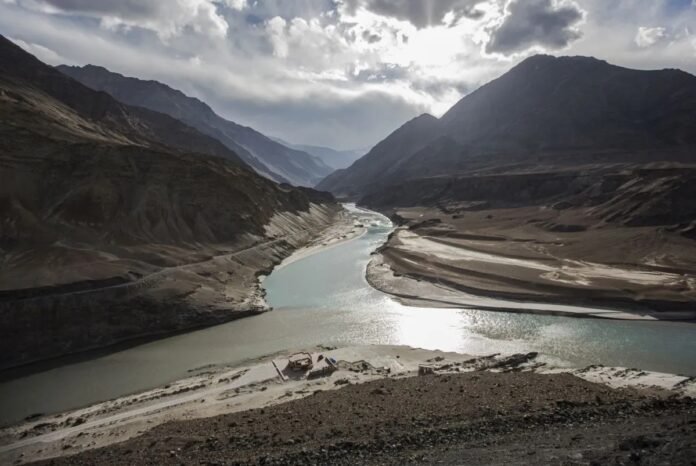
On June 4, Pakistan said what most analysts had been thinking for over a year: India is weaponizing water.

The trigger was a pair of infrastructure projects on the Chenab River — a ₹2,352 crore (US$246 million) tunnel to divert surplus Chenab water into the Beas basin in Himachal Pradesh, and a ₹268 crore sediment bypass at the Salal Dam in Jammu — both to be executed by India’s National Hydroelectric Power Corporation.

Pakistan’s foreign ministry spokesperson, Tahir Andrabi, said the projects were confirmation that New Delhi “seems to weaponize water,” adding that they carry dangerous implications not only for Pakistan’s economy but also for regional stability and international peace and security.

What India has set in motion since placing the Indus Waters Treaty (IWT) in abeyance in April last year is much more than a bilateral water dispute. Rather, it is the systematic dismantling of the cooperative architecture that governed South Asia’s most critical shared resources for over six decades.

And it is being replaced with something more naked and dangerous: the assertion that water is an instrument of state power to be allocated, withheld and redirected according to the upstream sovereign’s political calculus.

The consequences of that assertion will not stop at the India-Pakistan border. They will flow downstream into Bangladesh, upstream into Nepal and outward into every transboundary water negotiation on earth.

To understand the scale of what has been destroyed, one must recall what the IWT actually represented.

Signed in 1960 after nine years of World Bank-brokered negotiation, the treaty allocated the western rivers — Indus, Jhelum, Chenab — to Pakistan, and the eastern rivers — Ravi, Beas, Sutlej — to India.

The IWT survived three full-scale wars, the nuclear tests of 1998, the Kargil conflict, the 2001 Parliament attack, the 2008 Mumbai massacre and the 2019 Pulwama bombing.

Its survival reflected a genuine, if unsentimental, recognition on both sides that some frameworks are too fundamental to sacrifice at the altar of domestic politics. US President Dwight Eisenhower, present at the treaty’s signing, called it “one bright spot in a very depressing world picture.”

India blotted out that bright spot on April 23 last year, one day after the Pahalgam terror attack killed 26 tourists in Indian-administered Kashmir. Soon thereafter, hydrological data-sharing stopped.

The Permanent Indus Commission went dark. And within weeks, India had conducted reservoir flushing operations at Salal and Baglihar dams without notifying Pakistan.

India then launched Operation Sindoor on May 7 last year, striking nine targets in Pakistan and Pakistan-occupied Kashmir. A ceasefire was reached three days later. But while the shooting stopped, the water dispute did not.

By December, Pakistan’s foreign ministry was formally reporting that Chenab flows had plunged to 870 cusecs between December 10 and 16 — against a historical minimum for that period of over 4,000 cusecs, a drop of nearly 80%. Satellite imagery confirmed a significant reduction followed by a sudden increase in the surface area of the Baglihar reservoir.

The two Chenab projects announced in recent weeks are consistent with this trend. Since the IWT’s suspension, India has fast-tracked the Pakal Dul, Kiru, Kwar, Ratle, Dulhasti Stage-II and Sawalkote projects, a ramped up portfolio of infrastructure on rivers that the treaty designated for Pakistan’s unrestricted use.

The Chenab-Beas diversion tunnel is the most structurally significant among these because it does not merely harness the Chenab’s flow for run-of-river power generation, but it also physically transfers water out of Pakistan’s allocated western river basin into an eastern basin that is entirely India’s to use as it sees fit. The tunnel effectively redraws the hydraulic partition of 1960.

The Permanent Court of Arbitration in The Hague has ruled against India twice — in August last year and again on May 15 this year, when it issued a supplemental award on pondage limits at Ratle and Kishanganga, affirming that the treaty places substantive limits on India’s water-control capability on the western rivers.

India has categorically rejected both rulings, calling the court illegally constituted and its awards null and void. The legal architecture intended to resolve exactly this kind of dispute is being demolished by the same country that helped design it.

Pakistan’s position — that the treaty remains fully in force and that India’s abeyance declaration is unlawful — may be correct, but in the absence of enforcement mechanisms, it is a paper shield.

What Pakistan now confronts is an upstream state with vastly greater economic capacity, a decisive conventional military advantage demonstrated in May last year and a government that has made water nationalism part of its electoral identity.

Pakistan’s water storage covers roughly 30 days of river flow. Its agricultural sector accounts for 80% of irrigation and nearly a quarter of GDP. Nearly 11 million Pakistanis were in acute food insecurity in 2025.

When the Chenab’s timing is manipulated — water withheld during sowing season, released without warning during harvest — the consequences are often severe.

To be sure, this is not merely an India-Pakistan issue and conflict. Bangladesh shares 54 rivers with India. And the 1996 Ganga Water Sharing Treaty — governing dry-season flow allocations at the Farakka Barrage — expires in December this year.

India has indicated that it will not renew the treaty in its current form and is seeking to renegotiate on modified terms. The new Bangladesh Nationalist Party-led government in Dhaka has publicly linked the entire trajectory of India-Bangladesh relations to the outcome of negotiations over an equitable replacement.

In the Bangladeshi delta, reduced upstream flow means salinity intrusion, disrupted agriculture, degraded fisheries and the accelerating advance of a coastal crisis that climate change is already making catastrophic.

The farmers of Pakistan’s Punjab and the farmers of Bangladesh’s northwest are not in their daily experience connected. However, in the hydraulic logic now unfolding across South Asia, they are living the same story.

Nepal, further upstream and differently positioned, is living a version of it too. It sits on roughly 40,000 megawatts of untapped hydropower potential and a set of water agreements with India — the Koshi, Gandak, and Mahakali treaties — that Nepali critics have, for decades, described as arrangements that formalize Indian extraction of Himalayan hydraulic resources while constraining Kathmandu’s ability to monetize them on its own terms.

The IWT’s collapse strengthens the hand of those in Kathmandu who argue that Chinese investment in Nepali hydropower infrastructure is preferable to Indian investment, which comes with structural dependencies and a pattern of asymmetric benefit-sharing.

China has been delighted to oblige. And this is where the regional picture becomes not merely complex but structurally vertiginous, because directly above all of this — above Nepal, above Bangladesh, above the entire Gangetic plain, above the Indus basin itself — China is building what will be the world’s largest dam on the Brahmaputra in southern Tibet. The $168 billion project, targeting completion in 2033, will give Beijing unparalleled hydraulic leverage over India and Bangladesh.

India’s response has been to announce a $77 billion initiative to build more than 200 dams in Arunachal Pradesh — territory that China claims as part of southern Tibet — in a hydropower arms race that mirrors, in the Brahmaputra basin, exactly what India is doing to Pakistan in the Indus basin.

The symmetry is precise while the irony is total. India claims sovereign upstream rights over Pakistan while simultaneously claiming equitable downstream entitlements against China.

It invokes its right as the upper riparian to divert western rivers away from Pakistani agriculture, while relying on the principle that upstream states must protect downstream flows to challenge Chinese dam-building above the northeastern Indian state of Assam.

The doctrinal contradiction is not merely philosophical. It is the operational logic of a region in which every state is upstream of someone and downstream of someone else, and in which the collective failure to establish cooperative governance is producing a cascading series of unilateral assertions that ultimately make every state less secure.

What makes this cascade so difficult to arrest is not a shortage of legal frameworks or technical solutions. It is the domestic political economy of water nationalism, which in every South Asian country produces vocal constituencies for confrontation and systematically marginalizes voices for cooperation.

In India, redirecting water from rivers allocated to Pakistan in 1960 resonates with a Hindu nationalist narrative that views the partition settlement itself as unjust. In Pakistan, water becomes the site of existential victimhood and the justification for military spending and a stronger nuclear posture.

In Bangladesh, Farakka and the Teesta are perennial symbols of India’s indifference to the downstream needs of Bangladesh. In Nepal, the Koshi Agreement is a textbook case study in hydro-hegemony.

Each domestic politics generates its own self-reinforcing logic, while technical experts who understand the genuine mutual dependence at stake are routinely drowned out. The very crises that make cooperation most necessary are the ones that make it most politically impossible.

Beneath all of this, and accelerating every dimension of it, is a climate emergency. The Himalayan glaciers — the freshwater reserve that feeds the Indus, the Ganges, and the Brahmaputra simultaneously — could lose up to two-thirds of their volume by 2100. River flows will peak mid-century as melt accelerates, then decline permanently as the ice runs out.

Every dam India is building now to capture current meltwater will become a more fiercely contested piece of infrastructure as total basin flows shrink in the decades ahead. The geopolitical competition today is, in part, a race to lock in hydraulic infrastructure before the basin’s long-term carrying capacity falls — a race in which winning now means that someone else loses everything tomorrow.

The lesson being taught in the Indus basin — that a sufficiently powerful state can suspend its transboundary water commitments by declaring a security emergency, reject binding international arbitration with impunity, and build infrastructure that permanently alters downstream hydrology while the international community watches in silence — will not be confined to South Asia.

It is already being studied in Cairo, in Ankara, in Addis Ababa and in every capital that sits upstream of a weaker neighbor and downstream of a stronger one.

The World Bank, which is a signatory to the IWT and played a decisive mediating role in its negotiation, has issued no meaningful response to the treaty’s systematic dismemberment. The precedent hardens with every passing month of institutional silence.

What is needed — and what does not exist — is a multilateral water governance architecture that incorporates China, binds upstream rights to downstream obligations across the full Himalayan system, accounts for glacial retreat and shifting monsoon patterns, and treats Himalayan water as a regional common on which hundreds of millions of people across multiple states rely.

The Chenab is running on the basis of a political decision made in New Delhi. The Padma is running on a treaty that expires in six months. The Brahmaputra is running under what will be China’s and world’s largest dam. And the glaciers that feed them all are melting and running out.

Jannatul Naym Pieal is a Dhaka-based journalist, writer and researcher with over a decade of experience in professional journalism. He is also the author of 10 published books and a researcher focusing on Bangladesh’s media industry and its intersections with broader social and academic fields.

Elon Musk tries again to escape FTC audits of X data handling

0
elon-musk-tries-again-to-escape-ftc-audits-of-x-data-handling
Elon Musk tries again to escape FTC audits of X data handling

Critics hope to keep Elon Musk from escaping a strict data-privacy order imposed by the Federal Trade Commission (FTC) shortly before he took over Twitter.

The FTC order placed restrictions on X’s data use for 20 years, while requiring regular independent audits and granting the agency authority to request documents as needed to ensure compliance.

The FTC’s action came after Twitter voluntarily disclosed that between May 2013 and September 2019, a coding error accidentally allowed phone numbers and email addresses that users shared for two-factor authentication purposes to be used for targeted advertising aimed at those same users. In a settlement that came just months before Musk’s 2022 takeover, Twitter agreed to pay $150 million and to allow the FTC to monitor the platform’s data-handling practices until 2042 in order to protect user privacy.

Musk tried and failed to get the order revoked in 2023. At that time, Musk accused the FTC of aggressively increasing the number of investigative demands. He claimed that the order was improper and should be terminated because the agency was “tainted by bias.”

In response, the FTC pointed out that Musk’s takeover of Twitter raised genuine questions about the company’s ability to comply with the order, particularly after he terminated key staff who for years had ensured compliance. One engineer confirmed in a deposition that layoffs and other “cost-cutting pressure and decisions” impaired X’s ability to “put technical restrictions and controls in place… around the company’s use of contact data to make sure that it was being used… for the purpose that the particular contact data was collected,” the agency’s filing said.

“No one was responsible for about 37 percent of X Corp.’s privacy program controls,” the FTC argued.

Also raising red flags for the FCC were Musk’s demands that journalists get access to internal systems for the “Twitter Files” as well as a text from Musk insisting that an executive assistant gain access to systems “immediately,” threatening that “anybody standing in the way” would “be fired.” In 2024, the agency claimed that X security staff sometimes had to pointedly disobey Musk in order to remain in compliance. As Twitter’s functionality became spotty through steep layoffs, the FTC argued that it had “every reason to seek information about whether these developments signaled a lapse in X Corp.’s compliance.”

Musk lost his previous lawsuit after the court found it had no authority to amend or end the FTC’s order. Musk is trying again with new arguments, complaining in a May petition to the FTC that they should set aside the order “without delay.”

According to Musk, the FTC should stop its monitoring because Twitter no longer exists, as X was merged into xAI, and then xAI was folded into SpaceX. Musk also argues that since none of the leadership or engineers responsible for the two-factor authentication error remain at the company, and “X has since built a world-class privacy and data-protection program” that protects consumers, the FTC doesn’t have to intervene anymore.

The company further argued that it has paid $17 million in “needless costs,” since a lawsuit over the same two-factor authentication issue ended with a verdict in Twitter’s favor. If a court found that Twitter’s privacy policy adequately informed users that their contact info might be used for ad targeting, then the FTC should not be able to continue punishing X for that behavior, Musk argued.

“The factual foundation of the FTC’s complaint has been dismantled,” X says. “And the Order’s staggering costs—imposed on both the Company and on the Commission itself are unjustifiable.”

As X sees it, the order also requires the company to duplicate compliance efforts, because X already must take extra precautions with data to comply with laws such as the European Union’s General Data Protection Regulation (GDPR).

Finally, X raised two other claims to justify tossing the order. First, X claimed that allowing the FTC to maintain the order would chill speech on X, because it supposedly “creates a permanent mechanism through which future regulators can pressure the Company over the viewpoints it hosts.”

And second, X argued that Donald Trump’s AI Action Plan requires government agencies to drop orders such as this one. Since X is “at the center of a family of companies—including xAI—that are at the forefront of America’s AI ambitions,” the FTC risks running afoul of Trump’s decree to eliminate unnecessary bureaucracy, if the agency’s order keeps on diverting X “engineering resources from innovation to compliance paperwork,” the petition says.

Musk wants the order either dropped immediately or by the end of this year, as he says X will face another year of compliance costs.

First commenters agree: Deny X’s petition

On Wednesday, the FTC posted an update, seeking public comments on X’s petition to end the strict data privacy monitoring. Stakeholders have until July 2 to weigh in here, after which the agency will make its determination.

Only a little more than a dozen comments have been submitted so far, the majority anonymously urging the FTC to deny X’s petition.

Mostly, commenters agreed that Musk should be stuck complying with the order. They suggested that he knew about the order before purchasing Twitter and that the compliance costs he references are proportionate to the scale of the violation, particularly considering X’s one-time $44 billion valuation. Seemingly poking fun at Musk’s failed attempt to back out of buying Twitter, one joked, “buyer beware.” Another trolled Musk by suggesting that he find the $17 million for next year’s compliance costs by cueing up some DOGE-like cuts to save X money.

Some commenters suggested that rather than dismiss the order, the agency should intensify its efforts to probe X’s current data handling practices.

“I do not trust that Elon and the X team won’t eventually do the exact same thing or worse. It should stay or become more strict,” an anonymous commenter wrote.

Another insisted that X can’t be trusted to handle user privacy, writing that “without the standards set by the FTC, Twitter could roll back their privacy measures for the sake of cost cutting without any consequence.” Others agreed Musk’s track record didn’t seem great, with one noting that his efforts leading DOGE may have violated the Privacy Act.

As of this writing, only one commenter supported X’s petition, but they seemed more interested in criticizing the FTC than backing X’s claims, anonymously alleging to have been targeted by similar agency overreach.

Not everyone submitted anonymously. One of the first commenters, Amanda Collins, wrote that Musk’s relationship with the Trump administration should not influence the decision. She urged the FTC to continue to “operate from a position of protecting the American public and not shielding oligarchs from consequences.”

The most substantive comment so far came from William Pate II, who argued that X’s merger should not be a reason to drop the order. Rather, the FTC’s monitoring of X data handling only becomes more critical, since the combined entity likely has “strong commercial incentives to train AI on user data.”

That “makes the order’s privacy review requirements more relevant, not less,” Pate wrote.

Pate also suggested that the FTC should consider two post-acquisition data breaches by X: 200 million records in 2023 and 2.8 billion profiles in 2025. Those breaches do not suggest that X gets a gold star for data privacy, the commenter suggested, while also shooting down X’s claims about its GDPR compliance efforts ensuring consumer protection.

“The Irish Data Protection Commission’s 2024 formal inquiry into X Corp.’s use of user data to train the Grok AI model without adequate consent” is “evidence that X Corp. does not treat existing regulatory frameworks as self-executing” and undermines X’s GDPR claims, Pate suggested.

“The order runs through 2042 because the Commission concluded that a repeat offender required sustained oversight,” Pate wrote. “X Corp. is four years into that period. Nothing in the petition establishes that the concerns underlying that judgment have been resolved.”

To defeat the order, X will likely first have to show that the order’s safeguards are either unworkable or contrary to the public interest, and then that there’s no other way to remedy alleged harms than to terminate it.

Last time that Musk tried, the FTC held firm, arguing that Musk was seeking to terminate the order because he was “hoping to limit the FTC’s investigation into alarming developments related to its data privacy and security practice.”

Sino-West trade strains deepen on new tariffs and rules

0
sino-west-trade-strains-deepen-on-new-tariffs-and-rules
Sino-West trade strains deepen on new tariffs and rules

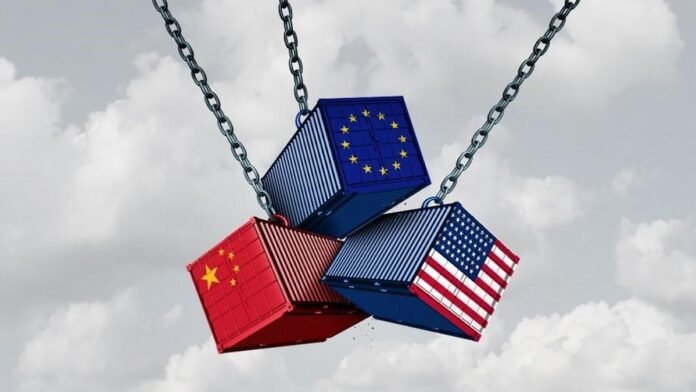
New US tariffs and tougher EU regulations heighten pressure on China, raising the risk of retaliation and broader global trade conflagration.

Mounting trade tensions involving China have become a significant source of concern for the global economy, reflecting a broader trend toward economic nationalism and the increasing use of trade policy as a geopolitical tool.

The latest developments involve proposed new tariffs by the United States and regulatory measures introduced by the European Union, both of which could substantially affect Chinese exports and investment opportunities.

Together, these actions have prompted strong warnings from Beijing and raised the prospect of a wider international trade dispute at a time when global growth remains fragile and supply chains are still adapting to years of disruption.

The most immediate source of concern is the United States Trade Representative’s (USTR) proposal to impose additional tariffs of up to 12.5% on imports from 60 trading partners, including China. The measures are linked to allegations that certain countries have failed to adequately prevent the export of goods associated with forced labor practices.

According to US officials, the objective is to strengthen enforcement of labor standards and ensure that products entering the American market comply with ethical sourcing requirements.

While the proposed tariffs apply to a broad range of countries, China is expected to be among the most affected due to its central role in global manufacturing and the longstanding concerns expressed by US policymakers regarding labor practices in certain regions of the country.

The timing of the proposed US tariffs is particularly significant. Global trade flows have already been affected by ongoing geopolitical tensions, shifts in supply chain strategies and efforts by multinational corporations to diversify production away from single-country dependencies.

Additional tariffs could increase costs for importers and contribute to inflationary pressures in certain sectors. Businesses that rely heavily on Chinese manufacturing inputs may face difficult decisions regarding sourcing strategies, investment planning, and pricing structures.

At the same time, developments in Europe have added another layer of complexity to China’s trade outlook. The European Union recently unveiled two major legislative initiatives: the Industrial Accelerator Act and the Cybersecurity Act.

Although these measures are presented primarily as efforts to strengthen European industrial competitiveness, technological resilience and digital security, they could have significant implications for Chinese firms seeking access to segments of the European market. The legislation reflects growing European concerns regarding strategic dependencies and the security of advanced technologies.

The Industrial Accelerator Act is intended to support the development of key industries within the European Union by streamlining regulatory processes, encouraging investment, and strengthening domestic production capabilities in strategically important sectors.

While the legislation is not explicitly targeted at China, it may create conditions that favor European firms and reduce opportunities for foreign competitors in areas deemed critical to economic security.

Chinese companies that have sought to expand their presence in sectors such as renewable energy, advanced manufacturing, batteries, and telecommunications may encounter increased scrutiny and more challenging market conditions.

Similarly, the Cybersecurity Act is designed to enhance standards for digital infrastructure, data protection and technology procurement across the European Union. These objectives align with broader efforts by European policymakers to reduce vulnerabilities associated with external suppliers of critical technologies.

Chinese technology companies, some of which have already faced restrictions or heightened regulatory oversight in various Western markets, could be disproportionately affected by stricter certification requirements and security reviews. As a result, access to lucrative segments of the European technology market may become increasingly difficult for certain Chinese firms.

Beijing has reacted strongly to both the US tariff proposals and the new EU initiatives. Chinese officials have warned that retaliatory measures remain a possibility if policies perceived as discriminatory are implemented.

Such warnings are consistent with China’s previous responses to foreign trade restrictions, which have often included counter-tariffs, regulatory actions, export controls, or restrictions targeting specific industries and products.

The prospect of retaliation has intensified concerns among investors and policymakers who fear that isolated trade disputes could evolve into a broader cycle of economic confrontation.

A wider trade conflict would carry significant risks for the global economy. China remains one of the world’s largest trading nations and a critical participant in numerous international supply chains. Escalating tensions between China and major Western economies could disrupt trade flows and slow investment activity.

Industries that depend on cross-border production networks, including electronics, automotive manufacturing, renewable energy, pharmaceuticals, and consumer goods, would be particularly vulnerable to increased barriers and uncertainty.

The broader geopolitical context is equally important. Economic relations between China and Western countries are increasingly influenced by strategic considerations that extend beyond purely commercial interests.

Issues such as technological leadership, national security, supply chain resilience, human rights, and industrial competitiveness now play a central role in trade policymaking.

As a result, disputes that might once have been resolved through traditional trade negotiations are becoming more difficult to address because they are intertwined with wider political and security concerns.

The key question ahead is whether policymakers can prevent these tensions from escalating into a more comprehensive trade confrontation. Diplomatic engagement and targeted negotiations may help manage disagreements and reduce the risk of retaliatory escalation.

However, the underlying structural factors driving the current disputes are unlikely to disappear in the near term. Both the United States and the European Union appear committed to strengthening economic security and reducing strategic vulnerabilities, while China remains determined to defend its commercial interests and preserve access to international markets.

The proposed US tariffs and the European Union’s new industrial and cybersecurity measures represent important developments in the evolving relationship between China and major Western economies.

While these policies are justified by their proponents as necessary responses to labor, security, and competitiveness concerns, they have also heightened fears of Chinese retaliation and broader economic fragmentation.

The coming months will be critical in determining whether these measures remain contained policy disputes or become catalysts for a more extensive and potentially damaging global trade conflict.

US secretary of state, Kuwait foreign minister discuss regional security amid ‘reprehensible’ Iranian attacks

0
us-secretary-of-state,-kuwait-foreign-minister-discuss-regional-security-amid-‘reprehensible’-iranian-attacks
US secretary of state, Kuwait foreign minister discuss regional security amid ‘reprehensible’ Iranian attacks

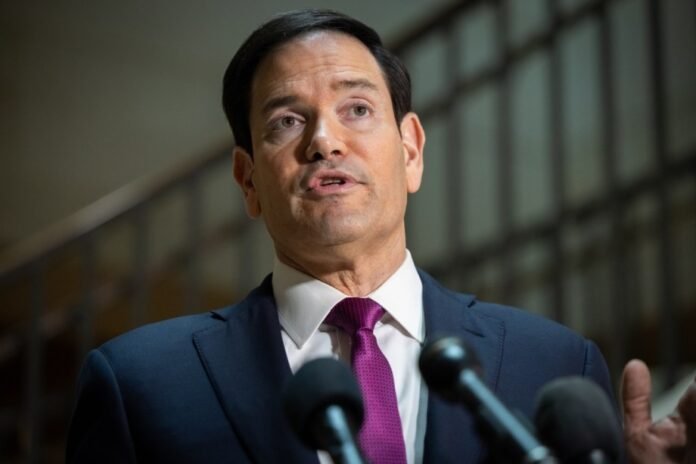
Secretary of State Marco Rubio talks to reporters ahead of briefing the Congressional “Gang of Eight” on U.S. strikes on Iran, at the U.S. Capitol in Washington, DC on March 2, 2026.  [Nathan Posner  - Anadolu Agency]

Secretary of State Marco Rubio talks to reporters ahead of briefing the Congressional “Gang of Eight” on U.S. strikes on Iran, at the U.S. Capitol in Washington, DC on March 2, 2026. [Nathan Posner – Anadolu Agency]

US Secretary of State Marco Rubio held closed-door talks Thursday with Kuwaiti Foreign Minister Jarrah Jaber Al-Ahmad Al-Sabah to discuss the strategic partnership between the two nations following recent military escalations, according to the State Department, Anadolu reports.

“The Secretary reiterated the commitment of the United States to Kuwait’s security, to ensuring that Iran never acquires a nuclear weapon, and restoration of freedom of navigation through the Strait of Hormuz,” said spokesperson Tommy Pigott.

Rubio condemned the “outrageous and unacceptable” Iranian strikes that recently hit the Kuwait International Airport and other parts of the country, expressing condolences for the casualties.

The meeting follows an announcement Wednesday by the Islamic Revolutionary Guard Corps (IRGC) that it targeted a US base in Kuwait and the US Fifth Fleet headquarters in Bahrain. The attacks, reportedly in retaliation for a US strike on an Iranian communications tower, prompted Kuwait to declare two Iranian diplomats “persona non grata.”

READ: Iran claims US patriot missile, not Iranian strike, destroyed Kuwait airport terminal

Defense, strategic coordination

The Kuwaiti Foreign Ministry said the top diplomats reviewed “close historical ties” and affirmed a commitment to strengthening coordination in the political, defense and investment sectors.

“The meeting also included a condemnation of the repeated and reprehensible Iranian attacks against,” it said, adding both stressed the country’s “full right” to implement all necessary measures to safeguard its sovereignty and territorial integrity.

“The United States and Kuwait are united in our vision of regional stability and an open and free Strait of Hormuz,” Rubio noted on a US social media company X.

Microsoft testing wearable AI gadget aimed at office workers

0
microsoft-testing-wearable-ai-gadget-aimed-at-office-workers
Microsoft testing wearable AI gadget aimed at office workers


Microsoft is developing new wearable technology with an artificial intelligence (AI) enabled gadget.

The company unveiled two concept products it has developed for people who often use AI tools in their work during its yearly conference for technology developers.

One device is a small portable cube with a touch and voice-activated screen, meant for a desk. The other was “a wearable access badge,” Microsoft executive Steven Bathiche said, to hang around the neck or on a belt loop, giving quick access to AI-driven work.

Microsoft, which did not say when it would bring either of the devices to market, said current pilots “will inform how these form factors can be built” in the future.

Satya Nadella, Microsoft chief executive, said such gadgets represented a “new form factor” for technology devices.

Currently, they are being used by a few hundred Microsoft employees.

Microsoft has previously attempted to break into the wearable devices.

The company developed a wearable headset, called the Hololens, akin to the Meta Quest or Apple’s Vision Pro headsets.

The Hololens was even set to be sold to the US Army in a contract worth billions of dollars.

But after almost a decade of development, and ongoing issues during testing by the military, Microsoft said in 2024 it would stop producing Hololens.

Google is also having a second go at wearables, as that company recently said it would try again with “smart glasses” more than a decade after its notorious Google Glass flop.

In a video demonstrating Microsoft’s AI-driven access badge and desktop device, part of what Nadella called Project Solara, people doing mainly office work were shown tapping the screens on both devices in order to see and connect to work being done by AI agents. Agents are essentially AI bots doing tasks somewhat autonomously.

Such agents are widely used by technology workers, assisting in their writing of software code, for instance.

The advancement of this kind of AI assistance has been cited widely by major tech executives in a recent wave of layoffs that have impacted many thousands of workers.

Microsoft’s badge and the desktop device would connect to various Microsoft software and PCs, letting a person interact with their AI agents outside of a laptop or desktop computer.

While the access badge is meant to be worn, Bathiche said it “is lightweight and designed for agent interactions on the go.”

Nadella was shown at one point in a recorded video wearing the access badge on a lanyard around his neck, similar to the way people wear identification cards required to enter office buildings.

The badge is also equipped with a small camera.

During Bathiche’s demonstration, he took the wearable badge, activated it using his fingerprint, and pointed it at the audience of the conference, telling it to take some pictures of the crowd and send them to him for review.

It did so, he said.

The camera allows agents “to better understand and help take action on the environment around them,” Bathiche said in an online blog post about the devices.

Cameras on other AI-centric devices, like Meta’s AI eyeglasses, for instance, have come under intense scrutiny about when, why and how they record and store video.

Via BBC

Dashlane explains how attackers managed to download encrypted password vaults

0
dashlane-explains-how-attackers-managed-to-download-encrypted-password-vaults
Dashlane explains how attackers managed to download encrypted password vaults

Dashlane said that attackers mounted a coordinated hacking campaign against a large base of its users in an attempt to recover as many encrypted password vaults as possible. The password manager provider said fewer than 20 personal user vaults were downloaded before it shut down the operation.

In a campaign that started Sunday, the unknown threat actor abused the mechanism that allows Dashlane users to add new devices, such as computers or phones, to their accounts. By abusing Dashlane’s programming interfaces for device enrollment, the attackers sent requests to large numbers of existing users’ registered email addresses. In an update published Thursday, Dashlane wrote:

The threat actor targeted the API endpoints for device registration and used a brute force attack to send a large volume of automated requests to those endpoints.

In response, Dashlane’s automated security systems operated as intended, triggering an automatic lockout of the targeted accounts to protect those users. Before the attack was fully mitigated, the threat actor was able to brute force and generate valid tokens for fewer than 20 personal plan customers, allowing them to register a new device on those accounts and download copies of users’ encrypted vaults.

The flow and strategy of the attack

When a user installs the Dashlane app on a new device and attempts to enroll it in their existing account, Dashlane first verifies the account holder’s identity. This verification is completed by sending a one-time six-digit token to the user’s registered email address (or, for users who have enabled two-factor authentication, by validating a six-digit code generated by their authentication app).

For the registration to succeed, the user must enter this code into the Dashlane application. At this point, Dashlane will approve the enrollment and send a copy of the encrypted vault to the device. Vault contents remain unreadable until the user enters the master password, which acts as a decryption key. As Dashlane explains in its security documentation, the one-time password must be entered on the new, enrolling device for the registration to be successful.

Brute-forcing the one-time code for a single account—meaning iterating through every possible combination until the right one is entered—would be little more than a fool’s errand, even within the three-hour window that the codes remained valid. With 1 million possible valid codes, the attackers would have to cycle through a statistically significant percentage within that period. Rate limiting, in which a set number of requests are allowed per account, would also lock out the account.

To improve their odds, the attackers sent requests to register new devices across a large number of accounts. Then they simultaneously entered the one-time codes into each of them. In theory, attacking two accounts this way increased the odds for each try to 1 in 500,000. Attacking 1,000 accounts would increase the odds to 1 in 1,000, and so on. The more accounts that were targeted, the better the chances one of them will fall. The economics of password spraying work similarly. The technique also weakens rate limiting because the large number of attempts is spread out, limiting the number hitting any single account.

Ultimately, the 2FA spraying attack managed to hit the right combination on fewer than 20 user accounts, according to Dashlane, before it was shut down. The company said it has contacted all those users and that any user who has not already received a notification is unaffected.

For attackers to obtain the decrypted vault contents for those accounts, they would still have to crack the master password. Dashlane makes this process difficult by using an algorithm known as Argon2. It dramatically slows down and intensifies the process of converting the plain-text master password into a cryptographic hash. In turn, entering large numbers of guesses requires a tremendous amount of time and computing resources, even when the cracking is performed using GPUs or special-purpose hardware.

That means the chances of the attackers decrypting one of the encrypted vaults they obtained is very small in the event the master password was strong, meaning long, randomly generated, and has high entropy. However, not everyone uses such master passwords. In the event the master password was included in word lists exchanged by password crackers, the chances of success would be higher, although still unlikely.

Broadly speaking, the incident has similarities to the 2022 LastPass breach, which also allowed attackers to obtain encrypted user vaults. Eventually, the attackers managed to obtain decrypted information from some of them. The success was the result of two things.

First, certain fields, such as website URLs, remained unencrypted in vaults. That meant attackers could read them even without the master password. Second, some of the stolen vaults used outdated algorithms that didn’t adequately intensify the process for converting the plain-text password into a hash. Dashlane has said that no user fields in vaults are unencrypted. Further, when algorithms are periodically strengthened to account for advances in cracking abilities, the process occurs automatically, with no interaction required. The algorithm update process for LastPass vaults at the time came with more user friction.

Dashlane’s initial notification left out key details of the attack and led to considerable confusion about the ongoing risk users faced.

Out of an abundance of caution, both master passwords and the contents of any of the recovered Dashlane vaults should be changed immediately to reduce the chance, however unlikely, that the attackers succeed in breaking the master password. Unaffected Dashlane users don’t need to take any such action.

Trump Administration Tries to Shift Blame for Ebola Response

0
trump-administration-tries-to-shift-blame-for-ebola-response
Trump Administration Tries to Shift Blame for Ebola Response


As an Ebola outbreak continues to rage in Central Africa, the Trump administration keeps trying to blame the World Health Organization — revealing what experts say is a deep misunderstanding about global disease response.

In the eastern Democratic Republic of Congo, local health workers have been battling the devastating virus without adequate supplies, testing materials, or international support. The outbreak is further complicated by the rare strain of the disease, known as Bundibugyo, that standard field tests often miss and for which there are no vaccines or therapeutics. At least 62 people in Congo and one in Uganda have died according to WHO, but experts say this is likely a significant undercount due to the outbreak emerging in a remote, war-torn region.

“The outbreak had a big head start, and we’re still behind, but under the leadership of the Government of DRC, we are catching up,” WHO Director-General Tedros Adhanom Ghebreyesus, told journalists on Wednesday, after a visit to the epicenter of the outbreak. African health officials say that it might take nine months or more to get a handle on the outbreak.

Experts say Trump administration policies — like dismantling the U.S. Agency for International Development and withdrawing from WHO — have undermined global health security and negatively impacted the response to the outbreak. The U.S. had been the largest provider of humanitarian assistance and health sector support to the Democratic Republic of Congo, funding more than 70 percent of humanitarian work there, according to a 2025 report from Physicians for Human Rights which noted the aid cuts have “severely harmed” public health and humanitarian efforts, including infectious disease control. The Trump administration has reportedly even barred some U.S. health officials from communicating with counterparts at WHO.

In the face of criticism of a U.S. failure to quickly respond to the Ebola outbreak, State Department spokesperson Tommy Pigott lashed out at WHO and heaped praise on his boss. “The security concerns in the area – which President Trump has taken unprecedented steps to address – and the WHO’s delay in informing the world of concerns until May 15 has had an impact,” he told The Intercept.

Public health experts say Piggot’s response exposes a fundamental confusion about how authorities combat infectious disease. “It reveals a lack of understanding about how international health regulations work and what a ‘public health emergency of international concern’ actually is,” Margaret Harris, a former senior WHO official and a medical doctor who responded to Ebola outbreaks in West Africa in the mid-2010s and Congo in the late 2010s, told The Intercept.

On May 5, WHO issued an alert of a high-mortality outbreak in Congo’s Ituri Province, which included deaths among healthcare workers. On May 14, blood samples were finally analyzed across the country, in the capital, Kinshasa. A day later, the analysis confirmed Bundibugyo virus disease, a strain of Ebola.

“We also need to remember that Ebola is only one health threat among many that these communities face.”

Dr. Mohamed Yakub Janabi, the WHO Regional Director for Africa, explained that affected nations are the lead actors. “WHO does not declare. It’s the member states who declare,” he told The Intercept on Thursday. “On the 15th, Democratic Republic of Congo and Uganda declared. On the 16th, we declared the presence of Ebola, and on the 17th, Director-General Tedros declared this as a ‘public health emergency of international concern.’”

Dr. Marie Roseline Belizaire, WHO Africa’s Director of Emergency Preparedness and Response, further explained that under the well-defined protocols, states have the obligation to declare an outbreak after which the WHO informs the rest of the world and begins providing support. “There is a clear, well-defined methodology and it is clearly outlined in the international health regulations,” she told The Intercept.

The response is markedly quicker than in some previous outbreaks. During the 2014–16 Ebola crisis in West Africa — when more than 28,000 people were infected and more than 11,000 died in the largest ever outbreak of the disease — WHO became aware that Ebola was spreading in Guinea in March 2014 but did not declare a “Public Health Emergency of International Concern” until almost five months later.

Blame for any lag in response is not the fault of WHO, argued Harris, noting that USAID previously supported NGOs and healthcare workers in rural communities on the front lines of such outbreaks. “Dr. Tedros declared it without even calling the emergency committee together, so he wasted no time once they had information about the extent of the outbreak and the fact that clearly it had been running silently for a long time,” said Harris. “But the silence of the outbreak is not something you could lay at the feet of WHO. You lay that at the feet of a very fragile health system in the middle of a conflict that the rest of the world should be doing something to stop.”

The number of suspected Ebola cases in Congo has been reduced from over 1,000 last week to 116 as teams work through a backlog of tests. Experts say many suspected cases turned out to be malaria. This large number of people with untreated malaria demonstrates, they note, the chronic healthcare deficiencies in the region and a need for a comprehensive focus on public health there.

“We also need to remember that Ebola is only one health threat among many that these communities face,” said Tedros. “One of the things I heard from the community leaders is that they worry that the response to Ebola may take resources away from the health and humanitarian services they rely on for their many other needs.”

The Trump administration has faced scrutiny for pouring money into an Ebola quarantine and treatment center for infected Americans being built in Kenya, as a group of distinguished physicians, nurses, public health professionals, and humanitarian workers, including former top officials at the Centers for Disease Control and Prevention, called for Americans exposed to Ebola to be brought home for treatment. “We are deeply concerned by reports that the United States government is pursuing a policy under which American citizens with Ebola exposures requiring quarantine, isolation, or medical care would be transferred to a facility in Kenya,” they wrote in a letter to Congress, noting the “profound legal, ethical, and human rights concerns associated with preventing American citizens from returning home for care or diverting them to third-country facilities.”

On Wednesday, Secretary of State Marco Rubio doubled down on plans to bar Americans with Ebola from being treated in the U.S. “We cannot and will not allow any ‌cases of Ebola to enter the United States,” he said.

“It really sends the wrong message — that it’s a terrifying thing that you can’t possibly allow to arrive at your borders,” said Harris. Kenya has never experienced an Ebola outbreak, making it a perplexing choice of location for a treatment facility.

The U.S. could have set up a facility in Congo, Harris said, which has the most experience and expertise, having stopped 16 previous outbreaks. Or it could bring its citizens home for treatment and quarantine.

“If you’re going to not treat U.S. citizens on-site in DRC, bring them back to the U.S.” said Harris. “You’ve got one of the best health systems in the world, and you’ve got some of the brightest and best in the world in your country. So why aren’t you mobilizing them and showing that America is truly great?”

Israel’s Haredi Debate Becomes an Economic Reckoning

0
israel’s-haredi-debate-becomes-an-economic-reckoning
Israel’s Haredi Debate Becomes an Economic Reckoning


Rising defense costs, demographic change, and gaps in education, employment, and military service are turning a long-running social dispute into a national fiscal challenge

Israel’s debate over the ultra-Orthodox community is no longer only about religion, draft exemptions, or coalition politics. At one of the country’s leading economic policy forums this week, it became a harder question: Can Israel afford its demographic future?

With defense spending rising toward 8% of gross domestic product and roughly a quarter of the state budget, and with Haredim projected to make up a growing share of draft-age Jewish Israelis, the question is no longer theoretical.

In Israel, military service is part of the social contract, defense spending consumes a growing share of national resources, and the army is not a distant institution but a common experience for most Jewish citizens. As those pressures grow, Haredi integration no longer appears only as a dispute over exemptions or religion, but as a budgetary, military, and economic issue.

The stakes are straightforward. As Haredim become a larger share of Israel’s population, the combination of draft exemptions, limited core education, lower male labor-force participation, and sectoral political leverage could strain the army, the tax base, and the high-skill economy on which Israel increasingly depends.

That question ran through the Eli Hurvitz Conference on Economy and Society, organized by the Israel Democracy Institute in Jerusalem. The conference covered defense spending, artificial intelligence, high-tech, the cost of living, reconstruction, healthcare, and the state budget. Yet the Haredi issue repeatedly returned, sometimes directly and sometimes through the broader language of human capital, labor participation, education, and public priorities.

The term Haredi refers to Israel’s ultra-Orthodox Jewish public, a rapidly growing community whose mainstream male institutions traditionally emphasize full-time Torah study. Many Haredi boys do not receive the same core curriculum in mathematics, English, and science as other Israelis; many Haredi men do not serve in the army, and many enter the workforce late or remain outside it for extended periods. Haredi women work at higher rates, often supporting large families, but household income remains relatively low.

Gilad Cohen Kovacs, a researcher at the Israel Democracy Institute who presented a session on “The Economy as a Driver of Change in Haredi Autonomy,” argued that the issue is also a question of how a separate institutional structure shapes growth, employment, and the welfare state.

Cohen Kovacs said the subsidies that support the current Haredi model amount to about 35 to 37 billion shekels a year, or roughly 5.5% of the state budget. Without change, he warned, that figure could grow to more than 60 billion shekels a year in the coming decades. The figures were presented as part of his conference analysis of Haredi autonomy and state support.

He stressed that the issue should not be understood as a simple transfer of “money to Haredim.” In his analysis, part of the money incentivizes patterns that keep Haredi men outside the workforce, while another part strengthens what he described as a parallel system of authority, education networks, communal institutions, and political control.

A welfare state, Cohen Kovacs said, is meant to help those who cannot work, protect people who have been harmed, and enable mobility. In the Haredi case, he argued, part of the subsidy supports the opposite pattern: lower use of earning capacity, partial employment, large families, and a yeshiva-centered way of life.

These are not the conditions for which the welfare state was built

“These are not the conditions for which the welfare state was built,” he said.

That distinction shifts the focus away from individual poverty and toward policy incentives that, according to Cohen Kovacs, sustain dependence and separation. His broader conclusion was that the current model produces a significant intersectoral transfer from non-Haredi Jewish households to Haredi households through tax gaps, public services, subsidies, and exemptions from shared obligations.

Former Prime Minister Naftali Bennett also cited studies on that net balance. According to Bennett, what he described as a “Zionist household”—a non-Haredi Jewish household integrated into military service and the labor market—gives the state about 6,000 shekels more per month than it consumes or receives, while a Haredi household receives about 4,000 shekels more per month than it pays. He described that as a gap of about 10,000 shekels per month between the two household types.

The comparison brought the fiscal debate down from national budgets to family income. It was not presented as a claim that one specific family directly funds another, but as an aggregate measure of taxes, state services, subsidies, benefits, and participation in public obligations.

Dr. Gilad Malach, a researcher at the Israel Democracy Institute who presented a separate study on the defense burden, told The Media Line that his work dealt with one specific part of the larger subsidy debate: security. He said Israel usually treats defense spending as a national budget item, without asking how that burden is distributed across different sectors of society.

Malach said it would be “too simplistic” to explain the gap just by noting that the Haredi public is poorer and therefore pays less tax. “You might say, ‘OK, this is a poor society, so they pay less than their share in the population,’” he said. “But we see that the gaps between them and others—it’s much more than that.”

According to Malach, the visible security budget stands at about 120 billion shekels a year, but the real cost is closer to 150 billion once hidden burdens are included: conscripts paid below their labor value, delayed entry into the workforce, and the cost to employers when reservists leave their jobs for extended service.

If the ultra-Orthodox are about 14% of Israel’s population, he said, they should account for roughly 21 billion shekels of that burden. In practice, he estimated, they contribute about 6 billion.

“So, the gap is 15 billion,” he said.

The figure is politically charged because it places the draft debate inside a broader fiscal equation: who pays for security, who serves, and who carries the indirect costs of a society built around long military service.

Malach was careful not to claim that the gap can be closed quickly. He said the policy tools he presented could reduce it, but not erase it. At most, he estimated, the immediate effect could be several billion shekels, not the full 15 billion.

“Just to make the situation less unequal, more equal than today, but not a real equality between the population,” he said.

The demographic warning was starker. Some forecasts, Malach said, place the Haredi population at around 30% of Israel’s total population within roughly four decades. The more important number, he added, is not the overall population share, but the share among draft-age Jews.

Among Jewish 18-year-olds, he said, the Haredi share could exceed half. In his view, that forecast, if it came true, would mean that “We won’t have manpower for an army if the situation would be that they are not serving in the army. And we can’t have a prosperous economy if so many people won’t have the ability to work in a modern labor market.”

Reem Aminoach, a senior researcher at the Institute for National Security Studies who previously served as financial adviser to the Israel Defense Forces chief of staff, told The Media Line that the problem is often made to look more complicated than it is.

“All you need is to cancel the deferral,” he asserted, referring to the legal mechanism that has allowed many Haredi men to avoid conscription as long as they remain in yeshiva study.

In his view, canceling the deferral would force a clearer choice: service, employment, or some other publicly accountable framework, rather than a system in which avoiding the army also discourages work. Aminoach said the army’s need is practical and immediate.

The army lacks fighters, not clerks

“The army lacks fighters, not clerks,” he said.

Shaul Meridor, a former senior Finance Ministry official, brought the debate down from national aggregates to the level of a single Israeli family. He described a middle- or lower-middle-class family in places such as Migdal HaEmek or Dimona, with five children, one of them serving in Lebanon, and unable to make ends meet. According to figures he cited from a recent study, such a family subsidizes a comparable low-income Haredi family by nearly 1,000 shekels a month.

“Many times we talk about high-tech and the rich and all kinds of other people who subsidize,” Meridor said. “I am talking about socioeconomic cluster four. Whoever knows what that means understands that this is not high-tech, and these are not people sitting in Tel Aviv or Ramat Hasharon. These are people who do not finish the month.”

He said the moral question after October 7 was no longer abstract.

“Why should a family that does not finish the month have to allocate, from money it does not have, 1,000 shekels net a month to subsidize a Haredi family that chose a different life?”

Meridor also argued that Israel’s current policies harm Haredi children themselves by steering them toward poverty.

“As leadership, we must not condemn Haredi children to poverty,” he said. “And that is what we are doing today.”

His proposed principle was direct: those who serve should receive, those who do not serve should not. Combat service, he said, should receive the most; other service should receive less; evasion should receive nothing. But he cautioned that dismantling Haredi autonomy would not happen through a single major law. It would require changes in thousands of government decisions, benefits, tax rules, and allocations that currently favor institutions over individuals.

Political speakers approached the same issue from different directions. Bennett focused on education and subsidies, using his speech to attack daycare payments for families in which the father does not work and does not serve. He also proposed a broad education reform built around a shared state curriculum, while preserving limited community autonomy.

Avigdor Liberman, chairman of Yisrael Beitenu and a former defense and finance minister, framed the issue through coalition politics. In a conversation with Yohanan Plesner, president of the Israel Democracy Institute, Liberman argued that Israel cannot sustain higher defense spending while preserving sectoral budgets and avoiding structural reform. He said any serious change would require a government not dependent on the Haredi parties Shas and United Torah Judaism.

Former Defense Minister Benny Gantz offered a more cautious critique. He said parts of the Haredi leadership were making a grave mistake by perpetuating a situation in which the community is more important than the state. At the same time, he emphasized that there are Haredim who work, study, serve, and contribute to the economy, and that they deserve respect.

Meirav Cohen, a Yesh Atid lawmaker and former minister for social equality, used Jerusalem as a warning. Speaking as a Jerusalemite, she said the capital already shows what happens when integration in the army, employment, and education does not move fast enough. Jerusalem, she said, has fallen in less than three decades from socioeconomic cluster five to cluster two. Every second household receives a municipal property tax discount, she said, meaning the other half must carry some of the highest municipal tax burdens in Israel.

There is no economic model for this

“There is no economic model for this,” Cohen said. “You don’t need prophecies or warnings. Look at what happened to us in Jerusalem.”

The Haredi debate came during a conference dominated by the rising cost of security and the shrinking space for civilian spending. Former Bank of Israel Governor Karnit Flug said in the opening budget session that Israel’s economy had shown resilience, but that the Israel-Hamas war had imposed a heavy price. Defense spending, she said, now stands near 8% of GDP, compared with a little more than 4% before October 7, 2023. Its share of the total budget has risen to about one-quarter, compared with 16% before the war.

That larger fiscal picture helps explain why Haredi integration is no longer treated only as a dispute over religious exemptions. Israel is trying to fund a larger defense establishment, increased rehabilitation needs, more support for reservists, reconstruction in the north and south, health-system gaps, transportation infrastructure, and a high-tech sector facing global competition. Speakers also warned that insufficient investment in Arab society carries its own cost in lost output, making the broader point that Israel cannot afford to underinvest in any large population group while defense and rehabilitation needs are rising.

Artificial intelligence and high-tech added another layer. The Israel Innovation Authority’s 2026 report, presented at the conference, showed that high-tech remains Israel’s main growth engine. In 2025, the sector contributed roughly half of the economy’s growth, reached 18.3% of GDP, accounted for 58% of exports, and employed more than 400,000 people. But the same report also warned of stagnation in employment share, a decline in research and development jobs in Israel, expansion of activity abroad, and growing pressure from the shekel’s appreciation.

That is why Haredi integration now intersects with the artificial intelligence debate. Israel wants to compete in a global economy built on advanced skills, data science, engineering, defense technology, and artificial intelligence. But a growing share of its future workforce is educated in systems that often do not provide the tools required for that economy. The point was not that every Israeli must work in high-tech, but that the next economy will demand basic quantitative and digital skills across far more jobs.

Eli Hurvitz, CEO of the Eddie and Jules Trump Family Foundation, told the conference that the children currently choosing what to study in high school will be the workforce of 2040. In an artificial intelligence-driven world, he said, mathematics, data, teamwork, and independent learning will become basic conditions for opportunity.

The challenge of Haredi integration does not fit neatly into familiar categories of minority rights or welfare policy. In Israel, it is tied to compulsory service, repeated wars, high defense costs, a knowledge-based economy, and a parliamentary system in which sectoral parties can hold the balance of power. The Haredi community is a growing part of Israel’s electorate, budget, labor market, and future security burden. That is why the debate has become one of the country’s central tests of governance.

The conference produced no single, comprehensive solution. Some speakers emphasized immediate enforcement of the existing draft framework. Others focused on incentives, core education, tax benefits, or direct ties between the state and Haredi individuals rather than through communal institutions. Some warned against coercion that could backfire, while others argued that decades of gradualism have failed. But there was a striking convergence around one point: the status quo is no longer to be treated as a manageable inconvenience.

The discussion, as reflected in the conference sessions and interviews cited here, was dominated by economists, former senior officials, and political figures warning about the long-term costs of the current model. Representatives of the major Haredi parties were not quoted in those sessions or interviews.

Malach put the warning in the starkest terms. Israel has survived enormous shocks, he said, and remains a wealthy country with a strong economy. But if current patterns continue as the Haredi population grows, the problem will not remain a matter of resentment or budgetary imbalance. It will become a question of manpower, productivity, and national resilience.

“Right now, it’s very hard, but we are handling,” he said. “The point is that if you call today’s situation very bad, things would be worse than that.”

What emerged in Jerusalem was more than an argument over the draft. It was a broader economic reckoning over who serves, who pays, who studies the skills needed for the next economy, and whether the state can continue financing separate rules for a growing part of its population. Israel’s next election may decide the coalition arithmetic. The harder question, raised throughout the conference, is whether any government will be willing to change the arithmetic of the country itself.
Ukraine war: air campaign intensifies as Russia and Ukraine trade massive drone and missile attacks

0
ukraine-war:-air-campaign-intensifies-as-russia-and-ukraine-trade-massive-drone-and-missile-attacks
Ukraine war: air campaign intensifies as Russia and Ukraine trade massive drone and missile attacks

Over the past month, there has been a notable increase in the intensity of the air war in Russia’s aggression against Ukraine. Strikes in mid- and late-May and early June have been characterised by significantly larger numbers of drones and missiles deployed by Russia in single attacks, leading to more destruction and more casualties.

At the same time, Russian territorial gains on the ground have slowed significantly, and in some cases have been reversed by successful Ukrainian counter-attacks.

The change in intensity in the air war, however, is what generates headlines, and for good reason. Two consecutive Russian attacks on May 13 and 14 were the largest in the war to date.

Ten days later, a similar strike hit Kyiv and other Ukrainian cities. And a week after that, Russia launched yet another large-scale strike.

Just focusing on the Russian strikes, however, masks an important pattern of increasingly effective Ukrainian retaliation.

The first Russian attack in May was followed by Ukrainian strikes on the Moscow region. The second one saw Ukrainian strikes on St Petersburg on June 3, just before Vladimir Putin’s St Petersburg International Economic Forum was due to begin there.

At the same time, Ukraine has also intensified its strikes on Crimea and critical Russian supply lines to the peninsula, which Moscow has illegally occupied since 2014.

This series of Russian and Ukrainian airstrikes represents a high-intensity retaliation cycle. Ukraine responds to a Russian strike, which Moscow then uses to justify its massive strike, and so on.

What is new is both the scale of the Russian strikes, with larger numbers of drones and missiles compared even with the peak of attacks in late 2025, and the quickening cycle of these tit-for-tat attacks.

Ukrainian attacks deep into Russia are no longer just symbolic but highly effective – prompting Russia to accuse Ukraine of a terror campaign, in an attempt to deflect from its own systematic targeting of civilian infrastructure.

In their levels of destruction and civilian casualties, the Russian strikes also seem more effective than in the past – and Ukraine’s air defences less so. But this is only partially true. Ukraine’s intercept rate of drones remains high. However, the larger number of drones being deployed by Russia means that, in absolute numbers, more drones hit their targets.

Russia has also deployed more missiles in recent strikes, which Ukraine finds harder to intercept – not least because its stockpiles of anti-missile defences have been depleted over time, with the decrease in US support since Donald Trump’s return to the White House in January 2025.

The recent diversion of US interceptors to the American war effort in the Middle East has also run down the stocks of these defence systems that are available to Kyiv.

Can this intensity be sustained?

Russia has thus been presented with an opportunity it is ruthlessly exploiting. But how sustainable is the current pattern?

The scale and frequency of the past four weeks is probably beyond Russia’s capacity to sustain indefinitely. While still large in scale, the strikes in late May and early June did not involve the same number of munitions as the first wave.

Smoke rises over St Petersburg harbour, June 3 2026.

Embarrassment for Putin: Ukraine hit St Petersburg with drone strikes as the Russian president’s annual economic forum was about to start in the city. Ulf Mauder/dpa

Russia is clearly able to mass-produce cheap attack drones, but less able to do the same for missiles. So, sustaining larger-scale attacks over time is likely to decrease their frequency, while more frequent attacks will mean a more limited scale.

A mixture of the two is most likely – a sustained campaign of frequent massed drone strikes, with intermittent spikes of large missile barrages.

While this may be a sustainable attack pattern for Russia, it does not mean the current level of effectiveness is equally sustainable. Ukrainian air defences will adapt and become more effective, including against Russian missiles.

Its defence cooperation with the EU is simultaneously improving. The lifting of Hungary’s veto on €40 billion (£34.6bn) of EU reimbursements for military support is likely to free additional funds to supply critical air defence systems to Ukraine.

Even with a sustained Russian air campaign, a manageable equilibrium is likely to set in over time. But critically, this will not merely be characterised by better Ukrainian defences against Russian attacks – but also by more effective Ukrainian strikes at Moscow’s critical war infrastructure.

The Russian air campaign, and the war against Ukraine more generally, will thus become more costly for the Kremlin – and not just on the battlefield inside Ukraine.

Whether this simply creates a different stalemate at a more costly level for both sides in their ongoing war of attrition, or prompts them to reassess their exit strategies, remains to be seen.

For Moscow, there is a hard choice to be made: towards escalation, including potential nuclear mobilisation, or towards a peace deal. The middle ground of simply continuing is quickly eroding, because none of Putin’s strategic goals in the war can be achieved this way – and the ongoing waste of resources cannot be sustained indefinitely.

On the Ukrainian side, the statement by Ukraine’s president, Volodymyr Zelensky, that Ukraine’s recent strikes on Russia put the country on an equal footing with Moscow in negotiations, hints at Kyiv’s willingness to negotiate an end to the war with Moscow. However, it may take several more rounds in the air campaign retaliation cycle before the Kremlin reaches a similar conclusion.

0FansLike
0FollowersFollow
0FollowersFollow
0SubscribersSubscribe
- Advertisement -
Google search engine

Recent Posts