18 C
London
Wednesday, June 3, 2026
Home Blog

Lawmakers Demand Answers After the White House Initiated a $620M Loan to a Firm Tied to Donald Trump Jr.

0
lawmakers-demand-answers-after-the-white-house-initiated-a-$620m-loan-to-a-firm-tied-to-donald-trump-jr.
Lawmakers Demand Answers After the White House Initiated a $620M Loan to a Firm Tied to Donald Trump Jr.

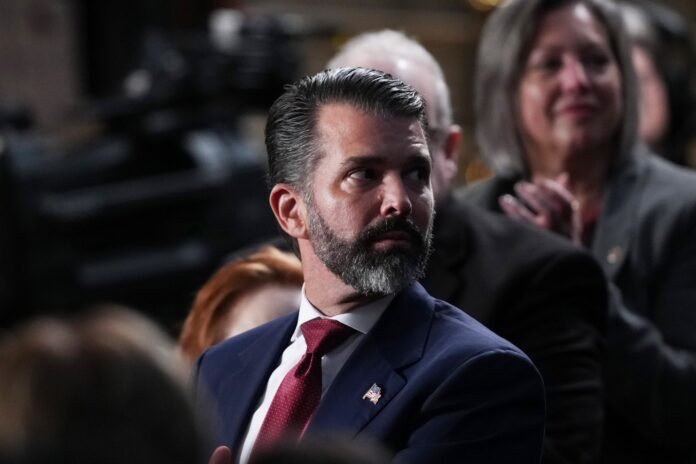
A group of lawmakers demanded answers from the White House this week following a ProPublica investigation revealing that a top aide to the president intervened to secure a $620 million Pentagon loan to a startup linked to the president’s eldest son.

ProPublica’s reporting “reveals a staggering level of corruption and influence peddling that superseded this process, enriching the President’s son at the expense of U.S. national security and taxpayer dollars,” wrote the group of Democratic lawmakers, including Sens. Elizabeth Warren of Massachusetts, Richard Blumenthal of Connecticut and Mazie Hirono of Hawaii as well as Reps. Jason Crow of Colorado and Mike Levin of California.

Read More

Last year, the Pentagon announced the loan to Vulcan Elements, a small North Carolina startup, about three months after Donald Trump Jr.’s venture capital firm took a stake of undisclosed size in the rare-earth magnet company.

Interviews and Defense Department records reviewed by ProPublica show that the request to lend to the firm was made by Peter Navarro, who serves as the president’s senior counselor for trade and manufacturing and is a friend of Trump Jr.’s.

Of the dozens of companies the Pentagon was considering funding at the time, Vulcan’s was the only deal initiated by a top aide to the president, an official at the Pentagon who was not authorized to speak publicly told ProPublica.

After defense officials got the White House request, they asked Pentagon staff to move at an unusually rapid pace, said another person who was involved in the deal at the Pentagon but not authorized to speak about it.

“The call came from the White House: We have to get this done,” the person said.

In their letter, addressed to White House Chief of Staff Susie Wiles, the lawmakers asked a series of questions about Navarro’s involvement in the deal, including whether he intervened at someone else’s direction, if the president was aware or involved, and who Navarro communicated with at the Pentagon.

They also asked more broadly about whether White House officials have communicated with federal agency officials about other companies linked to the Trump family.

“The American public — and service members that are in harm’s way — expect that the DoD contracting process is fair, unbiased, and competitive to ensure that only the best companies, providing only the best products, receive taxpayer dollars,” the lawmakers wrote.

Navarro, who served as trade adviser in the president’s first term, and Trump Jr. have formed a close bond in recent years. The president’s son visited Navarro in prison while he served time for defying a subpoena from lawmakers investigating the Jan. 6, 2021, riot at the U.S. Capitol. Trump Jr. was one of the small group of people Navarro dedicated his latest book to for having “my back when it was against the wall.” And a week before the Vulcan deal was announced, Trump Jr. hosted Navarro on his streaming show, encouraging his nearly 2 million subscribers to buy Navarro’s book. That interview was not long after word came down from Navarro to Pentagon staff to make the massive loan to Vulcan, one of the defense officials involved in the deal said.

Asked to respond to the lawmakers’ allegations and ProPublica’s reporting, Navarro in a text message wrote “Staggering level of hyperbole. More fake news” but did not elaborate. The White House did not immediately respond to a request for comment on Tuesday.

Navarro did not respond to questions from ProPublica sent to him directly before the initial article was published. But in a post on X afterward, he called the story “fake news on steroids.”

Vulcan has not commented. A White House spokesperson had said in a statement that the administration is working “in the best interest of the American people,” adding, “The President’s entire team, including Senior Counselor Navarro and officials at the Department of War, is working together and with private industry to secure America’s critical mineral supply chain at Trump Speed.” Trump Jr.’s spokesperson said last week that the president’s son does not discuss companies he has invested in with federal government officials and did not speak to Navarro about Vulcan. He “has no knowledge about how this deal came together,” the spokesperson said. A spokesperson for 1789 Capital, the venture firm where Trump Jr. is a partner, said it also played no role in Vulcan getting the loan and did not learn about the deal before it was public.

“No company receives preferential treatment,” a Pentagon spokesperson said. “Outside affiliations, investors, or political connections play absolutely no role in the Department’s funding decisions.”

The loan was part of the Pentagon’s effort to fund companies that could help the U.S. reduce dependence on China’s critical mineral supply chains. It represented a big win for Vulcan and its investors. Estimates of the company’s valuation grew tenfold after the deal was announced.

The deal is one of many actions by the administration of President Donald Trump that have helped companies in which his family holds stakes. Government contracts and other benefits have gone to various Trump-linked companies. But ProPublica’s reporting on the Vulcan loan represented the first time the awarding of a contract from a federal agency was directly linked to White House intervention.

A number of other lawmakers also criticized the Vulcan deal following ProPublica’s investigation.

Sen. Raphael Warnock, a Georgia Democrat, called it “corruption to the highest degree,” alleging on X: “They are looting this country. Dismantling it, selling it for parts, and lining their own pockets.”

Sen. Patty Murray, a Washington Democrat, called for a congressional investigation. “It’s just nonstop corruption from this White House, and Republicans in Congress are content to twiddle their thumbs and look right in the other direction,” she posted on X. “Congress should be investigating and putting a stop to this kind of crooked self-dealing—not enabling it.”

What awaits Iraq’s militias under Tom Barrack?

0
what-awaits-iraq’s-militias-under-tom-barrack?
What awaits Iraq’s militias under Tom Barrack?

It won’t take long to understand what lies ahead for Iraq—and for the Iranaligned militias—after President Donald Trump appointed Tom Barrack as his Special Presidential Envoy for Syria and Iraq. All one needs is the paragraph Barrack published just hours after the announcement. He wrote that “the balance of power around which the United States operates works best when allies become more selfreliant and share the burden—always within a framework that preserves American influence, stability, and alignment with core U.S. strategic objectives.”

That single sentence makes something unmistakably clear: Washington no longer views Iraq as a political file requiring relationship management, but as a security file requiring decision management.

The irony is that the focus on Barrack’s name obscures the real shift. The issue is not the replacement of one envoy with another, nor the illusion—long cultivated by Iraq’s militias—that U.S. policy changes every time Washington rotates a midlevel official. That illusion fed a false sense of victory for years, as if Iraq’s fate hinged on the temperament of a bureaucrat. But Barrack is not that type. He is not a practitioner of soft diplomacy. He calls things by their real names. He insults publicly. He speaks without silk gloves.

American media have repeatedly described him as the “man for the dirty jobs” in U.S. foreign policy—one of the few capable of convincing Trump to take on complicated files personally.

Before his appointment, Politico and Axios reported that Barrack had been pushing for a “mergedfile approach” to the region: treating Iraq, Syria, and Lebanon as a single interconnected arena rather than three separate problems. Today, it seems we have moved from “quiet execution” to “execution with audible slaps.” Barrack is not a diplomat who smiles for the camera. He is the man who once described Iraq as a “failed political experiment,” Lebanon as a “farce,” and journalists in terms unfit for print. Imagine that language becoming part of U.S. policy toward the Green Zone and the militias surrounding it.

But the fixation on Barrack’s personality hides something deeper: Washington no longer sees Iraq as a political partner. It sees a malfunctioning security file. And once Iraq becomes a security file, the language shifts from negotiation to surgery—excision, not maneuvering; control, not accommodation.

This explains the panic among Iranaligned factions the moment Barrack’s name surfaced. He embodies a shift that is too blunt to be misread and too sharp to hide behind slogans of sovereignty.

For Iran’s parties and militias, the picture is even clearer: they are the inevitable losers. The U.S. decision to curb their dominance is not a personal whim; it is an institutional choice. Barrack is merely the executor—armed with a dose of diplomatic cruelty he is well known for.

Militias accustomed to whispered diplomacy will now face diplomacy that shouts, delivered by a man who writes messages in bold and reads them aloud.

READ: US envoy welcomes Iraqi move to place weapons under state control 

Washington now treats Iraq as part of a regional network, not a standalone case that can be indulged or excused. In the eyes of the current administration, Iraq is one link in a chain stretching from Tehran to Baghdad to Beirut. The tighter the interconnection, the more likely the three files will be handled with one mind, one hand, and one envoy who neither flatters nor smiles.

This is why Barrack’s arrival is not a personnel change—it is the declaration of a new phase in which decisions are measured by their ability to break stagnation, not by their ability to appease local actors.

In an interview with The National in Abu Dhabi, Barrack abandoned even the minimal diplomatic varnish. He said the United States had “divided Iraq and Syria,” and that the Iraq invasion became “a glaring example of what should never be repeated.” He was not trying to beautify the past. He was diagnosing it: three trillion dollars spent, twenty years of fractured history, hundreds of thousands of lives lost, and, in his words, “we walked away emptyhanded.”

This is not selfcriticism. It is a policy statement: no more spending without results, no more patience for dual power between state and militia.

Iraq is entering a phase with no courtesies. Washington no longer sees Baghdad as a relationshipmanagement file but as a decisionmanagement file. The duality of power is no longer tolerable, and American patience with “state thieves” is wearing thin. The coming language will not be diplomatic—it will be direct, exposing, and perhaps wounding.

If Iraqi media celebrated the removal of Mark Savia, they may need to brace themselves. The man replacing him does not speak the language of traditional diplomacy. He speaks the language of shock.

So the question now is: who can afford to sleep in Iraq’s current landscape?  

Certainly not the militias. The era of “grey understandings” is over. The era of “sharp decisions” has begun.

What awaits Iraq under Barrack is not a change of faces, but a change of rules.

OPINION: Why does Muqtada al‑Sadr expect us to believe him?

The views expressed in this article belong to the author and do not necessarily reflect the editorial policy of Middle East Monitor.

Autonomous vehicles were supposed to cut traffic—what if they don’t?

0
autonomous-vehicles-were-supposed-to-cut-traffic—what-if-they-don’t?
Autonomous vehicles were supposed to cut traffic—what if they don’t?

The age of robotaxis, long the preserve of science fiction, is now a reality, at least in a handful of American cities. It took just over a decade to get from the DARPA Grand Challenges to the start of Waymo’s commercial service in California, albeit initially with a safety driver on board.

Proponents of the technology, which has attracted at least $100 billion in investment, say robotaxis will be safer than human-driven vehicles. And last year, Waymo’s data showed its cars were involved in many fewer crashes than human drivers, with much lower insurance claims, although recent issues with school buses and flooded roads show the technology isn’t perfect.

But safety isn’t the only selling point: Autonomous vehicles are said to cut traffic. But data from Waymo’s reports to the California Public Utilities Commission shows that, at least in that regard, robotaxis are no better than ride-hailing services like Lyft and Uber.

Is there anyone in there?

The study, published in Transport Findings by MIT Transit Lab Assistant Director of Research Awad Abdelhalim analyzes data from August 2023 through December 2025, a roughly 1,000-day period. During that time, Waymo’s robotaxis completed 13.8 million trips for 19.3 million passengers over a total traveled distance of 86.3 million miles (138.8 million km), growing at a rate of around 15 percent a month. Abdelhalim wanted to see what proportion of those rides were made by empty robotaxis—known as “deadheading”—and how the number changed over time.

Initially, only 36 percent of Waymo’s miles were driven with a passenger onboard. But by the end of the study period, that had increased to around 56 percent and then plateaued, Abdelhalim found. So about 44 percent of Waymo’s driven miles are conducted with empty EVs.

I’m not entirely surprised; on each of my recent visits to San Francisco, the sensor-festooned Jaguar I-Paces have been thick on the ground, but rarely did I spot any humans riding in them.

In fact, there are two different kinds of deadheading: empty vehicles driving around waiting to be assigned a ride and empty vehicles driving to collect their passenger(s). And Waymo has been steadily reducing the number of miles driven empty en route to a pickup as it increases the size of its fleet. The number of deadhead miles per trip has also been declining, in part due to Waymo’s introduction of freeway service, the author suggests.

A similar analysis conducted late last year on Waymo’s CPUC data from January 2024 through September 2025 by Matthew Raifman, who studies policy and autonomous vehicles at UC Berkeley, also found that 44 percent of Waymo’s miles were driven with empty vehicles and that two-thirds of those empty miles were robotaxis driving around waiting to be assigned a customer.

No better, no worse than ride-hailing

Interestingly, similar arguments about reducing traffic were once made about ride-hailing. In 2014, other researchers at MIT published a study claiming that ride-hailing could reduce car ownership and cut traffic. Two of the authors later walked back their conclusions after evidence showed that ride-hailing actually increased traffic and CO2 emissions, partly because it was cheap enough to encourage trips people otherwise wouldn’t have taken. They noted that robotaxis would probably fall into the same trap. (A 2018 study found that almost half of the increase in vehicle miles traveled in San Francisco was attributable to ride-hailing services.)

In total, about 40 percent of the miles traveled by a Lyft or Uber driver are deadhead miles, suggesting there’s little difference in congestion whether there’s a human behind the wheel or not. Incidentally, this fact helps explain some of the statistical safety advantage of a robotaxi—if the average number of occupants of a robotaxi is always lower than the average number of occupants of a ride-hailing vehicle, the expected injury rate for the robotaxi should be correspondingly smaller.

Meanwhile, effective congestion reduction could be achieved through a robust expansion of public transport. The same number of people on a bus take up much less room on the road than if they were spread out in passenger cars, and the numbers get even better for trains and subways. But public transport doesn’t come cheap. Waymo might have raised $16 billion earlier this year for its robotaxis, and at least $100 billion has been invested in the sector since the 2010s. Meanwhile, the American Public Transport Association called for $268 billion in investment over five years, and a report by Transportation For America puts the price tag for a “world class” transit system at $4.6 trillion over the next 20 years.

Australia is the victim of an AUKUS ‘bait and switch’

0
australia-is-the-victim-of-an-aukus-‘bait-and switch’
Australia is the victim of an AUKUS ‘bait and switch’

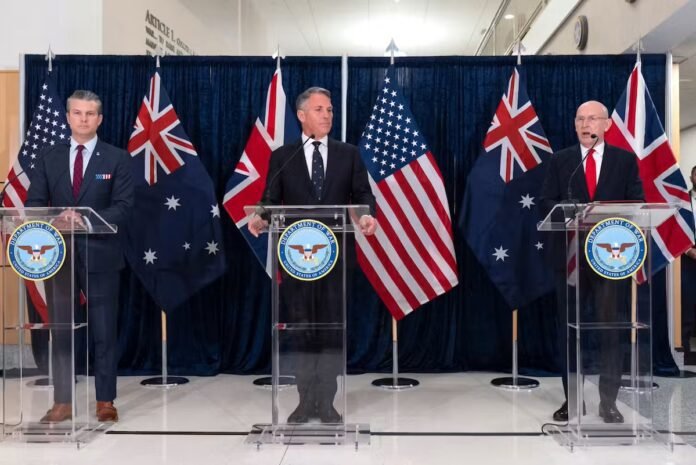
From left to right: US Secretary of Defense Pete Hegseth, Australian Defense Minister Richard Marles and British Defense Secretary John Healey on the sidelines of an AUKUS ministerial meeting at the Pentagon on Dec. 10, 2025. Photo: Mark Schiefelbein / AP via The Conversation

At a security conference in Singapore over the weekend, the three AUKUS partners – the United States, United Kingdom and Australia – announced a tweak to their partnership that has generated quite a lot of attention in Canberra.

Australia will now receive three second-hand Virginia-class, nuclear-powered submarines in the coming years, instead of the original deal of two used vessels and one brand new sub.

Australian Defence Minister Richard Marles spun this as a welcome streamlining of the fleet that would simplify its supply chain, as well as the management and sustainment of these complex warships.

What Marles seems not to have noticed is that not all Virginia-class submarines are the same.

The new boat the US had promised would have been from Block 6, the most recent design. Instead, all of Australia’s submarines will now likely come from Block 4, which carry a much smaller weapon payload. Firepower is a measure of a fighting ship’s utility. Having the largest weapon capacity is a key ingredient for battle success.

It seems Australia has been a willing – not to say eager – victim of what is essentially a “bait and switch.”

The deal has always been unequal

The unilateral change of plans should not have come as a surprise to anyone in the Australian government.

AUKUS has always been a one-sided deal in which the US reaps the benefits while Australia accepts the risks. The agreement Australia entered into provides the US with numerous opportunities to cancel or modify the deal. Washington simply acted on what was permitted.

In addition, the AUKUS agreement allows the US president to cancel the submarine transfer at his or her whim, while Australia has no right to challenge or lobby against the decision.

The current president, Donald Trump, is not known for loyalty to his allies. The fact the AUKUS deal was signed by his predecessor, Joe Biden, is likely to further reduce Trump’s level of commitment.

To make the US decision more of an affront, Australia has already contributed at least US$2 billion (A$2.8 billion) to the American submarine manufacturing pipeline.

The US is not building enough submarines to meet its own requirements, let alone the additional boats it has promised to Australia. The Australian cash contribution was meant to improve the US rate of production so Canberra would be able to get one or two of the latest boats. Australia’s investment has turned out to be a very poor one, and there are no refunds.

The Australian government has also misinterpreted what the US hopes to get out of the deal.

For the Americans, selling Australia any subs at all makes little sense in the contest with China for supremacy in the Western Pacific. It just reduces America’s own military capability.

The key element in AUKUS for the US has always been the submarine base that Australia is building at HMAS Stirling in Western Australia. This is where the US Navy plans to operate its submarines. The US has already announced the establishment of the support elements that will administer and sustain these warships.

As we can see now, Australia has virtually no leverage to make the submarine deal more equitable.

The Americans know that Australian strategic policy since before the Vietnam War has been to demonstrate relevance to the US. Australia has not hesitated to rush into US-led wars – even those of dubious legality – in order to show loyalty. If this was a poker game, the Australians would be playing with most of their cards face-up.

What can Australia do to gain more agency?

Unfortunately, not a lot. The US holds all the important cards. Australia will likely continue to be a dutiful ally in the hope the US will deliver what it has promised. But there are no guarantees.

The only vulnerability the US has is its desire to base its submarines at Stirling. If Australia were to halt construction or restrict US access to the base, it would be seen as tantamount to canceling the deal.

The price Australia would pay for its temerity would be an enormous loss of respect and favor in Washington – the very thing a long succession of governments has sought to boost.

Australia’s defense policy has seen our country ensnared in a trap of its own making. There are lessons our political leaders can hopefully learn. The first is to accept the wisdom of former UK Prime Minister Lord Palmerston’s adage that countries have no eternal allies, just eternal interests.

The second is to recognize that an unbalanced alliance leads to servility, not partnership. The final lesson is to develop faith in Australia’s ability to protect itself rather than turning to an ally of increasingly dubious reliability.

Albert Palazzo is adjunct professor in the School of Humanities and Social Sciences at UNSW Canberra, UNSW Sydney

This article is republished from The Conversation under a Creative Commons license. Read the original article.

Beloved UK Actor Dies Suddenly at 44

0
beloved-uk-actor-dies-suddenly-at-44
Beloved UK Actor Dies Suddenly at 44


Owain Rhys Davies, the Welsh actor known to Twin Peaks fans for his role in the cult classic revival Twin Peaks: The Return, has died suddenly at just 44 years old.

His family announced the heartbreaking news Tuesday, revealing that the actor’s death has left loved ones stunned and searching for answers.

Davies played Agent Wilson in Twin Peaks: The Return, the long-awaited 2017 revival of David Lynch and Mark Frost’s eerie, surreal television phenomenon. The show brought back longtime fans and introduced a new generation to the strange, haunting world of Twin Peaks.

But now, the actor’s own story has taken a tragic and mysterious turn.

His brother, Rhodri, shared the devastating update on social media, writing that he and their father were announcing the loss with “profound sadness.”

“This news will come as a great shock to many,” he wrote.

Rhodri described Owain as a man whose “love, friendship and generosity” reached far and wide, making clear just how deeply his loss is being felt by those who knew him.

The family also acknowledged that the circumstances surrounding his death are not fully clear.

Although there are “still questions that remain unanswered regarding the circumstances of his death,” Rhodri said the family’s understanding at this stage is that Owain “passed suddenly, naturally, and peacefully.”

No official cause of death has been publicly released.

Davies’ passing is especially shocking because of his young age. At only 44, the actor had built a career that included roles in television, fantasy films, and offbeat horror.

In addition to Twin Peaks: The Return, Davies appeared alongside Johnny Depp in Disney’s 2016 fantasy sequel Alice Through the Looking Glass. He also starred in the 2019 satirical horror film A Serial Killer’s Guide to Life.

For fans of Twin Peaks, his death marks another sad loss connected to one of television’s most beloved and bizarre franchises.

The revival series, which aired more than two decades after the original show became a cult sensation, was packed with mystery, nostalgia, and unsettling twists. Davies’ appearance as Agent Wilson placed him inside that unforgettable universe, alongside a cast tied forever to one of TV’s strangest legacies.

Tributes are expected to pour in from friends, fans, and colleagues as news of his sudden death spreads.

For now, his family is mourning a beloved son, brother, and friend whose life ended far too soon.

Davies leaves behind a legacy of creativity, warmth, and a screen presence that fans of the strange and surreal will not forget.

Gulf expat reactions to Iran war show us how countries like UAE instil loyalty in western migrants

0
gulf-expat-reactions-to-iran-war-show-us-how-countries-like-uae-instil-loyalty-in-western-migrants
Gulf expat reactions to Iran war show us how countries like UAE instil loyalty in western migrants

When the US and Israel launched their strikes on Iran on February 28 and Iran retaliated by targeting the Gulf Arab states, I was closely monitoring social media accounts from the region. I research Middle East politics, with a focus on the Gulf, and the social media platforms I use are full of people living in the region – including western migrants, or as they tend to style themselves, expats. To my surprise, from many of them I saw the same message: “It is safe and normal here.”

This was not a trivial claim – these messages were sent as the countries they live in came under attack. But the attitudes they exhibited reflect a broad strategy long cultivated by Gulf Arab regimes. This aims to instil in the people that opt to live there a sense of security, as well as aspiration for the lifestyle on offer and loyalty towards the country for making that lifestyle available.

More importantly, the expats’ reactions exposed the role that foreign residents and influencers have played in advancing a particular understanding of “normality”. Not only do they accept authoritarian rule in the Gulf, they have been pushing out messages about insecurity elsewhere.

To be clear, a lot of foreign workers did leave the Gulf, reportedly in the tens of thousands, when the conflict began. But even so, many of the initial reactions on social media, whether people stayed or opted to leave, projected this sense of security.

Part of the US security hub

These regimes have developed an image designed to attract global connectivity, foreign capital and flows of people and goods. The UAE, especially Dubai, has become a symbol of tax-free residency and luxury tourism. Qatar has established itself as reliable gas exporter and world-class mediator. Saudi Arabia has launched a sweeping reform project recasting national identity and the kingdom’s global role in championing “moderate Islam”, while Bahrain has worked early since independence to become a regional banking hub.

These state-building processes thrived under the security umbrella of US and other western military bases across the Middle East. Firmly embedded in the US sphere of influence, Gulf monarchies have benefited from precious diplomatic cover and access to global markets. Other regional regimes, meanwhile – notably Iran – were excluded. This was more often due to their hostility towards the US than for their brutal repression and disastrous governance at home.

By directing global attention to threats such as Iran, Gulf regimes forged a strong sense of domestic normality. But in recent years, a less reliable US regional policy has made the security arrangement increasingly uncertain, prompting Gulf regimes to explore alternatives. Without renouncing deeper engagement with the US, they welcomed cooperation with other powers outside the region, like China, as well as the possibility of closer relations with Israel and even a modus vivendi with Iran.

Despite ongoing rivalries, including within the regional forum, the Gulf Cooperation Council (GCC), regional conflict de-escalation and management appeared to be the preferred means to continue insulating the Gulf normality. Yet the ongoing destruction in Gaza, closer US-Israeli alignment in the latter’s pursuit of regional dominance, and the ensuing pressure on Iran’s network of proxies has undermined this delicate balance.

A US warplane refuels above Palm Islands, Dubai, March 2026

A US warplane refuels above Palm Islands, Dubai, March 2026 – the US has been instrumental in providing security for Gulf nations. But is that now under threat? SSgt. Paige Weldon/U.S. Air Force Photo/Alamy Live News

Expats get political

The attack on Iran exposed foreign residents’ role in sustaining the image of “normality”. Until then, expats and influencers embodied this normality by displaying safe, privileged and apolitical lives.

I saw posts attempting to divert attention from the threat of war in the Gulf by people claiming to feel safer under missile attacks in Dubai and Doha than “after 9pm” in London or Manchester. Other posts preferred the prospect of missile attacks to being “bombed by 50% taxes”.

These sorts of comments tend to mimic narratives pushed by far-right movements in the west around crime, taxation and immigration.

A viral trend concentrated in the UAE but replicated across other Gulf countries featured influencers responding to the question “Aren’t you scared?” with imagery of members of the ruling families and messages such as: “No, because I know who protects us.” The UAE president’s much-publicised walk in Dubai Mall followed this paternalistic framing of security.

After the initial shock, many influencers returned to the old form of messaging, not posting about the war and focusing on showing their privileged “everyday” lives.

Controlling the message

It’s important to remember that Gulf Arab regimes possess robust censorship apparatuses and broad national security and anti-cybercrime laws that penalise content deemed to “cause panic” or “disturb public order”.

Authorities in Saudi Arabia were swift to remind residents that “photography serves the enemy”, banning unofficial sharing of damage caused by the war, while the UAE threatened severe sentences for people posting negative messages. There have been reports of people detained for posting the wrong content – more than 300 in Qatar alone. Heightened security concerns exposed western expats to coercive practices typically reserved to political dissidents.

Having invested efforts in insulating their domestic projects from external threats through seeking political accommodation with neighbours, including Iran, Gulf leaders may now pursue a different strategy. In fact, we’re already seeing some different approaches as various Gulf countries work out their own best approach to the changing situation in their region. Some, like Bahrain, remain hostile to Iran. Others, including Saudi Arabia, are more nuanced in their approach, looking overall to ensure security in the region.

But for regimes and expats alike, this is a time of reckoning for the parameters sustaining “normality” in the Gulf. Most certainly, the region will never be the same.

How long will it take to rebuild Blue Origin’s launch pad? We asked some SpaceX vets.

0
how-long-will-it-take-to-rebuild-blue-origin’s-launch-pad?-we-asked-some-spacex-vets.
How long will it take to rebuild Blue Origin’s launch pad? We asked some SpaceX vets.

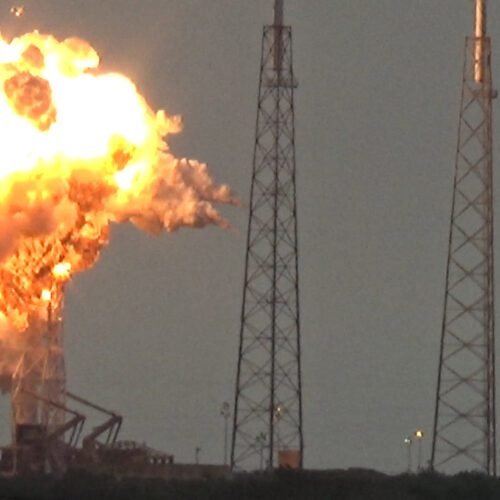
A former NASA engineer named John Muratore sat on console as launch director in early September 2016 as propellant flowed onto a Falcon 9 rocket in Florida. Ahead of a planned launch two days later, SpaceX was preparing for a static fire test of the vehicle.

Then, all of a sudden, the rocket exploded. “It came out of nowhere, and it was really violent,” Muratore said. This fireball resulted in the destruction of the rocket, much of its launch site, and the AMOS-6 satellite already attached to the vehicle.

Nearly a decade later, on May 28, Blue Origin conducted a static fire test of a new rocket, with its larger New Glenn vehicle a few miles down the Florida coast. The company had gotten further into its test, reaching engine ignition, before its rocket also exploded.

For longtime space coast observers, some of the parallels between these two spectacular explosions were uncanny. Both the Falcon 9 and New Glenn programs were on the cusp of taking off toward a higher launch cadence. At the time, NASA was counting on the Falcon 9 to return its capability to launch humans, and today, NASA is counting on New Glenn as a key element of its lunar ambitions. And both explosions catastrophically damaged their launch sites.

To better understand the challenges Blue Origin now faces, Ars spoke with several SpaceX veterans who experienced the AMOS-6 failure and worked the long days afterward to get the Falcon 9 rocket flying and rebuild the shattered facility at Space Launch Complex-40.

Difficult memories return

“My AMOS-6 scar started itching when I saw the video of New Glenn,” said Hans Koenigsmann, the SpaceX engineer who led the failure investigation in the fall of 2016. “It’s really terrible.”

Koenigsmann was SpaceX’s vice president of build and flight reliability at the time, and his team faced the challenge of identifying the failure in the upper stage of the Falcon 9 rocket that caused it to explode during a relatively benign part of the fueling process.

This involved a weekslong search of the wetlands surrounding the launch site at Cape Canaveral for pieces of the booster. The idea was that the components farthest from the pad were nearest the most energetic part of the explosion. Ultimately, the investigative team narrowed in on the complex failure of the lining of a pressure vessel in the upper stage.

For its investigation, Koenigsmann urges Blue Origin to be as transparent as possible with NASA and the Federal Aviation Administration and to study and take apart the physical evidence as soon as possible to identify the causes of failure. Every anomaly, he cautioned, is different.

Blue Origin has not publicly discussed the cause of the New Glenn failure, but speculation has focused on a possible anomaly in one of the seven main BE-4 engines. The Falcon 9 investigation was the primary obstacle to SpaceX returning to flight, but launch pad availability will be the bigger hurdle for Blue Origin.

Searching for wreckage

After the AMOS-6 failure, SpaceX was also without an active launch pad for the Falcon 9 rocket. Nearest to readiness was an existing pad at Vandenberg Air Force Base in California, which was undergoing upgrades to support the “Full Thrust” variant of the Falcon 9 rocket, which used densified propellant. This is where the Falcon 9 returned to flight, less than five months later, in January 2017.

SpaceX then focused on completing modifications to Launch Complex 39A at Kennedy Space Center, which it had leased from NASA. The Falcon 9 rocket launched from here in February 2017.

The closest analog to what Blue Origin is attempting to do, therefore, concerns the rebuild of Space Launch Complex-40, which was largely destroyed by the AMOS-6 failure.

According to Muratore, SpaceX was not allowed to begin reconstruction work at the launch pad until January 2017. The delay stemmed from the ongoing investigation, which included a grid-by-grid examination of debris, cataloging recovered materials, and launch site remediation. Muratore and other SpaceX engineers spent these four months redesigning the launch pad.

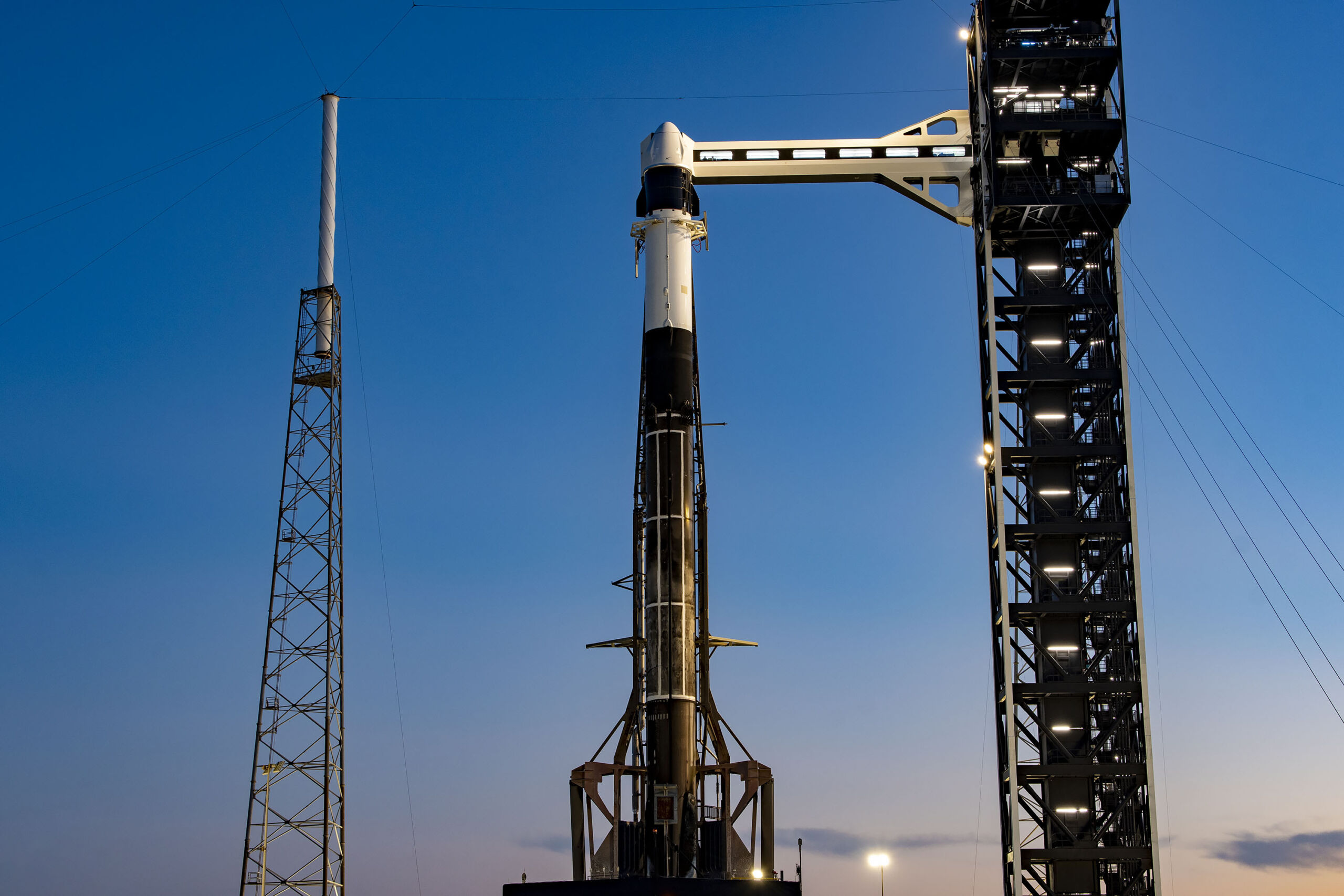
SpaceX’s Falcon 9 rocket and Cargo Dragon spacecraft, seen here with the new launch tower and access arm at SLC-40.

SpaceX’s Falcon 9 rocket and Cargo Dragon spacecraft, seen here with the new launch tower and access arm at SLC-40. Credit: SpaceX

Trip Harriss, who managed the Falcon 9 fleet operations in 2016, said everyone at the company pitched in to support the investigation and then the reconstruction of the SLC-40 pad. The search for debris lasted from shortly after the explosion until early October, when efforts had to be abandoned due to the approach of the powerful Hurricane Matthew.

During this time, SpaceX pulled out all of the stops, deploying drones and aircraft with sensitive equipment. “At one point, I got a submersible to take into the flame trench, where there was an accumulation of water, to see if we could find any rocket debris,” Harriss said. “But it was just large chunks of concrete.”

Going fast

Launch pads are among the most complex pieces of infrastructure involved in sending a rocket into space. They require a lot of brawn, as evidenced by the need for tall and strong steel launch towers. Then there’s the large amount of concrete used for the foundation, flame trench, and surrounding areas.

Last Thursday, during the test failure, one of Blue Origin’s massive launch towers toppled, and the other appears to be seriously damaged. The concrete underneath the rocket also appears to have collapsed in some places. From a structural standpoint, there is likely a significant amount of work ahead.

But launch sites are about much more than concrete and steel. There is an incredible amount of electrical wiring that almost certainly got fried by the fireball. And then there is the intricate tubing that provides gas and liquids to fill not just the rocket’s propellant tanks but also smaller pressurized vessels throughout the vehicle for various purposes.

“I’m worried about the tubing,” Harriss said, noting that every launch site has bespoke plumbing and electrical elements, with lots of tasks that must be done by hand; pulling and splicing wire, delicate welding, and so much more. “It takes a lot of time and effort to put that into place.”

When it began rebuilding SLC-40, SpaceX had some advantages, Muratore said. The company had great teams coming from its pads at Kennedy Space Center and Vandenberg—not just the engineers, but also welders and other laborers who work directly on the infrastructure. This allowed SpaceX—a company already known for moving rapidly—to power through the SLC-40 rebuild.

Still, it took a while, with the first Falcon 9 rocket not launching from a rebuilt SLC-40 pad until December 2017. Including site remediation, SpaceX went from the AMOS-6 failure to a new launch in 15.5 months. The actual construction part, following remediation and design, required 11 months.

On Monday night, Blue Origin’s chief executive, Dave Limp, said the company would launch from its damaged pad before the end of this year, less than seven months from now.

None of the former SpaceX employees I spoke with for this article—some on the record, some off—believe this timeline is realistic. Twelve months was generally viewed as the best-case scenario. Eighteen months was seen as most likely.

Silver linings

Muratore said that, as demoralizing as it may be, the failure of the New Glenn rocket presents a golden opportunity to Blue Origin. He noted that the AMOS-6 launch failure allowed SpaceX to redesign the new pad to optimize for faster turnarounds between launches.

“It’s certainly a tremendous tragedy and a setback, but looking back on it rebuilding SLC-40 enabled us to make key improvements that we really needed to achieve high flight rates,” Muratore said. “When we built the pad initially, we had limited experience, and there were limitations that were in the pad because we could only model or speculate on how the pad was going to perform.”

One of the key changes was completely revamping the “strongback throwback” that supports the rocket at the launch site and falls away just before launch. SpaceX redesigned this massive structure to pull away more rapidly during liftoff to spare its myriad umbilicals and other connections to the rocket from serious damage.

SpaceX also improved the flame trench to reduce damage and upgraded the water-based sound suppression system. These updates were intended to support a higher cadence and reduce pad turnaround times from weeks to days. And it worked. By earlier this year, SpaceX was able to launch Falcon 9 rockets from SLC-40 within 45 hours of each other.

Blue Origin also designed its launch pad at LC-36A long before the final specs for the New Glenn rocket were complete. Muratore said Blue Origin started poaching SpaceX employees to work on its Florida pad even before SpaceX completed the SLC-40 rebuild nearly a decade ago. Now the Blue Origin engineers have reams of data from three New Glenn launches and will be able to optimize the rebuilt pad for a more efficient turnaround.

Harriss also sought to offer uplifting thoughts to a Blue Origin workforce struggling through a difficult period.

“Don’t give up,” he said. “This is hard. This is recoverable. You can come out on the other side, even if it doesn’t feel like that right now. It does not feel good. You feel bad for your customer, the engineers, and the operations team. Everyone is in a place where it’s no fun to be there. But take any thoughts of this is the end and replace them with this is an opportunity to start anew.”

Ukraine hits St. Petersburg site as Putin’s Davos kicks off

0
ukraine-hits-st.-petersburg-site-as-putin’s-davos-kicks-off
Ukraine hits St. Petersburg site as Putin’s Davos kicks off


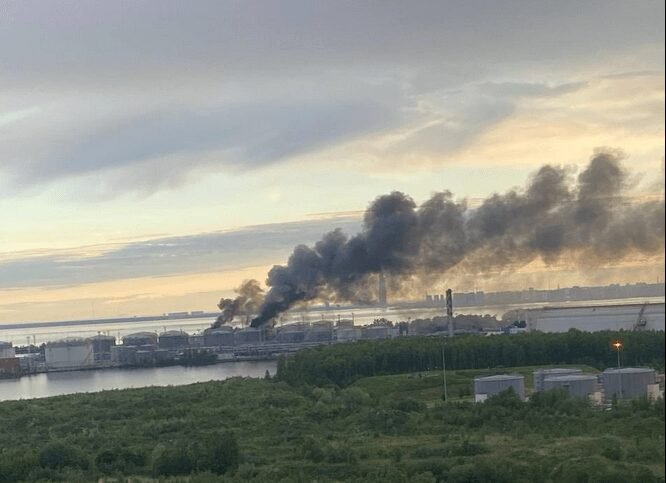
Ukraine attacked an oil terminal in St. Petersburg in the early hours of Wednesday morning — just before Russian President Vladimir Putin’s big economic forum kicked off in the city.

“Important facilities on Russian territory were hit last night. Among them was the Petersburg Oil Terminal. The distance from Ukraine is about 1,100 kilometers. Purely military targets at the Kronstadt base were also hit,” Ukrainian President Volodymyr Zelenskyy said in a statement Wednesday.

The St. Petersburg International Economic Forum — a key international event for Putin aiming to project strength and prove Russia is not globally isolated — started Wednesday with dozens of Russian officials, Gulf heavyweights and business representatives from Brazil and Germany expected to attend.

A U.S. delegation is expected to attend the forum for the first time since 2018, including the chair of the administration’s Commission of Fine Arts and architect of President Donald Trump’s White House ballroom, Rodney Cook.

Also in attendance: hard-right influencer and podcaster Candace Owens, who was sued by French President Emmanuel Macron and his wife Brigitte after pushing various conspiracy theories about the couple and their relationship; American actor Steven Seagal, whom Ukraine’s foreign minister quipped to POLITICO that Putin might as well appoint as his peace envoy; and possibly mega misogynist subject to multiple criminal charges Andrew Tate, who arrived in Moscow on Tuesday.

The overnight attack was a joint operation by the Security Service of Ukraine, the Unmanned Systems Forces, the Special Operations Forces, the Defense Intelligence of Ukraine and the State Border Guard Service of Ukraine. Russian authorities confirmed the assault on Wednesday.

“Early this morning, infrastructure facilities in Kronstadt, Kirovsky, and Krasnoselskiy districts were attacked by UAVs. Several objects were damaged. Several people were injured. There are no casualties,” St. Petersburg Mayor Aleksandr Beglov said in a statement.

Russian officials did not confirm the terminal — which is the biggest in northwestern Russia — was hit, but local open-source investigators geolocated videos of blasts in the area of the local port, where the facility is situated.

Ukraine’s campaign of long-range strikes on Russia’s oil refineries this year has put 40 percent of Russia’s oil refining capacity out of action, Zelenskyy said last week.

“Russia is not doing well: Just as the Saint Petersburg Forum is about to open, large drone attacks are taking place,” Latvian Foreign Minister Baiba Braže told the Riga Stratcom Dialogue on Wednesday morning. “There has been another oil refinery strike, smoke is rising, and the economy is also not doing well.”

Putin is planning to speak at the forum Thursday.

Source: Politico

The Shangri-La shockwave and the death of automatic assurance

0
the-shangri-la-shockwave-and-the-death-of-automatic-assurance
The Shangri-La shockwave and the death of automatic assurance

When US Secretary of War Pete Hegseth took the podium at the recent Shangri-La Dialogue in Singapore, his words signaled a profound structural shift in the global security landscape. Declaring that the era of America subsidizing the defense of wealthy nations is officially over, Hegseth outlined a new doctrine of “pragmatic idealism” in which Washington demands partners, not protectorates.

For decades, the post-Cold War architecture operated on the central assumption that the American security umbrella was a permanent, ideological certainty. That assumption is now collapsing, replaced by a hyper-realistic, transactional blueprint that is forcing major Asian powers, especially Japan, to rapidly reassess their strategic foundations. For Tokyo, Hegseth’s declaration landed with particular force, signaling that the era of automatic strategic assurance has ended.

This shift carries particular weight for Tokyo. The dominant narrative surrounding this change often focuses on regional anxiety or the potential for heightened friction. It is no longer that simple. The Shangri-La Dialogue has evolved into a laboratory for a new form of geopolitical adaptation, in which medium and major powers are discovering that traditional alliances no longer guarantee automatic stability. National resilience must instead be engineered through self-reliance, enhanced capabilities, and carefully cultivated regional partnerships rather than distant guarantees.

What we are witnessing is not a retreat into isolationism, but the structural fragmentation of global security into localized, parallel arrangements that empower capable regional actors like Japan to play more proactive roles. For Japan, this is not merely a shift in diplomatic atmosphere – it is generational strategic realignment that will reshape its security posture for decades.

This matters profoundly because the Indo-Pacific remains the primary engine of global economic growth. More importantly, the unfolding dynamic exposes three structural transformations that will shape international politics over the next decade.

  • First, middle and major powers are entering an era of calculated strategic autonomy, where nations like Japan must balance historical constraints with the imperatives of a more competitive environment.
  • Second, the traditional security architecture is being replaced by a model of “businesslike cooperation” where burden-sharing is the mandatory baseline, compelling allies to demonstrate tangible contributions.
  • Third, regional powers are taking the driver’s seat in managing their own neighborhoods, reducing their reliance on external arbiters while still preserving essential diplomatic channels.

These trends are already filtering into Japan’s domestic debates on constitutional reinterpretation, defense spending, and the country’s long term strategic identity.

Nowhere is this transformation more visible than in Tokyo’s response. For years, Western analysts assumed Japan would remain a passive consumer of Western defense guarantees, bound by historical and constitutional constraints. Instead, Tokyo is actively adapting to the new reality of American transactionalism with sophistication and determination.

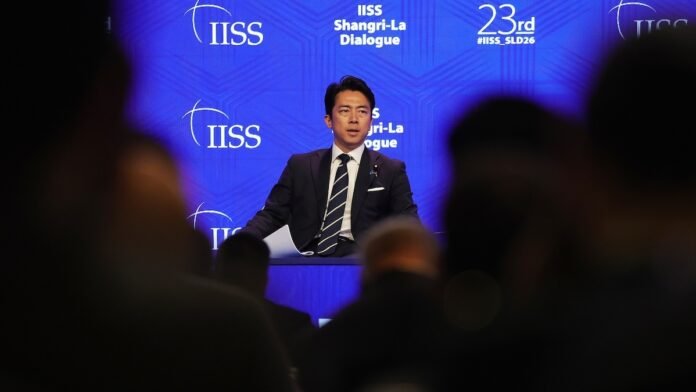
Faced with explicit signals from Washington that alliances will be judged strictly by hard power and collective readiness, Japanese Defense Minister Shinjiro Koizumi used the Singapore summit to deliver a sophisticated defense of Japan’s evolving posture. Rather than engaging in defensive rhetoric, Koizumi emphasized that Japan’s door to dialogue remains always open, even as the country advances concrete defense enhancements.

Tokyo is moving forward with tangible initiatives – including expanding defense technology co-production, revising arms export guidelines to enable greater collaboration with partners and strengthening maritime partnerships across Southeast Asia, notably with the Philippines, Australia, and South Korea. These steps build on Japan’s recent decisions to raise defense spending toward 2% of GDP and invest heavily in next-generation capabilities such as missiles, cyber defenses, and joint production arrangements.  

This represents a major strategic evolution for Japan. No longer waiting for external clarity, Tokyo is quietly but steadily building its own minilateral defense networks to hedge against an increasingly unpredictable global system. These efforts include deeper integration with like-minded nations through frameworks that emphasize interoperability, intelligence sharing and joint exercises, all while maintaining a firm commitment to international law and a free and open Indo-Pacific.

Yet, this strategy is carefully calibrated. Even as Tokyo enhances its defense capabilities through increased budgets, technological innovation and expanded partnerships, its leadership has repeatedly emphasized that the door to dialogue remains open with all parties, including China. This approach rejects hostile framing in favor of maintaining practical diplomatic channels and underscores Japan’s identity as a peace-loving nation that respects established norms.

This balanced posture mirrors a broader regional trend: Asian powers are seeking to stabilize their environments through bilateral diplomacy, economic pragmatism, and incremental security cooperation rather than getting drawn into ideological crusades.

Washington, meanwhile, faces a deeper dilemma than merely demanding that allies pay their way. The current administration’s posture risks shifting from long-term systemic stability to short-term crisis management if not carefully managed. By prioritizing transactional outcomes over unconditional structural commitments, Washington is altering the psychological baseline of global deterrence.

Governments from Seoul to Manila, and particularly in Tokyo, are quietly recognizing an uncomfortable truth: military dominance without absolute predictability forces every state to become an independent strategic architect, investing more deeply in its own resilience while forging flexible partnerships. The age of dependent allies is ending; the age of self-designed security architecture is beginning.

The consequence of this realization is already transforming public psychology and policy planning across Asia. In capitals throughout the region, the strategic conversation is no longer about abstract ideological alliances alone. It is about supply chain resilience, independent deterrence capabilities, the defense of critical maritime commerce lanes and the development of robust domestic defense industries.

Middle powers like Japan recognize that they are vulnerable to uncertainty itself. A temporary strategic shift can be managed through adaptation, but permanent unpredictability alters long-term investment behavior, fiscal planning, technological priorities, and national risk assessments.

Once regional states begin pricing geopolitical volatility into their sovereign defense planning – as Japan has done through its updated national security strategies – the strategic landscape changes permanently, creating both challenges and opportunities for greater self-determination.

The danger now is not necessarily a sudden escalation between competing powers. The greater danger is the normalization of systemic fragmentation over time.

If security guarantees become contingent on transactional metrics, other regional security frameworks may follow similar patterns. Strategic defense, maritime access, and even critical digital infrastructure corridors could evolve into systems governed by temporary, conditional permissions rather than enduring commitments. That would fundamentally transform global stability in ways that require careful navigation by all parties involved.

Asia is entering an era in which security will be a patchwork of flexible arrangements rather than a single US-led framework. The coming months therefore will matter enormously for Japan and the wider region.

Washington must decide whether its long-term interests are truly served by trading structural alliances for immediate transactional concessions, or whether a balanced approach can sustain deterrence while encouraging greater partner contributions.

Concurrently, regional powers like Japan must determine how to balance their enhanced strategic autonomy with the preservation of regional equilibrium, ensuring that self-reliance strengthens stability rather than undermining it.

One reality is already clear. The Shangri-La Dialogue has shown that power in the modern era is measured no longer solely by old alliance frameworks but also by the ability of individual nations – Japan foremost among them – to navigate a fragmented world, secure their own borders, maintain strategic balance independently and contribute meaningfully to collective security in the Indo-Pacific.

Imran Khalid is a senior fellow at Foreign Policy In Focus – USA.

New York Jews Wake Up at the Israel Day Parade

0
new-york-jews-wake-up-at-the-israel-day-parade
New York Jews Wake Up at the Israel Day Parade


Mayor Mamdani’s absence from a long-standing civic celebration left many Diaspora Jews feeling newly exposed in the city with the world’s largest Jewish population

On Saturday, my friend Craig asked our group text if any of us were interested in going to the Israel Day Parade in New York City the next day. We all live in New Jersey suburbs more than an hour outside the city with our families, and inserting an unscheduled, multihour event into the middle of a weekend full of other obligations was no small request.

None of us is particularly religious, and while we are all proud Jews and supportive of the State of Israel, most of my peer group, with just a few exceptions, do not define themselves primarily by their Jewish identity.

Most American Jews grew up in a golden era of Diaspora Jewry, with our people highly assimilated and good-naturedly associated with beloved neurotic characters like Jerry Seinfeld, Larry David, and Woody Allen. Unique, but not reviled.

My grandmother was a Holocaust survivor, and my mother was born in a displaced persons camp in Munich after the war, before coming to America. So my lens may be slightly more Jewish-centric than others’. My childhood unfolded alongside the ever-present, firsthand trauma my still-young grandmother was left with. I grew up with constant warnings about Jews’ experience throughout history, which did not align with mine in 1980s and 1990s New York. At times, I resented being asked to view my American life through their wounded lens.

Zohran Mamdani’s election as mayor of New York City—home to the largest Jewish population of any city in the world—has been a wake-up call for New York Jews and for Diaspora Jews more broadly.

Since October 7, there has been a palpable shift in how Jews are characterized in our home countries. Our Instagram feeds are filled with anti-Jewish hate crimes; our local news shows crowds of impossibly angry “protestors” in masks and keffiyehs, viciously accusing Jews of the almost unimaginable atrocities to which we have been subjected as victims, both recently and in the past.

Historically, the New York City government has proudly supported our community. Just a few years ago, Michael Bloomberg, one of our own, was mayor.

With the revival of sleeping European antisemitism, now accentuated by the left’s embrace of jihadist Muslim extremism, the post-October 7 world feels much more antagonistic toward Judaism and Zionism.

Surely this can’t touch New York City, right? New York Jews are an almost indistinguishable part of the culture. Bagels and lox, anyone?

Wrong. So shockingly wrong. So naive.

To many Jews, Mayor Mamdani’s politics seem to merge the left’s oppressor-oppressed framing of Israel with rhetoric and alliances that treat Zionism itself as illegitimate. He apologizes for none of it. “Globalize the intifada!” OK by him. Boycott, Divestment, and Sanctions? Yep, more of that, please. Rescind the order adopting the International Holocaust Remembrance Alliance definition of antisemitism? Where do I sign? Veto a school buffer-zone bill backed by Jewish groups, while allowing a narrower houses-of-worship measure to become law without his signature? Of course. And now, lastly, finally—the first mayor in 60 years to skip the New York City Israel Day Parade. New York mayors have traditionally treated the parade as a must-attend civic event. Mamdani chose not to go. It would have been strange for him to be there, to be honest, but the final open slap to the Jewish community was felt.

So my friend Craig, who sent the original text, and I took the train to the city to attend the parade, show support for our community, and be counted in the face of our own mayor’s betrayal of this part of his constituency. Craig summed it up later: “I think Mamdani’s unapologetic antipathy towards the largest Jewish population outside Israel was a wakeup call for many Jews who previously didn’t think much about antisemitism.”

Others told me, “I’m glad you went—we need to show support.” It must have been a common feeling, because I understand this year’s event was the largest in its history, with reports putting attendance in the tens of thousands.

Meanwhile, in the city with the world’s largest Jewish population, attending our own parade required blocks of barricades, police lines, and helicopters overhead. The mayor stayed away, and the security presence made clear that even a celebration of Jewish identity now unfolds under a shadow.

The parade itself was a joyful celebration of the miracle of the State of Israel—its strength, its pride, its accomplishments, and especially its existence. It was a proud gathering of spectators and supporters, including Jewish Police Commissioner Jessica Tisch and Jewish former Mayor Michael Bloomberg, along with hundreds of Jewish and non-Jewish parade participants, including city officials, police, firefighters, and others. We cheered and waved American and Israeli flags, listened to music, and watched groups of youths, politicians, performers, and floats.

Still, the shift in tone was felt, even out in the suburbs. Diaspora Jews are awake. We are definitely awake.

0FansLike
0FollowersFollow
0FollowersFollow
0SubscribersSubscribe
- Advertisement -
Google search engine

Recent Posts