Mayor Mamdani’s absence from a long-standing civic celebration left many Diaspora Jews feeling newly exposed in the city with the world’s largest Jewish population
On Saturday, my friend Craig asked our group text if any of us were interested in going to the Israel Day Parade in New York City the next day. We all live in New Jersey suburbs more than an hour outside the city with our families, and inserting an unscheduled, multihour event into the middle of a weekend full of other obligations was no small request.
None of us is particularly religious, and while we are all proud Jews and supportive of the State of Israel, most of my peer group, with just a few exceptions, do not define themselves primarily by their Jewish identity.
Most American Jews grew up in a golden era of Diaspora Jewry, with our people highly assimilated and good-naturedly associated with beloved neurotic characters like Jerry Seinfeld, Larry David, and Woody Allen. Unique, but not reviled.
My grandmother was a Holocaust survivor, and my mother was born in a displaced persons camp in Munich after the war, before coming to America. So my lens may be slightly more Jewish-centric than others’. My childhood unfolded alongside the ever-present, firsthand trauma my still-young grandmother was left with. I grew up with constant warnings about Jews’ experience throughout history, which did not align with mine in 1980s and 1990s New York. At times, I resented being asked to view my American life through their wounded lens.
Zohran Mamdani’s election as mayor of New York City—home to the largest Jewish population of any city in the world—has been a wake-up call for New York Jews and for Diaspora Jews more broadly.
Since October 7, there has been a palpable shift in how Jews are characterized in our home countries. Our Instagram feeds are filled with anti-Jewish hate crimes; our local news shows crowds of impossibly angry “protestors” in masks and keffiyehs, viciously accusing Jews of the almost unimaginable atrocities to which we have been subjected as victims, both recently and in the past.
Historically, the New York City government has proudly supported our community. Just a few years ago, Michael Bloomberg, one of our own, was mayor.
With the revival of sleeping European antisemitism, now accentuated by the left’s embrace of jihadist Muslim extremism, the post-October 7 world feels much more antagonistic toward Judaism and Zionism.
Surely this can’t touch New York City, right? New York Jews are an almost indistinguishable part of the culture. Bagels and lox, anyone?
Wrong. So shockingly wrong. So naive.
To many Jews, Mayor Mamdani’s politics seem to merge the left’s oppressor-oppressed framing of Israel with rhetoric and alliances that treat Zionism itself as illegitimate. He apologizes for none of it. “Globalize the intifada!” OK by him. Boycott, Divestment, and Sanctions? Yep, more of that, please. Rescind the order adopting the International Holocaust Remembrance Alliance definition of antisemitism? Where do I sign? Veto a school buffer-zone bill backed by Jewish groups, while allowing a narrower houses-of-worship measure to become law without his signature? Of course. And now, lastly, finally—the first mayor in 60 years to skip the New York City Israel Day Parade. New York mayors have traditionally treated the parade as a must-attend civic event. Mamdani chose not to go. It would have been strange for him to be there, to be honest, but the final open slap to the Jewish community was felt.
So my friend Craig, who sent the original text, and I took the train to the city to attend the parade, show support for our community, and be counted in the face of our own mayor’s betrayal of this part of his constituency. Craig summed it up later: “I think Mamdani’s unapologetic antipathy towards the largest Jewish population outside Israel was a wakeup call for many Jews who previously didn’t think much about antisemitism.”
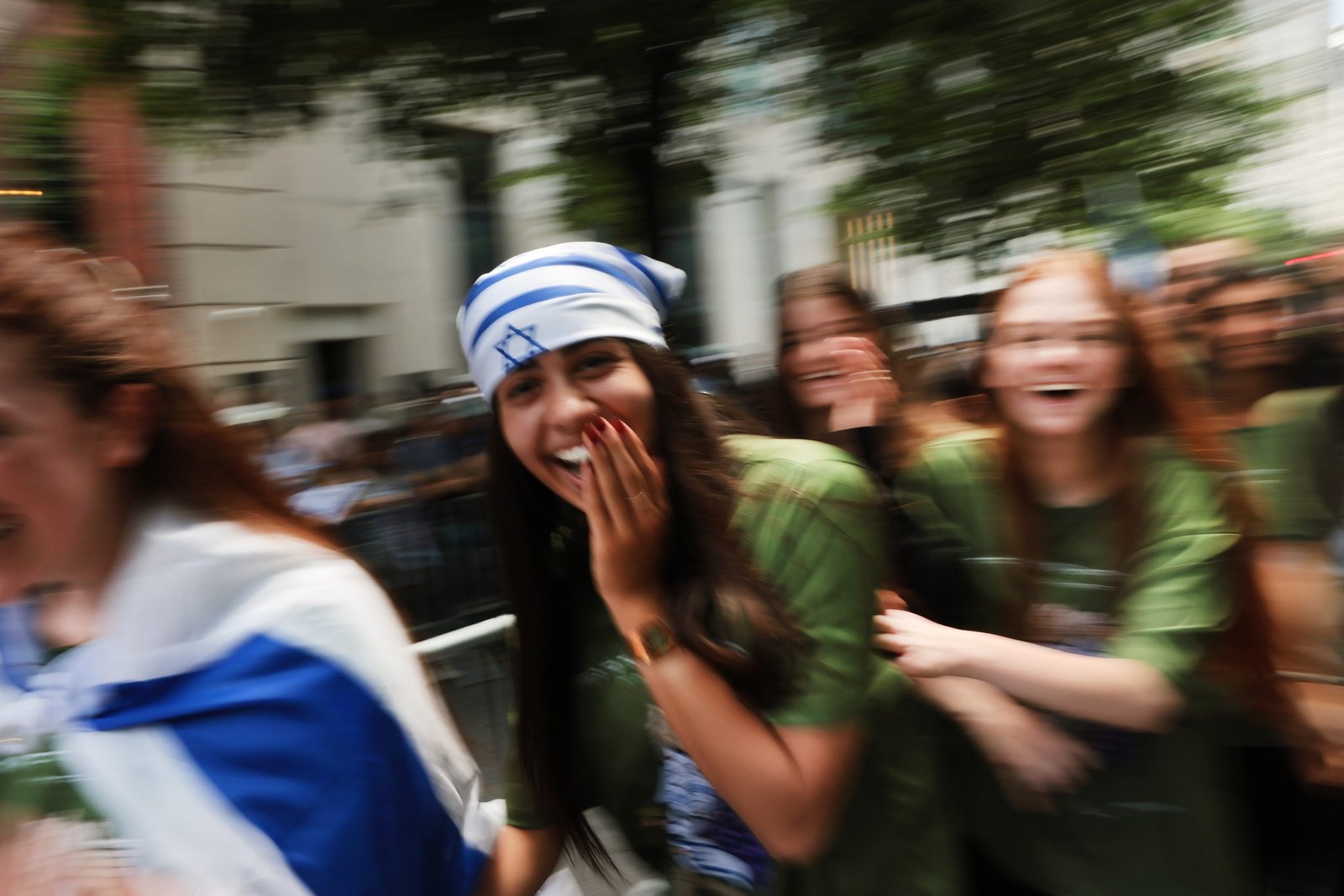
Others told me, “I’m glad you went—we need to show support.” It must have been a common feeling, because I understand this year’s event was the largest in its history, with reports putting attendance in the tens of thousands.
Meanwhile, in the city with the world’s largest Jewish population, attending our own parade required blocks of barricades, police lines, and helicopters overhead. The mayor stayed away, and the security presence made clear that even a celebration of Jewish identity now unfolds under a shadow.
The parade itself was a joyful celebration of the miracle of the State of Israel—its strength, its pride, its accomplishments, and especially its existence. It was a proud gathering of spectators and supporters, including Jewish Police Commissioner Jessica Tisch and Jewish former Mayor Michael Bloomberg, along with hundreds of Jewish and non-Jewish parade participants, including city officials, police, firefighters, and others. We cheered and waved American and Israeli flags, listened to music, and watched groups of youths, politicians, performers, and floats.
Still, the shift in tone was felt, even out in the suburbs. Diaspora Jews are awake. We are definitely awake.