14.4 C
London
Wednesday, June 3, 2026
Home Blog

The Shangri-La shockwave and the death of automatic assurance

0
the-shangri-la-shockwave-and-the-death-of-automatic-assurance
The Shangri-La shockwave and the death of automatic assurance

When US Secretary of War Pete Hegseth took the podium at the recent Shangri-La Dialogue in Singapore, his words signaled a profound structural shift in the global security landscape. Declaring that the era of America subsidizing the defense of wealthy nations is officially over, Hegseth outlined a new doctrine of “pragmatic idealism” in which Washington demands partners, not protectorates.

For decades, the post-Cold War architecture operated on the central assumption that the American security umbrella was a permanent, ideological certainty. That assumption is now collapsing, replaced by a hyper-realistic, transactional blueprint that is forcing major Asian powers, especially Japan, to rapidly reassess their strategic foundations. For Tokyo, Hegseth’s declaration landed with particular force, signaling that the era of automatic strategic assurance has ended.

This shift carries particular weight for Tokyo. The dominant narrative surrounding this change often focuses on regional anxiety or the potential for heightened friction. It is no longer that simple. The Shangri-La Dialogue has evolved into a laboratory for a new form of geopolitical adaptation, in which medium and major powers are discovering that traditional alliances no longer guarantee automatic stability. National resilience must instead be engineered through self-reliance, enhanced capabilities, and carefully cultivated regional partnerships rather than distant guarantees.

What we are witnessing is not a retreat into isolationism, but the structural fragmentation of global security into localized, parallel arrangements that empower capable regional actors like Japan to play more proactive roles. For Japan, this is not merely a shift in diplomatic atmosphere – it is generational strategic realignment that will reshape its security posture for decades.

This matters profoundly because the Indo-Pacific remains the primary engine of global economic growth. More importantly, the unfolding dynamic exposes three structural transformations that will shape international politics over the next decade.

  • First, middle and major powers are entering an era of calculated strategic autonomy, where nations like Japan must balance historical constraints with the imperatives of a more competitive environment.
  • Second, the traditional security architecture is being replaced by a model of “businesslike cooperation” where burden-sharing is the mandatory baseline, compelling allies to demonstrate tangible contributions.
  • Third, regional powers are taking the driver’s seat in managing their own neighborhoods, reducing their reliance on external arbiters while still preserving essential diplomatic channels.

These trends are already filtering into Japan’s domestic debates on constitutional reinterpretation, defense spending, and the country’s long term strategic identity.

Nowhere is this transformation more visible than in Tokyo’s response. For years, Western analysts assumed Japan would remain a passive consumer of Western defense guarantees, bound by historical and constitutional constraints. Instead, Tokyo is actively adapting to the new reality of American transactionalism with sophistication and determination.

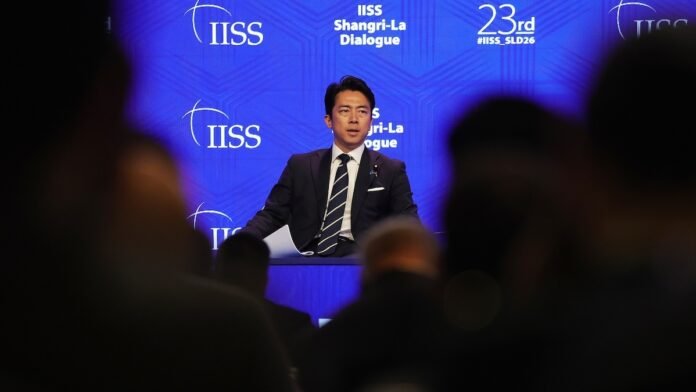
Faced with explicit signals from Washington that alliances will be judged strictly by hard power and collective readiness, Japanese Defense Minister Shinjiro Koizumi used the Singapore summit to deliver a sophisticated defense of Japan’s evolving posture. Rather than engaging in defensive rhetoric, Koizumi emphasized that Japan’s door to dialogue remains always open, even as the country advances concrete defense enhancements.

Tokyo is moving forward with tangible initiatives – including expanding defense technology co-production, revising arms export guidelines to enable greater collaboration with partners and strengthening maritime partnerships across Southeast Asia, notably with the Philippines, Australia, and South Korea. These steps build on Japan’s recent decisions to raise defense spending toward 2% of GDP and invest heavily in next-generation capabilities such as missiles, cyber defenses, and joint production arrangements.  

This represents a major strategic evolution for Japan. No longer waiting for external clarity, Tokyo is quietly but steadily building its own minilateral defense networks to hedge against an increasingly unpredictable global system. These efforts include deeper integration with like-minded nations through frameworks that emphasize interoperability, intelligence sharing and joint exercises, all while maintaining a firm commitment to international law and a free and open Indo-Pacific.

Yet, this strategy is carefully calibrated. Even as Tokyo enhances its defense capabilities through increased budgets, technological innovation and expanded partnerships, its leadership has repeatedly emphasized that the door to dialogue remains open with all parties, including China. This approach rejects hostile framing in favor of maintaining practical diplomatic channels and underscores Japan’s identity as a peace-loving nation that respects established norms.

This balanced posture mirrors a broader regional trend: Asian powers are seeking to stabilize their environments through bilateral diplomacy, economic pragmatism, and incremental security cooperation rather than getting drawn into ideological crusades.

Washington, meanwhile, faces a deeper dilemma than merely demanding that allies pay their way. The current administration’s posture risks shifting from long-term systemic stability to short-term crisis management if not carefully managed. By prioritizing transactional outcomes over unconditional structural commitments, Washington is altering the psychological baseline of global deterrence.

Governments from Seoul to Manila, and particularly in Tokyo, are quietly recognizing an uncomfortable truth: military dominance without absolute predictability forces every state to become an independent strategic architect, investing more deeply in its own resilience while forging flexible partnerships. The age of dependent allies is ending; the age of self-designed security architecture is beginning.

The consequence of this realization is already transforming public psychology and policy planning across Asia. In capitals throughout the region, the strategic conversation is no longer about abstract ideological alliances alone. It is about supply chain resilience, independent deterrence capabilities, the defense of critical maritime commerce lanes and the development of robust domestic defense industries.

Middle powers like Japan recognize that they are vulnerable to uncertainty itself. A temporary strategic shift can be managed through adaptation, but permanent unpredictability alters long-term investment behavior, fiscal planning, technological priorities, and national risk assessments.

Once regional states begin pricing geopolitical volatility into their sovereign defense planning – as Japan has done through its updated national security strategies – the strategic landscape changes permanently, creating both challenges and opportunities for greater self-determination.

The danger now is not necessarily a sudden escalation between competing powers. The greater danger is the normalization of systemic fragmentation over time.

If security guarantees become contingent on transactional metrics, other regional security frameworks may follow similar patterns. Strategic defense, maritime access, and even critical digital infrastructure corridors could evolve into systems governed by temporary, conditional permissions rather than enduring commitments. That would fundamentally transform global stability in ways that require careful navigation by all parties involved.

Asia is entering an era in which security will be a patchwork of flexible arrangements rather than a single US-led framework. The coming months therefore will matter enormously for Japan and the wider region.

Washington must decide whether its long-term interests are truly served by trading structural alliances for immediate transactional concessions, or whether a balanced approach can sustain deterrence while encouraging greater partner contributions.

Concurrently, regional powers like Japan must determine how to balance their enhanced strategic autonomy with the preservation of regional equilibrium, ensuring that self-reliance strengthens stability rather than undermining it.

One reality is already clear. The Shangri-La Dialogue has shown that power in the modern era is measured no longer solely by old alliance frameworks but also by the ability of individual nations – Japan foremost among them – to navigate a fragmented world, secure their own borders, maintain strategic balance independently and contribute meaningfully to collective security in the Indo-Pacific.

Imran Khalid is a senior fellow at Foreign Policy In Focus – USA.

New York Jews Wake Up at the Israel Day Parade

0
new-york-jews-wake-up-at-the-israel-day-parade
New York Jews Wake Up at the Israel Day Parade


Mayor Mamdani’s absence from a long-standing civic celebration left many Diaspora Jews feeling newly exposed in the city with the world’s largest Jewish population

On Saturday, my friend Craig asked our group text if any of us were interested in going to the Israel Day Parade in New York City the next day. We all live in New Jersey suburbs more than an hour outside the city with our families, and inserting an unscheduled, multihour event into the middle of a weekend full of other obligations was no small request.

None of us is particularly religious, and while we are all proud Jews and supportive of the State of Israel, most of my peer group, with just a few exceptions, do not define themselves primarily by their Jewish identity.

Most American Jews grew up in a golden era of Diaspora Jewry, with our people highly assimilated and good-naturedly associated with beloved neurotic characters like Jerry Seinfeld, Larry David, and Woody Allen. Unique, but not reviled.

My grandmother was a Holocaust survivor, and my mother was born in a displaced persons camp in Munich after the war, before coming to America. So my lens may be slightly more Jewish-centric than others’. My childhood unfolded alongside the ever-present, firsthand trauma my still-young grandmother was left with. I grew up with constant warnings about Jews’ experience throughout history, which did not align with mine in 1980s and 1990s New York. At times, I resented being asked to view my American life through their wounded lens.

Zohran Mamdani’s election as mayor of New York City—home to the largest Jewish population of any city in the world—has been a wake-up call for New York Jews and for Diaspora Jews more broadly.

Since October 7, there has been a palpable shift in how Jews are characterized in our home countries. Our Instagram feeds are filled with anti-Jewish hate crimes; our local news shows crowds of impossibly angry “protestors” in masks and keffiyehs, viciously accusing Jews of the almost unimaginable atrocities to which we have been subjected as victims, both recently and in the past.

Historically, the New York City government has proudly supported our community. Just a few years ago, Michael Bloomberg, one of our own, was mayor.

With the revival of sleeping European antisemitism, now accentuated by the left’s embrace of jihadist Muslim extremism, the post-October 7 world feels much more antagonistic toward Judaism and Zionism.

Surely this can’t touch New York City, right? New York Jews are an almost indistinguishable part of the culture. Bagels and lox, anyone?

Wrong. So shockingly wrong. So naive.

To many Jews, Mayor Mamdani’s politics seem to merge the left’s oppressor-oppressed framing of Israel with rhetoric and alliances that treat Zionism itself as illegitimate. He apologizes for none of it. “Globalize the intifada!” OK by him. Boycott, Divestment, and Sanctions? Yep, more of that, please. Rescind the order adopting the International Holocaust Remembrance Alliance definition of antisemitism? Where do I sign? Veto a school buffer-zone bill backed by Jewish groups, while allowing a narrower houses-of-worship measure to become law without his signature? Of course. And now, lastly, finally—the first mayor in 60 years to skip the New York City Israel Day Parade. New York mayors have traditionally treated the parade as a must-attend civic event. Mamdani chose not to go. It would have been strange for him to be there, to be honest, but the final open slap to the Jewish community was felt.

So my friend Craig, who sent the original text, and I took the train to the city to attend the parade, show support for our community, and be counted in the face of our own mayor’s betrayal of this part of his constituency. Craig summed it up later: “I think Mamdani’s unapologetic antipathy towards the largest Jewish population outside Israel was a wakeup call for many Jews who previously didn’t think much about antisemitism.”

Others told me, “I’m glad you went—we need to show support.” It must have been a common feeling, because I understand this year’s event was the largest in its history, with reports putting attendance in the tens of thousands.

Meanwhile, in the city with the world’s largest Jewish population, attending our own parade required blocks of barricades, police lines, and helicopters overhead. The mayor stayed away, and the security presence made clear that even a celebration of Jewish identity now unfolds under a shadow.

The parade itself was a joyful celebration of the miracle of the State of Israel—its strength, its pride, its accomplishments, and especially its existence. It was a proud gathering of spectators and supporters, including Jewish Police Commissioner Jessica Tisch and Jewish former Mayor Michael Bloomberg, along with hundreds of Jewish and non-Jewish parade participants, including city officials, police, firefighters, and others. We cheered and waved American and Israeli flags, listened to music, and watched groups of youths, politicians, performers, and floats.

Still, the shift in tone was felt, even out in the suburbs. Diaspora Jews are awake. We are definitely awake.

Beans use an immune receptor to call in airstrikes on caterpillars

0
beans-use-an-immune-receptor-to-call-in-airstrikes-on-caterpillars
Beans use an immune receptor to call in airstrikes on caterpillars

For decades, scientists have understood that plants can release volatile organic compounds—essentially airborne chemical signals—to attract the natural enemies of the things that eat them, like caterpillars. What we didn’t know was exactly how a plant translates the physical act of being eaten into a specific, predator-summoning distress signal.

“[One] thing we didn’t know is how the plant detects the caterpillar in the first place,” says Adam Steinbrenner, a biologist at the University of Washington. Now, after years of experimenting with common bean plants in the lab and in the agricultural fields of Oaxaca, Mexico, Steinbrenner’s team pinpointed a single immune receptor that orchestrates its anti-caterpillar defense system.

Drooling caterpillars

When an herbivorous insect like a caterpillar feeds on a plant, it introduces its saliva straight into the plant’s damaged tissues. This saliva contains biological clues called HAMPs: herbivore-associated molecular patterns. One of the HAMPs molecules is a peptide called inceptin, and there’s an 11-amino acid fragment of inceptin named In11, as well. Both of them turn out to be a fragment of the ATP synthase found in chloroplasts—basically a piece of one of the plant’s own proteins. As the caterpillar ingests the leaf, its gut enzymes chop up the plant’s cellular engines and their pieces, including In11, are regurgitated back onto the leaf’s surface, albeit at extremely small concentrations.

Over millions of years, plants like the common bean have evolved a specialized cell-surface receptor called the inceptin receptor just to detect In11. When this receptor interacts with In11, it sets off a signaling cascade in the plant’s cells, initiating immune responses. Proving that this specific receptor is responsible for releasing predator-summoning signals, though, was extremely tricky. “We were excited to do that, but we needed the perfect comparison plants—plants lacking the receptor versus ones that have the intact receptor,” Steinbrenner says.

The problem was that common bean plants are notoriously difficult to genetically modify, so the usual modern techniques like gene silencing were off the table. Picking an easier-to-modify plant was off the table, too. “We were sort of limited to bean because this receptor we were studying is only present in certain bean species,” Steinbrenner explains. To get around it, his team had to introduce the modifications they needed the old-fashioned way—through selective breeding.

Breeding siblings

The first step was to find a common bean plant with a muted In11 receptor. What the team needed was a natural mutant that was unable to detect the caterpillar’s saliva. They screened a massive panel of Mesoamerican beans, looking for varieties that failed to produce ethylene gas, a classic plant stress indicator, when exposed to In11. Out of 89 varieties tested, they found two that completely ignored the peptide. Of these two, they picked a Honduran strain called W6 13807.

When the researchers sequenced the genome of this insensitive bean, they found it had a naturally occurring 103-base-pair deletion in the gene that encodes the inceptin receptor. This mutation, they found, deletes a crucial chunk of the receptor, resulting in a truncated, non-functional protein.

To test the effect of this dysfunctional receptor on the plant’s defenses, the team began breeding the plants for their experiment. Through a series of genetic crosses and backcrosses between the mutant and a standard bean variant that was responsive to In11, they created sibling plants that were nearly identical genetically except for the presence or absence of the functional inceptin receptor. “We were just being breeders and that took several years”, Steinbrenner recalls.

When these two siblings were put side by side in the lab and in the field, it turned out the consequences of having a broken inceptin alarm were rather grave for the bean plants.

The cost of silence

First, the researchers examined direct defenses—the chemical and physical changes the plant undergoes to make its leaves less palatable for caterpillars and thus hamper their growth. When caterpillars fed on the mutant beans with inactive inceptin receptors, though, they had a field day. Over a five-day feeding period, their growth rate was over 70 percent higher than on the plants with a functional receptor.

More detailed analysis revealed exactly why this was the case. In plants that could detect the In11 peptide, a feeding caterpillar triggered the rapid up-regulation of 527 genes, including the ones responsible for anti-herbivore defenses. The plants that were oblivious to the In11 in the caterpillar spit failed to mount this targeted response. Instead, they reacted as if they were just being mechanically wounded by the wind or a passing animal. Without the receptor, they entirely missed that a live, hungry insect was actively eating them.

Another consequence for In11 insensitive beans was that they were unable to summon predatory wasps.

Calling air support

When a normal bean plant detects In11, it begins synthesizing and emitting a highly specific blend of volatile organic chemicals. To a predatory wasp, this blend of scents signals not just “a plant is damaged,” but specifically “a caterpillar is actively feeding here right now.” Lab tests showed that the plants without the active inceptin receptor failed to emit this volatile blend when exposed to either the synthetic In11 peptide or actual caterpillar oral secretions.

To see how much this lack of chemical signaling mattered in the wild, the researchers packed up their sibling bean lines and headed to an experimental agricultural field in Oaxaca, Mexico. There, they placed pairs of bean plants—one with the active receptor and one without it—out in the open. They treated the plants with either water, caterpillar oral secretions, or In11. Then, they attached live sentinel caterpillars to the leaves and sat back to watch what happened.

It turned out local predatory wasps were highly active in the field, but they weren’t searching randomly. Driven by the airborne chemical cues, the wasps disproportionately targeted the plants that had functional inceptin receptors. The plants treated with In11, or caterpillar spit were sending out their chemical distress signals into the wind, and the wasps were coming in to attack and remove the caterpillars in response to the call.

At the same time, the plants unable to detect the molecular signature of the caterpillar’s drool were largely ignored by the wasps. They weren’t completely defenseless, though. “There are other papers that show if you knock out all immune signaling, the caterpillars grow twice as big—they get enormous,” Steinbrenner says. This, he suggests, indicates the immune system had other pathways to deter herbivores like the caterpillars.

Crop defense systems

While the team connected the broken inceptin receptor to a muted distress call, the exact downstream immune signaling pathway isn’t fully understood. The authors suspect that the highly specific caterpillar detection they saw piggybacks on the plant’s general wound response, potentially triggering secondary internal alarms known as damage-associated molecular patterns, or DAMPs. Exactly how the initial receptor activation ultimately translates into the production of volatile organic compounds remains a puzzle.

Another caveat lies in the choice of the attacker. The Spodoptera exigua, known as the beet armyworm, is a generalist herbivore, meaning it feeds on a wide variety of plants and is rather susceptible to botanical defenses. Specialist herbivores that feed on specific plants likely evolve metabolic countermeasures to detoxify or otherwise bypass chemical defenses of their hosts. In the study, the researchers acknowledge that we’re not yet sure whether a functional inceptin receptor provides broad-spectrum resistance, or if specialized pests can fool this alarm system.

Finally, in the Oaxacan field test, the team showed that predatory wasps use the airborne distress signals to find their prey, but the relative importance of direct leaf defenses versus this indirect wasp recruitment isn’t clear. In their future research, the scientists want to investigate this in more detail. Still, the team hopes their work will help us better protect crops like bean plants from pests.

“Today, we do that with chemicals, with pesticides, but if we could use the best receptors and the best volatiles from lots of different plants, maybe we might be able to confer immunity to most problematic pests or pathogens in a sort of targeted way,” Steinbrenner says. “That’s the big picture, the goal of our lab in the long run. And I think doing that would mean understanding more of these types of receptors and volatiles.”

Science Advances, 2026. DOI: 10.1126/sciadv.aec3229

Establishment Dems Stave Off the Left in Key California Congressional Primaries

0
establishment-dems-stave-off-the-left-in-key-california-congressional-primaries
Establishment Dems Stave Off the Left in Key California Congressional Primaries


With many votes still to be counted in California and little certainty in most of Tuesday’s closest-watched primary elections, one early pattern is taking shape: Progressive candidates for Congress across the state are failing to top their more moderate Democratic opponents. 

In the race for Rep. Nancy Pelosi’s seat in San Francisco, the YIMBY State Senator Scott Wiener secured a comfortable victory with more than 40% of the vote, according to the Associated Press, which made the early call. Local politician Connie Chan earned the second spot, according to the AP, leaving Saikat Chakrabarti, a prominent figure in national progressive politics, off the general election ballot in November.

In Los Angeles, AIPAC-backed incumbent Rep. Jimmy Gomez easily won a spot on the November ballot, according to a call from the AP. Despite the election day revelation of a House Ethics Committee investigation into allegations of sexual misconduct against him, Gomez fended off a challenge from the progressive insurgent Angela Gonzales-Torres by a wide margin. Results are still coming in, but Gonzales-Torres appears likely to face off against Gomez again in the general election thanks to California’s “jungle primary” system, in which the top two candidates move on to a runoff.

Meanwhile in Sacramento, longtime establishment Democrat Rep. Doris Matsui is currently leading progressive city council member Mai Vang, though that race remains too close to call. 

In these three solidly blue districts, each race has been viewed as part of a wider battle for control between a Democratic establishment seen as faltering in the face of the second Trump administration and a progressive wing that has grown in influence in the decade since the 2016 presidential campaign of Sen. Bernie Sanders, I-Vt. — and argues the establishment strategy gave rise to Trump in the first place.

Chakrabarti, Gonzales-Torres and Vang all had the backing of Justice Democrats, a group that supports progressive challengers in primary elections and helped elect members of the Squad in Congress. Earlier in the evening, Justice Democrats notched a victory when Dr. Adam Hamawy, a former combat surgeon who volunteered in Gaza and faced a barrage of attacks that often peddled in Islamophobic tropes, comfortably beat a crowded field of Democrats in New Jersey.

Justice Democrats had hoped to elevate Chakrabarti, one of its co-founders, to Congress. After earning his fortune at the tech firm Stripe, the centimillionaire worked on Bernie Sanders’s 2016 presidential campaign, co-founded Justice Democrats, and became chief of staff to Rep. Alexandria Ocasio-Cortez.

Chakrabarti grew to become an influential activist in progressive politics, but he was often a divisive figure, known for riling Democrats online and antagonizing Rep. Nancy Pelosi, D-Calif., who he hoped to succeed. Pelosi, who won her last reelection with 82 percent of the vote in her district, ultimately endorsed Chan, a San Francisco Board of Supervisors member. When the AP called the race for Chan, she held a lead of 13% over Chakrabarti.

Chakrabarti, Chan and Wiener all jockeyed to be seen as the progressive in the race: All three campaigns call for Medicare for All, the overturning of Citizens United, and abolishing or defunding of Immigration and Customs Enforcement. Yet differing views on Israel’s genocide of Palestinians and wealth taxes on billionaires, which Wiener and some of his richest tech-and-development-friendly backers oppose, became notable wedge issues. 

While Wiener and Chan have come to embrace placing conditions on offensive weapons to Israel, Chakrabarti advocated for a total arms embargo on the country. Wiener’s previous support for pro-Israel bills in the state legislature and his earlier opposition to a ceasefire in Gaza drew intense scrutiny during the race, and anti-genocide and anti-Zionist protesters at times disrupted his events on the campaign trail. 

The weekend before the primary election, the race was jolted with final-hour reporting from Drop Site News that revealed the pro-Israel lobby giant, American Israel Public Affairs Committee, and its offshoot, Democratic Majority for Israel, DMFI, had been funneling money into a super PAC supporting Chan. Chakrabarti used the revelation to claim that AIPAC had attempted to keep him out of the general election because of his support for Palestinian human rights, suggesting a degree of collusion between Chan and AIPAC.

Chan, in turn, rejected Chakrabarti’s claims as “absurd and laughable.” She restated her campaign pledge against accepting AIPAC donations and her advocacy for Palestinian rights. 

In Los Angeles, Gonzales-Torres, a community organizer, also made her opposition to the pro-Israel lobby and Israel’s genocide in Gaza a major part of her platform against Gomez. Despite the incumbent’s earlier vows that he would try to rid his fundraising of corporate backers in favor of grassroots support, Gomez’ previous two reelection bids have been fueled by special interest groups, such as the cryptocurrency industry and AIPAC and DMFI.  

AIPAC has continued to support Gomez in the current election cycle, pouring nearly $150,000 into his 2026 run, according to FEC filings. Gomez has consistently voted to send military aid to Israel. 

The race was rocked after CNN reported Tuesday that Gomez was under investigation by the House Ethics Committee over allegations of sexual misconduct against Gomez. The news came months after the New York Post alleged Gomez, who is married, was spotted kissing the staffer of another member of Congress in 2023 at a party hosted by former Rep. Eric Swalwell, D-Calif. Swalwell resigned from Congress and ended a California gubernatorial campaign earlier this spring after reporters unearthed allegations of sexual assault former staffers leveled against him, which he denies.

Gonzales-Torres had previously called into question Gomez’s close relationship to Swalwell and asked whether Gomez, who backed Swalwell’s campaign for governor, had knowledge of the incidents at the time. On Tuesday, she wrote on X that if Gomez “has nothing to hide, he should have no concern. But if there was any criminal behavior that he witnessed, participated in, or helped conceal, we will find out and we will help ensure accountability and justice.”

Gomez, in a statement to CNN, admitted to “personal mistakes outside my marriage that have caused real pain to my wife and family,” but insisted he did not break the law or House ethics rules. 

Gomez has thrice fended off another progressive challenger, attorney David Kim, who in 2020 trailed by 6 percentage points in the November general election and came only 3 points from winning in the 2022 general election. Gonzales-Torres, who had previously volunteered for Kim’s campaign, believes her campaign can build on that success and defeat Gomez. 

In Sacramento, Vang is facing off against one of California’s most powerful Democratic families. Matsui has held her House seat since 2005, winning after the death of her husband, Bob Matsui, who had represented Sacramento in Congress since 1979.  

Vang’s campaign criticized Matsui’s acceptance of corporate donations and painted Matsui as out-of-touch with a transforming Democratic voter base. Vang championed policies that have animated the left, such as Medicare for All, abolishing Immigration and Customs Enforcement, and the Green New Deal. At the time of publication, Vang is in a tight battle with a pro-Trump Republican candidate, Zachariah Wooden, a student at California State University, Sacramento.

Many primaries across the state, such as the Matsui-Vang contest, remain too close to call, with huge numbers of votes left to count and final positions far from settled. That includes the race for California governor, where moderate Democrat Xavier Becerra and Republican commentator Steve Hilton are neck-and-neck, with billionaire Tom Steyer, around whom progressives had coalesced, trailing in third at the time of publication. In the Los Angeles Mayor’s race, incumbent Mayor Karen Bass secured her spot in a November runoff, with reality TV personality Spencer Pratt leading Nithya Raman, a progressive councilmember. 

Other progressive candidates led their races on Tuesday, including Jane Kim, who is running for the state’s insurance commissioner with the endorsement of  Sen. Sanders. In Los Angeles, city attorney candidate Marissa Roy, who drew support from the city’s progressive base, is ahead of  the incumbent, Hydee Feldstein Soto, who caught heat for defending LAPD’s brutal tactics against protesters and for deciding not to charge members of a Zionist mob that attacked UCLA’s pro-Palestine encampment.

Texas State Takeover of Local School Districts Expands, Raising Concerns

0
texas-state-takeover-of-local-school-districts-expands,-raising-concerns
Texas State Takeover of Local School Districts Expands, Raising Concerns

No state has taken over as many local public school districts as Texas. Just since 2020, the Texas Education Agency has installed its own hand-picked leaders in eight districts. Four of those came this spring. At least another 10 are at risk of takeover, including, as of last week, the Austin Independent School District. 

And to lead some of these districts, Texas is turning to a cadre of officials with ties to Mike Miles, the man the education agency chose in 2023 to oversee the Houston school district, the state’s largest. Miles is also a close ally of Mike Morath, Texas’ powerful education commissioner.

Already, at least two of these new district leaders have started to adopt policies similar to the contentious reforms Miles has pursued in Houston. He has touted improved test scores under his charge. Houston ISD had no F-rated campuses and fewer D-rated campuses in the state’s latest ratings compared with previous years. But Miles has also sparked widespread protests in response to the district’s rigid adherence to scripted lessons and repetitive testing, the firing of principals and teachers, mass school closures, and the conversion of schools into charters.  

Miles did not respond to requests for comment from the Texas Observer. Houston ISD officials, in a statement to the Observer, said the district did not achieve better ratings by maintaining the status quo but “made difficult decisions” to improve academic performance, noting the majority of its campuses are now rated A or B. 

These school districts whose new leaders have connections to Miles should prepare for “upheaval and chaos,” warned an elected Houston school board member. 

“If anything doesn’t align with improving test scores, it will be taken away,” said Maria Benzon, who was elected in November to the Houston ISD board but is not permitted to serve under the ongoing state takeover. Under Miles, for example, Houston ISD eliminated librarian positions and turned some libraries into what Benzon called “detention centers,” because they are being used, in part, for students with behavioral issues. Morath, the TEA commissioner, has said the centers are used for more than just punishment

Texas law allows the TEA to take control of districts with multiple failing school ratings or governance issues and to replace their superintendent and elected boards. 

The recent takeovers include Beaumont, Lake Worth and Connally independent school districts, whose new superintendents worked under Miles when he was superintendent in Dallas ISD; two of them also worked for him in Houston. In Fort Worth ISD, one of the state’s largest districts, the new state-appointed superintendent chose Daniel Soliz as his second-in-command, another person who worked under Miles in Houston ISD. Soliz did not respond to requests for comment for this story.

A man wearing a navy suit, glasses and a bright red tie. He is smiling slightly while walking through a meeting at a school, with a projection screen displaying a map of Texas and a Texas state flag visible in the background.
Texas Education Agency Commissioner Mike Morath attends a meeting at Harmony Hills Elementary School in San Antonio in 2025.The pace of state school district takeovers has increased during Morath’s time as commissioner. Scott Stephen Ball for The Texas Tribune

At least two of the state’s new superintendent appointees — Sandi Massey, who now helms Beaumont ISD in southeast Texas, and Ena Meyers, TEA’s appointee for Lake Worth ISD, a small district near Fort Worth — also worked for the controversial Colorado-based charter network Third Future Schools, which Miles led prior to becoming superintendent in Houston. In April, the Observer revealed that Miles had an ongoing $120,000 annual consulting contract with the charter network, an arrangement that likely violated a new statewide ban on public school administrators’ moonlighting. After questions from the news organization, Miles canceled the contract. The district said Miles “remains fully focused on leading Houston ISD and delivering results for students.”

Third Future’s charter network is expanding around the state as districts turn campuses over to the nonprofit’s Texas subsidiary, often as a means to delay possible state takeover. The nonprofit did not respond to the Observer’s request for comment. 

School district takeovers often involve layoffs, school closures and an increase in charter schools, as has happened in Houston, said Domingo Morel, an associate professor of political science and public service at New York University, who found Texas has had more district takeovers than any other state since 1989. 

What’s unique to Texas, Morel said, is that the low bar required to take control has led to more takeovers. Since 2015, five consecutive failing state ratings at just one school can trigger a takeover, as occurred in Houston, which has 273 campuses. 

Texas has also made it harder for districts to appeal these seizures. The Legislature passed a law in 2021 that barred districts from using public funds to challenge the education commissioner’s “final and unappealable” decision to take them over. The threshold that defines a failing school was also lowered. Then, in 2025, the state passed another law restricting districts from using public funds to sue the state when challenging its accountability ratings. 

The state “is the player, the referee, the coach, the scorekeeper,” when it comes to rating schools and deciding when to seize control, said Steven Nelson, an associate professor of education policy and leadership at the University of Nevada who’s been studying school takeovers for more than a decade. He said he suspects the TEA-appointed leaders connected to Miles will also focus on standardized testing, which will result in “a narrow curriculum when all is said and done.” 

The acceleration of takeovers, and the state’s increasingly stringent rating system, comes just as Texas rolls out a school voucher program that will, in most cases, award parents $10,000 in state funds to send their children to private schools. State accountability standards do not apply to private schools, where students don’t have to take the standardized tests required in Texas public schools. 

TEA spokesperson Jake Kobersky said the agency does not expect the four school districts that have recently been taken over to adopt the same reforms that Miles implemented in Houston. “During an intervention, state law requires the agency to appoint a new superintendent and a board of managers. All other staffing and operational decisions are made locally by the district,” Kobersky said. 

But last August, Morath told lawmakers other districts “should be copying the changes that we see in Houston.”

Massey, the new superintendent in Beaumont, has also cited the changes in Houston ISD as a blueprint.

“The model that we are implementing here is a very similar model to Houston. And why? Because of the success that Houston has had,” Massey said at a May 21 board meeting, referring to her time working with Miles at Houston ISD, where he selected her to be chief of schools.

A speaker with long dark hair stands at a lectern is shown from behind, addressing a school board seated along a curved wooden dais. On the projection screen behind the board, a large digital countdown timer tracks public comment time.
A speaker addresses the school board in Beaumont. Danielle Villasana for ProPublica
Women in rows of gray seats clap during a meeting.
People clap as Massey speaks during a school board meeting. Danielle Villasana for ProPublica

Under Massey, the newly appointed board of managers voted at their first meeting to temporarily suspend a number of policies related to governance and hiring practices, including employees’ rights to present grievances to the board and principals’ ability to approve new hires without district permission. Board of managers member Jeff Wheeler said at the meeting, “We are requesting that they be suspended until the board can move, can more fully evaluate our local policies.”

The board has taken other steps that mirror what happened in Houston after the takeover there: On May 14, the district announced it was cutting 34 positions that support student mental health, and on May 21, it announced a high school would close. 

Massey did not respond to the Observer’s requests for comment about whether she’s following the Houston playbook. Jackie Simien, a spokesperson for Beaumont ISD said, “Massey has worked alongside successful educational leaders with demonstrated results in improving systems, instruction, and student performance.”

A group of students march along a rainy, tree-lined sidewalk during a protest, carrying umbrellas and signs.
Students protest against the state’s takeover of Houston ISD in 2023. Douglas Sweet Jr. for The Texas Tribune
A man speaks at a lectern bearing the city of Houston seal, surrounded by a group of people during an outdoor press conference.
The late Sylvester Turner, then mayor of Houston, speaks about the takeover of Houston ISD during a press conference in 2023. Joseph Bui for The Texas Tribune

Benzon, the elected Houston ISD board member, said Miles is sidelining parent and teacher voices in her district, and they are leaving in droves as a result. “They are trying to escape the New Education System and Miles’ bad policies,” Benzon added, referring to a program Miles transplanted from his former charter school network that is characterized by scripted lessons and repetitive testing. The Houston Chronicle reported the district “is losing students at an accelerated pace” under the takeover, spurring the district to shutter 12 schools ahead of the next school year. 

In its statement to the Observer, Houston ISD cited a survey of families reporting a “favorable perception” of the district and said it retained many exemplary teachers.

Nelson and Morel said they believe the ultimate objective of any takeover is to disenfranchise local communities. Black and Hispanic students make up the majority of the population at all four of the districts now headed by Miles’ associates.

“It all begins at the school board level to then completely disempower the community,” Morel said.

On April 23, Houston ISD moved to fire a veteran teacher and president of the Houston Education Association teachers union after she protested requirements to comply with Miles’ New Education System. 

Meyers, the new Lake Worth superintendent who at the time was Houston ISD’s deputy chief of strategic initiatives, testified in favor of the teacher’s termination. 

“We do not allow our staff to make decisions about curriculum in a New Education System school or in Houston ISD,” Meyers said, according to a transcript of the hearing. “If they are not following expectations, we would not allow them to stay in HISD as an employee.” 

Since taking over in Lake Worth, Meyers and the board of managers have temporarily suspended board policies related to governance procedures, hiring and employee assignments and schedules, similar to what Massey and her board did in Beaumont. 

In response to the Observer’s inquiries about replicating Houston ISD’s reforms in her new role, Meyers wrote in an email that “Lake Worth ISD is very different from Houston ISD. We are a district of five schools serving a much smaller community, so our approach must reflect the unique needs of our students, staff, and families.” 

Her email continued, “I believe educators should learn from successful practices wherever they exist.”

As in Beaumont and Lake Worth, the takeover in Fort Worth ISD has been characterized by swift changes. After less than a month under the new leadership, the 68,000-student district has suspended local board governance and hiring policies and has cut dozens of staff positions, including those supporting English-language learners. 

Parent organizer Zach Leonard said a new instructional model Fort Worth ISD is rolling out in 19 schools, called “Elevate,” is essentially the same as what Miles has done in Houston, an assertion district spokesperson Tierney Tinnin refuted. 

Leonard, along with other parents with his organization, notes the similarities between the programs: “scripted slide-by-slide lessons, rigid timed instruction, and ‘demonstrations of learning’ reduced to data points.”

“This isn’t education reform,” Leonard said, referring to Miles’ model of learning being transported to Fort Worth. “It’s a franchise being handed to our children without a vote.”

Indonesia really can’t afford another air pollution crisis

0
indonesia-really-can’t-afford-another-air-pollution-crisis
Indonesia really can’t afford another air pollution crisis

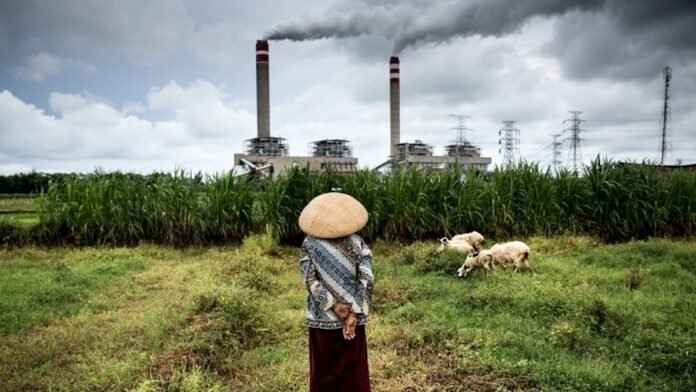
An Indonesian woman looks on at a coal plant. Image: X Screengrab / Greenpeace

In August 2023, Jakarta briefly became a symbol of what happens when governments ignore environmental warning signs for too long.

The city ranked among the most polluted places in the world. Schools adjusted activities. Some offices asked employees to work from home. Parents worried about their children breathing outdoor air. Masks returned, not because of a pandemic, but because the air itself had become a public health threat.

Many Indonesians treated the episode as an unfortunate seasonal event, but it was really a preview. Meteorologists are now warning that a new super El Niño could emerge, bringing hotter temperatures, longer dry seasons and worsening air quality across large parts of Indonesia.

Combined with the accelerating climate crisis, it could produce an air pollution emergency far more severe than the one Jakarta experienced three years ago. This time, however, the consequences may extend well beyond public health. They could become an economic and political crisis.

Indonesia’s vulnerability is not simply the result of weather. It is the result of policy choices. Even as the country talks about energy transition, coal remains deeply embedded in its development strategy. The government’s latest electricity plan still includes 6.3 gigawatts of additional coal-fired power generation through 2034.

At the same time, industrial parks connected to nickel processing continue to rely heavily on captive coal power plants. Estimates suggest that captive coal capacity serving industrial activities has expanded rapidly alongside Indonesia’s downstream mineral ambitions.

A joint study by the Center of Economic and Law Studies and the Centre for Research on Energy and Clean Air found that air pollution associated with Indonesia’s coal-powered nickel industry could contribute to more than 3,800 premature deaths annually in the near term and nearly 5,000 deaths per year by 2030.

The economic burden could rise from approximately US$2.63 billion annually to $3.42 billion by the end of the decade, the same joint study said.

These figures often feel abstract because they are presented as environmental externalities. Yet air pollution is not an externality when workers become sick, children miss school and hospitals fill with patients suffering respiratory illnesses. It is a direct economic cost.

That is the lesson policymakers failed to absorb during Jakarta’s pollution crisis.

In 2023, public debate focused heavily on identifying the source of pollution. Government officials often downplayed the contribution of nearby coal plants. Even when discussions emerged about temporarily reducing operations at some facilities, authorities largely defended coal generation as indispensable.

The preferred solutions were technological fixes, such as emission-control equipment and biomass co-firing. Meanwhile, many coal plants received operational lifelines that could extend their use for another decade or more.

Those measures may reduce emissions at the margins, but they do not solve the underlying problem. Indonesia is still choosing to defend aging coal assets even as cleaner alternatives become more affordable each year.

The danger is that a super El Niño would expose the true cost of that decision. Unlike in 2023, Indonesia now faces broader economic pressures. The rupiah remains vulnerable to global financial uncertainty. Higher interest rates continue to affect households and businesses. Living costs remain a concern for many families.

Add prolonged air pollution to that mix, and the consequences become more serious. Workers lose productive hours. Outdoor economic activity slows. Healthcare expenses rise. Transportation and logistics become less efficient. The economic losses from polluted air are beginning to spread throughout the wider economy.

At some point, defending coal becomes more expensive than replacing it. Indonesia already has many of the tools needed to avoid that outcome.

First, coal retirement must move from planning documents to actual implementation. This includes not only grid-connected coal plants but also captive coal facilities operating in industrial parks.

Second, renewable energy deployment must accelerate. Solar, wind and hydropower are no longer niche technologies. They are increasingly the cheapest sources of new electricity in many parts of the world. Battery energy storage systems can address concerns about intermittency and help stabilize the electricity supply.

Third, industrial parks that process nickel should be connected to cleaner power sources. Sulawesi possesses significant hydropower potential that can support industrial demand. Industrial operators should be encouraged, and where necessary required, to replace captive coal generation with renewable electricity and energy storage solutions.

Indonesia’s air pollution problem is often discussed as a seasonal inconvenience. That view is becoming dangerously outdated.

A future super El Niño could transform dirty air from an environmental issue into a full-scale economic challenge. The climate crisis is increasing the likelihood of extreme weather. Coal dependence is making the consequences more severe.

The choice facing Indonesia is no longer between economic growth and cleaner air. It is between paying for the energy transition today or paying a much larger bill for pollution tomorrow.

Pope Leo names EWTN executive as first woman to lead Vatican communications

0
pope-leo-names-ewtn-executive-as-first-woman-to-lead-vatican-communications
Pope Leo names EWTN executive as first woman to lead Vatican communications


Pope Leo named an executive with U.S. Catholic media conglomerate EWTN ​as the new head of the ‌Vatican’s communications department on Tuesday, in the first appointment of a woman to the senior Church role.

Maria Montserrat ​Alvarado, originally from Mexico City, will ​lead the Vatican’s Dicastery for Communications, a sprawling ⁠operation that oversees the Vatican’s news portal, ​radio station, newspaper and press office, among other ​entities.

Alvarado, president and chief operating officer of EWTN News since 2023, will replace Paolo Ruffini, who has been ​in the role since 2018 and is ​retiring. She will start her duties in November, said a ‌statement.

The ⁠Eternal Word Television Network was launched by a nun named Mother Angelica in 1981, but has grown into a global media conglomerate with ​nearly a ​dozen TV ⁠stations, a book publishing division, a newspaper and radio affiliate.

The station often ​appeals to conservative U.S. Catholics. President Donald ​Trump ⁠has appeared on the network several times and one of its top hosts is a Fox ⁠News ​contributor.

The network was an occasional ​critic of the late Pope Francis, who complained about it “bad-mouthing” ​him.

Source:  Reuters

Creamy Italian Ground Chicken Soup

0
creamy-italian-ground-chicken-soup
Creamy Italian Ground Chicken Soup

Creamy Italian Ground Chicken Soup is a cozy, high-protein, one-pot meal made with lean ground chicken, pasta, peas, garlic, Italian seasoning, and a smooth lemon ricotta sauce. It is creamy, filling, flavorful, and perfect for busy weeknight dinners or meal prep.

This soup has all the comfort of a creamy pasta dish, but in a lighter, protein-packed soup form. The ground chicken makes it hearty, the pasta makes it satisfying, and the ricotta lemon sauce gives it a rich, velvety finish without feeling too heavy.

Why You’ll Love This Creamy Ground Chicken Soup

  • High in protein
  • Ready in about 35 minutes
  • Made in one pot
  • Creamy without being too heavy
  • Great for meal prep
  • Loaded with Italian flavor
  • Perfect for busy weeknights
  • Filling enough for dinner

What Makes This Soup So Good?

This soup starts with lean ground chicken browned in olive oil, then flavored with Italian seasoning, garlic, and Calabrian peppers for a little heat. Pasta cooks directly in the broth, soaking up all the savory flavor.

The creamy sauce is made with ricotta, milk, lemon juice, lemon zest, and Parmesan. Blending the ricotta creates a smoother texture, giving the soup a creamy finish that feels comforting but still fresh from the lemon.

Ingredients

  • ½ tablespoon olive oil
  • 1 pound ground chicken
  • 2 teaspoons Italian seasoning
  • 3 garlic cloves, crushed or minced
  • 1 tablespoon chopped Calabrian peppers, optional
  • 4 cups reduced-sodium chicken broth
  • 8 ounces farfalle or bowtie pasta
  • 1 cup frozen peas
  • 2 ounces Parmigiano Reggiano or Parmesan, freshly grated
  • 15 ounces low-fat ricotta cheese
  • ½ cup milk
  • Juice of 2 lemons
  • Zest of 1 lemon
  • Black pepper, to taste

Ingredient Notes

Ground Chicken

Lean ground chicken keeps this soup high in protein while still making it hearty and satisfying.

Italian Seasoning

Italian seasoning adds classic herb flavor with minimal effort.

Calabrian Peppers

Calabrian peppers add a mild spicy kick and rich flavor. If you do not have them, you can use red pepper flakes, sun-dried tomatoes, or a little tomato paste with a splash of vinegar.

Pasta

Farfalle or bowtie pasta works beautifully, but any short pasta shape can be used.

Ricotta Cheese

Ricotta creates the creamy base of the soup. Blending it first makes the texture much smoother.

Lemon

Fresh lemon juice and zest brighten the soup and balance the creamy cheese sauce.

Parmesan

Freshly grated Parmesan adds salty, nutty depth and helps finish the soup with rich flavor.

Step 1: Brown the Chicken

Heat olive oil in a Dutch oven or large soup pot over medium-high heat.

Add the ground chicken and let it cook undisturbed for 3 to 4 minutes so it can brown on one side.

Break it apart and continue cooking until fully cooked through.

Step 2: Add Flavor

Add the Italian seasoning, garlic, and Calabrian peppers.

Stir well and cook for 30 to 60 seconds, just until the garlic becomes fragrant.

Step 3: Add Broth and Pasta

Pour in a few tablespoons of chicken broth to deglaze the pot, scraping up any flavorful bits from the bottom.

Add the pasta and remaining chicken broth.

Cover and cook for about 10 minutes, stirring every few minutes so the pasta cooks evenly.

Step 4: Make the Ricotta Sauce

While the pasta cooks, add the ricotta, milk, lemon juice, and lemon zest to a food processor or blending cup.

Blend until smooth.

Set aside.

Step 5: Add the Peas

Once the pasta has cooked for about 10 minutes, turn off the heat.

Add the frozen peas and stir them into the hot soup.

The peas will warm quickly and help cool the soup slightly before adding the ricotta sauce.

Step 6: Stir in the Creamy Sauce

Add the blended ricotta sauce to the soup.

Stir gently until fully combined.

Step 7: Finish with Parmesan

Stir in the freshly grated Parmesan cheese.

Taste and add black pepper or extra lemon juice if desired.

Step 8: Serve

Serve warm with extra Parmesan, fresh basil, more Calabrian peppers, black pepper, or a squeeze of lemon juice.

Tips for the Best Ground Chicken Soup

Brown the Chicken First

Letting the chicken brown before breaking it apart adds more flavor to the soup.

Blend the Ricotta

Blending makes the ricotta smooth and prevents a grainy texture.

Don’t Boil After Adding Ricotta

Turn off the heat before adding the ricotta sauce to keep the soup creamy and smooth.

Stir the Pasta Often

Since the pasta cooks directly in the broth, stirring prevents sticking.

Use Fresh Lemon

Fresh lemon juice gives the soup the best bright flavor.

Variations

Ground Turkey Version

Swap ground chicken for ground turkey or Italian ground turkey.

Sausage Version

Use Italian chicken sausage, turkey sausage, or pork sausage for a richer flavor.

Lower Carb Version

Replace pasta with cauliflower gnocchi, zucchini noodles, or extra vegetables.

Extra Vegetable Version

Add spinach, kale, zucchini, mushrooms, or carrots.

Spicier Version

Add more Calabrian peppers or red pepper flakes.

Extra Creamy Version

Use whole milk ricotta instead of low-fat ricotta.

What to Serve With Creamy Italian Chicken Soup

This soup is filling on its own, but it pairs perfectly with:

  • Garlic bread
  • Caesar salad
  • Green salad
  • Roasted vegetables
  • Focaccia
  • Breadsticks
  • Parmesan toast
  • Bruschetta

Storage Instructions

Store leftovers in an airtight container in the refrigerator for up to 4 days.

The pasta will continue to absorb liquid as it sits, so add a splash of broth or milk when reheating.

Reheating

Reheat gently on the stovetop over low heat, stirring often.

You can also microwave individual portions in 30-second intervals.

Avoid boiling, as the ricotta sauce may separate.

Freezing Instructions

This soup can be frozen, but the texture of the pasta and ricotta may change slightly.

For best results, freeze without the pasta and add freshly cooked pasta when reheating.

If freezing leftovers, store in a freezer-safe container for up to 2 months.

Frequently Asked Questions

Can I Use Ground Turkey Instead of Ground Chicken?

Yes. Ground turkey works very well and keeps the soup high in protein.

Do I Have to Blend the Ricotta?

Blending is recommended for the smoothest soup. Without blending, the ricotta may look slightly grainy.

Can I Use Regular Pasta?

Yes. Any short pasta shape works. Bowtie, rotini, shells, or penne are all good options.

Can I Make This Soup Lighter?

Use low-fat ricotta, reduced-sodium broth, and a high-protein pasta for a lighter version.

Can I Add More Vegetables?

Absolutely. Spinach, kale, zucchini, carrots, or mushrooms are great additions.

Recipe Information

Prep Time: 10 minutes
Cook Time: 25 minutes
Total Time: 35 minutes
Servings: 6

Nutrition Information

Approximate nutrition per serving:

  • Calories: 370
  • Protein: 41g
  • Carbohydrates: 33g
  • Fat: 10g
  • Fiber: 5g

Nutrition may vary depending on pasta and ricotta used.

Final Thoughts

This Creamy Italian Ground Chicken Soup is hearty, bright, creamy, and packed with protein. It has the flavor of creamy Italian pasta but the comfort of a warm soup, making it perfect for weeknight dinners, meal prep, or cozy family meals.

With tender pasta, savory ground chicken, sweet peas, Parmesan, and lemon ricotta sauce, every bowl is satisfying, fresh, and full of flavor.

The Gaza genocide drops the last fig leaf of Western democracy and tolerance

0
the-gaza-genocide-drops-the-last-fig-leaf-of-western-democracy-and-tolerance
The Gaza genocide drops the last fig leaf of Western democracy and tolerance

For decades, Western democracies presented themselves as the gold standard of exemplary governance and tolerance; the shining “beacons of hope” that the rest of the world was expected to follow. But the Gaza genocide has torn that facade apart. What we have witnessed over the past two years is not a reflection of democracy but its humiliation. What we have seen is not the protection of human rights but patterns of racism and intolerance.

The mask is off, exposing a system built on double standards, selective outrage, and a chilling willingness to crush the very freedoms it claims to champion.

The Dutch shame: A pregnant woman vs. a police officer with his dog

Few incidents have exposed this hypocrisy as brutally as what happened in the Netherlands on 19th May. Dutch police officers responded to a disturbance at an asylum seekers’ center in Zeist. A Palestinian refugee, Wesam Miqdad, had smashed the television, fridge, and door of his room after learning that his brother had been killed in Gaza, however, he surrendered without resistance.

What happened next shocked the world. When his wife—nine months pregnant—tried to inquire about his condition and ask if she could stay by his side, an officer with a police dog approached her, pried her away from her husband, and violently threw her to the ground. The footage, which went viral on 29th May, showed a visibly pregnant woman being dragged and slammed onto the floor of the asylum center.

The response of the Dutch authorities was first, denial. According to the victim, the officials tried to deny the incident altogether, claiming there were no records to support their account. Then, police claimed they were responding to a threat involving a knife—allegations not being verified, and no recordings prior to the arrest that support their falsehood.

READ: Gaza Health Ministry: May marks deadliest month of 2026 so far

Only when the video sneaked its way onto social media did the truth emerge. The victims had been fully compliant. The husband had been on his knees with his hands behind his back. There was no threat. There was no justification for brutality against a pregnant woman whose only “crime” was wanting to stay with her detained husband. The woman later gave birth, and both mother and baby survived—a miracle given the violence she endured.

What makes the incident even more disturbing, according to Wesam, is that the police’s brutality was driven by the knowledge that he was a Palestinian from Gaza—not by any threat he posed.

It looks like a pattern, not an isolated incident

What happened in the Netherlands was not an isolated outbreak of police brutality. It was the latest—and most grotesque—example of a systematic intolerance towards immigrants who once believed that they reached the land freedom, tolerance, and respect of human rights, and when adding the Palestinian dimension to the incident, it is, as well, a crackdown on anyone who dares to express solidarity with the Palestinian people or criticize Israel’s genocidal practices.

In Germany, the crackdown has been relentless and far-reaching. Since 7th October 2023, German authorities have imposed a comprehensive domestic crackdown on Palestine solidarity in tandem with the government’s political backing for Israel’s genocide in Gaza. Almost in 2025 alone, Berlin police reported nearly 9,000 criminal charges linked to pro-Palestinian protests. Participants in these solidarity activities were constantly subjected to severe police brutality, including kettling, pepper spraying, punching, and choking.

The German government has formally outlawed and banned several pro-Palestinian groups. Human rights groups have condemned these measures, warning that the deliberate conflation of anti-Zionism with antisemitism is being used to stifle free speech in solidarity with Palestine.

In France, the situation has been equally alarming. Pro-Palestinian events often unfold under heavy police presence, treated as threatening rather than a legitimate right to freedom of expression. In late April 2025, the French Interior Minister initiated proceedings to dissolve Urgence Palestine, one of the country’s most visible and active pro-Palestinian groups, on baseless grounds that the group is condoning terrorism.

These are not isolated incidents; they are a systematic pattern.

READ: Hamas denies refusing to hand over governance in Gaza

The hypocrisy exposed: Democracy for some, repression for others

The Gaza genocide has done what decades of criticism could not: it has stripped Western democracy of its moral pretensions. The same governments that lecture the world on human rights have become laboratories for the criminalization of solidarity with Palestine. The same countries that hypocritically defend freedom of speech at home have banned slogans, cancelled academic events, and arrested students for expressing political opinion.

A report in October 2025 by the Paris-based International Federation for Human Rights (FIDH) warned that the crackdown “reveals a profound crisis: not only of human rights in the occupied territories but of freedom itself in societies that claim to be democratic.”

Governments in the UK, US, France and Germany have “weaponised” domestic counterterrorism legislation and fears of antisemitism to suppress public anger over the Gaza war, the study also said.

The final fig leaf has fallen

For me, this revelation was not shocking. I still remember how the Western governments overthrew elected governments in the region and beyond in the recent past. I remember the double standards on Palestine for decades. The only difference is that now, the brutality is being broadcast live on social media for the entire world to see.

The Gaza genocide has exposed the truth that Western democracy is not a universal standard of freedom—it is a selective tool applied when convenient, suspended when it contradicts with the interests of a criminal entity. The same Europe that sanctioned Russia for its conflict with Ukraine, stands silent while thousands of children and women were killed in Gaza. 

As for the Dutch police officer who threw a pregnant woman to the ground, his superiors will investigate, they may reassign him elsewhere, they may issue a statement about “following procedures.” But the system that enabled him, justified him, and then tried to deny his actions will remain intact, exactly as such system allowed police to suppress freedom of expression in solidarity with Palestine.

OPINION: After the war on Iran, the Transatlantic alliance rift grows wider

The views expressed in this article belong to the author and do not necessarily reflect the editorial policy of Middle East Monitor.

Android phones will soon be able to detect spoofed calls and impersonation scams

0
android-phones-will-soon-be-able-to-detect-spoofed-calls-and-impersonation-scams
Android phones will soon be able to detect spoofed calls and impersonation scams

We’re expecting Android 17 to begin rolling out later this month, but first, Google has a batch of updates for the wider Android device ecosystem. As usual, some of the new features are limited to specific devices, and others require using Google’s apps. But if you don’t mind the latter, you can get automated protection from the growing threat of deepfake phone scams.

According to Google, “impersonation fraud” is one of the most common types of financial scams. The FTC tracked almost $3 billion in losses from such scams during 2024, and the improvements in AI voice cloning tools more recently are making the schemes easier to pull off. The voice models are becoming so capable that it can be difficult to identify a fake caller even when an AI is imitating someone you talk to every day.

Google’s solution is an expansion of the system it debuted last month for verified financial calls. Now, a similar feature will work with anyone in your contacts. Many of the most effective deepfake scams involve spoofing a contact’s number, which makes the call look more legitimate when your phone lights up. Victims of these scams are then greeted by an accurate re-creation of the person’s voice spinning a yarn that involves an urgent need for cash.

Google’s scam call detection feature will be available on all phones running Android 12 or higher, but it does require you to have three Google apps installed: Phone by Google, Contacts, and Google Messages. Depending on your device, you may already have these. They’re the preloaded options on Pixel and Motorola phones, and Samsung has now switched over fully to Google Messages. Google claims that Phone by Google is the most widely used dialer, but that doesn’t seem right—Samsung has its own phone app, and it’s the largest Android OEM by far.

Regardless, once you have Google’s trio of communication apps, they will work together to verify phone calls that appear to come from a known contact. When scammers want to impersonate a contact, they use an online relay to spoof the number. When a call comes in, the caller’s Google dialer app sends a confirmation signal that is missing in spoofed relay calls. If that signal is absent, your phone uses the Messages app to send an authenticated RCS ping (hence the Google Messages requirement) to the supposed caller. If their phone reports it’s not placing the call, a pop-up will alert you that the person on the line may not be who you think they are.

Credit: Google

There’s one more notable caveat you may have noticed. Because the system contacts the other party’s phone for verification, that person must also have the same three Google apps installed. If a caller is using the Samsung dialer or the OnePlus contacts app, Google’s scam detection won’t work.

As AI spoofing has made financial scams easier to pull off, regulators and public safety organizations in some countries have advised Android users to stop using their phones for important financial transactions. This is obviously bad for Android and, by extension, Google. This is just the latest anti-scam measure Google has deployed across the Android ecosystem. Pixel phones can detect likely scam calls and use on-device AI to identify suspicious caller behavior. The Google Messages app also has real-time scam identification.

More AirDrop, more AI

It wouldn’t be an Android update without more AI, so get ready to see some of Google’s AI clothing features in your phone. The “Find the Look” feature in Circle to Search that debuted on Pixel 10 and Galaxy S26 phones earlier this year is expanding to all devices running Android 14 and higher.

Circle to Search lets you search for images of anything that appears on your screen. The new capabilities are an additional layer in Circle to Search that analyzes everything in an image. Google mainly presents this as a way to determine what someone is wearing. After circling an image, you can tap the “Find the Look” button in the pop-up to identify all parts of an ensemble.

Find the Look in Circle to Search

Google also says Google Photos will soon get a new AI-assisted fashion engine. Google Photos will catalog the clothing you wear, creating a virtual wardrobe you can browse and organize from your phone. You can even create AI images of yourself wearing these outfits, but don’t let the robot flatter you—you should probably see how things look in real life before you run out the door.

There is also a bit of non-AI news in the Android world today. Google began supporting Apple AirDrop on select devices earlier this year, but support has been spotty. So far, only the last few generations of Pixel devices and Samsung’s latest flagship phones have supported AirDrop. Here are all the Android phones getting AirDrop support today.

  • Samsung: Galaxy S25, S25+, S25 Ultra, S25 Edge, Galaxy Z Flip7, Z Fold7, Galaxy Z TriFold, Galaxy S24, Galaxy S24+, Galaxy S24 Ultra, Galaxy Z Flip6, Z Fold6
  • OnePlus: OnePlus 15
  • Xiaomi: Xiaomi 17T Pro (announced early)
  • Vivo: Vivo X300 and X300 Pro
  • HONOR: Magic V6

Nothing is changing about the iPhone side. Sending files from Android still requires the iPhone to be set to accept AirDrop requests from “anyone for 10 minutes.” Contact-based sharing is still not supported when sending from Android, but at least the feature is becoming more widespread.

0FansLike
0FollowersFollow
0FollowersFollow
0SubscribersSubscribe
- Advertisement -
Google search engine

Recent Posts