17.3 C
London
Wednesday, June 17, 2026
Home Blog

‘Why bother?’: Trump no longer feels the need to seize Iran’s uranium

0
‘why-bother?’:-trump-no-longer-feels-the-need-to-seize-iran’s-uranium
‘Why bother?’: Trump no longer feels the need to seize Iran’s uranium

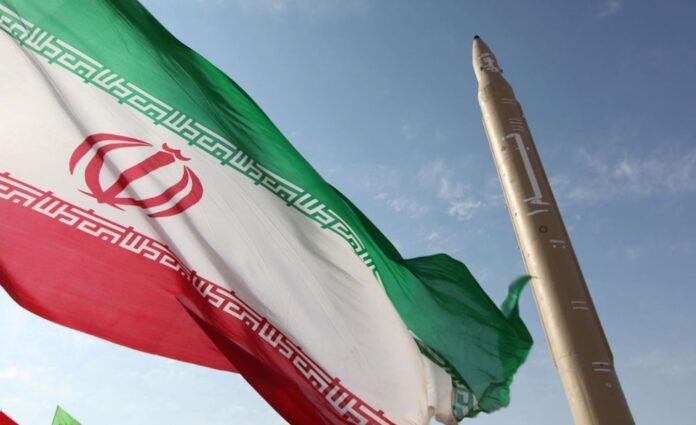
Iran’s enriched uranium supply is intact after the war. Image: Youtube

US President Donald Trump and his top advisers have spent months insisting that extracting and confiscating highly enriched uranium from Iran was the top objective of the unprovoked war he and Israeli Prime Minister Benjamin Netanyahu began in February—but on Tuesday at the Group of Seven summit in France, he shrugged off the need to rapidly obtain the nuclear reactor component.

There is “no rush” to retrieve uranium from nuclear sites the US bombed in June 2025, Trump said, adding that taking the highly enriched uranium is something the US wants “psychologically,” but not enough to prioritize extracting it right away. One could make the argument, he said, that it wasn’t worth the effort to take the material at all.

“Frankly, to go get it—we’re going to go get it—but to go get it is a big deal, because they say only China and us have the equipment,” said the president. “You could make the case, ‘Why do you even bother?’ because it’s not very valuable, you know. It’s probably half a million dollars worth, it’s not very valuable stuff.”

Trump’s comments came a day after he and the Iranian government announced they had reached a memorandum of understanding (MOU) to end the war. The president told The New York Times that the agreement includes a requirement that Iran will be limited to enriching uranium only to levels that “could never be used by the military.”

White House officials, though, told The Washington Post that details of Iran’s nuclear program will be subject to negotiations over the next two months. The question of whether talks on the nuclear program could be held separately, after a deal to end the war was reached, had been a major sticking point for the US leading up to the MOU.

Trump brushed off suggestions that the deal to end the war, in which Iran demonstrated its economic might by effectively closing the Strait of Hormuz and sending energy prices skyrocketing — obtained no guarantees on Iran’s nuclear program that hadn’t already been secured in 2015 in the Joint Comprehensive Plan of Action, which was brokered by the Obama administration and which limited Iran’s nuclear program in exchange for sanctions relief.

Trump exited the JCPOA during his first term. Iran will only be able to enrich uranium “for nonmilitary purposes. Forever,” said Trump on Monday.

On Fox News on Monday, former National Security Council chief of staff Alex Gray insisted the president had secured a deal that, for the first time, would stop Iran from developing a nuclear weapon. Before the US and Israel began attacking Iran in February, the Middle Eastern country maintained that its nuclear power program was not for military purposes.

While Trump’s supporters insisted the war and the MOU had made clear Trump had drawn a hard line on Iran’s nuclear capacity, his comments on Tuesday were taken by foreign policy analyst Logan McMillen as an admission that “the uranium was a false justification for war.”

“The real purpose was to punish Iran for the crime of being an independent economic power that refused to participate in America’s petro economy,” said McMillen.

At CNN, Aaron Blake noted that Trump has spent weeks sending inconsistent messages about his demand that Iran end its nuclear program.

Late last month, the president said on social media that Iran’s uranium “will be unearthed by the United States… in close coordination and conjunction with the Islamic Republic of Iran, plus the International Atomic Energy Agency, and DESTROYED.”

But in April, Trump told Reuters that US strikes last year had left Iran’s uranium “so far ⁠underground, I don’t care about that.”

Two weeks later, he again said that the US had “to take that nuclear dust,” before telling Fox News last month that destroying the uranium was not “necessary except from a public relations standpoint.”

-Common Dreams

Among the large new rockets Amazon was counting on, only Europe has delivered

0
among-the-large-new-rockets-amazon-was-counting-on,-only-europe-has-delivered
Among the large new rockets Amazon was counting on, only Europe has delivered

Amazon now has hundreds of flight-ready satellites standing idle in Florida, waiting to join the company’s low-Earth orbit Internet constellation, an Amazon official said Tuesday.

“They’re built, and sitting in a payload processing facility waiting for trips to orbit,” said Steve Metayer, vice president of Amazon Leo Production Operations, during a teleconference with reporters. “And we’re currently manufacturing several satellites a day.”

Metayer spoke on the eve of the company’s next mission, during which an Ariane 64 rocket will launch three dozen Amazon Leo satellites into orbit from a spaceport in French Guiana. Liftoff is targeted for 7:53 am ET (11:53 UTC) on Wednesday.

Arianespace steps up

France-based Arianespace has emerged as a critical partner for Amazon, which, to date, has had the majority of its 331 satellites launched on Atlas V rockets. However, Amazon has just one more mission booked on this rocket, which is operated by United Launch Alliance, as the vehicle is slated for retirement.

To launch the majority of its Leo constellation, Amazon booked rides on three large, new rockets four years ago: 18 launches on the Ariane 6 rocket, 12 launches on Blue Origin’s New Glenn rocket, with options for 15 additional launches; and 38 launches of the United Launch Alliance’s Vulcan rocket.

But of these new rockets, only Arianespace has delivered so far, with two launches completed this year, another on Wednesday, and more to come. Neither New Glenn (also owned by Amazon founder Jeff Bezos) nor Vulcan has launched Amazon satellites yet.

“As for Arianespace, they have definitely stepped up,” Metayer said. “They’re very reliable on their manifest dates, and they’re very reliable and safe on their insertions into orbit. So we definitely would continue to look forward to the next 16 launches with them on our existing contract, and we see them being a player long-term beyond that.”

Falling behind schedule

Amazon originally planned to reach a high flight cadence by the mid-2020s. While its satellite manufacturing business has delivered, a serious launch bottleneck remains. Only about 10 percent of the company’s planned 3,236 satellite constellation has been deployed to date.

Recently, the company withstood another setback when the New Glenn rocket exploded during a test firing on its launch pad in Florida. This accident in late May destroyed the rocket and severely damaged the New Glenn booster’s only launch pad. Bezos has said New Glenn will return to flight this year, but most independent industry observers believe it will require 12 to 18 months to restore the Launch Complex 36A launch pad.

There is another issue stemming from this failure. Blue Origin has not said anything publicly, but multiple sources have pointed to an issue with the BE-4 rocket engine that powers the first stage of New Glenn as the culprit behind the launch pad accident. This engine also powers the first stage of the Vulcan rocket, so it will complicate that vehicle’s return to flight while also complicating efforts to address strap-on booster issues.

Metayer said during Tuesday’s call with reporters that the first Vulcan launch carrying Amazon Leo satellites could still occur in the “late” third quarter of this year.

What of that New Glenn accident?

Asked about the New Glenn accident and its impact on Amazon’s manifest, Metayer noted that the rocket accounts for less than one quarter of all the launches Amazon has booked. (This may be true, but the large New Glenn rocket is expected to carry at least 50 Amazon Leo satellites to orbit per flight, compared to Ariane’s 36.)

“We have quite a few other launches we’ve secured across all the multiple vehicles, and we continue to look at opportunities to increase that number,” he said. “We definitely want to see New Glenn come to service, and we definitely look forward to flying on them, but they’re not the only provider. We have a very diversified launch portfolio, intentionally.”

Metayer said Amazon remains “on track” to begin rolling out commercial service with the Amazon Leo constellation later this year.

Bernie Sanders Backs Justin J. Pearson, House Candidate at the Heart of Tennessee Voting Rights Fight

0
bernie-sanders-backs-justin-j.-pearson,-house-candidate-at-the-heart-of-tennessee-voting-rights-fight
Bernie Sanders Backs Justin J. Pearson, House Candidate at the Heart of Tennessee Voting Rights Fight


An outspoken progressive running for Congress in the Tennessee district at the center of Republicans’ efforts to sabotage voting rights and maintain control of the House earned the endorsement of Sen. Bernie Sanders on Tuesday.

Tennessee state Rep. Justin J. Pearson found himself the unexpected front-runner in the Democratic primary when two-decade incumbent Rep. Steve Cohen dropped out last month, after new gerrymandered maps throttled his chances of winning reelection. The redrawn 9th Congressional District and sudden shakeup mean that rather than running against the last Democrat representing Tennessee in the House, Pearson is facing a Republican machine bent on delivering an all-GOP delegation for President Donald Trump.

The new map hurts the chances for Pearson — or any Democrat — to win in November, but the candidate said he’s running on a platform focused on wealth, income inequality, and corporate overreach that aims to appeal across party lines. “You’ve got a number of disaffected Republican voters, you’ve got a number of distraught MAGA voters, and you’ve got fired-up Democrats, which is a perfect recipe for success for us,” Pearson told The Intercept. “Because our tent is big enough for everybody who is feeling that this status quo was rigged and broken against working-class folk, and want to see a future that is more just.” 

It’s a message similar to the one that buoyed Sanders’s 2016 and 2020 presidential campaigns. 

“As billionaires and Big Tech take more and more control over our lives and our government, we need leaders like Justin J. Pearson who have the experience and track record of standing up to the rich and power-hungry elites,” Sanders said in a statement. 

Tennessee is one of several Republican-led states where officials rushed to protect Trump and the GOP’s chances of keeping power in what is expected to be a particularly difficult midterm cycle for Republicans mired in an unpopular war on Iran and an ever-increasing cost of living. After the U.S. Supreme Court ruled in April to gut a key provision of the Voting Rights Act, Trump said he spoke with Tennessee Republican Gov. Bill Lee, who called the next day for a special session to redraw the maps. 

Using a practice known as “cracking,” the new map breaks the majority-Black district concentrated in and around Memphis across three red districts, diluting the power of Black voters in the area. Pearson said he believed the antidemocratic move, while detrimental to his chances, was unpopular with voters.

“A lot of people were really upset about the gerrymandered maps,” Pearson said. “I had about half a dozen Republicans who said they’re going to be voting in our campaign and I’d be the first Democrat they’d be voting for in their lifetimes.”

Pearson, who launched his campaign against Cohen in October with the backing of the progressive outfit Justice Democrats, received Sanders’s endorsement the day after getting one from the Working Families Party, and four days after he returned from a listening tour in rural and Republican counties in the newly drawn district. His campaign said more than 750 people attended the gatherings.

Attendees expressed frustration with being unable to afford housing, healthcare, and the things they need to live their daily lives, Pearson said. He said voters couldn’t afford “more of the same” when running against Cohen, and has now directed that message at his likely Republican opponent, state Sen. Brent Taylor.

“Both of them were millionaires, both of them benefited from a status quo that’s broken,” Pearson told The Intercept. “Both of them don’t like me.”

Also running in the August 6 Democratic primary are state Sen. London Lamar, who launched her campaign with Cohen’s endorsement after he dropped out, and Jim Torino, a former executive at a healthcare company focusing on people with disabilities and founder of a social welfare nonprofit. Perennial candidate M. LaTroy Alexandria-Williams filed to run but has not filed any reports with the Federal Election Commission. 

Pearson is the top fundraiser in the Democratic primary race so far, with just under $2 million, according to the campaign. Most of that has come from contributions under $200, according to the FEC data; the campaign said its average donation is $31. Torino has raised $117,000, and Lamar has not yet had to file any reports with the FEC.

In addition to Sanders, Justice Democrats, and the Working Families Party, Pearson has backing from groups including MoveOn; Sunrise Movement; Indivisible; IMEU Policy Project and its Peace, Accountability, and Leadership PAC; as well as Reps. Summer Lee, D-Pa.; Ayanna Pressley, D-Mass.; Rashida Tlaib, D-Mich.; Delia Ramirez, D-Ill.; and Ro Khanna, D-Calif.

Pearson said he believes federal legislation is needed to force states to support working people and improve public safety.

“We need to put this ban on AI data centers, we need to increase the minimum wage nationally, because the states won’t do it,” Pearson said. “I’m in a state House, they refuse to do it. We need to have national gun safety laws passed, because states refuse to do it.”

In May, Pearson drew the ire of his Republican colleagues when he marched with protesters before the special session to redraw the state’s maps. Three years earlier, Republicans voted to expel him and another Black Democratic lawmaker after they and one other Democratic colleague led a protest against the legislature’s inaction on gun control after a deadly elementary school shooting in Nashville. Local officials reappointed Pearson and his colleague, state Rep. Justin Johnson, to the state House shortly after the vote.

Pearson, Cohen, two other Democratic congressional candidates, four registered voters, and the Tennessee Democratic Party filed a federal lawsuit challenging Tennessee’s maps last month, but they dropped it last week, citing a political environment hostile to their cause. Pearson said other cases before the federal courts had “a higher probability of success,” pointing to voting rights suits from the American Civil Liberties Union and the National Association for the Advancement of Colored People.

Still, he expressed hope for his long-shot campaign in Tennessee. He pointed to a stop on his listening tour in the city where the Ku Klux Klan was founded in 1865, and where Pearson, who is Black, welcomed 150 people at a rally — his largest crowd throughout the tour. 

There is a “renewed vigor and enthusiasm because of what the Republicans have done — to show up in spite of them, in spite of what they’ve tried to do,” Pearson said. “I think that’s not something they probably calculated for when they did this racist redistricting.”

Israeli analysts call Netanyahu ‘liar,’ ‘humiliated’ by Trump after US-Iran deal

0
israeli-analysts-call-netanyahu-‘liar,’-‘humiliated’-by-trump-after-us-iran-deal
Israeli analysts call Netanyahu ‘liar,’ ‘humiliated’ by Trump after US-Iran deal

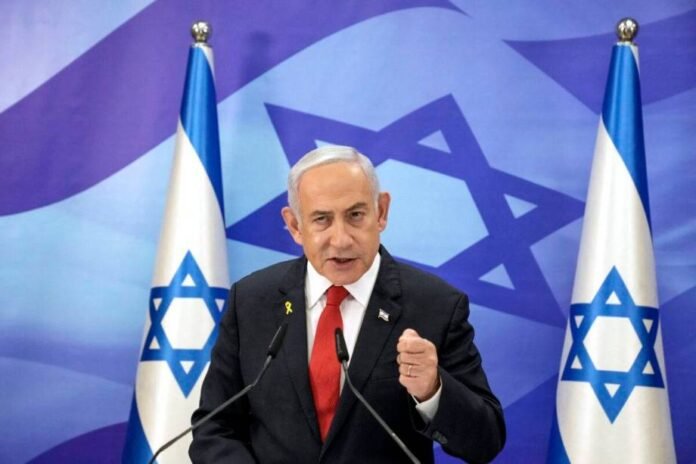
Israeli analysts sharply criticized Prime Minister Benjamin Netanyahu on Tuesday, describing him as a “failure” and a “liar,” while noting that US President Donald Trump “humiliated” him by excluding him from an agreement with Iran to end their military conflict, Anadolu reports.

On Monday evening, Netanyahu acknowledged that he was unaware of the details of the memorandum of understanding reached between Washington and Tehran to end the war launched by the US and Israel against Iran on Feb. 28.

Netanyahu claimed he had saved Israelis from “nuclear annihilation” by launching the war against Iran and acknowledged differences of opinion with Trump, saying such disagreements “exist in the best of families.”

While Trump said Monday that the US and Iran had already signed the agreement and that the Strait of Hormuz “will be fully reopened by Friday,” Tehran has said only that the memorandum is scheduled to be signed in Swtizerland on June 19.

Observers say the prior electronic signing of the deal appears to have enabled an immediate temporary ceasefire and the lifting of a US naval blockade on Iran, while the Friday ceremony is expected to formalize the agreement and launch a 60-day period of technical negotiations.

‘Architect of failure’

Haaretz columnist Yossi Verter launched a scathing attack on Netanyahu in an article headlined: “Without shame, the architect of failure claimed he saved Israel from collective death. It was another lie among many.”

“Prime Minister Benjamin Netanyahu stands at the height of what any objective expert would define as a colossal strategic failure for the State of Israel and all he has to tell its citizens is: ‘Iran will never have a nuclear weapon, not as long as I am prime minister’,” he wrote.

Netanyahu “has been saying that for 30 years. Yet in the same breath, at his press conference on Monday, Netanyahu claimed Israel had been a hair’s breadth away from ‘mass death’ – a catastrophe he supposedly prevented,” he added.

Tel Aviv and Washington accuse Tehran of pursuing nuclear weapons that threaten Israel and US allies in the region. Iran, however, maintains that its nuclear program is exclusively peaceful, says it does not seek to develop nuclear weapons and insists it poses no threat to other states.

READ: Switzerland confirms US-Iran memorandum signing set for Friday at Burgenstock

Israel, which occupies Palestinian territory as well as land in Lebanon and Syria, is widely believed to be the only country in the Middle East with a nuclear arsenal, although it has never officially acknowledged possessing one and is not subject to safeguards by the International Atomic Energy Agency.

Verter said previous boasts by Netanyahu about “historic achievements for generations” and claims that Iran’s nuclear project had been pushed back by decades “seemed to have dissolved into the sour fog that has descended on Israel.”

“Gone, too, are the lofty goals that accompanied every confrontation with Iran: toppling the regime, or at least creating the conditions for its downfall; eliminating the nuclear and ballistic threats; severing Tehran’s ties to its proxy organizations,” he added.

Netanyahu “has no idea what is contained in the memorandum of understanding the US and Iran digitally signed behind his back. The Iranians know. The Pakistanis know. Presumably the Qataris know. Netanyahu, it seems, does not,” the columnist said.

He added that Netanyahu “sought to minimize the crisis in his relationship with Trump, whom he notably refrained from showering with his usual praise,” saying “True. But in the best families, disagreements are not usually accompanied by the daily insults, humiliations and public snubs coming from an increasingly impatient American president.”

Verter further accused Netanyahu of making a mix of half-truths, exaggerations and manipulations that dominated the event like “we destroyed the Iranian navy.”

He also challenged Netanyahu’s assertion that Israel prevented Hezbollah’s Radwan Force from invading Israel, calling it “an utter lie.”

Verter said Netanyahu claimed that the Israeli and American air forces inflicted cumulative damage on Iran worth “hundreds of billions of dollars – some estimate a trillion.”

He concluded that Netanyahu’s press conference “projected defeat,” adding that even when he declared that he would “run and win” Israel’s next election, he sounded somewhat skeptical himself.

‘His show is over’

Maariv columnist Ben Caspit wrote an article titled: “Netanyahu’s show is over: Trump threw him under the bus.”

Caspit questioned Netanyahu’s repeated warnings that Israel had “escaped certain death”, asking who had placed the country in such a position in the first place.

He argued that invoking the threat of “annihilation” was intended to obscure responsibility for Israel’s failures regarding Iran.

“Once again, Israel was left outside the picture,” he added.

Netanyahu has been wanted by the International Criminal Court since 2024 over accusations of war crimes and crimes against humanity committed against Palestinians in the Gaza Strip during Israel’s genocidal war, which has killed more than 73,000 people and injured over 173,000 others since October 2023.

Caspit noted that Netanyahu did not mention Trump by name during his press conference, even during the question-and-answer session.

“He also admitted he knew nothing about the agreement that was signed electronically without his knowledge,” Caspit wrote. “It is reminiscent of another agreement signed in 2015.”

“Netanyahu always ends up in the same position,” he continued. “He is pushed aside, thrown under the bus, and left standing in the hallway like a scolded child waiting for a verdict that was delivered in his absence.”

Questioning Netanyahu’s claims of success, Caspit wrote: “Yesterday he boasted that ‘we inflicted severe damage on Iran’s economy.’ Fine—but so what? They could soon become an even greater economic power than before.”

He added that Iran could ultimately “impose fees on transit through the Strait of Hormuz,” while sanctions may be lifted and hundreds of billions of dollars in frozen assets released.

“So what value is the damage we inflicted if it can be repaired so quickly?” Caspit asked.

“Without shame, the architect of failure claimed he had saved Israel from annihilation. That was just another lie among many.”

READ: US-Iran deal may be seen as ‘betrayal’ in Israel, ex-premier Olmert says

‘Greatest humiliation’

In a separate analysis published by Walla news portal, commentator Barak Seri argued that Netanyahu’s sense of triumph “turned within a single day into his greatest concern and greatest humiliation.”

Seri noted that Netanyahu had not addressed the Israeli media since March despite the wars involving Iran and Hezbollah and missile attacks that caused casualties and widespread damage in Israel, choosing instead to speak almost exclusively to foreign outlets, particularly American media.

“But last night he decided to speak,” Seri wrote. “The reason was the dismal outcome of the agreement with Iran and the bitter sense of anxiety prevailing in Israel, including among his own supporters.”

He added that senior Israeli officials viewed the deal as “bad and dangerous for Israel,” describing it as “a real disaster” that was reached without Israel’s interests being taken into account.

Seri argued that “none of the war’s objectives were achieved” — not eliminating Iran’s nuclear threat, not removing the ballistic missile threat, not creating conditions for regime change, and not addressing Tehran’s continued support for Hamas, Hezbollah and the Houthis.

Mocking one of the outcomes touted by supporters of the US-Iran agreement, he wrote: “The Strait of Hormuz has been opened. What a great achievement — it was open before the war.”

“Trump’s harsh and humiliating reversal against Netanyahu and Israel, accompanied by reports of difficult conversations, insults and threats, quickly leaked to the media,” Seri said. “Trump subjected Netanyahu to a genuine public humiliation.”

The US is a main ally to Israel and generally provides Tel Aviv with military, financial and political support.

Israel has occupied Palestinian territory and areas in Lebanon and Syria for decades and rejects withdrawal from those territories as well as the establishment of an independent Palestinian state envisioned in relevant UN resolutions.

BLOG: The international community is fast losing its diplomatic relevance

Cockroaches scurry around with thousands of pieces of bacterial genomes

0
cockroaches-scurry-around-with-thousands-of-pieces-of-bacterial-genomes
Cockroaches scurry around with thousands of pieces of bacterial genomes

Last week, we looked at a new study of the origin of complex cells, one that showed that our ancestors’ genomes were pieced together from bits and pieces of multiple species. It put a spotlight on a phenomenon called horizontal gene transfer, in which a gene from one species is incorporated into the genome of a distantly related species. The frequency of horizontal gene transfer means that, in addition to the neatly branching trees that relate species by common descent, there are small threads connecting distant branches of the tree of life.

It’s easy to see why horizontal gene transfer would be common among microbes. They often live in complex communities that are likely awash in the DNA of dead and damaged cells. Plus, bacteria and archaea lack a membrane between their DNA and the rest of the cell, making it easier for environmental DNA to find its way to the genome.

However, a new study this week shows that horizontal gene transfers are remarkably common even in multicellular animals. And it does so by examining the genomes of multiple cockroach species, which have had bits of bacterial DNA for millions of years.

Going horizontal

Neither bacteria nor archaea keep their DNA in a structure like the nucleus. As a result, any DNA that finds its way inside the cell has the potential to become intermingled with the genome and be incorporated permanently. That permanent incorporation is often aided by the DNA damage repair enzymes, which sometimes “fix” damage by inserting any DNA they come across in a cell.

Another reason horizontal gene transfer is a big factor among microbes is that they lack dedicated germ cells. If foreign DNA gets incorporated into the genome of any cell, it will be inherited by any descendants of that cell. In contrast, in multicellular animals, any foreign DNA incorporated into the genome of a liver cell will not be inherited by anything. So, you not only have to get the foreign DNA into the nucleus, but it also needs to get into the nucleus of the right cell.

Horizontal gene transfer in complex, multicellular animals was expected to be rare. When researchers started sequencing animal genomes, they found lots of bits of viruses scattered throughout most of them. But they didn’t find many pieces of bacterial DNA. That was partly because the software that assembled the genome from individual fragments of genome sequence was made to treat bacterial sequence as contamination. That is not unreasonable, given that we were typically growing up lots of copies of the animal DNA by placing it in bacteria.

Since then, we’ve developed techniques that allow us to sequence DNA without growing lots of copies in bacteria. We’ve also got the ability to obtain sequence-extended fragments of DNA, sometimes many thousands of bases long. These “long read” DNA sequences will often cover both borders where the bacterial sequence meets the animal sequence, making clear that the bacterial version wasn’t the result of contamination.

Over time, it has become clear that dozens of animal genes have originated from horizontal gene transfer—including a number in our own genome. And that’s just genes. If you consider areas of the genome that don’t encode genes, the contribution from other species gets considerably larger.

Lots of DNA, little impact

A team decided to gain perspective by making a comprehensive list of horizontally transferred DNA found in a group of related animal species. They chose cockroaches, and they had a good reason.

Cockroaches are closely related to termites. Termites don’t get a lot of nitrogen in their diet of wood, which is largely comprised of a polymer of sugar molecules. To make up for that, they rely on endosymbiotic bacteria called Blattabacterium that reside inside the termite’s body, and are very efficient at recycling the nitrogen that would be excreted as waste in other species. While the roaches’ diets have diversified considerably, they’ve held on to the Blattabacterium. Since these bacteria live inside the animals’ bodies and are transferred to ensuing generations by being placed in their eggs, there are plenty of opportunities for horizontal gene transfer.

Indeed, there is a lot of Blattabacterium DNA in cockroach species. Setting a minimum length of 50 bases long, the team found anywhere from a low of 93 instances of bacterial sequence to a high of 4,900, depending on the roach species. Most of these were short—the median size was just 160 bases long. Depending on the species, 75 percent or more were outside of regions that encode genes.

Some of the inserts seem to have been around since the origin of the cockroach lineage, and others are shared among closely related species, suggesting that they originated more recently.

It’s clear that most of these sequences aren’t really doing anything useful for the roaches—they got there by accident and simply don’t do enough damage for evolution to get rid of them. But their frequency suggests that horizontal gene transfer is a fairly regular occurrence, at least on evolutionary timescales. So, it’s possible that horizontal gene transfer may play a larger role as a source of diversity in the genomes of animals than we’ve appreciated.

PNAS, 2025. DOI: 10.1073/pnas.2604240123 (About DOIs).

Barron Trump’s Rare White House Appearance Sparks Online Frenzy

0
barron-trump’s-rare-white-house-appearance-sparks-online-frenzy
Barron Trump’s Rare White House Appearance Sparks Online Frenzy


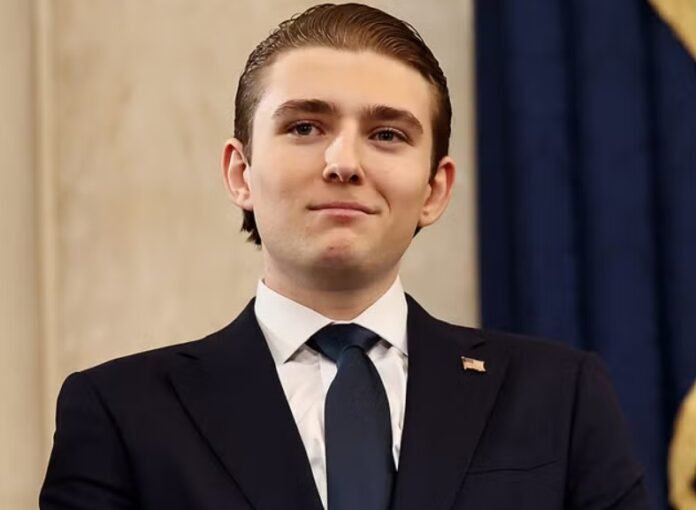
Barron Trump made a rare public appearance at the White House UFC Freedom 250 event, stepping back into the spotlight after months away from the cameras.

The president’s youngest son, now 20, quickly drew attention online as viewers noticed his changed appearance during the high-profile event.

Barron, who has long kept a low profile compared to the rest of the Trump family, appeared at the White House gathering alongside members of his family and other guests.

His appearance sparked a wave of reaction on social media, with some users commenting on his new look and others expressing concern over how different he seemed since his last public outing.

The rare appearance marked one of the first times Barron had been seen publicly in months, adding to the curiosity surrounding his life away from the spotlight.

Unlike his older siblings, Barron has largely avoided public political life and has remained one of the most private members of the Trump family.

Still, any appearance by the president’s youngest child tends to draw heavy attention, especially because he has been seen so rarely in recent years.

.

China’s new naval supergun trained on Taiwan’s shielded shores

0
china’s-new-naval-supergun-trained-on-taiwan’s-shielded-shores
China’s new naval supergun trained on Taiwan’s shielded shores

China’s new naval gun promises unprecedented range and firepower, yet its effectiveness in a Taiwan invasion scenario may ultimately hinge on overcoming the island’s formidable anti-access defenses.

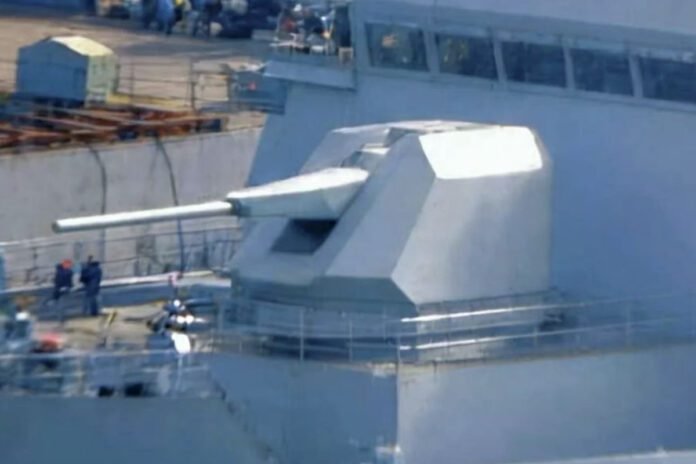
This month, the South China Morning Post (SCMP) reported that China’s military is developing a record-breaking 155-millimeter naval gun system, moving closer to deployment following recent sea-based performance testing. Production of the 21.8-tonne prototype, built by state-owned defense conglomerate Norinco, was completed in March 2025.

In early May, the 6,000-tonne experimental warship Wu Yunduo conducted live-fire sea trials near Dalian to evaluate the weapon’s fire control and structural stability. Featuring a stealth turret to minimize radar detection, the system will become the largest caliber naval gun in active service worldwide.  

The People’s Liberation Army Navy (PLAN) is reviving large-caliber artillery primarily to provide high-volume, cost-effective fire support for potential amphibious landings against Taiwan.

Using extended-range ammunition, the gun can strike targets up to 200 kilometers away, helping keep warships safe from shore-based anti-ship missiles. Interoperability with existing army munitions further lowers manufacturing and supply chain overheads.  

Beyond shore bombardment, experts note the rapid-fire system can provide a defensive layer against low-intensity threats, including intercepting incoming subsonic cruise missiles and countering swarm attacks from unmanned surface vessels.  

The SCMP article’s claim that a 155-millimeter gun using smart ammunition can hit a target 200 kilometers away warrants scrutiny. Such ranges are usually covered by tactical ballistic missiles (TBMs), with ranges of up to 300 kilometers, bridging the gap between heavy artillery and short-range ballistic missiles (SRBMs), which could hit targets up to 1,000 kilometers away.

For instance, North Korea’s 170-millimeter M-1978 Koksan howitzer could achieve a range of 57 kilometers with rocket-assisted projectiles (RAPs), while the Soviet-era 203-millimeter 2S7 Pion howitzer, used by both sides in the Russia-Ukraine war, could reach up to 47.5 kilometers with RAP ammunition.

Even the canceled US 155-millimeter Long-Range Land Attack Projectile (LRLAP) could achieve a range of only 83 kilometers when fired from the decommissioned Advanced Gun System (AGS) on the Zumwalt-class destroyers.

Still, China’s new naval gun contrasts with the US decision to repurpose its Zumwalt-class destroyers from stealthy shore bombardment platforms into hypersonic missile launchers.

With only three Zumwalt destroyers built, the cost of the LRLAP skyrocketed to $800,000-$1 million per round in 2017 dollars, which may have been a major factor in the US’s decision to decommission the AGS aboard its Zumwalt destroyers and convert the ships into hypersonic missile launchers instead.

Instead of fitting the new naval gun on specialized ships, China could opt to fit its new 155-millimeter gun on its Type 052D destroyers and Type 055 cruisers, currently fitted with 130-millimeter guns.

As of June 2026, China has 35 Type 052D destroyers and 10 Type 055 cruisers, which could provide a basis for economies of scale in producing specialized 155-millimeter ammunition and help avoid the cost pitfalls associated with the AGS and LRLAP rounds.

Looking into how China could use naval gunfire support in amphibious operations, Andrew Erickson and other writers mention in a November 2024 report for the China Maritime Studies Institute (CMSI) that the PLAN is moving away from traditional shore bombardment toward high-volume, precision-guided systems integrated into a broader “systems-destruction warfare” framework.

Erickson and others say that while historically the PLAN was constrained by traditional linear tactics, it now emphasizes deploying modern stealth turrets and large-caliber artillery.

They note that such systems would operate from experimental and specialized amphibious platforms; these systems will utilize extended-range and rocket-assisted munitions to strike critical defensive nodes, early-warning radars, and command centers at extended ranges.

They add that this long-range capability allows PLAN warships to suppress entrenched coastal defenses and dismantle Taiwan’s anti-access networks while remaining safely outside the envelope of shore-based anti-ship missiles, effectively smoothing the transition for the first-echelon landing forces.

Beyond supporting amphibious landings on Taiwan, gun-based systems may alleviate the magazine-depth problem encountered with missile-based interceptor systems – a ship can fire only as many missiles as it carries.

Illustrating the problem, Johannes Fischbach points out in a December 2024 article for the International Institute for Strategic Studies (IISS) that while the US Navy’s aging Ticonderoga-class cruisers are armed with 112 vertical launch system (VLS) cells, the Arleigh Burke destroyers have 96; limited reloading capabilities at sea handicap them.

In contrast, each AGS aboard the Zumwalt-class destroyers could carry up to 335 LRLAP rounds, and China’s new naval gun may have a comparable magazine.

Furthermore, Responsible Statecraft reported in January 2025 that from October 2023 to December 2024, the US Navy expended 168 SM-2s, 17 SM-3s, and 112 SM-6s interceptors while defending Israel against Iranian ballistic attacks and fending off Houthi attacks in the Red Sea.

The high costs of these missiles compound the problem, with the Missile Defense Advocacy Alliance (MDAA) reporting that an SM-2 costs $2,100,000 per missile; the SM-3 Block IIA costs $27,900,000 per missile; and the SM-6 costs $9,570,000 per missile.

Apart from those high costs, slow production times could cap replenishment rates. Mark Cancian and Chris Park note in a May 2026 report for the Center for Strategic and International Studies (CSIS) that it may take up to two years to replenish SM-3 and SM-6 stocks depleted during the Iran war.

However, the question remains whether China can achieve the necessary conditions to effectively use its new naval gun to support an invasion of Taiwan. China must secure localized sea control around Taiwan to ensure the maneuverability of its offshore artillery along Taiwan’s littorals.

That is a potentially challenging task, given Taiwan’s extensive asymmetric arsenal for localized anti-access/area denial (A2/AD) that could threaten ships close to shore – including those providing naval gunfire support to landing forces.

In March 2026, Taipei Times reported that Taiwan possesses 1,000 indigenous Hsiung Feng II and III missiles, as well as 400 US-made Harpoon missiles, potentially making it the country with the highest concentration of anti-ship missiles globally.

According to Taiwan’s National Chung-Shan Institute of Science and Technology (NCSIST), the subsonic Hsiung Feng II has a range greater than 100 kilometers, while the supersonic Hsiung Feng III has about the same range.

The Harpoon missile has a range similar to that of its Taiwanese counterparts, but variants purchased by Taiwan are said to have a longer range of 148 kilometers.

Hence, the effectiveness of China’s new naval gun may hinge not on range or firepower but on whether China can locate and suppress Taiwan’s dispersed and concealed anti-ship missile batteries – a daunting task, given that the US may have failed to fully suppress Iranian drone and missile forces deployed in a similar asymmetric posture in the ongoing conflict between them.

Where Israel Stands Strategically Nearly 3 Years After Oct. 7

0
where-israel-stands-strategically-nearly-3-years-after-oct.-7
Where Israel Stands Strategically Nearly 3 Years After Oct. 7


Israel has weakened its enemies across Gaza, Lebanon, and Iran, but analysts say its military gains have yet to produce a stable regional order

Nearly three years after Hamas’ devastating attack on Israel on October 7, which plunged the country into a multifront war, Israel finds itself at a strategic crossroads as a new US-Iran memorandum of understanding reshapes the regional battlefield.

Israel remains largely isolated on the international stage, maintains a military presence in Gaza, Lebanon, and Syria, and is still far from achieving long-sought normalization with Saudi Arabia. None of its conflicts has been conclusively resolved, and its relationship with its major ally in Washington has grown more complicated.

The preliminary US-Iran framework reached earlier this week is a significant turning point.

Israel has projected its military might throughout the region, causing massive destruction in Gaza and southern Lebanon while conducting airstrikes in Syria, Iran, Yemen, and Qatar. The strike in Qatar, carried out in September 2025, targeted Hamas leaders in Doha and drew international condemnation for violating Qatari sovereignty.

There is a great gap between the military picture and the strategic picture, which is one of overall defeat and collapse of Israel’s strategy

“There is a great gap between the military picture and the strategic picture, which is one of overall defeat and collapse of Israel’s strategy,” Chuck Freilich, a former Israeli national security adviser and currently a professor at Tel Aviv University and Columbia University, told The Media Line.

Despite that military prowess, Israel is far from reaching its goals.

“It did not succeed in destroying Hamas or unseating it from power, Hezbollah is coming back despite downgrading its capabilities greatly, and Iran believes with good reason that it won the war by surviving an attack by the world’s superpower and greatly out-negotiated the US, coming ahead on the diplomatic level as well,” Freilich added.

Israeli Prime Minister Benjamin Netanyahu vowed to overthrow Hamas in Gaza, destroy all of Hezbollah’s military capabilities, and remove Iran’s nuclear threat over the Jewish state.

Still, budding alliances between Israel and several Arab states under the Abraham Accords survived the war, despite initially seeming fragile. Relations with Saudi Arabia, long coveted by Netanyahu and pursued by several American administrations, remain out of reach.

“All of Israel’s enemies are significantly weaker; there is wider interest in the Abraham Accords because of the threat from Iran, but Israel’s diplomatic and political situation internationally is much worse, particularly in the United States,” Prof. Jonathan Rynhold, a senior researcher at the BESA Center for Strategic Studies at Bar-Ilan University, told The Media Line. “Israel has been far more isolated than this during its history.”

The picture across Israel’s main fronts remains complex.

For decades, Israel has viewed Iran as its most significant strategic threat and the driving force behind the network of armed groups that surround it. Israel entered the latest confrontation determined to degrade Iran’s nuclear program and military capabilities. Tehran sought to demonstrate resilience and preserve its regional posture.

The joint American-Israeli strikes inflicted significant damage on Iranian military infrastructure and reportedly set back elements of Tehran’s nuclear program. Yet the conflict ended without the collapse of the Islamic Republic, perhaps amplifying its nuclear ambitions, and without a broader regional realignment in Israel’s favor.

Iranian officials and state media quickly declared victory, arguing that Tehran had survived direct attacks by both Israel and the US while maintaining its regime and much of its strategic posture.

“Iran believes that it won the war, doing so by withstanding a major American and Israeli operation,” said Freilich. “They come out feeling stronger and invigorated. Israel and the US helped them achieve progress towards their goal of being a regional hegemon.”

The memorandum of understanding with Iran, announced by Washington, demonstrated Israel’s dependence on American diplomatic backing while also revealing differences between Netanyahu and President Donald Trump over the desired endgame. While Israel views Iran as an unresolved threat requiring continued pressure, Washington has sought to prevent a wider regional war, reopen maritime traffic through the Strait of Hormuz, and stabilize the situation.

For now, neither side appears to have achieved a decisive outcome. Iran emerged weakened militarily but intact politically, while Israel demonstrated unprecedented military reach without fully removing the threat it sought to eliminate.

Israel faces a real problem

“Israel faces a real problem,” said Rynhold. “If Iran is not limited in its conventional missile stockpile, Israel will want to attack, and it will be constrained by the US.”

The future of sanctions against Iran is also unclear, as the sides have agreed on a 60-day period to negotiate the final terms of a deal.

“From Israel’s perspective, the worse the Iranian dilemma between survival and building military power is, the better,” Rynhold continued. “Sanctions relief would be a strategic failure if it becomes part of any future agreement between the US and Iran.”

When Hamas launched its surprise attack on Israel on October 7, 2023, Israel was shocked. Thousands of terrorists stormed across its southern border, and Netanyahu vowed to retaliate, promising to release all 251 hostages Hamas took and remove the terrorist group from power. Israel launched a major offensive, which also resulted in significant international backlash. Critics, including some close allies, accused Israel of excessive force and war crimes—claims Israel categorically denies.

More than two and a half years later, a fragile ceasefire is in place, and all of the hostages, including the bodies of those killed in captivity or taken to Gaza after they were killed, have been returned. Israel controls more than half of the Gaza Strip, with Hamas still controlling the other half. The next phase of the ceasefire, which is meant to see an Israeli withdrawal, is conditioned on Hamas’ disarmament, something the terrorist group refuses to do. Netanyahu has said Israel will continue to maintain a presence in Gaza and has implied that the military will inch deeper into Palestinian territory.

The US administration mediated the ceasefire while backing Israeli moves in the Palestinian territory.

“Hamas’ military capabilities are a fraction of what they were,” said Freilich. “They no longer constitute a military threat, but they constitute a threat to the forces in Gaza, and they are still in power politically. Israel will be forced to withdraw from Gaza sooner or later, whether it likes it or not.”

Israel’s leadership has vowed to move further into Gaza to complete its mission of removing Hamas from power and destroying all of its capabilities.

“This may be done because there are no longer hostages in Gaza,” Freilich continued. “It’s also possible that Trump will try to compensate Netanyahu a little by giving him some free rein in Gaza for a while, especially before an election.”

Netanyahu, who leads a far-right government, has support from within his coalition to intensify military pressure on Hamas, while the international community has become increasingly critical. From allegations brought by South Africa that Israel is committing acts of genocide to growing cultural, academic, and weapons embargoes, the Jewish state is increasingly isolated.

“Any Israeli government will not move in a hurry,” said Rynhold. “There are a number of reasons for this—psychologically for the Israeli public, it keeps Hamas further away from the border and also because withdrawal is a hard thing to do.”

Senior members of the current government favor resettling Gaza with a Jewish population. Netanyahu has pushed back on that desire, but the voices from within his coalition are dominant and loud, drawing international attention and outcry.

“As long as Israel won’t allow settlers in, Israel has the ability to shape what goes on there—possibly keeping military control but giving other Palestinian factions civilian control,” said Rynhold.

Israel is scheduled to hold national elections by late October, and the outcome will have a major impact on the future of Gaza.

The Iranian-backed Hezbollah terrorist organization was once seen as Israel’s most immediate and substantial threat. The group joined Hamas days after the October 7 attack. Israel retaliated, and Lebanon became another arena in the multifront war that engulfed the Middle East. Israel believed it had nearly defeated Hezbollah at the end of 2024, only to see the strategic equation between the two rivals shift again. Iran is now using the group as a deterrent, not only through Hezbollah’s own force but also by threatening to attack Israel if Israel attacks its most prized proxy.

“Israel cannot allow itself to live with that equation,” said Freilich. “This is another failure of its strategy.”

Yet Hezbollah is also reeling from more than two years of war with Israel.

Hezbollah is infinitely militarily, financially, and politically weaker than it was before October 7

“Hezbollah is infinitely militarily, financially, and politically weaker than it was before October 7,” said Rynhold.

Hezbollah began firing at Israel two days after the joint American-Israeli attack against Iran began in March of this year, prompting an Israeli campaign in Lebanon that lasted into June. Fighting has eased since the US-Iran memorandum was announced, but Israeli forces remain in southern Lebanon, and Hezbollah has said its position on the ceasefire depends on Israeli compliance. Israel has continued to strike Hezbollah targets in southern Lebanon, further cementing its presence in an area Hezbollah says should be covered by earlier ceasefire understandings.

“Hezbollah now has a partial shield, by virtue of the agreement between the US and Iran; whether it becomes more or less, is another matter,” Rynhold said.

Iran’s threats have made the Dahieh neighborhood in Beirut, Hezbollah’s strategic stronghold, more difficult for Israel to target. President Trump made it clear to Netanyahu that Israeli action there would threaten attempts to reach a broader arrangement with Iran. Analysts say Hezbollah and Iran may emerge from the situation with greater leverage, even as both have absorbed heavy blows.

In the almost three years since October 7, Israel stands in a paradoxical position. It has showcased extraordinary military capabilities and weakened its enemies. Yet many of the political and strategic objectives that justified the war remain unresolved. Hamas remains a force in Gaza, Hezbollah continues to challenge Israel from Lebanon, and Iran has survived and, according to Freilich, may feel emboldened, while Israel faces growing international isolation. As Israelis prepare to head to the polls again, the country finds itself confronting a question that military victories alone cannot answer: how to translate battlefield achievements into a lasting, sustainable, and favorable regional order.
Hungary amends constitution to impose eight-year limit on prime ministers

0
hungary-amends-constitution-to-impose-eight-year-limit-on-prime-ministers
Hungary amends constitution to impose eight-year limit on prime ministers


Hungary’s parliament approved a constitutional amendment limiting prime ministers to a maximum of eight years in office, a move that effectively bars former prime minister Viktor Orban from holding the post again.

The amendment was passed after Prime Minister Peter Magyar won April’s election, ending Orban’s 16-year tenure and securing a two-thirds parliamentary majority. The majority allows Magyar’s party to amend or reverse legislation introduced by Orban’s Fidesz party, including changes to the constitution.

Under the amendment, anyone who has previously served as prime minister for at least eight years “cannot be elected prime minister.” The provision applies to prime ministerial terms held after May 2, 1990.

The new rules also require prime ministers to leave office after serving a total of eight years, equivalent to two terms.

The constitutional amendment further paves the way for the dissolution of the Sovereignty Protection Office, which was established under Orban’s government and stigmatised opposition figures and journalists for serving “foreign interests.”

In addition, the amendment returns the founders’ rights of so-called public-interest asset-management foundations to the state. Orban’s government had transferred state assets worth hundreds of billions of forints to these foundations.

Year of free HPE software a “step in the correct direction” in VMware rivalry

0
year-of-free-hpe-software-a-“step-in-the-correct-direction”-in-vmware-rivalry
Year of free HPE software a “step in the correct direction” in VMware rivalry

Hewlett Packard Enterprise’s (HPE) new virtualization software promotion will likely pique the interest of end users and resellers who are unhappy with Broadcom’s pricing of VMware.

During its HPE Discover event in Las Vegas this week, HPE announced that customers could use its “HPE Morpheus Software—VM Essentials” offering for free for “up to one year,” per a press release. HPE’s website describes its virtualization platform as a “VMware alternative.” It includes a hardware virtual machine (HVM) hypervisor and unified management and lets users “manage VMware ESXi and HVM clusters from one console and migrate when you’re ready,” HPE’s website says.

“New VM Essentials customers can receive up to one free year of licenses for VM Essentials, a year of HPE Zerto for $1 to support non-disruptive migration to HPE virtual machines, and 0 percent interest on software through HPE Financial Services,” HPE’s announcement reads, referring to HPE’s group for helping IT teams manage funding.

Free for a year is cheaper than what Broadcom has charged for VMware vSphere since taking over. VMware prices have skyrocketed due to VMware’s parent company eliminating perpetual licenses and bundling products into expensive packages. Notably, per its website, HPE recommends charging $600 per CPU socket per year for VM Essentials; Broadcom has controversially shifted vSphere licensing pricing to a per-core basis.

“Customers are feeling quite a bit of pain in the change that some of the virtualization companies have put there, specifically Broadcom,” Jeremiah Jenson, VP of HPE’s North American channel and partner ecosystem, told CRN. The executive claimed that VM Essentials could bring up to 90 percent cost savings compared to VMware while also helping to “eliminate vendor lock-in and simplify hybrid IT.”

Broadcom declined to comment on HPE’s promotion to CRN.

From March 1 to June 30, HPE has also been offering a free year of VM Essentials via rebate to customers who buy an AMD server and a one-year VM Essentials license.

VM Essentials is only available through channel partners, a stark contrast from Broadcom’s VMware approach, where the chip giant has drastically reduced the number of resellers that can sell VMware products.

HPE’s new promotion aims to entice customers to more deeply consider migrating off VMware. While numerous third-party surveys have pointed to a significant amount of VMware customers looking to reduce or eliminate their VMware use over the next few years, concerns around time and cost are also expected to slow or deter migration plans, especially given that migration can require paying for two virtualization products simultaneously.

“One of the big things we see is that as customers are going through this journey on transforming their operating model, you end up with double expenses,” HPE’s EVP and CTO Fidelma Russo said, according to The Register.

Dean Colpitts, CTO of Canadian managed services provider (MSP) Members IT Group (MITG), which VMware cut from its reseller program after 19 years of partnership a year ago, doesn’t expect the promotion to drive sales much.

“All our clients work on three, four, or five-year life cycles and generally roll that purchase into their initial buy,” he told Ars. “The biggest issue I’m seeing right now that is affecting VM Essentials sales and adoption is [that] the high prices and constraints of DRAM [are] affecting customers’ ability to obtain new hardware to migrate onto.”

Colpitts pointed to a lack of available hardware for permanent migrations and “to temporarily facilitate a brownfield reimage of the customer’s existing equipment from VMware to” VM Essentials.

On the other hand, one of HPE’s biggest channel partners, San Diego-based Nth Generation, is expecting its “VM Essentials sales pipeline to as much as quadruple and sales to grow at about that rate” because of HPE’s promotion, CRN reported.

“These additional free licensing and migration capabilities are going to drastically lower the risk of moving to VM Essentials,” Nth Generation co-president and CTO Dan Molina told the publication.

Partner promotion

HPE also announced that it would give 600 reseller partners who earn the HPE partner program’s Private Cloud with Virtualization competency by the end of the year free VM Essentials software licenses for three years. Partners still have to pay support costs, though.

Colpitts said that the benefit is “a step in the correct direction” but that limiting the promotion to 600 partners is “very shortsighted.” He believes that HPE should give all of its partners VM Essentials “to facilitate getting [VM Essentials] into customer sites and displacing the competitors.”

“They need to fling [VM Essentials] as far and as fast as they possibly [can] to immediately gain traction and draw ISVs to them, which will increase adoption even more,” he said.

0FansLike
0FollowersFollow
0FollowersFollow
0SubscribersSubscribe
- Advertisement -
Google search engine

Recent Posts