Florence plans major expansion of Airbnb curbs beyond historic centre
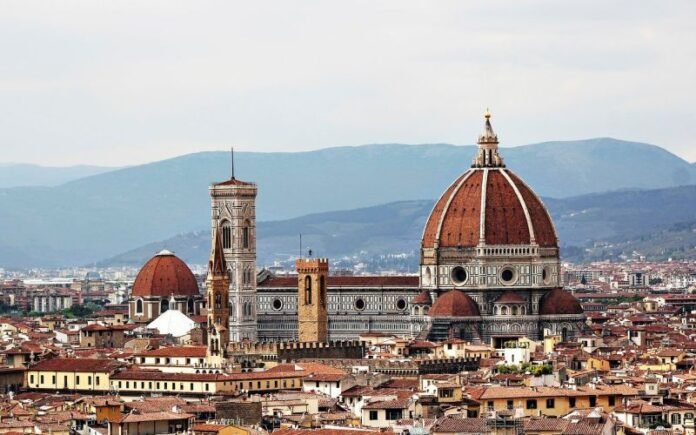
Florence is planning a major expansion of restrictions on new short-term tourist rentals, extending a ban beyond its UNESCO-listed historic centre, in a new attempt to ease housing pressure in one of Italy’s most visited cities.
The measure, which Mayor Sara Funaro has called a national first, is due to be presented to a city council committee on Wednesday, with the aim of securing approval in early June.
It will prevent the creation of new short-term tourist lets across about 16 square kilometres (6 square miles) of the city for two years, nearly tripling the total number of homes covered by the ban to more than 103,000, from 35,593 at present.
The proposal does not reduce the number of existing short-term rentals, but would stop new ones being activated once it takes effect. Airbnb did not immediately comment on the plan.
“The objective is clear, to continue our commitment to protecting residential life and guaranteeing a sustainable balance between tourism and the daily lives of our citizens,” Funaro told Reuters.
The mayor has requested an urgent procedure to prevent a rush of registrations before the rules enter into force.
“The data show that in our city the phenomenon of short-term tourist rentals has grown very significantly,” she said.
The move follows a 2023 decision by Florence to ban new short-term residential lets in the historic centre. That measure was challenged by opponents, but the city has since won a series of rulings before the regional administrative court.
A moratorium protecting existing short-term rentals expires on May 31, 2028. After that date, the city plans to start reducing the numbers of holiday lets. Funaro said the city would look to favour small local owners using an apartment to supplement their income over operators working on a business basis.
CRITICS SAY BAN ‘CRIMINALISES’ TOURISM ENTREPRENEURSHIP
However, opponents of the restrictions say the earlier curbs have failed to bring residents back to the city centre or meaningfully lower ordinary rents.
“Despite this, (the city) now decides to extend the bans to neighbourhoods outside the centre, continuing to hit citizens, small owners and hospitality-related businesses,” Lorenzo Fagnoni, president of Property Managers Italia and chief executive of Apartments Florence, told Reuters.
He said short-term rentals supported property managers, cleaners, maintenance workers, technicians, artisans and hospitality professionals.
He added that “criminalising entrepreneurial activity in tourism” would damage an important part of the city economy.
President Donald Trump’s latest medical report is out, and while the White House doctor says he is in “excellent health,” the details inside the document are already fueling fresh chatter about the 79-year-old commander-in-chief’s condition.
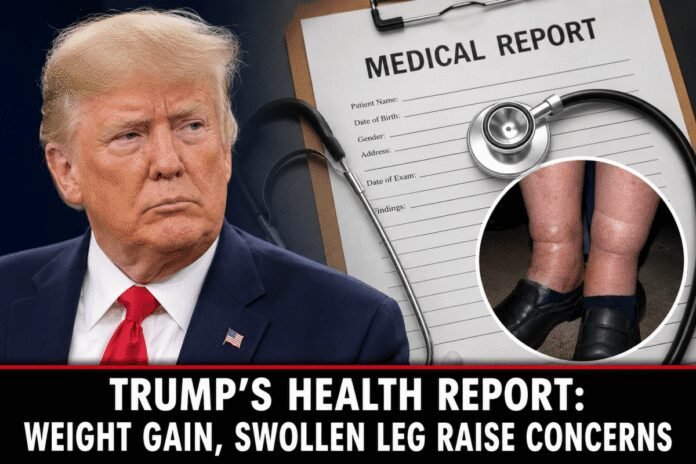
The report, released late Friday night, listed Trump’s weight at 238 pounds, marking a 14-pound increase from his assessment last year. It also mentioned continued swelling in his legs, though his physician said there had been improvement compared to the previous year.
The timing of the release raised eyebrows. The White House had delayed making the results public after Trump’s visit to Walter Reed National Military Medical Center, then sent them out at the end of the week, when much of Washington had already checked out for the weekend.
That did little to quiet speculation from critics who have been questioning whether the president’s health is being fully disclosed.
According to the report from Capt. Sean Barbabella, Trump was given “preventative counseling,” including guidance on diet. The physician also addressed the visible bruising on Trump’s hands, which has repeatedly drawn attention in photos and public appearances.
Barbabella said the bruising was consistent with “minor soft tissue irritation” from frequent handshaking and was more noticeable because Trump takes aspirin for his heart.
Despite those details, the doctor gave Trump a strong overall review.
The report said Trump’s cardiac function was normal and noted that an AI-enhanced electrocardiogram analysis estimated his “cardiac age” to be about 14 years younger than his actual age.
Barbabella wrote that Trump “remains in excellent health,” with strong cardiac, pulmonary, neurological and overall physical function.
“Cognitive and physical performance are excellent,” the physician added. “He is fully fit to carry out all duties of the Commander-in-Chief and Head of State.”
Trump had already declared victory over the medical exam before the report was released, writing on Truth Social that “everything” had “checked out PERFECTLY.”
But the delay in releasing the results only added to the noise surrounding his health, especially as the president approaches his 80th birthday in June.
Some critics have raised questions about Trump’s mental sharpness and physical stamina. Others have gone even further online, claiming without proof that there may be a hidden diagnosis behind the scenes.
Trump has repeatedly pushed back against those concerns, often touting his performance on cognitive tests.
“So I’ve taken one, and I’ve aced it all three times,” Trump said recently while speaking in New York. “It starts off with an easy question. And by the time you get to the middle, it gets tougher.”
Former White House physician Dr. Jeffrey Kuhlman told RadarOnline.com that presidents are not legally required to release their full medical records, meaning Trump has wide authority over what the public gets to see.
That has only kept the rumor mill spinning.
One source told RadarOnline.com that many Americans may remain skeptical no matter what the official report says, arguing that Trump’s long history of attacking the media and dismissing criticism has made some voters less likely to take his word at face value.
For now, the White House insists Trump is healthy and fully capable of doing the job.
But with swollen legs, bruised hands, a weight gain, and a report released under the cover of a Friday night news dump, the questions surrounding the president’s health are not likely to disappear anytime soon.
President Trump Leaves Iran Ceasefire and Nuclear Proposal Pending After 2-Hour Situation Room Meeting
President Donald Trump concluded a two-hour Situation Room meeting without approving a proposed memorandum of understanding aimed at extending a ceasefire with Iran and launching new negotiations over Tehran’s nuclear program, leaving the status of a potential agreement unresolved.
The White House has not announced a final agreement or endorsed draft following the meeting, despite President Trump having said earlier that he would make a “final determination” on the proposal. Any arrangement under discussion would still require approval from both the US president and Iran’s senior leadership.
Vice President JD Vance said Thursday that Washington and Tehran had reached a memorandum of understanding designed to end the war, pending Trump’s authorization. The proposal calls for a 60-day extension of the ceasefire and the start of renewed talks focused on Iran’s nuclear activities.
As discussions continued, administration officials said President Trump gathered advisers in the Situation Room to settle the conditions he considers essential for any deal. Among those priorities are the elimination of Iran’s highly enriched uranium stockpile and the reopening of the Strait of Hormuz.
“Iran must agree that they will never have a Nuclear Weapon or Bomb. The Hormuz Strait must be immediately open, no tolls, for unrestricted shipping traffic, in both directions,” Trump wrote on Truth Social.
While administration officials have indicated that an agreement may be within reach, several issues remain unsettled. Outstanding disputes reportedly include the release of Iranian funds and questions surrounding the handling and transfer of nuclear materials.
A first among major nations, India is industrializing with solar
This story was originally published by Yale E360 and is reproduced here as part of the Climate Desk collaboration.
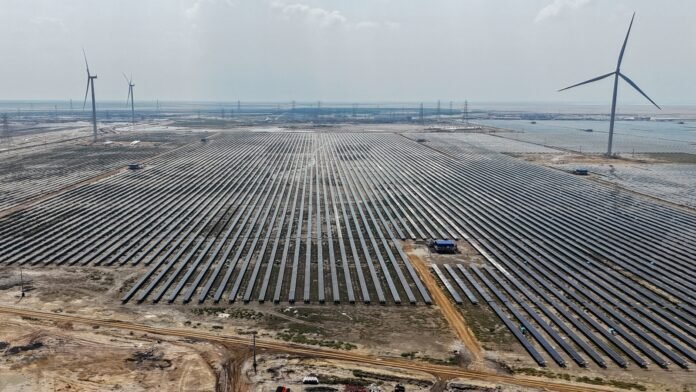
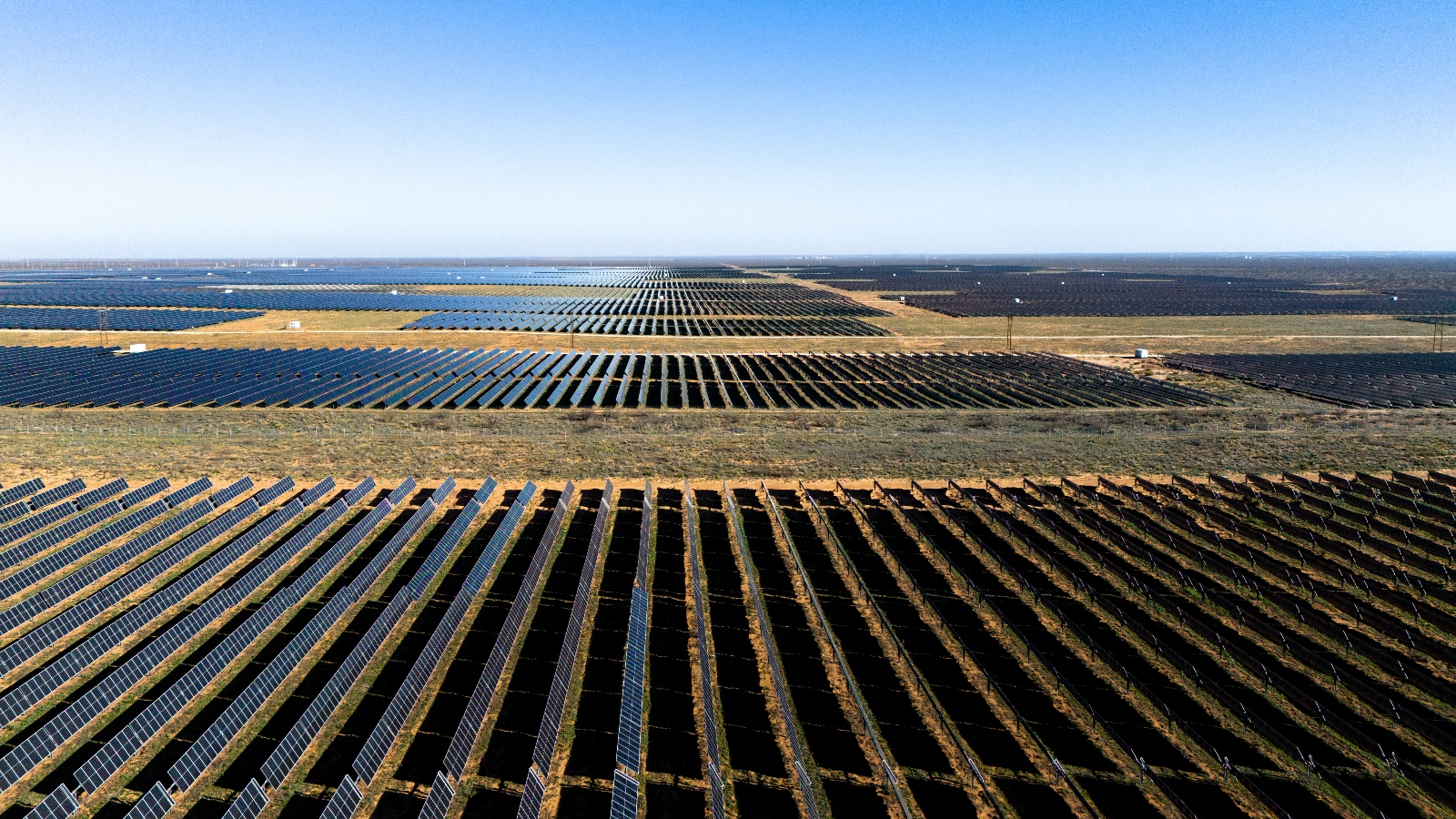
A sea of solar panels is rapidly engulfing one of the world’s largest salt deserts. By 2029, nearly 60 million panels will cover 280 square miles of India’s Rann of Kutch, extending right up to the border with Pakistan. The Khavda solar park is set to be the world’s largest and most powerful supplier of electricity from the sun, with a generating capacity of 30 gigawatts — 30 times the size of a typical coal or nuclear power station and enough to power Austria.
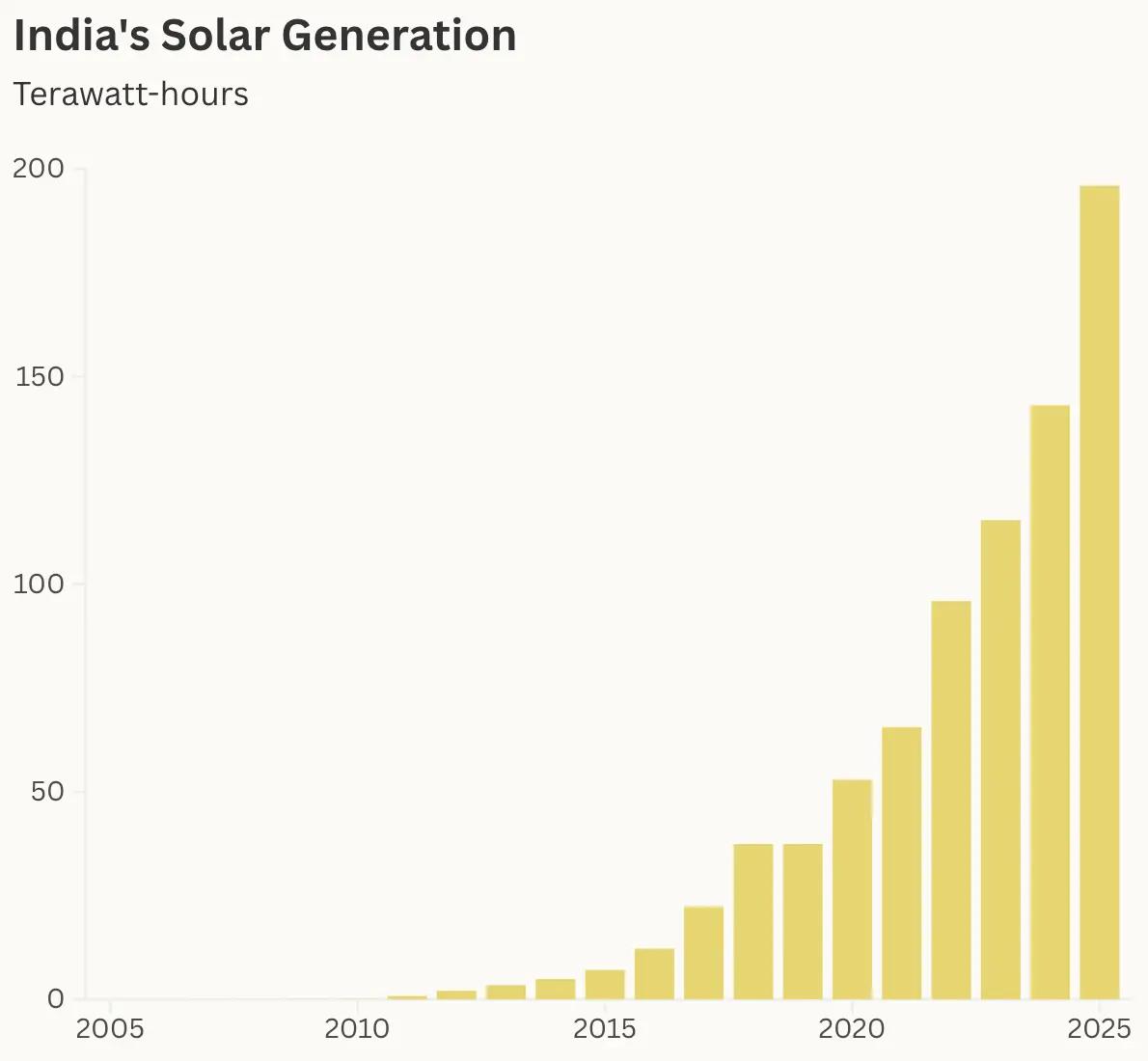
With India’s economy now growing faster than China’s, Khavda epitomizes the country’s breakneck rush to electrify with solar power. Installed solar capacity in India has been growing by 40 percent a year. In March, it passed 150 gigawatts, and by 2030 is set to double again.
Analysts say the world’s most populous nation is on the verge of becoming the first major country to power its industrialization predominantly with solar energy.
Cheap solar is “enabling India to develop without the long fossil-fuel detour taken by the West and China,” said Kingsmill Bond, energy strategist and director at Ember, a U.K.-based think tank that tracks the world’s transition to renewable energy. “China built on coal; India is building on sun,” he said. “And what India is doing could also be mirrored in other emerging economies.”
India’s solar revolution comes as a surprise. Just a decade ago, apart from rooftop installations and a few microgrids serving remote rural villages, solar power was virtually unknown. The government seemed hell-bent on industrializing with coal, unleashing a rising tide of carbon dioxide emissions and supercharging climate change.
Sources: Ember, Energy Institute. Yale Environment 360 / Made with Flourish
In 2015, shortly after taking office, Prime Minister Narendra Modi promised to double coal output by 2020. And at successive international climate negotiations, his ministers pushed back angrily against demands that the country renounce the fossil fuels that drove industrialization in Europe and North America.
“How can anyone expect that developing countries make promises about phasing out coal [when they] still have to deal with poverty reduction?” Environment Minister Bhupender Yadav asked angrily at COP26 in Glasgow five years ago, before sabotaging the conference’s planned declaration on eliminating coal from the global economy.
But back home, policy was already changing. The country’s sunny climate made it a natural home for solar energy, and the cost of solar panels was falling fast. Ever since the Glasgow conference, India has been introducing solar energy at an accelerating rate. Last year, for the first time, more than half its installed generating capacity was from non-fossil fuel sources.
As booming India’s electricity demand continues to grow by more than 6 percent each year, the solar trend is set to continue. According to the International Energy Agency, or IEA, about half the growth anticipated between now and 2030 will be met by solar power, and another 25 percent from other low-carbon sources, mostly wind, hydroelectric, and nuclear.
Leading the solar surge is the country’s largest private power producer and the world’s second largest solar developer, the Adani Group. Founded in 1988 initially as a commodityimporter by Gautam Adani, a long-time confidante of Prime Minister Modi and reputedly now Asia’s richest person, it is widely regarded as having benefited from Modi’s patronage.
Eyebrows were raised in 2023 when long-standing military protocols banning all construction within 6 miles of the border with Pakistan were set aside weeks before Adani gained control of that land for the Khavda project. And in 2024, the U.S. Department of Justice accused Adani executives of paying hundreds of millions of dollars in bribes to Indian government officials to obtain lucrative supply contracts for its solar energy and hiding this from potential investors. The case was dropped this month after Adani made offers to invest in the U.S., though U.S. officials denied any link.
Read Next
Still, the fast-growing Khavda solar park, which had an installed capacity of 9.4 gigawatts as of April, is the jewel in the Adani crown. Its panels are attended by robots that dry-clean them at night to remove desert salt and dust without requiring precious freshwater. The project also includes wind turbines in the windy coastal region on the shores of the Arabian Sea, which should secure nighttime power for the grid.
India still has a long way to go to break its dependence on fossil fuels. Coal still delivers most of the country’s baseload and fuels about 70 percent of total power generation. It helps make India the world’s third-largest carbon dioxide emitter, after China and the U.S, and is a major cause of the country’s urban smogs, which are the worst in the world. But the target to double coal mining output has been quietly forgotten, and construction of coal-fired power stations has been much reduced. Coal’s share in the energy mix is set to fall below 50 percent by 2035, according to the IEA.
Still, with its enormous generating capacity, coal remains deeply entrenched. And there are other constraints on how much solar power can contribute to keeping the lights on in India. While solar last year made up 28 percent of the country’s total installed electricity-generating capacity, it accounted for only 9.4 percent of the electricity put into supply.
Why the difference? There are two reasons.
The first is that the country’s outdated grid cannot yet transmit all the solar power being captured in the deserts of western India to where it is needed in the urban heartlands. At times last year, almost 40 percent of the country’s solar power output did not reach customers.
Read Next
Charith Konda, an India-based energy researcher for the Institute for Energy Economics and Financial Analysis, attributes this to the rapid growth of solar facilities, which has outstripped grid development. “Solar plants typically take 18 to 24 months to build, while transmission projects usually take about five years… The grid is trying to catch up.” To that end, the Ministry of New and Renewable Energy has committed to spending more than $100 billion on expanding the national grid by 29 percent by 2032, througha series of green energy corridors linking solar hubs to major industrial and population centers.
But a revamped grid is only part of the answer, said Debajit Palit, who researches the country’s energy transition at the Chintan Research Foundation in New Delhi. Solar also underdelivers because India lacks the infrastructure to store renewable energy to meet demand after the sun goes down and during the cloudier monsoon season.
One solution being hurriedly adopted is to use water as a battery — so-called pumped storage. This involves linking two storage tanks or reservoirs, one higher than the other. When the grid has surplus power, that electricity is used to pump water from the bottom tank to the top tank. Then, when the grid needs extra power, it can be generated by dropping the water through turbines to the lower tank.
Starting later this year, a 1.4-gigawatt project is expected to pump water from one of India’s largest hydroelectric reservoirs, the Gandhi Sagar on the Chambal River in the state of Madhya Pradesh. Another, with a capacity of 3 gigawatts, is set for completion near Mumbai in 2030. In January, the country’s Central Electricity Authority identified 120 potential pumped-storage sites with a combined capacity of 180 gigawatts.
Another solution to the storage problem is lithium-ion batteries. World battery prices are falling dramatically — down 58 percent since 2023, said Ember’s global electricity analyst Kostantsa Rangelova, “making round-the-clock solar electricity increasingly viable.”
Recognizing this, the Indian government has since last year required new solar farms to install battery storage so they can supply more constant power to the grid. Adani is currently assembling the country’s biggest battery storage system at the Khavda complex — enough to discharge over a gigawatt of power to the grid for three hours every evening.
Read Next
An additional concern is that India remains heavily dependent on China for the technology behind its solar push. While it now manufactures most of its solar panels, the silicon materials that make the photovoltaic cells largely come from China, as do three-quarters of the lithium-ion batteries essential for energy storage.
The Indian government is working to address this reliance on its northern neighbor for the supply chain for its renewables technologies by boosting domestic manufacturing. A morelong-lasting constraint may be land.
Solar panels require a lot of space — a difficult issue in a densely populated country that has more people than China on little more than a third of the land area. In a few places, solar companies are offering farmers the option to continue cultivating below raised solar panels, so-called agrivoltaics. But elsewhere, solar facilities are evicting peasant farmers, creating angry protests.
Occupying areas empty of people, such as the desert salt flats of Khavda, avoids disturbing people but may put wildlife at risk. The Khavda complex abuts the Rann of Kutch Wildlife Sanctuary in Pakistan, which is home to threatened species such as striped hyenas, desert lynx, jackals, and desert foxes, as well as critically endangered great Indian bustards and migrating waterfowl following the Central Asian Flyway from Siberia to the Indian Ocean.
Read Next
Despite such drawbacks, optimists believe that mass deployment of batteries should one day allow India to meet 90 percent of its electricity demand from solar energy. “The question is no longer whether solar can power India’s electricity system,” said Rangelova, “but how quickly it can scale.”
Not all of India’s booming industries can easily banish coal and hook up to solar-powered electricity, however. One logjam is the steel industry, which requires coal to produce the intense heat needed for blast furnaces and to convert iron ore into pig iron and then steel. India has the most ambitious plans of any country in the world for increasing steel manufacturing, aiming to double production in the coming decade. “Steel is the elephant in the room for India’s decarbonization,” said Palit.
But in other sectors, the news is better. The country is electrifying its transportation system, for instance. The 42,000 miles of broad-gauge track in India’s vast railway network have been almost entirely electrified in the past decade. Meanwhile, electric road vehicles are moving into smoggy city streets. Most rapidly, India’s ubiquitous motorised rickshaws, often called tuk-tuks, are being electrified. Some 60 percent of sales of motorized rickshaws are now electric, making India the world leader.
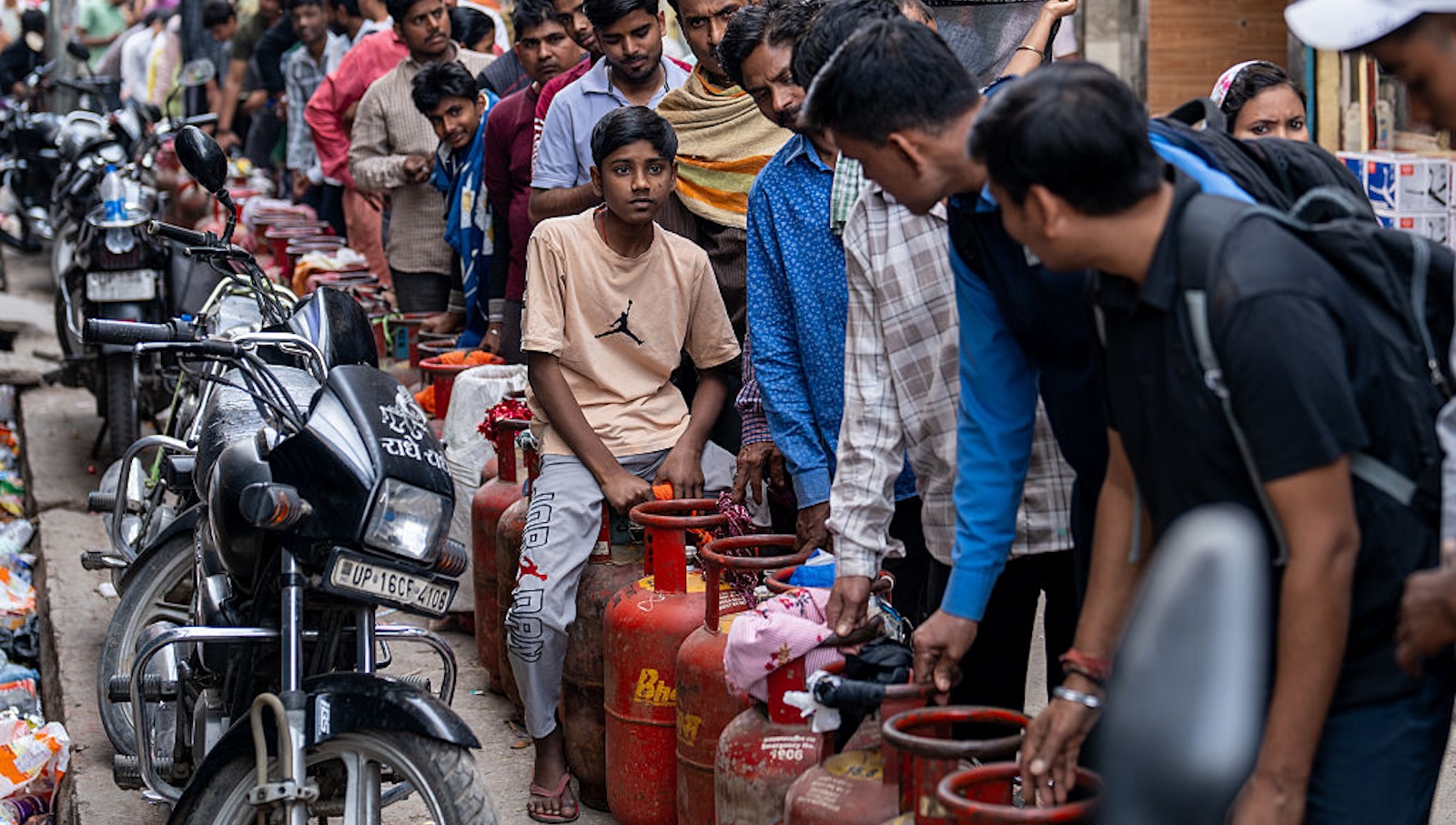
The choking of oil and gas supplies from the Middle East in recent months will only further accelerate the country’s shift to electrify its transportation sector, said Konda.
Whatever the drawbacks, the rapid advance of Indian solar power continues, and marks a sharp difference from the energy path chosen by China and, until now, what has been seen by many countries as essential for their economic development.
For years, China was notorious for building a new coal-fired power station every week. But India is avoiding that path. Its coal use is only 40 percent of that in China at a similar stage of economic development, according to Bond. Instead, it is installing solar generating capacity at almost the same rate as China once built coal plants.
With India’s leaders aiming to complete the country’s transition into a modern industrial economy by 2047 — the centenary of its independence from Britain — this matters for the world. India’s current per capita use of electricity is only a third of the global average, a fifth of that of China, and less than a tenth that of the U.S. Closing that gap by burning coal would be ruinous for the world’s climate. Achieving it with solar power could go a long way toward saving the planet.
Iranian negotiator says final draft not yet approved, Tehran can quit US deal over violations
Saeed Ajorlou, a member of Iran’s negotiating team’s media committee, said Saturday that Tehran has yet to approve the final draft of a proposed agreement with the United States and could withdraw from the deal if the other side fails to uphold its commitments, Anadolu reports.
Ajorlou told Iranian state television that, to his knowledge, the final text had not been approved as of Friday night, although only limited differences remained between the parties.
“If the final text is approved, we will enter a 60-day process of discussions on the details,” he said, adding that each of the agreement’s 14 articles contains annexes requiring further negotiations.
Ajorlou stressed that implementation mechanisms would be more important than the text itself, particularly regarding access to Iranian assets and the fulfillment of commitments by the other side.
According to Ajorlou, the proposed agreement includes provisions allowing Iran to withdraw if commitments are not met.
He said Tehran could exit the deal if violations occur, including breaches of the ceasefire, failure to provide access to Iranian funds, or failure to lift a maritime blockade.
READ: Iranian state TV: US aircraft destroyed near Bushehr
“If they do not lift the maritime blockade, we can leave the agreement. If they do not make those funds available to us, we can leave the agreement,” he said.
Ajorlou described the mechanism as a new form of “snapback” provision that would operate in Iran’s favor if the other side fails to uphold its obligations.
He added that any failure to implement commitments during the initial phase would prompt Tehran to reconsider participation in the planned 60-day talks.
“The agreement is entirely based on implementation and objective guarantees,” he said.
Tensions in the Middle East have escalated since the US and Israel launched strikes against Iran in late February. Tehran retaliated with attacks targeting Israel and US allies in the Gulf while closing the Strait of Hormuz.
A ceasefire took effect on April 8 through Pakistani mediation, but subsequent talks in Islamabad failed to produce a lasting agreement. US President Donald Trump later extended the truce indefinitely.
The two sides have since continued exchanging proposals and counterproposals in an effort to resume direct talks and end the conflict. US officials have said a proposed framework could include a 60-day extension of the ceasefire and a roadmap for further negotiations.
READ: US blockade of Strait of Hormuz remains in place, says Pentagon chief
Russia’s foreign spy chief accuses NATO of preparing for ‘large-scale conflict in the east’
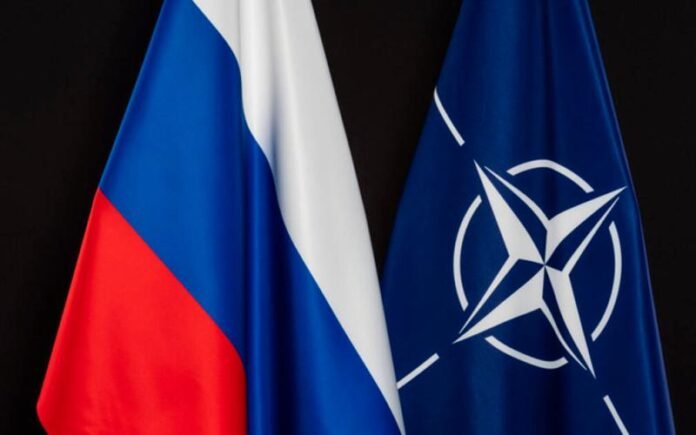
Sergei Naryshkin, head of Russia’s SVR foreign intelligence service, on Thursday accused the NATO military alliance of making practical preparations for what he called a “large-scale conflict in the east,” the state RIA news agency reported.
Naryshkin was also cited as saying that the European Union was rapidly arming itself and turning into a military alliance “directed against Russia.”
Taiwan’s more relaxed than most of us about Trumpian deal-making
The most common worry expressed around the world concerning the summit meeting in Beijing on May 14-15 was the fear that the future of Taiwan and its 23 million residents might be traded off in a deal between the men leading the world’s two true superpowers, Xi Jinping and Donald Trump.
The American president might soften his country’s support for Taiwan in return for Chinese help in ending the war in Iran. He might get such spectacular promises from Xi of Chinese purchases of soybeans or Boeing aircraft that he would agree to reduce US sales of weapons to Taiwan.
As far as we can tell from this secretive summit from which few public statements emerged, no such deal was done.
The call between Prime Minister Sanae Takaichi and President Donald Trump that took place immediately after he had left Beijing would have been mostly to reassure her and the Japanese government that nothing had changed, especially given the tension between China and Japan since Takaichi’s remarks in the Diet last October concerning how Japan would respond to a military confrontation between China and Taiwan.
This won’t bring the worrying to an end, especially as Trump and Xi have agreed to meet again on September 24, this time in Washington, DC. What is notable, however, is that one place in Asia where the whole theatre of the Trump-Xi dialogue appeared to be taken calmly, without serious worries, was Taiwan itself.
Even Trump’s statement, made during his flight back to Washington, that he had not yet decided whether to give his approval to a proposed US$14 billion package of weapons sales to Taiwan seemed to cause few waves in Taipei. (Trump later also described the arms sales decision as “a good negotiating chip” with China as well as renewing old – and false – accusations that Taiwan had “stolen” the semiconductor business from America.)
There is no doubt that Taiwan ranks number one among all the potential flashpoints capable of causing a catastrophic conflict between the world’s nuclear superpowers and of creating an economic crisis that would make the current pain caused by the closure of the Straits of Hormuz look trivial.
Those are powerful reasons to do everything possible, diplomatically and militarily, to make such a conflict less likely to break out. The stakes in any conflict over Taiwan in terms of strategic control over the western Pacific and, arguably, in terms of global leadership would be so high as to make it terrifyingly likely that nuclear weapons would be used in such a war for the first time since the Hiroshima and Nagasaki bombs of 1945.
So it is worth asking why Taiwan itself seems comparatively relaxed about the potential implications of the Trump-Xi summits. This may help us separate the noise that inevitably surrounds these summits from the true strategic signals that both sides are conveying.
One reason why Taiwan is less concerned than others is a simple one: it has had to learn to live with its geopolitically anomalous status for nearly 80 years now. If it got nervous every time the Chinese and American leaders talked, even ones like Xi and Trump, it would soon have a nervous breakdown.
Moreover, while certainly the People’s Republic of China has become vastly stronger in economic, military and political terms, especially over the past two decades, so has Taiwan. The Taiwanese know that they could not defeat China in a head-on conflict but they also know that they are strong enough to impose huge costs and pose high risks for China.
Ukraine’s success in resisting Russia’s invasion since February 2022 serves as an inspiration for Taiwan but most of all as a warning to China.
What matters to Taiwan is that it can keep on strengthening its defenses sufficiently to help deter an invasion.
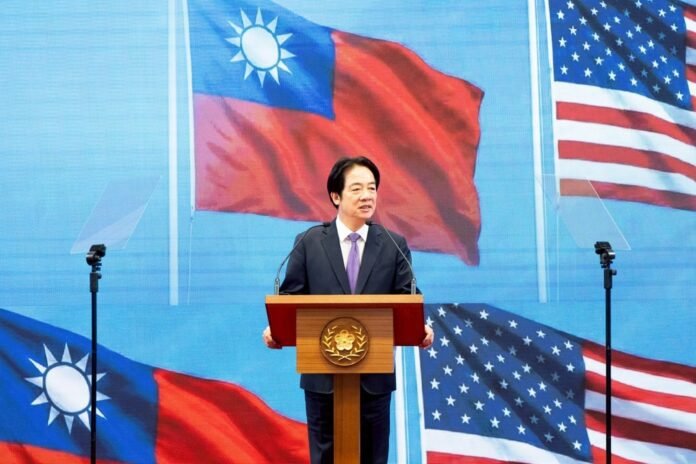
Taiwan’s government – led by President Lai Ching-te of the Democratic People’s Party (DPP), which has run the island since 2016 – has been trying to persuade the Legislative Yuan, Taiwan’s Parliament, to approve a big expansion in the defense budget, to be used both to buy more American weapons and to expand the island’s own defense production.
This has been a struggle as the DPP has not enjoyed a majority in the Yuan since a general election in January 2024. On May 8 the Yuan finally approved extra defense spending of US$25 billion, but that expansion was a lot smaller than the US$40 billion that the DPP government had asked for.
Among challenges to Taiwan and the deterrence it can present against Chinese forces, domestic politics have been more importan than Trump’s diplomacy with Xi over arms sales.
In any case, the impact of America’s war in Iran on US stockpiles and delivery schedules for the most advanced weapons and defense systems means that, whatever Trump decides about the US$14 billion package, it will be a long time before the weapons arrive.
Meanwhile, efforts are likely to be concentrated on expanding domestic manufacturing, especially of drones.
Taiwan certainly would be concerned if an American president were to pledge to end arms sales to the island or to drastically reduce them. But the Taiwanese also know two important things:
In the US Congress there is a clear and consistent majority in favor of supplying weapons to Taiwan, one that will probably become stronger after the midterm congressional elections in November; and
America will have a new president in 2029. The planning horizon for defense spending and investment is far longer than the American electoral cycle.
What will have been noted closely in Taipei will not have been the speculation and other noise surrounding the Beijing summit but rather the consistency of the lines taken by both leaders.
Xi sounded his usual warnings against foreign interference over the Taiwan question, warnings that are highly familiar to Takaichi and Japan, but he gave no indication of extra urgency.
Trump is not famous for sticking to official scripts, but he did appear to do so over Taiwan. He even emphasized America’s longstanding policy of “strategic ambiguity” over whether it would intervene militarily to protect Taiwan.
He will have felt politically pleased thereby to diverge from the relative clarity that his predecessor President Joe Biden had expressed in 2021-22 about his willingness to fight. But that period, during Russia’s invasion of Ukraine, was one of special uncertainty about the intentions of both Russia and China. A return to strategic ambiguity does not count in Taiwan’s eyes as a change of American policy.
The ultimate lesson is that the status of Taiwan is a long-term concern, not one that is liable to be affected by the kabuki drama of presidential summits.
China knows that its best hope lies not in presidential deals with Trump but in getting a president into office in Taiwan, after the next elections there in early 2028, who is more favorable towards China than Lai Ching-te. If that can be done, then the effort to cajole and if necessary coerce Taiwan towards absorption into China can begin.
It still won’t be easy, as Taiwanese public opinion remains strongly opposed to absorption. But that is the real strategic timetable, and it is not one that will be centered on the man in the White House, much though Trump likes to think he should be the center of everything.
This English original of an article published in Japanese and English by the Mainichi Shimbun is republished with kind permission. Along with many other articles it can also be found on Bill Emmott’s Global View.
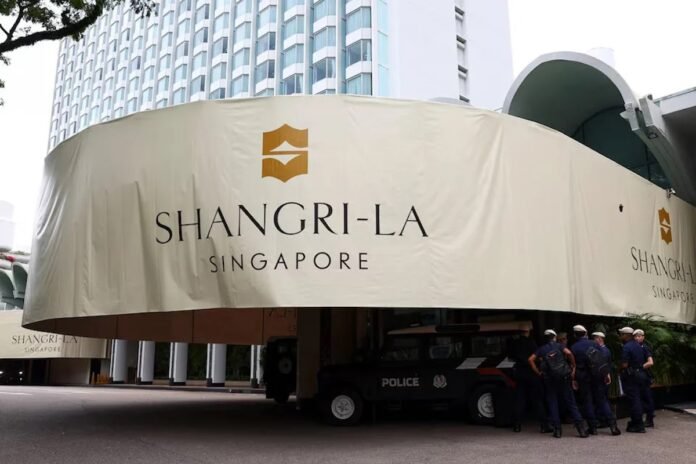
Shangri-La Dialogue opens as Asia seeks alternatives to US shield
As Asia’s premier defense forum opens in Singapore on May 29, the annual Shangri-La Dialogue is morphing from a venue of superpower posturing into a high-stakes market for strategic hedging.
Driven by cascading conflicts in the Middle East, intensifying great-power friction and a corrosive skepticism over the longevity of the US-led security umbrella, Indo-Pacific nations are rewriting their defense playbooks.
Formally organized by the International Institute for Strategic Studies (IISS), the three-day summit has long been the region’s premier security clearinghouse. But this year’s gathering arrives at a precarious inflection point.
While formal speeches by visiting defense chiefs will command the podium, the true currency of the forum is moving to the hotel corridors and closed-door lounges.
It is here that regional players, increasingly wary of Washington’s overextended global commitments, are looking to diversify their security portfolios.
The primary anxiety animating this year’s dialogue is whether a distracted Washington can simultaneously underwrite security in Europe, the Middle East and Asia.
The inconclusive fallout from the recent Iran conflict has only sharpened those doubts, leaving both traditional allies and non-aligned states questioning the reliability of American security guarantees.
Speaking to Asia Times, defense analysts point out that this credibility deficit is forcing a fundamental reassessment of traditional alliances.
Jaglul Ahmed, a retired brigadier general and security analyst from Bangladesh, noted that the current global architecture is failing to provide the ironclad reassurance that US allies increasingly demand.
In his view, the strategic fallout from the Middle East will compel both major and minor powers to pivot, pushing the “Indo-Pacific toward a regional approach anchored in strategic autonomy rather than overreliance on a singular superpower.”
This calculus is notably shifting European perspectives as well. According to Ahmed, European delegates at Shangri-La are likely to hedge their bets, viewing China with an eye toward securing maritime commerce given Beijing’s significant diplomatic leverage over Tehran.
For secondary powers, the objective is no longer choosing a side, but managing exposure.
Nitin Gokhle, editor of the Indian defense portal Bharatshakti.in, told Asia Times that this year’s iteration will be defined by countries protecting their positions in an increasingly volatile climate.
With top-level ministerial gaps from giants like India and China, Gokhle expects the US to “dominate the public stage,” yet he emphasizes that the critical matchmaking will occur out of camera range.
Close attention will be paid to the bilateral itinerary of high-level officials, including US “figures like Pete Hegseth,” though decoding the quiet signals sent from those private rooms will be complex.
Ironically, the most urgent concern hummed among Southeast Asian diplomats isn’t the sheer scale of China’s military expansion, but the erratic nature of American foreign policy. Washington routinely brands the Indo-Pacific as its primary theater, yet its actions tell a more fractured story.
The issue is less about the inherent friction between Washington and Beijing and more about the dizzying policy shifts coming from the US, Eric Olander, editor-in-chief of the China Global South Project, explained to Asia Times.
He pointed to glaring structural contradictions: the US insists the region is its top priority, yet it simultaneously “pulls vital resources from South Korea to stabilize the Middle East and wavers on hardware deliveries to Taiwan.”
Furthermore, while Washington pays lip service to minilateral groupings like the Quad, a looming undercurrent remains: President Donald Trump’s historic indifference to traditional multilateral frameworks.
This perceived vacillation is accelerating a quiet revolution in regional arms procurement. Rather than waiting on delayed or politically conditioned American hardware, Southeast Asian nations are aggressively diversifying their arsenals.
The deployment of Indo-Russian BrahMos supersonic cruise missiles to the Philippines —with Indonesia and Vietnam poised to follow — alongside Hanoi’s recent defense procurement deals with South Korea, underscores a rapid pivot toward alternative security partnerships, said Olander.
This fluid landscape is also shifting Beijing’s anxiety. While China remains the focal point of Western rhetoric at the forum, Olander suggested its deepest strategic headache at Shangri-La may “actually be Tokyo.”
There is a palpable, rising concern in Beijing that Japan is moving “aggressively to occupy the geopolitical vacuum” left by an inconsistent US, positioning itself as the new, assertive anchor of a post-American security architecture in the Asia-Pacific, Olander pointed out.
Ultimately, the 2026 Shangri-La Dialogue will serve as an early look at a more fragmented region — one where nations are discovering that in a world of unreliable superpowers, self-reliance is the only durable currency, as experts envisaged.
Here’s why the failure of Blue Origin’s New Glenn rocket is so catastrophic
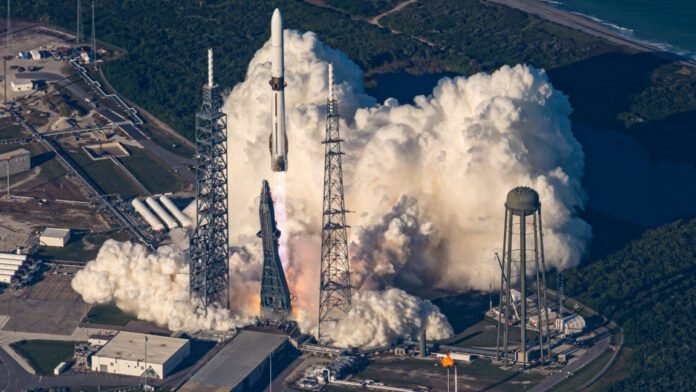
Thursday night’s detonation of Blue Origin’s New Glenn rocket during a static-fire test produced a spectacular fireball over Florida, sending shards of the rocket flying far and wide, into the sea and across the coastal scrubland nearby.
With sunrise on Friday teams from Blue Origin, the US Space Force, and NASA will be able to begin more thoroughly assessing the damage to Blue Origin’s facilities and begin picking up pieces of the rocket.
Metaphorically, the effort to pick up pieces will extend far beyond Blue Origin. This launch failure will be devastating not just for Blue Origin but also NASA and broad segments of the US space industry. Here’s a look at some of the major issues that will stem from the explosion.
No launch pad
There’s a reason why, before the very first launch of the Falcon Heavy rocket in 2018, SpaceX founder Elon Musk defined success as the vehicle clearing the launch pad. “I hope that it makes it far enough away from the pad that it does not cause pad damage,” he said. “I would consider even that a win to be honest.” Musk had similar thoughts about the first Starship launch, saying he would consider anything that did not destroy the launch mount a “win.”
Big rockets produce big explosions. And ground infrastructure is a challenging and underrated component of a rocket launch.
Multiple sources have confirmed that there is significant damage to Blue Origin’s launch site in Florida, LC-36A. The company invested years and at least hundreds of millions of dollars in this facility. The scale of the massive lightning towers is difficult to comprehend unless one has climbed one of them.
The company does not have another launch site for New Glenn. It has begun preliminary work on a nearby pad, LC-36B, and has plans to develop another site at Vandenberg Space Force Base in California. But these projects are just getting started.
Rebuilding the company’s pad, or finishing a new one, will likely take at least a year, even with a major effort by Blue Origin, and drawing upon Jeff Bezos’ nearly infinite resources. One source familiar with pad rebuilds estimated that 15 months was a “best case” scenario.
A maturing design
You might wonder what the big deal is. SpaceX has been blowing up Starship rockets left and right, and the space nerds seem to be cheering them on.
The reality is that Blue Origin took a more traditional design route with New Glenn, as opposed to SpaceX’s iterative design, which seeks to test, fly, fail, and fix hardware. The New Glenn first stage had performed nearly flawlessly during its first three flights. It is a mature design.
Because of this, Blue Origin had reached the point where it was poised to begin near-monthly launches of the vehicle during the second half of the year, serving a variety of customers, from NASA to Amazon, AST SpaceMobile, and its own internal payloads.
With the Vulcan rocket also currently offline due to an anomaly, it once again places all of the US medium- and heavy-lift launch capacity in SpaceX’s basket, with its Falcon 9 and Falcon Heavy rockets.
Speaking of Vulcan, if this is a problem with the BE-4 engine—and early indications are that the anomaly leading to Thursday night’s failure originated in the central engine of the booster—it would further compound United Launch Alliance’s difficulties in getting the large rocket back into service.
Blue Moon Mark 1
Blue Origin’s cargo lander has emerged as the supreme workhorse of the early stages of NASA’s Artemis program and Moon Base. It has a capacity to deliver up to 3 tons to the lunar surface and would serve as a pathfinder for a larger version of a lander to take humans to the Moon.
This week, NASA announced that its Moon Base I mission would fly on Blue Moon Mark 1, and it awarded Blue Origin $280.4 million to deliver two lunar rovers in 2028. Multiple other missions are planned on the lander, which was designed to be sent to the Moon on a single New Glenn vehicle.
Could Blue Moon Mark 1 launch on other rockets? SpaceX’s Falcon Heavy and United Launch Alliance’s Vulcan vehicles both likely have the lift capacity to push the vehicle to the Moon. But Vulcan is also sidelined at present and has a long line of Space Force payloads in the queue. So what of Falcon Heavy?
The Mark 1 lander is powered by the BE-7 engine, which runs on liquid hydrogen and liquid oxygen. There may be compatibility issues related to the Falcon rocket’s kerosene-powered upper stage, although this has not been confirmed. Also, it is unlikely that Blue Origin would partner with a direct rival, SpaceX, in this manner.
Artemis program
Due to the Mark 1 issues outlined above, there will either be significant delays to, or the need to restructure the early phases of, the Moon Base program. The lunar rovers under development by Astrolab and Lunar Outpost, for example, have a mass of about 1 ton. Only Mark 1 and SpaceX’s Starship have that kind of delivery capacity.
There are also major implications for the main Artemis crewed missions.
NASA recently changed Artemis III to become a mission that will see the Orion spacecraft rendezvous with one or both of the Human Landing Systems under development by Blue Origin (Blue Moon) and SpaceX (Starship) in low-Earth orbit. NASA appears determined to launch this mission in 2027 and plans to announce its four crew members in a couple of weeks.
But it’s now all but certain that a Blue Moon lander will not be ready for such a mission within the next 18 months. NASA will need to decide whether to wait on Blue Origin or press ahead solely with a Starship mission.
As for Artemis IV, the lunar landing mission, this failure further complicates that plan. It is difficult to imagine a scenario in which a crew-rated Blue Moon lander is ready at any point in 2028 now. Even if the hardware is far along, Blue Origin still needs to fly test missions with Blue Moon Mark 1, which are on hold indefinitely.
A number of senior NASA officials had come to view Blue Origin’s plan to use a slimmed down version of the Mark 2 lander, which would not require in-space refueling, as the prime option for Artemis IV. Now, like much of the US space industry, NASA finds itself highly dependent on SpaceX’s ability to deliver with Starship.
Note: This article has been edited to clarify interoperability issues between the Blue Moon Mark 1 lander and the Falcon Heavy rocket.
Epstein Spy Network Wants to ‘Silence’ Former Prince Andrew
Andrew Windsor is reportedly terrified he could become the next name in the long, dark shadow of Jeffrey Epstein’s world.
The disgraced former royal, 66, is said to be begging for stronger security after a masked intruder allegedly confronted him near his new home while he was walking Queen Elizabeth’s beloved corgis.
Now, sources claim the scare has set off a chilling new fear behind palace walls: that Andrew could be targeted because of what he may know about Epstein’s powerful inner circle.
“Given the suspicious deaths linked to Epstein, it’s possible that Andrew is a target,” private investigator Ed Opperman said, according to RadarOnline.com.
Opperman added that Andrew may be viewed as someone who could “flip” if he ever faced serious prison time, claiming the former royal “wouldn’t last 30 minutes in prison.”
The fear comes after years of questions surrounding Epstein, the convicted sex offender who was found dead in a New York jail cell in 2019 in what authorities ruled an apparent suicide.
Still, Epstein’s death has fueled endless speculation, especially among those who believe he knew damaging secrets about some of the world’s most powerful people.
At least 23 people with ties to Epstein have reportedly died over the years, including financier Steven Hoffenberg, former Palm Beach detective Joe Recarey, and Epstein’s ex-butler Alfredo Rodriguez.
Rodriguez once took Epstein’s infamous little black book and allegedly tried to sell it to an undercover FBI agent.
Now, insiders claim Andrew’s past connection to Epstein may have put him in a frightening position.
Andrew has long denied knowing about Epstein’s criminal activities. But his association with the late pedophile destroyed his public life, led to his royal disgrace, and left him more isolated than ever.
The former prince was stripped of his titles, pushed out of Royal Lodge, and left to live under far less protection than he once enjoyed as a senior royal.
Then came the alleged intruder scare.
On May 6, Andrew was reportedly walking his late mother’s corgis near his new home at Sandringham when a masked man allegedly approached him.
The suspect, identified as 39-year-old Alex Jenkinson, was arrested by Andrew’s private security team and charged with two counts of harassment.
Jenkinson later denied using threatening or abusive words or threatening violence. He has pleaded not guilty.
Still, the encounter reportedly rattled Andrew badly.
According to insiders, he is now demanding the return of the 24/7 taxpayer-funded Metropolitan Police protection team he once had. That security operation reportedly included 10 officers and cost around $1.3 million a year.
But King Charles is said to have little interest in restoring the publicly funded protection.
The king reportedly ordered royal officials to cut off the annual security payments for his younger brother after Andrew’s fall from grace.
That has allegedly left Andrew feeling exposed.
“Even though Andrew is no longer a working member of the royal family, the threat to his personal safety is greater than ever,” one source claimed.
The insider argued that Andrew may now be even more vulnerable because of the intense media coverage surrounding his Epstein links.
“He is actually more at risk from individuals who have become fixated due to all of the coverage he has attracted,” the source said.
Another insider made an even darker claim, suggesting that if Epstein’s alleged hidden network could get to him inside a New York jail, then Andrew’s current living arrangements would not be enough to stop a determined attacker.
“If this bloodthirsty spy network could penetrate the NYC prison system, a 12-foot-high wall in central London or a fence at his Sandringham estate is no trouble at all for trained assassins,” the source claimed.
The same insider ominously predicted that if Andrew were targeted, “his death will look like a suicide.”
There is no official evidence that Andrew is being hunted by assassins, and no charges have been filed against him in connection with Epstein.
Still, the former royal’s name remains tied to one of the most notorious scandals in modern history.
Epstein’s former girlfriend and convicted accomplice Ghislaine Maxwell is currently serving a 20-year prison sentence in Texas for helping Epstein sexually abuse young women.
Opperman claimed Andrew may know even more than Maxwell.
“Andrew probably has more dirt on other people than Ghislaine Maxwell,” he said.
For Andrew, the masked intruder scare may have been more than just an alarming security incident.
According to those close to the situation, it may have convinced him that his royal blood no longer guarantees his safety — and that his Epstein past may still come with deadly consequences.