20.9 C
London
Friday, May 29, 2026
Home Blog

What’s wrong with how US and Uganda plan to stop Ebola spreading

0
what’s-wrong-with-how-us-and-uganda-plan-to-stop-ebola-spreading
What’s wrong with how US and Uganda plan to stop Ebola spreading

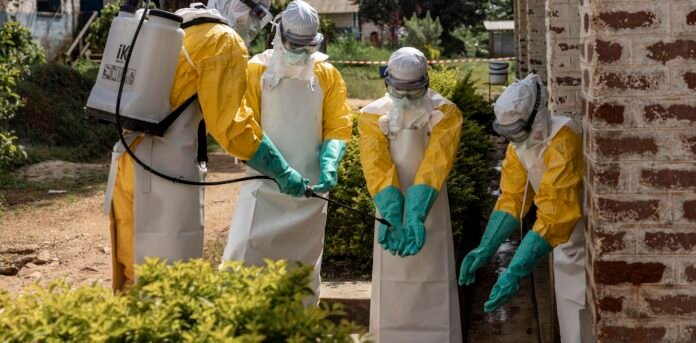
As public health workers in the Democratic Republic of Congo work to rein in a growing outbreak of a rare Ebola virus, other countries are establishing protocols for keeping their own populations safe.

As of May 27, 2026, Congo has reported more than 1,000 suspected and confirmed cases, and more than 250 deaths, according to the U.S. Centers for Disease Control and Prevention. Neighboring Uganda has also reported seven cases and one death. Several Americans who were in the region have been exposed.

Measures such as screening incoming travelers and isolating those who have been exposed, announced by the U.S., Canada and other countries, are scientifically proven ways to effectively address outbreaks.

But recent decisions by two countries stand out because they are not supported by epidemiological evidence – and because they reflect a surprisingly similar way of thinking about outbreak control: On May 27, Uganda closed its border with Congo. Only a narrow set of exceptions apply, mostly for emergency aid workers, and those who cross the border will be subject to health screening and supervised isolation. The following day, the United States announced plans to send exposed Americans from affected countries to a quarantine facility in Kenya, a country with no Ebola cases – though as of May 29, a Kenyan court has blocked the move.

Uganda closed its border with Congo to prevent the spread of Ebola, but public health history suggests this is not a great idea.

These are very different policies, but both rely on a common assumption: that creating geographic distance from a threat provides protection. However, surveillance, isolation and response capacity are often more important. And both the Ugandan and U.S. moves have drawn criticism from public health and medical experts who argue that managing outbreaks depends more on detection and monitoring than distance alone.

And both decisions emerge from a long-running debate in public health: whether controlling where people are located is more effective than investing in the systems that identify, monitor and treat disease.

As an epidemiologist studying infectious disease outbreaks, I think a look at the history of border restrictions and closures during epidemics helps explain why scientific consensus usually recommends against them.

Land borders are challenging to ‘close’

The instinct to seal borders during outbreaks goes back centuries. Venice’s 14th-century “quarantino” was one of the earliest organized attempts by a state to regulate movement in the name of collective health. It worked because the unit of control was a ship: a discrete location that could be anchored offshore for a period of time.

A land border is a fundamentally different problem. As trade networks crossed continents, epidemic control encountered something maritime quarantine never had to solve. You cannot easily anchor people at a land border.

By the 19th century, repeated cholera outbreaks had made the problem international. European powers responded with waves of uncoordinated border closures and trade restrictions that caused enormous economic damage without reliably stopping transmission.

A four-panel etching from 1833 showing people trying to disembark from a boat and go ashore.

Sealing a border is easier when people arrive by sea than by land. Wikimedia Commons

In 1874, governments from around the world met in Vienna for the Fourth International Sanitary Conference to address a problem that sounds remarkably modern: how to control infectious diseases crossing borders without crippling trade and travel. Delegates explicitly rejected border closures and land quarantine as “unworkable and consequently useless.”

The modern descendant of those 19th-century conferences is a set of global laws called the International Health Regulations. Their core purpose is straightforward: Make it safe for countries to report outbreaks honestly, without fear that doing so will trigger economic punishment or travel bans.

Incentive problem at the heart of global health

The entire modern global health surveillance system rests on a single premise: Countries need to report outbreaks quickly, without fear of automatic economic punishment for doing so. If declaring an outbreak triggers immediate border closures and travel bans, governments have a powerful incentive to delay reporting.

This concern is not hypothetical. During the first SARS outbreak in 2003, China’s delays in official reporting, driven in part by concern about economic fallout, contributed directly to the global spread of the disease. This prompted the World Health Organization to publicly accuse a member state of placing the world at risk. The International Health Regulations were most recently revised in 2005 in direct response to that failure.

When the WHO declared the current Ebola outbreak a public health emergency of international concern on May 17, it explicitly warned against border closures and travel restrictions, saying that these moves “have no basis in science.” That’s because such actions push movement to informal border crossings that are not monitored and “can also compromise local economies and negatively affect response operations from a security and logistics perspective.”

For example, a mother trying to get a sick child to a clinic just across the border may not stop because the formal crossing is shut. The Uganda-Congo border is several hundred miles long and crossed by numerous footpaths beyond formal border posts, which many people use daily to visit family or to trade.

The public health system loses the ability to test, isolate or trace those interactions. This matters especially for Ebola, which transmits only after symptoms begin – meaning a person who can actually spread the virus is already identifiable through symptom screening, making case detection and isolation far more effective than geographic restriction.

U.S. plans to establish quarantine facilities in Kenya for Americans exposed to Ebola have drawn strong pushback.

The U.S. decision to send exposed Americans to a quarantine facility in Kenya reflects a related instinct – to keep the virus off native soil. But exposure has already occurred, so the public health question is no longer how to prevent entry but how to monitor potentially exposed people safely and effectively. The plan is particularly controversial because it would transfer potentially exposed individuals to a country with no Ebola cases of its own, despite the U.S. already possessing specialized facilities designed for exactly this purpose.

The Infectious Diseases Society of America criticized the plan, noting that the United States has already invested heavily in specialized Ebola treatment centers specifically designed to care for patients with highly dangerous infectious diseases. It warned that building and staffing a new unit in Kenya during an active outbreak raises questions about resources, timing and quality of care.

Border restrictions do not work alone

Some countries did use border closures effectively during COVID-19 – New Zealand, Australia and Taiwan sharply restricted international travel while pairing those measures with intensive testing, quarantine and contact tracing. But specific circumstances made those cases work: restrictions before the virus began spreading widely in the community, island geography that naturally limited informal crossings, and aggressive internal measures running in parallel.

Remove any of those elements and the effectiveness drops sharply. In these examples, the act of closing the border did not work alone. It bought time for setting up the infrastructure for testing and contact tracing.

These circumstances don’t apply to Uganda’s border closing. Researchers estimate the virus had been transmitting for approximately six weeks, and Uganda already has seven confirmed cases. A closure here is not a moat.

Governments face real pressure to act visibly during outbreaks, and border restrictions are easier to communicate to a worried public than investments in surveillance infrastructure. Those incentives are understandable.

But history suggests that outbreaks are controlled less by where people are located than by whether governments can identify cases quickly, trace contacts, isolate infections and maintain public trust. In other words, borders alone do not stop outbreaks. The real work happens inside them.
Bank of Japan squeezed by Takaichi, Trump and Iran war inflation

0
bank-of-japan-squeezed-by-takaichi,-trump-and-iran-war-inflation
Bank of Japan squeezed by Takaichi, Trump and Iran war inflation

Speaking on Wednesday (May 27), Bank of Japan Governor Kazuo Ueda cautioned that central banks must prevent this year’s oil‑driven inflation surge from hardening into a lasting global problem.

“If inflation expectations are already high and wages are accelerating, the risk of second‑round effects is large,” he said, adding that the line between temporary and persistent inflation “is not mechanical.”

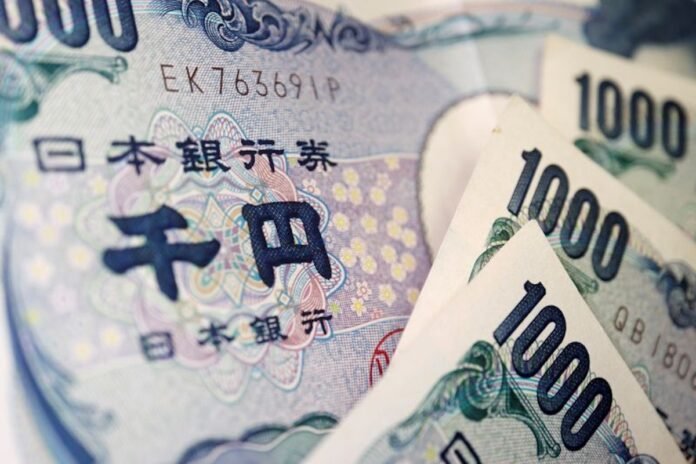
In other words, a June 16 BOJ rate hike isn’t just likely — it could mark the start of a broader tightening cycle that finally puts Tokyo’s normalization back on track. That shift would almost certainly push the yen higher, a development welcomed by US Treasury Secretary Scott Bessent and President Donald Trump.

Prime Minister Sanae Takaichi would see it very differently, though. Before taking office last October, she laid out an economic strategy built on maintaining a weak yen — a stance that depends on the BOJ keeping rate hikes to a minimum. On the campaign trail, she even dismissed the idea of raising rates as “stupid.”

So far in 2026, Team Ueda has stayed on the sidelines. When the BOJ lifted its benchmark rate to 0.75% in December — a 30‑year high — policymakers fully expected to follow it with more hikes.

By now, Ueda was supposed to have secured his legacy as the governor who finally buried Japan’s deflation‑era zero‑rate regime. If he’s going to claim that legacy, he’ll have to push past Takaichi and the Liberal Democratic Party.

For nearly three decades, the LDP has pressed the BOJ to cut rates — or at least avoid raising them — and largely gotten its way. Since 1999, when the BOJ became the first Group of Seven central bank to cut rates to zero, government after government has shamed policymakers into leaving them there. Or to go even further with quantitative easing (QE).

The BOJ came closest to escaping zero rates and quantitative easing two decades ago under Governor Toshihiko Fukui, who served from 2003 to 2008. By 2006–2007, his team had unwound QE and lifted the benchmark rate to 0.5%. But one mild recession — and then the “Lehman shock” — sent the BOJ straight back to zero.

When a new governor arrived in 2008, the first move was to restart QE. Japan’s monetary ATM was back online. And in 2013, Governor Haruhiko Kuroda built an even bigger free‑money machine and cranked the settings to maximum.

The decade before Ueda took over saw the BOJ dominate Japan’s government‑bond market so completely that some issues didn’t trade at all on certain days. It also became the single largest owner of Tokyo stocks. By 2018, the BOJ’s balance sheet had ballooned past the size of Japan’s $4.2 trillion economy — a first for any G7 nation.

Ueda arguably waited too long to lift rates in 2023 and 2024, or to shift QE decisively toward QT, or quantitative tightening. By the time US President Donald Trump’s trade war hit in 2025, the window for meaningful tightening had already narrowed.

Then came Takaichi, a protege of former leader Shinzo Abe. She quickly revived his “Abenomics” playbook of aggressive easing and a weak yen, sharply limiting Ueda’s room to push rates to 1% or higher.

Yet it’s also put Tokyo in Trump World’s crosshairs a bit. When he was in Tokyo earlier this month, Bessent characterized the yen as undervalued and prodded the BOJ to press forward with rate hikes.

“I believe the fundamentals of the Japanese economy are strong and resilient, and that will be reflected in the exchange rate,” Bessent said. He added that “we both believe that excess volatility is undesirable, and we have been in close contact with the Ministry of Finance, and we will stay in close contact with them,” comments that suggest the US might be willing to engage in joint currency intervention.

The strategy behind Bessent’s moves on Trump’s behalf isn’t hard to read. The White House has made little headway pressuring the US Federal Reserve to ease. Former Chair Jerome Powell resisted despite Trump’s threats to fire him and prosecutors’ attempts to constrain him.

New Fed Chair Kevin Warsh is already boxed in by April’s 3.8% year‑on‑year inflation — the highest level in three years. If Trump and Bessent can’t get the Fed to loosen policy, nudging the BOJ to tighten becomes the next‑best lever.

If that’s the plan, there’s a case for the yen snapping higher once Iran‑war chaos fades and the Strait of Hormuz reopens. One reason: the BOJ looks poised to tighten ahead of the Fed. Another: traditional currency relationships have been breaking down.

In earlier eras, any outbreak of conflict in the Middle East would send the yen surging. Not in 2026. This year, the currency has instead flirted with the psychologically important 160 yen-per‑dollar level. The move has irritated Trump World, which is hypersensitive to any hint that Asia might be seeking a trade edge through artificially low exchange rates.

That sets the stage for a potential clash between the BOJ and Takaichi’s government. It may not be as loud or chaotic as Trump versus Powell, but things could get tense if Ueda chooses to do his job rather than defer to the government.

Yes, the BOJ has been formally independent since 1998. But it slashed rates to zero soon after — and kept them there for more than 25 years. It also remains the financial stabilizer beneath both the government‑bond and stock markets. Now the QT process is at risk as Takaichi’s team pushes for more BOJ support, not less.

This tension could easily rattle global markets and put a hedge fund or two in the line of fire. It also carries unpredictable consequences for Japan’s 125 million people and its corporate establishment.

After decades of ultra‑easy money, banks, companies, pension funds, endowments, and a government saddled with the developed world’s heaviest debt load are in for a shock if Ueda pulls away the punchbowl.

In short, Ueda will have to shut out the noise — at home and abroad — and barrel ahead if he wants to get Japan Inc. clean and sober. Whether he has the resolve is something only Ueda knows.

Japan’s fixation with a weak yen is long overdue for retirement. A softer currency now risks backfiring badly: it could import even more inflation at a moment when prices are above the BOJ’s 2% target. It could also provoke Team Trump and trigger even steeper tariffs.

But the bigger danger is that it fuels yet another round of complacency. Only now are many MOF officials and CEOs waking up to the damage done by 25 years of engineering a cheaper yen.

Yes, a weak currency occasionally lifted GDP and padded corporate profits. But mostly it dulled the urgency for lawmakers to level the playing field and for executives to innovate, restructure, disrupt, and raise productivity.

As the International Monetary Fund points out, “Japan’s total factor productivity growth has been slowing for a decade and has fallen further behind the United States. A steady decline in allocative efficiency since the early 2000s has been a drag on productivity, and likely reflects an increase in market frictions.”

What’s more, the IMF notes, “Japan’s ultra-low interest rates may have allowed low-productivity firms to survive longer than they otherwise would have, delaying necessary economic restructuring. Reforms aimed at improving labor mobility across firms would help improve Japan’s allocative efficiency and boost productivity.”

Japan deserves better than another round of weak‑yen economics. Takaichi’s revival of Abenomics is simply more of the same — and it’s a big reason Japan is struggling in the Chinese era.

Since 2015, when President Xi Jinping launched “Made in China,” Beijing poured vast resources into artificial intelligence, robotics, biotech, electric vehicles, renewable energy, semiconductors, and other frontier technologies.

Japan, by contrast, spent the decade investing in mediocrity. With the MOF intervening in currency markets and the BOJ hoarding bonds and stocks, Tokyo made it easy for bureaucrats and CEOs to dodge reform. Where is Japan’s DeepSeek‑style AI breakthrough? Its BYD‑like EV disruptor?

Japanese real wages just fell for the fourth straight year in fiscal 2025, which ended in March. 

“The lack of real wage growth is the main drag,” says Stefan Angrick, economist at Moody’s Analytics. “Slowing inflation and steady nominal pay gains were supposed to lift real incomes in 2026, but the prospect of a fresh jump in inflation pushes that scenario into the distance.”

Angrick adds that “modest fiscal support for households, defence and strategic investment should keep the economy from derailing, but the growing list of headwinds points to a difficult year.”

That could be made worse if Takaichi pushes on with her fiscal plans, sending Japanese government bond yields to multi-decade highs. 

Robin Brooks, economist at the Brookings Institution, notes that “Japan has been in a slow-motion blow-up of exactly this kind for two years.” He notes that “the bottom line is that ‘Liz Truss’ bond market selloffs are becoming more common across the G10 as debt levels rise and institutional integrity declines.”

In this sense, Bessent’s Treasury Department should be careful about what it wishes for. As history shows, few events are more disruptive to global markets than sudden yen moves – in either direction.

Follow William Pesek on X at @WilliamPesek

Kenyan court blocks Trump admin from dumping Ebola-exposed Americans there

0
kenyan-court-blocks-trump-admin-from-dumping-ebola-exposed-americans-there
Kenyan court blocks Trump admin from dumping Ebola-exposed Americans there

The Trump administration is refusing to repatriate Americans exposed to Ebola amid the outbreak still raging in the Democratic Republic of the Congo. But the plan to send US citizens to Kenya has hit a snag, and officials are still scrambling to find other countries that might take them.

Earlier this week, it was revealed that the administration had devised a plan to establish a makeshift quarantine and treatment facility in Kenya—instead of bringing its citizens home for high-quality care at specialized facilities built for this purpose. According to the initial plans, the US facility would be in Laikipia, about 120 miles north of Nairobi, where the US has an air base. Initially, the plan was to set up a 50-bed quarantine facility that was expected to be operational today, May 29. Then, in a second state, officials would set up isolation and biocontainment units to house Americans infected with the virus.

But after a series of events on Thursday and Friday, that plan has now been stalled. The Katiba Institute, which advocates for Kenyans’ constitutional rights, filed the petition on Thursday to challenge the establishment of the quarantine and treatment facility.

“The secretive, unilateral establishment of an Ebola quarantine facility raises grave constitutional concerns regarding the rights to life, health, fair administrative action, public participation, and parliamentary oversight,” Katiba said in a statement posted on social media.

Katiba is seeking the government’s preparedness plan to prevent or respond to the potential spread of the Ebola virus, which is not present in Kenya. The institute is also seeking disclosure of the terms of any agreement between Kenya and the US regarding the facility. “At its core, the case is about preserving constitutional accountability, protecting public health, and ensuring that no government may place expediency above the lives and safety of the people of Kenya,” Katiba said.

“Appalling” response

Friday morning, a high court in Kenya ordered a halt to the Trump administration’s plans, citing an “imminent threat to life,” until the full case is heard on June 2. Otherwise, Trump officials have said that Americans infected with Ebola needing high-level care would be evacuated to somewhere in Europe, but that they had not determined where in Europe.

In the past, the US has treated 11 Ebola patients in the country, most of whom were repatriated from outbreaks, according to Stat News. No repatriated cases led to secondary transmission within the US. There was a case of a Texas resident who returned from Liberia with the virus. His infection was not immediately detected, and two nurses who cared for him in the US fell ill. Both were treated in the national facilities set up for handling Ebola patients—where the other cases were treated—and both survived.

Daniel Bausch, a physician-scientist who has responded to several Ebola outbreaks in the past, told Stat that the Trump administration’s response has been “appalling,” but not surprising.

“No one is surprised to see the maximum selfishness of US government policy these days. Because it’s just one thing after another. They’ve already withdrawn from WHO … and they’ve already destroyed USAID. … So, no one is really expecting a lot of them right now.”

On Friday, the World Health Organization reported 1,041 cases (135 confirmed, 906 suspected) and 241 deaths (18 confirmed, 223 suspected) in the outbreak.

New Syrian Chemical Weapons Find Could Help Prosecute Perpetrators of War Crimes

0
new-syrian-chemical-weapons-find-could-help-prosecute-perpetrators-of-war-crimes
New Syrian Chemical Weapons Find Could Help Prosecute Perpetrators of War Crimes


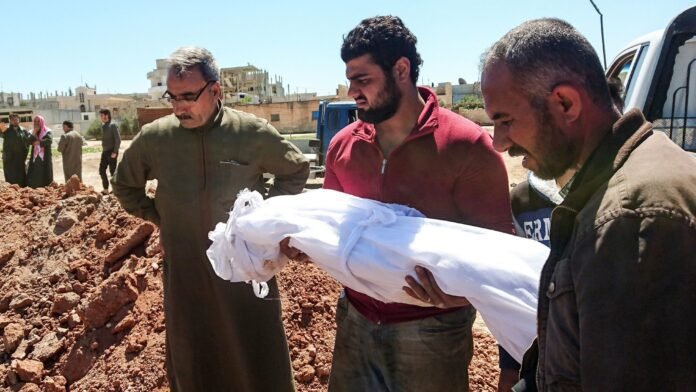
Syrian Authorities have detained 18 individuals suspected of involvement in operating and managing the Assad regime’s chemical weapons program

The recent discovery of Assad-era chemical weapons munitions and materials in Syria has implications beyond the identification and destruction of hazardous stockpiles. The evidence could help investigators trace the military and security command structures that oversaw the chemical weapons program under Assad and support efforts to hold those responsible for war crimes committed during the civil war accountable.

Retired Brig. Gen. Mustafa al-Sheikh, a military affairs expert, told The Media Line that the discovery of munitions similar to those used in the Ghouta and Al-Latamenah attacks could mark an important development in international investigations. “Any technical match between the newly discovered materials and previously documented evidence could provide additional grounds for legal accountability and strengthen efforts to prosecute those responsible for the use of chemical weapons,” he said.

A September 2013 United Nations investigation into chemical weapons use in Syria concluded that there was “clear and convincing evidence” that Sarin gas was deployed in the Ghouta area outside Damascus, an attack that reports said killed hundreds of people.

Then-Secretary-General Ban Ki-moon described the findings as “deeply disturbing.” The investigative team determined that “chemical weapons have been used in the ongoing conflict between the parties in [Syria], also against civilians, including children, on a relatively large scale.”

According to the UN probe, 85% of blood samples from the sites in Ghouta tested positive for Sarin, and the majority of the rocket fragments were also found to be carrying the deadly nerve agent.

This is a war crime. The international community has a responsibility to hold the perpetrators accountable

“This is a war crime,” Ki-moon said to the UN Security Council in 2013 after the report was published. “The international community has a responsibility to hold the perpetrators accountable and to ensure that chemical weapons never re-emerge as an instrument of warfare.”

French courts have issued an international arrest warrant for Bashar Assad over the 2013 Ghouta chemical attacks, ruling such crimes are not protected by head-of-state immunity. Separate efforts in Germany and Sweden rely on universal jurisdiction, while the International Criminal Court lacks automatic jurisdiction because Syria is not a Rome Statute members.

Syria’s permanent representative to the Organization for the Prohibition of Chemical Weapons (OPCW) in The Hague, Mohamed Katoub, announced that authorities had detained 18 individuals suspected of involvement in operating and managing the former regime’s chemical weapons program. According to Katoub, those detained include senior military, political, and technical officials, although their identities and specific roles have not been disclosed.

The arrests signal the beginning of what could become a lengthy judicial and security process, particularly as international calls continue for accountability over the use of prohibited weapons against civilians during the conflict.

Syrian authorities have announced a significant development in dismantling the legacy of the chemical weapons program established under former President Bashar Assad, after the OPCW and Syrian officials reported the discovery of munitions, chemical materials, and specialized equipment linked to the program. The findings also included documents that could help clarify the scope of activities that remained undisclosed despite years of international monitoring and disarmament efforts.

A source in Syria’s Ministry of Defense told The Media Line that specialized government teams uncovered raw materials, munitions, and missiles connected to the chemical weapons program used throughout the Syrian war, including ordnance similar to that employed in toxic gas attacks carried out during the conflict.

Inspection operations led to the recovery of more than 70 missiles and bombs intended for use within the former regime’s chemical weapons program, though the OPCW said the materials were still undergoing technical analysis, according to the source that requested anonymity.

OPCW confirmed that recent verification missions had uncovered dozens of munitions, chemical materials, and related equipment at multiple locations across Syria, along with thousands of pages of documents linked to the former regime’s chemical weapons program. The materials are currently undergoing technical analysis by OPCW experts.

The discovery comes as Syria’s new government seeks to close one of the most sensitive and complex chapters of the war, amid ongoing international pressure to fully disclose the fate of undeclared chemical weapons stockpiles and hold those responsible for their use accountable.

In the first detailed official comment on the findings, Syrian Foreign Minister Asaad al-Shaibani said national teams had succeeded in locating “munitions, precursor materials, as well as mixing and storage equipment,” adding that the materials had been secured and transferred to specialized facilities in preparation for their destruction. He said the achievement was the result of “months of national, intelligence, and technical work,” including the collection and analysis of information, access to high-risk sites, and facilitating inspection visits by the OPCW to dozens of locations linked to the former program.

Al-Shaibani added that Syrian authorities had also made progress in pursuing individuals involved in the former regime’s chemical weapons program, describing the efforts as a reflection of cooperation between Damascus and the OPCW within the framework of what he called a “new Syria” based on transparency and international cooperation.

Syria’s mission to the OPCW announced that search operations had identified sites connected to the former chemical weapons program and uncovered munitions and materials linked to previous chemical attacks carried out during the war. According to the mission, investigators found 54 aerial bombs similar to those used in the 2017 Al-Latamenah attacks and 25 ground-to-ground munitions resembling those deployed in the 2013 Eastern Ghouta attack, in addition to sarin precursor materials and equipment used for mixing and storage.

Highlighting growing international interest in the issue, US Special Envoy for Syria Thomas Barrack described the discoveries as “an important milestone” in the process of building a new Syria and strengthening international security. Barrack said uncovering remnants of the chemical weapons program represented another step toward ending what he called the “brutal legacy” of chemical weapons in Syria. He credited the progress to cooperation between Syrian authorities and the OPCW, supported by the United States and international partners.

“A safer, more sovereign, and more accountable Syria is in the interest of the Syrian people and the world as a whole,” Barrack said.

A safer, more sovereign, and more accountable Syria is in the interest of the Syrian people and the world as a whole

The chemical weapons issue remains one of the most controversial and sensitive aspects of the Syrian conflict, having been linked to a series of attacks that drew widespread international condemnation and became a central issue in efforts to hold the former regime accountable. Although Syria agreed in 2013 to dismantle its chemical weapons arsenal under international supervision, the OPCW has continued to identify gaps, inconsistencies, and unresolved questions surrounding Syria’s declarations.

Observers believe the latest discoveries, coupled with unprecedented cooperation between Syrian authorities and international organizations, could represent a turning point in international accountability efforts, particularly if ongoing investigations confirm the existence of previously undeclared stockpiles, equipment, or operational networks outside the framework of earlier disarmament agreements. Such findings could open a new chapter in legal investigations into one of the most contentious legacies of the Syrian war.

Iran, US reach deal to extend ceasefire, pending Trump’s approval

0
iran,-us-reach-deal-to-extend-ceasefire,-pending-trump’s-approval
Iran, US reach deal to extend ceasefire, pending Trump’s approval


The United States and Iran reached ​an agreement on Thursday to extend their ceasefire and lift restrictions on shipping through the Strait of Hormuz, sources told Reuters, though U.S. President Donald Trump has yet to approve ‌it and Iranian state media said it had not been finalized.

According to four sources familiar with the matter, the agreement would extend the truce for another 60 days and allow traffic to flow through the strategic waterway while negotiators tackle difficult issues such as Iran’s nuclear program.

If approved by leadership in Washington and Tehran, it would amount to the biggest step towards peace since the conflict began on February 28. News of the possible agreement came after a round of tit-for-tat attacks between the two ​countries, the latest such incident since the ceasefire took effect in early April.

Trump has not yet approved the deal, the sources said. Iran has yet to comment on news of the proposed ​deal, which was first reported by Axios.

Iran’s Tasnim news agency, citing a source close to the negotiating team, said the text of the agreement had not been ⁠finalized or confirmed.

“We’re not there yet, but we’re very close and we’re going to keep on working at it,” U.S. Vice President JD Vance told reporters in Washington.

“I can’t guarantee that we’re going to get there, ​but right now I feel pretty good about it,” Vance said.

The Trump administration has several times said a deal to end the fighting was close, only to have Iran dispute or downplay the claims.

The deal would ​specify unrestricted shipping through the strait and would require the U.S. also lift its blockade of Iranian ports. The U.S. would also lift some sanctions on Iranian oil sales.

The reports prompted oil prices to fall on hopes of a potential reopening of the Strait of Hormuz, a key transit route for roughly a fifth of the world’s oil and liquefied natural gas supply.

Earlier, U.S. Central Command said its forces had shot down five Iranian attack drones and struck a ground control station in the ​port city of Bandar Abbas that was about to launch a sixth. Kuwaiti forces then intercepted a ballistic missile fired towards the country, which hosts a large U.S. base.

A U.S. official also said no American aircraft ​were shot down near Bushehr, Iran, contradicting a report by Iran’s state television that a U.S. aircraft had been downed there.

The incidents, while limited, highlighted the fragility of negotiations to turn the tenuous ceasefire into a lasting agreement to ‌end the three-month-old war, ⁠which has killed thousands and upended global energy markets.

A U.S. official, speaking on condition of anonymity, said the strikes were defensive and intended to maintain the ceasefire.

The Islamic Revolutionary Guard Corps said it had targeted the U.S. base responsible for the Bandar Abbas attack, and that any repeat would lead to a “more decisive response”, Tasnim news agency reported.

Kuwait condemned the attack and demanded that Iran immediately halt what it called a serious escalation.

The violence, the second flare-up this week, coincided with the Muslim holiday of Eid al-Adha celebrated across the region, where multiple countries have been caught up in the conflict.

Mediator Pakistan said its foreign minister, Ishaq Dar, would meet U.S. ​Secretary of State Marco Rubio in Washington on Friday, ​although the significance of his visit was unclear.

Trump ⁠has repeatedly said an end to the war is close since mid-March, though the two sides have shown little public movement toward common ground. Iran has called for sanctions to be lifted, foreign assets to be unfrozen, and U.S. forces to be withdrawn from the region. Washington has called for Iran to dismantle its nuclear ​program, which Tehran says is for peaceful purposes.

Iran says any peace deal must also end U.S. ally Israel’s attacks in Lebanon, but that conflict shows ​no signs of flagging. Israel ⁠said it had targeted infrastructure of Iran-backed Hezbollah militants in the southern city of Tyre and had carried out a strike in the capital Beirut. Israel has displaced hundreds of thousands of people with a push deep into Lebanon in pursuit of Hezbollah. The Lebanese army said a strike had killed one of its soldiers.

WARNING TO OMAN

The U.S. warned Oman not to get involved in any effort with Iran to impose a toll in the Strait of Hormuz, ⁠and Trump on ​Wednesday threatened to bomb the country, despite a history of economic and military ties between the two countries.

Treasury Secretary Scott Bessent said ​Oman’s ambassador had told him there were no plans to impose such tolls.

Oman has not mentioned the idea of joint control of the strait with Iran, with which it says it has discussed freedom of navigation. Tehran expressed solidarity with Oman after what it ​called “U.S. officials’ threats”.

Paul McCartney ‘Desperate’ to Prove He’s More Than a Beatle

0
paul-mccartney-‘desperate’-to-prove-he’s-more-than-a-beatle
Paul McCartney ‘Desperate’ to Prove He’s More Than a Beatle


Paul McCartney may be one of the most famous musicians in history, but the 83-year-old legend is making one thing clear: he does not want his new music judged only through the shadow of The Beatles.

The former Fab Four icon has released his 20th solo studio album, The Boys Of Dungeon Lane, a deeply personal 14-track collection that looks back on his childhood, young love, and the years before worldwide fame changed his life forever.

But while the album is filled with memories of Liverpool and the boy he once was, McCartney insists the music is not meant to be treated like a Beatles throwback.

For McCartney, the message is simple. This is not The Beatles. This is Paul.

According to insiders close to the project, the music icon is determined to remind fans that he is still a living, breathing, working artist — not just a keeper of rock history.

“Paul has enormous pride in everything he achieved with The Beatles, but he doesn’t want every new piece of music to be viewed as some extension of that legacy,” one source said.

The insider added that McCartney is eager to show he is still creating in the present, even after more than six decades in the spotlight.

“He is still writing, recording and creating because he loves making music now,” the source said. “This album is incredibly personal and reflects his own experiences and memories. It’s less about looking back at Beatlemania and more about showing people who Paul McCartney is today.”

McCartney recorded the album over five years with American producer Andrew Watt, who has worked with some of the biggest names in music.

The Boys Of Dungeon Lane digs deep into McCartney’s early life in Liverpool before screaming fans, packed stadiums, and global superstardom took over.

Five of the songs — As You Lie There, Days We Left Behind, Down South, Home To Us, and Salesman Saint — are said to revisit key moments from his youth.

McCartney said memory has always played a major role in his songwriting.

“I think writers, including me, ask themselves that,” he said. “When you think about, say, Charles Dickens, what’s he going to write about except stuff he knows and stuff he remembers? Then he can gussy them up.”

One of the album’s most personal tracks, As You Lie There, was inspired by a teenage crush named Jasmine.

McCartney recalled seeing her from his family home at 20 Forthlin Road in Liverpool, the now-famous house where he first began writing songs with John Lennon.

“Up in one of the windows, there was a girl I fancied called Jasmine,” McCartney said. “But I didn’t know how to approach her. I never spoke to her.”

Then came a painfully awkward twist.

“The joke was, she did show up later that year and knocked on the door,” he said. “I was indisposed — I was on the toilet — so I missed Jasmine.”

The funny, human story is exactly the kind of memory McCartney appears to be mining on the new record.

Sources say the album proves that even as he approaches his ninth decade, McCartney has no interest in simply coasting on old glory.

“Paul could spend the rest of his life touring Beatles songs, and nobody would complain,” one insider said. “Instead, he’s still challenging himself to make new music. That’s what drives him.”

The album began after McCartney was introduced to Watt at the producer’s Beverly Hills studio.

“The album really started when my manager said, ‘Would you like to meet Andrew Watt?’” McCartney said.

For many fans, McCartney will always be tied to The Beatles, the band that changed music forever.

But with The Boys Of Dungeon Lane, the rock legend is making a bold late-career statement.

At 83, Paul McCartney is not just looking back.

He is still trying to be heard on his own terms.

China’s chip champion rewrites the rules of scaling

0
china’s-chip-champion-rewrites-the-rules-of-scaling
China’s chip champion rewrites the rules of scaling

Subscribe now with a one-month trial for only $1, then enjoy the first year at an exclusive rate of just $99.

Huawei challenges Moore’s Law and ASML
Scott Foster examines Huawei’s new Tau Scaling Law and LogicFolding architecture, which seek to bypass the limits of Moore’s Law and reduce reliance on advanced lithography. The effort reflects China’s broader push to achieve leading-edge semiconductor performance through system-level innovation rather than manufacturing scale alone.

Germany’s welfare state is outgrowing its economy
Diego Faßnacht argues that Germany’s modest growth is being overwhelmed by rapidly rising social expenditures driven by demographics, labor-market weakness and an aging population, creating a structural fiscal squeeze that is increasingly becoming a source of political instability.

Moscow wrestles with its war strategy as peace process falters
James Davis reports that battlefield escalation, stalled negotiations and mounting domestic debate are deepening divisions within Russia over the future course of the Ukraine war, with business-oriented voices favoring compromise while hardliners push for a more forceful strategy against Ukraine and its Western backers.

Analysis of Texas measles outbreak shows just how dangerous virus is

0
analysis-of-texas-measles-outbreak-shows-just-how-dangerous-virus-is
Analysis of Texas measles outbreak shows just how dangerous virus is

For years, anti-vaccine Health Secretary Robert F. Kennedy Jr. and his zealous followers have downplayed measles as “just a rash” and falsely claimed that “Measles outbreaks have been fabricated to create fear.”

In 2021, when Kennedy wrote those words, the US recorded just 49 measles cases. Yearly case counts have generally been low since 2000, when the US declared measles eliminated thanks to a decades-long vaccination campaign. But with the rise of Kennedy and his ilk in the past few decades, that public health triumph is being undone. Vaccination rates have slipped, and large, multistate outbreaks of vaccine-preventable diseases have inevitably come roaring back. Now it’s becoming painfully clear once again how wrong Kennedy and his cohorts are about infectious diseases and vaccines.

In a study published yesterday in the Morbidity and Mortality Weekly Report, state and federal researchers provided a detailed postmortem of last year’s massive multi-state measles outbreak that mushroomed out of West Texas. The data reveals a disease that’s far from just a rash, with about 20 percent of people—mostly younger children—being hospitalized.

“The outcomes experienced by patients hospitalized during this outbreak underscore the seriousness of measles infection and highlight that measles can cause life-threatening complications affecting multiple organ systems and place significant stress on patients and health care systems,” the authors conclude.

By the end of the outbreak, there were 762 outbreak-related measles cases in Texas alone. The new analysis focused on 325 cases in the outbreak’s first three months (January 20 to March 18, 2025). Of those, at least 60 were hospitalized (18.5 percent). The researchers collected medical and case information from 54 of the hospitalized patients. All of them had no record of being vaccinated.

Thirty of the 54 (56 percent) were young children between the ages of newborn and 4 years old. Nineteen (35 percent) were children ages 5 to 17. The five remaining cases were in adults, four of whom were pregnant women in their third trimester.

Outcomes

Only six of the 54 hospitalized patients had an underlying medical condition that may have put them at higher risk. None of the 54 hospitalized patients were immunocompromised.

Of the 54 hospitalized, 47 (87 percent) developed a complication of measles, including 39 (72 percent) who developed pneumonia, 25 (46 percent) had dehydration, and 21 (39 percent) developed diarrhea. Seventeen (31.5 percent) patients developed co-infections with other pathogens, a known risk with measles, and 28 (52 percent) were treated with antibiotics.

Thirty-eight (70.4 percent) patients required supplemental oxygen to breathe. Thirty-seven (68.5 percent) experienced hypoxia, which is insufficient oxygen levels to support the body. Four of the hospitalized patients, all children, required treatment in an intensive care unit. Three had dehydration. Two required intubation and mechanical ventilation. One child died.

(There was a second child death in the Texas outbreak, but it occurred after the timeframe of the study and was not included.)

Of the five adults, four were pregnant women. Two of them gave birth during their hospitalizations and their two infants were diagnosed with active measles cases. One infant went on to experience symptoms suggestive of acute measles meningoencephalitis and was hospitalized weeks later, outside the timeframe of the study.

With all this, the authors concluded that “although many cases of measles are mild, approximately one in five persons with confirmed measles in this outbreak required hospitalization for pneumonia, dehydration, or other complications, including rare cases of serious illness or death. Measles vaccination remains a critical tool in both routine and outbreak settings for the prevention of measles infections, severe disease, and hospitalizations.”

In 2025, the US recorded 2,288 measles cases overall, the highest total since 1991. Not yet six months into 2026, and the country is already close to reaching that number; as of May 28, the US has reported 1,983 confirmed measles cases across 40 jurisdictions. There have been 30 new outbreaks since the start of the year. Overall, the country is on track to lose its measles elimination status.

The sustained heatwave in India and Pakistan is quite dangerous

0
the-sustained-heatwave-in-india-and-pakistan-is-quite dangerous
The sustained heatwave in India and Pakistan is quite dangerous

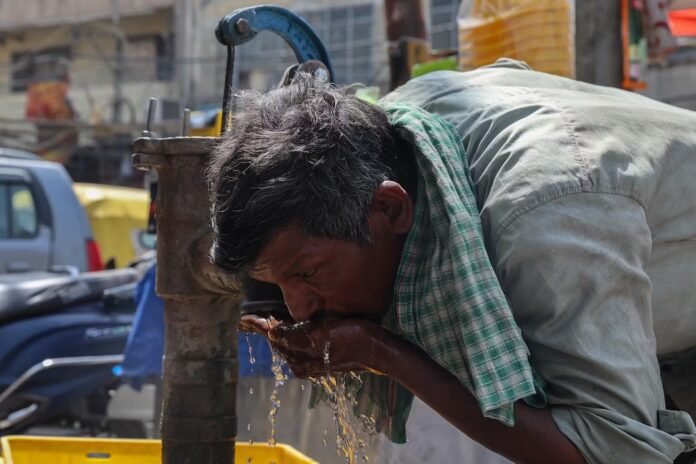
India and Pakistan are no strangers to heat. This time of year is the worst, as heat peaks before the monsoon brings cooler conditions from June.

But this year’s heat is something else. Intense, sustained heat began in mid-April. Daily maximum temperatures have topped 46°C in many locations, with some areas running around 5-to-8°C above seasonal norms.

The unrelenting heat has driven record demand for electricity in India as people turn on air conditioners – and worsened drought conditions affecting more than a million square kilometers across both countries.

When extreme heat combines with humidity, it can be lethal. Human bodies cannot cool themselves easily in these conditions. The heatwave has claimed at least 37 lives in India and 10 in Pakistan. These figures are likely to be a major underestimate, as heat-related deaths are systemically undercounted in India.

Why is it so hot?

It’s usually a hot wait for the monsoon. But several factors can line up to make a bad season much worse.

One reason it’s been so bad this year is persistent high-pressure weather systems. When these systems sit in place, they make heatwaves more likely by suppressing cloud formation and reducing the chance of cooling rain. This year, strong high-pressure systems have lingered over parts of India and Pakistan, trapping hot air near the surface and allowing temperatures to build over many days.

With less rain, there’s more heat at ground level and soils dry out. Drier soils make things worse, because less heat is used up evaporating moisture in the soil and more goes into heating the land. High pressure systems can often hang around for many days, allowing extreme heat to build up.

It’s often worst in cities, as concrete and asphalt absorb heat during the day and release it slowly overnight. This means cities stay hotter overnight, boosting health risks for people without access to cooling.

Behind these immediate reasons is the big one: climate change. As the world gets steadily hotter, heatwaves get worse and worse. Estimates from World Weather Attribution suggest the first big heatwave from 15–29 April 2026 was made about three times more likely and about 1°C hotter due to climate change.

At current global levels of global warming (~1.4°C), this means the subcontinent faces similar events about once every five years. At present, we’re tracking towards 2.6°C of warming by 2100. At that level of heat, heatwaves like this would hit every 2-3 years and be 2.2°C hotter.

Humidity makes heat much more lethal

The number on a thermometer is only part of the danger.

Many parts of India and Pakistan are intensely humid. When sustained extreme heat arrives, humidity acts to intensify the threat to health. Humidity levels are worsening in parts of the region.

That’s because it’s harder to cool down naturally in humid conditions. Human bodies use sweating as the main method of cooling. When these beads of warm water evaporate off the skin, heat is carried away.

Humid air makes sweating a much less effective method of cooling. When the air already holds a lot of moisture, it takes longer for sweat to evaporate. The body can keep getting hotter even as it sweats.

This is why scientists are increasingly concerned about lethal humidity – when heat and humidity combine to rapidly sicken or kill.

Dying like this is deeply unpleasant. It begins with the core body temperature rising. People sweat more to try to shed the heat, but sweating doesn’t work well. If there’s no reprieve, the body temperature can keeps rising past 40°C and heatstroke can set in, damaging the brain and other vital organs. This can be fatal without rapid cooling and urgent care.

To gauge the combined danger of heat and humidity, scientists use measures such as the wet-bulb temperature. This reflects how much cooling is possible through sweating.

It used to be thought the limit for human survival was a wet-bulb temperature of 35°C. But new research shows heat and humidity can be lethal across a range of temperature and humidity combinations. For example, for older people who are outdoors, 35°C and 90% humidity is as deadly as 45°C and 30% humidity. These levels have already been reached during heatwaves in South Asia in recent years. For instance, even healthy 18-35 year olds are at risk of dying with humidity of 40% and temperatures of 45°C.

It’s likely some areas of the subcontinent have hit those limits at times during this intense period of heat. But we can’t say for sure, as most weather bulletins give air temperatures rather than wet-bulb temperature.

A threat faced unequally

The risks of heat and humidity are not faced equally. Wealthier people can turn on the air conditioner and avoid going outdoors.

But poorer people in informal settlements can’t escape the heat. Neither can construction workers, farmers, delivery riders and others doing physically demanding work outdoors.

There’s another risk too. The body needs cooler temperatures overnight to recover from intense heat. When the heat continues overnight, there’s no relief.

While cities are hotter than the surrounding areas, rural communities still face threats from heat and humidity. That’s because more work tends to be outdoors, healthcare is often far away and cooling is limited.

When could relief come?

When the monsoon arrives, it usually brings cooler conditions. Cloud cover and widespread rainfall help lower daytime temperatures, though humidity often stays high. The monsoon usually arrives in early June in southern India and covers the whole country by mid-July. In Pakistan, the monsoon typically arrives later, usually beginning in early July. The monsoon often lasts till September.

Relief can’t come too soon for the region.

Unfortunately, it won’t be the last threat. But as climate change ramps up, extreme heat and humidity will hit these nations more often – and more severely.

Oluwafemi E. Adeyeri is a research fellow, the ARC Centre of Excellence for the Weather of the 21st Century, Australian National University. Sarah Perkins-Kirkpatrick is deputy director, engagement and impact, the ARC Centre of Excellence for the Weather of the 21st Century, Australian National University.

This article is republished from The Conversation under a Creative Commons license. Read the original article.

Botnet of more than 17 million devices dismantled

0
botnet-of-more-than-17-million-devices-dismantled
Botnet of more than 17 million devices dismantled

Authorities in the Netherlands said they dismantled a botnet that comprised more than 17 million devices and were managed by 200 servers in a joint operation by the police and the National Cyber Security Center.

The action, announced Thursday, came about after a security researcher reported the sprawling network to authorities. The host infrastructure was located in the Netherlands.

Used for criminal purposes

“The police then seized several botnet servers from a hosting provider for investigation,” the NCSC said. “The botnet was taken offline by the provider because it was used for criminal purposes.”

According to a report Thursday by the NL Times, the botnet was linked to ASOCKS, a Russia-based company that provides residential proxy services. These services cater to people and organizations who want to obscure their locations or identities by proxying their Internet traffic through third-party devices. Proxy services are often used for illicit or unethical purposes such as performing DDoS attacks, running botnet command-and-control servers, operating phishing operations, and scraping website content.

Ars was unable to independently confirm the NL Times report, but the claim checks out. Thursday’s NCSC post linked to a separate post that the nonprofit organization published a day earlier. That post, in turn, was updated to add a link to Thursday’s post. Wednesday’s post, headlined “Residential proxies and their major impact on digital security in the Netherlands,” warned: “Residential proxies are used to maintain anonymity and circumvent geographical restrictions. In this way, a Dutch organization can be attacked with Dutch proxies that have similarities with ‘regular’ traffic, making cybercrime mitigation more difficult.”

In 2024, security firm Human said its researchers found evidence that a botnet named Proxylib was tied to ASOCKS. The evidence included (1) Proxylib-infected IP addresses and port numbers that were returned by an Asocks proxy-list endpoint and (2) requests made to asocks[.]com exiting through an infected test device. Twenty-eight apps available in Google Play had enrolled as many as 190,000 devices into the Russia-headquartered proxy network without user approval.

Questions emailed to ASOCKS received no response.

It’s unclear how the 17 million devices controlled by the botnet taken down by the Dutch police came to be that way. In some cases, such devices are infected through exploited software vulnerabilities or through the installation of malicious apps. In some cases, apps disclose the behavior, often in small or obscured print. Other times, apps disclose the proxy arrangement outright.

People who want to prevent their devices from being swept into botnets should install security updates in a timely manner and resist the urge to continue using software or devices that no longer receive them. People should carefully research apps before installing them and then only when they provide a true benefit. Apps should be uninstalled when they’re no longer needed.

0FansLike
0FollowersFollow
0FollowersFollow
0SubscribersSubscribe
- Advertisement -
Google search engine

Recent Posts