25.8 C
London
Wednesday, May 27, 2026
Home Blog

Anyone else tired of the Trump era yet?

0
anyone-else-tired-of-the-trump-era-yet?
Anyone else tired of the Trump era yet?

I get a lot of flak from progressives for being a “both sides” kind of commentator. I spend a fair amount of time criticizing leftist ideology and expounding on the very real failures of progressive governance, both of which have gotten much worse over the last decade.

Yes, I support the Democrats, but that support is contingent — if their ideology and competence deteriorate to the point where the Republicans are less bad, I’ll switch to supporting the GOP. So it’s worth it to fight to halt and reverse the deterioration; in the long term, the cost of ignoring extremists and policy failures in order to have “no enemies on the left” is very high.

And yet right now, despite all of the negative trends on the left, the choice of which party Americans should support has never been clearer. The second Trump administration has unleashed a dizzying array of measures seemingly tailor-made to weaken the United States of America — sometimes at the behest of rightist extremists, sometimes due to Trump’s own mercurial whims, and sometimes in order to enrich Trump and his clique.

Sometimes it’s hard to keep track of everything Trump is doing to tear down the America I grew up in. In his first term, it was often said that he avoided criticism using a “DDOS” strategy — rhetorically attacking so many opponents at such blinding speed that they couldn’t focus on any one outrage for long.

In his second term, the DDOS is actual policy; Trump inflicts real damage on such a broad array of US institutions, with such incredible speed, that the news can’t keep track of them all.

To illustrate this, I decided to write a post about three mostly unrelated pieces of Trumpian insanity:

  • The assault on international tech industry employees and founders
  • The disastrous Iran War
  • Trump’s unprecedented corruption

Either the second or the third of these would have been a presidency-ending disaster for Barack Obama, George W. Bush, or Bill Clinton, while the first would have alienated broad swaths of the business community. But for Trump, it’s just business as usual.

The stories crowd each other out of the headlines, and everyone just sort of gets overloaded and starts tuning out the news. Trump’s approval ratings drift slowly downward, but nothing else really happens. Hardcore MAGA supporters just keep screaming that everyone has “TDS”, while Trump’s wavering allies eventually manage to convince themselves that Democrats would be even worse.

But anyway, if you were paying attention, here’s the latest round of Trumpian disasters.

Trump kicks the tech industry where it hurts

A couple of days ago, without any warning, Donald Trump’s immigration agency announced a new rule. Foreign workers working in the US on temporary visas, they announced, must now return to their home countries while applying for green cards — a process that can take years.

This rule would effectively kick most of the high-skilled visa workers in America out of the country. America’s typical pipeline of high-skilled immigration is basically “try before you buy” — people come to work on visas, then apply for permanent residency while in the country. This procedure is called Adjustment of Status. Almost all green card holders — except for investors — get their green cards this way:

Source: Congress via Connor O’Brien

The new policy would end this practice, thus shutting off the main avenue of high-skilled legal immigration to the United States.

There’s a good chance this new policy won’t stand up in court, since Congress explicitly passed a law specifying conditions under which people can be denied Adjustment of Status, so it may not be legal for Trump to simply issue a blanket ban. There’s also a chance that Trump’s allies in the “tech right” will frantically call his administration and get them to walk back the new policy.

The reason they’ll be trying to get him to walk it back is that if the new ban does go through, it will devastate much of the US tech industry. The AI industry, which Trump promised to promote — and which is the only thing now keeping the U.S. economy afloat in the face of tariffs and the Iran War — depends crucially on researchers born outside the US:

Source: MacroPolo

All of the biggest US AI companies, and more than half of the top 50, were founded by immigrants, with India and China contributing the most:

Source: IFP

This general pattern holds throughout the entire tech industry. Almost half of unicorn founders are immigrants, with Indians being the biggest contingent. Nearly half of the founders of billion-dollar tech startups are immigrants

Meanwhile, Indian immigrant CEOs have done an incredible job at a number of America’s biggest companies.

Who asked for some of America’s top economic and technological contributors to be expelled from the country? The “tech right” certainly didn’t; many of them met the announcement with dismay. Gil Verdon, a semiconductor company founder from Canada who had been a prominent and vocal Trump booster, expressed dismay at the fact that he might now be kicked out of the country:

Feeling robbed of my path to citizenship right now after grinding a PhD and contributing to foundational AI + computing technologies for the United States for the past ~ 10 years.

Feels like robbing top and technologists like me of the opportunity to achieve the American Dream. https://t.co/i1MkJKP3S4

— Beff (e/acc) (@beffjezos) May 23, 2026

The American people didn’t want this either. Polls consistently show that very large majorities of Americans across the political spectrum support high-skilled immigration:

Source: EIG

The only people who seemed to be happy with Trump’s new policy were anti-immigration activists on X — rightist types who see immigration as a race war, and want to ban it entirely. It seems highly likely that those online activists — or people who think very much like them — are driving at least a fraction of the administration’s policy.

It’s pretty clear how this happens. Perhaps even more than in the Democratic Party, the GOP is dominated by youngish staffers and think tankers. These people marinate all day in extremist online discourse, and form friendships with extreme right-wing activists who see immigration as a race war rather than as an economic matter or an important part of America’s heritage.

Some rightist in the bowels of US Citizenship and Immigration Services probably got the idea to ban Adjustment of Status and handed it to his higher-ups, who pushed through the policy without thinking too hard about the economic implications.

Welcome to the second Trump administration. If policy isn’t being made by the big man himself — who is growing increasingly erratic and corrupt in his old age — it’s being made by neo-Nazis on X. These are really the only people prepared to take over the MAGA movement once Trump shuffles off the scene, and their influence is growing as Trump’s acumen wanes.

That said, the big man himself still has a little bit of fire in him, and he still enjoys unprecedented support and devotion from his party. Unfortunately, he’s using his remaining vigor to do two main things: A) destroy America’s standing and power in the world, and B) abuse his office to enrich himself, his family, and his most ardent followers.

The faux-Manchurian candidate

Donald Trump was not a Manchurian Candidate, created in a secret Russian/Chinese lab to infiltrate and bring down the United States of America.

Nor, I believe, is he personally in the pocket of Russian and/or Chinese interests, blackmailed and bribed into weakening his country at the bidding of overseas masters. But sometimes it’s very difficult to distinguish between Trump’s actual actions and what he would do if he were a foreign plant or catspaw.

That’s a very strong statement, but I’m not being hyperbolic for rhetorical effect — I think the facts back it up.

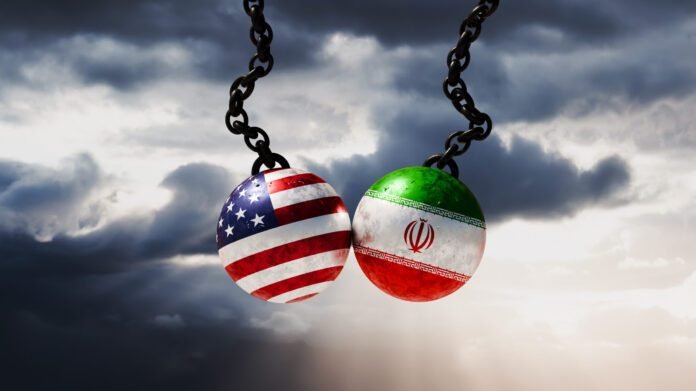
For example, take the war in Iran. Trump launched this war with no immediate provocation or casus belli — a simple opportunistic war of aggression that incinerated whatever shreds of goodwill remained towards the United States among much of the international community.

Trump then proceeded — so far, at least — to lose the war he started. Despite the preemptive strike, and America’s far greater technological capability, Iran reportedly retains most of its arsenal of weaponry:

US intelligence assessments show that Iran retains significant missile capabilities despite repeated claims by the Trump administration that Tehran’s military had been severely weakened, according to a report by The New York Times…The report said intelligence findings compiled in early May showed Iran had regained operational access to 30 of its 33 missile sites along the Strait of Hormuz. Officials familiar with the assessments told the newspaper that Iran still possesses roughly 70 percent of its prewar missile stockpile and mobile launchers…Citing reports from military intelligence agencies, the report stated that Iran has regained access to roughly 90 percent of its underground missile storage and launch facilities nationwide, which are now assessed to be “partially or fully operational.”

And:

Iran has already restarted some of its drone production during the six-week ceasefire that began in early April, one sign it is rapidly rebuilding certain military capabilities degraded by US-Israeli strikes, according to two sources familiar with US intelligence assessments. Four sources told CNN that US intelligence indicates Iran’s military is reconstituting much faster than initially estimated…

The rebuilding of military capabilities, including replacing missile sites, launchers and production capacity for key weapons systems destroyed during the current conflict, means that Iran remains a significant threat to regional allies…It also calls into question claims about the extent to which US-Israeli strikes have degraded Iran’s military in the long term…

Iran has been able to rebuild much faster than expected due to a combination of factors, ranging from support it is receiving from Russia and China to the fact that the US and Israel did not inflict as much damage as the two countries had hoped, one of the sources told CNN.

America’s own stock of weapons, on the other hand, has been dangerously depleted in the conflict, and our defense-industrial base is not managing to rebuild them.

Even as the US has failed to cripple Iran’s military, Iran’s military has succeeded in closing the Strait of Hormuz, sending gasoline prices soaring and causing a significant bump in inflation:

Incapable of defeating Iran on the battlefield, and increasingly wounded by Iran’s economic retaliation, Trump is pushing hard for any sort of face-saving deal that would allow him to exit the conflict quickly. Whatever deal Trump eventually cuts is going to leave Iran in a much stronger position — and American interests in the region — much weaker than before Trump launched his war. Here’s Robert Kagan:

Defeat for the United States, therefore, is not only possible but likely. Here is what defeat looks like.

Iran remains in control of the Strait of Hormuz. The common assumption that, one way or another, the strait will reopen when the crisis ends is unfounded. Iran has no interest in returning to the status quo ante…The power to close or control the flow of ships through the strait is greater and more immediate than the theoretical power of Iran’s nuclear program. This leverage will allow the leaders in Tehran to force nations to lift sanctions and normalize relations or face penalties…

The new status quo in the strait will also occasion a substantial shift in relative power and influence both regionally and globally. In the region, the United States will have proved itself a paper tiger, forcing the Gulf and other Arab states to accommodate Iran…All nations that depend on energy from the Gulf will have to work out their own arrangements with Iran. What choice will they have?…

The American defeat in the Gulf will have broader global ramifications as well. The whole world can see that just a few weeks of war with a second-rank power have reduced American weapons stocks to perilously low levels, with no quick remedy in sight.

This is all, of course, on top of Trump’s other geopolitical blunders:

  • alienating US allies by threatening to invade Greenland
  • attempting to force Ukraine to accept an unfavorable peace settlement with Russia, even as Ukraine was turning the tide of battle
  • alienating India for no reason whatsoever
  • capitulating to China on Taiwan arms sales in exchange for nothing whatsoever
  • various other erratic behaviors that make America clearly less reliable of an ally

As I said, Trump is not a Russian/Chinese plant, but at this point it’s hard to imagine what else a Russian/Chinese plant would even do in order to weaken America’s international standing.

America is ruled by a mafia now

While Trump was losing a war he started, destroying the foundations of American power, and attacking the foundations of American technological dominance, he was also working feverishly to use the presidency to get even richer than he already is. Rolling Stone had a good article detailing the breathtaking scale of the corruption:

Let’s say it plainly: There has never been a president as corrupt as Donald Trump. There is no close second in our history…

Americans just found out that in the first quarter of this year, Trump’s stock portfolio made 3,600 trades — an average of nearly 60 a day…Many of these appear suspiciously timed to benefit from actions approved by the president himself. For example, his Nvidia stock surged after Trump announced the company would be permitted to sell its cutting-edge AI chips to China. Similar suspiciously well-timed calls were made ahead of big government moves involving other companies, from Intel to Palantir to Boeing…

But the apparent insider trading scam being run from within the Oval Office is small change…compared to the self-dealing plunder of $1.8 billion tax-payer dollars being pushed through the DOJ and IRS.

There’s never been a sitting president who sued his own government for $10 billion. That’s because it’s absurdly corrupt. But that’s what Donald Trump did, arguing he had suffered damages from prosecutions pursued before he was reelected…The judge who heard the case convened an independent panel to review the suit, suspecting it might be a scam.

Before the case could be dismissed, Acting Attorney General Todd Blanche — who had previously served as Trump’s personal lawyer — declared that the bogus suit would be preemptively settled, not for $10 billion, but for the symbolic sum of $1.776 billion, which Trump said will be distributed to…political allies.

This is a shakedown. The president is compelling a Justice Department he controls to redirect money from taxpayers — that’s you — to his most fervent supporters. This slush fund will set off a cash grab among MAGA lawyers and be used to reward partisan fanatics who attacked the US Capitol — and police officers — on his behalf.

If that wasn’t enough of a blatantly illegal use of presidential power, it was revealed that the “settlement” deal included a pledge signed by the acting attorney general that would ensure — in the hysterical all caps of a Trump tweet — that the government would be “FOREVER BARRED and PRECLUDED from prosecuting or pursuing” any tax claims, audits or related prosecutions against Trump, his family or their businesses. This is an attempt to get a permanent get-out-of-jail-free card for the Trump family — a license to steal. [emphasis mine]

So basically, Trump:

  1. Uses the government to interfere with specific companies,
  2. Trades those companies’ stocks in advance, knowing how his own government interference will affect their prices,
  3. Sues his own government for billions and then orders his government to settle the lawsuit,
  4. Gives the billions of dollars of taxpayer money to his own activist thugs and cronies, and
  5. Has the government promise never to prosecute the Trump family.

Rolling Stone is absolutely right: Nothing in US history even comes close to this level of corruption. Trump is simply using the powers of the presidency to extract billions of dollars from stock owners and taxpayers — i.e., from you and me — and to put that money into his own pocket.

Compared to this, the famous Teapot Dome land scandal in the 1920s was nothing. The total amount of money involved in Teapot Dome — just a few million of today’s dollars after adjusting for inflation — was tiny compared to the billions Trump is looting.

Anyway, these are all stories just from the past few weeks. In the next few weeks it’ll be something else. This is the most absurdly terrible presidential administration America has ever had.

I know a lot of Americans — including some of my own readers — are still able to convince themselves that The Left Is Worse And Therefore We Must Continue To Support Trump No Matter What.

Frankly, I don’t know how those guys do it. But I guess I can take some small solace in the fact that the number of people who think that way is slowly decreasing, as Trump’s parade of outrages and disasters marches on.

Source: Nate Silver

This article was first published on Noah Smith’s Noahpinion Substack and is republished with kind permission. Become a Noahopinion subscriber here.

Motorola’s 2026 Razrs are almost worth buying just for their stunning looks… almost

0
motorola’s-2026-razrs-are-almost-worth-buying-just-for-their-stunning-looks…-almost
Motorola’s 2026 Razrs are almost worth buying just for their stunning looks… almost

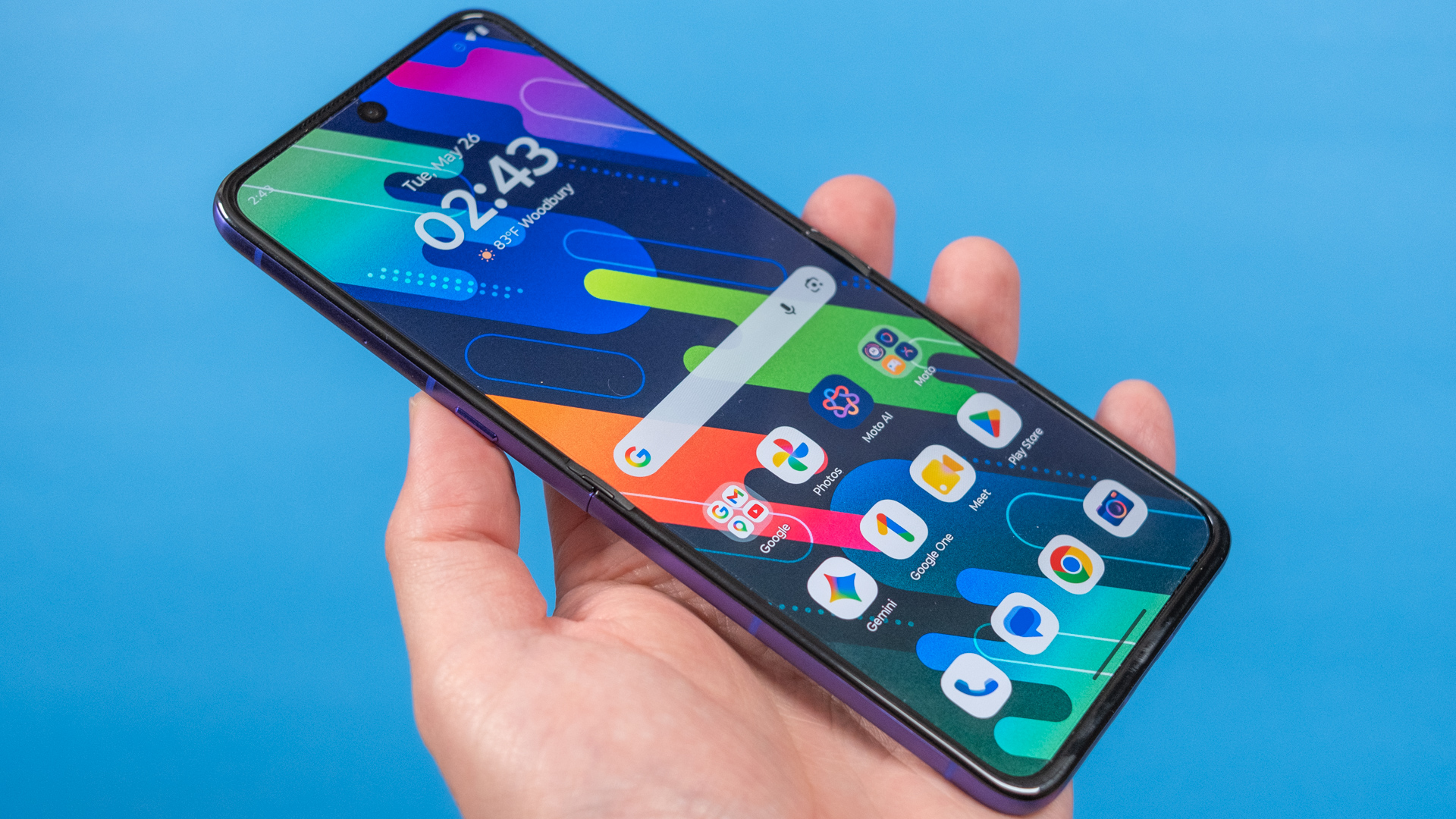
For the last several years, Motorola’s smartphone headliners were the Razr flip phones, but 2026 is different. This time around, Moto’s first tablet-style foldable, the Razr Fold, somewhat overshadows the flip phones, but a bulky $2,000 folding phone that isn’t made by Samsung occupies the smallest niche in the smartphone market. A Razr flip phone is much more practical, both financially and logistically. But are these phones actually worth buying over a flat phone?

Smartphones are no longer something you need to convince people to buy. Unless you’re going out of your way to exclude technology from your daily life, a smartphone is just a necessary convenience. The way some companies market their phones—making relatively boring phones look like a lifestyle choice—doesn’t really take this into account. However, Motorola knows what a Razr is.

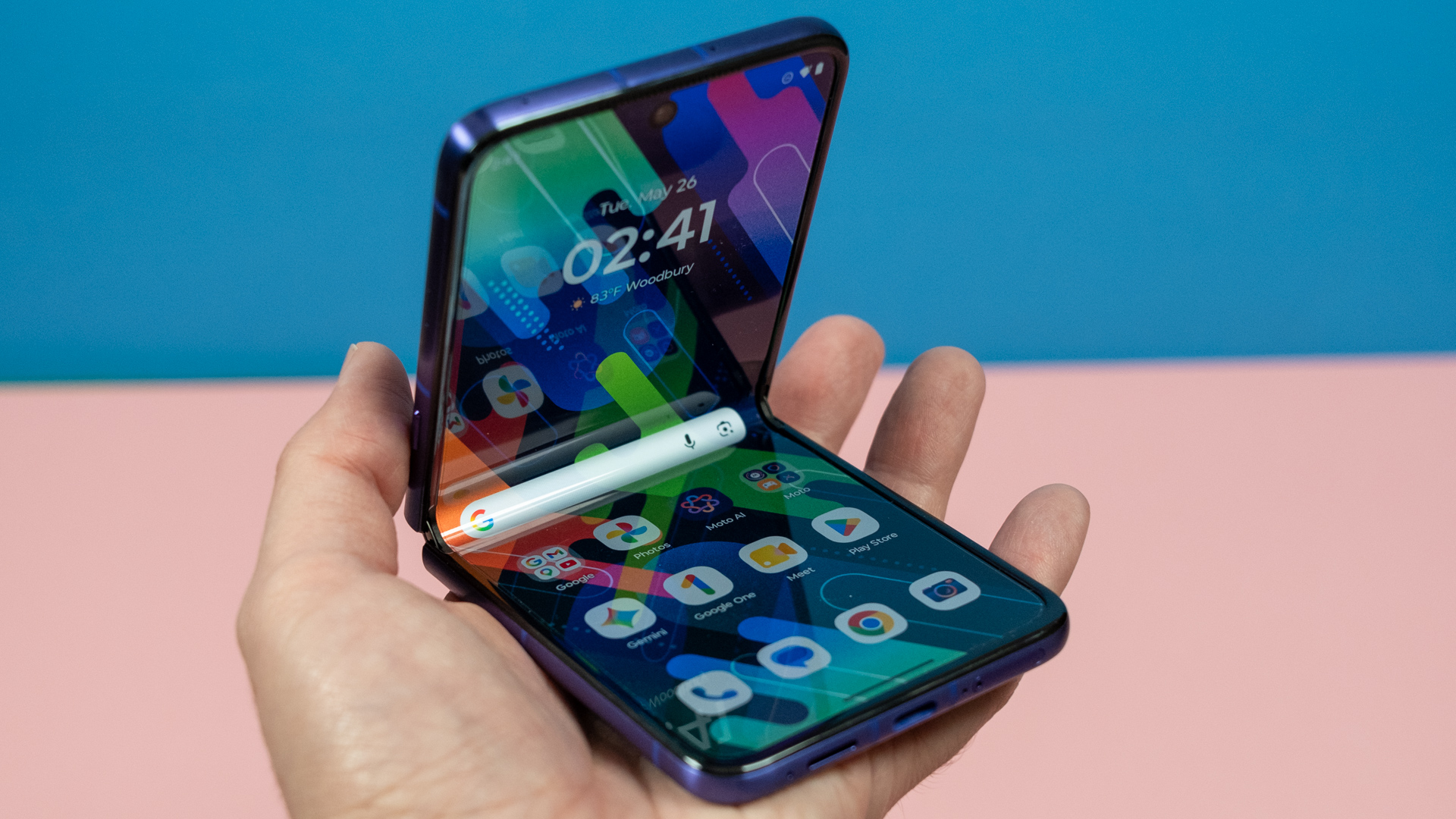
Razr Ultra open in hand

All the Razrs are big phones when you open them up (Razr Ultra seen here).

All the Razrs are big phones when you open them up (Razr Ultra seen here). Credit: Ryan Whitwam

These phones are first and foremost about vibes. They’re fun and colorful; there are desk clock displays, mini apps for the outer display, and a quirky camcorder camera mode. Foldables are universally gadgety and visually interesting, but the Razrs take this to the extreme with unique textures and Pantone-certified colorways. That gives the Razrs a selling point before you even get to the specs or hardware. And they need that because the speeds and feeds are nothing special.

Razr face down

The base model Razr has a slightly smaller screen and a strip of color above it.

Razr+ in tent mode

The Razrs have some neat desk clock and photo frame modes.

The 2026 Razrs don’t change much in the design department versus last year’s versions, but that’s fine. They still look great. There are wood panels, soft touch plastics, vegan leather, and synthetic fabrics—all things you won’t find on the latest devices from Samsung, Google, or Apple. These are, hands down, the prettiest phones you can buy right now.

Razr Ultra in hand back.

The Razr Ultra’s Orient Blue fabric back feels really nice, but it can pick up dust.

The Razr Ultra’s Orient Blue fabric back feels really nice, but it can pick up dust. Credit: Ryan Whitwam

However, even years into the foldable era, these phones are still not an easy choice for smartphone buyers, and some people shouldn’t even consider getting one despite the stylish design. When buying a new phone, many folks immediately put it in an OtterBox or similarly armored case and slap on a screen protector. Then, a year or two later, when they need to take the case off for some reason, they are surprised by the color of their phone. If that’s you, the 2026 Motorola Razrs are not the phones you are looking for—just move along.

Flip phone flops

All of Motorola’s Razr flip phones have big external screens, offering enough real estate to run apps and reply to messages, and Moto lets you do a lot more with this screen compared to Samsung’s Z Flip line.

On one hand, having an external screen can be a bit gimmicky. The phones come with a collection of games optimized for the external display, and opening the phone to use the big foldable OLED will often be faster for most tasks, but using the external screen can help steer you away from distracting apps. It provides just enough functionality to check a notification or reply to a message without tempting you to start doom scrolling.

Game on Razr screen

Bundled mini games? Sure, why not?

Bundled mini games? Sure, why not? Credit: Ryan Whitwam

The foldable form factor also pays off if taking selfies is your thing. While there is a selfie camera under the foldable OLED, you can and should use the primary cameras with the external display instead. Motorola’s cameras aren’t up to the standards of Google or Apple, but the larger main camera sensors on these phones do a better job than any camera peeking through a hole in your screen.

But a phone that folds in half also comes with some inevitable downsides. While Motorola says its hinge is reinforced with titanium and has been tested to many thousands of folds, this is still a possible point of failure. The kind of day-to-day abuse that wouldn’t affect a flat phone could cause serious problems for one with a hinge in the middle. These devices are also only IP48-rated, which means fine particles could work their way inside and affect the hinge’s functionality. Although the Razrs are just as water-resistant as traditional designs.

Razr Ultra in hand

The Razr Ultra is a flagship phone with a flagship price (and then some).

The Razr Ultra is a flagship phone with a flagship price (and then some). Credit: Ryan Whitwam

Even if the hinge is mechanically sound, the constant folding could be a problem for the phone’s flexible OLED. With several generations of Razrs behind us, there are enough user reports to say that OLED damage from wear and tear is possible. Most of these screens will last for as long as the phone itself does, but some won’t.

Specs at a glance: 2026 Motorola Razr series
Razr 2026 ($800) Razr+ 2026 ($1,100) Razr Ultra 2026 ($1,500) Razr Fold ($1,900)
SoC MediaTek Dimensity 7450X Snapdragon 8s Gen 3 Snapdragon 8 Elite “Pro” Snapdragon 8 Elite Gen 5
Memory 8GB 12GB 16GB 16GB
Storage 128GB 256GB 512GB 512GB
Display External: 3.6-inch 1056 x 1066 OLED, 90 Hz, 1700 nits; Internal: 6.9-inch 1080 x 2640 OLED, 120 Hz, 3000 nits External: 4-inch 1272 x 1080 OLED, 165 Hz, 2400 nits; Internal: 6.9-inch 1080 x 2640 OLED, 165 Hz, 3000 nits External: 4-inch 1272 x 1080 OLED, 165 Hz, 3000 nits; Internal: 7-inch 1224 x 2992 OLED, 165 Hz, 5000 nits External: 6.6-inch 2520 x 1080 pOLED, 165 Hz, 6000 nits; Internal: 8.1-inch 2484 x 2232 LTPO OLED, 120 Hz, 6,200 nits
Cameras 50 MP wide, f/1.7; 50 MP ultrawide, f/2.0;
32 MP selfie, f/2.4
50 MP wide, f/1.8; 50 MP ultrawide, f/2.0;
32 MP selfie, f/2.4
50 MP wide, f/1.8; 50 MP ultrawide, f/2.0;
50 MP selfie, f/2.0
50 MP wide, F/1.6; 50 MP ultrawide with Macro, f/2.2;
50 MP 3x telephoto; 32 MP outer selfie, f/2.4; 20 MP inner selfie, f/2.4
Software Android 16 Android 16 Android 16 Android 16
Battery 4,800 mAh, up to 30 W wired charging, wireless charging 4,500 mAh, up to 45 W wired charging, wireless charging 5,000 mAh, up to 68 W wired, wireless charging 6,000 mAh, up to 80 W wired charging, 50 W wireless charging (unsupported)
Connectivity Sub-6 GHz  5G, Wi-Fi 7 Sub-6 GHz  5G, Wi-Fi 7 Sub-6 GHz  5G, Wi-Fi 7 Sub-6 GHz  5G, Wi-Fi 7
Measurements Open: 171.30 × 73.99 × 7.25 mm
Closed: 88.08 × 73.99 × 15.85 mm, 188g
Open: 171.42 × 73.99 × 7.09 mm
Closed: 88.09 × 73.99 × 15.32 mm, 189g
Open: 171.48 × 73.99 × 7.19 mm
Closed: 88.12 × 73.99 × 15.69 mm, 199g
Open: 160 height × 144.4 width × 4.55 depth (mm); Closed: 160 height × 73.6 width × 9.89 depth (mm), 243g
Colors Hematite, Violet Ice, Sporting Green, Bright White Mountain View Orient Blue, Cocoa Blackened Blue, Lily White

This is something that you won’t see in reviews—we’ve long moved past the point where foldable durability issues would be apparent during the few weeks reviewers use these devices before publishing the results. I try to use the hinge on foldables as much as possible when reviewing them, but I’ve never seen a hinge or screen fail. We know from user reports that they sometimes fail, though.

When a Razr is your daily driver for months or years, there’s a higher risk of breakage than with a phone that doesn’t fold in half. So if you’re going to buy a foldable, it’s smart to factor in the added cost of insurance. That can make an already expensive phone even more of a financial burden.

The bottom line

As gorgeous as these phones are, that alone cannot justify spending a ton of money on them. If your main concern is pure functionality, the 2026 Razrs aren’t as reliable or capable as the best non-foldables from Samsung, Google, or Apple. Foldable flips don’t even have the multitasking advantages of a tablet-style foldable. You have to care about the vibes to justify a Razr, and the prices don’t make that easy.

The Razr+ and Razr Ultra got more expensive this year, clocking in at $1,100 and $1,500, respectively. Motorola has offered some earbuds and tracking tags as freebies to try and offset the sticker shock, but that’s not enough. The Razr Ultra has flagship specs and solid cameras, but I can’t think of any smartphone buyer who should seriously consider paying $1,500 for it.

All Razr phones

The 2026 Razr lineup looks nice, but only the base model clocks in at a reasonable price.

The 2026 Razr lineup looks nice, but only the base model clocks in at a reasonable price. Credit: Ryan Whitwam

The Snapdragon 8s Gen 3 in the Razr+ won’t be much slower in daily use, and it still has a reasonable 12GB of RAM. So that’s probably a better choice for picky foldable fans. But still, $1,100 for that phone is a tough sell.

If you find yourself enamored with the idea of a stylish flip phone, neither of those phones is probably the right call. However, the base model still embodies the spirit of the Razr even if it cuts a few corners.

The 2026 Razr looks just as good as the more expensive versions—maybe even a little better. The slightly smaller screen leaves more room for the cool materials and colors to wrap around to the front. It also comes in four colors, versus just two for the Razr Ultra and just one for the Razr+.

Razr and keyboard glamor shot

The cheapest Razr is probably the one to get.

The cheapest Razr is probably the one to get. Credit: Ryan Whitwam

The Moto Razr comes with a weaker MediaTek processor and just 8GB of RAM, but that doesn’t make it any less pretty. The lower specs may benefit a certain type of smartphone buyer. Motorola has a ton of AI features crammed into its current Android software, like every other smartphone OEM, but it’s a bit more restrained on the base model Razr due to the lower RAM. It doesn’t even have the physical AI button from the more expensive models. I consider that a total win.

And the best part: This phone is $800. For a phone that mainly exists to look good and carries a higher risk of failure versus a non-foldable one, that’s about the right price.

The Good

  • They look great
  • Hinge feels solid
  • Outer displays are big and just useful enough

The Bad

  • The Razr+ and Razr Ultra are way too expensive
  • Hinge and flexible OLED are possible points of failure
  • Silly AI button on Razr+ and Razr Ultra
  • Last year’s chips in Razr+ and Ultra, mid-range specs in the base model

Trump’s War on ISIS Is Failing, No Matter How Gorka Spins It

0
trump’s-war-on-isis-is-failing,-no-matter-how-gorka-spins-it
Trump’s War on ISIS Is Failing, No Matter How Gorka Spins It


White House counterterrorism czar Sebastian Gorka was on a mission. He wanted someone dead, and he knew who could make it happen.

It was eight days after Donald Trump took office for a second time, and Gorka, the senior counterterrorism director on President Trump’s National Security Council, walked into the Oval Office accompanied by a member of his own counterterrorism team and his boss, then-National Security Advisor Mike Waltz. The group approached the Resolute desk and laid an intelligence “place mat” with information about a man in Somalia in front of the president.

“Sir, ISIS leader, killed Americans, planning to kill more Americans,” is how Gorka recalled the summary they provided to the president. “We informed him that the Biden administration had been watching him for about a year and a half.” According to Gorka, Trump replied: “What do you mean, we’ve been watching him? Kill him!’”

Gorka said Trump ticked off the “go box” on the operation orders with one of his signature presidential Sharpie markers. Moments later, outside the Oval Office, Gorka recalled, a call was made to Fort Bragg and “elsewhere” to arrange the attack. Less than 30 hours later, Gorka and his colleague were in the White House Situation Room watching the target on massive television screens. “It was Tom Clancy, but it was real,” Gorka recalled recently. “Go time was 8:45 in the morning.” Two minutes before the scheduled attack, there was still no sign of Waltz. A minute later, he walked in, and 60 seconds after, Gorka’s quest was complete.

“Eight forty-five the platform launches what it launches and this individual just disappears from the earth,” Gorka recalled recently in a version of the account told during a softball interview with Dean Cain, a MAGA influencer best known for his role in the 1990s TV series “Lois & Clark: The New Adventures of Superman.” Gorka told the story again and again on Breitbart’s Alex Marlow Show, and to other pro-administration outlets.

In the aftermath of that first strike, Trump took to social media to boast about the attack. “This morning I ordered precision Military air strikes on the Senior ISIS Attack Planner and other terrorists he recruited and led in Somalia,” he wrote. “The message to ISIS and all others who would attack Americans is that ‘WE WILL FIND YOU, AND WE WILL KILL YOU!’” In honor of this line — which he said has become the motto of his directorate and is arguably the mantra of the second Trump administration — Gorka and his team wear custom lanyards that say: WWFY & WWKY. Gorka calls it the “most coveted lanyard in the U.S. government.”

Since that strike, the Trump administration has taken the murderous motto to heart, proclaiming versions of it in avenues from Pentagon social media posts to Trump’s foreword to Gorka’s recently released “Counterterrorism Strategy” — and conducting a global killing spree. “Since our first operation on day 11 of this administration, a scant 15 months ago, we have killed 860 jihadis across the globe,” Gorka told Newsmax, noting elsewhere that this figure does not include those killed in the wars in Iran, Venezuela, or Yemen. (Gorka also claimed, two days later, that the number killed in lethal strikes was actually 815. The White House did not reply to a request for clarification.)

While the kidnapping of Venezuelan President Nicolás Maduro, the war with Iran, and even the so-called boat strikes in the Caribbean Sea and Pacific Ocean have been front page news, Trump has supercharged America’s longest ongoing forever war — the conflict in Somalia — with very little notice. But as Trump’s attacks in Somalia have skyrocketed, so has terrorist violence there, according to the Pentagon. War Department statistics show that attacks and fatalities in Somalia have reached epic proportions, even though the War Department seemed to claim that ISIS-Somalia has been annihilated and Trump claims ISIS was wiped out years ago.

“Somalia saw the biggest surge in reported fatalities across all regions,” according to an April report by the Africa Center for Strategic Studies, a Pentagon research institution. “The 8,813 deaths linked to al Shabaab and the Islamic State (ISIS) over the past year represent a 93-percent increase from the previous year.” This record throws into broad relief the failure of Gorka’s and the president’s primary counterterrorism strategy and the inability of the administration to kill its way to victory.

Loosened rules of engagement during Trump’s first term had a profound effect in Somalia, where strikes tripled after Trump relaxed targeting principles. The U.S. conducted 219 declared attacks in Somalia during Trump’s first four years in the White House, a more than 350 percent increase over the eight years of the Obama presidency.

“They know innocent people were killed, but they’ve never told us a reason or apologized.”

A review of Trump-era rules by the Biden administration found that for attacks in some countries, a requirement for “near certainty” that civilians would “not be injured or killed in the course of operations” was reportedly enforced only if the civilians were women and children. A lower standard was applied to adult men. All military-age males were considered legitimate targets if they were observed with suspected al-Shabab members in the group’s territory, retired Brig. Gen. Donald Bolduc, who led Special Operations Command Africa at the time, told The Intercept. 

A 2023 investigation by The Intercept found that Trump’s directive contributed to a particularly disastrous attack in Somalia that killed at least three — and possibly five — civilians, including 22-year-old Luul Dahir Mohamed and her 4-year-old daughter, Mariam Shilow Muse. The mother and child survived the initial strike but were killed by a double-tap attack as they fled for their lives. “They know innocent people were killed, but they’ve never told us a reason or apologized,” said Abdi Dahir Mohamed, one of Luul’s brothers. “No one has been held accountable.”

Under President Joe Biden, the U.S. military conducted 51 strikes in Somalia over four years, according to D.C.-based think tank New America. Last year alone, Trump oversaw 126 attacks, exceeding the previous one-year record of 66 under Trump in 2019. He has already conducted 64 attacks in Somalia this year, and a total of at least 190 there so far in his second term — including an attack that one top U.S. commander called the “largest airstrike in the history of the world.” Trump and Gorka are on pace to eclipse the 219 strikes of his first term in just a year and a half in office.

Gorka frames the Biden administration’s failure to conduct wholesale strikes on supposed “jihadis” as a soul-crushing experience for national security professionals from the Intelligence Community and special operations forces. “The morale was so bad,” he recently told Cain. “I’ve got a targeter on my team, an amazing lady, who are in the bowels of an intelligence agency and their job is … for 10 hours a day with headphones watching a screen tracking jihadis.… And for four years, they’re basically not allowed to kill people.” He added: “You say, ‘Hey, we’ve got the coordinates. Can we do something?’ And the White House says, ‘No.’”

Wes Bryant, who called in thousands of strikes against ISIS as a special operations joint terminal attack controller, scoffed at Gorka’s assessment that the Biden administration was negligent in its war on ISIS and capriciously allowing terrorists to operate freely.

“Often, we gain more by watching senior operatives for extended periods because we can then piece together more of an entirety of an operation or organization. Otherwise, all it becomes is whack-a-mole,” Bryant told The Intercept. “Targeting and intelligence collections operations can be likened to an undercover operation against a criminal organization in law enforcement — where we are watching and monitoring and gathering evidence and characterizing every single associate and activity in order to build the big picture of the organization and take every piece of it down versus just one guy that we found.”

Bryant was skeptical of Gorka and his motives. “I’m not sure if he doesn’t know better and just wants to deliver the superfluous talking point to his uneducated far right audience that ‘Trump kills more bad guys’ and is therefore keeping America safer.”

The Intercept sought to interview Gorka through Anna Kelly, the special assistant to the president and White House principal deputy press secretary. She did not reply to that request or to questions about Gorka’s claims.

Trump, who campaigned on ending foreign wars during his 2024 presidential run and pledged to measure success “by the wars that we end — and perhaps most importantly, the wars we never get into,” has conducted military interventions in Ecuador, Iran, Iraq, NigeriaSomaliaSyriaVenezuela, and Yemen, as well as attacks on civilians in boats in the Caribbean Sea and Pacific Ocean and CIA operations in Mexico.

While claiming to be “the peace president,” Trump — with Gorka as his point man — has actually been attempting to kill his way to victory. “We are bringing down the hammers of hell on our enemies,” Gorka told Newsmax. But official pronouncements from the Pentagon, the intelligence community, and even the White House demonstrate that Trump’s lethal strikes have failed. 

ISIS was, for example, one of the top threats in Trump’s 2018 counterterrorism strategy. He battled the group during his first term and eventually declared victory. “We defeated ISIS in record time,” Trump said in his 2024 election-night speech. Despite this, the first lethal strike of Trump’s second term — in February 2025 — was on “the Senior ISIS Attack Planner … in Somalia,” according to Trump himself. Three months later, at his commencement speech at the U.S. Military Academy at West Point, Trump was back to claiming ISIS had been wiped out. “I defeated ISIS in three weeks,” he said.

This claim has, however, been undermined by the nation’s Africa Command on a regular basis in the year since, amid scores of pronouncements of attacks “targeting ISIS-Somalia.” This month, AFRICOM commander Gen. Dagvin R.M. Anderson even admitted to the Senate Armed Services Committee that the “Islamic State of Iraq and Syria remain a threat to the homeland today” and that “ISIS-West Africa and ISIS-Sahel [are] becoming increasingly more collaborative.” The next day, Trump undercut his own claims by announcing on Truth Social that U.S. forces had “eliminate[d] the most active terrorist in the world … Abu-Bilal al-Minuki,” a top figure within ISIS–West Africa whom Trump claimed was “second in command of ISIS globally.”

Despite Gorka’s consistent fawning praise of Trump — he told Cain his boss is the “most incredible commander-in-chief we’ve had of the modern age” — even Gorka’s recently unveiled “2026 Counterterrorism Strategy” rebutted Trump’s assertions. That document lists ISIS as one of the “top five Islamist terror groups that have the intent and capabilities to execute External Operations against the United States,” and it spotlighted yet another branch of the group, ISIS-Khorasan, which is active in South Asia. The National Counterterrorism Center also lists a host of additional Islamic State threats: ISIS’ network in Bangladesh, ISIS–Central Africa, ISIS-East Asia, ISIS-Libya, ISIS-Mozambique, and ISIS-Sinai among them.

Trump’s ongoing campaign against the supposedly defeated ISIS and spiking violence in Somalia offers clear evidence of the administration’s failures, even as Gorka touts success to outlets that fail to push back on his claims.

“The find, fix, finish model is peerless,” Gorka said of lethal strikes on the New York Post podcast “Pod Force One.” He boasted that the U.S. is “crushing it when it comes to jihadis.” 

U.S. Lawmakers Demand Reforms to Immigration Officers’ Use of Tear Gas and Pepper Spray

0
us.-lawmakers-demand-reforms-to-immigration-officers’-use-of-tear-gas-and-pepper-spray
U.S. Lawmakers Demand Reforms to Immigration Officers’ Use of Tear Gas and Pepper Spray

Three U.S. senators have called for an overhaul of federal agents’ use of tear gas and pepper spray, citing a ProPublica investigation that found at least 79 children were left screaming, coughing or hurt by these chemicals during President Donald Trump’s immigration crackdown.

Lawmakers said the findings showed more restrictions are needed to avoid injuring bystanders — including children — with chemical munitions. Such weapons were designed to combat rioters and soldiers, and their compounds are toxic, especially to children, who breathe more rapidly than adults relative to their body weight. 

“This reporting makes clear that we need federal legislation to rein in the over-use and misuse of tear gas and chemical agents,” Sen. Cory Booker, a Democrat from New Jersey, said in a statement. “We cannot allow another child to be tear-gassed by federal law enforcement officers.” 

ProPublica found that the Department of Homeland Security’s policies on the use of these weapons are less restrictive than those of some local police departments, many of which have been forced to adopt stronger ones following lawsuits or local legislation. There is no uniform standard governing how and when law enforcement departments can use these weapons. 

DHS should update its policies based on the best practices of local police departments, Sen. Richard Blumenthal, a Democrat from Connecticut, told ProPublica. In Minneapolis, for instance, police officers can deploy chemical munitions only if the police chief has authorized it.

“This kind of use of force should require approval from someone in a position of authority” and an assessment of the potential “collateral damage to children,” Blumenthal said. 

Sen. Tammy Duckworth, a Democrat from Illinois, echoed this sentiment. “We need a complete overhaul of ICE and Border Patrol to ensure they follow the same rules and safeguards that apply to police departments across the country,” she said in a written statement.

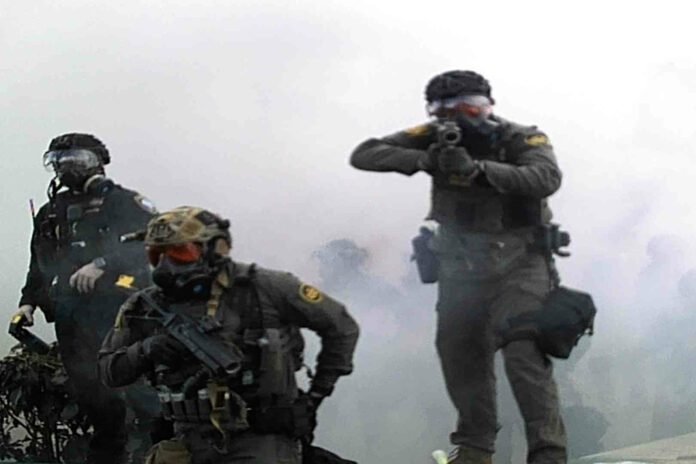
Many of the hurt kids were at home when tear gas drifted in from streets where federal agents had deployed the chemical agent against crowds of protesters. Other children were sitting in their parents’ cars when officers fired pepper spray through the driver’s side windows. 

Virtually no research exists on the potential long-term effects on children, but the chemicals are undeniably dangerous. One mother near Chicago told ProPublica she’s repeatedly taken her 7-year-old daughter to urgent care due to her coughing and wheezing since tear gas seeped into their house last fall.

Referencing our reporting, three Democrats in the House Committee on Homeland Security also sent a letter to DHS Secretary Markwayne Mullin asking for the department’s training and policies for using chemical munitions when children are in the vicinity. The letter accused the department of “needlessly and callously” inflicting harm on children, and it requested details on whether DHS has studied the weapons’ “toxic effects on children.” The committee’s ranking member, Rep. Bennie Thompson, D-Miss., signed the letter, along with the ranking members of two subcommittees, Rep. J. Luis Correa from California and Rep. Shri Thanedar of Michigan. 

Blumenthal sent a separate letter to Mullin requesting the disciplinary records of agents who used chemical munitions in the presence of children. One video disclosed in a lawsuit shows federal officers near Chicago hurling tear gas canisters at protesters without apparent provocation before an officer says, “Fuck yeah,” and shouts, “Woo!” This took place just a few blocks from where the 7-year-old lives. (It’s unclear if the officers were disciplined.)

“Video evidence demonstrates that chemical agents have been employed indiscriminately, even when children are present,” wrote Blumenthal, who sits on the Senate Committee on Homeland Security and Governmental Affairs and is the ranking member on the Permanent Subcommittee on Investigations. 

The scope of the agents’ actions led some historians to compare current events with Southern law enforcement’s use of tear gas during the 1960s Civil Rights Movement. ProPublica interviewed one Civil Rights activist, Charles Mauldin, who was 17 years old when police tear gassed him and hundreds of others marching for voting rights in Selma, Alabama. 

“Having people like ICE treat people the way we were treated 61 years ago, it’s horrible,” Mauldin told ProPublica

A DHS spokesperson called Mauldin’s comparison “disgusting,” adding in a statement that “this type of garbage has led to our law enforcement officers experiencing coordinated campaigns of violence against them.” 

The spokesperson didn’t address ProPublica requests for interviews with Mullin; Todd Lyons, the outgoing director of Immigration and Customs Enforcement; or David Venturella, the acting director of ICE. 

“DHS does NOT target children,” the spokesperson wrote, before blaming parents for placing their children in risky situations. “It is reckless, unlawful, and extremely irresponsible for parents to interfere with law enforcement activities but especially when they are accompanied by children.”

ProPublica’s investigation found that some of the children most affected were innocent bystanders. In Portland, Oregon, federal agents routinely tear-gassed protesters who gathered outside an ICE processing center. For months starting last summer, the chemicals seeped into an apartment complex across the street, past closed windows and the towels that tenants shoved under their doors in a vain attempt to protect themselves. One 12-year-old developed hives and “chronic respiratory issues,” according to his mother’s court declaration. Two girls, ages 7 and 9, hid in a fort they built in their father’s closet. Another parent said she taught her 13-year-old son to wear a gas mask indoors.

Their situation was so extreme that the most approximate research ProPublica found was a 2018 survey of Palestinian families in the West Bank, where children complained of rashes and chronic tonsillitis after repeated exposure to tear gas deployed by Israeli security forces.

ProPublica contacted more than two dozen federal lawmakers seeking a response to our findings. None of the Republicans, including Speaker of the House Mike Johnson; Sen. Rand Paul, chair of the Senate Committee on Homeland Security and Governmental Affairs; and Rep. Andrew Garbarino, chair of the House Homeland Security Committee, responded to requests for comment.

Many of the Democrats who responded condemned DHS for its officers’ behavior and pointed to past unsuccessful efforts, such as holding hearings and sending dozens of oversight letters, to hold the department accountable for its actions.

ProPublica previously reported on a Democrat-led forum in March spotlighting children who have been harmed during immigration enforcement operations, including citizens who appear to have been wrongfully detained. In mid-May, Rep. Delia Ramirez of Illinois held a shadow hearing in which she cited ProPublica’s findings on children harmed by tear gas and pepper spray.

Rep. Glenn Ivey, a Maryland Democrat who attended the hearing, said in an interview that he has been pushing for fellow lawmakers to take up the George Floyd Justice in Policing Act, which would address many of the issues our investigation raised.

Various experts told ProPublica that federal legislation could help ensure law enforcement agencies across the country adopt additional restrictions on these weapons, particularly when children are at risk.

Last month, for instance, Sen. Tina Smith, a Democrat from Minnesota, introduced a bill that prohibits excessive use of force, including chemical munitions, in the presence of children. It has 17 co-sponsors, none Republican, and hasn’t been brought to a vote.

Read More

Blumenthal also called for fellow lawmakers to support a bill that would explicitly provide the public with the right to sue federal law enforcement officers for violating civil and constitutional rights.

The Trump administration previously said that any new restrictions would hamper immigration officers’ ability to carry out their work.

On Monday afternoon, federal agents fired pepper spray outside an immigration detention center in Newark, hitting Sen. Andy Kim, a Democrat from New Jersey, according to the USA Today Network. Kim had visited the facility to support detainees who’d started a hunger strike to protest conditions inside. He told reporters that he was pepper-sprayed after trying to de-escalate tensions between immigration agents and protesters, and his throat still burned later that evening. It’s unclear if any children were affected by chemical munitions. 

DHS said officers had responded to protesters obstructing law enforcement from leaving the ICE facility.

“No individuals were directly struck by pepper ball projectiles,” DHS wrote in a post on X. “Our law enforcement followed their training and used the minimum amount of force necessary to protect themselves, the public, and federal property.”

In response to ProPublica’s questions about the lawmakers’ calls for reform, a spokesperson for DHS said in a written statement that officers are trained to use “the minimum amount of force necessary to resolve dangerous situations.”

“DHS is authorized to do what is appropriate and necessary in each situation to diffuse violence against our officers in the most appropriate manner possible,” the statement said.

In his letter sent last week, Blumenthal gave the agency a deadline of June 1 to respond to his questions and requests for records.

Compliance wall: China rewriting world’s agriculture trade rules

0
compliance-wall:-china-rewriting-world’s-agriculture-trade-rules
Compliance wall: China rewriting world’s agriculture trade rules

Sharp contrasts have emerged across Asia’s agricultural trade landscape, revealing how China’s updated import rules are restructuring supply chains throughout the region.

In Brazil’s Sao Paulo, Chinese meat buyers are willing to pay a premium for beef certified free from deforestation. A purchasing team from the Tianjin Meat Industry Association, driving shifts in China’s consumption habits, pledged to secure 50,000 tons of qualified products by the end of 2026.

It clearly signals that transparency and environmental compliance have become core purchasing priorities for Chinese importers.

Halfway across Southeast Asia, Vietnam’s durian industry faces a starkly different fate. In Dong Thap Province, 80 out of 111 fruit packaging factories have halted exports after banned chemical residues were detected in shipments.

Local Ri6 durian prices plunged to roughly one US dollar per kilogram, falling far below basic production costs. Stricter safety checks and inspection bottlenecks have shut off market access for non-compliant suppliers.

China is no longer merely a massive buyer chasing trading volume. Its evolving market access standards now wield far-reaching influence over global agricultural trade. Meeting unified compliance criteria has turned into a decisive factor for foreign producers seeking access to the world’s largest food consumption market.

Tighter border trade

Back in 2003 to 2005, I engaged in cross-border logistics operations along the China-Vietnam border. Trade activities at that time lacked mature traceability systems, standardized inspection procedures and strict certification requirements. Basic customs clearance procedures were enough to sustain legitimate business operations.

Vietnamese producers gradually formed a fixed mindset, believing low prices could offset deficiencies in product quality and document integrity. Chinese logistics practitioners also got accustomed to flexible border clearance arrangements. This relaxed trade model boosted transaction volumes, yet left the whole industry unprepared for tightened regulatory supervision.

China Customs Decree 280, officially regulating the registration of foreign food manufacturers, has overturned the old trade logic. To facilitate international compliance, detailed translations and official revisions have been publicized globally.

Following a quality scandal in 2017, Brazil spent years building a comprehensive digital tracking system covering pastures, slaughterhouses, warehouses and cross-border transportation from 2018 to 2025. When China raised food safety and environmental thresholds, Brazil stood ready and secured a steady position as a reliable, qualified supplier.

Vietnam has lagged noticeably in quality management, product tracing, logistics development and cold chain development, despite vast fruit-growing areas. Some local factories even submitted falsified tracing documents to pass customs inspections.

Such problems stem from fundamental structural gaps between modern industrial supply chain management and scattered small-scale farming modes. Producers attempting to bypass official standards can no longer avoid border restrictions and risk permanent exclusion from China’s mainstream import market.

Infrastructure creates competitive gap

Thailand and Vietnam present a telling comparison of how infrastructure shapes export competitiveness.

Thailand has effectively leveraged the China-Laos Railway for tropical fruit exports. Cold-chain freight trains deliver durians and mangosteens from orchards to Kunming swiftly via enhanced railway corridors, and the goods can reach over 30 domestic Chinese cities within 48 hours after road transfer. The railway is expected to carry more than 200,000 tons of tropical fruits throughout 2026.

Advanced refrigeration technology guarantees stable product quality. Container temperature is controlled within a tight fluctuation range, cutting cargo loss from 8-15% under traditional road transport down to merely 1-5%.

Vietnam’s export chain suffers from prominent operational bottlenecks. Fleets of durian trucks often queue up for 24 hours waiting for pre-shipment tests in Dong Nai Province. By late 2025, Vietnam had only 24 GACC-accredited testing laboratories, insufficient to meet demand in major planting zones.

The long waiting period is not caused by temporary inspection surges, but a permanent upgrade of China’s regulatory requirements. Dong Thap alone yields its massive durian output in May and June, with no efficient clearance channel available.

Cold storage shortage further worsens the situation. The country owns 117 professional cold storage facilities, yet 90% are designed for frozen meat and seafood, leaving limited space for fresh fruits. Severe post-harvest losses stand at 20-40% annually, totaling $3.5 to $4.1 billion in economic losses.

Given the huge investment required for cold chain facilities, testing labs and cross-border logistics, Vietnam’s industrial disadvantages will hardly be reversed in the next three to five years. In contrast, Thai exporters enjoy stable and reliable cold-chain transport supported by the transnational railway network.

Beyond surface-level testing

Public discussions in Vietnam tend to attribute export disruptions to insufficient testing capacity, while ignoring fundamental systemic problems.

China conducts strict tests on cadmium and the industrial dye Auramine O, both hazardous to human health. Test results from Mekong Delta regions show excessive levels of heavy metals in considerable durian and jackfruit samples, and unapproved food additives will trigger immediate shipment recalls.

A failed reinspection in China carries long-term penalties. Factories with disqualified cargo will lose official export codes, and qualification restoration takes six to 12 months, covering an entire fruit export cycle. Eight local packaging plants have submitted accreditation applications but still await official approval, keeping export stagnation unresolved.

Vietnam’s fruit and vegetable exports hit a record $8.5 billion in 2025. The booming performance relied solely on expanded output rather than systematic industrial upgrading and risk-resistance improvement.

The so-called testing bottleneck conceals unresolved issues, including incomplete tracing records, unregulated planting codes, loose factory audits and inadequate cold chain investment, problems that peer competitors have actively addressed to adapt to China’s new rules.

Compliance standards reshaping global trade patterns

Vietnam’s agricultural authority has urged testing institutions to improve inspection efficiency and has appealed to Chinese customs for more flexible clearance policies. However, partial adjustments cannot bridge deep-seated strategic gaps.

China has evolved into a rule-maker in global agricultural trade. By setting ESG-related purchasing standards, tightening heavy metal limits and applying high-standard cold chain infrastructure as competitive screening conditions, it has built clear compliance thresholds for overseas suppliers.

Qualified partners embrace digital tracing systems, invest in cold chain construction and maintain complete trading documents. Others, depending on informal operations and fake credentials, are gradually marginalized.

The changing landscape brings far-reaching impacts on Southeast Asian economies. Countries that align their industrial standards and infrastructure construction with China’s requirements, as Thailand has by utilizing the China-Laos Railway, will retain steady access to China’s huge consumer market.

Economies that fail to catch up, on the other hand, will see their agricultural products lose a competitive edge to rivals.

Vietnam faces a critical strategic choice. It can keep coping with updated import regulations with temporary solutions, or launch comprehensive supply chain reform. Full improvements covering farm-level tracing systems, standardized testing capacity and border cold storage networks can turn compliance requirements into genuine competitive strengths.

A new order of agricultural trade is taking shape. Every rejected container, every premium payment for certified goods and every fresh fruit delivered via temperature-controlled transport all point to the ongoing industrial transformation.

Compliance rules serve as a fair screening mechanism instead of discriminatory trade barriers. Meeting high standards acts as a vital entry ticket, dividing competitive producers from backward ones and resetting the balance of global agricultural trade.

Ju Liang is an independent policy analyst with over 20 years of on-the-ground experience in Southeast Asia, specializing in agricultural trade and supply chain compliance. He is currently based at Yunnan Agricultural University, China. All opinions expressed are personal.

Muslims pray at Al-Aqsa Mosque to mark 1st day of Eid al-Adha

0

The courtyards surrounding Al-Aqsa Mosque in occupied Jerusalem on Wednesday – the first day of the four-day Eid al-Adha holiday – were packed with Muslim worshipers performing Eid prayers, Anadolu reports.

Eid-al-Adha commemorates the readiness of Prophet Ibrahim — also known as Abraham to Christians and Jews — to sacrifice his son on God’s command.

Muslims on this day sacrifice animals to remember Prophet Ibrahim’s sacrifice, and the meat from those animals is distributed to the poor in the community.

This year’s Eid al-Adha holiday — one of the most important holidays in the Muslim calendar — comes amid continued Israeli violations of a ceasefire agreement in force since October 2025.

According to Gaza’s Health Ministry, more than 880 people have been killed and over 2,645 injured in Israeli attacks since a ceasefire between Israel and Hamas was announced on Oct. 10.

The agreement was intended to halt Israel’s war, which killed more than 72,000 people — most of them women and children — injured more than 172,000 and caused extensive destruction affecting approximately 90% of civilian infrastructure since October 2023.

READ: Sheikh Ekrima Sabri warns of escalating threats to Al-Aqsa Mosque

A global brand but local cars is Audi’s future, says CEO

0
a-global-brand-but-local-cars-is-audi’s-future,-says-ceo
A global brand but local cars is Audi’s future, says CEO

MUNICH—One of the defining car industry trends of the early 21st century was the global, or world, car. Spread the development costs out across multiple markets, the thinking went, and efficiency takes care of the rest. At least that was the idea; post-COVID, post-Ever Given, and in a world now erupting into trade wars and actual shooting wars, plans need to change.

“With Audi, we have to be flexible on a global perspective,” said Audi AG CEO Gernot Döllner, and the new Q9 is an example of that. “It’s really the car where US requirements were at the center of the product development process. It’s dedicated to the US for the first time. Global launch, not Europe and then US. And for the Q9, it’s the US first and then it’s also dominated the volume we expect by the US American market. And then after the US, we will have the global launch of that car,” he said.

Yes, that means bigger and better cup holders that can handle the insulated mugs that everyone had to have, as we saw from the Q9’s interior. But it also means paying more attention to things like the JD Power surveys and so on. For example, for the Q9, “we rearranged the smart door panels we have in our A5, A6, and Q5 cars and came back to dedicated switches, optimized the interior cooling, and of course seating, the roof concept, all that with a key customer focus,” Döllner said.

“We definitely will be able to keep Europe and the US together when it comes to products. And we will do that by listening more carefully to US customers, because I learned that earlier in my career, that’s no problem in Europe to have a product that’s perfect for the US, but sometimes it’s the other way around a little bit difficult, which is absolutely alright,” he said.

China gets its own cars

The AUDI E7X is a new model developed for China in partnership with SAIC.

The AUDI E7X is a new model developed for China in partnership with SAIC. Credit: Audi

Euro and American tastes intersect enough that most models will be shared. China is a different story. “We definitely see that we need more local for local in China, and I believe that we need regional-specific solutions and definitely a local production system. And that would be great if I would be able to implement that setup for Audi to have a future-resistant setup for the brand, especially in the US,” he said.

“Having been to China two weeks ago on Beijing motor show, it’s crystal clear that the global car for the era of the global product is over. We will need also China-specific solutions from the ecosystem, from the supply chain, from the production system, much more than we have in the past to be successful in China. And that’s also an opportunity to have the European and North Americans even more specific to the climates in these regions,” he explained.

What about a new R8?

An exploded Audi R8

I do love the Audi R8, and a new one would be great.

I do love the Audi R8, and a new one would be great. Credit: Audi

In response to a question asked by another journalist, Döllner noted that he’s “a big fan of V8. It’s a perfect fit to the full-size SUVs and whenever package-wise possible.” But since he brought up V8s, I decided to ask a cheeky question—since there’s a V8 in the new Lamborghini Temerario, and since Lamborghini and Audi share technology within the Volkswagen Group, how about a third-generation Audi R8 supercar?

“It’s a great V8 engine on the Temerario. Really outstanding engine. And as I said, we have these opportunities to come up from the different technical solutions and combine them. And I mean, the C Sport is an example that we build a car with character based on a Porsche platform, and the result is a clear Audi, and that’s our approach to have our customers in mind and come up with the right solution. Good idea,” he told me.

That’s not quite a yes, but it’s a lot more than a no…

Forbidden fruit

I wasn’t the only person wishcasting with my questions. Another of my peers pressed Döllner on the subject of station wagons. Audi has been one of the last purveyors of wagons in the US market, but with the retirement of the RS6 Avant, it currently only has sedans, fastbacks, and SUVs here. Well, never say never. In addition to the RS5 Sportback that you’ll be able to read about on Thursday, Audi makes an Avant version for Europe. While it’s not officially destined for the US yet, it appears to be on the cards now.

“I would see the more sporty versions like RS or, of course, an allroad version would be a perfect fit,” he said, even if more basic wagons won’t cross the ocean. “I’m really positively surprised to say that our dealers… they really asked for the RS models to be brought to the US as wagons as well. And we didn’t have that in our base plans, but I think we are doing that. And from the reaction, we could think about doing stuff, but right now there are no plans.”

the rear of an Audi RS5 Avant

The RS5 Avant isn’t coming to America… yet.

The RS5 Avant isn’t coming to America… yet. Credit: Audi

Again, not quite a yes, but better than a no.

Israel says it killed Hamas’ new armed wing chief in Gaza

0
israel-says-it-killed-hamas’-new-armed-wing-chief-in-gaza
Israel says it killed Hamas’ new armed wing chief in Gaza


Israel said on Wednesday it had killed Hamas’s newly appointed armed wing chief in Gaza, ​days after it killed his predecessor, while intensifying military pressure in Gaza and expanding operations in Lebanon.

The Israeli military said ‌Mohammad Odeh was killed in an operation in Gaza on Tuesday.

A relative of Odeh confirmed his death to Reuters and said the funeral would take place after noon prayers in Gaza City. Hamas has yet to issue an official statement, but a statement from his family said he was killed along with his wife and son.

Gaza health ​officials said six people, including at least one woman, were killed and more than 20 others were wounded in the same ​Israeli strike that destroyed an upper floor of an apartment building in the Rimal neighbourhood in Gaza City. Rescue ⁠workers were still at the scene looking for more possible casualties.

ISRAEL SAYS ODEH WAS INVOLVED IN 2023 ATTACK

Israeli Prime Minister Benjamin Netanyahu said on ​Tuesday that Odeh had headed Hamas’ intelligence division at the time of the October 7, 2023 cross-border attack into Israel that triggered the Gaza war ​and was appointed about a week ago to replace Izz al-Din al-Haddad, the group’s chief armed commander, who was killed by Israel on May 15.

Sources close to Hamas did not confirm Odeh’s appointment as the new military chief but agreed he was seen as Haddad’s possible successor, as the group’s chief of military intelligence and possibly ​the last remaining living member of the armed wing’s higher leadership council.

Hours before the attack, Israel announced it had expanded ground operations in Lebanon, where ​it has been fighting Iran-allied Hezbollah militants since it launched attacks on Iran with the United States at the end of February. Israel is also intensifying its military ‌activities in ⁠the West Bank.

Israel and Hamas are deadlocked in indirect talks over implementing the second phase of a ceasefire deal, which includes the group’s disarmament and Israeli army withdrawals.

The ceasefire agreed in October left Israel in control of more than half of Gaza, with Hamas controlling a sliver of coastal territory.

‘VOLUNTARY MIGRATION’ FROM GAZA IS PLANNED, ISRAEL SAYS

In a statement, Israeli Defense Minister Israel Katz said Hamas would no longer exercise civilian or military control over ​Gaza and that a plan for ​what he described as “voluntary migration” ⁠from the enclave would also be implemented “at the right time and in the right way”.

Some 900 Palestinians have been killed in Israeli strikes since the truce came into effect, according to figures from Gaza health officials that ​do not distinguish between combatants and civilians.

Four Israeli soldiers have been killed by militants during the same period, ​the country’s military ⁠has said.

Israel has killed dozens of Hamas leaders and military officials since the start of the Gaza war, and has vowed to kill or capture anyone who it says was involved in the October 7, 2023 attacks.

Hamas does not disclose figures for casualties among its fighters. Israel says its post-ceasefire strikes are ⁠aimed at ​preventing attacks or stopping people from approaching its armistice line with Hamas.

More than 72,000 Gazans ​have been killed since the war started in October 2023, most of them civilians, according to Gaza health authorities. Israel says it takes extraordinary measures to avoid civilian casualties.

Hamas’ October 7, ​2023, attacks on Israel killed 1,200 people, according to Israeli tallies.

Iran Condemns US Strikes as Ceasefire Breach

0
iran-condemns-us-strikes-as-ceasefire-breach
Iran Condemns US Strikes as Ceasefire Breach


Iran accused the United States on Tuesday of violating the ceasefire after American forces struck targets in southern Iran, including missile sites and boats near the Strait of Hormuz, even as negotiations continued in Qatar on a possible agreement to end the war and restore commercial traffic through the waterway. Washington said the strikes were defensive actions aimed at protecting US forces from Iranian threats.

Iranian officials described the attacks as a sign of “bad faith and unreliability” and said they undermined talks that had appeared to be moving toward a temporary framework. Tehran said the strikes violated the ceasefire and warned that it would respond to any further aggression. The US said the operation targeted missile launch sites and boats attempting to lay mines near Hormuz, the strategic Gulf passage that has become the center of the latest diplomatic push.

The talks in Qatar have focused on extending the ceasefire, reopening the Strait of Hormuz, releasing frozen Iranian funds, and setting up further negotiations over Iran’s nuclear program. Iranian Parliament Speaker Mohammad Bagher Ghalibaf and Foreign Minister Abbas Araghchi took part in the Doha contacts before leaving the country, while US officials said discussions could continue in the coming days.

The confrontation has placed President Donald Trump’s administration in a delicate position: seeking a deal to reduce pressure on global energy markets while continuing military action against Iranian assets it says threaten US personnel and shipping. The Strait of Hormuz carries a large share of the world’s oil and liquefied natural gas, making its reopening a priority for Washington, Gulf states, and energy importers.

Iran has also begun restoring internet access after one of the country’s longest nationwide shutdowns, which had deepened economic strain and cut off many businesses and citizens during the conflict.

The latest strikes do not appear to have ended the talks, but they have narrowed the space for compromise. With Iran calling the attacks a breach and Washington insisting it acted in self-defense, the ceasefire now depends on whether both sides can keep negotiating while still firing around its edges.

Explosion at Paper Mill Leaves Workers Dead and Others Missing (Video)

0
explosion-at-paper-mill-leaves-workers-dead-and-others-missing-(video)
Explosion at Paper Mill Leaves Workers Dead and Others Missing (Video)


A routine morning at a Washington state paper mill turned deadly Tuesday when a chemical tank suddenly imploded, unleashing a terrifying hazardous materials emergency that left multiple people dead, several injured and others still unaccounted for.

The disaster unfolded around 7:18 a.m. on May 26 at Nippon Dynawave Packaging Company in Longview, Washington, after authorities were called to what officials described as a hazardous materials incident involving a vat of chemical treatment product.

By the time emergency crews arrived, the scene had turned grim.

“We have confirmed that there are fatalities,” Cowlitz Fire and Rescue Chief Scott Goldstein said during a news conference. “But the exact number is undetermined.”

Officials said the ruptured tank contained a white liquid chemical used in the paper-making process. The implosion critically injured multiple people and triggered a large-scale emergency response at the mill.

Authorities confirmed that 10 people were injured, including one firefighter. Even more troubling, officials said some people remained unaccounted for as crews continued recovery and accountability operations inside the facility.

Victims’ names have not yet been released. Longview Fire Department Battalion Chief Mike Gorsuch said identities will be shared only after families have been notified.

In a joint statement, the company and city officials said patients were taken to hospitals in Longview and Vancouver. PeaceHealth St. John Medical Center later confirmed to CNN that nine patients were brought to the hospital, including one person who died. Two others were transferred to other facilities, while six remained in fair condition.

Despite the frightening nature of the blast, officials said there was no immediate danger to the surrounding community. Still, residents were urged to stay away from the area while emergency crews continued working the scene.

Washington Gov. Bob Ferguson said he was monitoring the tragedy closely and confirmed that responders from the state Department of Ecology had been sent to the site.

“I’m deeply saddened to hear that there have been fatalities,” Ferguson said. “My thoughts are with the workers and their families, and with the first responders.”

The recovery operation remains ongoing as investigators work to determine exactly what caused the chemical tank to implode and how many lives were lost in the horrifying mill disaster.

0FansLike
0FollowersFollow
0FollowersFollow
0SubscribersSubscribe
- Advertisement -
Google search engine

Recent Posts