The bogs of war: landscapes play a huge part in conflict – and restoring them can strengthen security
As geopolitical tensions rise and climate-related risks intensify, Europe is rethinking how it handles security on multiple fronts. One idea being developed relates to how nature and restoring landscapes can play a role in strengthening national resilience.
Our recent study explores how restoring biodiversity, such as wetlands and forests, can even complement military defence strategies. And he EU’s commissioner for the environment, Jessika Roswall, has said that rewilding border regions could make terrain harder for invading forces to cross.
Finland and Poland are already restoring wetlands, forests and other natural systems, delivering vital carbon storage and biodiversity recovery. But these moves could also, in a combat situation, slow, channel or deter advancing forces.
Restoring nature can alter the geography of politically sensitive areas. Some rewilding – such as the restoration of wetlands which creates soft ground – makes terrain trickier for mechanised forces such as tanks or supporting ammunition trucks to navigate.
There are precedents. In 1941, the Pripet Marshes of southern Belarus played a key role in Operation Barbarossa, Nazi Germany’s invasion of the Soviet Union, which involved some 3 million soldiers. This vast wetland, since partially drained, acted as a geographic wedge that split the German frontline and created a huge gap in the advance. The winter weather made the landscape difficult to navigate. Forested areas surrounding Moscow further slowed the advance, allowing Russia to regroup and resist.
In 2022, during Russia’s full-scale invasion of Ukraine, the intentional flooding of the Irpin river’s floodplain created an impassable swampy ground that trapped Russian mechanised invaders on a few elevated road embankments north of Kyiv. This made them easy targets for light anti-tank teams, and proved critical in the defence of Ukraine’s capital.
While a concrete anti-tank ditch is an expensive eyesore that requires constant maintenance, a rewilded landscape is a self-repairing, dynamic asset. Unlike industrialised forestry monocultures with uniform rows of trees, the structure of rewilded forests is messy.
In 1944, defending German forces used dense forest terrain as an ecological barrier during the Battle of Hürtgen Forest on the German-Belgian border. This turned a solid American advance into an 88-day war of attrition – the second-longest battle US soldiers have ever endured.
Restoring a river’s natural, sinuous path creates wet gaps that far exceed the 26-metre span of standard tactical bridges. Soft, marshy banks may prevent the use of amphibious rigs. For example, during the 1812 Berezina river crossing, soft river banks decimated Napoleon’s retreating army.
Restoring and rewetting drained or degraded peatlands creates the permanently wet conditions ideal for sphagnum moss to grow. This creates sponge-like landscapes capable of storing massive amounts of carbon and rainwater. On this terrain, even walkers sink up to their knees. Peatlands like these are impassable, even to light armoured vehicles.
On the coast, restoring mangroves and creating artificial coral reefs can have many benefits ecological benefits. And mangrove forests were virtually impenetrable to landing craft in Papua New Guinea and the Solomon Islands during the second world war. Natural reef structures can also ground vessels. This led to devastating casualties at the Battle of the Tarawa Atoll within the Pacific’s Gilbert Islands in 1943.
Trade-offs
Investment in resilience through nature restoration is supported by Nato’s new national resilience funds. These include a 1.5% GDP target for civil preparedness and resilience.
But restoring nature can lead to complex trade-offs, such as the cost of losing productive agricultural land. One possible solution is the wet soil cultivation of crops such as reeds or sphagnum moss which can be used to make insulation and composite boards used for low-carbon building construction.
There is an ethical risk that designating ecosystems as defensive assets makes them valid military targets under the laws of armed conflict, potentially inviting ecological destruction. However, modern warfare often decimates natural landscapes.
In the UK, coastline management is already changing. The country’ environment agency is retreating from maintaining sea defences and allowing saltmarshes and tidal incursions to re-establish natural habitats.
We believe protecting territory by letting it return to its most impenetrable, natural state is one of the best ways to ensure both ecological survival and national security.
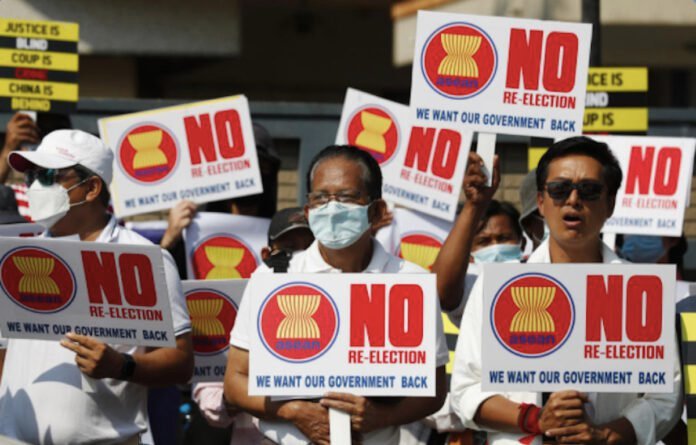
The upcoming ASEAN-Russia summit may test whether ASEAN can keep Myanmar’s military leadership off the high-level regional stage it has so far denied them.
Crucially, Myanmar currently serves as ASEAN’s country coordinator for dialogue relations with Russia. While there is no public confirmation yet that coup-maker Senior General Min Aung Hlaing has been formally invited, the risk is glaring.
The pressure to reconsider ASEAN’s stance is also coming from inside the bloc. After visiting Naypyidaw on May 19, Malaysia’s foreign minister, Mohamad Hasan, said the Myanmar authorities appeared more open to bringing “all parties” together and called this a “positive development.”
Engagement itself is not wrong. But a softer tone from Naypyidaw is not proof that the killing will stop. Mohamad also called for an end to hostilities and an extended ceasefire; the real test is whether the military acts on those demands rather than merely receiving new diplomatic attention.
ASEAN leaders, however, did one important thing right at the 48th ASEAN Summit in Cebu in early May. They kept Min Aung Hlaing out. His staged election and new presidential title did not return him to ASEAN’s leaders’ table.
The Chair’s Statement acknowledged “minimal progress” on the Five-Point Consensus, denounced violence against civilians, and welcomed Aung San Suu Kyi’s transfer to a “designated residence.”
But exclusion alone is not a strategy. It is the floor, not the ceiling. After five years of war, “deep concern” is no longer a policy. For Myanmar’s people, ASEAN’s habit of delay is becoming indistinguishable from abandonment.
Delay measured in blood
The military has given ASEAN no reason to reward its claims of peace or even stability. ACLED data cited by the UN Special Rapporteur show military airstrikes on civilian targets rising from nine in 2021 to 1,140 in 2025.
OHCHR said in February that credible sources had verified the killing of more than 7,700 civilians since the coup, including more than 1,650 women and 1,000 children. Its annual update also found that 2025 was the deadliest year for children since the coup, with military airstrikes killing at least 982 civilians that year alone, a 52 percent increase from 2024.
The UN’s Independent Investigative Mechanism for Myanmar reports that children were killed or injured in at least 640 airstrikes between the coup and 2025. As recently as May, an air attack killed at least five children at a playground in Chin State. During the military-controlled election period, the UN reported at least 170 civilians killed by airstrikes.
These are not arguments for patience. They are the cost of it: bodies, prison cells, and children afraid to sleep, study, or play.
Nor is this only Myanmar’s internal affair. The UN Special Rapporteur reports that armed conflict, cyber scam operations, drug trafficking, and refugee flows are now affecting neighboring countries’ sovereignty and citizens.
A consensus that buys time
The Five-Point Consensus was meant to stop the violence, deliver aid, and begin inclusive dialogue. Instead, it has become a waiting room where the junta makes gestures, ASEAN issues statements, and civilians continue to die.
The bloc is deeply divided. Thailand favors greater engagement with Naypyidaw. Malaysia is now testing whether the generals will talk. Other members remain wary of restoring legitimacy to a regime born from a coup and a staged election.
This exposes the danger of ASEAN’s consensus rule: it allows the governments most willing to accommodate the military to dictate the speed of the region’s response.
Min Aung Hlaing understands this perfectly. His foreign ministry complained after Cebu about “discriminatory measures” and “equal representation.” This is classic military logic: seize power, jail elected leaders, stage an election, and then demand recognition as the victim of unfair treatment.
His allies are also not waiting for ASEAN. Both China and Russia are already treating the rebranded regime as a new political reality. They are the military’s chief enablers, acting not just as critical suppliers of advanced weapons and spare parts, as identified by the UN Special Rapporteur, but as diplomatic shields for the junta at the United Nations and beyond.
If ASEAN now relaxes its position while Moscow and Beijing continue to give the junta military and diplomatic room to survive, it will not protect ASEAN centrality. It will surrender it.
Pressure before normalization
Before Kazan, ASEAN leaders must make clear that they will not accept Min Aung Hlaing’s participation in leader-level ASEAN engagement unless the military delivers measurable action: an immediate halt to airstrikes and indiscriminate violence; verified access and freedom to Aung San Suu Kyi and political prisoners; humanitarian delivery without military gatekeepers; and inclusive talks with democratic and ethnic resistance forces.
Any engagement with Naypyidaw should come with time-bound and verifiable commitments, backed by hard consequences for failure. Member states must block the flow of arms, dual-use goods, and jet fuel, and investigate the companies and financial channels that keep the military’s aircraft in the sky.
ASEAN must also formally engage the National Unity Government (NUG), the major anti-junta force and ethnic resistance organizations, and civil society. In many areas outside military control, local authorities linked to the NUG or ethnic groups administer communities and provide basic services. Speaking only to Naypyidaw is not neutral diplomacy. It actively rewards the actor using air power to demand recognition.
ASEAN has already spent five years waiting for the generals to change course. The question now is not whether ASEAN should talk to Myanmar’s military authorities. It is whether those talks will demand an end to violence or simply turn those into another stage for the junta’s pursuit of legitimacy.
Myanmar’s people do not need any more carefully crafted statements of concern or staged photo ops. They need pressure the generals can actually feel — before any more children pay the price for ASEAN’s caution.
Nyein Chan Aye is a Burmese journalist based in Washington, DC, who previously worked for the BBC and Voice of America and writes on Myanmar, the US, China, and regional affairs.
Anne Hathaway has revealed the private health struggle she says quietly followed her through some of the biggest years of her Hollywood career.
The Oscar-winning actress, now 43, opened up about a shocking eye condition that left her legally blind in one eye for nearly a decade.
During an appearance on Popcast, The New York Times’ pop culture podcast, The Devil Wears Prada star admitted the issue was far more serious than fans ever knew.
“This is maybe too much information,” Hathaway said. “I was half blind for 10 years.”
Hathaway explained that she had an early-onset cataract in her left eye, a condition usually associated with older adults. Cataracts can begin around age 40, but many people do not notice major vision problems until much later in life.
For Hathaway, the trouble came early.
The actress said the condition affected her eyesight from roughly age 30 to 40, leaving her vision so impaired that she was “basically legally blind” in her left eye.
That means Hathaway was dealing with the frightening problem while still working through major movie roles and red carpet appearances.
During that period, she appeared in projects including The Intern in 2015 and Ocean’s 8 in 2018, all while secretly coping with severely clouded vision.
“It impacted my vision so much,” she said.
The condition slowly blurred her sight over the years, making daily life more difficult than she realized at the time.
According to the Mayo Clinic, cataracts can make vision cloudy and eventually interfere with reading, driving, and even recognizing facial expressions.
Hathaway eventually underwent surgery, and the results were life-changing.
She said she did not fully understand just how bad her vision had become until after the procedure restored her sight.
“I didn’t realize how bad it had gotten until I could finally see like the full spectrum,” Hathaway said.
The Les Misérables star said the improvement did more than help her see clearly. It also changed the way her body felt.
“I didn’t realize it was actually taxing my nervous system,” she said.
After the surgery, Hathaway said she felt calmer and gained a new appreciation for something many people take for granted.
“I literally feel like every day I wake up, and I get to see the way that I do, it’s a miracle,” she said.
She added that the experience made her think about how different her life might have been in another era.
“I actually am like, ‘Oh, two generations back that wouldn’t have been an option for someone like me,’” Hathaway said.
The surprising confession came after Hathaway was asked which sense she could live without.
After her terrifying experience with vision loss, the answer was easy.
Hathaway said losing her sight would make her “so sad,” so she would rather give up her sense of taste.
Her reason was deeply personal.
“It’s just because I’m a mom,” she said, explaining that the smell of her children is something she could never imagine losing.
Hathaway shares two sons with her husband, producer and jewelry designer Adam Shulman. The couple married in 2012 and welcomed their eldest son, Jonathan, in 2016. Their second son, Jack, was born in 2019.
The actress recalled the unforgettable scent of her first baby as one of the most powerful memories of her life.
“When my oldest was born, I have this very distinct core memory of like that magic baby smell,” she said. “I really, truly, I remember thinking, ‘Oh, this is heaven.’”
Then Hathaway lightened the mood with a joke about her kitchen skills.
“I’m not a great cook,” she said with a laugh. “So maybe if I was more talented in the kitchen, I would feel differently about that.”
For fans, the revelation offered a rare glimpse into the private battle Hathaway kept hidden for years.
While she was smiling for cameras, starring in major films, and raising a young family, she was also quietly dealing with a serious vision problem that left her half-blind for a decade.
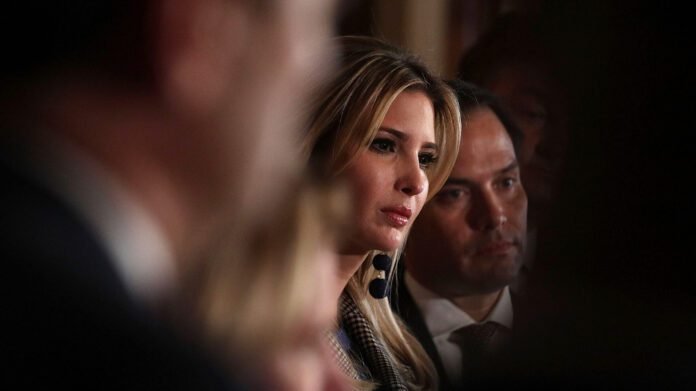
Rubio-Ivanka Trump Ticket Would Be Nearly Unbeatable, Evangelical Leader Says
Maayan Hoffman’s report for The Media Line opens a window into the political imagination of Dr. Mike Evans, a prominent evangelical supporter of President Donald Trump who is already gaming out 2028, Iran, Israel’s future, and the power of the evangelical vote.
Evans, founder of the Friends of Zion Museum, told The Media Line that a Republican ticket pairing Secretary of State Marco Rubio with Ivanka Trump would be “almost impossible to beat.” In his telling, Rubio brings experience, Ivanka Trump brings the Trump brand and crossover appeal, and the evangelical base would line up behind them with unusual force. It is early, speculative, and politically spicy—the kind of prediction that either looks prophetic later or gets quietly buried with last year’s campaign buttons.
The interview quickly moves from 2028 politics to the hotter ground of Iran. Evans argues that President Trump is trying to strike a balance: pursuing a deal with Tehran while refusing to let Iran expand uranium enrichment, threaten the Strait of Hormuz, grow its missile program, or keep funding terror groups across the region. He says the US president is playing “the long game,” watching both Iran and the political clock ahead of the midterm elections.
Evans believes President Trump may try to delay another major confrontation with Iran until after those elections, not because he lacks willingness to strike, but because losing Republican control in Washington could weaken the president’s hand. Still, Evans warns that if Tehran deceives or underestimates President Trump, the response could be far harsher than Iranian leaders expect.
The story also moves through the Abraham Accords, Saudi Arabia, Israeli politics, and Evans’ long-standing belief that the Iranian regime could fall by 2028. He predicts President Trump will push more countries toward normalization with Israel and argues that Prime Minister Benjamin Netanyahu remains uniquely beloved among global evangelicals.
Read the full article for Hoffman’s broader portrait of a religious-political power broker who sees Washington, Jerusalem, Tehran, and 2028 as pieces of the same board—and who believes President Trump still knows exactly how to play it.
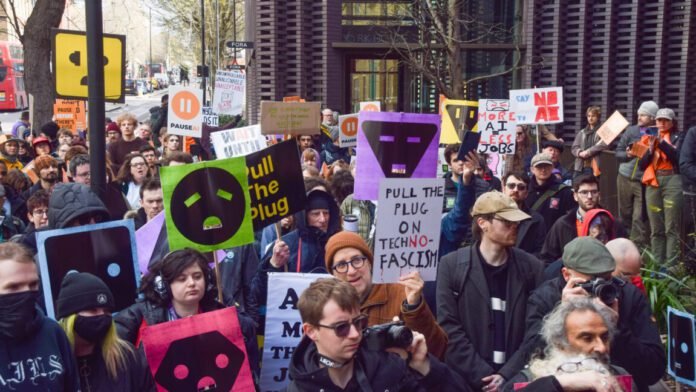
US law enforcement warns of “anti-tech extremism” as AI hatred grows
In the wake of attacks on CEOs, a nationwide protest movement targeting data centers, and increasing concerns about AI job replacement, federal intelligence agencies and domestic law enforcement are circulating reports with a new domestic target in mind: anti-technology extremists.
More than 1,000 pages of unpublished reports from the Department of Homeland Security, FBI, and fusion centers obtained by WIRED show a national shift taking place to surveil this new and worryingly broad category of people and activities deemed an emerging threat.
This new effort follows President Donald Trump’s National Security Presidential Memo 7, which instructs the Department of Justice to target anyone holding “anti-American,” “anti-Christian,” and “anti-capitalism” beliefs. Earlier this month, Trump’s counterterrorism czar, Sebastian Gorka, released a public counterterrorism strategy claiming that left-wing extremists are one of the three top counterterrorism priorities facing the United States.
Taken together, these Trump administration directives have commandeered the domestic surveillance apparatus to surveil and criminalize speech and assembly that challenges the ideology of the White House. A new focus on anti-technology extremism adds an unreported category to already public designations under a presidency that has heavily invested political and material capital in AI and data center proliferation.
Among the documents in the tranche obtained by WIRED is a New York Intelligence and Counterterrorism Bureau report that warns of widespread upheaval in response to AI adoption. Of particular note is a novel term for what the bureau purports to be an emerging extremism threat.
“The chaotic atmosphere that may result from emergent AI technology in the next five years may fuel large-scale protests that devolve into civil unrest and anti-tech violent extremist activity, especially in large urban areas such as New York City,” the report reads. The term “anti-tech violent extremism” does not appear in any publicly available DHS or FBI domestic extremism reports or guides and represents a novel grouping of a wide range of ideologies under a single extremist category.
In the same Intelligence Bureau assessment, analysts also describe a novel threat emerging in the wake of the arrest and trial of Ziz Laota, an extreme rationalist who allegedly led a small cultlike group, three members of which have been charged with murder, tied to an obsessive ideology focused on the existential risk posed by AI.
While the Zizian ideology is extremist in nature, a less extreme version of the same fears surrounding the cataclysmic potential of AI are a common concern among AI alignment experts, machine-learning engineers, and even frontier AI companies. Nonetheless, the Intelligence Bureau warns that “paranoid views regarding AI” may proliferate in the aftermath of the Zizians’ trial, thanks to their “attempt to reason the belief that a godlike incarnation of AI is imminent,” and belief that “humans must best use their time in the present to devote themselves to ensuring its compliance with human morality, or face existential consequences for failing to do so.”
The NYPD intel assessment follows the department’s collaboration with the FBI last year to monitor the Signal chat of an activist group coordinating volunteers to monitor public hearings at immigration courts in New York. According to documents obtained by The Guardian, the FBI surveilled activists as part of a broader investigation into “anarchist violent extremist actors,” one of the threat categories named in the new counter terrorism strategy.
Created in the wake of 9/11, 80 fusion centers now pockmark the country and serve as go-betweens for federal intelligence agencies and state and local law enforcement. In addition to concerns about portions of the American populace disturbed by the rapid proliferation of AI, these centers are also gathering and circulating “intelligence” about alleged threats to data centers.
A Western Pennsylvania fusion center, for example, claimed that “adversarial actors, including state-sponsored entities, criminal groups, and extremists, such as homegrown violent extremists or environmental extremists, may target US data centers” and that “these actors could also exploit the strategic importance of data centers to the US economy, using them for activities like cryptocurrency mining or leveraging third-party entities, such as front companies, to gain access to US data and infrastructure.”
A report from the Northern Virginia Regional Intelligence Center warned that AGAAVEs—anti-government, anti-authority violent extremists—influenced by government-related grievances and conspiracy theories, have engaged in pre-operational planning targeting data centers and other critical infrastructure facilities to disrupt government operations. But in the breakdown of Suspicious Activity Reporting indicators, the intelligence report lists activities that could easily be carried out by peaceful protesters, legal experts say.
“These intelligence reports are part of a long tradition of agencies identifying protest or even simply having strong opinions as precursors to violence,” Spencer Reynolds, senior counsel at the NAACP Legal Defense Fund, tells WIRED. “Suspicious activity reports are incredibly unreliable, often about vague or innocent behavior, issued under permissive standards. These reports, often received in large volumes, allow officers to inject their own biases and see what they want to see in the facts.”
Among the vaguely defined activities flagged by the Northern Virginia intelligence center as suspicious are “expressed/implied threat,” “observation/surveillance,” “photography,” “testing/probing of security,” and “attempted intrusion.”
“The FBI investigates individuals who commit or intend to commit violence and criminal activity that constitutes a federal crime or poses a threat to national security,” the FBI wrote in a statement to WIRED. “We have no additional comment.”
The Department of Homeland Security did not respond to WIRED’s request for comment.
Meanwhile, the same intelligence center also circulated a report in March showing monitoring of constitutionally protected events and demonstrations related to critical views on technology. These events included multiple “Tesla Takedown” protests against Elon Musk’s ransacking of the US government and a “Break Up With Tech Rager” sponsored by Eject Elbit, an activist group organizing to halt investment in the Israeli weapons manufacturer Elbit.
In addition to intelligence analysts working inside fusion centers and federal law enforcement agencies, open source intelligence companies that contract with federal law enforcement agencies appear to be scouring the web for what they claim to be anti-technology sentiment as well. In January 2025, SITE Intelligence circulated bulletins to fusion centers alleging that conversations in a “neo-Luddite” Discord server had turned violent, with one user of the group calling for violence against tech CEOs and power plants.
“SITE is a for-profit private intelligence firm that monitors social media for its law enforcement customers. It promises to do an incredibly difficult if not impossible job, consistently mining social media written by anonymous posters, full of in-jokes, slang, different languages, vagueness, and so on, to deliver credible information that can predict threats,” Reynolds says. “Instead, this type of activity tends to focus on people’s views about things like policing, abortion, economic inequality, vaccines, or any other hot-button topic of the day.”
“By narrowing our OSINT focus exclusively to communities with a proven link to real-world harm, even trolling remarks have an informative value, demonstrating sentiment within a community toward a target, and our reports have shown a notable spike in online threats advocating for sabotage against data centers, which is a true cause for concern,” Rita Katz, founder of SITE, tells WIRED in an email.
The documents obtained by WIRED also show that fusion centers are currently keeping tabs on in-person assemblies. The Northern Virginia center generated a report about demonstrations at local civic events, including the Arlington County budget meeting and the Fairfax County School Board meeting. Across the country, town halls and budget committee meetings have been among the chief forums for local residents to express their dissent with data centers being built in their neighborhoods.
According to Data Center Watch, a project by AI security firm 10a Labs that tracks opposition to data centers, hundreds of organizations across 42 states have organized to block data center construction in their towns and counties. These efforts are often contentious. In California, Illinois, Indiana, New Jersey, Oklahoma, and Wisconsin, state and local police have removed or arrested speakers at town halls who criticize data centers, in one case before they were even allowed to speak.
Under US law, domestic terrorism is not a stand-alone crime that is brought to bear during trial. Instead, domestic terrorism laws allow for targeting and surveillance of extremists, with charges sometimes bearing terrorism enhancements and sometimes excluding them altogether. This has led to protesters and activists being surveilled under domestic extremism provisions while being charged with crimes like criminal trespass and vandalism.
The zeroing in on anti-tech activity by federal agencies is evident in an invitation to a lecture by extremism researcher Mauro Lubrano circulating in fusion centers across the country. Lubrano has emerged as one of the foremost experts on anti-technology extremism. He is the author of Stop the Machines: The Rise of Anti-Technology, which describes three main strains of a newly minted threat matrix: insurrectionary anarchists, eco-extremists, and ecofascists.
Lubrano’s book identifies followers of “Unabomber” Ted Kaczynski, German anarchists, Mexican eco-extremists, and far-right fascists in the Terrorgram Collective as distinct but aligned components of an emerging tech extremism movement. In Lubrano’s analysis, these groups are united by the fact that they have all plotted or carried out acts of violence in furtherance of their ideological goals.
Lubrano said he was not surprised that his lecture turned up in a fusion center but cautioned that any anti-tech extremism framework must be exercised carefully. “I hope the warning I, along with other colleagues, raised is being acknowledged. While anti-technology violence is unacceptable, it should not be used as an excuse to securitize AI and emerging technologies, thereby silencing those who are critical of the current trajectory,” Lubrano tells WIRED.
But Spencer Reynolds says that, despite the real, if limited, threat posed by these groups, a category like “anti-tech extremism” could be drawn so broad as to ensnare peaceful data center protesters, AI skeptics, and anyone with a bone to pick with technology that permeates modern life.
“As people continue to organize for a better future, we’re likely to see more surveillance and criminalization of this opposition, just as we have of Black Lives Matter, Occupy Wall Street, and environmental movements in recent decades,” Reynolds says.
A January 2025 DHS Office of Intelligence and Analysis report furthers this perspective by attempting to connect Luigi Mangione—the alleged assassin of UnitedHealth CEO Brian Thompson—with Kaczynski. “Law enforcement reports that the individual may have drawn inspiration from Ted Kaczynski (the Unabomber) and his anti-technology beliefs,” the report reads, without offering further evidence. It concludes with a warning alleging that executives “are at a heightened risk for targeted acts of violence or threats of violence” when they are “perceived as taking advantage of individuals of lesser means.”
But perhaps the clearest-cut example of how nonviolent critiques of technology can be swept up and flagged as a threat is found in an open source report circulated by SITE Intelligence in April 2025. The report flags a video from the progressive nonprofit More Perfect Union on the destructive effects of a data center to nearby residents in Georgia. Nothing in the video advocated for violence against property or people. But thanks to fusion center targeting, the advocacy group is now circulating among US intelligence and law enforcement across the country as a potential threat vector.
Washington to scale back military assets in Europe under NATO drawdown plan
Washington told allies it will gradually scale down the number of strategic bombers, fighter jets, drones, submarines and warships dedicated to NATO as it continues pressing Europe to do more for its own defense.
The exact nature of the cutbacks is not yet finalized, the diplomats said, and the U.S. did not attach any timelines to the reductions. Washington also reassured allies there would be no changes to its nuclear deterrence, they added.
The meeting did “not [give] exhaustive details … but it is much clearer now,” said a third NATO diplomat, also granted anonymity to speak freely. “It will depend on the capacity of the others to come in with alternatives … some are not touched, others go completely, others can go to one-half or one-third.”
“The timeline is more complicated because it is linked with the credibility of deterrence and defense,” they said. “That said, everything is not yet definitely decided, even in the U.S.”
European allies and the U.S. are likely to discuss the issue further at NATO’s Force Generation conference next month, the two diplomats said. That is a meeting where national military planners define the capabilities they can offer the alliance, and under what conditions.
Under NATO’s Force Model system, alliance members periodically identify the soldiers and equipment they will commit to NATO operations — making them available to the alliance’s top commander in the event of a war. The specifics are a closely-guarded secret, but Washington now wants to scale back those commitments.
Jennifer Kavanagh, director of military analysis at the Washington-based Defense Priorities think tank, said the reductions would create gaps that would be particularly difficult to fill rapidly for some types of military assets, including submarines and strategic bombers.
But European allies should not seek to replace them like-for-like, she argued. “The important thing with these U.S. withdrawals is not that Europe matches what is lost but [that] Europe figures out what it really needs to defend itself and procure those capabilities,” Kavanagh said. “Across the board Europe can do this within five years.”
U.S. Secretary of State Marco Rubio made clear to fellow NATO foreign ministers on Friday that further American troop and weapons drawdowns were on their way — while reassuring them that this would be done in a coordinated fashion.
“It’s well understood in the alliance that the United States troop presence in Europe is going to be adjusted — that work was already ongoing, and it’s been done in coordination with our allies,” Rubio told reporters in the Swedish city of Helsingborg. “I’m not saying they’re going to be thrilled about it, but they certainly are aware.”
NATO spokesperson Allison Hart told POLITICO that “there has been an over-reliance on US forces and capabilities” by the alliance, adding: “But as Europe and Canada are investing more in defence and developing more capabilities, the balance of responsibility can shift.”
“This change strengthens NATO’s defence plans by reducing over-dependence on one ally and is a reflection of a broader shift happening within the alliance,” she said.
I get a lot of flak from progressives for being a “both sides” kind of commentator. I spend a fair amount of time criticizing leftist ideology and expounding on the very real failures of progressive governance, both of which have gotten much worse over the last decade.
Yes, I support the Democrats, but that support is contingent — if their ideology and competence deteriorate to the point where the Republicans are less bad, I’ll switch to supporting the GOP. So it’s worth it to fight to halt and reverse the deterioration; in the long term, the cost of ignoring extremists and policy failures in order to have “no enemies on the left” is very high.
And yet right now, despite all of the negative trends on the left, the choice of which party Americans should support has never been clearer. The second Trump administration has unleashed a dizzying array of measures seemingly tailor-made to weaken the United States of America — sometimes at the behest of rightist extremists, sometimes due to Trump’s own mercurial whims, and sometimes in order to enrich Trump and his clique.
Sometimes it’s hard to keep track of everything Trump is doing to tear down the America I grew up in. In his first term, it was often said that he avoided criticism using a “DDOS” strategy — rhetorically attacking so many opponents at such blinding speed that they couldn’t focus on any one outrage for long.
In his second term, the DDOS is actual policy; Trump inflicts real damage on such a broad array of US institutions, with such incredible speed, that the news can’t keep track of them all.
To illustrate this, I decided to write a post about three mostly unrelated pieces of Trumpian insanity:
The assault on international tech industry employees and founders
The disastrous Iran War
Trump’s unprecedented corruption
Either the second or the third of these would have been a presidency-ending disaster for Barack Obama, George W. Bush, or Bill Clinton, while the first would have alienated broad swaths of the business community. But for Trump, it’s just business as usual.
The stories crowd each other out of the headlines, and everyone just sort of gets overloaded and starts tuning out the news. Trump’s approval ratings drift slowly downward, but nothing else really happens. Hardcore MAGA supporters just keep screaming that everyone has “TDS”, while Trump’s wavering allies eventually manage to convince themselves that Democrats would be even worse.
But anyway, if you were paying attention, here’s the latest round of Trumpian disasters.
Trump kicks the tech industry where it hurts
A couple of days ago, without any warning, Donald Trump’s immigration agency announced a new rule. Foreign workers working in the US on temporary visas, they announced, must now return to their home countries while applying for green cards — a process that can take years.
This rule would effectively kick most of the high-skilled visa workers in America out of the country. America’s typical pipeline of high-skilled immigration is basically “try before you buy” — people come to work on visas, then apply for permanent residency while in the country. This procedure is called Adjustment of Status. Almost all green card holders — except for investors — get their green cards this way:
The new policy would end this practice, thus shutting off the main avenue of high-skilled legal immigration to the United States.
There’s a good chance this new policy won’t stand up in court, since Congress explicitly passed a law specifying conditions under which people can be deniedAdjustment of Status, so it may not be legal for Trump to simply issue a blanket ban. There’s also a chance that Trump’s allies in the “tech right” will frantically call his administration and get them to walk back the new policy.
The reason they’ll be trying to get him to walk it back is that if the new ban does go through, it will devastate much of the US tech industry. The AI industry, which Trump promised to promote — and which is the only thing now keeping the U.S. economy afloat in the face of tariffs and the Iran War — depends crucially on researchers born outside the US:
This general pattern holds throughout the entire tech industry. Almost half of unicorn founders are immigrants, with Indians being the biggest contingent. Nearly half of the founders of billion-dollar tech startups are immigrants
Who asked for some of America’s top economic and technological contributors to be expelled from the country? The “tech right” certainly didn’t; many of them met the announcement with dismay. Gil Verdon, a semiconductor company founder from Canada who had been a prominent and vocal Trump booster, expressed dismay at the fact that he might now be kicked out of the country:
Feeling robbed of my path to citizenship right now after grinding a PhD and contributing to foundational AI + computing technologies for the United States for the past ~ 10 years.
Feels like robbing top and technologists like me of the opportunity to achieve the American Dream. https://t.co/i1MkJKP3S4
The American people didn’t want this either. Polls consistently show that very large majorities of Americans across the political spectrum support high-skilled immigration:
The only people who seemed to be happy with Trump’s new policy were anti-immigration activists on X — rightist types who see immigration as a race war, and want to ban it entirely. It seems highly likely that those online activists — or people who think very much like them — are driving at least a fraction of the administration’s policy.
It’s pretty clear how this happens. Perhaps even more than in the Democratic Party, the GOP is dominated by youngish staffers and think tankers. These people marinate all day in extremist online discourse, and form friendships with extreme right-wing activists who see immigration as a race war rather than as an economic matter or an important part of America’s heritage.
Some rightist in the bowels of US Citizenship and Immigration Services probably got the idea to ban Adjustment of Status and handed it to his higher-ups, who pushed through the policy without thinking too hard about the economic implications.
Welcome to the second Trump administration. If policy isn’t being made by the big man himself — who is growing increasingly erratic and corrupt in his old age — it’s being made by neo-Nazis on X. These are really the only people prepared to take over the MAGA movement once Trump shuffles off the scene, and their influence is growing as Trump’s acumen wanes.
That said, the big man himself still has a little bit of fire in him, and he still enjoys unprecedented support and devotion from his party. Unfortunately, he’s using his remaining vigor to do two main things: A) destroy America’s standing and power in the world, and B) abuse his office to enrich himself, his family, and his most ardent followers.
The faux-Manchurian candidate
Donald Trump was not a Manchurian Candidate, created in a secret Russian/Chinese lab to infiltrate and bring down the United States of America.
Nor, I believe, is he personally in the pocket of Russian and/or Chinese interests, blackmailed and bribed into weakening his country at the bidding of overseas masters. But sometimes it’s very difficult to distinguish between Trump’s actual actions and what he would do if he were a foreign plant or catspaw.
That’s a very strong statement, but I’m not being hyperbolic for rhetorical effect — I think the facts back it up.
For example, take the war in Iran. Trump launched this war with no immediate provocation or casus belli — a simple opportunistic war of aggression that incinerated whatever shreds of goodwill remained towards the United States among much of the international community.
Trump then proceeded — so far, at least — to lose the war he started. Despite the preemptive strike, and America’s far greater technological capability, Iran reportedly retains most of its arsenal of weaponry:
US intelligence assessments show that Iran retains significant missile capabilities despite repeated claims by the Trump administration that Tehran’s military had been severely weakened, according to a report by The New York Times…The report said intelligence findings compiled in early May showed Iran had regained operational access to 30 of its 33 missile sites along the Strait of Hormuz. Officials familiar with the assessments told the newspaper that Iran still possesses roughly 70 percent of its prewar missile stockpile and mobile launchers…Citing reports from military intelligence agencies, the report stated that Iran has regained access to roughly 90 percent of its underground missile storage and launch facilities nationwide, which are now assessed to be “partially or fully operational.”
Iran has already restarted some of its drone production during the six-week ceasefire that began in early April, one sign it is rapidly rebuilding certain military capabilities degraded by US-Israeli strikes, according to two sources familiar with US intelligence assessments. Four sources told CNN that US intelligence indicates Iran’s military is reconstituting much faster than initially estimated…
The rebuilding of military capabilities, including replacing missile sites, launchers and production capacity for key weapons systems destroyed during the current conflict, means that Iran remains a significant threat to regional allies…It also calls into question claims about the extent to which US-Israeli strikes have degraded Iran’s military in the long term…
Iran has been able to rebuild much faster than expected due to a combination of factors, ranging from support it is receiving from Russia and China to the fact that the US and Israel did not inflict as much damage as the two countries had hoped, one of the sources told CNN.
America’s own stock of weapons, on the other hand, has been dangerously depleted in the conflict, and our defense-industrial base is not managing to rebuild them.
Even as the US has failed to cripple Iran’s military, Iran’s military has succeeded in closing the Strait of Hormuz, sending gasoline prices soaring and causing a significant bump in inflation:
Incapable of defeating Iran on the battlefield, and increasingly wounded by Iran’s economic retaliation, Trump is pushing hard for any sort of face-saving deal that would allow him to exit the conflict quickly. Whatever deal Trump eventually cuts is going to leave Iran in a much stronger position — and American interests in the region — much weaker than before Trump launched his war. Here’s Robert Kagan:
Defeat for the United States, therefore, is not only possible but likely. Here is what defeat looks like.
Iran remains in control of the Strait of Hormuz. The common assumption that, one way or another, the strait will reopen when the crisis ends is unfounded. Iran has no interest in returning to the status quo ante…The power to close or control the flow of ships through the strait is greater and more immediate than the theoretical power of Iran’s nuclear program. This leverage will allow the leaders in Tehran to force nations to lift sanctions and normalize relations or face penalties…
The new status quo in the strait will also occasion a substantial shift in relative power and influence both regionally and globally. In the region, the United States will have proved itself a paper tiger, forcing the Gulf and other Arab states to accommodate Iran…All nations that depend on energy from the Gulf will have to work out their own arrangements with Iran. What choice will they have?…
The American defeat in the Gulf will have broader global ramifications as well. The whole world can see that just a few weeks of war with a second-rank power have reduced American weapons stocks to perilously low levels, with no quick remedy in sight.
This is all, of course, on top of Trump’s other geopolitical blunders:
alienating US allies by threatening to invade Greenland
attempting to force Ukraine to accept an unfavorable peace settlement with Russia, even as Ukraine was turning the tide of battle
various other erratic behaviors that make America clearly less reliable of an ally
As I said, Trump is not a Russian/Chinese plant, but at this point it’s hard to imagine what else a Russian/Chinese plant would even do in order to weaken America’s international standing.
America is ruled by a mafia now
While Trump was losing a war he started, destroying the foundations of American power, and attacking the foundations of American technological dominance, he was also working feverishly to use the presidency to get even richer than he already is. Rolling Stone had a good article detailing the breathtaking scale of the corruption:
Let’s say it plainly: There has never been a president as corrupt as Donald Trump. There is no close second in our history…
Americans just found out that in the first quarter of this year, Trump’s stock portfolio made 3,600 trades — an average of nearly 60 a day…Many of these appear suspiciously timed to benefit from actions approved by the president himself. For example, his Nvidia stock surged after Trump announced the company would be permitted to sell its cutting-edge AI chips to China. Similar suspiciously well-timed calls were made ahead of big government moves involving other companies, from Intel to Palantir to Boeing…
But the apparent insider trading scam being run from within the Oval Office is small change…compared to the self-dealing plunder of $1.8 billion tax-payer dollars being pushed through the DOJ and IRS.
There’s never been a sitting president who sued his own government for $10 billion. That’s because it’s absurdly corrupt. But that’s what Donald Trump did, arguing he had suffered damages from prosecutions pursued before he was reelected…The judge who heard the case convened an independent panel to review the suit, suspecting it might be a scam.
Before the case could be dismissed, Acting Attorney General Todd Blanche — who had previously served as Trump’s personal lawyer — declared that the bogus suit would be preemptively settled, not for $10 billion, but for the symbolic sum of $1.776 billion, which Trump said will be distributed to…political allies.
This is a shakedown. The president is compelling a Justice Department he controls to redirect money from taxpayers — that’s you — to his most fervent supporters. This slush fund will set off a cash grab among MAGA lawyers and be used to reward partisan fanatics who attacked the US Capitol — and police officers — on his behalf.
If that wasn’t enough of a blatantly illegal use of presidential power, it was revealed that the “settlement” deal included a pledge signed by the acting attorney general that would ensure — in the hysterical all caps of a Trump tweet — that the government would be “FOREVER BARRED and PRECLUDED from prosecuting or pursuing” any tax claims, audits or related prosecutions against Trump, his family or their businesses. This is an attempt to get a permanent get-out-of-jail-free card for the Trump family — a license to steal. [emphasis mine]
So basically, Trump:
Uses the government to interfere with specific companies,
Has the government promise never to prosecute the Trump family.
Rolling Stone is absolutely right: Nothing in US history even comes close to this level of corruption. Trump is simply using the powers of the presidency to extract billions of dollars from stock owners and taxpayers — i.e., from you and me — and to put that money into his own pocket.
Compared to this, the famous Teapot Dome land scandal in the 1920s was nothing. The total amount of money involved in Teapot Dome — just a few million of today’s dollars after adjusting for inflation — was tiny compared to the billions Trump is looting.
Anyway, these are all stories just from the past few weeks. In the next few weeks it’ll be something else. This is the most absurdly terrible presidential administration America has ever had.
I know a lot of Americans — including some of my own readers — are still able to convince themselves that The Left Is Worse And Therefore We Must Continue To Support Trump No Matter What.
Frankly, I don’t know how those guys do it. But I guess I can take some small solace in the fact that the number of people who think that way is slowly decreasing, as Trump’s parade of outrages and disasters marches on.
Motorola’s 2026 Razrs are almost worth buying just for their stunning looks… almost
For the last several years, Motorola’s smartphone headliners were the Razr flip phones, but 2026 is different. This time around, Moto’s first tablet-style foldable, the Razr Fold, somewhat overshadows the flip phones, but a bulky $2,000 folding phone that isn’t made by Samsung occupies the smallest niche in the smartphone market. A Razr flip phone is much more practical, both financially and logistically. But are these phones actually worth buying over a flat phone?
Smartphones are no longer something you need to convince people to buy. Unless you’re going out of your way to exclude technology from your daily life, a smartphone is just a necessary convenience. The way some companies market their phones—making relatively boring phones look like a lifestyle choice—doesn’t really take this into account. However, Motorola knows what a Razr is.
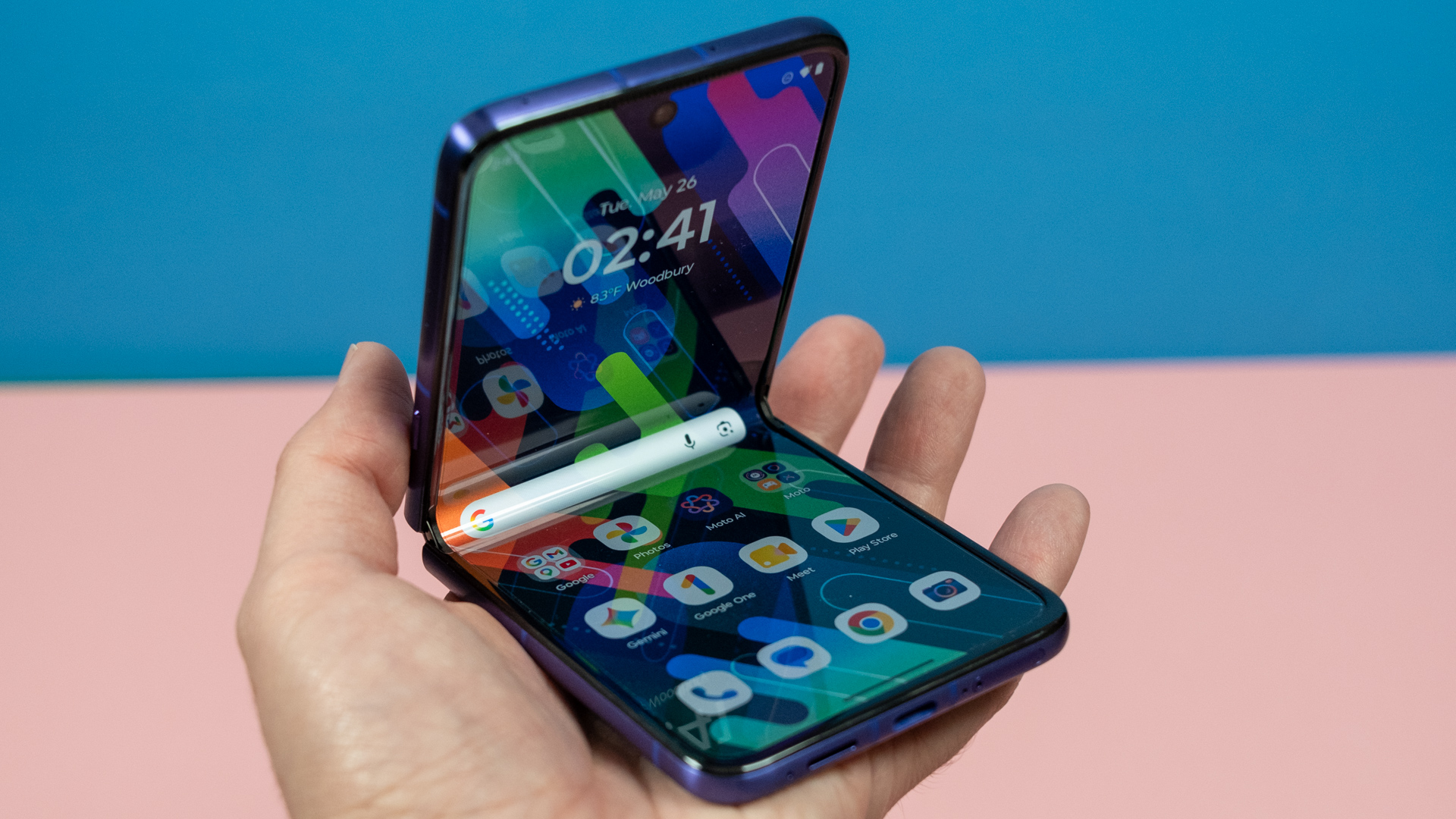
All the Razrs are big phones when you open them up (Razr Ultra seen here).
Credit: Ryan Whitwam
All the Razrs are big phones when you open them up (Razr Ultra seen here). Credit: Ryan Whitwam
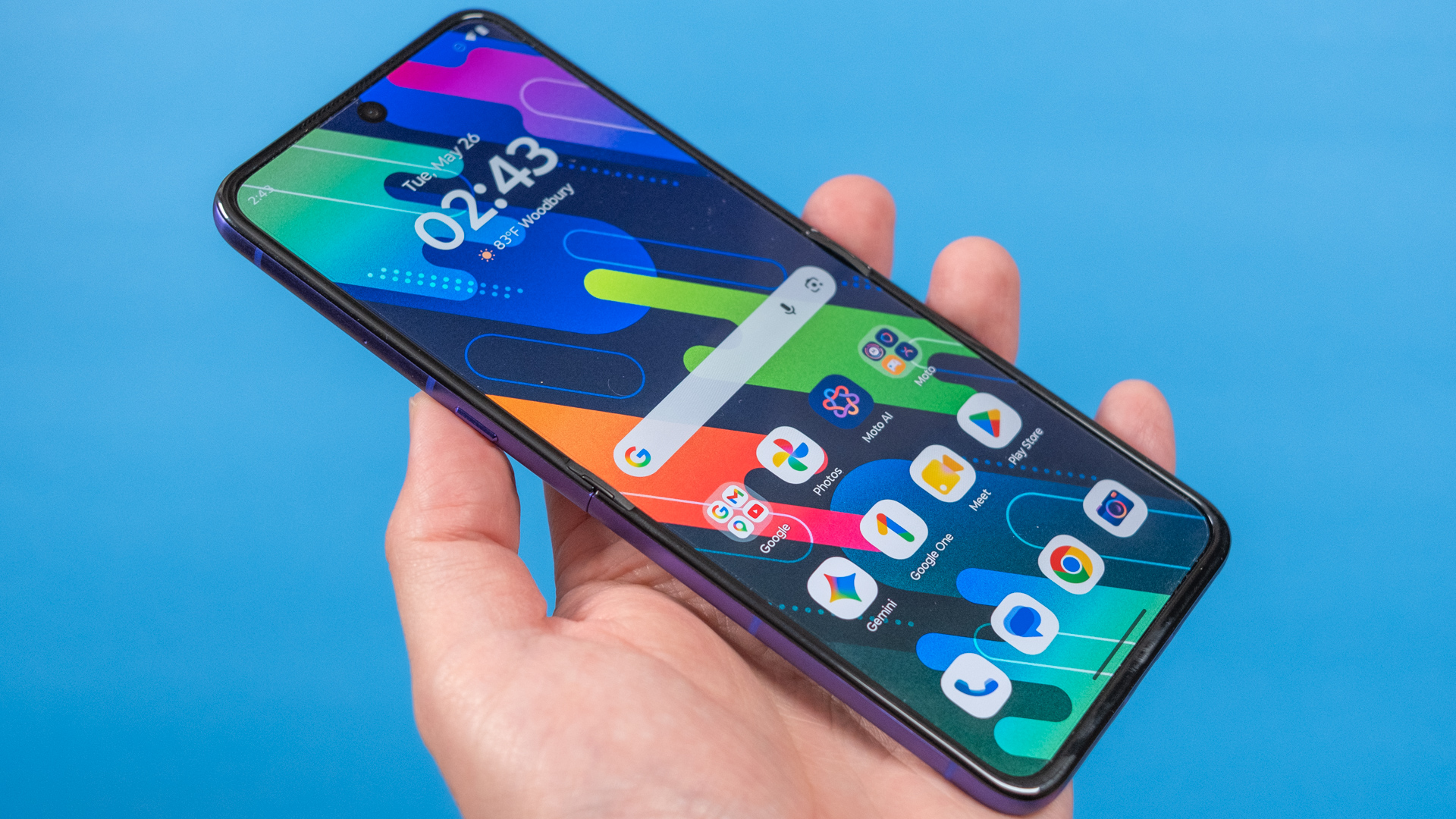
These phones are first and foremost about vibes. They’re fun and colorful; there are desk clock displays, mini apps for the outer display, and a quirky camcorder camera mode. Foldables are universally gadgety and visually interesting, but the Razrs take this to the extreme with unique textures and Pantone-certified colorways. That gives the Razrs a selling point before you even get to the specs or hardware. And they need that because the speeds and feeds are nothing special.
The Razr+ is only available in the Mountain View colorway.
Ryan Whitwam
The Razr+ is only available in the Mountain View colorway. Ryan Whitwam
The base model Razr has a slightly smaller screen and a strip of color above it.
Ryan Whitwam
The base model Razr has a slightly smaller screen and a strip of color above it. Ryan Whitwam
The Razrs have some neat desk clock and photo frame modes.
Ryan Whitwam
The Razrs have some neat desk clock and photo frame modes. Ryan Whitwam
The base model Razr has a slightly smaller screen and a strip of color above it. Ryan Whitwam
The Razrs have some neat desk clock and photo frame modes. Ryan Whitwam
The 2026 Razrs don’t change much in the design department versus last year’s versions, but that’s fine. They still look great. There are wood panels, soft touch plastics, vegan leather, and synthetic fabrics—all things you won’t find on the latest devices from Samsung, Google, or Apple. These are, hands down, the prettiest phones you can buy right now.
The Razr Ultra’s Orient Blue fabric back feels really nice, but it can pick up dust.
Credit: Ryan Whitwam
The Razr Ultra’s Orient Blue fabric back feels really nice, but it can pick up dust. Credit: Ryan Whitwam
However, even years into the foldable era, these phones are still not an easy choice for smartphone buyers, and some people shouldn’t even consider getting one despite the stylish design. When buying a new phone, many folks immediately put it in an OtterBox or similarly armored case and slap on a screen protector. Then, a year or two later, when they need to take the case off for some reason, they are surprised by the color of their phone. If that’s you, the 2026 Motorola Razrs are not the phones you are looking for—just move along.
Flip phone flops
All of Motorola’s Razr flip phones have big external screens, offering enough real estate to run apps and reply to messages, and Moto lets you do a lot more with this screen compared to Samsung’s Z Flip line.
On one hand, having an external screen can be a bit gimmicky. The phones come with a collection of games optimized for the external display, and opening the phone to use the big foldable OLED will often be faster for most tasks, but using the external screen can help steer you away from distracting apps. It provides just enough functionality to check a notification or reply to a message without tempting you to start doom scrolling.
Bundled mini games? Sure, why not?
Credit: Ryan Whitwam
Bundled mini games? Sure, why not? Credit: Ryan Whitwam
The foldable form factor also pays off if taking selfies is your thing. While there is a selfie camera under the foldable OLED, you can and should use the primary cameras with the external display instead. Motorola’s cameras aren’t up to the standards of Google or Apple, but the larger main camera sensors on these phones do a better job than any camera peeking through a hole in your screen.
But a phone that folds in half also comes with some inevitable downsides. While Motorola says its hinge is reinforced with titanium and has been tested to many thousands of folds, this is still a possible point of failure. The kind of day-to-day abuse that wouldn’t affect a flat phone could cause serious problems for one with a hinge in the middle. These devices are also only IP48-rated, which means fine particles could work their way inside and affect the hinge’s functionality. Although the Razrs are just as water-resistant as traditional designs.
The Razr Ultra is a flagship phone with a flagship price (and then some).
Credit: Ryan Whitwam
The Razr Ultra is a flagship phone with a flagship price (and then some). Credit: Ryan Whitwam
Even if the hinge is mechanically sound, the constant folding could be a problem for the phone’s flexible OLED. With several generations of Razrs behind us, there are enough user reports to say that OLED damage from wear and tear is possible. Most of these screens will last for as long as the phone itself does, but some won’t.
Specs at a glance: 2026 Motorola Razr series
Razr 2026 ($800)
Razr+ 2026 ($1,100)
Razr Ultra 2026 ($1,500)
Razr Fold ($1,900)
SoC
MediaTek Dimensity 7450X
Snapdragon 8s Gen 3
Snapdragon 8 Elite “Pro”
Snapdragon 8 Elite Gen 5
Memory
8GB
12GB
16GB
16GB
Storage
128GB
256GB
512GB
512GB
Display
External: 3.6-inch 1056 x 1066 OLED, 90 Hz, 1700 nits; Internal: 6.9-inch 1080 x 2640 OLED, 120 Hz, 3000 nits
External: 4-inch 1272 x 1080 OLED, 165 Hz, 2400 nits; Internal: 6.9-inch 1080 x 2640 OLED, 165 Hz, 3000 nits
External: 4-inch 1272 x 1080 OLED, 165 Hz, 3000 nits; Internal: 7-inch 1224 x 2992 OLED, 165 Hz, 5000 nits
Hematite, Violet Ice, Sporting Green, Bright White
Mountain View
Orient Blue, Cocoa
Blackened Blue, Lily White
This is something that you won’t see in reviews—we’ve long moved past the point where foldable durability issues would be apparent during the few weeks reviewers use these devices before publishing the results. I try to use the hinge on foldables as much as possible when reviewing them, but I’ve never seen a hinge or screen fail. We know from user reports that they sometimes fail, though.
When a Razr is your daily driver for months or years, there’s a higher risk of breakage than with a phone that doesn’t fold in half. So if you’re going to buy a foldable, it’s smart to factor in the added cost of insurance. That can make an already expensive phone even more of a financial burden.
The bottom line
As gorgeous as these phones are, that alone cannot justify spending a ton of money on them. If your main concern is pure functionality, the 2026 Razrs aren’t as reliable or capable as the best non-foldables from Samsung, Google, or Apple. Foldable flips don’t even have the multitasking advantages of a tablet-style foldable. You have to care about the vibes to justify a Razr, and the prices don’t make that easy.
The Razr+ and Razr Ultra got more expensive this year, clocking in at $1,100 and $1,500, respectively. Motorola has offered some earbuds and tracking tags as freebies to try and offset the sticker shock, but that’s not enough. The Razr Ultra has flagship specs and solid cameras, but I can’t think of any smartphone buyer who should seriously consider paying $1,500 for it.
The 2026 Razr lineup looks nice, but only the base model clocks in at a reasonable price.
Credit: Ryan Whitwam
The 2026 Razr lineup looks nice, but only the base model clocks in at a reasonable price. Credit: Ryan Whitwam
The Snapdragon 8s Gen 3 in the Razr+ won’t be much slower in daily use, and it still has a reasonable 12GB of RAM. So that’s probably a better choice for picky foldable fans. But still, $1,100 for that phone is a tough sell.
If you find yourself enamored with the idea of a stylish flip phone, neither of those phones is probably the right call. However, the base model still embodies the spirit of the Razr even if it cuts a few corners.
The 2026 Razr looks just as good as the more expensive versions—maybe even a little better. The slightly smaller screen leaves more room for the cool materials and colors to wrap around to the front. It also comes in four colors, versus just two for the Razr Ultra and just one for the Razr+.
The cheapest Razr is probably the one to get.
Credit: Ryan Whitwam
The cheapest Razr is probably the one to get. Credit: Ryan Whitwam
The Moto Razr comes with a weaker MediaTek processor and just 8GB of RAM, but that doesn’t make it any less pretty. The lower specs may benefit a certain type of smartphone buyer. Motorola has a ton of AI features crammed into its current Android software, like every other smartphone OEM, but it’s a bit more restrained on the base model Razr due to the lower RAM. It doesn’t even have the physical AI button from the more expensive models. I consider that a total win.
And the best part: This phone is $800. For a phone that mainly exists to look good and carries a higher risk of failure versus a non-foldable one, that’s about the right price.
The Good
They look great
Hinge feels solid
Outer displays are big and just useful enough
The Bad
The Razr+ and Razr Ultra are way too expensive
Hinge and flexible OLED are possible points of failure
Silly AI button on Razr+ and Razr Ultra
Last year’s chips in Razr+ and Ultra, mid-range specs in the base model
Trump’s War on ISIS Is Failing, No Matter How Gorka Spins It
White House counterterrorism czar Sebastian Gorka was on a mission. He wanted someone dead, and he knew who could make it happen.
It was eight days after Donald Trump took office for a second time, and Gorka, the senior counterterrorism director on President Trump’s National Security Council, walked into the Oval Office accompanied by a member of his own counterterrorism team and his boss, then-National Security Advisor Mike Waltz. The group approached the Resolute desk and laid an intelligence “place mat” with information about a man in Somalia in front of the president.
“Sir, ISIS leader, killed Americans, planning to kill more Americans,” is how Gorka recalled the summary they provided to the president. “We informed him that the Biden administration had been watching him for about a year and a half.” According to Gorka, Trump replied: “What do you mean, we’ve been watching him? Kill him!’”
Gorka said Trump ticked off the “go box” on the operation orders with one of his signature presidential Sharpie markers. Moments later, outside the Oval Office, Gorka recalled, a call was made to Fort Bragg and “elsewhere” to arrange the attack. Less than 30 hours later, Gorka and his colleague were in the White House Situation Room watching the target on massive television screens. “It was Tom Clancy, but it was real,” Gorka recalled recently. “Go time was 8:45 in the morning.” Two minutes before the scheduled attack, there was still no sign of Waltz. A minute later, he walked in, and 60 seconds after, Gorka’s quest was complete.
“Eight forty-five the platform launches what it launches and this individual just disappears from the earth,” Gorka recalled recently in a version of the account told during a softball interview with Dean Cain, a MAGA influencer best known for his role in the 1990s TV series “Lois & Clark: The New Adventures of Superman.” Gorka told the story again and again on Breitbart’s Alex Marlow Show, and to otherpro-administrationoutlets.
In the aftermath of that first strike, Trump took to social media to boast about the attack. “This morning I ordered precision Military air strikes on the Senior ISIS Attack Planner and other terrorists he recruited and led in Somalia,” he wrote. “The message to ISIS and all others who would attack Americans is that ‘WE WILL FIND YOU, AND WE WILL KILL YOU!’” In honor of this line — which he said has become the motto of his directorate and is arguably the mantra of the second Trump administration — Gorka and his team wear custom lanyards that say: WWFY & WWKY. Gorka calls it the “most coveted lanyard in the U.S. government.”
Since that strike, the Trump administration has taken the murderous motto to heart, proclaiming versions of it in avenues from Pentagon social media posts to Trump’s foreword to Gorka’s recently released “Counterterrorism Strategy” — and conducting a global killing spree. “Since our first operation on day 11 of this administration, a scant 15 months ago, we have killed 860 jihadis across the globe,” Gorka told Newsmax, noting elsewhere that this figure does not include those killed in the wars in Iran, Venezuela, or Yemen. (Gorka also claimed, two days later, that the number killed in lethal strikes was actually 815. The White House did not reply to a request for clarification.)
While the kidnapping of Venezuelan President Nicolás Maduro, the war with Iran, and even the so-called boat strikes in the Caribbean Sea and Pacific Ocean have been front page news, Trump has supercharged America’s longest ongoing forever war — the conflict in Somalia — with very little notice. But as Trump’s attacks in Somalia have skyrocketed, so has terrorist violence there, according to the Pentagon. War Department statistics show that attacks and fatalities in Somalia have reached epic proportions, even though the War Department seemed to claim that ISIS-Somalia has been annihilated and Trump claims ISIS was wiped out years ago.
“Somalia saw the biggest surge in reported fatalities across all regions,” according to an April report by the Africa Center for Strategic Studies, a Pentagon research institution. “The 8,813 deaths linked to al Shabaab and the Islamic State (ISIS) over the past year represent a 93-percent increase from the previous year.” This record throws into broad relief the failure of Gorka’s and the president’s primary counterterrorism strategy and the inability of the administration to kill its way to victory.
Loosened rules of engagement during Trump’s first term had a profound effect in Somalia, where strikes tripled after Trump relaxed targeting principles. The U.S. conducted 219 declared attacks in Somalia during Trump’s first four years in the White House, a more than 350 percent increase over the eight years of the Obama presidency.
“They know innocent people were killed, but they’ve never told us a reason or apologized.”
A review of Trump-era rules by the Biden administration found that for attacks in some countries, a requirement for “near certainty” that civilians would “not be injured or killed in the course of operations” was reportedly enforced only if the civilians were women and children. A lower standard was applied to adult men. All military-age males were considered legitimate targets if they were observed with suspected al-Shabab members in the group’s territory, retired Brig. Gen. Donald Bolduc, who led Special Operations Command Africa at the time, told The Intercept.
A 2023 investigation by The Intercept found that Trump’s directive contributed to a particularly disastrous attack in Somalia that killed at least three — and possibly five — civilians, including 22-year-old Luul Dahir Mohamed and her 4-year-old daughter, Mariam Shilow Muse. The mother and child survived the initial strike but were killed by a double-tap attack as they fled for their lives. “They know innocent people were killed, but they’ve never told us a reason or apologized,” said Abdi Dahir Mohamed, one of Luul’s brothers. “No one has been held accountable.”
Under President Joe Biden, the U.S. military conducted 51 strikes in Somalia over four years, according to D.C.-based think tank New America. Last year alone, Trump oversaw 126 attacks, exceeding the previous one-year record of 66 under Trump in 2019. He has already conducted 64 attacks in Somalia this year, and a total of at least 190 there so far in his second term — including an attack that one top U.S. commander called the “largest airstrike in the history of the world.” Trump and Gorka are on pace to eclipse the 219 strikes of his first term in just a year and a half in office.
Gorka frames the Biden administration’s failure to conduct wholesale strikes on supposed “jihadis” as a soul-crushing experience for national security professionals from the Intelligence Community and special operations forces. “The morale was so bad,” he recently told Cain. “I’ve got a targeter on my team, an amazing lady, who are in the bowels of an intelligence agency and their job is … for 10 hours a day with headphones watching a screen tracking jihadis.… And for four years, they’re basically not allowed to kill people.” He added: “You say, ‘Hey, we’ve got the coordinates. Can we do something?’ And the White House says, ‘No.’”
Wes Bryant, who called in thousands of strikes against ISIS as a special operations joint terminal attack controller, scoffed at Gorka’s assessment that the Biden administration was negligent in its war on ISIS and capriciously allowing terrorists to operate freely.
“Often, we gain more by watching senior operatives for extended periods because we can then piece together more of an entirety of an operation or organization. Otherwise, all it becomes is whack-a-mole,” Bryant told The Intercept. “Targeting and intelligence collections operations can be likened to an undercover operation against a criminal organization in law enforcement — where we are watching and monitoring and gathering evidence and characterizing every single associate and activity in order to build the big picture of the organization and take every piece of it down versus just one guy that we found.”
Bryant was skeptical of Gorka and his motives. “I’m not sure if he doesn’t know better and just wants to deliver the superfluous talking point to his uneducated far right audience that ‘Trump kills more bad guys’ and is therefore keeping America safer.”
The Intercept sought to interview Gorka through Anna Kelly, the special assistant to the president and White House principal deputy press secretary. She did not reply to that request or to questions about Gorka’s claims.
While claiming to be “the peace president,” Trump — with Gorka as his point man — has actually been attempting to kill his way to victory. “We are bringing down the hammers of hell on our enemies,” Gorka told Newsmax. But official pronouncements from the Pentagon, the intelligence community, and even the White House demonstrate that Trump’s lethal strikes have failed.
ISIS was, for example, one of the top threats in Trump’s 2018 counterterrorism strategy. He battled the group during his first term and eventually declared victory. “We defeated ISIS in record time,” Trump said in his 2024 election-night speech. Despite this, the first lethal strike of Trump’s second term — in February 2025 — was on “the Senior ISIS Attack Planner … in Somalia,” according to Trump himself. Three months later, at his commencement speech at the U.S. Military Academy at West Point, Trump was back to claiming ISIS had been wiped out. “I defeated ISIS in three weeks,” he said.
This claim has, however, been undermined by the nation’s Africa Command on a regular basis in the year since, amid scores of pronouncements of attacks “targeting ISIS-Somalia.” This month, AFRICOM commander Gen. Dagvin R.M. Anderson even admitted to the Senate Armed Services Committee that the “Islamic State of Iraq and Syria remain a threat to the homeland today” and that “ISIS-West Africa and ISIS-Sahel [are] becoming increasingly more collaborative.” The next day, Trump undercut his own claims by announcing on Truth Social that U.S. forces had “eliminate[d] the most active terrorist in the world … Abu-Bilal al-Minuki,” a top figure within ISIS–West Africa whom Trump claimed was “second in command of ISIS globally.”
Despite Gorka’s consistent fawning praise of Trump — he told Cain his boss is the “most incredible commander-in-chief we’ve had of the modern age” — even Gorka’s recently unveiled “2026 Counterterrorism Strategy” rebutted Trump’s assertions. That document lists ISIS as one of the “top five Islamist terror groups that have the intent and capabilities to execute External Operations against the United States,” and it spotlighted yet another branch of the group, ISIS-Khorasan, which is active in South Asia. The National Counterterrorism Center also lists a host of additional Islamic State threats: ISIS’ network in Bangladesh, ISIS–Central Africa, ISIS-East Asia, ISIS-Libya, ISIS-Mozambique, and ISIS-Sinai among them.
Trump’s ongoing campaign against the supposedly defeated ISIS and spiking violence in Somalia offers clear evidence of the administration’s failures, even as Gorka touts success to outlets that fail to push back on his claims.
“The find, fix, finish model is peerless,” Gorka said of lethal strikes on the New York Post podcast “Pod Force One.” He boasted that the U.S. is “crushing it when it comes to jihadis.”
U.S. Lawmakers Demand Reforms to Immigration Officers’ Use of Tear Gas and Pepper Spray
Three U.S. senators have called for an overhaul offederal agents’ use of tear gas and pepper spray, citing a ProPublica investigation that found at least 79 children were left screaming, coughing or hurt by these chemicals during President Donald Trump’s immigration crackdown.
Lawmakers said the findings showed more restrictions are needed to avoid injuring bystanders — including children — with chemical munitions. Such weapons were designed to combat rioters and soldiers, and their compounds are toxic, especially to children, who breathe more rapidly than adults relative to their body weight.
“This reporting makes clear that we need federal legislation to rein in the over-use and misuse of tear gas and chemical agents,” Sen. Cory Booker, a Democrat from New Jersey, said in a statement. “We cannot allow another child to be tear-gassed by federal law enforcement officers.”
ProPublica found that the Department of Homeland Security’s policies on the use of these weapons are less restrictive than those of some local police departments, many of which have been forced to adopt stronger ones following lawsuits or local legislation. There is no uniform standard governing how and when law enforcement departments can use these weapons.
DHS should update its policies based on the best practices of local police departments, Sen. Richard Blumenthal, a Democrat from Connecticut, told ProPublica. In Minneapolis, for instance, police officers can deploy chemical munitions only if the police chief has authorized it.
“This kind of use of force should require approval from someone in a position of authority” and an assessment of the potential “collateral damage to children,” Blumenthal said.
Sen. Tammy Duckworth, a Democrat from Illinois, echoed this sentiment. “We need a complete overhaul of ICE and Border Patrol to ensure they follow the same rules and safeguards that apply to police departments across the country,” she said in a written statement.
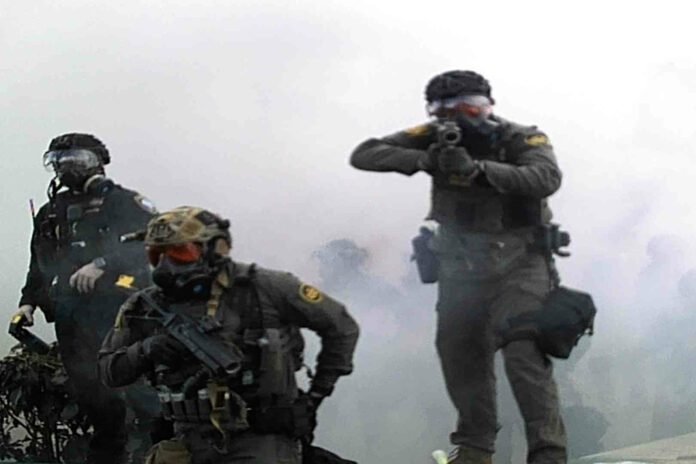
Many of the hurt kids were at home when tear gas drifted in from streets where federal agents had deployed the chemical agent against crowds of protesters. Other children were sitting in their parents’ cars when officers fired pepper spray through the driver’s side windows.
Virtually no research exists on the potential long-term effects on children, but the chemicals are undeniably dangerous. One mother near Chicago told ProPublica she’s repeatedly taken her 7-year-old daughter to urgent care due to her coughing and wheezing since tear gas seeped into their house last fall.
Referencing our reporting, three Democrats in the House Committee on Homeland Security also sent a letter to DHS Secretary Markwayne Mullin asking for the department’s training and policies for using chemical munitions when children are in the vicinity. The letter accused the department of “needlessly and callously” inflicting harm on children, and it requested details on whether DHS has studied the weapons’ “toxic effects on children.” The committee’s ranking member, Rep. Bennie Thompson, D-Miss., signed the letter, along with the ranking members of two subcommittees, Rep. J. Luis Correa from California and Rep. Shri Thanedar of Michigan.
Blumenthal sent a separate letter to Mullin requesting the disciplinary records of agents who used chemical munitions in the presence of children. One video disclosed in a lawsuit shows federal officers near Chicago hurling tear gas canisters at protesters without apparent provocation before an officer says, “Fuck yeah,” and shouts, “Woo!” This took place just a few blocks from where the 7-year-old lives. (It’s unclear if the officers were disciplined.)
“Video evidence demonstrates that chemical agents have been employed indiscriminately, even when children are present,” wrote Blumenthal, who sits on the Senate Committee on Homeland Security and Governmental Affairs and is the ranking member on the Permanent Subcommittee on Investigations.
The scope of the agents’ actions led some historians to compare current events with Southern law enforcement’s use of tear gas during the 1960s Civil Rights Movement. ProPublica interviewed one Civil Rights activist, Charles Mauldin, who was 17 years old when police tear gassed him and hundreds of others marching for voting rights in Selma, Alabama.
“Having people like ICE treat people the way we were treated 61 years ago, it’s horrible,” Mauldin told ProPublica.
A DHS spokesperson called Mauldin’s comparison “disgusting,” adding in a statement that “this type of garbage has led to our law enforcement officers experiencing coordinated campaigns of violence against them.”
The spokesperson didn’t address ProPublica requests for interviews with Mullin; Todd Lyons, the outgoing director of Immigration and Customs Enforcement; or David Venturella, the acting director of ICE.
“DHS does NOT target children,” the spokesperson wrote, before blaming parents for placing their children in risky situations. “It is reckless, unlawful, and extremely irresponsible for parents to interfere with law enforcement activities but especially when they are accompanied by children.”
ProPublica’s investigation found that some of the children most affected were innocent bystanders. In Portland, Oregon, federal agents routinely tear-gassed protesters who gathered outside an ICE processing center. For months starting last summer, the chemicals seeped into an apartment complex across the street, past closed windows and the towels that tenants shoved under their doors in a vain attempt to protect themselves. One 12-year-old developed hives and “chronic respiratory issues,” according to his mother’s court declaration. Two girls, ages 7 and 9, hid in a fort they built in their father’s closet. Another parent said she taught her 13-year-old son to wear a gas mask indoors.
Their situation was so extreme that the most approximate research ProPublica found was a 2018 survey of Palestinian families in the West Bank, where children complained of rashes and chronic tonsillitis after repeated exposure to tear gas deployed by Israeli security forces.
ProPublica contacted more than two dozen federal lawmakers seeking a response to our findings. None of the Republicans, including Speaker of the House Mike Johnson; Sen. Rand Paul, chair of the Senate Committee on Homeland Security and Governmental Affairs; and Rep. Andrew Garbarino, chair of the House Homeland Security Committee, responded to requests for comment.
Many of the Democrats who responded condemned DHS for its officers’ behavior and pointed to past unsuccessful efforts, such as holding hearings and sending dozens of oversight letters, to hold the department accountable for its actions.
ProPublica previously reported on a Democrat-led forum in March spotlighting children who have been harmed during immigration enforcement operations, including citizens who appear to have been wrongfully detained. In mid-May, Rep. Delia Ramirez of Illinois held a shadow hearing in which she cited ProPublica’s findings on children harmed by tear gas and pepper spray.
Rep. Glenn Ivey, a Maryland Democrat who attended the hearing, said in an interview that he has been pushing for fellow lawmakers to take up the George Floyd Justice in Policing Act, which would address many of the issues our investigation raised.
Various experts told ProPublica that federal legislation could help ensure law enforcement agencies across the country adopt additional restrictions on these weapons, particularly when children are at risk.
Last month, for instance, Sen. Tina Smith, a Democrat from Minnesota, introduced a bill that prohibits excessive use of force, including chemical munitions, in the presence of children. It has 17 co-sponsors, none Republican, and hasn’t been brought to a vote.
Read More
Blumenthal also called for fellow lawmakers to support a bill that would explicitly provide the public with the right to sue federal law enforcement officers for violating civil and constitutional rights.
On Monday afternoon, federal agents fired pepper spray outside an immigration detention center in Newark, hitting Sen. Andy Kim, a Democrat from New Jersey, according to the USA Today Network. Kim had visited the facility to support detainees who’d started a hunger strike to protest conditions inside. He told reporters that he was pepper-sprayed after trying to de-escalate tensions between immigration agents and protesters, and his throat still burned later that evening. It’s unclear if any children were affected by chemical munitions.
DHS said officers had responded to protesters obstructing law enforcement from leaving the ICE facility.
“No individuals were directly struck by pepper ball projectiles,” DHS wrote in a post on X. “Our law enforcement followed their training and used the minimum amount of force necessary to protect themselves, the public, and federal property.”
In response to ProPublica’s questions about the lawmakers’ calls for reform, a spokesperson for DHS said in a written statement that officers are trained to use “the minimum amount of force necessary to resolve dangerous situations.”
“DHS is authorized to do what is appropriate and necessary in each situation to diffuse violence against our officers in the most appropriate manner possible,” the statement said.
In his letter sent last week, Blumenthal gave the agency a deadline of June 1 to respond to his questions and requests for records.