28.6 C
London
Saturday, May 23, 2026
Home Blog

Review: The Mandalorian and Grogu is … fine

0
review:-the-mandalorian-and-grogu-is-…-fine
Review: The Mandalorian and Grogu is … fine

Hopes were arguably high for The Mandalorian and Grogu, director Jon Favreau’s big-screen offshoot of the popular Disney+ series The Mandalorian. After all, there hasn’t been a new film in the Star Wars franchise since 2019’s The Rise of Skywalker wrapped up the three trilogies that make up the so-called “Skywalker Saga.”

The new film is … fine. It’s an average Star Wars outing, and it will give families a solid Memorial Day Weekend entertainment option. It’s just not the spectacular home run that might have helped launch the flagging franchise into an exciting new era, and diehard Star Wars fans hoping for more are probably going to be disappointed.

(Some spoilers below but no major reveals.)

Grogu (fka “Baby Yoda”) won viewers’ hearts from the moment he first appeared onscreen in the first season of The Mandalorian, and the relationship between the little green creature and his father-figure bounty hunter, the titular Mandalorian, Din Djarin (Pedro Pascal), has only gotten stronger. With the 2023 Hollywood strikes delaying production on season 4 of the series, Favreau got the green light to make this spinoff film.

Mando and Grogu (as his apprentice) are hunting down the scattered remnants of Imperial warlords on behalf of the New Republic, taking orders from Sigourney Weaver’s Colonel Ward, a former pilot with the Rebel Alliance. These missions tend to get messy, with Mando being Mando. Ward really wants the warlords alive to get useful intelligence from them, but they understandably don’t like to come quietly, so sometimes, well, they die with their henchmen. Can’t be helped.

After Mando takes out his latest target, a disappointed Ward offers him a new mission: tracking down Rotta the Hutt (Jeremy Allen White), son of the late Jabba, on behalf of the Hutt Twins, who took over Jabba’s criminal enterprise. In turn, the twins will provide crucial information on the whereabouts of an elusive Empire warlord named Coin. Mando accepts, mostly because Ward offers him a newly refurbished Razor Crest-like ship, just like his old one that blew up at the end of S2.

A paint-by-numbers plot

Alien pilot disembarking from a spaceship

Zeb Orrelios (Steve Blum) is back and working with Mando.

tall woman in red fighter uniform standing next to a fighter spacecraft

Sigourney Weaver plays Colonel Ward, a former Rebel Alliance pilot.

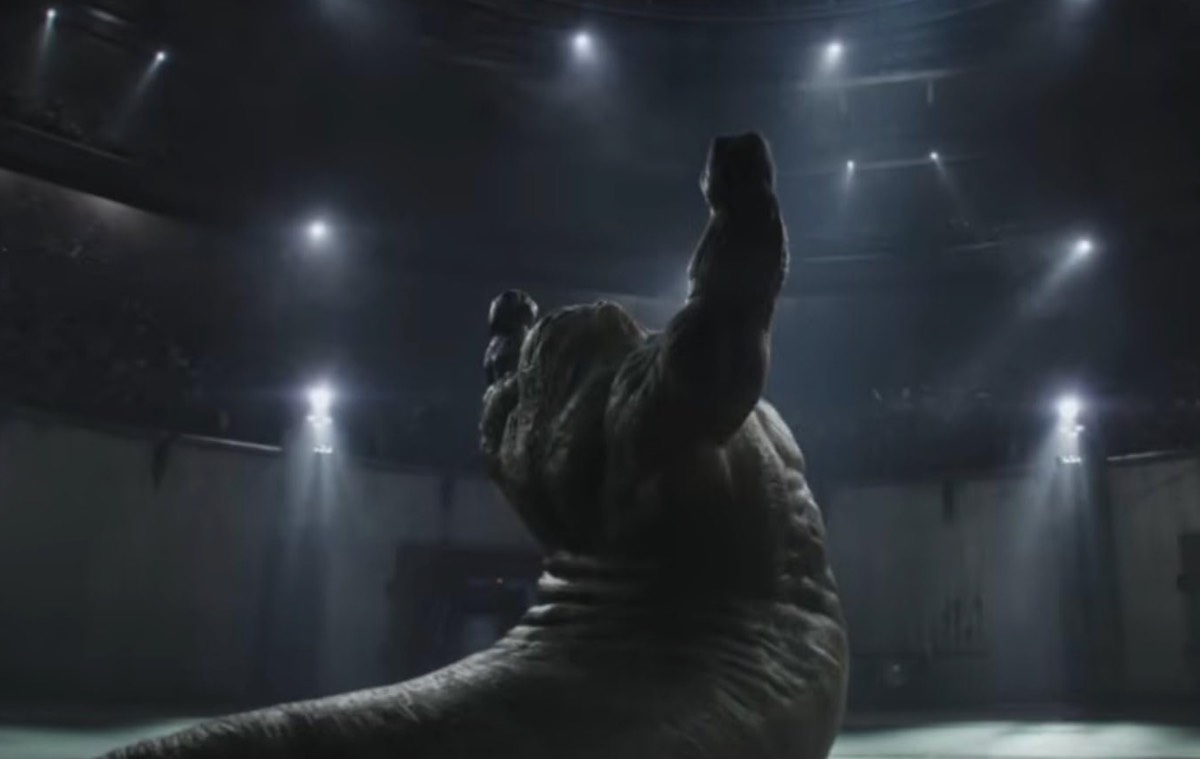
Rotta, it turns out, has become a fan-favorite gladiator on the planet Shakari and doesn’t want to go back home to Nal Hutta, as he’s convinced the Twins will have him killed to cement their power. Complications ensue, and things start to get messy. You don’t want to get on the wrong side of the Hutt Twins, as Mando soon learns to his peril.

The various trailers were thin on plot details, and it’s now clear why: There isn’t much of a plot. Favreau has said that he came up with a new story rather than the one he’d planned for The Mandalorian S4 because of the switch from a streaming series to a theatrical film, but things still feel pretty episodic. The film is largely comprised of a series of side missions in service to the larger arc. There’s some space travel, a fight scene with a cute Grogu moment, a victory, and another cute Grogu moment, then it’s on to the next mission. Rinse and repeat.

It’s all very well-trodden ground with familiar beats happening at the expected times; even the fight scenes are kinda meh. The dialogue in Star Wars films has always been notoriously wooden and uninspired, and The Mandalorian and Grogu is no exception. Good actors can salvage such lines, and Pascal is a very good actor, but it’s much harder when your character wears a helmet the entire time and can’t really emote.

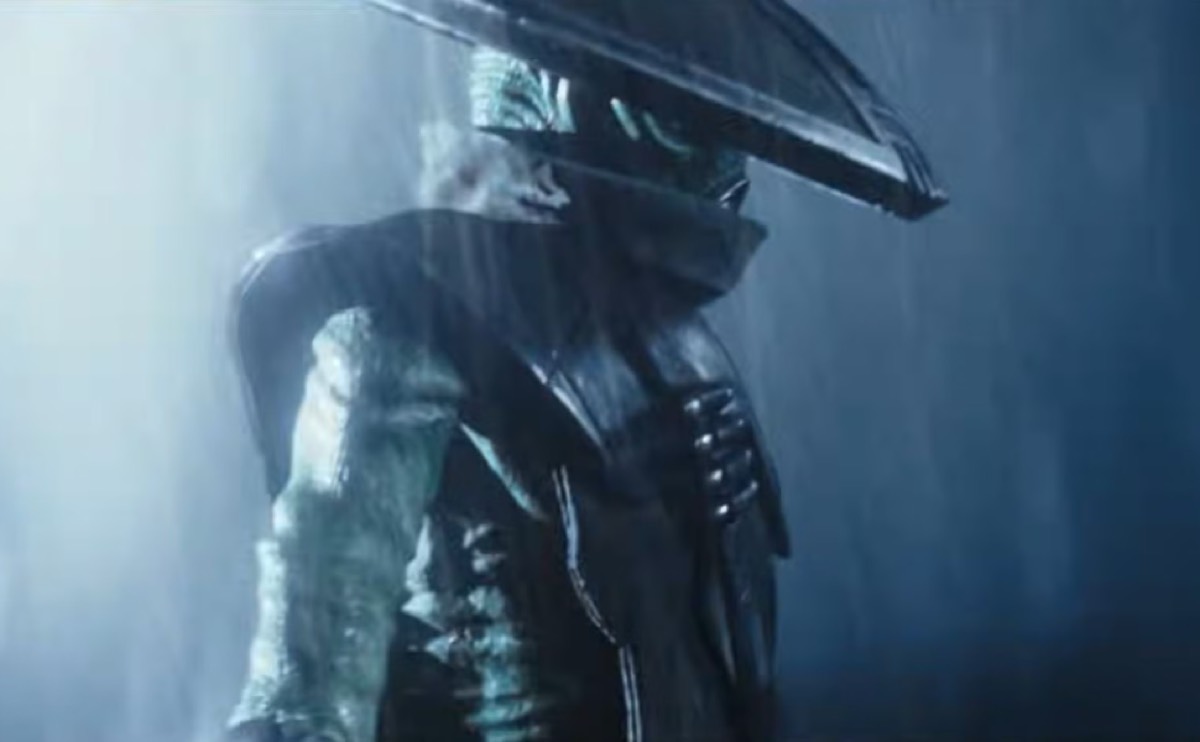
Embo the Kyuzo bounty hunter makes his live action debut.

Mando vs. Dragonsnake.

Otherwise, we’ve mostly got stunt-casting as fan service. We love Weaver, but she’s utterly wasted here. It’s nice to see Embo the bounty hunter from The Clone Wars in his live-action debut, and the return of Zeb Orrelios (voice by Steve Blum), plus the Hutt family characters from The Book of Boba Fett. But casual moviegoers will neither know their history nor care. Bonus: look closely in the climactic battle scene and you’ll spot several directors of Mandalorian episodes and Lucasfilm President and CCO Dave Filoni, the latter reprising his role as Trapper Wolf, a New Republic X-wing pilot.

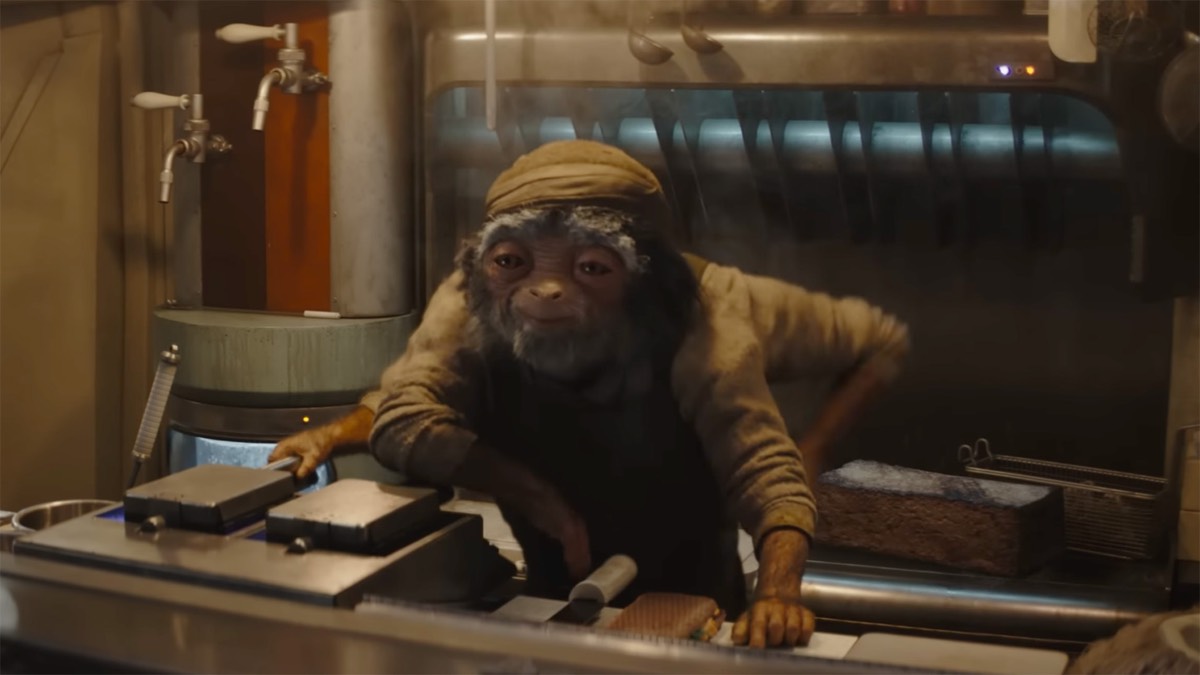
All that said, there’s no denying that Grogu’s antics are pretty cute, and the little green puppet pretty much carries the entire film. (Grogu partnering with the tiny Anzellans to rescue a kidnapped Mando is tailor-made for merchandising.) The strongest segment is the quietest: Mando collapses from a poisonous bite from a Dragonsnake in the Nal Hutta swamps, sacrificing himself so Grogu can escape. Grogu sticks around instead, building a shelter, finding food, and nursing his father figure back to health. It’s a key turning point in their relationship and the only genuine emotional beat in the entire film.

I don’t know if we’ll ever get that postponed fourth season of The Mandalorian. Box office projections indicate that The Mandalorian and Grogu is tracking even lower than 2018’s Solo, although things might pick up over the holiday weekend. If so, the character dynamics will likely change considerably. And hopefully the series can recover some of that Star Wars magic that is sadly so absent here.
Oil prices rise as investors doubt breakthrough in US-Iran peace talks

0
oil-prices-rise-as-investors-doubt-breakthrough-in-us-iran-peace-talks
Oil prices rise as investors doubt breakthrough in US-Iran peace talks


Oil prices climbed on Friday but were on track for a ‌weekly loss as investors doubted the prospects of a breakthrough in U.S.-Iran peace talks.

Brent crude futures rose $1.66, or 1.6%, to $104.24 a barrel by 0405 GMT, while U.S. West Texas Intermediate futures were up $1.11, or 1.2%, at $97.46.

On a weekly ​basis, Brent was 4.6% lower and WTI was down 7.6%, with prices fluctuating sharply ​as expectations for a peace deal shifted.

A senior Iranian source told Reuters ⁠gaps with the U.S. have narrowed and U.S. Secretary of State Marco Rubio spoke of “some good signs” in ​talks, but the countries are still divided on Tehran’s uranium stockpile and controls on the Strait of Hormuz.

“Oil prices ​would only trend lower when oil market fundamentals materially improve, which looks destined to stretch into 2027,” said David Oxley, chief commodities economist at Capital Economics.

Six weeks since a fragile ceasefire took effect, efforts to ​end the war have shown little progress, while elevated oil prices have fuelled concern ​over inflation and the outlook for global economy.

“WTI is likely to remain in a $90–$110 range next week, as it has ‌largely ⁠done since late March,” said Satoru Yoshida, a commodity analyst with Rakuten Securities.

BMI, a unit of Fitch Solutions, raised its average 2026 dated Brent price forecast to $90 from $81.50 to reflect the supply deficit, time required to repair damaged Middle East energy infrastructure, and the six-to-eight week ​post-conflict normalisation window.

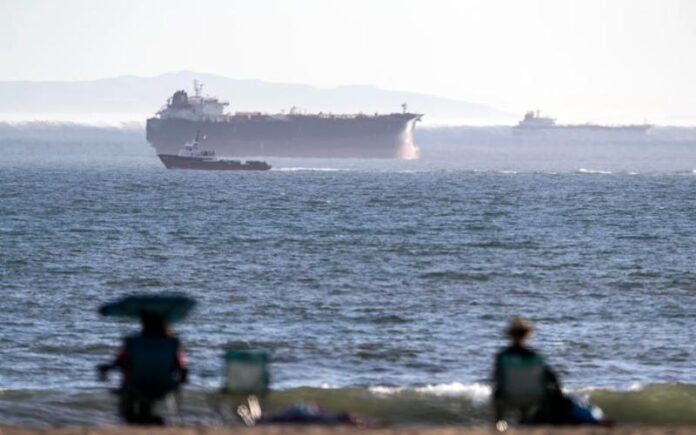
Around 20% ​of global energy ⁠supplies transited the Strait before the war, which has removed 14 million barrels per day of oil – or 14% of global supply – from the ​market, including exports from Saudi Arabia, Iraq, the United Arab Emirates ​and Kuwait.

Full ⁠oil flows through the Strait will not return before the first or second quarter of 2027, even if the conflict ended now, the head of the UAE’s state oil firm ADNOC said.

Seven leading ⁠OPEC+ ​oil-producing countries will likely agree to a modest hike to ​July output when they meet on June 7, four sources said, though delivery for several remains disrupted by the Iran ​war.

Source:  Reuters

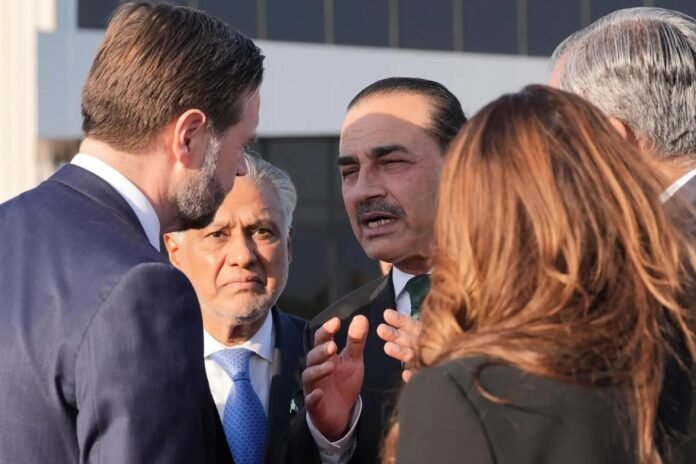
Pakistan’s moment in the Sun: Can it really end the Iran war?

0
pakistan’s-moment-in-the-sun:-can-it-really-end-the-iran-war?
Pakistan’s moment in the Sun: Can it really end the Iran war?

In the gilded conference rooms of Islamabad, where Field Marshal Asim Munir has lately played host to American envoys and Iranian diplomats alike, one can almost hear the echoes of an older diplomatic theater — Oslo, Camp David, even the Geneva of 1985. The casting is unfamiliar but the script is the same: a junior power, suddenly indispensable, shuttling between two adversaries who cannot yet bring themselves to speak directly.

The proposition that Washington’s commentariat is now being asked to swallow whole is that Pakistan — that perennially fragile, perpetually broke nuclear state on the Indus — is about to deliver what five decades of American statecraft could not.

Color me unconvinced. Not because Pakistan has done nothing — it has done a great deal, more than its detractors in New Delhi care to admit — but because the very things that make Islamabad useful as a postman also limit what it can deliver as a peacemaker.

Consider first what Pakistan actually brings to the table, since the realist tradition demands we begin with capabilities rather than aspirations.

Pakistan shares a 900-kilometer border with Iran and has spent decades cultivating the awkward, transactional relationship that geography imposes on neighbors who would rather not be. It maintains warm-enough ties with Tehran, whose forbearance keeps Balochistan from becoming entirely unmanageable.

It maintains close ties with Riyadh, whose checkbook keeps Pakistan’s lights on.

Most importantly, in the era of Donald Trump’s second presidency, Pakistan has cultivated something more valuable than institutional partnerships: a personal rapport between Munir and the American president, who has reportedly taken to calling the field marshal his “favorite fighter.” In a White House where personality trumps process — pun intended — that matters.

It is also true, and worth conceding to Islamabad’s defenders, that Pakistan has already done something tangible. The April 8 ceasefire that paused the joint US-Israeli campaign against Iran, following the strikes that killed Ayatollah Khamenei, did not negotiate itself.

Pakistani officials carried the fifteen-point American proposal to Tehran in March. They hosted the Islamabad Talks in April. They are now, as of this week, shuttling Iranian counter-proposals back to Washington while Trump publicly warns that the talks are on “the borderline” between a deal and renewed strikes.

This is not nothing. It is, in fact, considerably more than the European Union, the United Nations, or the Gulf states have managed.

But here we must distinguish — as Hans Morgenthau insisted we always must — between the mediator who facilitates and the mediator who delivers.

Oslo did not succeed because the Norwegians were clever; it succeeded, for as long as it did, because Yitzhak Rabin and Yasser Arafat, each for his own structural reasons, had concluded that the existing arrangement had become more costly than compromise.

Egypt and Israel made peace at Camp David because Anwar Sadat had decided, after October 1973, that he could not afford another war and Menachem Begin had decided that Sinai was negotiable in exchange for permanence elsewhere. Jimmy Carter and his team mattered, but they were the catalysts, not the cause.

What, then, are the structural conditions on which Pakistan’s mediation must rest? Here the picture darkens considerably.

The American proposal — an end to Iran’s nuclear program, limits on its missile arsenal, the reopening of Hormuz, restrictions on its regional proxies, conditional sanctions relief — is essentially a demand for Iran’s strategic surrender, dressed in the language of negotiation.

The Islamic Republic, even bloodied and leaderless, has been here before; it is the same package Washington has placed on the table since the Bush administration, with cosmetic adjustments. That Pakistan is the courier does not change what is in the envelope.

Meanwhile, Iran has used the ceasefire to do what wounded states always do when given a pause: It has, according to American military assessments, restored access to thirty of its thirty-three missile sites along the Strait of Hormuz and rebuilt its missile stockpile to roughly seventy percent of pre-war levels.

Tehran’s hardliners — and after Khamenei’s killing, the moderates are a vanishing species — are not preparing for capitulation. They are preparing for the next round. Pakistan cannot mediate that away.

Nor should we forget Islamabad’s own predicament, which the city’s mediators rarely advertise to their American interlocutors.

Pakistan is simultaneously fighting a war on its Afghan frontier, managing an energy crisis worsened by the Hormuz disruption and contending with a public that does not particularly want its government to do Washington’s bidding against a Muslim neighbor. The Munir government’s room for maneuver is narrower than the Atlantic Council’s panel discussions suggest.

The honest assessment, I think, is this:

Pakistan is performing the role of indispensable postman with skill and, by the standards of South Asian diplomacy, remarkable discretion. It deserves credit for keeping channels open at a moment when the alternative is American B-2s returning to Iranian skies.

But the structural distance between Washington’s maximalist demands and Tehran’s diminished but still defiant red lines is not a distance that any mediator, however gifted, can talk away. Munir is not Henry Kissinger, and even Kissinger — let us recall — needed Mao and Zhou Enlai to want the opening before he could engineer it.

If the Iran War ends in 2026, it will end because Trump, facing midterm elections and a domestic electorate furious about gasoline prices, decides he wants a “deal” he can sell as a win, and because Tehran’s new leadership concludes that survival is worth more than enrichment percentages.

Pakistan will be the venue, perhaps the photographer of the handshake. It will not be the reason.

That is no small thing. But it is not what the headlines, in their excitement, are promising.

This article was originally published on Leon Hadar’s Global Zeitgeist and is republished with kind permission. Become a subscriber here.

Meghan Markle Thinks She’s More Powerful Without Prince Harry

0
meghan-markle-thinks-she’s-more-powerful-without-prince-harry
Meghan Markle Thinks She’s More Powerful Without Prince Harry


Meghan Markle is reportedly ready to step out of Prince Harry’s shadow — and she may believe she is the bigger star of the Sussex brand.

According to a royal insider, the Duchess of Sussex is convinced she can make more money and gain more power on her own than she can alongside her husband.

The claim comes after Meghan, 44, made a solo trip to Geneva, Switzerland, for a high-profile speech that did not exactly become the packed global moment some may have expected.

The former actress spoke on May 17 about the dangers children face online and the devastating toll of social media abuse. Meghan appeared in a sleek black Giorgio Armani pantsuit reportedly worth $5,300, with her hair pulled tightly back as she stood before lightboxes showing the faces of 50 children who died by suicide after online bullying or harm.

It was clearly designed to be a serious, emotional, headline-making appearance.

But the crowd reportedly fell flat.

Despite barricades being set up as if officials were expecting a much larger audience, fewer than 100 people reportedly showed up, including invited guests and curious passersby.

Now, insiders claim Meghan is still determined to push ahead as a solo powerhouse.

“Their brand as a couple has not worked,” royal commentator Rob Shuter said during a May 20 appearance on Maureen Callahan’s The Nerve podcast. “And Meghan is now getting ready to really branch off, and she sees this moment as an opportunity to step on the world stage without Harry.”

Shuter claimed Meghan now believes she has more earning power without the Duke of Sussex attached to every project.

“She now believes that she is more powerful,” he said, citing sources. “She’s gonna make more money by stepping forward by herself, not with him.”

The comment is especially explosive because Harry, 41, was once viewed as the royal name that gave the couple their biggest draw after they walked away from palace life in 2020.

But years later, the Sussex brand has taken plenty of hits.

Their expensive Hollywood deals brought massive attention at first, but not every project turned into the kind of long-term success the couple likely hoped for. Meghan’s Spotify podcast Archetypes ended after one season, while her Netflix lifestyle series With Love, Meghan reportedly failed to become the breakout reinvention she needed.

Her As Ever lifestyle brand has also faced questions about whether it can become a serious business or another celebrity vanity project struggling to find its footing.

According to the insider, Meghan may now see Harry as part of the problem.

“Even she now acknowledges that Harry is a problem,” Shuter claimed. “She’s a problem, too. She hasn’t quite got to that point, but she knows there’s a problem with Harry.”

That alleged realization may explain why Meghan appears to be trying to create more distance between herself and Harry’s never-ending royal battles.

Ever since the couple left the monarchy and moved to California, Harry’s strained relationship with King Charles and Prince William has followed them everywhere. From interviews to memoirs to lawsuits and family snubs, the drama has often overshadowed Meghan’s attempts to build her own identity.

Shuter admitted that Meghan may have a point there.

“The one thing I will say in her defense, it’s tricky because I don’t often defend Meghan Markle, is that whenever she is with Harry, all the royal drama comes up,” he said.

He added that every time Meghan is seen with Harry, the focus shifts back to his father, his brother, and his bitter break from the royal family.

That makes it difficult for Meghan to sell herself as a polished lifestyle mogul, humanitarian, or businesswoman without the Sussex soap opera stealing the spotlight.

Still, the big question remains: can Meghan Markle actually become a bigger brand without Prince Harry?

Her Geneva speech may have been meant to show the world she could stand alone. Instead, the small turnout gave critics another opening to say the public is not nearly as interested as Meghan believes.

For now, the Duchess of Sussex appears ready to keep trying.

But if she truly thinks she is more powerful than Harry, her next solo move may need to prove it.

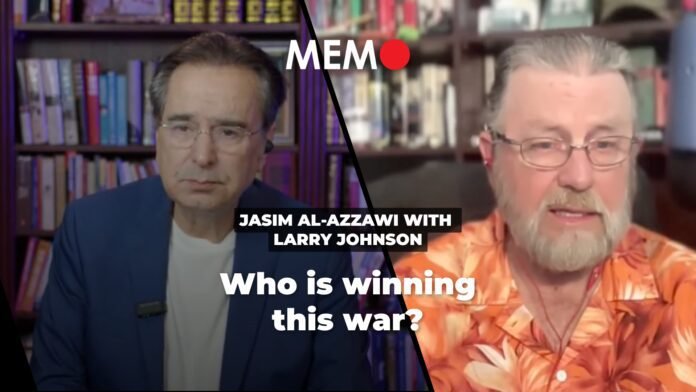
Podcast by Jasim Al-Azzawi with CIA analyst Larry Johnson: Who is winning this war?

0
podcast-by-jasim-al-azzawi-with-cia-analyst-larry-johnson:-who-is-winning-this-war?
Podcast by Jasim Al-Azzawi with CIA analyst Larry Johnson: Who is winning this war?

Middle East Monitor

Creating new perspectives since 2009

  • English Edition expand_more

    • English Edition
    • Portuguese Edition
  • Free Subscription

  • search

    Exact matches only

    Search in title

    Search in content

Middle East Monitor

  • Free Subscription

  • search

    Exact matches only

    Search in title

    Search in content

    • Loading…

  • Asia & Americas,
  • Iran,
  • Israel,
  • Middle East,
  • Podcast by Jasim Al-Azzawi,
  • US,
  • Videos & Photo Stories,

Larry Johnson is a former intelligence analyst at the CIA who also worked at the US State Department’s Office of Counterterrorism.

Podcast by Jasim Al-Azzawi with Avi Shlaim: The journey of a moral historian from Baghdad to Israel to Oxford

0 Comments

Latest news

See all

  • Podcast by Jasim Al-Azzawi with CIA analyst Larry Johnson: Who is winning this war?

    • Muhammad Hussein

  • Has the Flotilla finally exposed the West’s moral double standard?

    • Muhammad Hussein

  • Iran says 25 ships passed through Strait of Hormuz in past 24 hours

    • Muhammad Hussein

  • AOHR UK to EU and UK Gov’t: Hold  Israel accountable for its maritime piracy

    • Muhammad Hussein

  • Israel pounds Gaza, Lebanon in daily breaches of ceasefires

    • Muhammad Hussein

  • Subscribe to our newsletter

Islam Race and Rebellion in the Americas: Transatlantic Echoes of the West African Jihads

Engaging the World: The Making of Hamas’s Foreign Policy

Related Posts

Trending

  • Today
  • This week
  • Article Indonesia’s foreign minister didn’t defend the flotilla detainees. He defended Israel’s language
  • News Pakistan army chief heads to Tehran to discuss US-Iran talks
  • News ‘First apartheid, then transfer’: Israeli columnist warns of West Bank expulsion plan
  • Videos & Photo Stories Podcast by Jasim Al-Azzawi with Col. Wilkerson: Is Pax American in decline?
  • News Situation worsening in West Bank, warn Italy, UK, France, Germany
  • News Jewish groups launch new diaspora movement rejecting Israel’s ethno-nationalism
  • News South Korea president urges review of ICC warrant for Netanyahu: Report
  • News Despite blackout, satellite images reveal damage to Israeli military bases during Iran war
  • Article Saudi Arabia is pulling Europe toward a “Gulf Helsinki” deal with Iran — because Washington failed
  • News US outlines 5 conditions for Iran deal: Report

China’s shark finning could lead to US seafood sanctions

0
china’s-shark-finning-could-lead-to-us-seafood-sanctions
China’s shark finning could lead to US seafood sanctions

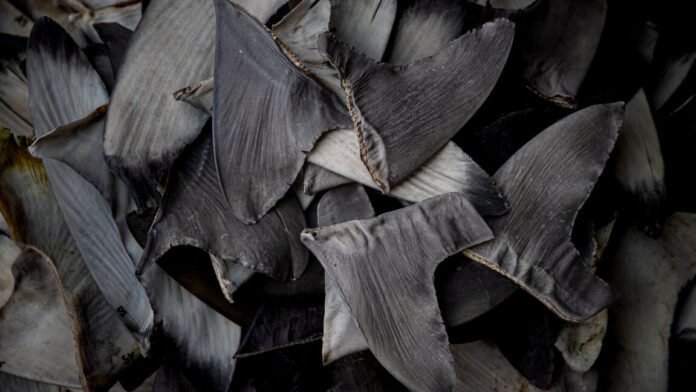
For migrant workers trapped onboard Chinese distant water fishing fleets, cutting the fins off sharks as they writhe violently on rusted decks in the Indian Ocean isn’t accidental. It’s an intentional and lucrative act that marks the start of a bloody half-a-billion-dollar offshore supply chain, tacitly supported by Beijing yet covertly concealed from port inspectors globally.

The Center for Biological Diversity, a nonprofit focused on the protection of endangered species, filed a formal petition this month requesting the U.S. government potentially sanction China for failing to meet American shark conservation standards. Shark populations have declined by more than 70 percent since 1970, with more than one-third of all shark and ray species now threatened with extinction. Yet each year, Chinese-flagged vessels catch, brutally fin, and discard thousands.

Should the National Marine Fisheries Service identify China as having violated the US Moratorium Protection Act, then President Trump could be expected to ban the import of all $1.5 billion of Chinese seafood.

“Losing sharks wouldn’t just be an ecological disaster; it would be a profound moral failure,” Alex Olivera, a senior scientist at the Center for Biological Diversity, said in an email. “Sharks have survived for hundreds of millions of years, and it would be a tragedy if they disappeared in a few decades because governments failed to enforce basic conservation rules.”

Sharks are vulnerable to overexploitation because they grow slowly, mature late, and have few offspring. Each year, however, an estimated 80 million are caught and killed either intentionally or as bycatch.

Finning—which has been outlawed in the US since 2000—sees sharks dumped back in the ocean without their fins, “leading to a slow and agonizing death,” according to the petition. While botched sharks sink slowly to their deaths, the rate of shark finning has increased in recent decades. Demand is largely driven by a growing demand for shark fin soup and traditional medicinal cures in East and Southeast Asia.

Official Chinese data shows that in 2023, more than 10,000 blue sharks and nearly 1,700 shortfin mako sharks were discarded by crews in the western and central Pacific region alone.

While the US and over 90 other jurisdictions require fishers to land whole sharks with their fins naturally attached—a standard widely recognized as the only way to prevent finning—China does not. Although the nation has technically banned the practice, it still allows many of its fisheries to remove fins so long as they do not exceed a certain percentage—usually 5 percent—of the shark’s total bodyweight upon landing.

Conservationists highlight that these ratio-based regulations are ineffective, ignore biological differences between species, and are difficult to enforce accurately.

“Once the fins are separated from the bodies, inspectors have a nightmare of a time figuring out which fin belongs to which shark, whether protected species are mixed in, or if bodies were just dumped overboard,” Olivera said. “It turns real enforcement into a math game rather than a secure chain of custody.”

The petition argues that without a “fins naturally attached” landing policy, the Chinese fleet—the largest in the world—fails to meet America’s conservation standards, and therefore fails to meet the requirements of the Moratorium Protection Act.

When asked for comment, a spokesperson for the Chinese Embassy in Washington told Inside Climate News that “China is deeply committed to science-based conservation and sustainable use of international fisheries resources.” The spokesperson said China is following international law, rigorous vessel monitoring and membership requirements of regional fisheries management organizations.

However, the spokesperson said the government was “not familiar with the specific situation” regarding the Center for Biological Diversity’s petition, and did not reference sharks, finning or the threat of seafood sanctions.

Heidy Martínez, a shark scientist and science communicator, said that shark finning “really shows how much we view these ancient, majestic animals as a commodity, as animals that are simply there to benefit us.

“It highlights many of the cruel, unsustainable and wasteful practices within the fishing industry,” she said.

While shark finning often receives the greatest attention for its shock factor, it’s important to note that the biggest threats sharks face are from overfishing and bycatch, Martínez said. One hundred percent of shark species are impacted by overfishing and for 67 percent of shark and ray species, overfishing is the only recorded threat, according to the Shark Trust.

Bycatch refers to fish and other marine animals accidentally ensnared by fishermen using huge nets or long lines baited with thousands of hooks.

Interviews by the Environmental Justice Foundation (EJF) in 2024 and 2026, however, exposed the widespread and devastating nature of China’s shark finning industry. Among crew working on board Chinese distant-water vessels in the Southwest Indian Ocean, 80 percent of those interviewed reported engaging in shark finning. Sixty percent of crew onboard Chinese squid jiggers in the Southeast Pacific Ocean said they witnessed sharks returned to the ocean without a key means of their survival.

Crews identified blue sharks, tiger sharks, pelagic threshers, and at least half a dozen other intentionally targeted species. “When sharks got entangled, they were lifted, and the fins were cut off,” said one Indonesian fisher working on a Chinese squid vessel in July 2022. “Most of [the Chinese] swallowed the bone marrow right away, while the fins were sundried.”

Another crew member described the act of throwing back blood-strewn but alive sharks as “sadistic,” while others spoke of the cat-and-mouse game of avoiding international authorities with special compartments or hidden fin freezers.

The human toll is similarly harrowing. Chinese distant water vessels that perpetrate finning are often rife with human rights abuses, according to the EJF. Forced labor, crew beatings, squalid living conditions and fatal accidents are not uncommon. Trapped at sea for months or years, crew members are forced to illegally fin sharks, harpoon seals to sell fur and fangs on the black market or catch false killer whales to be sold as souvenirs.

Addressing allegations of worker abuse, the Chinese Embassy maintained that Beijing “attaches great importance to protecting the lawful rights and interests of workers and always asks Chinese companies to abide by laws and regulations.”

Martínez said she wished the general public better understood these prehistoric animals. “Sharks fall under the class of fish, and because of this, they communicate their experience to us differently than marine mammals.” The human-like eyes and behavior of dolphins and sea lions make it easier for people to project themselves onto them, but it’s harder for people to naturally relate to sharks, Martínez said.

Harvested fins are frequently shipped to Hong Kong, a special administrative region of China that serves as the world’s largest shark fin trading hub. DNA analysis of fins imported into Hong Kong between 2014 and 2021 found the presence of at least four species on the Convention on International Trade of Endangered Species list: scalloped hammerhead, smooth hammerhead, great hammerhead, and oceanic whitetip sharks.

China’s lack of a ban on the possession, transport, and sale of shark fin products is a further violation of the US Moratorium Protection Act, according to the Center for Biological Diversity. Although there are restrictions on serving shark-fin dishes at official Chinese government events, this does not constitute a nationwide ban, the report concluded.

“If China refuses to adopt comparable protections, then the US should use the tools Congress provided, including import restrictions,” said Olivera, highlighting that the ideal outcome is for China to adopt shark conservation measures comparable to US law. “The point of the petition is to make shark conservation standards real, not optional.”

“The level of demand we place on the ocean simply cannot continue,” said Martínez, whose first live encounter was with a Great white shark in South Africa. “Shark finning is part of that larger story, a reflection of just how deeply we have exploited our oceans.”

This article originally appeared on Inside Climate News, a nonprofit, non-partisan news organization that covers climate, energy, and the environment. Sign up for their newsletter here.

Aloo Keema Ground Meat with Potatoes

0
aloo-keema-ground-meat-with-potatoes
Aloo Keema Ground Meat with Potatoes

There’s nothing quite like a warm, comforting bowl of Aloo Keema Ground Meat with Potatoes after a long day. This classic dish combines perfectly seasoned ground meat with tender potatoes simmered in rich spices, creating a hearty meal that feels both cozy and satisfying. Whether you’re preparing dinner for your family or serving guests, this recipe always delivers big flavor with surprisingly little effort.

One of the best things about Aloo Keema is how simple and versatile it is. Everything cooks together in one pan, allowing the spices to blend beautifully while keeping cleanup easy. The potatoes soak up all the delicious flavors from the meat and aromatic seasonings, making every bite rich, savory, and incredibly comforting.

This recipe is ideal for busy weeknights, meal prep, or even special family gatherings. Serve it with fluffy rice, warm naan, or chapati for a complete meal everyone will love.


Why You’ll Love This Aloo Keema Recipe

  • Easy one-pan meal with minimal cleanup
  • Ready in under an hour
  • Rich, comforting, and packed with flavor
  • Budget-friendly and filling
  • Perfect for meal prep and leftovers
  • Easy to customize with vegetables or different proteins
  • Naturally gluten-free

Ingredients

For the Aloo Keema

  • 500g ground beef or lamb
  • 2 medium potatoes, peeled and diced
  • 1 large onion, finely chopped
  • 2 tomatoes, chopped
  • 3–4 green chilies, sliced
  • 1 tablespoon ginger-garlic paste
  • 1/2 teaspoon turmeric powder
  • 1 teaspoon red chili powder
  • 1 teaspoon cumin powder
  • 1 teaspoon coriander powder
  • Salt, to taste
  • 1/2 teaspoon garam masala
  • 1/4 cup oil
  • Fresh coriander (cilantro), chopped for garnish

Step 1: Sauté the Onions

Heat the oil in a large skillet or deep pan over medium heat. Add the chopped onions and cook until they turn golden brown and slightly caramelized. This step builds the flavorful base of the curry.

Step 2: Add Ginger and Garlic

Stir in the ginger-garlic paste and cook for about 2 minutes until fragrant. Be careful not to let it burn.

Step 3: Cook the Tomatoes

Add the chopped tomatoes and green chilies. Cook until the tomatoes soften completely and the oil begins separating from the mixture. This creates a rich curry base full of flavor.

Step 4: Brown the Meat

Add the ground beef or lamb to the pan. Break it apart with a spoon and cook until fully browned and no pink remains.

Step 5: Add the Spices

Mix in the turmeric, red chili powder, cumin powder, coriander powder, and salt. Stir well and cook for 5–7 minutes so the spices can toast and deepen in flavor.

Step 6: Cook the Potatoes

Add the diced potatoes and pour in about 1 cup of water. Stir everything together and bring the mixture to a boil.

Reduce the heat to low, cover the pan, and let it simmer for about 25 minutes, or until the potatoes are soft and tender.

Step 7: Finish and Garnish

Sprinkle the garam masala over the curry and garnish generously with fresh chopped coriander.

Serve hot with naan, chapati, or steamed basmati rice.


Tips for the Best Aloo Keema

  • Use lamb for a richer, more traditional flavor.
  • Dice potatoes evenly so they cook at the same rate.
  • Let the onions caramelize properly for deeper flavor.
  • Add peas for extra texture and sweetness.
  • If the curry becomes too thick, add a splash of water while simmering.
  • Leftovers taste even better the next day as the flavors continue developing.

Variations

Make it Spicier

Add extra green chilies or a pinch of cayenne pepper for more heat.

Add Vegetables

Peas, carrots, spinach, or bell peppers work beautifully in this recipe.

Use a Different Protein

Ground chicken or turkey can be substituted for a lighter version.

Vegetarian Option

Replace the meat with lentils, chickpeas, or plant-based crumbles.


Serving Suggestions

Aloo Keema pairs wonderfully with:

  • Warm naan bread
  • Chapati or roti
  • Steamed basmati rice
  • Cucumber yogurt salad
  • Pickles or chutney
  • Fresh lime wedges

Frequently Asked Questions

Can I make Aloo Keema ahead of time?

Yes! This dish stores very well and the flavors become even richer after resting overnight in the refrigerator.

How do I store leftovers?

Store leftovers in an airtight container in the fridge for up to 3 days.

Can I freeze Aloo Keema?

Absolutely. Freeze in portions for up to 2 months. Thaw overnight in the refrigerator before reheating.

Is this recipe gluten-free?

Yes, Aloo Keema is naturally gluten-free. Just make sure your spice blends are certified gluten-free if needed.

What potatoes work best?

Yukon Gold or russet potatoes work perfectly because they become soft while still holding their shape.


Final Thoughts

Aloo Keema Ground Meat with Potatoes is the ultimate comfort food — warm, flavorful, filling, and incredibly satisfying. The combination of tender potatoes, savory meat, and aromatic spices creates a meal that feels homemade in the best possible way.

Whether you’re cooking for a busy weeknight dinner or preparing a cozy family meal, this recipe is one you’ll come back to again and again. Simple ingredients, bold flavor, and easy preparation make it a true kitchen favorite.

New Jersey Launches NJ BASE Innovation Center With SOSA To Attract Global Tech Firms

0
new-jersey-launches-nj-base-innovation-center-with-sosa-to-attract-global-tech-firms
New Jersey Launches NJ BASE Innovation Center With SOSA To Attract Global Tech Firms


Global innovation company SOSA and the New Jersey Economic Development Authority launched a new innovation center in the state to attract international technology companies, connect them with major corporations in New Jersey, and increase foreign direct investment in the region.

The initiative, called NJ BASE—New Jersey Business Acceleration and Soft-Landing Ecosystem—was described by the organizations as the first-of-its-kind innovation center in New Jersey. The center is designed to help international startups and businesses expand into the US market in sectors including artificial intelligence, cybersecurity, fintech, life sciences, and advanced manufacturing.

Uzi Scheffer, CEO of SOSA. (Courtesy of NJEDA)

In its initial phase, the center is expected to host about 20 international companies in a six-month business immersion program. Participants will receive fully subsidized workspace and introductions to leading New Jersey corporations as part of an effort to create commercial partnerships and support long-term business expansion in the state.

The facility, located minutes from downtown Manhattan, features coworking spaces, private offices, and conference and professional event spaces. Organizers said the center will host activities, including demo days, investor forums, and expert panels intended to connect international companies with public and private-sector stakeholders in New Jersey.

SOSA said it specializes in designing, establishing, and operating innovation centers worldwide and works through a global network of startups, corporations, and industry leaders to support economic growth and international business development.

Uzi Scheffer and Andrew Gross at the ribbon-cutting ceremony. (Courtesy of NJEDA)

“This new center represents a commitment to entrepreneurs coming here, that they are entering a system that has already done the groundwork and identified where the real opportunities lie, Uzi Scheffer, CEO of SOSA, said.

“The center will connect global startups with validated needs from New Jersey’s corporate ecosystem, with the goal of generating real business outcomes and establishing a lasting presence in the state. I would like to thank NJEDA for their trust and close partnership,” he added.

Even Weiss, CEO of NJEDA, said, “We are excited to welcome international companies to the Garden State and support their long-term growth in New Jersey.”

He added, “NJ BASE will provide international entrepreneurs with the resources, partnerships, and support they need to scale their companies, foster collaboration, and contribute to a stronger and more dynamic innovation economy across the state.”

Alberta to hold referendum on whether to remain in Canada

0
alberta-to-hold-referendum-on-whether-to-remain-in-canada
Alberta to hold referendum on whether to remain in Canada


Alberta will hold a referendum on whether the province should remain in Canada or move ahead with a second binding vote on separation, marking the first significant test of the country’s unity in decades.

Thursday’s announcement by Premier Danielle Smith comes after a citizen-led petition calling for separation gathered more than 300,000 signatures early this year and a separate petition advocating that Alberta stay gathered more than 400,000.

A restive independence movement has been growing in the oil-rich province, built on a long-held sense that Alberta is overlooked by decision-makers in Ottawa.

Still, opinion polls suggest that the majority of Albertans would vote against separating.

The provincial referendum has been scheduled for 19 October, the premier said.

Smith, in a televised address, said the question being put to Albertans this coming autumn will be: “Should Alberta remain a province of Canada or should the Government of Alberta commence the legal process required under the Canadian Constitution to hold a binding provincial referendum on whether or not Alberta should separate from Canada?”

The premier said she herself will vote in favour of Alberta remaining a part of Canada.

“That is how I would vote on separation in a provincial referendum,” she said, adding that “it is also the position of my government and my caucus.”

However, she said she is “deeply troubled” by a court decision in which an Alberta judge tossed out a petition calling for a referendum on separation after indigenous First Nations groups argued that they were not properly consulted, which infringed on their rights.

That halted the verification of the petition signatures, leaving the potential for a referendum in limbo.

“As Premier, I will not have a legal mistake by a single judge silence the voices of hundreds of thousands of Albertans,” Smith said on Thursday. “Alberta’s future will be decided by Albertans, not the courts.”

She added: “Kicking the can down the road only prolongs a very emotional and important debate, and muzzling the voices of hundreds of thousands of Albertans wanting to be heard is unjustifiable in a free and democratic society.”

Smith has faced months of pressure from separatist Albertans to put their question on the ballot.

Jeffrey Rath, a lawyer advocating for separation, wrote on social media on Thursday that Smith dealt a referendum question “from the bottom of the deck”.

He added that the premier “just lost her base”.

Canada’s unity has been under strain before.

Quebec has voted twice against independence, the last time in 1995 that ended with a rasor-thin 50.58% to 49.22% “no” vote.

The country set out rules for separation following those battles. Even if Alberta’s “leave” side proves successful in October, a long and uncertain path lies ahead.

In early May, Prime Minister Mark Carney said any attempt for the province to separate must follow the rules set out by the Clarity Act – the 26-year-old law put in place in the aftermath of the 1995 Quebec referendum.

A possible second binding Alberta independence referendum would have to follow ground rules laid out in the Act, including that a “clear majority” of voters must be in favour, that the language of the independence referendum question be clear, with oversight from the federal House of Commons.

If those conditions are met, Alberta would enter into difficult and likely lengthy separation negotiations with the federal government on the terms of the divorce.

Anger with Ottawa has long been longstanding in the western province of four million people, in particular over development of its natural resources, with some Albertans believing that the federal government has stood in the way of the province’s oil and gas industry in favour of pro-climate legislation.

There is also a long held belief that the province, with its vast resource wealth, also contributes more to the country than it receives.

Previously on the political fringes, the possibility of a unity crisis has become increasingly likely in the last year.

While the separatist movement doesn’t have one unified view, most want to see, at a minimum, more autonomy over the province’s resource wealth and political priorities.

Smith acknowledged some of those concerns on Thursday, arguing that the federal government has tried to “move towards a more centralised American-style system” and is infringing on provincial jurisdiction.

“I categorically reject Ottawa’s attempts to do so, and call on all provincial leaders and MPs to undo the extensive damage that centralisation of power in Ottawa has done to our country economically and with respect to national unity,” Smith said.

Carney has worked with Smith to address some of her concerns, including moving towards building long sought after pipeline to the Pacific coast.

The two leaders announced a climate and energy deal earlier this month that could see construction on an oil pipeline begin as early as next year.

Via BBC

Two space shuttle-era spacewalkers enter Astronaut Hall of Fame

0
two-space-shuttle-era-spacewalkers-enter-astronaut-hall-of-fame
Two space shuttle-era spacewalkers enter Astronaut Hall of Fame

Tom Akers and Joe Tanner are finally in the same class.

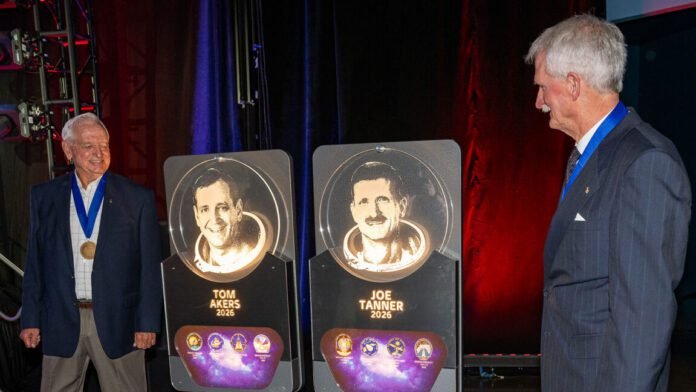
The two veteran space shuttle crew members were inducted into the US Astronaut Hall of Fame together on May 16. They could also have been in the same NASA astronaut selection group, too, had history played out a little differently.

In 1984, Tanner reported to the Johnson Space Center (JSC) to fly as an instructor pilot and then applied for the next class of astronaut candidates.

“Tom came in with the class of 1987, which, interestingly enough, I interviewed for. He made it, and I didn’t,” said Tanner.

“And I’ve been leading the way ever since,” said Akers, interrupting Tanner while both laughed in a joint interview with collectSPACE.com. “I have never understood why it took NASA so long to pick him.” (Tanner became an astronaut in 1992.)

Twenty men and women pose together as members of the same Hall of Fame.

US Astronaut Hall of Fame class of 2026 members Tom Akers and Joe Tanner (at center) are surrounded by 18 past honorees at the Kennedy Space Center Visitor Complex in Florida on Saturday, May 16, 2026.

US Astronaut Hall of Fame class of 2026 members Tom Akers and Joe Tanner (at center) are surrounded by 18 past honorees at the Kennedy Space Center Visitor Complex in Florida on Saturday, May 16, 2026. Credit: Kennedy Space Center Visitor Complex

Akers’ and Tanner’s spaceflight careers overlapped by five years and included four missions each. Although they never launched into Earth orbit together, they flew numerous T-38 jet training flights and knew each other well.

“Our families were friends,” said Akers. “We went to the same church, so we were more social friends than work friends at JSC.”

Twenty years after the last of their flights returned from space, Akers and Tanner were finally side by side under the Kennedy Space Center Visitor Complex’s display of the retired space shuttle Atlantis—a vehicle on which both rode—to be inducted into the Astronaut Hall of Fame as the class of 2026.

“It was something I was aware of as a possibility, but had never really given thought I would get inducted, said Akers. “So it was a pleasant surprise for sure.”

“We both knew we were on the ballot,” said Tanner. “I had been on the [nominee] ballot with Tom for 10 years.”

A pair of spacewalkers

The induction ceremony coincided with the 34th anniversary of Akers’ landing from what may have been his most famous mission. On May 16, 1992, he touched down on the space shuttle Endeavour after becoming one-third of the only three-person spacewalk in history.

Akers, together with his STS-49 crewmates Rick Hieb and Pierre Thuot, reached up with their gloved hands to grab hold of and secure a communications satellite in the orbiter’s payload bay.

“All of our spacewalks are designed really for two people; the system really isn’t made where it’s easy for three people,” Akers told collectSPACE. “That was a unique situation where we couldn’t get the capture bar on the Intelsat VI, and the ground [controllers] and our crew came up with the idea of three people going out. With the teamwork and great ground team support, it worked slick.”

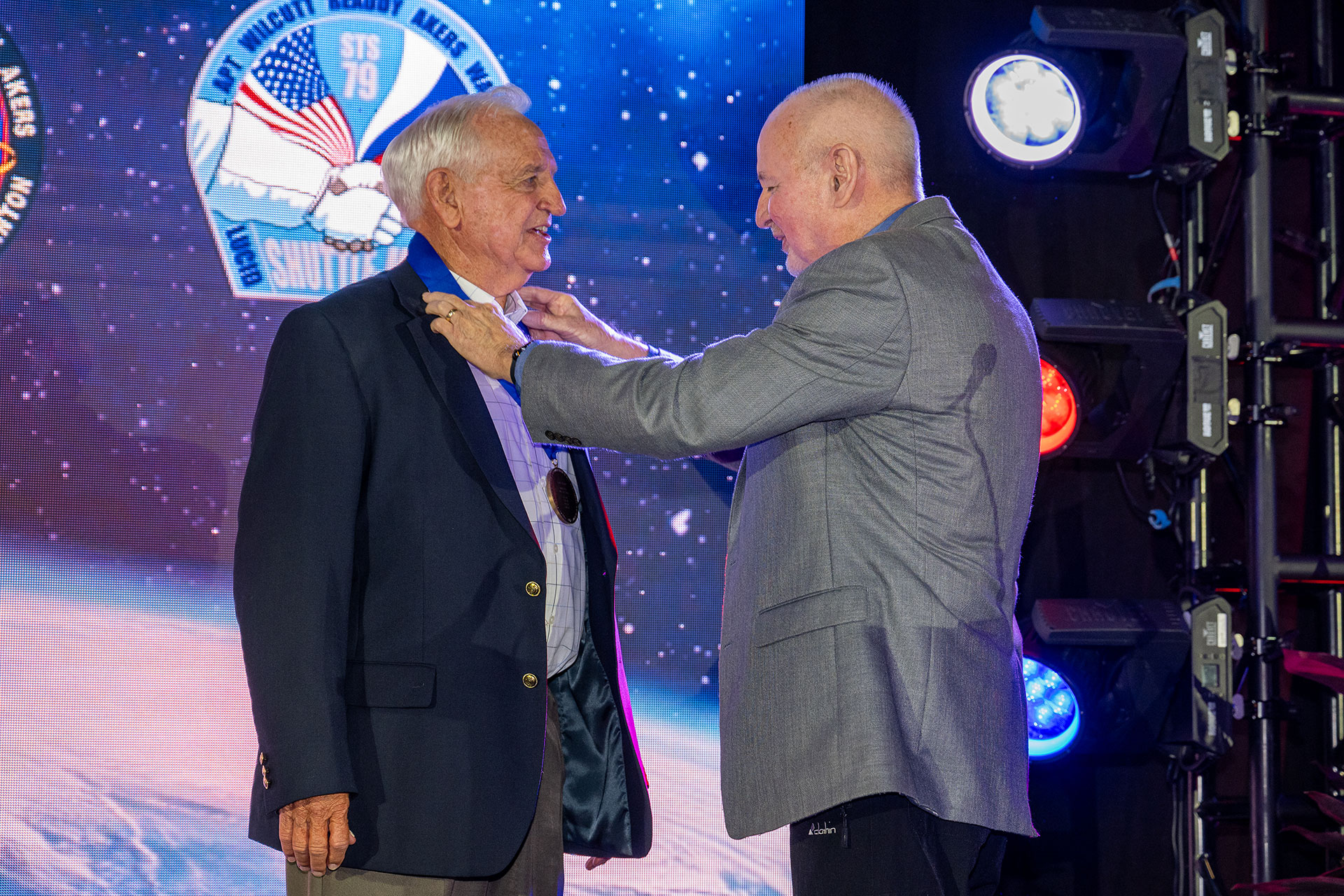
Two men in business suits are pictured as one presents a medal to the other.

Brian Duffy (at right) inducts Tom Akers into the US Astronaut Hall of Fame at the Kennedy Space Center Visitor Complex in Florida on Saturday, May 16, 2026.

Brian Duffy (at right) inducts Tom Akers into the US Astronaut Hall of Fame at the Kennedy Space Center Visitor Complex in Florida on Saturday, May 16, 2026. Credit: Kennedy Space Center Visitor Complex

Akers and Tanner both conducted spacewalks to repair and upgrade the Hubble Space Telescope (HST), carefully manipulating delicate optical instruments in a closely confined area. Tanner also helped assemble the large backbone truss and solar arrays wings for the International Space Station (ISS).

“I have often been asked what is the difference between ISS and an HST EVA [extravehicular activity], and I think it’s hands and overall physical effort,” said Tanner. “Manual dexterity in your hands was more important for HST, and for ISS, you’re hauling around some pretty big, heavy objects and maneuvering a long way. That’s the biggest difference.”

In total, Akers spent almost 30 hours of his nearly 34 days in space conducting spacewalks. Tanner logged 43 days, including 46 and a half hours on EVAs.

Joining the ranks

Saturday’s ceremony was led by news correspondent John Zarella and included remarks by Curt Brown, board chairman of the Astronaut Scholarship Foundation, which manages the nominee and selection process each year; Therrin Protze, chief operating officer of the visitor complex; and Kelvin Manning, deputy director for NASA’s Kennedy Space Center.

“Today’s induction of Tom Akers and Joe Tanner honors two astronauts whose careers embody excellence, leadership, and service,” said Brown, who became a NASA astronaut in the same class as Akers and flew with Tanner on Atlantis. “Their lasting contributions to NASA, and their ongoing work as educators and mentors, reflect the very best of the US space program.”

Two men in business attire shake hands during a ceremony

Joe Tanner (at left) is inducted into the US Astronaut Hall of Fame by his STS-115 pilot Chris Ferguson at the Kennedy Space Center Visitor Complex in Florida, May 16, 2026.

Joe Tanner (at left) is inducted into the US Astronaut Hall of Fame by his STS-115 pilot Chris Ferguson at the Kennedy Space Center Visitor Complex in Florida, May 16, 2026. Credit: Kennedy Space Center Visitor Complex

“We’re proud to welcome them into the US Astronaut Hall of Fame,” said Brown, who is a member of the 2013 class.

Brian Duffy, class of 2016, formally inducted Akers, presenting him with his Hall of Fame medal. Chris Ferguson, who flew as the pilot of Tanner’s last mission, STS-115, and who was inducted in 2022, honored his former crewmate similarly. Some 20 veteran NASA astronauts, including 15 other Hall of Fame members, attended the event.

The ceremony also included the unveiling of the etched-glass portraits and mission patch displays, which will next hang alongside the 111 other similar plaques representing the inductees. Founded in 1990, the US Astronaut Hall of Fame has been a feature of the Heroes & Legends attraction at the Kennedy Space Center Visitor Complex since 2016.

0FansLike
0FollowersFollow
0FollowersFollow
0SubscribersSubscribe
- Advertisement -
Google search engine

Recent Posts