MEPs Back European Commemoration Day for Victims of Work-Related Fatalities and Accidents
In remembrance of victims of accidents at work and of occupational diseases, MEPs are asking for 8 August to be designated the European Day in Remembrance of the Victims of Accidents at Work and for the Protection and Dignity of Workers.
The day would aim to raise awareness, they argue, about the importance of prevention and safety at work at public, enterprises, and institutions, together with a roll-out of concrete initiatives in schools and workplaces. The text was endorsed by MEPs with 395 votes in favour, 12 votes against, and 41 abstentions.
On 8 August 1956, 262 miners lost their life at the tragedy at the Bois Du Cazier mine in Marcinelle, Belgium. The workers were citizens from several countries that are currently EU-countries.
In the EU in 2023, there were 3,298 fatal accidents at work and around 2.8 million non-fatal accidents resulting in at least four days’ absence from work, with serious problems in high-risk sectors such as construction, transport, manufacturing and agriculture.
Parliament also wants the Commission to assess and address occupational health and safety risks associated with AI and algorithmic management systems. MEPs say that workers engaged through digital labour platforms and those whose tasks, pace and performance are directed or evaluated by AI-based tools, can face heightened risks due to intensified work rhythms and abusive monitoring in algorithmic decision-making.
Heat risks at work
MEPs call on the Commission to assess occupational safety and health risks related to climate-related factors, such as heat stress, extreme weather events, and air pollution. They have asked for better protective and preventive workplace measures to protect workers from extreme heat and climate change impacts, which they want to be recognised as major occupational risk factors.
To help achieve safe and healthy workplaces, Parliament underlines the importance of regulatory occupational health and safety inspections and call on EU-countries to strengthen labour inspectorates with permanent staff, adequate resources and institutional independence.
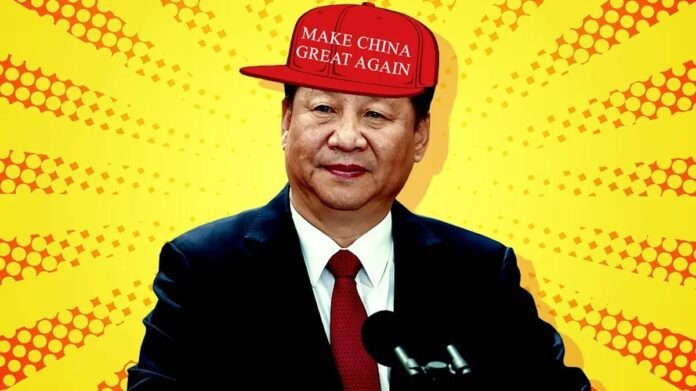
Xi Jinping’s praise of ‘Make America Great Again’ a major signal
Western mainstream media and podcasters have dismissed the Trump-Xi summit in Beijing. When you listen to Jake Sullivan and Aaron Friedberg, China hawks from diagonally opposite political background – the liberal elite of the Democratic party and the Republican neoconservative camp – they are competing with each other to disparage the summit as “much ado about nothing.”
But they seem to have neglected, or deliberately ignored, a significant event when Xi at the state banquet publicly praised MAGA, adding a real foundation stone for rebuilding mutual trust between the two countries.
Although no agreement was signed on the Taiwan issue, to the relief of the China hawks, Trump acted swiftly to reciprocate Xi’s praise by publicly downplaying Taiwan’s strategic importance, refusing to defend Taiwan based on traditional logic of strengthening military deterrence and directly pressuring the Taiwanese government to make corresponding adjustments to arms sales, in order to handle the Taiwan Strait issue within the agreed common framework of “constructive strategic stability.”
This is a major breakthrough. Apart from Xi, only a very few world leaders have praised the MAGA movement. Foreign leaders, especially US allies, rarely comment on it at all. There are two reasons for this:
First, they disagree with Trump’s MAGA philosopthy – nationalistic populism and burden-shifting national security policy.
Second, they do not believe the movement can survive after Trump leaves office. Trumpism is considered an aberration in American history.
Even when a few leaders do comment, it is often out of some specific motive, ranging from neutral approval to public praise.
Rather than publicly praising MAGA, leaders who are well disposed to Trump either praise the man, the president, himself or appreciate certain aspects of his policies or are ideologically aligned with him.
Based on available information up to May 2026, high on the list of foreign leaders who have praised Trump is Vladimir Putin – though Putin has never explicitly mentioned by its name the “Make America Great Again” movement.
Putin praised Trump’s political style and criticized American “elitism” in a manner consistent with the MAGA slogan. In 2018, Putin stated that Trump possessed “keen political instincts” and praised his ability to connect with ordinary voters. However, Putin’s praise was not directed at the MAGA slogan itself, but rather indirectly praised its ideology. Putin’s comments focused selectively on populism and anti-establishment appeals.
Then there iss former Brazilian President Jair Bolsonaro, who has expressed admiration for Trump and his populist political approach.
Bolsonaro publicly praised Trump’s political ideology, calling him a “model” for Brazilian conservative politics. His praise suggests alignment with Trump’s nationalist, law-and-order rhetoric and questioning of globalist institutions – signature features of the MAGA movement.
Several Eastern European leaders – particularly Viktor Orbán of Hungary – have praised Trump-style nationalism and anti-immigrant policies, though they generally do not explicitly mention MAGA.
Orbán publicly praised Trump’s policies on immigration and nationalism. While Orbán didn’t directly mention “Make America Great Again,” he explicitly endorsed the populist and nationalist line it represents – but citing Hungary as a model instead.
Israel’s Benjamin Netanyahu praised Trump’s “America First” foreign policy, calling it the cornerstone of the “historic partnership” between the two countries during Trump’s presidency. This praise was directed at specific policies, not the MAGA movement itself.
Most other leaders who indirectly praise MAGA, such as Italy’s Giorgia Melloni, or France’s Marine le Pen, focus on his political style, or some of his policies, merely emphasizing ideological commonality with the MAGA movement.
However, at this Xi-Trump meeting, Xi Jinping openly and unreservedly compared the MAGA movement to China’s grand national project – the Chinese national rejuvenation movement – a form of praise never before heard.
President Xi Jinping’s comments on the movement are analytical and thoughtful praise.
Trump seems very pleased, as it is certainlybeneficial for his image and the midterm elections, alongside subtantial trade and other economic deals. .
According to reports, Xi Jinping stated,
This year also marks the 250th anniversary of American independence, and more than 300 million Americans are revitalizing their patriotic, innovative, and pioneering spirit, propelling American development onto a new journey.
The people of China and the United States are both great peoples, and realizing the great rejuvenation of the Chinese nation and making America great again can be done in parallel, mutually beneficial, and for the benefit of the world.
This statement highly praises Trump’s MAGA movement, even implying that the American people yearn for change and suggesting that the movement has effectively inspired Trump’s supporters.
Therefore, only Xi Jinping has directly and explicitly praised the MAGA movement (including its slogan and its political brand itself). This greatly boosts Trump’s tarnished domestic and international image.
Xi’s remarks, from the leader of the world’s second most powerful nation, are not purely political flattery such as Europeans pathetically offered when they called him “daddy,” but more thoughtful endorsement, representing the closest a foreign leader has come to explicitly acknowledging the positive value of the MAGA movement itself.
More interstingly, Xi Jinping also set a three-year timeframe, apparently hoping to use the remaining three years of President Trump’s term to normalize Sino-US relations.
At the same time, Xi is betraying real concerns about US policy reversal toward China after Trump’s departure.
However, even in the post-Trump era, the common-sense revolution launched by Trump may not fade away from American politics and is likely to continue to strengthen. A group of power restrainers – technologically minded and mission-bound young people represented by Vice President J D Vance – will carry the banner of the MAGA movement, as it holds immense appeal for the American working class who are disillusioned with globalization, immigration, and the establishment political elite.
Regarding China policy, if the MAGA movement under Trump could turn out to be a ballast for stabilizing political relationship between the two countries, the resurgence of China hawks will be effectively curbed, as the three-year stable and win-win situation will be evident to all.
Even if the Democrats come back to power, they will not dare to easily disrupt this constructive strategic stability and restart a new Cold War of “democracy versus autocracy.”
Avoiding the Thucydides trap between China and the US will safeguard both the process of “Making America Great Again” and the rejuvenation of the Chinese nation. These two movements can truly coexist and complement each other.
The establishment elite in the US refuse to accept the fact that, the MAGA movement is not just about Trump; it’s about the broader cultural and political change needed for the well-being of the American people. One of its core features, a de-ideologized foreign policy will help stop the chaotic pendulum in the most important relationship, the one between the US and China, to prevent an unthinable conflict for the sake of world peace.
The author is professor emeritus of the Graduate Institute of International and Development Studies, Geneva, Switzerland.
Ebola outbreak now third largest recorded and “spreading rapidly”
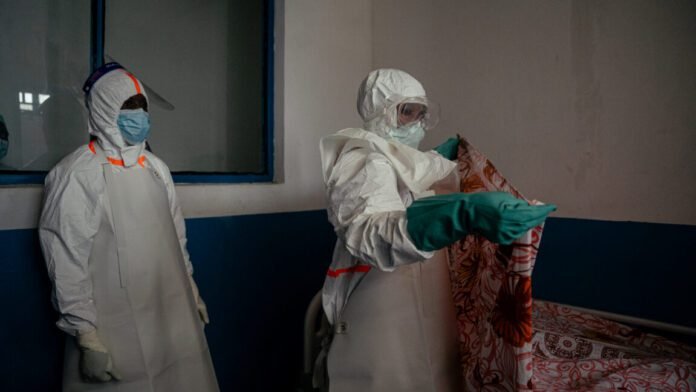
The Ebola outbreak erupting from the Ituri province of the Democratic Republic of the Congo continues to escalate wildly, with cases nearing 750, deaths reported at 177, and around 1,400 contacts now being traced, the World Health Organization reported in a press briefing Friday. The latest numbers already place the outbreak as the third largest on record, though it was only first reported a week ago, on May 15. And WHO Director-General Tedros Adhanom Ghebreyesus said the outbreak is still “spreading rapidly.”
A revised WHO assessment has moved the risk level from “high” to “very high” at the national level, while risk remains “high” at the regional level and “low” at the global level, Tedros added.
WHO officials have acknowledged that a delay in detecting and responding to the outbreak enabled it to balloon, and that they are now racing to get ahead of the virus.
WHO representative Dr. Anne Ancia spoke during today’s briefing from the DRC, saying that when officials got to the area, they found the virus was “already rampant and silently disseminating for a few weeks already.” In the outbreak investigation so far, the earliest known suspected case was in a health worker, who developed symptoms on April 24 in Bunia, the capital city of Ituri. WHO only got word of a potential outbreak on May 5, with news of a cluster of deadly, unidentified infections that led to the deaths of four health workers. By the time a WHO team arrived, there were already 80 cases.
“Now we are sprinting behind [the virus] so that we can really try to control this outbreak, and because it is still transmitting for the time being, yes, the number [of cases] will keep rising for some time until we are really able to put all the response operation in place,” she said.
Their work is made harder by various challenges. The virus behind the Ebola outbreak is the uncommon Bundibugyo virus, which doesn’t have established vaccines or therapeutics. That leaves active case finding, isolation, and contact tracing as the primary tools to halt the spread. Moreover, the virus is spreading in areas with armed conflict, intense population mobility, weak health systems, and where millions face acute hunger and need humanitarian assistance.
Disease of compassion
As WHO and other partners scramble to prevent more deadly infections, public health experts in the US are criticizing the Trump administration’s role. The US had long been a global leader in Ebola responses in the region. But that is no longer the case given the Trump administration’s demolition of the US Agency for International Development (USAID), severe cuts to the Centers for Disease Control and Prevention, numerous public health leadership roles vacant, and complete withdrawal from the WHO.
In a New York Times opinion piece Thursday, Craig Spencer—an emergency medicine doctor and Brown University professor, who contracted Ebola while treating patients in Guinea in 2014 with Doctors Without Borders—wrote that the US has “abdicated its longstanding role as a leader in global health and humanitarian response.”
“I know how destructive the disease can be—and how unprepared we are for its return,” he wrote.
He noted reporting from the Times finding that the delay in detecting the outbreak was, in part, due to samples from infected patients being transported to a national lab in Kinshasa, Congo, at the wrong temperature. That task had previously been managed by USAID. The Times also reported that the US previously played a crucial role in logistics and delivering supplies, notably personal protective equipment, such as face shields, respirators, impermeable coveralls, and surgical hoods—supplies that health workers in DRC lacked for weeks at the start of the outbreak.
“My heart is breaking for those workers,” Megan Fotheringham, who was USAID’s deputy director of infectious diseases, including during the Ebola outbreak in Ituri between 2018 and 2020. “They are not protected, and they are putting their lives on the line.” She told the Times that if USAID was able to continue its work, it could have moved stockpiles of personal protective equipment within hours.
Spencer noted that he and others often refer to Ebola as a disease of compassion because it spreads via bodily fluids to those who have intimate contact with victims. “This means parents taking care of their sick children, family members who wash the bodies of their dead relatives, and health care providers who take care of patients at the most contagious stage of their illness,” he wrote. He recalled a family of seven being infected, with the parents caring for their children while battling the disease themselves, and only the parents survived.
Panic and neglect
Epidemiologists Katelyn Jetelina and Emily Smith pointed out Friday that, while the disease is one spread by compassion, this outbreak seems to be spreading by “the global withdrawal of it.”
In a CDC press briefing Friday morning, Satish Pillai, incident manager for CDC’s Ebola response, said that the US is ramping up resources and sending more field staff to the outbreak area. The Trump administration has also said it is funding the establishment of up to 50 treatment clinics in Ebola-affected regions of the DRC and Uganda. But Uganda, which has only reported two imported cases from DRC, responded by saying it was “not aware” of any such plans.
Pillai again dodged questions on why an American doctor infected in the outbreak and another exposed were sent to Germany and the Czech Republic, respectively, and not to the US. He also skirted questions about the US’s travel restrictions, which have also been criticized by public health experts.
With the US withdrawal from global health, the WHO has struggled to make up for the loss of funding and support. At the end of the press briefing, WHO officials were asked what the Ebola outbreak response was expected to cost and if the agency would have enough funds to cover it. Epidemic and pandemic management director Maria Van Kerkhove said the agency is still working on an estimate, but added that while funding was a challenge right now, the focus shouldn’t be on response costs.
“There’s billions of dollars that are spent on war every single day,” Van Kerkhove said. “So, there’s plenty of money that can be handled for this. And what is extremely frustrating is that money will come for a response. But what we actually need money for … is prevention. This constant, steady stream of funding to support national governments in the capacities that they have across surveillance, detection, research, infection prevention, control, workforce, building trust in communities, et cetera, regularly as opposed to going into this cycle of panic and neglect.”
Corporate Interests Paid for Haley Stevens’ Trip to Portugal — and Her Campaign Ads
Rep. Haley Stevens, D-Mich., flashed a smile alongside her mother, Maria Marcotte, as the pair took a selfie from an international terminal of the Detroit Metropolitan Airport.
“Lisbon, here we come!” Marcotte, a retired advertising executive, captioned her Instagram post on June 16, 2024.
Stevens and her mother then boarded a plane, seated in business class, according to a congressional ethics disclosure form. The following day, the pair checked into The Ivens, a luxury hotel where Stevens and other members of Congress spent the next four days attending a conference with panels that included a cryptocurrency industry executive, bankers and other corporate leaders. The conference was hosted by the centrist, pro-corporate think tank Center Forward, which has received donations to its nonprofit arm from major pharmaceutical companies and has a super PAC funded by big oil companies.
Center Forward covered the full $27,779.86 trip for Stevens and her mother — a drop in the bucket compared to what the group’s political funding arm would later spend supporting her run for U.S. Senate.
Now, as Stevens is embroiled in a contested three-way race for a vacant United States Senate seat, Center Forward and its super PAC have spent $2.4 million on television advertisements in Michigan, where the only campaign the group is known to be backing is hers, The Intercept found in a review of advertising data accessed from AdImpact. The group’s first round of ad purchases supporting Stevens, totaling $855,000, was reported last week by State Affairs. Center Forward Committee has also bought at least $50,000 in online ads for Stevens over the past two weeks, according to Google’s ad transparency tracker.
One of the commercials, which ran on broadcast, cable and streaming services across Michigan starting May 12, shows Stevens “standing up to Trump” and “standing up for Michigan,” pointing toward her bills calling for accountability for ICE agent misconduct and seeking to prevent the Trump administration from deploying the U.S. military domestically. “I answer,” Stevens says in a clip from the House floor, “to the people of Michigan.”
A Stevens campaign spokesperson repeated a similar statement in response to queries from The Intercept.
“Haley fights for Michigan and only Michigan,” said her spokesperson Arik Wolk. “She’s spent her time in Congress working to bolster Michigan’s manufacturing economy, Michigan innovation and Michigan jobs — and as Michigan’s most effective Democrat in Congress, she has a track record of doing just that.”
Stevens’ campaign has been dogged by criticism for her corporate backing. Both of her opponents – Michigan state Sen. Mallory McMorrow and Dr. Abdul El-Sayed – have sworn off corporate contributions.
The Lisbon conference in 2024 sponsored by Center Forward featured panels led by executives from banks and holdings companies, such as Bison Bank and Bay Street Capital Holdings. One panel, titled “Blockchain Regulation in Portugal (EU),” included the CEO of crypto company Q Blockchain, in addition to bank executives and other boosters of the crypto industry. Prior to the panel, a business school professor gave a lecture on “what the EU’s approach to digital asset and blockchain regulation looks like” and “how the U.S. may be falling behind comparatively.”
At the time, Portugal boasted one of the most tax-friendly systems for cryptocurrency investments and the European Union installed its newly approved crypto regulatory system known as MiCA.
A supplement to the congressional disclosure form described the trip as intended to “bring a bipartisan group of pragmatic policymakers and influencers from various industries and organizations to focus on common-sense solutions” by discussing “foreign direct investment, healthcare, renewable energy, data privacy” and economic ties between the U.S. and Portugal.
The group said its overall mission is “to provide centrists” the information needed to “craft common-sense solutions and provide support in turning those ideas into results.”
“The travel and the campaign finance expenditure in tandem are worse together than on their own.”
It’s common for congressional delegations to go on international trips paid for by third parties. But Stevens attending a trip sponsored by a pro-corporate group and then receiving significant campaign support from the group two years later raises concerns, said Jeffrey Hauser, a critic of corporate political influence.
“I am worried about what it says, that an institution that has been created to look after corporate interest in Washington had their staff spend a ton of time with the congresswoman, and they came away convinced that she would be loyal to their funders,” said Hauser, director of the Revolving Door Project. “The travel and the campaign finance expenditure in tandem are worse together than on their own.”
Center Forward also covered additional travel expenses for Stevens’ staff, including $10,844.33 for Stevens’ legislative director to go on the Lisbon trip and $7,198 for her staffers to attend other Center Forward conferences, including one in Mexico where attendees met with executives with Meta, Walmart, Amazon, 3M and General Motors Mexico, according to further disclosure forms.
Stevens was joined at the Lisbon conference by conservative lawmakers who have supported pro-crypto legislation, such as Rep. Earl “Buddy” Carter, R-Ga., a member of the Blockchain Caucus, and Rep. Andrew Garbarino, R-N.Y., who chairs the House Homeland Security committee, according to the congressional disclosure form. The delegation also included prominent Democrats, such as Rep. Linda Sanchez, D-Calif., and then-Rep. Eric Swalwell, also a California Democrat who has since resigned amid sexual assault allegations.
Congressional delegation trips are designed to form relationships between advocacy groups and lawmakers with the goal of “persuading a politician of a worldview,” Hauser said. He noted that the American Israel Public Affairs Committee had fine-tuned the model with its annual congressional visits to Israel, which Stevens also attended with her mother in 2019. Rapport is easier to build in an international travel setting than a visit to a member’s office, Hauser added.
“I think this trip should be seen more as a cultivation method that Stevens agreed to undertake,” he said, “and the independent expenditure in 2026 as an indication that the 2024 travel was well executed.”
Since 2022, Center Forward Committee has received $400,000 from Chevron, including $100,000 from the big oil giant during the current election cycle; an additional $300,000 from the oil corporation ConocoPhilips in 2023; $500,000 in 2022 from former New York City Mayor and billionaire Michael Bloomberg; $100,000 from big tobacco company Philip Morris last July; and in March, Center Forward Committee and its related PAC, Center Forward Initiative Inc., together received $31,000 from United Health Group.
Center Forward’s nonprofit arm was also at the heart of battling Congressional efforts to lower drug prices under the Biden administration. The group received $7.8 million in donations from the pharmaceutical lobby from 2016 to 2023, according to Sludge, the bulk of which arrived during the Biden era. Center Forward spent those years also pouring money into candidates who were opponents to drug pricing reform.
Stevens, for her part, introduced a 2019 bill that attempted to lower prescription drug prices. She currently supports the expansion of Obamacare and the creation of a public option, but she does not support a Medicare for All policy, marking a contrast with her opponent El-Sayed, who has made the policy a core tenet of his platform.
Center Forward’s ad spending in Michigan arrived as a separate dark money group, the Center for Democratic Priorities, which uses the same consulting firm as AIPAC does for other “pop-up” super PACs, bought $5 million in TV ads for Stevens this month.
Marcotte and Center Forward did not respond to The Intercept’s requests for comment on the relationship between the campaign and the organization.
Stevens’ opponents, who are polling neck-and-neck with her ahead of the August primary, criticized the representative’s support from the group.
“Big Pharma, Big Tobacco, Big Oil, and Big Insurance are spending millions to save Haley Stevens from her own record on ICE,” said Jackson Boaz, spokesperson for the McMorrow campaign. “That tells you everything about who she’ll work for in the Senate – and everything about how her campaign is going.”
El-Sayed offered a more terse indictment: “Corporate candidate takes money from corporate lobbies to take corporate trips and do corporate dirty work in Congress.”
ULVAC to make rare earth melting furnaces in Japan
If you’ve been following the slow-motion strategic panic over critical minerals, you know that Japan, Australia, the US, Canada, Europe and others are busy talking about China’s dominance both of rare earth mining and refining and of the production of rare earth magnets. Those countries are even starting to do something about it.
What has been left out of reports on the subject, until recently, is how and with whose equipment rare earth magnets are made. Then, on May 1, Nikkei Asia reported that “Ulvac will soon move production of equipment that makes rare-earth magnets back to Japan from China.”
But that was misleading. On May 7, the company itself issued a press release:
ULVAC Establishes Japan-Based Production for Rare-Earth Magnet Vacuum Melting Furnaces —Orders Expected to Approximately Triple Year on Year, Driven Primarily by Demand in Europe and North America—
ULVAC, Inc. anticipates that orders for its continuous vacuum melting furnaces dedicated to rare-earth magnets will approximately triple year on year, driven primarily by magnet manufacturers in Europe and North America. In response to this growth in orders, ULVAC has decided to establish a new production system for these furnaces in Japan. By adding a production site in Japan to its existing facility in China, ULVAC will build a dual-site supply structure, providing customers with diversified supply options.
ULVAC has about 70% of the global market for vacuum melting furnaces used in the production of rare earth magnets. At present, all of its furnaces are made by a subsidiary in China and most of them are sold there. After the new factory starts operations in September, production in Japan will be ramped up until it accounts for about 15% of the total by 2030.
At least that’s how management sees it now. Obviously, the figure could rise if necessary. But the idea is to meet the requirements of non-Chinese customers, not to break ties with China.
The melting furnace is key to the rare earth manufacturing process. It melts and casts the rare earth alloy, creating a microstructure that determines the final performance of the magnet. Other ULVAC furnaces are used in subsequent stages of the magnetic material preparation process, including hydrogen decrepitation (which produces very fine grains of material), sintering and aging.
ULVAC (derived from “Ultimate in Vacuum”) is a medium-sized Japanese manufacturer headquartered in Chigasaki, Kanagawa Prefecture, west of Tokyo – where the new factory will be situated. Based on vacuum technology developed since its establishment in 1952, ULVAC manufactures production equipment, components, analytical instruments and materials for makers of semiconductors, other electronic and optical devices, displays, EV batteries and industrial equpment.
In addition to rare earth magnets, ULVAC’s industrial equipment is used in the auto, pharmaceutical, food and other industries. For the semiconductor industry, the company produces MHM (Metal Hard Mask) deposition systems used by makers of advanced logic ICs, as well as deposition and other equipment for makers of high-bandwidth memory, NAND flash memory, power devices and IC packaging. OLED display production equipment is another ULVAC speciality.
ULVAC is not a defense contractor, but its products are used to make any number of things that can be classed as dual-use. It is, therefore, an important part of Japan’s CMI (civilian military integration) value chain.
ULVAC’s annual sales currently amount to about ¥260 billion ($1.64 billion at the current exchange rate). Its regional sales breakdown is roughly Japan 30%, China 35%, South Korea 13%, Taiwan 12% and Europe and other regions 10%.
Beginning with an office in Beijing in 1983, ULVAC has established nearly a dozen joint ventures and subsidiaries in China, including a vacuum furnace production and sales company in Shenyang. It was therefore well positioned when China set about taking over the rare earth extraction, processing and magnet manufacturing industry in the 1990s.
As alarmed politicians, strategic consultants and journalists never tire of telling us, China commands about 70% of global rare earth extraction and more than 90% of rare earth processing and magnet production. This makes China an essential supplier to makers of defense equipment, electric vehicles, industrial motors, wind turbines, consumer electronics and medical devices.
Rare earth magnets are used throughout the defense industry, in fighter jets, missiles, drones, other weapons systems, sensors and communications equipment. Specific components incorporating rare earth magnets include motors, actuators and generators, and guidance, radar, sonar and laser-related systems.
This should not surprise anyone. Twenty-two years ago, in May 2004, James B. Hedrick of the US Geological Survey made a presentation entitled “Rare Earths in Selected U.S. Defense Applications” at the “40th Forum on the Geology of Industrial Minerals” held in Bloomington, Indiana.
Hedrick noted that REEs (rare earth elements) are indispensible to US military technology, including:
Naval Warfare – Virginia-class submarines, Arleigh Burke destroyers, and sonar systems
Jet Engines – Fighter jets like the F-16 depend on rare-earth magnets
High-Powered Lasers – Advanced weaponry and targeting systems
Night Vision & Communications – Essential for battlefield operations and secure communications
How was something so important allowed to fall into the hands of a rival that our dear leaders never tire of berating, sanctioning and warning against? The polite way to put it is that the US and its allies were asleep at the wheel.
ULVAC expects orders for vacuum melting furnaces to triple to about ¥20 billion this fiscal year (6.5% of total orders guidance for the fiscal year to June 2026), but this is likely to be only the initial take-off. Over the next 5 – 10 years, orders and sales could increase by several times as demand from user industries continues to grow and Japan, the US, Europe and other countries seek to establish rare earth magnet supply chains with less, even zero, Chinese participation.
The 30% of the vacuum melting furnace market not supplied by ULVAC is divided among several American, European, Chinese, Indian and other Japanese companies. Of these, the most prominent are Consarc in the US, Italian company TAV and, in China, IKS PVD Technology (Shenyang) and Sinoran Mining & Metallurgy Equipment, which is headquartered in Changsha, capital of Hunan province.
As noted on its website, Sinoran has business relationships with American, Canadian, British, Iranian and Chilean mining enterprises, and has set up offices in Australia, Turkey, Canada and Iran.
As the rare earth magnet market expands internationally and new entrants appear, demand is shifting from stand-alone equipment to complete production lines and comprehensive technical support. This plays to ULVAC’s extensive product line and long experience, but the Japanese company will have to fight to keep its lead in this market.
A buffalo in Bangladesh has suddenly become an internet sensation, and it is all because of the hair.
The rare albino animal, weighing nearly 700 kilograms, has been nicknamed “Donald Trump” by locals after people noticed the thick blond tuft on its head. Now videos of the buffalo are spreading across social media, with crowds showing up just to see the bizarre lookalike for themselves.
The animal is being kept in Paikpara, in Narayanganj, Bangladesh, ahead of Eid al-Adha. But instead of quietly waiting at a livestock farm, the buffalo has turned into a local celebrity.
Visitors have been lining up. Content creators have been filming. And social media users cannot stop making the same joke.
That buffalo has Trump hair.
Credit: AFP
Its owner, Ziauddin Mridha, said the animal was purchased from a cattle market in Rajshahi about 10 months ago. The nickname, he explained, started as a family joke.
“My younger brother jokingly named it Donald Trump after seeing the hair on its head,” Mridha said, according to NDTV.
The name stuck fast.
The animal’s pale coloring and golden hair made it stand out immediately, but its calm personality has also made it easy for curious visitors to approach.
“It is very calm in nature,” Mridha said. “Albino buffaloes are generally peaceful and do not become aggressive unless provoked.”
The buffalo has reportedly already been sold, but that has not stopped the public attention.
One woman told Bangladeshi newspaper Prothom Alo that she first saw the animal on Facebook and could not believe the resemblance.
“When I saw his pictures on Facebook, he looked exactly like Donald Trump,” she said. “His facial structure and even hairstyle match that of Trump.”
And this is not the first time the animal kingdom has been dragged into Trump comparisons.
Over the years, several creatures have gone viral or even received names inspired by the president’s famous hair.
In 2017, a tiny moth was officially named Neopalpa donaldtrumpi after scientist Vazrick Nazari noticed its yellowish-white head scales looked like Trump’s blond hairstyle. The moth is found in Southern California and Baja California, Mexico.
Nazari said the unusual name was meant to bring attention to fragile habitats and little-known species still being discovered.
Trump’s name had already made its way into the scientific record a year earlier with Tetragramma donaldtrumpi, a fossil sea urchin found in Texas by fossil hunter William R. Thompson Jr. Thompson said he discovered five fossils in the 110-million-year-old Glen Rose Formation and named the species in Trump’s honor.
Then came another odd entry: a worm-like amphibian from Panama that was proposed to be named Dermophis donaldtrumpi after a UK company bought naming rights through a Rainforest Trust auction.
That one was not exactly a compliment.
The company EnviroBuild said the name was meant to mock Trump’s views on climate change, pointing to the creature’s poor eyesight and habit of burrowing underground.
There was also the “Trumpapillar,” a fuzzy orange-yellow caterpillar spotted in the Peruvian Amazon that became a viral hit because its wild hair looked like Trump’s famous style. Experts warned that similar hairy caterpillars can sting and should not be touched.
And in China, a golden pheasant named Little Red became an online celebrity after people noticed its sweeping yellow crest looked a lot like Trump’s hair.
Now the Bangladesh buffalo has joined the strange list.
It may not know anything about politics, presidents, or viral fame, but with that blond tuft sitting proudly on its head, the internet has already made up its mind.
For now, the world has another animal lookalike to laugh over — and this one weighs almost 1,500 pounds.
AI users re-create dead pilots’ voices from crash investigation docs
Pilots’ voices from the last seconds of a fatal cargo plane crash have been re-created by Internet sleuths using software and AI tools. The spread of reconstructed audio recordings has prompted a US government agency to suspend all public access to its database of civil transportation accidents—because federal law prohibits investigators from publicly releasing audio from cockpit voice recorders.
The US National Transportation Safety Board (NTSB) usually shares factual reports and evidence gathered from investigations of aircraft crashes and other civil transportation incidents. But on May 21, the NTSB announced that the online docket system containing such information was “temporarily unavailable” as it reviewed the publicly available materials that had enabled people to re-create cockpit audio recordings from aircraft disasters.
“The NTSB is aware that advances in image recognition and computational methods have enabled individuals to reconstruct approximations of cockpit voice recorder audio from sound spectrum imagery released as part of NTSB investigations, including the ongoing investigation of the crash last year of UPS flight 2976 in Louisville, Kentucky,” according to an NTSB statement. “The NTSB does not release cockpit audio recordings.”
UPS flight 2976 was a United Parcel Service MD-11F cargo aircraft that crashed shortly after takeoff from Louisville, Kentucky, on November 4, 2025, following a structural failure that led to an engine physically detaching as the aircraft left the ground. The three pilots aboard the aircraft, including a relief pilot, were killed. Another 12 people on the ground were killed, with 23 people being injured.
The US Congress enacted a federal law in 1990 prohibiting the NTSB from publicly sharing any part of a cockpit voice or video recorder to protect the privacy of air crews. That law followed airline pilots’ pushback over the controversial TV station airing of a cockpit conversation relating to the August 1988 crash of Delta Air Lines Flight 1141 at Dallas-Fort Worth International Airport.
“It’s been an important factor for decades in having airline pilots be willing to have their voices recorded at their normal workplace, day in and day out, with the threat of being killed during their workday,” Ben Berman, an accident investigator and analyst who previously worked for the NTSB and flew a Boeing 737 for United Airlines, told Ars. “People are horrified with the idea of their last moments being made public and used for anything other than accident investigation, which is why the federal law supports that.”
As a result, the NTSB takes multiple precautions for securing cockpit voice recorders during investigations of civil aviation incidents. Robert Sumwalt, former chairman of NTSB, has described how the federal agency restricts listening access to a handful of people who must first sign a log and nondisclosure agreement, with cellphones being left outside and handwritten notes being destroyed afterward. Transcription of the audio is done manually through constant replays and group discussions.
The Internet does its thing
The NTSB released written transcripts of the cockpit audio recordings from the crash of UPS flight 2976 during a two-day investigative hearing held on May 19 and May 20. But the agency also publicly shared a PDF with a spectrogram—a visual representation of sound signals—showing the last 30 seconds of cockpit audio recording.
That spectrogram apparently enabled a number of individuals to reconstruct audio versions of the pilots’ voices and other sounds from the cockpit voice recording, with examples appearing on social media sites such as X and Reddit. The spectrogram itself has also been posted and distributed across social media.
Such audio re-creations frequently rely on the Griffin-Lim algorithm that was originally published in a 1984 paper by Daniel Griffin and Jae Lim. Updated versions of the method have since been incorporated into speech processing algorithms and implemented through programming languages such as Python. Various Python implementations of the algorithm are available on GitHub.
The crash of UPS flight 2976.
More recently, the widespread availability of AI models capable of retrieving the necessary information and writing code has made it easier for people to re-create cockpit audio recordings. One account on X mentioned taking just 10 minutes with OpenAI’s Codex model to “reconstruct rough audio from the spectrogram” that was initially shared by NTSB.
“I was shocked to hear about this, because I hadn’t imagined that it was possible to do something like this,” Berman told Ars. “But all kinds of things are possible now.”
Some cockpit audio recordings have been released after NTSB investigations concluded because of lawsuits related to aviation incidents, Berman said. He pointed out that cockpit voice recorder transcripts have also been dramatized through Broadway plays and TV program reenactments. But those examples don’t bother Berman as much as the AI-assisted re-creations of pilots’ voices based on spectrogram waveforms.
It may be too late to stop the spread of re-created audio in the case of UPS flight 2976. But the NTSB’s decision to shut down public access to its entire investigations database while it reviews the materials within suggests that the agency is trying to prevent future incidents. The NTSB declined to provide additional comment when contacted by Ars, but said it would share any updates on its website or through its X account.
“The NTSB docket system is temporarily unavailable as we examine the scope of the issue and evaluate solutions,” according to the NTSB statement. “We hope to restore access to the docket system as soon as possible.”
Money Laundering in Italy Estimated at Up to €35 Billion Annually
Money laundering in Italy amounts to between €25 billion and €35 billion per year, according to the country’s Guardia di Finanza (GdF) tax police.
Andrea De Gennaro, Commander General of the Guardia di Finanza, cited estimates from the Bank of Italy’s Financial Intelligence Unit during remarks at the Trento Economics Festival on Thursday. The event was organized by Il Sole 24 Ore and Trentino Marketing on behalf of the Autonomous Province of Trento.
According to De Gennaro, estimates covering the 2018-2022 period indicate that money laundering in Italy represented between €25 billion and €35 billion annually, equivalent to between 1.5% and 2% of the country’s gross domestic product.
De Gennaro said money laundering is often viewed primarily as the process of introducing proceeds from drug trafficking into the legal economy, but added that the scope of underlying crimes is wider.
He said the offences linked to money laundering also include tax evasion, corruption and fraud.
“The methods of laundering are extremely varied and complex,” De Gennaro said.
Why hybrids — not EVs — are winning over US consumers
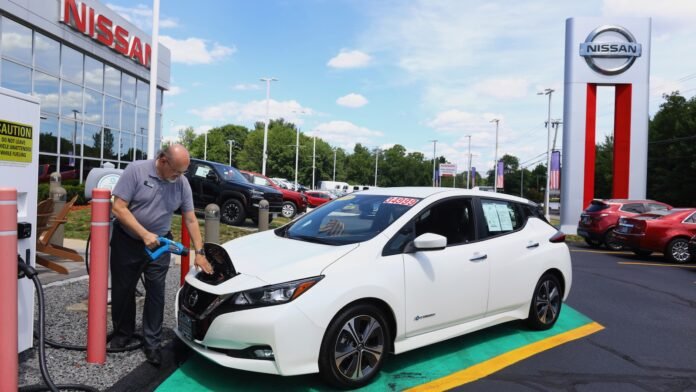
Even as gas prices continued to rise across the United States, sales of electric vehicles fell in April. That is in contrast to strong growth elsewhere in the world, such as Europe. But American drivers are gravitating toward at least one more efficient powertrain: hybrids.
Sales of new EVs fell roughly 18 percent from March to April, according to the latest data from Edmunds, an auto research firm. Another company, Cox Automotive, pegged the drop at closer to 6 percent. Either way, experts said it’s clear that high gas prices aren’t leading to a significant shift toward EVs.
“There was a lot of window shopping,” said Ivan Drury, director of insights at Edmunds, noting that searches for electrified vehicles on the company’s site were strong. “It did not translate to tire-kicking and purchases.”
Price remains the steepest barrier for most people, said Drury. While electric vehicles can be less expensive to operate over the long-term — especially when gas prices are high — the upfront costs remain significant. The average transaction price for an EV in April was $6,214 higher than for vehicles with internal combustion engines, Cox reported.
“It’s still a cost hurdle,” said Stephanie Brinley, a principal automotive analyst at S&P Global Mobility. “You don’t know how long it’s going to take to get that back.”
At Thursday’s average gas price of $4.56 per gallon, an EV buyer would have to drive more than 40,000 miles to make up the difference with a car that gets 30 mpg. Savings on maintenance, like oil changes, could accelerate that timeline, but factors such as higher insurance prices and having to install a home charger could make the payback period even longer. If fuel prices fall, the advantage of an EV also shrinks.
“It’s very difficult for people to wrap their head around, ‘Hey, if I spend this $55,000, I might over time save’,” said Drury. “It requires a bit more math than most people want to go through.”
The calculus is much simpler for hybrid vehicles, which utilize batteries that can improve fuel economy by 25 to 45 percent without needing to plug in. A Honda CR-V, for example, gets around 29 mpg while the hybrid version gets 37. More and more popular models are only available as hybrids, a strategy that Toyota has perhaps embraced most notably. Last year, it ditched the gas-only version of the Camry sedan. The 2026 RAV4 followed suit.
Overall, Edmunds data shows that sales of hybrids are up 20 percent year-over-year and nearly 50 percent since February, when the U.S.-Iran conflict began. Sales of gas-powered gas are up about 11 percent over those same two months.
“I think this is going to be a hybrid moment,” said Stephanie Valdez Streaty, director of industry insights at Cox Automotive. “There are a lot of options.”
Used EVs provided another somewhat bright spot, she said. The segment saw a 3 percent increase in sales from March to April and a price premium of only $1,096 over used internal combustion vehicles. Used EVs also sold faster than their used gas-powered counterparts. “They’re really selling efficiently,” said Valdez Streaty, who added that there should be a glut of EVs available throughout the year as leases end. “I don’t think the inventory will be an issue.”
With Iran maintaining its hold over the Strait of Hormuz and summer travel season looming, gas prices appear set to keep climbing — which would only make an EV more appealing. Other parts of the world have seen significant jumps in sales since the conflict began, with Europe experiencing a surge and China setting an export record in April, according to BloombergNEF.
In the United States, though, it seems that only people already in the market for EVs are making the leap. “Edge-case people,” as Brinley called them. Dramatic pump readings “might nudge them because they were already in that direction,” she said. “But what we’re unlikely to see is a shift in current [internal combustion car] owners just fundamentally making that change simply because of gas prices.”
Greenlanders boo new US consulate, urge Trump envoy to ‘go home’
Protesters gather outside the new U.S. Consulate in Nuuk, Greenland May 21, 2026, in this frame capture obtained from a social media video. Photo: Orla Joelsen
Hundreds of Greenlanders demonstrated outside the new US Consulate in Nuuk on Thursday as President Donald Trump’s envoy signaled that Trump still seeks to control the self-governing Danish territory that straddles the Arctic and Atlantic oceans.
Various Greenlandic politicians also declined invitations to attend the opening of the consulate, with Prime Minister Jens-Frederik Nielsen telling the local outlet Sermitsiaq that “we haven’t made a decision in principle, but I won’t participate.”
Protesters were armed with Greenland’s red and white flag and signs that read “USA ASU,” which translates to “Stop USA,” as well as messages in English, including “Make America go away!” and “We are not for sale!” Their chants included “Greenland belongs to Greenlanders,” “Go home,” and “No means no.”
“It’s very important, now more than ever, to show the American people what we already said, that no means no, and that the future and self-determination of Greenland belongs to the Greenlandic people,” said Aqqalukkuluk Fontain, a 37-year-old IT account manager and protest organizer, according to The Guardian.
“The protest itself is not to provoke Donald Trump or Jeff Landry but to show the world that Greenland has its own democracy,” Fontain added.
Landry, the Republican governor of Louisiana and the president’s envoy to the island, arrived in Nuuk on Sunday.
The newspaper noted Trump’s envoy traveled there “uninvited with a delegation including a doctor, who caused fury by saying he was there to ‘assess the medical needs of Greenland.’ Landry briefly attended a business conference with the US ambassador to Denmark, Kenneth Lowery, and left Nuuk on Wednesday night.”
During Landry’s “ham-handed trip,” The New York Timesreported, “he offered chocolate chip cookies and red MAGA hats to people he met on the street. He didn’t get many takers, and Greenlandic officials criticized the visit.”
During Landry’s ‘ham-handed trip,’ The New York Timesreported, ‘he offered chocolate chip cookies and red MAGA hats to people he met on the street. He didn’t get many takers, and Greenlandic officials criticized the visit.
It was Landry’s first visit to the island of 57,000 since Trump appointed him as envoy in December. On Monday, he met with Greenlandic Foreign Minister Múte Egede and Nielsen, who called the talks “constructive,” even though there was “no sign … that anything has changed” regarding Trump’s position.
While polling has shown Americans and Greenlanders alike oppose Trump’s takeover threats, Landry told Agence France-Presse near the end of his trip that “I think it’s time for the US to put its footprint back on Greenland.”
“I think that you’re seeing the president talk about increasing national security operations and repopulating certain bases in Greenland,” he continued. “Greenland needs the US.”
The envoy made similar remarks on Friday during a Fox News appearance, highlighting Greenland’s oil resources amid soaring global prices – which stem from Trump’s war on Iran that led the Iranian government to restrict ship traffic through the Strait of Hormuz, a key trade route for fertilizer and fossil fuels.
In addition to waging war on Iran and continuing to threaten both Greenland and Cuba, Trump invaded Venezuela early this year, abducting President Nicolás Maduro and seizing control of the South American country’s nationalized oil industry.