23.3 C
London
Thursday, May 21, 2026
Home Blog

Far-right Israeli minister condemned for taunting handcuffed Gaza flotilla activists

0
far-right-israeli-minister-condemned-for-taunting-handcuffed-gaza-flotilla-activists
Far-right Israeli minister condemned for taunting handcuffed Gaza flotilla activists


There has been international condemnation of Israel’s treatment of pro-Palestinian activists who were on board a Gaza-bound aid flotilla intercepted by Israeli naval forces.

The US, the UK, France, Italy and Canada were among the countries which expressed outrage after far-right National Security Minister Itamar Ben-Gvir posted a video showing himself taunting activists kneeling with their hands tied behind their backs.

His actions also drew rare criticism from Israeli Prime Minister Benjamin Netanyahu, who said they were “not in line with Israel’s values”.

A rights group representing the detainees said they had been physically abused, resulting in “severe, widespread injuries”.

Adalah said at least three people had been taken to hospital and were later discharged.

“[Adalah’s] lawyers documented dozens of participants with suspected broken ribs and resulting difficulty in breathing,” it said.

“Reports also indicated the frequent use of Tasers against participants, as well as injuries sustained from the use of rubber bullets during the interception…

The group said activists were also “subjected to severe degradation and sexual harassment and humiliation”.

Israeli authorities have not commented on the allegations.

More than 50 boats taking part in the Global Sumud Flotilla (GSF) set sail from Turkey last Thursday carrying a token amount of aid. Four hundred and thirty people from more than 40 countries were on board.

Israel dismissed the action as a “PR stunt at the service of Hamas”.

On Monday morning, armed Israeli naval commandos began intercepting the fleet in international waters west of Cyprus, about 250 nautical miles (460km) from the coast of Gaza, which is under an Israeli maritime blockade.

The GSF’s organisers said all the boats had been intercepted by Tuesday evening, with one managing to get within 80 nautical miles of the Palestinian territory.

They accused Israel of an “illegal, high-seas aggression” and said Israeli commandos had opened fire at six boats, used water cannon, and intentionally rammed one vessel.

The Israeli foreign ministry said no live ammunition was used and insisted it would “not permit any breach of the lawful naval blockade on Gaza”.

The ministry also said that all the activists had been transferred to Israeli vessels and that they would be allowed to meet their consular representatives after arriving in Israel.

On Wednesday morning, Adalah said the activists were being “taken into Israeli territory entirely against their will” and detained at Ashdod port.

“The legal team will challenge the legality of these detentions and demand the immediate release of all flotilla participants,” it added.

In the afternoon, Ben-Gvir – an ultra-nationalist who, as national security minister, oversees Israel’s police force – posted a video on social media, captioned “Welcome to Israel”. It showed him visiting a detention facility at the port of Ashdod where the activists are being held.

He is seen encouraging security personnel as they push down a female activist who shouts “Free, Free, Palestine” as he walks past her.

Ben-Gvir is then shown waving a large Israeli flag next to dozens of activists kneeling on the ground with their hands tied behind their backs. He tells them in Hebrew: “Welcome to Israel. We are the masters.”

Other activists are shown kneeling on the deck of a ship as the Israeli national anthem is played.

The US ambassador to Israel, Mike Huckabee, called Ben-Gvir’s actions “despicable”.

UK Foreign Secretary Yvette Cooper said the video showed “totally disgraceful scenes”, adding that she had sent a summons to the Israeli embassy to demand an “urgent explanation”.

She earlier said the government was “in touch with the families of a number of British nationals involved to provide them with consular support”.

Last year, Ben-Gvir and a second minister had sanctions imposed by the UK, Australia, Norway, Canada and New Zealand for “repeated incitements of violence against Palestinian communities”. It marked the first time Israeli ministers had been sanctioned by Western governments.

Canadian Prime Minister Mark Carney has described Israel’s treatment of the activists as “abominable”, adding that he had instructed officials to summon the Israeli ambassador.

“The protection of civilians and respect for human dignity must be upheld everywhere, at all times,” Carney said in a post on X.

Australian Foreign Minister Penny Wong condemned Ben-Gvir, saying that the actions of Israeli authorities were “degrading”.

Australia, Italy, France, the Netherlands, Belgium and Spain said Ben-Gvir’s actions were “unacceptable” and that they had summoned their respective Israeli ambassadors.

Irish Foreign Minister Helen McEntee said the footage showed that “illegally detained participants”, including Irish citizens, were “not in any way being treated with appropriate dignity or respect”.

Adalah said the footage demonstrated that Israel was “employing a criminal policy of abuse and humiliation against activists”.

In an unusual step, Israel’s foreign minister joined the condemnation of his cabinet colleague.

Addressing him on X, Gideon Saar wrote: “You knowingly caused harm to our state in this disgraceful display – and not for the first time.”

Ben-Gvir hit back swiftly, saying: “The foreign minister is expected to understand that Israel has stopped being a pushover.”

Netanyahu then issued his own rebuke.

“Israel has every right to prevent provocative flotillas of Hamas terrorist supporters from entering our territorial waters and reaching Gaza,” a statement said. “However, the way that Minister Ben-Gvir dealt with the flotilla activists is not in line with Israel’s values and norms.”

The prime minister added that he had instructed Israeli authorities to “deport the provocateurs as soon as possible”.

The GSF said the activists on board were carrying food, baby formula and medical aid for Palestinians in Gaza, where living conditions are dire and most of the 2.1 million population is displaced, despite the ceasefire agreed by Israel and Hamas last October.

The Israeli foreign ministry described Gaza as “flooded with aid”, saying more than 1.5 million tonnes of aid and thousands of tonnes of medical supplies had entered the territory over the past seven months.

The UN said last week that many displaced families in Gaza were still forced to shelter in overcrowded tents or severely damaged structures due to the absence of safer alternatives.

Access to basic services remained limited, it added, with inconsistent clean water supplies and impaired waste management systems that could not meaningfully address public health concerns. Pests and rodents are also an issue.

The UN said humanitarian operations continued to be undermined by restrictions on the import of critical spare parts, back-up generators and other equipment, as well as shortages of essential inputs, including fuel and engine oil.

It noted that only 86% of the humanitarian supplies initially approved by Israeli authorities for entry into Gaza in April were ultimately offloaded at border crossings. The remaining supplies were returned to their points of origin.

The Gaza war was triggered by the Hamas-led attack on southern Israel on 7 October 2023, when about 1,200 people were killed and 251 others were taken hostage.

Israel responded by launching a military campaign in Gaza, during which more than 72,770 people have been killed, according to the territory’s Hamas-run health ministry.

Via BBC

Soaring ticket prices could help FIFA pull in $15B this World Cup cycle — where does the money come from, where does it go?

0
soaring-ticket-prices-could-help-fifa-pull-in-$15b-this-world-cup-cycle-—-where-does-the-money-come-from,-where-does-it-go?
Soaring ticket prices could help FIFA pull in $15B this World Cup cycle — where does the money come from, where does it go?

At soccer’s World Cup, the top scorer gets the “golden boot,” and the best goalkeeper is handed the “golden gloves.” This year’s tournament will also provide organizer FIFA with a golden opportunity to create billions in additional ticket revenues.

Ticket prices are so high that even President Donald Trump, a billionaire ally of FIFA President Gianni Infantino, said he wouldn’t pay.

The concern is that FIFA is pricing out many of the sport’s most devoted fans. In the 2022 Qatar-hosted World Cup, group-stage Category 1 tickets – the best seats – cost about $220, while Qatari residents could purchase tickets for $11 in some group-stage matches. Category 1 tickets to the final were about $1,600.

For the 2026 World Cup, dynamic pricing, which deliberately makes pricing opaque and subject to real-time changes, is being used for the first time. It means ticket prices may vary dramatically both across games and even for a given game over time.

The initial baseline for Category 1 tickets during World Cup 2026 was about $600 when they first went on sale in the fall of 2025 but now they generally sell for over $1,000 and sometimes much higher. The price for Category 1 tickets for the opening game in Mexico City is currently over $2,500, and even Category 3 tickets, the lowest available tier, are over $1,000. For the final, Category 1 tickets initially cost over $6,000 and had exceeded $32,000 by early May.

As an emeritus professor of finance and author of “Keeping Score: The Economics of Big Time Sports,” I’ve done some number crunching and predict that increased ticket receipts will help FIFA exceed $15 billion in revenue this world cup cycle – which would be a record-breaker for soccer’s governing body and significantly more than its 2022 stated goal of $11 billion.

FIFA’s ticket pricing approach may be a logical way to capture at least some of the revenue that normally goes to ticket scalpers, but it’s also unlikely to find a sympathetic audience among potential ticket buyers. Further, what remains unclear is FIFA’s plan on how to spend the extra billions of revenue, with its stated goal to support positive social change belied by a track record of corruption and lack of transparency.

How FIFA operates

It’s important to put ticket pricing in the context of FIFA’s broader finances and objectives.

FIFA is a nonprofit organization, registered as a charity in Switzerland, with a mandate not only to organize competitions like the World Cup but also to grow the game and expand soccer access globally.

It operates on a four-year budget cycle with most revenues generated by the World Cup in the last year of the cycle.

Historical comparisons help frame the issue. The 1994 World Cup in the United States, widely seen as a major success, generated $700 million in net revenue – or profits – versus a $550 million budget, driven largely by stronger-than-expected ticket sales and sponsorships. Large venues and high attendance also helped advance FIFA’s development goals, including the launch of Major League Soccer.

By 2022, FIFA’s finances had grown dramatically. Revenue for the cycle that included that year’s World Cup was budgeted at $6.44 billion but ended up reaching $7.57 billion — with most growth coming from broadcasting and marketing.

Budgeted ticket revenue appeared modest due to smaller venues in Qatar, but actual ticket revenue significantly exceeded expectations, most likely due to FIFA’s conservative revenue forecast. On the cost side, spending closely matched the budget, with $2.8 billion allocated to development programs in the 2019-2022 cycle. Despite this expense, reserves rose from $2.81 billion to $3.89 billion as a result of the 2022 tournament’s success.

Looking ahead to the 2026 World Cup cycle, FIFA budgeted that revenue would increase by $4.36 billion relative to the 2019-2022 cycle, to $11 billion, driven largely by ticketing — up $2.59 billion — and broadcasting, up $890 million. Costs were expected to rise by $4.57 billion, implying a projected surplus of about $100 million, the same small increase projected in the prior cycle. By 2024, a revised FIFA budget increased the forecasted revenue for the 2023-2026 cycle up to $13 billion.

FIFA’s leverage with ticket demand

FIFA’s track record suggests a pattern: conservative revenue projections, accurate cost control and consistent “surprises” in ticketing and licensing that generate higher than expected revenues and a dramatic increase in ending reserves.

My projections suggest that broadcasting and marketing this year are on track to equal their budgeted values, and historically FIFA’s actual costs closely track budget values. But ticketing remains the key revenue variable – and the central controversy. The expanded 2026 tournament means more teams, more matches, more fans and significantly higher ticket demand.

Even with larger stadiums than any World Cup since 1994, demand has vastly exceeded supply. There were over 500 million ticket requests for the random draw, but roughly 7.1 million available seats.

This imbalance gave FIFA tremendous pricing power. To try to mitigate criticism, FIFA introduced $60 “Supporter Entry Tickets” allocated through national associations. Yet these account for only a small share of tickets, fewer than 600 per match, and have done little to dampen the outrage over prices.

Most tickets have been sold in phases using dynamic pricing, with substantial increases across phases and most sales occurring in the later and more expensive phases. Venue seating charts also indicate most tickets are classified as the highest priced tier. Meanwhile, FIFA will receive ticket revenue from FIFA-controlled resale.

All three factors will likely push ticket revenue well above FIFA’s budget. Based on these dynamics, I project ticketing and hospitality revenue of a minimum of $7.44 billion – more than double FIFA’s budget, but consistent with stadium capacities, pricing across phases, seat allocation by category and ongoing resale activity.

Ticket and hospitality revenue per match in 2022 averaged $14.5 million. FIFA’s $3.1 billion budget for 2026 implies average ticket revenue per match would be about about $30 million. But given the larger stadiums and substantially higher ticket prices, that number appears to grossly understate actual ticket revenues. A final ticketing and hospitality value of close to $9 billion would not be a surprise. My predicted total revenue for FIFA is $14 billion to $19 billion.

People in business attire stand around a desk during a press conference.

President Donald Trump speaks holding a large ticket representing a ticket for the World Cup final, alongside FIFA President Gianni Infantino on Aug. 22, 2025. AP Photo/Jacquelyn Martin

Following the money

Soccer fans, whether they are ticket buyers or media viewers, generate FIFA’s revenue. In turn, FIFA’s objectives are to use those funds to put on a great World Cup and to grow soccer and make it accessible. As revenues grow, however, it is reasonable to ask why – beyond fairness and ticket accessibility questions – FIFA believes that it needs reserves of over $4 billion – over half of its total costs in the 2019-22 cycle?

Indeed, the numbers suggest the organization has actually decreased some core funding priorities on a relative basis – significantly.

In the 2023-26 cycle, the budget for competitions rose from $2.45 billion to $5.62 billion, about a 130% increase, while the budget for development increased only 44%, and its share of budgeted revenues dropped from 44% to 36%.

FIFA could argue that maximum revenue is needed to cover costs of future events and fund soccer development, but that is not the whole story told by FIFA’s 2027-2030 budget.

Total additional costs are set at around $3 billion, with the main driver being competition and events. Crucially, for the 2019-2022 cycle, development was 44% of the costs; for 2023-2026, it dropped to 36% of the costs; and for the 2027-2030 cycle, it is budgeted to further decrease to 29% of costs. Undoubtedly, these numbers will change, but they currently do not signal that FIFA is going to use its additional ticketing revenue to support broader soccer-related or social change investments.

That is perhaps not surprising, as FIFA has faced governance challenges in the past, including issues of corruption, bribery and fraud, plus accounting practices that critics say lack transparency. Reforms have attempted to mitigate those problems, and FIFA has started programs like the FIFA Foundation, whose stated purpose is to use soccer to improve people’s lives.

Given FIFA’s background, surplus and reserves, however, the biggest question should be whether FIFA’s financial resources are being effectively used to achieve its objectives. FIFA has described its purpose with phrases like “develop the game, touch the world and build a better future.” But to me, its budgets suggest it is focused primarily on the first.

US government takes $2 billion equity stake in nine quantum computing firms

0
us-government-takes-$2-billion-equity-stake-in-nine-quantum-computing-firms
US government takes $2 billion equity stake in nine quantum computing firms

The US government will take equity stakes worth a total of $2 billion in a slew of quantum computing companies, including a startup backed by a firm with links to the Trump family and one taken public by a Pentagon official.

The announcement by the commerce department that it had signed letters of intent with nine companies—including GlobalFoundries and IBM—sent shares in quantum specialists soaring on Thursday.

Both IBM, which is set to get $1 billion, and GlobalFoundries, which will receive $375 million, were up more than 6 percent in pre-market trading. D-Wave Quantum, an awardee that was taken public in 2022 by Emil Michael—now a top Pentagon official—was up more than 20 percent.

Among the recipients was also PsiQuantum, which last year raised money from a group of investors including 1789 Capital, the venture capital firm at which Donald Trump Jr is a partner.

The company, which has sealed partnerships with Democratic and Republican administrations, is set to receive $100 million, by far its largest US government award to date.

A person close to the company said 1789 was a passive minority investor with no involvement in PsiQuantum’s operations. A spokesperson for Trump Jr previously told the FT he had no involvement in negotiations with the government on behalf of 1789’s portfolio companies.

Other companies set to receive $100 million are Atom Computing, Infleqtion, Quantinuum, and Rigetti. Another startup, Diraq, will receive up to $38 million, the commerce department said.

“With today’s CHIPS Research and Development investments in quantum computing, the Trump administration is leading the world into a new era of American innovation,” said US commerce secretary Howard Lutnick.

“These strategic quantum technology investments will build on our domestic industry, creating thousands of high-paying American jobs while advancing American quantum capabilities,” he added.

The move is the latest in a series of attempts by the Trump administration to intervene in the market, offering grants to companies in strategic sectors, such as semiconductors and critical minerals, in exchange for equity stakes.

Last year, the commerce department took a 10 percent stake in Intel, by converting $2.2 billion in grants under the Joe Biden-era Chips Act as well as $8.9 billion in federal grants that had been awarded but not yet paid.

Since then, several companies have received smaller sums, including Vulcan Elements, a little-known rare earths startup with about 30 employees, in which Trump Jr’s venture capital firm has invested.

Notably absent from the list of companies that signed letters of intent with the commerce department on Thursday was IonQ, a leading quantum company that has attracted significant investment from Cerberus, a firm co-founded by Donald Trump’s deputy secretary of war, Stephen Feinberg.

The US quantum announcement comes as other countries such as the UK are increasing their investments in technology and other related fields.

The ability of quantum computers to exploit the unusual properties of matter at the atomic and subatomic levels makes them theoretically capable of performing complex calculations much faster than existing machines.

But significant engineering hurdles remain, such as in making the machines less prone to errors, while companies are still dueling over which technical approaches work best.

The deals unveiled on Thursday are not final, and the administration said it was still soliciting proposals from other advanced tech firms. Intel is facing a shareholder lawsuit over its deal with the US government.

Additional reporting by Alex Rogers.

© 2026 The Financial Times Ltd. All rights reserved. Not to be redistributed, copied, or modified in any way.

75-Year-Old Woman Dies After Drive-Thru Dispute with Manager

0
75-year-old-woman-dies-after-drive-thru-dispute-with-manager
75-Year-Old Woman Dies After Drive-Thru Dispute with Manager


A 75-year-old Indiana woman is dead after a shocking fight inside a Tim Hortons exploded from a complaint over a drive-thru order into a violent struggle with a young shift manager.

Anita Grayson walked into the Fort Wayne coffee shop just after 8 a.m. on May 13 after becoming upset about her order, according to the Fort Wayne Police Department.

What started as a customer complaint quickly turned chaotic.

Police said Grayson began yelling at a 17-year-old employee behind the counter before a 20-year-old shift manager stepped in and told her to leave.

Surveillance video released by police reportedly showed Grayson pointing and shouting as the manager tried to intervene.

The situation then took a violent turn.

According to investigators, Grayson moved toward the teenage worker, and the manager touched her while trying to stop her from getting closer. Police said Grayson then pushed the manager and punched her on the left side of the face.

The blow allegedly left scratches on the manager and knocked her glasses off.

As the confrontation escalated, the two women ended up in a physical struggle.

Police said Grayson shoved her hand in the manager’s face before the fight spilled onto the floor.

“Ms. Grayson then grabbed the shift lead by the hair and pulled her to the ground and rolled on top of her,” police said.

The department said the manager could be seen trying to hit Grayson’s arm while her hair was being held.

Two other Tim Hortons employees rushed over to break up the brawl, but police said they had trouble freeing the manager’s hair from Grayson’s grip.

During the struggle, Grayson allegedly pulled out a chunk of the manager’s hair, leaving a raw area on the top of her head.

After the fight ended, employees went back behind the counter, while Grayson sat down at a table and made a phone call, according to police.

Then, about 10 minutes later, the elderly woman lay down on the floor.

When Fort Wayne police arrived after a 911 call about an altercation and reported battery, they found Grayson unresponsive.

Paramedics attempted lifesaving measures at the scene before she was taken to a hospital, where she later died.

Her cause of death has not yet been released.

Grayson’s daughter, Tawnda Grayson, said her mother had congestive heart failure and had been wearing a heart monitor just a week before the fight.

Now, she is demanding answers.

“You should not enter a coffee shop for a coffee and a doughnut and come out unalived. That is diabolical,” she told WPTA.

She also said she believes her mother should have been handled more carefully because of her age.

“That’s the elderly lady. That’s not how we treat our senior citizens,” she said. “We be careful with them. We make sure that they’re all right. We don’t jump on them and attack them. And scare them to death.”

Police said they had not originally planned to release the surveillance footage, but did so after what they called a “dangerously false narrative” began spreading online.

According to the department, a partial clip circulating on social media showed only part of the fight and ended with Grayson on the floor, leaving out what police said happened before and after the altercation.

The Allen County Coroner’s Office has not yet ruled on Grayson’s cause or manner of death.

However, preliminary findings reportedly showed “no significant contributory injuries,” according to WPTA.

The investigation remains ongoing.

China and Russia: the uneasy couple

0
china-and-russia:-the-uneasy-couple
China and Russia: the uneasy couple

Russia today wants to intensify its relationship with China and complains that China is not equally warm in return, treating Russia as a junior partner.

Francois Godement observed acutely that Russia had “let out some public anxiety about China’s behavior. On May 16, RT, the official Russian media outlet, published a criticism of China:

China still often behaves as though it can enjoy the benefits of strategic partnership without fully committing itself to the burdens that come with it.

“It’s indeed very rare for Russia to acknowledge such sentiments publicly,” Godement continued, categorizing those as sentiments “which apply so well to China’s lesser partners such as Venezuela, Cuba or Iran.”

The Russian analyst Alexey Martynov wrote:

Russia and China are moving, slowly but unmistakably, toward a structural alliance that is reshaping the global balance of power. But the two sides are progressing through this transformation at different speeds. Moscow has largely accepted the logic of deep strategic interdependence. Beijing, by contrast, still behaves as though it can preserve a carefully managed partnership in which China remains the senior partner while minimizing its own obligations. That model is reaching its limits.

But China appears irritated even by this new Russian warmth/jealousy. Russia is cultivating a very close relationship with North Korea — regarded by China as almost its own periphery — which certainly affects the security of all of Asia. North Korean rearmament impacts on the rearmament of South Korea and Japan as well.

On May 3, ahead of US President Donald Trump’s May 13-15 visit to China, the South China Morning Post, with special channels to Beijing, reported that “China may be feeling uneasy about talk of a rare five-year defense cooperation plan between North Korea and Russia that could accelerate Pyongyang’s military modernization on multiple fronts.”

The timing could also be interesting, as it might have been a signal to the US as well as to Russia. It’s unclear whether and to what extent Trump broached the subject with Chinese President Xi Jinping during their summit and what was agreed. 

Moreover, today’s Russian warmth comes after China felt somehow betrayed by Russia, which had promised that the war in Ukraine would be concluded within a few days, whereas it has now dragged on for over four years.

The most delicate point is that this Russian affection stands in contradiction to what China may believe it knows about Russia — namely that for years Moscow used its relationship with China as a bargaining chip with America to improve bilateral relations, effectively “selling” China in exchange.

This Russian warmth toward China therefore may betray Russia’s great difficulty at this moment and perhaps also plans for future betrayals yet to come.

The sentiment may have percolated around the planned expansion of the bilateral pipeline. Russia wants it; China drags its feet. A sticking point is certainly the price, but there may be strategic considerations.

What today looks like a Russian lifeline to China could become tomorrow a Russian stranglehold on China. Russia proved in Europe its determination to use oil supplies as political leverage. An agreement with Russian President Vladimir Putin today can become something else tomorrow. A pipeline lasts decades; Putin may last years or maybe only months.  

No distance

This does not mean China will distance itself from or abandon Russia. China fundamentally does not trust America; it does not structurally trust the American-led international order, to which it has no desire to fully adapt. It will not abandon Russia because it does not want Putin defeated or humiliated — an outcome that would leave Russia in chaos or in America’s hands.

But it might seek to keep Russia on a tight leash, precisely by emphasizing what Russia is complaining about. China will want to prevent a possible Russian betrayal by every means available, precisely because it expects one.

In reality, it is very difficult for Russia to change sides today. There may be thousands of Chinese technicians in Russia, keeping much of the national economy running. Doing without them would paralyze Russia, with no certainty that any eventual Western assistance could replace or improve upon the Chinese contribution. 

Moreover, if Russia is suspicious of China, it is equally suspicious of the West, which, in its view, has mistreated it for decades despite Russia’s overtures.

The outlook is one of growing friction and tension that will affect the Russian war effort. Moscow could face increasing difficulties because it senses that its relationship with China is becoming less fluid and that the Ukrainians have regained momentum.

Therefore, the Moscow elites who know how to read the Kremlin’s tea leaves could find themselves uneasy. This tension in Moscow could be reflected in Putin’s own tension, which might lead him to make mistakes and worsen the situation.

The two cannot afford to quarrel — not least because of the difficult relationships both have with America — but neither can they ignore or move past the real or perceived tensions and abuses between them.

In this, naïve or hasty Western initiatives could push the two together and prevent fissures from widening. It should be a time for patience.

Francesco Sisci is director of the Appia Institute in Rome, which originally published this article. It is republished with permission.

Pakistan Ties Army Chief’s Urgent Tehran Trip to Iran Accepting Fresh US Proposal

0
pakistan-ties-army-chief’s-urgent-tehran-trip-to-iran-accepting-fresh-us-proposal
Pakistan Ties Army Chief’s Urgent Tehran Trip to Iran Accepting Fresh US Proposal


As quiet backchannel diplomacy intensifies to broker a US-Iran ceasefire, Pakistan is deploying its heaviest political and military weight to Tehran.

Iranian state broadcaster Press TV reports that Pakistan’s Army Chief, Field Marshal Asim Munir, is expected to touch down in the Iranian capital on Thursday, a high-stakes visit Islamabad has yet to officially confirm.

This follows a swift, unannounced arrival by Pakistani Interior Minister Mohsin Naqvi on Wednesday.

Naqvi immediately went into closed-door sessions with Iranian President Masoud Pezeshkian before holding critical talks with Foreign Minister Abbas Araghchi on Thursday.

Marking Naqvi’s second Tehran trip in less than a week, the rapid-fire diplomatic blitz signals just how swiftly both nations are moving as regional tensions sit on a knife-edge.

According to sources, Naqvi’s current visit to Tehran is linked to the latest US proposals, with the Pakistani Interior Minister acting as a special envoy carrying a message from Field Marshal Asim Munir.

According to reports, Washington has delivered a fresh agreement proposal to Tehran via Pakistani channels. While Iran reviews the text and holds its official response, a Pakistani mediator is on the ground in Tehran, working urgently to bridge the divide between the American and Iranian positions.

An Islamabad based diplomatic source told The Media Line that ”the stakes for these negotiations are absolute. Field Marshal Asim Munir’s planned visit to Iran hinges entirely on Tehran’s acceptance of the proposal”.

The official clarified that “if a breakthrough is achieved and an interim framework is established, the Pakistani chief of army staff will touch down in Tehran immediately to seal the deal.”

Sudan: Hemedti strips defected RSF commander of rank, sentences him to death in absentia

0
sudan:-hemedti-strips-defected-rsf-commander-of-rank,-sentences-him-to-death-in-absentia
Sudan: Hemedti strips defected RSF commander of rank, sentences him to death in absentia

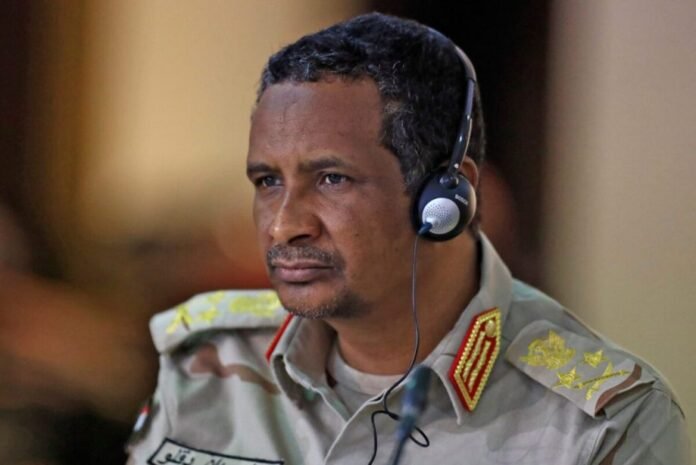
Sudan’s Rapid Support Forces (RSF) commander, Mohamed Hamdan Dagalo, has stripped defected brigadier Ali Rizqallah, known as Al-Safana, of his military rank, referred him to retirement and declared him an outlaw.

Hemedti also issued a death sentence in absentia against Al-Safana after accusing him of desertion and rebellion against the constitutional order.

On 11th May, Al-Safana, considered one of the RSF’s senior commanders, announced his formal defection from the force and sharply criticised its leadership.

On 15th May, the defected commander arrived in the Sudanese capital, Khartoum, declaring his intention to fight alongside the army in Kordofan before advancing towards Darfur.

A directive issued by RSF administration chief Omar Hamdan to all force departments and sectors said the RSF commander had approved a ruling by a field court convened on 17th May to try Ali Rizqallah in absentia.

The statement said the court ordered his demotion to the rank of soldier and dismissal from service.

It accused Al-Safana of abandoning military positions, assisting and joining what it described as “the enemy”, rebelling against the constitutional order and fleeing military service.

Before his defection, Rizqallah was considered one of the RSF’s most prominent field commanders. He previously led operations to seize areas in North Darfur before taking control of Al-Nuhud and strengthening the RSF’s presence in West Kordofan.

On 16th May, Ali Rizqallah officially announced his joining of the Sudanese armed forces after breaking away from the RSF.

Al-Safana said he would lead military operations alongside the army and allied forces to drive the RSF out of Kordofan, Darfur and the border area of Um Dafuq in the coming period.

Hulu set to keep existing as standalone streaming service and app (for now)

0
hulu-set-to-keep-existing-as-standalone-streaming-service-and-app-(for-now)
Hulu set to keep existing as standalone streaming service and app (for now)

Disney currently has no plans to shutter Hulu as a standalone streaming service or app, according to a company representative.

In a report from Variety today, the spokesperson said that Disney, which took total ownership of Hulu in June 2025, will continue to sell subscriptions to Hulu in the US and that “there are no current plans to sunset the Hulu app.”

Disney owned two-thirds of Hulu before closing its acquisition of the streaming service’s remaining third from Comcast last year. Since then, some reports have suggested that the Hulu app would be phased out in 2026, while others have speculated that Disney would likely, but not definitely, shutter Hulu. Disney’s statement today means that people should be able to continue watching stuff on Hulu without having to pay for Disney+ for the foreseeable future; although, Disney is free to change its mind at any point.

That it will continue to keep the app is good news for people who pay for Hulu+Live TV, which lets users watch broadcast channels or Hulu add-ons that add content from entities like Cinemax and Showtime. Disney+ doesn’t support either of those features currently but will do so “at a later date,” Disney said in an announcement today.

Meanwhile, Disney continues working to get Hulu and Disney+, which is 12 years younger, on the same backend technology infrastructure. Thus far, that work has included making available in March 2024 a Hulu tile in the Disney+ app where people can access content available from Hulu. Since then, users have been able to search for Hulu content within Disney+, and Hulu content recently watched through Disney+ appears on Disney+’s “Continue Watching” section. Notably, people only need a Hulu subscription and a “MyDisney” login—not a Disney+ subscription—to use the Disney+ app.

For many Disney+ and Hulu subscribers, that’s sufficient integration for ensuring it’s easy to watch Hulu content on Disney+. That level of integration involved determining how to unify “everything from login tools to advertising platforms, to metadata and personalization systems” and moving more than 100,000 individual assets/artwork, per a March 2024 report from The Verge. Disney has also said it would re-encode all of Hulu’s video files in order to create one master library with Disney+.

More work is needed to bring all of Hulu’s capabilities to Disney+, further drive app engagement through a preferred user experience, heighten Disney’s ability to track what users are streaming for advertising, crackdown on password sharing, improve recommendations, and simplify Disney’s streaming technology infrastructure for cost savings, reliability, and upgrades.

Today, Disney got closer to its ultimate goal and announced that some Hulu profiles can now link to Disney+, which will bring “their Hulu watch history, watchlist, and recommendations into Disney+.”

“Linking your 18+ profile will be available to eligible Disney+, Hulu bundle and Disney+, Hulu, ESPN bundle subscribers in the coming days and roll out to all bundle subscribers later this year,” Disney’s announcement added. Profiles accessing Disney+ through a bundle combining Disney+, Hulu, and HBO Max are not currently eligible, Variety noted.

“Upon logging in [to the Disney+ app], Hulu-only subscribers will continue to enjoy a small sampling of Disney+ and ESPN content to get a taste of what is offered to bundle subscribers,” Disney said today.

Disney is also working to incorporate more features from Hulu into Disney+. It said today that it will start testing a new TV guide in Disney+ for live content, including 24/7 channels that play ABC News Live and The Simpsons. Additionally, Disney+ started supporting HDR10+, initially through over 1,000 Hulu titles, in October.

An example of the Live Guide Disney is planning on adding to Disney+

An example of the Live Guide Disney is planning to add to Disney+.

An example of the Live Guide Disney is planning to add to Disney+. Credit: The Walt Disney Company

Hulu lives on

Disney is unlikely to stop supporting standalone Hulu subscriptions or the app until it finishes unifying all of the technology powering Disney+ and Hulu and can deliver all the features and packages that Hulu offers through Disney+. It remains feasible that Disney will consider killing standalone Hulu subscriptions or, especially, the app at that time.

However, continuing to allow people to sign up for Hulu without Disney+ is beneficial. Currently, a Disney+ subscription starts at $12 per month, a Hulu subscription starts at $12/month, and a Disney+ and Hulu bundle starts at $13/month. That pricing makes the bundle feel like an excellent deal that would also look superior to paying $13/month for a version of Disney+ that incorporates Hulu’s entire library. Further, streaming customers are said to be less likely to cancel a streaming subscription if it is bundled with another subscription.

So it seems that at least while Disney continues the complex work of unifying the two streaming services, the option to be a Hulu-only subscriber will remain.

Top Democrats decry Trump ‘taxpayer shakedown’ and ‘super-pardon’

0
top-democrats-decry-trump-‘taxpayer-shakedown’-and-‘super-pardon’
Top Democrats decry Trump ‘taxpayer shakedown’ and ‘super-pardon’

Top Democrats on a pair of panels in the US House of Representatives have demanded that Justice and Treasury department leaders answer for how they settled President Donald Trump’s $10 billion “sham” lawsuit against the Internal Revenue Service over the leak of his tax records.

In their letter sent Wednesday to acting Attorney General Todd Blanche, Treasury Secretary Scott Bessent, and IRS CEO Frank Bisignano, House Judiciary Committee Ranking Member Jamie Raskin (D-Md.) and Ways and Means Committee Ranking Member Richard Neal (D-Mass.) slammed the settlement as “one of the most brazen acts of public corruption and self-dealing in American history.”

“Rather than protect the public fisc from obvious plunder, this DOJ and IRS caved,” the lawmakers argued, condemning the creation of a $1.776 billion “Anti-Weaponization Fund” as a “taxpayer shakedown” intended to line the pockets of the president’s allies, including pro-Trump rioters who stormed the US Capitol on January 6, 2021.

“This massive slush fund will be governed by a sham commission of the president’s cronies,” Raskin and Neal noted—and due to the terms of the agreement, “the public and members of Congress may never know who received payments.”

CNN reported Tuesday that longtime Trump adviser and former administration official Michael Caputo has filed the first known claim, describing his family as “survivors of the illegal Russiagate investigations” and seeking $2.7 million.

“Congress and Congress alone has the power of the purse under the appropriations clause of the Constitution. But Congress never authorized or appropriated funds for a $1.776 billion political slush fund,” the House Democrats stressed. “This settlement is a transparent attempt to circumvent the separation of powers and use the judgment fund for a scam Congress never contemplated: rewarding the president’s political allies at the expense of American taxpayers.”

Additionally, under the settlement, the IRS is “forever barred” from pursuing any other actions against Trump and his relatives.

“Essentially, the federal government threw in a super-pardon for the president, his family, and related and affiliated entities, freeing them not only from any accountability for any taxes they may have dodged, but other pending federal criminal or civil investigations like insider trading, antitrust violations, false statements, or even sexual harassment,” the lawmakers wrote.

Raskin and Neal called on the federal departments to “retain all documents, including both hard copies and electronically stored information (ESI), related to the settlement and establishment of the fund,” including messages sent via “private email addresses, text messages, mobile applications (e.g., Signal), or other forms of electronic communications.”

They also directed the agency leaders to send over the IRS memorandum on the settlement, other related records, and answers to their list of questions by next week, before Bessent’s scheduled appearance before the Ways and Means Committee.

Blanche was on Capitol Hill Tuesday to testify about the DOJ budget request. However, he faced various other questions, and attempted to counter Democrats’ framing that, as Senate Appropriations Committee Vice Chair Patty Murray (Wash.) put it, Trump is using “tax dollars to set up a slush fund to enrich his own friends.”

Sen. Chris Coons (D-Del.) questioned Blanche about public disclosures of payouts and measures to ensure Trump family members don’t get any fund money, while Sen. Chris Van Hollen (D-Md.) asked about the eligibility of January 6 rioters, including those who assaulted Capitol Hill police or committed sex crimes against children.

A pair of police officers who helped defend the Capitol during the 2021 attack filed a lawsuit in federal court on Wednesday with the aim of dissolving the fund, arguing that “no statute authorizes its creation, the settlement on which it is premised is a corrupt sham, and its design violates the Constitution and federal law.”

After the House Democrats’ letter was released Wednesday morning, Raskin introduced the No Taxpayer-Funded Settlement Slush Funds Act of 2026 to block Trump’s fund. He also moved to subpoena Blanche, Bisignano, Bessent, and other individuals involved in creating the fund: Associate Attorney General Stanley Woodward and Treasury Department General Counsel Brian Morrissey.

“Mr. Blanche orchestrated this outrageous slush fund as part of the settlement with Donald Trump, which was also signed by Mr. Woodward, and Mr. Bessent will oversee the payout of these funds. Mr. Bisignano signed off on this settlement for the IRS, and Brian Morrissey remarkably resigned as this deal was being announced,” Raskin said. “These individuals all possess critical insights into Trump’s self-dealing scheme with his own agencies to create this fund and reward his supporters and friends.”

The Republican-controlled House Judiciary Committee rejected the proposed subpoenas in a party-line vote.

-Common Dreams

EU can freeze Russian assets held by trusts, court rules

0
eu-can-freeze-russian-assets-held-by-trusts,-court-rules
EU can freeze Russian assets held by trusts, court rules


The European Union can freeze assets linked to Russians sanctioned over the war in Ukraine, even ​if those assets are held by a trust ‌and there is no direct legal link to the persons involved, the EU’s Court of Justice ruled on Thursday.

The court ​said assets can also be frozen if they ​are only indirectly linked to the person on ⁠the sanctions list.

Concepts of ownership and control should ​encompass “all forms of power or influence exercised over assets”, ​it said, even if there was no legal link between them and the person concerned.

It said this served the purpose of ​the freezing of funds, meant to limit “as much ​as possible” any transactions that may be carried out with them.

Any ‌circumvention ⁠of sanctions should also be prevented, it added.

The EU court ruling related to three cases brought by an Italian court.

These dealt with the seizure by Italian authorities ​of companies ​and a ⁠yacht held through complex ownership structures by trusts, but seen to be owned by ​Russians on the EU’s sanctions list.

The companies ​had ⁠challenged the freezing of those assets, as they said the sanctioned persons had no power over them.

The EU ⁠court dismissed ​their claim, and said indications ​of ownership or control could also be inferred from circumstances or from “needlessly ​complex legal structures”.

0FansLike
0FollowersFollow
0FollowersFollow
0SubscribersSubscribe
- Advertisement -
Google search engine

Recent Posts