12.3 C
London
Thursday, May 21, 2026
Home Blog

False Testimony Sent Tony Carruthers to Death Row. Tennessee Is About to Kill Him.

0
false-testimony-sent-tony-carruthers-to-death-row-tennessee-is-about-to-kill-him.
False Testimony Sent Tony Carruthers to Death Row. Tennessee Is About to Kill Him.


Earley Story will never forget the name Alfredo Shaw.

As a longtime employee at the Shelby County Jail in downtown Memphis, Story had seen the young man come in and out of the detention facility known as 201 Poplar since the 1980s. Shaw acted cocky, but there was fear in his eyes. Story, a devout Christian, occasionally had conversations with him about God.

In 1994, Shaw became a witness in a grisly triple homicide. A local drug dealer, along with his mother and a teenage friend, had been abducted, murdered, and buried in a freshly dug grave at a cemetery in South Memphis. Prosecutors arrested 25-year-old Tony Carruthers, who had recently gotten out of prison. There was nothing directly tying him to the crime — and he swore that he had nothing to do with it. But Shaw claimed that Carruthers confessed to him. In 1996, a jury sentenced Carruthers to die.

Like most people, Story assumed Carruthers was guilty. But in January 1997, Story himself was accused of a crime he swore he did not commit. He was arrested and charged with selling drugs to an undercover officer. There was no evidence against Story — in fact, the presiding judge initially threw out his case for lack of probable cause. But in 1999, he was tried, convicted, and given probation. The main witness against him was Shaw.

Story was convinced he’d been framed. Over the previous decade he’d become known as a whistleblower, documenting violence and abuse at the jail. This made him a target for retaliation. “I had some enemies within the sheriff’s department,” he said.

“We’re not the only ones he’s done this to.”

Story lost his job and his pension as a result of his conviction. He had been fighting to clear his name for 20 years when, one week before Christmas 2017, he got an envelope in the mail from Riverbend Maximum Security Institution in Nashville. That return address was written in elaborate script below the name “Tony Von Carruthers.”

The envelope contained records confirming what Story had long known to be true: Shaw had been a paid confidential informant. Although this had been an open secret in Memphis for decades, the Shelby County District Attorney’s Office repeatedly denied it. “I have talked to the prosecutors who tried your client and neither is aware of any situation where Alfredo Shaw acted as a paid informant for anybody,” the office had written to Carruthers’s post-conviction attorneys.

The enclosed documents chronicled drug buys Shaw made on behalf of the sheriff’s department between 1991 and 1997. Conspicuously absent was the date when Story supposedly sold drugs to Shaw. Story believed that this should exonerate him. But the courts disagreed.

Story did not know precisely why Carruthers mailed him the records. Nor did he know the truth behind Carruthers’s innocence claim. But when he heard that Tennessee had set an execution date for Carruthers, he was deeply disturbed. No one, he says, should be executed based on the testimony of Alfredo Shaw.

“I’d hate to see him murdered, put to death, when there’s so many open ends,” he said.

Tony Carruthers is scheduled to die by lethal injection on Thursday morning at 10 a.m.

He has maintained his innocence for 32 years.

On Monday, Carruthers’s supporters, including family members and advocates from the American Civil Liberties Union, delivered a stack of petitions to the office of Tennessee Gov. Bill Lee at the state Capitol in Nashville. Despite mounting calls for Lee to stop the execution, on Tuesday he announced that he would not intervene.

In a clemency petition, his attorneys describe Carruthers’s case as a travesty of justice: a death sentence based on lies and a flimsy narrative that was bankrupt from the start. Among those who have spoken out against the execution is Story, now 72. He is joined by another ex-jailer, Bernard Kimmons, who also says he was wrongfully convicted of selling drugs based on Shaw’s testimony. Wearing “Save Tony Carruthers” T-shirts, the men told a Memphis news station that Shaw has a track record of putting innocent people in prison. “We’re not the only ones he’s done this to,” Kimmons said.

False testimony by jailhouse informants is a leading cause of wrongful convictions, often used to fill the gaps in cases where the state’s evidence is weak. The Innocence Project has found that roughly a quarter of death row exonerations are in cases involving a jailhouse snitch.

In Carruthers’s case, no physical evidence implicated him in the murders. Fingerprints from the crime scene have never been linked to anyone, and a blanket found buried with the victims has been shown to have an unknown male DNA profile. Some of the most horrifying details of the crime have also been discredited in the decades since Carruthers’s trial. The case remains infamous in Memphis because of the ubiquitous claim that the victims were buried alive. But this has long been debunked. Although a medical examiner said at trial that the victims suffocated to death, he later retracted his testimony — and other experts have said there was never anything to support it.

These red flags — a lack of physical evidence, unreliable witnesses, and bogus forensic testimony — are all-too familiar features of wrongful convictions. But Carruthers’s case is uniquely shocking in another way: He was sent to death row after acting as his own lawyer at trial. Carruthers’s attorneys have long argued that this doomed Carruthers from the start. They write in his clemency petition that he has a long history of undiagnosed mental illness and “was not competent to stand for trial, much less competent to represent himself.”

Carruthers’s self-representation was especially self-sabotaging where Shaw, the jailhouse snitch, was concerned. By the time Carruthers went to trial in 1996, Shaw had recanted his statements implicating Carruthers in an explosive TV interview, and prosecutors decided against calling Shaw as a witness. But in a perverse irony, Shaw ended up testifying anyway — not for the state, but for the defense. “In an effort to show that the prosecution had secured the indictment with an untrue story,” the clemency petition explained. “Mr. Carruthers believed he had to call Alfredo Shaw to the stand.”

The result was so disastrous that a judge later reversed the conviction of Carruthers’s co-defendant, concluding that Carruthers’s self-representation had violated his co-defendant’s right to a fair trial. That man, James Montgomery, got out of prison in 2015.

To Carruthers’s sister, Tonya, who joined the petition delivery in Nashville — and who said she plans to witness her brother’s execution — the past 32 years have been a living nightmare. She argues that her brother’s conviction was a case of guilt by association — and that his own record made it easy for him to take the fall for a crime he did not commit.

For decades, she said, the press adopted the state’s narrative of the case without examining the obvious problems with the case. “He was already portrayed as a monster in the media before his trial ever started.”

The triple murder that sent Carruthers to death row began as a missing persons case. Forty-three-year-old Delois Anderson lived in North Memphis with her son Marcellos Anderson, her niece Laventhia, and Laventhia’s two young daughters. She worked at a bank during the day and took classes at night.

On the evening of February 24, 1994, Laventhia would later testify, she came home to an empty house. It looked like Delois had been home. “Her car was there. Her purse was there. Her keys were there,” Laventhia said. In Delois’s bedroom, a pack of cigarettes and lighter were in their usual spot, and she had apparently served herself a plate of greens for dinner.

Laventhia figured her aunt had stepped out and would return soon. But that didn’t happen; Laventhia never saw her again.

Around 2:40 a.m. the next morning, a sheriff’s deputy in Mississippi responded to a call about a car on fire just south of the Tennessee state line. The vehicle, a white Jeep Cherokee with gold trim, was traced to a Memphis man who said he had lent it to Marcellos Anderson, nicknamed Cello.

Within a week, news broke that a suspect had led police to a grave of a woman who had been recently buried at the Rose Hill cemetery in South Memphis. Authorities got permission to exhume the body. Under the casket, beneath some wooden planks, were the remains of Anderson, his mother, and 17-year-old Frederick Tucker. Their hands were bound together; Delois Anderson had a pair of socks wrapped around her neck. Tucker and Marcellos Anderson had been shot.

The murders were front-page news in Memphis, where frenzied media coverage soon turned into bad press for law enforcement officials. Police had two main suspects in custody: Carruthers and a man named James Montgomery — the brother of the man who led authorities to the bodies. But Montgomery’s brother had since fled the state, leaving prosecutors without a key witness. With no other evidence against the two defendants, a judge threw out the first-degree murder charges.

Prosecutors scrambled, urging police to “get out and beat the bushes,” as one assistant district attorney would later testify. Before long, a new witness came forward: 28-year-old Alfredo Shaw.

On March 27, Shaw gave a tape-recorded statement to a pair of sergeants with the Memphis Police Department. He said that Carruthers carried out the murders on behalf of a pair of drug dealers who had been robbed by Anderson and Tucker. In fact, he said, Carruthers had tried to enlist him in the crime. “I stated to Tony that I did not want to be involved in that,” Shaw said.

Shaw claimed that he and Carruthers were in the back of the jail’s law library when Carruthers divulged how it went down: He and Montgomery had gone to Anderson’s house in search of the stolen money but only encountered his mother, Delois. They demanded she call her son, who returned to the home with the teenage Tucker. “Carruthers told me they put the gun to Marcellos and made them all go get in the Cherokee,” Shaw said. Carruthers and Montgomery then drove the three victims to Mississippi, where Carruthers shot Anderson and Tucker and set the jeep on fire. They then drove Delois, who was still alive, to the cemetery along with the two bodies, which they threw into the grave. Delois was screaming, Shaw said. So Montgomery pushed her into the grave, too.

Two days later, Shaw repeated the story to a grand jury.

In the two years between the indictment and the trial, however, Shaw began to have second thoughts. In February 1996, he contacted a local TV reporter and, with his identity concealed, recanted his statements on Memphis’s Channel 13. He said that he had been coerced and coached by Shelby County Assistant District Attorney Gerald Harris, who offered him money and promised to dismiss pending criminal charges against him.

Harris appeared in the TV segment too. He told the news station that Shaw was not credible. “I’m not gonna put that kind of witness on,” he said. Like all criminal defendants, Carruthers “has got a right to a fair trial.”

Carruthers and Montgomery were tried together in April 1996. Rather than the murder-for-hire plot Shaw described, prosecutors argued that the men wanted to take over the local drug trade. The theory was constructed entirely from circumstantial evidence, with witnesses testifying that said they saw the men with the victims at some point on February 24, 1994.

“It was all just stories,” Carruthers’s sister Tonya recalled. She attended the trial every day with their mother, describing it as a media circus and a hostile atmosphere. “Our family name became the scourge of the community,” she said. “We were not treated well at all in court.”

Tonya had spoken to her brother shortly after the murders. She remembers him being extremely upset. Although he ran in the same circles as Anderson and did not get along with him, he would never have killed him, she said — and he certainly would not have done anything to hurt his mother. Carruthers’s own daughter was related to the Anderson family through his ex-girlfriend. “If I knew that was gonna happen,” Tonya remembers him saying, “I would’ve done anything I could to stop it.”

Presiding over the trial was Shelby County Criminal Court Judge Joseph Dailey. Case records show that Dailey became convinced that his life was in danger due to reported death threats that swirled around the case from the start. He imposed a gag order on the press to prevent reporters from printing witnesses’ names, as well as unprecedented security measures in the courtroom and at his home.

Dailey was also fed up with Carruthers before the trial began. One by one, defense attorneys appointed to the case told the judge that their client was erratic and abusive and asked to be removed. Dailey ultimately refused to appoint any more attorneys, leaving Carruthers to represent himself. “He is the person who put himself in this position,” Dailey later said while denying Carruthers a retrial.

Several of the state’s witnesses knew Carruthers from prison. One man testified that he had worked with Carruthers on a work detail that included doing shifts in a cemetery — and that Carruthers remarked that hiding a body in a grave would be a good way to get away with a murder. “If you ain’t got no body, you don’t have a case,” he said. Another witness testified about a pair of letters Carruthers sent from prison, in which he boasted ominously about a “master plan” to settle scores on the streets. “Everything I do from now on will be well organized and extremely violent,” he wrote.

Carruthers pointed out that the letters did not actually implicate him in the killings. “He can’t say if I was just in prison just bragging or just running off at the mouth,” he told Dailey. But the judge allowed the letters as evidence.

The state had already rested its case on April 24, 1996, when Carruthers called Alfredo Shaw to the stand. His goal was to show that, as a jailhouse snitch, Shaw falsely implicated him in the murders in exchange for money and favors. But Dailey blocked Carruthers from questioning Shaw about being a confidential informant. The resulting testimony was a disaster for Carruthers.

Shaw testified that he contacted homicide detectives through a Crime Stoppers hotline after hearing about the murders on the news. Carruthers then presented him with his previous statements to police and to the grand jury, creating the impression that Shaw had been consistent in his accounts. When he tried to pivot to show that Shaw had disavowed his previous statements, it backfired. Shaw explained that he only wavered in his accounts because he’d been afraid for his life.

Carruthers and Montgomery were swiftly convicted. In his closing argument urging jurors to sentence the men to die, Harris emphasized the suffering of the victims as they slowly suffocated. “This woman, Delois Anderson, is in a grave, in a pit, alive,” he said. “The tragedy of it is that as she actually breathed in her last breath she was in effect killing herself, bringing things into her body, dirt being on top of her.” It was hard to imagine a more horrifying scene.

After a few hours, the jury came back with a death sentence.

Carruthers had been on death row for well over a decade when an investigator with his federal lawyers in Nashville did a deep dive into his life and background. Such investigations are a critical step in modern capital defense: One of the first things a lawyer is supposed to do to uncover any evidence of trauma, abuse, or mental illness — the kind of mitigating factors that can persuade a jury to spare a client’s life.

None of the attorneys originally appointed to represent Carruthers had undertaken such an investigation. And Carruthers was not able to do such work on his own behalf.

“Perhaps the most prominent issue affecting Tony’s family is that of severe mental illness,” the investigator later wrote in a report. Relatives across generations had schizophrenia and bipolar disorder and Carruthers displayed symptoms of both. When he was 14, his mother, Jane Carruthers, admitted him to a local hospital for a psychiatric evaluation. He stayed for five days.

Before long, Carruthers was in and out of juvenile jails. Staff at one facility recommended that he be placed “in a structured therapeutic environment,” but this was easier said than done. His mother was a single parent raising four children; while she worked hard all her life, she struggled to afford the family’s basic needs, let alone cover the kind of care her son might have needed.

“She was extremely hard-working,” Tonya said about her mother, who died a few years ago. “Oftentimes she worked two jobs.” For years she did overnight shifts at the Sheraton hotel in downtown Memphis, where Tonya remembered having occasional meals. Although Tonya described many challenges throughout their childhood, she went on to thrive in a way that her brother never did. Carruthers had anger issues, his sister told the investigator, which worsened as he got older.

After Carruthers turned 20 — an age where mental illness commonly manifests — he became increasingly manic and volatile. On one occasion, according to the report, Carruthers was accused of setting a fire at a house where he was staying. After being restrained and placed in a police car, Carruthers “ate the vinyl off the left rear passenger door, spitting chunks of it on the floor,” according to a police report. A Memphis officer still remembered the episode years later, describing it as a kind of “psychosis.”

At the time, such episodes were attributed to drugs or alcohol. But Carruthers’s legal team was certain that undiagnosed mental illness played a role. Although he repeatedly refused to cooperate with evaluations that could have yielded more specific diagnoses, defense experts nonetheless concluded that he had a type of schizoaffective disorder, whose symptoms included “pervasive delusions and paranoia.”

This was consistent with Carruthers’s behavior at trial, which jurors found off-putting, as well as his ongoing hostility toward his defense attorneys. To date, his case records are filled with declarations, transcripts, and countless letters documenting the fraught relationship with lawyers who were ill-equipped to represent Carruthers — and who Carruthers believed were conspiring against him.

After he was sent to death row, Carruthers became fixated on a belief that he was going to win a lucrative lawsuit against his lawyers. One state post-conviction lawyer memorialized a meeting in which Carruthers showed him a photograph of a green 2006 Jaguar; Carruthers said he planned to buy it with the proceeds from his civil litigation. “He was totally serious about this,” the lawyer wrote. “Tony also told me that it would be okay if the staff poisons him to death, because then his daughter will get a lot of money from the state, and that is his biggest concern.”

Carruthers has always rejected the suggestion that he was not competent to stand trial. While Tonya does not deny that he has shown symptoms of mental illness, she also points out that his paranoia is, in fact, well-founded given what happened in his case.

Decades after Carruthers was sentenced to die, both James Montgomery and Alfredo Shaw gave statements to his defense investigators saying that Carruthers did not participate in the crime. Montgomery pointed at a different man, who died in 2002, as the person who helped kidnap and kill the victims. But the courts refused to allow testing that might confirm this claim.

Shaw, meanwhile, met with a defense investigator on three different occasions while in federal prison in 2011. According to the investigator, he repeated what he had told the TV reporter in 1996, adding that, after the interview aired, police and prosecutors threatened to go after him if he did not revert to his original account. Shaw became visibly tense and upset as he spoke, the investigator wrote.

“I testified falsely at trial because I was fearful that the District Attorney’s Office would retaliate against me.”

The investigator summarized Shaw’s account in a declaration. “I testified falsely at trial because I was fearful that the District Attorney’s Office would retaliate against me,” it read. But Shaw said he was too scared to sign it.

It would take another six years for Carruthers’s attorneys to obtain the first batch of records confirming that Shaw was a paid informant — the same ones that Earley Story later received in the mail. And it was not until 2024 that they obtained additional records casting light on Shaw’s history as a confidential informant, not only for the sheriff’s department, but also for the Memphis Police Department as well. The records showed once again that Shaw was a paid snitch, with every incentive to lie on the stand. By then, Carruthers’s appeals had long been exhausted.

On the eve of his execution, the full story behind Carruthers’s case now stands to be buried with him. The state may put Carruthers to death, Tonya said, but families on both sides still deserve to know the truth of what happened in 1994.

In the meantime, she wants the public to know that he is not the killer who was portrayed in the press. “Please let people know that my brother is not a monster.”


Leaving the V8 in the past: The all-electric Mercedes-AMG GT 4-Door

0
leaving-the-v8-in-the-past:-the-all-electric-mercedes-amg-gt-4-door
Leaving the V8 in the past: The all-electric Mercedes-AMG GT 4-Door

At a star-studded event that closed downtown Los Angeles’ Sixth Street Viaduct last night, Mercedes and AMG unveiled the next generation of performance electric vehicles. The new four-door GT Coupe arrives in the midst of a pivotal period, the result of an almost experimental process that seems to take two steps forward and one step back quite regularly. In many ways, the all-electric AMG leaves previous plans in the past by effectively bringing the record-setting Concept AMG GT XX to series production, with many firsts for Mercedes supporting the abandonment of internal combustion power, including new axial motors from YASA and F1-derived battery cells.

Fittingly, then, Mercedes brought out its F1 team’s personnel, as George Russell presented the new car while Toto Wolff and Kimi Antonelli watched from the makeshift grandstands. Hollywood celebs ran the gamut, from Brad Pitt—who drove one GT onto the bridge—to Jacob Elordi and Kevin Hart, while Blink 182 played a surprisingly sarcastic mini set. All of the above may mean less to potential GT buyers than performance metrics and pricing when the 2027 model year comes along, but it only serves to prove just how big a deal Mercedes-AMG believes this will be.

A yellow Mercedes-AMG GT 63 4-Door Coupe on track

The new AMG GT 4-Door brings to production a lot of technology we saw in the GT XX concept a few years ago.

A mercedes-AMG GT 63 4-Door Coupe driving away from the camera on track

Part sports car, part limo, the GT 63 4-Door is ridiculously quick.

A new look

In person, the new GT bears almost no resemblance to any of Benz’s prior EVs. No more bulbous, nautical EQS shapes or minorly smoothed over boxy G-Wagen aesthetic. The new design is more aided by digital renderings and iterative algorithms, especially the jutting front grille, reclined headlights, and Kamm-tail rear end—a bit of Aston Martin fore and aft. From the profile view, the proportions fit somewhere between a Porsche Panamera or Taycan, low-slung and slippery for ideal aerodynamic efficiency.

Specs on paper support that impression, as the new GT measures 1.7 inches (43 mm) shorter in height and 1.4 inches (35.5 mm) longer overall, with the wheelbase stretched by 3.5 inches (89 mm) versus the outgoing model. Inside, the increasingly digital cockpit continues to evolve, with a new dash layout and canted touchscreens. The event afforded nobody but the stars a chance to actually sit in the passenger compartment, but diagrams shared with the media in advance revealed a typical EV skateboard chassis, albeit with a center spine similar to a transmission tunnel on an internal-combustion engine car to house critical EV components, as well as “foot garages” dropped in between battery modules that improve ergonomics. The large hatchback trunk behind the second-row seats complements a minuscule 1.4-cubic-foot (40L) frunk.

Axial flux motors

The four-door hatchback will launch in two variants, as usual a 55 and a 63. Both share the same hardware, though the former restricts output to “just” 805 hp (592 kW) and 1,328 lb-ft (1,800 Nm) of torque, while the latter bumps up to 1,153 hp (848 kW) and 1,475 lb-ft (2,000 Nm). All that shove comes courtesy of Mercedes-Benz’s wholly owned subsidiary, YASA, which last year announced a new world record for the most power-dense electric motor ever built. YASA’s axial e-motors can be found in McLarens, Lamborghinis, and Ferrari hybrids and in this application promise a 67 percent reduction in weight and physical length versus a more traditional radial-flux motor—with double the torque density and triple the power density, no less.

The GTs house two of the YASA motors at the rear, with dual water-cooled DC/AC converters and a planetary gearset to each side. Up front, a single motor mates to a spur-gear transmission with an integrated disconnect unit to allow for less drag while freewheeling. The motor sizes truly boggle comprehension, at just 3.5 inches (89 mm) wide for the front and 3.2 inches (81 mm) wide for each rear. YASA eventually believes that these units with a custom planetary gearset can effectively replace wheel hubs and brake rotors entirely, but apparently that solution wasn’t ready for mass-market production quite yet.

An infographic showing an exploded Mercedes-AMG front drive unit

An infographic showing an exploded Mercedes-AMG rear drive unit

600 kW charging

The motors save space and mass, but Mercedes-AMG also put serious work into the battery tech. The load-bearing structure houses 106 kilowatt-hours of usable capacity, good enough for up to 474 miles (764 km) of range on the WLTP standard for the 63 or 478 miles (770 km) for the 55. A total of 2,660 new cylindrical cells each measures 4.1 inches (104 mm) tall and 1 inch (25 mm) in diameter, allowing for improved cooling by a non-conductive oil within 18 laser-welded plastic modules.

With 800 V architecture, the battery can charge at 800 A and up to more than 600 kW, which allows for a claimed 70 kWh or the equivalent of 287 miles (462 km) of WLTP range added in just 10 minutes. A 10–80 percent charge takes as little as 11 minutes, or a quick stopover can top up 41 kWh in just five minutes. Of course, in the US, that would require plugging in to something like ChargePoint’s new 600 kW fast charger, which will feature the necessary NACS plug required to recharge a North American-spec GT.

The slippery aero design also includes venturi flow elements built into the underbody, as well as an active rear diffuser and active front louvers to direct air into the large front fascia. A set of optional 21-inch aero wheels can contribute up to 8.7 miles (14 km) of range, and choosing the right tires can add another 18.6 miles (30 km). In the ideal configuration, the GT’s drag coefficient is an impressively low 0.22—which contributes to the 4.5 miles/kWh (13.8 kWh/100km), or just shy of a Lucid Air Pure’s 5.0 mi/kWh (12.4 kWh/100 km) despite well more than double the Lucid’s power output.

Credit: Mercedes-AMG

However,  that battery pack adds up to a curb weight of around 5,400 pounds (2,460 kg). Straightline acceleration will not be a problem, given the output of YASA’s motors, and Mercedes claims a 0–60 mph time of just 2.0 seconds, a 0–124 mph (0-200 km/h) of 6.4 seconds, and when equipped with the optional AMG Performance Package, a 186 mph (300 km/h) limited top speed. At that high end, the axial motors spin at 15,000 and 13,000 rpm for the front and rear, respectively. And the powertrain hasn’t even reached full bore yet, apparently—a future variant will likely eclipse 1,300 hp (956 kW) and even more range.

Make it loud?

Still, the GT needs to live up to luxurious highway cruising as well, now a legit possibility given the range and charging capabilities. Two air suspension setups include Active Ride Control standard on the 63, which uses a 2.1-gallon (8.2L) pressure reservoir for speed-dependent ride height adjustment, along with a fully linked hydraulic roll control system. Previous heavy AMGs handled quite well, so presumably the fully electric GT will live up to the nameplate. Whether the silly AMGFORCE Sport+ fake V8 sounds, including haptic seat exciters and simulated gearshifts (which can all switch off, thankfully), will accentuate the driving experience remains a question that only true seat time will play out. Amid the booming speakers and crowd noise, the faux engine noises barely registered.

Of course, it’s hard to escape the irony of setting off a massive pyrotechnic display—not to mention flying radiant influencers in from all across the globe—while promoting the next step toward supposedly cleaner performance. And Mercedes declined to confirm whether a gasoline or hybrid GT four-door will join the lineup, other than to promise that a Euro 7 inline-six and a new V8 are in development. Regardless, will AMG buyers want to live without the wonderful wellspring of V8 torque at the heart of prior models? In comparison to other top-spec EVs, including the Lucid Air Sapphire, Tesla Plaids, Porsche Taycan Turbo GT, and Audi RS e-tron GT, presumably the new GT will wind up pricing somewhere in the middle of the pack, or well into six figures.

Mercedes-AMG GT 63 4-Door Coupe interior

There’s plenty of carbon fiber for the interior.

Mercedes-AMG GT 4-Door Coupe back seat

The back seat is strictly for two.

Mercedes-AMG GT 4-Door Coupe cargo area

The rear cargo hatch is pretty spacious.

Mercedes-AMG GT 4-Door Coupe frunk

The frunk is good for keeping a charger adapter.

Moving more GT units may matter less than the perceived halo effect or trickle-down appeal for the entry-level electric CLA, for example, which starts at a surprisingly attainable price point below $50,000. Which perhaps explains why, in a similar fashion to the CLA, the GT drops all nomenclature specifically signifying the electric powertrain—no more “EQ” or “with EQ Technology” or “AMG E-Performance” badging. In short, it would appear that for Mercedes and AMG, the time has finally come when cars are just cars, regardless of the means of propulsion.

NEC’s orbital transfer vehicle has cislunar combat potential

0
nec’s-orbital-transfer-vehicle-has-cislunar-combat-potential
NEC’s orbital transfer vehicle has cislunar combat potential

Japan’s NEC Corporation has launched a project to develop an Orbital Transfer Vehicle (OTV) – a spacecraft designed to transport satellites to their intended orbits after they have separated from the rockets that lift them into space.

Without an OTV, a satellite must use its own engines and fuel to reach its destination. With an OTV, even small satellites without powerful engines can be placed in distant orbits. And OTVs can transport multiple small satellites simultaneously, further increasing their efficiency.

NEC expects OTVs “to make important contributions to accelerating all aspects of space development. Not only will they promote the development of future space economies – such as the utilization of geostationary orbits and cislunar space – but by lowering the barriers to space utilization, they will also encourage the entry of new operators into the sector.”

The company has been selected to receive a grant for this project from the Japan Aerospace Exploration Agency (JAXA) under the heading “Technologies for Realizing Flexible Mobility in Space: (A) Development of Inter-Orbital Transportation Vehicles.”

NEC has spent decades developing and manufacturing spacecraft, including the geostationary communications satellite Kizuna, the lunar orbiter Kaguya and the deep-space probes Hayabusa and Hayabusa2.

Launched in 2003, Hayabusa returned to Earth in 2010 with the first samples from an asteroid (Itokawa), collected from the surface during a touch-and-go operation.

Hayabusa2, launched in 2014, twice landed on a larger asteroid (Ryuga), deployed three rovers, and blasted a hole in the rock to collect subsurface samples. It returned those samples to Earth in a capsule that landed in the Australian outback in 2020.

Based on this experience, NEC plans to conduct market feasibility studies, conceptual design and demonstrations for OTVs by the end of its current fiscal year, which ends in March 2027. Starting next year, the company plans to develop a prototype satellite for launch by 2032.

Soon after that, according to its press release, NEC aims to put the technology into practical use, ideally to “realize missions that deliver social benefits, and deepen research activities aimed at exploring new frontiers.”

The press release is fine as far as it goes, but OTVs go much farther.

As explained by Japan space and defense expert Paul Kallender, senior researcher at Keio University’s Shonan Fujisawa Campus (Keio SFC) west of Tokyo:

“In military space, OTV capability is a leading critical/strategic technology allowing militaries enhanced flexibility and greater range of options to disperse spacecraft into multiple orbits.”

“The most famous OTV vehicle,” Kallender adds, “is the US Space Force’s X-37B space plane. Arguably, the second most famous (or most infamous) OTV is the X-37B’s Chinese dark mirror-doppelganger Shenlong (Divine Dragon).

“NEC’s OTV project is publicly framed as civil space logistics to accelerate satellite deployment and on-orbit services across diverse orbits. However, its core capabilities – multi-orbit transfer, rendezvous and docking, and on-orbit servicing/refueling – are inherently dual-use, with clear relevance to responsive military logistics, satellite inspection, space situational awareness, and future cislunar security operations.”

Schematic diagram: NEC

Writing in the Japan: RMA (Revolution in Military Affairs) Substack, Kallender notes that “In low-Earth Orbits (LEO), OTVs enable: 

  • More and better-placed military Intelligence, Surveillance and Reconnaissance (ISR) satellites, or tactical satellites, or swarms of satellites in proliferated constellations; 
  • More and better-placed on-orbit spy satellites in different orbits to better spy on other satellites;
  • More and better-placed ASAT (attack) or sentinel/bodyguard maneuverable satellites in different orbits to, well, attack or defend against counterparts.

The last of these capabilities is a key enabler for Space Force’s push to develop maneuver warfare capabilities.”

Summing up, Kallender notes that NEC’s OTV is “a critical new enabler for Japan’s military space enterprise because it is being specifically designed for a much higher geostationary orbit and for entry into cislunar space.”

“Cislunar space is the entire area of space encompassing the Earth-Moon system. Cislunar space is, literally, the new high ground of military space.”

In its Mid-term Management Plan 2030, NEC identifies the “new security environment” as a major opportunity, stating that “As the global order transforms, Japan has the potential to emerge as a credible third option. Persistent geopolitical tensions and innovations in AI are driving not only defense market growth, but also a broadening of the security landscape.”

This includes:

  • The blurring of the line between peacetime and contingencies
  • The convergence of civilian and defense technologies and markets
  • The growing importance of digital infrastruture

Japan’s defense build-up plan is driving a 2.5 times increase in the nation’s defense-related market – a major opportunity for NEC. In addition to being a leading-edge satellite developer, the company is one of Japan’s top suppliers of information and communications systems and related software.

NEC plans to “steadily expand its business in priority areas such as cross-domain operational capabilities, command and control, pursuing global expansion through equipment transfers and expanded sales of dual-use products in line with government policy.”

One of the most important of those OTV “missions that deliver social benefits” is national defense.

Follow this writer on X: @ScottFo83517667

In Kibbutz Nir Oz, Security Training and Rebuilding After October 7 Go Hand in Hand

0
in-kibbutz-nir-oz,-security-training-and-rebuilding-after-october-7-go-hand-in-hand
In Kibbutz Nir Oz, Security Training and Rebuilding After October 7 Go Hand in Hand


Residents, volunteers, and security instructors say the focus on training readiness for another attack is tied to whether the kibbutz can restore confidence and bring people home

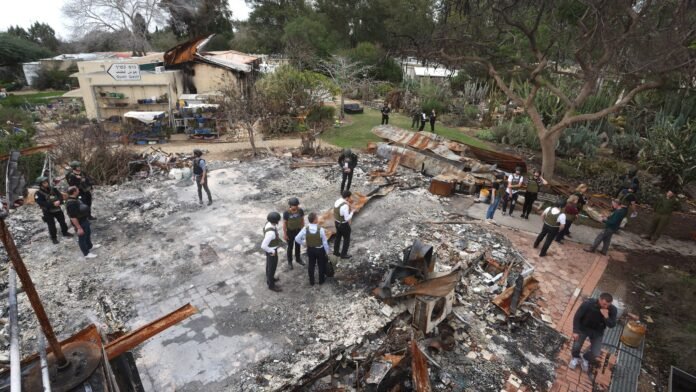
Inside Kibbutz Nir Oz, where the traces of October 7 remain visible across the kibbutz, local security teams gathered for a training exercise aimed at preparing residents for the first critical moments of a future emergency. In a community where the question of security is inseparable from the question of whether civilian life can be rebuilt, the session led by Magen 48 carried a significance beyond the drill itself. Nir Oz has become one of the clearest symbols of the October 7 tragedy, and efforts like this are now tied directly to whether residents believe they can return and live here safely again.

The community was the first line and the last line of defense

For Ehud Dribben, co-founder of Magen 48—an Israeli civilian-led initiative and NGO dedicated to training and equipping rapid response security teams in communities across Israel—the mission begins with a blunt lesson from the attacks. “Magen 48 was established to protect communities,” Dribben told The Media Line. “There is a need. The community was the first line and the last line of defense.”

Dribben said the events of October 7 showed that local defense teams must be able to operate before outside forces arrive. “The army is not able to be there all the time in the first few hours,” he said. “And if the community is not going to learn how to defend itself and be productive until the army comes, look where we are here, Nir Oz. That’s a big lesson. So, we have to provide them with the tools to be able to defend themselves until the army comes.”

Magen 48 presents its work as a direct response to the failures and gaps exposed that day. The organization trains civilian first-response teams inside Israeli communities, with an emphasis on coordination, local terrain, command structure, and decision-making under pressure. Dribben said the point is not simply to distribute equipment, but to teach residents how to function together as a unit when minutes matter.

We make them a fighting force

“Equipment is important,” he said. “But we emphasize the training. What do you do with equipment? The army gave them equipment. A lot of NGOs gave equipment. But no one really taught them what to do with the equipment and how to perform as a unit.” He said the gap exposed on October 7 was not only material but operational: communities needed to know what to do in each scenario, who was responsible for what, and where each person needed to be. “We make them a fighting force.”

The model is built in part on the experience of another kibbutz, where Dribben and his team carried out a training program prior to October 7. He said that training enabled the community to respond effectively during the attack and has since become a reference point for what structured local preparedness can mean under direct assault. “We did a training program for Kibbutz Erez, and they were able to defend themselves and save the kibbutz,” he said. “And that’s because they knew how to work together as a team and confront the enemy.”

Dribben said that kind of preparedness cannot be achieved through isolated exercises. “It needs to be a process, a professional program,” he said. “It could not be a training day here and there. If you want to make it happen, it’s got to be serious.” He said the long-term goal is not only tactical but social: to give residents enough confidence to return home and begin restoring trust in the IDF.

In Nir Oz, that connection between security and return is not theoretical. The kibbutz became one of the symbols of the October 7 massacre, and many residents have still not returned permanently. The training is being carried out with local teams and residents working alongside Magen 48 instructors, including Officer Y., a Nir Oz resident who serves as the kibbutz’s security coordinator.

“Nir Oz was my first home in Israel. It always will be,” Officer Y. told The Media Line. “At the end of the day, someone has to do this job, and we have a national assignment as far as I’m concerned, to help rebuild the kibbutz … And if I’m able to have the privilege to take upon myself the security of this place, then I’m more than honored to do so.”

Officer Y. said the volunteers taking part understand the burden they are carrying. “Every member of our team feels the vast weight on their shoulders of the responsibility that we have of rebuilding and securing this home,” he said, describing the training as a way to bring people from different backgrounds into one functioning security framework. “We’re able to take a group that is inorganic, as we say, of various backgrounds, of various professional levels when it comes to fighting and security, and to help make them the most professional soldiers that they can be,” he said.

In Nir Oz, the connection between security and return is not theoretical. While most of the Gaza border region has already moved back toward routine, Nir Oz remains in a different category. Official figures from the government’s Tekuma rehabilitation authority show that more than 92% of Gaza border residents have returned, and the region’s population has grown beyond its prewar level. But the most devastated communities, including Nir Oz, remain on a slower timetable, with rehabilitation and broader return still extending toward 2027.

For Ori, a Nir Oz resident who moved to the kibbutz last August as part of a rehabilitation group, joining the local security team is part of the broader effort to bring life back to the community. “We’re trying to build a community here and make a life back in Nir Oz after the horrible things, the massacre that happened on October 7,” he told The Media Line.

Ori said the link between community life and security is now unavoidable. “In order to build a community, we need to be able to protect ourselves, so part of the rehabilitation is making a rapid response team and being a part of it in order to defend Nir Oz from Gaza and other threats in the area,” he explained.

He was not part of the kibbutz security team on October 7. He said he joined after moving to Nir Oz, not because security is his profession, but because he sees it as necessary for rebuilding. “I’m an educator, I work in education, it’s not my training, it was my training in the military, and now we’re training together in order to build the rapid response team again.”

In Ori’s view, the return of families depends on whether residents believe there is a real security framework in place. He said strong local security teams, regular training, and trust among team members are all part of making people safe and helping them feel safe. “I think it’s pretty clear that in order for people to come back to Nir Oz, or build a community back in the Gaza area, we have to believe that we can be safe, and there could be security in living here,” Ori said.

For him, the goal is personal as much as communal. He said he wants to live in Nir Oz, raise his children there, and know that his family and friends are safe. He added that although he still hopes for peace in the future, the reality after October 7 is that residents feel they must be strong enough to defend themselves in order to live here now.

The difficulty of restoring that sense of safety is clear in the words of Shachar Butler, a Nir Oz resident who served as head of security in the kibbutz from 2016 until October 7, 2023. He described the attack as something that arrived without the usual warning signs residents had learned to recognize after years near Gaza. “My day started like everyone’s at 6:29. Alarms going through the air, and it seemed weird because usually you could smell when something is coming,” he told The Media Line. “You could smell when a conflict or when an escalation will come out. At this point, it was just out of the blue.”

Butler said he quickly realized the situation was not a regular escalation. He recalled hearing a gunshot, recognizing that it was not from an Israeli weapon, and understanding within minutes that gunmen were already at his house. “I heard a gunshot. I realized it’s not an Israeli weapon. And in a matter of minutes, there were already people in my house, basically surrounding my house. Around 30 of them.”

The numbers from Nir Oz remain among the most painful in Israel’s October 7 story. Butler described it as a small community of about 400 people and said that by the end of that day, 117 had either been murdered or kidnapped to Gaza. He added that the kibbutz is now counting 73 dead from the community, even without what he called the collateral damage among survivors whose health later declined, especially older residents.

Butler said only a small number of residents have returned so far. “Right now, not a lot. Maybe about 20 of them,” he said. “We have a project called Pioneer Neighborhood for people who want to come here and rebuild the place. So, they’re living here right now. Still no kids, no education systems … but this is all yet to come.”

For Butler, the central challenge is not simply bringing people back physically but rebuilding the link that was broken during the hours in which residents waited for help. “I think Nir Oz is notoriously known for being Ground Zero on the 7th of October. And the reason for that is that the army never showed up,” he said. “Until 2 o’clock in the afternoon, no army force entered Nir Oz. And when they did enter at 2 o’clock, there was nowhere for terrorists to fight anymore.”

These people were crying for help for hours and hours and hours, and nobody came to save them

He said those hours created a crisis of confidence that still shapes the kibbutz’s future. “These people were crying for help for hours and hours and hours, and nobody came to save them,” Butler said. “So, I think this will be our main goal and our main challenge, to create, to re-establish this link of trust between civilians and army, that when I call for help, someone will come and help me.”

That trust, Butler said, is essential if Nir Oz is to have a future. “Otherwise, we can throw away all the 60 years, 70 years of this place and go live in a safer place, in Tel Aviv or whatever,” he said. “And the people we lost here, those were the bread-and-butter people, that was the hard core of Zionism, coming to the border and building an amazing place. You can see with your eyes, the contrast between the greenery … and all the horrors that happened here.”

Butler sees the training as necessary, even if it arrives after the catastrophe that made its urgency undeniable. “It’s a bittersweet feeling because it’s a little too late,” he said. “But then again, we need people to do it. And I think the way Magen 48 is doing it, that’s how we were supposed to do it also before the 7th of October, sadly. But we can only do what we can do now. So here and now, it’s the best way to do it.”

For Dribben, the purpose of the work is not only to prepare for an attack, but to help residents regain enough confidence to return home. He said safety means having both the ability and the know-how to defend oneself and having a community that can react efficiently if something happens. In his view, that confidence can only be built through training, resilience, and communal strength.

The exercise in Nir Oz reflects the uncomfortable reality now facing communities across southern Israel: rebuilding homes is not enough if residents do not believe they can live in them safely. Magen 48’s training does not answer every question raised by October 7, nor does it erase the failures that residents still describe in raw terms. But for those moving through the kibbutz with weapons, radios, and instructors at their side, the work is a practical attempt to turn the worst day in their community’s history into a lesson in readiness for the future.

Vivian Cuts Energy Use By 28.8%, Securing EU Funding

0
vivian-cuts-energy-use-by-28.8%,-securing-eu-funding
Vivian Cuts Energy Use By 28.8%, Securing EU Funding


Pharmaceutical and medical devices company Vivian has reported a 28.8% reduction in energy consumption over the past year, significantly surpassing the 5% benchmark required to qualify for support under the EU-backed EENergy initiative, which helps small and medium-sized enterprises improve energy efficiency.

The achievement secured the group a €10,000 grant and positions Vivian among a relatively small number of European SMEs able to demonstrate tangible operational and financial benefits from sustainability-driven investment.

Launched in February of 2024, the European Union’s EENergy project aims to distribute €9 million in the form of 900 grants to SMEs throughout Europe to engage in activities, purchases or integrations.

Nicholas Incorvaja, recently appointed as the company’s finance manager and ESG lead, said the result underscored the growing link between environmental, social and governance practices and business performance.

“ESG is not simply a reporting exercise. By embedding sustainability into our operations, we are reducing environmental impact while also unlocking efficiencies and creating long-term value,” he said.

The reduction reflects a series of incremental changes rather than a single intervention.

What began as a set of practical initiatives including energy conservation, waste separation and digital transformation, developed into a more formalised ESG framework. When Vivian moved to its new premises in 2023, it invested in energy efficiency measures, including an upgraded photovoltaic system that generates about 120MWh annually, alongside broader digitalisation and operational improvements, reducing reliance on grid electricity and lowered emissions.

“What matters is not just achieving these results but sustaining them. The focus now is on continuous improvement, supported by better data and targeted investment.”

Vivian plans to reinvest its EENergy funding into further projects, including the expansion of its electric vehicle charging infrastructure and the rollout of an AI-driven ESG monitoring platform aimed at identifying additional efficiencies.

NASA’s Psyche spacecraft returns unfamiliar views of a familiar world

0
nasa’s-psyche-spacecraft-returns-unfamiliar-views-of-a-familiar-world
NASA’s Psyche spacecraft returns unfamiliar views of a familiar world

Not quite halfway through a six-year sojourn through the Solar System, a NASA spacecraft used a close encounter with Mars last week as a dress rehearsal for its arrival at the Solar System’s largest metal asteroid in 2029.

The Psyche mission launched more than two-and-a-half years ago, in October 2023, from Kennedy Space Center, Florida, to kick off a journey of some 2.2 billion miles (3.6 billion km) to reach its unexplored namesake, the asteroid Psyche. The robotic research mission got an initial lift from a powerful SpaceX Falcon Heavy rocket. It uses plasma engines to gradually build up the impulse needed to reach its destination in the asteroid belt, between the orbits of Mars and Jupiter.

A flyby of Mars last Friday gave the spacecraft its most significant boost since launch. Navigators at NASA’s Jet Propulsion Laboratory in California set up the spacecraft for a course taking it 2,864 miles (4,609 km) from the Martian surface, well above the planet’s tenuous atmosphere. Psyche used Martian gravity like a slingshot to gain enough speed to reshape its orbit around the Sun, putting the probe on a path to intercept its asteroid target.

Right on the money

“Although we were confident in our calculations and flight plan, monitoring the DSN’s (Deep Space Network’s) Doppler signal in real time during the flyby was still exciting,” said Don Han, Psyche’s navigation lead at JPL, in a statement. “We’ve confirmed that Mars gave the spacecraft a 1,000-mile-per-hour boost and shifted its orbital plane by about 1 degree relative to the Sun. We are now on course for arrival at the asteroid Psyche in summer 2029.”

The gravity assist was the main goal of the Mars flyby, but ground teams used the encounter to test the spacecraft’s three science instruments: a multispectral imager consisting of two cameras, a gamma-ray and neutron spectrometer, and a magnetometer. Similar sensors are flying on other spacecraft that are permanently studying Mars, so the real benefit of running the instruments during Psyche’s encounter was for scientists to use the flyby as a practice run for when it reaches the asteroid Psyche.

“As a bonus, it captured Mars images from a rare perspective,” NASA said in a press release.

The spacecraft approached Mars from a high phase angle, or from the side opposite the Sun, making the planet appear as a thin crescent as Psyche moved in for the encounter. The wispiness of the thin Martian atmosphere was on full display, with sunlight shining through diffuse clouds of dust suspended dozens of miles over the sharp edge of the planet’s rust-colored surface.

This is the first view of a nearly “full Mars” as seen by NASA’s Psyche spacecraft shortly after its closest approach to the planet on May 15, 2026. The view extends from the south polar cap northwards to the Valles Marineris canyon system and beyond.

This is the first view of a nearly “full Mars” as seen by NASA’s Psyche spacecraft shortly after its closest approach to the planet on May 15, 2026. The view extends from the south polar cap northwards to the Valles Marineris canyon system and beyond. Credit: NASA/JPL-Caltech/ASU

As Psyche zoomed past the red planet, its cameras captured a wide-angle overhead view of Mars’ southern polar ice cap. Jim Bell, who leads the Psyche imager instrument team at Arizona State University, said the spacecraft took thousands of images during the encounter. The observations will help scientists “calibrate and characterize” the performance of the cameras, Bell said.

Psyche’s magnetometer may have detected a signature of the solar wind interacting with Mars’ upper atmosphere or its remnant magnetic field, and its spectrometers were tuned to measure the chemical composition of the Martian surface underneath the spacecraft’s flight path.

Numerous other missions are exploring Mars full-time, so there’s little chance of any major discoveries lurking in Psyche’s flyby datasets. But scientists should be able to calibrate the mission’s instruments by comparing flyby observations with archival data from other Mars missions.

It is always interesting to gain new perspectives, even on something familiar. You can’t see a crescent Mars from Earth. But the Psyche mission’s real payoff will come in three years, when the probe pulls in close to asteroid Psyche, an object the size of Massachusetts that is rich in iron, nickel, and likely other metals that we know only as a fuzzy blob through telescopes. It is truly uncharted territory, but the Psyche spacecraft will have more than two years to survey the asteroid, far longer than the fleeting glimpse it got of Mars last week.

Reporter Carjacked at Gunpoint While Live on Air (Video)

0
reporter-carjacked-at-gunpoint-while-live-on-air-(video)
Reporter Carjacked at Gunpoint While Live on Air (Video)


A Mexican sports reporter’s live interview turned into a nightmare when a gunman yanked open his car door and carjacked him on camera.

Fernando Vargas, a journalist and communications director for Mexico’s National Professional Basketball League, was speaking live Tuesday on the Mexican sports program “Bla, bla, bla deportivo” when the shocking attack unfolded.

Vargas was sitting inside his parked car at a gas station in the Mexican state of Morelos, just south of Mexico City, when a man suddenly opened the driver’s side door and pointed a gun at him.

The broadcast captured the chilling moment the armed robber appeared to chamber a round before demanding Vargas hand over his belongings.

“The key, quick. Key, phones and wallets, quick,” the man said in Spanish.

Host Ed Martínez watched in stunned silence as the horrifying scene played out live for viewers.

Despite the terrifying ambush, Vargas somehow stayed calm. He gathered several items, including his phone, and stepped out of the vehicle as the robber continued barking orders.

It remains unclear whether the gunman realized the entire ordeal was being broadcast live.

Vargas could be seen exiting the car before the video feed went dark, though audio continued. At one point, the shaken journalist could be heard trying to de-escalate the situation.

“Calm down, calm down,” Vargas told the robber.

Thankfully, Vargas escaped the attack without physical injuries.

Martínez later updated viewers on Instagram, saying Vargas was safe but badly shaken.

“Thankfully, he’s safe, but very scared,” Martínez wrote. “If anyone recognizes the guy in the video, please help us and report him to the authorities. This happened in Morelos.”

The thief reportedly fled with Vargas’ car, wallet, phone and other personal belongings.

According to reports, no arrests had been made.

Trump-Xi summit didn’t change North Korea’s strategic reality

0
trump-xi-summit-didn’t-change-north-korea’s-strategic-reality
Trump-Xi summit didn’t change North Korea’s strategic reality

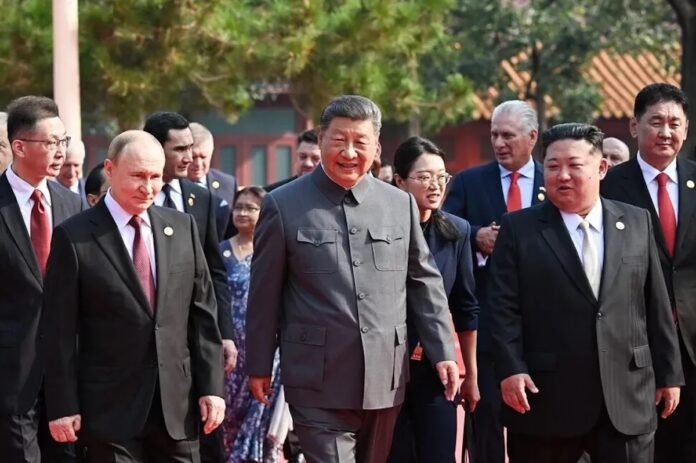
The Trump-Xi summit in Beijing may have projected calm at the leader level, but it should not be mistaken for strategic convergence. Whatever one makes of the new language of “constructive strategic stability,” the underlying reality is one of constrained rivalry, not cooperation. That distinction matters greatly when it comes to North Korea.

The Trump administration’s China policy increasingly resembles bounded strategic competition rather than unconstrained confrontation. This is not détente in the Cold War sense. It is a transactional effort to reduce the immediate risks of conflict while preserving long-term competition in military power, advanced technology and geopolitical influence. Both Washington and Beijing appear intent on buying time.

For Xi Jinping, such stability serves a clear purpose. It aligns with China’s broader strategy of economic resilience, technological advancement, and continued military modernization under the 15th Five-Year Plan. It also reinforces Beijing’s preferred global narrative: China as the responsible stabilizer, America as the disruptive military power.

Xi’s nominal endorsement of freedom of navigation through the Strait of Hormuz fits neatly into that story, but without any corresponding commitment to use China’s leverage with Iran to restore maritime security. Tehran seems to understand this dynamic well. Iran’s appointment of a hardline senior political figure as special envoy to Beijing suggests not confidence in Chinese crisis diplomacy, but recognition that China offers political cover, economic lifelines, and diplomatic legitimacy without meaningful pressure or conditions.

Ceremony, however, is not strategy. Summit atmospherics have a short shelf life when unaccompanied by concrete agreements.

Even if Washington and Beijing sustain a temporary trade truce or moderate tensions over technology and security issues, the structural competition remains intact. The administration’s actions elsewhere suggest as much. From efforts to limit China’s foothold in Panama and the Western Hemisphere to resource competition in Greenland, the broader contest continues unabated.

Indeed, weaponized interdependence has become the defining operating system of US-China relations. Semiconductors, rare earths, supply chains and AI infrastructure are no longer merely economic concerns. They are instruments of national power and strategic coercion.

Mutual dependence no longer reassures; it creates vulnerability. AI governance may be discussed diplomatically, but beneath the rhetoric both powers increasingly see artificial intelligence as a decisive source of military advantage and geopolitical leverage.

Nowhere is the strategic divide clearer than Taiwan.

If the summit demonstrated anything, it is that Beijing views Taiwan not as a secondary irritant, but as the central test of US-China relations and perhaps the clearest measure of whether America’s alliances still mean what they say. This is precisely why hopes for major US-China cooperation on North Korea remain unrealistic.

Taiwan and Korea have long been linked in the logic of US credibility and Asian balance-of-power politics. The issue dividing Washington and Beijing is not fundamentally trade or diplomatic rhetoric. It is the future distribution of power in Asia.

Strategic ambiguity has helped preserve peace for decades by deterring both Chinese aggression and unilateral Taiwanese moves toward formal independence. But recent signals have introduced uncertainty.

Trump’s criticisms of Taiwan, calls for greater burden-sharing and suggestions that arms sales could serve as negotiating leverage may be intended as tactical positioning, but allies hear something different: wavering commitment. Deterrence depends on not only capabilities but confidence. Tactical calm today could simply reflect Beijing’s decision to buy time while expanding its leverage for a future move.

That same logic applies to North Korea.

Leader-level de-escalation between Washington and Beijing does not translate into strategic alignment on the Korean Peninsula because their interests fundamentally diverge. Avoiding war may be a shared objective. Advancing each other’s strategic interests is not.

China will not deliver North Korea for Washington.

Beijing may prefer stability on the peninsula, but its deeper priority is limiting American strategic advantage. The era when denuclearization served as a common diplomatic slogan has faded. For Beijing, North Korea increasingly functions less as a proliferation challenge than as a geopolitical buffer and a potential source of leverage against the United States and its allies.

That does not mean diplomacy with Pyongyang is impossible. President Trump may well seek renewed summit diplomacy with Kim Jong Un. But expectations about China’s role should be disciplined. At most, Beijing may support tactical crisis management to prevent war or regime collapse. It is unlikely to meaningfully pressure Pyongyang in ways that strengthen US influence, weaken North Korea’s strategic utility or advance genuine denuclearization.

Nor would Kim return to diplomacy from weakness.

The Kim Jong Un of today is not the leader Trump met in 2018. He now operates with greater nuclear confidence, stronger constitutional legitimacy, Russian political and military backing and a clearer long-term dynastic vision.

North Korea seeks recognition as a permanent nuclear weapons state while simultaneously strengthening both its nuclear and conventional military capabilities, aided in part by Moscow’s wartime dependence on North Korean munitions and manpower.

The strategic environment has changed.

The emerging order in Asia is one not of reconciliation but of managed rivalry – stability without trust, deterrence without resolution and diplomacy without convergence. That is precisely why strengthening the US-ROK alliance and trilateral cooperation with Japan remain indispensable. Not because diplomacy has failed, but because diplomacy now unfolds in a far more dangerous strategic landscape.

Dr. Patrick M. Cronin is Asia-Pacific Security Chair at the Hudson Institute and Scholar and Residence at Carnegie Mellon University’s Carnegie Mellon Institute for Strategy and Technology (CMIST). 

Creamy Polish Dill Soup (Zupa Koperkowa)

0
creamy-polish-dill-soup-(zupa-koperkowa)
Creamy Polish Dill Soup (Zupa Koperkowa)

If you’re looking for a cozy, comforting soup that feels both hearty and fresh, this Polish Dill Soup is pure comfort in a bowl.

Known in Poland as Zupa Koperkowa, this creamy dill soup is made with tender potatoes, sweet carrots, green peas, fragrant fresh dill, and a silky broth finished with sour cream.

It’s light yet satisfying, simple yet deeply flavorful, and one of those nostalgic homemade recipes that instantly warms both the body and soul.

The fresh dill is truly the star of the dish, giving the soup its bright, herby flavor that makes it completely unique and incredibly comforting.


Why You’ll Love This Polish Dill Soup

Cozy & Comforting

Warm, creamy, and perfect for chilly days.

Fresh & Herby

Fresh dill gives the soup a vibrant, delicious flavor.

Easy One-Pot Recipe

Simple ingredients and minimal cleanup.

Hearty Yet Light

Potatoes and vegetables make it filling without being heavy.

Budget-Friendly

Made with affordable pantry staples.

Great for Meal Prep

It reheats beautifully and tastes even better the next day.


What Is Polish Dill Soup?

Zupa Koperkowa is a traditional Polish soup commonly made with:

  • Potatoes
  • Carrots
  • Broth
  • Fresh dill
  • Sour cream

There are many regional variations using:

  • Rice
  • Pasta
  • Barley
  • Meatballs
  • Boiled eggs

But the fresh dill remains the defining flavor of this beloved comfort food.


Ingredients You’ll Need

Fresh Dill

The most important ingredient — bright, fresh, and aromatic.

Potatoes

Create hearty texture and comforting flavor.

Carrots

Add sweetness and color.

Green Peas

Bring freshness and a pop of sweetness.

Onion & Garlic

Build savory depth.

Sour Cream

Creates the silky creamy finish.

Chicken Broth

Forms the flavorful soup base.

Scallions

Add extra freshness and onion flavor.

Herbs & Spices

Marjoram, nutmeg, turmeric, salt, pepper, and bay leaf create warmth and depth.


Why This Soup Is So Special

Unlike heavy cream soups, this dill soup feels both rich and refreshing at the same time.

The fresh dill completely transforms the broth, adding:

  • Bright herbal flavor
  • Fresh aroma
  • Signature Polish comfort-food character

The potatoes make it hearty while sour cream creates luxurious silky texture.

It’s simple food at its absolute best.


How to Make Polish Dill Soup

This soup is easy enough for a weeknight but tastes like it simmered all day.


Step 1: Prep the Ingredients

Dice:

  • Potatoes
  • Carrots
  • Onion
  • Scallions

Mince the garlic and chop the fresh dill.


Step 2: Sauté the Vegetables

In a large pot, melt butter over medium-low heat.

Cook:

  • Onion
  • Garlic
  • Carrots
  • Scallions

until softened and fragrant.


Step 3: Add Seasonings

Stir in:

  • Salt
  • Pepper
  • Marjoram
  • Turmeric
  • Nutmeg
  • Bay leaf

Cook briefly to release the flavors.


Step 4: Add Potatoes & Broth

Add:

  • Potatoes
  • Green peas
  • Chicken broth

Bring everything to a boil.

Reduce heat and simmer until the potatoes become tender.


Step 5: Stir in Sour Cream

Once the vegetables are cooked, stir in the sour cream gently until fully incorporated.

To prevent curdling, use room-temperature sour cream or temper it first with a little hot broth.


Step 6: Add Fresh Dill

Stir in most of the fresh dill and simmer uncovered for a few minutes.

Taste and adjust seasoning as needed.


Step 7: Serve Warm

Top each bowl with extra fresh dill and serve with:

  • Crusty bread
  • Baguette
  • Buttered toast

Tips for the Best Dill Soup

Use Fresh Dill

Fresh dill is absolutely essential for authentic flavor.

Temper the Sour Cream

This helps prevent the cream from splitting.

Don’t Overcook the Dill

Add it near the end to preserve its bright flavor.

Use Homemade Broth

Homemade broth creates even richer flavor.

Choose Waxy Potatoes

They hold their shape better in soup.


Delicious Variations

Add Pasta or Rice

Traditional versions sometimes include:

  • Egg noodles
  • Rice
  • Barley

Add Protein

Try:

  • Small meatballs
  • Shredded chicken
  • Boiled eggs

Make It Vegetarian

Swap chicken broth for vegetable broth.

Add More Vegetables

Try:

  • Celery root
  • Celery stalks
  • Leeks

What to Serve with Polish Dill Soup

This soup pairs beautifully with:

  • Rustic bread
  • Rye bread
  • Buttered baguette
  • Side salads
  • Roasted vegetables

It’s hearty enough to enjoy as a light dinner on its own too.


Storage & Leftovers

Refrigerator

Store in an airtight container for up to 3 days.

Freezer

Freeze for up to 3 months.

Thaw overnight in the refrigerator before reheating.


Reheating Tips

Warm gently over medium-low heat.

Avoid boiling after adding sour cream to keep the texture smooth and creamy.


Frequently Asked Questions

Can I use dried dill?

Fresh dill is highly recommended for authentic flavor.

Can I make it vegetarian?

Absolutely — use vegetable broth.

Can I freeze it?

Yes, though cream-based soups may separate slightly after thawing.

What potatoes work best?

Waxy potatoes hold their shape beautifully.

Can I make it ahead?

Definitely! The flavors deepen overnight.


Why Everyone Loves This Recipe

This Creamy Polish Dill Soup is:

  • Cozy
  • Creamy
  • Fresh
  • Herby
  • Comforting
  • Nostalgic

It’s one of those simple homemade soups that instantly feels warm and nourishing from the very first spoonful.

If you love comforting soups with fresh flavor and creamy texture, this recipe is a must-try.


More Cozy Soup Recipes You’ll Love

  • Chicken Orzo Soup
  • Creamy Tortellini Soup
  • Potato Soup
  • Spanish Potato Soup

Polish Dill Soup Recipe Card

Ingredients

  • 1 tablespoon butter
  • 1 brown onion, chopped
  • 2 garlic cloves, minced
  • 3 carrots, diced
  • 2 scallions, chopped
  • 1 teaspoon salt
  • 1 teaspoon black pepper
  • 1 teaspoon dried marjoram
  • ¼ teaspoon turmeric
  • ¼ teaspoon nutmeg
  • 1 bay leaf
  • 3 waxy potatoes, diced
  • ½ cup green peas
  • 4 cups chicken broth
  • 4 tablespoons sour cream
  • 4 tablespoons fresh dill, chopped

Instructions

  1. Sauté onion and garlic in butter.
  2. Add carrots and scallions.
  3. Stir in seasonings and bay leaf.
  4. Add potatoes, peas, and broth.
  5. Bring to a boil and simmer 15 minutes.
  6. Stir in sour cream.
  7. Add fresh dill and simmer briefly.
  8. Serve warm with extra dill.

Hormuz closure could trigger global food price crisis within a year, UN agency warns

0
hormuz-closure-could-trigger-global-food-price-crisis-within-a-year,-un-agency-warns
Hormuz closure could trigger global food price crisis within a year, UN agency warns

The closure of the Strait of Hormuz could trigger a severe global food price crisis within six to 12 months, the UN Food and Agriculture Organisation (FAO) warned on Wednesday, calling the disruption “the beginning of a systemic agrifood shock,” Anadolu reports.

The Rome-based agency said the disruption is no longer only a shipping or energy-market problem, warning that the shock is moving through global agrifood systems in stages.

“The shock is unfolding in stages: energy, fertiliser, seeds, lower yields, commodity price increases, then food inflation,” the FAO said in a podcast titled Policy Recommendations to Prevent a Global Food Crisis | Hormuz Crisis 2026, published Wednesday.

The FAO said the Strait of Hormuz has been effectively closed since Feb. 28 and remained shut as of May 18, disrupting global energy and fertiliser supplies that are critical for agricultural production.

The agency warned that the window for preventive action is closing rapidly, adding that decisions taken now by farmers and governments will determine whether the current disruption turns into a broader food price crisis in the coming months.

The FAO urged governments to expand alternative trade routes, avoid export restrictions, protect humanitarian food flows, and create buffers to absorb higher transport costs.

It also called on governments to avoid policies that could worsen food-fuel competition, including boosting biofuel demand during shortages, and said energy policy responses should not deepen food security risks.

The agency recommended expanding affordable emergency credit for farmers, agribusinesses and small firms across food value chains, with repayment schedules aligned to harvest periods and grace periods of at least six to nine months.

The Strait of Hormuz is one of the world’s most important energy chokepoints, and disruptions there have raised concerns over fuel, fertiliser, and transport costs feeding into global food prices.

The FAO’s Food Price Index has already risen for three consecutive months, with the agency linking pressure on food markets to higher energy and fertiliser costs.

0FansLike
0FollowersFollow
0FollowersFollow
0SubscribersSubscribe
- Advertisement -
Google search engine

Recent Posts