27.4 C
London
Friday, June 19, 2026
Home Blog

Hidden in plain sight: the AI within Xiaomi

0
hidden-in-plain-sight:-the-ai-within-xiaomi
Hidden in plain sight: the AI within Xiaomi

The accepted wisdom in GenAI model making is that the door has closed. To build at the frontier, as per perceptions, is only for those who began years ago, with a real lab, a research culture compounded over time and a head start that no check buys back. The train seems to have left the station for someone with ambitions but without a start.

But consider a more-than-encouraging counterexample. In March, a model appeared on a developer platform under a codename, with no maker attached. It climbed to the top of the usage charts and passed one trillion tokens served before anyone could place it. The community reached the only conclusion its map allowed, that this had to be the unreleased DeepSeek, because the alternatives were unthinkable.

It was not DeepSeek. It was from Xiaomi, of course, from a company most investors file under phones, rice cookers and the occasional electric cars.

The timing makes it a parable. We’re finishing a week in which markets, in Hong Kong and China as much as in the US, have been arguing again over what a model is worth, pitting the valuations of labs that make nothing else against those of companies that make everything else.

Xiaomi now has lesser market capitalization than Zhipu AI, which would not be a discussion-worthy consideration ordinarily given what is going on in the US. Except that Xiaomi, with tens of times the revenue and remarkable innovation across several fields, also owns a model that on many counts is more exciting than the listed pure plays it is being measured against.

The people who should read on are not only Xiaomi’s shareholders. They include anyone now drafting a national or corporate model on the assumption that it takes a decade, a fortune and a ten-year head start.

The Price of Building LLM Within a Corporate Setup

The standing start

Almost every serious popular GenAI model carries a version #1 dated 2023 or earlier. This is as true of ChatGPT and Claude as of Mistral, DeepSeek or Qwen. To someone embarking on a generative model today, it would appear that the whole board was set before 2025 began.

Xiaomi’s first artifact, a seven-billion-parameter reasoning model built in-house, arrived on 30 April 2025, deliberately small and tuned to punch above its size on math and code. That is the entire starting line, and it was barely a year ago.

Some will say Xiaomi had not arrived from nowhere. The company had run a voice assistant, Xiao Ai, since 2017 – but that was AI in name only against what gets counted as AI now.

On paper Xiaomi built a large-model team inside its AI Lab in early 2023 and shipped its first language models, the MiLM series, that same year. But those were tiny by design, built for the edge.

Effectively, Xiaomi had nothing that could stand against even the lowest-ranked frontier model until last year.

The version #2 tags on the MiMo series tell the same story. What the table below tells is the more important part, that the rise in the series has been nothing short of staggering.

From a 7-billion-parameter start, the company had a 309-billion-parameter model in eight months – and, in eleven, a trillion-parameter one good enough to be mistaken for the most anticipated model in China. Inside a year the model turned multimodal and went open-source.

It now lands consistently in the middle of the major ranking tables, more often than not ahead of models from companies carrying market capitalization higher than Xiaomi’s.

The part the market has not absorbed is that almost none of the advantage has been collected yet. A reputation in models is built slowly, by developers who try a thing, trust it, and tell others, and Xiaomi has only just given them something to trust.

An ecosystem forms the same way, as adapters, fine-tunes, deployment tooling and integrations accumulate around weights that people have decided are worth building on. That accumulation began months, not years, ago.

These are assets that compound. Each capable release lowers the cost of the next; each developer who adopts the model makes it likelier the next one will; and each device the model touches returns data that sharpens it.

Xiaomi has spent the year laying the first courses of that foundation. The structure it is meant to support is still mostly above ground level, only on paper.

As impressive as the catch-up has been, the more interesting claim is that there should be more to come. Late in 2025, Xiaomi brought in a senior researcher who had helped build DeepSeek’s own models to lead the effort. The inflection in the table lines up with the arrival of that researcher and her team, and the honest read is not that they have peaked but that they have barely started.

MiMo leading the price league tables

The early model was, by the honest accounts of the people who used it, verbose and prone to wandering, with the math slips and the bloated token counts that betray a young model trying too hard. A year later those are mostly gone. Independent measurement now rates the flagship as concise rather than chatty, and places it on the efficiency frontier, hitting comparable quality at materially lower token counts than its peers.

On the dimension that matters most for agentic work, staying faithful to instructions across very long runs, it holds together over sessions of thousands of tool calls without losing the thread. Xiaomi’s own demonstrations include a compiler written autonomously over several hours and passing every hidden test, the kind of run that is impossible if the model is drifting.

The context holding is so strong that readers may come across an article in which the model is said to be “superior to Claude Code.” To be fair, that’s valid in an extremely limited context, but it does not invalidate the point that this young model is rising extremely rapidly.

Technically, MiMo-V2.5-Pro is a trillion-parameter mixture of experts that runs natively across text, image and video, with a one-million-token context as standard, and it was first among the world’s open-source models on the main intelligence index at launch. (It is no longer.) Its ability to hold threads, discussed in the previous paragraph, is the property that separates a model you can deploy from one you can only demo.

And here is the tell: Xiaomi launched the V2 flagship as a closed, proprietary product, then turned around and released V2.5 under an MIT license, weights in the open, free to modify and ship commercially. This is the flex on one’s confidence in the product: You do not give away what you are unsure of. Open-sourcing the better model is a confidence signal written in source code.

On raw capability, the model is not close to the ones at the frontier. It is below the closed leaders by a clear margin on the broad composite, but likely ahead of Mistral, ahead of Meta’s open line, behind Meta’s new closed model and behind xAI’s flagship on many benchmarks and parameters.

On a two-to-three-month average rather than a launch-week peak, it sits in the top tier of Chinese coding models without being the leader of it, with Kimi and GLM ahead on the hardest agentic benchmarks and DeepSeek the more consistent daily driver.

What it wins, and wins decisively, is value. It carries near-leading coding scores at roughly a fifth of the price of the Western frontier, under a fully permissive license, with fewer tokens burned per unit of work.

MiMo’s clinching number is economic. One autonomous run chewed through 387 million tokens for about $70, because a 96% cache-hit rate turned repeated context nearly free.

Developers may not be admiring the benchmarks. They are voting with their tokens. In late May Xiaomi cut the MiMo card by as much as 99 percent and scrapped the surcharge for long context, so a million-token call costs the same as a short one.

The new card is not merely cheap. It is, to the decimal, DeepSeek’s card. Both charge 0.025 yuan for cached input, 3 yuan for uncached, and 6 yuan for output. And Xiaomi’s cut runs directly against Zhipu, which raised its prices instead. That mirroring is deliberate, and it is selective. While Xiaomi and DeepSeek cut toward zero, Zhipu lifted prices 83 percent and Alibaba and ByteDance quietly pulled their cheapest tiers. 

In the week when Microsoft is rumored to be weighing DeepSeek as an option for CoPilot Cowork as a low cost option, it is worth pausing to consider Xiaomi’s choice.

Generally, a model a few months old normally charges what it can while the capability is fresh, to recoup the training bill or to ration scarce capacity. Xiaomi did the opposite, pricing a new product for habit and mind share before it has earned a yuan, which is the move of a company sure of what it built and surer of how it wins.

This is the hardware reflex transposed onto software. Take the user first, worry about the toll later, and let the ecosystem do the monetizing the model refuses to. The result is a contender that matches the lab the market just valued above 50 billion dollars on openness and on price, beats it on modality and is pulling developers across in real time. 

Has Xiaomi gotten the techflation-era memo?

Now that Apple has announced it will raise prices, techflation is likely to become a viral global theme soon. AI is an inflationaryunequal, and expensive technology, and even companies under other business pressures are raising prices without worrying about the impact on volume. Everyone seems to have gotten the memo except the company this essay is about.

For all gadget-makers, the falling bill of materials had been a decades-long trend, which let the likes of Xiaomi hold prices, widen a margin or cut a tag to take share, and usually some of all three. Memory was the most reliable part of that gift. It is now the most expensive surprise on the bill. The cost of the chips inside a phone has roughly doubled in a single quarter, and memory that was a single-digit slice of the build a year ago is approaching a fifth of it.

Xiaomi has repeatedly announced the possibility of imminent price increases since the second half of 2025, but its actions have not adequately matched its words so far. This is likely because its products sit where the inflation bites hardest, in the price-sensitive middle and bottom of the market, the exact place where a buyer who sees a higher number walks to the shelf beside it. So it has held and withheld.

Holding the price was supposed to protect the volume, and it has not. Xiaomi’s handphone shipments fell about a fifth, the steepest drop of any large maker in the world, and the margin on what did sell still collapsed, because the cost came through regardless of whether the price moved. The stock has roughly halved over the year as this arithmetic became clear. 

The car was meant to be the second engine and has become the second worry. Orders were never the constraint. The gap between promise and delivery was. The wait on the SUV stretched toward a year, long enough that the founder told impatient buyers to consider a Tesla.

Safety did more damage to the premium story than any competitor. A fatal crash forced the recall of nearly 117,000 sedans over a driver-assistance flaw, and a fire in which the electronic doors would not open prompted a safety committee.

The volume push toward more than half a million cars a year is bought with margin, and the division swung from the prior year’s profit into the loss above. 

The newest worry is particular to where these shares trade. Xiaomi is seen as a handset company, so its AI spending is not read the way a pure model maker’s is. Its followers have decided it is spending too much, and the structure of that spending makes the fear self-fulfilling. The intelligence is given away by design, the application programming interface priced in a war that loses money on every call, the bill running to billions over the coming years and landing inside the loss-making division.

This is the cruelty of the corporate wrapper, and it has hidden great assets before. Korean markets ignored the value of Boston Dynamics inside Hyundai Motor Group until early this year. Sum-of-the-parts arrives late at Asian conglomerates, and only once the innovation becomes impossible to ignore.

The case is coherent and not foolish: a phone maker losing share into a cost shock it will not pass on, tied to a car business buying volume with margin and an AI habit that consumes cash and returns none. Every figure in it is real. It holds together on a single assumption that it never tests: What sits inside the wrapper is only ever a cost.

The integrator’s edge

How many companies that are neither software houses nor model labs have built competitive large language models in-house? Worldwide, the list rounds to one.

Apple has spent more and delivered less, its assistant overhaul slipping by years. Samsung leaned on other firms’ models and put its name on the output. Two companies with the deepest distribution on earth could not turn it into AI of their own.

Xiaomi did, on a stack it controls down to the silicon, with its own 3nm processor sitting in the phone. The feat was never the research. It was the integration, which is the discipline the larger companies keep failing.

Management has put both a figure and a shape on the ambition, and neither is inference. R&D reached RMB33.1 billion in 2025, a record, taking the prior five years to RMB105.5 billion. The next five carry a pledged RMB200 billion, about $28 billion, close to double the last cycle, aimed sharply at chips, AI and operating systems.

The rationale is stated, not hoped for. Lei Jun has framed 2026 as a “grand convergence,” a self-developed chip, a self-developed operating system and a self-developed model meeting on a single device, in service of the “people, car, home” ecosystem.

Lei Jun, the founder and chairman of Xiaomi. Photo: YouTube/Yang Lan Official Channel
Lei Jun, the founder and chairman of Xiaomi. Photo: YouTube /Yang Lan Official Channel

The three pieces already have names. The chip is XRING O1. The operating system is HyperOS, which already runs AI through its system applications, from writing and captioning to real-time translation and summaries. The model is MiMo.

The plan is to fuse them, and the spend is the price of fusing them.

The way we read it, and this is not how the company has framed it, the model is given away by design rather than out of generosity. Xiaomi has no need to sell intelligence by the token, because it sells the devices that the intelligence improves. Open weights and a price cut to the bone buy habit and mindshare now, while the value that’s compounding is taken inside the product later.

That product path is the part a model company cannot copy, and the lever is multimodality. Hundreds of millions of phones, cars and homes generate image, video, audio and sensor data from the physical world, the kind no standalone lab can assemble at any price.

The same model line that reads it is being pointed at the agentic layer, software that acts across the phone, the car and the home rather than only answers, and beyond that at the embodied work, where one vision-language line feeds both an in-car autonomy stack and a humanoid program.

The flagship never has to run on an appliance. It has to make the small model that does run there better each cycle – and turning model quality into product on constrained hardware is the one thing Xiaomi has spent fifteen years learning to do.

The case against

A note this favorable owes the reader the bear on the idea, not just on the share price, and there is a real one.

Start with the capability. Much of the lead is self-reported, and the independent reproduction is still thin. The flagship trails the live frontier and slips farther as the leaders pull away, and even within its own neighborhood it is not the front-runner.

On a multi-month view rather than a launch-week peak, Kimi and GLM are ahead on the hardest agentic work, and DeepSeek is the steadier daily choice, and some heavy real-world agent loops come out cheaper on DeepSeek despite matching list prices because cost in practice turns on cache behavior, not the sticker.

The strongest claims for the model are the youngest, and youth is not yet a record. Given the recent releases, one may expect a quicker pace of announcements from Xiaomi and a continued recapture of leads in league tables and in user imagination, but nothing in model making is guaranteed. Plus, the Chinese model-making landscape is brutally competitive.

All the political risks, compute risks and other risks associated with other Chinese models apply to Xiaomi. If we are wrong and Xiaomi continues its push to be a DeepSeek contender rather than focusing on building the model for applications within its ecosystem, there will be additional risks of failure and overspending. 

The hardest objection is the one the bull case leans on. The Google parallel flatters because Google’s surfaces monetized the model directly, on a profit-and-loss statement the market already trusted. Xiaomi’s surfaces monetize it sideways, through stickier hardware first and new categories later. And that signal is tangled up with successes in other innovations, say in robotics hardware or cars. The asset may be every bit as good. The path from asset to printed earnings will not be just about the models. 

None of this breaks the thesis in a market that has completely ignored these developments. 

Premium or discount for all under one roof?

Open Xiaomi in any news feed on any given week and the range is the story. A 3nm phone processor designed in-house, with the company now committed to a new one every year. A humanoid that has gone from stage prop to factory intern, tested on the line of Xiaomi’s own car plant at a 90 percent success rate on autonomous assembly, the same plant that has now built its 500,000th vehicle. A frontier-class model. An operating system. Four new cars in a single year, alongside the wearables, the vacuums, the imaging.

Xiaomi is one of the most prolific innovation engines on earth, and it is priced only for the phone business that is not doing well.

The breadth is not a scatter of hobbies. It is the mechanism. The model that reads a room trains the robot that works the factory that builds the car that returns the data that sharpens the model. The chip team that learned a node in a phone carries it into the car and the robot. The motor and battery work crosses from the vehicle to the humanoid.

Expertise bought once in one product line ports to the next at almost no marginal cost, which is precisely the property that decides winners as computing leaves the screen and moves into the physical world. The integration is not the overhead on the innovation. It is the innovation.

That raises the question management cannot dodge, given where pure plays trade. Why not surface the value the market will not see on its own. Hive off the model, where standalone labs fetch tens of billions. Hive off the cars, where a clean vehicle multiple would dwarf what the group is credited for them.

The financial logic is real, and the market is rewarding exactly this surgery elsewhere this year. But it misreads the asset.

What makes Xiaomi singular is not the model, the car, or the chip. It is that they live together and feed one another. Hive off the model and you have sold free weights with no earnings to carry. Hive off the cars and you have severed the factory teaching the robot.

We, for one, would rather the company resist any temptation to split its assets. Its time is perhaps far better spent executing on its strategies. 

As we have repeatedly discussed in these notes, amazing assets continue to get completely ignored in Asian marketplaces. Xiaomi, at current prices, has the potential to join the illustrious list. That said, its phone business may not simply be a neutral news provider, like Hyundai Motor’s core business was, for the value to be recognized in quick time.

Nilesh Jasani is CEO and portfolio manager of Singapore-based Geninnov Innovation Fund, which first published this article. It is republished with permission. 

How FIFA’s climate solution has turned into ‘water-gate’

0
how-fifa’s-climate-solution-has-turned-into-‘water-gate’
How FIFA’s climate solution has turned into ‘water-gate’

When the United States takes the pitch against Australia this afternoon, millions of soccer fans will tune in. Anyone who hasn’t watched a match since the last World Cup will notice something new: players stopping midway through each half to drink some water. 

Introduced in the name of player safety, these mandatory three-minute breaks are a surprise controversy that has shoved climate change into the spotlight. “Water-gate,” blared a headline in The Independent, a U.K. newspaper. The chief sportswriter at the Daily Mail called the breaks a “momentum killer” and a “money-grabbing disgrace.” 

Fans were equally outraged. Spectators at the match between England and Croatia booed when the referee blew the whistle, and comments poured in on Reddit. “I’m booing from home,” read one. Another said, “FIFA ruined the beautiful game.”

FIFA, the sport’s governing body and organizer of the tournament, declined to comment and referred Grist to its announcement of the policy in December. “The use of hydration breaks is part of a focused attempt to ensure the best possible conditions for players,” the statement read. Before this World Cup, cooling breaks only occurred when the wet bulb temperature — essentially a measure of air temperature and humidity combined — reached 32 degrees Celsius, or about 90 Fahrenheit. Now the rule applies to all games, regardless of temperature, humidity, or other factors. It even applies to matches played indoors with air conditioning.

The move came after criticism of a tournament in the United States last summer, when the organization representing players, FIFPRO, said extreme heat should have canceled matches. “It has never been more important,” the organization said in a press release before the World Cup, “to give space to scientific knowledge and find mitigation strategies that protect the health and wellbeing of our players.”

Players cool down during a hydration break in the FIFA World Cup 2026 match between Spain and Cabo Verde at Atlanta Stadium on June 15.

Players cool down during a hydration break in the FIFA World Cup 2026 match between Spain and Cabo Verde at Atlanta Stadium on June 15. Buda Mendes / Getty Images

There is no doubt that rest and water can help protect players in a world where extreme heat is becoming more common and increasingly dangerous. But many fans, and even athletes, think FIFA has gone too far. “If it’s really hot, obviously it will be good to put them in. But I think you have ⁠to look at it in every game separately, in my opinion,” said Virgil van Dijk, captain of the Netherlands’ squad. One Reddit user complained, “We’re inundated with commercials.”

That’s been a frequent complaint, and it has led to speculation that FIFA implemented the breaks to boost the number of ads that are shown. Broadcasters aren’t required to go to full-screen commercials during hydration breaks — Telemundo and the BBC, for instance, don’t. FIFA also dictates that ads must start 20 seconds into the pause and end 30 seconds before play resumes. But that still creates 2 minutes and 10 seconds of extra ad time available per half, which can be extremely lucrative. The Wall Street Journal reports that a 30-second spot during early games sells for roughly $200,000 and rises to around $750,000 when the U.S. national team plays. 

“They’ve essentially divided the game into quarters,” John Kosner, a former ESPN executive, told The Journal, “and made enormously valuable breaks.”

About 67 minutes into the opening game of the World Cup, the referee signaled for a mandatory hydration break. The American broadcaster, Fox, cut to commercials. But they ran longer than the respite, so players were left stalling and many viewers missed the restart entirely. Fox said it didn’t see the referee signal the start of the break because it came during a replay. FIFA doesn’t plan to punish the network. But the incident did little to quell people’s fears about commercialization — in part because the temperature at kickoff was a relatively balmy 74 degrees F.

FIFA has required the breaks in all matches as an effort to be fair across a tournament that sees teams playing in 16 stadiums and three countries. That argument, though, has again done little to ease criticism. “That doesn’t ring true to me,” said Chris Taylor, the head coach of the Vermont Green FC’s men’s team, explaining that every soccer game has different stoppages and different lengths. 

The Green are a climate-focused organization, so the dangers of extreme heat are particularly front of mind. Taylor sees hydration breaks as critical when the conditions warrant them, which they have numerous times during his decades-long career as a player and coach. Still, he questions FIFA’s motives at this World Cup. 

“I don’t think the health of the players is their primary concern,” he said. “This World Cup has felt that every angle has been monetized.”


Chud the Builder Fantasized About “Race War.” Now He’s Charged With Attempted Murder.

0
chud-the-builder-fantasized-about-“race-war”-now-he’s-charged-with-attempted-murder.
Chud the Builder Fantasized About “Race War.” Now He’s Charged With Attempted Murder.


Alain Stephens is an investigative reporter covering gun violence, arms trafficking, and federal law enforcement.

The situation has only gotten worse for Dalton Eatherly, the race-baiting online pest better known as “Chud the Builder.” Earlier this spring, Eatherly was out on bond after being arrested in Nashville on theft, disorderly conduct, and resisting arrest charges after allegedly walking out of a restaurant on an almost $400 tab. Days later, prosecutors say he went on to do something far more serious: allegedly shooting and nearly killing a man outside the Montgomery County Courthouse in Clarksville, Tennessee. 

On Wednesday, a Davidson County judge revoked his bond after reviewing his conduct and new evidence surrounding the shooting.   

“It sounds premeditative, like he’s going to kill somebody,” one Montgomery County investigator said at the hearing, pointing to Eatherly’s videos and social media posts. 

There’s no mystery about what drives Eatherly, who livestreamed his violent, racist goals to thousands of supporters every step of the way. 

In an age where racist rhetoric can not only be mainstreamed but can also be monetized, Dalton Eatherly represents its newest and lowest violent common denominator. He’s part of a new wave of right-wing streamers who profit by coaxing donations to push out racist hate speech via social media.

But Chud has taken the gambit even further than his counterparts. He’d carry out his antics in public, streaming himself hurling the N-word at minorities while armed with a pistol and pepper spray. His videos show him threatening to blow his targets’ “brains out,” often fantasizing that his escalation would end in violence, legal impunity, and the start of a race war. “Series finale is dead chimp on the pavement and you monkeys rioting when I walk free,” he wrote in a now-deleted X post on May 7. 

A week later, he’d be strapped to a gurney after allegedly shooting a Black man, as well as himself, during the courthouse altercation. 

Both men survived, but Eatherly now faces a torrent of charges, including attempted murder, aggravated assault, reckless endangerment with a deadly weapon, and employing a firearm during a dangerous felony. He also faces up to 60 years in prison

Eatherly’s online notoriety has also translated into real-world support. In the weeks since the shooting, supporters descended on Tennessee courtrooms, turning routine hearings into spectacles. At one appearance, Jake Lang, the Trump-pardoned January 6 rioter and far-right activist, was removed by bailiffs after disrupting the court proceedings. (He received a 10-day jail sentence for contempt, the maximum sentence under state law.)

All this attention has done little to improve Eatherly’s legal position. A judge set Eatherly’s bond at $1 million in the Montgomery County shooting case. While supporters raised more than $300,000 for his defense, judges repeatedly rejected efforts to leverage that support into his release before his bail was revoked.

Part of Chud’s online appeal rests in how this new generation of white supremacists have morphed into online personalities to reach new followers. The far-right internet has spent the last decade learning how to refine the raw materials of extremism into entertainment. 

Trump institutionalized hate speech into a legit political currency, but the new brand of online white supremacy often eschews institutions or electoral politics completely. Instead of espousing militant insular doctrine, figures like Nick Fuentes have used social media to soften their appeal to a broad group of nihilistic young men

Young conservatives came of age during a period of collapsing institutional trust. Surveys from Gallup, Harvard, and Johns Hopkins have found young Americans increasingly distrust government, media, political parties, and other traditional institutions. For a segment of the online right, that disillusionment has curdled into political alienation — a belief that the system is not merely failing, but fundamentally incapable of delivering the future they were promised. Figures like Chud offer them convenient explanations for why those promises have been broken by pointing to anyone who isn’t a white American. 

The far-right internet has spent the last decade learning how to refine the raw materials of extremism into entertainment. 

They have also seized on this edgelord disillusionment for their own personal gain and notoriety. Envisioning an America that isn’t white or right fast enough. Often wrapping their rhetoric in a plausible deniability of shock content and prank. In this era, online racist rhetoric did not simply become more visible, it became more permissible, migrating from the internet’s fringe communities into mainstream political and social media culture.

Chud frequently targeted Black neighborhoods in his livestreaming, constantly hurling racial epithets and labeling his enemies “chimps” while framing these racist stunts as renegade expressions of “free speech.” In one video, he’d antagonized a pedestrian before pepper-spraying him and a crowd of onlookers.

In the initial Nashville incident, Chud livestreamed himself hurling racist insults at a restaurant before staff kicked him out. Police later arrested him for allegedly leaving without paying his sizable bill. 

Eatherly’s story is less remarkable than many would like to believe.

The internet is now littered with young men and women chasing some version of the same racist, rage baiting, and accelerationist fantasy. Chasing hate can now yield significant online clout and even revenue. Researchers who study online hate have found social media’s reward systems can reinforce and escalate extremist behavior, with an audience’s approval often encouraging users to produce more hateful content.

Federal prosecutors have spent the last several years prosecuting people who moved beyond posting. In September 2025, prosecutors charged organizers of “Terrorgram,” a white supremacist online group, with soliciting hate crimes and soliciting the murder of public officials. Authorities have subsequently linked recent racially motivated shooters in San Diego and Buffalo as adherents of the online extremist ecosphere

Fortunately, Chud the Builder was blunted before any stunt went too far off the rails. 

In this era, online racist rhetoric did not simply become more visible, it became more permissible, migrating from the internet’s fringe communities into mainstream political and social media culture.

Now, instead of broadcasting from a sidewalk, Eatherly sits in custody facing charges that could keep him behind bars for decades. He didn’t start the “race war” he framed as inevitable, and the legal immunity he joked about has yet to materialize. What remains is a criminal case and a growing pile of evidence documenting months of public provocation.

Eatherly’s days of online shock content may be over, at least for now, but there are hundreds, if not thousands, of others ready and willing to step up to fill the void. We exist in a social media-driven world that rewards the Chuds of the world, and where, at a moment’s notice, you too could be unwillingly cast as the subject of someone’s livestreamed hate stunt.

The result is a generation of online personalities chasing attention through violent escalation, with each trying to outdo the last for their chance at virality. Most will never pull a trigger. But as Eatherly’s case demonstrates, when your audience rewards and even craves confrontation, eventually someone will try to turn the fantasy into reality.

India’s strategic autonomy morphing into a connectivity strategy

0
india’s-strategic-autonomy-morphing-into-a-connectivity-strategy
India’s strategic autonomy morphing into a connectivity strategy

As India pursues its ambition of becoming a developed economy by 2047 — the centenary of its independence — reliable access to overseas markets has become a strategic imperative.

Yet recent crises in West Asia — ranging from the Gaza war and Red Sea disruptions to the Iran war and Strait of Hormuz blockade — have all exposed an uncomfortable reality: connectivity is ultimately a function of geopolitics.

For a country investing substantially in projects such as the India-Middle East-Europe Corridor (IMEC), the Chabahar port and the International North-South Transport Corridor (INSTC), the question is no longer simply how to build connectivity but how to make it resilient.

These developments offer important lessons on the limits of connectivity planning in an increasingly fragmented geopolitical environment and raise a pressing question: what options does India have to secure reliable access to markets and build resilience into its trade architecture?

A major lesson is that no corridor is geopolitically immune. IMEC was announced in 2023 with great enthusiasm, but within weeks, the Gaza conflict had disrupted the political environment necessary for its implementation.

Shipping through the Strait of Hormuz and the Red Sea has faced persistent attacks and rerouting, demonstrating that geopolitical risk can derail even the most promising corridor projects overnight.

India’s connectivity problem is fundamentally geopolitical, not one of engineering. India does not lack the technical ability to build ports, roads or logistics systems, nor the capital to participate in such projects.

Beyond the current Hormuz challenge, India’s most direct routes to Eurasia pass through regions marked by rivalry, sanctions, conflict or intense strategic competition. Pakistan blocks direct access to Afghanistan and Central Asia, while China’s growing influence stretches across much of Eurasia.

India’s search for reliable trade corridors is inseparable from its search for diplomatic space. In an era of geopolitical fragmentation, resilience lies not in a single flagship route but in maintaining varied pathways to markets.

India, therefore, needs multiple corridors, such as IMEC for Europe and the Mediterranean, and Chabahar and INSTC for Central Asia and Russia, now more than ever.

The assumption that economic logic alone drives connectivity has been proven wrong. Pakistan has blocked transit access to India despite clear economic gains; Iran sanctions have affected Chabahar’s development and viability; and regional rivalries have complicated IMEC. The lesson is that corridors succeed only when political alignments support them.

Middle powers cannot afford to outsource strategic risk. For decades, many Gulf states assumed that major powers such as the US would guarantee the security of global trade routes and ensure uninterrupted commerce. Recent events have demonstrated the limits of that assumption.

Great powers get distracted; their priorities shift, and critical shipping lanes can become hostages to geopolitical rivalries. India must therefore strengthen its own maritime capabilities through greater naval reach, enhanced maritime domain awareness and more resilient logistics networks.

The Gulf has become indispensable to India’s economic strategy, and is no longer merely an energy supplier. Countries such as the UAE, Saudi Arabia, Oman and Qatar are increasingly becoming investment partners, logistics hubs, technology collaborators and connectivity nodes.

From lessons to options

These developments suggest that India’s challenge is not merely to identify the right corridor but to build a diversified connectivity architecture capable of withstanding geopolitical shocks.

The question is not whether India should choose between IMEC, Chabahar or INSTC, but how to balance these initiatives while strengthening its economic foundations.

India’s most realistic near-term option is to double down on Chabahar and INSTC. Despite sanctions risks and delays, both corridors already exist in some form.

India can expand cargo volumes through Chabahar, invest in logistics, customs integration and digital tracking, work with Iran, Russia, Azerbaijan and Central Asian states on missing links and target specific sectors such as pharmaceuticals, engineering goods and agricultural exports.

The downside is that India has limited control over Iran-Russia dynamics and Western sanctions. Iran is more important than many Indians appreciate. Many discussions treat Chabahar as merely a port project, but, in reality, Iran occupies a unique position, connecting the Gulf, Central Asia, the Caucasus and Russia.

Sitting astride key energy routes, Iran provides India with its only viable land bridge to Afghanistan and Central Asia that bypasses Pakistan. For India, Iran is not merely another bilateral relationship — it is a gateway geography.

India could increasingly prioritize IMEC. Gulf countries are financially stronger than Iran, India’s relations with the UAE and Saudi Arabia are sound, and European participation brings capital and technology while avoiding sanctions-related complications.

The challenge is that IMEC depends on regional political stability, particularly involving Israel and the broader Middle East. India can influence IMEC, but cannot build it alone.

Historically, India’s greatest strategic advantage has been maritime rather than overland. Expanding ports on both coasts and strengthening links with the UAE, Saudi Arabia, Oman, East Africa and Southeast Asia would build on that natural strength.

India’s Mundra Port, Jawaharlal Nehru Port and Vizhinjam International Seaport can serve as anchors for shipping partnerships and transshipment hubs, avoiding many continental geopolitical obstacles.

While dedicated undersea pipelines remain economically and technically challenging, India can pursue long-term energy security with countries such as the UAE, Saudi Arabia and Oman through strategic reserves, dedicated port infrastructure, refinery partnerships, green hydrogen projects and priority supply arrangements. Such initiatives would strengthen energy security while complementing broader trade connectivity efforts.

India should strengthen ties with ASEAN, accelerate connectivity with Myanmar and Thailand, expand trade agreements and integrate supply chains with Vietnam, Indonesia and Singapore.

Key projects in this connection include the India-Myanmar-Thailand Trilateral Highway and broader Indo-Pacific connectivity initiatives, though Myanmar’s instability has slowed progress.

The crisis has reinforced the argument that robust political relationships across multiple camps can ease many connectivity challenges. Over the years, India has cultivated strong relationships with the Gulf monarchies, Iran, Russia, ASEAN, Europe and the United States.

Even with China, despite the border dispute, India maintains decent economic ties. India will need to deepen and fortify these relationships further, because a country seeking continental connectivity cannot choose its geography.

The uncomfortable reality is that connectivity projects alone do not generate economic power. This lesson has exposed the limits of corridor-centric thinking. History suggests the reverse: successful corridors emerge when strong economies create demand for them.

China’s Belt and Road Initiative (BRI) was effective not because it built roads and ports, but because it was backed by manufacturing scale, export competitiveness and robust financial resources.

India’s long-term success will therefore depend less on announcing new corridors and more on strengthening its industrial base, logistics capabilities and trade competitiveness.

India may need to reframe connectivity as diplomacy rather than infrastructure. Traditionally treated as a subset of foreign policy, connectivity is increasingly becoming its driver.

China’s BRI was not merely an infrastructure initiative but an instrument for shaping political relationships. India may require a similar approach, though less coercive and more partnership-driven.

Countries with the most resilient connectivity are not those possessing a single ideal route but those maintaining productive relations with the greatest number of countries along multiple routes.

In that sense, India’s long-standing pursuit of strategic autonomy is no longer merely a foreign policy doctrine – it is increasingly a connectivity strategy.

Raghu Gururaj is a retired Indian ambassador and former foreign service officer.

Libya drills well with encouraging production rates

0
libya-drills-well-with-encouraging-production-rates
Libya drills well with encouraging production rates


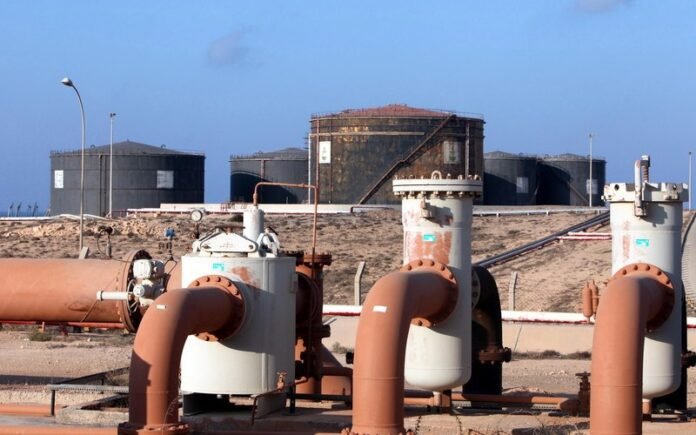
Libya has successfully drilled a well in its Al-Khair oilfield with ​production rates of 3,209 barrels per ‌day and 1.948 million cubic feet of associated gas per day, the state-owned firm NOC said .

The NOC said in a ​statement that the tests of the ⁠initial well, drilled by its subsidiary, the ​Sirte Oil Company for Production and Manufacturing ​of Oil and Gas, showed a natural flow without the need for artificial lift, “with encouraging production ​rates confirming the success of the ​drilling operations.”

Al-Khair oilfield is located in the Sirte basin, ‌and ⁠it started production in 2021 with initial rates of 6,000 bpd.

The drilling operation has reached its planned total depth of ​9,050 feet, with ​a ⁠reservoir thickness of 174 feet, the NOC said.

“The well demonstrated high ​production capacity, a stable natural ​flow, ⁠excellent oil quality, and a complete absence of associated water during the testing period,” ⁠said ​the NOC.

Libya’s economy relies ​on oil for more than 95% of its economic output.

Source:  Reuters

Israel says ceasefire with Hezbollah to hold if group complies, army to remain in southern Lebanon

0
israel-says-ceasefire-with-hezbollah-to-hold-if-group-complies,-army-to-remain-in-southern-lebanon
Israel says ceasefire with Hezbollah to hold if group complies, army to remain in southern Lebanon

Ceasefire announcement came after at least 31 people killed in series of Israeli airstrikes in southern, eastern Lebanon since early Friday, Anadolu Agency reports.

Israel said Friday a ceasefire with Hezbollah will remain in effect as long as the Lebanese group complies with it, while the Israeli army will remain deployed in southern Lebanon, according to Israeli newspaper Yedioth Ahronoth.

An Israeli official said the ceasefire arrangement allows the Israeli army to stay in southern Lebanon and act against “emerging threats.”

“If Hezbollah doesn’t attack, we won’t attack them. If they attack us, we will respond,” the official said, according to the daily.

READ: Extremist Israeli ministers call for ‘burning’ Lebanon, opening ‘gates of hell’ after soldiers killed

Israel and Hezbollah have agreed to a ceasefire was set to take effect at 4 pm local time (1300GMT) Friday, a senior US official confirmed to Anadolu earlier.

The official did not provide further details about the agreement.

The ceasefire announcement came after at least 31 people were killed and several others injured in a series of Israeli airstrikes in southern and eastern Lebanon since early Friday, marking the deadliest escalation since the US and Iran signed an agreement aimed at ending war on multiple fronts, including Lebanon.

Four Israeli soldiers were also killed in a Hezbollah attack in southern Lebanon.

READ: Trump says US must keep Netanyahu ‘a little bit sane’ on Lebanon

Ceasefire Restored in Lebanon as Fighting Delays US-Iran Meeting in Switzerland 

0
ceasefire-restored-in-lebanon-as-fighting-delays-us-iran-meeting-in-switzerland 
Ceasefire Restored in Lebanon as Fighting Delays US-Iran Meeting in Switzerland 


Israel and Hezbollah agreed to renew a ceasefire in Lebanon on Friday as US officials worked to prevent escalating violence from derailing negotiations between Washington and Tehran. 

A senior White House official told Sky News Arabia that Prime Minister Benjamin Netanyahu had agreed “100%” to the renewal of the ceasefire. Separately, a senior Israeli official told Walla that the understanding between the sides was straightforward: “If Hezbollah does not attack, Israel will not attack.” 

The ceasefire announcement followed a day of diplomatic activity, as Iran demanded assurances about the fighting in Lebanon before resuming talks with the United States.  

CNN, citing a source familiar with the discussions, reported that Washington conveyed a message to Tehran that Israel did not intend to broaden its military campaign. 

“Hezbollah violated the ceasefire. Israel agreed to absorb it, and that message was conveyed to the Iranians. Now it is up to Hezbollah to stop,” the source told CNN. 

The diplomatic efforts came after a deadly incident in southern Lebanon. The Israel Defense Forces (IDF) announced that Battalion 52 commander Lt. Col. Dor Ben Shimhon was killed in combat. Three additional soldiers were killed in the same incident, though their names had not yet been cleared for publication. 

IDF Spokesman Brig. Gen. Effie Defrin said a Battalion 52 tank was hit overnight Friday. Preliminary findings indicate an object from the air may have struck the vehicle. Investigators have not ruled out an anti-tank missile, a drone, or a Hezbollah explosive device. 

Following the incident, Israel launched a broad military response against Hezbollah targets. The IDF said it carried out more than 150 strikes in Lebanon, targeting infrastructure in the south and additional areas deeper inside the country. 

Defense Minister Israel Katz said, “We will not allow harm to our soldiers or citizens, and every violation of the ceasefire by Hezbollah will be met with great force.” 

Tensions also disrupted planned diplomacy in Switzerland. A meeting between US Vice President JD Vance and an Iranian delegation headed by Parliament Speaker Mohammad Bagher Ghalibaf was canceled.  

The meeting had been expected to accompany a face-to-face signing ceremony following the digital signing of a memorandum of understanding by President Donald Trump and President Masoud Pezeshkian. 

Apple patches high-severity eavesdropping vulnerability in Beats Studio Buds

0
apple-patches-high-severity-eavesdropping-vulnerability-in-beats-studio-buds
Apple patches high-severity eavesdropping vulnerability in Beats Studio Buds

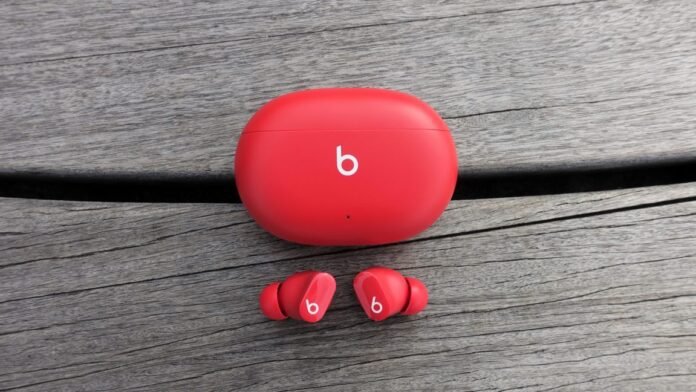
Apple has updated its Beats Studio Buds wireless earbuds to patch a high-severity vulnerability that could be exploited by nearby hackers to eavesdrop on users.

The vulnerability, CVE-2025-20701, allowed improper authentication in the firmware running on the Bluetooth-related chips, enabling people within signal range to impersonate devices that had previously been paired with the earbuds. The researchers demonstrated this in a series of end-to-end attacks that allowed them to eavesdrop on conversations or sounds within earshot of the phone microphone.

Apple joins the patch party

“Impact: An attacker within Bluetooth range may be able to listen through the microphone of a device which is not yet paired and actively seeking pair requests,” Apple said in a Tuesday security advisory. The fix is contained in Beats Firmware Update 1B211, which is delivered automatically while headphones are paired with and within Bluetooth range of a user’s iPhone, iPad, or Mac. Users can check their firmware version by going to Settings on their device, navigating to Bluetooth, and tapping the info button next to the headphones.

Carrying a severity rating of 8.8 out of 10, CVE-2025-20701 was one of three vulnerabilities resulting from last year’s disclosure by researchers Dennis Heinze and Frieder Steinmetz of security firm Insinuator about chips made by Airoha Systems. In response, Airoha released an updated software development kit to affected hardware sellers. Apple’s incorporation of the patch into the Beats Studio Buds came the same week that Jabra, another affected headphone manufacturer, also announced patched versions. According to this article from Ecoustics, manufacturers Bose and JBL have released statements saying their devices have also been updated to incorporate the fixes.

Security firm Sentinel One has a deeper dive into CVE-2025-20701 here.

Heinze and Steinmetz said last year that the full chain of attacks gave attackers the ability to do other malicious things, including retrieving call history and contacts, and even calling arbitrary numbers. Many of those capabilities are dependent on the specific devices being paired, since the functionality built into them differs from platform to platform.

Devices affected by the Airoha vulnerabilities are by no means alone. In January, researchers disclosed WhisperPair, a series of vulnerabilities that allows an attacker to hijack Bluetooth devices connected through Google Fast Pair, a proprietary protocol belonging to the company. Besides eavesdropping, attackers can exploit the WhisperPair flaws to geolocate devices. The vulnerabilities affect more than a dozen devices from 10 manufacturers, including Sony, Nothing, JBL, OnePlus, and Google itself.

There are few, if any, reports of Bluetooth vulnerabilities like these being actively exploited in the wild. The complexity of such attacks is often high, and an attacker has to continually stay within Bluetooth range of a target while utilizing the exploit. People who think they may be targeted by such attacks should turn off Bluetooth in devices whenever they’re not needed, and remain aware of the risks when Bluetooth is enabled.

US-Iran talks delayed as Israeli bombs in Lebanon kill 18 or more

0
us-iran-talks-delayed-as-israeli-bombs-in-lebanon-kill-18-or-more
US-Iran talks delayed as Israeli bombs in Lebanon kill 18 or more

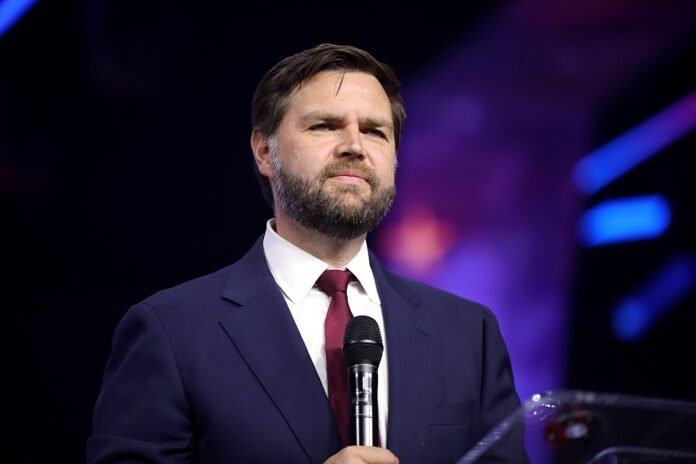
US Vice President JD Vance. Photo: Wikimedia Commons

Overview:

Attacks followed US VP Vance’s complaint about Israeli leadership’s tendency to bomb during talks’ critical stages

US and Iranian delegations delayed plans to travel to Switzerland on Friday for the opening round of talks to cement the details of a peace agreement as the Israeli military bombarded southern Lebanon, killing at least 18 people and threatening once again to derail momentum toward a diplomatic resolution.

The Associated Press reported that “mediators worked to reschedule the meetings crucial for starting talks over a permanent end to the Iran war, with much of the attention focused on Lebanon.” Iran’s leadership has insisted that ending Israeli attacks on Lebanon is critical to ending the war, and the memorandum of understanding signed earlier this week calls for “the immediate and permanent termination of military operations on all fronts, including in Lebanon.”

Israel’s military, which joined the US in launching the war on Iran in late February, carried out strikes throughout southern Lebanon on Friday, hours after US Vice President JD Vance – who was supposed to travel to Switzerland – publicly complained about the Israeli leadership’s tendency to launch bombing campaigns during critical stages of the Trump administration’s talks with Iran. Last weekend, Israeli forces bombed Beirut shortly after US President Donald Trump announced plans to sign the memorandum of understanding.

“We seem to be right on the cusp of a major breakthrough in the agreement, and then all of a sudden, there’s a major explosion that goes off in a civilian population center in Beirut, and a lot of people who have nothing to do with Hezbollah lose their lives,” Vance told reporters on Thursday. “That’s not acceptable.”

Roqayah Chamseddine, a southern Lebanese writer, reported that “the intense Israeli bombardment” on Friday “targeted populated residential neighborhoods in the Nabatieh district, committing massacres in the towns of Dweir Harouf, Al-Sharqiya, and Kfar Sir, while also striking Kfar Roumman, Haboush, Jebchit, Toul, and Deir al-Zahrani.”

“People had only just begun returning to their villages,” Chamseddine wrote. “The renewed Israeli aggression quickly expanded into the Western Bekaa Valley, where Israeli warplanes targeted the heights of Abu Rashed and launched attacks along the Litani River valley near the town of Zalaya.”

Four Israeli soldiers were killed in southern Lebanon on Friday by a Hezbollah attack on an Israeli tank, according to the Israel Defense Forces. The attack prompted Israel’s far-right national security minister, Itamar Ben-Gvir, to declare that “all of Lebanon must burn.”

“With all due respect to the Americans, Israel must make it clear to the entire world that the blood of our sons and the security of our citizens are not forfeited,” Ben-Gvir added.

The Trump White House cited logistical challenges in a statement announcing the delay of the US delegation’s departure to Switzerland, not mentioning Lebanon.

But the Lebanese outlet Al Mayadeen reported that the Israeli assault on Lebanon was central to the Iranian delegation’s decision to postpone its planned trip on Friday.

“The delegation had already been preparing to depart Iran and launch the first round of negotiations, scheduled to span 60 days, before the decision to suspend the trip was made,” Al Mayadeen reported, citing an unnamed source. “Tehran had previously informed both Washington and the mediators that the Lebanon file remains a central component of the negotiations and will directly influence whether the talks proceed.”

-Common Dreams

Rocket Report: Rebuild begins at Blue Origin launch pad; Relativity targets Mars

0
rocket-report:-rebuild-begins-at-blue-origin-launch-pad;-relativity-targets-mars
Rocket Report: Rebuild begins at Blue Origin launch pad; Relativity targets Mars

Welcome to Edition 8.46 of the Rocket Report! We don’t mention Starship in the body of this week’s report, so I’ll give a brief update here. The next test flight of SpaceX’s mega-rocket—Flight 13—could happen as soon as next month, according to Gwynne Shotwell, the company’s president and chief operating officer, in a recent interview with CNBC. There’s still a fair bit of work to go before Flight 13, so don’t count on a launch next month just yet. What we do know, based on Shotwell’s comments to CNBC, is the next Starship test flight will look a like like the previous one last month, with a suborbital flight path and a splashdown of the ship in the Indian Ocean. SpaceX is holding off on an orbital flight until at least the following launch, Flight 14, after the ship was unable to complete a critical engine restart in space on the last flight.

As always, we welcome reader submissions. If you don’t want to miss an issue, please subscribe using the box below (the form will not appear on AMP-enabled versions of the site). Each report will include information on small-, medium-, and heavy-lift rockets, as well as a quick look ahead at the next three launches on the calendar.

Isar test flight scrubbed again. Isar Aerospace still commands top position among a new generation of European rocket startups, but the company’s efforts to launch a critical test flight of its Spectrum rocket continue to encounter roadblocks, Ars reports. The latest delay came Monday, when Isar scrubbed a launch attempt after “detecting off nominal behavior in the vehicle’s fluid systems,” according to a social media post. “The teams are analyzing the new data to isolate the root cause.” Isar is flush with cash, having raised nearly $1 billion to date, but is still lacking in the critical currently of flight experience. The Spectrum rocket has flown just once to date, on a failed launch last year that lasted less than 30 seconds.

Gravity still winning… The two-stage, 92-foot-tall (28-meter) Spectrum rocket was awaiting liftoff from Andøya Spaceport in northern Norway. It was the fourth time in five months that Isar Aerospace, headquartered near Munich, Germany, had reached a target launch date for the second test flight of the Spectrum launch vehicle. Isar called off a launch attempt on January 21 due to an issue with a pressurization valve, and then halted a countdown on March 25, moments before liftoff, when engineers detected rising temperatures in the rocket’s liquid propane fuel. Isar officials attributed the problem to a delay earlier in the countdown caused by an unauthorized boat in restricted waters along the rocket’s flight path. Managers stood down from another launch attempt on April 9 to evaluate a suspected leak in a composite overwrapped pressure vessel.

The Ars Technica Rocket Report
The easiest way to keep up with Eric Berger’s and Stephen Clark’s reporting on all things space is to sign up for our newsletter. We’ll collect their stories and deliver them straight to your inbox.

Sign Me Up!

Swift reboost mission ready for launch. Just 10 months ago, NASA asked three companies if they could do something nobody had done before. Could they build and launch a satellite to save a $500 million astronomy mission at risk of crashing back to Earth? What’s more, could they do it in less than a year on a tight budget? The company that came back to NASA with the most compelling solution was a startup named Katalyst Space Technologies, and they have already given the agency a satisfying answer, Ars reports. Katalyst’s reboost satellite, named Link, was built in less than a year and is now integrated with an air-launched Northrop Grumman Pegasus XL rocket for a ride to space slated for no earlier than June 27.

More steps to go… The speed of development of the robotic mission to rescue NASA’s Swift observatory has been remarkable. Now, the mission needs to work. “To be honest, no one thought it was going to be possible. No one thought we would get as far as we’ve already gotten today,” said Shawn Domagal-Goldman, director of NASA’s astrophysics program. “And I have to be honest, there are still risks ahead of us, but I’m both deeply thankful and as optimistic as I can be that we’ll meet those challenges because of the people that have worked on it.” (submitted by EllPeaTea)

New launch pad in the works at Cape Canaveral. Space Launch Delta 45, the military unit that runs Cape Canaveral Space Force Station, is exploring the potential creation of a new rocket launch complex for Naval Ordnance Test Unit and US Army missions, Florida Today reports. The new location, known as Launch Complex 51, would be located about 2 miles north of Port Canaveral, making it the spaceport’s closest pad to public areas. LC-51 would encompass about a 50-acre area.

Better real estate… The new pad would replace Launch Complex 46, which lies within the explosive clear zone of Blue Origin’s nearby Launch Complex 36. Blue Origin’s New Glenn rocket exploded on that launch pad during a preflight test last month. LC-46’s proximity to LC-36 means the two pads cannot operate simultaneously without disruption. LC-46 has hosted a handful of small satellite launches and hypersonic missile tests in recent years.

Changes in attitude at Latitude. French launch startup Latitude has removed all mentions of the Zephyr name from its website, now referring to its rocket simply as “Our Launcher,” European Spaceflight reports. The rocket, previously known as Zephyr, is a two-stage launch vehicle that will stand 19 meters (62 feet) tall and is designed to deliver up to 200 kilograms (440 pounds) to low-Earth orbit. The company is currently targeting the second half of 2027 for the rocket’s inaugural flight.

Due diligence… Latitude did not explain the reason for the change, but one plausible explanation is trademark risk. The Zephyr name is already trademarked within the aerospace sector by Airbus subsidiary AALTO, whose solar-powered High Altitude Platform Station aircraft bears the name. The Zephyr trademark filing, which was granted by the European Union Intellectual Property Office in 2005, covers unmanned aerial vehicles, satellites, parts and fittings, and “launching apparatus for the aforesaid goods.”

China’s Zhuque-2E breaks up in orbit. The upper stage from a commercial Chinese rocket that launched last week has broken apart in space, spreading debris in a heavily trafficked part of low-Earth orbit home to the International Space Station and a significant portion of SpaceX’s Starlink broadband network, Ars reports. The breakup occurred shortly after the Zhuque-2E rocket reached orbit on June 9 with two satellites providing direct-to-cell communications, perhaps around the time the upper stage was expected to perform a disposal burn. The US Space Force confirmed the breakup event in a post on space-track.org, a website used by the military to distribute orbit data to the public.

50, 100, 150?… A US Space Force spokesperson said the military is tracking at least 51 objects attributed to the breakup of the upper stage. That number may increase as the Space Force’s network of tracking radars get a better handle on the debris cloud. Darren McKnight, a senior technical fellow at the orbital intelligence company LeoLabs, told Ars the fragmentation event likely generated 100 to 150 pieces of debris. The second stage of the Zhuque-2E rocket, made by a Chinese company called LandSpace, measured between 25 and 30 feet (about 8 meters) long and 11 feet (3.35 meters) in diameter. The main body of the rocket’s upper stage is now orbiting between 208 miles and 263 miles (335-by-424 kilometers) at an inclination of 54.5 degrees to the equator. This is close to the same altitude of the International Space Station and a number of SpaceX’s Starlink direct-to-cell communications satellites. The good news is atmospheric drag will likely bring most of the debris down within a matter of months to a year.

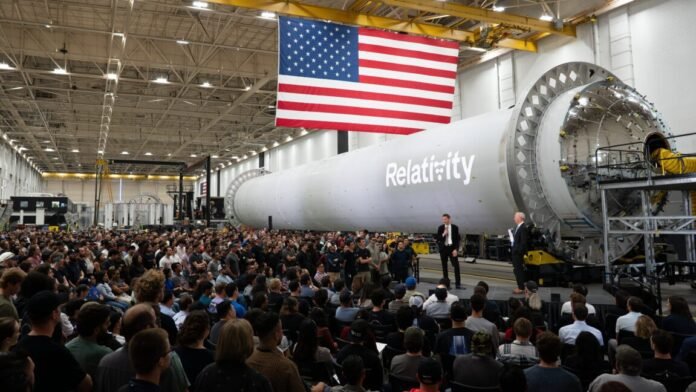
Relativity announces commercial Mars mission. Relativity Space plans to launch a Mars orbiter in 2028 as part of a new initiative to privately develop planetary missions, Space News reports. The company announced June 17 its Interplanetary Sciences Program, which aims to support science missions in partnership with NASA, industry, academia and philanthropic organizations. The first of those missions is a Mars science and telecommunications orbiter mission planned for late 2028. The payload will include an atmospheric profiling instrument suite contributed by NASA’s Ames Research Center, a radar instrument to map subsurface ice and geology, and a communications relay package.

Short on details... The robotic mission to Mars would launch on Relativity’s Terran R reusable rocket, which is progressing through development in advance of its inaugural flight, perhaps as soon as next year. Relativity offered little information on the mission, such as its size, mass, power, or cost. Since its founding in 2015, Relativity’s central focus has been on launch. Eric Schmidt, the former CEO of Google, took over as chief executive of Relativity a little more than a year ago, teasing new areas of focus such as orbital data centers, philanthropic space science ventures, and national security missions. This isn’t the first time Relativity has touted a Mars mission. Relativity and Impulse Space announced in 2022 plans for a Mars lander that would launch on Terran R, with the lander itself built by Impulse. The companies said in 2023 they were planning to launch the mission as soon as 2026, but neither has provided recent updates on those plans.

Japan’s H3 rocket returns to flight. Japan successfully launched an H3 rocket powered solely by liquid-fueled engines for the first time June 12, overcoming a mission failure six months ago, Kyodo News reports. H3 rocket No. 6, carrying a dummy payload and small satellites, lifted off from the Tanegashima Space Center in Kagoshima Prefecture, two days later than originally planned due to unfavorable weather forecasts at the launch site. JAXA said the rocket was successfully placed into its planned orbit.

Lower cost... This new configuration of the H3 rocket, designated the H3-30S, flies without the aid of solid rocket boosters. Instead, designers added a third hydrogen-fueled engine to the H3’s core stage, which typically has two main engines. The new variant is tailored to launch medium-class satellites at lower cost than the heavier version of the H3 with two or four strap-on boosters. The June 12 launch was the return to flight for the H3 program after a failure in December resulted in the loss of a Japanese navigation satellite. The failure was blamed on the collapse of the H3’s payload support structure, damaging the rocket’s second stage and leading to the unplanned separation of the satellite from the launch vehicle.

SpaceX gives a ride to a competitorAST SpaceMobile, a company seeking to compete with SpaceX’s Starlink direct-to-cell communications service, launched three “BlueBird” satellites on a dedicated mission aboard a SpaceX Falcon 9 rocket Wednesday, Spaceflight Now reports. The launch followed the loss of AST SpaceMobile’s previous BlueBird satellite on a failed launch of Blue Origin’s New Glenn rocket in April. The satellites are among the largest ever sent into space, with deployable antennas that unfurl to cover an area of about 2,400 square feet (223 square meters) once in orbit. This allows AST to link up with unmodified smartphones on Earth.

Bottleneck... AST SpaceMobile hoped to launch 45 satellites this year, but that was before one of its primary launch vehicles, Blue Origin’s New Glenn, was grounded after an explosion on its launch pad last month in Florida. With this week’s successful Falcon 9 launch, AST SpaceMobile will reach the halfway point of the 2026 with just three new satellites in orbit.

For Amazon, Europe’s Ariane 6 stands apart. Amazon now has hundreds of flight-ready satellites standing idle in Florida, waiting to join the company’s low-Earth orbit Internet constellation, Ars reports. “They’re built, and sitting in a payload processing facility waiting for trips to orbit,” said Steve Metayer, vice president of Amazon Leo Production Operations, during a teleconference with reporters. “And we’re currently manufacturing several satellites a day.” Several years ago, Amazon entrusted three unproven rockets—United Launch Alliance’s Vulcan, Blue Origin’s New Glenn, and Europe’s Ariane 6—to launch the bulk of the company’s constellation of more than 3,200 satellites. Of that group, only the Ariane 6 has come through for Amazon.

A new lift record for Europe… France-based Arianespace has emerged as a critical partner for Amazon, which, to date, has had the majority of its 331 satellites launched on Atlas V rockets. However, Amazon has just one more mission booked on this rocket, which is operated by United Launch Alliance, as the vehicle is slated for retirement. Arianespace’s Ariane 64 rocket launched its third mission for Amazon Wednesday morning from French Guiana. This mission debuted larger strap-on solid rocket boosters, increasing the Ariane 64’s carrying capacity from 32 to 36 Amazon Leo satellites. It also marked the heaviest payload ever launched by a European rocket.

Rebuild underway at Blue Origin’s Florida launch pad. Blue Origin has started rebuilding a launch pad severely damaged in a New Glenn explosion less than three weeks ago as it works to resume launches by the end of the year, Space News reports. Jeff Bezos and Dave Limp, Blue Origin’s owner and CEO, spoke about the pad rebuild at the VivaTech conference in Paris. Limp said Launch Complex 36 has been cleared of all debris, and crews “started the reconstruction” of the pad earlier this week. Both reiterated their earlier statements that Blue Origin will fly the New Glenn rocket again before the end of the year, an achievement that would defy the expectations of many officials at NASA.

Mark 1 next year… NASA has a keen interest in the reconstruction of the launch pad and the return to flight of New Glenn. The rocket is a key element in the agency’s Artemis program to return US astronauts to the surface of the Moon. Blue Origin’s first prototype lunar lander, called Blue Moon Mark 1, was supposed to launch in the next few months on a New Glenn rocket to begin testing core technologies for a future human-rated Moon lander. After the pad explosion last month, NASA Administrator Jared Isaacman suggested Blue Origin look for an alternate rocket for the Mark 1 lander. Limp said that won’t be necessary, stating that Mark 1 is now targeted for launch early next year, once New Glenn is back in service.

Next three launches

June 21: Falcon 9 | Starlink 17-28 | Vandenberg Space Force Base, California | 14:00 UTC

June 23: Long March 7A | Unknown Payload | Wenchang Space Launch Site, China | 02:10 UTC

June 23: Falcon 9 | Starfall Demo | Cape Canaveral Space Force Station, Florida | 09:43 UTC

0FansLike
0FollowersFollow
0FollowersFollow
0SubscribersSubscribe
- Advertisement -
Google search engine

Recent Posts