Home Blog

‘Clock is ticking’ for Iran, warns US President Trump

0
‘clock-is-ticking’-for-iran,-warns-us-president-trump
‘Clock is ticking’ for Iran, warns US President Trump

Middle East Monitor

Creating new perspectives since 2009

Middle East Monitor

U.S. President Donald Trump speaks to members of the press before boarding Marine One on the South Lawn of the White House in Washington, United States, on May 12, 2026. [Kyle Mazza - Anadolu Agency]

U.S. President Donald Trump speaks to members of the press before boarding Marine One on the South Lawn of the White House in Washington, United States, on May 12, 2026. [Kyle Mazza – Anadolu Agency]

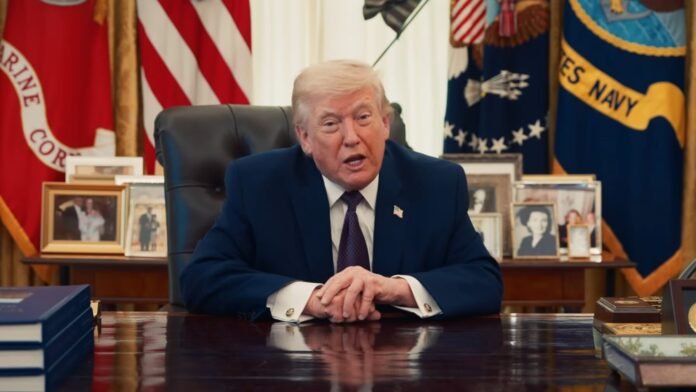
US President Donald Trump on Sunday warned Iran, saying the “Clock is Ticking” for them to “get moving” before “there won’t be anything left of them,” Anadolu reports.

His remarks came amid repeated threats for Tehran to agree to a ceasefire.

“TIME IS OF THE ESSENCE!” he said on his Truth Social media account.

READ: US outlines 5 conditions for Iran deal: Report

Related Posts

Trending

Students Accidentally Served REAL Dirt at School Charity Dinner

0
students-accidentally-served-real-dirt-at-school-charity-dinner
Students Accidentally Served REAL Dirt at School Charity Dinner


A Maine high school fundraiser meant to help fight hunger turned into a bizarre dinner disaster after students accidentally served potting soil to guests — and a few teens even took bites before realizing they were literally eating dirt.

The strange mix-up happened during an “Empty Bowl Supper” event at Medomak Valley High School in Waldoboro, a small town about 30 miles outside Augusta.

According to school officials, students in a science class had earlier baked potting soil in the oven as part of an experiment testing how sterilized soil affects plant growth. The dirt was placed in a foil-covered baking dish and left off to the side in the school kitchen.

But as volunteers rushed around preparing food for the charity event later that evening, the tray of baked dirt somehow ended up getting served alongside actual desserts.

Yes — real dirt.

“Three students briefly put some of the soil in their mouths, believing it to be a dessert item, before immediately realizing what it was,” the school said in a statement.

The mystery “dessert” was quickly pulled from the serving table once the mistake was discovered.

School administrators stressed the embarrassing blunder was “completely accidental” and not some kind of prank gone wrong.

Still, the incident left plenty of people stunned that oven-baked potting soil could somehow be mistaken for food in the first place.

Parents of the students involved were contacted, and school officials apologized for the chaos surrounding the longtime community event.

“Those involved in organizing the Empty Bowl Supper… are deeply sorry that this occurred,” principal Linda Pease said.

For the unlucky teens who got a mouthful of dirt, however, it’s probably a school dinner they’ll never forget.

President Trump Warns Iran ‘Time Is of the Essence’ After Netanyahu Call

0
president-trump-warns-iran-‘time-is-of-the-essence’-after-netanyahu-call
President Trump Warns Iran ‘Time Is of the Essence’ After Netanyahu Call


US President Donald Trump issued a new warning to Iran on Sunday after speaking with Prime Minister Benjamin Netanyahu, as tensions surrounding Tehran, the Strait of Hormuz, and regional security continued to escalate.

He wrote on his social media platform Truth Social, “Time is of the essence!” Hours earlier, he spoke with Netanyahu in a conversation that lasted more than half an hour and concluded before the start of Israel’s security cabinet meeting.

President Trump briefed Netanyahu on the results of his visit to China, and the two leaders discussed Iran. An Israeli official said the possibility of striking Iran remains unresolved, according to Ynet.

“Trump needs to make a decision. He needs to be at peace with himself, and if he decides to renew hostilities, it’s likely Israel will be called upon to join,” the official said.

On Truth Social, he intensified his rhetoric toward Tehran, writing: “The clock is ticking for them and they’d better start moving fast—or there will be nothing left of them.”

Last week, reports said Israel and the United States were carrying out extensive preparations for renewed attacks on Iran, potentially as soon as this week.

Iranian officials reportedly stated that maritime traffic through the Strait of Hormuz would resume only after the war with the United States and Israel ends. Washington has expressed growing concern over rising energy prices ahead of the approaching US midterm elections.

Separately, the UAE Ministry of Defense announced that air defenses intercepted two of three drones that crossed into the country from the western border. The ministry said the third drone struck a generator outside the Barakah nuclear power plant complex in the Al-Dhafra region

The ministry said investigations are underway to determine the source of the attack, which the International Atomic Energy Agency Director General Rafael Mariano Grossi, described as “unacceptable.”

In its statement, the UAE Ministry of Defense said it remains prepared “to deal with any threat and respond decisively to any attempt to undermine the country’s security, thereby preserving its sovereignty, security and stability, and protecting its national interests and resources.”

Qatar warns against using Strait of Hormuz as ‘bargaining chip’

0
qatar-warns-against-using-strait-of-hormuz-as-‘bargaining-chip’
Qatar warns against using Strait of Hormuz as ‘bargaining chip’

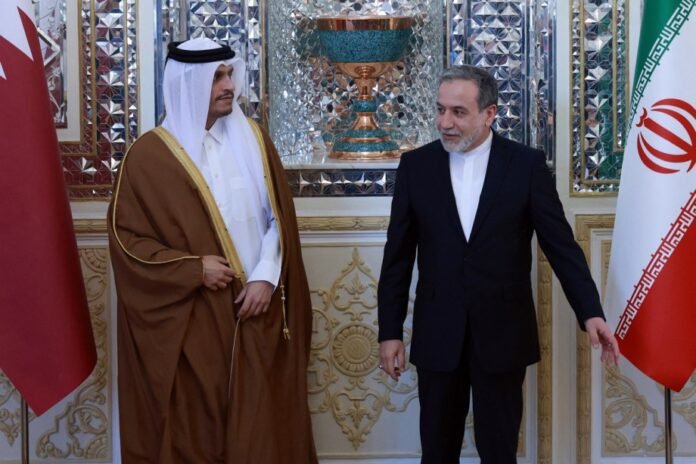
Iranian Foreign Minister Abbas Araghchi (R) welcomes his Qatari counterpart Mohammed bin Abdulrahman al-Thani ahead of their meeting in Tehran on November 20, 2024 [Photo by -STR/AFP via Getty Images]

Iranian Foreign Minister Abbas Araghchi (R) welcomes his Qatari counterpart Mohammed bin Abdulrahman al-Thani ahead of their meeting in Tehran on November 20, 2024 [Photo by -STR/AFP via Getty Images]

Qatari Prime Minister Sheikh Mohammed bin Abdulrahman Al Thani warned against using the Strait of Hormuz as a “bargaining chip” during a phone call Sunday with Iranian Foreign Minister Abbas Araghchi, Anadolu reports.

According to a statement by Qatar’s Foreign Ministry, the two officials reviewed efforts aimed at achieving peace and enhancing regional security and stability.

Sheikh Mohammed reiterated Qatar’s “full support for efforts aimed at reaching a comprehensive agreement to end the crisis,” stressing the need for all parties to respond positively to mediation efforts “in a way that contributes to achieving lasting peace and stability in the region,” the ministry said.

He also stressed that freedom of navigation is “a firmly established principle that is not open to compromise,” warning that closing the Strait of Hormuz or using it as a “bargaining chip” would only lead to deepen the crisis and threaten the vital interests of countries in the region.

READ: ‘Clock is ticking’ for Iran, warns US President Trump

The Qatari premier further emphasized the importance of adhering to international law, the principles of good neighborliness and prioritizing the interests of the region and its peoples to support de-escalation efforts and reinforce regional and international stability.

Regional tensions have escalated since the US and Israel launched strikes against Iran in February. Tehran retaliated with strikes targeting Israel as well as US allies in the Gulf, along with the closure of the Strait of Hormuz.

A ceasefire took effect on April 8 through Pakistani mediation, but talks in Islamabad failed to produce a lasting agreement. US President Donald Trump later extended the truce indefinitely.

Stalemate in Gaza Could Lead to Confrontation or a Continued Fragile Status Quo

0
stalemate-in-gaza-could-lead-to-confrontation-or-a-continued-fragile-status-quo
Stalemate in Gaza Could Lead to Confrontation or a Continued Fragile Status Quo


The current status quo, in which Israel remains in control of much of Gaza with Hamas still in power, makes a future conflict between the two imminent

A fragile ceasefire between Hamas and Israel hangs in the balance in Gaza, after Israel killed Hamas’ top military leader on Friday.

The assassination of Izz al-Din al-Haddad was confirmed by both Hamas and Israeli security agencies.

Al-Haddad is seen by Israel as one of the architects of the October 7, 2023, attack Hamas carried out against Israel, which marked the beginning of a regional conflict that engulfed the Middle East.

“This is a significant move,” Ido Zelkovitz, head of the Middle Eastern Studies program at Yezreel Valley College and a research fellow at the University of Haifa, told The Media Line. “This is not only the elimination of the person in charge of Hamas’ military operations, but he also had the knowledge about Hamas’ deployment from the bottom up and was at the heart of Hamas’ organizational memory.”

What we are seeing is Hamas more and more preoccupied with its survival, alongside its natural efforts to keep and develop its strength

“What we are seeing is Hamas more and more preoccupied with its survival, alongside its natural efforts to keep and develop its strength,” Zelkovitz added. “Israel is gradually eliminating all of its leadership, and they are busy running from one hiding place to another.”

According to a statement by Israel Katz, the Israeli defense minister, Israel saw al-Haddad as an impediment to implementing the next stages of the US-brokered agreement.

“He held our hostages captive under extreme cruelty, launched terrorist attacks against our forces, and refused to implement the agreement led by US President Trump to disarm Hamas and demilitarize the Gaza Strip,” according to a statement released shortly after al-Haddad’s death was confirmed on Friday night.

The killing comes amid a deadlock between the sides on the future of the ceasefire. The main point of contention is the demand that Hamas disarm, something the terrorist group refuses to do and Israel refuses to compromise on. Israel vowed to remove Hamas from power when it began its retaliation against the terrorist group in October 2023.

The ceasefire came into effect two years later, in October 2025. Hamas released all of the remaining Israeli hostages, and Israeli forces withdrew from parts of Gaza, retaining a presence along the “Yellow Line,” areas where Israeli forces can still remain, according to the ceasefire agreement.

Last week, Israeli Prime Minister Benjamin Netanyahu said Israel was in control of 60% of the Gaza Strip.

“Today its 60%, tomorrow we shall see,” he told an audience, alluding to Israel’s future intentions.

The current status quo, in which Israel remains in control of much of Gaza with Hamas still in power, makes a future conflict between the two imminent.

According to UN data, humanitarian aid flows into Gaza have steadily increased since the ceasefire. The territory and its population, which were targeted by an intense Israeli military operation, suffered a debilitating blow, and its rehabilitation is estimated to take years.

The humanitarian aid, which is aimed at helping the civilian population, is still being taken over by Hamas

“The confrontation is inevitable,” Sharona Shir Zablodovsky, an expert on public policy and national security at the Dvorah Forum, told The Media Line. “The humanitarian aid, which is aimed at helping the civilian population, is still being taken over by Hamas, which is trading with it, raising funds for its own rehabilitation.”

UN figures show a significant drop in humanitarian aid being intercepted by either Hamas or civilians before it reaches its intended target.

The humanitarian situation in Gaza remains dire. The population is still facing severe shortages of essential supplies, including food, clean water, and medical care. According to recent UN reports, over two million residents are in urgent need of assistance, exacerbated by the ongoing conflict and blockades that hinder aid delivery.

Despite major improvements in the flow of humanitarian aid since the ceasefire, distribution remains inconsistent, leaving many civilians dependent on international support. The continuous military actions and the political stalemate only deepen the crisis, leaving the people of Gaza in a continued state of vulnerability and uncertainty.

Both sides accuse each other of violating the ceasefire, putting President Trump’s ambitious plan to see permanent peace in Gaza at risk. Progress on the plan is being held up by Hamas’ refusal to lay down its weapons as well as continued Israeli presence, coupled with attacks in Gaza.

The American plan, devised by President Trump’s close advisors, Jared Kushner and his special envoy to the Middle East, Steve Witkoff, foresees a future in which Gaza is demilitarized, and a technocratic government is put in place instead of Hamas. According to the plan, these stages should have already begun.

“In reality, we have not seen any steps taken in this direction,” said Zelkovitz. “Hamas has not accepted the basic conditions, and what we are seeing is a gradual intensification of the fighting between the sides.”

Zablodovsky echoed concerns over a worsening trajectory, arguing that the underlying dynamics in Gaza remain largely unchanged, spelling more bloodshed for both sides.

We are reaching a boiling point; the question is when the confrontation will come and what the intensity will be

“We are reaching a boiling point; the question is when the confrontation will come and what the intensity will be,” said Zablodovsky. “As long as Hamas controls territory, with popular support, we are back at square one, and things haven’t changed.”

“Israel’s policy needs to be to use more force and further promote voluntary immigration of Palestinians from Gaza,” she added.

Just weeks after his inauguration last year, President Trump proposed that Gaza’s entire population leave the territory, recommending relocation to neighboring countries while Gaza is being rebuilt. The proposal triggered widespread international backlash and rejection, arguing it would amount to forced displacement and violate Palestinians’ right to remain in their homeland. Supporters framed the idea as a response to Gaza’s destruction and humanitarian crisis. For several of Netanyahu’s senior coalition partners, the idea was a dream come true, bringing them a step closer to their dream of re-occupying Gaza.

A limited number of Gazans have left the territory through evacuation, medical transfer, and emigration channels since the war began. Comprehensive data on permanent resettlement is lacking, but the numbers suggest the trend is not significant.

All the while, Israel is gradually deepening its hold over more territory in Gaza.

While Hamas and others in the international community view this as an Israeli violation of the ceasefire agreement, Israel sees it as a punitive measure against Hamas’ violations–namely, its unwillingness to disarm and allow for a technocratic government to rule Gaza.

“It is also an Israeli statement about its operational intentions, giving it more control over territory that is needed in order to guarantee the safety of its forces in Gaza,” said Zelkovitz. “Hamas has shown no interest in changing the reality on the ground the way the US and Israel want it to change.”

Since the ceasefire, Israel has not only increased its presence in Gaza, but it has also continued to strike at Hamas targets. According to the Hamas-run Gaza Health Ministry, more than 850 Palestinians have been killed since the ceasefire took effect last fall.

In recent weeks, Hamas has made several statements regarding its refusal to disarm.

For now, both Hamas and Israel appear to control the level of confrontation, without significantly escalating the armed conflict between them.

We could see a re-run of what we saw before the war

“We could see a re-run of what we saw before the war,” said Zablodovsky, referring to almost two decades in which Hamas built its strength as Israel turned a blind eye.

The fragility of the ceasefire may not necessarily end in an immediate confrontation, but rather a reality in which Israeli forces remain in Gaza alongside Hamas’ rule of parts of the territory. However, the interplay of military actions, humanitarian needs, and political maneuvering has the hallmarks of a volatile situation that could easily spiral out of control.

Inside Olivia Newton-John’s Final Days: ‘She’s Ready’

0
inside-olivia-newton-john’s-final-days:-‘she’s-ready’
Inside Olivia Newton-John’s Final Days: ‘She’s Ready’


Olivia Newton-John’s heartbreaking final years have been revealed in an emotional new biography that claims the beloved Grease icon quietly accepted her fate after decades of battling cancer.

According to A Little More Love by author Matthew Hild, the legendary singer and actress spent her last days surrounded by family, leaning on husband John Easterling and daughter Chloe Lattanzi as her body weakened from years of painful treatments and recurring illness.

Newton-John died in August 2022 at age 73 after a long fight with breast cancer that first began back in 1992. While she publicly stayed upbeat and inspirational for fans, the new book paints a far more emotional picture behind closed doors.

Her nephew Emerson recalled a devastating moment during a visit to her California ranch in 2021 that made him realize the end was near.

As the two sat outside together, he said Newton-John suddenly placed her hand on his shoulder and burst into tears.

“It was sad,” Emerson revealed. “I realized at that moment, ‘She’s ready.’”

He added that the final years of her life were “very painful,” though she remained incredibly strong throughout the ordeal.

Even after privately suffering another cancer recurrence in 2013, Newton-John continued pushing forward and refused to give in to despair. In 2017, she publicly revealed the disease had spread to her sacrum, but still insisted she hoped her journey would inspire others facing the same nightmare.

“I’m totally confident that my new journey will have a positive success story to inspire others,” she said at the time.

The singer became a fierce advocate for cancer research and wellness during her battle. She founded the Olivia Newton-John Cancer & Wellness Centre in Australia and later launched the Olivia Newton-John Foundation Fund with husband John Easterling to explore medicinal plant research for cancer treatment.

Newton-John openly praised Easterling, known for his knowledge of plant medicine, for helping her manage symptoms with medicinal cannabis.

“Now he’s growing medicinal cannabis for me, and it just has been wonderful,” she previously said. “It helps me in every area.”

Her daughter Chloe also remained constantly by her side. The pair quarantined together during the COVID-19 pandemic and even recorded the emotional duet Window in the Wall in 2021.

Newton-John admitted hearing the song for the first time brought her to tears.

“It’s a very healing song,” she said. “I thought, ‘This is very special, and I want to sing it with Chloe.’”

Author Matthew Hild said one thing never changed throughout Newton-John’s decades-long health battle: her determination to stay positive for everyone around her.

“In those final years of her life, she had John, she had her daughter and I think she was determined to make them not dwell on negatives,” Hild explained.

“She was determined not to feel sorry for herself. She was aware that she had the power to inspire other people.”

Even while suffering through unimaginable pain, Olivia Newton-John reportedly spent her final years trying to comfort everyone else — a heartbreaking ending for one of Hollywood’s most beloved stars.

Chevron wants a school district tax break for a data center power plant

0
chevron-wants-a-school-district-tax-break-for-a-data-center-power-plant
Chevron wants a school district tax break for a data center power plant

This story was originally published by WIRED and is reproduced here as part of the Climate Desk collaboration.

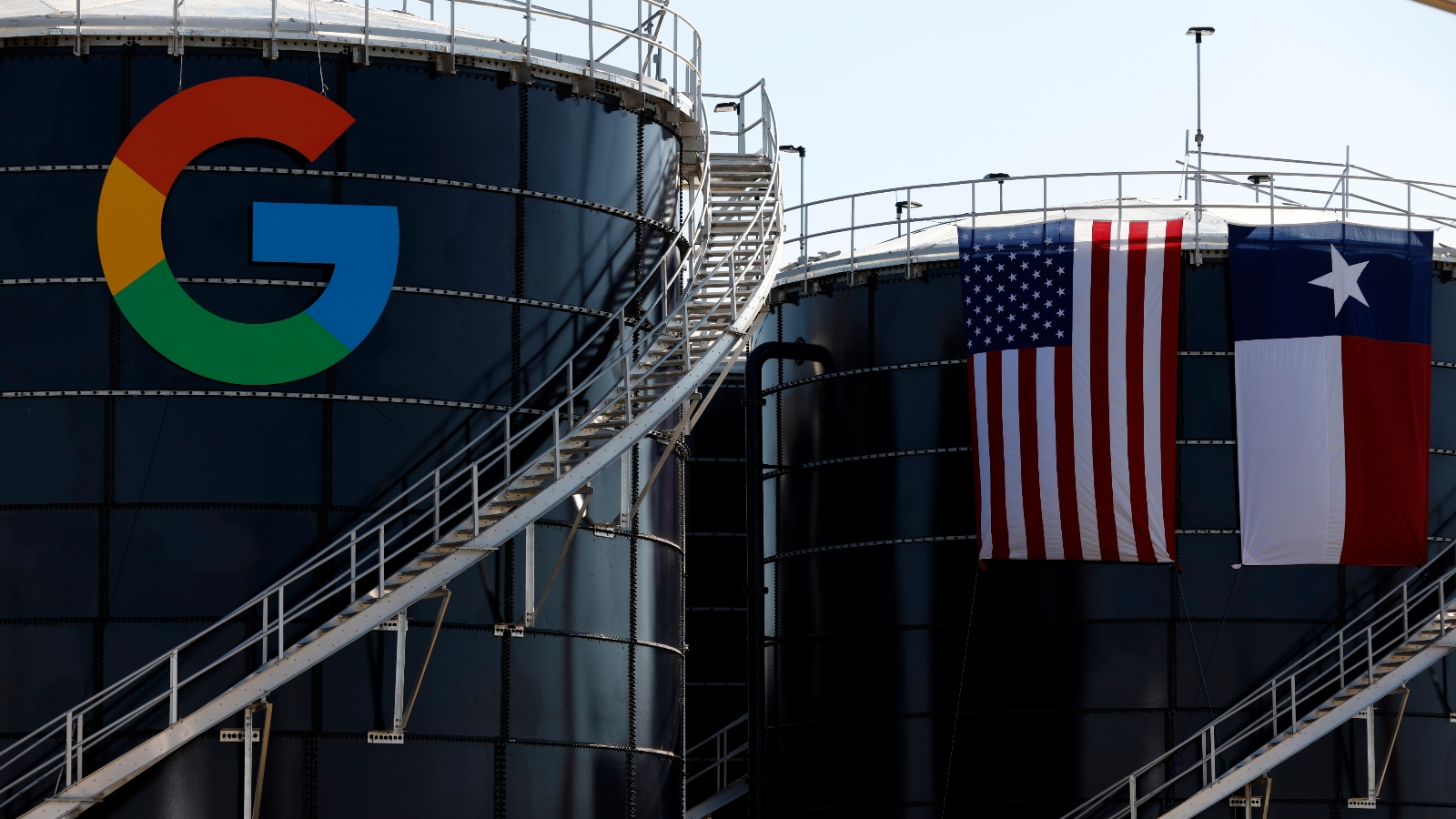
A major oil company is seeking a state tax break in Texas worth hundreds of millions of dollars to build a massive power plant. The energy won’t be going to residential customers, though. Instead, the gas plant will be used to power a data center whose eventual tenant could be Microsoft.

Chevron subsidiary Energy Forge One has filed an application with the State Comptroller’s board to obtain a tax abatement for a power plant it’s building in West Texas. In late January, the comptroller’s office made a recommendation to support the application’s approval — the first such approval under the program for a power plant intended solely for data center use.

In March, following news reports that Microsoft was looking into purchasing power from the Energy Forge project, Chevron said that it had entered into an “exclusivity agreement” with Microsoft and Engine 1, an investment fund involved in the project. In January, Microsoft pledged to be a “good neighbor” in communities where it is building data centers, including promising to pay a “full and fair share of local property taxes.”

The potential tax abatement for the project comes as big tech companies are battling rising public fury about data centers and electricity costs. It also comes as lawmakers start to cast a more critical eye on ballooning incentives for data centers, some of which have cost some states — including Texas — $1 billion or more each year.

Read Next

Chevron spokesperson Paula Beasley told Wired in an email that all tax incentives under consideration for the Energy Forge project “apply solely to the power generation facility” to “support new energy infrastructure, and do not extend to any future data center facilities that may be served.” Beasley also said that there is currently “no definitive agreement” with Microsoft for this power plant.

“Microsoft is in discussions with Chevron,” Rima Alaily, Microsoft’s corporate vice president and general counsel for infrastructure, said in a statement to Wired. “No commercial terms have been finalized, and there is no definitive agreement at this time.”

Chevron is applying for a tax abatement for the project under Texas’ Jobs, Energy, Technology, and Innovation (JETI) Act. Passed in 2023, the program is intended to incentivize businesses to build large infrastructure projects in the state in exchange for guarantees to bring jobs and revenue. Accepted projects get a cap set on the amount of taxable property they can be charged through local school district taxes.

The Pecos-Barstow-Toyah school board approved the project’s application at a meeting in February. The state pays for the tax abatement, so the school district itself does not lose out on any money.

According to documents from the state, the Chevron project could net more than $227 million in savings for the company over a 10-year period, depending on the eventual size of the project and investment. The application says the plant will provide “over 25 permanent, full-time jobs,” though there’s no requirement to do so because it’s considered an electricity generation facility.

Read Next

The planned gas plant won’t connect to the grid, instead providing “electricity for direct consumption by a data center,” according to its application. So-called behind-the-meter gas plants have become increasingly popular for data center developers facing yearslong waits to connect to the grid. According to data from nonprofit Global Energy Monitor, the U.S. at the start of the year had nearly 100 gigawatts of gas-fired power in the development pipeline solely to power data centers, with several more massive gas projects announced since the data was published.

Wired analysis of less than a dozen power plants being constructed to explicitly serve data centers, including the Chevron project, found that these power plants are permitted to emit more greenhouse gases than many small- to medium-size countries. The Energy Forge plant alone could emit more than 11.5 million tons of CO2 equivalent annually — more than the country of Jamaica emitted in 2024. Beasley told Wired that the plant “is being designed to comply with applicable environmental regulations, including all applicable federal and state air quality standards.”

West Texas is a major fossil fuel production hub, which has helped it emerge as a hot spot for both data centers and behind-the-meter gas development. However, Energy Forge’s JETI application notes that the site is one of six across the U.S. under consideration. Without tax incentives, the other sites would be “more attractive locations” to build a gas plant, according to its application, and “Texas would lose the opportunity to attract billions of dollars in new tax revenues.”

This type of claim on applications for tax abatements is pretty routine, says Nathan Jensen, a government professor at the University of Texas at Austin. An earlier version of the JETI program, originally created to draw more manufacturing jobs to Texas, handed out incentives to businesses with little oversight, often giving millions in tax breaks to companies already planning on building in the state. While the JETI program significantly curbs the problems and excesses of the old program, Jensen says that the guardrails for a project like Chevron’s are still relatively low.

The JETI tax incentive isn’t the only tax break the power plant could receive. According to county documents, the Energy Forge project could also be eligible for a local incentive that exempts all or part of a property’s value from taxes for up to a decade, under another part of the Texas tax code.

Read Next

Developers have taken advantage of other tax abatements across the U.S. A report released in April from Good Jobs First, a corporate watchdog group, found that at least three states — including Texas — are losing more than $1 billion in revenue each year from data center sales tax abatements.

A bipartisan group of politicians in Texas, including Republican lieutenant governor Dan Patrick, have expressed mounting concern about the impact tax breaks for data centers are having on state coffers. In March, Patrick ordered the legislature to “study the cost and consequences” of the sales tax exemption — which the state projects could balloon to $3 billion by 2029 — and “make recommendations providing safeguards to ensure that Texans benefit from data center investment.”

In January, Microsoft rolled out a series of pledges on its website, promising to “add to the tax base” in communities where it operates. “We won’t ask local municipalities to reduce their local property tax rates when we buy land or propose a data center presence,” the pledge states. The company did not respond to questions about whether this pledge extends to projects owned by other entities that the company intends to use to power its data centers, or to data center developers that may be building data centers in which Microsoft will be a tenant.

Greg LeRoy, the executive director of Good Jobs First, notes that Microsoft’s pledge doesn’t mention tax abatements (the amount of value a person or business’s property is assessed at), which are different from tax rates (the number used to calculate the amount of taxes owed for the property).

“If they don’t say, ‘We will refuse tax abatements,’ then they’ve got their fingers crossed behind their back,” LeRoy says of Microsoft’s pledge.

Tax breaks given to projects like data centers are difficult to track across states: The Good Jobs First report found that 14 states don’t disclose how much revenue they might be losing on data center abatements. As behind-the-meter power becomes an increasingly popular option for data center developers, though it’s not clear how widespread the practice of asking for tax abatements for these specific facilities is.

There are no other behind-the-meter power plants currently being funded by the Texas JETI program or in the application pipeline. Data centers are specifically excluded from being eligible for the JETI program.

Jane Flegal, a senior fellow at the Searchlight Institute and a climate official under President Biden, is the author of a recent report that suggests ways to use the AI boom to incentivize tech companies to help pay for needed upgrades to the grid. Tax abatements, the report says, should be restructured to make sure that data center builders connect power to the grid, making behind-the-meter gas options less attractive. Flegal also advocates for permitting reform to make sure that more clean energy can get added to the grid as quickly as possible.

“We should fix our tax code so it’s much more progressive, and we should tax the shit out of these people and use federal money to plan and build a grid that benefits all of us,” she says. “Alas, that is not where we are.”


Pecan Pie Cake

0
pecan-pie-cake
Pecan Pie Cake

If you love the rich, caramelized flavor of pecan pie but want something easier and quicker to make, this Pecan Pie Cake is about to become your new favorite dessert. It’s soft, dense, slightly chewy, and packed with toasted pecans—basically everything you love about pecan pie, transformed into a simple, no-fuss snack cake.


A Recipe Worth Perfecting

This cake didn’t start out perfect. The first attempt turned into a gooey, underbaked center—but the flavor? Absolutely incredible. That rich, buttery, caramel-like taste was too good to ignore.

After a few tweaks—less oil, a bit more flour, and the addition of vanilla and salt—the result was spot on:
✔ perfectly baked
✔ rich and chewy
✔ deeply flavorful

Sometimes the best recipes come from a little trial and error!


Why You’ll Love This Pecan Pie Cake

  • No cake mix needed – made with simple pantry ingredients
  • Rich & caramel-like flavor thanks to brown sugar
  • Loaded with pecans for crunch and nuttiness
  • Easy to make in one bowl
  • Perfect texture – dense, soft, and slightly chewy

Ingredients

  • 2 cups chopped pecans
  • 1 ¼ cups all-purpose flour
  • 4 eggs
  • 2 cups packed brown sugar
  • 1 tablespoon vanilla extract
  • ¾ cup vegetable oil
  • ¾–1 teaspoon salt (to taste)
  • Powdered sugar (optional, for serving)

Instructions

1. Preheat & Prepare
Preheat oven to 350°F (175°C).
Grease a 9×13-inch baking dish.


2. Mix Wet Ingredients
In a large bowl, whisk together eggs, brown sugar, and vanilla for about 2 minutes, until smooth and slightly foamy.


3. Add Oil & Dry Ingredients
Mix in oil and salt, then stir in flour until fully combined.


4. Fold in Pecans
Gently fold in chopped pecans until evenly distributed.


5. Bake
Pour batter into prepared pan.
Bake for 30–40 minutes, until the edges are golden and the center is set.


6. Cool & Serve
Let cool completely before slicing into squares.
Dust with powdered sugar if desired.


Tips for Success

  • Don’t overbake—this cake should stay moist and slightly dense
  • Let it cool fully for clean slices
  • Use good-quality pecans for the best flavor
  • Adjust salt slightly depending on your preference

Variations

  • Walnut version: swap pecans and add a touch of walnut extract
  • Almond twist: use almonds + a bit of almond extract
  • Bundt cake: bake in a bundt pan for a more elegant presentation

Storage

  • Store in an airtight container at room temperature for up to 3–4 days
  • Can be refrigerated or frozen for longer storage

Final Thoughts

This Pecan Pie Cake is proof that simple ingredients can create something truly special. It’s rich, comforting, and perfect for holidays, potlucks, or anytime you’re craving that classic pecan pie flavor—without all the effort.

Iran: China’s quiet hedging strategy in the Middle East

0
iran:-china’s-quiet-hedging-strategy-in-the-middle-east
Iran: China’s quiet hedging strategy in the Middle East

China’s growing engagement with Iran increasingly reveals that Tehran is no longer merely a regional issue confined to Middle Eastern politics. Iran has become part of Beijing’s wider geopolitical calculation in an era shaped by intensifying great-power rivalry and a rapidly shifting global order.

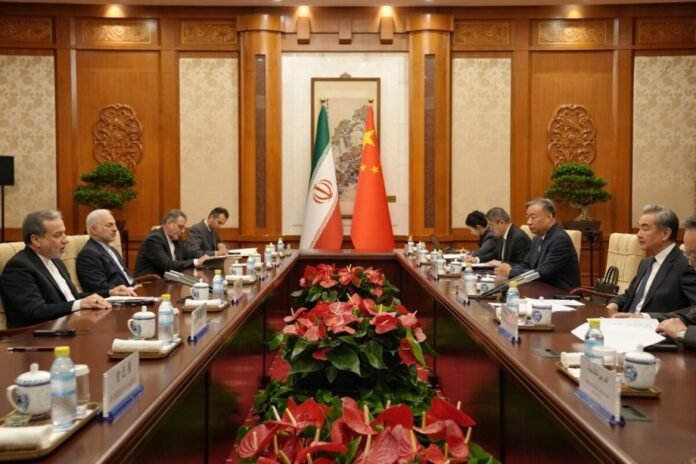
Recent meetings between Iranian Foreign Minister Abbas Araghchi and Chinese Foreign Minister Wang Yi in Beijing reflected more than routine bilateral diplomacy. China once again emphasised the importance of regional stability, the security of global energy routes, and the need to keep the Strait of Hormuz open for international trade. At the same time, discussions involving Iran and the broader Middle East have become deeply intertwined with strategic conversations between China and the United States over trade competition, maritime security, Taiwan, technological rivalry, and the future balance of power.

The Middle East is therefore no longer simply a theatre of regional conflict; it has evolved into an increasingly important geopolitical arena where global powers compete not only for influence but also for legitimacy and strategic narrative.

Most international commentary still interprets China’s Middle East diplomacy largely through economic pragmatism: energy security, oil imports, and the protection of trade routes essential to China’s economy. While these explanations are important, they are insufficient to explain why Beijing has become increasingly active in Middle Eastern diplomacy precisely when pressure from Washington continues to intensify over Taiwan, semiconductor restrictions, the South China Sea, and trade disputes.

There is a deeper strategic logic behind China’s behaviour — one that can be understood through the concepts of hedging and indirect geopolitical competition.

READ: Iranian parliament speaker appointed as special envoy to China: Report

In international relations, hedging refers to a strategy whereby states avoid fully aligning with one side while simultaneously refraining from outright neutrality. Instead, they maintain relationships with multiple actors in order to preserve strategic flexibility and minimise long-term geopolitical risks. Traditionally, hedging has been associated with middle powers navigating competition between larger states. Yet China has transformed hedging into an instrument of global power projection.

Beijing appears fully aware that direct confrontation with the United States would be extraordinarily costly, both economically and militarily. Consequently, China does not always challenge Washington directly. Rather, it seeks to shift the arena of global competition toward regions where it can accumulate diplomatic legitimacy, economic influence, and political goodwill without triggering open military confrontation.

This strategic ambiguity echoes the classical realist tradition in international relations. Hans Morgenthau argued that states ultimately pursue survival and influence within an anarchic international system. However, unlike the overt military balancing associated with Cold War geopolitics, China’s contemporary strategy reflects a more adaptive and indirect form of realism. Beijing expands influence gradually through diplomacy, connectivity, and economic interdependence rather than direct coercion.

In many ways, China’s behaviour also reflects the logic of classical Chinese strategic thought. Sun Tzu’s The Art of War famously argues that “the supreme art of war is to subdue the enemy without fighting.” Although often quoted superficially, this principle remains highly relevant in understanding China’s geopolitical conduct today. Beijing’s approach in the Middle East reflects not a desire for immediate domination, but a long-term effort to shape geopolitical environments indirectly and patiently.

This differs sharply from the interventionist logic that shaped much of American foreign policy after the Cold War.

Since the invasions of Afghanistan and Iraq, Washington’s Middle East strategy has often relied heavily on military projection and security architecture. China, by contrast, seeks influence through connectivity, infrastructure, diplomacy, and economic integration.

In this sense, Beijing is not attempting to replace the United States through identical methods; it is attempting to redefine the methods themselves.

Historically, great powers have often sought alternative geopolitical theatres whenever direct confrontation became too costly. During the nineteenth century, the British Empire expanded its influence through maritime trade networks rather than permanent continental warfare in Europe. During the Cold War, the Soviet Union and the United States competed indirectly through proxy arenas across Asia, Africa, and Latin America. China’s current strategy in the Middle East reflects a different version of this historical pattern — one based less on ideological export or military alliances and more on economic corridors and diplomatic brokerage.

READ: Trump claims China’s Xi told him Beijing will not provide military equipment to Iran

Iran occupies a central place in this broader strategic calculation.

Beyond being one of China’s major energy suppliers, Iran also holds enormous geopolitical value within the Belt and Road Initiative (BRI). Geographically, Iran functions as a strategic connector linking Central Asia, the Persian Gulf, the Middle East, and routes extending toward Europe.

Any prolonged instability within Iran would therefore threaten not only regional stability but also China’s long-term connectivity ambitions across Eurasia.

The importance of Iran can also be understood through Halford Mackinder’s classical geopolitical theory of the “Heartland.” Although developed more than a century ago, Mackinder’s argument that control over Eurasian connectivity shapes global power remains surprisingly relevant today. China’s interest in Iran reflects not only energy calculations, but also the strategic importance of Eurasian corridors connecting Asia to Europe and the Middle East.

For this reason, Beijing has little interest in seeing Iran collapse into permanent conflict or strategic isolation. At the same time, China also does not wish to become trapped in direct confrontation with the United States or fully alienate Gulf Arab states and Western economies. As a result, Beijing maintains a deliberately ambiguous position: preserving economic and energy ties with Tehran while continuing dialogue with Washington, Europe, Saudi Arabia, and the Gulf monarchies.

This ambiguity is precisely what makes China’s hedging strategy effective.

Unlike Cold War-style ideological alliances, China’s relationship with Iran is rooted less in ideological solidarity than in calculated geopolitical flexibility.

Beijing does not openly endorse Iran’s regional posture, nor does it fully comply with Western pressure campaigns and sanctions. Instead, China carefully balances competing relationships in ways that minimise strategic costs while maximising diplomatic leverage.

What is particularly notable is that China’s growing role in the Middle East does not rely primarily on military expansion. Beijing has not attempted to establish itself as a new hegemonic security power in the same way the United States historically did in the region. Rather, China advances through the language of stability, trade, infrastructure, and development.

READ: Beijing extends support to Iran amid conflict with US ahead of Trump’s China trip

This reflects a broader transformation in global power competition. In today’s increasingly multipolar order, legitimacy matters almost as much as military capability. States capable of presenting themselves as mediators, stabilisers, and development partners can accumulate influence without incurring the enormous political and financial costs associated with direct military intervention.

Chinese scholar Yan Xuetong has argued that future global competition will increasingly depend not only on economic or military strength, but also on “humane authority” — the ability of states to generate political trust and international legitimacy. Whether one fully accepts this argument or not, China’s diplomacy in the Middle East clearly reflects an attempt to cultivate precisely this type of legitimacy.

This does not mean China is acting altruistically. Beijing’s Middle East strategy remains deeply intertwined with concerns over energy security, investment protection, manufacturing supply chains, and global trade stability. Yet the sophistication of China’s strategy lies precisely in how it packages these interests. Rather than presenting its ambitions overtly, Beijing frames them within narratives of mutual development, peaceful cooperation, and regional stability.

Ultimately, Iran’s place within China’s hedging strategy is about far more than oil. Iran represents a geopolitical instrument through which Beijing can expand global influence while avoiding direct confrontation with the United States. China is effectively playing a long geopolitical game: not confronting Washington head-on, but gradually shifting the centre of global strategic attention toward arenas where Beijing holds greater diplomatic and economic advantages.

Perhaps this is the emerging face of Chinese foreign policy in the twenty-first century — winning geopolitical competition not through open war, but through the ability to shape legitimacy, manage international attention, and position itself as an indispensable actor in maintaining stability within an increasingly fragmented world order.

OPINION: Fragile ceasefire: The illusion of war’s end

The views expressed in this article belong to the author and do not necessarily reflect the editorial policy of Middle East Monitor.

IAEA Director Grossi Calls Strikes on UAE Nuclear Power Plant ‘Unacceptable’ 

0
iaea-director-grossi-calls-strikes-on-uae-nuclear-power-plant-‘unacceptable’ 
IAEA Director Grossi Calls Strikes on UAE Nuclear Power Plant ‘Unacceptable’ 


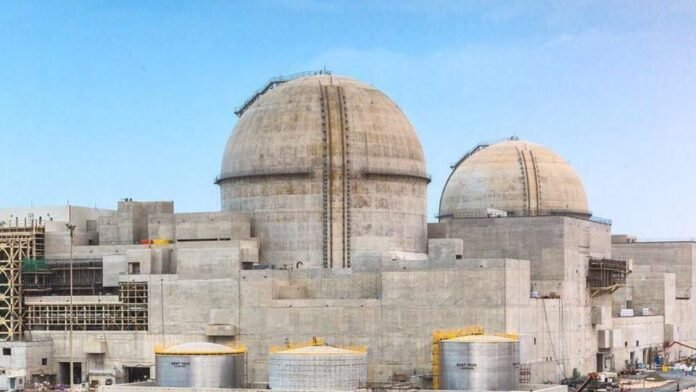
The International Atomic Energy Agency (IAEA) said Sunday that a drone strike near the United Arab Emirates’ Barakah nuclear power plant that caused a fire was a matter of “grave concern.”  

In a statement posted on X, “The IAEA has been informed by the UAE that radiation levels at the Barakah Nuclear Power Plant ( NPP) remain normal and no injuries were reported after a drone strike this morning caused a fire in an electrical generator located outside the inner site perimeter of the NPP,” the agency said. 

The IAEA added, “Emergency diesel generators are currently providing power to the NPP’s unit 3. The IAEA is following the situation closely and is in constant contact with the UAE authorities, ready to provide assistance if needed.”  

IAEA Director General Rafael Grossi expressed “grave concern” over the incident and said military activity that threatens nuclear safety is unacceptable. “The DG reiterates the call for maximum military restraint near any NPP to avoid the danger of a nuclear accident,” the post continued.  

The incident came after Iran launched thousands of ballistic missiles, cruise missiles, and drones against the United Arab Emirates during the recent conflict, targeting Al Dhafra Air Base as well as civilian and energy infrastructure. 

Meanwhile, President Donald Trump was reportedly considering renewed military action against Iran following his return from meetings with Chinese President Xi Jinping in Beijing and was expected to speak Sunday with Israeli Prime Minister Benjamin Netanyahu. 

“Our eyes are also open regarding Iran,” Netanyahu said Sunday morning. “I will speak today, as I do every few days, with our friend President Trump.” 

“I will certainly hear impressions from his trip to China, and perhaps other matters as well. There are certainly many possibilities, and we are prepared for every scenario.” 


0FansLike
0FollowersFollow
0FollowersFollow
0SubscribersSubscribe
- Advertisement -
Google search engine

Recent Posts