Home Blog

Myanmar’s resource curse fueling its forever war

0
myanmar’s-resource-curse-fueling-its-forever-war
Myanmar’s resource curse fueling its forever war

Myanmar’s war is often described as a clash of ideologies, ethnic identities and competing visions of the state. That is true, but incomplete. At its core, Myanmar’s crisis is also a resource-driven conflict, intensified by geography.

The generals did not cling to power for the symbolism of uniform and flag alone. They did so because Myanmar sits on jade, gas, oil, timber, minerals, rare earths, and hydropower potential, while occupying corridors that connect China and India to the Indian Ocean.

Natural wealth should have helped Myanmar build a modern state. Instead, it has helped to finance a permanent war economy.

In resource-dependent states, rulers who can survive on oil, gas, minerals, or timber rents often feel less pressure to tax citizens fairly, deliver services, or build accountable institutions. Wealth flows upward through monopolies, concessions and military-linked companies. Citizens become subjects to be managed, not stakeholders to be served.

The contrast with resource-poor success stories is striking. Japan, South Korea, and Singapore had no comparable mineral cushion. They were forced to treat human beings as their primary national asset.

The World Bank has described Singapore’s rise as a case of integrating human capital into national development planning. Myanmar, during many of the same decades, repeatedly closed universities, suppressed independent thought, and pushed educated citizens to leave.

The tragedy is not that Myanmar lacked wealth. It is that the state treated land, minerals, and border corridors as prizes to be controlled, while treating people as threats.

The Military’s Rentier State

Since Ne Win’s 1962 coup, Myanmar’s military has behaved like a rentier elite. Rather than building legitimacy through public service, it captured revenue streams from state-owned enterprises, military conglomerates, gas exports, jade, timber, mining and cross-border trade.

Myanma Economic Holdings Limited and Myanmar Economic Corporation have long given the armed forces autonomy from civilian oversight. A UN fact-finding mission found extensive military business interests across gems, manufacturing, tourism, banking, and natural resources, and concluded that these revenues helped sustain the Tatmadaw’s independence from elected authority.

Oil and gas remain central. The US Treasury has described Myanma Oil and Gas Enterprise as the military regime’s largest single source of foreign revenue, providing hundreds of millions of dollars each year. Human Rights Watch has estimated that MOGE’s natural-gas projects generate more than US$1 billion annually for the junta.

Jade and rare earths show the same pattern in borderland form. Hpakant’s jade mines have enriched military-linked companies, armed groups, cronies, and smugglers for decades. 

Global Witness has documented how jade money has helped fund conflict and corruption, while its reporting on rare earths shows Myanmar’s growing role in conflict-linked supply chains for China’s clean-energy and high-tech industries.

The result is not simply corruption. It is a political economy in which violence protects revenue, and revenue sustains violence.

Corridors and fragmentation

Myanmar is rich not only in natural resources but also in strategic routes. For China, Kyaukphyu provides access to the Bay of Bengal and the Indian Ocean through oil and gas pipelines to Yunnan. The CSIS think tank describes Kyaukphyu as the endpoint of China’s pipelines to Kunming and a key part of Beijing’s strategy to diversify energy routes.

For India, Myanmar is the land bridge to Southeast Asia and a buffer against China. India’s Act East policy depends on connectivity projects such as the India-Myanmar-Thailand Trilateral Highway and the Kaladan Multi-Modal Transit Transport Project, both constrained by Myanmar’s instability, as regional analysts have noted in the Lowy Institute.

For Thailand, Myanmar is an energy source, a border-security concern, and a major source of migrant labor. More than two million Myanmar nationals are formally registered as migrant workers in Thailand, while many more remain undocumented, according to an IOM figure cited by DVB. They help staff farms, fisheries, factories, construction sites, and households.

This combination of commodities and corridors gives external actors incentives to deal with whoever can provide access, regardless of domestic legitimacy. Myanmar’s crisis is also a regional economy of access, extraction and risk management.

That is why the Tatmadaw has always needed a divided Myanmar more than a united one. Ethnic diversity did not cause the war. It became the raw material for a divide-and-rule strategy that helped secure resource zones and strategic routes.

Many of the country’s richest assets lie in ethnic areas: jade and rare earths in Kachin and northern Shan; ports and offshore gas near Rakhine; cross-border routes through Karen, Mon, and Shan areas; and hydropower potential across upland regions.

Instead of treating these communities as partners in a federal union, successive military regimes treated them as obstacles to be pacified, fragmented, or co-opted.

Ceasefire deals allowed some armed actors to profit from timber, mining, and border trade. Counterinsurgency campaigns depopulated strategic zones and opened land for military-linked business. Propaganda framed ethnic demands for federalism as secessionism. From the standpoint of extraction, semi-governed space was not a failure – it was useful.

The post-junta danger

The post-2021 revolution has changed the military balance, but not the material incentives. As territory falls out of junta control, resistance forces and local authorities face the same hard question: how to fund administration, welfare, and war?

The easiest answers are also the most dangerous: taxing checkpoints, controlling border trade, tapping timber or mining, seeking shares of jade or rare-earth revenue, or tolerating criminal economies. These may seem necessary in wartime. If they become permanent, the revolution risks reproducing the system it set out to destroy.

That is the danger of warlordism. Once commanders, local elites, or armed organizations depend on resource rents without civilian oversight, their incentives begin to resemble those of the old order. A post-junta order must therefore be more than an anti-military coalition. It must become a new social contract.

If Myanmar’s war is partly fueled by resource rents, then resource governance cannot be postponed until after victory. It must be built into the political settlement from the beginning.

Natural resources should be treated as a shared national trust, not the spoils of war. Extraction, taxation, and concessions must require civilian authorization, transparent accounting, environmental safeguards and community consent. Ethnic states and regions must have meaningful authority over local resources within a democratic federal framework. Federalism cannot be symbolic.

Armed organizations, including resistance forces, must also move away from direct control of resource revenue. Security actors may be necessary in wartime, but they cannot become permanent gatekeepers of mines, forests, checkpoints, and ports.

Most importantly, Myanmar must elevate human resources from rhetoric to strategy. Even during war, opposition bodies, civil society, ethnic administrations, and the diaspora can support community schools, digital education, health networks, professional mentoring and training for displaced youth. These efforts are the foundation of a country that does not return to rentier politics.

Regional and global actors also face a choice. They can keep treating Myanmar as a problem to be managed at the lowest possible cost, or they can stop feeding the structures that make the conflict profitable.

Reducing support for junta-controlled resource sectors would weaken the regime’s capacity to wage war indefinitely. Supporting civilian-led governance in non-junta areas would shift the balance toward people and institutions.

Myanmar’s future turns on a simple choice. Will it remain a resource state, where armed men fight over what can be dug, cut, pumped, taxed, or smuggled? Or will it become a people-centered federal republic, where natural wealth serves human development instead of financing domination?

Myanmar’s people have already shown extraordinary courage. But courage alone cannot defeat the resource curse. The revolution must also build rules, institutions and safeguards before victory, not after. Otherwise, the old war economy may survive under new flags.

James Shwe is a Myanmar American professional engineer and advocate for democracy in Myanmar, affiliated with the Los Angeles Myanmar Movement.

Netanyahu Meets With Security Cabinet Ahead of Turkish Flotilla’s Arrival

0
netanyahu-meets-with-security-cabinet-ahead-of-turkish-flotilla’s-arrival
Netanyahu Meets With Security Cabinet Ahead of Turkish Flotilla’s Arrival


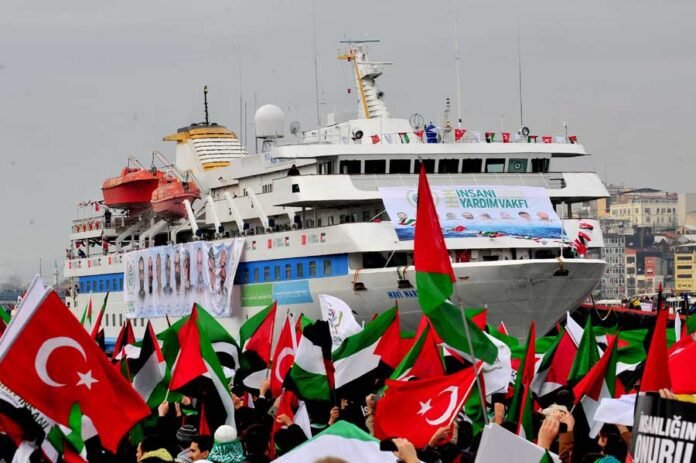
Prime Minister Benjamin Netanyahu held a preliminary security consultation Sunday ahead of the expected arrival of a Turkish flotilla carrying hundreds of pro-Palestinian activists seeking to reach the Gaza Strip and challenge Israel’s naval blockade.

The flotilla, consisting of 53 vessels carrying about 400 activists, is expected to arrive near Israel within less than two days. The convoy departed from Turkey as part of the Global Sumud Flotilla’s second blockade run to Gaza.

The flotilla was temporarily delayed after docking at a Greek island because of weather conditions. Netanyahu met with Israel’s security cabinet ahead of the flotilla’s anticipated arrival, the Jerusalem Post reported.

The current voyage follows a previous Global Sumud flotilla attempt in April, when 20 vessels were intercepted by the Israeli Navy.

Israeli officials have focused particular attention on the involvement of the Turkish IHH organization, which presents itself as a humanitarian group but is designated by Israel as a terrorist organization because of its ties to Hamas. Activists participating in the flotilla are connected to IHH and affiliated groups.

IHH was also involved in organizing the 2010 Mavi Marmara flotilla, when pro-Palestinian activists attempted to breach the naval blockade on Gaza. During the Israeli Navy takeover of the vessel, Shayetet 13 commandos encountered violent resistance and Israeli soldiers were injured after being attacked with iron rods, knives, and other objects.

The flotilla set to arrive as the October 2025 ceasefire agreement between Israel and Hamas remains stalled before implementation of its second phase. The dispute centers on Hamas disarmament, which is required under the agreement but has been rejected by Hamas.

The US-backed 20-point Gaza plan called for an immediate ceasefire, the release of all Israeli hostages, increased humanitarian aid, and a phased Israeli withdrawal linked to security arrangements and Hamas disarmament.

The proposal also included an internationally supervised reconstruction and governance framework for Gaza, with Hamas excluded from future governance and longer-term discussions aimed at stabilization and eventual Palestinian self-governance.

Two tragedies, one grieving nation: Italy confronts deaths in Maldives and Modena horror

0
two-tragedies,-one-grieving-nation:-italy-confronts-deaths-in-maldives-and-modena-horror
Two tragedies, one grieving nation: Italy confronts deaths in Maldives and Modena horror


Italy is confronting a period of national grief after two separate tragedies — a deadly cave-diving disaster in the Maldives and a car-ramming incident in Modena — left the country mourning lives lost and others fighting for survival.

As recovery teams in the Maldives struggled against severe weather conditions to retrieve the bodies of four Italian divers trapped deep inside an underwater cave system, authorities in northern Italy continued investigating a vehicle attack in Modena that injured eight people and left several victims in critical condition.

Italian Foreign Minister Antonio Tajani said search operations in the Maldives had been temporarily suspended because of rough seas, but stressed that every effort would continue to bring the victims home.

“Unfortunately, the searches are suspended due to bad weather, but we will do everything possible to recover the bodies of our compatriots,” Tajani said.

The five victims of the Maldives incident were identified as Monica Montefalcone, an associate ecology professor at the University of Genoa; her daughter Giorgia Sommacal; marine biologist Federico Gualtieri; researcher Muriel Oddenino; and diving instructor Gianluca Benedetti.

Benedetti’s body was recovered earlier, while authorities believe the remaining four entered deeper sections of the cave system in the Vaavu Atoll during an exploration dive at around 50 metres below the surface.

The deaths remain under investigation.

Officials said the cave system consists of three large chambers connected by narrow passages, with rescue teams having so far explored two sections before oxygen and decompression limits forced them to halt operations. Additional specialist divers from Italy, including a cave-diving expert and a deep-sea rescue specialist, are expected to join the mission.

Monica Montefalcone’s husband, Carlo Sommacal, rejected suggestions of recklessness, describing his wife as an experienced diver who carefully assessed every risk.

“Something must have happened,” he said, recalling her extensive experience underwater.

He also said Montefalcone had survived the 2004 Indian Ocean tsunami while diving off Kenya and later returned to diving despite major health complications.

Environmental groups and scientific institutions paid tribute to Montefalcone, praising her work in marine research and conservation.

The tragedy has also renewed attention on the risks associated with cave diving, one of the most technically demanding forms of diving. Experts note that overhead environments, limited visibility and extreme depth can rapidly increase danger levels. Depths beyond 40 metres are generally considered technical diving and require specialised training and equipment, while recreational diving limits in the Maldives are set at 30 metres.

Meanwhile in Italy, investigators ruled out terrorism in the Modena attack after a 31-year-old Italian man of Moroccan heritage drove into pedestrians before crashing into a shop window.

Authorities said eight people were injured, with four initially reported in critical condition.

Among the most seriously injured was a 55-year-old woman who was crushed against a shopfront and underwent leg amputations. Other victims also suffered severe injuries.

Interior Minister Matteo Piantedosi said the suspect was not believed to have acted for terrorist motives and had previously received treatment for psychological problems.

Modena mayor Massimo Mezzetti said the suspect had previously been treated in mental health facilities in 2022 for schizoid-related conditions before dropping out of care.

After the collision, the suspect allegedly attempted to flee on foot but was chased and restrained by passers-by despite reportedly producing a knife and injuring one person during the struggle.

Prosecutors have arrested the suspect on charges including massacre and causing injuries aggravated by the use of a weapon.

Italian Prime Minister Giorgia Meloni and President Sergio Mattarella visited Modena following the incident.

While some political figures used the attack to renew debates over immigration policy, local officials urged restraint.

Mezzetti called for unity, noting that among those who helped stop the suspect were members of immigrant communities.

“At the moment I see so much looting on social media and elsewhere,” he said, warning against attempts to generalise or spread division.

As Italy awaits renewed recovery operations in the Maldives and follows the condition of victims in Modena hospitals, the two events have combined to cast a shadow over the country, with families confronting loss and uncertainty on two very different fronts.

Like Suez for the Brits, Hormuz spells doom for US empire

0
like-suez-for-the-brits,-hormuz-spells-doom-for-us-empire
Like Suez for the Brits, Hormuz spells doom for US empire

Empires rise and fall. They do not last forever. Imperial declines follow a gradual shifting of the economic tides, but are also punctuated and defined by critical tipping points.

There are many differences between the Suez Crisis in 1956 and the US war on Iran today, but similarities in the larger context suggest that the United States is facing the same kind of “end of empire” moment that the British Empire faced in that historic crisis.

In 1956, the British Empire was still resisting independence movements in many of its colonies. The horrors of British Mau Mau concentration camps in Kenya and Britain’s brutal guerrilla war in Malaya continued throughout the 1950s, and, like the US today, Britain still had military bases all over the world.

Britain’s imperial domination of Egypt began with its purchase of Egypt’s 44% share in the French-built Suez Canal in 1875. Seven years later, the British invaded Egypt, took over the management of the Canal and controlled access to it for 70 years.

After the Egyptian Revolution overthrew the British-controlled monarchy in 1952, the British agreed to withdraw and close their bases in Egypt by 1956, and to return control of the Suez Canal to Egypt by 1968.

But Egypt was increasingly threatened by Britain, France, and Israel. Through the 1955 Baghdad Pact, the British recruited Turkey, Iraq, Iran, and Pakistan to form the Central Treaty Organization, an anti-Soviet, anti-Egyptian alliance modeled on NATO in Europe. At the same time, Israel was attacking Egyptian forces in the Gaza Strip, and France was threatening Egypt for supporting Algeria’s war of independence.

Egypt’s President Nasser responded by forging new alliances with Saudi ArabiaSyria, and other countries in the region, and, after failing to secure weapons from the US or USSR, Egypt bought large shipments of Soviet weapons from Czechoslovakia.

Upset with Egypt’s new alliances, the United States, Great Britain, and the World Bank withdrew their financing from Egypt’s Aswan Dam project on the Nile. In response, Nasser stunned the world by nationalizing the Suez Canal Company and pledging to compensate its British and French shareholders.

British leaders saw the loss of the Suez Canal as unacceptable. Chancellor Harold Macmillan wrote in his diary, “If Nasser ‘gets away with it’, we are done for. The whole Arab world will despise us… and our friends will fall. It may well be the end of British influence and strength forever. So, in the last resort, we must use force and defy opinion, here and overseas.”

British Prime Minister Anthony Eden hatched a secret plan with France and Israel to invade Egypt, seize the Canal and try to overthrow Nasser. The US rejected military action against Egypt, and President Dwight Eisenhower told a press conference, on September 5, 1956, “We are committed to a peaceful settlement of this dispute, nothing else.” But the British assumed that the US would ultimately support them once combat began.

Israel invaded the Gaza Strip and the Sinai Peninsula, and then Britain and France landed forces in Port Said at the north end of the Suez Canal, under the pretense of protecting the Canal from both Israel and Egypt.

But before Britain and France could fully seize control of the Canal, the US government intervened to stop them. The US began selling off its British currency reserves and blocked an emergency IMF loan to Britain, triggering a financial crisis. At the same time, the USSR threatened to send forces to defend Egypt and even hinted at the possible use of nuclear weapons against Britain, France, and Israel.

The UN Security Council used a procedural vote—which Britain and France could not veto—to convene an Emergency Special Session of the General Assembly under the “Uniting for Peace” process. Resolution 997 called for a ceasefire, a withdrawal to armistice lines and the reopening of the Canal, and was approved by a vote of 64 to 5.

Four days later, Prime Minister Eden declared a ceasefire. British and French forces withdrew six weeks later, and the Canal was cleared and reopened within five months. Egypt subsequently managed the Canal effectively, and did not block British or French ships from using it.

The Suez Crisis was the pivotal moment when the British government finally learned that it could no longer use military force to impose its will on less powerful countries. Like Americans today on Iran, the British public was way ahead of its government: opinion polls found that 44% opposed the use of force against Egypt, while only 37% approved. As Prime Minister Eden dithered over the UN’s ceasefire order, 30,000 people gathered at an anti-war rally in Trafalgar Square.

Eden was forced to resign, and was replaced by Harold Macmillan, who withdrew British forces from bases in Asia, expedited independence for British colonies around the world, and repositioned Britain as a junior partner to the US.

That new role included arming British submarines with US nuclear missiles, which is now a violation of the Nuclear Non-Proliferation Treaty (NPT). But Macmillan’s successor, the Labour Party leader Harold Wilson, would later keep Britain out of Vietnam.

Britain charted a successful transition to a post-imperial future through its relationships with the United States and the British Commonwealth–an association of independent states that preserved British influence in its former colonies.

On the domestic front, there was broad political support for a mixed capitalist-socialist economy that included free education and healthcare, publicly owned housing and utilities, nationalized industries, and strong trade unions.

Macmillan was reelected in 1959 with the slogan, “You’ve never had it so good.” When a cartoonist mockingly dubbed him “Supermac,” the nickname stuck.

Britain’s Tories were dyed-in-the-wool imperialists, much like Trump and his motley crew today. But they did not let their imperial world view blind them to the lessons of the Suez Crisis. They could see that the world was changing, and that Britain had to find a new role in a world it could no longer dominate by force.

Most Americans today have learned similar lessons from failed, disastrous US wars in Vietnam, Iraq and Afghanistan. But like the British people who opposed Eden’s invasion of Egypt, Americans have been repeatedly dragged into war by the secret scheming of leaders blinded by anachronistic, racist, imperial assumptions.

Trump is now encountering the same kind of international pressure that forced Britain and France to abandon the Suez invasion. Another Emergency Special Session of the UN General Assembly and a new “Uniting for Peace” resolution might also be helpful.

But ultimately, the resolution of this crisis, and the future of the US in today’s emerging multipolar world, will depend on whether US politicians are capable of making the kind of historic policy shift that Macmillan and his colleagues made in 1956 and the years that followed.

Macmillan was not an opposition politician, but a senior member of Britain’s Conservative government, up to his neck in the Suez fiasco. The secret plot with the Israelis was his idea. President Eisenhower personally warned him at the White House that the US would not support a British invasion of Egypt.

But unlike the British Ambassador who sat in on the same meeting, Macmillan assumed that, when the chips were down, Eisenhower would stand by his old World War II allies. Maybe it was the shock of getting it all so wrong that persuaded Macmillan and his colleagues to take a fresh look at the world and radically rethink British foreign and colonial policy.

The crisis with Iran is at least as catastrophic for US imperialism as the Suez Crisis was for the British Empire. The question is whether anyone in Washington today is capable of grasping the gravity of the crisis and making the required policy shift.

To follow Britain’s Suez example would mean closing US military bases around the world; renouncing the illegal threat and use of military force as the main tool of US foreign policy; and relying instead on multilateral diplomacy and UN action to resolve international disputes.

But where is the Macmillan in the Trump administration or the Republican Party? Or the Harold Wilson in the Democratic Party, whose leaders have never even tried to formulate a progressive foreign policy since the end of the Cold War? Obama’s belated outreach to Cuba and Iran in his second term were their only flirtation with a new way forward.

The only silver lining in the current crisis is that it may mark the final collapse of the neoconservative imperial project that has dominated US foreign policy since the 1990s and now cornered Trump into a “damned if you do, damned if you don’t” choice between an unwinnable war with Iran and a historic diplomatic defeat.

Americans must insist that this crisis spark the radical rethink of US politics, economics and international relations that neocons in both parties have prevented for decades.

Trump’s dead end in the Persian Gulf must also be the final end of this ugly, criminal neoconservative era, and the beginning of a transition to a more peaceful future for Americans and all our neighbors.

Medea Benjamin is co-founder of Global Exchange and CODEPINK: Women for Peace. She is the co-author, with Nicolas J.S. Davies, of “War in Ukraine: Making Sense of a Senseless Conflict,” available from OR Books in November 2022. 

Nicolas J. S. Davies is an independent journalist and a researcher with CODEPINK. He is the co-author, with Medea Benjamin, of “War in Ukraine: Making Sense of a Senseless Conflict,” available from OR Books in November 2022, and the author of “Blood On Our Hands: the American Invasion and Destruction of Iraq.

-Common Dreams

‘Clock is ticking’ for Iran, warns US President Trump

0
‘clock-is-ticking’-for-iran,-warns-us-president-trump
‘Clock is ticking’ for Iran, warns US President Trump

Middle East Monitor

Creating new perspectives since 2009

Middle East Monitor

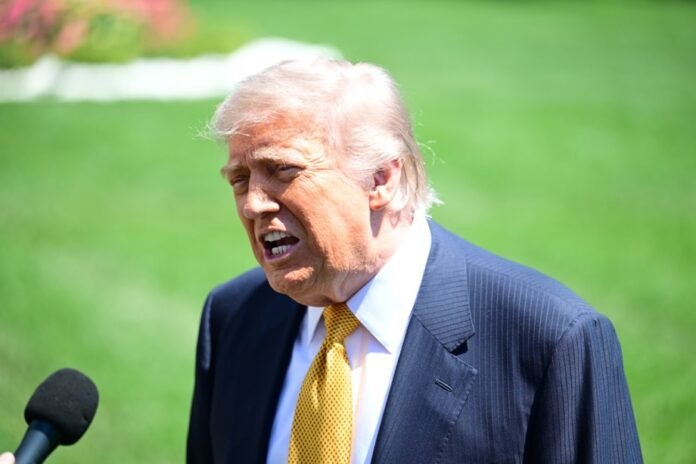
U.S. President Donald Trump speaks to members of the press before boarding Marine One on the South Lawn of the White House in Washington, United States, on May 12, 2026. [Kyle Mazza - Anadolu Agency]

U.S. President Donald Trump speaks to members of the press before boarding Marine One on the South Lawn of the White House in Washington, United States, on May 12, 2026. [Kyle Mazza – Anadolu Agency]

US President Donald Trump on Sunday warned Iran, saying the “Clock is Ticking” for them to “get moving” before “there won’t be anything left of them,” Anadolu reports.

His remarks came amid repeated threats for Tehran to agree to a ceasefire.

“TIME IS OF THE ESSENCE!” he said on his Truth Social media account.

READ: US outlines 5 conditions for Iran deal: Report

Related Posts

Trending

Students Accidentally Served REAL Dirt at School Charity Dinner

0
students-accidentally-served-real-dirt-at-school-charity-dinner
Students Accidentally Served REAL Dirt at School Charity Dinner


A Maine high school fundraiser meant to help fight hunger turned into a bizarre dinner disaster after students accidentally served potting soil to guests — and a few teens even took bites before realizing they were literally eating dirt.

The strange mix-up happened during an “Empty Bowl Supper” event at Medomak Valley High School in Waldoboro, a small town about 30 miles outside Augusta.

According to school officials, students in a science class had earlier baked potting soil in the oven as part of an experiment testing how sterilized soil affects plant growth. The dirt was placed in a foil-covered baking dish and left off to the side in the school kitchen.

But as volunteers rushed around preparing food for the charity event later that evening, the tray of baked dirt somehow ended up getting served alongside actual desserts.

Yes — real dirt.

“Three students briefly put some of the soil in their mouths, believing it to be a dessert item, before immediately realizing what it was,” the school said in a statement.

The mystery “dessert” was quickly pulled from the serving table once the mistake was discovered.

School administrators stressed the embarrassing blunder was “completely accidental” and not some kind of prank gone wrong.

Still, the incident left plenty of people stunned that oven-baked potting soil could somehow be mistaken for food in the first place.

Parents of the students involved were contacted, and school officials apologized for the chaos surrounding the longtime community event.

“Those involved in organizing the Empty Bowl Supper… are deeply sorry that this occurred,” principal Linda Pease said.

For the unlucky teens who got a mouthful of dirt, however, it’s probably a school dinner they’ll never forget.

President Trump Warns Iran ‘Time Is of the Essence’ After Netanyahu Call

0
president-trump-warns-iran-‘time-is-of-the-essence’-after-netanyahu-call
President Trump Warns Iran ‘Time Is of the Essence’ After Netanyahu Call


US President Donald Trump issued a new warning to Iran on Sunday after speaking with Prime Minister Benjamin Netanyahu, as tensions surrounding Tehran, the Strait of Hormuz, and regional security continued to escalate.

He wrote on his social media platform Truth Social, “Time is of the essence!” Hours earlier, he spoke with Netanyahu in a conversation that lasted more than half an hour and concluded before the start of Israel’s security cabinet meeting.

President Trump briefed Netanyahu on the results of his visit to China, and the two leaders discussed Iran. An Israeli official said the possibility of striking Iran remains unresolved, according to Ynet.

“Trump needs to make a decision. He needs to be at peace with himself, and if he decides to renew hostilities, it’s likely Israel will be called upon to join,” the official said.

On Truth Social, he intensified his rhetoric toward Tehran, writing: “The clock is ticking for them and they’d better start moving fast—or there will be nothing left of them.”

Last week, reports said Israel and the United States were carrying out extensive preparations for renewed attacks on Iran, potentially as soon as this week.

Iranian officials reportedly stated that maritime traffic through the Strait of Hormuz would resume only after the war with the United States and Israel ends. Washington has expressed growing concern over rising energy prices ahead of the approaching US midterm elections.

Separately, the UAE Ministry of Defense announced that air defenses intercepted two of three drones that crossed into the country from the western border. The ministry said the third drone struck a generator outside the Barakah nuclear power plant complex in the Al-Dhafra region

The ministry said investigations are underway to determine the source of the attack, which the International Atomic Energy Agency Director General Rafael Mariano Grossi, described as “unacceptable.”

In its statement, the UAE Ministry of Defense said it remains prepared “to deal with any threat and respond decisively to any attempt to undermine the country’s security, thereby preserving its sovereignty, security and stability, and protecting its national interests and resources.”

Qatar warns against using Strait of Hormuz as ‘bargaining chip’

0
qatar-warns-against-using-strait-of-hormuz-as-‘bargaining-chip’
Qatar warns against using Strait of Hormuz as ‘bargaining chip’

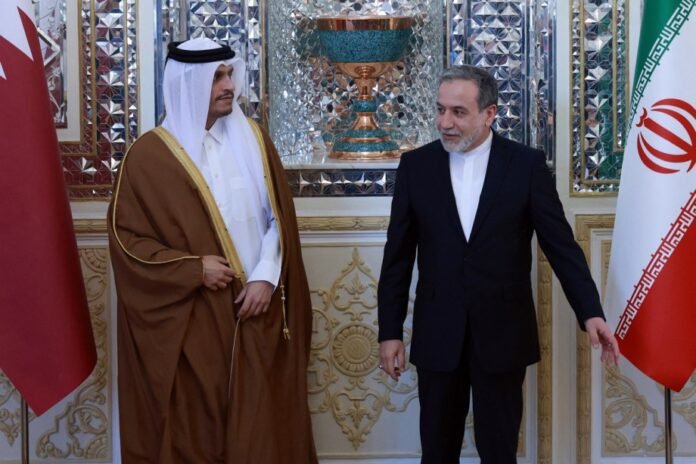
Iranian Foreign Minister Abbas Araghchi (R) welcomes his Qatari counterpart Mohammed bin Abdulrahman al-Thani ahead of their meeting in Tehran on November 20, 2024 [Photo by -STR/AFP via Getty Images]

Iranian Foreign Minister Abbas Araghchi (R) welcomes his Qatari counterpart Mohammed bin Abdulrahman al-Thani ahead of their meeting in Tehran on November 20, 2024 [Photo by -STR/AFP via Getty Images]

Qatari Prime Minister Sheikh Mohammed bin Abdulrahman Al Thani warned against using the Strait of Hormuz as a “bargaining chip” during a phone call Sunday with Iranian Foreign Minister Abbas Araghchi, Anadolu reports.

According to a statement by Qatar’s Foreign Ministry, the two officials reviewed efforts aimed at achieving peace and enhancing regional security and stability.

Sheikh Mohammed reiterated Qatar’s “full support for efforts aimed at reaching a comprehensive agreement to end the crisis,” stressing the need for all parties to respond positively to mediation efforts “in a way that contributes to achieving lasting peace and stability in the region,” the ministry said.

He also stressed that freedom of navigation is “a firmly established principle that is not open to compromise,” warning that closing the Strait of Hormuz or using it as a “bargaining chip” would only lead to deepen the crisis and threaten the vital interests of countries in the region.

READ: ‘Clock is ticking’ for Iran, warns US President Trump

The Qatari premier further emphasized the importance of adhering to international law, the principles of good neighborliness and prioritizing the interests of the region and its peoples to support de-escalation efforts and reinforce regional and international stability.

Regional tensions have escalated since the US and Israel launched strikes against Iran in February. Tehran retaliated with strikes targeting Israel as well as US allies in the Gulf, along with the closure of the Strait of Hormuz.

A ceasefire took effect on April 8 through Pakistani mediation, but talks in Islamabad failed to produce a lasting agreement. US President Donald Trump later extended the truce indefinitely.

Stalemate in Gaza Could Lead to Confrontation or a Continued Fragile Status Quo

0
stalemate-in-gaza-could-lead-to-confrontation-or-a-continued-fragile-status-quo
Stalemate in Gaza Could Lead to Confrontation or a Continued Fragile Status Quo


The current status quo, in which Israel remains in control of much of Gaza with Hamas still in power, makes a future conflict between the two imminent

A fragile ceasefire between Hamas and Israel hangs in the balance in Gaza, after Israel killed Hamas’ top military leader on Friday.

The assassination of Izz al-Din al-Haddad was confirmed by both Hamas and Israeli security agencies.

Al-Haddad is seen by Israel as one of the architects of the October 7, 2023, attack Hamas carried out against Israel, which marked the beginning of a regional conflict that engulfed the Middle East.

“This is a significant move,” Ido Zelkovitz, head of the Middle Eastern Studies program at Yezreel Valley College and a research fellow at the University of Haifa, told The Media Line. “This is not only the elimination of the person in charge of Hamas’ military operations, but he also had the knowledge about Hamas’ deployment from the bottom up and was at the heart of Hamas’ organizational memory.”

What we are seeing is Hamas more and more preoccupied with its survival, alongside its natural efforts to keep and develop its strength

“What we are seeing is Hamas more and more preoccupied with its survival, alongside its natural efforts to keep and develop its strength,” Zelkovitz added. “Israel is gradually eliminating all of its leadership, and they are busy running from one hiding place to another.”

According to a statement by Israel Katz, the Israeli defense minister, Israel saw al-Haddad as an impediment to implementing the next stages of the US-brokered agreement.

“He held our hostages captive under extreme cruelty, launched terrorist attacks against our forces, and refused to implement the agreement led by US President Trump to disarm Hamas and demilitarize the Gaza Strip,” according to a statement released shortly after al-Haddad’s death was confirmed on Friday night.

The killing comes amid a deadlock between the sides on the future of the ceasefire. The main point of contention is the demand that Hamas disarm, something the terrorist group refuses to do and Israel refuses to compromise on. Israel vowed to remove Hamas from power when it began its retaliation against the terrorist group in October 2023.

The ceasefire came into effect two years later, in October 2025. Hamas released all of the remaining Israeli hostages, and Israeli forces withdrew from parts of Gaza, retaining a presence along the “Yellow Line,” areas where Israeli forces can still remain, according to the ceasefire agreement.

Last week, Israeli Prime Minister Benjamin Netanyahu said Israel was in control of 60% of the Gaza Strip.

“Today its 60%, tomorrow we shall see,” he told an audience, alluding to Israel’s future intentions.

The current status quo, in which Israel remains in control of much of Gaza with Hamas still in power, makes a future conflict between the two imminent.

According to UN data, humanitarian aid flows into Gaza have steadily increased since the ceasefire. The territory and its population, which were targeted by an intense Israeli military operation, suffered a debilitating blow, and its rehabilitation is estimated to take years.

The humanitarian aid, which is aimed at helping the civilian population, is still being taken over by Hamas

“The confrontation is inevitable,” Sharona Shir Zablodovsky, an expert on public policy and national security at the Dvorah Forum, told The Media Line. “The humanitarian aid, which is aimed at helping the civilian population, is still being taken over by Hamas, which is trading with it, raising funds for its own rehabilitation.”

UN figures show a significant drop in humanitarian aid being intercepted by either Hamas or civilians before it reaches its intended target.

The humanitarian situation in Gaza remains dire. The population is still facing severe shortages of essential supplies, including food, clean water, and medical care. According to recent UN reports, over two million residents are in urgent need of assistance, exacerbated by the ongoing conflict and blockades that hinder aid delivery.

Despite major improvements in the flow of humanitarian aid since the ceasefire, distribution remains inconsistent, leaving many civilians dependent on international support. The continuous military actions and the political stalemate only deepen the crisis, leaving the people of Gaza in a continued state of vulnerability and uncertainty.

Both sides accuse each other of violating the ceasefire, putting President Trump’s ambitious plan to see permanent peace in Gaza at risk. Progress on the plan is being held up by Hamas’ refusal to lay down its weapons as well as continued Israeli presence, coupled with attacks in Gaza.

The American plan, devised by President Trump’s close advisors, Jared Kushner and his special envoy to the Middle East, Steve Witkoff, foresees a future in which Gaza is demilitarized, and a technocratic government is put in place instead of Hamas. According to the plan, these stages should have already begun.

“In reality, we have not seen any steps taken in this direction,” said Zelkovitz. “Hamas has not accepted the basic conditions, and what we are seeing is a gradual intensification of the fighting between the sides.”

Zablodovsky echoed concerns over a worsening trajectory, arguing that the underlying dynamics in Gaza remain largely unchanged, spelling more bloodshed for both sides.

We are reaching a boiling point; the question is when the confrontation will come and what the intensity will be

“We are reaching a boiling point; the question is when the confrontation will come and what the intensity will be,” said Zablodovsky. “As long as Hamas controls territory, with popular support, we are back at square one, and things haven’t changed.”

“Israel’s policy needs to be to use more force and further promote voluntary immigration of Palestinians from Gaza,” she added.

Just weeks after his inauguration last year, President Trump proposed that Gaza’s entire population leave the territory, recommending relocation to neighboring countries while Gaza is being rebuilt. The proposal triggered widespread international backlash and rejection, arguing it would amount to forced displacement and violate Palestinians’ right to remain in their homeland. Supporters framed the idea as a response to Gaza’s destruction and humanitarian crisis. For several of Netanyahu’s senior coalition partners, the idea was a dream come true, bringing them a step closer to their dream of re-occupying Gaza.

A limited number of Gazans have left the territory through evacuation, medical transfer, and emigration channels since the war began. Comprehensive data on permanent resettlement is lacking, but the numbers suggest the trend is not significant.

All the while, Israel is gradually deepening its hold over more territory in Gaza.

While Hamas and others in the international community view this as an Israeli violation of the ceasefire agreement, Israel sees it as a punitive measure against Hamas’ violations–namely, its unwillingness to disarm and allow for a technocratic government to rule Gaza.

“It is also an Israeli statement about its operational intentions, giving it more control over territory that is needed in order to guarantee the safety of its forces in Gaza,” said Zelkovitz. “Hamas has shown no interest in changing the reality on the ground the way the US and Israel want it to change.”

Since the ceasefire, Israel has not only increased its presence in Gaza, but it has also continued to strike at Hamas targets. According to the Hamas-run Gaza Health Ministry, more than 850 Palestinians have been killed since the ceasefire took effect last fall.

In recent weeks, Hamas has made several statements regarding its refusal to disarm.

For now, both Hamas and Israel appear to control the level of confrontation, without significantly escalating the armed conflict between them.

We could see a re-run of what we saw before the war

“We could see a re-run of what we saw before the war,” said Zablodovsky, referring to almost two decades in which Hamas built its strength as Israel turned a blind eye.

The fragility of the ceasefire may not necessarily end in an immediate confrontation, but rather a reality in which Israeli forces remain in Gaza alongside Hamas’ rule of parts of the territory. However, the interplay of military actions, humanitarian needs, and political maneuvering has the hallmarks of a volatile situation that could easily spiral out of control.

Inside Olivia Newton-John’s Final Days: ‘She’s Ready’

0
inside-olivia-newton-john’s-final-days:-‘she’s-ready’
Inside Olivia Newton-John’s Final Days: ‘She’s Ready’


Olivia Newton-John’s heartbreaking final years have been revealed in an emotional new biography that claims the beloved Grease icon quietly accepted her fate after decades of battling cancer.

According to A Little More Love by author Matthew Hild, the legendary singer and actress spent her last days surrounded by family, leaning on husband John Easterling and daughter Chloe Lattanzi as her body weakened from years of painful treatments and recurring illness.

Newton-John died in August 2022 at age 73 after a long fight with breast cancer that first began back in 1992. While she publicly stayed upbeat and inspirational for fans, the new book paints a far more emotional picture behind closed doors.

Her nephew Emerson recalled a devastating moment during a visit to her California ranch in 2021 that made him realize the end was near.

As the two sat outside together, he said Newton-John suddenly placed her hand on his shoulder and burst into tears.

“It was sad,” Emerson revealed. “I realized at that moment, ‘She’s ready.’”

He added that the final years of her life were “very painful,” though she remained incredibly strong throughout the ordeal.

Even after privately suffering another cancer recurrence in 2013, Newton-John continued pushing forward and refused to give in to despair. In 2017, she publicly revealed the disease had spread to her sacrum, but still insisted she hoped her journey would inspire others facing the same nightmare.

“I’m totally confident that my new journey will have a positive success story to inspire others,” she said at the time.

The singer became a fierce advocate for cancer research and wellness during her battle. She founded the Olivia Newton-John Cancer & Wellness Centre in Australia and later launched the Olivia Newton-John Foundation Fund with husband John Easterling to explore medicinal plant research for cancer treatment.

Newton-John openly praised Easterling, known for his knowledge of plant medicine, for helping her manage symptoms with medicinal cannabis.

“Now he’s growing medicinal cannabis for me, and it just has been wonderful,” she previously said. “It helps me in every area.”

Her daughter Chloe also remained constantly by her side. The pair quarantined together during the COVID-19 pandemic and even recorded the emotional duet Window in the Wall in 2021.

Newton-John admitted hearing the song for the first time brought her to tears.

“It’s a very healing song,” she said. “I thought, ‘This is very special, and I want to sing it with Chloe.’”

Author Matthew Hild said one thing never changed throughout Newton-John’s decades-long health battle: her determination to stay positive for everyone around her.

“In those final years of her life, she had John, she had her daughter and I think she was determined to make them not dwell on negatives,” Hild explained.

“She was determined not to feel sorry for herself. She was aware that she had the power to inspire other people.”

Even while suffering through unimaginable pain, Olivia Newton-John reportedly spent her final years trying to comfort everyone else — a heartbreaking ending for one of Hollywood’s most beloved stars.

0FansLike
0FollowersFollow
0FollowersFollow
0SubscribersSubscribe
- Advertisement -
Google search engine

Recent Posts