11.6 C
London
Saturday, May 16, 2026
Home Blog

This California Congressional Hopeful Opposes a Billionaire Tax. So Do His Tech CEO Backers.

0
this-california-congressional-hopeful-opposes-a-billionaire-tax-so-do-his-tech-ceo-backers.
This California Congressional Hopeful Opposes a Billionaire Tax. So Do His Tech CEO Backers.


The leading progressive candidate to replace longtime Democratic leader Nancy Pelosi in Congress is opposing a pair of wealth taxes on the ballot in his state and district: a one-time statewide tax on California billionaires and a local San Francisco tax on the city’s wealthiest businesses and corporations. 

California state Sen. Scott Wiener’s opposition might seem uncharacteristic for someone running a progressive campaign, but it’s consistent with the priorities of two top donors to a super PAC backing his candidacy.

Crypto mogul Chris Larsen and venture capitalist Garry Tan — a pair of wealthy Bay Area tech executives funding a pro-Wiener super PAC called Abundant Future — have been outspoken advocates of stopping the taxes, both of which aim to help fill funding gaps in healthcare and social services after the Trump administration’s recent cuts to Medicaid. Larsen has poured millions of dollars into the fight.

The statewide tax, known as the Billionaire Tax Act, would levy a one-time 5 percent tax on the state’s billionaires’ wealth and assets. The local San Francisco proposition, colloquially known as the Overpaid CEO tax, would tax companies whose CEO makes 100 times more than their median worker, which mostly applies to companies with billionaire CEOs. Both will likely be on the ballot in November, as Wiener also hopes to be.

Larsen, the billionaire co-founder and executive chairman of the blockchain service Ripple Labs and now a mainstay in Bay Area political funding, has donated $100,000 to the PAC backing Wiener — the most of any individual donor — and $700,000 opposing the Overpaid CEO tax, according to federal and San Francisco city records. He’s spent far more fighting the statewide billionaires’ tax, sinking $5 million of his own wealth and another $5 million from Ripple into the Golden State Promise PAC, an anti-tax PAC he founded, per state records. Larsen gave an additional $2.5 million to a separate anti-billionaire tax group, Building a Better California, founded by Google co-founder Sergey Brin and former Google CEO Eric Schmidt. (Brin has reportedly already left the state to avoid the tax.)

Tan, the CEO of startup incubator Y Combinator, has less money to throw around, but he’s made vocal opposition to the tax measures a key part of his brand. He frequently invokes the specter of billionaires and startups fleeing the state and spreads claims that the statewide tax would mean Google’s founders would owe 50 percent of their stocks, which the tax’s backers have dismissed as false. He’s contributed $25,000 to Abundant Future.

Larsen and Tan likely see their support as “political investments that they expect a return on,” said Jeremy Mack, executive director of Phoenix Project, which tracks corporate spending in San Francisco politics. Wiener owes much of his political strength to the donors who have boosted his housing causes during his state Senate career, including Larsen and Tan. With those backers now animated against the wealth taxes, Mack said that supporting them would be “political suicide” for Wiener.

But Wiener’s opposition to the taxes positions him against the political currents now driving the Democratic Party’s progressive wing. California’s major labor unions, a supermajority of San Francisco’s board of supervisors, and national progressive leaders like Sen. Bernie Sanders, I-Vt., all support the pair of taxes. Even Pelosi, Wiener’s would-be predecessor and a known moderate, is in favor of the local San Francisco tax. SEIU California, one of the state’s largest labor unions, withdrew its endorsement of Wiener in early April over his opposition to the tax measures.

Both of Wiener’s opponents in the three-way June 2 primary — progressive member of San Francisco’s board of supervisors Connie Chan and Justice Democrats co-founder Saikat Chakrabarti — are in favor of the taxes. Most California voters support the statewide billionaire tax, according to a March poll, including 72 percent of Democratic voters. 

“If you look at who is bankrolling [Wiener], he is doing the bidding of massive corporate interest,” Justin Dolezal, a San Francisco bar owner and co-founder with Small Business Forward, an advocacy group that supports both wealth taxes, told The Intercept. “That’s what he’s looking out for, rather than the average, everyday working San Franciscans.”

Wiener’s campaign did not respond to The Intercept’s request for comment. 

“He is doing the bidding of massive corporate interest. That’s what he’s looking out for, rather than the average, everyday working San Franciscans.”

While Wiener in the past has brushed off concerns of corporate backers influencing his policy, saying that he and his wealthiest donors “have agreements and disagreements,” their alignment in opposition against two popular wealth taxes has drawn concern from housing and homelessness advocates, who were already skeptical of Wiener for boosting housing development in the city that they argue favors real estate corporations. The real estate industry was consistently among his top donors during his state Senate elections.

Wiener is a proponent of the “Yes in My Backyard” movement that seeks to address the housing crisis by increasing the housing stock, while opponents criticize it for its emphasis on boosting development rather than redistributing wealth. The movement has morphed over the past several years with the growth of the abundance movement, which is popular among San Francisco’s powerful billionaires and aims to remove regulations and red tape to speed up development.

In addition to being top donors to Abundant Future, Tan and Larsen, along with Yelp CEO Jeremy Stoppleman, have been consistent supporters of Wiener’s YIMBY vision. During his decade in the state Senate, Wiener introduced a series of bills that cut regulations to accelerate housing development across the state, a core tenet of YIMBYism and abundance. Critics on the left dismissed his policies as rewards for corporate commercial real estate developers that failed to meet San Francisco and the state’s housing needs, as well as exacerbating gentrification and displacement of its low-income residents. Opponents instead argue for redistribution of wealth, using the housing that already exists and direct investment in services for low-income people. 

Confronting challenges over his support from wealthy donors during his campaign for Congress, Wiener often refers to his track record of taking on corporations, such as introducing AI regulation bills, one of which drew the ire of some of his tech backers, including Tan. But earlier this year, Wiener and Tan partnered on a failed state bill that would have restricted Big Tech companies from self-preferencing their products over smaller companies. While Wiener touted the legislation as a way to rein in the likes of Apple and Google, Tan’s company, Y Combinator, likely would have benefited because it helps launch new startups.

Tan has also worked to insulate the tech sector from organized labor, accusing the state’s labor leaders of having the goal of “killing the tech golden goose and taking maximum waste into the budget … until CA ceases to work for everyday Californians.” 

Larsen, meanwhile, railed against unions at a San Francisco business event in January, calling on his peers to “start fighting on par with the unions when they propose these absolutely stupid propositions like this crazy CEO tax.” Larsen echoed the message at a separate tech donor gathering Tan hosted months later. 

Larsen did not respond to The Intercept’s request for comment. A spokesperson for Tan told The Intercept to “look at Mr. Tan’s posts on X/Twitter,” where Tan has called the billionaire tax “a destroy tech in California proposition” and the overpaid CEO tax “bad policy wrapped up in anti-billionaire bullshit.”

Wiener’s legislative record reveals an inconsistent history of supporting progressive taxation. In 2018, he opposed a successful local tax on big businesses to fund homelessness services. Two years later, Wiener supported the first iteration of the CEO tax, the first of its kind nationwide, before it was undone in 2024. 

At a candidate forum in January, Wiener said he supported progressive taxes, but he would wait until the Billionaires Tax Act got on the ballot to decide. In April, Wiener said he opposed the local CEO tax, saying he didn’t want to interrupt San Francisco Mayor Daniel Lurie’s economic recovery agenda and that he would pursue similar progressive tax reform in Congress. And last week, after the state billionaire tax’s backers announced they had the necessary signatures to enter it on the ballot, Wiener said he was also against the statewide tax.

“California already has an unstable boom-bust tax system because of the devaluation of property taxes and reliance increasingly on income taxes on wealthy residents,” Wiener told the San Francisco Standard. He said he disagreed with the approach, especially given that it’s a one-time tax.

“It sounds like a person that’s in opposition, but doesn’t want to be seen as Republican,” said Paul Boden, a longtime advocate for people living unhoused. “It’s the neoliberal justification for continuing down the same neoliberal path since Reagan: that doing something that might impact some wealthy people is bad for all of us.” 

“It’s the neoliberal justification for continuing down the same neoliberal path since Reagan: that doing something that might impact some wealthy people is bad for all of us.” 

Boden, the executive director of the Western Regional Advocacy Project, has long sparred with Wiener on his housing and homelessness policy. In 2016, when Wiener was a San Francisco board supervisor, Boden spoke out against a letter Wiener wrote to the city’s police chief, which had called for a sweep of homeless encampments amid that year’s winter storms. He has criticized Wiener’s housing policies, arguing they prioritize middle-income San Franciscans over the city’s poor.

The results of Larsen and Tan’s ad spending can already be seen on the airwaves in and around San Francisco. Abundant Future has been running ads and sending mailers that paint Chakrabarti, who is advocating to nationalize AI by turning struggling AI companies into public utilities, as a carpetbagger amid his surge in recent polls. Larsen has said that he supports candidates promoting AI regulation, and he plans to spend millions backing Alex Bores, a New York congressional candidate facing heavy oppositional spending from a PAC backed by openAI.

Larsen-funded ads released by his Golden State Promises PAC aired during California’s recent gubernatorial debate, saying the billionaire tax would “backfire and hurt you.”

Supporters of the local and state wealth taxes argue that more revenue is needed to address California’s shortfall due to federal healthcare funding cuts, which is estimated at a $100 billion loss over the next five years. There are more than 200 billionaires who live in the state, according to Forbes data compiled by tax advocates. Most of the revenue from the one-time state tax would go to healthcare, with some set aside for food assistance at schools and other education programs. 

Revenue from San Francisco’s local Overpaid CEO tax — which has been estimated to bring in $250 to $300 million each year — is designed to go to the city’s general fund, with its supporters hoping to invest in healthcare, mental health treatment, and housing support. Larsen and opponents are also funding support for a dueling “poison pill” measure, which would negate the Overpaid CEO tax if approved.

To Mack of the Phoenix Project, this kind of spending is par for the course in politics but should inspire voters to think critically about whom they support.

“The more politicians are in their pockets,” said Mack, referring to wealthy donors, “the less we can expect regular Californian/San Franciscan people’s voices to matter.”

Correction: May 14, 2026, 4:05 p.m. ET
A previous version of this article misstated the first name of a San Francisco bar owner and co-founder with Small Business Forward; he is Justin Dolezal, not Jerome.

Order, character and time preserved in China’s classical furniture

0
order,-character-and-time-preserved-in-china’s-classical-furniture
Order, character and time preserved in China’s classical furniture

The first time one truly stands before a Ming-style horseshoe-back armchair, a quiet misperception arises. It does not feel like an antique. It feels like a piece of modern design completed several centuries too early.

There is no heavy imperial pomp, no crowded carving, none of the mother-of-pearl inlay so often associated with later Qing taste, no need for gold, jewels, heraldry or sheer mass to announce value. Four legs touch the ground. The arms open outward. The back curves with restraint. Under the light, the grain begins to move. The object is silent, yet its structure, proportion and hierarchy are unmistakable.

The value of Chinese classical furniture does not lie in the vague label of “Eastern style.” It lies in the way timber, craftsmanship, bodily scale, spatial etiquette and collecting history enter a daily object and turn it into a form of civilization.

The first element is wood.

According to Shi Hao, founder and director of the Donghu Rosewood Museum in Wuhan, the three great tribute woods of antiquity refer to the precious hardwoods selected for imperial use during the Ming and Qing periods and offered by local authorities or tributary regions. They were known as “first yellow, second purple, third red”: huanghuali, zitan and dahong suanzhi. The classification offers a direct entrance into the material hierarchy of Chinese furniture. Huanghuali is prized for warmth and grain; zitan for density, darkness and gravity; dahong suanzhi for its deep red tone, hardness and stability.

Shi Hao, founder and director of the Donghu Rosewood Museum, with Ma Weidu, the renowned Chinese antique collector, connoisseur and writer. Photo: Shi Hao

Among Ming-style furniture, huanghuali occupies a special place. The finest Hainan huanghuali can glow in tones of amber, honey and reddish brown. Its grain may resemble mountains, running water or drifting clouds.

Most distinctive are the so-called guilian or limian patterns — “ghost faces” or “lynx faces,” also known as ghost eyes or coin patterns. These dark brown clusters can look like theatrical masks, leopard markings or stacks of ancient coins. On a table surface or a chair back, one may see many such images: half-face, half-eye, half-apparition. Craftsmen and collectors describe the wood as alive because these images are not carved into it. They grow from within.

This is one reason Ming furniture often prefers plain surfaces. It was not a lack of decorative ability. It was respect for the material. Huanghuali already contains landscapes, clouds, ghost faces and coin patterns. Excessive carving would interrupt the wood’s own painting.

From the middle and late Ming period onward, fine hardwoods entered elite furniture through southern trade, maritime commerce and the consumer culture of Jiangnan. As large pieces became scarce and slow-growing timber more difficult to obtain, huanghuali came to be regarded as “gold among woods.” The literati liked it unadorned because the grain itself was the event.

Today, museums and traditional craft institutions are again reorganizing this material knowledge. The Donghu Rosewood Museum occupies about 2,000 square meters and houses more than 400 pieces of precious classical rosewood furniture. Through research and development with expert teams from the Palace Museum and the Shanghai Museum, it uses Suzhou-style craftsmanship to revive the elegance of Ming furniture.

This matters beyond one institution. It shows that Ming-style furniture is no longer only an antique category in the collecting market. It has returned to the fields of material study, craft history, museum research and contemporary aesthetic education.

After material comes structure.

The most refined part of Chinese classical furniture is often hidden at the joints. Mortise-and-tenon construction is not merely the romantic idea of “using no nails.” It is a structural system for dealing with force, expansion, contraction, weight and stability. Wood moves with humidity. Metal nails can injure its nature. Mortise and tenon allow furniture to breathe within limits, which is one reason so many pieces have survived for centuries.

To understand a horseshoe-back armchair, one cannot stop at the outline. One must see how the arms extend from the back, how the back splat receives the human body, whether the legs splay just enough, how the stretchers distribute force and how aprons and openings balance support with visual rhythm. Luoguo stretchers, ba wang stretchers, mitered frames with floating panels, waisted construction, foot supports and soft seats are not a list of antique terms. They are the grammar of structure.

If the proportion is wrong, the spirit of the object collapses. If the arm is too high, the body resists. If the back is too straight, one does not wish to remain seated. If the legs are too thick, lightness disappears. Fine Ming furniture is not simply “simple.” It is accuracy after compression. Minimal appearance is only the surface. Precision is the essence.

In the traditional craft system, measurement was never casual. Ming carpenters, especially in Jiangnan, often used the Luban ruler, also called the menguang ruler or bazi ruler, to determine the dimensions of doors, beds, tables and other objects. Luban, whose personal name was Gongshu Ban, was a celebrated craftsman of the state of Lu during China’s Spring and Autumn period, roughly 770 to 476 BCE.

This period overlaps broadly with archaic Greece and the Roman kingdom. At a time when the foundations of Eastern and Western civilizations were both being laid, Chinese craft culture was already linking technique, measurement and symbolic order.

Ming-style hongmu round-back armchairs. Photo: Art Habsburg Visual Archive

The Luban ruler divided measurement into auspicious and inauspicious positions. Common favorable characters included wealth, righteousness, office and good fortune; unfavorable ones included illness, separation, calamity and harm.

A saying from Luban’s handbook on architecture, the Luban Jing Jiangjia Jing states: “Beds do not leave seven, tables do not leave nine, stools do not leave three, doors do not leave five, coffins do not leave eight.” The phrase reflects a belief that the final dimensions of beds, tables, stools and doors should not only serve use, but also fall within auspicious measurements.

Seen from a modern perspective, this belongs to feng shui and symbolic belief. Seen within traditional society, it shows that furniture making was not merely technical labor. It joined bodily scale, domestic peace and psychological order into one craft discipline.

Imperial architecture and court objects took measurement even more seriously. The Qing dynasty Gongbu Gongcheng Zuofa Zeli, the official building standards of the Board of Works, listed numerous door dimensions aligned with auspicious Luban positions, including categories such as “wealth-increasing doors,” “righteousness and harmony doors,” “official rank and emolument doors” and “fortune and virtue doors.”

A bed, a table or a door was therefore not simply processed timber. It carried ideas of household stability, continuing fortune and maintained order. The proportion of Chinese classical furniture came from eye and hand, but also from a long inheritance of measurement culture.

This design logic explains why Ming furniture speaks so naturally to modern design.

A hongmu nanguanmao chair, also known as a Southern official’s hat chair. Photo: Art Habsburg Visual Archive

Modernism values structural honesty, material honesty, functional clarity and formal restraint. Ming furniture had already achieved these principles centuries earlier. It lacks the coldness of industrial design, but it possesses the modern spirit at its core: It does not conceal structure, it does not abuse decoration and it does not substitute mass for authority.

A Ming-style chair can stand in a modern house, a gallery or a private study beside stone, concrete, abstract painting and contemporary lighting without appearing theatrical. Its outline is clear, its scale controlled, its material legible, its structure self-evident.

Yet furniture is never only design.

In late Ming literati life, furniture formed a spatial order. A painting table was not an ordinary table. It was the center for reading, writing, viewing paintings, burning incense and receiving guests. A horseshoe-back armchair determined posture, line of sight, ritual distance and the bearing of the host. An incense stand might hold only a burner, a vase or a scholar’s rock, yet it gave the room breath. A luohan bed stood between bed, couch and seat. One could recline, converse, drink tea, read or rest upon it. It belonged to the zone between private life and social space.

Hall furniture emphasized order and ritual. Study furniture emphasized solitude and cultivation. Beds and couches joined the daily body to the life of the mind. The placement, scale and grouping of furniture formed a social language. Ming furniture gave particular importance to empty space. Emptiness here was not absence. It was control. It allowed distance between objects, room for light, air and movement. A sophisticated room is not one packed with valuable things. It is one in which each object knows its position.

Collecting value must also be judged from within this system.

The price of a piece of Chinese classical furniture is not determined by wood alone. Wood is only the threshold. What gives a piece scholarly and market value is age, form, proportion, workmanship, condition, provenance, publication history, exhibition record and collecting pedigree.

The international market has already shown what truly top-level Chinese classical furniture can command. Christie’s has cited important results: a 16th- to 17th-century huanghuali circular incense stand sold for US$5,847,500, while an 18th-century zitan luohan bed sold for US$3,607,500. Such prices make clear that top Chinese classical furniture is no longer treated internationally as decorative antiquity. It is a high-level art asset combining material rarity, technical refinement, aesthetic rank and collecting history.

To judge a huanghuali piece, one must ask several questions. Is the timber old material? Does the form correspond to the period? Are the mortise-and-tenon joints original? Are panels, legs, aprons or openings later replacements? Is the patina natural? Has the surface been over-polished, waxed or recolored? Has the structure undergone major repair? Have dimensions been altered? Is the provenance clear? Has the piece entered significant collections, exhibitions, catalogues or auction records?

Provenance is especially important at the high end of the market. Without a clear history, even beautiful material remains limited in value. With a documented collecting record, publication history and scholarly background, a piece is no longer merely an old object. It becomes a cultural asset tested by time, connoisseurship and the market.

Authenticity demands the most experience.

Chinese classical furniture cannot be judged simply by whether it looks old. Old wood can be used to make new furniture. New furniture can be aged artificially. Old components can be recombined. Partial restoration can change the value of the whole. The real judgment lies in whether wood, structure, proportion, tool marks, patina, wear and use logic agree with one another.

Naturally used furniture ages with direction. The arms become smoother where hands often rested. The seat shows subtle wear where the body made contact. The lower legs carry traces of long contact with the floor. Drawer edges grow rounded from repeated opening and closing. Real traces of life are never evenly distributed. If a piece is uniformly old from top to bottom, caution is required.

Renowned Chinese painter Leng Jun admires the wood material and craftsmanship. Photo: Shi Hao

Patina is not a layer of shine. It is the surface condition formed by hands, air, light, dust, use and time. Good patina is calm, warm and layered. Over-polishing erases time. Artificial aging invents it. Old furniture fears two things most: being restored too new, or being made too old. One destroys evidence; the other fabricates history.

Late Ming furniture history also contains an emperor who cannot be avoided: the Tianqi Emperor, Zhu Youxiao, who reigned from 1620 to 1627. He was so devoted to woodworking that he may be called the most “hands-on” emperor in Chinese history. Later generations remembered him as the “carpenter emperor.” The title is not a casual anecdote. It places the precision and prosperity of late Ming woodwork beside the decay of imperial politics, creating one of the strangest and most tragic images in Chinese dynastic history.

According to the Ming Shi, the official History of the Ming dynasty, and Liu Ruoyu’s Zhuozhong zhi, a detailed insider account of the late Ming court, Zhu Youxiao loved carpentry intensely. He is said to have made miniature palace models, folding beds, small screens, lacquer objects and mechanical wooden pieces with his own hands. When working with wood, he could forget meals, sleep, heat and cold.

Even skilled craftsmen in the palace acknowledged the refinement of his work. Later accounts even record that he had eunuchs take some of his pieces outside the palace to sell, giving his hobby an oddly worldly quality: An emperor not only admired woodwork, but personally sawed, planed, carved and shaped timber into objects.

The story darkens quickly. The emperor’s absorption in carpentry coincided with the rise of Wei Zhongxian. Wei held major positions, including writing eunuch of the Directorate of Ceremonial and head of the Eastern Depot. The Ming Shi, Britannica and historians in China and abroad commonly regard him as one of the most powerful eunuchs in Chinese history. Britannica states: “He is usually considered by historians to have been the most powerful eunuch in Chinese history.”

In accounts such as Liu Ruoyu’s, Wei would present important memorials while the emperor was absorbed in his tools. Tianqi would often respond with a phrase to the effect of: “I have understood. You handle it well.” Affairs of state then passed into the hands of the eunuch faction.

On one side were sawdust, shavings, mortise and tenon, lacquer and ingenious furniture. On the other were court corruption, eunuch domination, unpaid military funds, worsening frontier pressures and spreading unrest.

Tianqi did not create Ming-style furniture. His significance is different. He became the most extraordinary imperial footnote to late Ming wood culture. That an emperor could work wood so well that craftsmen admired him shows how mature the craft system had become. That the same emperor abandoned government to his obsession gives this furniture history an unavoidable political shadow.

The maturity of Ming furniture did not come from Tianqi alone. It arose from Jiangnan wealth, maritime hardwoods, literati taste, court demand and a developed craft system. Zhu Youxiao’s meaning lies in the contradiction he embodies: Woodwork could become refined enough to enter the emperor’s hands, while the dynasty itself had become fragile enough to be undone by failed authority. Behind a folding bed, a miniature palace or a lacquered mechanism stood not only skill, but the imbalance of an age.

Chinese classical furniture deserves to be seen from this breadth.

It is not a single category of object. It is a complete civilizational cross-section. Its materials come from nature and trade. Its structure comes from craft experience. Its proportion comes from bodily scale and the Luban ruler. Its space comes from literati life. Its value comes from collecting history. Its authenticity comes from trained judgment. It belongs to technical history and aesthetic history, to market value and to the shadow of dynastic rise and decline.

True Chinese classical furniture does not rely on massive scale to intimidate, nor on gold and jewels to seduce. It hides civilization in structure, status in proportion and time in wood grain. It gives a daily object practical, aesthetic, ritual and spiritual weight.

Beauty need not shout.

Power need not always sit on a golden throne.

Sometimes a piece of wood, shaped by exacting eyes, precise hands, auspicious measure and long time, is enough to preserve a civilization’s judgment.

Jeffrey Sze is chairman of Habsburg Asia (partially owned by the Habsburg Family) and GP of both Archduke United LFP and Asia Empower LPF. He specializes in high-end art transactions and RWA-T operations. In 2017, he secured a cryptocurrency exchange license in Switzerland.

Southern-Style Honey Butter Cornbread Poppers – Sweet, Savory & Irresistible

0
southern-style-honey-butter-cornbread-poppers-–-sweet,-savory-&-irresistible
Southern-Style Honey Butter Cornbread Poppers – Sweet, Savory & Irresistible

You are here: Home / All RECIPES / Southern-Style Honey Butter Cornbread Poppers – Sweet, Savory & Irresistible

These Southern-Style Honey Butter Cornbread Poppers are the perfect bite-sized treat—soft, fluffy, and packed with rich corn flavor, melty cheddar, and a sweet drizzle of honey butter. Whether you’re serving them as a snack, appetizer, or side dish, they’re guaranteed to be a hit at any table.

Ready in just 30 minutes, these mini cornbread bites are simple to make, incredibly satisfying, and perfect for sharing. One bite and you’ll understand why they disappear so quickly!


Why You’ll Love This Recipe

  • Quick & easy – Ready in under 30 minutes
  • Perfect texture – Fluffy inside with lightly crisp edges
  • Sweet & savory combo – Honey butter balances the cheesy cornbread
  • Crowd favorite – Great for parties, potlucks, or family dinners
  • Versatile – Works as snack, side, or appetizer

Ingredients

Dry Ingredients

  • 1 cup cornmeal
  • 1 cup all-purpose flour
  • 1/4 cup granulated sugar
  • 1 tablespoon baking powder
  • 1/2 teaspoon salt

Wet Ingredients

  • 1 cup buttermilk
  • 2 large eggs
  • 1/4 cup unsalted butter (melted)

Add-ins

  • 1 cup sweet corn kernels (fresh or frozen)
  • 1/2 cup shredded cheddar cheese

Honey Butter

  • 1/4 cup honey
  • 1/4 cup unsalted butter (softened)

Instructions

1. Preheat the Oven
Preheat to 400°F (200°C) and grease a mini muffin tin.

2. Mix Dry Ingredients
In a large bowl, whisk together cornmeal, flour, sugar, baking powder, and salt.

3. Combine Wet Ingredients
In another bowl, whisk buttermilk, eggs, and melted butter until smooth.

4. Make the Batter
Pour wet ingredients into dry ingredients and mix gently until just combined.

5. Add Mix-Ins
Fold in corn kernels and shredded cheddar cheese.

6. Fill the Pan
Spoon batter into the muffin tin, filling each cup about 2/3 full.

7. Bake
Bake for 12–15 minutes until golden brown and a toothpick comes out clean.

8. Make Honey Butter
Mix softened butter and honey until smooth and creamy.

9. Serve
Let poppers cool slightly, then drizzle with honey butter and serve warm.


Tips for Perfect Poppers

  • Don’t overmix the batter to keep them light and fluffy
  • Use fresh corn for the best flavor if available
  • Let them cool slightly before removing to avoid sticking
  • Generously drizzle honey butter—it makes all the difference

Variations

  • Spicy twist: Add jalapeños or pepper jack cheese
  • Cheese swap: Try mozzarella or gouda
  • Gluten-free: Use a gluten-free flour blend
  • Extra flavor: Add herbs like chives or parsley

Serving Ideas

These poppers pair perfectly with:

  • Chili or soups
  • BBQ dishes
  • Fried chicken
  • Salads or coleslaw
  • Breakfast plates

Storage & Reheating

  • Fridge: Store up to 3 days in an airtight container
  • Freezer: Freeze up to 2 months
  • Reheat: Warm in oven at 350°F for 10 minutes or microwave briefly

Final Thoughts

These Honey Butter Cornbread Poppers are the ultimate comfort food—simple, flavorful, and perfect for any occasion. With their fluffy texture, cheesy goodness, and sweet buttery finish, they’re guaranteed to become a favorite in your recipe collection.

US officials suspect Iranian hackers breached tank readers at US gas stations: Report

0
us-officials-suspect-iranian-hackers-breached-tank-readers-at-us-gas-stations:-report
US officials suspect Iranian hackers breached tank readers at US gas stations: Report

US officials believe Iranian hackers may be responsible for a series of breaches involving systems that track fuel levels in storage tanks at gas stations across several US states, CNN reported Saturday, Anadolu reports.

The hackers reportedly took advantage of automatic tank gauge (ATG) systems that were connected to the internet without password protection.

This access allowed them, in some instances, to alter the displayed tank readings, though not the actual fuel quantities, the report said.

While the cyberattacks are not believed to have caused any physical damage or injuries, they have sparked safety concerns.

According to US officials and private cybersecurity experts, unauthorized access to an ATG system could theoretically enable a hacker to conceal a gas leak.

Sources involved in the investigation said Iran’s past involvement in targeting fuel tank systems is one reason it is considered a leading suspect, according to CNN.

However, they noted that the US government may never be able to conclusively identify those responsible because the hackers left behind little forensic evidence.

Making cement from a different type of rock could clean up emissions

0
making-cement-from-a-different-type-of-rock-could-clean-up-emissions
Making cement from a different type of rock could clean up emissions

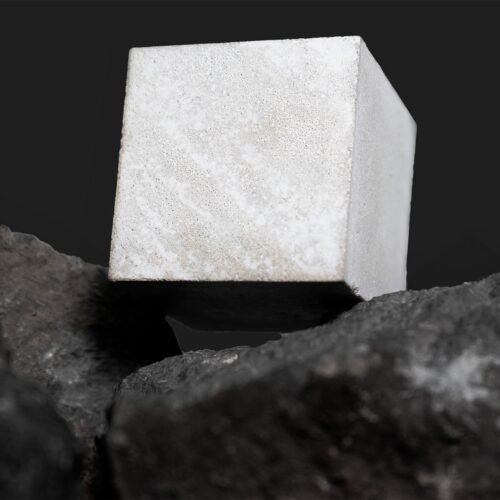
Cement production alone currently accounts for about 8 percent of global CO2 emissions, so considerable effort is going into lowering that number. Efficiency can be increased, and energy sources can be swapped for cleaner ones, but a stubborn reality remains: The byproduct of turning limestone into lime during cement production releases CO2 gas. These “direct process emissions” are actually slightly larger than the emissions from burning fuel to heat the kilns and drive this process.

A new paper in Communications Sustainability suggests a route to eliminating direct process emissions by removing a bedrock assumption. What if we don’t have to use limestone cement?

Get out of Portland

The material we call “Portland cement” was developed in the 1800s. It simply requires heating limestone (calcium carbonate) and adding something like clay or coal ash. This gives you the calcium oxide (lime) you’re after but also releases the CO2 that results when you pull an oxygen atom from carbonate.

The authors of the new paper include the CEO and an engineer from a company that says it has made Portland cement from silicate rocks like basalt—at the lab scale. Basalt contains a mix of minerals that include calcium, aluminum, iron, magnesium, sodium, silicon, and oxygen. (Note the absence of carbon from that list.) The basic idea is that you don’t need limestone to get calcium oxide.

The process of freeing these components from basalt looks more like a refining or recycling process than the toss-it-in-the-oven simplicity of the limestone process. Acid can be used to leach elements like calcium out, then a chemical or energetic process precipitates that calcium as calcium hydroxide. Toss that in a kiln with additives of your choice, and with less heating than you need for limestone, you’ve got Portland cement, with only water vapor released.

Those steps (along with follow-up reactions to restore the acid or other chemicals to a usable state) obviously add up in terms of cost and energy use. Tallying up the energy to do all this using common techniques, the researchers found that you need to use a little more than double the energy of traditional production from limestone.

The interesting thing is that, according to thermodynamics, the chemical conversion of basalt minerals to calcium oxide only requires around half as much as the conversion from limestone. The problem is that our techniques to facilitate that chemical conversion are quite inefficient, so we don’t get anywhere near what is theoretically possible.

Better options?

The researchers note that there are at least some known lab techniques that could greatly improve our efficiency if they can be applied at scale, but even if we’re stuck with doubled energy usage, producing Portland cement from basalt would significantly reduce CO2 emissions. That’s because the direct liberation of CO2 from limestone is eliminated and because the whole process can run on electricity.

Assuming you use electricity from a fossil-fuel-dominated grid, they estimate that emissions would be cut by almost 30 percent. Using clean electricity would eliminate most of the remaining emissions.

The trade-off, obviously, would be cost, which generally wins out over the sustainability of a livable environment.

But there is another interesting aspect to this idea: The other components of the basalt also have value. Iron, magnesium, and aluminum could also be separated and recovered, and leftover silicate material can serve as the additive for Portland cement instead of something like coal ash. So if these things were done together, the process could become more economically feasible.

That’s a lot of ifs and buts, but this relatively simple analysis can at least point to what would have to happen to make this viable. And given that cement is one of the tougher nuts to crack in the struggle to reduce global greenhouse gas emissions, concrete solutions are welcome.

Communications Sustainability, 2026. DOI: 10.1038/s44458-026-00056-4 (About DOIs).

MMA Star Dead at 30 After Saving 4 Teens from Drowning

0
mma-star-dead-at-30-after-saving-4-teens-from-drowning
MMA Star Dead at 30 After Saving 4 Teens from Drowning


MMA fighter Medet Zheenaliev has died at just 30 years old after reportedly sacrificing his own life to save four teenage girls from drowning in a terrifying lake accident.

The former fighter was spending time with friends at the massive Lake Issyk-Kul in Kyrgyzstan when tragedy struck. According to reports, strong currents suddenly pulled several teenage girls into dangerous waters, triggering panic along the shoreline.

Without hesitation, Zheenaliev and one of his friends rushed into the lake to help.

Witnesses said the MMA star managed to help all four girls get back to safety. But in a heartbreaking twist, Zheenaliev disappeared beneath the surface moments later and never came back up.

Divers later recovered his body from the bottom of the lake the following day. Officials reportedly ruled the incident a drowning during a rescue mission.

The shocking death has sparked an outpouring of grief online, with many hailing Zheenaliev as a hero who gave his life saving others.

Lake Issyk-Kul, where the tragedy happened, is one of the deepest lakes in the world and is known for unpredictable currents that can quickly turn deadly.

Zheenaliev competed professionally in MMA between 2017 and 2019, finishing his career with a 2-2 record.

He made an explosive debut by defeating Vladimir Kravchuk with a first-round armbar submission before scoring another quick finish months later with a brutal knockout win over Shamil Temirkhanov.

But his promising run inside the cage eventually cooled off after back-to-back losses, including his final bout in August 2019, which ended in a doctor stoppage after the opening round.

The fighter had reportedly been scheduled for another match later that year, but the bout was canceled for unknown reasons.

Now, years after stepping away from the sport, Zheenaliev is being remembered not for his wins or losses inside the cage — but for the courageous final act that cost him his life.

Israel Assassinates Hamas Military Chief Izz al-Din al-Haddad in Gaza City 

0
israel-assassinates-hamas-military-chief-izz-al-din-al-haddad-in-gaza-city 
Israel Assassinates Hamas Military Chief Izz al-Din al-Haddad in Gaza City 


Israel’s military announced Saturday that it had killed Izz al-Din al-Haddad, identified as the chief of Hamas’ military wing, in what it described as a targeted strike in Gaza City against a senior figure involved in directing combat operations and rebuilding Hamas military capabilities. Al-Haddad was the most senior Hamas leader killed since the ceasefire was declared last October. 

According to the military, the strike targeted al-Haddad in Gaza City. Reuters reported that his wife and daughter were also killed in the attack. 

In a statement Saturday, the IDF said that despite ceasefire provisions calling for Hamas to disarm, al-Haddad had recently “acted to rebuild the capabilities of the terrorist organization’s military wing and to plan numerous terror attacks against Israeli civilians and IDF troops.” 

AFP photographs showed mourners carrying al-Haddad’s body on a stretcher wrapped in a Hamas flag through the ruins of a damaged building. 

The military said that over the past two weeks it had also two Hamas members involved in the October 7 invasion. They were identified as Iyad Muhammad Al-Matouq and Khaled Muhammad Salem Jouda.  

Separately, Hamas leadership elections ended without a final result, prompting plans for another round of voting, Ynet reported. No candidate secured victory in the first round of voting between Khalil al-Hayya and Khaled Mashal, the two leading contenders for leadership of the organization. 

Zelenskiy says Russia considering plan to attack NATO country from Belarus

0
zelenskiy-says-russia-considering-plan-to-attack-nato-country-from-belarus
Zelenskiy says Russia considering plan to attack NATO country from Belarus


President Volodymyr Zelenskiy said that Russia was seeking to draw Belarus deeper into its war in Ukraine and was weighing plans ​to attack Ukraine’s north or a NATO country from Belarusian ‌territory.

“We continue to document Russia’s attempts to draw Belarus deeper into the war against Ukraine,” Zelenskiy said on the Telegram messaging app after meeting military and intelligence officials.

He ​said Ukraine knew of additional contacts between Russia and Belarusian President ​Alexander Lukashenko to persuade him to join “new Russian aggressive operations”.

“Russia ⁠is considering plans for operations to the south and north of Belarusian ​territory – either against the Chernihiv-Kyiv direction in Ukraine or against one of ​the NATO countries directly from the territory of Belarus,” he said, without providing any further details.

Belarus borders Ukraine to the south, and NATO members Poland, Lithuania and Latvia to ​the north and west.

There was no immediate response to Zelenskiy’s comments from ​Moscow or Minsk. Moscow does not disclose its military plans in Ukraine, which are ‌classified ⁠as state secrets.

Lukashenko, one of Russian President Vladimir Putin’s closest allies, allowed his territory to be used for part of Russia’s February 2022 invasion of its smaller neighbour, although he has not sent Belarusian troops to fight ​there.

Minsk has since agreed ​to deploy Russian ⁠tactical nuclear weapons and hypersonic Oreshnik missiles on its territory.

Zelenskiy said last month that Ukraine had intelligence that Russia ​was making preparations that showed it would once again ​try to ⁠involve Belarus in its more than four-year-old war.

“Ukraine will undoubtedly defend itself and its people if Alexander Lukashenko makes the wrong call and decides to support ⁠this ​Russian intention as well,” he said.

Zelenskiy said he ​had instructed Ukraine’s defence forces to prepare a response plan and to strengthen defences in ​the northern Chernihiv and Kyiv regions.

Wild blueberry farms across Maine suffer as climate change upends growing seasons

0
wild-blueberry-farms-across-maine-suffer-as-climate-change-upends-growing-seasons
Wild blueberry farms across Maine suffer as climate change upends growing seasons

This story was originally published by Inside Climate News and is reproduced here as part of the Climate Desk collaboration.

Last summer, the wild blueberry fields at Crystal Spring Farm turned red too soon. 

Severe drought had gripped most of the state of Maine. At his farm near the town of Brunswick, Seth Kroeck knew the leaves were changing color prematurely because the blueberry plants were stressed. Berries shriveled before they could ripen.

The farm’s 2025 harvest was almost a total loss.

“We got about 7 percent of our expected harvest,” Kroeck, 55, said. Standing in his blueberry fields in April, he pointed out the new growth, still only a few inches high, and commented that last year’s yield was “a lot of raking with not a lot to show for it.”

This was just the latest in a series of devastating weather for Crystal Spring Farm’s 72 acres of wild blueberries. 

“In the last seven years, we’ve lost the crop three times, almost completely,” he said.

As the climate changes, these losses are getting more common for wild blueberry farmers. And, experts say, the solutions are pricey.

Maine’s quintessential fruit

Wild blueberries are an iconic food in Maine, like lobster rolls or whoopie pies. But they aren’t the same as the fruits sold by the pint in a grocery store.

Wild blueberries are smaller and have a stronger flavor than their cultivated counterparts. They’re typically packed and frozen rather than sold fresh.

Wild blueberry bushes grow on sandy and gravelly soil in Maine, which can be difficult to irrigate. Sydney Cromwell / Inside Climate News

Maine’s farms contribute almost the entirety of the United States’ commercially sold wild blueberries. The industry harvested nearly 88 million pounds of fruit in 2023, bringing $361 million in revenue to the state, according to the Wild Blueberry Commission of Maine.

“It’s really something that’s a backbone industry to the state and a part of the state’s character,” Kroeck said. A father of two, Kroeck grew up in St. Louis, Missouri, and said gardening with a friend “spiraled” into an agricultural career. In college, he studied printmaking — a degree that he jokes is useful every day on the farm.

One of the few native North American fruits, wild blueberry patches have often existed in the same spot for longer than the farms that now harvest them. 

“The blueberry plants have been there for millennia, and they have been cared for by generations of farmers before me, and then the Indigenous community [before that],” said Kroeck, who also grows row crops and pasturage.

An individual bush only produces fruit every other year, so farmers typically harvest about half their acreage in any given year. Also called “lowbush” blueberries, the plants grow in dense mats on sandy, gravelly, or otherwise low-nutrient soil, primarily in eastern Canada and New England. 

“Blueberry soil is not nutrient-rich. Nothing else wants to grow there … but wild blueberries love it,” said Rachel Schattman, a professor of sustainable agriculture and leader of the Agroecology Lab at the University of Maine. 

Wild blueberries are smaller and have a stronger flavor compared to cultivated blueberries. Courtesy of Rachel Schattman

Schattman, 43, started working on vegetable and dairy farms in high school and continued farm work through the completion of her master’s degree. She owned a commercial vegetable farm for 10 years while pursuing her interest in agricultural research and earning a doctorate at the University of Vermont. 

Schattman said the financial challenges of running a small farm eventually led her to pursue research full time. She worked for the USDA on climate change’s interactions with agriculture before moving to Maine in 2020, where she met the wild blueberry for the first time.

“It holds a really special place in the culture of Maine,” she said.

Each patch has a variety of genetics rather than a monoculture. You can see — and taste — the plant’s diversity once it begins producing berries, Kroeck said.

“If you were to fly over our blueberry field while they’re fruiting, you’d see a lot of subtly different shades of blue and black,” he said.

Despite their crop’s hardy nature, wild blueberry farms are struggling to deal with recent extremes of temperature and precipitation. It’s got the entire industry worried.

“It would be a real cultural loss to have fewer wild blueberry farms and fewer berries available in the future,” said Lily Calderwood, a wild blueberry specialist at the University of Maine Cooperative Extension whose research focuses on disease and pest management. 

She grew up surrounded by agriculture in Massachusetts and became fascinated with it on a trip to a Cape Cod cranberry bog as an undergraduate student. Calderwood, 39, worked at the nonprofit Earthwatch Institute, then earned her doctorate at the University of Vermont and later worked at the Cornell Cooperative Extension before coming to Maine eight years ago. 

Stressed seasons

Maine’s wild blueberry populations are caught in a climate hotspot, driven partially by rapid warming in the Gulf of Maine, Schattman said. According to 2021 research, the state’s blueberry barrens are warming faster than the rest of the state, especially in locations closer to the coast.

In response, the berries are ripening sooner, and farmers can miss part of their harvest if they’re caught unaware. Calderwood said the crop was traditionally harvested in early or mid-August, but now most fruits are ready by late July. High heat also makes the harvest window shorter, she said, meaning farmers need additional labor and equipment to finish in time. 

Scientists at the Wyman’s Research Center in Maine study the effect of rising heat and changing rainfall on wild blueberries, one of the state’s signature crops. Courtesy of Rachel Schattman

Kroeck said he was unprepared for the early ripening in some years, and harvesting late meant lower yields and worse fruit quality.

“As farmers, we’re very much attached to the season, and you kind of get into your ideas of when things need to be done,” he said. Now, he has to spend more time observing conditions directly in the fields.

Farmers can’t rely on traditional knowledge — some of it passed down through families of growers — to plan their schedules anymore, Calderwood said. The farmers she works with have “absolutely no doubt” that climate change is already affecting their livelihoods.

Kroeck worked on farms in California, Massachusetts, and New York before he and his wife, a Massachusetts native, decided they liked the Maine farming community and moved to Crystal Spring Farm 22 years ago. In the last decade, he said, the unpredictable weather has far exceeded the typical year-to-year variation he was used to.

“If you look at the research, it’s pretty hard to deny that we’re living in a period of changing weather,” he said. 

Scientists at the Wyman’s Research Center in Maine study the effect of rising heat and changing rainfall on wild blueberries, one of the state’s signature crops. Courtesy of Rachel Schattman

Kroeck serves on the boards of the Organic Farmers Association and the Maine Organic Farmers and Gardeners Association, both organizations that address climate change’s impact on agriculture.

Maine experienced severe droughts in 2020, 2022, and 2025, plus one of its wettest years on record in 2023. Too-wet conditions encourage disease and unchecked weeds in blueberry fields. Droughts, on the other hand, reduce the number of flowers that form and shrivel the fruit.

Farms also contend with surprise frosts in late spring, which can kill flower buds right as they start to form, Kroeck said. Occasionally, warm autumns have caused the bushes to flower again just before winter, sapping energy and reducing their berry production the following year.

Wild blueberries are dependent on steady levels of moisture throughout the growing season, Calderwood said. That’s getting less and less common.

“The plant needs more water to keep the berries on the stems. And with less water and higher temperatures, they will shrivel and drop to the ground before a farmer can get to them,” Calderwood said. 

And since wild blueberries only fruit every other year, Kroeck said extreme weather can have effects on multiple seasons.

“A drought year is obviously going to affect the size of our fruit, but it’s also going to affect that other half that’s still in the vegetation state,” he said. “If they’re stressed from water and from temperature, they’re not going to grow as robust as they would, and the fruit they put out is not going to be as big as it could.”

A cycle of loss

Last year, Maine saw a wet spring followed by hot, dry conditions that started in June. The drought intensified in August and lasted through the rest of the year and into 2026. Calderwood called it “a classic example of climate whiplash.” The Maine Wild Blueberry Commission estimates the industry lost $30 million in 2025. 

“It was devastating for many farms in that region,” said Calderwood, who is also on her town’s conservation commission.

Many blueberry farmers reported the loss of a third to half of their yields. 

“There were reports of many, many acres of blueberries going unharvested because the berries had basically dehydrated on the bush,” Schattman said.

Read Next

Kroeck’s 2025 losses were higher than most because his farm sits on exceptionally sandy soil, which doesn’t hold water well. He has crop insurance, which covers some of the loss, but that insurance is partly based on the value of previous years’ yields.

“If you have losses in close succession, then your average harvest goes down,” he said.

Kroeck said he has applied for state and federal relief, but that money would be applied to his 2023 losses from a late freeze, which have been on the farm’s books for nearly three years.

The state’s wild blueberry industry has declined in recent years, both in the number of farms and the total acreage of commercial fields, according to Wild Blueberry Commission data, and financial stress is one of the reasons for that. Even Wyman’s, one of the state’s largest producers, plans to sell nearly 800 acres of blueberry fields this year.

“There have been some pretty significant hits to wild blueberries in Maine in general,” Kroeck said.

Researchers like Schattman and Calderwood are trying to prevent climate change from being another reason that farms go under.

Modeling blueberries’ future

At the Wyman’s Research Center farm in Old Town, Schattman and the climate adaptation research team are trying to simulate potential futures for Maine’s wild blueberries.

Researchers are halfway through a four-year study of how temperature, rainfall, and irrigation affect wild blueberries’ growing conditions — from soil health to pollination — and fruit yields. They’re also testing different climate scenarios for the end of the century to see how the plants handle extremely wet, extremely dry, or variable conditions.

At Crystal Spring Farm, Seth Kroeck is adding irrigation lines to part of his blueberry fields this year to protect them from drought. Sydney Cromwell / Inside Climate News

The wild blueberries are grown under a range of conditions: Some have irrigation systems, some have mulch to slow moisture evaporation, and others have neither. Some bushes are grown in isolation, while others are clustered together to see how community and genetic diversity affect the plant’s resilience.

Schattman said open-top plexiglass structures passively trap heat around some of the blueberry plants on the farm, while others have heating coils to simulate heightened temperatures.

“We’re collecting a massive amount of data,” she said.

Irrigation and, to a lesser extent, mulching are already showing promise in reducing drought impact. Mulch barriers reduce soil temperatures, lower the risk of disease, and slow weed growth, but they aren’t enough to avert the effects of a severe drought like 2025.

“[Mulching] is a really healthy thing to do for our fields,” Calderwood said. “It can be used as a buffer for drought, but it cannot replace irrigation.”

Irrigation can be difficult with wild blueberries, since their preferred soil often isn’t great for building wells or installing pipes, Schattman said. Most small growers don’t have irrigation systems, leaving them vulnerable when droughts overlap with the growing season.

“Obviously, it’s useless to install an irrigation system if you don’t have a reliable water source,” she said.

When the climate adaptation study is complete, Schattman said she hopes to have data that can create a roadmap for farmers to keep their crops healthy in future conditions. 

Calderwood’s work at the University of Maine Cooperative Extension overlaps with Schattman’s research, but much of it is hands-on in the fields of local blueberry farms.

This summer, Calderwood will be working with a large producer, Brodis Blueberries, to see how plants develop in irrigated and non-irrigated portions of their fields, and whether they show signs of stress during dry periods.

It’s key to figure out when the timing of irrigation can make the most impact, Calderwood said, especially for farms that can’t cover their entire acreage or may only be able to afford irrigation once or twice.

“Every time the pump runs, it is an expense,” she said.

‘It’s always expensive’

Affordability is the roadblock that wild blueberry farmers keep running into when it comes to climate change, both Schattman and Calderwood said. From buying equipment to drilling wells to trucking in loads of mulch, major one-time investments are difficult for small farms with thin profit margins.

“Every farm needs irrigation, but they just simply can’t afford it,” Calderwood said.

Read Next

At Crystal Spring Farm, Kroeck is trying to apply the University of Maine’s recommendations. He has brought in over 100,000 square feet of mulch, which covers less than half of his 72 acres of blueberries. The Natural Resources Conservation Service, or NRCS, which is part of the USDA, subsidized some of the costs, which range between $5,000 and $10,000 each year.

“Farmers would not do that if NRCS was not paying for it,” Calderwood said.

Kroeck also bought irrigation equipment, which arrived in December. It cost $90,000 for the equipment and the new well, which will cover about a quarter of his blueberry fields. 

“It’s always expensive, and it’s always a gigantic cash flow game,” he said.

Additional state and federal investment, from funding to technical expertise, could also fast-track irrigation for small farms, Calderwood said. But in the past year, funding has trended in the opposite direction.

The NRCS has lost funding and about a quarter of its staffing — more than 2,000 people — due to USDA budget cuts since the beginning of the current Trump administration. Maine also lost $15.5 million, intended for a pilot program that would have brought water management practices to between 25 and 45 wild blueberry farms, due to federal grant clawbacks.

The state Drought Relief Fund has given grants for farmers to create water management plans, drill wells, or build storage ponds, but only two dozen of those were funded last year across all types of agriculture.

Meanwhile, profitability of wild blueberries is being squeezed by low market prices and competition from cultivated blueberry producers, Schattman said. Costs of fertilizer, labor, and equipment have risen too.

Farms are earning about 50 percent less per pound of wild blueberries than they were a few years ago, according to the Wild Blueberry Commission. Kroeck said he knows many small farms are having a hard time getting their products into large grocery store chains.

“The pricing is not very good as far as what those large chains are willing to pay,” he said. “The market for wild blueberries has been flat or has been decreasing somewhat, and that’s also very worrisome.”

Kroeck is part of a group of farmers looking into selling more berries fresh instead of frozen, a move that would open up a new, potentially more profitable customer base but would also require new equipment and additional labor.

Wild blueberry farmers need new markets or higher prices to afford expensive long-term projects, Schattman said.

“That’s much more difficult when you’re struggling to reach your sales goals,” Kroeck said.

In the absence of financial and technical support, Calderwood said it’s likely that only the largest berry producers will be able to protect themselves from a warming future.

“It’s a puzzle to figure irrigation out, and it needs federal funding,” she said.

With or without irrigation, Calderwood said she doesn’t think climate change will spell doom for a plant as resilient as the wild blueberry.

“Every year, there will be blueberries to harvest,” she said.

But whether there will be enough berries to keep farms in business is another matter.

“I hope that we’re going to be able to make the pivots that we need to make to save the crop,” Kroeck said.


Volkswagen shows its first electric GTI; there’s no chance of US sales

0
volkswagen-shows-its-first-electric-gti;-there’s-no-chance-of-us-sales
Volkswagen shows its first electric GTI; there’s no chance of US sales

When Volkswagen introduced the first Golf GTI in Europe in 1976, it might not have been the first hot hatchback, but it quickly became the gold standard version. Unlike in America, where big cars were cheap and fuel even cheaper, small European streets and even smaller car-buying budgets necessitated vehicles a little more economical in both size and fuel consumption. Small, front-wheel-drive hatchbacks were the answer, but they weren’t particularly exciting. The GTI changed that perception with a more powerful engine, sharper handling, and subtle styling tweaks, creating a recipe for the next 50 years. And today, VW showed off its first electric GTI.

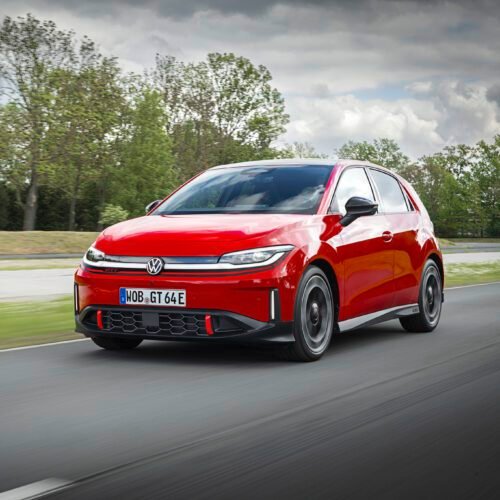
While the new EV might be inspired by the original Golf GTI, it’s one segment smaller than the current Golf—meet the VW ID. Polo GTI. VW has given some of its ID EVs GTX branding until now, but this is the first to get the GTI badge.

Like the 1976 original, the new car has front-wheel drive, but the ID. Polo GTI’s electric motor generates 222 hp (166 kW)—just over twice the output of the 1.6 L engine in the old car. There’s a 52 kWh battery pack that provides a WLTP range estimate of 236 miles (424 km), with DC fast charging up to 105 kW with a 10–80 percent charge time of 24 minutes.

An electric VW ID. Polo GTI drives away from the camera

VW showed an electric GTI concept last year; now it’s almost ready for production.

VW showed an electric GTI concept last year; now it’s almost ready for production. Credit: Volkswagen

Zero to 62 mph (100 km) at 6.8 seconds is brisk as opposed to rapid, and it’s still quicker than a 20th century VW GTI. A curb weight of 3,395 lbs (1,540 kg) is significantly more than those 70s, 80s, and 90s hatchbacks weighed, though.

The looks have been enhanced with chunky 19-inch alloy wheels (that still make some concessions to drag reduction), honeycomb intake grilles, classic GTI details like the red stripe and badges, and a roof spoiler.

On the inside, like any good GTI, there are sports seats and a sporty steering wheel, but VW has also given the interior a nod to the classic GTI tartan seat trim. The main instrument display might be a 10.25-inch digital screen, but it now looks a lot like the view you’d get from the driver’s seat of a late-70s Golf GTI.

VW ID. Polo GTI interior

Peep those retro dials.

Peep those retro dials. Credit: Volkswagen

When the ID. Polo GTI goes on sale in Germany, VW says it should cost “just under €39,000.” That is more than $45,000 at today’s exchange rate. Although the German price includes 19 percent VAT, even without the oft-changing Trump tariff, it’s easy to see how this little GTI is a nonstarter for American imports.

Although there’s no direct conversion between Europe’s WLTP test and the EPA’s drive cycle, a federalized ID. Polo GTI with a 52 kWh battery would be unlikely to post more than 200 miles (321 km) between charges. Low range like that is anathema to US EV buyers, particularly when you consider that a new Chevrolet Bolt offers three-quarters the price, 262 miles (422 km) of range, and a similar 0–60 mph time.

Ah, well, nevertheless.

0FansLike
0FollowersFollow
0FollowersFollow
0SubscribersSubscribe
- Advertisement -
Google search engine

Recent Posts