13.7 C
London
Saturday, May 16, 2026
Home Blog

A “Scheme” Against Dobbs: SCOTUS Dissent Hints at Next Phase of Abortion Rights Fight

0


Supreme Court Justices Clarence Thomas and Samuel Alito found themselves in the minority on Thursday, when the court ruled that telehealth access to the abortion drug mifepristone could continue, leaving the dissenting conservatives to foreshadow a future showdown over abortion rights.

Both justices railed against the decision, with Alito calling it a “scheme” to get around their ruling in Dobbs v. Jackson that eliminated the nationwide right to an abortion in 2022. Abortions have increased since their decision, Alito lamented, largely due to telehealth access. 

In 2025, far more residents of states with total abortion bans received telehealth provisions of medication abortion than traveled out of state to receive care in places with fewer restrictions. And roughly two-thirds of all abortions in the U.S. in 2023 were medication abortions. But advocates warn that the dissents from Thomas and Alito highlight that the threat to abortion access still looms large.

“We’re breathing a sigh of relief. I would say that the immediate threat to mifepristone is over,” said Claire Teylouni, interim co-executive director of Reproductive Equity Now, “But it’s certainly clear from reading those dissents that the threat … is far from over.” 

In his dissent, Thomas argues that the Comstock Act, an anti-obscenity law passed in 1873 that remains on the books but has not been enforced in decades, prohibits the mailing of abortion medication. “The Comstock Act bans using ‘the mails’ to ship any ‘drug … for producing abortion,’” Thomas wrote. “Applicants are not entitled to a stay of an adverse court order based on lost profits from their criminal enterprise.”

The Comstock Act originally prohibited the mailing of “obscene” materials, such as pornography, contraceptives, and any drug or device that can be used to produce an abortion. But legal scholars have argued that the law is unenforceable and unconstitutional on First Amendment grounds and other modern case law

In 2022, a Department of Justice memo clarified that the law does not prohibit the mailing of drugs that could be used to perform an abortion because there is “an insufficient basis for concluding that the sender intends them to be used unlawfully.” 

Despite the memo and the fact that the Comstock Act has not been enforced in decades, conservatives, including Thomas and Alito, have been eager to use the law to push a national abortion ban.

“Enforcement of the Comstock Act has the potential to threaten the broader supply chain with regard to the reproductive health care system as a whole,” warned Teylouni. Arguably if enforced, the law could even jam up access to surgical tools used in abortion care and the shipping of abortion medication to states without bans.

Republican lawmakers have argued that the Comstock Act should be enforced by the courts to “prosecute those who obtain mifepristone through the mail.” In Project 2025, policy analysts similarly argue that the Department of Justice should enforce federal laws like Comstock to prohibit the mailing of abortion medication writ large.  

President Donald Trump has previously claimed that he would not enforce the Comstock Act in this way, but advocates have seen troubling signs out of the administration about how they might eliminate access to mifepristone in other ways.

“We’re focusing on some pressing threats that are already ongoing,” said Anna Bernstein, principal federal policy adviser at the reproductive and sexual health research organization Guttmacher Institute.

In late 2025, the Food and Drug Administration began a safety review of mifepristone, despite over 20 years of evidence that it’s a safe medication. Bernstein said her organization is keeping a close eye on the “politically motivated” review at the FDA, which she argues flies in the face of the science.

The combined regimen of mifepristone and misoprostol, the drug typically used in tandem with mifepristone to induce a medication abortion, carries a less than 1 percent risk of serious adverse events. Comparatively, the risk of maternal death associated with childbirth is roughly 14 times higher than the risk associated with abortion care.

But despite medical evidence of its safety, the threat to mifepristone from the FDA has increased in recent days. FDA Commissioner Marty Makary resigned earlier this week, and he was replaced by Kyle Diamantas, a former lawyer.

Within hours of his appointment on Tuesday, Diamantas was reportedly on the phone with anti-abortion advocates reassuring them of his moral opposition to abortion. According to a press release sent from an anti-abortion advocate, regarding her conversation with Diamantas, she said that he promised that reviewing mifepristone would be a “top priority” and that he was “pro-life.”

“We continue to have concerns that the [review is] going to be politicized and not based in science and medicine,” said Teylouni.  

The Thursday ruling allows providers to continue to send mifepristone through the mail or to retail pharmacies, while the case plays out in the lower courts. Earlier this month, the 5th U.S. Circuit Court of Appeals had reinstated previous FDA requirements that mifepristone be dispensed in person, threatening telehealth access, a critical lifeline for abortion access for people in states with and without abortion bans. 

The Supreme Court issued an initial ruling staying the appeals court decision earlier this month, which they extended on Monday, before making their final decision on Thursday to allow access to continue while the Louisiana v. FDA case plays out in court.

But a looming concern for advocates is that both the courts’ more politically attuned conservatives and members of the Trump administration could be waiting to make a move on abortion access until after the midterms in a ploy to avoid the disasters of the post-Dobbs elections.

“We’re definitely concerned, because we know that the Trump administration understands that it’s politically unfavorable to restrict access to abortion and to mifepristone,” said Guttmacher Institute’s Bernstein. “We’ve all seen the reports of them slow-walking to the midterms, and we know why politically they might want to do so.” 

While the Comstock Act serves as a significant threat to abortion access, advocates note that if mifepristone is no longer able to be sent through the mail, people can still access medication abortion care. 

Mifepristone works by stopping the pregnancy from growing and initiates the separation of the embryo from the uterine lining. The other drug, misoprostol, causes contractions which expel the contents of the uterus.

Misoprostol can be safely and effectively used on its own to induce an abortion. However, the process of abortion “is prolonged when it’s with a misoprostol-alone protocol,” explained Dr. Ushma Upadhyay, a public health scientist at the University of California, San Francisco’s Advancing New Standards in Reproductive Health research coalition. “And patients report higher levels of side effects, so a lot of cramping and a lot more bleeding.”

Despite the small victory yesterday, Teylouni said that abortion advocates cannot afford to be “complacent” right now. 

“This decision could have been the biggest blow to abortion access since the Dobbs decision,” she said. “Anti-abortion extremists are not going to stop attempting to ban abortion, and they want to see the Comstock Act invoked and enforced to limit telehealth prescribing again.” 
Ebola outbreak with uncommon strain erupts in Congo and Uganda; 65 deaths

0
ebola-outbreak-with-uncommon-strain-erupts-in-congo-and-uganda;-65-deaths
Ebola outbreak with uncommon strain erupts in Congo and Uganda; 65 deaths

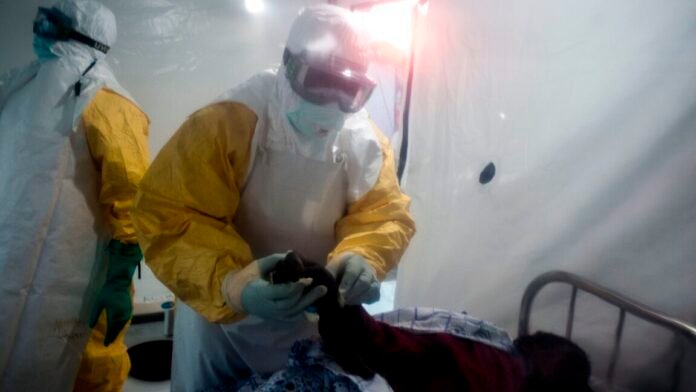
The Africa Centres for Disease Control and Prevention on Friday confirmed an Ebola outbreak in the Northeastern Ituri province of the Democratic Republic of the Congo. Officials in Uganda subsequently reported that the deadly hemorrhagic disease had spilled over the border, with one “imported” confirmed case identified in Kampala, the capital.

So far, the DRC has reported 246 suspected cases and 65 deaths, mainly in the Mongwalu and Rwampara health zones. Although it is now just being reported, the outbreak already ranks around the 10th largest Ebola outbreak to date.

This marks the 17th Ebola outbreak in the DRC since the virus was discovered in 1976. But unlike almost all of the country’s past Ebola outbreaks, preliminary laboratory results suggest that the current outbreak is not caused by the Zaire Ebola virus strain. Further genetic sequencing is ongoing today to determine the strain causing the illnesses.

There are four virus strains known to cause Ebola disease in humans, and three have caused large outbreaks (Zaire, Sudan, and Bundibugyo). According to an early Reuters report from Uganda, officials said the case there involved the Bundibugyo strain.

Complicated context

Jean-Jacques Muyembe, the Congolese virologist who co-discovered ​Ebola and heads the National Institute for Biomedical Research in Kinshasa, told Reuters that finding a different strain than Zaire behind the outbreak could complicate responses, given that current licensed vaccines and treatments were developed against the disease from the Zaire strain.

Africa CDC highlighted other complications of this outbreak, which include the urban context of Bunia and Rwampara; intense movement of people in the area, including mining-related mobility; militia clashes in the area; and gaps in contact tracing. The agency also noted the potential spillover not just to Uganda but also to South Sudan.

“Given the high population movement between affected areas and neighboring countries, rapid regional coordination is essential,” Dr. Jean Kaseya, director-general of Africa CDC, said in a statement Friday. “We are working with DRC, Uganda, South Sudan, and partners to strengthen surveillance, preparedness, and response, and to help contain the outbreak as quickly as possible.”

In a press briefing on Friday afternoon, Jay Bhattacharya, who is heading the US CDC for now, said that the agency, which has offices in both DRC and Uganda, is offering technical assistance to the countries. “It is a large outbreak, and we were just informed yesterday about it. So we’ve been working very, very hard to coordinate with them,” Bhattacharya said.

In a separate press briefing earlier today, World Health Organization Director-General Tedros Adhanom Ghebreyesus said the WHO received a signal of suspected Ebola cases in the DRC and sent a team to support the health ministry on May 5. WHO representatives are still there assisting in outbreak responses.

Tedros also said WHO was releasing today $500,000 from WHO’s Contingency Fund for Emergencies to immediately support the response efforts.

Indonesia blindly drifting into a US vs China storm

0
indonesia-blindly-drifting-into-a-us-vs-china-storm
Indonesia blindly drifting into a US vs China storm

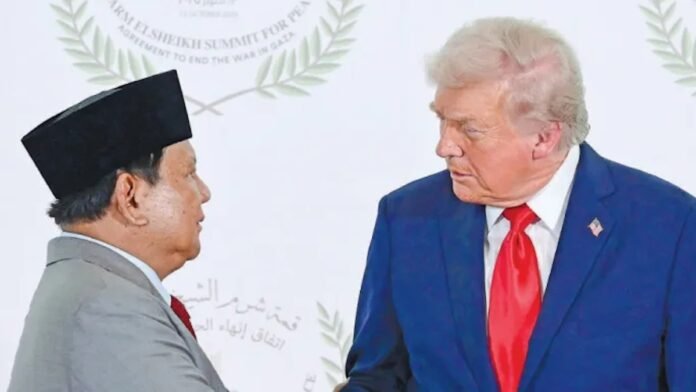
Earlier this month, Indonesia and Japan signed a defense cooperation agreement that could eventually allow Jakarta to acquire lethal weaponry from Tokyo. The move was the latest in a series of strategic engagements signaling that Indonesia is beginning to lean toward one side amid intensifying geopolitical rivalry in Indo-Pacific.

When I argued last July that the US–Indonesia trade compromise would test President Prabowo Subianto’s non-aligned strategic discipline, the assumption was that Jakarta would have time to calibrate. It has not, and does not.

This has been evident in new political and defense agreements with the US and its regional partners, including discussions that have raised China’s voice over expanded US military overflight access, and in simultaneous energy dealings with Russia under sanctions pressure.

All of this has unfolded against the backdrop of the Iran war and its associated oil shock, caused by the blockades of the Strait of Hormuz.

From Jakarta’s perspective, this may look like strategic diversification. From Beijing’s perspective, it is likely viewed as strategic drift toward the US. The danger is not Jakarta’s formal alignment, but that Indonesia is edging into the eye of the storm of US–China rivalry at precisely the moment when maritime order and the global economy are under severe strain.

Indonesia’s geography is increasingly consequential. The archipelago flanks the Strait of Malacca – the primary artery for China’s energy imports and westward trade – and governs a lattice of sea lanes connecting the Indian and Pacific Oceans.

The Hormuz disruption has demonstrated how quickly chokepoints can be weaponized and how tenuous legal guarantees become during armed conflict. That, in turn, has focused new attention on the Malacca Strait’s strategic corridor and its potential role in any US-China conflict in the Indo-Pacific, including over Taiwan.

Jakarta can rightly point out that it has engaged Beijing at the highest level. Prabowo met Chinese President Xi Jinping in September 2025 and attended China’s military parade — an unmistakable signal of diplomatic goodwill.

Economically, the relationship is deep and growing. China is Indonesia’s largest trading partner and is deeply integrated into Indonesia’s minerals, manufacturing and infrastructure sectors. Indonesia officially joined BRICS+ in January 2025, a bloc in which China is the primary force building systems and channels outside US-led institutions.

Yet these engagements do not resolve Beijing’s core concern: the prospect that Indonesian airspace and maritime routes could be used by US forces in a kinetic conflict. This concern has crystallized around recent reports of a US request for broad military overflight access.

Indonesia’s own Foreign Ministry has cautioned that such access could enable US surveillance, create the perception of an alliance and possibly make Indonesia a target in a regional conflict pitting the US against China.

Beijing’s diplomatic response, delivered through its Foreign Ministry, was characteristically measured but pointed, saying defense cooperation should not “target any third party” or harm regional stability. The “third party” did not need to be named.

Herein lies the crux of the matter. In contemporary conflict, overflight rights, intelligence, surveillance and reconnaissance (ISR) integration and shared logistical corridors shape military outcomes more than formal treaties or partnerships.

Indonesia may not choose geopolitical sides — but its airspace could be used by the US before it does. That is the threshold Beijing’s statement suggests it is wary of Indonesia’s crossing.

China’s reaction to the Indonesia-Japan agreement was likewise telling. When Tokyo’s leadership signaled that a Taiwan contingency could constitute a direct security threat to Japan, Beijing responded sharply, warning of consequences while saying a red line had been crossed.

Tokyo’s announcement marked a decisive shift from strategic ambiguity to an explicit commitment to contingency planning. Once a state is seen as part of a Taiwan scenario, it is no longer neutral – it is pre-positioned in China’s strategic calculus.

Indonesia has made no such declaration on Taiwan. But its deepening defense engagement with Japan creates what analysts call a second-order alignment risk. Beijing’s concern is not what Jakarta says; it is with whom Indonesia is becoming functionally aligned.

The events of February deepened this perception. Indonesia’s participation in a US-led “peace” initiative framed around Palestine was quickly overtaken by the subsequent US–Israel strikes on Iran, leading to the disruption in Hormuz, a surge in energy prices and an overt US shift from diplomacy to coercion.

A diplomatic initiative turned, without warning, into an instrument of force, leaving Indonesia exposed – appearing to have taken sides in the process.

Individually, none of Indonesia’s recent moves – defense cooperation with the US, Australia and Japan, a trade agreement including critical minerals cooperation with Washington and industrial discussions with Europe – amounts to overt alignment. But collectively, they form a clear pattern.

This is not policy incoherence. It is a strategy of drift through steady accumulation. Each step is defensible, but together they reduce ambiguity and create a directional signal.

At the same time, geopolitical competition is intensifying with European sanctions regimes expanding to include third-country nodes, turning energy and other transactions into geopolitical positioning.

The global economy, already strained by the Hormuz shock, is becoming more fragmented, pressuring non-aligned states like Indonesia to take sides. Moreover, despite Xi Jinping and Donald Trump’s just-concluded summit, the US–China rivalry is not dissipating. As maritime chokepoints become central to strategic competition, Southeast Asia is no longer a buffer — it is a theater.

That, in turn, is making policies of neutrality harder and harder to sustain. If Indonesia drifts too quickly or too far toward Washington without calibrating Beijing’s concerns, it risks shifting from stabilizer to battleground.

Such a shift, or even the perception of one, would be costly for the region. Indonesia has long anchored Southeast Asia as a zone of relative stability, acting as a convenor within ASEAN and a bridge among competing powers. That diplomatic role depends on its credibility as a non-aligned nation.

A country perceived as positioned, on the other hand, can see its influence quickly erode as its neutrality comes into question. That may not yet be the case for Indonesia, but China’s concerns have been clearly aired.

In a fractured geopolitical order, sovereignty is determined not just by what a state controls, but also by its ability to avoid being drawn into systems it does not command. For Indonesia, the task is no longer to expand partnerships indiscriminately, but to restore balance — deliberately and visibly — before drift hardens into alignment.

Adi Abidin is a Jakarta-based public policy specialist at Kiroyan Partners and a research fellow at Populi Center. The view is his own.

President Trump Threatens Renewed Strikes on Iran After Talks With Xi in Beijing 

0
president-trump-threatens-renewed-strikes-on-iran-after-talks-with-xi-in-beijing 
President Trump Threatens Renewed Strikes on Iran After Talks With Xi in Beijing 


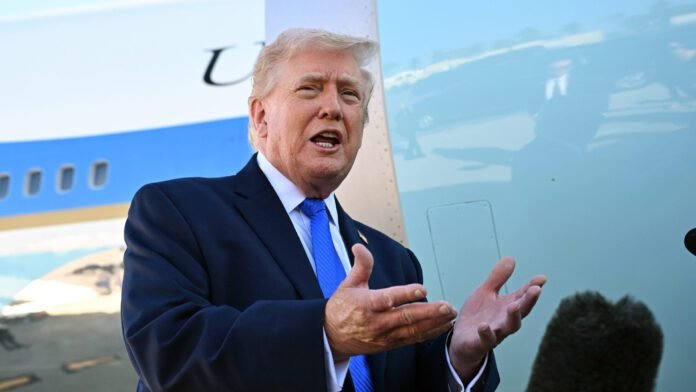
President Donald Trump threatened to revive military action against Iran after concluding talks with Chinese President Xi Jinping in Beijing, while warning that the United States was losing patience with stalled negotiations over Tehran’s nuclear program. 

In a Truth Social post on Thursday, President Trump declared that the US had achieved “the military decimation of Iran” and added: “to be continued!” 

The potential of renewed fighting has arisen despite a fragile ceasefire that has remained in place since early April. Speaking in an interview with Fox News, Trump said he was dissatisfied with the pace of talks with Tehran and warned that further delays would not be tolerated. 

He said he was “not going to be much more patient,” adding that Iran “should make a deal” regarding its nuclear program. 

The White House said Trump and Xi agreed during their discussions that the Strait of Hormuz must remain open to international shipping and that Iran should never obtain nuclear weapons. 

The president also highlighted what he described as a significant commitment from Xi regarding Chinese military support for Tehran: “He said he’s not going to give military equipment, that’s a big statement,” President Trump said during the interview. 

At the same time, China warned against additional direct US military action against Iran, citing concerns over its dependence on Iranian oil supplies and the risks a broader regional conflict could pose to energy security. 

A ceasefire proposal prior to Donald Trump’s visit to China was rejected by the US administration. The president described it as “totally unacceptable” and a “piece of garbage.” 

Three’s a party: US, China, and now Russia are on the prowl in GEO

0
three’s-a-party:-us,-china,-and-now-russia-are-on-the-prowl-in-geo
Three’s a party: US, China, and now Russia are on the prowl in GEO

The world’s leading space powers desperately want to know what the others are up to high above the equator. For more than a decade, the US military has operated a fleet of “inspector” satellites designed to sidle up to other spacecraft in geosynchronous orbit and take pictures. China started launching its satellites for a similar mission in 2018.

Ars has written about these activities in geosynchronous orbit (GEO) before, but the last few months have seen a couple of interesting developments. First, Russia has now joined the fray with the recent arrival of its own suspected inspector (or attack) satellite in GEO. Second, the US Space Force is poised to order more—perhaps many more—reconnaissance satellites of its own to send into the geosynchronous belt.

GEO is special. The laws of orbital mechanics mean a satellite in this type of orbit, some 22,000 miles (36,000 kilometers) over the equator, moves around the Earth at the same rate as the planet’s rotation, causing it to hover over the same location. Commercial and military-owned geosynchronous satellites typically spend years in the same location, or slot, to provide communications services to users.

Until now, Russia’s spying in geosynchronous orbit has primarily focused on eavesdropping on foreign communications. Russia launched two satellites, Olymp or Luch, to wander around geosynchronous orbit, moving from slot to slot to loiter near Western-owned communications satellites for several months at a time. The goal, according to Western analysts, was to listen in on or potentially jam signals relayed through these satellites, some of which route secure communications for US and NATO military forces.

The trend today is geared toward reconnaissance and surveillance in GEO. Military forces and intelligence agencies want to know where other satellites are located, what they look like, and what they’re capable of doing. The US military’s Geosynchronous Space Situational Awareness Program (GSSAP) satellites, which began launching in 2014, do exactly this by roaming the geosynchronous belt, using propulsive maneuvers to make slight changes to altitude and inclination to move within a few dozen miles of Chinese and Russian satellites, close enough for optical telescopes to get a good look.

The Space Force has often compared the GSSAP satellites to a “neighborhood watch” in geosynchronous orbit. For example, one GSSAP satellite positioned itself near a pair of Chinese spacecraft performing a first-of-its-kind refueling demonstration in geosynchronous orbit last year.

China has launched multiple satellites capable of similar maneuvers. One of these satellites, named TJS-10, is currently flying relatively close to a nuclear-hardened US Space Force strategic communications satellite and a US missile warning platform, according to an update this week in the Integrity Flash newsletter published by ISR University.

Ready Player Three

A new kind of Russian satellite is now in the mix. This satellite, officially known as Kosmos 2589, was launched in June 2025 into a highly elliptical orbit alongside a smaller spacecraft designated Kosmos 2590. The two satellites performed a series of high-altitude rendezvous and proximity operations with one another before Kosmos 2589 began moving toward a more circular geosynchronous orbit, where it arrived in April.

One of the US military’s GSSAP satellites was waiting for it. The US inspector spacecraft is now looping around Kosmos 2589, swinging near the newly arrived Russian satellite twice per day, coming as close as 8 miles (13 kilometers) on May 1, according to data from COMSPOC, a commercial space situational awareness company. The exact purpose of Kosmos 2589 remains unclear. Some Western officials suspect it is a higher-altitude version of Russia’s Nivelir anti-satellite system, which has been tested in low-Earth orbit and is now becoming operational.

The video below, published by COMSPOC, shows the orbital dance between a GSSAP satellite named USA-325 and Kosmos 2589.

All this cat-and-mouse maneuvering has made the US Space Force prioritize geosynchronous surveillance and reconnaissance. The activity is not unlike the way US and Soviet submarines tailed one another in the Cold War, but instead of running silent and running deep, highly reflective satellites easily stand out against the inky blackness of space.

“One of the dynamics of the current geosynchronous cat-and-mouse activity is your desired imaging target may try to run away from you, and as it goes away from you, may even turn around, and then get a good look at you,” said retired Lt. Gen. John Shaw, a former deputy commander of US Space Command.

It is not surprising that US commanders wanted to get a look at Kosmos 2589 as soon as it arrived in GEO, Shaw told Ars.

“One of the current tactics each side uses is to try to look at a potential target when it first arrives on orbit,” he said. “It’s sort of like an airplane just coming off the runway, because it’s still trying to orient and get checked out for operations. All of this is visible to amateur astronomers and sky watchers. What we need to do is evolve our own practice to the point where we don’t need that checkout period, and we can start maneuvering immediately. I expect others will do the same.”

Fuel limitations on the GSSAP satellites, made by Northrop Grumman, force US commanders to think twice about sending them off to look at every shiny new object that arrives in GEO.

“We want to be able to maneuver for advantage,” said Gen. Stephen Whiting, commander of US Space Command, in an event Tuesday hosted by the Mitchell Institute for Aerospace Studies. “And there’s a number of technologies that could enable that.

“The Marines have a great definition of maneuver warfare that it’s about shattering your enemy’s will and cohesion through rapid and disruptive acts, spatially, temporally, psychologically,” Whiting said. “I want to be able to do that. I want to be able to tell that young captain sitting at a space operation squadron, ‘Hey, you can fly that satellite like you stole it for advantage, not like our sweet grandmother who’s trying to go to church on Sunday morning’ … that’s where we find ourselves today because of this limiting factor of the fuel.”

The program that will follow GSSAP, known as RG-XX or Andromeda, will use cheaper, refuelable satellites to patrol geosynchronous orbit. The new satellites will help the Space Force gain “predictive battlespace awareness” enabling “offensive and defensive space operations,” Space Systems Command said in a press release.

The RG-XX satellites will help US forces study “adversary strategies, tactics, intentions, and capabilities, while also supporting anomaly resolution on blue force systems,” Space Systems Command said. “These efforts will also secure and maintain space superiority at scale in 2030 and beyond.”

The Space Force hasn’t said how many RG-XX satellites it will buy, but the program will use a “proliferated architecture,” a term that, at least in low-Earth orbit, can mean many dozens or hundreds of satellites. The Space Force has fewer than eight GSSAP satellites active today.

Earlier this year, Space Systems Command selected Anduril Industries, Astranis Space Technologies, BAE Systems, General Atomics, Intuitive Machines, L3Harris, Lockheed Martin, Millennium Space Systems, Northrop Grumman, Quantum Space, Redwire, Sierra Space, True Anomaly, and Turion Space as potential suppliers for the RG-XX/Andromeda program.

Bride Hauled Off in Handcuffs After Allegedly Beating Her Own Mother at Reception

0
bride-hauled-off-in-handcuffs-after-allegedly-beating-her-own-mother-at-reception
Bride Hauled Off in Handcuffs After Allegedly Beating Her Own Mother at Reception


What was supposed to be the happiest day of her life ended with flashing lights, handcuffs and a jail cell.

A 42-year-old bride in Poland was arrested while still wearing her wedding dress after police say she attacked her own mother during a wild wedding reception that spiraled completely out of control.

According to authorities in the city of Suwałki, officers rushed to the scene after reports of a violent fight breaking out during the celebration. By the time police arrived, the bride and her mother were allegedly in the middle of a screaming match that quickly turned physical.

Police said the argument exploded into a full-blown brawl after a “heated exchange of words” between the two women. Investigators did not reveal what sparked the family meltdown, but officers claim the bride repeatedly struck her mother and even knocked her to the floor during the chaos.

Shocking photos released by police show the bride still dressed in her white wedding gown as officers placed her in handcuffs and marched her away from the reception. In one image, the newlywed can be seen with her hands cuffed behind her back while being escorted to a jail cell by police.

Authorities said the bride was taken into custody because she allegedly posed “a direct threat” to her mother.

Things reportedly got even uglier after police performed a sobriety test on the bride. Officers said she had an extremely high blood alcohol level of nearly 0.15%, a level associated with slurred speech, impaired judgment and poor coordination.

Paramedics treated the bride’s mother at the scene following the alleged attack, though officials have not revealed the extent of her injuries.

As if the wedding disaster wasn’t already unbelievable enough, police also issued the bride a restraining order banning her from contacting her mother for 14 days after the violent confrontation.

The bizarre family drama is still under investigation, according to local authorities.

One minute she was cutting the wedding cake — the next she was heading to jail in a wedding dress.

Mario Draghi awarded 2026 Charlemagne Prize for services to European unity

0
mario-draghi-awarded-2026-charlemagne-prize-for-services-to-european-unity
Mario Draghi awarded 2026 Charlemagne Prize for services to European unity


Former European Central Bank president and former Italian prime minister Mario Draghi has been awarded the 2026 International Charlemagne Prize of Aachen, one of Europe’s most prestigious honours recognising contributions to European unity.

The Charlemagne Prize committee said Draghi was being recognised for his services to Europe during periods of economic and political uncertainty. Organisers highlighted his leadership at the European Central Bank during the eurozone debt crisis, including his pledge to do “whatever it takes” to preserve the euro.

The committee also pointed to Draghi’s recent work on European competitiveness and reform. His report on the future of European competitiveness warned that the European Union risked falling behind global rivals unless it increased investment and innovation.

According to the organisers, Draghi has combined economic leadership with a commitment to European cooperation and integration.

The International Charlemagne Prize has been awarded since 1950 to individuals and institutions considered to have made significant contributions to European unity. Previous recipients have included Angela Merkel and Volodymyr Zelenskyy.

Europe shouldn’t buy Myanmar junta’s Suu Kyi ploy

0
europe-shouldn’t-buy-myanmar-junta’s-suu-kyi-ploy
Europe shouldn’t buy Myanmar junta’s Suu Kyi ploy

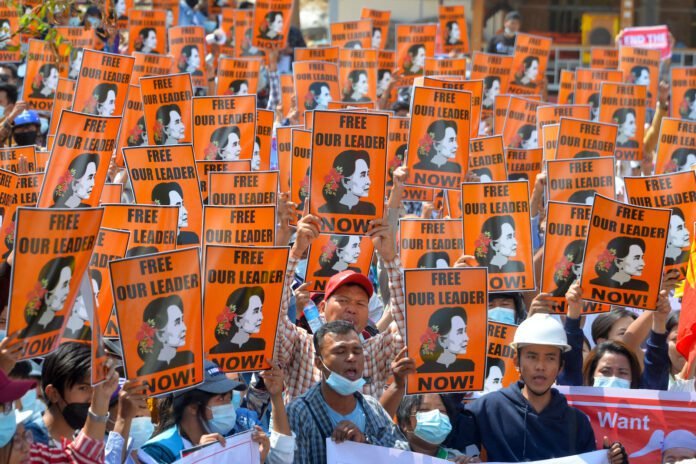
Myanmar’s military is trying to sell former State Councilor Aung San Suu Kyi’s transfer from prison to a “designated residence” as a gesture of mercy. But the move has raised basic questions: where is she, who has seen her and can anyone outside the junta verify her health and well-being?

The military’s tactic is by now well-worn: imprison perceived opponents, shift them around different detention facilities, release a few sporadically, reduce sentences and wait for the foreign praise to roll in. Some Western governments have responded carefully, calling for Suu Kyi’s freedom, access to family and lawyers, and proof of life. But some have already gone too far.

The European Union responded cautiously, calling for her full release and the freedom of all political prisoners. France welcomed the “Proof of Life” campaign led by her son, Kim Aris, while the United States and Canada also called for her freedom.

Seema Malhotra, the UK minister for the Indo-Pacific, went somewhat further by calling the move “a welcome first step,” though she said it must lead to Suu Kyi’s unconditional release.

The reality is that Suu Kyi is not free – only where she is being detained has changed. From 1989 to 2010, she spent 15 years under house arrest at her home. But, obviously, house arrest is not freedom.

The routine is repeating as coup-maker Senior General Min Aung Hlaing trades his military khakis for civilian garb without changing the political system. After sham elections held in December and January, the general has seized the presidency, but the regime remains military-built and controlled.

The world has seen this act before, and both the EU and UK previously bought tickets to the show.

Billion-dollar illusion of reform

After the 2010 election that started a process of political opening, Myanmar’s military served up a story Western governments wanted to hear: that the long-abusive generals had changed their stripes and supported democracy. The line then was that the country was opening, that foreign engagement would encourage reform and the peace process, and that funding would help end decades of civil war.

European donors greeted the narrative with money, consultants and confidence in a “transition” that never actually removed the military from political power. According to the Asia Foundation’s 2024 review, Myanmar went from the world’s 79th-largest aid recipient in 2010 to the seventh-largest in 2015, receiving US$13.7 billion in aid commitments between 2011 and 2015.

To be sure, some of that aid helped real people in need with health, education, civil society and ethnic community-promoting programs. But the politics were all wrong. Mostly Western donors treated a military-designed opening as a genuine transition away from military power and toward democratic rule.

They treated the 2015 Nationwide Ceasefire Agreement (NCA) as the foundation for national peace, even though it excluded many ethnic armed organizations, failed to address federalism and left the army outside of civilian control.

ISP-Myanmar, citing EU figures, later noted that the EU earmarked 103 million euros for peace-related efforts between 2014 and 2020, including 8.7 million euros for the Myanmar Peace Center and 58 million euros for the EU Peace and Conflict Resolution package.

The conflict data, however, did not support the optimism. ACLED-based trends show violence did not ebb during the reform decade, with an especially sharp military-driven spike in 2017.

Studies by the Peace Research Institute Oslo (PRIO) and the Myanmar Institute for Peace and Security (MIPS), meanwhile, found that Myanmar’s non-inclusive ceasefires did not reduce overall violence.

Critics then warned that backing the government-aligned Myanmar Peace Center caused many ethnic communities to feel donors had taken Naypyitaw’s side in their conflicts. That widely held ethnic sentiment was not anti-peace. It was a warning to donors against mistaking Naypyitaw’s process for a real political settlement.

Europe also conferred legitimacy and status on the military. Min Aung Hlaing attended the European Union Military Committee in Belgium in 2016. The UK engaged the military until the Rohingya crisis, widely portrayed as a military-perpetuated “genocide”, made continued collaboration politically impossible.

The EU also trained and equipped Myanmar’s military-controlled police through a program known as MYPOL. Later, EU-trained crowd-control units were accused of lethal crackdowns on pro-democracy protesters. The EU suspended the program only after the February 2021 coup.

After the initial opening and re-engagement with the West, the military quickly reverted to its abusive form. It attacked the Rohingya in 2016 and 2017, cranked up wars in ethnic areas, blocked constitutional change and finally staged the 2021 democracy-suspending coup soon after voters resoundingly rejected military rule at the ballot box.

When unarmed protesters filled the streets after the coup, those same coercive structures were deployed in major cities. Mya Thwe Thwe Khaing, a 20-year-old unarmed woman, was shot in the head in broad daylight by police in Naypyitaw on February 9, becoming the first widely recognized victim in a military crackdown that would eventually claim thousands of civilian lives.

Since then, the junta has burned villages, bombed schools and hospitals, jailed political and civil society leaders, tortured detainees, blocked aid and turned the country into a battlefield. The point is not that Europe fired the bullets. The point is that Europe helped legitimize institutions that remained under military control and were later turned on civilians.

Old playbook returns

The question for Europe today is not whether Min Aung Hlaing and his lieutenants have changed their ways. The question is whether Europe has changed its habits.

The EU still has sanctions in place on Myanmar. In April 2026, it extended measures until April 2027, covering 105 individuals and 22 entities, with an arms embargo and a ban on military training. But sanctions will be ineffectual and meaningless if Europe shifts its diplomacy to acknowledge the generals’ new look.

The UK has a different but related problem. Burma Campaign UK has recently warned that the minister’s statement has echoes of the mistakes Britain made after 2010. By welcoming a move from prison to house arrest for Suu Kyi, London risks giving the generals what they crave: a small reward for a staged gesture.

To be sure, the generals are not offering reform. They are offering fatigue management. They know Europe is busy with Ukraine, Gaza, migration, economic pressure and increasingly polarized domestic politics. They are betting that Europe’s weary diplomats will accept something that appears stable and orderly, even if it is built on mass violence.

This is the old 2010 playbook, adapted for a more distracted world. Min Aung Hlaing does not need Europe or the US to fully embrace him, at least not at first. He only needs small openings through softer language, lower pressure, quiet contacts, trade continuity, controlled humanitarian channels and a few Western governments willing to see something better than nothing.

The US is already showing how quickly this can happen. The junta has tried to reach the Trump administration through trade, tariffs, natural resources and business deals. Min Aung Hlaing has praised Trump, sought sanctions relief, hired Washington lobbyists, backed a deal to buy US soybean meal and promoted small shipments of Paw San rice to the US.

Europe should see this as a warning: the generals are testing whether business contacts can serve as a form of political rehabilitation in a new age of Trump-inspired transactional diplomacy.

That is how fake transitions begin – not with a dramatic reversal but with small concessions couched in the language of pragmatism.

But Europe should not repeat the mistake it made after 2010. It should not fund another state-centered peace show, treat political prisoner transfers as progress or confuse access to generals with influence over generals.

The lesson is not that Europe should abandon Myanmar. The lesson is that Europe should stop focusing on the military. Support should go instead to civil society, independent media, cross-border aid groups, ethnic administrations, workers’ organizations and other democratic forces now building a federal future from the ground up.

Min Aung Hlaing’s new presidential title is not a path to peace. It is a disguise, and Europe has seen this masquerade before. The concern is not that Myanmar’s generals are trying it again, with Suu Kyi’s prison transfer as a bald opening move. Rather, it’s that there are already signs that Brussels and London are pretending not to recognize it.

Nyein Chan Aye is a Burmese journalist based in Washington, D.C., who previously worked for the BBC and Voice of America and writes on Myanmar, the US, China and regional affairs.

Weather-monitoring firm hangs dark cloud over customers’ heads by forcing new app

0
weather-monitoring-firm-hangs-dark-cloud-over-customers’-heads-by-forcing-new-app
Weather-monitoring firm hangs dark cloud over customers’ heads by forcing new app

Weather-monitoring company AcuRite is forcing device owners to use a new companion app on May 30, frustrating some long-time customers.

AcuRite, which sells devices such as weather stations, indoor thermometers, and rain gauges, began emailing customers last month that they’d soon have to control their devices with the AcuRite Now iOS and Android app. AcuRite first launched the app in June 2025 to control a new weather station, the AcuRite Optimus. However, owners of AcuRite devices had still been able to use the My AcuRite app, which launched in 2016.

Soon, however, My AcuRite will no longer be available, making AcuRite Now the only official app for controlling AcuRite devices. The website for the My AcuRite app currently reads:

As part of our continued investment in delivering smarter, more connected solutions, the My AcuRite app will be winding down. To ensure uninterrupted access to your weather data and to unlock even more capabilities, all users should transition to AcuRite NOW before May 30th, 2026.

Per the website, AcuRite Now “works with thousands of products” in Tuya’s SmartLife IoT ecosystem, including third-party fans, thermostats, light bulbs, plugs, cameras, and motorized blinds.

“Looks like a bad joke”

Some AcuRite customers are upset about losing access to My AcuRite because they think AcuRite Now is an inferior app.

Those customers have complained online about being unable to use AcuRite Now to rename multiple temperature sensors, difficulties uploading data to weather sites, and the app only reporting temperatures in whole numbers. An AcuRite support page says that AcuRite is “hoping” to add the ability to organize on-screen sensors and rename multiple sensors to AcuRite Now, as well as a desktop version of the app, “soon.”

One popular feature of My AcuRite was the ability to share data from AcuRite devices with Weather Underground, a real-time weather service. AcuRite Now also supports this feature, but users have to pay a subscription fee that starts at $2 per month. The subscription, dubbed AcuRite Now+, also includes more data storage (365 days of history instead of 30).

Other complaints center on AcuRite Now’s layout. For example, a Reddit user named epicfailphx said last month that the app “looks like a bad joke.”

“The old app was clean and just did a good job, while I don’t know what this new app is trying to do,” they said.

Another Reddit user, ssemos, complained that the new app shows less data on-screen than My AcuRite does and doesn’t use most of the display.

AcuRite’s risk

Since AcuRite said it’s shuttering My AcuRite, AcuRite Now has received numerous one- and two-star reviews on the Apple App Store and Google Play Store, resulting in ratings of 1.4 stars (based on 183 reviews) and 1.3 stars (based on 131 reviews), as of this writing. It’s worth noting, though, that My AcuRite had 2 stars (based on 429 reviews) on the App Store as of February and 1.9 stars (based on 1,330 reviews) on the Play Store as of January, per the Internet Archive’s Wayback Machine.

Ars Technica reached out to AcuRite, its parent company Primex Family of Companies, and AcuRite Now’s developer for comment but didn’t hear back before publication.

It’s possible that AcuRite’s shuttering of My AcuRite aims to simplify the company’s technology stack by allowing it to focus on updating and maintaining one app rather than two, which could also save money. AcuRite Now’s support of SmartLife products could also be beneficial and drive app usage. The new app could also be more accommodating of new and upcoming features and allow AcuRite to charge a subscription fee for premium capabilities, helping diversify revenue.

Still, forcing loyal customers with complex hardware to switch to a new app on a couple of weeks’ notice is a gamble. AcuRite risks polarizing customers who don’t like the new app, especially since it is missing some features that the old app has. Charging a subscription fee for a feature that was previously free could also push customers to explore rival products. Updated software can bring new life to gadgets, but as we’ve seen before, forcing long-time users to use new software perceived as inferior can have disastrous effects.

CDC Didn’t Tell New York About Resident on Hantavirus-Plagued Cruise

0
cdc-didn’t-tell-new-york-about-resident-on-hantavirus-plagued-cruise
CDC Didn’t Tell New York About Resident on Hantavirus-Plagued Cruise


A Manhattan resident who was on the cruise ship at the center of the hantavirus outbreak traveled freely after leaving the ship, and the U.S. Centers for Disease Control and Prevention did not warn public health authorities in New York of her potential exposure to the deadly virus, according to New York City and state officials.

The woman, a dual citizen of New Zealand and the United States with residences in Manhattan and Fort Lauderdale, Florida, was one of 30 passengers who left the MV Hondius expedition cruise ship while it docked at Saint Helena island, in the South Atlantic, in late April after one passenger had already died of a lethal strain of hantavirus. A second and third passenger died days later, one on board and one in a hospital in South Africa, but by the time the ship had become a focus of headlines worldwide, the woman was well on her way on a globe-hopping itinerary.

The CDC informed health officials in various states of other Americans potentially exposed to the virus, but failed to alert New York health officials about the Manhattan woman.

There is no indication that the woman intended to come back to the United States or to New York any time soon. Instead, she continued on a multi-continental trip around the world. Her ability to continue traveling — and the lack of notice issued to authorities in the location to which she might eventually return — raise worrying questions about the potential spread of the disease, said Dr. Abraar Karan, an infectious disease specialist at Stanford University.

“If she’s on the loose, then we need to be aware of where she might come back to,” Karan said. “So the New York Department of Health, and officials at the port of entry, they need to make sure this person is flagged when they return.”

The traveler, a 75-year-old former pharmaceutical executive, matches the description of a former ship passenger who is now in quarantine in Taiwan, according to local news reports there. Her peregrinations first came to light in reporting by Intercept contributor Jacqueline Sweet, who published a report on the traveler on her personal Substack.

The woman’s dual nationality and connection to addresses in multiple states appears to have muddied the lines of communication.

A spokesperson for the New York State Department of Health told The Intercept that after raising the issue with the CDC, they learned that the agency had notified a different state of the woman’s possible exposure to the virus. The spokesperson did not identify the state in question, but public records show the woman is registered to vote at an apartment in Fort Lauderdale, Florida. Despite her voter registration in Florida, she has referred in social media posts to the co-op she owns in Manhattan as her home.

Representatives of the CDC and the Florida Department of Health did not respond to The Intercept’s requests for comment. Florida has not reported that it is monitoring any residents for possible exposure to hantavirus.

New York and other states — including California, Arizona, Washington, Georgia, Virginia, and North Carolina — have reported residents with possible exposures, with some states indicating they received notice from the CDC and others saying cruise passengers self-reported. All 18 U.S. citizens who returned to the country directly from the cruise are currently in quarantine in Omaha, Nebraska, and Atlanta, Georgia, while another 16 citizens who shared a plane with a woman evacuated to Johannesburg are being monitored.

From the South Atlantic to a Global Conference

The outbreak took place aboard the MV Hondius, an “expedition” cruise ship that takes adventurous passengers on a monthlong specialized polar tour, stopping at hard-to-reach islands in the South Atlantic. The cruise attracted wildlife enthusiasts, biologists, and extreme travelers attempting to visit as many countries and territories as possible, willing to shell out tens of thousands of dollars for the trip.

On April 6, one of those travelers, a 70-year-old Dutch man who prior to the sea voyage had spent more than three months traveling in South America, became ill. He died onboard on April 11, and on April 24, the victim’s 69-year-old wife disembarked at Saint Helena; the next day, she flew to Johannesburg, South Africa, where she died soon after. A third passenger died on May 2 — the same day that the World Health Organization declared an outbreak of hantavirus as the culprit.

The CDC has been accused of a slow response to the outbreak, holding its first briefing on the crisis on May 9, a week after WHO announced that the deaths were caused by the rare Andes strain of hantavirus, which is spread in South America by the pygmy rice rat and which can be transmitted among humans via close physical contact with someone already showing signs of infection. Because the early symptoms of the virus, including fever, fatigue, and muscle aches, are common in many other viral infections, the disease can be hard to identify before the rapid onset of more serious symptoms like pneumonia and respiratory distress.

In the case of the hantavirus outbreak, as with other public health crises, officials need to walk a careful line between ensuring safety and avoiding panic, Karan said. And the key to keeping a lid on the outbreak is ensuring proper quarantine for anyone with a potential exposure.

“Because this took place on a cruise ship, it actually helped us detect this quickly, and for now it appears to be decently contained,” Karan said. “But the problem is that, it’s not like you have a camera on these people to know if they’re not going out or seeing other people. So you don’t definitely know unless they’re quarantining at a monitored center.”

Compounding the trouble, however, is that many of the passengers on the cruise are part of an “extreme travel” subculture whose lifestyle centers around relentless jetsetting. Even with the international attention being paid to the ship and its passengers, a number of people have been found to have trekked globe-spanning itineraries since the outbreak was revealed. 

The itinerary of the Manhattan woman after she left the MV Hondius showed a complexity typical of such “extreme travelers.” In a social media post on April 28, the traveler said she had flown from Saint Helena to Johannesburg, where she stayed in a hotel before flying on to Hong Kong and then to Bangkok, Thailand. In Bangkok, she wrote that she took a shuttle across the city to its second airport and flew to Trang, in southern Thailand, where she stayed in a hotel overnight before taking a boat to the island of Ko Ngai. Her most recent social media post was from Hanoi, Vietnam, several days before reports surfaced of the former ship passenger matching her description under quarantine in Taiwan.

She was just one of 30 travelers who left the ship while it docked at Saint Helena, prior to the declaration of an outbreak — setting off a scramble by global public health officials to identify everyone who might have been exposed.

The profile of the passengers themselves complicated the picture, according to Alina Chan, a molecular biologist and co-author of “VIRAL: The Search for the Origin of Covid-19” who advocated for more scrutiny of a possible lab origin for the virus that caused the Covid pandemic.

“The cruise selected for these extreme travelers, and you cannot ask for a potentially better superspreader,” Chan said. “And if one of the passengers presented to an international hospital with symptoms without the hospital being aware of their exposure on the ship, by the time the hospital would know, healthcare workers could have already been exposed.”

Most public health officials agree the hantavirus outbreak is unlikely to transform into a pandemic. But the incubation period for the Andes virus is anywhere from four to 42 days, raising concerns that the traveler and others who left the ship prior to the outbreak becoming known could transmit the virus to others if they become sick. That’s led global health officials to scramble to identify passengers and notify their home countries. But the timing of these communications, and how they unfolded, are unclear, as the case of this woman reveals.

While the CDC alerted a number of states, including New York, to the fact that residents with potential exposures could be coming home, the Manhattan-based traveler appears to have slipped through the cracks, and state health officials there only learned of her connection to the state after receiving inquiries from Sweet.

It appears that the MV Hondius’s parent company first reported that this passenger was a New Zealand national to New Zealand health authorities. After The Intercept began making inquiries with the New Zealand Ministry of Health in conjunction with reporters from news outlet Radio New Zealand, as well as to the woman and other conference attendees, the Ministry of Health told Radio New Zealand that although the woman had ignored their previous attempts to contact and assist her, on Tuesday she suddenly contacted them. The Ministry of Health said they had alerted the United States last week that she was in fact a resident of the U.S., and not New Zealand, and on Tuesday, they also alerted health officials in the country she is in currently, which is unknown.

On Monday, news from New Zealand broke that an American woman, since reported as being from California, had turned up in remote Pitcairn Island, a tiny South Pacific island with less than 50 residents. She had flown from Saint Helena after departing the MV Hondius early to San Francisco, before flying to Tahiti and then taking a boat voyage to Pitcairn. It’s unknown if any health authorities contacted her before her travels. She is now being quarantined on the island.

Reached by The Intercept, a spokesperson for the California Department of Public Health pointed to an existing press release about monitoring hantavirus exposures and added: “When we have new information to share, we will do so.”

Chan advised that “the WHO should make a list of all passengers available to all countries so they can be aware of visitors with exposure, rather than rely on each country.” Communication between the WHO and the United States was delayed in the days of the MV Hondius outbreak, since the Trump administration left the global health alliance, but the CDC and the WHO have reportedly been working together for the past week. 

“In a best-case scenario there are no more waves, but this shows the WHO and the CDC are not prepared. This was the best-case scenario, with the passengers all known from the cruise,” Chan said. “When you can mess up with this controlled of a scenario, what will happen next time?”

0FansLike
0FollowersFollow
0FollowersFollow
0SubscribersSubscribe
- Advertisement -
Google search engine

Recent Posts