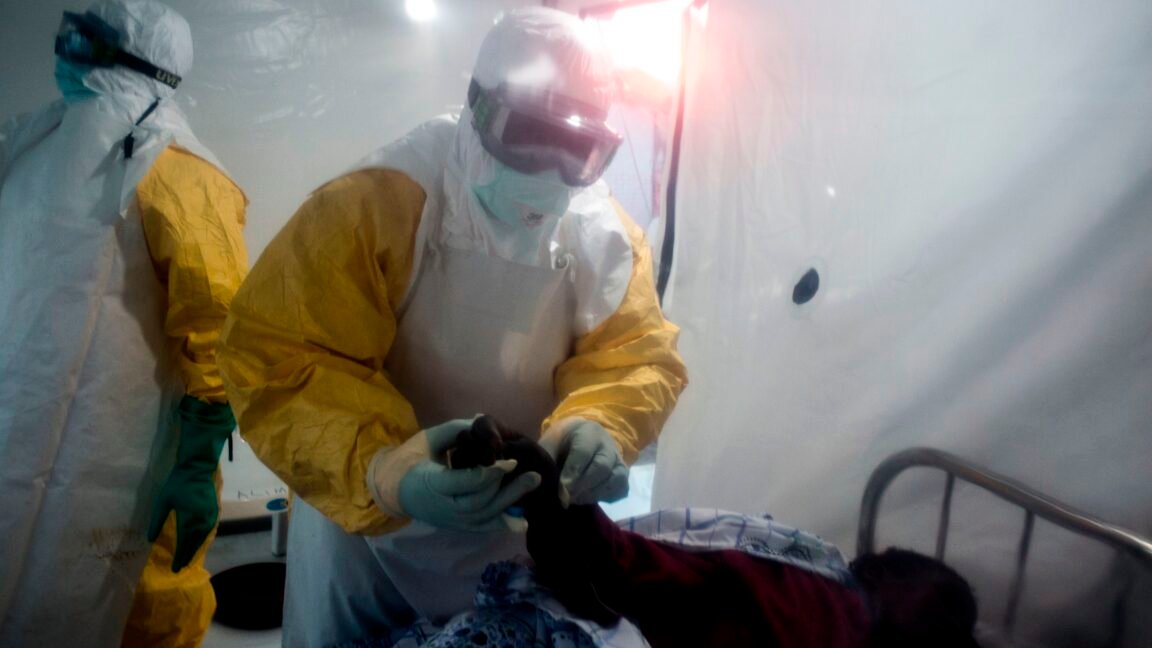
The Africa Centres for Disease Control and Prevention on Friday confirmed an Ebola outbreak in the Northeastern Ituri province of the Democratic Republic of the Congo. Officials in Uganda subsequently reported that the deadly hemorrhagic disease had spilled over the border, with one “imported” confirmed case identified in Kampala, the capital.
So far, the DRC has reported 246 suspected cases and 65 deaths, mainly in the Mongwalu and Rwampara health zones. Although it is now just being reported, the outbreak already ranks around the 10th largest Ebola outbreak to date.
This marks the 17th Ebola outbreak in the DRC since the virus was discovered in 1976. But unlike almost all of the country’s past Ebola outbreaks, preliminary laboratory results suggest that the current outbreak is not caused by the Zaire Ebola virus strain. Further genetic sequencing is ongoing today to determine the strain causing the illnesses.
There are four virus strains known to cause Ebola disease in humans, and three have caused large outbreaks (Zaire, Sudan, and Bundibugyo). According to an early Reuters report from Uganda, officials said the case there involved the Bundibugyo strain.
Complicated context
Jean-Jacques Muyembe, the Congolese virologist who co-discovered Ebola and heads the National Institute for Biomedical Research in Kinshasa, told Reuters that finding a different strain than Zaire behind the outbreak could complicate responses, given that current licensed vaccines and treatments were developed against the disease from the Zaire strain.
Africa CDC highlighted other complications of this outbreak, which include the urban context of Bunia and Rwampara; intense movement of people in the area, including mining-related mobility; militia clashes in the area; and gaps in contact tracing. The agency also noted the potential spillover not just to Uganda but also to South Sudan.
“Given the high population movement between affected areas and neighboring countries, rapid regional coordination is essential,” Dr. Jean Kaseya, director-general of Africa CDC, said in a statement Friday. “We are working with DRC, Uganda, South Sudan, and partners to strengthen surveillance, preparedness, and response, and to help contain the outbreak as quickly as possible.”
In a press briefing on Friday afternoon, Jay Bhattacharya, who is heading the US CDC for now, said that the agency, which has offices in both DRC and Uganda, is offering technical assistance to the countries. “It is a large outbreak, and we were just informed yesterday about it. So we’ve been working very, very hard to coordinate with them,” Bhattacharya said.
In a separate press briefing earlier today, World Health Organization Director-General Tedros Adhanom Ghebreyesus said the WHO received a signal of suspected Ebola cases in the DRC and sent a team to support the health ministry on May 5. WHO representatives are still there assisting in outbreak responses.
Tedros also said WHO was releasing today $500,000 from WHO’s Contingency Fund for Emergencies to immediately support the response efforts.