Armenia between Russia and Turkey in a shifting South Caucasus
<
article id=”post-953494″>
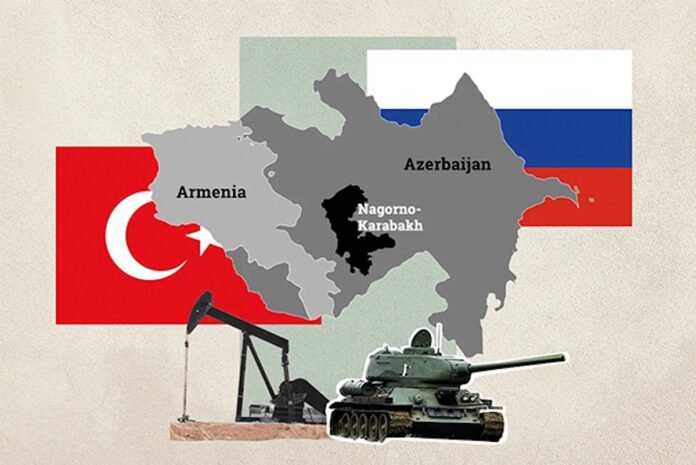
When Armenia regained independence in 1991, its security depended in part on relations between two historic rivals, Russia and Turkey. Armenia looked to Russia for protection, while Turkey drew closer to Azerbaijan, Armenia’s eastern neighbor and rival.
The alliance gave Moscow a military foothold near the Turkish border. Turkey had been a member of NATO since 1952, and I thought Moscow valued its position in Armenia too highly to risk it for the sake of an agreement with Ankara.
In my 2005 study of the South Caucasus, I called the relationship between Russia and Turkey a “geostrategic armistice.” They still competed for influence, but both showed restraint. As late as 2016, this writer argued that closer economic ties between them were unlikely on their own to change the balance of power in Nagorno-Karabakh.
The region, then predominantly Armenian, was internationally recognized as part of Azerbaijan. The authorities of the self-proclaimed Nagorno-Karabakh Republic governed most of it with Armenia’s support.
Today, the relationship between Russia and Turkey is best seen as pragmatic cooperation between rivals. And the balance between them has shifted in Turkey’s favor.
How Turkey gained influence
Turkey’s relations with Azerbaijan have shaped its policy towards Armenia since the early 1990s, as I discussed in a 2021 study of Turkish geostrategy. In 1993, during the first war over Nagorno-Karabakh, Turkey closed its land border with Armenia in support of Azerbaijan.
In the years that followed, Turkey and Azerbaijan built close commercial ties. The Baku–Tbilisi–Ceyhan pipeline carried Azerbaijani oil through Georgia to a Turkish port on the Mediterranean. Armenian exporters, meanwhile, still had no direct land route to the Turkish market.
In the second war over Nagorno-Karabakh in 2020, Turkey’s military and political support helped Azerbaijan win. Russia brokered the ceasefire, but its response fell short of what many Armenians expected of their ally.
Moscow also agreed that Turkish officers would serve alongside Russian officers at a ceasefire monitoring center in Azerbaijan. Russia’s peacekeepers left Nagorno-Karabakh in 2024. Turkey retained its influence through its alliance with Azerbaijan.
After the outbreak of full-scale war in Ukraine in 2022, Turkey maintained relations with Kyiv but declined to join Western sanctions against Moscow. As access to Western markets narrowed, trade through Turkey became more important to Russian firms.
When I wrote about the Russian alliance 20 years ago, I gave considerable weight to Moscow’s military interests in Armenia. Today, I would also ask what a dispute with Turkey over Armenia might cost Russia.
I believe Armenia should preserve friendly relations with Russia while relying less on Moscow for its security. In 2023, at Armenia’s invitation, European Union civilian observers began monitoring the Armenian side of the border with Azerbaijan.
What it would take to open the border
In an interview with Radar Armenia, I recalled Armenia’s longstanding offer to establish diplomatic relations with Turkey and open the border without preconditions. In 2009, the two governments signed the Zurich Protocols, which provided for both steps. However, the agreements never entered into force.
Turkey and Azerbaijan formalized their alliance in the Shusha Declaration of 2021. I argued in Eurasia Review that Turkish backing also gave Azerbaijan greater freedom to pursue its own interests.
In a recent interview with Noyan Tapan, I discussed Turkish President Recep Tayyip Erdogan’s insistence on an Armenian–Azerbaijani peace agreement before Turkey fully normalizes relations with Armenia. That condition gives Baku, the Azerbaijani capital, a say in when the Armenian-Turkish border opens.
The two sides have continued to discuss a connecting railway even while the border remains closed. In April 2026, Armenian and Turkish officials met in eastern Turkey to discuss restoring the line to Gyumri in northwestern Armenia.
If freight trains ran again, a producer in Gyumri could ship goods directly to customers across the border or send them on to a Turkish port on the Mediterranean.
What Armenia can negotiate for itself
In southern Armenia, it is Azerbaijan that needs a route across its neighbor’s territory. The Armenian province of Syunik separates the main part of Azerbaijan from Nakhchivan, an Azerbaijani territory bordering Turkey.
Significantly, Russia has expressed interest in participating. It already has a role in Armenia’s railways, which a subsidiary of Russian Railways operates under a concession agreement.
Yerevan has its own railway proposal. It wants Armenian trains to run from Yeraskh through Nakhchivan to Meghri. Both towns are in Armenia, but the line between them passes through Azerbaijani territory.
The Washington Declaration spells out the connection Azerbaijan seeks. It promises Armenia reciprocal benefits but leaves the Armenian route unspecified. An agreement on Syunik, in part, would determine whether an Armenian train from the capital, Yerevan, could once again reach Meghri through Nakhchivan.
Ruben Safrastyan is a historian of Turkey, a professor and a full member of the National Academy of Sciences of Armenia. He directed the Academy’s Institute of Oriental Studies from 2006 to 2020 and is now an adviser to its director. He also worked in Armenia’s presidential administration and served as a diplomat.
AI may soon change what it means to be a theoretical physicist
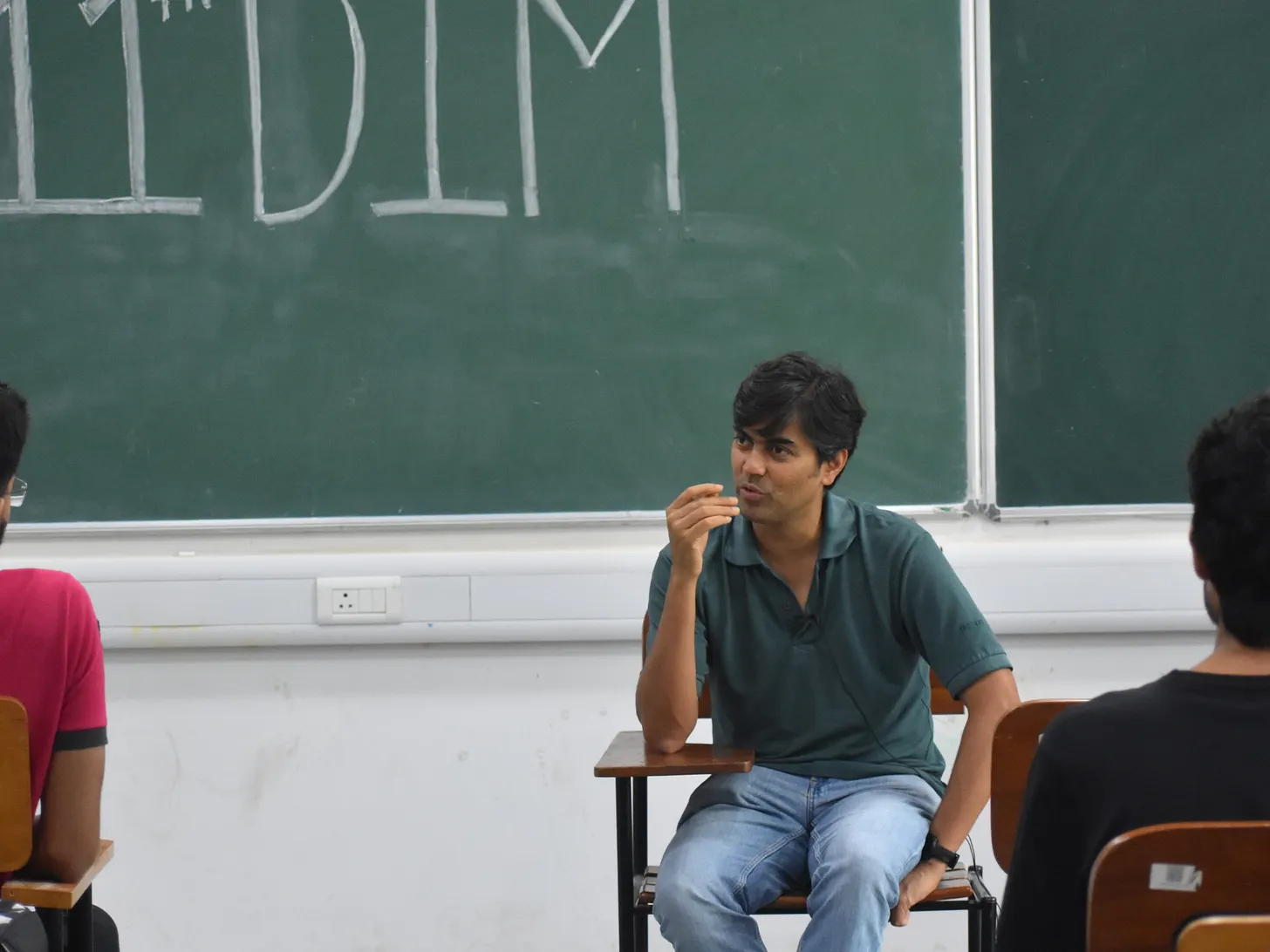
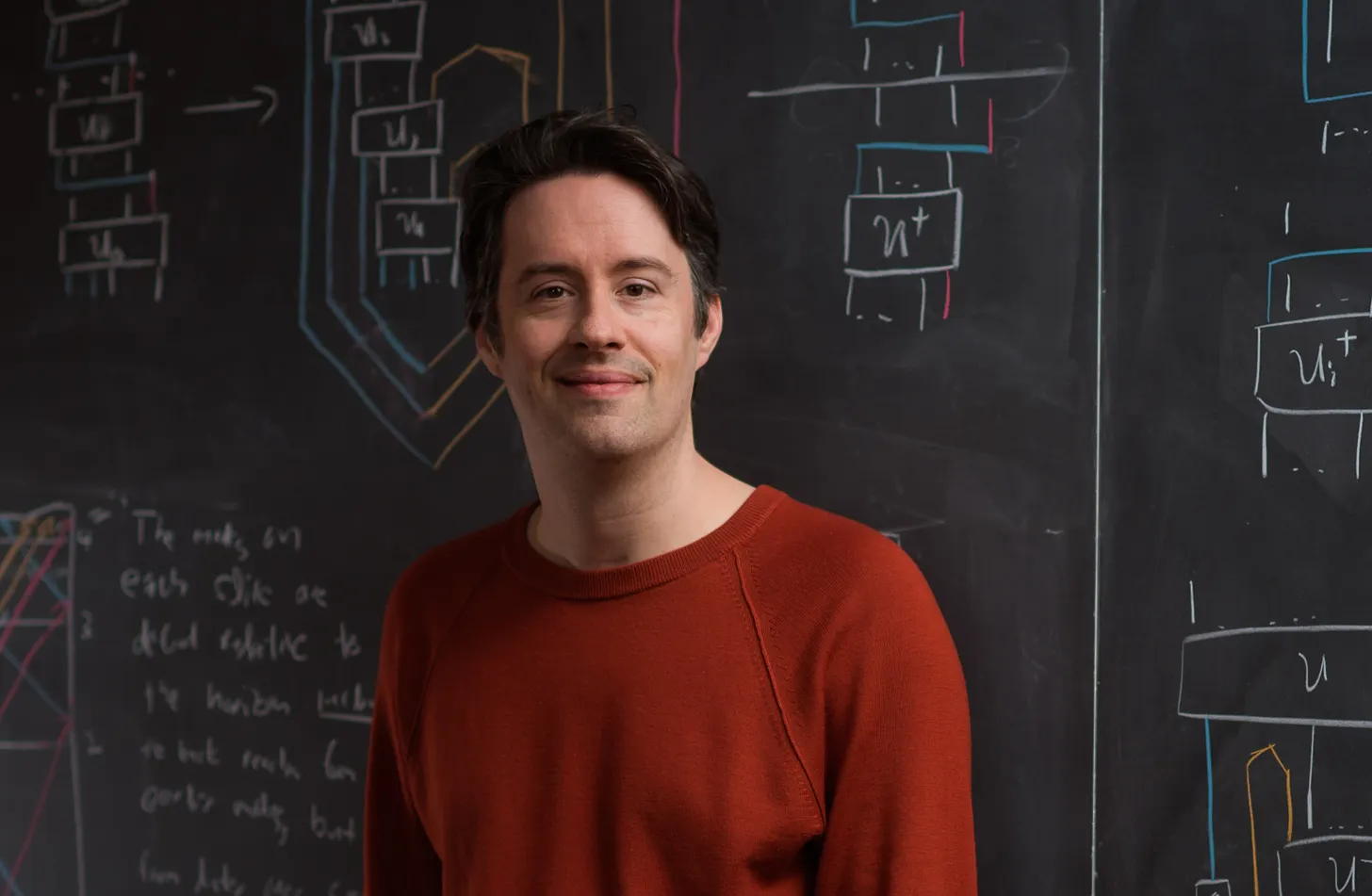
About six months ago, Suvrat Raju, a professor of theoretical physics at the International Centre for Theoretical Sciences in Bengaluru, India, asked a frontier AI model to solve a physics problem. He didn’t ask because he needed to know the answer. He had actually solved this particular problem already. But he had never published the solution—which made it a perfect question to test how good AI was at physics.
LLMs have been trained on the whole Internet, so if a physics problem has been discussed online, it’s likely the model already knows about it and may have memorized the answer. So a fair test of AI capabilities needs to focus on problems that have never appeared online.
The model didn’t answer Raju’s problem correctly, but it did better than he expected—well, enough to get him thinking that the experiment should be repeated and formalized. With the help of a colleague, he set out to create a theoretical physics benchmark for AI.
They asked other physicists for some of their private gems—minor but real findings they’d never gotten around to cleaning up for public display. They were asking for real work, problems that take humans at the top of the field about a day to solve.
“Our contributors had to either sacrifice potential publication elsewhere, or else undertake a small research project just for us,” Raju wrote.
By the time all the questions and answers were ready, the AIs were, too. At a colloquium in September, Raju shared preliminary results showing that leading AI models could solve about 60 percent of the problems on their own. And by the time he and his colleagues finished the full set, the situation had advanced further: GPT-6 Astra could solve nearly 90 percent of the problems.
Curious to know where Astra was struggling on the rest, they gave the model the human-written solutions and asked it to figure out where it had gone wrong. To their surprise, Astra argued that it hadn’t made a mistake—the humans had. Astra identified subtle errors in the human-written answers. In reality, it answered 49 of 50 problems correctly. And the one problem Astra missed was something of a trick question.
Each correct answer had cost less than $3 of compute on average—“less than the price of coffee in Paris,” as Raju put it in a talk—and had come after a single human prompt.
In other words, Raju’s TheoPhysEval benchmark was saturated before it was released. When Raju found out, he didn’t sleep well for a couple of nights, out of a hard-to-disentangle blend of astonishment, excitement, and fear.
I asked him if there would be a second version of the benchmark. He said no.
“People gave us the hardest problems they could,” he told me. “We’ve kind of hit the ceiling of well-defined calculations that people can do. Now, there is open research and you can keep asking about open research. But that’s not an evaluation.”
For this story, I talked to Raju and half a dozen other theoretical physicists. All described how AI was beginning to transform their field. Like programmers and mathematicians, they and their colleagues are increasingly using large language models in their work. This has dramatically accelerated the pace of calculation and research for many, leading to an explosion of new papers and awkward questions about how to train the next generation of physicists.
But physics is different from math in important ways and may not follow the same path. It is bound to the real world through experiment. And its most open questions are so open that it is unclear how quickly AI can help. It is even possible that AI will, at least for a while, allow physicists to calculate less and focus more on old-fashioned and more conceptual ways of working.
AI is rapidly changing physics
Raju isn’t the only physicist to notice that AI models are improving rapidly. In October, a Turkish physicist posted on X that Claude Opus 5.5 had re-created the core of his PhD thesis. It had taken him a year and 500 pages of hand calculations. Claude reproduced his work in 10 hours.
Ed Witten, the most-cited living theorist, has been crediting Opus in recent papers. Juan Maldacena, another of the field’s eminent figures, acknowledged help from OpenAI models on two papers this year and told me he uses it “to do some calculations, search the literature” and that increasingly, many physicists find AI helpful with “calculations that in the past were maybe too long.”
Andreas Karch, a physicist at the University of Texas at Austin, is running AI agents around the clock. “It’s pretty much running 24 hours a day. I always have it do something,” he said.
Karch ruefully admitted that he’d written one of the subtly wrong answers in Raju’s benchmark. Now he sends his old papers through Astra, checking for missed errors. “I do one paper a day now. Pretty much every paper that I send it, it has something to say.”
Karch gets a high-tier ChatGPT subscription for free from OpenAI, which likes to see physicists using its models.
Harvard’s Matthew Schwartz uses AI agents even more aggressively. During an October interview, he paused to count the number of sessions running on his machine.
“Nine, 10, 11, 12, 13, 14, 15, 16, 17, 18, 19, 20,” he told me. Each of these threads was working on a different problem, with 10 to 20 agents per thread.
Schwartz isn’t paying for all of those tokens. He told me that Anthropic recently asked him, “‘Suppose you had more tokens, what would you do?’ And I said, ‘I don’t know, let me try.’ And so they just gave me tokens. And now I’m seeing what you can do with tokenmaxxing. There’s a whole bunch of physicists who do this. They have contracts with a bunch of academics.” Schwartz has written a couple blog posts for Anthropic about his AI and physics work.
Of course, this isn’t the whole story. These agents are mainly performing calculations, and not all theoretical physicists spend their time calculating. Daniel Harlow at MIT said that in his corner of physics, “the vast majority of the work is figuring out what to do.” By the time he has a calculation to perform, he said, “I’m like 95% done already.” Instead, he finds LLMs useful for catching up on farther-flung corners of physics and learning borrowable ideas from adjacent fields—nicely helpful but not a category change in his work.
A flood of papers
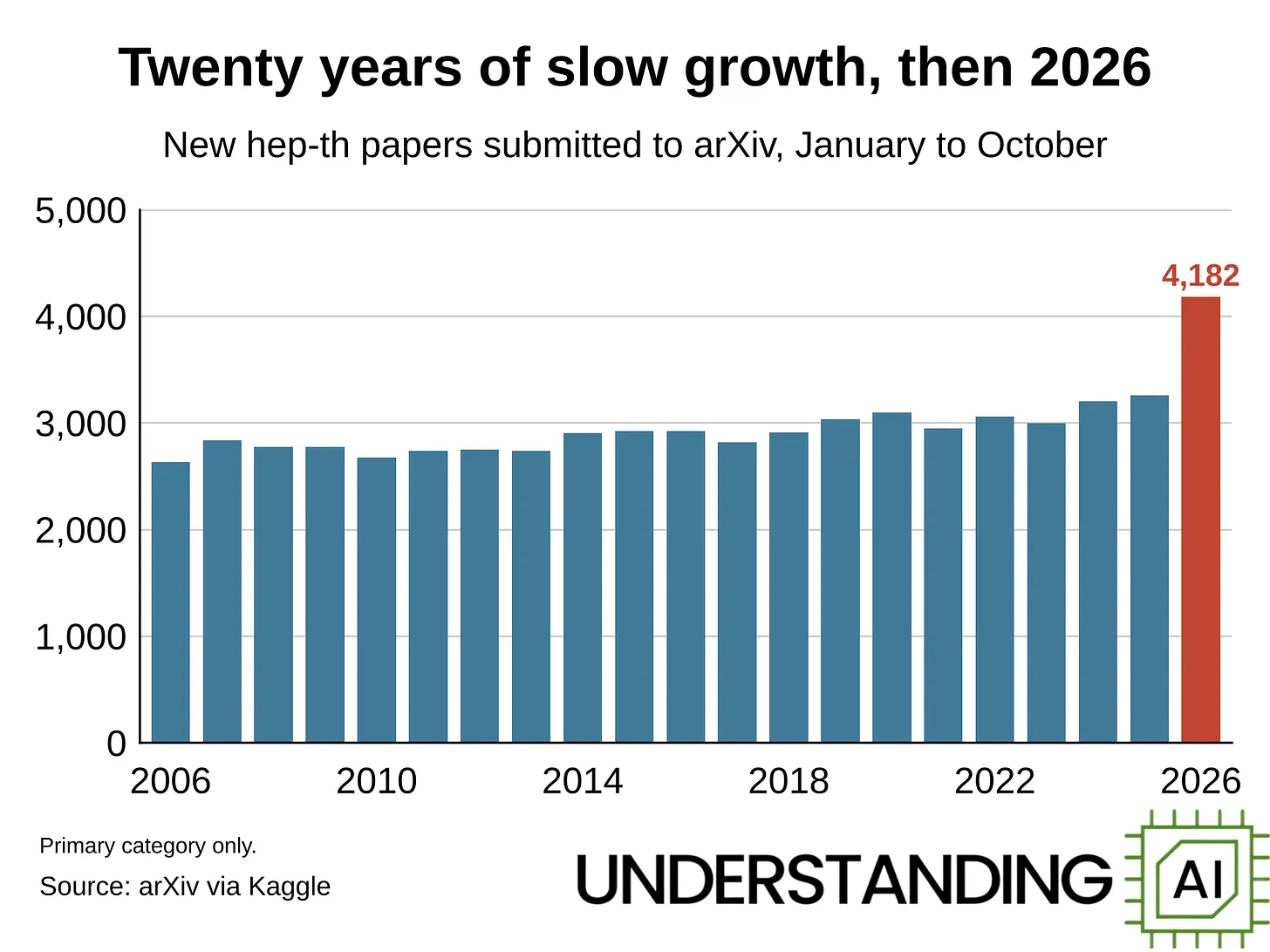
The publication of theoretical physics papers has soared in recent months. From January to October, physicists submitted about 30 percent more papers to the hep-th category of the science repository arXiv—hep-th is short for high-energy physics theory—than in the same period last year. In the prior two decades, the highest annual jump was 8 percent.
There’s an obvious question: Are all these papers slop? The answer is yes and no. Schwartz described many of them as “poorly written, but I think the science is probably pretty solid.”
Credit: Understanding AI
Credit: Understanding AI
But nobody knows for sure because nobody has time to read all the papers. “It’s like this endless buffet. Even if it’s the most amazing food, how much of it can you digest?” is how Scott Aaronson put it to me. Aaronson is a theoretical computer scientist who has helped draw important connections between computer science and physics over the last 15 years.
Eventually, and perhaps soon, the endless buffet will require some new ways of organizing how physics as a field operates. Syracuse University physicist Aron Wall thinks it will increase the necessity of personal references and relationships. “My source for papers on the arXiv usually is somebody tells me about them, and if they don’t, then I don’t need to know,” he said cheekily. (Wall consults for Anthropic.)
Maldacena, for his part, isn’t sure what the solution might be, but he thinks it’s not an insurmountable problem. “It’s hard to process. But I think it’s great, and we’ll learn how to do that,” he said.
An uncertain future for young physicists
The flood of papers may be the kind of manageable change science has always had to deal with. But AI could have more profound impacts on the career prospects of young physicists.
Established physicists like Maldacena probably don’t have much to worry about. They’ll likely be able to keep their tenured academic jobs in any event. But physicists in training may not be so lucky.
Until recently, performing calculations was a rite of passage. It allowed young people to build both a reputation as a physicist and an intuition for how to approach the deepest problems.
“It’s how we judge students, how we decide students have talent,” Raju said. “I went into physics because I participated in the International Physics Olympiad, and that was considered to be a sign of having talent.”
“If you do enough of this mechanical grinding through problems, at some point, you pick up the concepts behind it,” Karch said.
But Karch said that trajectory may now be changing: “It’s not clear how you jump over that step” if AI is performing all the routine calculations.
“A lot of them feel like that is being taken away from them,” Aaronson said.
Karch also mentioned a burgeoning fear of getting scooped. “If you tell somebody, they’re going to run and ask the agent to solve it,” he said. “You have to be much more guarded if you think you have some big idea.”
Raju told me he’s not taking new PhD students until he gets a better sense of what their futures might look like.
All this is compounded by funding cuts the Trump administration is making to science, which were already threatening the field’s inherently tenuous career path. And while many physics skills translate to AI—Anthropic and OpenAI have both had physicists in high positions—the frontier companies aren’t hiring great numbers of them these days, especially outside top departments like Stanford or Berkeley.
Some students are taking on gigs writing training problems for data companies like Mercor or Scale AI for $80 to $100 an hour. “This is good money on the side, but it’s not a career,” Karch said. “No health insurance comes with this.”
Physics might be just months behind mathematics
As far as anyone can tell, the flood of physics papers doesn’t contain any major AI-aided physics discoveries. The closest thing so far has been OpenAI’s October announcement that one of its models had proved that the math behind the gluons that carry the strong nuclear force holds together in four dimensions. (Brian Greene has a helpful explanation here.)
A panel of physicists and mathematicians examined a Lean version of the 1,147-page proof and concluded it is correct. This is half of a Millennium Prize solution and a triumph of mathematical physics that has eluded humans for decades. The theory, called pure Yang-Mills, was first proposed in the middle of the 20th century. But the consensus among physicists seems to be that, technical impressiveness granted, at heart this solution firms up something everybody already knew.
“Existence of Yang Mills? It’s just tying up a [loose] end for the hyper mathematically minded. I don’t think any physicist gives af,” Karch tweeted.
At the same time, nobody I spoke to was confident enough to rule out major discoveries from AI happening soon. They’ve all seen what just happened with math.
Indeed, we’re starting to see AI discoveries in mathematics that could have significant implications for theoretical physics. One of them relates to a major problem involving black holes. In 2012, a few physicists made an alarming discovery: quantum mechanics seemed to demand that a literal wall of fire sit at the event horizon of a black hole—an absurdity that would violate general relativity.
Harlow and a colleague figured out a way of saving the situation, coming up with an elegant loophole of a sort physicists are partial to. They didn’t directly disprove the “firewall paradox”; they simply pointed out that based on our understanding of how information works, testing the paradox would take so long that the black hole would evaporate first, so the question was moot.
But as Aaronson pointed out to me, one of the 722 mathematics papers OpenAI released on October 6 looks like it shows that if one of computer science’s biggest unproven conjectures, a cousin of P versus NP, turned out to be false, testing the paradox would become more feasible. This leaves Harlow and his colleague’s defense of spacetime as we know it on somewhat weaker—though in all likelihood still safe—terrain.
Aaronson told me some of the physicists he knows tend to guess physics is about six to 12 months behind math.
“The reason why this has come for math and for programming earlier than for other things is just that we have very, very self-contained ways to verify whether an answer is right or not,” he said. “And that is what AI needs to help to power its training process.”
Or as Harlow put it, “nobody can just give you a Lean certificate that says, ‘Here’s the theory of quantum gravity.’ So in some sense, that’s the hardest kind of thing for one of these things to try to do because it’s so vague and poorly defined. The rules of the game are completely unclear.”
But Schwartz expects this situation to be temporary. “It’s certain by next summer, the AI will be able to do most of those creative steps on its own and really do papers end to end. And then the summer after that, we won’t even understand what it’s doing,” he said.
AI industry insiders seem to think the same. Last month, the prominent OpenAI researcher known as roon tweeted, “unified field theory / quantum gravity within the next 12 months?”
“The problem isn’t the ideas, it’s the experiments”
When Harlow and roon mentioned quantum gravity, they were referring to the deepest open problem in all of physics.
The first half of the 20th century delivered the two pillars of contemporary physics: general relativity, which essentially describes the force of gravity, and quantum mechanics, which essentially describes the three other fundamental forces (electromagnetism and the weak and strong nuclear forces).
The lion’s share of the work in the second half of the century was devoted to fleshing out the second theory. This resulted in what’s called the Standard Model of particle physics, which lays out the properties of all known fundamental particles that make up the universe. The Standard Model was essentially completed in 2012, when the final major particle it predicted, the Higgs boson, was discovered at the Large Hadron Collider.
But those two central theories of general relativity and quantum mechanics not only don’t match up everywhere, they conflict in places. There is no confirmed theory of the physical world that encompasses everything physicists know. This is where quantum gravity comes in. It’s a placeholder term—the name of a theory that doesn’t really exist yet.
The closest candidate is string theory. It does contain both quantum mechanics and gravity, which is why it attracted a lot of excitement when it was developed a few decades ago. It also, among other issues, allows for so many possible universes, 10,500 by one common estimate, that nobody knows if our particular universe is among them.
One reason we don’t know is that we can’t test string theory.
The accretion disk of a black hole as visualized by Jeremy Schnittman for NASA.
The Large Hadron Collider is the most powerful particle accelerator physicists have constructed to date, but it would take a machine roughly a quadrillion times more powerful to make gravity’s quantum effects strong enough to directly observe; a collider as powerful as the LHC would need a radius measured in the hundreds of light-years. Indirect, non-collider tests have been proposed, but so far, nothing significant has panned out.
As Karch put it, “the problem isn’t the ideas, it’s the experiments.”
This means theoretical physicists interested in quantum gravity have faced a difficult choice. Some have moved on to other problems. Others have made significant—if publicly underappreciated—advances using little more than mathematical consistency and human intuition as their guides.
As I wrote last year in The Wall Street Journal, this project has been controversial in some quarters—unfortunately so, since I and many others consider it to be an enormous feat of human intellectual effort and creativity. Several of the physicists I quoted in this story have worked on what’s called the black hole information paradox—a central front in the clash between quantum mechanics and general relativity.
There is an ironic possibility looming. Suppose AI improves in physics as it has in math, going from talented student to somewhat incomprehensible master very quickly. Maybe in a year or two, an AI agent will generate a brilliant solution to quantum gravity that is consistent with what we know about our universe. But unless technology changes, testing such a solution will remain impossible.
The end of “shut up and calculate”
Some of the most impressive physics theorists were never known for their calculating prowess. Take Einstein in the past, or the likes of Leonard Susskind today.
In the most human-friendly case for the near future, the job of theoretical physicist returns to something like Einstein’s famous method, Gedankenexperiment, or thought experiment, the act of pressing on contradictions until they break.
Quantum gravity, for instance, is a question requiring extraordinary conceptual imagination as well as intensive mathematical ability. There are few conceptual guides and, compared to many areas of physics, relatively few clearly defined questions to calculate. One of Maldacena’s central innovations, expressed in one of the most cited theory papers ever, hints at the idea that everything in our three-dimensional world might be described or encoded on a two-dimensional boundary far away.
Wall said this way of working requires a certain amount of something other than raw intelligence. “Science doesn’t just progress through smartness, it also progresses through stupidity in a crucial way,” he said. “Stupid means you’re getting the question wrong, and you have to go back and figure out why you’re getting it wrong.”
Many of the physicists I spoke to feel that moving toward an emphasis on concept-work like this and away from human calculation might not be such a loss. “I feel like that style of doing physics and math is probably done, or will be soon,” Harlow said. “But I don’t really mourn that too much, to be honest.”
“For a long time we’ve been told to ‘shut up and calculate.’ [Maybe AI] frees us up to stop and think, and it lets us think about ambitious problems that we couldn’t think of earlier,” Raju said in a recent talk. “Shut up and calculate” is the cliché expression of a widespread mid-century attitude toward quantum mechanics: Nobody understands what the theory really means about the world, but the equations work impeccably, so do the math and don’t worry about the rest.
Raju thinks this relatively cheery paradigm will hold for the next few months at least. Past that, he doesn’t know.
If it doesn’t hold, one possibility is that theoretical physics, long a relatively individual field, will start to look more like experimental physics, which is much more collective. If progress on important questions depends on burning huge amounts of compute, physicists will pool resources together, apply jointly for grants from the government and large institutions, and collectively judge the most important questions to ask the AI. Just a few weeks ago, 51 physicists authored a proposal to this effect.
To Schwartz, whatever structure it takes, the promise of AI and physics is thrilling. “I am excited for the science. I think fundamentally most scientists are interested in answers,” he said.
Maldacena concurred. “I’m more excited than concerned,” he said. “That means that we have lots of possibilities and promise for the future.”
Raju was more circumspect but said it will be hard to complain about AI-driven discoveries: “If somebody tells us the nature of dark matter, then I suppose we have to welcome it. We can’t say, ‘Oh, we didn’t want to know it so fast.’”
The trade
If AI meant the end of human physics as we know it but we got a solution to quantum gravity or other discoveries of similar size, would that be a worthwhile trade? “Making a deal with the devil—sell your soul for the answer?” Schwartz asked jokingly. “Yeah, I would. I think you just have to be a little bit more humble.”
Maldacena, who has done as much as anyone alive to probe the boundaries of human knowledge of the universe, said, “I think it doesn’t matter who generates the knowledge,” as long as we can still understand it.
Harlow, by contrast, wouldn’t take that trade. “No. And I probably wouldn’t even read the result,” he said. “I’d just be off playing piano in a bar somewhere or something.”
In this scenario, theoretical physics might start to look something like a humanities field. Handed-down truths? Unprovable or unintelligible knowledge-objects? That sounds like biblical studies or art criticism.
There would still be physicists in this world. On paper, at least, one of the chief jobs of a physicist is to teach physics to other humans. But they would not be discovering knowledge so much as interpreting it. Indeed, it can be argued that math is already entering this state.
This sort of interpretation has been part of physics for a long time, though perhaps not as much as it should have been. Take quantum mechanics. The predictive power of the equations of quantum mechanics is beyond dispute. At the same time, any real understanding of what quantum mechanics means about the world is wildly disagreed upon and even sorely understudied, as the physicist Sean Carroll frequently argues.
Wall was relatively sanguine about this direction.
“People have this idea of physics and mathematics as something where it’s all about just answering the question, making discoveries,” he told me. “But it’s the most common thing in the world for the paper that discovers a thing to be completely incomprehensible to other people because it’s expressed in that person’s language, and maybe the person who translates it into language other physicists can understand gets as much credit sometimes. And that’s actually fair, because that’s an equally important job.” (This is something of a reversal of the science-like ways humanities fields have tried to position themselves in the last few decades, and not to enormous success. As the political theorist Samuel Goldman pointed out recently, “The conflation of scholarship with ‘creating new knowledge’ has been a disaster for the humanities and social sciences.”)
Trump’s Imperialist Fantasy for Latin America Is Already Failing
The U.S. “Backyard”
It would have been unimaginable for the United States and longtime U.S. adversary, Venezuela, to enter into a military alliance just one year ago. But that’s exactly what U.S. “Secretary of War” Pete Hegseth announced from its capital, Caracas, on November 18, as part of a surprise meeting with Venezuela’s acting president, Delcy Rodríguez.
The new military agreement — which will include joint training, intelligence sharing, and defense equipment capabilities — and an oil deal signed in August, which even Bloomberg has called a reprise of the industry’s “neocolonial past,” is the most significant achievement of President Donald Trump’s aggressive “Donroe Doctrine” to strengthen U.S. control over Latin America. “In the last year, the country that previously sent its oil wealth to Cuba or to China, from rigs built by Venezuelans and Americans, has now signed a historic oil deal with the United States, through the Department of War,” Hegseth boasted at a press conference last week.
That same day, however, the New York Times reported that Colombia rejected a plan to conduct joint military operations with the United States. This led Hegseth to cut a visit to Colombia short; he had originally planned to discuss military cooperation with the country’s new right-wing president, Abelardo de la Espriella. Both he and Hegseth took to X deny the Times’s claims. But de la Espriella, who campaigned by aligning himself with the Trump administration and calling for military action against drug cartels and gangs, did not have sufficient support in Colombia’s Congress to ink a military agreement with the United States that would have allowed U.S. troops to conduct counter-cartel operations inside Colombia.
The military agreement with Venezuela and the lack of one in Colombia showcase the contradictions of the Trump administration’s aggressive Latin America policy. On the one hand, the administration has greatly expanded operations in the Western Hemisphere over the past year. But a recent series of setbacks, of which Colombia’s snub is only the latest, show the limits of U.S. power projection even in a region it has treated as its backyard for hundreds of years.
The Donroe Doctrine in Action
One year ago this month, the Trump administration published its National Security Strategy, which candidly advocated for a “Trump Corollary” to the Monroe Doctrine, invoking the policy that the United States historically used to treat Latin America and the Caribbean as the country’s exclusive sphere of influence. Just two months after releasing the NSS, on January 3, the administration carried out a coup in Venezuela, which removed its president, Nicolás Maduro, from power. A U.S. strike in southern Venezuela in June reportedly killed a leader of the Tren de Aragua gang. And last month, U.S. aircraft attacked a camp of supposed Colombian guerrillas operating inside Venezuela, killing more than two dozen people.
With the cooperation of remaining regime officials, headed by Rodríguez, U.S. Secretary of State Marco Rubio has also effectively dictated significant shifts in Venezuelan domestic and economic policy, including the oil deal which gives the United States a direct stake in more than 17 strategic oil fields and the resumption of U.S. embassy operations in Caracas.
Rubio’s influence over Venezuelan policy also enabled him to escalate an economic offensive against Cuba, which has long been a target of Rubio’s staunch anti-communist crusade. Venezuela had been Cuba’s largest oil supplier, but after the coup, Venezuela quickly cut off its supply of fuel to the island nation. The Trump administration then threatened tariffs against any country that sold oil to Cuba. By February, the United Nations was warning that Cuba faced “humanitarian collapse” from the embargo. Trump officials have also repeatedly threatened to carry out regime change on the island. As recently as November 13, Trump told reporters: “I want to get Cuba done before I leave you.”
Since last September, the United States has also conducted scores of attacks on supposed drug boats in the Caribbean Sea and Pacific Ocean. By alleging that these boats are suspected of “narco-trafficking,” the Trump administration has carried out lawless operations that have killed more than 240 civilians.
The administration had even bigger plans for Latin America. The NSS envisioned a region run by subservient governments willing to play their part in advancing policies favorable to U.S. interests. As the document put it:
Our goals for the Western Hemisphere can be summarized as “Enlist and Expand.” We will enlist established friends in the Hemisphere to control migration, stop drug flows, and strengthen stability and security on land and sea. We will expand by cultivating and strengthening new partners while bolstering our own nation’s appeal as the Hemisphere’s economic and security partner of choice.
Shifts in the region would favor this policy, with recent Latin American elections bringing U.S.-aligned, right-wing leaders to power in several countries that had previously been governed by left-wing administrations. Bolivia, Chile, and Honduras elected right-wing heads of state in 2025, followed by Costa Rica, Colombia, and Peru this year. These new governments joined staunch Trump allies Javier Milei in Argentina, Nayib Bukele in El Salvador, and Daniel Noboa in Ecuador.
On March 7, 2026, Trump and Rubio brought 13 of these allies together at a summit of Shield of the Americas, a multinational security initiative created by the administration earlier this year. The main result of the summit was the creation of the Americas Counter Cartel Coalition, which Trump described as “a pledge from military leaders and representatives from 17 countries demonstrating that the region is ready to operationalize hard power to defeat these threats [cartels and terrorists] to our security and civilization.” At an October meeting, the coalition (which has grown to 19 countries) “committed to expand information sharing, increase bilateral and multilateral cooperation, and conduct combined operations that deter and dismantle those networks, secure borders and critical infrastructure, and protect law-abiding citizens,” according to a U.S. Southern Command press release.
New Partnerships and Human Rights Concerns
Under Noboa, Ecuador has been at the forefront of advancing U.S. military operations in Latin America, offering a glimpse of what might be in store as the United States seeks to expand military cooperation across the region.
In March, U.S. Special Operations forces began joint operations with Ecuador’s military against alleged drug cartel facilities. The partnership was established despite a referendum in Ecuador which saw voters overwhelmingly reject a proposal to host a U.S. military base. A New York Times investigation found that at least one of the facilities targeted in these joint operations was a civilian dairy farm. A Human Rights Watch report — based on extensive interviews and analysis of data including satellite imagery, judicial documents, and medical records — found three separate incidents implicating the U.S.–Ecuador security partnership in subjecting civilians to torture, drone strikes, and arbitrary detention. The report argues:
From a human rights perspective, this partnership is a perilous one. The two countries’ security relationship is deepening at a moment when both governments have engaged in serious human rights violations fueled by their insistence on framing their confrontations with organized crime groups as a kind of war.
On November 6, Rep. Jesús “Chuy” García and 12 other members of Congress sent a letter to Rubio urging him to suspend military assistance to Noboa, noting “Ecuador has seen the repression of opposition actors across the political spectrum, attacks on judicial independence, and restrictions on the freedom of the press.”
While the plans to expand military cooperation in Colombia suffered a setback, the Colombian and U.S. militaries have nonetheless made efforts to deepen their relationship. This month, 350 U.S. military personnel were in Colombia training alongside 400 local troops as part of a military exercise dubbed Southern Vanguard 2027. Panama and Honduras have also hosted training exercises with U.S. troops in the past year.
A recent U.S. Army press release also announced that U.S. and Colombian military leaders met for bilateral discussions about the two countries’ partnership. Even under left-wing President Gustavo Petro, who was a vocal critic of Trump and the war on drugs, U.S. military personnel were deployed to Colombia and the two countries shared intelligence.
Historically, U.S. military partnerships with Latin American leaders have been linked to human rights abuses, including the Guatemalan military’s massacre of Indigenous Maya civilians during the country’s 36-year-long civil war, and Peru’s government, under the 10-year rule of Alberto Fujimori, carrying out forced disappearances of dissidents. Considering the civilian toll of the administration’s boat strike campaign, as well as the abuses being carried out in Ecuador, it is likely that the Donroe Doctrine will lead to further human rights violations.
The administration has also increasingly meddled in the political affairs, and even the sovereignty, of various Latin American countries, including conditioning a $20 billion bailout of Argentina’s economy on the success of Milei’s party in the country’s legislative elections, pressuring Bolivia’s government to arrest its own attorney general and other officials who were investigating a Trump-friendly political strategist, and attempting to sway Brazil’s presidential election in favor of Trump ally Flávio Bolsonaro.
Has the Donroe Doctrine Peaked?
Despite the seemingly unrestrained advance of the Donroe Doctrine this past year, Trump’s influence over the region is already teetering. Even before Colombia rejected deeper cooperation, Trump had encountered several other key setbacks across Latin America.
Despite Trump’s efforts to sway Brazil’s presidential elections in October, incumbent President Luiz Inacio Lula Da Silva pulled off a stunning defeat of Bolsonaro, securing another term leading the largest country in Latin America. Bolsonaro’s loss, bolstered in no small part by the Brazilian public’s outrage at U.S. interference, dashed the Trump administration’s hopes of having an entirely subservient ally at the head of the largest and most politically influential country in Latin America.
This month, outrage over a banking scandal in Paraguay led to the impeachment of Trump-aligned President Santiago Peña. In Chile, right-wing President José Antonio Kast’s approval rating has plunged to new lows after just eight months in office. And in Argentina, where Milei, one of Trump’s most subordinate allies, has been carrying out sweeping neoliberal reforms, the country appears to be entering a recession just ahead of next year’s presidential election.
This year has also seen significant protests and increased left-wing activism challenge the region’s right-wing governments. In May, a peasant-led rebellion in Bolivia over austerity and government ties to the Trump administration brought the country to a standstill for over a month. President Rodrigo Paz has since enacted a state of emergency, enabling him to use the military and police to suppress dissent. Despite this, Bolivian teachers launched a strike last month over efforts by the government to privatize education. In Chile, the country’s student movement has held several national days of protests, facing off against police armed with tear gas and water cannons. Recently, Chilean truckers also entered the fray, setting up roadblocks to protest fuel price hikes.
In Argentina, Trotskyist congresswoman Myriam Bregman has rapidly grown in popularity. Recent polling has shown that Bregman, a vocal critic of Milei and U.S. influence in Argentina, now has the highest favorability rating of any political figure in the country, foreshadowing an electoral environment in which the far left is becoming a serious contender against the right and the country’s more mainstream Peronist opposition. All these trends further signal a landscape less conducive to Trump’s agenda of continued U.S. intervention.
This surge of left-wing populism across Latin America doesn’t mean that the administration will cease aggressive interventions in the region. Trump’s appointment of Stephen Miller as his new chief of staff may signal the opposite. Miller was highly involved in planning the coup in Venezuela and the boat strike campaign. But following the Republican Party’s historic defeats in the U.S. midterm elections, the administration will have to contend with a new Congress elected by a public that is souring on constant military interventions. Hegseth, competing with Miller in his zeal for employing military terror in the region, has already become the target of an impeachment effort which is likely to carry over into the next legislative term.
As the Iran war has shown, military might alone is not enough to make countries, let alone entire regions, submit to U.S. dictates. The Trump administration may well continue its efforts to revive the Monroe Doctrine, but the long history of U.S. intervention in Latin America is also a history of the region’s people defending their sovereignty from U.S. empire and local quislings. This year has been another chapter in that history.
“To the narco-terrorists who have used this as a safe haven, your time is up. We will hunt you down. We will find you. And we will kill you,” Hegseth announced last week in Caracas. He also passed along a “greeting” from Trump to Rodríguez and lauded the puppet-president who has consistently met Washington’s demands. Standing outside the U.S. Embassy, Hegseth praised Venezuela’s transformation from an enemy to a “compliant security partner.” But repeating the success in Venezuela may prove to be very difficult.
Oregon Housing Leader Met With Officials Who Are Seeking Money for a Project Her Husband’s Employer Is Developing
When Oregon’s Housing Stability Council met by Zoom in early October, the state’s top housing official told the oversight board that she wanted to address a story ProPublica published that morning.
The story revealed that the official, Andrea Bell, hadn’t clearly disclosed her husband’s work for a small consulting firm that helps housing authorities develop apartments, sometimes with money from Bell’s agency. Nor had she notified Gov. Tina Kotek about it, something Oregon law requires of a governor’s appointee when an actual or potential conflict arises.
Council members, who award hundreds of millions of dollars in housing subsidies, affirmed their support for Bell, who told them she wanted to be clear: “None of the projects that are coming from the council impact my household income.”
Newly obtained records, however, show a clear financial connection between the council’s decisions and her husband’s employer. The records also show that Bell was personally involved in meetings and internal discussions about state funding of a large apartment project, Aloha 209th, which her husband’s employer is helping to develop.
Backers of the Aloha 209th project in Portland’s suburbs are seeking $17.5 million from the housing council, which receives funding recommendations from Bell’s agency.
JH Brawner, the consulting firm that employs Bell’s husband, Joshua Crites, will earn a $2 million fee from the housing authority in Washington County if the transaction closes. If not, JH Brawner gets nothing.
A separate project outside Portland, the Park Place apartments in Clackamas County, already received money through Oregon’s housing agency. Five months after Oregon awarded $36 million to the project in May 2025, Clackamas County’s housing authority paid JH Brawner a $2.4 million consulting fee, the new records show.
Like the Washington County contract, the one with Clackamas County says that if funding fell through for any reason and the project didn’t move forward, “no fee shall be due” to the firm.
JH Brawner said Crites, the firm’s director of strategic initiatives, has not worked on the Aloha 209th project but was one of five staffers assigned to Park Place. JH Brawner pays employees, including Crites, a fixed salary that is not tied to any project closing, according to managing director Zak de Gorgue.
Bell, executive director of Oregon Housing and Community Services, said in a statement that she is “committed to transparency, accountability, and compliance with state law.”
“At no point in my tenure as executive director have I used my position to influence or benefit myself or anyone related to me,” she said. “To be clear, I made no efforts to influence funding, and the Aloha 209 project has not received funding from OHCS and remains on the waitlist.”
Bell’s public agency sits in the middle of the state’s effort to combat a homelessness problem that is among the nation’s worst. Kotek, the governor, has made building more housing a pillar of her time in office. Oregon Housing and Community Services has distributed billions of state and federal dollars to subsidize the construction of apartments intended to have affordable rents.
Norman Williams, a law professor at Willamette University College of Law who teaches about government ethics, said Bell should have reported to the governor that she had a possible conflict and stayed out of any discussions about the projects her husband’s employer helped develop.
“It may all be an innocent mistake on her part,” Williams said, “but she knows who her husband is working for and she doesn’t report that. It makes it look like she’s trying to conceal this.”
De Gorgue said in a statement that the Aloha 209th project is still in development and the company had “no knowledge of Andrea Bell taking any action to move the project forward, nor has JH Brawner & Company engaged in any advocacy to secure funding approval” from Bell’s agency. Funding applications were submitted by the local housing authorities, not by JH Brawner.
“We have no indication, nor any reason to believe, that any project on which we have consulted has been the beneficiary of inappropriate influence,” de Gorgue said.
Separately, he said Clackamas and Washington counties chose JH Brawner as a consultant years before the company hired Crites in 2023.
Crites did not respond to an emailed request for comment.
After ProPublica asked Bell about her husband’s employment in September, she amended three years of ethics disclosure forms, explicitly naming JH Brawner as his employer. (The one time her state filings alluded to Crites’ job before that was in 2025, with a misspelling: “Spouse serves in an advisory role for a developmen.” It showed only the company’s street address, misspelled, and not its name.)
Bell also asked the Oregon Government Ethics Commission for a formal opinion about her potential conflict at the direction of Kotek’s staff. That evaluation was paused after the commission opened a preliminary review in response to a citizen complaint about her lack of disclosure. The preliminary review is ongoing.
ProPublica obtained the new details about Bell’s involvement through county contracts and emails to and from Bell, which were released under Oregon’s public records law. Bell’s agency initially said the emails would cost $612.50 to produce but eventually provided them for free. Washington County charged $364.25 for contracts, invoices and other documents.
Though backers say the Aloha 209th housing development is ready to be built, it’s on a waitlist to receive money from the state. Its turn is not likely to come until at least late 2028. By then, local officials worry that the delay will jeopardize its other funding sources and the project may need an even larger subsidy.
ProPublica previously reported that Molly Rogers, head of the county housing agency seeking money for Aloha 209th, spoke publicly about contacting Bell and said the state agency director was receptive to talking further.
The new records contain Bell’s recollections of the phone conversation she had with Rogers. The same morning the two spoke, in June, Bell told another department official by email that Aloha 209th had “a unique dimension of urgency and angst” because it was one of the last projects funded by a 2018 voter-approved housing bond administered by the Portland area’s Metro regional government.
Natasha Detweiler-Daby, who leads the state housing agency’s affordable rental housing division, responded to Bell that it could be “responsive and logical” to have lawmakers “add nuance” next year by dedicating some portion of funding for housing authority projects on Oregon’s waitlist. Detweiler-Daby did not respond to an email from ProPublica seeking comment.
Behind the Aloha 209th discussion was the way that Oregon awards its housing subsidies. Since 2024, Oregon has given the money on a first-come, first-served basis. When funding runs out, Bell’s agency places applications on a waitlist in the order received.
Bell spoke with Washington County officials about Aloha 209th during a 45-minute Zoom meeting in August, records show. Internal notes summarizing the conversation say that the county would send an updated report to the state agency to “inform movement of 209.” The summary said the groups involved would have a follow-up conversation about the project.
Bell went on to discuss the project with regional government officials in early September. About two weeks before the meeting, she emailed her deputy with two possible ways to get the project funded: a legislative “carve-out” or Metro consolidating its subsidies so it could fully pay for the project. “I want to do everything we can to help the metro projects be successful and the resources, like ours, are nearly depleted,” Bell wrote. She acknowledged that Metro might not find the solution appealing.
Bell told ProPublica that she met with Metro and Washington County at the other agencies’ request. She said her agency “does not have and is not pursuing a ‘legislative carve out’ for any project.”
“My approach is to listen to partners’ concerns and explain our funding process,” she said in an email. “I have no role in deciding whether projects should receive funding as part of this process, and I do not advocate for individual projects. Characterizing these routine discussions and legitimate concerns as something improper fundamentally misrepresents their purpose and context.”
A spokesperson for Washington County’s housing authority told ProPublica that Bell did not make any commitment to alter the prioritization of Aloha 209th. Another Washington County spokesperson said the August meeting with Bell was mainly focused on the housing authority’s desire for “clearer criteria” for how projects on the state’s waitlist get funded.
A Metro spokesperson said the regional agency requested the September meeting with a goal “for the two agencies to strengthen our working relationship and coordination.”
“Metro does not, and did not, advocate for any specific project,” the spokesperson said. “We clearly indicated this at the meeting and in writing ahead of the meeting.” The agency has advocated for a group of remaining projects, including Aloha 209th, to get money so Metro can fulfill commitments made as part of its affordable housing bond, the spokesperson said.
Oregon’s Government Ethics Commission has until early December to complete its preliminary review of the complaint over Bell’s financial disclosure, which will help the agency decide whether to open a full investigation.
Bell said she will “continue to remain responsive to the Ethics Commission” as it completes its examination.
Kotek’s office, provided with a list of ProPublica’s latest findings, said in a statement that the governor “holds all agency leadership to consistent and high ethical standards” and that her office “is closely following” the ethics panel’s review.
Australia-Solomon Islands defense treaty is a blow to China
<
article id=”post-953490″>
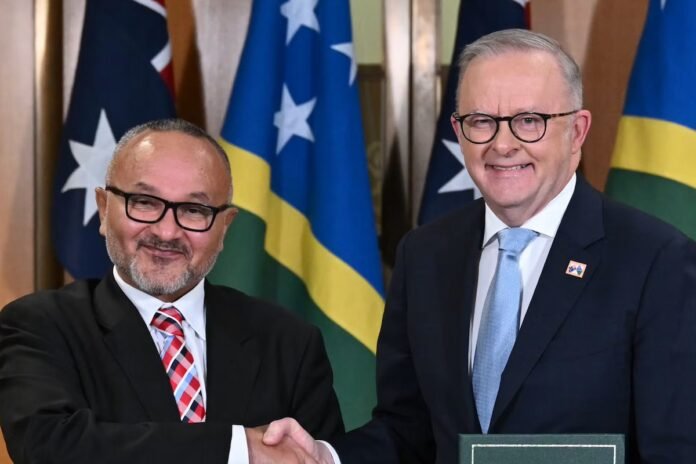
Amid much fanfare and a huge delegation of politicians from Solomon Islands, Australia has signed a long-anticipated treaty with the Pacific Islands nation.
The agreement was hailed as as a huge success for Australia, the treaty contains aspects that both sides will value. In doing so, Solomons Prime Minister Matthew Wale has leveraged the fast-paced negotiations and Solomon Islands’ key strategic role in the Pacific to achieve outcomes that will benefit the people of Solomon Islands.
It also means Solomon Islands is ending the controversial security pact it signed with China in 2022, amid rising concerns about China’s role in the Pacific.
What the two countries agreed to
Australia and Solomon Islands have a long and complicated relationship, not just during the 14-year Regional Assistance Mission to Solomon Islands (RAMSI), but also during the late 19th century period of blackbirding.
It was welcome news, then, that the treaty recognized the contemporary connection between Solomon Islands and South Sea Islanders, something that has long been called for.
Australia’s support for the Solomons’ economic development extended to supporting Wale’s signature fee-free education policy for early childhood education right through to university.
The Pacific Australia Labour Mobility Scheme (PALM) did get a boost in the treaty though, designed to increase employment in both countries.
The scheme currently brings in SBD507million (A$94million) annually to Solomon Islands, benefitting local communities. While there are some concerns about the scheme, the expansion into more sectors such as aged care will be welcomed by both workers and employers.
Importantly, many Solomon Islanders will quickly evaluate whether, as suggested by both governments, the agreement facilitates enhanced visa arrangements for travel to Australia. Migration is a bone of contention for Australia-Pacific relationships.
Australia’s treaty era of diplomacy tends to focus on strengthening people-to-people ties. In Solomon Islands’ case, there is a nod to soccer, one of Solomon Islands’ most popular sports. Importantly though, unlike other agreements, sport has not overshadowed other human security priorities.
Australia also got what it wanted in the deal. Its commitment to peace and security remains strong, given Solomon Islands’ turbulent past and Australia’s leading role in RAMSI. The treaty also boosts the relationship with the Royal Solomon Islands Police Force, which is a direct move to combat Chinese policing in the country.
The China question
Australia has successfully managed its geopolitical anxiety about China’s presence in Solomon Islands through this new treaty.
The statement says, “there will be no foreign military or security base in Solomon Islands, and that Solomon Islands’ sensitive infrastructure will remain free from militarization, foreign interference and unauthorized access.” This is a direct response to China.
Importantly, the treaty means the Solomons cannot be used to support a foreign military or security base.
Solomon Islands’ security pact with China signed by former Prime Minister Manasseh Sogavare in 2022 was not only globally contentious but also kept undisclosed, even from then-opposition leader Wale.
When Wale became prime minister, one of his commitments was to promptly review the agreement.
While it may come as a surprise to some, the move to scrap the security agreement with China was one of the expected outcomes of the review. At this stage, it remains unclear whether the China security pact has been abandoned in full or will just not be renewed when it concludes in April.
Sogavare, the architect of the pact who is now opposition leader, has warned Wale against terminating the agreement.
While the treaty with Australia constitutes a substantial setback for China, other Pacific nations are unlikely to replicate the Solomons’ course of action. Wale has recently assured China of his government’s commitment to the One China policy.
What is more likely to happen in the near future is the negotiation of a new agreement with China that better reflects the priorities of the Wale government. The best outcome for Solomon Islands would be for China to remain a development partner, while Australia remains its security partner.
China retains a lot of public relations leverage in Solomon Islands. It has poured billions of dollars into infrastructure development in the country. Recently, Chinese officials oversaw an upgrade of the roads in the town of Auki, the provincial seat on Malaita, in the heart of the prime minister’s constituency of Aoke/Langalanga.
Malaita province was predominantly against China’s recognition in the early days of Sogovare’s switch from formal relations with Taiwan. So for China to be making substantial headway into the province is a signal to observers of its strategic approach to winning the hearts and minds of Solomon Islanders.
It will be in Wale’s interest to clearly explain to the people of Solomon Islands, particularly his constituents, his government’s decision to scrap his country’s security pact with China, especially given that news of the decision only became public while the prime minister’s delegation was en route to Canberra.
Italy rebukes Ukraine over attacks on Russian ships in Libya
cde.news desk · 3 min read
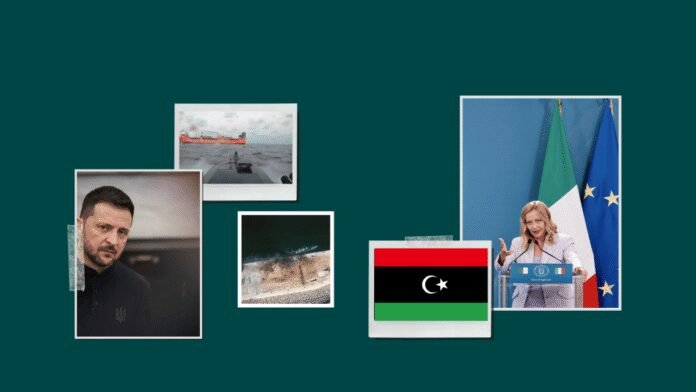
Italy has told Ukraine it was wrong to attack Russian ships in Libyan waters and warned Kyiv not to spread the war to new areas, Foreign Minister Antonio Tajani told Corriere della Sera newspaper on Wednesday.
“It was a mistake to violate Libya’s sovereignty,” Tajani said, adding that Rome had received no advance warning of the Ukrainian operations.
“Italy was absolutely unaware of Kyiv’s intentions to strike in Libyan territorial waters, even inside a port,” said the minister, who is head of the coalition Forza Italia party.
Ukraine has said the maritime drone attack against a Russian naval corvette and a cargo ship at the weekend was a legitimate act of self-defence.
Tajani said he had telephoned his Ukrainian counterpart, Andrii Sybiha, to express his concerns, stressing Italy’s commitment to Libya’s territorial integrity.
Another coalition party, the far-right League, also condemned the attack, calling it “unacceptable” and warning that it risked destabilising the north African country.
Italy has been a staunch supporter of Ukraine since Russia’s 2022 invasion, providing military aid and backing European sanctions against Moscow.
However, Prime Minister Giorgia Meloni’s government has sent mixed signals, with her own party firmly behind Kyiv while the League, led by Matteo Salvini, has repeatedly criticised continued military assistance to Ukraine.
Tajani said that Rome would carry on supporting Kyiv’s sovereignty while seeking to prevent the conflict from spreading. “Italy will remain on Ukraine’s side. Ours is a strategic choice,” he said.
Rome is especially concerned about destabilizing Libya, a former Italian colony, fearing that if the politically fragile country collapses into disorder again, it could spark a migration wave across the Mediterranean.
Russia and its allies in Libya could use migration as a weapon against the country, said Arturo Varvelli, a senior policy fellow at the European Council on Foreign Relations.
“For Italy, Libya is the most important foreign policy dossier because everything that concerns Libya concerns Italy,” said Lia Quartapelle, a center-left Democratic Party lawmaker and vice chair of the Foreign and European Affairs Committee of Italy’s parliament.
And it’s not just Italy that is worried about a widening war in the Mediterranean.
“Greece’s government is concerned that the war in Ukraine could open another front in the eastern Mediterranean and is planning to have discussions on the issue with like-minded partners in the near future,” a senior Greek government official said.
Ukraine stands its ground
Despite the turmoil in Rome and Athens, Kyiv stands by its decision to attack Russian ships.
“Ukraine is defending itself against the armed aggression of the Russian Federation. Our actions constitute the exercise of the inherent right to self-defense,” Ukrainian foreign ministry spokesperson Heorhii Tykhyi told reporters on Tuesday.
“Ukraine has the full right to strike the aggressor’s legitimate military targets. These include Russian warships, cargo vessels transporting military equipment and resources, and tankers belonging to the shadow fleet that sustain Russia’s war machine,” he said. “Ukraine is not dragging anyone into the war, nor is it exporting the conflict elsewhere.”
There is another risk for Meloni: that Ukraine ends up showing the lack of an Italian strategy in Libya to deal with the Russian presence there, said Varvelli, the ECFR researcher. The Russian naval vessel was sunk in the eastern Libyan port of Benghazi, controlled by military commander Khalifa Haftar, whose Libyan National Army is allied with Moscow.
“The Ukrainians are simply bringing to light the significant Russian presence in Libya, which consists of six bases and between 1,000 and 1,500 personnel,” he said, warning that Italy is “purely reactive” to what is happening in the country.
Kalshi makes “difficult decision” to halt Utah trading after losing court fights
Kalshi made the “difficult decision” to pause operations in Utah after losing a court fight to block the state’s ongoing enforcement actions under Utah gambling laws, Kalshi spokesperson Jacki McGavick said Monday.
It seems Kalshi’s legal troubles in Utah have become too much for the prediction market platform to gamble on continued operations there. In Utah, several lawsuits are still playing out, and Kalshi also lost a bid to persuade a federal appeals court to block those cases until the appeal is resolved.
Kalshi also wasn’t saved by an emergency motion from the Commodity Futures Trading Commission—which argues that the CFTC has exclusive jurisdiction over prediction market trading. At this time, the federal district court has not granted that motion to block Utah’s enforcement actions, either.
“This is an unfortunate outcome for the more than 177,000 Utahns who use Kalshi,” McGavick said. “We will continue to fight this in court, and we look forward to returning to Utah once our legal position is vindicated.”
In a press release discussing the initial lawsuit, he accused Kalshi of running “an online casino” that violates the state’s constitution. “Not only do our state laws ban gambling but Utah is one of only two states where gambling is also prohibited under the state constitution,” Brown said. “For 130 years, Utah has been clear: gambling has no place here, and we will enforce our laws.”
Late Monday, a major Utah-area news outlet, KSL.com, reported that Brown was prepared to jail Kalshi’s co-founders, who had been summoned to be booked on 14 charges on December 5. He defended those plans, saying, “There is a question I have seen from people asking, ‘Well, do we modify this booking process if someone is a very wealthy and well-known tech billionaire?’ and the answer is ‘No, the process is the process; we don’t modify it based on who you are.’”
However, on Tuesday, Utah decided to drop the criminal charges against Kalshi, McGavick confirmed to Ars. In a statement on X, Kalshi general counsel Yaakov Roth said, “We are pleased that Utah has chosen to dismiss criminal charges against Kalshi, while proceeding with civil litigation. Good faith jurisdictional disagreements should never be criminalized. We stand ready to work with State AGs on reasonable interim measures until courts resolve the dispute over who regulates prediction markets.”
In a press release, Brown explained that the charges were dropped specifically due to the pause.
“Kalshi said it would geofence Utah, which blocks access to its site in the state,” the press release said. “The company also committed to monitor for Utah-based IP addresses trying to reach its site. The Office then reevaluated its position and moved to dismiss the criminal case against the company and the individual defendants.”
Brown threatened that the charges would be raised again if Kalshi tried to renew operations.
“Utah does not allow gambling, and prediction markets are gambling,” Brown said. Kalshi has pulled out of Utah, and if it returns, so will the charges. Every company in this space should take note. If they promote, support, or enable gambling, we will hold them accountable.”
Utah residents celebrate Kalshi pause
Discussion of the Kalshi pause in a Utah sub-Reddit found some Redditors skeptical of the state’s cases as potentially overreaching.
However, many top commenters seemed pleased with the enforcement efforts, suggesting that Utah may have bipartisan support among some residents. One commenter cheered on the attorney general’s efforts as “the one item in the Utah GOP’s agenda I can get behind,” while another agreed that “prediction markets are incredibly toxic and are manipulated against ordinary people.”
Many complained that Kalshi ads flooded their social media feeds. Some suggested the state should focus on banning advertising of prediction markets, while potentially still allowing adults to trade on event contracts if they want to throw their “money away.”
Fears of insider trading were also raised. One commenter laid out why prediction markets seem suspiciously designed to promote insider trading and other market manipulation:
“I’m pretty libertarian and hate banning things. But gambling and prediction markets are a scourge. Even the term ‘prediction market’ is a misnomer. Because ultimately when people with big dollars get involved it creates a financial incentive for them to make fucked up things happen in the real world. Think about it, decades ago we understood that sports betting was a problem because it corrupted sports—something that ultimately is pretty meaningless. Then we got all these people betting on the stock market with puts and it created huge incentives to cause havoc with markets. Now if people are betting big money on politics and wars and everything else, it just means people with influence can make money by making improbable/unexpected things happen.”
One commenter joked, “I wonder how Kashi would have reacted if the judge in charge of their case had ‘traded’ $500,000 on the event of them losing the case. Not a problem at all, right?”
Kalshi is hoping for SCOTUS fight
On the same day Kalshi announced its temporary pause in Utah, a judge rejected a request from New York Attorney General Letitia James to immediately shut down Kalshi in that state, Courthouse News reported.
New York Supreme Court Justice Melissa Crane said she was “uncomfortable” granting the temporary restraining order so early in the case because “there does seem to be an indication that there would be market disruption that I’m concerned about.” Kalshi attorney Grant Mainland described it a little differently, claiming that a sudden halt would cause a “market emergency.”
“I think this is the ultimate relief in the case, which is improper for me to do without full briefing,” Crane said. Instead of granting James’ request, she recommended that Kalshi take steps to address the state’s top concerns by considering “safeguards for users between 18 and 20,” who are under the state’s legal gambling age, Courthouse News reported.
According to Kalshi’s estimates, New York’s Kalshi user base (1.5 million) is much larger than Utah’s, so the market disruption from the Utah shutdown may not have carried the same dire stakes for Kalshi or its broader user base.
The CFTC has sought to intervene in that case, too, and it seems clear that Kalshi expects the questions of who can regulate prediction markets and what trading qualifies as a “bet” to reach the Supreme Court. Kalshi’s spokesperson did not respond to Ars’ questions on how the Utah pause broadly impacted users or the platform.
So far, “three federal appeals courts have ruled that states can regulate prediction markets, while a fourth found they cannot,” Courthouse News reported. But despite the current balance tipping toward allowing states to regulate prediction markets, Kalshi appears confident that the Supreme Court will resolve the disparate court rulings in its favor.
In a lawsuit filed by a disgruntled Kalshi user, Kalshi argued that it would waste lower courts’ time to continue litigating these cases and that no case should be resolved until the Supreme Court weighs in.
According to Kalshi, all of Bright’s claims rest “on the premise that state gambling laws reach KalshiEX’s federally regulated exchange—the question now before the Supreme Court. Plaintiff puts the cart before the horse; Defendants ask only that the Court let that threshold question be resolved first.”
The court has yet to address Kalshi’s request to stay the case, but Bright has argued that Kalshi is trying to “sideline a case governed by binding Ninth Circuit precedent so that they can wait for a Supreme Court decision that may never come.”
Kalshi did not respond to Ars’ request for a statement on Bright’s lawsuit. In their court filing, they argued that “a stay will let the Supreme Court address an issue that could dispose of every claim, will not meaningfully harm Plaintiff, and will spare Defendants and the Court litigation under a framework that may soon be displaced.”
Princess Kate Makes Heartbreaking Confession as She Reflects on Her Own Mortality
Princess Kate has made an emotional admission about her cancer battle, revealing how confronting her own mortality forever changed the way she sees life, her family and the future.
The 44-year-old Princess of Wales opened up about the frightening realities of her diagnosis in a deeply personal new documentary, offering one of her most candid accounts yet of the physical and emotional struggles she endured behind palace walls.
In a newly released clip from the upcoming film, titled Heal, Catherine admits that surviving cancer does not mean life simply returns to normal.
“Cancer does change you,” she said, explaining that while treatment takes an enormous physical toll, the emotional consequences can be even more profound.
The future queen then reflected on the sobering realization that came with confronting the possibility of losing her life.
“When you’re faced with your own mortality, you have to accept that life is not infinite,” she said.
Her words offer a rare glimpse into the private fears she experienced during a period when millions around the world were anxiously awaiting updates about her health.
Catherine explained that facing such vulnerability can transform a person in unexpected ways, changing not only their priorities but also how they connect with others.
She said the experience had softened her heart and opened her up emotionally, making it nearly impossible to return to the person she had been before her diagnosis.
The princess first revealed her cancer diagnosis in March 2024, following major abdominal surgery earlier that year. She underwent chemotherapy and largely withdrew from public life as she focused on treatment and spending time with Prince William and their three children, Prince George, Princess Charlotte and Prince Louis.
After completing chemotherapy in September 2024, Catherine announced in January 2025 that she was in remission. She has never publicly disclosed the specific type of cancer she was treated for.
But even after receiving the encouraging news, the princess discovered that the road to recovery was far more complicated than simply finishing treatment.
During a hospital visit in July 2025, she acknowledged that the period following chemotherapy could be particularly difficult, as patients are often expected to resume their old routines while still struggling physically and emotionally.
Her new documentary explores that difficult transition through an extraordinary personal challenge.
In June 2026, Catherine completed Britain’s National Three Peaks Challenge, climbing the highest mountains in Scotland, England and Wales within 24 hours to support the Royal Marsden Cancer Charity, associated with the hospital where she received treatment.
The demanding journey became a powerful symbol of her recovery, particularly during an emotional exchange with her younger brother, James Middleton.
James asked whether Catherine had rung the traditional bell that some cancer patients ring to celebrate completing treatment.
She revealed that she had not.
Her brother gently suggested that completing the mountain challenge might serve as her own symbolic moment of celebration.
The documentary also captures a touching reunion as Catherine embraces William and their three children after completing the grueling trek.
Despite the painful memories surrounding her illness, Catherine hopes her experience will help others understand that healing extends far beyond medical treatment.
Her latest reflections come as she continues rebuilding her public life, including a recent trip to India alongside William for the Earthshot Prize ceremony, their first overseas royal tour together since her cancer treatment.
Heal will premiere in Britain on November 29 before airing in the United States on NBC on November 30 at 8 p.m. Eastern. It will also become available on Peacock on December 1.
Proceeds from the documentary’s distribution will benefit the Royal Marsden Cancer Charity.
For Catherine, the film is about more than surviving a frightening diagnosis. It is about accepting that life can change without warning and discovering how to move forward when the future suddenly feels uncertain.
And while she has returned to royal duties and family life, her deeply personal reflections make one thing clear: the experience has left a lasting mark on the future queen.
Why Trump had to have Jensen Huang back atop Nvidia
<
article id=”post-953473″>
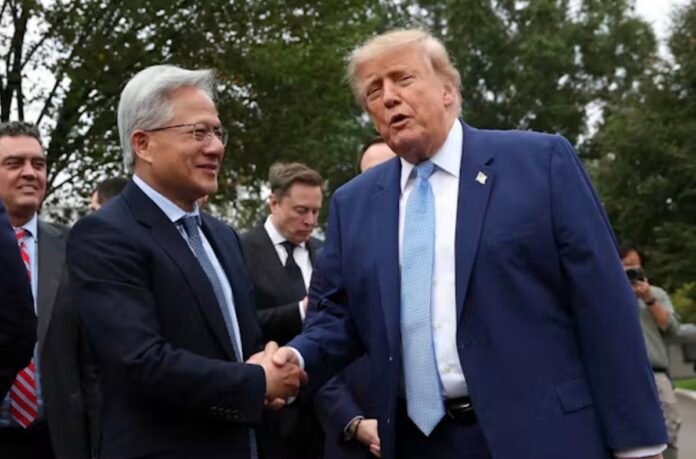
Just 11 days after resigning as chip maker Nvidia’s chief executive, Jensen Huang has been rehired by the company he co-founded, vowing “I’m going to be a better CEO the second time around.”
The company’s board said its unexpected, unanimous decision came after “input from senior levels of the United States government.”
US President Donald Trump went even further, declaring in an interview that he “convinced them” to bring Huang back. The company had bluntly ruled out Huang’s return just days ago.
But why would a US president meddle so openly in the world’s second-most valuable company? And why does the leader of Nvidia matter beyond the US – including the speed at which data centres are built worldwide?
A trillion-dollar turnaround
Nvidia’s stocks plunged after Huang announced his resignation on November 12, following reports of extramarital affairs, one with a woman identified by US intelligence as being in touch with China’s top spy agency and another with an Nvidia employee. Both raised concerns about Huang’s judgement as CEO.
Nvidia’s stock closed at US$174 a share on November 11, the day before Huang quit. Within eight days, the share price had fallen to about $126, knocking as much as $1.2 trillion off its market value – and dragging down the wider US share market.
On the day of Huang’s return, the company’s shares surged 31% to $165, pushing its market valuation back up by nearly $1 trillion.
The relationship between the US government, Nvidia and other tech companies has become really entangled.
Even so, it’s extraordinary for a president to have called one of the world’s most valuable companies and told its board to reinstate the CEO. It’s hard to imagine any president other than Trump doing that.
As an economist, I think in terms of incentives. On Nvidia, I believe Trump had four main incentives to weigh in.
First, there’s the obvious economic impact of Nvidia’s falling share price on the wider US stock market.
Asked if last week’s AI selloff was a factor in his push to reinstate Huang as CEO, Trump said: “Probably so, but the bigger impact was the long term.” Trump added “I made the deal” and that his intervention was “very important” to Huang’s return.
Then there’s a political incentive. There’s been growing talk in the media in recent months about the “AI bubble” bursting. The wobbles in AI stocks became especially noticeable when Nvidia lost about one-third of its market capitalization after Huang’s resignation.
All of those losses threaten the perception that markets do well under Trump – a claim he’s long made. While Trump’s intervention in Nvidia is extraordinary by historical standards, it’s not the first time his administration has significantly intervened in the market.
Under Trump, the US government last year took a 10% stake in Intel. It has also bought 10–15% stakes in other tech-related companies, especially miners of critical minerals needed for AI.
The success of AI and tech-related mining companies has become inextricably tied to this administration.
Then there’s a personal incentive.
The Financial Times reported the surge in Nvidia’s share price on Monday could have made Trump between $1.3 million and $15 million. That’s based on his most recent financial disclosures, which show Trump may have owned as many as 370,000 shares at September 30.
Finally, there’s Trump’s personal relationship with Huang. It’s been reported he takes Huang’s advice on all things AI to a significant extent, both in private and in public. For instance, Huang recently took a phone call from Trump while on stage.
Huang has been one of the few AI industry leaders who hardly mentions potential downsides of AI. Trump has shunned mentions of AI doomsday scenarios or the need for greater safety.
Why does this matter globally?
Under Huang, Nvidia has become the central bank of AI: fuelling the AI boom, both with its advanced chips and its funding of tech firms that need those chips.
Nvidia is a cash-rich company, with enormous profit margins.
Many well-known tech companies that buy Nvidia chips, such as Anthropic and OpenAI, are still comparatively cash poor. They have huge spending commitments and need someone to fund them.
The companies then use the money Nvidia provides as an investor to buy Nvidia chips. The better they do, the more chips they buy – and the better Nvidia does. Nvidia has also been a crucial investor in data centers, providing $228 billion in guarantees, leases and investments for data center providers.
But what happens if investors lose confidence in AI? Nvidia’s “circular financing” arrangements mean it’s extremely exposed to the AI industry overall, both on the data centre side and among the AI companies.
After Huang resigned, Nvidia’s chief financial officer, Colette Kress, was appointed as interim CEO.
Kress – who’s staying on as CFO – has reportedly been an important counterweight to Huang on risky financing deals. According to several media outlets, Kress renegotiated a proposal for Nvidia to provide $250 billion in guarantees for an OpenAI data center in Ohio, instead cutting that commitment in half.
However, Kress is not universally opposed to circular financing. In August she publicly defended Nvidia’s approach, saying “we know some will call this circular financing. We see it differently”.
Why does that history matter? Because if Kress or someone other than Huang had been CEO, investment in AI might have slowed. That would have real-world impacts well beyond the US, including how quickly data centers expand worldwide.
Huang has been the world’s best-known salesman of AI. Now that he’s back as CEO, his incentives – like Trump’s – are the same as before his resignation. Hype up AI’s future, shut down criticism of it and keep the circular finance flowing.
Iran blacklists 26 tugboats operating in Strait of Hormuz
Iran blacklisted 26 tugboats operating in the Strait of Hormuz for providing services to vessels using an alternative southern route through the strategic waterway, Anadolu reports.
The Gulf Waterway Management Authority, an Iranian body established to regulate vessel traffic through the Strait of Hormuz, announced the measure Tuesday in a statement on the US social media platform X.
The authority said the decision followed reports received from individuals living in countries south of Iran, as well as field monitoring that it said showed the tugboats were assisting ships using the alternative southern route through the strait.
It also published the names of the blacklisted tugboats, their International Maritime Organization numbers and the flags they sail under.
A tugboat is a relatively small but powerful vessel used to tow larger ships and assist them with movement and maneuvering, particularly in ports and narrow waterways.
The US and Israel launched a war against Iran on Feb. 28, prompting Tehran to retaliate with attacks on Israel and US military facilities in Arab countries.
Washington and Tehran signed a memorandum of understanding on June 18, but its implementation later stalled amid disagreements, including over guarantees for freedom of navigation through the strategically important Strait of Hormuz.