Home Blog

The world may or may not be entering ‘Beijing time’

0
the-world-may-or-may-not-be-entering-‘beijing-time’
The world may or may not be entering ‘Beijing time’

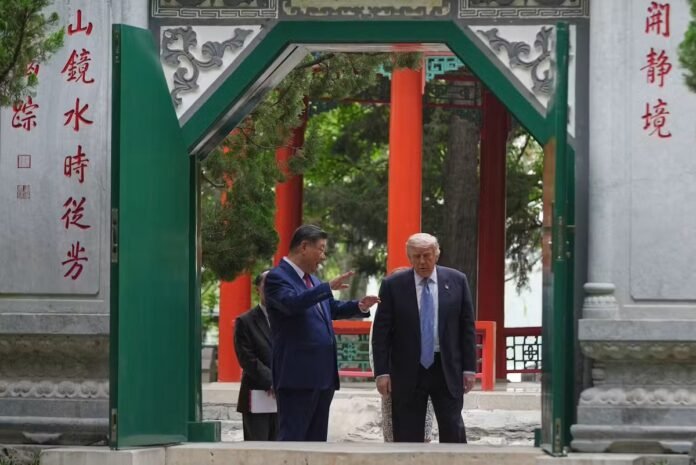
In recent weeks, the back-to-back state visits to Beijing by Russian President Vladimir Putin and US President Donald Trump have put China in the global spotlight.

For some international analysts, the summits showcased China as a “stabilising force capable of hosting two major rivals within days”, a “broker between the big powers” and a “pillar of global stability.”

To others, the visits highlighted how China is becoming an “indispensable global power” and President Xi Jinping a “world leader to be reckoned with and courted.”

Chinese analysts, meanwhile, noted that over the past six months, numerous other world leaders have visited Beijing, including those from France, Britain, Canada, South Korea and Germany. Crucially, some leaders returned after long gaps.

It was the first visit in eight years by a UK prime minister, for example. And the first visit in nine years for a Canadian, South Korean and American leader.

With all these visits happening one after another, Chinese media described the Chinese capital as an international “living room” that provides stability in a turbulent world. Another headline read, “The world is entering ‘Beijing time.’”

Beyond the optics

While this has undeniably been a big moment on the global stage for Beijing, these interpretations miss three important points.

First, it is unclear whether world leaders are visiting China because of proactive Chinese diplomacy or as a way of gaining leverage in dealings with the Trump administration.

For example, when Canadian Prime Minister Mark Carney visited Beijing in January, it was widely interpreted as a response to Canada’s structural dependence on the US and the volatility of the second Trump administration. Some media said he was playing the “China card” to negotiate better terms with the US.

Second, Beijing sets a high “entry price” for visits to its “living room”. Occasionally, these summits have been linked to major policy shifts by visiting dignitaries.

When Trump visited Beijing, for instance, he backtracked on earlier calls to block Chinese nationals from buying farmland in the US and to impose limits on the number of Chinese students at US universities. Chinese media highlighted the negative reactions these concessions got from Trump’s MAGA base and other Republicans in the US.

Similarly, Carney’s visit to China resulted in a trade deal reducing tariffs on made-in-China electric vehicles to 6.1% for the first 49,000 cars annually.

In late 2024, Canada had imposed a 100% tariff on Chinese EVs. Months later, during the 2025 election, Carney called China the biggest threat “from a geopolitical sense.”

Carney’s concession on electric cars drew criticism back home. Politicians warned it would invite a “flood of cheap made-in-China electric vehicles”, without guarantees of investment in Canada’s economy.

Finally, these visits by foreign leaders have clearly not changed China’s core foreign policy positions.

The appeals of European leaders did not, for example, change Beijing’s material support for Russia’s war in Ukraine. Nor did they reduce China’s large trade surplus with the European Union.

Similarly, Beijing did not agree to assist the Trump administration on Iran, despite Trump’s praise for Xi’s leadership and his decision to pause a weapons sale to Taiwan.

And even Putin failed to resolve disagreements over the Power of Siberia 2 pipeline, a project long sought by Putin. If built, the pipeline could carry 50 billion cubic metres of Russian natural gas annually to China, or about 12% of China’s gas use in 2025.

Visibility without influence?

The recent influx of international leaders to China may instead be a reflection of growing uncertainty in the global order.

The dramatic shifts in US foreign policy under the Trump administration have prompted a great deal of concern among Washington’s traditional allies. It’s also provided an opportunity for China to project itself as a stable partner after years of pursuing its more aggressive, wolf-warrior diplomacy.

But these visits do not prove China’s diplomatic efforts have become more effective. Domestic economic pressures and competing international priorities still limit what Beijing can realistically deliver.

For example, to prevent factory closures and meet growth targets, Beijing channels massive state subsidies into certain manufacturing sectors. This creates surplus output that is exported globally – including to the EU – at artificially low prices. China can’t afford to rein these exports in.

At the same time, China has continued to support Russia and Iran in challenging the US and Europe’s security, despite the importance of these Western markets to China’s economic development.

As a result, high-profile meetings in Beijing produce ceremony and pomp, but deliver limited concrete outcomes.

These recent visits by Trump, Putin and other world leaders have certainly made China appear more central to global diplomacy. But this visibility does not necessarily translate into effective global leadership.

Czeslaw Tubilewicz is senior lecturer, Department of Politics and International Relations, Adelaide University

This article is republished from The Conversation under a Creative Commons license. Read the original article.

Lawmakers Ask DOJ Watchdog to Investigate Alleged Drugs-for-Votes Scheme After ProPublica Report

0

Puerto Rico’s representative in Congress and four other members of the House of Representatives have asked the Department of Justice’s Office of the Inspector General to investigate why a federal probe into a prison drugs-for-votes scheme was abandoned after the 2024 elections. 

“Credible allegations of election fraud uncovered through federal investigative work warrant serious scrutiny and transparent explanation,” the members of Congress wrote in the May 20 letter, adding that it was essential for “public confidence in democratic institutions” that such claims are handled consistently, “regardless of the political actors involved.” 

The letter was signed by Resident Commissioner Pablo José Hernández Rivera, a Democrat and member of Puerto Rico’s Popular Democratic Party, as well as Reps. Robert Garcia, D-Calif., ranking member of the House Oversight Committee; Nydia Velázquez, D-N.Y.; Adriano Espaillat, D-N.Y., chair of the Congressional Hispanic Caucus; and Jesús “Chuy” García, D-Ill., a member of the House Judiciary Committee.

Their request follows a ProPublica investigation that published earlier this month detailing how prosecutors had uncovered a drugs-for-votes scheme being run by a violent gang in Puerto Rican prisons and were deep into looking at whether now-Gov. Jenniffer González-Colón or her campaign were involved. In the days following President Donald Trump’s election in 2024, as prosecutors prepared the indictment, they were told by supervisors in the U.S. Attorney’s Office for the District of Puerto Rico to exclude the voting-related charges against inmates and prison staff, four sources with knowledge of the investigation told ProPublica. Then, once Trump took office, they were told to abandon the probe into potential political ties entirely, the sources said.

In their letter, the members of Congress urged the inspector general to examine the Justice Department’s decision to not pursue charges related to election fraud “despite reported findings and evidence.” They added that the failure to further investigate contradicts the Trump administration’s “repeated emphasis on prioritizing election integrity and election security as federal enforcement priorities,” in addition to deeming drug traffickers threats to public safety and democratic institutions. 

Initially, Hernández Rivera sought a House Judiciary Committee investigation into the issue but then decided the inspector general’s office would be a better avenue. 

“This has always been about following the facts and ensuring there is accountability,” he said in an email to ProPublica. “Given the concerns raised about the DOJ’s handling of the investigation and prosecutorial decisions, we believe an Inspector General review is the appropriate mechanism to independently examine what occurred and whether standards were applied consistently.”

The letter was addressed to Don Berthiaume, who had been serving as acting inspector general and has been nominated for the position. While his confirmation is pending, William Blier, the deputy inspector general, is leading the office. 

The inspector general’s office has jurisdiction over misconduct by Justice Department employees, including the Bureau of Prisons, the Federal Bureau of Investigation and the Drug Enforcement Administration. However, it does not oversee allegations of attorney misconduct, which are handled by the Office of Professional Responsibility, unless the allegations include criminal behavior. The inspector general’s office declined to comment on the letter.  

González-Colón, a longtime Republican and member of the pro-statehood New Progressive Party, has declined repeated requests for interviews by ProPublica. In a previous statement, she denied any wrongdoing and said she “has stood firmly against corruption” throughout her career and political campaigns. “I categorically reject any attempt to link me to unlawful conduct,” she said. She also told local news outlets she didn’t think any investigation into the matter is warranted. González-Colón has not been charged with any crime. 

Read More

An indictment filed in December 2024, while Joe Biden was still president, charged 34 members of a gang, known as Group 31 or Los Tiburones, and associates with crimes including drug distribution resulting in at least four overdose deaths. The indictment also alleged that the gang connected with government officials “for the purpose of reducing prison sentences” and told inmates “who to vote for in primary and general elections.” But the indictment included no charges related to the drugs-for-votes scheme.

Sources familiar with the investigation said gang leaders forced inmates to vote for González-Colón or face brutal beatings, or be cut off from the drugs they were addicted to. Prosecutors said they had evidence that González-Colón had spoken with one of the prison gang leaders on WhatsApp during the primary campaign and were pursuing other potential ties when they were instructed not to look any further, people with knowledge of the investigation told ProPublica. 

W. Stephen Muldrow, U.S. attorney for the District of Puerto Rico, said his office does not comment on open cases. While a couple of defendants have made plea agreements, most of the cases are still pending. 

A spokesperson for his office, Lymarie Llovet-Ayala, told ProPublica in a previous email that charging corrupt public officials “has always been and remains a top priority” of the office. 

Bangladesh’s JF-17 fighter bid rattles India’s eastern flank

0
bangladesh’s-jf-17-fighter-bid-rattles-india’s-eastern-flank
Bangladesh’s JF-17 fighter bid rattles India’s eastern flank

Bangladesh’s possible purchase of the JF-17 is turning a routine fighter jet buy into a dangerous new flashpoint in the escalating India-China-Pakistan power struggle.

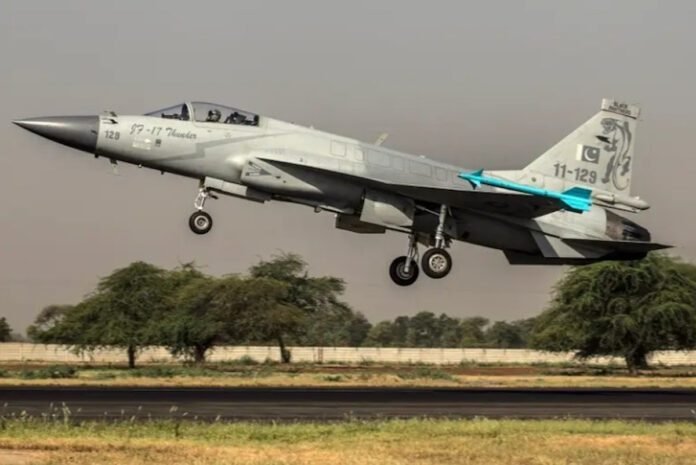
This month, the South China Morning Post (SCMP) reported that Bangladesh could heighten security tensions with India by acquiring the China-Pakistan jointly developed JF-17 Thunder Block III fighter.

Those concerns were sparked after Pakistani media reported that the country has transferred a fully operational JF-17 flight simulator to Bangladesh, a move experts described as a strong indication that Bangladesh is preparing to procure the aircraft.

Developed by Pakistan Aeronautical Complex and China’s Chengdu Aircraft Corporation, the JF-17 is viewed as a cost-effective multirole fighter equipped with beyond-visual-range missile capability and modern avionics, potentially allowing Bangladesh to replace its aging MiG-29 and F-7 fleets and significantly improve its air combat capacity.

The acquisition would not overcome India’s regional air superiority but could narrow the capability gap and complicate Indian military planning, particularly around the strategically vital Siliguri Corridor, which links India to its northeastern states.

The development comes amid strained India-Bangladesh ties following Bangladesh’s demand for the extradition of former Prime Minister Sheikh Hasina, who fled to India after her 2024 ouster.

Deeper Bangladesh-Pakistan defense ties could intensify Indian suspicions, trigger stronger military deployments and heighten risks of strategic miscalculation, even if outright conflict remains unlikely.

As of May 2026, the Bangladesh Air Force has only 44 fighter aircraft, 36 of which are aging  F-7s, with the remaining 8 being MiG-29s. That small force pales in comparison to the Indian Air Force, which, as of February 2026, operates 29 fighter squadrons.

Assuming each squadron has 18 fighters, India may have an estimated frontline fleet of 522 combat aircraft, including Dassault Mirages, Dassault Rafales, Su-30 MKIs and HAL Tejas fighters, among other types.

Although India overwhelmingly outmatches Bangladesh’s airpower, the latter’s possible acquisition of JF-17s could enable it to patrol its airspace and maintain its aerial warfare capabilities – routine tasks that may become increasingly difficult as its fighter fleet ages.

The deal would further cement Bangladesh’s status as one of China’s biggest arms customers. Aside from F-7 fighters, the country operates two Type 035 Ming-class submarines, two Type 053H3 and two Type 053H2 frigates, four Type 056 corvettes and substantial numbers of Chinese-origin armored fighting vehicles, artillery and air defense systems.

Bangladesh’s extensive reliance on Chinese weaponry could give China significant long-term influence over its defense posture and procurement decisions. Its high-end Chinese-origin systems are likely to depend on Chinese spare parts, maintenance, training and software updates, potentially deepening that reliance over time.

Furthermore, Bangladesh’s location near the Siliguri Corridor, a 60-kilometer-long, 20-kilometer-wide strip of land connecting India’s northeastern states to the rest of the country, poses a significant strategic vulnerability for India.

A Chinese advance from the nearby disputed territories of Arunachal Pradesh could cut off India from its northeastern states and access to the Bay of Bengal.

Ashish Kumar Gupta notes in a February 2025 report for the Center for Joint Warfare Studies (CENJOWS) that Bangladesh’s potential acquisition of Chinese fighter jets could alienate India while giving China strategic leverage to counter India’s regional influence.

Gupta notes that Bangladesh’s possible acquisition of JF-17 fighters could deepen relations with Pakistan, strengthen China’s efforts to bring Bangladesh into its sphere of influence and compel India to secure its border with Bangladesh with greater urgency, thereby requiring the reallocation of military resources. He also adds that Bangladesh could be used to tie down scarce military resources during hostilities with India.

Hasina’s 2024 ouster also reshaped the geopolitical backdrop to Bangladesh’s possible JF-17 acquisition. Byron Chong, in an August 2024 article for the Lee Kuan Yew School of Public Policy, notes that her foreign policy rested on close cooperation with India while balancing ties with China.

Chong notes that under her tenure, India-Bangladesh relations entered a proclaimed “golden era,” with Bangladesh aligning with India on key issues, dismantling camps used by Indian separatists, combating radical Islamic groups and disrupting Pakistan’s Inter-Services Intelligence (ISI) network in Bangladesh.

He also notes that Hasina balanced relations with China while accommodating Indian sensitivities by scrapping the China-backed Sonadia port project and selecting India for the Teesta River project.

However, he says that Hasina’s ouster resulted from increasingly authoritarian tendencies, crackdowns on opposition and civil society groups, and the resulting mass protests.

As noted by P.K. Vijayakumar in a December 2025 article in the peer-reviewed IOSR Journal of Humanities and Social Science, Hasina’s ouster created strong anti-India and anti-Hindu sentiments in Muslim-majority Bangladesh, producing violence against the Hindu minority and constituting a major setback for Indian diplomacy.

Vijayakumar mentions that after Hasina’s ouster, Bangladesh showed a clear trend of de-Indianization, terminated agreements signed during Hasina’s administration, delayed India-led regional initiatives and reduced dependence on India.

He adds that Bangladesh strengthened ties with Pakistan and China to safeguard its strategic autonomy, while India’s support for Hasina and refusal to extradite her intensified tensions.

Mohosina Mostofa notes in a July 2024 report for the Bangladesh Institute of Peace and Security Studies (BIPSS) that post-Hasina Bangladesh faces the challenge of preserving strategic autonomy amid growing external pressures from competing powers seeking to draw Bangladesh into their orbit. She also notes that Bangladesh risks achieving short-term economic development at the expense of long-term strategic constraints.

However, Nihar Nayak notes in a March 2026 commentary for the Manohar Parrikar Institute for Defense Studies and Analyses (MP-IDSA) that India views changes in Bangladesh with concern because of its shift toward a more neutral foreign policy, while China is expected to double down on its economic statecraft through Belt and Road projects and infrastructure investments.

China frequently blends military cooperation with economic assistance, including support linked to Pakistan’s transfer of a JF-17 simulator to Bangladesh. He also notes that India is concerned about increasing Pakistani involvement in post-Hasina Bangladesh, which could threaten India’s strategic interests in the Bay of Bengal and along its often volatile northeastern border.

If Bangladesh ultimately acquires the JF-17, the deal may matter less for the aircraft themselves than for what they symbolize: a post-Hasina strategic realignment pulling Bangladesh deeper into the intensifying India-China-Pakistan rivalry.

For India, the greater danger may not be waning air superiority but the loss of political influence over a neighbor once central to its regional security architecture.

Netanyahu threatens to expand offensive in Lebanon as Washington signals support

0
netanyahu-threatens-to-expand-offensive-in-lebanon-as-washington-signals-support
Netanyahu threatens to expand offensive in Lebanon as Washington signals support

Israeli Prime Minister Benjamin Netanyahu threatened on Monday evening to expand Israel’s military offensive in Lebanon.

In a video statement, Netanyahu said: “We will not back down — quite the opposite. I said: press the accelerator in Lebanon. We will hit them, we will hit them head-on.”

Netanyahu acknowledged that Hezbollah was using fibre-optic drones against Israel, saying: “It is true, they are launching drones at us, drones operating with fibre-optic technology.” He added: “We have a specialised team handling this matter.”

Meanwhile, Israeli journalist Barak Ravid said in a post on X that a senior US official had indicated Washington would support an escalation in Israeli military action against Hezbollah in Lebanon.

According to Ravid, the US remarks came amid an escalation in Hezbollah attacks, ignoring repeated requests to stop firing at Israel. The official said Hezbollah had launched more than 1,000 drones and over 700 rockets since 17th April.

READ: Netanyahu allies push to bar Arab party from Israeli elections

Brent oil gains 2% as US military strikes on Iran add to uncertainty on potential peace deal

0
brent-oil-gains-2%-as-us-military-strikes-on-iran-add-to-uncertainty-on-potential-peace-deal
Brent oil gains 2% as US military strikes on Iran add to uncertainty on potential peace deal


Brent crude futures rose over 2% in Asian trade on Tuesday after the U.S. military carried out strikes in Iran, keeping markets on edge ​as a deal to end the war and open up the Strait of Hormuz remained ‌elusive.

Brent futures were up $1.98, or 2.1%, to $98.12 a barrel as of 0405 GMT, after settling 7% lower in the previous session.

U.S. West Texas Intermediate crude was at $91.79 a barrel, up slightly from Monday’s last traded price but down $4.81, or 5%, from Friday’s close. There was no settlement on Monday due to the ​U.S. Memorial Day holiday.

While both contracts fell during the overnight session on hopes of a peace ​deal, the U.S. strikes in southern Iran and Israeli attacks on Hezbollah have boosted Brent ⁠prices and widened the spread with WTI, said Michael McCarthy, CEO of online trading platform Moomoo Australia.

U.S. ​Secretary of State Marco Rubio said on Tuesday that negotiating a deal with Iran could “take a few days,” quashing hopes ​for an imminent end to the conflict a day after U.S. forces conducted what Washington called defensive strikes in southern Iran.

Tehran has effectively halted nearly all non-Iranian shipping into and out of the Gulf via the Strait of Hormuz since the war began, choking ​off about a fifth of global oil and liquefied natural gas flows.

The strikes happened as Iran’s top negotiator and ​its foreign minister were in Doha for talks with Qatar’s prime minister on a potential deal with the U.S. to end the ‌three-month-old ⁠war.

Both Washington and Tehran said they have made progress on a memorandum of understanding that would halt the war and give negotiators 60 days to reach a final deal.

Nikkei reported, citing a Middle East diplomatic source, that Iran would clear mines from the strait within a 30‑day window under the agreement, after which vessels from all countries could ​navigate freely and safely, ​with Tehran also ending ⁠transit fee collection.

“Traders are betting heavily that a breakthrough will finally free up the long-paralyzed tankers stuck in and around the Strait of Hormuz,” said Tim Waterer, chief ​market analyst at KCM Trade.

Ship-tracking data showed that three liquefied natural gas tankers passed ​through the strait ⁠in recent days, heading to Pakistan, China and India, along with a supertanker carrying Iraqi crude to China that had been stranded for nearly three months.

U.S. President Donald Trump on Monday repeated his demand that Iran hand over its ⁠enriched uranium ​so it could be destroyed.

“It’s a sharp reminder that the deal ​could still collapse at the eleventh hour, much like the five previous attempts before it,” said Tony Sycamore, a market analyst at IG.

Via Reuters

Meghan Markle Copies Princess Diana with Emotional Speech

0
meghan-markle-copies-princess-diana-with-emotional-speech
Meghan Markle Copies Princess Diana with Emotional Speech


Meghan Markle is once again at the center of a royal firestorm.

The Duchess of Sussex delivered an emotional speech in Geneva, Switzerland, on Sunday, May 17, warning about the dangers children face online, including eating disorder content, self-harm messages, and the growing threat of artificial intelligence.

But instead of receiving universal praise, Meghan’s remarks quickly sparked a furious debate.

Critics accused the former Suits actress of leaning into one of the most painful chapters of Princess Diana’s life: her battle with bulimia.

The 44-year-old duchess spoke at the Place des Nations as she helped unveil The Lost Screen Memorial, an installation dedicated to children who died after being exposed to alleged online harms.

Standing before the memorial, Meghan warned that young people are being pushed into dangerous corners of the internet by powerful social media algorithms designed to keep them scrolling.

“Children today are being shaped by systems designed to capture attention at any cost: relentless algorithms, exploitative engagement, and endless exposure to harmful content that they are not seeking out,” she said.

Her message was emotional. Her delivery was dramatic. And for some royal watchers, the subject matter instantly brought Diana back into the conversation.

A source familiar with the reaction said some critics believe Meghan knew exactly what kind of royal comparison her speech would stir up.

“There were definitely people who felt Meghan’s speech carried emotional parallels to Diana’s very public struggle with eating disorders and mental health,” the insider said.

“Critics believe she understands exactly how powerful those associations are and that invoking subjects so closely linked to Diana inevitably reignites comparisons between the two women.”

Diana famously spoke about her struggle with bulimia before her tragic death in 1997. In secretly recorded tapes for biographer Andrew Morton, the late princess revealed that her eating disorder began shortly after her engagement to then-Prince Charles in 1981.

Diana said she felt crushed by royal pressure, public scrutiny, and painful comments about her appearance as she navigated her troubled marriage and Charles’ relationship with Camilla.

Now, Meghan’s decision to speak so forcefully about body image, online pressure, and eating disorder content has brought those painful memories roaring back.

The duchess described one disturbing case involving a “joyful and athletic young girl” who searched online for healthy recipes, only to allegedly be fed a stream of body dysmorphia content and pro-anorexia videos.

She also spoke about a teenager named Katie, who she said had been “hospitalized for months with a severe eating disorder,” and another child named Mason, who was allegedly exposed to suicide-related content after a breakup.

“These stories are not isolated,” Meghan said. “They are consistent. And they are not the fault of the child, nor the parent.”

Supporters of the duchess insist the backlash is unfair.

They argue Meghan was not trying to evoke Diana, but was instead speaking about a very real crisis facing parents and children in the digital age.

A source close to the Sussexes said Meghan has become increasingly passionate about online safety after meeting families whose children were harmed by social media content.

“Meghan genuinely believes social media companies are failing children,” the insider said. “She feels strongly that parents have been left to manage an impossible situation without enough protection or accountability from tech platforms.”

The source added that Meghan sees artificial intelligence as another looming danger.

“She sees this as a major issue that will only become more dangerous with AI,” the insider said.

Still, Meghan’s critics were not letting the Diana comparison slide.

For years, the Duchess of Sussex has been accused by detractors of drawing parallels between herself and Prince Harry’s late mother. Harry himself has repeatedly spoken about seeing similarities between Meghan and Diana, particularly in how both women were treated by the press.

That history has made any overlap in theme or tone explosive.

One royal observer said that whenever Meghan speaks about vulnerability, media pressure, or emotional pain, the shadow of Diana is never far behind.

“Others close to Meghan insist that interpretation is unfair and that she was speaking about a genuine public health crisis affecting children online,” the insider said. “But there’s no question that whenever issues like body image, vulnerability and media pressure are discussed by Meghan, the Diana comparisons immediately return.”

During the ceremony, Meghan attempted to turn the focus back to the children whose lives were represented by the memorial.

“Behind me stands The Lost Screen Memorial,” she said.

“Each name belonged to a child who was loved beyond measure. A child whose laughter once filled a kitchen. Whose shoes once waited by a front door. Whose future once felt limitless.”

She then compared the online safety crisis to other public dangers that governments have acted to prevent.

“We did not tell parents to create their own seatbelts,” Meghan said. “We did not ask children to test unsafe medicine. We did not shrug at poisoned water or defective toys and call it the price of progress. We acted. And now the world must act again.”

The speech was clearly meant to sound urgent and moral.

But with Meghan, almost nothing stays simple.

What began as a warning about social media, AI, and children’s safety quickly became another chapter in the never-ending royal debate over Meghan, Diana, and the image the Duchess of Sussex wants the world to see.

US Launches New Strikes in Southern Iran as Qatar Talks Continue 

0
us-launches-new-strikes-in-southern-iran-as-qatar-talks-continue 
US Launches New Strikes in Southern Iran as Qatar Talks Continue 


The United States launched what it described as “self-defense” strikes in southern Iran targeting missile launch sites and boats attempting to lay mines, as Iranian negotiators arrived in Qatar for talks aimed at ending the war and reopening the Strait of Hormuz. 

Capt. Tim Hawkins, a spokesman for US Central Command, said American forces carried out the strikes to respond to threats against approximately 20 US warships, including two aircraft carriers and accompanying vessels operating in the Gulf of Oman and the Arabian Sea. 

“US Central Command continues to defend our forces while using restraint during the ongoing cease-fire,” Hawkins said. 

Iranian news agency Mehr earlier reported explosions in the southern port city of Bandar Abbas. 

The Pentagon said the military action followed what it described as a surface-to-air missile threat directed at US naval forces in the region. 

The renewed strikes took place as Iranian negotiators arrived in Qatar for discussions on a proposal that President Trump has said could reopen the Strait of Hormuz. The talks focused on an initial document that US and Iranian negotiators were continuing to revise. 

US Secretary of State Marco Rubio said on Monday that negotiations remained active despite disagreements over the wording of the draft proposal: “Talks were held today in Qatar. I think there is a lot of back-and-forth over specific wording in the initial document. Negotiation on the text may continue for several days.” 

Rubio also linked the negotiations to maritime access through the Strait of Hormuz following the latest US military operation in southern Iran: “The Strait of Hormuz must be open. It will be opened one way or another.” 

Perilous logic behind Indonesia’s commodity export funnel

0
perilous-logic-behind-indonesia’s-commodity-export-funnel
Perilous logic behind Indonesia’s commodity export funnel

JAKARTA – When President Prabowo Subianto rose before Indonesia’s plenary parliamentary session on May 20, 2026, few foresaw that he would deliver an address that will inevitably shift the world’s fourth most populous nation’s economic destiny.

In the speech, the leader announced the most consequential restructuring of the country’s commodity export architecture in a generation — one that will funnel Indonesia’s strategic natural-resource wealth through a single, centralized, state-controlled gate.

At the center of this resource-nationalism ambition is PT Danantara Sumberdaya Indonesia (DSI), a state-owned enterprise placed at the heart of a new centralized export system under the sovereign investment fund BPI Danantara.

The move reflects the Prabowo government’s drive to reclaim economic sovereignty under Article 33 of Indonesia’s Constitution. Yet it also raises a far more pressing question: whether Indonesia’s domestic market institutions are capable of absorbing the shockwaves such a radical restructuring will unleash.

Prabowo’s extraordinary move stems from deep frustration in Jakarta over decades of financial leakages in the commodity sector. Data from the United Nations and the World Bank suggest that Indonesia may have lost as much as US$908 billion in foreign-exchange earnings between 1991 and 2024 due to export manipulation.

The leakages allegedly flowed through under-invoicing, physical volume manipulation and transfer pricing schemes routed via shell companies in tax-friendly jurisdictions such as Singapore.

The intellectual foundation for the new policy was strengthened by an artificial intelligence-based investigation initiated by Finance Minister Purbaya Yudhi Sadewa, together with the ministry’s National Single Window Agency (LNSW). A random AI-run audit of ten major commodity exporters reportedly uncovered recurring patterns.

Although shipments sailed directly from Indonesian ports to the United States, the export documentation was deliberately rerouted through subsidiaries in Singapore. Comparisons between Indonesia’s export declarations and actual import records in the US revealed commodity prices at destination ports that were nearly double the values reported domestically, reinforcing suspicions that export proceeds were being retained offshore.

To plug those leakages, PT DSI has been designed to operate in two aggressive phases. During the first phase, which runs until December 31, 2026, the company will act as a transaction supervisor and export document verifier for coal, crude palm oil and ferroalloys such as aluminum.

Beginning January 1, 2027, however, PT DSI will transform into a full-fledged sole trader operating under a “buy-and-own” mechanism. Producers will be required to sell commodities domestically to PT DSI, which will then handle all exports directly and receive 100% of export proceeds in foreign currency.

Repackaged state capitalism

The single-gate export policy suffers from several structural flaws. First, it reflects a classic fallacy of composition.

Because AI-driven audits identified irregularities among a limited sample of companies, the government has effectively imposed state control over the entire national commodity industry. Such coercive intervention punishes compliant firms alongside violators.

Second, the policy commits a category error. Foreign exchange leakages caused by under-invoicing are fundamentally failures of customs enforcement and regulatory oversight. Yet instead of reforming customs institutions, the government has chosen to dismantle market competition and replace it with a state trading monopoly.

This form of state capitalism risks replacing market failure with state failure. Indonesia’s own history offers a cautionary precedent. During the New Order era, the government established the Clove Support and Trading Board (BPPC) under the pretext of stabilizing prices and protecting farmers.

In practice, the system depressed farm-gate prices, encouraged smuggling, and concentrated profits among politically connected rent seekers. Concerns about historical repetition are hardly exaggerated, given the striking similarities between the BPPC model and the proposed PT DSI structure.

The policy’s internal contradictions become even more glaring when examining the upstream oil and gas sector, which has been permanently exempted from both export centralization and foreign exchange retention obligations.

Energy Minister Bahlil Lahadalia justified the exemption on the grounds of preserving investment certainty for long-term production-sharing contractors.

The upstream oil and gas sector, he argued, is already tightly supervised by SKK Migas, leaving little room for fraud. The exemption exposes a fundamental paradox. If compliance in the oil and gas sector can be secured through administrative oversight without imposing a state monopoly, why should coal and palm oil require an entirely different framework?

The Ghana lesson

Indonesia’s export centralization plan resembles institutions such as Ghana’s Cocoa Board (COCOBOD), which maintains monopoly control over cocoa exports. COCOBOD has indeed been relatively successful in limiting export misreporting compared with Ghana’s more liberalized gold sector.

Yet the broader record is far less flattering. COCOBOD has long struggled with bureaucratic inefficiencies, chronic liquidity shortages, and widespread cocoa smuggling triggered by subsidy delays. As a result, Ghana’s cocoa productivity has remained substantially below global averages.

From the perspective of international trade law, PT DSI’s status as a State Trading Enterprise (STE) would also be subject to significant constraints under Article XVII of the 1994 General Agreement on Tariffs and Trade (GATT), which requires state trading entities to operate solely on commercial considerations.

The financial mismatch between government ambition and PT DSI’s actual capacity is equally alarming. Indonesia’s mining sector alone contributed 2.2 quadrillion rupiah (US$124 billion), or roughly 10.5% of national GDP, in 2023. Palm oil exports in 2025 were valued at approximately 590 trillion rupiah ($33.2 billion).

Under the second phase of the scheme, PT DSI would need to provide enormous working capital to purchase commodities upfront from domestic producers before shipment. That would require hundreds of trillions of rupiah in readily available liquidity every year.

Yet PT DSI reportedly begins with only minimal capitalization. Attempting to run such a massive centralized trading operation without deep financial reserves could easily trigger transaction bottlenecks at ports and disrupt commodity flows.

Mounting economic risks

The market reaction to the May 20 policy announcement was immediate. Indonesia’s benchmark stock index reversed sharply, suffering significant losses, as investors worried about shrinking business flexibility and rising compliance burdens for commodity exporters.

More importantly, the policy threatens Indonesia’s foreign direct investment climate. In 2025 alone, downstream mining industries attracted 373.1 trillion rupiah ($21 billion) in investment, while palm oil downstream projects secured 35.9 trillion rupiah ($2 billion) in the third quarter alone.

A single-gate export monopoly undermines legal certainty, raises the cost of capital, and risks driving foreign investors toward competing commodity producers. The policy may also complicate Indonesia’s ambition to secure full membership in the Organisation for Economic Co-operation and Development in July 2026.

OECD accession requires adherence to the principle of competitive neutrality, which prohibits governments from granting state-owned enterprises unfair privileges that distort market competition. PT DSI’s monopoly structure runs directly against that principle.

Compounding the problem, BPI Danantara’s governance framework appears inconsistent with OECD anti-corruption and integrity standards. Concerns range from overlapping ministerial roles to exemptions from wealth disclosure requirements and legal protections shielding certain financial management losses from state-loss investigations. Such governance anomalies place Indonesia in an increasingly defensive position internationally.

Over the medium term, Indonesia’s strategic commodity exports may suffer declining volumes due to mounting bureaucratic friction. Coal exports had already contracted by 21.74% in early 2025 amid weakening demand from India and China.

Additional regulatory friction could encourage buyers to shift contracts toward competitors such as Australia or Russia. In the palm oil sector, global buyers may increasingly favor Malaysia, which continues to operate under a relatively open-market system.

Indonesia, therefore, risks permanently losing global market share, facing trade retaliation in the form of higher tariffs, and becoming entangled in prolonged disputes at the World Trade Organization. The solution to foreign exchange leakage is not the destruction of market mechanisms through state monopoly.

It lies instead in strengthening AI-based customs enforcement, optimizing the National Single Window system and improving export proceeds compliance through transparent and credible regulatory supervision.

Ronny P. Sasmita is a senior analyst at Indonesia Strategic and Economic Action Institution, a Jakarta-based think tank.

Russia hits Ukraine with Oreshnik missile in one of war’s biggest attacks on Kyiv

0
russia-hits-ukraine-with-oreshnik-missile-in-one-of-war’s-biggest-attacks-on-kyiv
Russia hits Ukraine with Oreshnik missile in one of war’s biggest attacks on Kyiv


Russia carried out one of its largest attacks on Kyiv in recent months on Sunday, firing hundreds of drones and missiles at the Ukrainian capital and surrounding areas, including what officials said was an Oreshnik hypersonic missile launched near the city.

Ukrainian authorities said the hours-long overnight barrage killed two people in Kyiv and two more in nearby regions, while injuring nearly 100 others. Dozens of residential buildings, schools and infrastructure sites were damaged, with destruction reported across central districts of the capital.

Volodymyr Zelenskyy said the attack must not go unanswered and urged Ukraine’s allies, including the United States and European partners, to take decisive action. “Decisions are needed,” he said, warning that Russia’s escalation should trigger a stronger international response.

Strikes were also reported in other parts of Ukraine, including the southern Kherson region. Authorities there confirmed additional fatalities linked to the wider wave of attacks.

European leaders strongly condemned the bombardment. Britain and Germany described the reported use of the Oreshnik, a nuclear-capable intermediate-range missile, as a serious escalation of the war. EU foreign policy chief Kaja Kallas accused Moscow of engaging in “reckless nuclear brinkmanship” and using intimidation tactics to pressure Ukraine and its allies.

In Kyiv, damage was reported to government buildings, cultural institutions and historic landmarks. The cabinet building sustained minor structural damage, while the Foreign Ministry was also affected. The city’s national art museum and philharmonic hall were among the sites badly hit, alongside other heritage buildings in the city centre.

Officials said even a newly opened museum dedicated to the 1986 Chernobyl disaster was destroyed in the strikes, prompting strong condemnation from Ukrainian leaders who described the attacks as targeting national identity and culture.

Despite widespread destruction, some residents continued efforts to clear debris and reopen damaged businesses, reflecting resilience in the aftermath of the assault.

via Reuters

Frontier isn’t the finish line in US-China AI rivalry

0

For the better part of three years, the global conversation about artificial intelligence has been framed as a horse race, with the projected winners having the biggest models, largest data centers and fastest chips.

By those measures, the United States is clearly ahead. American hyperscalers — Alphabet, Amazon, Meta and Microsoft — are on pace to spend roughly US$650 billion on AI capital expenditures this year alone, while Alibaba, China’s most ambitious AI investor, has committed about $53 billion over three years.

American frontier models still outperform their Chinese counterparts on most industry benchmarks, from reasoning to long-horizon agentic tasks. Yet a quieter story is unfolding alongside the headline race, one that may matter more than the leaderboard suggests: America is building AI; China is deploying it.

That distinction — between invention and diffusion — is becoming the defining axis of the next AI era. It deserves to be understood on its own terms, rather than through the familiar binary of who is “winning.”

It is tempting to read the contrast as a values contest, but it isn’t. It is closer to two different industrial logics responding to two different sets of constraints.

The American logic is frontier-maximizing. With abundant private capital, deep semiconductor partnerships and a venture ecosystem that rewards moonshots, US firms have organized themselves around the pursuit of ever-larger, ever-more-capable foundation models — many explicitly oriented toward artificial general intelligence, or AGI.

The payoff structure favors closed, proprietary systems monetized through APIs and subscriptions, which has made American labs commercially dominant in direct revenue terms.

The Chinese logic is constraint-driven. Cut off from the most advanced Nvidia chips and operating with a fraction of American compute capital, Chinese labs have had little choice but to optimize.

The result is a portfolio of architectural innovations — mixture-of-experts designs, sparse attention mechanisms, aggressive 4-bit quantization — that squeeze more performance out of less silicon.

Where Americans buy their way to scale, Chinese engineers compress their way to efficiency. National programs like “AI Plus” then push those models into manufacturing, health care, drug discovery and government services.

Neither approach is inherently superior. Rather, they are answers to different questions.

The deeper insight buried in these contrasting strategies is that frontier capability and societal benefit are not the same thing. A model that scores higher on a math benchmark is not automatically a model that lowers the cost of a clinic visit, improves a factory line or makes a small business more productive.

Translating capability into utility is the last-mile problem of AI — and it is where China’s diffusion-first posture is paying unexpected dividends.

Consider the open-source channel. Many Chinese labs release model weights freely, along with detailed technical reports, allowing developers anywhere to download, fine-tune and deploy them on their own infrastructure.

On Hugging Face, Chinese models now lead in total downloads, and derivative models built on Chinese foundations have surpassed those built on American ones. Airbnb’s chief executive has publicly described relying on Alibaba’s Qwen for customer service because it is fast, capable and inexpensive.

Adoption, not benchmark supremacy, is what builds the rails on which an AI economy actually runs. The same pattern shows up in the physical world.

China is integrating AI into vehicles, drones, wearables and especially robotics, leaning on its existing electronics and electric-vehicle supply chains. Unitree has already manufactured more than 5,000 humanoid robots, and major Chinese automakers are piloting them on assembly lines.

American firms such as Waymo and Physical Intelligence remain best-in-class technically but may face greater scaling challenges without a comparable industrial base.

There is a feedback loop here that deserves more attention than it gets. Export controls, designed to slow China’s frontier progress, have indeed done so in the near term.

But they have also catalyzed a whole-of-nation push toward semiconductor self-sufficiency, with domestic chips capturing roughly 41% of China’s AI chip market in 2025 — up from a market once dominated 90% or more by Nvidia.

Slowing a competitor at the frontier and hardening that competitor’s domestic stack are, in this case, the same policy. Acknowledging that trade-off honestly is not pro- or anti-China; it is simply good strategic accounting.

The most original lesson from this contrast may be that each system is partially blind to its own weakness.

The American ecosystem under-invests in the connective tissue — open weights, energy infrastructure, academic compute and adoption pathways for small and mid-sized firms — that turns brilliant models into broad prosperity.

US data center power demand is projected to roughly double by 2030, to about 9% of national electricity, while China added 540 gigawatts of new capacity in 2025 alone. Capability without kilowatts is a brittle advantage.

The Chinese ecosystem, conversely, risks settling for a permanent second-best on the frontier. Distillation and clever engineering can close gaps, but they cannot, on their own, produce the next paradigm. Adoption matters enormously, but it is adoption of something — and the something still has to be invented.

For much of Asia, the smartest response to this divide is to refuse the binary altogether. Most economies in the region have little interest in pledging allegiance to an American or a Chinese AI ecosystem. They want affordable tools, reliable infrastructure, local-language capability and protection against lock-in.

That argues for building national capacity to use, audit and adapt both. Chinese open-weight models are inexpensive and easily customized; American systems often sit closer to the frontier and arrive wrapped in mature cloud and enterprise support.

The countries that can run multiple systems, evaluate them independently and avoid dependence on any single supplier will hold the strongest hand — and the leverage that optionality brings.

Rather than asking who is winning, policymakers, businesses and publics across Asia and beyond would do well to ask a different question: which parts of the AI stack — frontier research, efficient deployment, physical integration, open diffusion, energy and safety — does my country actually need to participate in and on what terms?

The US-China contrast is not a morality play. It is a natural experiment in how two large economies allocate scarce resources under different constraints.

The countries that learn fastest from both models — borrowing American ambition at the frontier and Chinese discipline in diffusion — will likely be the quiet winners of an era everyone else is busy and mistakenly calling a race.

Y. Tony Yang is an Endowed Professor at the George Washington University in Washington, D.C.

0FansLike
0FollowersFollow
0FollowersFollow
0SubscribersSubscribe
- Advertisement -
Google search engine

Recent Posts