23.8 C
London
Monday, July 20, 2026
Home Blog

On This Nearly Deserted Alaska Island, You Pay to Keep Hundreds of Empty Buildings Wired for Internet

0
on-this-nearly-deserted-alaska-island,-you-pay-to-keep-hundreds-of-empty-buildings-wired-for-internet
On This Nearly Deserted Alaska Island, You Pay to Keep Hundreds of Empty Buildings Wired for Internet

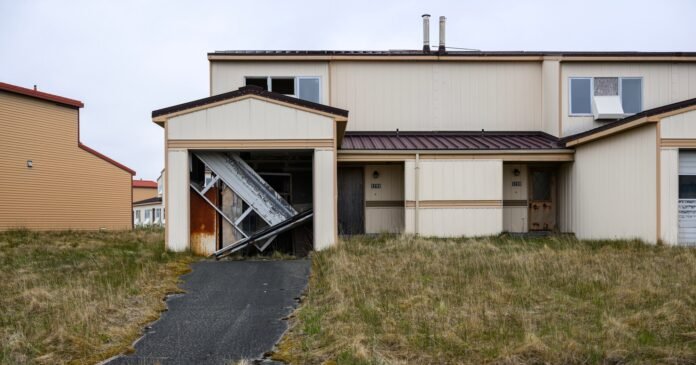
On an island in the Bering Sea 1,200 miles from Anchorage, Alaska, sits an abandoned house on an abandoned Navy base. There is no furniture, and the wind blows through broken windows. The last people to live here moved away long ago. Yet a bright orange pipe with a black fiber-optic cable inside runs from the outer wall down into the surrounding soil.  

The cable was installed to connect the home to the internet after the base closed. It costs more than $340,000 per year to provide this building and hundreds of others — all but a few of them empty — with internet access no one says they use. 

The money being wasted is yours. 

It comes from a fee added to nearly every American’s phone bill as part of a Federal Communications Commission subsidy program intended to bring fast, affordable internet to remote towns.

Reporting this year by the Anchorage Daily News and ProPublica has found that the multibillion-dollar Universal Service Fund pays for what often amounts to slow internet access for customers who actually no longer use it. 

The FCC keeps the money flowing to telecom companies regardless of their owners’ track records. It kept paying a Fairbanks company to provide internet service while its owner served federal prison time for tax evasion. The government kept paying Alaska’s largest telecom, GCI, even after it signed a settlement for alleged fraud related to the subsidy. (The settlement said it was neither an admission of guilt by GCI nor a concession by the Justice Department that the claims were not well founded.)

Yet few places make the federal government’s failure to safeguard this money more obvious than Adak. 

Gray clouds hang over a green island with small houses and buildings, surrounded by blue water.
At its population peak decades ago, Adak housed thousands of Navy personnel and their families. Now, most homes in the town near the western end of Alaska’s Aleutian Island chain are left abandoned and deteriorating. Marc Lester/ADN

Once home to thousands of sailors and their families, the island emptied after the base closed in 1997. While the state estimated the population to be 77 last year, residents themselves put it at closer to two dozen — meaning the federal internet subsidy to the local telecom amounts to about $14,000 a year per person. And, it turns out, there’s zero indication any of these people are benefiting from it. 

We know this because we flew to the island in June and visited every building the company itself told regulators it serves. We knocked on every door. Talked to every person we could find. 

Not a single one told us they subscribe to the island’s subsidized internet service.

Residents get online through Starlink, the Elon Musk satellite service that arrived in 2023 without any subsidy from the FCC. People here say it’s up to 40 times faster and costs $90 to $140 per month, compared with the hundreds of dollars a month that Adak Eagle, the local telecom, once collected from customers on top of its subsidy checks. (Adak Eagle’s website currently advertises internet plans for $99 to $550 per month.)

But the subsidies remain.

Like many Alaska telecoms, Adak Eagle was built on public money. It began in the early 2000s with FCC subsidies and federal loans to upgrade old telephone wires for fiber-optic lines that could support both voice and internet service. By 2011, the company was collecting $2.68 million a year from the Universal Service Fund.

Mountains and water can be seen through the holes of an exterior wall.
Once-occupied homes along Kuluk Bay have been ravaged by weather and time since Adak was an important Cold War outpost. Marc Lester/ADN
A broken swing set sits in front of an orange and red multistory home. Tall green and brown grass and yellow flowers grow all around.
One of many play areas left in disrepair on residential streets in Adak Marc Lester/ADN
Mountains and water can be seen through the holes of an exterior wall.
Once-occupied homes along Kuluk Bay have been ravaged by weather and time since Adak was an important Cold War outpost. Marc Lester/ADN
A broken swing set sits in front of an orange and red multistory home. Tall green and brown grass and yellow flowers grow all around.
One of many play areas left in disrepair on residential streets in Adak Marc Lester/ADN

A 2013 federal order determined company president Larry Mayes spent telecom subsidy money on a fleet of vehicles and a fishing boat that weren’t necessary for his business, and that the $237,455 salary Mayes paid himself one year was “unreasonable” and “disproportionate” given the size of the company and what’s typical for Anchorage, where he lives. 

(The company filed letters with the FCC at the time stating its salaries “should be evaluated in the context of a small company where each employee wears multiple hats” and citing the island’s “remoteness and harsh climate conditions.”) 

On top of the $3.6 million his company has received from the federal broadband subsidy since 2016, he also received $3.54 million from the FCC through a program that replaces revenue phone companies once earned connecting long-distance calls. The state kicked in an additional $3.75 million through its own subsidy program, the Alaska Universal Service Fund. (Some Adak residents said they continue to pay the company for landlines that they use as cellphone backup.)

When we first asked Mayes about the federal internet money, he hung up on us. He did not respond to questions emailed in May, a written interview request delivered to his Adak office in June or detailed questions emailed and hand-delivered to his Anchorage office in July. Reached again by phone on July 13, he declined to comment and ended the call.  

The one thing Mayes did say before hanging up on the first call: that he is playing by the rules of the FCC’s subsidy program, and if we had questions about it, we should ask the agency. 

We did. Repeatedly. About the publicly funded connections to demolished homes on Adak and other uses of internet subsidies in Alaska.

The FCC never responded.

Internet for Vacant Homes

A lone white car drives along a gray road leading over a brown mountain.
A vehicle kicks up dust on Bayshore Highway outside of the town of Adak on Adak Island. Marc Lester/ADN
A black seal pokes part of its head above the gray water. The background is white and out of focus.
A seal spies a walker along the coastline near Clam Lagoon. Marc Lester/ADN
A lone white car drives along a gray road leading over a brown mountain.
A vehicle kicks up dust on Bayshore Highway outside of the town of Adak on Adak Island. Marc Lester/ADN
A black seal pokes part of its head above the gray water. The background is white and out of focus.
A seal spies a walker along the coastline near Clam Lagoon. Marc Lester/ADN

Step outside Adak’s tiny airport terminal, and the scene is straight out of “The Walking Dead.” You can spend hours walking the city streets without seeing another human, the only sounds the dry scrape of tall grass and warbling seabirds. Stiffened copies of People magazine declare George Clooney the 2006 Sexiest Man Alive. A shuttered McDonald’s drive-thru still advertises 99-cent hamburgers. 

Subdivisions outside the city core sprawl like any in America, with neatly arranged ranch-style homes, powder-blue roofs, wide driveways and generous garages. After the Navy shipped out, hurricane-force Aleutian winds pried homes apart. The worst of it is in a beachfront neighborhood called “Officer’s Country” on old city maps. Bathroom mirrors and toilets and kitchen tables stand exposed to the rain in homes cleaved in half like dollhouses. 

Even in newer neighborhoods, we found rotted exterior walls with holes so wide you could drive a truck inside. Grass grew on living room floors. Bedrooms were filled with bird nests.

Brown, overgrown grass covers a fallen wall on the ground, and the viewer can see straight through the frame of a house in the foreground. In the background, a two-story house has missing wall panels. The sky is blue, and white clouds and mountains can be seen behind the houses.
Exterior walls are missing on one home in a central subdivision of Adak. Marc Lester/ADN

In the few homes the FCC paid Adak Eagle to connect that are habitable, the occupants have abandoned Adak Eagle.  

Henry Collins, 61, lives in one of those homes. He was partially blinded in a chemical accident years ago while cleaning a boat at the island docks. Now he and his wife spend their days caring for their newborn. Sometimes they FaceTime with his wife’s family in the Philippines and hold the baby up to the screen.

He accidentally cut Adak Eagle’s internet cable with a string trimmer. No matter. He never could afford the subsidized service anyway, and his rooftop Starlink receiver was untouched in the landscaping incident. 

One street over, 26-year-old Steven Ivanoff pays close attention to internet speeds because he plays Overwatch and Fortnite competitively online.

A man with a ponytail and moustache wears plaid pants and a gray hooded sweatshirt. He sits in a gamer chair in front of multiple computer monitors and stares away from the camera to the left.
Steven Ivanoff, a year-round Adak resident, relies on Starlink to play video games with other people online. Marc Lester/ADN

Before Starlink, residents said, Ivanoff’s former roommate and fellow gamer was notorious for using up the scant bandwidth Adak Eagle provided every time he went online to play. Neighbors hollered at him to get off the damn computer. Adak Eagle’s subsidized fiber offers download speeds of 1 to 10 megabits per second, according to the FCC National Broadband Map — far short of the FCC’s 100-megabit standard for broadband and, at the low end, barely fast enough to load a modern webpage. 

All that has changed. At our request, Ivanoff tested the speed of his Starlink connection using an online service called speedtest.net. He clocked it at a screaming (by Alaska standards) 447 megabits per second.

At another house, four dachshunds stood guard in a fenced yard while inside, an agent with the Transportation Security Administration who moved from Arkansas was playing a reality TV show on her widescreen — Starlink-powered, like everyone else’s internet.

 A woman wearing jeggings, a blue sweatshirt and glasses sits on a gray couch and looks down at three brown dachshunds sitting next to her. Framed pictures sit on the end table, and the floor is wood paneling.
Elizabeth Pryor’s Adak home is on the list of those federally subsidized for internet service. She uses Starlink for internet service, the standard for the town’s few remaining residents. Marc Lester/ADN
A man wearing a camo-print hooded jacket holds a gray towel and stares directly at the camera. He’s standing in front of an open garage that has a chair and a stop sign inside. A smoker sits next to the garage.
Henry Collins said he accidentally cut the cord for Adak Eagle internet service, which he didn’t subscribe to anyway. He relies on Starlink instead. Marc Lester/ADN

Elizabeth Pryor has leaned into the isolation by starting a mini farm. In her solarium, a cardboard box trembled with teenage chicks, peeping under a heat lamp. No bears on the island, she said. So that’s nice. No foxes either. “But the rats ate my jalapeno peppers down to the stalk! Chomp chomp chomp.”

Her house rises across the street from a pile of rubble, the remains of a house fire. 

Both properties — the rubble pile and Pryor’s home, alive with puppies and chickens — are on the list of houses for which Adak Eagle received subsidies to connect to the internet. She doesn’t use it. 

Wiring an Empty Island

Gray fog hangs over a row of houses on a hillside with a mountain in the distance. Long green grass grows in the foreground.
Fog obscures the views surrounding the city of Adak. Residents say only a couple dozen people live there. Marc Lester/ADN

Adak was already a ghost town when Mayes’ company started wiring the island.

According to the U.S. Navy’s own Record of Decision on the base closure, published in 2000, “there was no established community on Adak” after the military’s departure. The Navy’s ongoing assessments documented houses being condemned and boarded up

Andilea Weaver, the company’s former vice president, said Adak Eagle began replacing rat-gnawed copper landline wires to Adak buildings in 2006 — nine years after the base closure. 

In 2016, Adak Eagle proposed a 10-year plan to receive new subsidies in exchange for connecting or maintaining lines to 346 locations, nearly every building left standing. The FCC agreed. The agency formally declared the new spending plan to be in the public interest.

The FCC in 2022 reduced the number of locations Adak Eagle was obligated to serve to 306 after the company reported some buildings were unlivable, but the agency left the subsidy amount unchanged. 

According to federal data published by the Universal Service Administrative Co., the most locations that Adak Eagle reported having broadband available was 283.

The buildings the FCC says Adak Eagle keeps wired for internet include duplexes, fourplexes and ranches where we found no sign of life. The agency shows connections at places where we found doors yawning open in the wind, hinges screaming with rust — no furniture inside, no appliances, yet in many cases, a single telephone still plugged into a wall.

Aerial view of a subdivision of houses with brown, red and blue roofs. One lot is covered in debris. A few cars are parked throughout the neighborhood.
A destroyed home among many abandoned ones in Adak’s sparsely populated Sandy Cove neighborhood. Government agencies, hunting lodges and a few year-round residents occupy a small portion of housing. Marc Lester/ADN

Whether the abandoned structures Adak Eagle has prepped for low-speed internet can beckon new occupants is an open question.

Adak is so far west of the Alaska mainland that it’s in a different time zone. So far west that it’s almost in the Eastern Hemisphere.

The last vestige of industry departed with the closure of the island’s fish processing plant in 2020. Now the economy consists of a bit of hunting and bird-watching that lures a few hardy tourists aboard the two flights a week that serve the island. (Warning: Pack canned goods. The  grocery store and restaurant were closed our entire visit.)

Alaska’s Republican U.S. Sen. Dan Sullivan has argued the U.S. should open a new military base on Adak because of its strategic proximity to waters cruised by the Chinese and Russian navies. With $115 million set aside by Congress last year for “exploration and development of existing Arctic infrastructure,” a Pentagon-led task force is developing recommendations on how to proceed, a Sullivan spokesperson said.

Gray and white feathers are scattered on a mossy rock.
The remains of a meal left behind by a bald eagle on the shores of Betty Lake Marc Lester/ADN
A bald eagle perches on a wooden post. Buildings, satellite dishes and a tall mountain are out of focus in the background.
A bald eagle takes flight from a post on the south end of the city. Marc Lester/ADN
Gray and white feathers are scattered on a mossy rock.
The remains of a meal left behind by a bald eagle on the shores of Betty Lake Marc Lester/ADN
A bald eagle perches on a wooden post. Buildings, satellite dishes and a tall mountain are out of focus in the background.
A bald eagle takes flight from a post on the south end of the city. Marc Lester/ADN
Stairs covered in weeds lead up to a beige two-story building with shattered and boarded-up windows, boarded-up doorways and peeling paint.
Paint peels and windows are shattered on a structure once occupied by the Navy on Adak’s hillside. Marc Lester/ADN

After knocking on hundreds of doors and canvassing every subdivision, we spent our last hours in Adak checking to see if anyone was using the subsidized internet in the old commercial buildings and offices scattered around the center of the city. 

At one of the last addresses on the list crouched a cinder block building surrounded by pickup trucks and wide spools of orange piping — the same piping we’d seen leading up to demolished houses the day before. A rotary phone hung on the wall. 

This was the local office of the company we’d been examining. Even the people who work there have stopped relying on the internet service that you pay for. Above the front door, above the sign for Adak Eagle Enterprises, stood two Starlink dishes.

A building with yellow, peeling paint and a gray roof with a sign that says “Adak: Telephone, Internet, Cellular, Cable TV.”
Starlink equipment is mounted on the roof of internet provider Adak Eagle Enterprises. Marc Lester/ADN

The Space Force is now seeking to buy up to $30 billion in rocket launches

0
the-space-force-is-now-seeking-to-buy-up-to-$30-billion-in-rocket-launches
The Space Force is now seeking to buy up to $30 billion in rocket launches

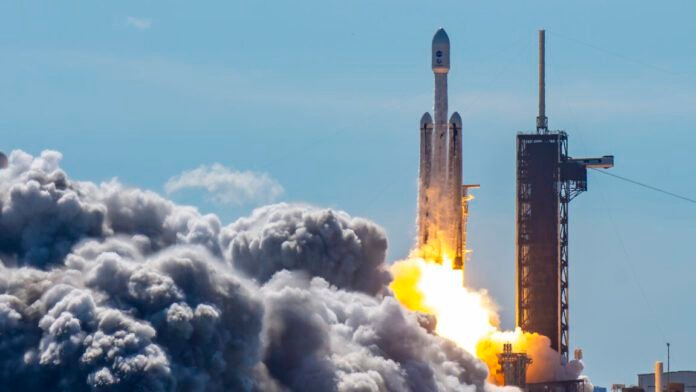
It seems as though $5.6 billion wasn’t enough. That was the news from the US Space Force on Friday, when military officials announced they were tripling the maximum value of one of the service’s National Security Space Launch contracts to $17 billion.

The expansion of the Space Force’s National Security Space Launch (NSSL) Phase 3 contract comes as the Pentagon signals rising demand for military satellite launches. The NSSL program is set up to allow Space Systems Command, which oversees the Space Force’s launch program, to select from a pool of launch providers for individual missions to deliver the military’s satellites to orbit.

The NSSL program has two parts. Lane 1 covers the Space Force’s more risk-tolerant missions, such as medium-lift launches with experimental payloads or rideshare missions carrying satellites for the Pentagon’s surveillance or data relay constellations. Lane 2 includes higher-priority strategic missions, like the government’s largest and most expensive spy satellites, or radiation-hardened communications satellites designed to survive a nuclear war.

Lane 1 is open to commercial launch providers without requiring extensive certification and oversight from the Space Force. This is the part the Pentagon has now authorized for $17 billion in launch procurement expenses. Missions in Lane 2 can only launch on rockets that go through the military’s lengthy certification reviews. Only SpaceX’s Falcon 9 and Falcon Heavy, and United Launch Alliance’s Vulcan rocket are certified for Lane 2 missions.

More money for more launches

There are more launch companies qualified for Lane 1 contracts. Space Systems Command originally selected SpaceX, ULA, and Blue Origin for Lane 1 in the Phase 3 round of the NSSL program in 2024. Rocket Lab, Stoke Space, and most recently, Relativity Space and Impulse Space were added to the roster of companies competing to launch Lane 1 missions. The Space Force issues a request for bids on a number of Lane 1 missions each year, and then doles out individual fixed-price “task orders” to the winners. SpaceX has won the lion’s share of Lane 1 task orders to date, and Blue Origin won its first earlier this year.

The Space Force originally estimated the Lane 1 launch providers would compete for at least 30 task orders over a five-year period. Officials put a ceiling of $5.6 billion on the Lane 1 contract to cover these 30 missions. The Space Force capped the Lane 2 contract at $13.7 billion last year, a number officials thought was sufficient to cover an estimated 54 launches projected for procurement through 2029.

But things have changed rapidly. In April, Space Systems Command said it had identified 25 additional Lane 2 missions on top of the 54 included in the original contract just one year before. Now, the Space Force is tripling the maximum value for the Lane 1 contract. The service has not said how many more missions it expects to order in Lane 1 beyond the initial estimate of 30.

With Friday’s announcement, the combined maximum value of Lane 1 and Lane 2 has reached more than $30 billion, and the number is likely to climb again. Space Force officials have not publicly identified exactly what missions they plan to add to each of the NSSL contracts. But there are a few obvious programs driving the military’s rising launch demand.

One is the Space Force’s recent award of multibillion-dollar contracts to SpaceX for the deployment of numerous satellites for the Pentagon’s Space Data Network and Airborne Moving Target Indicator programs. The SDN and AMTI satellite constellations will provide global connectivity and targeting information for US forces. Another is Golden Dome, the Trump administration’s proposed missile defense shield, which is expected to include an untold number of space-based missile warning sensors and space-based interceptors.

The Trump administration requested $71.1 billion for the Space Force in fiscal year 2027, up from approximately $40 billion allocated for fiscal year 2026. The House Appropriations Committee’s draft 2027 budget for the Pentagon includes $55.5 billion for the Space Force, somewhat less than the White House’s request. The Senate has not released its Pentagon budget bill.

King Charles Said Camilla was ‘Non-Negotiable’ After Diana

0
king-charles-said-camilla-was-‘non-negotiable’-after-diana
King Charles Said Camilla was ‘Non-Negotiable’ After Diana


King Charles may have spent years trapped between palace tradition, public fury and the long shadow of Princess Diana, but when it came to Queen Camilla, one royal author says there was never really a choice.

Camilla was “non-negotiable.”

That is the striking claim at the center of Catherine Mayer’s new book, Divide & Rule, which examines some of history’s most misunderstood royal wives and takes a fresh look at Camilla’s extraordinary rise from scandalized “other woman” to crowned queen.

According to Mayer, anonymous friends of the monarch said Charles viewed Camilla’s place in his life as something that could not be debated, even after his bitter divorce from Diana and the princess’s shocking death in 1997.

A spokesperson for Buckingham Palace told Fox News Digital the palace does not comment on books.

Mayer, who previously wrote a biography of Charles, told the outlet that the future king’s determination to keep Camilla by his side became especially clear after the collapse of his marriage to Diana.

“I think the non-negotiability was the point after the divorce and, of course, after Diana’s death,” Mayer said. “He understood that this was the one woman who could really sustain him.”

That support, Mayer argued, was exactly what Charles felt he needed.

Camilla, she said, was not simply a romantic partner. She was the woman who steadied him, lifted him and gave him the kind of private reassurance he had long craved inside the rigid world of royalty.

“This is, in many ways, one of the most unlikely love stories you can imagine,” Mayer said.

For millions around the world, Charles and Diana had once looked like a fairy tale. Their 1981 wedding was watched by a global audience and sold as the perfect royal romance. But behind palace walls, the marriage was unraveling under pressure, incompatibility and the presence of Camilla Parker Bowles.

When the marriage finally imploded in public, Mayer said the world was forced to confront a very different truth.

“There were a lot of people who bought into the idea of the fairy-tale marriage between Diana and Charles,” Mayer said. “It was only when it imploded so spectacularly that they were forced to recognize that wasn’t the truth of what had happened.”

By then, Camilla had already been cast in the harshest possible role.

She was blamed as the woman who came between Charles and Diana, and for years her name was tied to one of the biggest royal scandals of the modern age.

Mayer said she does not believe Charles and Diana’s marriage ever had a real chance of working, though she was careful to stress that Diana was deeply wronged.

“I personally don’t think the relationship between Diana and Charles could ever have worked,” she said. “But that doesn’t mean I don’t think Diana was very badly treated.”

Still, Mayer claimed that Charles’ reaction to Camilla was impossible to miss.

After spending time following Charles during her research, Mayer said she saw the effect Camilla had on him firsthand.

“You would see him tired, very obviously out of sorts,” she recalled. “And then she would come into a room, and he would light up. She just lifts him.”

Charles first met Camilla through mutual friend Lucia Santa Cruz in 1970, and by many accounts, he was immediately taken with her. But romance alone was not enough for the future king.

At the time, palace expectations were unforgiving. Camilla was not seen as the proper woman to marry the heir to the throne. She had a social life, a romantic past and none of the carefully preserved innocence that royal insiders believed was required of a future queen.

“She had something of a past,” Mayer said.

The author insisted she was not portraying Camilla as some grand seductress, but rather as a lively, experienced woman who enjoyed life.

That, Mayer suggested, was exactly why Charles was drawn to her.

Camilla chain-smoked, loved social occasions and had boyfriends, including Andrew Parker Bowles, the man she would later marry. Mayer even recalled one colorful story about Camilla heading off to America, riding around on a motorbike in leathers and living with a freedom that the palace world found difficult to accept.

To the old guard, Mayer said, Camilla was the sort of woman a prince might enjoy, but not the sort of woman he should marry.

“This dusty, old-fashioned institution, they’re telling the heir to the throne, ‘This is the kind of woman you go off and have fun with, but not the kind you marry,’” Mayer said.

Royal broadcaster Ian Pelham Turner agreed that Camilla gave Charles something different from what he found inside palace life.

“Camilla gave Charles, from the early days, a feeling of masculinity, making him feel sexual desire,” Turner told Fox News Digital. “She treated him like a man rather than a royal.”

But Charles and Camilla did not marry in those early years. Charles joined the Royal Navy in 1971, and Camilla married Andrew Parker Bowles in 1973.

Charles was reportedly devastated, though the two remained close.

By 1980, Charles began courting Lady Diana Spencer, who appeared to fit the royal mold perfectly. Diana was young, aristocratic and widely viewed as the ideal bride for the future king.

Charles and Diana married the following year in what became known as the “wedding of the century.”

But the shadow of Camilla never disappeared.

Royal author Penny Junor previously claimed Charles and Camilla rekindled their physical relationship around 1978 or 1979. People magazine has also reported that Charles and Camilla began seeing each other again in 1986, while both were married and had children.

Mayer said the exact timeline remains difficult to untangle.

“I think they did intend to break things off in terms of any kind of physical relationship, and they did,” she said. “But exactly when they rekindled it is another matter entirely because what they’ve said and what the evidence suggests don’t always exactly match.”

Diana, according to Turner, seemed to understand early on that Camilla would never be fully gone from Charles’ life.

“Camilla, without doubt, has been the love of Charles’ life,” Turner said. “He never stopped wanting to be with her, even when he married Diana.”

One of the most infamous symbols of the love triangle was a pair of gold cuff links engraved with interwoven Cs, which Diana believed represented Charles and Camilla.

Mayer said the cuff links carried deep meaning for Charles.

“There was a famous incident described in Jonathan Dimbleby’s authorized biography of Charles in which Diana found cuff links she realized were a gift from Camilla to Charles ahead of the wedding,” Mayer said.

She also said one source described a separate incident in which Charles became upset after losing one of the cuff links.

“The suggestion is that these things had great meaning for him and that the friendship had great meaning for him,” Mayer said.

Diana later described confronting Camilla directly about the affair in recordings made for Andrew Morton’s book Diana: Her True Story.

“I was terrified of her,” Diana said, according to People.

Diana recalled telling Camilla, “I know what’s going on between you and Charles, and I just want you to know that.”

Camilla allegedly responded by telling Diana she had everything she could want, including the love of men around the world and two beautiful children.

Diana’s answer became one of the most painful lines in royal history.

“I want my husband,” she said.

Years later, Diana would famously tell the BBC’s Panorama, “There were three of us in this marriage, so it was a bit crowded.”

Charles and Diana separated in 1992. Their divorce was finalized in 1996. One year later, Diana died from injuries suffered in a Paris car crash at age 36.

For Camilla, the years that followed were brutal. Public anger remained intense, and the palace faced the delicate task of slowly reshaping her image.

Mayer said that effort was “painstaking,” but Charles’ position did not waver.

Camilla, in his eyes, was not going anywhere.

In 2005, Charles and Camilla married. In 2023, after Charles became king, she was crowned Queen Camilla.

Turner said Camilla has proved to be a vital force in Charles’ life and reign.

“In a lot of ways, Camilla has been very good for Charles,” he said. “She’s supported him in his efforts to become a great king. She has been his confidante, mentor and companion.”

British broadcaster and photographer Helena Chard said Mayer’s “non-negotiable” description fits the long arc of Charles and Camilla’s relationship.

“For years, the palace kept Charles and Camilla in separate boxes,” Chard told Fox News Digital. “Eventually, he chose love over protocol.”

Chard said Camilla survived by staying steady, avoiding unnecessary attention and carrying out her duties until the public mood began to shift.

“She became an asset, not a liability,” Chard said. “By the time Charles took the throne, it was a no-brainer. You get the king, you get the queen. There was no plan B.”

It is a stunning turnaround for a woman once blamed for helping destroy the world’s most famous marriage.

But according to Mayer’s new book, the ending was always hiding in plain sight.

For Charles, Camilla was not a scandal to be managed.

She was the woman he refused to give up.

Roasted Parmesan Carrot Fries

0
roasted-parmesan-carrot-fries
Roasted Parmesan Carrot Fries
Roasted Parmesan Carrot Fries with caramelized edges, fresh herbs, and creamy lemon-garlic chive dip.
Golden Roasted Parmesan Carrot Fries served warm with a cool, creamy lemon-garlic chive dip.

Print Friendly, PDF & Email

Roasted Parmesan Carrot Fries turn everyday carrots into a crisp-edged, deeply savory side that disappears fast. The carrots roast until caramelized and tender, while a light Parmesan-cornstarch coating creates golden, lacy edges. Garlic, smoked paprika, thyme, and lemon zest keep the flavor bright instead of overly sweet.

They are simple enough for weeknights, yet polished enough for a holiday table or appetizer spread. A cool lemon-garlic chive dip balances the warm, salty crust and makes every bite feel special. The key is cutting the carrots evenly and giving them plenty of space on the pans. That small step helps the edges brown instead of steam. Serve them straight from the oven, when the Parmesan is crisp and the centers are still soft. They are not trying to be potato fries—and honestly, they do not need to be.


Roasted Parmesan Carrot Fries with caramelized edges, fresh herbs, and creamy lemon-garlic chive dip.
Golden Roasted Parmesan Carrot Fries served warm with a cool, creamy lemon-garlic chive dip.

Recipe Yield: 4 servings

INGREDIENTS

For the roasted carrot fries
1 1/2 lb medium carrots, peeled, trimmed, and cut into 3-inch sticks 3/8–1/2-inch thick
1/2 cup finely grated Parmesan cheese, freshly grated from a wedge
2 tbsp extra-virgin olive oil
1 tbsp cornstarch
1 tsp garlic powder
3/4 tsp smoked paprika
1/2 tsp dried thyme
1/2 tsp kosher salt
1/4 tsp black pepper
1 tsp finely grated lemon zest
2 tbsp chopped fresh parsley

For the lemon-garlic chive dipping sauce
1/2 cup plain whole-milk Greek yogurt
2 tbsp mayonnaise
1 tbsp fresh lemon juice
1 tsp Dijon mustard
1 small garlic clove, finely grated
1 tbsp chopped fresh chives
1/8 tsp kosher salt
1 pinch black pepper

INSTRUCTIONS

1. Preheat and prepare:
Position oven racks in the upper and lower thirds. Heat the oven to 425°F and line two large rimmed baking sheets with parchment paper.

2. Make the dipping sauce:
Stir together the yogurt, mayonnaise, lemon juice, Dijon, garlic, chives, 1/8 tsp salt, and a pinch of pepper. Refrigerate while the carrots roast.

3. Dry the carrots:
Pat the carrot sticks thoroughly dry with a clean kitchen towel. Then, transfer them to a large mixing bowl.

4. Season and coat:
Add the cornstarch, garlic powder, smoked paprika, thyme, 1/2 tsp salt, and black pepper. Toss until evenly dusted. Drizzle with olive oil and toss again. Finally, add the Parmesan and coat every piece thoroughly.

5. Arrange the fries:
Divide the carrots between the prepared pans. Arrange them in a single layer without touching, placing flat sides down when possible. Sprinkle any loose Parmesan mixture from the bowl over the carrots.

6. Roast until golden:
Roast for 15 minutes. Flip the carrots, rotate the pans, and switch their oven positions. Continue roasting for 10–14 minutes, until fork-tender, deeply golden, and crisp around the edges.

7. Finish and serve:
Let the carrot fries rest on the pans for 2 minutes so the Parmesan coating can set. Sprinkle with lemon zest and parsley, then serve immediately with the chilled dipping sauce.


HELPFUL TIPS TO PERFECT THIS RECIPE

  • Dry the carrots thoroughly: Excess moisture causes the carrots to steam. A dry surface helps the Parmesan coating brown properly.
  • Choose finely grated Parmesan: A fine, sandy texture adheres better than thick shreds and creates delicate, crispy edges.
  • Leave plenty of space: Use both baking sheets rather than crowding one. Airflow is essential for caramelized roasted carrot fries.
  • Reheat with dry heat: Warm leftovers at 425°F for 5–7 minutes, or air-fry at 375°F for 4–5 minutes. Microwaving will soften the coating.

Rate This Recipe

Tried this recipe? Your rating helps others and means so much.

Houthis announce maritime embargo of Saudi Arabia

0
houthis-announce-maritime-embargo-of-saudi-arabia
Houthis announce maritime embargo of Saudi Arabia

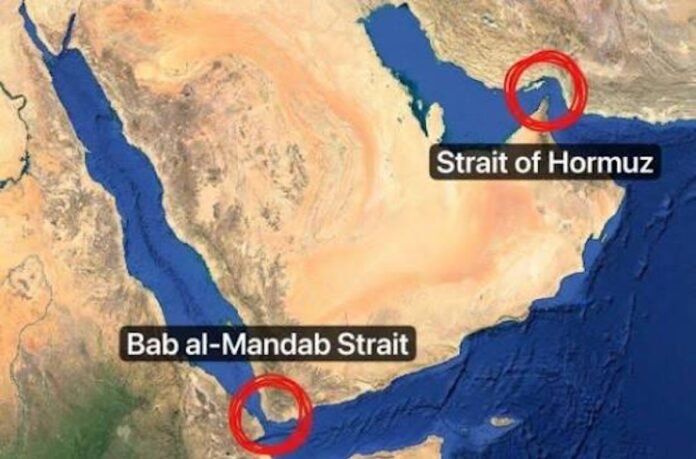
Map: Facebook

Houthi rebels in Yemen on Monday announced they were imposing a maritime embargo against Saudi Arabia in yet another threat to global petroleum supplies amid the US war on Iran.

Yahya Saree, spokesperson for the Houthis, said in a video announcement that the militia would be enforcing the shipping embargo in retaliation for last week’s bombing of Sanaa Airport, which the group blamed on the Saudis.

After Iran shut down the Strait of Hormuz in response to US President Donald Trump’s illegal war of choice earlier this year, global oil markets became even more dependent on shipping supplies through the Strait of Bab al-Mandeb, a waterway adjacent to the coast of Yemen.

According to Javier Blas, energy and commodities columnist at Bloomberg, Saudi Arabia has been shipping roughly 4.5 million barrels of oil per day through shipping channels in the Red Sea, with “most of it” traveling through the Strait of Bab al-Mandeb.

The Houthis’ announcement of an embargo against the Saudis comes as the US has continued burning through its crude inventories.

Data released by US Energy Information Administration revealed that US crude inventories fell by 1.7 million barrels over the week ending July 10, leaving stocks at their lowest level since 1983.

University of Chicago political scientist Robert Pape warned that the Houthis shutting down another vital global shipping lane could be a disaster for the global economy given that it could mean a “loss of another 4 to 5 million [oil] barrels a day.”

“The Titanic is now hitting the iceberg,” Pape added, “and there are not enough lifeboats for the world economy.”

Nicholas Grossman, professor of international relations at the University of Illinois, noted that there are now multiple factors throttling global energy shipments.

“Iran blocking Strait of Hormuz,” Grossman wrote. “US blocking Iranian shipping. Iran bombing energy facilities in Gulf Arab states. US bombing energy facilities in Iran. Ukraine bombing energy facilities in Russia. Houthis disrupting Red Sea shipping. Oil and gas reserves running dry. It’s a lot, and adding up.”

Juliette Kayyem, senior lecturer at Harvard’s Kennedy School and a former Obama administration official, wrote that the potential shutdown of global energy supplies should make US policymakers rethink what they can achieve using American military force.

“A bunch of military and conventional wisdom analysts assured the American public that our air dominance was unparalleled,” wrote Kayyem. “The ‘never right but always certain’ crowd didn’t realize the war was going to be fought on water.”

-Common Dreams

Rising seas magnify the dangers of coastal Georgia’s industrial past

0
rising-seas-magnify-the-dangers-of-coastal-georgia’s-industrial-past
Rising seas magnify the dangers of coastal Georgia’s industrial past

This coverage is made possible through a partnership between Grist and WABE, Atlanta’s NPR station.

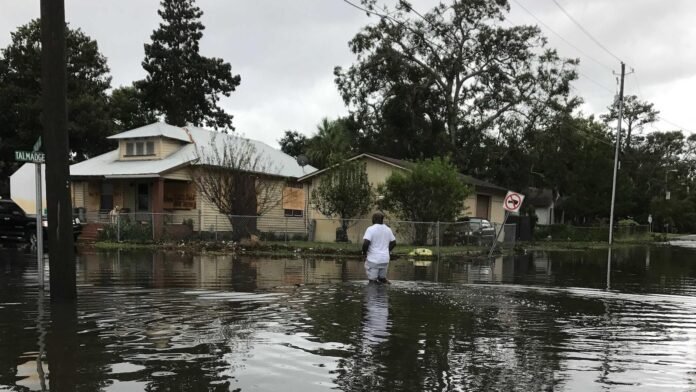
Just across the road from the waterfront in Brunswick, Semona Holmes lives in a house surrounded by fruit trees, potted flowers, a fish pond, and —   when it rains or the tide is extra high — floodwater.

“If you can imagine this entire area here completely flooded,” she explained on her front porch on a recent afternoon. “The flooding would be — we would have like a river on our street.”

The floodwater has reached to her knees at times. Once, after a hurricane, her neighbor canoed down the block.

Improvements to the stormwater system have helped a bit in recent years. But Holmes’s concerns go beyond the inconvenience of an occasionally flooded street. She lives about half a mile from a former pesticide plant, which is now a toxic Superfund site — one of thousands of contaminated former industrial sites identified by the federal Environmental Protection Agency. Holmes is worried about what the floodwaters contain.

“Everything from that chemical plant has flowed into our community,” she said.

Scientists want to get a better handle on what, exactly, has flowed into this community’s air, soil, water, and people. Researchers from six institutions will soon launch Georgia’s first Superfund research center, with $15 million from the National Institute of Environmental Health Sciences. Over five years, the team of scientists from Emory University, the University of Georgia, Georgia Tech, Morehouse School of Medicine, Spelman College, and Texas Tech University will look at Glynn County’s four toxic Superfund sites, including the one near Holmes. 

The work has two main goals, according to Emory public health professor Noah Scovronick.

“One is to understand the health effects of past chemical exposures, and the other is to try and reduce people’s future exposures,” he said.

To do that, they’ll study links between the toxic substances at the former industrial sites and possible health effects, and conduct environmental sampling to figure out how and where people may have been exposed. 

They’ll also need to model impacts of climate change, like rising seas and stronger storms. On sites that have toxic materials stored in structures or under caps, flooding could breach those containment measures, which are supposed to keep people safe from exposure.

“We want to be sure that the remediation that is ongoing at those sites is resilient to extreme weather moving forward,” Scovronick said. 

Holmes, standing in her garden, worries about pollution in the soil and water from a nearby superfund site. Emily Jones / Grist

The researchers met with community members like Holmes to plan their work, so that the studies can answer the lingering questions Glynn County residents have about the industrial pollution in their environment.

Holmes and her family already don’t drink their tap water or eat seafood from Glynn County waterways. But she said they need more information about what chemicals they’ve been exposed to, and the possible consequences. She has six grandchildren, several of whom attend an elementary school just blocks from the nearest toxic site.

“We want them to be healthy,” she said. “And you don’t want to worry that they’re playing on a playground that has contaminated soil.”

Even if the new research uncovers damage that can’t be undone or exposure to health risks that can’t be reversed, Holmes said, it’s important to have all of that documented — and acknowledged by the companies that operated the industrial sites in Glynn County.

“It shows that you care about humanity,” she said. “And that you are able to acknowledge that, ‘Yeah, by our actions, we have possibly contaminated an entire county.’”

But beyond that recognition of wrongdoing, Holmes said, “there has to be continued action.”


Now that the World Cup is over, can host cities turn their investment into a lasting social impact?

0
now-that-the-world-cup-is-over,-can-host-cities-turn-their-investment-into-a-lasting-social-impact?
Now that the World Cup is over, can host cities turn their investment into a lasting social impact?

The 2026 World Cup has been a real moneymaker for FIFA. Revenues from TV broadcasting rights, ticket sales and other commercial sources are projected to amount to nearly US$11 billion, making it the most financially successful event in the international soccer governing body’s history.

But what about the cities that hosted the tournament’s games? Spread across Canada, the United States and Mexico, 16 cities helped make the World Cup a financial success. Moreover, images of national fans from around the globe taking over Boston, Miami and Dallas provided a backdrop to the tournament.

Despite spending hundreds of millions of dollars of public money to stage the tournament, these cities receive little direct revenue from the World Cup. Instead, FIFA says it will reinvest the money in the global development of soccer – for example, by distributing funding to its 211 national member associations.

Nonetheless, staging games during the tournament would have financially benefited host cities, FIFA has claimed, mainly through job creation and tourist spending. To that end, FIFA commissioned a 2025 study that projected $30 billion in economic impact for the U.S. alone.

But reports suggesting that host cities did not experience significant increases in tourism may dampen that financial lift. Moreover, sport economists have long demonstrated that the economic impact of mega-sports events like World Cups and Olympic Games cannot offset the substantial expenditures incurred by host cities.

Social impact as a source of return

Now that the tournament is over, the question thus turns to whether host cities can realize longer-term returns from the tournament that justify their substantial investments, and if so, how.

As sport management scholars who study the impacts of mega- and large-scale sports events, we believe the key to answering this question lies in the intangible social outcomes of hosting the World Cup.

These outcomes are collectively called “social impact” – namely, the noneconomic effects of event hosting that affect the quality of life of people and communities.

One form of social impact is what scholars have termed “psychic income” – defined in one study as “the emotional and psychological benefit residents perceive they receive, even though they do not physically attend sports events.”

Successfully staging events like the World Cup can promote civic pride among residents, making them happier and more satisfied with their lives.

During the 2026 tournament, the warm welcome of Boston to the Scottish fans’ Tartan Army made Bostonians feel proud of their city as Scotland fans joyfully flooded the streets. And local fans in Guadalajara, Mexico, rejoiced with visiting fans from South Korea to support both teams, under the banner “Coreano Hermano” – or “Korean brothers.”

Soccer fans wave flags in a stadium.

Mexican and South Korean fans celebrate together on June 18, 2026. Ulises Ruiz/AFP via Getty Images

Another form of social impact is the collective effervescence fostered through event hosting. This shared sense of celebration can strengthen social cohesion in ways that are otherwise difficult to achieve. It can help break down social divisions and facilitate collective action to address issues that influence residents’ everyday lives.

A survey conducted one year after the Qatar 2022 World Cup, for example, found that both citizens and expatriates living in the country experienced stronger social connections within Qatari society, which comprises people from diverse backgrounds.

Beyond these, hosting mega-sports events can inspire residents, especially young people, to participate in sport and physical activity. They can also promote partnerships among local businesses and governments that contribute to broader community development.

As a historical example, according to research conducted by one of us, Japanese people who experienced the Tokyo Olympic Games in 1964 during adolescence reported consistently higher rates of sports participation later in life, compared with other generations. This evidence suggests that mega-sports events could promote lifelong physical activity among local youths.

The difficulty of sustaining gains

The problem with social impacts is they can be transitory and soon disappear without deliberate efforts and strategies to sustain them.

Host cities can encourage longer-term success by undertaking event-related activities after the World Cup is over so its social impact can outlive the duration of the tournament.

Implementing such efforts, however, is challenging because local organizing committees responsible for delivering mega-sports events tend to be disbanded once the events conclude. This makes it unclear who is accountable for managing the long-term social impact of event hosting during the post-event period.

Establishing organizations with a clear mandate to preserve and amplify intangible outcomes is a possible solution to this challenge. Importantly, such organizations need continuous support so their work can be sustained over a long period of time.

Although this rarely happens, there are some positive examples from past events.

For the U.S.-hosted 1994 World Cup, the U.S. Soccer Foundation was created using proceeds from the tournament. Since its establishment, the organization has implemented soccer-based programs to support the development of children from underserved communities.

In addition, the 2012 London Olympics saw the Spirit of 2012 created to keep the positive feeling from the games alive. The organization funds projects within and beyond sports to bring people together and make stronger and happier communities.

We have already seen some early signs of this for the 2026 World Cup. The organizing committee in Dallas, which hosted nine games, has formed the North Texas Sports Foundation with the aim of driving “long-term, positive regional impact through sports-driven community transformation.”

Other 2026 World Cup organizing committees have delivered legacy programs to bring social impact to local communities. However, these programs were primarily implemented before and during the tournament. Moreover, few appear to extend into the post-event period, especially given the absence of organizations that can continue them going.

If establishing a new organization is not possible, existing organizations and community groups in host cities can work together to manage the social impact of events. Such collaborative efforts could be coordinated by city or regional sport commissions, whose responsibilities include bringing sports events to communities and supporting their operations to drive community development.

While these efforts would help cities sustain and enhance the long-term social impact of mega-sports events, an important question remains: Are the events’ intangible social outcomes, such as psychic income, collective effervescence, increased sport participation and local partnerships, worth the hundreds of millions of dollars invested in hosting the event?

Drawing on available research, intangible outcomes seem to be worthwhile. Nevertheless, we believe that their value should be weighed against the financial, environmental and social burdens associated with event hosting.

RIP bargain bin: The price impact of Sony’s disc-free PlayStation plan

0
rip-bargain-bin:-the-price-impact-of-sony’s-disc-free-playstation-plan
RIP bargain bin: The price impact of Sony’s disc-free PlayStation plan

Since Sony announced that it was planning to stop producing physical PlayStation discs in 2028, many people have been justifiably worried about how they will maintain ownership and long-term game access in a disc-free world. But halting production of PlayStation discs also means eliminating the market for cheap used PlayStation discs, which are often available for well below the price of a digital download.

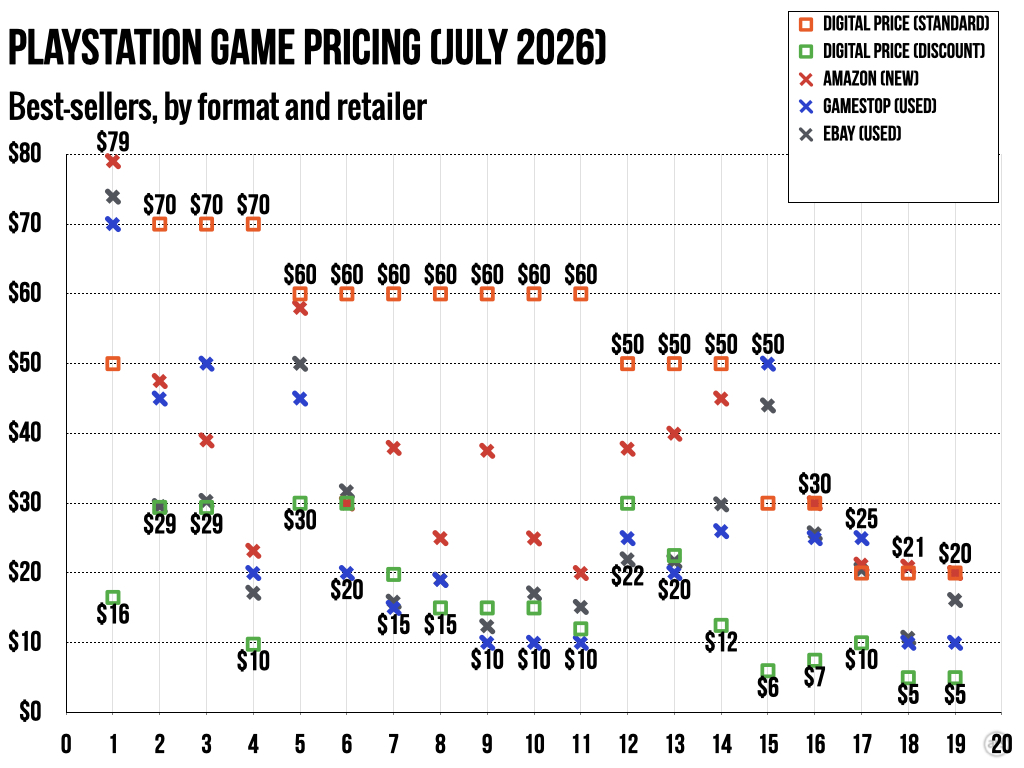
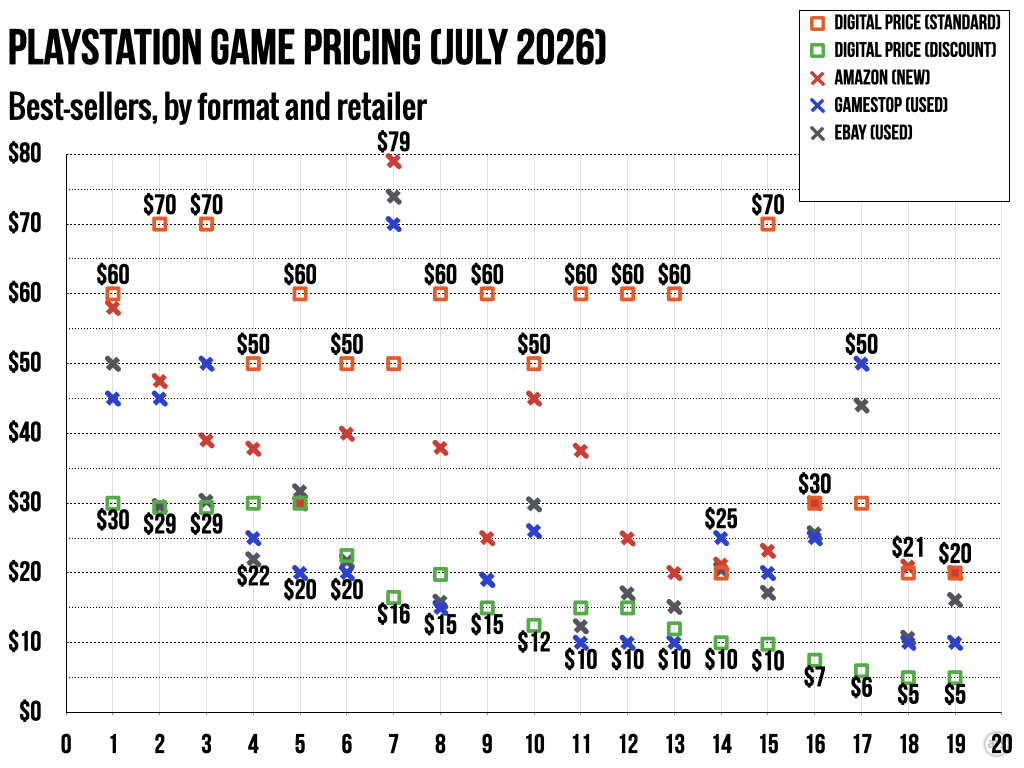
How much is this disc-based discount worth? To find out, Ars analyzed how the prices of 19 current top-selling PlayStation games varied between digital downloads and physical discs (both new and used). We found that, while used discs are the cheapest option for most games for most of the year, the frequent and periodic deep discounts offered on the PlayStation Store often undercut the cheapest game disc options. That state of affairs will likely persist even in a future without PlayStation discs.

Our prices are so low, you’ll think we’ve suffered brain damage

For our analysis, we started with Sony’s list of the bestsellers on the PlayStation Store. We eliminated any games that weren’t available on a physical disc, then used the database over at PlatPrices.com to determine both the “Standard” price and the lowest “Discount” price offered for those games on the PlayStation Store in the last year (as well as the total number of days the discount price was offered).

For physical game prices, we checked the current price for a new game disc at Amazon as well as the pre-owned price offered by GameStop. We also analyzed pre-owned disc prices on eBay, taking the average price of the last five successful sales for that game (including shipping) to assess a fair market value.

In some cases, we added in the price of included DLC to ensure a “standard” game disc was content-matched with a digital “special edition” bundle. For PS4 games with “enhanced” PS5 editions, we added the price of that downloadable upgrade (if any) to the price of the PS4 discs.

If a PlayStation Store game isn’t actively on sale, you can usually save money buying a used disc.

During Periodic PS Store sales, the download price is often (but not always) the lowest available.

A quick glance at the results shows that the “Standard” price for games offered on the PlayStation Store is usually an incredibly raw deal. That digital price was the most expensive option available for 15 of the 19 games we looked at (including two where it was more or less tied for most expensive). In some cases, games that were six to eight years old (i.e., Call of Duty: Modern Warfare, Assassin’s Creed Valhalla, and Assassin’s Creed Odyssey) were still being offered digitally at their original launch price of $59.99, even while used discs were available at GameStop for just $9.99.

If you’re buying on the PlayStation Store, it almost always makes sense to wait for a sale, where the “Standard” digital price is reduced by 40 to 80 percent in our sample. During these periodic sale periods, downloading the game became the cheapest available option in a slim majority of the best sellers we looked at (10 out of 19). In many cases, the deep digital discounts meant a download could be had for 50 percent or less than even the cheapest used disc prices.

But waiting for a PlayStation Store sale isn’t always a great deal. Even with those deep discounts taken into account, a used disc was still the cheapest option for seven of the 19 games we looked at (for two more, the cheapest disc was roughly equivalent to the discounted digital sale price). For a game like Dark Souls III, for instance, you could still save $10 by buying a used GameStop disc instead of the $30 “sale” price on the PlayStation Store.

Most of the year, you’ll have to wait at least a little bit before getting the benefit of a PlayStation Store sale.

Most of the year, you’ll have to wait at least a little bit before getting the benefit of a PlayStation Store sale. Credit: Kyle Orland

While a cheap disc can be purchased pretty much whenever you want, getting a deal on the PlayStation Store means being vigilant enough to monitor the few days a year where the best price is being offered. For the bestsellers we looked at, those discount prices on downloads were only offered between 13 and 33 percent of the time. In some cases, an eager digital buyer would have to wait multiple months for a weekslong sale period to pop up if they wanted to take advantage of the generous digital discounts.

Remember, too, that buying a game on disc means you can resell it again when you’re done, getting back a percentage of the purchase price in the process. This kind of de facto discount won’t be an option in PlayStation’s disc-less future.

My way or the highway

The pricing structure for PlayStation games in a disc-free world won’t necessarily mirror the current pricing on the PlayStation Store. Right now, cheap disc games exist as a sort of release valve for pricing pressure, setting a competitive price that digital sale pricing has to at least take into account as an alternative. If used discs are simply not available for future PlayStation games, PlayStation owners won’t have any other option to buy a game outside the PlayStation Store. That lack of alternatives might mean publishers have less impetus to offer the kind of deep discounts for downloadable versions that are currently common.

However, a PlayStation Store monopoly on game distribution doesn’t necessarily mean customers will be forced to pay high prices. In PC gaming, for instance, the lack of disc-based options for most games hasn’t stopped a “race to the bottom” digital game pricing effect from developing on platforms like Steam, and that’s before you account for the frequent deep Steam sale discounts. And on the PlayStation Store, there are already plenty of games that are only available as downloads that are still offered at bargain-basement prices to attract a large audience.

The “Standard” price offered on the PlayStation Store is usually the highest price you’ll pay for a PlayStation best-seller.

When a PlayStation Store download is on sale, it is often cheaper than even a used disc.

Even in a world without discs, players would probably balk at paying the full launch price for an 8-year-old game, as the PlayStation Store is currently charging for Assassin’s Creed Odyssey. The vast majority of potential customers have now been trained to simply wait for a sale so they can pay a small fraction of that price for the same download. In essence, the high “Standard” price on offer for many older PlayStation Store games is simply an artificial level that lets the publisher briefly post a splashy “80% off” banner every few months.

It would be nice if digital game pricing evolved to be more like used game disc pricing, where lower demand for old games (and a glut of supply from original buyers reselling their discs) quickly determines a relatively steady market-clearing price. But the attention-grabbing nature of a massive sale on a digital storefront means we’re probably stuck with this kind of whipsaw pricing for game downloads for the foreseeable future.

As we’ve seen, though, even steep digital discounts often don’t match the deals you can get on used game discs for bestselling PlayStation games. For bargain-hunting gamers, the absence of that lower-cost physical option will be a real loss in PlayStation’s disc-free future.

Trump warns Iran it will pay ‘many times over’ for any US troops killed

0
trump-warns-iran-it-will-pay-‘many-times-over’-for-any-us-troops-killed
Trump warns Iran it will pay ‘many times over’ for any US troops killed

U.S. President Donald J. Trump sits at a table monitoring military operations during Operation Epic Fury against Iran, with U.S. flags visible behind him, in Washington, United States, on March 02, 2026. [The White House via X Account - Anadolu Agency]

U.S. President Donald J. Trump sits at a table monitoring military operations during Operation Epic Fury against Iran, with U.S. flags visible behind him, in Washington, United States, on March 02, 2026. [The White House via X Account – Anadolu Agency]

US President Donald Trump said Monday that Iran will pay “many times over” for any American troops killed amid ongoing hostilities in the Middle East, Anadolu reports.

“Every time Iran kills an American Soldier they will pay for that killing many times over” Trump wrote on his Truth Social platform.

“This directive has been passed on to Secretary of War, Pete Hegseth, Chairman of the Joint Chiefs of Staff, Daniel Caine, and every Leader in the Military,” he added.

The statement came as the US continued to carry out airstrikes against Iran, with the attacks largely focused on southern Iran. Tehran retaliated with strikes targeting facilities and bases that it says are used by the US military in several regional countries.

The Pentagon has confirmed three US deaths over the weekend, including two at a military base in Jordan and one in northern Iraq.

The exchange of fire between the two countries comes despite a Pakistan-brokered memorandum of understanding signed in June to end the war and reach a lasting peace agreement.​​​​​​​

READ: Iran’s president calls for ‘unity, collective decision-making’ amid escalation with US

One Dead, 3 Injured After Balcony Falls in Central Jerusalem

0
one-dead,-3-injured-after-balcony-falls-in-central-jerusalem
One Dead, 3 Injured After Balcony Falls in Central Jerusalem


A man approximately 80 years old was killed and three other people were lightly injured Monday when a balcony collapsed onto a business in Jerusalem’s Rehavia neighborhood, prompting a large rescue operation and the closure of surrounding streets.

Magen David Adom (MDA) emergency teams were called to Keren Kayemet LeIsrael Street at about 5:25 p.m. following reports that part of a building had collapsed and that people might be trapped beneath the debris.

After rescue crews reached the trapped man, MDA emergency medical technicians and paramedics found him with no signs of life and suffering from multi-system trauma. They pronounced him dead at the scene.

Additional MDA teams treated three people for minor injuries and evacuated them to Hadassah Ein Kerem and Shaare Zedek hospitals. The injured were an approximately 80-year-old woman and two 16-year-olds, a boy and a girl, who sustained minor abrasions.

Firefighters and specialized rescue units removed debris and searched the affected structure to ensure that no additional people were trapped. Engineers and emergency personnel also examined the remaining parts of the building because of concerns that more material could fall.

Police sealed off the immediate area, restricted access to nearby streets and asked members of the public to remain away so rescue vehicles and crews could operate safely.

Initial reports referred broadly to a partial building collapse. Emergency authorities later said a balcony had fallen onto a commercial property below. Early estimates that several people might remain trapped were revised as rescue teams gained access to the rubble.

Authorities had not announced the cause of the collapse by Monday evening. Investigators were expected to examine whether deterioration, renovation work, overloading or another structural problem contributed to the incident.

Rehavia is a central Jerusalem neighborhood containing older residential buildings, shops, offices and public institutions. The collapse disrupted traffic along Keren Kayemet LeIsrael Street and nearby roads while emergency crews maintained a safety perimeter.

Police and municipal officials were expected to continue investigating the building’s condition and determine whether any section must remain closed or be evacuated.

0FansLike
0FollowersFollow
0FollowersFollow
0SubscribersSubscribe
- Advertisement -
Google search engine

Recent Posts