Home Blog

The false promise of a US-Iran quick fix

0
the-false-promise-of-a-us-iran-quick-fix
The false promise of a US-Iran quick fix

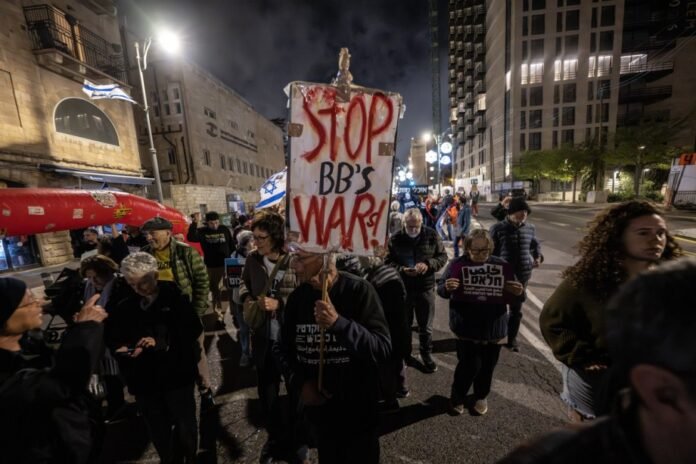
US bombings have failed to achieve the earlier set objective of regime change in Iran. Image: X Screengrab

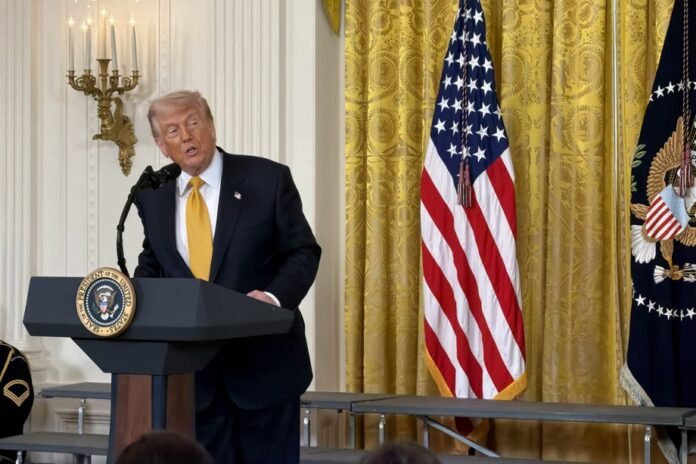
Tehran’s reply on May 10 was entirely predictable. Ceasefire, security guarantees for the Strait, total sanctions relief, reparations — the standard package. What apparently surprised Washington was the timing, which produced President Donald Trump’s terse verdict: “totally unacceptable.”

Even so, a surprising number of voices in Washington are still pushing ahead with a narrow bilateral deal whose main objective is to reopen the Strait and get the tankers flowing. If oil prices climb sharply or insurers start pulling back, that pressure will only increase. Quick relief and fast action can be both prudent and feel like leadership. But the Vietnam precedent should make everyone think twice.

Henry Kissinger might have predicted this. The Paris Peace Accords of 1973 called for American withdrawal and a ceasefire, but did nothing to protect South Vietnam. “Peace with honor” would fall apart in under two years. Kissinger eventually conceded that deal-making was usually temporary, unless military and political realities changed.

Trump’s upcoming meeting with Chinese leader Xi Jinping in Beijing on May 14–15 further raises the stakes. Hormuz will almost certainly be a central topic. China is Iran’s largest oil customer and holds real cards in Tehran, but it has so far avoided heavy pressure.

Kissinger, the old master of triangular diplomacy, would treat the summit as an opportunity to pursue linkage.

Yet trying to enlist Beijing to enforce a bilateral US-Iran understanding is fraught with danger. It risks giving China a de facto veto over Gulf security, allows Beijing to continue hedging between Tehran and Washington, and deepens suspicion among Gulf allies that America is again looking for an exit rather than a solution.

The most likely result is a short-lived pause that keeps Iran’s leverage alive while strengthening China’s hand in the region.

The bigger problem is what happens the day after any such deal is signed. A limited bilateral agreement would send a clear message to Tehran: choking the Strait works. When Secretary of State Marco Rubio described Iran’s control of Hormuz as an “economic nuclear weapon,” he was right.

Billions of barrels can disappear from global markets almost overnight. Saudi Aramco’s chief executive has already spelled out the serious damage, and Goldman Sachs analysts warn that restoring normal conditions could take many months — or years if Iran decides to play for time.

Shipping rates and insurance costs would stay high. Supply chains would remain fragile. Washington would essentially be teaching Tehran a repeatable tactic for holding the global economy hostage.

Gulf partners have every reason to be skeptical of American guarantees. The Wall Street Journal reported this week that Washington draws red lines, then quietly retreats as pressure mounts. A deal focused only on the Strait would leave Iranian missiles and proxy networks largely untouched, while Gulf countries continue to host US bases and live with the daily threat.

Talk of an “insurance policy” is already spreading. That means more arms purchases from China, tighter economic ties with Beijing, and stronger Saudi insistence on regional talks that go beyond US mediation.

This approach would certainly weaken any chance of forming a stable regional order. While Iran might temporarily pause proxy attacks or missile activities, without independent verification and enforceable restrictions on proxies and missiles, Tehran is likely to wait for the next chance.

Bilateral initiatives to reopen the Strait could buy critical time, and the current US-Bahrain draft at the Security Council is a promising development. However, for a lasting solution, active Gulf participation in monitoring and enforcement will be vital.

Short-term thinking has harmed the US in the past. Repeating this pattern in the Gulf could lead to new energy shocks and prompt key allies to hedge more quickly. A smarter strategy would involve collaborating with Gulf states to develop a long-term framework to limit Iran, rather than settling for another superficial agreement between Washington and Tehran.

Only by ending this cycle of short-term fixes can the US transform the current crisis into an opportunity for lasting change, rather than just the prelude to the next crisis.

Eric Alter is a non-resident senior fellow at the Atlantic Council’s Middle East programs and a former UN civil servant. 

Iran says Trump’s rejection of its proposal ‘does not matter’

0
iran-says-trump’s-rejection-of-its-proposal-‘does-not-matter’
Iran says Trump’s rejection of its proposal ‘does not matter’

An informed Iranian source said on Sunday that US President Donald Trump’s reaction to Tehran’s response to Washington’s proposal to end the war “does not matter”, according to Iran’s Tasnim news agency.

The source said that “when Trump expresses dissatisfaction with a plan, it is often a sign that the plan is better”.

The source added that “Trump’s reaction does not matter, as nobody in Iran is working on a plan to satisfy the US president”.

Earlier, Trump announced that he had rejected the response submitted by Iran through a Pakistani mediator regarding Washington’s proposal to end the war, describing it as “completely unacceptable”.

Trump wrote on his Truth Social platform: “I have just read the response from Iran’s so-called “Representatives.” I don’t like it — TOTALLY UNACCEPTABLE!”

At the same time, Trump told Axios that his phone call with Israeli Prime Minister Benjamin Netanyahu was “very nice”.

He added: “I spoke with Netanyahu and discussed the Iranian response among other things,” stressing that the Iran negotiations are “my situation, not everybody else’s.”

‘This Is the Modern Eichmann Trial’: Israeli Lawmakers Advance Special Trial Framework for October 7 Defendants

0
‘this-is-the-modern-eichmann-trial’:-israeli-lawmakers-advance-special-trial-framework-for-october-7-defendants
‘This Is the Modern Eichmann Trial’: Israeli Lawmakers Advance Special Trial Framework for October 7 Defendants


Bill’s sponsors say judicial procedures would allow courts to handle large numbers of October 7 defendants while preserving evidence, public documentation, victims’ rights, and due process

Israeli lawmakers are advancing a bill to create a special judicial framework for prosecuting defendants accused of involvement in the October 7 massacre, arguing that Israel’s existing anti-terror laws were not designed for an attack of that scale, complexity, and historical weight.

The proposal, drafted jointly by coalition and opposition lawmakers, would establish special procedures for trying participants in the October 7 attacks, including dedicated judicial panels, adapted evidentiary rules, accelerated proceedings, public documentation, expanded rights for victims and families, and possible death sentences for the most severe crimes. Its sponsors are presenting it as separate from National Security Minister Itamar Ben-Gvir’s broader push to expand the death penalty for terrorists.

Materials released by the bill’s sponsors describe the legislation as built around three stated goals: a fast, focused, and uncompromising legal process; a voice for the victims; and permanent remembrance. The sponsors frame the proposal not only as a legal instrument but also as a moral and historical declaration meant to turn the prosecution of suspected October 7 attackers into an act of justice for future generations.

This is the modern Eichmann trial

“This is the modern Eichmann trial,” opposition lawmaker Yulia Malinovsky of Yisrael Beitenu said during a press conference alongside Constitution, Law and Justice Committee Chairman Simcha Rothman and Justice Minister Yariv Levin. “Just as there was Nuremberg and later Eichmann, this is what this law creates.”

Israel has carried out capital punishment only twice: the 1948 execution of IDF officer Meir Tobianski, who was convicted by a military tribunal during the War of Independence and posthumously exonerated the following year, and the 1962 hanging of Adolf Eichmann, one of the chief architects of the Holocaust. By invoking Eichmann and Nuremberg, the bill’s sponsors are framing the October 7 trials not only as criminal proceedings but also as a national act of documentation and historical judgment.

Rothman presented the legislation as an unusual moment of political unity around an event he said could not be treated as an ordinary criminal case.

“This is not a partisan event, and not a personal event,” Rothman said. “It is a national event.”

He said lawmakers who “normally cannot agree on which side the sun rises and which side it sets” worked together in “complete harmony” on the bill.

“The October 7 massacre was not an attack on a specific community or a specific individual,” Rothman said. “It was an attack on the entire Jewish people standing against enemies who seek to destroy it.”

Lawmakers framed the bill as a response to an attack they said ordinary criminal procedure cannot adequately handle. The proposed framework is meant to address large numbers of defendants, sensitive evidence, victims’ participation, public access, and the long-term preservation of trial materials.

The legislation would apply to crimes committed by enemy attackers between October 7 and October 10, 2023, and frames the relevant offenses as including war crimes, crimes against humanity, and crimes against the Jewish people.

Levin said the main challenge was avoiding a process that would take many years under regular criminal procedure. “If these proceedings were conducted at the normal pace of legal proceedings in Israel, it would take an extraordinarily long time before they reached a conclusion,” Levin said.

The justice minister said the drafters tried to build a framework that would move faster without sacrificing the credibility of the process. “We invested enormous effort and thought into creating the optimal combination between the desire to work efficiently and the need to preserve the essential principles required for a fair trial,” he said.

Under the proposed framework, the main trial panels would include three judges, at least one of whom is a district-level judge. Appeals would be heard by a three-judge panel headed by a retired Supreme Court justice and joined by senior district-level judges.

The scale of the cases is one reason lawmakers say a separate framework is needed. Levin said Israel is dealing with “hundreds of defendants” and legal questions that ordinary trials are not built to manage.

“There are solutions here for very complex questions, including how to conduct a trial when there may be 20, 30, or 40 defendants in the same case,” Levin said.

Rothman said the precise number of suspects remains classified, but confirmed that the scope has grown as investigations have advanced.

“When we began this process, the numbers were in the dozens,” he said. “As time passed, more intelligence was uncovered, more investigations matured, and the numbers developed.”

The bill would allow courts to depart from ordinary procedural and evidentiary rules when necessary to uncover the truth in exceptionally large cases, while still preserving the fairness of the proceedings. The sponsors cite examples such as written testimony in limited circumstances, preliminary proceedings before a single judge, and rules meant to help manage indictments involving many defendants.

The proposed framework also places unusual emphasis on public memory. Proceedings would be filmed, archived, and made accessible through a dedicated digital platform, creating a record for the courts, Israeli society, and future generations.

“We wrote into the law that the trial will be filmed and broadcast,” Malinovsky said. “There will be a dedicated website and archives in order to preserve the memory.” Malinovsky suggested that part of the purpose is to force renewed international attention on October 7.

The world forgot October 7. The media forgot. People moved on to other issues. These trials will remind the world what happened.

“The world forgot October 7,” she said. “The media forgot. People moved on to other issues. These trials will remind the world what happened.”

Levin opened the event by framing the legislation as a moral duty to those murdered, wounded, kidnapped, and left behind.

“For the memory of the murdered, for their families, for the wounded, for the hostages, and for the entire people,” Levin said, “we must fulfill our highest moral obligation and bring the perpetrators of the massacre to justice.”

The legislation would expand protections and rights for victims and bereaved families, including the right to receive information about the proceedings, protection of privacy, separation from defendants where needed, and access to public broadcasts and trial documentation.

Malinovsky described the legislation as the parliamentary response to a day when many Israelis felt powerless.

We are not soldiers. We are legislators. This is our battlefield.

“We are not soldiers,” she said. “We are legislators. This is our battlefield.”

The proposal does include capital punishment. Rothman said the law would allow courts to impose the harshest penalties available under Israeli law.

“The law says clearly that the harshest punishments in Israel’s legal system will apply, including the death penalty,” Rothman said.

The framework would require a political-level determination before a death sentence could be carried out: The defense minister, after consulting the justice minister, would decide the timing and manner of implementation. Regulations governing implementation would require approval by the Knesset Constitution, Law and Justice Committee and the Knesset.

Still, Malinovsky stressed that the decision would remain in the hands of judges.

“In the end, these are decisions of Israeli judges,” she said. “The entire system is built so the process will be efficient and fast, but while preserving the principles of justice, including public proceedings and victims’ rights.”

That balance—speed, documentation, punishment, and due process—is likely to be central to any legal debate over the measure. Special evidentiary rules, accelerated proceedings, filmed trials, and capital punishment could draw scrutiny from legal experts, civil liberties advocates, and international observers, even if the bill receives broad political support in the Knesset.

The proposal also includes an unusual provision on legal representation. The state would not provide representation through Israel’s public defender system as a default rule. If a defendant lacks a lawyer, the court could appoint a private defense attorney to ensure a fair trial, with the attorney’s fees paid from tax funds Israel transfers to the Palestinian Authority rather than directly from Israeli taxpayers.

Another sensitive issue is a proposed amendment that would prevent participants in the October 7 massacre from being released in future prisoner or hostage deals.

“We believed it would not be appropriate for participants in the October 7 massacre ever to be released in any future agreement,” Malinovsky said. “This is also a very clear moral statement.”

Such a clause would carry political and diplomatic weight. Israel has repeatedly released convicted prisoners in past exchange deals, and any legal restriction on future releases could affect the government’s room for maneuver in hostage negotiations or future agreements.

Rothman acknowledged that the clause raised legal and political difficulties, including within the coalition and opposition, but said he would support it.

“I know there are complexities surrounding this proposal for many reasons,” Rothman said. “But I will support it, and I will call on my colleagues in the coalition to support it as well.”

The legislation would also adapt detention periods to the needs of the investigation and prosecution, modifying certain deadlines and mechanisms to reflect the scale and complexity of the October 7 cases.

The lawmakers defended the bill against expected legal challenges and international criticism. Levin said the framework had been drafted with attention to how the trials would be viewed abroad, especially in the United States and other Western countries.

“There are countries in the world that support terrorism and support Hamas regardless of what happens,” Levin said. “We certainly do not act according to their dictates.” Still, he argued that most countries would understand the need to prosecute the attackers. “I think that in other countries there is understanding and agreement that these terrorists must stand trial,” Levin said. “Both for justice and for the future.”

“When people see how these proceedings are conducted, they will recognize them as fair trials,” he added.

Malinovsky said she does not expect the law to be struck down by Israel’s High Court of Justice, arguing that it was drafted with legal advisers and relevant state bodies.

“When you know how to legislate wisely, and you understand the limits of power, you reach the desired result,” she said. “This law is balanced.”

The proposal also outlines a logistical and security framework around the trials, including a dedicated Israel Prison Service security unit for the military court, detention facilities and budgets, information-sharing mechanisms among justice and security agencies, and a centralized registry of defendants and witnesses, subject to legal restrictions.

Rothman said the bill is expected to receive support from about 110 members of Knesset, an unusually high number in Israel’s divided 120-member parliament.

“This is the Knesset at its best,” he said. “If I was elected for this law and for this moment, then I feel I fulfilled my mission.”

For the bill’s sponsors, the legislation is a historic framework for justice after the deadliest attack in Israel’s history. For Israel’s legal system, it may become a test of whether exceptional procedures, public memory, victims’ rights, capital punishment, adapted evidentiary rules, security logistics, and fair-trial guarantees can be made to fit inside one courtroom.
Despite Court Order, NYPD Failed to Properly Monitor Stop-and-Frisks by Aggressive Unit

0
despite-court-order,-nypd-failed-to-properly-monitor-stop-and-frisks-by-aggressive-unit
Despite Court Order, NYPD Failed to Properly Monitor Stop-and-Frisks by Aggressive Unit

More than a decade ago, a federal court found that the New York City Police Department had been unconstitutionally stopping and frisking Black and Hispanic residents. The ruling laid out required fixes, including something quite basic: The NYPD would review officers’ stops to make sure they were legal.

But for most of the past three years the nation’s largest police department failed to do that for many officers in one aggressive and politically connected unit as it stopped New Yorkers.

The lack of court-required review was recently discovered and disclosed by the NYPD’s federal monitor, which oversees the department’s compliance with the 2013 stop-and-frisk decision.

In all, more than 2,000 stops weren’t properly reviewed, according to data from the monitor.

The failure involved the Community Response Team, or CRT. A ProPublica investigation last year found that the unit had often sidestepped oversight as it went after so-called quality-of-life issues, such as unlicensed motorbikes and ATVs. The team’s tactics, including high-speed car chases, and its opaque operations disturbed some NYPD officials, but the unit expanded significantly amid the support of then-Mayor Eric Adams.

The lack of reviews is part of a pattern of the NYPD failing to deliver on its obligations under the long-standing court order. Officers across the department, for instance, have often not documented stops.

The importance of reviews is particularly critical for aggressive teams like the CRT, which has a record of unconstitutional stops. It has also drawn hundreds of civilian complaints since it was created three years ago. More than half of the officers assigned to the team have been found by the Civilian Complaint Review Board to have engaged in misconduct at least once in their career, according to a ProPublica analysis of board data last year. That compares with just a small fraction of NYPD officers overall.

Prior to its latest discovery, the federal monitor had raised alarms about the unit’s behavior. A report last year said that only 59% of stops, searches and frisks by CRT officers were lawful, a far worse rate than the NYPD’s patrol units. Nearly all of the stops involved Black or Hispanic residents.

In a letter to the court, the federal monitor said the newly discovered failure means the monitor’s own figures on the CRT’s rate of compliance with the Constitution is probably wrong. The actual rate, the monitor wrote, is “likely lower” than reported.

The court-appointed monitor, Mylan Denerstein, lambasted the NYPD and its failure to review the stops.

“The failure to audit these stops means unconstitutional stops, frisks and searches went undetected,” Denerstein said in a statement to ProPublica. “This is unacceptable. The City must do more and prevent this from happening.”

In a statement to ProPublica, the NYPD said it moved to fix the issues: “Under Commissioner (Jessica) Tisch the NYPD has taken significant additional steps to increase oversight and accountability. The Monitor and the NYPD identified this error, and the NYPD is working collaboratively with the Monitor to address it.”

For the first two and a half years after the unit was created in 2023, the failure to properly review stops affected just part of the unit, which was led by top brass.

But last fall, the issue became more widespread after the NYPD restructured the CRT to put officers stationed across the city under a central command. The move was intended to increase oversight of the team, which had new commanders. But in the process, stops for the entire unit, which had grown to about 180 officers, went unaudited.

One of the unit’s former commanders, John Chell, defended its record.

“This team really changed the game,” said Chell, who retired as the department’s top uniformed officer last year. “Did we make mistakes? Sure. But we stabilized the city. We did our job.”

Lawmakers and civil rights advocates, however, have long criticized the CRT’s aggressive policing and said the latest reporting failure underscores a need to disband the unit.

“The Community Response Team has operated with too little oversight and caused too much harm,” said state Sen. Jessica Ramos, who has recalled being wrongfully stopped and frisked by the NYPD more than a decade ago. “A unit with this record should not continue.”

Lawyers at the New York Civil Liberties Union, one of the original litigants in the stop-and-frisk case, also called for the CRT to be shuttered.

“These units have a long history of aggressive policing against people of color. There is no basis for them,” said Daniel Lambright, the organization’s director of criminal justice litigation. “They do more harm than good and they need to go.”

Mayor Zohran Mamdani, who took office in January and pledged during his campaign to reimagine public safety, has endorsed shuttering another unit that has drawn scrutiny for its heavy-handed approach to protests, but his office declined to address the rising calls to disband the CRT.

“We’re aware of issues raised about the Community Response Team, as well as the steps the NYPD has taken to address them,” a mayoral spokesperson said in a statement to ProPublica. “The Mamdani administration is committed to improving public safety in a way that meets the needs and values of New Yorkers.”

When it started three years ago, the CRT focused on Adams’ shifting priorities, such as cracking down on illegal motorcycles. The unit roamed the city proactively looking for crime rather than waiting for calls, the same approach once used by one of the NYPD’s most notorious units.

The CRT quickly developed a reputation for brutality. Just months after the unit started, one officer in an unmarked police car spotted a man on a dirtbike and swerved across a yellow line into oncoming traffic, hitting the motorcyclist head-on and sending him flying. The man later died from his injuries. The NYPD said that it punished the officer by taking 13 days of vacation from him.

Department leaders told ProPublica that even they had a hard time overseeing the unit’s work because it was essentially created off the books — a setup that ultimately led to the dropped reviews of stops. Officers who were part of the unit were often not formally assigned to it, meaning their conduct wasn’t properly tracked.

“It was one of those teams where everyone is a ghost,” one former department official told ProPublica last year.

That approach extended to stop-and-frisk.

When the monitor learned about the CRT in the unit’s early days, the NYPD assured the monitor that it would not do many stops. Only later, the monitor noted in a report last year, it discovered the team was “frequently” doing them.

In 2025, the CRT recorded 1,400 stop-and-frisks, according to data from the monitor and the NYPD. More than 900 were not properly reviewed.

India’s defense push is now industrial statecraft

0
india’s-defense-push-is-now-industrial-statecraft
India’s defense push is now industrial statecraft

In recent days, India has announced a slew of defense launches, demonstrating the emergence of a new strategic doctrine in which manufacturing capability, technological self-reliance and national security are becoming intertwined.

From intercontinental ballistic missile-class systems to the rollout of indigenous glide weapons, smart artillery rockets, advanced stealth frigates and startup-built autonomous systems, India is no longer approaching defense production as a procurement exercise but as industrial statecraft.

Asia’s strategic balance is becoming more unstable, not less. Post-Operation Sindoor against Pakistan, in May 2025, India’s defense-industrial push has acquired a new strategic legitimacy. Future wars will depend as much on domestic manufacturing resilience, rapid technological adaptation and scalable precision systems as on conventional force structures.

China’s military-industrial capabilities, intensifying great-power competition across the Indo-Pacific, supply-chain fragmentation and the growing use of sanctions and export controls have all changed how states think about security.

In that environment, India’s recent defense launches are significant not only for what they do militarily, but also for what they signal economically and strategically.

The most striking example came this week with India’s maiden test of a nuclear-capable intercontinental ballistic missile-class platform. The test demonstrates advances in propulsion, guidance and re-entry technologies that only a handful of countries possess.

It also underscores how defense capability development drives wider industrial sophistication. Long-range missile programs require domestic ecosystems involving advanced metallurgy, electronics, precision engineering, computational systems and materials science. Countries capable of building these systems inevitably build wider technological depth.

The same logic underpins the DRDO-IAF trial of the Tactical Advanced Range Augmentation, or TARA, glide weapon system. TARA converts conventional unguided bombs into precision-guided stand-off weapons using low-cost indigenous technology.

Militarily, that improves survivability and strike precision. Economically, it demonstrates India’s attempt to move away from expensive import-heavy combat architectures towards scalable domestic precision manufacturing.

The Indian government recently articulated a four-pillar framework that effectively captures the country’s emerging strategic logic. Expanding manufacturing capacity addresses scale. Building resilient supply chains reduces external vulnerability.

Prioritizing innovation recognizes that future warfare will be increasingly AI-driven, autonomous and network-centric. Positioning India as a global defense manufacturing hub ties industrial growth directly to geopolitical influence.

The framework’s significance lies in its integrated approach. Defense production is becoming part of a wider economic-security architecture linking industrial policy, technology development, export growth and strategic autonomy. That shift is visible across India’s expanding defense ecosystem.

The guided missile program, Pinaka, is indicative of how indigenous production is altering the economics of India’s warfare capabilities. India’s guided rockets reportedly cost significantly less than comparable foreign systems while delivering precision deep-strike capability.

Pinaka is an indigenous, all-weather, multi-barrel rocket launcher (MBRL) system developed by India’s Defence Research and Development Organisation (DRDO) for the Indian Army.

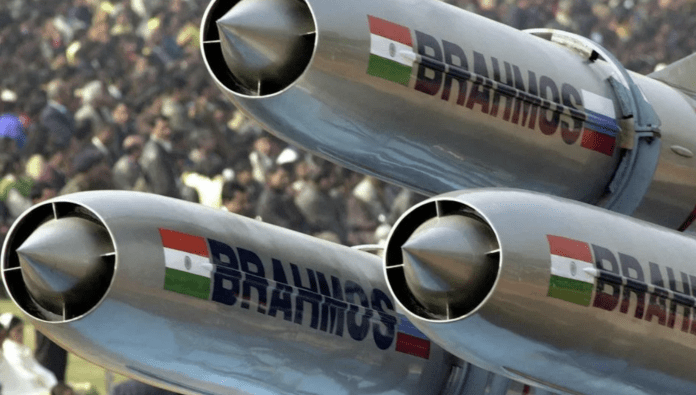
India’s strategy is clearly evident in the exports of its BrahMos and Pinaka missiles. New Delhi is using indigenous defense manufacturing as an instrument of strategic influence across the Indo-Pacific and beyond. Pinaka missiles have recently been bought by Armenia.

India has thus far delivered two of the three BrahMos missile systems — a US$375 million deal concluded with the Philippines just over four years ago. The third battery is slated for delivery soon.

India is now advancing a potential deal with Vietnam, a country at the center of maritime tensions in the South China Sea. Such exports are strategically significant because they extend India’s security partnerships while reinforcing deterrence architectures against expanding Chinese assertiveness across Asia.

The BrahMos missile ecosystem itself captures the wider logic behind India’s defense-industrial strategy. Producing and sustaining a supersonic cruise missile program requires advanced capabilities across propulsion systems, guidance technologies, precision manufacturing, software integration and complex supply-chain coordination.

Export growth validates industrial credibility while sustaining economies of scale. As exports expand, these ecosystems gain economies of scale, deepen localization and attract wider private-sector participation.

In strategic terms, BrahMos exports allow India to simultaneously strengthen global and regional partnerships, expand defense diplomacy and build long-term manufacturing depth. In economic terms, they help create exactly the kind of high-value industrial capability that India sees as critical in an era where technological sovereignty increasingly defines geopolitical power.

These programs also matter because they reduce import dependence, but because sustainable military readiness increasingly depends on production scalability during prolonged crises where industrial endurance often matters more than headline inventories.

At roughly $80,000 per guided rocket, the Pinaka system is reportedly substantially cheaper than comparable Western precision artillery systems such as the US GMLRS, which can cost upwards of $140,000 per round, giving India an important cost-efficiency advantage in sustained high-volume warfare.

Indian systems are increasingly attractive because they combine lower acquisition costs with operational flexibility and fewer political conditions than the US or China.

India’s naval expansion reflects the same strategic recalibration. The commissioning of INS Taragiri, with over 75% indigenous content, was not merely another naval induction but evidence that India’s shipbuilding ecosystem is achieving greater systems integration capability involving propulsion, stealth architecture, radar management and weapons integration.

This consciously developed interaction between defense production and economic capability is becoming central to India’s geopolitical positioning in the Indo-Pacific.

Beijing’s growing maritime presence across the Indian Ocean has forced New Delhi to think in terms of long-duration strategic competition rather than episodic military balancing. That requires manufacturing resilience. States dependent on external suppliers eventually face strategic constraints during crises, sanctions or supply-chain disruptions.

It also needs the localization of capabilities. The India-Germany submarine collaboration under Project-75(I) reflects this shift. The real significance of the deal lies not in platform acquisition but in technology transfer, domestic production capability and long-term industrial absorption. The objective is to reduce vulnerability in strategically sensitive sectors while building sovereign manufacturing depth.

The most important development, however, may be occurring inside India’s startup ecosystem. Noida-based IG Defense’s JWALA system reflects the new direction. Marketed as a hybrid between a missile and a one-way attack drone, it is designed to operate in the contested space between short-range and medium-range air defense.

Whether every technical claim ultimately survives operational testing is secondary to the larger trend: private Indian firms are now developing sophisticated battlefield systems involving AESA radars, autonomous guidance and multi-role engagement capability.

The same shift is visible in space security. Indian startups are working with government agencies on “bodyguard satellites” capable of protecting strategic space assets from hostile interference. That places India within an emerging frontier where commercial space capabilities, military deterrence and strategic surveillance increasingly overlap.

Drone manufacturing may become India’s largest asymmetric opportunity. India is now attempting to build indigenous capability across swarm intelligence, UAV propulsion, autonomous navigation and electronic warfare-linked drone operations. If Indian firms achieve scale and reliability, they could become globally competitive suppliers in a rapidly expanding market.

Execution risks remain a factor. India still depends heavily on imports for engines, semiconductors and advanced electronics. But the broader trajectory is becoming difficult to miss. India is attempting to convert defense manufacturing into a long-term geopolitical advantage.

In a world where industrial depth increasingly determines strategic power, that may become one of India’s most consequential shifts of the decade.

Vivek Y. Kelkar is a researcher and analyst focused on the intersection of geoeconomics, geopolitics and corporate strategy

Savannah Guthrie’s Husband Shares Heartbreaking Mother’s Day Tribute

0
savannah-guthrie’s-husband-shares-heartbreaking-mother’s-day-tribute
Savannah Guthrie’s Husband Shares Heartbreaking Mother’s Day Tribute


Savannah Guthrie’s family is spending Mother’s Day in heartbreak as the Today star continues searching for answers in the mysterious disappearance of her mother, Nancy Guthrie.

Nearly 100 days after Nancy vanished from her Arizona home, the emotional toll on the NBC anchor is only getting worse — and now her husband is publicly showing just how much pain the family is still carrying.

Savannah’s husband, Michael Feldman, shared a touching tribute to the longtime TV host on Instagram Sunday alongside a sweet family photo showing Savannah kissing their two children, Vale and Charley.

“To the strongest person I know,” Feldman wrote. “Surrounding you with love on Mother’s Day. ❤️💔❤️.”

The heartbreaking message immediately caught fans’ attention as Savannah continues struggling through what she previously described as the “unbearable” nightmare of not knowing what happened to her mother.

The beloved broadcaster broke down in tears during an emotional interview earlier this year while discussing Nancy’s disappearance.

“It is unbearable,” Savannah admitted while fighting back tears.

She revealed that the trauma has consumed her almost every night since her mother vanished.

“And to think of what she went through… I wake up every night in the middle of the night, every night, and in the darkness, I imagine her terror,” she said.

The emotional interview stunned viewers as Savannah openly apologized to her missing mother, even confessing fears that her own fame may somehow have made Nancy a target.

“I just want to say, I’m so sorry, mommy,” she said tearfully.

Savannah also slammed cruel online rumors surrounding members of her own family, including siblings Camron and Annie Guthrie, calling the speculation devastating during an already unimaginable ordeal.

“There are no words,” she said. “I don’t understand, and I’ll never understand.”

Now, after months of mystery and fear, authorities say they may finally be making progress.

Pima County Sheriff Chris Nanos recently hinted investigators are getting closer to answers in the case, teasing there have been “really great” developments behind the scenes.

Still, officials have refused to reveal exactly what they’ve uncovered.

As the investigation continues, criminal profilers appearing in NewsNation Presents: The Nancy Guthrie Mystery are raising disturbing new theories about why Nancy may have been targeted in the first place.

Profiler Dr. Ann Burgess said she does not believe Nancy personally knew whoever may be responsible.

Instead, experts fear Savannah herself could have been the real focus.

Behavior analyst Dr. Casey Jordan suggested the suspect may have recognized Nancy because of her famous daughter and intentionally targeted the elderly woman to emotionally destroy the Today host.

When NewsNation correspondent Brian Entin asked who may have suffered most from the disappearance, Burgess pointed directly at Savannah.

“In this case, it doesn’t have to be the mother,” Burgess explained. “It could be somebody in the family. Somebody — Savannah.”

Asked if the suspect may have wanted Savannah to “suffer,” Burgess responded simply: “Yes.”

“And she’s haunted by that,” Jordan added.

“I mean, it’s her mother,” Burgess said.

After Bibi: the comforting myth that a man is the problem

0
after-bibi:-the-comforting-myth-that-a-man-is-the-problem
After Bibi: the comforting myth that a man is the problem

There is a familiar parlor game underway in Washington and Tel Aviv, played with renewed enthusiasm now that Naftali Bennett and Yair Lapid have once again merged their parties under the banner Beyachad, and the polls are showing — as they have for months — that Benjamin Netanyahu’s coalition can no longer assemble a Knesset majority.

The game goes by various names: “The Day After Bibi,” “Israel’s Reset,” “A New Chapter for the Region.” The premise is always the same. Once Netanyahu finally exits the political stage — defeated at the ballot box, pardoned into retirement or simply outlasted by his own mortality — the wheels of Middle East peace will start turning again.

Saudi normalization will be unfrozen. The Palestinians will get a serious interlocutor. Iran will be contained through diplomacy rather than bombs. The Abraham Accords will be expanded. The two-state solution, declared dead a thousand times, will be exhumed once more. It is a beautiful story. It is also, to put it as charitably as possible, nonsense.

This is not an argument that Netanyahu is a good prime minister, or that his particular blend of cynicism and longevity has not done real damage to Israeli democracy and to American interests in the region. He is, and it has.

But the pundits who treat his eventual departure as the magic key to regional transformation are committing the same analytical error they have committed for 30 years: they have mistaken a symptom for a cause.

Consider what the realistic post-Netanyahu coalition would actually look like. Bennett — the man cast in the New York Times as the great hope — has explicitly ruled out ceding any territory to the Palestinians and declared he will not govern with Arab parties.

Lapid, the centrist alternative, has spent the last year flailing in the polls because his electorate has moved sharply rightward since October 7. Gadi Eisenkot, the former Israel Defense Forces (IDF) chief of staff being courted as a dignified third leg of the opposition, prosecuted the Gaza campaign with as much vigor as anyone.

Avigdor Liberman, often imagined in the West as a moderating influence, is the man who once proposed transferring Israeli Arab citizens out of the country. This is the cast of characters from which our commentariat expects a Palestinian breakthrough?

The deeper point, which the personality-driven coverage obscures, is that Israeli public opinion has undergone a structural shift that no leadership change will reverse in the short term.

The trauma of October 7, 2023, was not metabolized by the Israeli electorate as an argument for compromise. It was metabolized as an argument that compromise — the Gaza disengagement above all — had been a catastrophic mistake. You can deplore this shift, as I do. You cannot wish it away by changing the man at the top.

And the personality-driven story is, of course, even more threadbare on the Palestinian side. Mahmoud Abbas is approaching ninety and presides over an Authority that controls a portion of the West Bank at the discretion of an Israeli army that arrests his security cooperation partners on a rotating basis.

Hamas, however degraded militarily, still commands genuine support among Palestinians who see no political horizon and increasingly see Fatah as a collaborationist relic. There is no “Palestinian Mandela” waiting in the wings. There is no unified address.

The premise of Oslo — that two coherent national movements could trade land for peace through their recognized leaderships — looks, from the vantage point of 2026, like a dispatch from another century.

Then there is the regional context, which the American foreign-policy class has a habit of forgetting. The Saudis have made clear, with the unmistakable clarity that comes from a kingdom that has watched American resolve evaporate from Kabul to Damascus, that normalization without movement on Palestinian statehood is now a non-starter.

This was true under Biden. It was true during the second Trump administration’s opening months. It will be true the day after Netanyahu signs his concession statement. Mohammed bin Salman is not waiting for a phone call from a kinder, gentler Israeli prime minister. He is waiting for an answer to the Palestinian question that the Israeli political system, in its current configuration, is structurally incapable of providing.

Iran, meanwhile, has emerged from the spring’s bombing campaign neither destroyed nor chastened, but radicalized. Whoever leads Israel will face the same Iranian nuclear threshold problem, the same Hezbollah rearming on the Lebanese border, the same Houthi disruptions in the Red Sea, the same Shia militias in Iraq.

The Iranian regime did not become Israel’s most committed adversary because of a personality clash with Netanyahu. It became so for reasons of ideology, regime preservation, and regional ambition that long predate his political career and will long survive it.

None of this is an argument for despair, and certainly not for resignation. It is an argument for the kind of mature realism that has been in short supply in both Washington and Jerusalem for at least a generation.

The departure of Netanyahu, when it comes — and it will come, sooner than his admirers fear and later than his detractors hope — should be welcomed for what it actually offers: a domestic political reset for a country that desperately needs one.

It will offer some improvement in Israel’s diplomatic standing, some easing of the worst pressures on the rule of law, some restoration of normal channels with European capitals. These are not small things, but they are not peace.

Peace, if that word still has any operational meaning, requires structural changes that no Israeli or Palestinian or American politician currently in the field is offering: a serious reckoning with the demographic and territorial realities west of the Jordan, a credible Palestinian political authority with the legitimacy to make and enforce hard decisions, a regional security architecture that does not depend on US military adventures the American public no longer wishes to fund.

None of these will arrive on inauguration day for Prime Minister Bennett, or Lapid or whichever permutation of the Israeli center-right ultimately assembles 61 seats. The Middle East has a habit of disappointing those who arrive bearing visions. The visions change; the disappointment does not. The names rotate; the conflict abides.

This article was originally published on Leon Hadar’s Global Zeitgeist and is republished with kind permission. Become a subscriber here.

Fernández Tells Herzog She Wants Costa Rican Embassy in Jerusalem

0
fernandez-tells-herzog-she-wants-costa-rican-embassy-in-jerusalem
Fernández Tells Herzog She Wants Costa Rican Embassy in Jerusalem


Costa Rican President Laura Fernández Delgado told Israeli President Isaac Herzog on Friday that she wants to upgrade Costa Rica’s diplomatic mission in Jerusalem into an embassy, according to Herzog’s office, in a move that would reverse a 2006 decision to relocate the country’s embassy in Israel to Tel Aviv.

The two leaders met in San José shortly after Fernández’s inauguration, which Herzog attended as Israel’s representative. The meeting was Fernández’s first official meeting as president, according to Herzog’s office.

Costa Rica had long maintained its embassy in Jerusalem before then-President Óscar Arias moved it to Tel Aviv in 2006, saying at the time that the change was meant to bring Costa Rican policy in line with international practice and improve ties with Arab countries. Most countries keep their embassies in Tel Aviv because the final status of Jerusalem remains one of the core disputes in the Israeli-Palestinian conflict. Israel considers Jerusalem its capital, while the Palestinians seek east Jerusalem as the capital of a future state.

Fernández was sworn in Friday as Costa Rica’s president for the 2026-2030 term, succeeding Rodrigo Chaves. Her administration is expected to continue much of Chaves’ political agenda, including a focus on security and closer ties with Washington. Herzog met Fernández on the sidelines of the inauguration, along with several other regional and international leaders.

Herzog’s office said he also met King Felipe VI of Spain, Chilean President José Antonio Kast, Honduran President Nasry Asfura, Guatemalan President Bernardo Arévalo, and Dominican President Rodolfo Abinader Corona.

“I was moved to see the depth of appreciation for Israel, the great interest in its capabilities, and the recognition of its unique contribution to humanity,” Herzog said before returning to Israel.

“In contrast to many voices on the international stage, a positive trend of change, tightening of ties, and deepening of cooperation with Israel is evident in Latin America,” he said.

Herzog’s office said he also attended Shabbat morning prayers at the Centro Israelita Sionista de Costa Rica in San José, where he read the Haftarah and addressed the congregation.

War with Iran ‘not over,’ says Israeli prime minister

0
war-with-iran-‘not-over,’-says-israeli-prime-minister
War with Iran ‘not over,’ says Israeli prime minister

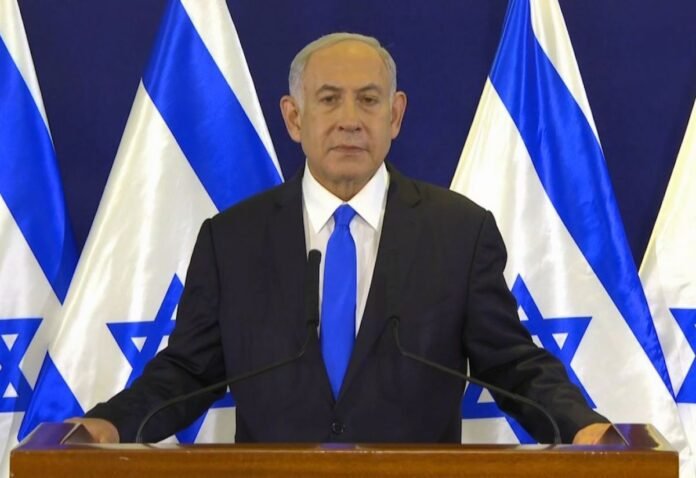
Israeli Prime Minister Benjamin Netanyahu said Sunday that the war with Iran “is not over,” Anadolu reports.

“The war with Iran is not over, and the enrichment facilities must be dismantled and the highly enriched uranium removed,” Netanyahu told the US’ CBS News in an interview, excerpts of which were posted by Israeli news site Walla.

He said the objectives of the US/Israeli war against Tehran – currently under a ceasefire – include “removing enriched uranium, dismantling enrichment sites, halting ballistic missile production, and neutralizing Iran’s proxies in the region.”

“There is still work to be done because Iran still possesses capabilities, even though we have significantly reduced them,” he claimed.

Netanyahu said it is possible to “go in and take the uranium” from Iran, refusing to elaborate, but claimed that US President Donald Trump told him: “I want to go in there.”

On Saturday, Israeli media claimed that Trump pledged to Netanyahu that he would not make any concessions on the Iranian uranium issue, as Tel Aviv awaits Washington’s decision on the future of its dealings with Tehran.

Israeli Channel 13, citing an unnamed official, said that Israel is “continuously awaiting and anticipating” Trump’s decision on Iran.

Early Sunday, Iran sent to Pakistani mediators its response to the latest US proposal for ending the war, Iran’s state-run IRNA news agency reported, without giving details about its content.

Regional tensions have escalated since the US and Israel launched strikes against Iran on Feb. 28, triggering retaliation from Tehran against Israel as well as US allies in the Gulf, along with the closure of the Strait of Hormuz.

A ceasefire took effect on April 8 through Pakistani mediation, but talks in Islamabad failed to produce a lasting agreement. The truce was later extended by Trump without a set deadline, giving way to diplomacy for a permanent solution to the war.

Melania Trump Becoming a Political ‘Liability’ for White House?

0
melania-trump-becoming-a-political-‘liability’-for-white-house?
Melania Trump Becoming a Political ‘Liability’ for White House?


Melania Trump is once again at the center of controversy after longtime Trump biographer Michael Wolff claimed the first lady may be turning into a political “liability” for the White House.

The explosive comments came after Melania published a Mother’s Day essay in The Washington Post that quickly sparked backlash online and reignited debate over her unusual role in President Donald Trump’s administration.

In the essay, Melania praised mothers as “the foundation” of democracy and called them the “first teachers of empathy, aspiration, and discipline.” She also wrote that she continues to challenge herself by thinking “beyond the traditional responsibilities of the East Wing.”

But critics immediately pounced on the piece, with many mocking the fact that the East Wing itself was demolished during renovations last year.

One viral comment underneath the article took a shot at the newspaper itself, reading: “The Washington Post was once a great newspaper and my reliable companion every morning. Now it’s… this.”

The backlash only fueled more criticism from Wolff, who unloaded on the first lady during an appearance on The Daily Beast’s Inside Trump’s Head podcast.

“I mean, in the times that she has come out, that has not been good for them,” Wolff said while discussing Melania’s recent public appearances.

He also pointed to her comments distancing herself from convicted sex offender Jeffrey Epstein, claiming the remarks only dragged the scandal back into public conversation.

“The Epstein thing, drawing attention to that. Her just peculiar attitude about everything… her strategic absences,” Wolff claimed. “This is not good for them, and it’s not necessarily controllable for them.”

The controversial author then suggested Melania’s recent moves “could be dangerous for Donald Trump” politically as the White House tries to avoid distractions heading deeper into the election cycle.

Wolff’s co-host, former magazine editor Joanna Coles, also ripped apart Melania’s Mother’s Day essay, calling it flat and uninspired.

“There are so many ghostwriters and speechwriters you could call to write something really moving and rousing,” Coles said. “And yet, they’ve chosen to go the lazy route.”

Wolff went even further by questioning why The Washington Post decided to publish the piece at all.

“When they’re handed this thing, why wouldn’t they say, no, obviously we can’t publish this,” he said, suggesting the newspaper may have believed the essay would “hang itself.”

The White House has repeatedly blasted Wolff over the years for his reporting on Trump and his family. Communications director Steven Cheung previously attacked the author as a “lying sack of s—” and accused him of fabricating stories about the president.

Still, Melania’s limited appearances and carefully timed statements continue to attract intense scrutiny — especially as speculation grows over how involved she truly wants to be during Trump’s return to the White House.

0FansLike
0FollowersFollow
0FollowersFollow
0SubscribersSubscribe
- Advertisement -
Google search engine

Recent Posts