14.9 C
London
Saturday, May 9, 2026
Home Blog

Lebanese premier, Syrian president make ‘significant progress’ on issues in Damascus meeting

0
lebanese-premier,-syrian-president-make-‘significant-progress’-on-issues-in-damascus-meeting
Lebanese premier, Syrian president make ‘significant progress’ on issues in Damascus meeting

Lebanese Premier Nawaf Salam said he made “significant progress” on shared issues as he met Syrian President Ahmad al-Sharaa in Damascus on Saturday and discussed bilateral, regional and international developments, Anadolu reports.

Salam arrived in Damascus on a day-long visit, his second since taking office last year, following his first visit on April 14, 2025.

The SANA news agency said Sharaa received Salam at the People’s Palace in Damascus in the presence of ministerial delegations from both countries.

Both sides discussed ways to strengthen bilateral ties, besides developing economic and trade cooperation in a manner that serves common interests and enhancing security coordination to support stability and confront challenges.

Salam’s office said he led a delegation to Syria including Deputy Prime Minister Tarek Mitri, Energy and Water Minister Joseph Saddi, Economy and Trade Minister Amer Bisat, Public Works and Transport Minister Fayez Rasamny, and adviser Ambassador Claude Hajjal.

In a press conference at the Damascus airport, prior to his departure from Syria, Salam said they made significant progress in addressing shared issues, particularly in the fields of economy, energy, transportation, and security, and that tangible results will appear soon.

He said they also discussed challenges faced by both Lebanon and Syria, and will continue consultations at the political level, and strengthen cooperation. For this purpose, he said, the two countries will establish joint committees and intensify communication at the ministerial level.

“We discussed the significant challenges facing Lebanon and Syria in light of the rapidly evolving regional developments on multiple fronts,” the prime minister added.

READ: Lebanon committed to full ceasefire before talks with Israel: President

The meeting addressed “following up on the implementation of agreements signed between the two countries regarding the transfer of convicted prisoners to Syria and determining the fate of missing persons in both countries,” Salam said.

In February, Lebanon and Syria signed an agreement to transfer approximately 300 Syrian convicts to their country, a matter dating back to the years of the Syrian revolution.

Syria announced receiving the first batch of prisoners from Lebanese prisons a month later in March. Official estimates indicate that the number of Syrian detainees in Lebanese prisons is around 2,500, about one-third of the total number of prisoners in Lebanon.

Regarding Syrian refugees, Salam said the discussions focused “on the necessity of continuing dialogue and cooperation to facilitate the safe return of refugees to their homes and to regulate Syrian labor in Lebanon.”

Lebanese estimates suggest the number of Syrian refugees in Lebanon equals approximately 1.5 million, including about 880,000 registered with the UNHCR. Beirut launched a voluntary repatriation program for Syrian refugees in June 2025.

Last January, Sharaa said a majority of Syrian citizens living abroad could return within the next two years.

The Lebanese premier made his first official visit to Syria in April 2025, months after the war-torn country formed a transitional government, following the fall of the Assad regime in December 2024.

The Nintendo Switch 2 is getting more expensive later this year

0
the-nintendo-switch-2-is-getting-more-expensive-later-this-year
The Nintendo Switch 2 is getting more expensive later this year

When we reviewed the Switch 2 just after its launch last year, we warned that interested customers might want to buy in early, as the launch price could go up. That potential price hike became a reality today, as Nintendo announced the Switch 2’s MSRP will increase to $499.99 on September 1, a $50 (and about 11 percent) increase from the $449.99 launch price.

In an announcement of the impending price increase today, Nintendo cited “changes in market conditions” and “the global business outlook” that are “expected to extend over the medium to long term.” That’s likely a reference to the climbing RAM and storage prices that have been impacting all sorts of hardware makers for months.

Nintendo’s pricing move means all three current major consoles have now increased in price since launch. Sony’s PS5 got its second price increase in March, just eight months after its first price hike. The Xbox Series consoles saw their second price increase in September, five months after an initial price hike. Nintendo also raised the price of the aging original Switch console for the first time last year.

These now-routine price increases are a marked change from a decades-long period where game consoles routinely and quickly dropped in price in the years after their launch. Even before recent component shortages, though, a combination of higher-than-normal inflation, the slowing of Moore’s Law, tariff-related market shocks, and spiking gas prices have made the once-reliable console price drop a fading market memory.

In updated financial forecasts also released today, Nintendo cited “the impact of these price revisions” in projecting sales of 16.5 million Switch 2 units in the current fiscal year (ending March 2027). That’s down from 19.86 million sales in the console’s first fiscal year, but it still “represents a solid level of adoption for Nintendo Switch 2 in its second year after launch,” the company wrote.

Outside of the US, Nintendo announced the following new hardware prices for other markets:

  • Canada: $679.99 (from $629.99)
  • Europe: €499.99 (from €469.99)
  • Japan: ¥59,980 (from ¥49,980 – effective May 25)

Time to scrap constitutional constraints on Japan’s military

0
time-to-scrap-constitutional-constraints-on-japan’s-military
Time to scrap constitutional constraints on Japan’s military

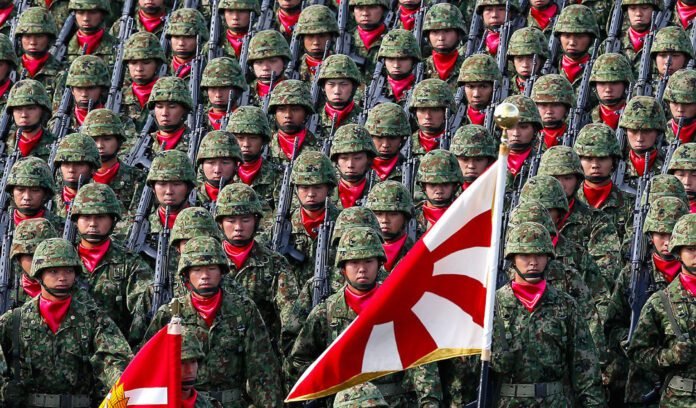
Despite constitutional constraints on its armed forces, Japan has continued to move closer toward military normalization this year. Although it is controversial, most countries in the Asia-Pacific region should welcome this trend.

In April, Japan’s cabinet approved revisions to its regulations on the export of Japan-made arms to other countries. Previously, exports were limited to non-lethal defense equipment such as rescue, surveillance or minesweeping gear.  

Exports of lethal equipment are now allowed, with some restrictions. Japan can sell warplanes, warships, missiles and killer drones. Erstwhile foes, the US and the Philippines, immediately praised the change. The move will strengthen Japan’s defense industrial base by providing a larger stream of orders.

Similarly, Japan is moving toward closer cooperation with security partners in developing and manufacturing weapons systems. Japan is contracted to sell Australia up to 11 frigates, some to be built in Japan and some in Australia.  

Japanese engineers are jointly developing a new generation of fighter jets with the UK and Italy. Japan already repairs US Navy vessels and may soon start building them also. A Japanese project to build nuclear-powered submarines with US assistance might be in the offing.

Japan’s postwar military posture is often misleadingly called “pacifist.” Actual pacifism is a commitment to non-violence out of moral conviction. If they take this principle to its logical extreme, real pacifists will allow an enemy to kill them rather than fight back.  

Japan’s “peace constitution,” on the other hand, is a product of the postwar US occupation of Japan, Tokyo’s recognition that Japan needed reputational rehabilitation, and an alliance that allowed Japan to rely heavily on the US for military protection.

This so-called Japanese pacifism is ending gradually, not suddenly and dramatically. Since the 1950s, Japan has periodically taken important steps in this direction, starting with the establishment of a paramilitary “National Police Reserve” in 1950 in response to the outbreak of the Korean War.  

Other steps included the dispatch of Japanese troops overseas as peacekeepers starting in 1992; expansion of Japan’s defensive perimeter to “areas surrounding Japan” in 1997; providing logistical support for combat operations in the Middle East in the 2000s; raising the target for defense spending from 1% to 2% of GDP in 2022; and deciding to acquire long-range strike weapons, also in 2022.

Japan’s current government wants to go further. In May, Prime Minister Sanae Takaichi said Japan’s postwar constitution “should periodically be updated to reflect the demands of the times.” She said she aims for the ruling LDP to put forward a plan to amend the constitution by next year.

Procedurally, actually changing the constitution would not be easy. It would require the approval of two-thirds of the legislators in both houses of the Diet. Takaichi’s ruling Liberal Democratic Party could pull that off in the lower house, but not in the upper house as presently constituted. The next upper house election is in 2028.  

Constitutional revision would also require a majority of affirmative votes in a national referendum. Currently, a slight majority of the Japanese public opinion favors revising the constitution in principle, but that support ultimately depends on the specific proposed changes.

There are several arguments against Japan revising its constitution to give its armed forces the same legal status as the militaries in other countries. These arguments, however, are unpersuasive.

Argument 1: Japan will fall back into militarism

The Chinese and North Korean governments argue that Japan is eternally “militarist,” ignoring the transformation of Japan’s society and political system since the end of the Pacific War 81 years ago.  They will play this card until the end of time if they can.  

Many Chinese and Koreans have legitimate hard feelings toward Japan, but there are ulterior motives: Beijing wants to suppress competing Japanese regional leadership, and Pyongyang bolsters its domestic political legitimacy by playing up the alleged Japan threat.

A recent example: on May 6, Japanese troops participating in the Balikatan military exercise—the first deployment of Japanese forces to the Philippines since World War II — test-fired an anti-ship missile. Chinese Foreign Ministry spokesperson Lin Jian argued that any military activity by Japan outside its own borders is a threat to the region because Japan is a “former aggressor.”  

But Lin also condemned the “collusion” between Japan and the Philippines that “may evolve further toward greater alliance-like” cooperation. This is a contradiction. Tokyo cannot be guilty of aggression if countries in the region are welcoming deeper security cooperation with Japan.

Over half of Japanese believe the international vilification of Japan for its Pacific War crimes has become excessive. (Some even deny that Japan did anything wrong during the war, but this is a fringe position.)

A majority of Japanese want stronger armed forces. These attitudes are similar to the nationalistic beliefs widely held in most countries. They do not, however, necessarily imply “militarism,” which is support for a foreign policy of imperialist conquest. There is no evidence of such support in Japan.

Argument 2: The “peace constitution” gives Japan international credibility and moral authority

Conversely, removing the unique restrictions on Japan’s military would destroy the trust Japan has built with neighboring states.

Japan does indeed enjoy a positive reputation.  In the most recent survey of elite opinion in Southeast Asia by the ISEAS-Yosof Ishak Institute in Singapore, 65% of respondents said they believe Japan “will do the right thing in contributing to global peace, security and governance,” as opposed to 44% for the US and 40% for China.      

Japan’s credibility and moral authority stem mainly from two sources. First, Japan is the only country to have suffered a strike by nuclear weapons. Second, Japan has been a model international citizen since the end of the Pacific War. Revising the Japanese constitution would not nullify either of these qualifications.

Increasingly, Japan’s neighbors want Tokyo to contribute to regional security not by being “pacifist,” but by helping other states build the capacity to stand up to the shared threat from China. Constitutional revision would facilitate that.

Argument 3: The current restrictions help protect Japan from being dragged by the US into a war that Tokyo would prefer to stay out of.

In March, Takaichi cited Article 9, the peace clause in the Japanese constitution, when she declined a Washington request for Japan to dispatch naval forces to help open the Strait of Hormuz. Article 9 provides a convenient excuse in this kind of situation while minimizing the risk that the US will complain that Japan is a bad ally.

Without Article 9, Japan would need to find another way of navigating this dilemma, as do every one of America’s other allies, who never had an Article 9. South Korea’s government, for example, responded to a similar US call to send forces to the Persian Gulf request by politely stalling: “We have been paying close attention” and “will carefully review the matter and make a judgment in close coordination with the United States.” Seoul did not send forces.

But more importantly, the alliance would be healthier if Tokyo could say that its decision to join a particular conflict is based on whether participation is in Japan’s interest. Moreover, even if Japan decides not to go along in a particular instance, influential members of Congress and senior US policy-makers and practitioners, who clearly see enduring value in the US-Japan alliance, are not likely to cast the relationship away casually.

Argument 4: Japan can be secure without changing its constitution.

It’s true that Japan has managed to build a capable military despite having a constitution that says “land, sea, and air forces, as well as other war potential, will never be maintained.”

Japan has acquired long-range strike capabilities, including the US Tomahawk cruise missile, and has an aircraft carrier that operates F-35s. The Japanese government has accepted the principle of collective self-defense and has broken through the self-imposed 1% barrier for defense spending. Potential adversaries China and North Korea are not blinded to Japan’s military capabilities by the moniker “Self Defense Forces.”

But Japan still has one hand partly tied behind its back. Constitutional constraints prohibit the use of military power beyond the minimum level necessary to meet a clear and imminent threat to Japan’s survival. This limits Japan’s options for meeting brewing threats that would make the external environment less safe for Japan.

The Japanese government’s interpretation of what is legal under the principle of “collective defense” is narrower than what international law allows. Japan cannot pledge to defend its security partners, since most significant proposed deployments outside Japanese territory require the Diet’s specific approval.

With constitutional revision, Tokyo could enter into stronger security cooperation agreements with regional partners. Japan could support the US or another friendly country in scenarios that don’t involve a clear and immediate threat to Japan’s survival — for example, shooting down missiles heading for US territory or joining a “coalition of the willing” to combat a security threat in another geographic region.

Constitutional recognition of the Self Defense Forces as a national military force would remove legal obstructions to research and development, budgeting, expansion, and quick decision-making.

Argument 5: Removal of the postwar restrictions on Japan’s armed forces would trigger an arms race

China has the largest military in Asia by far, most of it operating modern equipment, as well as a growing nuclear weapons arsenal.

The argument that Japanese military normalization would increase geopolitical tensions in the region would blame Japan for refusing to accept decisive military inferiority to China.  

A competitive balance is not worse for the region than unchecked Chinese domination. China started the race, initially running unopposed. Tokyo is reacting to the combination of China’s rapid buildup and expansionist intentions, including designs on what Tokyo views as Japanese territory: parts of the East China Sea, the Senkaku Islands, and the Ryukyu Islands.

In any case, even a Japan much better armed than it is today and free of the postwar constraints on its military will not pose a threat to China for the foreseeable future. China enjoys insuperable advantages over Japan in geographic size, population, resources, manufacturing capacity and inventories of both conventional combat platforms and nuclear weapons.      

Much of the Japanese public views the Self-Defense Forces as a disaster relief organization rather than a warfighting agency. Forcing the Japanese to confront the issue of whether Japan should have a conventional military without the familiar postwar restraints would make many of them “uncomfortable.”  

But for the Japanese public, confronting this reality is needful, if not overdue: Japan’s threat environment has worsened, and addressing this situation will have real costs.

With China’s expansionism, North Korea’s nuclear missile development, Russia’s war of aggression in Ukraine and recent doubts about the reliability of the US, Japan can no longer afford self-imposed constraints on its ability to protect itself.

Denny Roy is a senior fellow at the East-West Center in Honolulu

‘Creepy’ Prince William and Kate Wax Figures Spark Bizarre Security Alert

0
‘creepy’-prince-william-and-kate-wax-figures-spark-bizarre-security-alert
‘Creepy’ Prince William and Kate Wax Figures Spark Bizarre Security Alert


Prince William and Princess Catherine’s newly updated wax figures are causing way more drama than anyone expected.

The royal couple’s lifelike models at Madame Tussauds London have become the center of a bizarre security scare after furious visitors reportedly blasted the display as “creepy,” “terrifying,” and so unsettling that talk of trying to steal the figures allegedly started spreading in private online groups.

The famous museum recently refreshed the wax versions of William, 43, and Catherine, 44, to celebrate the couple’s 15th wedding anniversary, but instead of praise, the new display sparked a wave of intense reactions from royal fans.

The updated figures now stand inside the attraction’s Royal Palace exhibit wearing outfits inspired by the glamorous Diplomatic Reception held at Buckingham Palace in December 2023.

Kate’s wax figure was dressed in a pink evening gown complete with the Royal Victorian Order sash, the Royal Family Order of Elizabeth II, and a replica of Princess Diana’s iconic Lover’s Knot Tiara. William’s figure was styled in a black tuxedo decorated with military honors and medals linked to the Order of the Garter.

But while the museum hoped for admiration, some visitors were left seriously disturbed.

“There’s been a surprisingly intense backlash,” a source claimed. “Some royal fans have been venting online, and in more extreme cases there’s even been discussion about trying to snatch the figures because people find them so creepy.”

According to insiders, security around the display has quietly become a concern due to the bizarre reactions pouring in from visitors.

The source added that the issue seems to be the strange “almost human” appearance of the figures.

“They fall into that uncanny space where they’re almost lifelike but not quite,” the insider explained. “When you’re dealing with people as recognizable as William and Kate, even tiny details get picked apart. A lot of fans think the figures just don’t look right.”

Some museum-goers reportedly had very strong reactions after seeing the royal replicas in person.

“I hate Madame Tussauds,” one visitor said. “The figures always look off and creepy. I actually saw people getting emotional over how weird these looked.”

Experts say the reaction is not unusual when wax figures miss the mark.

One waxworks specialist explained that realistic models can quickly become unsettling if they look just slightly unnatural.

“The Prince and Princess of Wales are among the most photographed people in the world,” the expert said. “Visitors instantly notice even the smallest inaccuracies, and that can create discomfort instead of admiration.”

Not everyone hated the new look, though.

Some visitors praised the museum’s work and insisted the royal couple’s figures were among the better celebrity wax models on display.

“These wax figures are usually awful, but William and Kate actually look pretty good,” one fan admitted.

Another visitor wrote: “Wow. They are both very good likenesses.”

The strange controversy comes just as William and Kate recently celebrated their anniversary by releasing a sweet family photo featuring Prince George, Princess Charlotte, Prince Louis, and the family dog, Orla, during a visit to Cornwall.

Which Macs are suffering from shortages—and where are things getting worse?

0

The Apple Macintosh is more than 40 years old, but it’s still going strong, and its recent success was significant enough that Apple CEO Tim Cook called it out during the company’s earnings call last week. In particular, Cook credited the new low-cost MacBook Neo, which Apple says is attracting a fair number of new Mac buyers rather than simply prompting upgrades from previous customers.

But Cook also noted that the Mac’s success was being held back somewhat by “supply constraints… on several Mac models,” which was exacerbated by “less flexibility in the supply chain” than Apple was used to; the company also expects to pay “significantly higher” prices for RAM than it has been so far. In other words, shortages of everything from RAM to storage to advanced chipmaking capacity are making it harder for Apple to produce as many Macs as it can sell.

Sites that track Apple news currently post multiple times a month about Mac shortages, noting each time Apple removes a Mac mini model from its online store and religiously reporting on shipping estimates for the MacBook Neo. But because those spot checks only account for Apple’s inventory at a moment in time, I did what I sometimes do when I want to back up vibes with empirical data: I made a big spreadsheet (the full thing is here; only a few representative snippets appear in the article below).

In early April, I went through nearly every Mac configuration available—every processor, RAM, storage, and color option, plus every possible combination of each. I only skipped features like nano-texture display options or iMac VESA mounts. For models with specific shipping dates, I tracked both the soonest and the latest each model could arrive; for models that listed availability as “weeks” or “months” out, I converted those to dates using the current date at the time. I did this for 423 discrete Mac configurations.

This week, I did the whole thing again. And then I noted which ship times had changed by more than a few days.

Stating the obvious: Mac mini, Mac Studio, and MacBook Neo

Apple’s MacBook Neo is being affected by shortages, but the situation isn’t nearly as dire as it is for the desktops.

Apple’s MacBook Neo is being affected by shortages, but the situation isn’t nearly as dire as it is for the desktops. Credit: Andrew Cunningham

The Macs with the longest shipping estimates are generally the ones everyone has already been focusing on: the Mac mini, the Mac Studio, and the MacBook Neo. That’s the same now as it was in April.

The situation for the Mac mini has only gotten a little worse; there are a couple of midrange configs that shipped a few weeks faster in April than they do now, and the 16GB/512GB version that now serves as the base model actually ships a couple of days faster now than it did a month ago. But Apple has also made things easier for itself by discontinuing a long list of configurations that could still be purchased a month ago: all 32GB M4 models, all 64GB M4 Pro models, and what used to be the baseline $599 Mac mini, with 16GB of RAM and 256GB of storage. Currently, the M4 mini with 16GB of RAM and 512GB of storage is the only one you could get within a month if you ordered it today.

Config 4/2026 days to ship 5/2026 days to ship
Mac mini, M4, 16GB/512GB 29-36 25-32
Mac mini, M4 Pro (12c), 24GB/512GB 29-36 70-84
Mac Studio, M4 Max, 36GB/512GB 22-29 63-70
Mac Studio, M4 Max, 36GB/1TB 28-35 63-70
Mac Studio, M4 Max, 512GB/64GB 42-50 50-60
Mac Studio, M3 Ultra, 96GB/1TB 36-43 63-70
Mac Studio, M3 Ultra, 96GB/2TB 42-50 63-70

But Apple is having even more trouble with the Mac Studio; the company has discontinued many of the Studio’s configuration options, and the ones that remain will arrive weeks later than they would have if you had ordered in April. All M4 Max Mac Studio models with 48GB of RAM or 128GB of RAM are gone, as is the 256GB version of the M3 Ultra Studio. (As for the 512GB model, not only has it been gone for months, but Apple’s support page has erased any record of its existence. Apple was actively playing up its capabilities as recently as November!)

That Apple is struggling even more with the Studio than with the mini makes some sense; one has to imagine that the market for a $2,000-and-up desktop computer in 2026 is pretty small, so if demand spikes unexpectedly, there’s that much less capacity to handle it.

Cook attributes the desktop shortages in part to demand from AI enthusiasts running models locally on Mac hardware—Apple Silicon’s low power usage, good performance, and unified memory pool accessible by both the CPU and GPU have made them popular among these buyers. Combine that with the fact that replacements for these computers are reportedly due soon and that Apple often winds down production of old models before introducing new ones, and you have a recipe for extreme shortages.

MacBook Neo 4/2026 days to ship 5/2026 days to ship
256GB, Silver 15-23 15-23
512GB, Silver 15-23 15-23
256GB, Blush 15-23 15-23
512GB, Blush 15-23 15-23
256GB, Citrus 15-23 15-23
512GB, Indigo 15-23 15-23
256GB, Silver 15-23 15-23
512GB, Silver 15-23 15-23

The situation with the MacBook Neo is different. For one, it remains much easier to get than either desktop; one ordered now should arrive within two or three weeks. This has generated headlines, but it’s the same shipping estimate Apple was giving a month ago. While I don’t have March data recorded, it appears to be the same shipping estimate Apple was giving two months ago, shortly after the Neo launched.

And unlike the desktops, the Neo remains readily available through third-party retailers like Amazon, Best Buy, and Walmart. Given that the Neo is a play for new Mac owners, it probably makes sense for Apple to prioritize other retailers over its own store. And if Apple isn’t keeping up with demand, it at least isn’t falling farther behind, as it is with the Mac mini and Studio.

That this situation has been so stable for weeks belies the sky-is-falling behind-the-scenes reports of unforeseen demand, component shortages, and falling profit margins that have circulated about the Neo in recent weeks. If those rumors are to be believed, Apple can’t possibly continue to offer the Neo at its current price, and it must therefore be considering cutting the $599/256GB model already. If Apple is struggling this mightily to meet MacBook Neo demand, the company is showing few outward signs of it.

Other small slips: MacBook Air and MacBook Pro

The MacBook Air’s availability remains mostly good, but you’ll wait slightly longer for a 32GB RAM configuration.

The MacBook Air’s availability remains mostly good, but you’ll wait slightly longer for a 32GB RAM configuration. Credit: Andrew Cunningham

Though most of Apple’s other computers remain readily available, there are a few places in the lineup where the supply constraints Cook mentioned seem to be taking a toll.

Most notably, the 32GB configurations of the M5 MacBook Air will take two or three weeks longer to ship than they did a month ago. Apple doesn’t appear to be struggling with the 16GB or 24GB versions, and storage capacity doesn’t seem to make a difference. The M5 version of the 14-inch MacBook Pro doesn’t have the same problem; we’d imagine demand is simply higher for the less-expensive Air.

13-inch MacBook Air 4/2026 days to ship 5/2026 days to ship
8-core, 16GB/512GB, Sky Blue 1 1
10-core, 24GB/512GB, Sky Blue 1 1
32GB/512GB, Sky Blue 8-12 21-28
32GB/512GB, Silver 8-12 21-28
32GB/512GB, Starlight 8-12 21-28
32GB/512GB, Midnight 8-12 21-28

We also noticed small slips for M5 Pro and M5 Max MacBook Pros with 48GB of memory. The lower and higher memory capacities, including the top-end 64GB and 128GB options, all ship faster. There’s also an extra week or two of delay for a handful of MacBook Pros configured with 2TB, 4TB, or 8TB storage upgrades, though in general, there’s basically no sign that Apple is struggling to secure enough storage (even if some price increases have been passed on to buyers).

How about everything else?

You know what Apple desktop you can get easily? Any of the dozens of varieties of the M4 iMac.

You know what Apple desktop you can get easily? Any of the dozens of varieties of the M4 iMac. Credit: Andrew Cunningham

The shortage situation is noteworthy because it’s rare when shopping for Apple products; generally, the company’s control of its supply chain means that if it wants to sell you something, it can do so on whatever terms it chooses. That’s mostly still true.

So far, the chaos affecting Apple’s headless desktops is mostly not touching the rest of the lineup. Ship times for the vast majority of MacBook Air, MacBook Pro, and iMac models are mostly the same as they were a month ago, with a handful of basic configurations available for delivery the day after they’ve been ordered and typical-ish week-or-two wait times for most build-to-order models. There are exceptions here and there—the odd iMac color option that takes slightly longer to ship than the others—but the company’s size and sales volume have helped insulate the Mac from the kinds of across-the-board price increases we’ve seen elsewhere.

But as we track more data over more months, we’ll hopefully get a better sense of the direction things are heading. Will Apple catch up to demand for the MacBook Neo and its desktops? Will the minor delays we’re seeing for a small handful of RAM and storage options improve or get worse? It’s too early to tell the difference between a “trend” and a “blip,” but that will change as we keep revisiting the data.

In coal country, black lung surges as federal protections stall

0
in-coal-country,-black-lung-surges-as-federal-protections-stall
In coal country, black lung surges as federal protections stall

This story was originally published by Yale E360 and is reproduced here as part of the Climate Desk collaboration.

Justin Smarsh and his family used to kayak a few times a year on the rivers and creeks near their home in Cherry Tree, Pennsylvania. High on the Appalachian Plateau, northeast of Pittsburgh, he spent hours in the woods and taught his two sons to hunt. Today, Smarsh said, he gets “suffocated just walking.” He has a constant dry cough, and he loses his breath if he bends down to tie his shoes. 

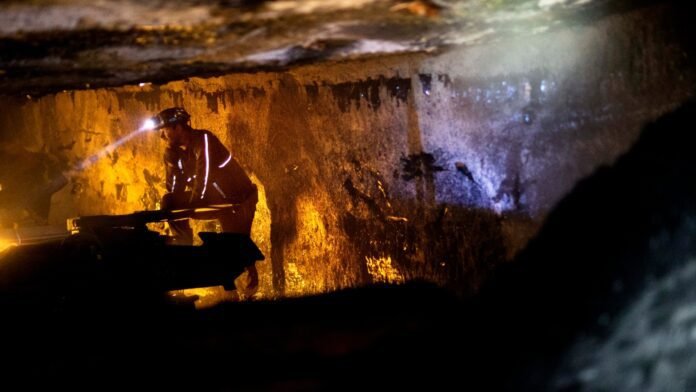
A few years after he graduated from high school and got married, Smarsh went to work in a coal mine in his home county, just as his father and grandfather had. “It was the best-paying job around,” he said. “It still is.” Now Smarsh, 42, has progressive massive fibrosis — the most severe form of coal workers’ pneumoconiosis, or black lung.

There is no cure for Smarsh’s condition. He tries to slow the progression with “piles of meds,” he said, but things will eventually worsen, potentially to the point of heart failure. In patients with advanced disease, a flu or common cold can lead to a kind of drowning as the lungs fill with fluid. Smarsh’s doctors say he won’t live to see 50. 

“Most people think coal mining is a thing of the past,” said Deanna Istik, CEO of Lungs at Work, a black lung clinic in Washington County, Pennsylvania. “Meanwhile, we see more people being diagnosed with black lung disease than we ever have before.” 

Read Next

Coal mining has always been a hazardous occupation. But today’s miners face a new danger because they’re inhaling something worse than the coal dust that settles in lungs, triggering immune cells to form nodules, masses, and scarified black tissue. Most of the large coal seams in the mountains of Appalachia are gone now. To reach smaller seams, miners must cut through much more rock with high levels of quartz, which gets pulverized into crystalline silica.

When tiny particles of silica are inhaled, they act like minute shards of glass, leading to severe tissue scarring and inflammation and eventually to progressive massive fibrosis, the most severe form of black lung disease. Researchers from the National Institute for Occupational Safety and Health, or NIOSH, estimate the disease now afflicts one in 10 working miners who have worked in mines for at least 25 years. Rising rates of the disease have led to stark increases in lung transplants and mortality. Between 2013 and 2017, hundreds of cases of progressive massive fibrosis were identified at three Virginia clinics alone, leading NIOSH to declare a renewed black lung epidemic. Black-lung-associated deaths, which declined between 1999 and 2018, rose between 2020 and 2023.

The disease is on the uptick at a time when the Trump administration is calling for the expansion of coal production. Last fall, the U.S. Department of Energy announced it was investing $625 million in coal projects, and this month, President Trump signed an executive order reaffirming coal as essential to national security, a move that will direct billions of dollars in federal funding to the industry. But while the administration is calling for more coal, it is simultaneously delaying implementation of new regulations that would protect miners from deadly silica. 

In the United States, black lung was officially acknowledged as a workplace-related illness only in the late 1960s, after a highly publicized disaster at a West Virginia mine killed 78 coal miners. Subsequent strikes and protests led to the passage of the 1969 Coal Mine Health and Safety Act, which mandated federal safety inspections of mines, set fines for violations, and established a benefits program to compensate miners with black lung. 

Three upsetting images of lungs damaged by black lung diseaseaccording to the U.S. Energy Information Administration; in 2023, production was 578 million tons, a drop of more than 50 percent. 
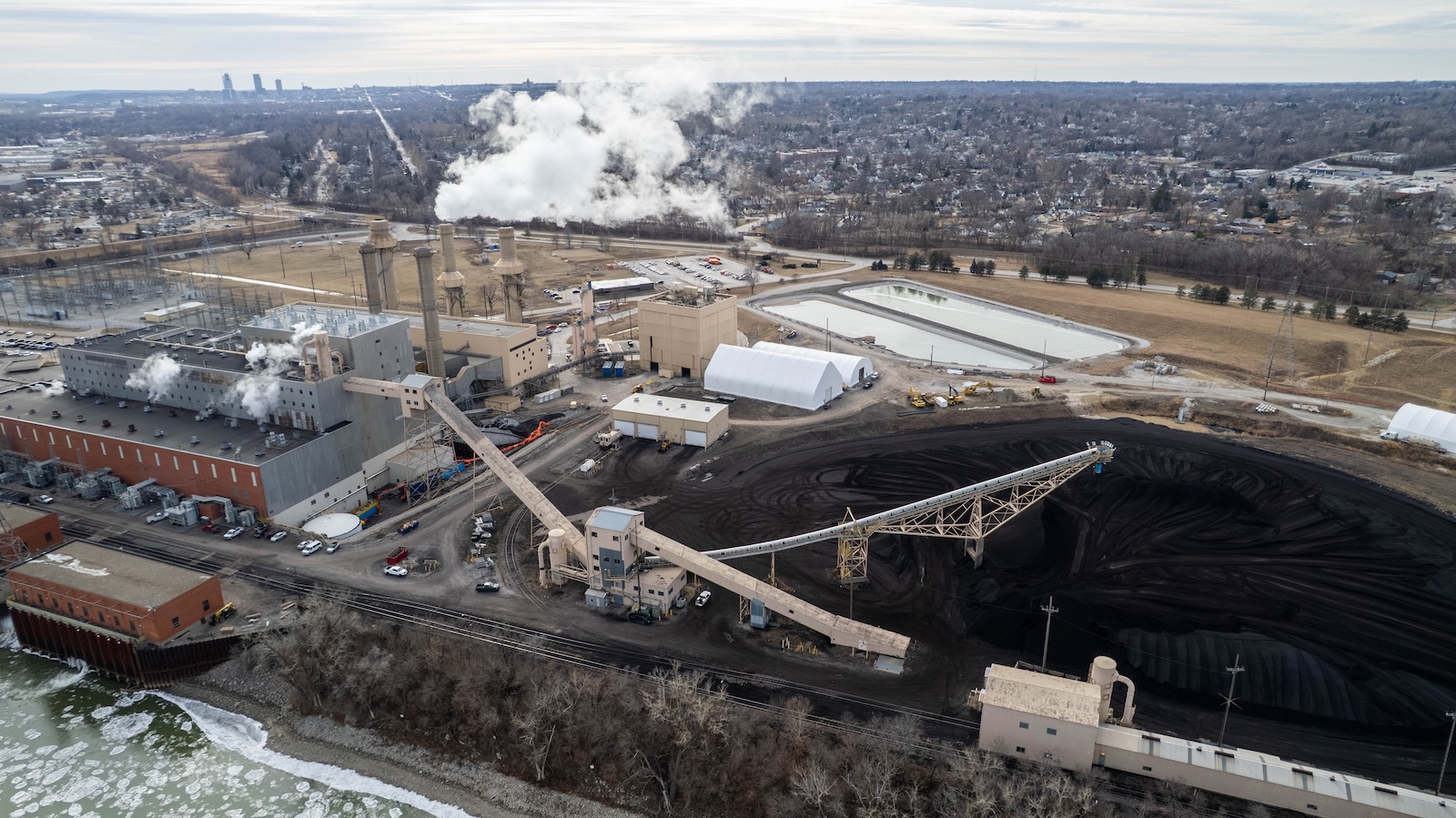
But in Pennsylvania, says Istik, “this is not a dead industry. We’re still cutting coal.” A 2024 report by the Pennsylvania Coal Alliance counted more than 5,000 mining jobs generating some $2.2 billion in economic output. Nationwide, there are still close to 40,000 coal workers. 

Black lung diagnoses continue to mount. Doctors and miner advocates say the condition is underdiagnosed, as many miners are reluctant to undergo testing for fear of losing their jobs should their employer find out. “I think there’s always going to be that fear of retribution,” said Istik. But eventually, she added, the symptoms become debilitating. Smarsh, a patient of Lungs at Work, didn’t see a doctor about his labored breathing until his wife, Alicia, insisted he had no choice. 

Black lung clinics are seeing more and more patients like Smarsh, who’ve gotten sick in their 30s and 40s. In earlier generations, miners might have needed decades of coal dust exposure to develop serious disease, if they got sick at all. “My dad and my pap were both miners, and they didn’t get it,” Smarsh said. “So, I thought, ‘Who says I’m going to?’” But today’s workers, who are breathing a much higher proportion of silica, can develop a disabling illness in much less time. 

Read Next

Smarsh worked mostly as a roof bolter — the person responsible for installing supports to prevent cave-ins — drilling up into rock. He spent eight years underground before his lung condition made it impossible for him to work, or to walk across his own backyard without using an inhaler. 

Experts have understood the dangers of silica dust for decades. In the 1970s, NIOSH suggested regulations that would limit exposure to 50 micrograms per cubic meter of air, averaged over a 10-hour workday in the mine. In 2016, the Occupational Safety and Health Administration adopted the 50-microgram silica standard for other occupations, like construction and manufacturing. But in 2017, the Mine Safety and Health Administration, or MSHA — which is mandated to conduct quarterly inspections of underground mines and enforce safety standards — responded to industry pressure and set the limit for mining at 100 micrograms over an eight-hour workday. 

After a negotiation process that spanned years and multiple administrations and involved mining industry lobbyists, legal groups, and scientists from NIOSH and other agencies, MSHA announced in 2024 that it would issue a new rule reducing the silica exposure limit in mines to 50 micrograms, with enforcement to begin in April 2025. 

The new rule would require operators to use “engineering controls,” such as improved ventilation systems, as the primary means of meeting the standard. Those tools could be supplemented, when necessary, by “administrative controls,” such as clothing decontamination and avoidance of especially dusty areas, to keep miners from breathing unacceptable amounts of silica.

The National Mining Association and other industry groups mounted a legal challenge, arguing that when ventilation systems aren’t enough to bring respirable silica levels below the 50-microgram standard, operators should be able to require miners to use respirators to achieve compliance.

But “respirators are really the last line of defense, because they aren’t foolproof,” Istik said. “Silica is such a small particle; it still comes through.” 

Smarsh wore a respirator some of the time when he was underground. But there were other times, he said, when it was too difficult to see or breathe through it. “Anytime you’re underground, you see dust,” he said. “But it’s not the dust you see that gets you. It’s the little stuff you don’t see.” 

Read Next

While respirators are important safety equipment, it should not be the coal miner’s responsibility not to get black lung, said Erin Bates, communications director of the United Mine Workers of America. It is the company, she added, that must ensure a safe work environment for its employees.

When the Trump administration came into office, it cut MSHA’s budget and staff. The agency had already been operating at a disadvantage: According to data from the Appalachian Citizens’ Law Center, MSHA’s coal mine enforcement staff has been cut in half over the last decade. The American Federation of Government Employees reported that another 7 percent of the agency’s full-time workforce accepted the Trump administration’s “Fork in the Road” buyout last year, and 90 newly hired mine inspectors had their job offers rescinded. There were concerns among black lung experts and advocates about the diminished agency’s ability to implement the new silica exposure rule. The loss included people “we desperately needed,” Carey Clarkson, who represents Labor Department workers for the federation, told NPR at the time. “I can’t image how many years of experience we lost.” 

A few days before the April 2025 enforcement date, the rule hit two different roadblocks: The 8th U.S. Circuit Court of Appeals granted an emergency stay of the rule in response to a petition led by another industry group — the National Stone, Sand & Gravel Association — and MSHA itself announced it would delay implementation to give operators more time to “come into compliance.” 

The litigation has remained in limbo. Last November, MSHA moved to have the legal proceedings paused as it “reconsiders” parts of the rule, and earlier this month it announced the delay would continue “indefinitely” pending judicial review. The agency did not respond to a request for comment. 

Bates said the union is disheartened. The agency “was literally created for the health and safety of coal miners, but they don’t want to take that into consideration,” she said.

Rebecca Shelton, director of policy for the Appalachian Citizens’ Law Center, which has been advocating for a new silica rule since the late 2000s, said her organization had hoped to see the rule implemented under the Biden administration “because we were concerned about challenges it might face.” The process was slowed by intense lobbying, she said, and MSHA’s need to study the rule’s impact across diverse mining industries. 

“If the Trump administration actually cared about protecting coal miners from black lung, we’d have a strong silica rule in place right now,” she said in a statement issued by the center after MSHA announced the indefinite delay. “Instead, they are hiding behind a ridiculous legal process to delay action while miners get sick and die.” 

Smarsh said his 19-year-old son wants to work in the coal mines. “Me and my wife tell him all the time, you see what I’m going through? All the good coal that was around here is gone. Now there’s nothing but rock and silica.” Gone too, Smarsh said, is any trust he once had in a coal company to keep miners safe. 

“All they’re worried about is ‘you better have that black gold,’” he said. “They say they care about miners, but you go underground, you’re taking the risk, for you to get nothing but sick, and to fill their pockets full.” 


Iran weaponizes petroyuan in war reparations push

0
iran-weaponizes-petroyuan-in-war-reparations-push
Iran weaponizes petroyuan in war reparations push

After weeks of blockades by Iran and the United States in the Strait of Hormuz, it’s clear the narrow waterway is now pivotal to the outcome of the conflict.

The US has begun to escort ships through the narrow passage, but behind the military manoeuvring lies a deeper development: energy security in the Persian Gulf is in a state of profound flux.

As well as the desire by both Iran and the US to control the global flow of oil, gas, helium and fertilisers from the region, the United Arab Emirates (a key US ally) has withdrawn from OPEC in what’s been called a major blow to the oil cartel.

On top of this, Iran has announced plans to introduce tariffs in the Strait of Hormuz as a form of reparations for the damage caused by the war.

If imposed, these tariffs are estimated to be worth between US$40 billion and $50 billion a year to Iran, and would potentially allow it to mitigate the impact of US economic sanctions.

Crucially, tariffs would be a way to cultivate stronger relations with China because they would be denominated in Chinese yuan, not US dollars. This has the potential to significantly alter regional and global power balances.

In fact, such payments have reportedly already been made by vessels going to China, India and Japan, with the Iranian parliament working to formalise the process. (Iran has also begun accepting payments in cryptocurrency.)

50 years of dominance

If Iran can continue to charge these tariffs it could tilt regional influence away from the US towards China and Asia by eroding the historical dominance of the petrodollar.

Essentially, the petrodollar system has seen the pricing and trading of oil in US dollars. The term dates from the 1970s when the US asked Saudi Arabia to exclusively price its oil in US dollars in return for military aid.

This spread across OPEC (the Organization of the Petroleum Exporting Countries), becoming the benchmark of the global oil trade, bolstering the US dollar as the global reserve currency and underwriting US power.

Oil-producing nations amassed huge petrodollar surpluses – too much to invest only in their own economies – which were funnelled or “recycled” back into US securities and stocks, and other countries’ sovereign wealth funds.

They have become the primary source of revenue for OPEC members, as well as non-member oil exporters Qatar and Norway. This ties these countries to Washington and gives the US significant financial leverage in global affairs. The flow of petrodollars helps finance US deficits and reduce US borrowing costs.

A new paradigm?

If major regional players such as the UAE, Bahrain, Qatar, Kuwait and Saudi Arabia pay Iranian tariffs in “petroyuans”, economist Antonio Bhardwaj has said, it would mark:

the systematic erosion of the petrodollar system and the emergence of the petroyuan as a credible, institutionally embedded alternative framework for settling global energy transactions.

It’s a sizeable “if”, but the introduction of tariffs would also pose a dilemma for countries that supported Iran in the conflict (implicitly or explicitly) and those that didn’t.

As internatinoal relations analyst Pakizah Parveen has written, we would see the emergence of:

a bifurcated global oil market: barrels from compliant parties would move through Hormuz in yuan. In contrast, non-compliant parties would incur significantly higher costs in dollar-denominated barrels.

Such a choice would affect major US allies such as Pakistan, South Korea, Japan and the Philippines, all of which have faced severe economic pressures as a result of the upheavals in the Gulf and Middle East.

Paying tariffs in petroyuan would draw them towards China and play into Beijing’s narrative of being a reliable and more stable economic force. It also mirrors Russia’s request for payment in yuan for its oil since 2025.

Decline of the petrodollar

It would be premature to argue Iranian tariffs will lead to a general “de-dollarization” of the world economy. But they may be a step towards a devaluing of the US dollar.

By extension, any move by other countries away from the US dollar is a move away from dependence on the US financially and politically. It would also aid China’s push to internationalise the yuan.

For the first time since 1996, global central banks hold more gold in their reserves than US debt securities. The BRICS group of countries may move further away from US influence, with China, India and Brazil having all reduced their US holdings in 2025.

Overall, Iranian tariffs denominated in yuan would be another sign of an emerging multipolar world in which US preeminence is no longer a given. It would mean more strategic flexibility for all countries, great and small, but also more uncertainty.

Chris Ogden is associate professor in global studies, University of Auckland, Waipapa Taumata Rau

This article is republished from The Conversation under a Creative Commons license. Read the original article.

Israeli Ministers To Vote on Bill Rejecting Non-Orthodox Conversions for Citizenship Eligibility

0
israeli-ministers-to-vote-on-bill-rejecting-non-orthodox-conversions-for-citizenship-eligibility
Israeli Ministers To Vote on Bill Rejecting Non-Orthodox Conversions for Citizenship Eligibility


Israeli ministers are scheduled to vote Sunday on legislation that would recognize only Orthodox conversions for the purpose of obtaining Israeli citizenship, in a move that would reverse a 2021 Supreme Court ruling recognizing non-Orthodox conversions under the Law of Return.

The bill was introduced by Simcha Rothman, chairman of the Knesset Constitution, Law and Justice Committee, and a member of the Religious Zionism party.

The proposal would define conversion to Judaism solely as a conversion conducted “in accordance with halakha,” or Jewish religious law.

If passed, the measure would effectively invalidate Reform and Conservative conversions performed in Israel for immigration and citizenship purposes.

Rothman said the legislation is intended to restore “the principles established by the founders of the state” while maintaining “the unity of the Jewish people” in Israel and abroad.

The proposal directly challenges a landmark 2021 Supreme Court decision that ruled non-Orthodox converts in Israel must be recognized as Jewish under the Law of Return and therefore eligible for Israeli citizenship.

Under current policy, non-Orthodox conversions are accepted for immigration under the Law of Return, although they are not recognized by Israel’s Orthodox-controlled Chief Rabbinate in matters related to marriage and divorce.

The legislation is expected to create tensions with Jewish communities outside Israel, particularly in North America, where Reform and Conservative Judaism play a major role in Jewish communal life.

The proposal follows another unsuccessful legislative effort last year by Avi Maoz of the Noam party. Maoz sought to revoke automatic immigration rights for individuals with a Jewish grandparent who are not considered Jewish according to religious law.

If the Ministerial Committee on Legislation approves Rothman’s bill, the proposal would receive formal government backing as it advances through the Knesset legislative process.

MEPs advance overhaul of social security coordination system

0
meps-advance-overhaul-of-social-security-coordination-system
MEPs advance overhaul of social security coordination system


The European Parliament’s Employment and Social Affairs Committee has endorsed a provisional agreement with EU member states on updated rules coordinating social security systems across the bloc.

The agreement was approved by 47 votes in favour, three against and four abstentions.

The updated rules are intended to ensure access to social security for EU workers who live or work in another member state, while distributing obligations fairly among countries.

Under the agreement, clearer criteria would determine which country’s social security legislation applies in cross-border cases. The rules are also intended to improve cooperation between member states by ensuring information is shared promptly to identify errors, fraud and abusive practices, including letterbox companies.

The agreement clarifies how periods of work, self-employment and insurance completed in different member states are counted when assessing entitlement to unemployment benefits. The member state where a person last worked or was insured would be responsible if the individual had been active there for at least one uninterrupted month.

People moving to another EU country to seek work would be entitled to receive unemployment benefits for six months from the country they left, with the possibility of extending payments until the end of their entitlement period.

For cross-border workers, the revised law states that benefits would be paid by the member state where the worker had been employed, self-employed or insured for an uninterrupted period of 22 weeks.

The revised rules also distinguish between family benefits paid in cash to replace income when a person reduces or gives up work to raise a child, and other family benefits. According to the agreement, the change is aimed at encouraging a more equal sharing of childcare responsibilities and removing financial disincentives for parents reducing working hours to care for children.

The agreement further clarifies how long-term care benefits should be coordinated across the EU. It introduces a definition of long-term care benefits and a list of benefits covered under the rules, with the aim of increasing legal certainty for people who need care and those providing it.

Workers or self-employed persons sent to another EU country for up to 24 months would remain insured in the member state where their employer is established or where they normally work, provided they are not replacing a previously posted employee. To address fraud and errors, workers must have been insured for at least three months before being sent abroad.

A mandatory prior notification system would also be introduced for workers carrying out activities in another member state. Exceptions would apply to business trips and short-term activities lasting no more than three consecutive days within a 30-day period, although the construction sector would not qualify for this exemption.

For people working in two or more member states, the updated rules provide additional guidance on determining the employer’s registered office or place of business. Relevant factors include where essential decisions are taken, where turnover is generated and where general meetings are held.

Negotiators also agreed, in line with rulings by the EU Court of Justice, that economically inactive mobile citizens should have comprehensive sickness insurance coverage in their host member state.

Gabriele Bischoff, (S&D,DE) the Parliament rapporteur on the file, said the committee vote marked “the next major step towards clearer, fairer and more enforceable rules for everyone who lives or works across borders in the EU.”

She said the agreement demonstrated that Europe could “protect workers, support fair mobility, strengthen trust between national systems and strengthen coordination between member states to tackle abuse.”

The provisional agreement must still be formally adopted by both the European Parliament and the Council before the updated rules can enter into force.

DNA identifies four more crew members of doomed Franklin expedition

0
dna-identifies-four-more-crew-members-of-doomed-franklin-expedition
DNA identifies four more crew members of doomed Franklin expedition

Archaeologists continue to use DNA analysis to identify the recovered remains of the doomed crew members of Captain Sir John S. Franklin’s 1846 Arctic expedition to cross the Northwest Passage. They can now add four more names to the list of previously identified crew members. The findings were reported in two papers, one published in the Journal of Archaeological Science and the other in the Polar Record.

As we’ve reported previously, Franklin’s two ships, the HMS Erebus and the HMS Terror, became icebound in the Victoria Strait, and all 129 crew members ultimately died. It has been an enduring mystery that has captured imaginations ever since. The expedition set sail on May 19, 1845, and was last seen in July 1845 in Baffin Bay by the captains of two whaling ships. Historians have compiled a reasonably credible account of what happened: The crew spent the winter of 1845–1846 on Beechey Island, where the graves of three crew members were found.

When the weather cleared, the expedition sailed into the Victoria Strait before getting trapped in the ice off King William Island in September 1846. Franklin died on June 11, 1847, per a surviving note signed by Fitzjames dated the following April. HMS Erebus Captain James Fitzjames had assumed overall command after Franklin’s death, leading 105 survivors from their ice-trapped ships. It’s believed that everyone else died while encamped for the winter or while attempting to walk back to civilization.

There was no concrete news about the expedition’s fate until 1854, when local Inuits told 19th-century Scottish explorer John Rae that they had seen about 40 people dragging a ship’s boat on a sledge along the south coast. The following year, several bodies were found . A second search in 1859 led to the discovery of a location some 80 kilometers to the south of that site, dubbed Erebus Bay, as well as several more bodies and one of the ships’ boats still mounted on a sledge. In 1861, yet another site was found just 2 kilometers away with even more bodies. When those two sites were rediscovered in the 1990s, archaeologists designated them NgLj-3 and NgLj-2, respectively.

The actual shipwrecks of the HMS Erebus and the HMS Terror were not found until 2014 and 2016, respectively. Thanks to the cold water temperature, lack of natural light, and the layers of silt covering many of the artifacts, the ship and its contents were in remarkably good condition. Even some of the windowpanes were still intact. The first underwater images and footage showing the ships’ exteriors and interiors were released in 2019.

It’s in the DNA

2D forensic facial reconstruction of David Young, Boy 1st Class from the HMS Erebus, who died at Erebus Bay.

2D forensic facial reconstruction of David Young, Boy 1st Class from the HMS Erebus, who died at Erebus Bay.

2D forensic facial reconstruction of David Young, Boy 1st Class from the HMS Erebus, who died at Erebus Bay. Credit: Diana Trepkov

For several years, scientists have been conducting DNA research to identify the remains found at these sites by comparing DNA profiles of the remains with samples taken from descendants of the expedition members. Some 46 archaeological samples (bone, tooth, or hair) from Franklin expedition-related sites on King William Island have been genetically profiled and compared to cheek swab samples from 25 descendant donors. Most did not match, but in 2021, they identified one of those bodies as chief engineer John Gregory, who worked on the Erebus.

By 2024, the team had added four more descendant donors—one related to Fitzjames (technically a second cousin five times removed through the captain’s great-grandfather). That same year, DNA analysis revealed that a tooth recovered from a mandible at one of the relevant archaeological sites was that of Captain James Fitzjames of the HMS Erebus. His remains showed clear signs of cannibalism, confirming early Inuit reports of desperate crew members resorting to eating their dead.

We can now add three more crew members identified through their DNA. As before, to make the identifications, the team extracted DNA from archaeological samples and compared it with mitochondrial and Y-chromosome DNA from descendants. These included a molar and humerus shaft from NgLj-3; two molars, a premolar, and a temporal cranium bone from NgLj-2; and a sample taken from a left humerus found in 2018 at NgLj-1. The researchers were able to identify three individuals: William Orren, able seaman; David Young, boy 1st class; and John Bridgens, subordinate officers’ steward. All served on the HMS Erebus, and they all died at Erebus Bay.

Meanwhile, the Polar Reports paper focused on identifying an unburied skeleton found in 1859 on the south shore of King William Island. The skeleton was found with a seaman’s certificate and other papers in a leather pocketbook belonging to Petty Officer Harry Peglar of the HMS Terror. However, the clothing found scattered around the remains was not of the sort usually worn by seamen or officers. The items included a double-breasted waistcoat and a black silk neckerchief tied in a bowknot, more indicative of what would be worn by a steward or officer’s servant, as well as a clothes brush.

For a long time, the consensus was that the remains were most likely those of a steward. There were four on each of the two ships in the Franklin expedition, with the best candidates being Thomas Armitage, gunroom steward, or William Gibson, subordinate officers’ steward, both of whom served on the HMS Terror. The authors estimated the skeleton’s height via osteological analysis and compared DNA samples taken from the skeleton to those of descendants of six of the eight stewards and Harry Peglar. The DNA revealed that the skeleton was, in fact, Peglar.

DOI: Journal of Archaeological Science, 2026. 10.1016/j.jasrep.2026.105739  (About DOIs).

DOI: Polar Reports, 2026. 10.1017/S003224742610031X  (About DOIs).

0FansLike
0FollowersFollow
0FollowersFollow
0SubscribersSubscribe
- Advertisement -
Google search engine

Recent Posts