Home Blog

Rupiah rout stoking fears of a 1997 repeat in Indonesia

0
rupiah-rout-stoking-fears-of-a-1997-repeat-in-indonesia
Rupiah rout stoking fears of a 1997 repeat in Indonesia

TOKYO – Indonesian officials are working overtime to dismiss any suggestion that Jakarta is catching a whiff of 1997 in the air. But the force of their interventions to steady the rupiah tells a very different story.

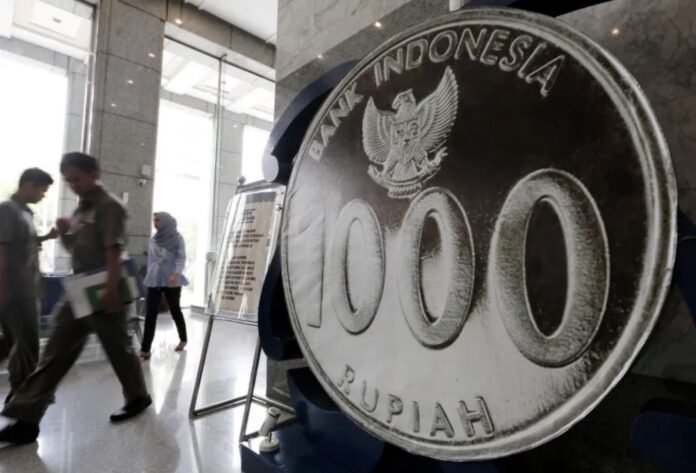
Bank Indonesia is hemorrhaging currency reserves to put a floor under the rupiah, which recently fell to an all-time low. This includes levels seen during the Asian financial crisis 29 years ago, as the fallout from the Iran war slams global markets.

Yet Indonesia’s move to impose capital controls suggests Southeast Asia’s biggest economy is going to the mattresses against currency speculators — in ways that could backfire.

Next week, Indonesia will activate a Bond Stabilization Fund to support the rupiah, according to Finance Minister Purbaya Yudhi Sadewa. Yet Jakarta resorting to so-called capital-flow management tools this early in the battle smacks more of panic than strength.

To be sure, the rupiah’s plunge to around 17,400 to the dollar is dramatic and a clear and present threat to the economy. A weaker exchange rate makes it harder to keep up with overseas debt payments.

It ups the odds Indonesia will import inflation. And it complicates the export of coal, nickel, palm oil and other key commodities, all of which are priced on global markets in dollars.

But there’s a throw-the-baby-out-with-the-bathwater dynamic at play in Jakarta. The capital outflows exiting Indonesia reflect investors voting with their feet against the priorities that President Prabowo Subianto has pursued since October 2024.

The twin budget and current-account deficits are surely part of the problem. But the biggest worry is the yawning gap between Prabowo’s reform promises and the actual macroeconomic policies he’s championed.

It’s fine that Prabowo embraced the mega‑infrastructure agenda of his predecessor, Joko Widodo. But global investors have been left wanting for new projects that boost productivity. They also prefer financing arrangements that don’t crowd out private investment while exacerbating the national debt.

Nor is economic nationalism a good look for a government seeking to increase its regional leadership role. This includes export restrictions on nickel and other minerals that unsettle global supply chains and regulatory volatility that raises risk premiums.

Prabowo, meanwhile, has done little, if anything, of note to reduce Indonesia’s reliance on commodities to generate growth. This dynamic exposes the nation’s 287 million people to extreme price swings.

Team Prabowo has done itself no favors by dismissing investors’ concerns. Its heavy foreign-exchange intervention and pressure on state-owned banks are exacerbating these worries. Indications of bigger spending efforts to come aren’t helping.

It seems markets are no longer buying what Team Prabowo is selling. The rupiah’s plunge “is a signal that macroeconomic fundamentals are under pressure,” says Liza Camelia Suryanata, head of research at Kiwoom Sekuritas Indonesia. Also, Suryanata notes, “the target of 8% GDP growth has become highly unrealistic, and even maintaining around 5% is starting to look difficult.”

Nor is Suryanata surprised that the Jakarta Composite Index is down nearly 19% year to date. That compares to positive year-to-date returns in Malaysia and Thailand and a Philippine stock market that’s essentially flat.

In late April, index giant MSCI extended its review of Indonesia’s stock market to determine whether it might be downgraded to “frontier” from “emerging” status amid growing concerns about transparency under Prabowo.

Since January, Jakarta has announced steps to increase the amount of shareholder data ⁠and doubled the portion of stocks available to the general public to 15%. The exchange also kicked out some tycoon-owned stocks.

Last month, Jeffrey Hendrik, acting CEO of the Jakarta exchange, said his team would “continue to engage with global investors to gather input on strengthening the capital market in the future.”

Indonesia’s troubles are much deeper than that. Nor is it the only Asian economy in harm’s way. The Indian rupee, for example, is down by even more year to date than the rupiah (down 5.1% and 4.1%, respectively).

“Emerging market Asia is in the direct path of the shock with relatively loose policy,” says economist Lucila Bonilla at Oxford Economics, noting that Oxford has added rate hikes to its baseline for India, Indonesia and the Philippines. Thailand, meanwhile, is the “standout risk of patience turning into complacency.”

Indonesia, though, was shaky well before bombs began falling on Iran on February 28. Even before the war began, the rupiah and the stock market were suffering their worst routs since the 1997-98 Asian crisis, flashing warning signs for developing markets across Asia. It was clear in January that markets had grown wary of general-turned-politician Prabowo’s policies.

When Prabowo succeeded the more reform‑minded Widodo, he inherited an economy that had been gathering momentum. Between 2014 and 2024, the widely popular Widodo restored stability to Indonesia’s political landscape and notched several meaningful reforms — most notably a wave of transformational infrastructure projects designed to lift productivity and competitiveness.

In the Widodo era, Indonesia also made headway in tackling corruption and bureaucratic inefficiency, pushing government institutions toward greater transparency. These improvements helped raise the quality of growth, ensuring that more Indonesian households shared in the gains from rising output.

And under Widodo’s stewardship, Indonesia navigated the Covid‑19 shock more effectively than many of its emerging‑market peers. Yet for all his achievements, Widodo left important structural issues unresolved.

Critics say he tolerated the rise of dynastic politics and allowed old‑style patronage networks to persist. And by backing a successor from the armed forces, he opened the door to a far less predictable leadership style — a striking shift given that Widodo was Indonesia’s first president from outside the military or political elite.

Global investors felt the jolt almost immediately after Prabowo took office. His pledge to propel Indonesia’s US$1.4 trillion economy toward 8% annual growth initially rekindled foreign enthusiasm.

But that optimism evaporated once it became clear that his strategy relied on aggressive fiscal expansion. Capital outflows surged as investors reassessed the risks behind the new administration’s growth ambitions.

Nine months into his presidency, in September 2025, Prabowo abruptly dismissed the internationally respected Finance Minister Sri Mulyani Indrawati. A former World Bank managing director, she had long been viewed as the key guardrail against a return to fiscal overreach.

Once she was out, Prabowo installed loyalist Purbaya, who quickly injected roughly $12 billion into the economy to jump-start lending.

Purbaya then moved swiftly to advance Prabowo’s controversial “burden‑sharing” plan — a push to nudge the central bank toward looser monetary policy just as the government was flooring the fiscal accelerator.

Economists worry BI is becoming a mere extension of the president’s growth strategy. ANZ Banking Group strategist Jennifer Kusuma notes that BI’s growing role in the sovereign debt market “would foster moral hazard risks” going forward.

In late January, as the Indonesian rupiah plunged to a record intraday low, Purbaya issued a statement stressing that BI remains free to make its own calls.

“We will maintain the independence of the central bank and the government as much as possible,” Purbaya said. “I will not squeeze the central bank to finance our development programs.”

The folks at MSCI clearly aren’t persuaded. In January, the index provider warned of “fundamental investability issues” in Indonesia’s stock market — a statement that triggered one of the most dramatic selloffs since the 1990s. It amounted to a stinging rebuke of Prabowo’s hyper-positive economic spin.

Many investors now fear it’s too late to give Prabowo the benefit of the doubt. Instead of taking steps to strengthen Indonesia’s economic foundations and rebuild market confidence, his finance minister has taken to attacking economists in a style reminiscent of Donald Trump, further unsettling global funds.

Just as Trump lashed out at Goldman Sachs’ chief economist for not toeing his administration’s line, Prabowo’s team has publicly chastised Citibank analysts after a report warned that Indonesia’s budget deficit could widen to 3.5% of GDP — well above the legal 3% ceiling.

Purbaya veered into Trump‑style theatrics when he dismissed Citi’s forecaster — who holds two master’s degrees — as “not a real economist.” But you don’t need a PhD to see that investors aren’t brushing off Citi’s warning. Least of all MSCI, which has treated the concerns as anything but trivial.

Yet as MSCI continues to argue months later, only bold and transparent capital-market reforms can achieve that. MSCI raised concern about “ongoing opacity in shareholding structures” and “possible coordinated trading behavior that undermines proper price formation.”

The bigger problem is that by prioritizing political control over creating a more productive economy, Prabowo and his economic team may be dragging the economy back to the days of living dangerously.

The irony, of course, is that Prabowo is a protege of dictator Suharto, who was ousted amid the political chaos of the 1997-1998 financial crisis. Without supply-side reforms, Prabowo’s fiscal priorities will also adversely affect the economy.

The same goes for the president’s assault on the central bank. Indonesia, in many ways, has joined the Fed on the frontlines of the battle for monetary policy autonomy.

The risk, says Wijayanto Samirin, economist at Paramadina University, is that BI officials “get too deep and detailed into fiscal matters and this disrupts our monetary policy ecosystem.”

Prabowo’s push to weaken the central bank’s independence and roll out costly populist programs suggests a shaky grasp of the very forces that fueled Indonesia’s 1997–98 crisis.

And despite the cautionary tale of Malaysia’s 1Malaysia Development Berhad scandal, he has pressed ahead with creating a sovereign wealth fund, Danantara — a move that has already raised red flags over governance risks and potential conflicts of interest.

Markets aren’t always right. But chaotic stock losses and rupiah volatility have investors sensing a 1997-like whiff in the Jakarta air. This places the onus on Prabowo to demonstrate that he has a plan to take Indonesia forward.

Current fears about an accelerating backslide are the last thing the nation needs in 2026. And moves to limit capital flows treat the symptoms, not the underlying problems.

Follow William Pesek on X at @WilliamPesek
ISIS Disrupts Damascus Calm, Says It Assassinated Shiite Figure

0


[Damascus] In a major security escalation that shook the Syrian capital and its outskirts, the Islamic State (ISIS) officially claimed responsibility for the assassination of prominent Shiite cleric Sheikh Farhan Hassan al-Mansour, preacher and imam of the Sayyidah Zaynab shrine. 

The attack, which took place on May 1, 2026, revived memories of the group’s past hit-and-run operations targeting carefully selected religious and military figures, demonstrating its ability to breach heavy security fortifications in one of Syria’s most sensitive areas. 

Last Friday morning, a powerful explosion echoed through the southern suburbs of Damascus. A correspondent for The Media Line in Damascus reported at the time that the blast targeted al-Mansour’s vehicle while he was traveling near the Safir Al-Zahra Hotel area surrounding the shrine. 

A Syrian security source who inspected the scene told The Media Line that an explosive device had been planted underneath the vehicle and detonated remotely, killing the cleric instantly and injuring several of his aides, as well as civilians who happened to be nearby. 

The Media Line’s Damascus correspondent said ISIS claimed responsibility for the bombing through its official channels and its weekly newsletter, Al-Naba. In a brief statement, the group described al-Mansour as one of the “imams of the Rafida”—a derogatory term used by extremists to refer to Shiites—claiming that the assassination was part of what it called an act of “revenge” and a continuing campaign targeting religious figures associated with the former Syrian regime and its allies. 

The choice of both the target and the location carries significant strategic symbolism. The Sayyidah Zaynab shrine is not only one of the most important religious sites for Shiites but also, for years, served as a political and military symbol of Iranian and Hezbollah influence in Syria before that presence diminished following the fall of the Assad regime in December 2024. 

The ability to reach and assassinate the shrine’s leading cleric in the heart of his own stronghold sends a powerful message that ISIS sleeper cells still possess the capacity to monitor, maneuver and strike deep inside Damascus. 

Following the bombing, Syrian authorities imposed heightened security measures across Damascus and its countryside. Several Syrian bodies, including the Supreme Islamic Shiite Council, mourned al-Mansour, describing him as a “martyr of the pulpit” known for his moderate positions and calls for unity. 

Local media sources in Damascus later reported that authorities dismantled a three-member cell in the Sayyidah Zaynab area suspected of providing logistical support and facilitating the operation. 

The attack comes at a critical transitional moment for Syria, as ISIS appears to be exploiting vulnerabilities created by the redeployment of military forces and the preoccupation of security agencies with broader political challenges. 

Analysts say the group has shifted from its former strategy of territorial control—which effectively collapsed in 2019—to a campaign of “qualitative attrition” based on assassinations and ambushes aimed at undermining public confidence and exposing the state’s inability to protect key figures. 

The assassination of al-Mansour presents Syrian security agencies with a renewed challenge. While ISIS remnants remain largely hidden in pockets of the Syrian desert, the group has once again demonstrated that its operational reach can extend into vital urban centers, raising questions about the effectiveness of current counterterrorism strategies and the potential for sleeper cells to reshape the security landscape. 


Italy leans on Libya to plug energy gap caused by Iran war

0
italy-leans-on-libya-to-plug-energy-gap-caused-by-iran-war
Italy leans on Libya to plug energy gap caused by Iran war


A delegation of Italian lawmakers has traveled to Libya to explore potentially ramping up energy trade with the war-torn country to fill the gap caused by the war in the Persian Gulf.

It reflects growing interest from Europe and the United States in the country’s vast but under-exploited energy resources, heightened by the recent global energy shortage.

While Libya already exports some gas to Italy, flows have slowed to a trickle since the 2011 civil war that toppled Muammar Gaddafi, leaving the North African country wracked by paramilitary violence and divided between two warring administrations.

But the loss of around 10 percent of Italy’s gas supply following the bombardment of a major Qatari gas plant in mid-March is beginning to change the calculus for top officials across the country.

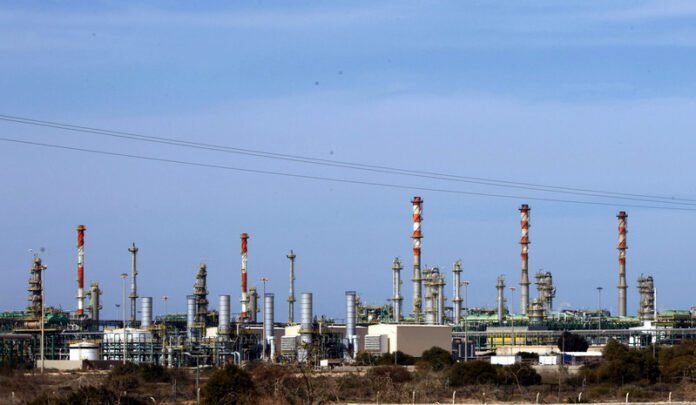
In particular, attention is turning to the Greenstream pipeline, a major undersea conduit capable of transporting up to 11 billion cubic meters of natural gas a year — around a sixth of Italy’s total annual demand — from western Libya to a terminal in Gela, southern Sicily.

The conduit, run jointly by Italian energy giant Eni and Libya’s National Oil Corporation, currently provides Italy with the excess gas that Libya doesn’t consume domestically. However, transit has fallen in recent years due to rising Libyan demand, and the pipeline currently operates at only 10 percent of capacity.

Total Libyan production is also underdeveloped, standing at 394 billion cubic feet in 2023, out of an estimated total 80 trillion cubic feet of reserves, the fifth largest in Africa.

But skepticism toward the country is thawing. Last month, a delegation of lawmakers in Italy’s influential parliamentary intelligence committee, Copasir, visited the cities of Tripoli and Benghazi — which represent the divided country’s rival seats of power — to assess its prospects. And their conclusions, while cautious, hint at a newfound optimism.

“We’ve got something that is directly connected with Italy without any other country in the middle that could create a problem,” League Senator Claudio Borghi, an influential figure in the Copasir delegation, told POLITICO.

He cautioned, however, that “it’s not something that you can do with the snap of a finger. You have to start working. And … that’s exactly what is happening.” 

Specifically, Borghi said that two major, Eni-led infrastructure upgrades, expected to be completed this year, had the potential to improve flows through Greenstream within “months,” in part by reducing flaring, the wasteful practice of burning off unused natural gas during the extraction and production process. He argued this was possible without reducing output to Libya’s gas-dependent domestic market.

A person familiar with Eni’s operations confirmed that the company — which is part-owned by the Italian government and has a receptive audience in Rome — was “working to increase gas production in the country” via both Greenstream and in Libya more broadly. The person didn’t specify how long it would take or whether the company was seeking support from Rome.

Boosting inflows of Libyan gas could provide some much-needed relief for Italy in the wake of the Iran war, which has left Rome seeking new supplies from Algeria, Azerbaijan and Saudi Arabia to offset rising energy costs. Gas accounts for 40 percent of Italy’s energy mix, 16 percentage points more than the European average, and the loss of Qatari supplies has affected the country disproportionately.

Still, the Copasir trip was a bipartisan parliamentary initiative, and it’s not clear whether Rome will back Borghi’s conclusions. While Libyan officials across both administrations were keen to find ways to boost production, Italy’s trade minister, Adolfo Urso, has not yet formulated a view and is merely monitoring the situation, Borghi said.

“One thing is [monitoring] and another thing is having a clear view that this could be an investment area that could [bear] fruit,” the senator complained. He said he would nevertheless relay his impression of Libya’s potential to Matteo Salvini, the League’s leader and Giorgia Meloni’s vice premier.

The burgeoning interest was illustrated by a meeting on Thursday between Italian Prime Minister Giorgia Meloni and Abdul Hamid Dbeibah, the U.N.-backed, Tripoli-based leader of western Libya. The two leaders discussed “strengthening the partnership in the energy sector” between the countries, Dbeibah wrote on X. A spokesperson for the Italian government declined to comment.

The Copasir delegation itself is split on Libya’s potential. In an interview with POLITICO, Copasir Secretary Ettore Rosato — a lawmaker in the opposition Democratic Party — argued that sustainably increasing output would require investment over many years, with parallel investment in renewables needed to “avoid absorbing all additional production through domestic consumption.”

He agreed with Borghi that Libyan authorities were enthusiastic at the prospect of boosting Greenstream output, but said the Italian government was aware of the limited short-term potential of the infrastructure upgrades touted by Eni. “Let’s not fool ourselves into thinking they can produce positive effects in the short term,” he said.

The trip comes amid what diplomats and business leaders in the country have described to POLITICO as a broader U.S. push to unify the country and open it up for more energy trade, which has coincided with renewed — if cautious — engagement by Western energy giants, including Eni and France’s TotalEnergies, as well as several U.S. oil giants. Eni, for its part, discovered two large gas fields off the country’s coast.

Italy has featured heavily in the U.S.-led diplomatic effort, hosting meetings between the U.S. and senior Libyan officials from both administrations in Rome last year. Italian Foreign Minister Antonio Tajani himself endorsed the U.S. re-engagement when asked by POLITICO in February whether it would be beneficial to Italy’s energy sector.

“For us, the Americans are friends — to work with Americans in Libya is not a problem for us,” he said at an event in Rome. “My position is always in favor of more American involvement.” He added that engaging with Libya was vital to countering growing Russian influence in the east of the country, which is dominated by the Kremlin-backed warlord Khalifa Haftar.

Libya has also entered into the “orbit” of talks on diversification in Brussels, an EU official said, while cautioning that the country remains only a peripheral prospect due to its instability.

Via Politico

Hasan Piker Is the Democrats’ New Man on the Trail, Whether They Like It or Not

0
hasan-piker-is-the-democrats’-new-man-on-the-trail,-whether-they-like-it-or-not
Hasan Piker Is the Democrats’ New Man on the Trail, Whether They Like It or Not


Devin Thomas O’Shea is the author ofThe Veiled Prophet: Secret Societies, White Supremacy, and the Struggle for St. Louis,” publishing with Haymarket Books in June 2026.

In a letter to Twitch and Amazon, New York Democratic Rep. Richie Torres once slammed Hasan Piker, the popular political streamer, for his “depravity” and called him “the poster child for the post-October 7th outbreak of antisemitism.” While mainstream Democrats and their allies have for months weighed the “problem” of Piker for the party, his star has only continued to rise. Insurgent candidates on the left are now making him their go-to surrogate, with Piker as a new kind of kingmaker, one they hope can shepherd his mass of online supporters behind them.

Piker recently touched down in Missouri to lend his star power to Cori Bush, who is looking to reclaim her position in the House after serving as the first Black woman to represent the state’s 1st Congressional District from 2021 to 2025. During her first term in office, Bush authored a bill calling for an “immediate deescalation and cease-fire in Israel and occupied Palestine.” In what was widely read as retribution, Bush was primaried by a Democratic opponent, Wesley Bell, who ended his own Senate campaign against Republican Josh Hawley for the run; Bell defeated Bush with the help of an unprecedented nearly $9 million in spending from the super PAC for the American Israel Public Affairs Committee, or AIPAC.

Now Bush is back, and like Piker, is unbowed: During the rally, she wore a T-shirt with her campaign slogan “FIGHT BACK” in big, bold letters. 

“I love seeing you all,” Bush told the May Day crowd. “I just don’t love why I keep seeing you all.”

Bush, who rose to prominence as an activist with the Black Lives Matter movement, quickly gained a reputation in office for bucking establishment Democrats — even outpacing other members of “the Squad” — and being outspoken in her criticism of party leadership.

On his wildly popular Twitch stream, Piker has argued that “80 percent of the Democratic Party now agrees with the principles that Cori Bush was defending at a time when it was inopportune for her to do so.” Piker’s visit to St. Louis coincided with weeks of national media scrutiny condemning the popular streamer’s views as antisemitic, culminating in Reps. Mike Lawler, R-N.Y., and Josh Gottheimer, D-N.J., pushing a bipartisan bill to explicitly denounce Piker.

But for the left, the criticism rings more like an endorsement, and Piker has hit the campaign trail for a number of progressive Democrats including Abdul El-Sayed, who’s running for the Senate in Michigan; Dr. Adam Hamawy, who’s running for a New Jersey House seat; and Rep. Ilhan Omar, who’s up for reelection in Minnesota. 

On stage with Bush, Piker described Bell as an “AIPAC stooge,” and urged St. Louisans to rally around the Bush campaign. “Republicans are monsters who traffic in hatred,” said Piker. “But we’re no longer going to vote for do-nothing Democrats, either.” He told the crowd about a St. Louis woman at the airport who was shocked to see him, visiting the city. “There’s this attitude in places like Missouri where city slickers like myself, the bicoastal elite, don’t come to places like St. Louis. Like, she genuinely was shocked,” Piker said on a stream re-cap.

At the rally, Piker described St. Louis as part of a growing coalition of the discontented. “I’ve seen a lot of places like St. Louis. Places that have been left behind by wealthy corporations that pollute your waters and steal your productive output … but today we say, ‘No more!’”

In a statement to The Intercept, a spokesperson for Bell pointed to common criticisms from mainstream figures over Piker’s past online comments. “If Cori Bush spent as much time meeting with her constituents as she does associating with people who condone sexual assault and blame America for September 11th, she may have fared better in her last election,” said Bell campaign spokesperson Jordan Blase.

“Republicans are monsters who traffic in hatred. But we’re no longer going to vote for do-nothing Democrats, either.”

Before Piker and Bush, historian Ángel Flores Fontánez took the stage as an organizer with the Party for Socialism and Liberation, anchoring the day in proud St. Louis labor history. One of the first American general strikes took place in the city in July 1877, when railroad workers across the United States objected to immiseration imposed by Gilded Age robber barons.

In 1877, railroad workers across the United States shut down rail line capital from New York to Pennsylvania, Pennsylvania to Ohio, all the way out west to Missouri. In St. Louis, the strike escalated, evolving into a general action which drew river levee roustabouts, coopers, newsboys, foundry workers, and refinery laborers into a weeklong action. 

The strike was a multiracial coalition, and the strike’s executive committee briefly ran St. Louis as one of the first commune governments before it was violently suppressed.

Fontánez recalled the city’s legacy of socialists, which dates back to the abolitionist German ’48ers, and the Funsten Nut Strike of May 1933. As University of Missouri history professor Keona Ervin notes in “Gateway to Equality: Black Women and the Struggle for Economic Justice in St. Louis,” the Funsten strike was one of the first successful strike actions of the era, with the Communist Party USA using the strike as a moment to “mark the urban Midwest as a new hotbed for radical labor politics spearheaded by black working women.”

In the aftermath of the 2014 Black Lives Matter movement, which began in the St. Louis suburb of Ferguson, many hoped to see St. Louis once again become a beacon of progressivism. But Missouri poses a cadre of challenges: The 1st District is a gerrymandered product of a red state that used to be purple. Missouri was a bellwether for a century, but as polarization intensified in the early 2000s, Missouri Republicans successfully drew maps that neutralized the state’s urban progressive centers.

Most Missourians live in the blue islands of St. Louis, Kansas City, and Springfield, which also make up 80 percent of the state’s annual GDP. Previously, the state elected Democratic governors, senators, and controlled a handful of congressional seats. But now the 1st District is one of the few remaining positions not controlled by Republicans.

Decades of state and federal Republican rule have been disastrous for the Greater St. Louis area, plunging the city into a pattern of capital flight and population loss. The city is still reeling from the May 2025 tornado which ripped through the city and hit historically Black neighborhoods in North St. Louis the hardest.

From the Federal Emergency Management Agency to the St. Louis mayor’s office, many residents feel the recovery has been botched and worry that the North Side will not be rebuilt. Last month, protesters confronted Mayor Cara Spencer over the sluggish cleanup effort, where houses have been left half-destroyed and their residents sleeping in tents. 

“When we’re going to our electeds, we’re saying fully fund the North Side,” Bush told the crowd. “If you can’t stand up to Donald Trump and his administration — at the city level, the state level, or the federal level — then you’re no representative for us. If you can’t stand up to Donald Trump and his allies, then how are you supposed to stand up for us?”

St. Louisans are calling on their elected officials to fight for more disaster relief, and also against attacks by the state legislature. At the direct request of President Donald Trump, Missouri Gov. Mike Kehoe, a former car dealership owner turned Republican politician, is attempting to further gerrymander the voting map for Kansas City. 

Kehoe also wants to abolish Missouri’s income tax, which critics say will send the state into a budget tailspin not unlike Sam Brownback’s failed tax-cutting policy, the “Kansas Experiment.”

The governor also caused an uproar by legally invading St. Louis in 2025, taking over state control of the city’s police department. In doing so, Kehoe defied a 2012 statewide vote which granted local control of the police to the St. Louis mayor. Missouri is the only state in the U.S. where the governor controls the police of the major cities, including the police budget.

Many St. Louisans are vehemently opposed to the police takeover and disgruntled with the status quo, but Missouri’s 1st District includes several neighborhoods in St. Louis County that went heavily for Bell in 2024. G Gamache, a union organizer with Starbucks Workers United who attended May Day rally, told The Intercept that Bush is still the fighter St. Louis needs.

“When you see her in person, you see how much she hasn’t changed who she is. … She’s still 10 toes down on things like Medicare for All, affordable housing, and ending the genocide of Palestinians by Israel. A wide majority of Democratic voters, and even many Republican voters, even in Missouri, support all these things,” he said.

Back in August 2025, Bush’s opponent, Wesley Bell, held his first and only in-person town hall, which was disrupted by protesters. Local activists challenged the congressman on his support of Israel, his refusal to call Gaza a genocide, and his trip to Tel Aviv, which was sponsored by the American Israel Education Foundation.

During the town hall, a man providing security for Bell was caught on video attempting to forcefully physically remove the protesters. 

Between Missouri Republicans and Bell, the 2.8 million St. Louisans living in the greater metropolitan area are generally represented by pro-Israel politicians. According to the Pew Research Center, most U.S. voters have soured on Israel, which is now engaged in an invasion of Lebanon, continued violence in the West Bank, the further annihilation of Gaza, and now an ongoing conflict with Iran, which has shut down the Strait of Hormuz, a critical shipping lane. As of April 2026, 60 percent of U.S. adults have an unfavorable view of Israel, up from 53 percent last year, and the trend seems to be accelerating.

Bell has tried to square this circle by recognizing the Armenian genocide, voting against Trump’s Big Beautiful Bill, and denouncing Kehoe’s attempts to redraw Missouri’s congressional maps. Since the initial almost $9 million, AIPAC has continued supporting Bell, directing donors through its PAC’s portal to fund his campaign.

Blase, the Bell spokesperson, told The Intercept that “Congressman Bell remains focused on standing up to Trump and fighting for the people of Missouri’s first Congressional District.”

While Bush called for a ceasefire early on, her criticisms of Israel don’t quite explain why AIPAC would spend so much on a Missouri congressional campaign.

A more complete answer may lie in Missouri as a node in the country’s military–industrial complex. St. Louis is home to several Boeing facilities, with the Seattle-headquartered aerospace company selling a range of weapons to the Israeli military, including F-35 and F-15IA fighter jets, missiles, and smart bombs.

In 2020, pro-Palestine student groups in St. Louis protested the St. Charles Boeing facility over a $2.2 billion contract to manufacture small-diameter bombs sold to foreign nations, including Israel, and in 2024, the Washington University Student Union Senate passed a resolution to divest from Boeing.

In one of its corporate PR products, a 2025 Boeing video highlighted St. Louis as “Fighterland U.S.A.,” nicknamed for its importance in military jet manufacturing across the Lambert International Airport and Scott Air Force Base complexes. In February 2026, the company announced the return of its Defense, Space & Security headquarters to St. Louis. Missouri’s Whiteman Air Force Base in Knob Noster, near Kansas City, made headlines in June 2025 as playing a key role in launching strikes against Iran.

St. Louis is also home to a number of companies on pro-Palestine boycott lists. The North American headquarters of Israeli Chemical Limited Group — which manufactures fertilizers, metals, and chemical products including white phosphorus — is in Creve Coeur, Missouri. As Human Rights Watch reported, Israel used white phosphorus in populated areas of Gaza and Lebanon in October and November 2023.

Bush told The Intercept that Missouri voters are agitated enough to show up and oust Bell, pointing to polling that shows the race to be neck and neck. But Bush is positioning herself as a fighter for people who have long felt left behind by the Democratic Party.

“If you hurt my people, I can’t sit back and do nothing. … If we wait on the feckless people in some of these seats to do it, it’ll never happen,” she promised.

Japan’s ammonia push risks locking Indonesia into coal

0
japan’s-ammonia-push-risks-locking-indonesia-into-coal
Japan’s ammonia push risks locking Indonesia into coal

In the uneasy politics of energy transition, few ideas are as seductive — or as risky — as compromise. Ammonia co-firing, now being advanced through Japan’s Asia Zero Emission Community (AZEC) at Indonesia’s Suralaya and Paiton coal plants, is one such compromise.

It promises emissions reductions without shutting down coal plants. It offers continuity dressed as progress. But without a clear sunset clause, it risks becoming something else entirely: a long-term detour that delays the very transition it claims to advance.

Indonesia is not wrong to experiment. Coal still supplies more than half of its electricity, making rapid phaseout politically and economically difficult. Technologies that allow partial decarbonization — even incremental — can help bridge that gap.

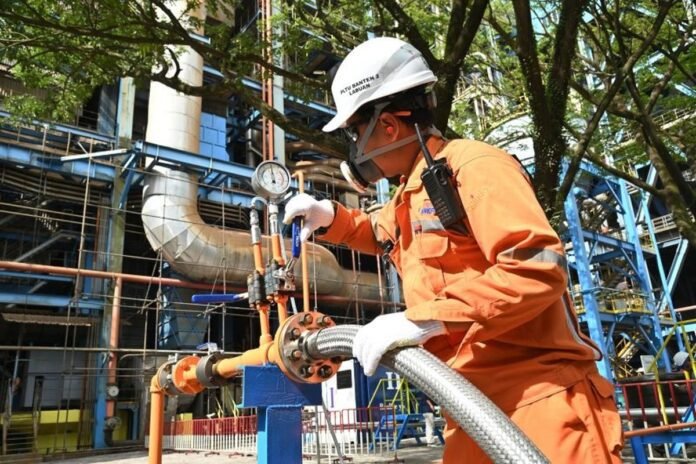
Early trials, such as the ammonia co-firing test at the Labuan plant conducted with Japan’s IHI Corporation, show that blending ammonia into coal systems is technically feasible, even if only at very low levels so far.

This growing collaboration is not accidental. Japan has been actively promoting ammonia co-firing across Asia through AZEC, a regional framework designed to align decarbonization with industrial cooperation.

At Suralaya, feasibility studies supported by Japan’s Ministry of Economy, Trade and Industry and companies like Mitsubishi Heavy Industries are exploring ammonia use in existing coal infrastructure. At Paiton, similar studies and partnerships have been initiated under AZEC-linked agreements.

Yet this is precisely why caution is warranted. The technology’s promise has outpaced its proof. So far, ammonia co-firing remains confined to pilots. Indonesia’s flagship test used just a 3% ammonia blend — a level that reduces emissions only marginally.

Globally, most demonstrations have struggled to achieve more than about 20% substitution, leaving coal as the dominant fuel. Even in Japan, where the technology is most advanced, targets remain modest and experimental.

At those levels, the climate benefits are limited. And scaling up introduces new complications. Retrofitting boilers, managing combustion stability and building ammonia supply chains all add complexity and cost. This is not a simple fuel switch but a systemic transformation — one that remains largely unproven at commercial scale.

Cost is perhaps the biggest obstacle. Ammonia — especially low-carbon “green” ammonia — is expensive to produce and transport. Analysts warn that ammonia co-firing is significantly more costly than renewable energy alternatives, which are already cheaper and rapidly scaling across Southeast Asia.

The emissions story is also less clean than advertised. Most ammonia today is still produced from fossil fuels. Without a fully decarbonized supply chain, lifecycle emissions remain substantial. At low blending ratios, the overall reduction can be marginal — a small gain at high cost.

This is the central danger: that ammonia co-firing, framed as a bridge, becomes a crutch.

The political economy of energy systems makes this outcome likely. Retrofitting coal plants creates incentives to keep them running longer rather than retiring them sooner.

Investments justified as “transition” can end up locking in infrastructure for decades. Critics warn that Japan’s promotion of ammonia co-firing in Southeast Asia risks prolonging coal use and delaying the deployment of cheaper, cleaner alternatives.

In Indonesia, that risk is amplified by scale. Plants like Suralaya and Paiton are among the largest in the region. Extending their lifespans — even partially — has long-term consequences for emissions, investment flows and energy planning.

There is also a geopolitical dimension that cannot be ignored. Japan’s push for ammonia co-firing is not purely environmental; it is also industrial policy. By exporting technology and building regional fuel supply chains, Japan positions itself at the center of a new energy ecosystem.

That alignment of interests can be mutually beneficial — but only if host countries remain clear-eyed about their own priorities. Indonesia’s priority should be simple: the fastest, cheapest and most durable path to decarbonization.

The answer is not to reject ammonia co-firing outright. Pilot projects can provide valuable data, test infrastructure and build technical expertise. They may even play a niche role in specific sectors over time.

But they must be treated for what they are: experiments, not endpoints. That requires discipline — and deadlines.

Any Japan-backed AZEC ammonia co-firing pilot at Suralaya or Paiton should come with a binding sunset clause: a clear, enforceable timeline for either scaling to near-zero emissions or shutting down. Not an open-ended commitment, but a defined window — five to seven years — tied to measurable benchmarks.

Those benchmarks should be rigorous. Has ammonia supply become genuinely low-carbon at scale? Has co-firing reached high substitution levels without prohibitive cost increases? Does it compete economically with renewables plus storage? If the answer remains no, the pilot should end.

Such a clause would serve two essential purposes. First, it would prevent the sunk-cost trap. Governments often continue investing in marginal technologies simply because they have already spent heavily on them. A sunset clause forces reassessment and preserves flexibility.

Second, it would align incentives with Indonesia’s long-term transition. The country aims to reach net-zero emissions by 2060, and that goal will depend far more on scaling renewables than on extending coal. A clear endpoint ensures that interim solutions do not crowd out that future.

The alternative is drift — a slow extension of coal’s lifespan under the banner of innovation. Indonesia stands at a familiar crossroads: balancing growth, energy security and climate responsibility. There are no perfect solutions, but there are clearer and less clear paths.

Ammonia co-firing, as currently envisioned under AZEC, falls into the latter category: an expensive, uncertain and potentially counterproductive bridge. It may have a role as a tightly bounded pilot. But without limits, it risks becoming a liability.

If Japan and Indonesia are serious about the carbon transition, they should be equally serious about endings. Because a bridge without a clear destination — and a deadline — is not a bridge at all. It is a road that leads nowhere.

Bhima Yudhistira Adhinegara is executive director of the Jakarta-based Center of Economic and Law Studies (CELIOS) independent research institute. Muhammad Zulfikar Rakhmat is director of the institute’s China-Indonesia desk.

Escalation risks rise as political centers weaken

0
escalation-risks-rise-as-political-centers-weaken
Escalation risks rise as political centers weaken

Subscribe now with a one-month trial for only $1, then enjoy the first year at an exclusive rate of just $99.

Berlin faces a new test as the AfD moves closer to power
Diego Faßnacht reports that Germany’s September election in Saxony-Anhalt is emerging as a national stress test for Chancellor Friedrich Merz, with the AfD nearing a potential governing breakthrough amid collapsing confidence in Berlin’s political center.

Japan stepping up defense ties with Turkey and Indonesia
Scott Foster reports that Japan is rapidly expanding defense partnerships with Turkey and Indonesia, pursuing drone cooperation, naval exports and deeper regional security ties as Tokyo accelerates its postwar military normalization under Prime Minister Sanae Takaichi.

Victory Day ceasefire exposes widening Russia-Ukraine tensions
James Davis reports that the fragile Victory Day ceasefire highlighted deepening Russia-Ukraine tensions, with escalating drone attacks, mutual threats of retaliation and growing fears that miscalculation could widen the conflict beyond Ukraine’s borders.

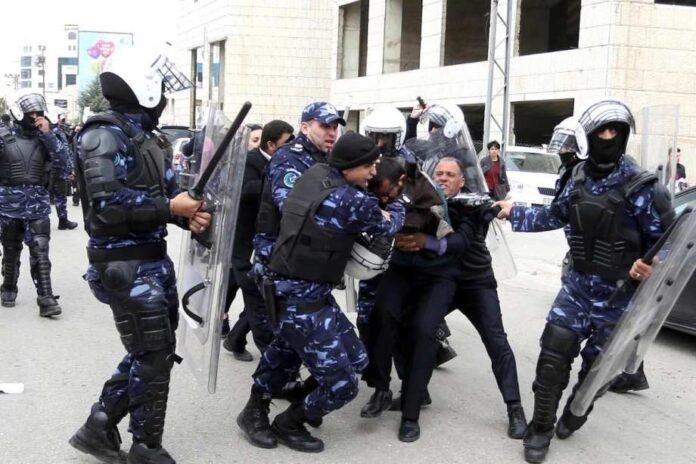
Families’ committee accuses Palestinian Authority forces of torture in al-Junaid prison

0
families’-committee-accuses-palestinian-authority-forces-of-torture-in-al-junaid-prison
Families’ committee accuses Palestinian Authority forces of torture in al-Junaid prison

A committee representing families of detainees in the occupied West Bank has accused Palestinian Authority security forces of carrying out systematic torture and abuse against political prisoners held in al-Junaid Prison.

The Committee of Families of Political Prisoners said it was deeply concerned over what it described as escalating violations against detainees, accusing Palestinian Authority security agencies of pursuing a policy of political arrests and repression targeting activists and resistance supporters.

In a statement issued on Thursday, the committee said torture practices had reached “shocking levels”, citing the case of detainee Suleiman al-Shami, whose family alleged he was subjected to severe abuse that resulted in burns to his feet while in custody.

The committee described the alleged abuses as a “fully-fledged crime” and said they reflected a broader pattern of repression rather than isolated incidents.

The accusations come amid increasing debate within Palestinian society over the role of Palestinian Authority security forces, particularly regarding arrests of political activists and resistance figures across West Bank cities.

Palestinian factions and political groups have linked these practices to ongoing security coordination between the Palestinian Authority and Israel.

READ: 90 Palestinian women held in Israeli prisons, rights group says

Iconic Singer in Coma After Emergency Surgery

0
iconic-singer-in-coma-after-emergency-surgery
Iconic Singer in Coma After Emergency Surgery


Fans around the world are rallying behind legendary singer Bonnie Tyler after shocking reports claimed the 74-year-old music icon has been placed in an induced coma following emergency bowel surgery in Portugal.

According to local Portuguese media, the “Total Eclipse of the Heart” star was rushed to a hospital in Faro late last month after suffering a perforated intestine, a serious medical condition that can quickly become life-threatening if left untreated.

Tyler reportedly underwent emergency surgery shortly after arriving at the hospital on April 30.

While the Welsh singer was initially said to be in stable condition following the operation, alarming new reports on Thursday claimed her health had suddenly taken a turn for the worse.

Portuguese newspaper Correio da Manhã reported that Tyler is now unconscious and breathing with the assistance of a ventilator inside an intensive care unit.

The outlet claimed the singer had originally been recovering in an intermediate care ward before doctors transferred her to intensive care after her condition deteriorated in recent hours.

“Bonnie Tyler is in an induced coma after several days at Faro hospital following intestinal surgery,” the newspaper reported.

“According to what we have learned, the singer is unconscious and connected to a breathing ventilator in the intensive care unit.”

The report also stated that doctors treating the Grammy-nominated star have allegedly admitted they are unable to predict how her condition may evolve over the next several hours, raising fears about the seriousness of the situation.

Neither Tyler nor her representatives have publicly addressed the reports as of Thursday.

The singer became one of the biggest voices of the 1980s thanks to massive hits like Total Eclipse of the Heart and Holding Out for a Hero, both of which helped cement her as a global music sensation with her unmistakable raspy vocals.

Over the decades, Tyler built a devoted fan base around the world and continued touring well into her 70s.

Oil prices jump on renewed US-Iran hostilities

0
oil-prices-jump-on-renewed-us-iran-hostilities
Oil prices jump on renewed US-Iran hostilities


Oil prices rose about 1% on Friday ​after renewed fighting broke out between the U.S. and Iran, threatening a shaky ceasefire and dashing hopes ‌for progress on a reopening of the Strait of Hormuz, a key transit route for oil and liquefied natural gas.

Brent crude futures were up $1.20, or 1.2%, at $101.26 a barrel as of 0356 GMT. West Texas Intermediate (WTI) U.S. crude futures rose by 85 cents, or ​0.9%, to $95.66 a barrel. The benchmarks were up more than 3% at market open.

The gains snapped three days ​of decline on reports this week that the U.S. and Iran were close to agreeing ⁠to a peace deal that would end the fighting but put off larger issues around Iran’s nuclear programme. For ​the week, both contracts are still set to fall about 6%.

“The market is on the cusp of a complete breakdown. ​Price formation is no longer anchored in a pragmatic reading of the war’s trajectory or the physical realities in the Strait of Hormuz,” said Vandana Hari, founder of oil market analysis provider Vanda Insights.

Friday’s jump in prices followed Iran’s accusations that the U.S. violated the ​month-long ceasefire between them, while the U.S. said its strikes were retaliatory after Iran fired on U.S. Navy vessels transiting ​the Strait of Hormuz on Thursday.

Iran’s military said the U.S. had targeted an Iranian oil tanker and another ship and civilian areas ‌in ⁠the strait and on the mainland.

Despite the renewed combat, U.S. President Donald Trump told reporters later on Thursday the ceasefire was still in effect.

“The U.S. administration continues to oversell the prospects of a thaw, and an optimism-biased market buys into it. Curiously, each time, the rebound is gradual and incomplete, making the head fakes at least somewhat effective,” Vanda Insights’ ​Hari said.

The exchange of fire ​happened as Washington awaited Iran’s ⁠response to the latest peace proposal, which did not address a number of contentious issues including the U.S. demand to reopen the Strait of Hormuz, a conduit for one-fifth ​of the world’s oil and LNG supply before the war began on February 28.

“On ​the supply front, ⁠the picture remains tight,” IG analyst Tony Sycamore said in a note.

Separately, the U.S. Commodity Futures Trading Commission is investigating oil price trades totalling $7 billion ahead of key Iran war-related announcements by President Trump, Reuters reported on Thursday.

Most of the trades involved ⁠short positions, ​or bets on prices falling, placed on the Intercontinental Exchange (ICE) and Chicago ​Mercantile Exchange (CME) before Trump statements announcing attack delays, the ceasefire or other changes to Iran policy that led to a decline in oil markets.

Source:  Reuters

What Iran’s absence from the Venice Biennale reveals about art and politics

0
what-iran’s-absence-from-the-venice-biennale-reveals-about-art-and-politics
What Iran’s absence from the Venice Biennale reveals about art and politics

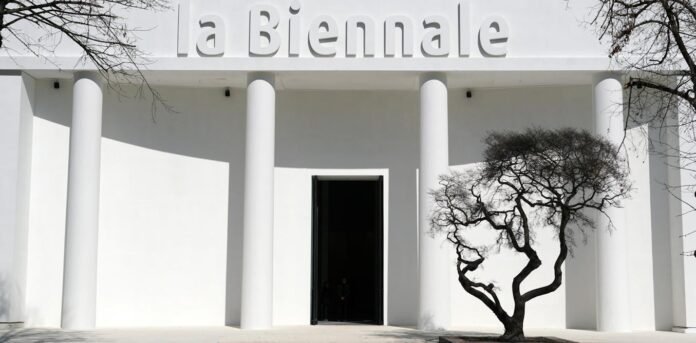
Just days before the opening of the 2026 Venice Biennale, organisers announced that Iran would no longer participate.

A short statement posted to the Venice Biennale website on May 4 said: “With regard to the National Participations in the 61st International Art Exhibition…it has been announced that the Islamic Republic of Iran will not participate.” No explanation was given. I believe that silence is itself revealing.

Iran’s withdrawal is less a sudden decision than the result of converging geopolitical and economic pressures that are reshaping both the global art world and Iran’s place within it.

At the most immediate level, the withdrawal reflects the material realities of crisis. With internet access restricted, international flights suspended and communication networks severely disrupted, even the basic logistics of participation – coordinating, shipping and installing artworks – probably became nearly impossible for Iran.

These conditions have been compounded by intensifying economic pressures, including the sharp devaluation of the Iranian rial, which has made international cultural engagement increasingly difficult to sustain.

An explanation of the Venice Biennale.

Such constraints point to a fundamental condition of contemporary art: global exhibitions rely on infrastructures of mobility and communication that are easily destabilised by conflict and sanctions.

The timing is also significant. The decision comes amid renewed military tensions and escalating political rhetoric surrounding Iran’s position in the global order. In such moments, when political discourse edges toward existential threat, the stakes of cultural visibility are heightened. At the same time, sustaining cultural presence becomes more difficult.


Read more: Middle East conflict looks increasingly like a war nobody can win


More revealing still was the lack of any announced artist, curatorial framework or exhibition concept for Iran’s pavilion, even days before the Biennale’s opening.

Iran’s presence at the Venice Biennale has historically been organised through state institutions, with oversight exercised by the ministry of culture and Islamic guidance since the Iranian revolution (1978-79). As with many national pavilions, this model positions art as a form of cultural diplomacy. But in Iran’s case, it has often produced a disconnect between official representation and contemporary artistic practice.

This gap is significant. The Venice Biennale, often described as the “Olympics of the art world”, remains structured around national pavilions, with each country responsible for presenting its cultural identity on a global stage. Yet, as critics have long argued, it has never been a neutral platform, but a space where art and geopolitics intersect.

More broadly, biennials are deeply embedded in political and institutional contexts, rather than existing outside them. Within this framework, they are often understood as sites of cultural soft power, where nations project influence through artistic production.

National representation in crisis

Iran’s withdrawal must also be understood in relation to the wider turmoil surrounding the 2026 biennale itself. This year’s edition has been marked by extraordinary controversy, including disputes over the involvement of Russia and Israel, calls for boycotts and the resignation of the entire international jury just days before the opening.

These events expose the fragility of the biennale’s longstanding claim to neutrality. Rather than existing outside politics, it has become a site where geopolitical tensions are actively staged and contested.

To exhibit at the biennale is never neutral: it means entering a highly visible arena shaped by competing narratives of legitimacy and power. For the Islamic Republic, this raises a deeper tension. The biennale’s national pavilion model requires countries to present a coherent cultural identity through contemporary art. Yet Iran’s artistic landscape is anything but singular. It is shaped by internal contradictions between state and independent practices, censorship and experimentation and local production and diasporic circulation.

The entire jury resigned just days before the opening.

These tensions are difficult to reconcile within a state-managed exhibition framework. The very premise of the pavilion – art as national representation – sits uneasily with a system in which artistic expression is subject to ideological and institutional control.

At the same time, the Biennale embodies forms of global circulation, cultural competition and visibility tied to international art markets that do not always align with the cultural and political ethos of the Islamic Republic. Representation therefore involves negotiating how a nation appears, to whom, and on whose terms.

The current moment makes this tension even more acute. As political rhetoric escalates and the possibility of large-scale destruction is invoked in global discourse, cultural visibility becomes more urgent. Art offers one of the few spaces through which narratives beyond conflict and diplomacy can emerge. Yet for Iranian artists, cultural presence is becoming more fragmented, shaped by diasporic networks, constrained by national borders and limited by economic and infrastructural pressures.

Iranian artists, particularly those working through independent and diasporic networks, have for decades operated beyond the frameworks of state representation, with their work circulating internationally through alternative artistic circuits. Iran’s missing pavilion, then, does not signal the disappearance of Iranian art. Rather, it reveals the precarious conditions through which that art circulates.

Iran’s absence from the Venice Biennale also highlights the limits of the national pavilion model. The system has frequently been criticised for reducing complex artistic practices to simplified national identities, even as contemporary art now operates through transnational networks that exceed the boundaries of the nation-state.

In Venice this year, the missing pavilion reflects an art world shaped as much by political crisis as by artistic production. Iranian art is not absent from the global stage. Yet the conditions under which it circulates and remains visible have become increasingly fragile.

0FansLike
0FollowersFollow
0FollowersFollow
0SubscribersSubscribe
- Advertisement -
Google search engine

Recent Posts