24.9 C
London
Sunday, August 16, 2026
Home Blog

Trump administration pulls support for annual Arctic environmental report

0
trump-administration-pulls-support-for-annual-arctic-environmental-report
Trump administration pulls support for annual Arctic environmental report

This story was originally published by The Guardian and is reproduced here as part of the Climate Desk collaboration.

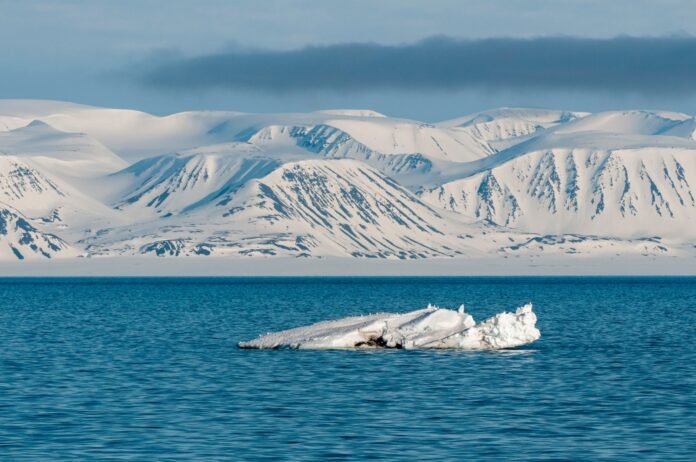
The Trump administration has pulled its support for an annual report on the environmental changes across the Arctic, a region that is already heating up four times faster than the global average due to the climate crisis.

On Tuesday, Kim Doster, the communications director of the National Oceanic and Atmospheric Administration, said the federal agency was withdrawing its support for the Arctic Report Card, which has provided environmental updates on the region to scientists and the public since 2006.

Without explaining why the government stopped its support, Doster told The New York Times: “Coordination of the 2026 Arctic Report Card will not be facilitated through NOAA. … All data historically contributed by NOAA to the product will continue to be collected and will remain publicly available.”

Doster told the outlet that other NOAA programs would continue to support research in the region that contributes to “national security, weather prediction, safety of navigation and the economic vitality of coastal communities.”

The Guardian has approached NOAA for additional comment.

Over the last 20 years, the peer-reviewed report has tracked crucial changes across the Arctic’s atmosphere, oceans, cryosphere and tundra. The climate crisis has made the Arctic the world’s fastest-warming region. In recent years, the region has experienced severe sea ice decline, carbon sink reversals and ecosystem upheavals.

In the 2025 Arctic Report Card, scientists found that surface temperatures across the Arctic from October 2024 through September 2025 were the warmest recorded since 1900. It also found that in March 2025, Arctic winter sea ice reached the lowest annual maximum extent in the 47-year satellite record.

Meanwhile, on land, the report noted that ongoing glacier loss contributes to steadily rising global sea levels, threatening Arctic communities’ water supplies, driving destructive floods, and increasing landslide and tsunami hazards.

It also found that in more than 200 Arctic Alaska watersheds — large land areas where rain and melted snow drain northward into the Arctic Ocean — iron and other elements released by thawing permafrost have turned rivers and streams orange in the last 10 years. The “rusting rivers” have in turn increased acidity while elevated levels of toxic metals have degraded water quality, in turn affecting aquatic habits, rural drinking water supplies and subsistence fishing.

Rick Thoman, the lead editor for this year’s report, said: “We are scrambling to pull the pieces together. I am optimistic that we can find a path forward for 2027 and beyond. Given the late date, whether we can pull it together for 2026 is an open question, but we’re trying to make it happen.”

Meanwhile, Twila Moon, one of the report’s editors and a scientist at the Colorado-based National Snow and Ice Data Center, said: “The U.S. is an Arctic nation. It’s not just a distant place. It’s also our national place. So many of the changes there have impacts that reach down into our mid-latitudes, even farther south.”

Moon added: “Even if we’re able to move the Arctic Report Card forward in a way that brings information to people, there’s still a real loss in this not being a U.S. federal effort. That’s a real stepping back of U.S. leadership in the science arena, in the environmental intelligence arena, and that kind of has a whole other flavor of harm as well.”
Read Next

Rick Spinrad, the former NOAA administrator under Joe Biden, called the decision “really unconscionable.”

“It provides the baseline of what’s happening in the Arctic,” Spinrad said, referring to the report. “Then in terms of value for future planning, you can imagine anybody who’s dependent on Alaskan infrastructure — for example, like the oil pipeline, or the fishing community, or local communities that are worried about changes in weather conditions that are going to affect frost heaves on their roads,” he added, highlighting municipalities like Anchorage and Fairbanks.

“Now we will not have that tool, and it will be up to them to try to ferret out where the data are, and then to find somebody who can do the analysis to tell them what the trends have been and what they can expect in the future.

“It’s not clear to me why the administration made this decision. I can only infer that it’s tied to their aversion to anything associated with having a better understanding of climate change,” Spinrad added.

The funding cancellation is the Trump administration’s latest move to impede government-led studies on the climate crisis and its global effects.

Since retaking office last January, the Trump administration has stripped away support for scientific research that mentions “climate,” dismantled a key climate research center in Colorado in a move that the governor, Jared Polis, warned would put “public safety at risk,” attempted to scrap a $368-million crucial deep-sea observation system, as well as removing key climate change reports from government websites.

Other federally led environmental rollbacks include NOAA’s decision to stop tracking the costs of climate crisis-fueled disasters, as well as the dismissal of all contributors to the U.S. government’s flagship report on climate crisis preparedness.
Courtney Love ‘Almost Died’ During Terrifying Health Battle

0
courtney-love-‘almost-died’-during-terrifying-health-battle
Courtney Love ‘Almost Died’ During Terrifying Health Battle


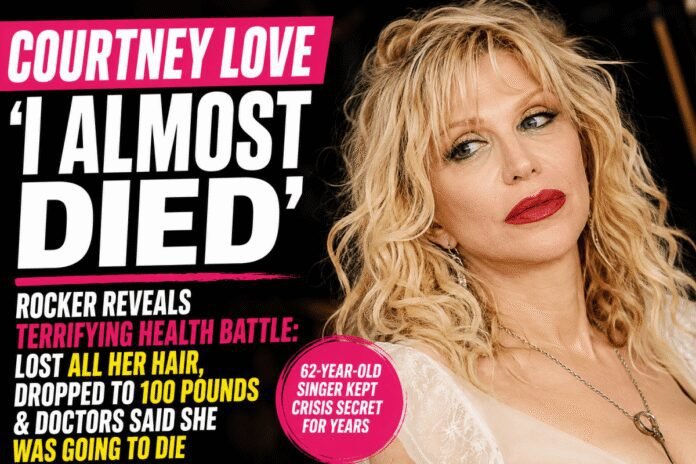
Courtney Love is opening up about a terrifying health crisis she kept hidden for years — revealing doctors warned her she could die after her weight plunged to around 100 pounds and she lost all of her hair.

The 62-year-old rocker said the frightening ordeal began after she moved to England in 2019, when her health suddenly took a dramatic turn for the worse.

“I went to England in 2019 and when I went there, you know, my body just exploded,” Love revealed in an Instagram video shared Friday. “It just exploded, and I was in hospitals a lot. I almost died.”

The Hole frontwoman said her condition became so severe that doctors delivered a grim warning.

“I lost all my hair. I was about 100 pounds, and they told me I was going to die, and I didn’t believe them,” she said.

Love did not reveal exactly what illness or medical condition caused the frightening health battle, but said she spent much of the period going in and out of hospitals.

Despite what doctors were telling her, Love said she refused to accept that she was dying.

She explained that her reaction was tied to a mindset she has carried since childhood — trusting her own instincts even when people around her were telling her something different.

Love described it using an unusual analogy about being told that “red was blue,” saying she learned early on not to automatically believe what others insisted was true.

“So when they said you’re gonna die, I just didn’t believe them,” she said.

Against the odds, Love said her condition eventually improved.

“And somehow, I got better,” she revealed. “I’m healthy, which is amazing.”

The singer said she intentionally kept the frightening ordeal away from the public while it was happening.

“I just wasn’t public about being sick,” Love said. “I don’t want to be public about being sick. You know, I’m fine now.”

She added that things in her life are currently going well and promised fans she plans to return to the spotlight.

“I will be back,” she said.

Love also revealed that while she was battling for her health, she was quietly working on new music — at times believing the album could be the last record she ever made.

“When I made it, I believed this was my last record so I made the record I always wanted to make,” she wrote alongside the video.

Love said she spent most of the period hospitalized, but whenever she was well enough to leave, she threw herself into writing and recording.

“I was in the hospital mostly but when I wasn’t all I did was write & record it,” she wrote.

Now, with her health apparently back on track, Love said one of her biggest goals is getting back onstage.

“I want to tour more than anything,” she said. “& I want to sing.”

The rocker ended her emotional message by thanking fans for giving her time to figure out how she wants to return to public life.

“Thank you for giving me the grace I need to prepare how to enter the world again,” she wrote.

Spain rejects discussing sovereignty of Ceuta and Melilla with Morocco

0
spain-rejects-discussing-sovereignty-of-ceuta-and-melilla-with-morocco
Spain rejects discussing sovereignty of Ceuta and Melilla with Morocco


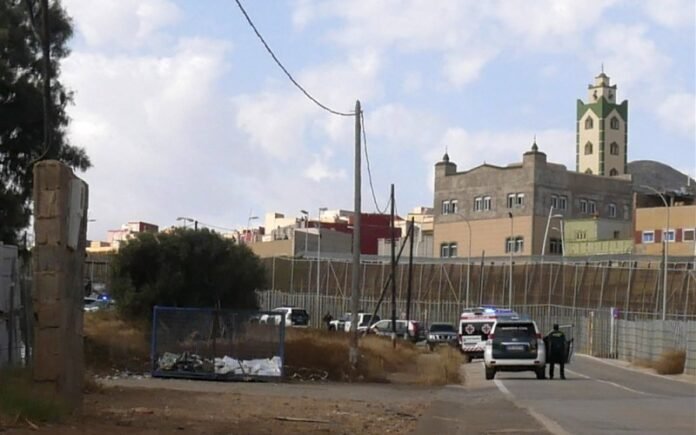
The status of the North African enclaves of Ceuta and Melilla as Spanish territories is not up for discussion, Spanish officials said , after Morocco’s justice minister reiterated Rabat’s sovereignty claims over the cities.

Tuesday’s remarks by ​Abdellatif Ouahbi to Asharq TV marked the first time Rabat has publicly raised the ​contentious issue since Ceuta’s border crisis in late July, during which an estimated ⁠72,000 migrants briefly crossed into the enclave. At least 96 people died in the mass border rush.

Ouahbi said ​his country always raised the issue of the cities’ status in negotiations with Spain, with a long-term ​goal of achieving a resolution through dialogue.

Since its independence in 1956, Morocco has regarded Ceuta and Melilla as occupied by Spain, arguing sovereignty over them should ultimately be transferred to Rabat. Madrid considers them integral parts of its ​territory since the 17th and 15th centuries, respectively.

“Ceuta and Melilla aren’t just Spanish; they’re super-Spanish and ​cannot be touched,” Spanish Defence Minister Margarita Robles told reporters in Ceuta when asked about Ouahbi’s comments.

“Any attack ‌on Ceuta ⁠and Melilla is an attack on Spain as a whole. It must never happen again,” she added, referring to the border crisis.

The Spanish government has largely praised Moroccan authorities for their cooperation in repatriating the migrants, blaming the crisis on people-smuggling mafias.

In a separate statement, Spain’s Foreign Ministry said ​Spain’s territorial integrity “has not been, ​and will never ⁠be, discussed with anyone”.

Separately, Morocco’s Interior Ministry said on Wednesday it had stepped up security near the borders with Ceuta and Melilla over online calls ​for another mass crossing attempt on August 15, warning it would prosecute ​organisers and participants.

“The ⁠ministry calls on everyone to remain vigilant and responsible and not to be drawn into such suspicious and misleading calls, given the risks they may pose to people’s lives,” it said in a statement, ⁠also urging ​Spain to accelerate the return of unaccompanied Moroccan minors ​in Ceuta.

Last week, Spanish Youth Minister Sira Rego said Madrid would evaluate Morocco’s offer to repatriate the children on a case-by-case basis.

Pope renews call to end violence against Palestinians in occupied West Bank

0
pope-renews-call-to-end-violence-against-palestinians-in-occupied-west-bank
Pope renews call to end violence against Palestinians in occupied West Bank

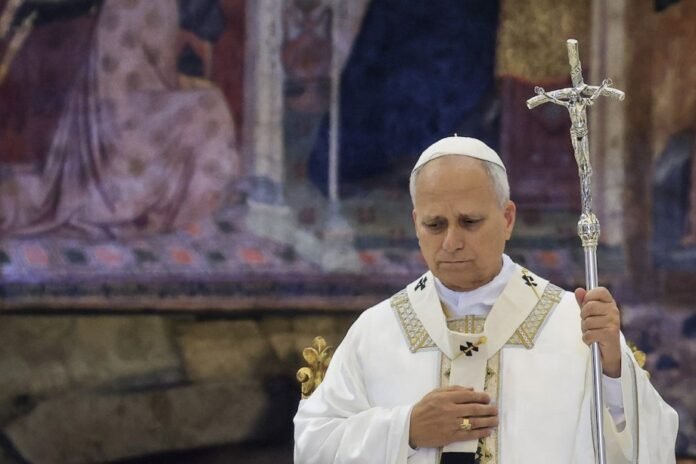
Pope Leo XIV on Sunday renewed his call for an end to violence against Palestinians in the occupied West Bank and urged the international community to advance efforts toward a two-state solution, Anadolu reports.

Speaking after the weekly Angelus prayer, Leo called for an end “to the repeated acts of violence against the Palestinian population of the West Bank,” according to Vatican News.

He also issued an urgent appeal to the international community “to ensure that progress is made toward a two-state solution, for a just and lasting peace.”

READ: Pope Leo voices concern over ‘tragic’ situation in Sudan

The Vatican has consistently maintained that a two-state solution based on secure and internationally recognized borders is the only viable and equitable path toward lasting peace between Palestine and Israel.

The pope also marked the start of the Mediterranean Games in the southern Italian city of Taranto, expressing hope that the sporting event would serve as “a prophetic sign of peace and fraternity among the peoples of this region and of the whole world.”

Athletes from countries in Africa, Asia and Europe bordering the Mediterranean are taking part in the event.

READ: Pope Leo warns ‘winds of war’ again blowing across Middle East, Ukraine

UN Says $50 Million Ransom Fueled al-Qaida’s Expansion Into West Africa 

0
un-says-$50-million-ransom-fueled-al-qaida’s-expansion-into-west-africa 
UN Says $50 Million Ransom Fueled al-Qaida’s Expansion Into West Africa 


An estimated $50 million ransom paid for a hostage held by al-Qaida-linked members in Mali in late 2025 helped finance the group’s expansion across West Africa and provided money to al-Qaida organizations elsewhere, United Nations experts said. 

The UN report did not identify the hostage or who paid the ransom. Three regional sources told Reuters that the United Arab Emirates made the payment following the release of an Emirati citizen and two other foreign hostages from Pakistan and Iran. 

The sources did not say whether payments were made for each hostage or describe how the money was transferred. 

A UAE official did not directly address the reported payment but said the country remained committed to combating terrorism and extremist financing. 

“UAE continues to strengthen its counter-terrorism efforts through active engagement in relevant international and regional frameworks, and through sustained efforts to cut off sources of extremist financing and counter extremist ideology,” the official said. 

The report, dated Aug. 10 and posted on the UN website the following day, was prepared by experts monitoring al-Qaida and Islamic State for the UN Security Council. 

The experts said most of the approximately $50 million received in 2025 was distributed among armed units of Jama’at Nusrat al-Islam wal-Muslimin (JNIM) an al Qaida-linked coalition operating across the Sahel region of West Africa. 

“These funds played a key role in financing the group’s offensive across Mali,” the report said. 

JNIM has between 7,000 and 8,000 fighters in the Sahel, approximately half of them in Mali. Its fighters operate in Mali, Burkina Faso, and Niger and farther south in Benin and Togo. 

The report said some ransom money also went to al-Qaida in the Islamic Maghreb, a JNIM member and al-Qaida’s official North African affiliate. That group transferred some funds to al-Qaida’s core leadership and al-Qaida in the Arabian Peninsula in Yemen. 

Security sources said foreign hostage ransoms typically range from $4 million to $6 million. The UN experts said JNIM uses kidnappings to generate revenue and weaken public confidence in governments’ ability to provide security. 


ICE Shot a Journalist and Threw Him in Detention. He’s Approaching 300 Days Behind Bars With a Festering Wound.

0
ice-shot-a-journalist-and-threw-him-in-detention-he’s-approaching-300-days-behind-bars-with-a-festering-wound.
ICE Shot a Journalist and Threw Him in Detention. He’s Approaching 300 Days Behind Bars With a Festering Wound.


Adam Rose is deputy director of advocacy at the Freedom of the Press Foundation and a board member of the Los Angeles Press Club. A longtime journalist, he investigated the scene of the October 2025 incident and attended several of Mr. Parias’s court hearings.

Somewhere in a sweltering desert, cockroaches scurry around the cell of Carlitos Ricardo Parias. He holds up a plastic bottle, gazing at the worm-like creatures swimming in his drinking water. His other arm is turning purple from a gunshot wound for which he says he hasn’t received proper medical care.

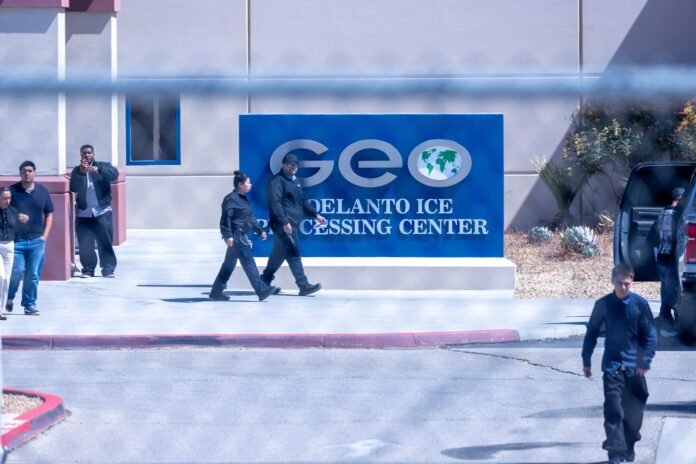
His gulag isn’t in a distant Soviet or banana republic. It’s about an hour and a half from Disneyland, in a small California town called Adelanto.

After Immigration and Customs Enforcement officers shot and detained Parias last October, the Los Angeles-based journalist will cross 300 days in ICE detention on Monday. His horrifying conditions aren’t unique among immigrant detainees, but Parias’s case is extraordinary. Perhaps no journalist has endured such a sustained sequence of violence, prosecution, and imprisonment at the hands of the U.S. government.

Several American journalists have spent months in jail to protect their sources: New York Times reporter Judith Miller (85 days in 2005), writer Vanessa Leggett (168 days ending 2002), and freelancer Josh Wolf (226 days ending in 2007). Last year, Emmy-winning journalist Mario Guevara spent more than 100 days in immigration detention before being deported, prompting national outrage.

Parias long ago surpassed Wolf’s record for the longest known time a journalist had spent in U.S. custody.

He was already prolific on social media when the immigration enforcement surge began last summer. He worked independently as Richard Noticias LA, with over 100,000 followers on TikTok. He built that audience by chasing crime stories across California neighborhoods often overlooked by larger outlets. This time last year, the Los Angeles City Council presented him with a proclamation honoring his efforts.

Federal authorities say Parias is an undocumented immigrant who had previously evaded arrest. But their account does not explain a growing mountain of evidence.

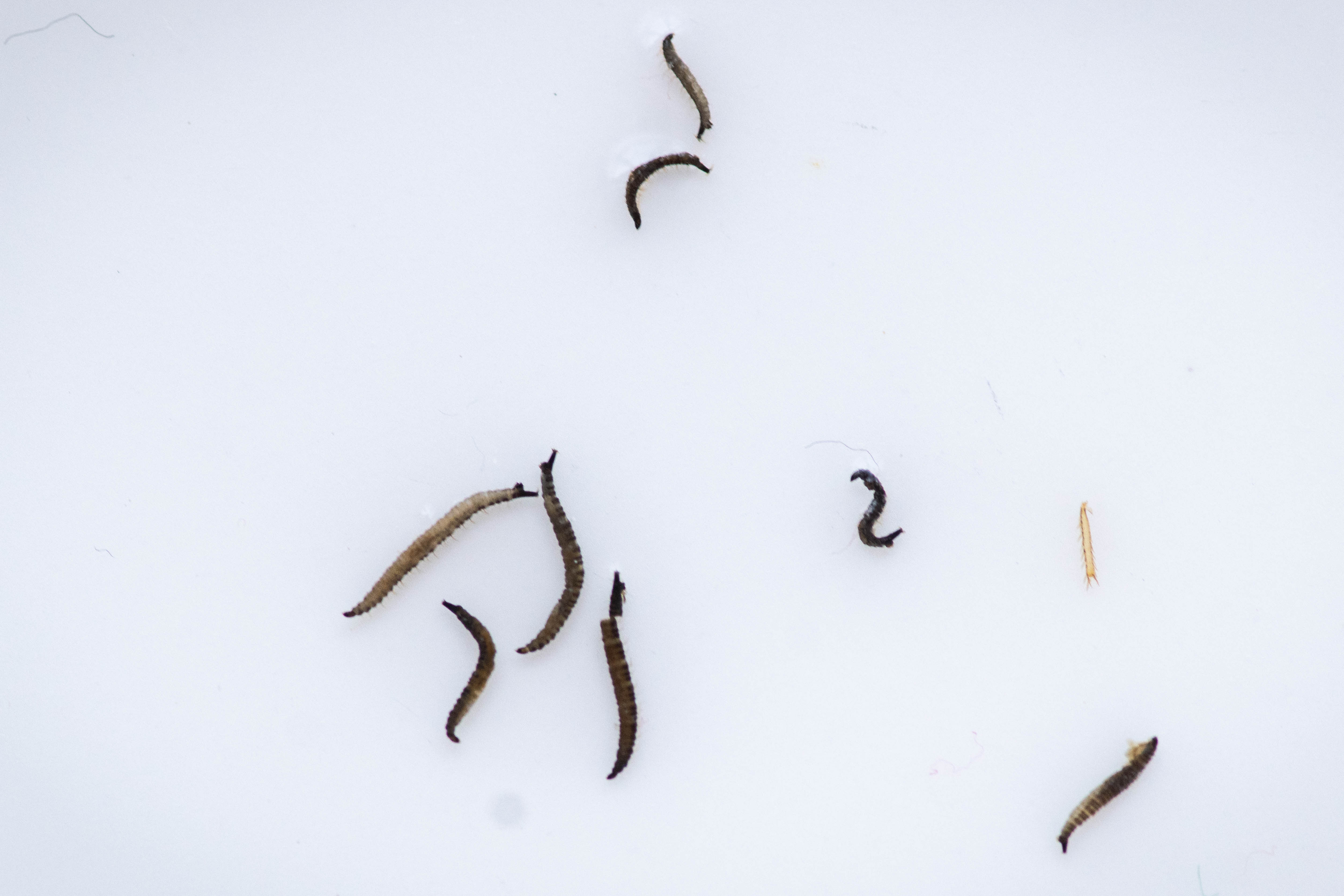
Los Angeles, CA - August 03:Preserved worms collected from Adelanto ICE Processing Center's drinking water are seen on Monday, August 3, 2026. (Photo by Sarah Reingewirtz/MediaNews Group/Los Angeles Daily News via Getty Images)
Worms collected from the Adelanto ICE Processing Center’s drinking water after Ricardo Parias called attention to the conditions, photographed on Aug. 3, 2026. Photo: Sarah Reingewirtz/MediaNews Group/Los Angeles Daily News via Getty Images

On June 13, 2025, Parias arrived at an immigration raid in South LA ready to film as usual. According to witnesses, a federal agent ran into him with a vehicle. Parias was then handcuffed and left on a sidewalk while the agents continued their work. Videos show him crying out in pain and grasping at his injured leg. Agents never provided medical attention. Eventually, a Good Samaritan pulled up in a private vehicle and took Parias to the hospital. An agent briefly stopped them but let Parias leave — handcuffs still on.

Four months later, Parias was driving along a quiet block near downtown LA. Multiple unmarked vehicles pulled up around him, carrying masked men who turned out to be federal agents. Immediately and without warning, they smashed his window, as bodycam footage later showed. Panicked, Parias stepped on the accelerator — a meaningless move in a small car physically pinned by multiple large SUVs. Tires spun, the vehicles didn’t budge, and Parias quickly took his foot off the gas.

One agent struggled to open the passenger door. He fumbled with his gun, as his own bodycam showed, juggling it back and forth between his hands before shooting Parias in the elbow. A U.S. marshal was also hit and was expected to recover.

As federal immigration agents’ violence once again sent Parias to the hospital, the agents scurried into the security office of a nearby strip mall to check for surveillance footage. They downloaded it onto a thumb drive and deleted it from the mall’s system.

Prosecutors charged Parias with assault on a federal officer, offering a version of events that omitted critical context. U.S. Attorney Bill Essayli fired off a social media post suggesting Parias had been trying to avoid deportation agents for months:

“This morning, Parias rammed his car into agents’ vehicles after they boxed him in and ordered him to submit to arrest. Parias, who had previously avoided capture by immigration authorities, refused to comply with agents’ orders and escalated what could have been a simple arrest into a life-threatening situation.”

Essayli’s post included a single screenshot from their lone copy of the mall’s footage. The full video would have painted a very different picture. He didn’t release it.

Evidence wasn’t the only thing withheld from Parias, who was discharged from the hospital days later while still on morphine. Taken directly into a federal criminal detention center in downtown Los Angeles, he was supposed to receive high doses of ibuprofen. Once in court for his initial criminal hearing, the judge learned he wasn’t being given the prescribed treatment for his gunshot wound. The pain caused Parias to twist in his chair. Flummoxed, the judge implored a U.S. marshal to expedite his return to a facility where he could be given medication. The marshal refused.

Moments later, Parias’s lawyer asked the judge if his client’s teenage son — who had not been allowed to communicate with his father since the shooting — could give him a hug. Citing security protocol, the marshal also vetoed this small act of humanity. As Parias was whisked away, his son shouted across the courtroom in Spanish, “te amo” (“I love you”).

Parias was eventually granted bond in his criminal case. But accepting it would have meant marshals turning him over to immigration authorities, who could immediately transfer him to their own distant facility with potentially worse care. He didn’t take the offer.

The government transferred him anyway. Adelanto is difficult to visit, hours from his lawyers and family in Los Angeles, not to mention the court itself. Prosecutors still hadn’t turned over the mall footage. But bystander videos began to undermine the government’s account. The judge ultimately threw out all criminal charges with prejudice, finding that the government had violated Parias’s constitutional rights.

The proceedings to deport Parias continue. For now, he’s stuck in Adelanto.

Even in detention, Parias remains a journalist. The government gave him a new beat. He began reporting on the horrid conditions that he and other detainees endure. Through video recorded by his visitors and accounts relayed to other reporters, Parias exposed the worm-like creatures in drinking water and cockroaches in cells.

His gunshot wound was being treated with vitamin D and Bengay. “What I saw looked like an arm that was on the verge of being amputated,” said Rep. Sydney Kamlager-Dove, D-Calif., who visited Parias at Adelanto in May. His situation inspired her to propose legislation addressing medical neglect in immigration facilities.

The government recently said it plans to ship him even farther away, to a facility in San Diego where he can receive medical care. The move will make it even harder for his family and lawyers to visit — and end his reporting on Adelanto’s rancid conditions.

Parias — and his reporting behind bars — is getting more media attention, but that coverage doesn’t always recognize how this all started because he was doing his job as a journalist.

America has imprisoned journalists before. It has even killed them. But what has happened to Parias is something different: A journalist was injured while documenting government power, shot during an attempt to arrest him, prosecuted, repeatedly denied medical care — and then left in immigration detention, where he has continued documenting the conditions around him.

The government’s powers to enforce immigration laws and prosecute crimes do not erase the First Amendment. Journalists don’t surrender their rights because they lack immigration status. And the government can’t make a journalist disappear simply by locking him in a cell.

At some point, the question stops being what else will happen to Parias. It becomes what America is willing to let happen to a journalist.

US floats prospect of joint strikes on Colombian armed groups

0
us-floats-prospect-of-joint-strikes-on-colombian-armed-groups
US floats prospect of joint strikes on Colombian armed groups


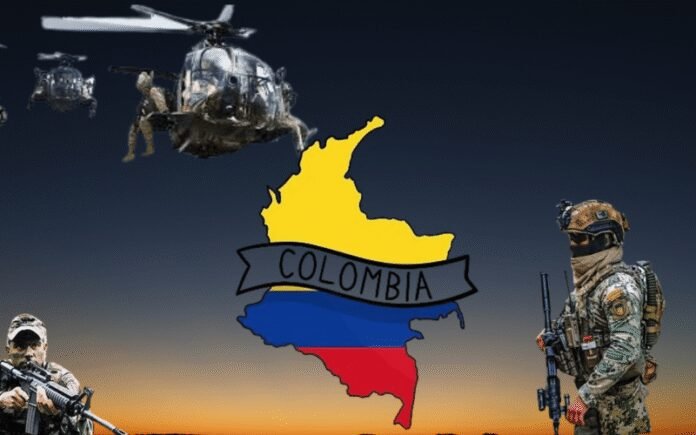
U.S. Defense Secretary Pete Hegseth floated on Wednesday the possibility of joint strikes on Colombian armed groups, as he welcomed ​the nation into a military-led counter-narcotics coalition after its conservative president took over last week.

Colombia had authorized “joint military operations to destroy terrorists ‌and terror networks,” Hegseth told a gathering of the U.S.-led Americas Counter-Cartel Coalition in Panama.

“Yes,” he replied when asked if he had discussed with his Colombian counterpart joint strikes against armed groups such as the National Liberation Army (ELN), which the U.S. designates as a terrorist group, and remnants of the Revolutionary Armed Forces of Colombia.

“Designated terrorist organizations, with partnered governments, will be legitimate targets ​of the United States government,” to include Colombia, Hegseth said when asked if such operations were expected.

President Donald Trump’s Latin American policy has expanded dramatically ​beyond its early focus on the Panama Canal.

More than 200 people have been killed since the launch of U.S. military ⁠strikes on suspected drug boats last September, while a U.S.-led commando raid in January deposed Nicolas Maduro, the president of Venezuela.

Critics say the U.S. strikes amount to ​war crimes worthy of the International Criminal Court, but Hegseth blasted the organization and encouraged coalition allies attending the meeting in Panama to withdraw from it.

He compared drug ​traffickers to al Qaeda or Islamic State terrorists.

Speaking at a hotel in Panama City, Hegseth invoked a revamped Monroe Doctrine, the 19th-century policy asserting U.S. primacy across the Americas that critics associate with decades of U.S. intervention.

He has called it the “Donroe Doctrine” — a play on Trump’s name.

“We will defend our hemisphere from external threats,” including from narco-traffickers and foreign malign influence, Hegseth said.

COLOMBIAN ​CRACKDOWN

Colombian President Abelardo De La Espriella’s vows of a security crackdown have been embraced by the Trump administration, which announced plans on Friday to provide $1 billion in ​U.S. security assistance to his government.

During his swearing-in remarks on Friday, De La Espriella vowed to “definitively eradicate the scourge of illicit crops” and committed to also joining the Shield of the ‌Americas program ⁠founded by Trump.

De La Espriella has blamed his predecessor, leftist Gustavo Petro, for an expansion of armed groups.

Speaking alongside Hegseth at the event, Colombia’s new Defense Minister Jorge Eduardo Mora, a retired major general, said Colombia could take a critical role in combating narco-traffickers on both its Pacific and Caribbean coasts.

“I think the time has arrived for the narco-terrorist cartels to confront the power and the capabilities of the entire hemisphere, led by the United States,” Mora said.

One U.S. official, speaking on condition of ​anonymity, said the new security partnership was ​expected to surpass the level of ⁠cooperation under Plan Colombia, a U.S.-Colombia anti-narcotics initiative launched in the early 2000s.

De La Espriella’s election was part of a rightward shift rippling across Latin America.

In Argentina, Bolivia, Chile, Ecuador, Panama and Peru, weak economies and rising crime have reshaped voter ​priorities, allowing once-fringe hard-right candidates to gain traction by promising crackdowns amid a global rise of right-wing nationalism.

In Panama, Trump’s ​administration won a major ⁠victory from the country’s Supreme Court in January after voicing concerns about encroachment by China. Hong Kong-based CK Hutchison, through local unit Panama Ports Company, lost the port concessions it had held for nearly three decades.

The Panama Canal handles 5% of global maritime trade, making control of its entrance ports a flashpoint for tension between Washington and Beijing.

Addressing ⁠the meeting, ​Panama President Jose Raul Mulino called drug trafficking the biggest threat facing the region and dismissed concerns ​that the U.S.-led coalition could infringe on members’ sovereignty. He made no mention of China.

Instead, he said the transnational crime groups that traffic drugs and people are the real threats to sovereignty.

“There’s never going ​to be a sustainable peace if this enemy (advances),” Mulino said.

Source:  Reuters

CBS News Star Accused of Shocking Harassment by Colleague

0
cbs-news-star-accused-of-shocking-harassment-by-colleague
CBS News Star Accused of Shocking Harassment by Colleague


CBS News correspondent Matt Gutman is facing serious accusations from a former ABC News colleague who claims he made sexualized remarks in the workplace, according to a wrongful-termination lawsuit filed in California.

Former ABC News field producer Samira Said named Gutman in a complaint filed in Los Angeles County Superior Court against ABC parent company Disney and others.

Said, who worked in ABC News’ Los Angeles bureau from May 2021 until March 2025, is seeking unspecified damages and alleges she faced discrimination, retaliation and a hostile work environment before ultimately losing her job.

Gutman, who previously worked for ABC News before joining CBS News, is mentioned in the lawsuit in connection with two alleged incidents involving inappropriate comments.

According to the complaint, Said was once assigned to a team that included Gutman and two other male crew members when a conversation allegedly turned to the appearance of a female correspondent.

The lawsuit claims Gutman began discussing the woman’s looks and allegedly rated her appearance using a numerical score based on her physical attributes.

Other male members of the crew allegedly joined in, with the lawsuit claiming the group continued discussing the woman’s body and appearance while Said was present.

Said claims the men then tried to pull her into the conversation by asking for her opinion.

She allegedly refused to participate and told them the discussion was inappropriate.

The lawsuit describes a second alleged encounter during a press event for a movie release.

According to Said, she and Gutman disagreed over whether their team should leave the work site.

The complaint claims Gutman then suggested, in front of several coworkers, that Said must have an after-hours date in the city and that was the real reason she did not want to relocate.

Said argues the remark undermined her professional judgment and turned the workplace disagreement into a sexualized stereotype.

The allegations involving Gutman are only one part of Said’s broader lawsuit against ABC and Disney.

Said also claims her relationship with the network deteriorated after she covered the devastating 2022 school shooting in Uvalde, Texas.

According to the complaint, Said experienced severe psychological symptoms following the assignment while also dealing with lingering effects from COVID-19.

She was reportedly granted medical leave from August 2022 until January 2023.

Said alleges that when her psychiatrist later cleared her to return to work with recommended accommodations, ABC refused those requests and instead required her to return without restrictions and remain available for a full workweek.

She claims she was later reassigned to weekend desk shifts and faced additional negative treatment.

The situation allegedly came to a head in March 2025.

Said claims she suffered a foot injury while covering dangerous weather conditions and reported the injury to the company.

She says she was subsequently fired.

Her lawsuit accuses ABC and Disney of discrimination based on gender, ancestry and disability, as well as retaliation, failure to accommodate her medical needs, hostile work environment harassment and other alleged violations.

The claims have not been proven in court, and the lawsuit represents Said’s allegations.

5 Years After Taliban Takeover, Afghan Women See Their Futures Erased

0
5-years-after-taliban-takeover,-afghan-women-see-their-futures-erased
5 Years After Taliban Takeover, Afghan Women See Their Futures Erased


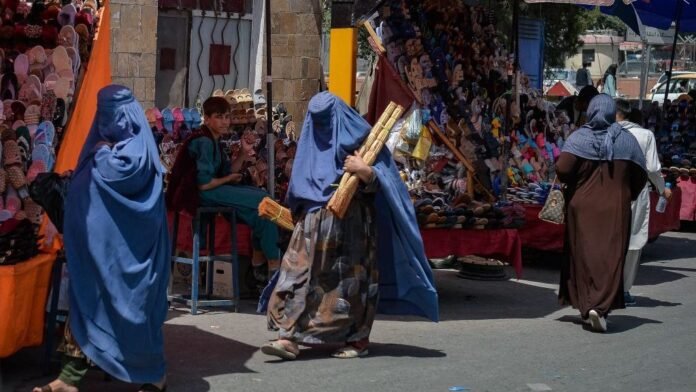
Saturday marked five years since the Taliban seized power in Afghanistan, and for the country’s women and girls, the anniversary brought little to commemorate. Arshad Mehmood reports that restrictions initially imposed after the collapse of President Ashraf Ghani’s government have hardened into a sweeping system that excludes women from education, employment and public life.

Girls remain barred from schooling beyond sixth grade. Women face tight controls on movement, dress, work and access to public spaces, often requiring a male guardian simply to leave home. United Nations experts are urging governments not to legitimize the Taliban without measurable, independently verified improvements in human rights.

Behind those policies are lives thrown violently off course. Marzia Imamzadeh, a Hazara Shia refugee who dreamed of becoming a lawyer, fled toward Pakistan after the Taliban takeover and survived an Islamic State Khorasan Province attack on her convoy. A former Afghan women’s volleyball coach, now separated from her children, described struggling to obtain food and medical care while facing possible deportation.

Zala Ahmadi was one semester short of completing a computer science degree at Kabul University when the Taliban closed the door on her education and startup ambitions. She sold her family’s remaining gold jewelry to pay smugglers and now lives undocumented in Pakistan, watching from afar as her younger sisters lose their own educational opportunities.

Other women who escaped Afghanistan—including journalist Tahmina Usmani, former national athlete Marwa Ali and former Supreme Court Judge Tahmina Safi—describe a generation stripped of autonomy, security and hope. Their testimony also exposes a troubling contradiction: Foreign governments condemn Taliban abuses while maintaining political and humanitarian engagement.

Geopolitical analyst Paul Farley warns that excluding women from education and healthcare could leave Afghanistan desperately short of female doctors, nurses and midwives, driving maternal mortality higher. Activist Fariba Akbari says poverty, forced marriage, domestic abuse and deportation fears are feeding a largely overlooked mental health emergency.

Mehmood’s full report gives these women something the Taliban has tried to deny them: a public voice. Read it for the human stories behind five years of gender-based exclusion—and for the warning that silence may allow this system to become permanent.

Wildfire smoke now bigger prenatal threat than human sources of air pollution

0
wildfire-smoke-now-bigger-prenatal-threat-than-human-sources-of-air-pollution
Wildfire smoke now bigger prenatal threat than human sources of air pollution

In 1965, a presidential advisory panel issued a report warning that pervasive chemical and carbon pollution was harming environmental health and changing the climate. Five years later, President Richard Nixon signed the Clean Air Act.

Since that 1970 law and its amendments were passed, combined emissions of a half-dozen harmful air pollutants from vehicles and industrial sources have decreased by nearly 80 percent.

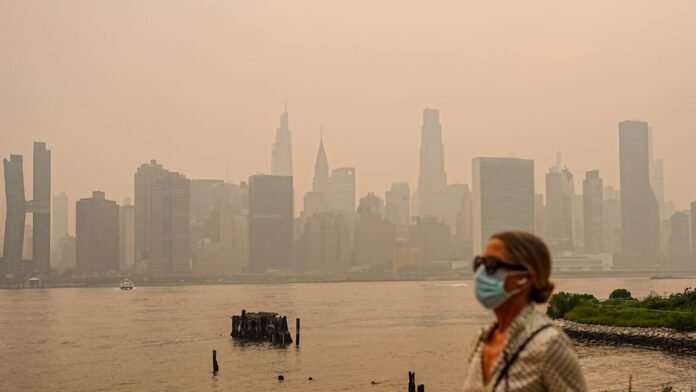
But mounting evidence shows that pollution from wildfire smoke is eclipsing those air-quality gains. The unchecked burning of fossil fuels is creating warmer, drier conditions that make wildfires more intense and destructive, and blanket communities in toxic smoke that is more harmful than pollution from other sources.

Now, a new study shows that smoke from wildfires is also reversing the health benefits of reducing air pollution for society’s most vulnerable population: babies in the womb.

Increasing wildfire activity is “systematically offsetting prenatal air quality gains” from reducing emissions from vehicles, refineries, factories and other human sources, researchers from the University of Maryland, College Park, report in the study, published Thursday in Frontiers in Environmental Health.

Low-income, rural and Indigenous populations bore the disproportionate burden of wildfire’s contribution to poor air quality, the authors found.

The major contribution of the study is its focus on a “very specific population that is quite at risk for adverse health outcomes,” said senior author Michel Boudreaux, associate professor of health policy and management. “We were looking at infants that were born and what their exposure was like during the prenatal period.”

Prenatal exposure to wildfire smoke significantly increases the likelihood that babies will be born too early or too small, raising their risk of dying early or developing chronic respiratory conditions and other diseases later in life.

The University of Maryland team studied how wildfire smoke and human sources of air pollution changed across the contiguous United States between 2003 and 2019, looking at air pollution data from the Environmental Protection Agency and live birth records. (The EPA datasets do not include years beyond 2019.)

To understand how much wildfire smoke contributed to unhealthy air exposures for unborn babies, the team used computer models to estimate exposures to fine particle pollution, or PM2.5, from both human sources, such as cars and industry, and natural sources, like wildfires. The team modeled air quality without emissions from fires to calculate how much of that total pollution came from wildfires.

The researchers obtained data for nearly 65 million babies born over 16 years and determined how many days they were exposed in the womb to the EPA threshold for unhealthy air.

Average daily prenatal exposure to air pollution from human sources dropped by 37 percent during that time, the analysis found, but contributions from wildfires doubled, offsetting those gains.

Although the study does not integrate data on preterm birth, birthweight or other outcomes, it is a very good exposure-characterization study, said Ilona Jaspers, an inhalation toxicologist and professor of pediatrics at the University of North Carolina, Chapel Hill, who was not involved in the study.

“What this study does do well is confirm and expand the well-established finding that ambient PM2.5 in the United States is increasingly wildfire-dominated, offsetting Clean Air Act gains, but applies a birth-weighted lens to it,” she said.

Wildfire smoke exposures are likely to have vast public health consequences, Jaspers said. In previous studies, Jaspers and her colleagues used prescription insurance claim data to show that exposure during specific perinatal periods can lead to childhood respiratory diseases.

The research doesn’t look at how much time the mother was spending outside, if she wore an N95 mask or if she had an air-filtration system in her home, which Boudreaux acknowledges as a limitation of the study. But data sources like Purple Air that track wildfire smoke are detecting a large amount of pollution in the form of a PM2.5 inside people’s homes, he said.

The new study highlighted regions and populations that were disproportionately affected by wildfire smoke. In the West and Northwest, wildfires’ contributions to air pollution more than doubled over the study period. And the communities where wildfires are responsible for the largest reversals in air quality—low-income, rural and American Indian and Alaska Native populations—often have the least access to neonatal care.

Since exposure to wildfire smoke early in life can cause life-long health problems, reducing exposure in the prenatal period will yield long-term benefits, Boudreaux said.

The last six years have seen several catastrophic fires in the West and Canada, Boudreaux said. If the team were to extend the study through 2026, he said, they’d likely see wildfires make an even higher contribution to unhealthy prenatal exposures. But that’s just speculation, he cautioned.

What is clear, he said, is that wildfire smoke now accounts for an increasing share of “acute, massive air pollution days” that endanger babies’ health. “What that tells me is that the next frontier is how do we help people manage exposure to wildfire smoke, which is a different kind of exposure than ambient pollution from other sources.”

That means providing communities with resources like clean-air shelters, air filters and better access to healthcare when they are exposed, he said. Ultimately, he said, “we should be asking, are there things we can do to reduce the risk of climate change in general?”

This article originally appeared on Inside Climate News, a nonprofit, non-partisan news organization that covers climate, energy and the environment. Sign up for their newsletter here.

0FansLike
0FollowersFollow
0FollowersFollow
0SubscribersSubscribe
- Advertisement -
Google search engine

Recent Posts