15.5 C
London
Monday, May 4, 2026
Home Blog

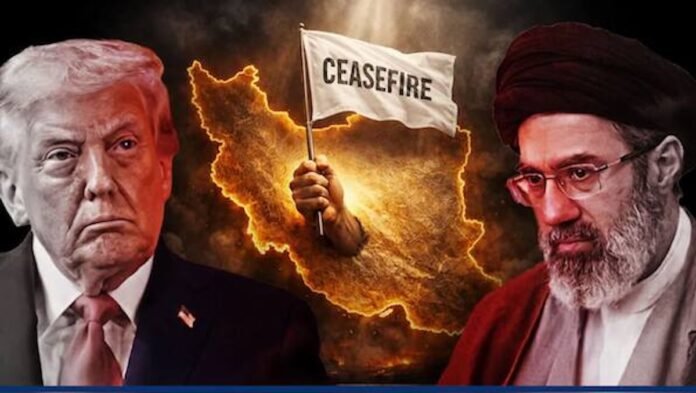
Trump’s Hormuz ‘protection’ seeks ‘pretext for escalation’: Iran

0
trump’s-hormuz-‘protection’-seeks-‘pretext-for-escalation’:-iran
Trump’s Hormuz ‘protection’ seeks ‘pretext for escalation’: Iran

Iranian officials warned Sunday that US President Donald Trump’s newly announced plan to help “guide” stranded ships out of the Strait of Hormuz is an attempted provocation aimed at justifying additional military action against the Middle Eastern country.

An unnamed senior Iranian official told Drop Site that Trump’s plan, announced on Truth Social and confirmed by the US military, “is primarily intended to provoke Iran into taking an initial step toward confrontation, thereby creating a pretext for escalation and enabling him to justify further military action in response to an Iranian initiative.”

The official added that “our definitive position is that any commercial vessel attempting to transit through designated restricted routes without prior coordination will be promptly intercepted by Iranian forces.”

“Should US military vessels respond, such actions would be met with an immediate and corresponding response from Iran,” the official continued. “The US military vessels are far from the corridor area. If commercial vessels attempt to move, they would be engaged well before reaching any American ships,” the official added. “Trump has effectively turned them into bargaining tools in his political game.”

Ebrahim Azizi, who heads the national security commission of the Iranian Parliament, warned in response to Trump’s plan that “any American interference in the new maritime regime of the Strait of Hormuz will be considered a violation of the ceasefire” that took effect in early April.

“The Strait of Hormuz and the Persian Gulf would not be managed by Trump’s delusional posts,” Azizi added.

Trump wrote on his social media platform on Sunday that his administration has told countries with vessels stranded in the vital strait that “we will guide their Ships safely out of these restricted Waterways, so that they can freely and ably get on with their business.”

Iran closed the strait – through which around 25% of the world’s seaborne oil trade and a third of global fertilizer trade flows each year – in response to the US-Israeli war as well as the Trump administration’s naval blockade against Iran.

The US president characterized his plan, which is titled Project Freedom and set to take effect on Monday, as a “humanitarian gesture on behalf of the United States,” but provided few details on how it would work.

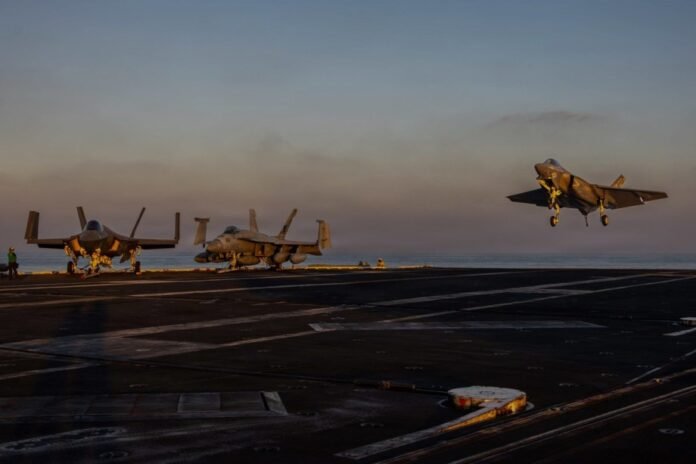
US Central Command (CENTCOM) said in a statement on Sunday that military support for Project Freedom would “include guided-missile destroyers, over 100 land and sea-based aircraft, multi-domain unmanned platforms, and 15,000 servicemembers.”

“Last week, the US Department of State announced a new initiative, in partnership with the Department of War, to enhance coordination and information sharing among international partners in support of maritime security in the strait,” CENTCOM said. “The Maritime Freedom Construct aims to combine diplomatic action with military coordination, which will be critical during Project Freedom.”

Brian Finucane, senior adviser to the US Program at the International Crisis Group, wrote that CENTCOM’s statement makes the president’s plan “sound like information-sharing backed by a vague threat of military action.”

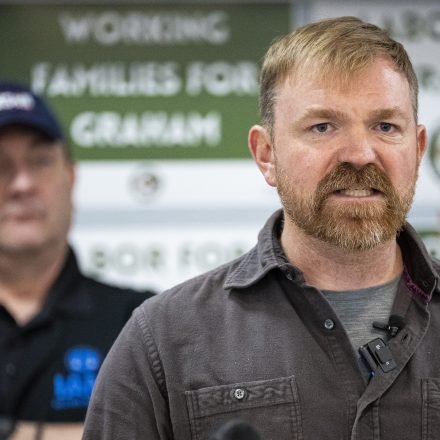
The president’s scheme drew immediate support from one of the most vocal boosters of the Iran war, US Senator Lindsey Graham (R-SC), who said he “totally” agrees with Trump’s decision to launch Project Freedom.

“I hope this conflict can end diplomatically,” said Graham, “but it is now time to regain freedom of navigation and forcefully respond to Iran if they insist on terrorizing the world.”

‘No nuclear negotiations’ are happening at this stage, Iran says

A spokesperson for Iran’s Foreign Ministry had said on Sunday said the Iranian leadership was reviewing the response issued by the US government over the weekend following a 14-point plan offered by Tehran to bring the war – now in its third month – to an end.

“The Americans have given their answer to Iran’s 14-point plan to the Pakistani side, and we are currently reviewing it,” Foreign Ministry spokesman Esmaeil Baghaei said in an interview with Iranian television.

Baghaei said that the offered framework is strictly focused on ending the immediate hostilities and that the plan contains “absolutely no details regarding the country’s nuclear issues,” which he suggested could be discussed at a later time.

“We are not currently engaged in any negotiations over the nuclear issue, and decisions about the future will be made in due course,” he said, even though Trump and US Secretary of Defense Pete Hegseth have continued to claim the preventing the Iranians from having a nuclear weapons program – which Tehran denies having and US intelligence assessments have shown does not exist in the manner that US officials describe it – is central to their war aims.

“I will soon be reviewing the plan that Iran has just sent to us,” Trump said in a social media post on Saturday, “but can’t imagine that it would be acceptable in that they have not yet paid a big enough price for what they have done to Humanity and the World, over the last 47 years.”

Despite some reporting examining what’s purportedly in the Iranian proposal, the exact details of the 14-point plan remain murky or contentious, depending on who you ask. Trita Parsi, executive vice president of the Quincy Institute for Responsible Statecraft, gave his assessment of the current situation on Sunday by saying:

Overall, the Iranians appear to be pursuing a grand bargain—without labeling it as such. This is not merely a proposal aimed at securing a ceasefire, or even a formal end to the current conflict, but rather an attempt to resolve the broader US-Iran antagonism that has persisted for the past 47 years. Implicit in this approach is an expectation that both sides would also restrain their respective regional partners and proxies (Israel, Hezbollah, etc.). In many respects, framing the proposal in this way may align more effectively with Trump’s instincts and psychology.

Meanwhile, a poll out Friday showed that 61% of Americans believe Trump’s launching of the war was a mistake, and an even higher number (66%) disapprove of how he’s handling the conflict. The same ABC News/Washington Post/Ipsos poll also showed that Trump is now facing the lowest approval ratings of his presidency.

Speaking with Al-Jazeera over the weekend, Parsi explained that Trump’s maximalist demands, including the blockade that it has tried to impose on Iran near the Strait of Hormuz, have made negotiations much more difficult.

Over the weekend, archival footage from the 1990s shared online by journalist Séamus Malekafzali showed former Iranian Revolutionary Guard Corps commander Hossein Salami, who was killed by US-Israeli forces last year, talking to the IRGC’s staff college about the country’s strategy of “asymmetric warfare” if and when it ever faced an opponent that was perceived to have military superiority over it.

“The chance of conflict with American forces is very possible,” Salami says in the video, according to the English subtitles provided, but the “possibility of victory really exists” if Iranians are able to move the conflict toward “the area of our capabilities into the area of America’s weaknesses.”

That strategy, as Malekafzali paraphrases it, is “to drag out a war with the US by driving up economic costs and political turmoil,” thereby draining the US and sapping its power by inflicting economic pain and political pressure.

As many foreign policy observers have pointed out since Trump launched the war, the strategy of Iran to inflict pain on US allies in the region and economic pain at a global level – such as has been achieved by the closing of the Strait of Hormuz – is very much what Salami describes.

As geopolitical analyst Misbah Qasemi explained, Salami’s point was basically this: “Don’t match their strength (air power, technology). Attack their weaknesses (economic endurance, political will, domestic opinion). Drag them into your terrain – maritime, cyber, proxy networks – where their advantages neutralize themselves.”

This point was made explicitly by Harrison Mann, a fellow with the advocacy group Win Without War, during a Sunday appearance on CNN, where he explained how this plays out in practical terms.

“Iran can actually inflict pain back on the US,” said Mann. “In this case, via economic warfare, which is not sustainable for Trump in the long run.”
-Common Dreams

US directs ships to transit Strait of Hormuz through Oman’s territorial waters

0
us-directs-ships-to-transit-strait-of-hormuz-through-oman’s-territorial-waters
US directs ships to transit Strait of Hormuz through Oman’s territorial waters

The US Navy on Monday directed vessels seeking to transit the Strait of Hormuz to route through Oman’s territorial waters south of the Traffic Separation Scheme, warning that the main shipping lane remained extremely hazardous due to sea mines that had not been fully surveyed or cleared, Anadolu reports.

The US Naval Forces Central Command advisory urged ships to contact Omani authorities on VHF channel 16, given anticipated traffic volume, and encouraged operators to carefully review risk assessments before attempting transit.

The guidance came as US Navy guided-missile destroyers transited the strait in support of “Project Freedom,” Washington’s initiative to escort neutral vessels out of the waterway, US Central Command said.

Iranian state media claimed the Islamic Revolutionary Guard Corps (IRGC) struck a US warship with two missiles during the operation. The US military rejected the claim outright, saying no navy vessels had been hit and that forces were continuing to support “Project Freedom” and enforce the naval blockade on Iranian ports.

Regional tensions have escalated since the US and Israel launched strikes against Iran on Feb. 28, prompting Iranian retaliation against Israel and US Gulf allies, as well as the effective closure of the Strait of Hormuz. The US formally announced a naval blockade on April 13.

A two-week ceasefire was announced on April 8 through Pakistani mediation, followed by direct talks in Islamabad on April 11, but no agreement was reached on a lasting truce.

US President Donald Trump later extended the ceasefire without setting a new deadline, following a request from Pakistan.

Norwegian Professor Draws Outrage Over October 7 Remarks

0
norwegian-professor-draws-outrage-over-october-7-remarks
Norwegian Professor Draws Outrage Over October 7 Remarks


A professor at the Norwegian University of Science and Technology has drawn condemnation after saying during an April 21 public lecture in Trondheim that the Hamas-led October 7, 2023, attack on Israel was “the most beautiful thing that has happened in our century,” according to Norwegian and Israeli media reports.

Bassam Hussein, a professor of project management at the university, known as NTNU, made the remark during a Socialist Forum Trondheim event at Litteraturhuset in Trondheim on the war involving the US, Israel, and Iran and its implications for Europe and Palestinians. The event listing described Hussein as an NTNU professor with family in Gaza who closely follows developments in the Middle East. It also listed Pål Steigan, editor of Steigan.no, as a second speaker.

Universitetsavisa, NTNU’s editorially independent university newspaper, reported that video from the event showed Hussein saying the attack had disproved “Israeli superiority.” Utrop, a Norwegian outlet covering multicultural affairs, reported that Hussein framed October 7 as a turning point in the region and later said he hoped Israel and the US would suffer a major defeat.

The remarks sparked criticism from Jewish and Israeli representatives. Eytan Halon, Israel’s chargé d’affaires ad interim in Oslo, called the comments “a shocking glorification of terror” and said, “This Hamas supporter cannot continue teaching Norway’s students.” Ervin Kohn, head of the Norwegian Jewish Community’s national cooperation council, told Utrop: “This is glorification of violence and terror that does not belong in our democracy.”

Hussein later wrote in Universitetsavisa that he did not view October 7 as “a victory or triumph” and said civilian deaths were tragic and should not be romanticized. He said he meant to describe the attack as a historical turning point from a Palestinian perspective, not as a moral judgment on violence.

The controversy comes as European universities continue to face disputes over Gaza, antisemitism, academic freedom, and the line between political speech and support for terrorism.

Musk’s “World War III” threat in Twitter lawsuit haunts him at OpenAI trial

0
musk’s-“world-war-iii”-threat-in-twitter-lawsuit-haunts-him-at-openai-trial
Musk’s “World War III” threat in Twitter lawsuit haunts him at OpenAI trial

Just days before the trial started, Elon Musk tried to settle his lawsuit, which alleges that under Sam Altman’s direction, OpenAI abandoned its mission to serve as a nonprofit making AI to benefit humanity.

According to a Sunday court filing from OpenAI, Musk messaged OpenAI President Greg Brockman two days ahead of the trial to “gauge interest” in a possible settlement. Brockman promptly responded, suggesting that “both sides” drop their claims. But Musk refused, then appeared to grow threatening enough that the court may allow Brockman to testify on the message as evidence supposedly revealing Musk’s true motives for pursuing the litigation.

“By the end of this week, you and Sam will be the most hated men in America,” Musk responded to Brockman’s suggestion that all claims be dropped. “If you insist, so it will be.”

OpenAI clearly did not accept the settlement terms, as the trial started last week with Musk as the first witness. On the stand, Musk stumbled several times, perhaps weakening his case by making concessions, growing hot-tempered, backing off claims that AI risks may quickly become existential, and admitting his ignorance when it comes to AI safety at his own company, xAI.

If admitted, his alleged threat could become his next big stumble, as Brockman—whom Musk also wants out at OpenAI—will be allowed to testify about the message when he takes the stand, likely today and tomorrow.

Typically, communications during proposed settlements aren’t admissible, but likely extra-frustrating to Musk, OpenAI pointed to an exception made during Musk’s failed lawsuit attempting to back out of his Twitter purchase.

In that 2022 case, Musk’s legal team invited a “renegotiation” of the Twitter purchase price “so that the lawsuit could be dropped,” while threatening that “it would be World War III until the end of time for real” for Twitter leaders and “their heirs,” if Musk was forced to buy Twitter at a price Musk set based on a 420 joke. During that exchange, Musk also supposedly tried to make Twitter executives uncomfortable by reminding them that if he “ends up owning this thing, he’ll have access to all of the company’s records and he could look at everyone’s emails and dig into whatever he wanted to dig into.”

That exchange ended up being admissible because Musk’s legal team intended to disclose the threat to opposing counsel. OpenAI suggested that Musk’s message to Brockman should similarly not be viewed as privileged or a sincere effort to settle the litigation because it’s “coercive rather than conciliatory.”

OpenAI alleged that the threat was in line with “similar menacing statements” Musk has made throughout the litigation, which they claim is little more than a harassment campaign attempting to eject Altman due to Musk’s personal grudge against the OpenAI CEO. As OpenAI has alleged, Musk’s message should be admitted because it “tends to prove motive and bias,” specifically proving that “Musk’s motivation in pursuing this lawsuit is to attack a competitor and its principals.”

For Musk, the attempt to get his message to Brockman admitted is probably yet another unwelcome flashback to the Twitter case he lost. However, it seems unlikely that it wouldn’t come up, since OpenAI’s lawyer who grilled Musk on the stand, William Savitt, was on Musk’s legal team when he tried to back out of buying Twitter. Savitt’s memory of that “World War III” threat was likely fresh at the moment when the message to Brockman was delivered.

Whether Judge Yvonne Gonzalez Rogers will admit the email has yet to be determined, but she will probably have to decide today, ahead of Brockman’s testimony starting. Musk’s lawyers are likely hoping the judge rejects OpenAI’s arguments and strictly adheres to precedent requiring that communications during settlement negotiations aren’t admissible, since allowing it could cloud sincere settlement negotiations in the future.

Trump’s Killing Spree Isn’t Stopping the Flow of Drugs Into the U.S.

0
trump’s-killing-spree-isn’t-stopping-the-flow-of-drugs-into-the-us.
Trump’s Killing Spree Isn’t Stopping the Flow of Drugs Into the U.S.


The Pentagon claims that attacks on civilian boats in the Caribbean and Eastern Pacific have severely curtailed the import of illegal drugs to the United States. And President Donald Trump says this has saved more than 1 million American lives. Experts call these assertions laughable and reporting by The Intercept shows that claims by the White House and War Department are baseless, phony, or both.

“The administration has failed to explain the long-term objectives of this mission or provide any evidence of reduced drug flows into the United States,” Sen. Jack Reed of Rhode Island, the top Democrat on the Senate Armed Services Committee said about the campaign on Thursday. “I would ask for a credible answer to this most fundamental question: What is the operation actually meant to accomplish?”

Under Operation Southern Spear, the U.S. military has conducted attacks on 54 so-called drug boats in the Caribbean and Eastern Pacific Ocean, killing more than 185 civilians, since September. The latest strike, on April 26 in the Pacific, killed three people. The Trump administration claims its victims are members of at least one of 24 or more cartels and criminal gangs with whom it claims to be at war but refuses to name.

Experts in the laws of war, as well as members of Congress from both parties, say the strikes are illegal, extrajudicial killings because the military is not permitted to deliberately target civilians — even suspected criminals — who do not pose an imminent threat of violence. These summary killings are a deviation from the standard practice in the long-running U.S. war on drugs, in which law enforcement agencies generally detained suspected drug smugglers and brought them to trial on criminal charges.

“These are extrajudicial executions, or even just murders — something similar to a cop shooting a fleeing suspect in the back when there is no self-defense justification,” said Adam Isacson, the director for defense oversight at Washington Office on Latin America, a human rights group. He called the growing death toll “a gross human rights violation.”

While Trump consistently lies about various aspects of the boat strikes, including the illicit narcotics allegedly on the boats and the number of lives supposedly saved by the attacks, the Pentagon has followed suit, using rhetorical sleight of hand and seemingly disingenuous statistics to bolster the claims of their commander-in-chief.

“I can’t imagine how you could come to some of these conclusions regarding illegal smuggling and drug overdose deaths based on the facts as we know them,” said retired Rear Adm. William Baumgartner, the former commander of the Seventh Coast Guard District, who oversaw drug-interdiction operations in the Southeast U.S. and the Caribbean Basin.

The Pentagon and White House for months failed to respond to detailed questions from The Intercept on the boat strike campaign.

Trump has repeatedly claimed that the vessels attacked by the U.S. are trafficking fentanyl, a synthetic opioid. “The boats get hit and you see that fentanyl all over the ocean, it’s like floating in bags, it’s all over the place,” he said in October of boats leaving from Venezuela.

Rep. Sara Jacobs, D-Calif., a member of the House Armed Services Committee, and five other government officials briefed on boat strikes told The Intercept that top officials admitted in close-door briefings that the vessels are not transporting fentanyl. “They had some convoluted reason why it was still impacting fentanyl that was hard to follow and I did not buy,” said Jacobs, who serves the San Diego area. “Representing a border community, I know that 99 percent of the fentanyl that comes into the United States comes through legal ports of entry by U.S. citizens and legal permanent residents.”

Fentanyl is generally produced in the United States or Mexico, Baumgartner said. “I have not seen any evidence that fentanyl has ever been smuggled from South America to the United States,” he told The Intercept. “Cartels would not smuggle fentanyl down to South America just to smuggle it back by boat.”

“I have not seen any evidence that fentanyl has ever been smuggled from South America to the United States.”

While bales of cocaine float in water, Baumgartner said, fentanyl is shipped in dramatically smaller quantities and would not be seen floating in the aftermath of an airstrike.

Fentanyl or not, Trump has also touted astounding decreases in drug smuggling due to the boat strikes. “Drugs entering our country by sea are down 97 percent,” Trump said at a January 29 White House briefing. Experts said that Trump’s claim is ridiculous, invented, or involves disingenuous numbers meant to deceive the American people. “It wouldn’t be the first time this administration just made up something out of whole cloth,” said Sanho Tree, the director of the Drug Policy Project at the Washington-based Institute for Policy Studies.

Baumgartner noted that even the Pentagon figures put the lie to Trump’s claim. “He’s trying to imply that 97 percent of the cocaine that left South America by boat headed to the United States has been stopped,” he said. “That’s not true and is contradicted by the administration’s own statements.” Acting Assistant Secretary of War for Homeland Defense and Americas Security Affairs Joseph Humire, for example, offered completely different numbers to Congress, telling the House Armed Services Committee in March that there “has been a 20 percent reduction of movements of drug vessels in the Caribbean and an additional 25 percent reduction in the Eastern Pacific.”

The word “deterrence” has become a popular Pentagon euphemism for the use of lethal strikes, in contrast to previous U.S. government efforts to marshal economic, diplomatic, and military means to convince adversaries to change their ways. “Deterrence has a signaling effect on narco-terrorists, and raises the risks with their movements,” Humire claimed. But last month, for example, there were eight strikes in the span of 16 days, including five in five days. “That shows that traffickers, even along that high seas route, are not being deterred,” said Isacson.

The amount of cocaine seized by U.S. authorities suggests the strikes have had little impact on the trade. “Really absurdly, there’s been no impact on flows of drugs toward the United States,” said Isacson. While data is limited, figures from Customs and Border Protection show that seizures at U.S. borders and along coasts have increased amid the Trump administration’s airstrikes in the Caribbean and Pacific. “CBP’s cocaine seizures have actually gone slightly up since the boat strikes began. Cocaine seized at all U.S. borders in the seven months before the strikes began was 38,000 pounds. In the seven months since, it’s 44,000 pounds — 6,000 pounds more,” Isacson explained.

The Coast Guard recently announced “record-setting interdictions” of cocaine in the Eastern Pacific under Operation Pacific Viper, indicating that large quantities of the narcotic are still transiting through that maritime corridor. Since last August, that service has seized more than 215,000 pounds of cocaine as part of this operation, Coast Guard spokesperson Brandon Hillard told The Intercept. “Narco-terrorists continue to go to great lengths to traffic illicit narcotics within and out of the Western hemisphere,” he said, highlighting “the seizure of hundreds of tons of cocaine.”

The general stability of the drug’s wholesale price also suggests it remains widely available. “The Coast Guard recently seized 1.2 tons of cocaine and reported a wholesale value of $19.3 million. This works out to be about a $16,500 per kilogram wholesale price. It doesn’t reflect the major jump in price that you would expect if you really had 97 percent reduction in flow,” Baumgartner explained of a seizure announced this month. “This report may be using old pricing information, but I would expect a significant spike in prices with even a 20 percent reduction in the cocaine flow.” 

According to the drug-testing company Millennium Health, use of stimulants, including cocaine, is climbing sharply and was detected in urine samples at nearly twice the rate of fentanyl in 2025.

“A 97 percent reduction in cocaine flow would mean that cocaine was now extraordinarily rare in the United States,” said Baumgartner. “The price of cocaine would have skyrocketed. Addicts would be fighting each other over what little cocaine or crack they could find.”

Trump has also advanced absurd statistics about lives saved by attacks on boats. “When you see the boats being hit, those boats kill on average 25,000 people a boat,” Trump claimed. This echoed his previous assertion that “every boat that we knock out, we save 25,000 American lives.” Experts say that there is no way of knowing how many lives are saved due to drug interception efforts, but that Trump’s claims are nonetheless untethered from reality.

The Centers for Disease Control and Prevention reported more than 70,000 drug overdose deaths for the 12-month period ending in November 2025. By Trump’s math, the drugs on the 54 boats would have been responsible for 1,400,000 deaths — 20 times the number of overdose deaths in one year. “The claim that sinking each cocaine smuggling boat saves 25,000 lives makes no sense,” said Baumgartner. “That would probably be more than the number of cocaine deaths in the last five decades combined.”

While not as egregious as Trump’s claims, Humire also offered up overdose numbers that appeared calculated to deceive. “As early as September 2025, the Administration had also achieved a nearly 20% drop in deadly drug overdoses in the United States compared to the previous year,” said Humire, crediting Operation Southern Spear with a share of the success. Left unsaid is that the first boat strike occurred that September, meaning the strikes would have had little or no impact on the numbers. The Pentagon did not provide any details on the source of Humire’s figures.

“ There is no military solution.”

Experts say Humire’s statistics appear to be rhetorical sleight of hand, since Operation Southern Spear is not actually preventing the flow of fentanyl — the leading cause of overdose deaths in the United States. Baumgartner called it “misleading” to link Operation Southern Spear to decreases in overall drug overdoses and drug flow because it “only impacts cocaine smuggling, not fentanyl or other drugs.”

Humire claimed Southern Spear and National Defense Areas on the U.S. Southern border “diminished the flow of fentanyl,” telling Congress it is “down 56% since the same period last year.” In actuality, CBP’s seizures of fentanyl at the U.S.–Mexico border have been declining since 2023. Halfway into fiscal year 2026, fentanyl seizures are almost exactly half of the total for 2025.

War Secretary Pete Hegseth also claims that the boat strikes have significantly impacted the drug trade. “Some top cartel drug-traffickers in the @SOUTHCOM AOR have decided to cease all narcotics operations INDEFINITELY due to recent (highly effective) kinetic strikes in the Caribbean,” he wrote in a February post on X. The Pentagon won’t name these “top” traffickers, failing to respond to repeated requests for information from The Intercept.

Lawmakers and other experts say that the Trump administration completely misconstrues the nature of the drug trade. “They have a fundamental misunderstanding that drug trafficking is a business. And that means there is no military solution,” Jacobs told The Intercept.

Tree, of the Institute for Policy Studies, echoed this. “They’ve applied a war paradigm to an economic problem, as if there is a command structure of the global drug economy where the person at the top finally says, ‘We’ve had enough. Everyone, stop what you’re doing now. We surrender’ — as if a cartel boss could command users, growers, smugglers, money launderers, and dealers, to all give up. It doesn’t work that way,” he explained. “Even if you did find a case or two of someone deciding to get out of the business, there are an infinite number of replacements willing to step up because that’s where the money is. Smuggling is the business. There’s always going to be a Han Solo.”

“They’ve applied a war paradigm to an economic problem.”

The Trump administration’s killing of civilians on alleged drug boats contrasts with the administration’s ongoing embrace of drug traffickers, drug dealers, and certain cartels, as well as its cuts to drug enforcement efforts. Justice Department records show, for example, that the Drug Enforcement Administration’s staff has dropped by about 6 percent since 2024. And more than 5,000 FBI and DEA agents have been reassigned from combating drug cartels to immigration enforcement, according to Rep. Jamie Raskin, D-Md., the ranking member of the House Judiciary Committee. Trump’s then-Attorney General Pam Bondi also scuttled the Justice Department’s Organized Crime Drug Enforcement Task Forces which allowed the department to coordinate investigations of cartels and transnational criminal networks. And last year, federal prosecutions for drug trafficking dropped to their lowest level in more than two decades.

To justify January’s U.S. invasion of Venezuela and the kidnapping of its president, Nicolás Maduro, Trump administration prosecutors charged him with numerous crimes, including “Narco-Terrorism Conspiracy” and “Cocaine Importation Conspiracy.” The Trump administration is now running the country via a puppet regime that includes Interior Minister Diosdado Cabello, who was indicted in the U.S. for drug trafficking, having “partnered with some of the most violent and prolific drug traffickers and narco-terrorists in the world, and relied on corrupt officials throughout the region, to distribute tons of cocaine to the United States,” according to the Justice Department. 

Trump has also granted clemency to around 100 people accused of drug-related crimes, including kingpins. He gave, for example, a “full and unconditional” pardon to former Honduran President Juan Orlando Hernández, who had been sentenced to 45 years in prison after being convicted in 2024 for using his office to smuggle 400 tons of cocaine into the U.S. Republican Sen. Bill Cassidy of Louisiana asked: “Why would we pardon this guy then go after Maduro for running drugs into the United States?”

On Thursday, Sen. Tim Kaine, D-Va., questioned Gen. Dan Caine, the chair of the Joint Chiefs of Staff, on the boat attacks. “What legal justification could there possibly be that would allow the U.S. military to strike boats in international waters and kill the occupants of those boats without a showing of evidence that there’s narcotics on those boats?” he asked, before being met by a stream of doubletalk about the legality of the attacks. Unable to elicit a straight answer, Kaine responded: “I think there’s a profound mismatch between what is occurring and the underlying assumptions in the legal opinion.”

Military briefers have admitted to members of Congress that they cannot satisfy the evidentiary burden necessary to hold or prosecute survivors of the boat strikes, leading the U.S. to repatriate, hand off, or leave injured victims to drown. Similarly, those killed — if they are involved in the drug trade — are hardly drug kingpins. An investigation by The Associated Press into the lives of nine of those killed in U.S. strikes found that while they had been smuggling drugs, they were not “narco-terrorists” or gang leaders but laborers, a fisherman, a motorcycle taxi driver, two were low-level criminals, and one was a local crime boss. All were from a desperately poor area, and most were crewing such boats for the first or second time. “These individuals don’t matter in the grand scheme of things,” said one government official of those killed.

“We don’t use missiles to address a public health problem.”

Asked about the disconnect between the Trump administration pardoning drug kingpins and killing low-level persons who may be associated with the trade, Tree said it was par for the course. “The punitive aspect of the drug war has never been about logical consistency,” he said, noting that tobacco will kill close to 500,000 Americans this year, six times the number of overdoses. “Does that mean Trump is going to drone strike the homes of tobacco executives in the U.S.? Can other countries target them since Trump lacks the political will? That would be absurd because we don’t use missiles to address a public health problem.”

“These are visceral knee-jerk responses designed to make politicians appear tough,” Tree said, “but being tough is not the same as being effective.”

Trump administration cites national security in stalling 165 wind farms

0
trump-administration-cites-national-security-in-stalling-165-wind-farms
Trump administration cites national security in stalling 165 wind farms

The Trump administration has brought US onshore wind development to a halt citing national security concerns, representing a major escalation in the president’s crusade against renewable energy.

Approvals for about 165 onshore wind projects on private lands are being stalled by the Department of Defense, including wind farms which were awaiting final sign-off, others in the middle of negotiations and some that typically would not require oversight by the department, according to the American Clean Power Association (ACP) and people close to the matter.

Wind farms require routine approval from the defence department to ensure they do not interfere with radar systems. This typically involves the level of risk being assessed and the developer paying an agreed sum for the army to update its radar filter system so it can locate the windmill. Some projects can be deemed not to pose a risk due to their distance from army facilities and flight paths. Normally these assessments can take as little as a few days to complete.

Since August 2025, developers have faced a mix of setbacks, including not receiving expected communications from DoD, having meetings to discuss the status of their projects cancelled without the opportunity to reschedule, and being informed that the department has stopped processing their applications, according to people with knowledge of the situation.

The affected projects include 35 that had completed negotiations and are awaiting sign-off from the DoD—first reported by Axios in March.

More projects are now facing a shutdown—30 of which had undergone negotiations, received verbal signoffs and were waiting for written confirmation, about 50 are in the process of negotiations and 50 that previously would probably have been declared risk-free, according to developers and consultants.

The wind farms could generate 30 gigawatts, enough to power 15mn homes.

Letters sent to developers in early April said the agency was reviewing its processes for evaluating energy projects’ impact on national security.

The moves represent a dramatic escalation of the administration’s effort to shut down wind energy in the US, reaching for developments on private lands as well as public ones.

President Donald Trump has a particular animosity towards wind farms. He has called them the “worst form of energy” and said his “goal is to not let any windmill be built.”

Since its second term in office, the Trump administration has repeatedly tried to shut down work on several offshore wind sites in areas administered by the Bureau of Ocean Energy Management, also citing national security concerns, as well as other renewable energy projects on federal lands. Some of these actions have been thwarted in federal courts.

“This is so unprecedented,” said Jason Grumet, chief executive of the ACP. “The fact the administration is telling private landowners they’re not allowed to pursue economic activity and generate value from their property is hard to reconcile with conservative values.”

The administration has recently started refunding offshore wind leases in exchange for investments in fossil fuels, such as a $1 billion deal with TotalEnergies in March.

“The Trump administration’s attempts to block wind projects keep getting struck down in court, so it’s reaching for ever more extreme and absurd methods,” said Kit Kennedy, managing director for power at NRDC.

The DoD did not respond to a request for comment.

© 2026 The Financial Times Ltd. All rights reserved. Not to be redistributed, copied, or modified in any way.

EP Opens Submissions for Sixth Edition of Daphne Caruana Galizia Prize for Journalism

0
ep-opens-submissions-for-sixth-edition-of-daphne-caruana-galizia-prize-for-journalism
EP Opens Submissions for Sixth Edition of Daphne Caruana Galizia Prize for Journalism


The European Parliament on 4 May opened submissions for the sixth edition of the Daphne Caruana Galizia Prize for Journalism, an annual award recognising outstanding reporting that upholds the European Union’s core values.

The prize, awarded each year around 16 October—the anniversary of the हत्या of Daphne Caruana Galizia—honours journalism that promotes human dignity, freedom, democracy, equality, the rule of law and human rights.

European Parliament President Roberta Metsola said the award remains a symbol of support for journalists facing intimidation and violence. She stressed that press freedom is fundamental to safeguarding democracy and that the prize recognises those who continue to expose the truth under difficult conditions.

The competition is open to professional journalists and teams of any nationality, provided their work has been published or broadcast by media organisations based in one of the EU’s 27 member states. Entries must demonstrate in-depth reporting aligned with the Union’s foundational principles.

An independent jury comprising representatives from media and civil society across the EU, alongside major European journalism associations, will select the winning entry. The award includes a €20,000 prize and will be presented in October.

The initiative forms part of the Parliament’s broader efforts to defend media freedom and pluralism. In recent years, MEPs have advanced key legislation, including the European Media Freedom Act, which entered into force in 2024, and the Anti-SLAPP Directive, adopted in 2024 and due for transposition by May 2026.

Gulf state cooperation has long been shaped by the threat of Iran − but shows of unity belie division

gulf-state-cooperation-has-long-been-shaped-by-the-threat-of-iran-−-but-shows-of-unity-belie-division
Gulf state cooperation has long been shaped by the threat of Iran − but shows of unity belie division

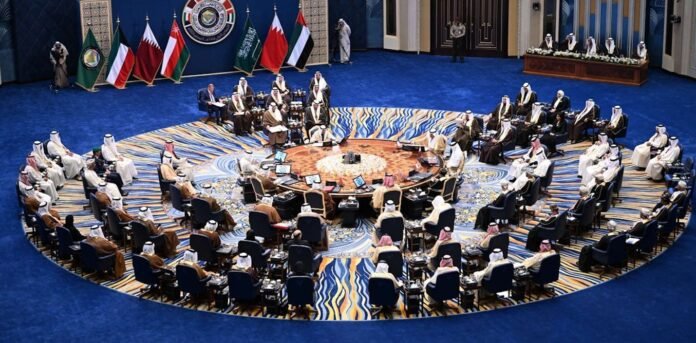
Arab Gulf countries, battered economically and physically by the war with Iran, were keen to put on a united front at a key regional meeting on April 28, 2026.

Gathering in the Saudi city Jeddah, representatives of the Gulf Cooperation Council warned the Iranian government in Tehran that an attack on any one of its six members would be taken as an attack on all. Rejecting Iran’s claims to control of the Strait of Hormuz, Qatari Emir Sheikh Tamim bin Hamad Al Thani later described the summit as embodying “the unified Gulf stance” over the conflict.

The show of togetherness may seem at odds with other recent developments that have seen members of the GCC split over policy and vision for the region – not least the United Arab Emirate’s decision to quit the oil cartel OPEC.

But to followers of Gulf politics, like myself, the scene felt familiar. Time and again, Iran has accomplished what no outside mediator could: It has pushed divided Gulf Arab states together. When tensions rise, the monarchies of the GCC – Bahrain, Qatar, UAE, Saudi Arabia, Kuwait and Oman – tend to stand united, at least publicly.

From revolution to coordination

The modern Gulf security environment was profoundly shaped by the 1979 Iranian Revolution.

Iran shares a narrow and strategically vital waterway with the Gulf states but has long differed in identity and outlook. Specifically, Iran’s Shiite revolutionary model contrasts with the Sunni-led monarchies across the region.

Before 1979, when Iran was ruled by Shah Mohammad Reza Pahlavi Iran and Saudi Arabia, the largest of the Sunni Arab Gulf states, were regarded by Washington as “twin pillars,” protecting American interests in the Middle East. Their relationship was cooperative, but not close.

Then the emergence of the Islamic Republic after the revolution in 1979 introduced a new kind of regional actor – one defined not only by state power but also by Shiite ideological ambition.

Gulf monarchies’ concern over both external security and internal stability was reinforced by the 1979 Grand Mosque seizure in Saudi Arabia, when Islamist militants seized Islam’s holiest site. The event, alongside Iran’s revolution, exposed the vulnerability of Gulf regimes to religiously driven upheaval.

A large plume of smoke is seen amongst buildings

The 1979 siege at Mecca’s Grand Mosque raised concern over security across the Gulf region. AFP via Getty Images

In response to this revolution ideology, Bahrain, Kuwait, Oman, Qatar, Saudi Arabia and the UAE established the GCC in 1981. Although officially framed as a platform for economic and political cooperation, the organization also reflected shared security concerns and Arab identity.

But unity had limits. Member states did not all view threats to their respective regimes in the same way.

Saudi Arabia worried about U.S. pressure for reforms; Kuwait feared neighboring Iraq; Bahrain was concerned about Iran’s influence over its own Shiite population; and the UAE worried about both Iran and its own large foreign workforce. Meanwhile, Oman and Qatar followed a more independent or balanced approach.

These differences would shape the trajectory of the GCC, and Arab Gulf states’ relationship with Tehran.

The eight-year Iran–Iraq War, which began in 1980, brought to the fore fears of Iran’s influence across the region. While Oman declared neutrality, other GCC states supported Iraq by funneling billions of dollars to the regime of Saddam Hussein.

This revealed an early pattern: Gulf states could coordinate politically, but avoided acting as a single strategic bloc. The GCC broadly favored Iraq as a counterweight to Iran, but there was no unified strategy or formal policy.

Security dependence

The Iraqi invasion of Kuwait in 1990 reshaped the region’s security structure again. In early 1991, the move prompted a U.S.-led coalition, including Saudi Arabia and other Gulf states, to expel Iraqi forces. Saudi Arabia’s role was especially significant: It not only hosted coalition forces but also actively participated militarily – marking one of the first major episodes in which a GCC state was directly involved in the defense of another member.

Soldiers are seen walking in a line in the desert.

American troops at Dhahran airport in Saudi Arabia during Operation Desert Shield. Eric Bouvet/Gamma-Rapho via Getty Images

During – and especially after – the Gulf War, GCC states deepened their reliance on the United States, agreeing to host U.S. military bases and expanding long-term defense cooperation.

This external security umbrella provided a measure of stability, but it also introduced new differences. While Saudi Arabia, Kuwait, the UAE and Bahrain aligned more closely with Washington’s strategic framework, others – notably Oman and Qatar – maintained a more flexible approach. As a result, the appearance of unity coexisted with growing variation in national strategies.

This pattern has continued in recent years, significantly through diplomatic moves to normalize ties with Israel under the Abraham Accords. While the UAE and Bahrain moved quickly to formalize ties with Israel, others remained more cautious.

The effort to contain Iran

When it comes to combating Iranian influence, GCC states have long played different roles.

Oman has consistently acted as a mediator, maintaining open channels with Tehran and facilitating quiet diplomacy — including back-channel talks between Iran and Western states.

Qatar also kept communication open, partly because of shared economic interests with Iran – particularly the management of the North Field/South Pars gas reserve.

Saudi Arabia and the UAE, by contrast, have generally taken a more cautious and at times confrontational stance toward Iran. Both view Iran as a regional competitor and a source of security concerns, particularly due to Tehran’s missile program and its support for ideologically opposed non-state actors.

This contrasting approach to Iran across the GCC allows different states to engage Tehran through multiple channels, but it also makes it harder to form a consistent, unified GCC strategy.

A changing regional balance

The 2003 Iraq War marked a turning point in the GCC-Iran dynamic. The removal of Iraq as a regional counterweight allowed Iran to expand its influence.

And this development sharpened divisions within the GCC.

Saudi Arabia and the UAE increasingly viewed Iran as a direct strategic threat requiring containment. Qatar and Oman, however, emphasized dialogue and mediation.

These differences became more visible during the Qatar diplomatic crisis of 2017. The dispute centered around Qatar’s support for Islamist political groups such as the Muslim Brotherhood, considered a terrorist organization by the UAE and Saudi Arabia.

Saudi Arabia, the UAE and Bahrain severed diplomatic ties with Qatar and imposed a full air, land and sea blockade in June 2017. The three nations accused Qatar of supporting extremist groups and maintaining close ties with Iran. Isolated, Qatar relied on Iran for airspace, trade routes and supplies, strengthening the relationship between the countries. The blockade eventually ended in January 2021, when the parties signed a declaration restoring diplomatic and trade relations at a GCC summit in Saudi Arabia.

GCC under attack

The series of events that began with the Oct. 7, 2023, attack by Iranian-backed Hamas in Israel shook up GCC relations with Tehran.

In June 2025, in response to the U.S.-Israeli attack on Iran, Tehran struck a U.S. base in Qatar – the first such attack on a GCC state by Tehran.

At an extraordinary meeting in Doha, Qatar’s capital, GCC members pledged full solidarity with Qatar and strongly condemned the Iranian attack.

But it was not enough to prevent Iran from attacking all six GCC states in response to the ongoing conflict begun in February 2026 by U.S. and Israel.

The subsequent closure of the Strait of Hormuz, affecting 20% of global oil supplies, has sparked what many see as the biggest crisis in the Gulf since the inception of the GCC.

The GCC responded by emphasizing collective security and unity. But yet again, the public show of togetherness masks divergent views on how to respond. When the war ends, each state will likely return to its own strategic and foreign policy approach.

Understanding the pattern

Since 1979, Tehran’s actions in the Gulf region have exposed two parallel developments. On the surface, there are shared concerns among GCC members and public shows of unity. But underneath this facade of unity, each state has continued to develop its own national priorities and risk tolerance.

The combination of these two factors helps explain why the GCC often appears unified during crises, while remaining internally divided over how to respond to them.

Rather than viewing the GCC as a fully cohesive bloc, it may be more accurate to see it as a framework where cooperation and disagreement coexist.

Thailand seizes on Hormuz fears to push land bridge dream

0
thailand-seizes-on-hormuz-fears-to-push-land-bridge-dream
Thailand seizes on Hormuz fears to push land bridge dream

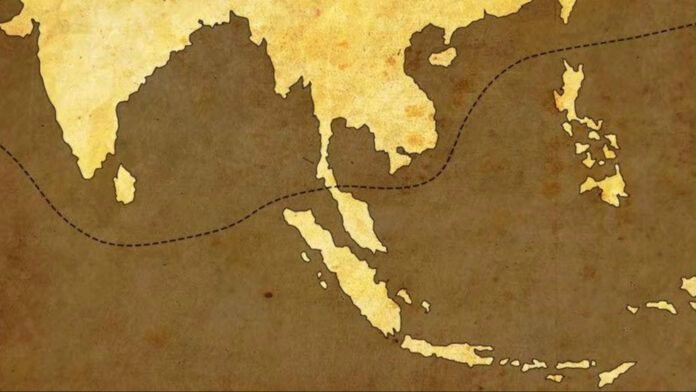
BANGKOK – While Asia suffers from Strait of Hormuz blockades, Bangkok is offering Beijing, Singapore and others a planned multi-billion dollar “land bridge” across Thailand’s thin peninsula, to link shipping between the Andaman Sea and Gulf of Thailand instead of south through the equatorial Strait of Malacca.

China, the US and other countries could use the 90-kilometer-long land bridge for commercial, military and other shipping, potentially reducing fuel costs and time on routes to and from the Persian Gulf and South China Sea.

Beijing’s use of the proposed shorter shipping route could also benefit China if the US were to blockade the Strait of Malacca during a regionwide conflict over Taiwan or other issues.

Thailand’s newly reelected Prime Minister Anutin Charnvirakul has pointed to growing uncertainty around key maritime chokepoints, including the Strait of Hormuz, as justification for moving the project forward, according to a Bangkok Post report.

“The government is also preparing a series of international roadshows to attract foreign investment,” the paper said. The entire project could cost more than US$30 billion, Thai Senator Norasate Prachyakorn told parliament on April 27.

Singapore’s Defense Minister Chan Chun Sing met Anutin on April 27 in Bangkok to discuss the land bridge and other issues.

“They recognize the project’s potential and the opportunities it could create for Thailand and the wider region if it proceeds,” said Bangkok’s government spokeswoman Rachada Dhnadirek.

The project’s supporters say the land bridge could also fit into China’s Belt and Road Initiative by linking to Thailand’s existing railway lines and highways, which are slowly being upgraded.

Some of those Thai lines feed in and out of Laos, where a Chinese-built high-speed train already zips across northern Laos, linking the tiny communist country to southern China.

To avoid depending too heavily on China, Thailand opened the land bridge project to international investors, supposedly attracting interest from India, Dubai, Japan, Europe and elsewhere, including port developers, shipping lines and real estate developers.

Funding would come from private and public sources, according to reports.

Boosters say the land bridge would include a sleek, dedicated superhighway supported by modern warehouses and facilities, plus oil and natural gas pipelines and a fast rail line running parallel alongside the road.

Thailand’s west coast port at Ranong on the Andaman Sea would be connected to the east coast port at Chumphon on the Gulf of Thailand, south of Bangkok.

The road, rail and pipelines could traverse Thailand’s coast-to-coast southern isthmus in only a few hours, supporters said. Several additional hours would be required for loading and unloading.

Ships transiting between the Persian Gulf to and from China, Japan, South Korea, Taiwan and elsewhere in eastern Asia could dock at either port. There, waiting ships could continue carrying the cargo to international destinations.

Currently, ships coming from the Persian Gulf to eastern Asia must veer south into the Indian Ocean and skirt much of Southeast Asia.

They then head toward the 800-kilometer-long Strait of Malacca, which usually refers to two straits, including the adjacent, additional 105-kilometer-long Strait of Singapore.

Those straits link the Indian Ocean and Andaman Sea with the South China Sea and the Pacific Ocean. Ships from Hormuz first pass through the Strait of Malacca, which is wedged between Indonesia’s northern Sumatra island and the Malay Peninsula, including Singapore.

Ships continuing on to China and elsewhere in eastern Asia – mostly deepwater vessels – must then squeeze through the narrower Strait of Singapore before reaching the South China Sea.

Hundreds of ships sail through the crowded straits each day. Malaysia and Indonesia control the Strait of Malacca on opposite shores, along the waterway’s western and central side.

Singapore controls the Strait of Singapore which is on the east side and, of the two, is more liable to congestion or a chokehold. All three countries have close military, economic and diplomatic links with the US while also balancing their relations with China.

After exiting the straits, ships from the Persian Gulf bound for eastern Asia must then turn north again to pass Malaysia, Vietnam, and the Philippines, before finding harbors along the coast of China and the region’s other ports.

More than 20% of the world’s oil passes through the Strait of Malacca each day.

In recent years, slightly more crude oil and petroleum liquids transited the Strait of Malacca compared with the Strait of Hormuz, according to the US Energy Information Administration (EIA).

The Strait of Malacca “is the primary chokepoint in Asia and Oceania,” the EIA said.

All countries can use the Strait of Malacca but China could become vulnerable if the US pressures Malaysia, Indonesia and Singapore to restrict shipping through the strait which is also used by the US 7th Fleet.

Bangkok, meanwhile, is also trumpeting the land bridge’s potential to turn Thailand into a marine fuel supply base and petroleum refiner, which in turn could attract more international investment.

Opponents insist that traversing the land bridge will take so much time for loading, unloading and overland transport across the peninsula that it won’t save much money for shippers.

Opposition politicians, meanwhile, are sharpening their knives, with Democrat deputy leader Korn Chatikavanij among many who see the project as economically unfeasible.

Supporters, however, point out that the Strait of Malacca also often involves loading, unloading and transshipping to break up large loads into smaller pieces because many goods need to be delivered to several countries, and not to only one final destination.

“Vessels already stop to unload and transfer cargo at hubs such as Singapore,” said Transport Minister Phiphat Ratchakitprakarn, who is also a deputy prime minister.

If a ship needs to link with less frequented ports in, for example, Indonesia, then it is often loaded or unloaded at Singapore, or Malaysia’s Port Klang and Sumatra’s Belawan docks.

Local vessels link up at those ports to transport cargo to and from scattered, smaller, nearby destinations. Big tankers can pass through the Strait of Malacca and Strait of Singapore without much delay.

Environmentalists, meanwhile, warn of a vast disaster to underwater life including coral, fish, and microscopic creatures across the deep Andaman Sea and shallow Gulf of Thailand from oil spills, industrial pollution and other toxins.

The underwater destruction would also severely impact Thailand’s extensive fishing industry and international tourism, which are major foreign revenue sources, environmentalists said.

The sheer size of the two ports would require massive land reclamation and a dozen reservoirs for water. Local residents at both ports and along the corridor would need resettlement and compensation.

The modest facilities in Ranong and Chumphon would need to be reconstructed to become deep-sea ports capable of handling large ships. Bangkok has been touting the land bridge for several years without much traction or committed investment, but that was before the blockades at Hormuz and Iran war.

Richard S. Ehrlich is a Bangkok-based American foreign correspondent reporting from Asia since 1978, and winner of Columbia University’s Foreign Correspondents’ Award. Excerpts from his two new nonfiction books, “Rituals. Killers. Wars. & Sex. — Tibet, India, Nepal, Laos, Vietnam, Afghanistan, Sri Lanka & New York” and “Apocalyptic Tribes, Smugglers & Freaks” are available here.

(Shawn W. Crispin contributed reporting and editing from Bangkok.)

Passenger Attacks Flight Attendant, Tries to Storm Cockpit During Landing

0
passenger-attacks-flight-attendant,-tries-to-storm-cockpit-during-landing
Passenger Attacks Flight Attendant, Tries to Storm Cockpit During Landing


A routine flight turned into a full-blown nightmare when a “crazed” passenger allegedly attacked a flight attendant and tried to force his way into the cockpit just moments before landing in New Jersey.

The shocking incident unfolded aboard United Airlines Flight 1837, which had just returned from the Dominican Republic and was approaching Newark Liberty International Airport Saturday evening.

What should have been a smooth touchdown quickly spiraled into chaos.

According to newly revealed air traffic control audio, the situation escalated so fast that the crew had no choice but to declare an emergency mid-landing.

“We’re declaring an emergency,” a crew member urgently told controllers. “Seems like someone just attacked one of our flight attendants.”

Seconds later, the situation sounded even more alarming.

“A gentleman just attacked one of the flight attendants and tried to open the forward main cabin door… tried to gain access to the flight deck,” the crew member said.

On the other end of the line, an air traffic controller could only react in disbelief: “Oh my god.”

The plane, carrying around 170 passengers and six crew members, safely made it to the gate—but not before the terrifying ordeal left everyone on edge.

Port Authority Police were waiting when the aircraft arrived and quickly detained the 48-year-old suspect without further incident. He was later transported to a hospital for a psychiatric evaluation, according to officials from the Port Authority of New York and New Jersey.

Despite the frightening confrontation, authorities say the injured flight attendant declined medical treatment, and no other passengers were hurt.

In a statement, United Airlines praised its crew for keeping the situation under control during what could have turned into a far more dangerous outcome.

Still, the chilling audio and attempted cockpit breach have left many wondering just how close this flight came to disaster.

The suspect’s identity has not yet been released, and the investigation is ongoing.

0FansLike
0FollowersFollow
0FollowersFollow
0SubscribersSubscribe
- Advertisement -
Google search engine

Recent Posts