10.4 C
London
Saturday, May 2, 2026
Home Blog

FBI Redirected a Quarter of Staff to Target Immigrants Under Trump’s Deportation Push

0
fbi-redirected-a-quarter-of-staff-to-target-immigrants-under-trump’s-deportation-push
FBI Redirected a Quarter of Staff to Target Immigrants Under Trump’s Deportation Push


The Federal Bureau of Investigation multiplied the number of employees assigned to immigration by a factor of 23 in the first nine months of the second Trump administration, The Intercept has found.

There were 279 FBI personnel working on “immigration-related matters” before Trump took office in January 2025, according to bureau records The Intercept obtained through a Freedom of Information Act request. By September, that number had ballooned to more than 6,500.

In total, 9,161 people at the FBI worked on immigration between Trump’s inauguration and September 7 of last year, out of a total of 38,000 FBI employees. 

“That is a huge, huge number of people,” said Aaron Reichlin-Melnick, a senior fellow at the American Immigration Council who has testified before Congress on the cost of mass deportations. “This is just a somewhat shocking scale that we’re looking at.”

The flood of FBI personnel into immigration work came in the early days of the tenure of Director Kash Patel, who has shown a willingness to follow Trump’s orders without question or exception. According to David J. Bier, director of immigration studies at the Cato Institute, the redirection may have hampered the FBI’s ability to perform criminal investigative work.

“We’re talking about the FBI diverting people away from criminal investigations and ongoing criminal activity and into civil immigration enforcement.”

That’s a striking diversion of resources away from public safety,” Bier said. “We’re talking about the FBI diverting people away from criminal investigations and ongoing criminal activity and into civil immigration enforcement. This is showing the extent to which the resources of the FBI were put at the disposal of Immigration and Customs Enforcement contrary to the intent of Congress, and the abuse of the funds that Congress grants the FBI to accomplish its mission.”

The documents The Intercept received did not make clear if the employees assigned to immigration were part of the FBI’s total workforce or its smaller subset of 13,700 special agents. In September, the Cato Institute published a disclosure from ICE reporting that 2,840 out of 13,700 FBI special agents — 1 in 5 — were being redirected to work on ICE enforcement and removal operations.

“While the FBI does not comment on specific personnel numbers or decisions, FBI agents and staff are dedicated professionals working around the clock to defend the homeland and crush violent crime,” an FBI spokesperson said in a statement to The Intercept. “The FBI continuously assesses and realigns our resources to ensure the safety of the American people, and we surge resources based on needs.”

ICE did not respond to a request for comment

Trump has diverted thousands of agents at a number of federal agencies — including the FBI, the Drug Enforcement Administration, the IRS, and the Bureau of Alcohol, Tobacco, Firearms and Explosives — to aid in his administration’s deportation machine

The shift started as soon as he returned to office. By January 26, 2025, just six days after Trump’s second inauguration, the FBI had 1,390 employees working on immigration. In the first months of Trump’s second term, he ramped up arrests of immigrants around the country and authorized federal law enforcement at agencies that don’t work on immigration to help his administration carry out its deportation policies.

The FBI reassignments exploded the following month. As the Trump administration issued a directive to allow law enforcement to enter the homes of people it claimed were suspected gang members without a warrant, the number of FBI personnel working on immigration rose to 2,941. 

September’s 6,500-employee number wasn’t even the peak. The number continued increasing throughout the spring and reached over 5,700 in May, when the administration set a new quota to arrest 3,000 people a day

Another shocking detail, Bier said, was that the number of FBI agents being diverted to immigration work remained high even after Congress passed July’s One Big, Beautiful Bill Act, which directed an additional $170 billion in funding for immigration and border spending. 

“They’re going ahead with using criminal law enforcement for mass deportation purposes.”

The law “infused tens of billions of dollars” for immigration enforcement,” Bier said, ” — “and yet there’s no let-up.”

“This is not about ‘ICE doesn’t have the money,’” Bier said. “ICE has the money, and they’re going ahead with using criminal law enforcement for mass deportation purposes.”

It’s not clear what the FBI’s “immigration-related” work entails, but the rapid expansion suggests FBI staff are working on issues unrelated to the FBI’s mandate, Reichlin-Melnick added.

“If you look at how quickly the scale of this ramped up and compare it to what we know was happening at the time, it’s very clear that a lot of this — probably the significant majority — was immigration enforcement,” Reichlin-Melnick said.

The increase coincides with an increase in FBI presence at immigration raids. On Wednesday, FBI agents were among the federal law enforcement personnel carrying out raids in Minnesota related to the right-wing allegations of fraud against the Somali immigrant community

The number of FBI personnel working on immigration also raises national security concerns, Reichlin-Melnick added. The FBI had to reassign agents to work on counterterrorism, after previously diverting them to work on immigration, following the U.S. bombing of Iran last summer. 

“The national security implications of this are likely significant. In September 2025, 6,500 FBI personnel were working at least an hour of their day on immigration-related matters,” Reichlin-Melnick said. “There is no situation in which the administration has made the security of the nation better by reassigning these agents.” 

Bier agreed the diversion was potentially dangerous, pointing to the risks brought on by the current U.S. war on Iran.

“Anytime you’re involved in a war — and we certainly are — you should be careful about retaliation and monitoring those threats,” Bier said. “It makes little sense to divert people away from that during this time, especially.”

Update: May 1, 2026, 12:32 p.m. ET
This story has been updated with a comment from the FBI sent after publication.
“A Huge Setback”: New EPA Directive Could Weaken Hundreds of Chemical Regulations

0
“a-huge-setback”:-new-epa-directive-could-weaken-hundreds-of-chemical-regulations
“A Huge Setback”: New EPA Directive Could Weaken Hundreds of Chemical Regulations

For decades, a small program in the Environmental Protection Agency conducted the painstaking scientific work of assessing the toxicity of chemicals. 

The calculations done by scientists at IRIS, as it was commonly known, underpin vast numbers of chemical regulations, permits and other environmental rules in the U.S. and abroad.

Now the Trump administration is suggesting that their library of more than 500 chemical assessments can’t be trusted, opening the door to weakening hundreds of efforts to protect people from harmful chemicals at the state and federal level. The second-guessing could extend even to long-settled standards, environmental scientists said, such as how much arsenic is allowed in drinking water and how much lead is acceptable in paint and soil.

In an internal memo obtained by ProPublica, David Fotouhi, the deputy administrator of the agency, sharply criticized IRIS this week and directed EPA offices that have used any of the chemical assessments the program has produced to review them. He also advised “external entities” that have used the IRIS assessments to consider undertaking similar reviews and cautioned against using them in future regulations.

The six-page memo said the EPA would be adding “disclaimer language” to the website of the program — the Integrated Risk information System — stating that its toxicity findings are not necessarily meant to be used in regulation.

“This creates the opportunity for companies that pollute to push back on rules and regulations they don’t like,” said Robert Sussman, an attorney who has worked for chemical companies and environmental groups as well as the EPA. “Anybody who wants to ignore a regulation, permit or enforcement action can now just point to this memo and say the IRIS number it was based on wasn’t valid. It’s a huge setback for the process of protecting people from chemicals.” 

Fotouhi’s memo echoes industry criticism that the program’s scientists are far too conservative in gauging the toxicity of chemicals. Before President Donald Trump appointed him as the second highest official at the EPA, Fotouhi worked as a lawyer representing companies accused of causing toxic pollution

In an emailed statement, the EPA press office wrote that Fotouhi has complied with all applicable government ethics obligations and said his directive would not put people at risk or allow anyone to ignore environmental regulations. Any revisions to permits or regulatory standards must go through a process that includes public participation, the office noted.

“Science is at the heart of the Agency’s work, and this memo reaffirms that point clearly and unequivocally,” the press office wrote. 

The EPA created IRIS in 1985 as the nation’s clearinghouse for information on the toxicity of chemicals. Its assessments quantify the highest safe level of exposure to a chemical before it triggers health effects, including, in many cases, cancer. The agency previously prided itself on the program’s impartiality and, in an effort to protect its science from the influence of industry, purposefully kept the program separate from the agency offices that craft regulation

The memo now tasks those offices with conducting toxicity assessments and brings an end to the program that has powered the EPA’s efforts to protect people from harmful chemicals. 

IRIS assessments earned a reputation for being extremely detailed and undergoing numerous rounds of review by many scientists. The EPA offices routinely relied on them to set the amount of a particular chemical that industrial facilities are allowed to emit. States use IRIS assessments to decide which chemicals deserve their immediate attention and to calculate limits in rules and regulations. And IRIS reports guide environmental regulation in countries that don’t have the resources to fund their own scientists to review chemicals.

The memo is the latest attack on the program. The Heritage Foundation’s Project 2025 called for the elimination of IRIS on the grounds that it “often sets ‘safe levels’ based on questionable science” and that its reviews result in “billions in economic costs.” And last year, congressional Republicans introduced industry-backed legislation that would prevent the EPA from using IRIS assessments in environmental rules, regulations, enforcement actions and permits. (The bills were not put to a vote.) 

IRIS has at times been criticized by independent scientific bodies. More than a decade ago, for example, the National Academies of Sciences, Engineering, and Medicine took issue with the organization, length and clarity of IRIS reviews; a more recent report from the same group found that IRIS had made “significant progress” in addressing the problems.

Still, IRIS’ work stood out in a world where much of the science on toxic chemicals is funded by corporations with a vested stake in them. Studies have shown that industry-funded science tends to be biased in favor of the sponsor’s products. 

Over the past year, the EPA has essentially shut down IRIS by reassigning most of the dozens of the scientists who worked in the program to other parts of the agency. And the administration has refused to publish a report on a “forever chemical” known as PFNA, which was completed by IRIS in April 2025. 

But, until now, the EPA had not challenged the science in IRIS assessments. The memo changes that. Although the agency will continue to post the documents on its website, it calls their validity into question, arguing that the toxicity levels calculated in IRIS reports are overly cautious and fail to include the perspective of all “stakeholders.” 

This approach produces values that are more protective than they need to be, according to Fotouhi. “When many conservative assumptions are stacked on top of each other, the cumulative effect can produce an estimated ‘safe’ exposure level that is orders of magnitude below naturally occurring levels in the environment,” he wrote.

Fotouhi pointed specifically to ethylene oxide, a chemical used to sterilize medical equipment — and one used by Medline, a company he used to represent as an attorney at the firm Gibson, Dunn & Crutcher, according to financial statements he filed and that are contained in ProPublica’s database of Trump administration officials’ disclosures. IRIS updated its assessment of ethylene oxide in 2016, after it reviewed the medical literature and found that the chemical was a more potent carcinogen than previously believed. 

The EPA’s updated cancer risk estimate set off waves of concern — and lawsuits — in communities around the country where people are highly exposed to the chemical. And it led the Biden administration to issue more protective regulations. Companies that use or manufacture ethylene oxide and their representatives complained to the EPA and questioned the science that cost them so dearly. 

Under Trump, the agency, which has been championing industry, has already paused those efforts to protect the public from ethylene oxide. But this latest step, which threatens to destabilize health protections built on hundreds of IRIS assessments, is a boon to countless companies emitting a huge variety of toxic chemicals, according to Maria Doa, a scientist at the Environmental Defense Fund who spent more than 20 years working on chemical regulation at the EPA.

“This is the EPA adopting the industry’s talking points,” Doa said. “And it’s going to leave a lot of people at risk.”

Don’t mistake Suu Kyi’s house arrest for Myanmar’s freedom

0
don’t-mistake-suu-kyi’s-house-arrest-for-myanmar’s-freedom
Don’t mistake Suu Kyi’s house arrest for Myanmar’s freedom

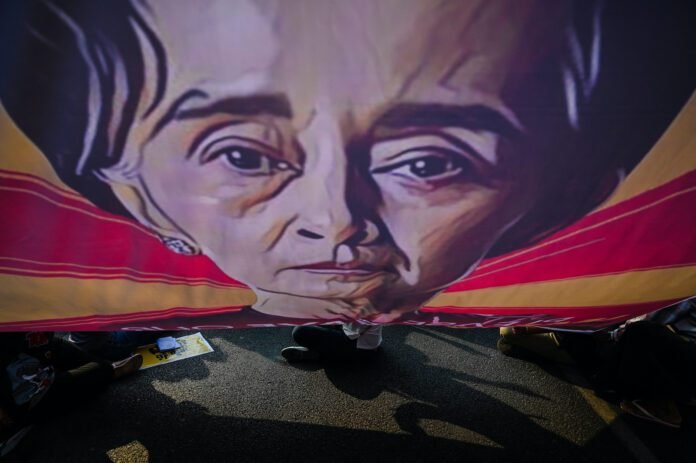
News that Aung San Suu Kyi has been moved from prison to house arrest has stirred deep emotions among Myanmar’s people and many abroad. For those who have long admired her courage in the face of persecution, it is natural to feel relief. After harsh conditions in prison, any improvement in her daily life is welcome on basic humanitarian grounds.

But house arrest is not freedom. She remains a political prisoner, held against her will, cut off from her people, unable to speak or act freely. Until she and all other political prisoners are released unconditionally, Myanmar cannot truthfully be said to be moving toward justice. This moment calls not just for compassion but clarity.

For more than three decades, Suu Kyi has been a central figure in Myanmar’s struggle for democracy — enduring separation from her family, prolonged confinement and constant pressure from those who hold power. Whatever disagreements people may have about her political choices, her personal sacrifices cannot be denied.

It would be wrong to greet news of her house arrest with indifference. Many ordinary people still see her as a symbol of courage and hope, and their feelings are understandable. But it would equally be a mistake to imagine this change transforms Myanmar’s political reality.

She remains under the control of the very military authorities who imprisoned her, and any words or gestures that appear to come from her must be viewed with caution. No one can freely choose their political path from inside a guarded house.

Revolution bigger than one person

Since the democracy-suspending military coup of 2021, Myanmar has been shaken by terrible violence. Peaceful protests were met with bullets. Villages have been bombed, burned and emptied. Millions have been displaced.

Out of this suffering, a broader, more diverse resistance has emerged: elected representatives, ethnic organizations, local defense forces, youth and women’s groups and countless ordinary citizens who have risked everything to oppose a return to dictatorship.

This does not mean Suu Kyi no longer matters. Rather, it means Myanmar’s struggle is now larger than any one leader.

For those resisting military rule, the challenge is to hold two truths simultaneously: to honor her story and hope for her full freedom, while continuing to build an inclusive political order that reflects the sacrifices of all communities — especially the young and marginalized who have paid so heavily.

To be sure, the military did not suddenly become compassionate. Moving Suu Kyi to house arrest serves several calculated purposes. They can present it as a humanitarian gesture, hoping to soften their image abroad and prompt some governments to relax pressure or reopen economic channels.

Inside the country, they may try to revive old habits — suggesting the safest path forward is a managed arrangement with generals and one famous civilian figure at the center, while deeper injustices remain untouched.

There is also a danger that some voices will ask the resistance to silence its demands and accept a compromise that leaves military supremacy intact, using San Suu Kyi’s constrained situation as moral pressure, even though she cannot openly speak for herself.

Mindful of this, both Myanmar’s people and the international community must be wary of treating this move as proof that the regime is ready for genuine change. A shift from a prison cell to a guarded house does not protect villagers from airstrikes, restore burned homes or give exiled children a chance to return to school.

What Myanmar’s resistance can do

In this delicate moment, Myanmar’s resistance faces a difficult but important task. First, it can respond with humanity — expressing relief that her conditions have improved while calling clearly and repeatedly for her immediate and unconditional release alongside all other political prisoners.

Second, it can insist on clarity: no statement made under house arrest should be treated as a free and binding political decision. This protects Suu Kyi from being misused and protects the revolution from being diverted by manipulated signals.

Third, it can keep focus on what the people have demanded since 2021: an end to military rule, justice for victims, a federal democratic constitution and guaranteed civilian control over all armed forces. These goals cannot be achieved by symbolic gestures alone.

For regional governments, human rights organizations and concerned citizens worldwide, this news is a test of discernment. It is appropriate to urge that she be treated with dignity. It is not appropriate to treat this change as sufficient reason to ease political, economic or diplomatic pressure on those who continue to rule by force.

If the international community truly wishes to help Myanmar, it must continue calling for the unconditional release of all political prisoners; insist on an end to civilian attacks and unhindered humanitarian access; support an inclusive political process that involves ethnic organizations, resistance structures, civil society, and religious actors — not only the military and one well-known civilian; and keep the long-term goal in view: a genuinely federal and democratic Myanmar where all communities can live without fear.

Hope with open eyes

For many in Myanmar, Suu Kyi’s name is bound to memories of hope and courage. Her move to house arrest will stir those memories again. Yet hope must walk hand in hand with truth.

The truth is that as long as she is detained, she is not free. The truth is that Myanmar’s struggle now belongs to a whole people seeking a new kind of country — not a return to a slightly gentler version of the old order.

True peace will require more than a change of rooms for one prisoner, however beloved. It will require freedom, justice and a political settlement that listens to all of Myanmar’s peoples.

Holding on to that vision, while working for her safety and eventual freedom, is the best way to honor Suu Kyi — and the countless others whose names are less known, but whose sacrifices are no less real.

James Shwe is a Myanmar American professional engineer and advocate for democracy in Myanmar, affiliated with the Los Angeles Myanmar Movement.

World Press Freedom Day Tests Whether the Public Still Has a Right To Know

0
world-press-freedom-day-tests-whether-the-public-still-has-a-right-to-know
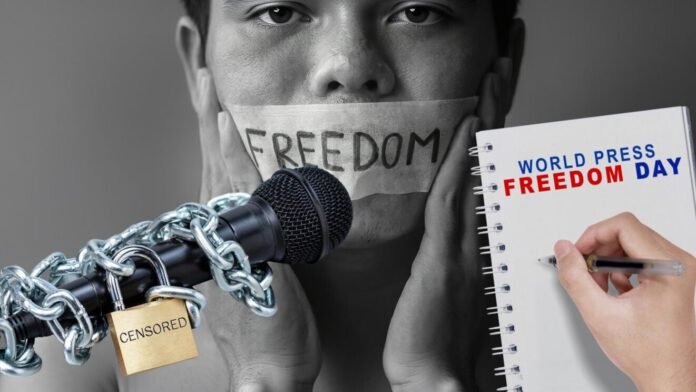
World Press Freedom Day Tests Whether the Public Still Has a Right To Know


Press freedom remains essential to verified reporting, public accountability, and the ability of journalists to challenge censorship, intimidation, and violence

World Press Freedom Day, marked every year on May 3, serves as an annual test of whether governments, institutions, armed groups, technology platforms, and the public still accept a basic democratic principle: people have a right to know what is being done in their name.

The date comes from the Windhoek Declaration, adopted on May 3, 1991, by African journalists meeting in Windhoek, the capital of Namibia. The gathering took place when many African media systems were still dominated by state control, censorship, party organs, and pressure on independent newspapers. The declaration called for a “free, independent and pluralistic press,” meaning a media environment in which journalists and publishers could operate without government control and where multiple voices, not just official ones, could reach the public.

UNESCO later treated the declaration as a landmark in the global press freedom movement, and in 1993, the UN General Assembly proclaimed May 3 as World Press Freedom Day.

For 2026, UNESCO’s global World Press Freedom Day conference is being held May 4–5 in Lusaka, Zambia, under the theme “Shaping a Future at Peace.” The theme reflects the connection between press freedom, conflict, public trust, digital platforms, and the ability of societies to make decisions based on verified information rather than rumor, propaganda, or fear.

Press freedom is closely related to freedom of speech, though the two concepts serve different purposes. Freedom of expression protects the right of individuals to speak, argue, protest, publish opinions, and criticize authority. Press freedom protects the public function of journalism: gathering information, checking facts, protecting sources, questioning officials, investigating wrongdoing, and publishing findings without censorship, intimidation, imprisonment, or violence. A country can protect broad freedom of speech—allowing citizens to complain online, criticize officials, or argue in public—while press freedom remains under threat through blocked records, harassment of reporters, controlled broadcast licenses, or the jailing of journalists.

The smartphone age has made the distinction more complicated. Almost anyone can now photograph an airstrike, livestream a protest, publish a thread, or upload a video before a reporter reaches the scene. That democratization has real value. It can expose abuse, document state violence, and give voice to people ignored by traditional media. It can also flood the public square with rumors, propaganda, fake images, selective clips, and confident nonsense. As the information environment becomes more chaotic, professional verification becomes increasingly valuable.

The global picture is bleak. Reporters Without Borders (RSF) says its World Press Freedom Index compares conditions for journalists and media in 180 countries and territories. Its 2026 index found that press freedom declined over the past year in 100 of them, pushing the global average to the lowest level in the index’s 25-year history. Economic fragility has become a leading threat worldwide, with editorial interference by media owners reported as a recurring problem in many countries.

RSF’s Middle East and North Africa grouping places 18 of 19 countries in either the “difficult” or “very serious” categories. Qatar—the region’s highest-ranked country at 75th—is listed as the lone exception, but still, press freedom is considered “problematic” there.

Using The Media Line’s broader working definition of the region—all Arab League countries except Comoros, plus Afghanistan, Cyprus (including Northern Cyprus), Iran, Israel, Pakistan, and Turkey—the picture remains grim: only Mauritania, Qatar, Cyprus and Northern Cyprus fall into the less severe “problematic” category, while the rest are rated “difficult” or “very serious.” The lowest-rated country in our region is Iran, with Saudi Arabia and Afghanistan not much better.

Freedom House measures the problem from another angle, particularly through internet freedom. Its Freedom on the Net 2025 report found that global internet freedom declined for the 15th consecutive year, with citizens arrested or imprisoned for online expression in at least 57 of the 72 countries assessed. That matters for press freedom because journalism increasingly depends on digital tools: messaging apps, mobile footage, online archives, encrypted communication, social platforms, and cross-border distribution.

The dangers faced by journalists range from battlefield exposure to bureaucratic harassment. Some are killed in combat zones. Some are deliberately targeted. Some are jailed under national security, cybercrime, insult, defamation, or anti-terror laws. Others are bankrupted through lawsuits, smeared by state media, threatened online, denied accreditation, or forced into exile. The toolkit changes from country to country, but the pressure often has a familiar effect: reporting becomes costly, risky, and sometimes impossible.

The Middle East over the past year has offered numerous examples. In Iran, press freedom groups reported a widening crackdown in 2026, including the arrests of journalists Mohammad Parsi, Artin Ghazanfari, Somayeh Heydari, Pedram Alamdari, and others, along with summonses, detentions, and pressure on media outlets.

In Tunisia, journalist Zied el-Heni, editor-in-chief of the independent news site Tunisian Press, was arrested on April 24, 2026, after complying with a summons from a cybercrime unit. The Committee to Protect Journalists (CPJ) said he later began a hunger strike to protest his detention, while Reuters reported that his lawyer linked the case to criticism of the judiciary.

Kuwaiti-American journalist Ahmed Shihab-Eldin was detained for 52 days over social media posts involving publicly available wartime footage before being acquitted of charges that included spreading false information and harming national security. His case showed how vague security and misinformation laws can be turned against journalists even in countries often seen as less repressive than the region’s worst offenders.

In Bahrain, freelance photographer Sayed Baqer Al-Kamel was sentenced in April 2026 to 10 years in prison after being accused of publishing defense-related material and content deemed supportive of Iran during the war. CPJ described the case as part of the criminalization of journalistic work under national security language.

Syria has raised another concern: disappearance and detention without transparency. German journalist Eva Maria Michelmann and Kurdish-Turkish journalist Ahmed Polad disappeared in January 2026 and are believed to have been detained in Damascus. AP reported that Michelmann’s lawyer said she was likely being held in a Damascus prison, while CPJ called for transparency, legal access, and humane treatment.

Sudan’s civil war has made independent reporting exceptionally dangerous. Three years of fighting between the Sudanese Armed Forces and the Rapid Support Forces have left journalists working under siege, displacement, threats, detention, and impunity while trying to document abuses by both sides, according to CPJ.

Algeria has also seen arrests of journalists in 2026, including Omar Ferhat, director of the independent news website Algerie Scoop, and freelance journalist Abdelali Mezghiche, according to CPJ.

The pattern extends beyond the Arab world. In Pakistan, RSF reported that four Pakistani journalists in exile—Wajahat Saeed Khan, Sabir Shakir, Shaheen Sehbai, and Moeed Pirzada—were sentenced to life imprisonment in absentia in January 2026. CPJ has also reported on the detention of digital journalist Sohrab Barkat under Pakistan’s cybercrime law in connection with his reporting.

War-zone deaths require particular care. In Lebanon and Gaza, journalists including Amal Khalil, Mohammed Samir Washah, Ghada Dayekh, and Suzan Khalil were killed in Israeli strikes in 2026, but the circumstances vary, and some remain disputed. Press freedom groups have called for investigations and claimed that some incidents were cases of deliberate targeting. Israel denies deliberately targeting journalists and has alleged links between some media workers and armed groups. Those cases belong in any honest account of the dangers facing journalists, but they should be described with precision rather than folded automatically into a single category of deliberate suppression.

That caution does not weaken the larger point. Press freedom suffers when journalists are intentionally silenced, when governments jail reporters through vague laws, when armed groups threaten witnesses, when courts punish journalism as terrorism, and when war makes independent reporting nearly impossible. In each case, the public loses access to verified information at the moment it is most needed.

World Press Freedom Day exists because societies need people whose job is to find out what happened, test competing claims, and publish what others would prefer to hide. That work is imperfect, sometimes messy, and often unpopular. Without it, citizens are left with official statements, viral fragments, and guesses dressed up as certainty. That makes it easier for abuses to be hidden, events to be distorted, and accountability to collapse.

Minnesota passes ban on fake AI nudes; app makers risk $500K fines

0
minnesota-passes-ban-on-fake-ai-nudes;-app-makers-risk-$500k-fines
Minnesota passes ban on fake AI nudes; app makers risk $500K fines

This week, Minnesota became the first state to pass a law banning nudification apps that make it easy to “undress” or sexualize images of real people.

Under the law, developers of websites, apps, software, or other services designed to “nudify” images risk extensive damages, including punitive damages, if a victim decides to sue. Their offending products could also be blocked in the state. Additionally, Minnesota’s attorney general could impose fines up to $500,000 per fake AI nude flagged. Any fines collected would be used to fund services for victims of “sexual assault, general crime, domestic violence, and child abuse,” the law stipulates.

On Wednesday, the Minnesota Senate unanimously voted 65–0 to pass the law. That vote came after the bill just as quickly passed in the House last week, the 19th News reported. Gov. Tim Walz is expected to sign the law when it reaches his desk, and if that happens, the state will start enforcing the ban this August.

Ars could not immediately reach Walz’s office for comment.

Minnesota man used one app to undress 80+ friends

Democratic Senator Erin Maye Quade introduced the bill in Minnesota after residents discovered that one man had nudified images of more than 80 women from his social circles. In a statement, she said that she looked forward to Walz signing the bill, which finally offers legal recourse to those victims, as well as others impacted by the mainstreaming of nudifying apps.

RAINN, the national nonprofit that runs the National Sexual Assault Hotline, also helped get Minnesota’s bill passed. To prevent any industry lobbying against it, RAINN consulted with tech companies when drafting the law, 19th News reported. That helped ensure there weren’t unexpected impacts on popular commercial products, like Photoshop, that could be used to nudify an image. Acknowledging that the state’s concern is more about how alarmingly easy undressing apps make it to harm an increasing number of mostly women and children globally, the law exempts products or services that require “the technical skill of a user to nudify an image or video.”

“Today, we led the nation protecting women, children, and everyone in public life from the harm caused by AI nudification technology,” Maye Quade said. “Companies that make this technology available for free online and in app stores will no longer be allowed to enable predators who abuse and victimize adults and children with the click of a button.”

Celebrating the law’s passage, Maye Quade thanked “the victim-survivors who made this bill a reality.”

“They have shared their story in committee, with reporters, and with law enforcement with dignity and courage,” she said. “Their power, brilliance, and advocacy is why we passed this bill today. They have had a singular focus on passing this legislation so that what happened to them does not happen to any Minnesotan, ever again.”

A lengthy CNBC report last September exposed how a group of Minnesota friends first learned that a mutual friend was creating fake nudes of dozens of women. The man apologized, but he seemingly did not help identify all the victims. There was no evidence he ever shared the images, so laws like the Take It Down Act did not apply, and proving the man’s ill intent made pursuing penalties under revenge porn laws unlikely, 19th News reported. Horrified that there was no way to ensure the images hadn’t left his computer and no path to stop the man from continuing to generate fake nudes, the women joined Maye Quade in advancing the law to shut down the problem at its source.

One of the Minnesota women targeted, Molly Kelley, told 19th News that she dedicated two years of her life to “finding a solution to mitigate the harm when it’s actually caused, which is at creation.”

“These images don’t exist without a third-party involvement and some sort of machine learning model,” Kelley said.

However, even if Walz signs the law, tensions remain that could frustrate enforcement.

Kelley told 19th News that she’s confident the law can overcome legal challenges, should any US firms sue to block it, but enforcing the law against app makers in other countries will likely be difficult, if not impossible, for a single state. Notably, the service used to attack the Minnesota women, DeepSwap, is operated overseas, at times claiming bases in Hong Kong and Dublin, CNBC reported. Anticipated state struggles to regulate foreign apps is why a federal ban would be preferable, 19th News reported.

Additionally, if Donald Trump revives an effort to deregulate the AI industry by blocking state laws like Minnesota’s from requiring safeguards, the law could become toothless, advocates fear.

Unchecked US tools like Grok risk penalties

If Walz puts the law on the books, some US firms could be forced to make changes or face penalties.

Potentially even Elon Musk’s xAI may risk fines if Minnesotans can prove Grok was used to undress images without consent.

Grok’s lack of safeguards to prevent outputs with non-consensual intimate imagery or alleged child sex abuse materials has drawn government probes and proposed class actions from women and children. In January, X Safety claimed that Grok was updated to stop undressing images, but NBC News reported last month that their review found “dozens of AI-generated sexual images and videos depicting real people posted publicly on Musk’s social media app, X, over the past month.”

Musk has denied that he has seen a single instance of Grok-generated CSAM. But researchers’ estimates that Grok was generating thousands of harmful images an hour appear to be increasingly backed by lawsuits from victims surfacing non-consensual images.

At the same time, authorities are getting closer to closing cases with arrests linked to Grok. A week after NBC News’ report, Nashville cops charged a man for “sexual exploitation of a minor after he was identified as the suspect who utilized Grok AI to generate images of child sex abuse.”

According to the press release, cops were tipped off after “multiple CyberTips to the National Center for Missing and Exploited Children regarding possession of child sex abuse material in an online account” that was linked to Grok. Importantly, the cops noted that Grok generated the harmful images from September 2025 through March 2026, well after X claimed that the functionality had been removed.

Beyond Grok, researchers have flagged thousands of nudifying apps advertised on Meta platforms, prompting at least one lawsuit in which Meta claimed a Hong Kong-based app maker violated advertiser terms, CNBC reported. Any services based in the US openly advertising on Facebook or Instagram could become targets of Minnesota-based lawsuits if the law takes effect.

Similarly, nudifying apps that manage to skirt reviews and appear in Google and Apple app stores despite violating terms could draw legal attention.

xAI did not respond to Ars’ request for comment.

UAE exit weakens OPEC+ power over oil market but group to stay together

0
uae-exit-weakens-opec+-power-over-oil-market-but-group-to-stay-together
UAE exit weakens OPEC+ power over oil market but group to stay together


OPEC and its allies will lose some of their power over the oil market when the United Arab Emirates leaves the group on May 1, but the rest of the producer alliance is likely to stick together ​and continue to coordinate on oil supply policy, OPEC+ delegates and analysts said on Tuesday.

The UAE is the fourth-largest producer in the Organization of the Petroleum Exporting Countries and said it would quit the ‌group on Tuesday after nearly 60 years as a member. That will free Abu Dhabi from the oil production targets imposed by OPEC and its allies to balance supply and demand.

The UAE’s exit came as a shock, said five OPEC+ sources, who asked not to be named as they are not allowed to speak to the press.

The exit would complicate OPEC+’s efforts to balance the market through adjustments to supply because the group would have control over less of global production, four of the five sources said.

The UAE will become the largest oil producer to depart ​OPEC, a heavy blow to the organization and its de facto leader Saudi Arabia. Abu Dhabi pumped around 3.4 million barrels per day (bpd) or about 3% of the world’s crude supply before the U.S.-Israeli war on Iran ​forced it and other Middle East Gulf producers to curb shipments and shut down some production.

OPEC and the Saudi government communication office did not immediately reply to a request for ⁠comment.

Once outside OPEC, the UAE will join the ranks of independent oil producers that pump at will, such as the United States and Brazil. For now, there is not much the UAE can do to increase production or exports due to ​the effective closure of shipping through the Strait of Hormuz. If and when shipping recovers to pre-war levels, the UAE could increase output to the country’s capacity of 5 million bpd of crude oil and liquids.

There has been tension between the ​UAE and Saudi Arabia over the Emiratis’ production quota, which stands at 3.5 million bpd. The UAE has asked for a bigger quota to reflect the fact that it had expanded capacity as part of a $150 billion investment program.

“For years, Abu Dhabi has been looking to monetize its investment in expanding capacity,” said Helima Croft from RBC Capital Markets. The U.S.-Israeli war on Iran would, however, slow those plans down after drones and rockets damaged the UAE’s production facilities, she said.

The war has resulted in the biggest-ever global energy supply disruption in terms of outright ​daily oil production, according to the International Energy Agency. The conflict has also exposed discord among Gulf nations, including between the UAE and Saudi Arabia.

Rumours of the UAE’s exit from OPEC+ have circulated for years amid worsening relations with Riyadh ​over conflicts in Sudan, Somalia and Yemen. The UAE has also grown increasingly close to the United States and Israel.

IRAQ STAYS IN

The UAE is the fourth producer to quit OPEC+ in recent years, and by far the biggest. Angola quit the bloc in 2024, citing ‌disagreements over production ⁠levels. Ecuador quit OPEC in 2020 and Qatar in 2019.

Iraq, the third-largest producer in OPEC+ after Saudi Arabia and Russia, has no plan to leave OPEC+ as it wants stable and acceptable oil prices, two Iraqi oil officials said on Tuesday.

OPEC+ will not collapse as Saudi Arabia will still want to manage the market with the help of the group, said Gary Ross, a veteran OPEC watcher and CEO of Black Gold Investors.

“At the end of the day, Saudi Arabia was essentially OPEC – the only country with spare capacity,” said Ross. Saudi Arabia can produce 12.5 million bpd, but has in recent years kept production under 10 million.

OPEC+ membership gives countries more diplomatic and international weight – one of the reasons cited by analysts behind Iran’s decision ​to stay in OPEC even at the peak of its ​fight with Gulf countries.

U.S. President Donald Trump has accused ⁠OPEC of “ripping off the rest of the world” by inflating oil prices. Trump has said the U.S. may reconsider military support to the Gulf because of OPEC oil policies.

It was, however, Trump who helped convince OPEC+ to cut output in 2020 during the COVID pandemic as oil prices slumped and U.S. producers suffered.

“The UAE withdrawal marks a significant shift for OPEC … the ​longer-term implication is a structurally weaker OPEC,” said Jorge Leon, a former OPEC official who now works at Rystad Energy.

OPEC+ members will be more focused on rebuilding facilities ​hit by the war rather than ⁠on embarking on production cuts in the near future, said Croft. Hence, the broader OPEC+ breakup is not on the cards for now, she added.

DECLINING POWER

OPEC’s sway over the market has been declining for decades.

Formed in 1960, OPEC once controlled over 50% of global output. As rivals’ production grew, the group’s share has declined to around 30% of the world’s total oil and oil liquids output of 105 million barrels per day last year.

The United States, which used to rely on imports from OPEC members, has become its ⁠biggest rival over ​the past 15 years. The U.S. has raised production to as much as 20% of the world’s total on the back of its shale oil ​boom.

The U.S. production spike prompted OPEC to team up in 2016 with several non-OPEC producers to form OPEC+, a group led by Russia – previously one of Saudi Arabia’s top rivals in the oil industry.

The alliance gave the group control over around 50% of the world’s total oil production in 2025, ​according to the International Energy Agency. The loss of the UAE means it will decline to around 45%.

Via Reuters

Employee Dies After Chairlift Basket Plummets into ‘Rugged Terrain’ at Ski Resort

0
employee-dies-after-chairlift-basket-plummets-into-‘rugged-terrain’-at-ski-resort
Employee Dies After Chairlift Basket Plummets into ‘Rugged Terrain’ at Ski Resort


A routine morning at an Oregon ski resort turned into a nightmare when a maintenance basket suddenly plunged from a chairlift, killing one worker and leaving another fighting for their life.

The horrifying accident unfolded just before 9:30 a.m. on April 30 at Mt. Hood Skibowl in Government Camp, when a 911 call reported that a basket carrying two employees had fallen into what officials described as “rugged terrain.”

According to the Clackamas County Sheriff’s Office, both workers suffered devastating injuries on impact. One was found unconscious as a third person at the scene desperately began CPR.

Within minutes, emergency crews from multiple agencies rushed in, setting up a command post at the base of Ski Bowl East. But reaching the victims wasn’t easy.

“Crews are working in difficult terrain,” the Hoodland Fire District said, revealing they had to deploy specialized rescue gear, including an ATV, just to access the crash site.

By shortly after 10 a.m., medics finally reached the workers. One employee was still conscious and breathing—but the other had no pulse and was pronounced dead at the scene.

The surviving worker was airlifted by Life Flight to a nearby hospital. Their current condition has not been publicly updated.

Authorities say the incident is now being investigated as a workplace death, with OSHA brought in to determine what went wrong in the deadly fall.

Mt. Hood Skibowl has remained tight-lipped, issuing a brief statement saying they are focused on supporting the victims’ families and staff during the tragedy.

For locals, the shock is already spreading.

“Being that we’re a small mountain community, I imagine there are people who will need time to process this,” said Hoodland Fire District division chief Scott Kline.

What was supposed to be just another workday on the mountain ended in tragedy—raising serious questions about safety and how such a catastrophic fall could happen in the first place.

A Tang spring that survived an emperor’s flight

0
a-tang-spring-that-survived-an-emperor’s-flight
A Tang spring that survived an emperor’s flight

A visitor standing before The Court Lady Guoguo’s Spring Outing does not first see history. They see movement. There is no palace. No riverbank. No flowering tree. No painted spring landscape to tell the eye where it should rest.

Across the silk handscroll, only a small procession moves through an empty field of space: nine figures, eight horses, robes of pale red, green and white, and the quiet rhythm of hoofbeats. Yet the absence is the point. The painter does not describe spring. He allows it to pass through the riders.

The work known in Chinese as Guoguo Furen Youchun Tu(虢國夫人遊春圖), traditionally associated with the Tang dynasty master Zhang Xuan, survives today not as the Tang original but as a Song dynasty copy.

It is now one of the treasures of the Liaoning Provincial Museum and among the most important surviving images of Tang court life. In China’s hierarchy of cultural memory, it is not simply an old painting. It is a national-level relic, a rare visual witness to the elegance, power and fragility of the High Tang.

For Western readers, it may help to imagine a work standing somewhere between Botticelli’s Primavera, Velázquez’s Las Meninas and the last glittering images of aristocratic Europe before political collapse.

Like Primavera, it turns spring into a world of bodies, rhythm and grace. Like Las Meninas, it is not merely about the figures shown, but about hierarchy, visibility and proximity to power. Like the fêtes galantes of Watteau, it captures aristocratic leisure with the knowledge that such worlds rarely last.

But this is not Florence, Madrid or Versailles. It is Tang China.

The Tang dynasty, especially under Emperor Xuanzong in the early eighth century, represented one of the most cosmopolitan moments in Chinese history. Chang’an, the imperial capital, was not a provincial city but one of the great metropolises of the medieval world, comparable in imagination to Constantinople, Abbasid Baghdad or Renaissance Florence.

Merchants, monks, musicians, envoys and craftsmen moved through its streets. Its court absorbed Central Asian music, foreign textiles, Buddhist imagery and equestrian culture. Women of the aristocracy rode horses, appeared in public, and sometimes dressed in garments associated with men. The world of The Court Lady Guoguo’s Spring Outing could only have emerged from such confidence.

At the center of this historical atmosphere stood Yang Guifei, the beloved consort of Emperor Xuanzong. She has often been compared, imperfectly, to Helen of Troy or Marie Antoinette: a woman later remembered as the beautiful face attached to catastrophe.

Yet such comparisons are only doorways. Yang Guifei was not a queen like Marie Antoinette, nor a mythic figure like Helen. She was a Tang woman whose beauty, family and fate became inseparable from the memory of an empire at its most radiant and most vulnerable.

Her family rose with her. Her sisters were granted noble titles: the Ladies of Han, Guo and Qin. Among them, Lady Guoguo became one of the most visible women of the imperial circle. She was not merely a court beauty.

She belonged to a family whose sudden closeness to the throne transformed domestic kinship into public power. To understand her, one might think of the ladies of Versailles, not as rulers, but as women whose dress, movement and presence became part of political theatre.

The handscroll shows such theatre without drama. The procession is arranged in groups. The figures do not shout their status. They carry it. The horses move at different tempos; some advance, some turn, some seem to pause within the rhythm of the journey. The riders’ robes fall in controlled lines. Their faces are calm, almost unreadable. Nothing is hurried. Nothing is accidental.

One of the most fascinating interpretations concerns the rider at the very front. Some Chinese art historians have argued that the figure dressed in male attire and leading the procession may be Lady Guoguo herself.

This is not universally accepted; the painting bears no label identifying each figure. Other scholars place her among the central female riders. Yet this essay follows the first reading, not because it is the most dramatic, but because it is the most revealing.

Lady Guoguo, as remembered by history, was not a woman easily imagined in retreat. She belonged to the Yang family at the summit of imperial favor, a family whose women did not merely inhabit privilege but made it visible. The horse strengthens this reading. Its three-flower mane, shaped into raised tufts along the neck, and the round red tassel ornament on its chest are marks of rank, ceremony and aristocratic display.

If this rider is placed first, dressed like a young nobleman, and mounted on so distinguished an animal, she is not merely joining the procession. She is announcing it. She becomes the first figure seen because she is the figure meant to be seen.

If Lady Guoguo is indeed the figure at the head of the procession, the image becomes quietly radical. A woman of high rank would normally be expected to remain protected within the middle of a retinue, surrounded by attendants, shielded by order and distance. Rank in courtly society was expressed not only through luxury, but through placement. To be placed in the center was to be protected. To ride in front was to be seen first.

The front rider’s dress, posture and mount therefore matter. Male attire on elite women was not unknown in Tang China, but on such a figure it becomes more than fashion. It becomes declaration. The horse, too, is not a decorative animal.

In Tang court culture, the mount, its trappings and its position in the procession all carried signals of status. A noble woman on horseback was not the same as a woman hidden in a carriage. She occupied space. She entered the world.

The Court Lady Guoguo’s Spring Outing. Image: Art Habsburg Visual Archive

A group of scholars believe that the front rider, dressed in men’s clothing, is Lady Guoguo. Her horse is shown with a “three-flower” mane, in which the hair along the horse’s neck is trimmed into three raised tufts, and with a round red tassel ornament on its chest.  Photo: Art Habsburg Visual Archive

The details of the horse deepen the meaning. In Tang equestrian culture, the mane could be clipped into decorative forms known as one-flower, two-flower or three-flower styles. The most striking was the “three-flower” mane, in which the hair along the horse’s neck was trimmed into three raised tufts. It was not a pattern on the saddle, but a sculpted form on the crest of the horse’s neck.

Such a horse immediately suggested rank, refinement and aristocratic privilege. On the chest, the round red tassel ornament, known as tixiong, also carried ceremonial meaning. In The Court Lady Guoguo’s Spring Outing, these details are not incidental decoration. The three-flower mane and red chest tassel turn the horse into a visible sign of identity, hierarchy and courtly display.

That is why the painting still feels alive. It is not a portrait of passive beauty. It is a record of female visibility.

There is also a famous poetic echo behind the scene. Du Fu, the great Tang poet, wrote of the third day of the third lunar month: “The weather is fresh; by the waters of Chang’an are many beautiful women.”

His poem Liren Xing, often read in relation to this painting, gives language to the same world of aristocratic spring outings, courtly women and uneasy luxury. Du Fu wrote the riverbank. Zhang Xuan, or the tradition descending from him, painted the procession. Together, poem and image preserve the atmosphere of a civilization confident enough to make leisure monumental.

Yet history was already turning. The An Lushan Rebellion would soon tear through the Tang empire. Yang Guifei would die during the imperial flight at Mawei. The Yang family, once so close to the throne, would become part of a moral and political reckoning. The painting itself does not show disaster. That is precisely its power. It gives us the stillness before the break.

Its own later journey was no less dramatic.

The Tang original disappeared. The Song copy survived. It entered imperial collections and was recorded in the Qing court catalogue Shiqu Baoji. In the twentieth century, after the fall of the Qing, the last emperor Puyi removed large numbers of palace paintings and calligraphies from the Forbidden City under the name of “imperial gifts.”

The handscroll eventually followed him from Beijing to Tianjin and then to Manchukuo, the Japanese-backed puppet state in northeast China. It was stored in the former imperial palace in Changchun.

In August 1945, as Japan collapsed and Manchukuo disintegrated, Puyi fled. From the palace collection, he selected more than one hundred of the most precious works to carry with him. The Court Lady Guoguo’s Spring Outing was among them. At Shenyang’s Dongta Airport, Soviet forces detained him. The paintings were seized. Later, they were transferred into Chinese custody and eventually entered the collection of the Northeast Museum, today’s Liaoning Provincial Museum.

The irony is almost unbearable. A painting of serene aristocratic movement survived because an emperor in flight failed to escape with it.

The modern life of the painting also includes another, quieter figure: Feng Zhonglian(馮忠蓮). My friend Mi Chuan(米川) once introduced me to her story with a personal intimacy unavailable in museum labels. Feng was his maternal grandmother.

A major 20th-century Chinese artist and one of the pioneers of modern old-master copying in China, she was entrusted in 1954 to copy the Song version of The Court Lady Guoguo’s Spring Outing. Her task was not to reinterpret, but to disappear. She had to understand the silk, the line, the mineral colors, the aging of the surface and the breathing rhythm of the original.

Feng Zhonglian at work  Photo: Mi Chuan

Feng Zhonglian was not a mechanical copyist. She was an artist who possessed enough skill to suppress her own style. That is the highest discipline in copying ancient Chinese painting.

In the West, restoration often emphasizes conservation; in China, copying also became a form of transmission. Feng’s work belongs to that tradition. She did not add herself to the painting. She helped the painting remain visible.

This is why The Court Lady Guoguo’s Spring Outing is more than an image of Tang beauty. It is a chain of survival: Zhang Xuan’s lost Tang original; the Song copy that preserved the form; Qing imperial collection; Puyi’s removal from the palace; wartime seizure in Shenyang; museum custody; and Feng Zhonglian’s modern act of disciplined transmission.

The handscroll shows spring. Its history shows endurance.

In the painting, Lady Guoguo and her companions continue to ride through a landscape that is not painted. Around them is empty silk. Across that emptiness, dynasties have fallen, emperors have fled, wars have ended, museums have risen, and artists have worked in silence so that an ancient spring might still be seen.

That may be the true meaning of the work. It is not only a Tang spring. It is a Chinese spring that survived time.

Jeffrey Sze is Reichenau’s ambassador for arts, culture and tourism and chairman of Art Habsburg. He is also general partner of Archduke United LPF, focusing on fine-art research, collecting and the digitalization of cultural assets.

Senators ban themselves from prediction markets after candidates bet on own races

0
senators-ban-themselves-from-prediction-markets-after-candidates-bet-on-own-races
Senators ban themselves from prediction markets after candidates bet on own races

US senators voted unanimously to ban themselves from making bets on prediction markets yesterday, about a week after Kalshi said it caught three congressional candidates betting on their own campaigns.

The resolution to prohibit senators from trading on prediction markets passed yesterday by unanimous consent. The action amends the Senate’s conflict-of-interest rules and does not require approval by the House of Representatives. The House has a pending resolution that would impose a similar rule on its own members.

“United States Senators have no business engaging in speculative activities like prediction markets while collecting a taxpayer-funded paycheck, period,” said Sen. Bernie Moreno (R-Ohio), who introduced the resolution. “Serving in Congress should never be about finding new ways to profit; it should be about delivering results for the American people.”

Moreno’s resolution applies broadly to all bets on prediction markets, not just those related to events of which a senator has inside knowledge. The Senate also adopted an amendment submitted by Sen. Alex Padilla (D-Calif.), which extends the trading ban to Senate officers and employees. Padilla said in a statement that the rule as amended “is a commonsense step to ensure that senators and their staff cannot use their positions of public trust to line their own pockets.”

Senate ethics rules are enforced by the Senate Ethics Committee, but the Senate’s enforcement process has been described as being much less effective than the House equivalent.

Democrat wants bill targeting Trump admin corruption

Padilla also said he is pushing “for legislation to rein in Trump administration officials who may be profiting off insider knowledge, including military operations.” A US Army soldier was recently arrested for insider trading after being accused of making prediction-market wagers on the timing of the military’s capture of Venezuelan President Nicolás Maduro.

“Politicians betting on their own races, massive wagers placed moments before the president announced of a ceasefire in Iran, and suspected insider trading before the capture of Nicolás Maduro—these are just a few examples of the blatant, brazen corruption that we’ve seen playing out on prediction markets,” Padilla said.

Padilla added, “This resolution alone will not address the growing public outrage over the unprecedented scale of corruption under the Trump administration.” Major prediction markets Polymarket and Kalshi both have Donald Trump Jr. as an advisor, and a Trump Jr.-backed venture capital firm invested in Polymarket.

Kalshi and Polymarket both said they support the Senate resolution and that they already banned such trading in their platform rules. Kalshi last week announced enforcement actions against two House candidates and one Senate candidate who bet on their campaigns.

Kalshi fines candidates

Kalshi has an extensive rulebook that allows it to impose fines, bans, and suspensions on traders. Two of the three candidates agreed to settlements with Kalshi. Democrat Matt Klein, a House candidate in Minnesota, agreed to a five-year suspension and fine of $539.85. Republican Ezekiel Enriquez, a House candidate in Texas who lost in the primary, agreed to a five-year suspension and $784.20 fine.

Klein, who has since co-authored a Minnesota state Senate bill to prohibit prediction markets, said he made the bet in October 2025 because he was curious about how prediction markets worked. “I set up an account and bet $50 of my own funds that I would win the primary,” he wrote. “I was informed in March of 2026 that this was a violation of the platform rules. In compliance with their request, I paid a penalty and agreed to be suspended from the platform.”

Kalshi also issued a five-year suspension and a penalty of $6,229.30 to independent Mark Moran, a Senate candidate in Virginia, who did not agree to a settlement.

“YES, I did bet ~$100 on myself on Kalshi because I wanted to get caught,” Moran wrote in an X post. Moran said he refused a settlement offer that would have compelled him to make a public statement, and that he made the bet to draw attention to Kalshi and his own campaign.

“For $100, I just got more attention from CNN, Fox, WSJ, etc than any media consultant ever,” he wrote. “In politics, money has always bought attention, but I can get attention for almost free.”

US blocks states from regulating

Moran wrote that “Kalshi is currently being sued by many states for being an illegal betting market,” and that he made the bet to “bring to light that our ‘democracy’ is up for sale and Kalshi is a platform that can be manipulated by the highest bidder/donor to move a market which will sway voters bc the media will report on it.”

The Trump administration has fought state efforts to impose stricter regulations on prediction markets. The US won a court ruling that prevents New Jersey from enforcing laws that prohibit betting on college sports and require licenses to offer other types of sports wagers.

The US Commodity Futures Trading Commission (CFTC) has jurisdiction over prediction markets and recently announced lawsuits against Arizona, Connecticut, and Illinois to challenge the states’ regulations. “The CFTC will continue to safeguard its exclusive regulatory authority over these markets and defend market participants against overzealous state regulators,” CFTC Chairman Michael Selig said at the time.

Kalshi said in March that it was “launching new technological guardrails that preemptively block politicians, athletes, and other relevant people from trading in certain politics and sports markets.” Polymarket said yesterday that it is deploying a blockchain system to monitor trading and enforce its rules.

Graham Platner Handed Centrist Dems a Bruising Defeat in Maine

0
graham-platner-handed-centrist-dems-a-bruising-defeat-in-maine
Graham Platner Handed Centrist Dems a Bruising Defeat in Maine


Eoin Higgins is the author of “Owned: How Tech Billionaires on the Right Bought the Loudest Voice on the Left.”

The Democratic Party’s centrist wing is doing a 180 on Maine senatorial hopeful Graham Platner after Gov. Janet Mills dropped out of the race — a major setback for their side in an ongoing intraparty war for the future of the party. 

The June primary was shaping up to be another proxy fight for the ongoing power struggle between the party’s progressive and centrist wings. Sen. Bernie Sanders, along with Elizabeth Warren, Ruben Gallego, and Martin Heinrich, backed Platner early on; Senate Minority Leader Chuck Schumer and the Democratic Senatorial Campaign Committee, as well as EMILY’s List, threw their support behind Mills. 

But the Democratic voters of Maine didn’t appear interested in a protracted back and forth, nor were they impressed by the party establishment’s perceived shoehorning-in of Mills as an alternative to an upstart, energetic, young candidate they already liked. Some more mainstream Democrats already get that, like Minnesota Gov. Tim Walz, who previously lent his powerful email list to Mills during her campaign announcement; he will host a general election kickoff event with Platner on Friday. Schumer and DSCC Chair Kirsten Gillibrand, meanwhile, announced they “will work with the presumptive Democratic nominee, Graham Platner” to defeat Collins.

Others should get on board with the new reality. The primary map is only getting more challenging for centrist Democrats. In Michigan, their preferred candidate Rep. Haley Stevens is in a tight race with state Sen. Mallory McMorrow and public health official Abdul El-Sayed. Iowa state Rep. Josh Turek, Schumer’s pick, is neck and neck with state Sen. Zach Wahls; in Minnesota, Schumer’s favored candidate, Rep. Angie Craig, has a significant cash advantage, but Lt. Gov. Peggy Flanagan regularly trounces her in early polling.

The writing was on the wall for Mills weeks ago. She was never able to catch up to Platner’s polling, and her campaign stopped ad spending after attacks on Platner over his past controversies failed to gain traction. It was clear the governor was throwing in the towel last week when she vetoed a data center moratorium bill backed by the Maine Democratic base but opposed by business interests in the state. That choice raised eyebrows; the governor’s suggestion in mid-April that she would have voted against a Senate bill restricting U.S. aid for 1,000 pound bombs and armored bulldozers only confirmed suspicions that Mills was out of touch with the party faithful.

Platner, who spent the late summer and early fall of 2025 criss-crossing Maine doing town halls and other events, has been drawing huge crowds since August. That outreach to voters, as New York magazine writer and Mainer Rebecca Traister noted on Thursday, probably saved him from the scandals around a Nazi-related tattoo he got during his time in the Marines and the drudging up of old, controversial Reddit posts. 

Equally important was the feeling for many in Maine that D.C. Democrats were putting their thumb on the scale and trying to take the decision away from the people. It’s part of a national souring on the party’s centrist, corporate wing, which has dominated the internal levers of power for decades, that came in the wake of Trump’s election in 2024. The party base has become radicalized and is demanding fight and action. 

Go to a No Kings protest, and you’ll see liberals holding signs calling for the imprisonment of Republicans like Donald Trump and implying that members of the administration should be dealt with more permanently. It’s become a bit of a meme to remark on the normie bloodlust that’s pervaded liberalism since November 2024, but only because it’s true. 

It’s part of an overall souring on the party’s centrist, corporate wing, which has dominated the internal levers of power for decades.

Despite polling showing voters are eager to throw out the GOP and put in Democrats in the midterms, approval for the Democratic Party is at historic lows. Liberals aren’t going to settle for what’s become the rote Democratic response to Republican misbehavior: objecting on process grounds when out of power, half-assedly pushing ineffective institutional fixes once they reclaim Congress, and then brushing it all under the rug when they win the White House. This time they want accountability, none of the “looking forward, not backward” that Barack Obama placated the base with in early 2009.

Fuel for your fury isn’t hard to find. Sen. John Fetterman’s fervent support of Israel and willingness to buck his party in favor of the president has made him a villain to liberals and progressives alike, so much so that “another Fetterman” has been deployed as a slur by both sides in hotly contested primaries. Politicians whose popularity was once unimpeachable, like Obama, have been confronted over the Gaza genocide in public appearances. Members of Congress are regularly harangued at public events over the party’s weakness and apparent disinterest in meaningfully opposing Trump. 

Platner’s got a good shot at winning. And for all the valid concern that Collins can once again pull off a victory, she appears to be taking this threat seriously, breaking with Trump over Iran war powers on Thursday. It’s a small act of resistance, and not one that should be expected to be of any actual consequence, as is the pattern for the senator. But the fact that she’s doing it now, after Mills dropped out, says that Platner — and the energized movement he represents — is a clear challenge to another six years for the Republican. 

Platner isn’t perfect — no politician is. But as he shifts his campaign to the general election and against Collins, all but the most marginal and fringe diehards in the Democratic coalition are coalescing around him. At 41, he presents himself as a new, more energetic fighter of a Democrat, one who’s promised to confront both the GOP and the centrist corporate elements of his own party. Time will tell if he can deliver, and what compromises he’s willing to make. 

0FansLike
0FollowersFollow
0FollowersFollow
0SubscribersSubscribe
- Advertisement -
Google search engine

Recent Posts