15.6 C
London
Friday, May 1, 2026
Home Blog

To keep global trade alive, don’t write off friendshoring

0
to-keep-global-trade alive,-don’t-write-off-friendshoring
To keep global trade alive, don’t write off friendshoring

The world economy is at a crossroads. International trade is slowing, economic uncertainty is rising, and trade between the US and China – the world’s two largest economies – risks pulling apart. And it is not just trade: the two countries also invest less in each other than they did just a few years ago.

What is driving this reconfiguration of trade? For some large economies, including the US under President Donald Trump, a desire for greater self-reliance is central. Between 2017 and 2023, American imports fell most sharply in the very products where the US had been most reliant on China – including industrial machinery, computers and computer parts, and other electronic equipment such as monitors.

This has important implications for global value chains. GVCs are the backbone of international trade. Production activities from research and product design to assembly are distributed across various locations, with “value” being added at each stage. This redistribution can take place across several countries, co-ordinated by multinational firms.

The reconfiguration of GVCs is accelerating, and so industrialized economies now have two main options.

They can reshore production, bringing manufacturing back to their own countries (a stated priority for the current US administration).

Photo: Blossom Stock Studio

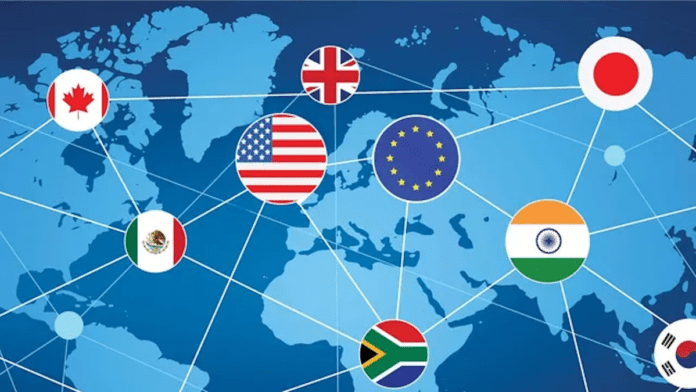
Or they can “friendshore,” shifting imports and investments toward economies that are either geographically closer, or with which they have long-standing relationships.

For developing countries, the balance between these two strategies is crucial. If advanced economies reshore a substantial share of production, developing countries could suffer as investment and jobs are lost.

And automation and digitization now make it more convenient for advanced countries to produce goods at home, making this a greater risk to these poorer countries than it was a decade ago.

For consumers though, this reshoring could mean higher prices for everyday goods, at least in the short term, because of the higher costs of manufacturing in more advanced economies. It should be said, however, that the empirical evidence for this remains limited.

Risks and opportunities

But friendshoring offers an alternative. Early signals from countries like Mexico and Vietnam – which have recently seen an increase in investment and factory expansions from multinational firms – suggest that friendshoring can create opportunities. When paired with supportive government policies such as investment incentives or help to upgrade technology, these shifts can ensure that more production takes place domestically. This can lead to greater technology spillovers and learning.

To understand the risks and opportunities, we examined the specific products where US-China decoupling is most pronounced (that is, where trade is reducing). From this analysis, two broad clusters emerged, each with different implications for developing economies.

1st group: US has it both ways

The first group mainly includes relatively complex goods – things like consumer electronics, vehicle components, chemicals and machinery. Here, the US is diversifying its imports quickly – and at the same time it is already producing these goods competitively.

These products can easily be reshored, particularly if automation lowers costs. Semiconductors, for instance, are already the focus of major US reshoring efforts. Yet US reshoring’s risk to current producers appears limited for now. While the US has reduced imports of these products from China, other developing regions have not experienced a similar trend.

2d group: US not competitive enough to reshore

Regarding the second group of products, the US is diversifying but is not competitive enough to bring production home. This group accounted for just over 6% of finished products that the US imported in 2023 – roughly US$181 billion. This is a small share overall, but economically significant.

Within this group, two types of opportunity emerge.

Technologically complex goods, such as electrical equipment, computers and car parts, offer the greatest potential for middle-income economies with strong manufacturing experience to win contracts and investments.

Lower-tech goods like textiles and furniture are better suited to lower-income countries. In both cases, governments need to negotiate carefully to ensure investments add value locally, support skills development and avoid social or environmental harm.

For consumers worldwide, friendshoring offers a more benign outlook than reshoring or tariffs. Goods may simply be made in different countries, with prices remaining broadly stable.

Who could gain?

So far, East and Southeast Asia – including Vietnam, Thailand, Malaysia and Indonesia – have captured the largest share of these friendshoring opportunities, particularly in high-tech sectors like computers. Their exports to China have also risen, reinforcing their central role in Asian manufacturing networks.

But whether this momentum continues will depend on tariffs, production costs and the pace of automation.

Other beneficiaries could include Latin America and Caribbean nations, led by Mexico. Here, the automotive sector dominates export growth. South Asia could also benefit, with India expanding in both high- and low-tech products, and Bangladesh at the lower-tech end. In contrast, Africa and Western Asia remain largely absent from the emerging friendshoring landscape.

The risk to these countries of large-scale reshoring remains limited for now but cannot be ignored amid shifting global trade and investment patterns. Friendshoring could offset or even exceed potential losses, offering new pathways for industrialization.

As economic uncertainty and technology reshape global value chains, developing economies that invest in production capabilities – and implement smart industrial policies – will be best placed to harness opportunities. In some cases, friendshoring may even allow them to leapfrog into more sophisticated activities faster than traditional development paths would allow.

For consumers, there are benefits, too. The label on our next laptop, charger or T-shirt might change, but prices will remain broadly stable – at least before tariffs kick in. In this sense, globalization will not disappear. But it will take on a different geographical shape.

Carlo Pietrobelli is a professor of economics and UNESCO chair, United Nations University. Michele Delera is an affiliated researcher, Maastricht Economic and Social Research Institute on Innovation and Technology (UNU-MERIT), United Nations University. Nicolò Geri is a PhD candidate in economics, Sapienza University of Rome.

This article is republished from The Conversation under a Creative Commons license. Read the original article.


Man dies covered in necrotic lesions after amoebas eat him alive

0
man-dies-covered-in-necrotic-lesions-after-amoebas-eat-him-alive
Man dies covered in necrotic lesions after amoebas eat him alive

Over the course of six months, black lesions and deep ulcers formed over the body of a 78-year-old man, puzzling doctors. His face was covered in dark scabs. A lesion had destroyed his left eyelid, and one had created a hole between the roof of his mouth and his nasal cavity.

It wasn’t until he was transferred to a Yale School of Medicine hospital for higher-level care that doctors finally identified the cause of his ghastly affliction: a common free-living amoeba that can be found almost anywhere, including tap water. But by then, it was too late. The man’s case is reported in the journal Emerging Infectious Diseases. (A graphic image of his case is here, but be warned.)

Unicellular terror

The amoeba the doctors found was Acanthamoeba, which is known to cause such horrifying infections. But it’s rare, and when it explodes into a full-body, often deadly malady, it tends to be in patients who have compromised immune systems or are otherwise debilitated. As such, the opportunistic pathogen is most often found in people with HIV/AIDS, cancers, and diabetes, as well as those on powerful immunosuppressive drugs, like transplant patients. The man didn’t fit into any of these categories.

Besides widespread infections, Acanthamoeba is known to cause localized ones, most notably eye infections—aka Acanthamoeba keratitis. It’s rare, but often linked to contact wearers who don’t clean their lenses properly. If not identified and treated early, it can easily lead to permanent vision loss. The unicellular terror can also cause a rare brain infection (granulomatous amebic encephalitis), again, mostly in immunocompromised patients. And it can infect wounds or the sinuses, particularly in people who rinse their sinuses with tap water that hasn’t been boiled. Acanthamoeba and other amoeba species have been found in more than 50 percent of US tap water samples.

Of all the known ways to get an Acanthamoeba infection, nasal rinsing was the most likely one in the man’s case. The man had nasal polyps and used sinus rinses to alleviate his symptoms. However, his symptoms didn’t start in his nasal passages—they started on his legs. There, red nodules formed and progressed to develop dark centers. Some became deep ulcers, while others became necrotic, turning to black scabs. Then began erupting on his trunk, arms, and neck.

Catching a killer

Before his transfer to Yale, doctors elsewhere tried to identify the mysterious cause, doing multiple biopsies of his diseased skin. Tests were negative for bacterial or fungal pathogens. But they showed his blood vessels were inflamed and full of clumps of immune cells. Doctors worried that his immune system was attacking his blood vessels, causing the necrotic lesions. So, they put him on immunosuppressant drugs. But his condition only worsened, and the lesions only progressed. When he arrived at Yale, he had a fever and high heart rate, and appeared frail. He had lost 16 pounds and was drowsy and confused. He was blanketed in lesions.

The Yale doctors noted that the lesions began after he returned from Florida, where he spent the winters. While there, he was exposed to a red tide (caused by algae) while cleaning up after a hurricane. Otherwise, he had a medical history of just the nasal polyps and asthma, which he treated with a monoclonal antibody drug, dupilumab. Given that his lesions progressed, they redid a skin biopsy, this time finding cells that looked like amoebas. DNA testing confirmed Acanthamoeba.

The doctors quickly put him on a five-drug regimen recommended for such infections by the Centers for Disease Control and Prevention, but he continued to deteriorate. They then sought and got approval from the Food and Drug Administration for a single-patient experimental trial of an antibiotic (nitroxoline) that had shown success in treating a different amoeba in another patient. Once the doctors started it in the man, it appeared to work. His fever broke briefly, some of his lesions improved, and no new ones formed.

But the improvements were short-lived. His kidney function worsened, and doctors took him off the drugs to prevent further damage. His lesions showed signs of secondary infections and multiorgan failure developed. He died six weeks after the amoeba infection was identified.

Speculation on multifactor infection

The doctors were left to speculate on how he met such a gruesome end. The nasal rinses were the most obvious route of exposure. His old age and declining immune responses may have played a role, too, they speculate. But they also looked at the one medication he was on: dupilumab.

It’s a monoclonal antibody that inhibits certain immune signals, namely interleukin-4 and interleukin-13 cytokines, which play a role in overactive (T2) inflammatory responses. The doctors noted that other drugs targeting T2 inflammatory responses have been linked—in rare cases—to parasitic infections. A trial of dupilumab that included over 400 children reported that six children given the drug developed parasitic worm infections, while there were no such cases in the control group. The researchers leading the trial concluded at the time that the worm infections weren’t related to dupilumab. But the Yale doctors wondered if maybe they had been.

“Although dupilumab is not classically considered an immunosuppressive agent, it possibly increases the risk for parasitic infections,” they wrote.

Overall, they speculate that the drug may have been one factor among several—including nasal rinsing and age—that led to the man’s amoeba infection. While further data will be needed to firm up any link, the researchers highlight that physicians shouldn’t overlook potential signs of free-living amoebas.

Some 287 nominated for 2026 Nobel Peace Prize, Trump likely among them

0
some-287-nominated-for-2026-nobel-peace-prize,-trump-likely-among-them
Some 287 nominated for 2026 Nobel Peace Prize, Trump likely among them


Some 287 candidates will be considered for ​the 2026 Nobel Peace Prize,, the secretary of the Norwegian Nobel Committee said on Thursday, with U.S. President Donald Trump ‌likely to be among the nominees.

Of this year’s nominations, 208 are individuals and 79 are organisations, said Kristian Berg Harpviken, adding that there were many new nominees compared to last year.

“Since I am new in the job, one of the things that has to some extent surprised me is how much renewal there is from ​year to year on the list,” Harpviken said in an interview. He has held the position since January 2025.

Despite the number ​of conflicts rising worldwide and international cooperation under pressure, the award remains relevant, he added.

“The Peace Prize is even ⁠more important in a period like the one we’re living in,” he said. “There is as much good work, if not more, than ever.”

TRUMP ​LIKELY NOMINATED, BUT NOT CONFIRMED

The leaders of Cambodia, Israel and Pakistan have said they nominated Trump for this year’s prize. Their nominations, if made, would have been ​done in spring and summer 2025, and they are therefore valid given the deadline was January 31.

There is no way of verifying they have done as they have said as nominations remain secret for 50 years and Harpviken declined to say on Thursday whether Trump had been nominated.

A nomination is not an endorsement by the ​award body.

In addition to committee members, thousands of people worldwide can propose names: members of governments and parliaments; current heads of state; university ​professors of history, social sciences, law and philosophy; and former Nobel Peace Prize laureates, among others.

Many names appear on betting sites giving odds on this year’s possible ‌laureates, ⁠from Russia’s Yulia Navalnaya, the wife of the late Russian opposition leader Alexei Navalny, to Pope Leo and Sudan’s Emergency Response Rooms, a volunteer aid group, among others.

CONCERN FOR HEALTH OF JAILED IRANIAN LAUREATE

Harpviken said the committee was deeply concerned about the health of the 2023 Peace Prize laureate, Iranian human rights activist Narges Mohammadi, which is worsening after she suffered a heart attack in prison.

Her supporters said on Wednesday,her life was in imminent danger.

“Her ​sister was able to visit her ​in prison yesterday and the ⁠reports coming out after that are actually quite alarming as to her health condition,” said Harpviken.

“We see there is a lot of international pressure now. So we hope that the Iranian authorities do pay attention to ​that and release her so that she can have proper medical treatment.”

WHO ELSE COULD BE NOMINATED?

Among possible ​nominees for this ⁠year’s prize are Lisa Murkowski, the U.S. senator for Alaska, and Aaja Chemnitz, a member of the Danish parliament elected from Greenland, according to the Norwegian lawmaker who nominated them both.

“Together they have worked relentlessly to build trust and to secure a peaceful development of the Arctic region over many years,” ⁠said the ​lawmaker, Lars Haltbrekken.

Greenland has been in particular focus this year due to Trump’s relentless ​push to acquire the island from NATO ally Denmark.

This year’s Nobel Peace Prize will be announced on October 9, while the ceremony will take place on December 10.

Via Reuters

Brouhaha over Iran war costs to US taxpayers

0
brouhaha-over-iran-war-costs-to-us-taxpayers
Brouhaha over Iran war costs to US taxpayers

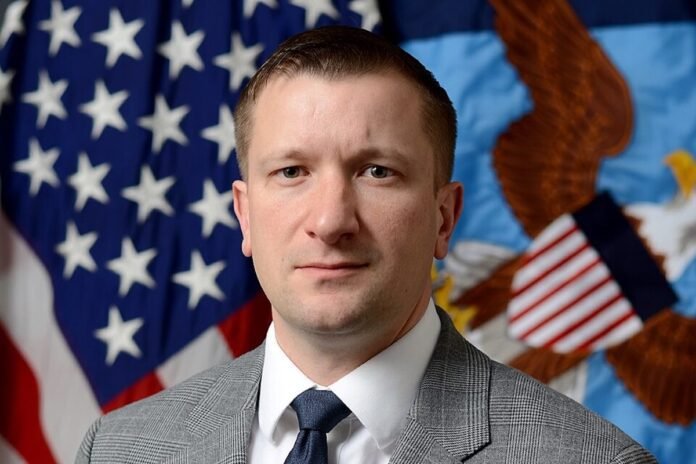
Acting Pentagon comptroller Jules W. Hurst III. Photo: Wikipedia

Outside analysts’ estimates of the total cost to American taxpayers of President Donald Trump’s Iran war have varied widely, but most put the number higher than the $25 billion offered by the Pentagon.

Iran’s foreign minister on Friday joined the analysts crying foul when he accused the Pentagon of deliberately misleading the American public with its formal estimate that the war on Iran has so far cost the US $25 billion – a number that the chief Iranian diplomat said was a fourfold undercount of the conflict’s true price tag.

“The Pentagon is lying,” Iranian Foreign Minister Abbas Araghchi wrote on social media. “[Israeli Prime Minister Benjamin] Netanyahu’s gamble has directly cost America $100 billion so far, four times what is claimed. Indirect costs for US taxpayers are FAR higher. Monthly bill for each American household is $500 and rising fast.”

The Iranian diplomat’s comments came days after the Pentagon’s acting comptroller, Jules Hurst, told US lawmakers under oath that the Trump administration had thus far spent $25 billion on the historically unpopular war of choice.

The New York Times observed that Hurst “did not elaborate on the figure, which was strikingly smaller than the $200 billion the Pentagon had initially requested for the conflict and suggested a major slowdown in expenditures since the start of the war, when officials estimated it had cost more than $11 billion in its first six days.”

The Center for American Progress, a liberal think tank, estimated earlier this month that the Pentagon was likely to have spent more than $33 billion during the first 39 days of the conflict. An April 10 assessment released by the conservative American Enterprise Institute after the ceasefire began put the war’s cost between $25 billion and $35 billion.

Independent policy analyst Stephen Semler estimated that the US spent nearly $29 billion on the Iran war during just the first two weeks of the conflict – an average of $2.1 billion per day.

Secretary of Defense Pete Hegseth “lied to Congress when he said the Iran war has cost $25 billion,” Semler wrote Thursday on social media. “It cost more than that in the first two weeks.” His chart is below:

On top of direct war spending, lawmakers and experts have pointed to indirect costs of war in the form of higher gas and food prices paid by American consumers.

US Representative Ro Khanna (D-Calif.) said on the House floor on Thursday that the Iran war has cost Americans over $630 billion – or $5,000 per household on average – “because of the increase in the price of food, the price of gas, the price of electricity.”

“We need to end this war now, and help the American people reduce costs,” said Khanna.

Linda Bilmes, a public policy expert at the Harvard Kennedy School, said in early April that the Iran war’s cost to the US was likely to exceed $1 trillion in the long-term, when accounting for veterans’ care and other outlays.

“It is hard to measure the exact cost,” said Bilmes. “But based on what we know now, it is costing about two billion dollars a day in short-term, upfront costs, which is the tip of the iceberg.”

-Common Dreams

Texas Chili (Bowl of Red)

0
texas-chili-(bowl-of-red)
Texas Chili (Bowl of Red)

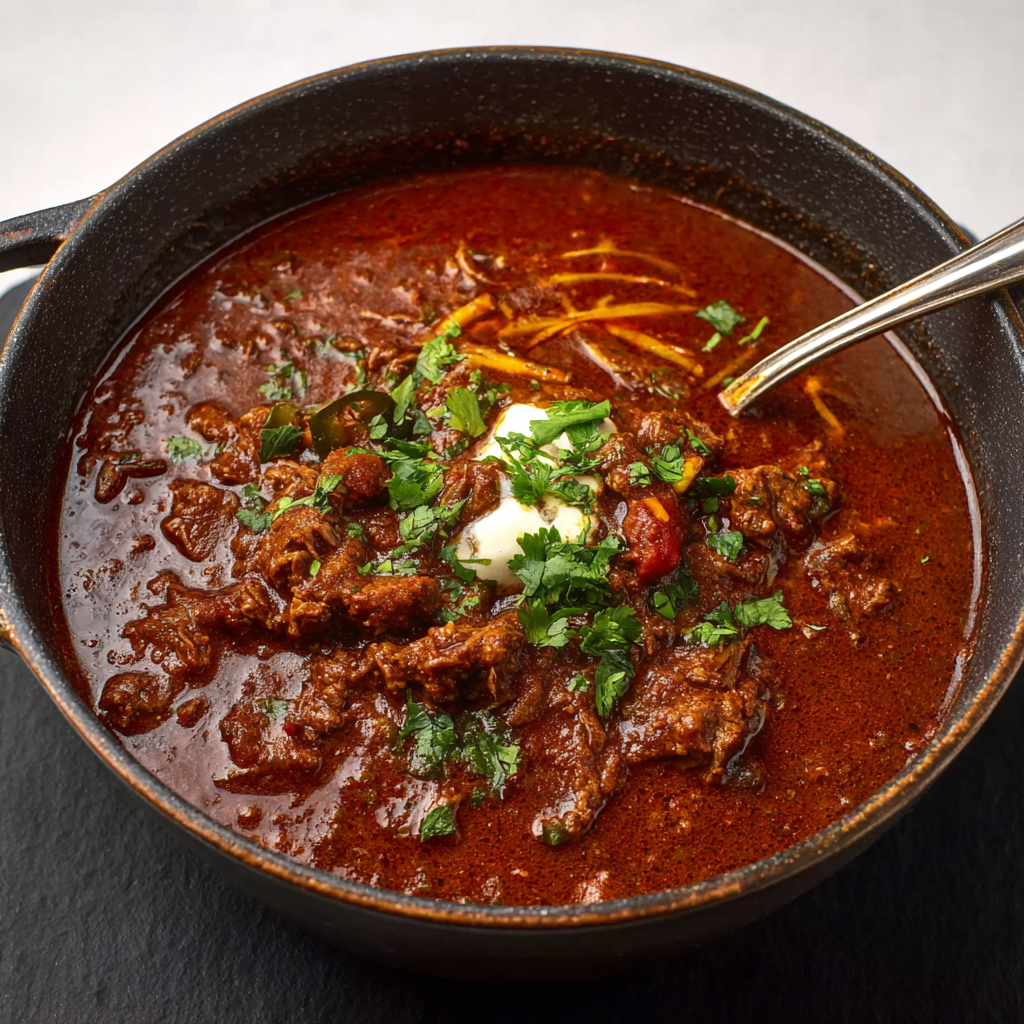
If you’re looking for a chili recipe that’s rich, bold, and unapologetically hearty, this Texas Chili—also known as the legendary “Bowl of Red”—belongs at the top of your must-make list. Packed with tender chunks of slow-cooked beef, smoky chipotle peppers, warm spices, and a thick, deeply flavorful broth, this is the kind of chili that warms you from the inside out.

Unlike many traditional chili recipes, authentic Texas chili proudly skips the beans and lets the beef take center stage. Every spoonful delivers melt-in-your-mouth steak, layers of smoky heat, and a rich, thick consistency that makes this dish unforgettable.

Whether you’re feeding a crowd on game day, warming up on a cold evening, or simply craving true comfort food, this Texas-style chili delivers big flavor in every bowl.


Why You’ll Love This Texas Chili

Big, Bold Flavor

Smoky chipotle peppers, garlic, cumin, and chili powder create deep, authentic flavor.

Tender Slow-Cooked Beef

Chuck roast becomes fork-tender after slow oven braising.

Thick and Hearty

Finished with masa harina for that signature thick Texas-style texture.

Bean-Free Authenticity

True “Bowl of Red” tradition—no beans, just beef and bold spices.


What Is Texas Chili?

Texas Chili, often called “Bowl of Red,” is one of the most iconic chili styles in America. Officially recognized as the state dish of Texas, this version is all about meat, peppers, spices, and rich broth.

Unlike other chili recipes, Texans traditionally leave out beans and focus entirely on bold beef flavor. The result is a thick, hearty chili with an intense smoky richness that keeps you coming back for another bowl.

And once you taste it, you’ll understand exactly why Texans take their chili seriously.


Quick Recipe Overview

  • Prep Time: 15 minutes
  • Cook Time: 3 hours 15 minutes
  • Total Time: 3 hours 30 minutes
  • Servings: 8
  • Difficulty: Easy

Ingredients

For the Chili

  • 5 pounds beef chuck roast, trimmed and cut into 1-inch cubes
  • 2 teaspoons kosher salt
  • 2 tablespoons extra virgin olive oil
  • 2 large yellow onions, diced
  • ½ cup chipotle peppers in adobo, minced with sauce
  • ¼ cup chili powder
  • 2 tablespoons ground cumin
  • 1 tablespoon dried oregano
  • 2 tablespoons garlic, minced
  • 2 medium jalapeños, finely minced
  • 1 can (28 ounces) diced tomatoes
  • 4 cups chicken stock

Thickening Mixture

  • ¼ cup masa harina
  • 1 teaspoon chili powder
  • ½ cup water
  • 2 tablespoons fresh lime juice
  • ½ teaspoon kosher salt
  • ¼ teaspoon black pepper

Kitchen Equipment

  • Large Dutch oven
  • Sharp knife
  • Cutting board
  • Wooden spoon
  • Small whisking bowl

Step-by-Step Instructions

Step 1: Preheat the Oven

Preheat your oven to 325°F (165°C).


Step 2: Season the Beef

Pat the beef cubes dry.

Season evenly with kosher salt.


Step 3: Brown the Beef

Heat olive oil in a large Dutch oven over medium heat.

Working in batches, sear the beef cubes for 3–4 minutes per side until deeply browned.

Transfer browned beef to a bowl.

Repeat until all beef is browned.


Step 4: Cook the Aromatics

Using the same Dutch oven, add diced onions.

Cook for 5–10 minutes, stirring occasionally and scraping up all those flavorful browned bits.

Make a small well in the center.

Add:

  • Chipotle peppers in adobo

Cook for 1 minute.

Then add:

  • Jalapeños
  • Garlic
  • Chili powder
  • Cumin
  • Oregano

Cook for another minute until fragrant.


Step 5: Build the Chili

Add:

  • Diced tomatoes
  • Chicken stock
  • Seared beef cubes

Stir everything together.

Bring the mixture to a boil over high heat.


Step 6: Slow Cook

Cover the Dutch oven.

Transfer to the preheated oven.

Bake for 3 hours, until the beef is incredibly tender.


Step 7: Make the Thickening Mixture

In a small bowl, whisk together:

  • Masa harina
  • Chili powder
  • Water

Until smooth.


Step 8: Finish the Chili

Remove the chili from the oven.

Stir in the masa mixture.

Place the Dutch oven back on the stovetop over medium heat.

Add:

  • Lime juice
  • Salt
  • Black pepper

Cook for 5–10 minutes, stirring occasionally, until thickened.


Step 9: Serve

Ladle into bowls and serve piping hot.


Best Toppings for Texas Chili

Top your Bowl of Red with:

  • Fresh cilantro
  • Sliced jalapeños
  • Shredded cheddar cheese
  • Sour cream
  • Diced onions
  • Lime wedges
  • Crushed tortilla chips

What to Serve with Texas Chili

This chili pairs beautifully with:

  • Cornbread
  • Warm biscuits
  • Garlic bread
  • Baked potatoes
  • Mexican rice
  • Tortilla chips

Expert Tips

Use Chuck Roast

Chuck roast becomes incredibly tender after long cooking.

Brown in Batches

Don’t overcrowd the pan—deep browning builds flavor.

Masa Matters

Masa harina thickens the chili while adding authentic Southwestern flavor.

Let It Rest

Texas chili tastes even better after sitting for 20–30 minutes.


Can I Make It Ahead?

Absolutely.

Texas chili tastes even better the next day as the flavors deepen.

Store in the refrigerator overnight, then gently reheat before serving.


Storage Instructions

Store leftovers in an airtight container in the refrigerator for up to 4 days.


Freezing Instructions

Texas chili freezes beautifully.

Store in freezer-safe containers for up to 6 months.

Thaw overnight in the refrigerator before reheating.


Reheating

Stovetop (Best)

Heat over medium-low heat until warmed through.

Microwave

Heat in 60-second intervals, stirring between each.


Delicious Variations

Extra Spicy

Add more chipotle peppers or extra jalapeños.

Smokier Flavor

Add smoked paprika.

Beef and Pork

Mix beef chuck with pork shoulder.

Deeper Flavor

Add a splash of dark coffee or cocoa powder.


This Texas Chili is rich, smoky, thick, and loaded with tender beef in every bite. One bowl is never enough—and once you make it, it’ll earn a permanent spot in your cold-weather dinner rotation.

Musk Warns of Killer AI — While He and the Rest of Silicon Valley Cash In on AI That Kills

0
musk-warns-of-killer-ai-—-while-he-and-the-rest-of-silicon-valley-cash-in-on-ai-that-kills
Musk Warns of Killer AI — While He and the Rest of Silicon Valley Cash In on AI That Kills


The bitter courtroom brawl between Elon Musk and Sam Altman captivating the tech industry this week revolves in no small part around fears that artificial intelligence technologies both men are building could spiral out of control and exterminate humanity. Such far-looking scenarios obscure the fact that tech companies are enlisting to kill today.

Musk’s break with OpenAI, which he co-founded in 2015, is in a sense a lawsuit about safety. He contends that Altman betrayed the company’s original nonprofit mission of safely and responsibly pursuing artificial intelligence for the public benefit by converting it into the revenue-maximizing behemoth it has become. According to Musk, the stakes of this are existential for the human race: “It could kill us all,” he testified on Tuesday. “We don’t want to have a ‘Terminator’ outcome.”

The AI safety community frequently invokes these dystopian scenarios to both warn the public about the technology’s risks and implicitly boast of its great power. While such a science-fiction future may lay ahead, these warnings overlook the deadly present. Artificial intelligence is already targeting humans with the blessing of Musk and his rivals.

Musk and others who caution about an uprising of sentient killer machines are anticipating the emergence of “artificial general intelligence,” an ill-defined form of superior machine reasoning that may never come to pass. But their fear that AI could kill us all is less hypothetical for those living in places targeted by the Trump administration’s global wars. In Iran, for instance, Anthropic’s Claude AI model “suggested hundreds of targets, issued precise location coordinates, and prioritized those targets according to importance,” according to the Washington Post.

“ There’s a real danger of Skynet-like outcomes even without a Skynet-style takeover.”

“The risks of integrating frontier AI into the nation’s most lethal capabilities are already existential, both for civilians swept up in the violence and destruction of AI-enabled wars, and rank-and-file troops that have to live with the consequences of potentially unsafe weapons they can’t control,” Amoh Toh, senior counsel at Brennan Center’s Liberty and National Security Program, told The Intercept. “Existing AI models are already pushing policymakers and militaries toward nuclear escalation — there’s a real danger of Skynet-like outcomes even without a Skynet-style takeover.”

Silicon Valley has widely embraced AI military contracts despite its worries over lethal AI. Amazon, OpenAI, Musk’s xAI, and Microsoft all earn money from selling large language model services to the Pentagon. Even Anthropic, accused of “betrayal” by War Secretary Pete Hegseth and declared a national supply chain risk for mounting the smallest of opposition to the Pentagon’s terms, is still keen to participate in the national kill chain. “Anthropic has much more in common with the Department of War than we have differences,” CEO Dario Amodei wrote in a blog post a week after the United States bombed an elementary school in Iran, killing more than 100 children.

Google offers a telling illustration of the industry’s increasing coziness with selling AI to the military. Following a 2018 employee revolt over Project Maven, a contract to help target Pentagon airstrikes, CEO Sundar Pichai pledged his company would swear off the business of killing. He wrote in a company blog post that Google would not pursue deals that could cause harm, including applications whose “principal purpose or implementation is to cause or directly facilitate injury to people.” He added: “These are not theoretical concepts, they are concrete standards that will actively govern our research and product development and will impact our business decisions.”

After watching AI help wage a war that has already killed over 1,700 Iranian civilians, Google this week sent a clear message: We want in. In a deal that makes explicit the extent to which company leadership has abandoned its AI principles, Google agreed to provide AI services to the Pentagon that allow for “classified workloads,” sensitive military work that encompasses tasks like intelligence analysis and targeting airstrikes, The Information reported.

Executives say they’re terrified of the technology killing by accident, while wholly supportive of using it to kill on purpose.

According to the tech news outlet, the deal allows the U.S. military to use Google’s AI models for “any lawful government purpose” — a carveout that could allow any uses the administration deems legal. Take, for example, the Trump administration’s Operation Southern Spear, the ongoing aerial assassination program against civilian boats accused of drug trafficking that has killed more than 180 people to date. The campaign has been widely condemned as illegal under both international and U.S. law, but the administration has deemed its own actions legal through a Department of Justice memo that remains secret. On Friday, the Pentagon announced additional “lawful operational use” deals with Nvidia, Microsoft, and Amazon as well.

The Google contract reportedly includes a toothless and unenforceable provision gesturing at concerns over autonomous and spying. “We remain committed to the private and public sector consensus that AI should not be used for domestic mass surveillance or autonomous weaponry without appropriate human oversight,” the clause reportedly states.

“‘Don’t regulate us or it’ll kill innovation.’ … The reality of Google’s work with the military is it’s part of a tech-military ecosystem that’s killing people today.”

“When I worked at Google, they would spend a lot of time punting into the future, promising a future that would never come,” said William Fitzgerald, a former Google employee who helped organize the 2018 worker-led campaign against the Maven contract. “‘Don’t regulate us or it’ll kill innovation.’ The talking point is the same today. The reality of Google’s work with the military is it’s part of a tech-military ecosystem that’s killing people today.”

Google spokesperson Kate Dreyer did not respond to questions about the contract’s language, instead touting how the company’s military work applies “to areas like logistics, cybersecurity, diplomatic translation, fleet maintenance, and the defense of critical infrastructure.”

There is little evidence the people in charge find this technology enticing because of its diplomatic translation prowess. In a January address to Musk’s employees at SpaceX, another Pentagon contractor, Hegseth explained how “an embrace of AI” would make the military “more lethal.”

Musk and Altman, though foes at the moment, can at least find common ground in their support of Hegseth. Musk, a longtime defense contractor, similarly wraps himself in the flag, tweeting in 2023, “I will fight for and die in America.” Altman, who once expressed skepticism toward military work, now frames OpenAI’s mission in terms of patriotic nationalism. (In 2024, The Intercept sued OpenAI in federal court over the company’s use of copyrighted articles to train its chatbot ChatGPT. The case is ongoing.)

Between Musk’s courtroom visions of the apocalypse and Google’s plunge into classified workloads, the week’s news illustrates the disjointed state of AI industry ethics, where executives say they’re terrified of the technology killing by accident, while wholly supportive of using it to kill on purpose.

Though AI executives clearly find this a virtuous revenue stream, some of the people who actually built the technology do not. Andreas Kirsch, a research scientist at Google’s pioneering DeepMind laboratory that produced much of the work on which xAI and Anthropic rely, responded to this week’s news with dismay: “I’m speechless at Google signing a deal to use our AI models for classified tasks. Frankly, it is shameful,” he wrote on X. Alex Turner, a DeepMind colleague of Kirsch’s, described the contract in a single word: “Shameful.”

Trump says he is ‘not happy’ with Italy, Spain amid split on Iran

0
trump-says-he-is-‘not-happy’-with-italy,-spain-amid-split-on-iran
Trump says he is ‘not happy’ with Italy, Spain amid split on Iran

President Donald Trump voiced displeasure with Italy and Spain Friday as the rift between the NATO allies grows amid the stalled US-Israeli war on Iran, Anadolu reports.

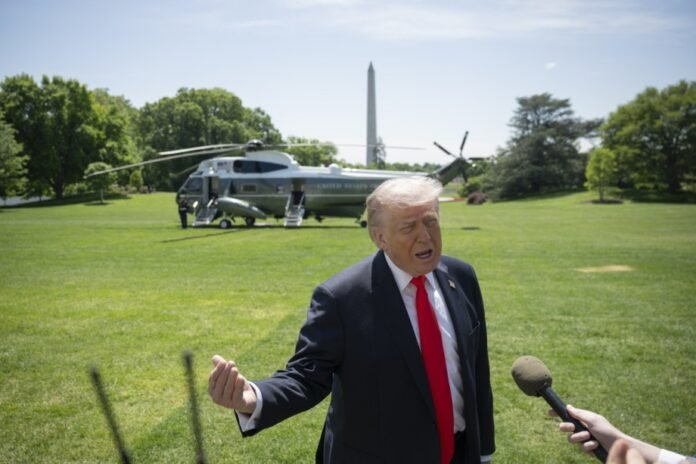
“I’m not happy with Italy, and I’m not happy with Spain. They feel it’s okay for Iran to have a nuclear weapon. Anybody that feels it’s okay for Iran to have a nuclear weapon is not very smart, and it’ll be a terrible thing in the future if they’re ever allowed to have a nuclear weapon,” the US president said as he departed the White House.

The comments come one day after Trump said he “probably will” pull US forces out of Italy and Spain. Trump maintained that when the US “needed them, they were not there,” alluding to his war on Iran, adding: “We have to remember that.”

“I probably will. Why shouldn’t I? You know, look, why shouldn’t I? Italy has not been of any help to us, and Spain has been horrible, absolutely horrible,” the US president told reporters in the Oval Office.

READ: Iran submits new proposal to Pakistan to resume US talks on ending war

“It’s NATO. It’s not even the fact that they’re bad. It’s one thing if they said nicely, or if they said: ‘Okay, we’ll help, but the help is a little slow.’ But the level, and we help them with Ukraine. You know, they made a mess out of Ukraine, a total mess, and we helped them with Ukraine,” he added.

Trump said Wednesday that his administration is “studying and reviewing the possible reduction of troops in Germany, with a determination to be made over the next short period.” He did not provide further details.

His remarks came after German Chancellor Friedrich Merz criticized the US on Monday for lacking an “exit strategy” in the Iran war, saying Washington is being “humiliated” by Iran during ongoing talks.

The remarks drew a sharp rebuke from Trump, who said on Tuesday that Merz “doesn’t know what he’s talking about” and accused him of believing that it is “okay for Iran to have a nuclear weapon.”

“I am doing something with Iran right now that other nations or presidents should have done long ago,” Trump said. “No wonder Germany is doing so poorly, both economically and otherwise.”

OPINION: Ideas of expulsion: Trump, NATO and Spain

Ubuntu infrastructure has been down for more than a day

0
ubuntu-infrastructure-has-been-down-for-more-than-a-day
Ubuntu infrastructure has been down for more than a day

Servers operated by Ubuntu and its parent company Canonical were knocked offline on Thursday morning and have remained down ever since, a situation that’s preventing the OS provider from communicating normally following the botched disclosure of a major vulnerability.

Attempts to connect to most Ubuntu and Canonical webpages and download OS updates from Ubuntu servers have consistently failed over the past 24 hours. Updates from mirror sites, however, have continued to work normally. A Canonical status page said: “Canonical’s web infrastructure is under a sustained, cross-border attack and we are working to address it.” Other than that, Ubuntu and Canonical officials have maintained radio silence since the outage began.

A decades-long scourge

A group sympathetic to the Iranian government has taken credit for the outage. According to posts on Telegram and other social media, the group is responsible for a DDoS attack using Beam, an operation that claims to test the ability of servers to operate under heavy loads but, like other “stressors,” are in fact fronts for services miscreants pay for to take down third-party sites. In recent days, the same pro-Iran group has taken credit for DDoSes on eBay.

According to a moderator on AskUbuntu.com, URLs that remained unavailable include:

  • security.ubuntu.com 
  • jaas.ai
  • archive.ubuntu.com
  • canonical.com 
  • maas.io
  • blog.ubuntu.com
  • developer.ubuntu.com
  • Ubuntu Security API – CVEs
  • Ubuntu Security API – Notices
  • academy.canonical.com
  • ubuntu.com
  • portal.canonical.com
  • assets.ubuntu.com

Ubuntu and Canonical infrastructure went down hours after researchers released potent exploit code that allowed untrusted users in data centers, university settings, and elsewhere to gain all-powerful root control of servers running virtually all Linux distributions, including Ubuntu. The outage has limited Ubuntu’s ability to communicate security guidance to affected users. As noted earlier, updates remain available from mirror sites.

Stressor sites, also known as booter sites, have operated for decades. The DDoS-as-a-service operators have come under the attention of law enforcement in multiple countries, but attempts to shut down this scourge have never succeeded.

It’s unclear why the infrastructure has remained unavailable for so long. There’s a wealth of DDoS protection services, at least one of which is free.

Two months in, the Iran war has changed the global energy system forever

0
two-months-in,-the-iran-war-has-changed-the-global-energy-system-forever
Two months in, the Iran war has changed the global energy system forever

For almost half a century, the vast majority of climate experts have agreed on a solution to global warming: stop burning fossil fuels like coal, oil, and natural gas. But despite the political efforts of governments across the world to promote replacing these fuels, fossil sources have remained a stubbornly large share of global energy — around 80 percent at last count.

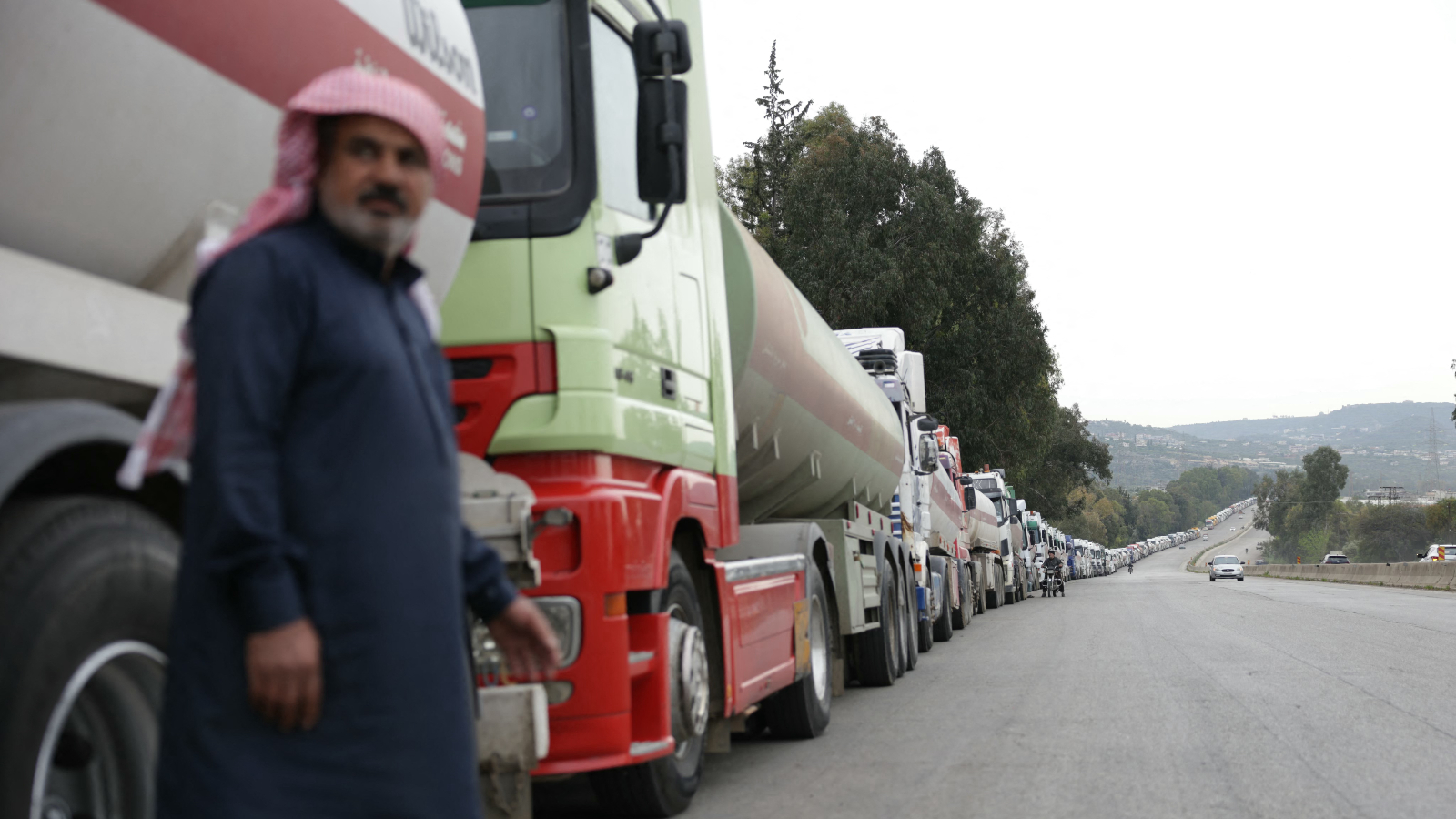
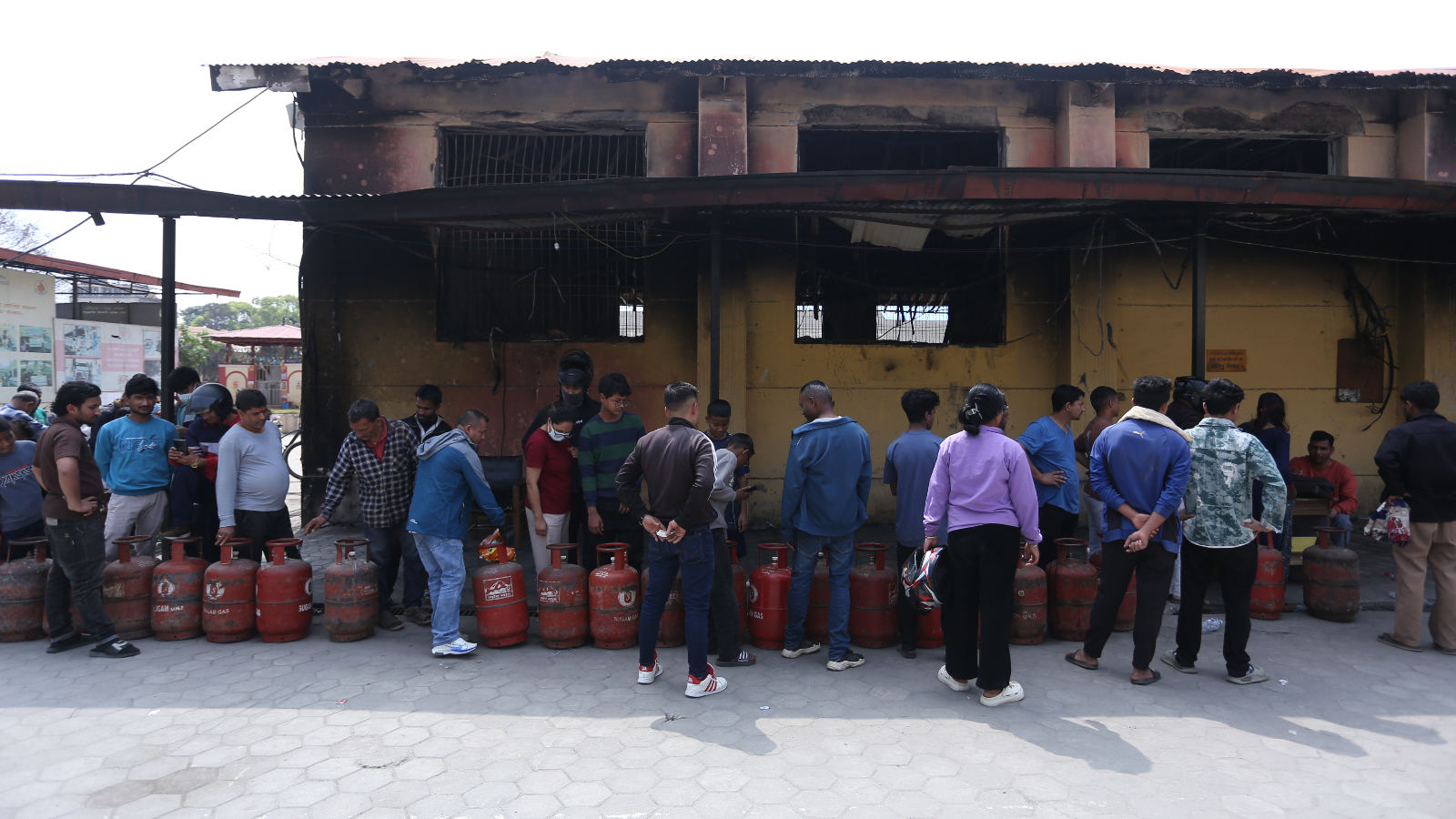
But the war in Iran, which the United States and Israel launched two months ago this week, may turn out to be the push that dislodges fossil fuels’ place atop the world’s energy system. The Strait of Hormuz, the narrow waterway near Iran through which 20 percent of the world’s oil and natural gas supplies flow, has been blocked since early March, with no relief in sight. This has created the biggest energy crisis in modern history. Twenty-five countries are now reporting critical road fuel, jet fuel, or heating oil shortages

But unlike the oil shock of the 1970s, which occurred in a time when substitutes for fossil fuels were not yet powerful or cheap enough to build at scale, this disruption is happening as renewable energy sources are beginning to outcompete fossil fuels, providing countries with new energy options at costs that have plummeted in recent years.

“We now have a viable alternative,” said Selwin C. Hart, a special adviser to the United Nations Secretary-General, at a first-of-its-kind international conference on transitioning away from fossil fuels in Colombia this week. “Renewables have changed the equation.” 

But even though this calculus has changed, it’s too soon to say where the chips will fall as the world’s energy system evolves. While the reliability of a huge chunk of the world’s oil and natural gas is now perhaps permanently in question, it’s not certain that renewables will fill all or even most of the gap. Coal, the most polluting fossil fuel, is taking on a renewed appeal in a world desperate to replace natural gas for electricity, and it remains difficult for solar and wind to replace the around-the-clock power provided by both of those fossil fuels.

“It’s hard to say which direction things will go,” Daan Walter, a lead researcher at the energy think tank Ember, told Grist.

Still, two months after the war began it’s becoming clear which sources of energy stand to win and which stand to lose as the world changes in response to the conflict. As prices rise and supplies dwindle, countries around the globe are reevaluating their energy futures. While some have fallen back on dirty fuels to fill the gaps caused by the closure of the Strait of Hormuz, others have announced significant investments in clean energy to chart a path away from the sources of energy they have relied on for more than a hundred years. 

Losers: Oil and natural gas

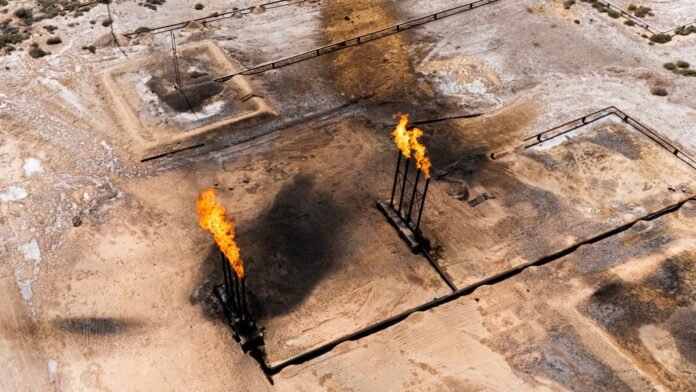
The Strait of Hormuz is the chokepoint through which more than 20 percent of the world’s oil supply passes, including exports from major producers such as Iran, Iraq, Kuwait, and Saudi Arabia. The small nation of Qatar produces around one-fifth of the world’s liquefied natural gas, or LNG, which it exports on boats in superchilled tanks. Iran’s drone attacks have damaged Qatar’s major gas infrastructure and prevented all the nations in the region from sending both oil and LNG shipments through the Strait of Hormuz.

The main buyers of this oil are in Asia, but tankers from the strait travel all over the world, including to the U.S. The first month of the war set off a scramble to replace this lost supply. Major buyers like China and Japan started hoarding refined oil products they would normally export and began rationing their strategic fuel reserves. Rich importers like Australia and California paid more to secure seaborne oil from other countries.

Most nations don’t have the same luxuries; they simply have to use less oil. In Asia, the loss of LNG compounds the problem tremendously. Several major Asian economies including Japan, Korea, and Singapore rely on LNG to run their power plants and factories. Many LNG shippers sign long-term contracts with importing countries, meaning there weren’t any spare shipments floating around, as was the case with crude oil after the start of the war. If they wanted to keep the lights on, these countries had to turn back to dirtier coal power.

lowered speed limits, mandated remote work, set thermostats higher despite hot weather, and asked employees to take the stairs rather than using the elevator. They have also waived fuel taxes and banned price increases to prevent an affordability crisis. These measures have contained unrest and economic collapse for now, but further warning signs are emerging. Airlines in Europe, Africa, and New Zealand have cancelled hundreds of flights, and small carriers in the U.S. are facing bankruptcy as the price of jet fuel rises.

In the long term, the oil crisis may accelerate a preexisting shift to electric vehicles and hybrids, which had already begun to outsell gas cars in many countries in Europe and Asia. In the first month of the war, electric-vehicle sales jumped by more than 50 percent in big European economies like France and Germany, and by almost 200 percent in Brazil. While gas cars still make up the vast majority of vehicles on the road today, a fast shift to EVs — juiced by government mandates such as Indonesia’s — could cause oil demand to plateau or decline in the coming years.

Winners: Coal, solar, nuclear

Coal is the dirtiest fossil fuel; it produces far more carbon dioxide than oil or natural gas to generate the same amount of energy. Although some major economies like China and India still burn tremendous amounts of it, many world powers have been shifting toward liquefied natural gas and renewables over the past decade, cutting emissions in the process.

Even so, most of these coal-to-gas switchers never decommissioned their old coal plants — they just stopped using them. Since the beginning of the war, the availability of this legacy coal fleet has allowed countries across Asia to ramp up coal capacity to fill the gap in lost LNG imports. South Korea lifted a previous emissions limit that barred coal plants from running at more than 80 percent of total capacity, allowing the coal fleet to generate as much power as possible. On the other side of the globe, some European countries like Italy are extending the lifespans of their coal plants, in some cases by more than a decade. 

“The real question is how governments balance short-term energy security with long-term climate commitments,” said Dinita Setyawati, a Jakarta-based analyst for Ember who studies decarbonization in Asian economies.

decline as a major source of primary energy, Corbeau said that the crisis could prolong its lifespan in Asia, breaking natural gas’s role as a so-called “bridge fuel” between coal and renewables.

“They could definitely keep coal, add more renewables, and do less LNG in the end,” said Corbeau. “It may be that a lot of countries say that coal is a lot less subject to geopolitics, therefore we are going to use more coal.”

No renewable source is in a better position to surge than solar. Solar farms already made up the vast majority of new power plants even before the war, and Chinese exports of solar panels, batteries, and electric vehicles hit records in March, according to recently-released export data. (China is by far the world’s most prolific exporter of renewable energy technology.)

The countries most affected by the Iran War are among the areas seeing the “sharpest increases in demand” for these products, according to Ember. Exports of Chinese batteries rose 44 percent; the European Union, Australia, and India were top customers. The flow of solar components to India rose by 6.6 gigawatts between February and March, a nearly 150 percent increase. Solar exports to Africa rose 176 percent over the same time frame. Nigeria, Kenya, and Ethiopia led the way with more than a gigawatt of growth each. All told, 50 countries set records for Chinese solar imports in March. 

After Europe saw its solar market contract slightly last year, demand for rooftop solar in countries across the continent is surging as electricity bills rise, according to a report from Reuters. Three major energy equipment wholesalers interviewed for the report have seen their sales spike more than 30 percent, with one company’s net sales tripling in March. The European Commission, which released a document last week calling for more electrification, renewables, and energy efficiency measures to counteract the ongoing energy shortage, will present energy ministers with proposals for how to reduce short-term fossil fuel exposure at a meeting in Greece next month.

axed those plans and now aims to build a wind, battery storage, and solar facility instead. South Korea recently announced a fast-tracked plan to deploy 100 gigawatts of renewables by 2030, a plan that includes 400 billion won, or roughly $270 million, for low-interest loans for village solar projects. (One hundred gigawatts is roughly enough electricity to power Ho Chi Minh City 10 times over.)
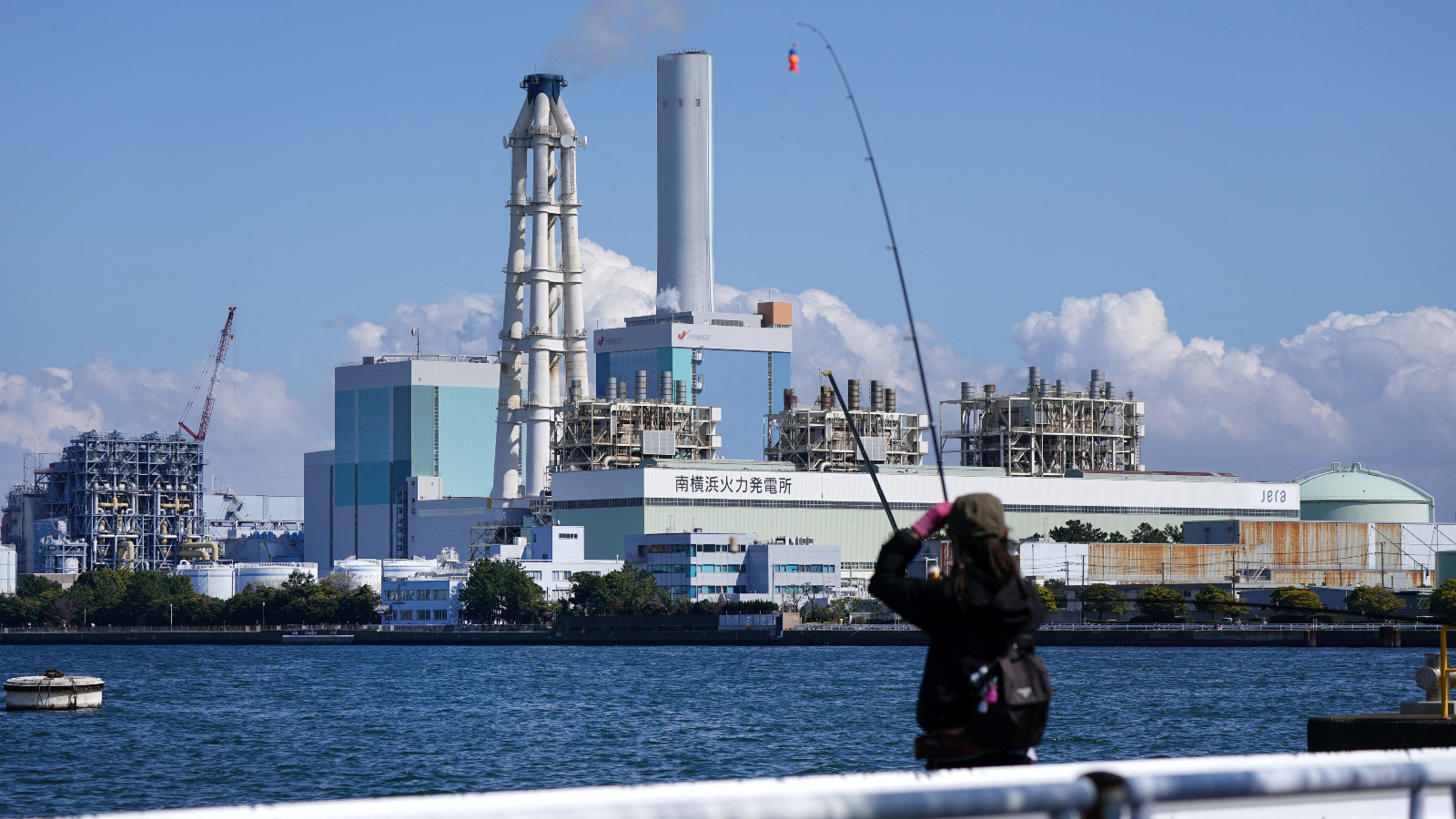
While solar is a clear winner in light of the new bottleneck in the Middle East, the outlook for wind power is less clear. On the one hand, the German wind turbine maker Nordex saw its shares reach a 24-year high in the first quarter of 2026, as demand for clean energy in Europe continues to rise. But the Iranian and American blockades of the Strait of Hormuz could stymie the delivery of wind turbine components such as foundations and substations, many of which are manufactured in the Persian Gulf. This could have a depressive effect on wind growth even if countries in Europe and the United Kingdom wish to boost development. 

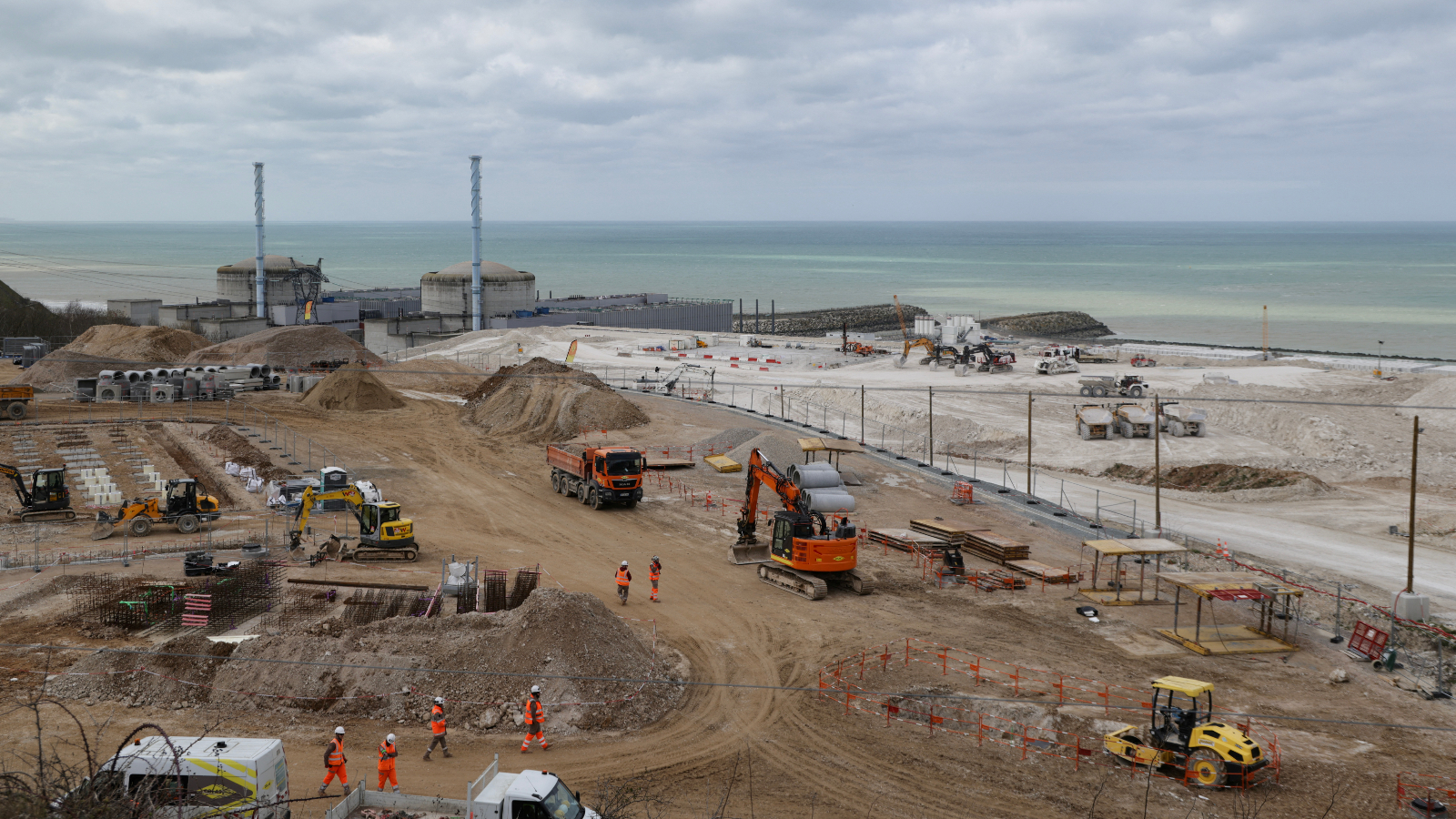
There’s a chance, however, that the biggest winner may be the most controversial form of climate-friendly power. For decades, the growth of nuclear energy has been constrained by high prices and long development timelines; it can take over a decade to get a plant licensed and built. Disasters like the 2011 tsunami that damaged the Fukushima nuclear plant in Japan further dampened nuclear’s growth. In Europe, pressure from anti-nuclear environmental groups led many countries to decommission their nuclear power fleets. As a result, the share of power coming from nuclear reactors globally reached its lowest point in four decades in 2022.

Anti-nuclear sentiment was starting to soften before the war in the Middle East began, but the Iran War is speeding up this trend, prompting countries that shunned nuclear for decades to reevaluate the role that around-the-clock carbon-free energy plays on their grids. Early evidence for a nuclear surge is strongest in Asia, which is most reliant on Middle Eastern oil and natural gas. In Taiwan, a country that gets a third of its liquefied natural gas from Qatar, the state utility formally submitted a restart plan for its Maanshan nuclear plant a month after the war began.

South Korea, which already gets about 30 percent of its power from nuclear, signed a cooperative agreement with Vietnam to jointly develop new nuclear capacity, building on talks that began last year. After restarting Kashiwazaki-Kariwa, which is the world’s largest nuclear plant, in January, Japan inked a$40 billion deal to build advanced small nuclear reactors in the American south during a visit to the White House in March. Japan also signed a 5-year “memorandum of cooperation” with Indonesia aimed at advancing nuclear power and critical minerals development around the same time.

said in March this year as she announced a $232 million fund to galvanize private investment in new nuclear technologies. The Commission warned member states like Spain and Belgium against prematurely phasing out nuclear power plants. In Africa, Kenya, Rwanda, and South Africa reaffirmed their support for nuclear; nearly half of the countries on the continent had long-term nuclear development plans before the war began. This week, the government of Belgium began negotiations to take over a fleet of nuclear reactors that the utility Engie had been planning to shut down.

“All decommissioning activities are being halted with immediate effect,” said the country’s prime minister, Bart De Wever, in a statement.


The Iran war has brought many old Gulf faultlines to the fore – and is creating new ones

0
the-iran-war-has-brought-many-old-gulf-faultlines-to-the-fore-–-and-is-creating-new-ones
The Iran war has brought many old Gulf faultlines to the fore – and is creating new ones

The United Arab Emirates (UAE) announced on April 28 that it will leave the global oil producers’ cartel Opec. Its decision is the latest sign that the war in the Middle East has not only deepened animosities between Iran and its Gulf neighbours, but among the Gulf states too.

Founded in 1960, Opec is a rare success story among multilateral organisations in the region. Its policies paved the way for Gulf oil producers to have enough funds to buy back or renationalise their oil resources, and finance the spectacular development of their states.

The organisation has survived all major revolutions and wars in the region thus far – though Qatar left in 2019 when it was blockaded by its Gulf neighbours.

Saudi Arabia, the largest oil producer in Opec, holds substantial leverage within the group. This has led to tension with the UAE, which has for some time pushed for higher production quotas for itself, given its spare capacity. These efforts have been to no avail.

However, its decision to leave Opec is about more than merely frustration with the organisation.

Though it was very close to Saudi Arabia in the mid-2010s, the UAE has in recent years drifted apart from its larger neighbour. This has been driven by a number of regional issues including the countries’ diverging strategies in wars in Yemen and Sudan, and their respective relations with Israel.

The UAE normalised relations with Israel in 2020, while the Saudis say they will only normalise once a Palestinian state is established.

The two countries have also recently become serious economic competitors. And although both states have been hit hard by Iran in the current war, the conflict seems to have accelerated their rivalry.

A map of the Gulf region.

Iran responded to US-Israeli attacks in February by launching strikes on countries around the Gulf and blockading the Strait of Hormuz. Peter Hermes Furian / Shutterstock

Saudi Arabia is the largest and richest country in the Gulf. But many of its transformative economic projects require political stability and a high oil price to succeed. The war has exposed the limits of its policy of tentative outreach to Iran, and of its partnership with a US that is so closely allied with Israel. So, the Saudis have strengthened defence ties with nuclear-armed Pakistan.

These deepening ties have been met with dismay in the UAE, which has close ties to India. The Emiratis have been critical of Pakistan during the war, calling on Islamabad to condemn the Iranians more forcefully – something that is not possible due to Pakistan’s role as a mediator in peace negotiations.

At least partly in frustration at its response to the war, the UAE recently demanded that Pakistan repay a US$3.5 billion (£2.6 billion) loan. Saudi Arabia immediately came to the rescue by providing Pakistan with financial support.

The UAE’s announcement to leave Opec coincided with a meeting of the Gulf Cooperation Council in the Saudi Arabian capital Riyadh, where members sought to find common ground on the Iran war. This was a major affront to the Saudis.

Other Gulf frictions

The war has sparked other frictions in the Gulf, including reviving old tensions between the UAE and Iran over three islands – Abu Musa, Greater Tunb and Lesser Tunb – that Iran occupied at the time of Emirati independence from Britain in 1971. These islands strengthen Iran’s strategic position along Gulf shipping lanes.

The UAE has long claimed sovereignty over the islands, while Iran claims they were always part of its territory. Iran’s control of the three islands is thought to be part of a secret deal between Britain and the Shah of Iran around 1970, whereby the shah would renounce a claim Iran maintained to Bahrain in return for the islands.

This and other historic border disputes in the region, including between the UAE, Saudi Arabia and Oman, remain some of the most sensitive topics in modern Gulf history. For a forthcoming book on the rise of the Gulf states, I have tried to access relevant UK Foreign Office documents, but have had numerous freedom-of-information requests denied on closed material dating back to the 1960s and earlier.

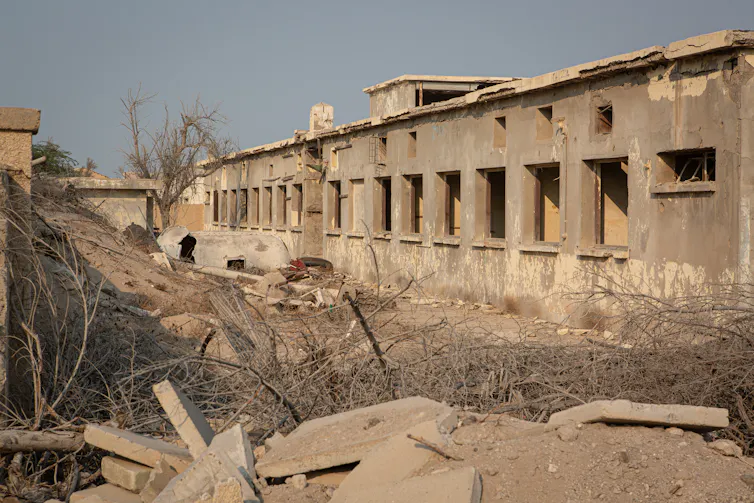
Damaged buildings on Kuwait's Failaka Island.

Failaka Island off Kuwait’s coast remains partially abandoned due to the heavy damage that was inflicted during the 1990 Iraqi invasion. Sebastian Castelier / Shutterstock

The northern Gulf state of Kuwait has also been hit hard during the conflict. Here, many attacks seem to have come from Shia militias based in Iraq. These attacks have revived traumatic memories of Iran-linked political violence in the 1980s, and Iraq’s invasion in 1990.

States that cannot bypass the closed Strait of Hormuz – such as Bahrain, Kuwait and Qatar – have experienced the most economic damage from the war. To balance its budget, Bahrain is already dependent on aid by wealthier Gulf states. The UAE, Saudi Arabia and Oman, on the other hand, have the geographical means to bypass Hormuz.

Oman, which controls one side of the strait, may well benefit in the long run. This could either be through a new arrangement with Iran to charge vessels a toll, or because its ports on the Arabian Sea will increase in significance – perhaps even resurrecting some of Oman’s former glory, when it was a major regional power. This is not something neighbouring UAE and Saudi Arabia would like to see.

The reckless US-Israeli attack on Iran has thus opened up old faultlines, and could create new ones between states around the Gulf. It is also undermining the few avenues of regional cooperation that remain. This makes a fragmented and dangerous region even more so.

0FansLike
0FollowersFollow
0FollowersFollow
0SubscribersSubscribe
- Advertisement -
Google search engine

Recent Posts