The Iran war has brought many old Gulf faultlines to the fore – and is creating new ones
The United Arab Emirates (UAE) announced on April 28 that it will leave the global oil producers’ cartel Opec. Its decision is the latest sign that the war in the Middle East has not only deepened animosities between Iran and its Gulf neighbours, but among the Gulf states too.
Founded in 1960, Opec is a rare success story among multilateral organisations in the region. Its policies paved the way for Gulf oil producers to have enough funds to buy back or renationalise their oil resources, and finance the spectacular development of their states.
The organisation has survived all major revolutions and wars in the region thus far – though Qatar left in 2019 when it was blockaded by its Gulf neighbours.
Saudi Arabia, the largest oil producer in Opec, holds substantial leverage within the group. This has led to tension with the UAE, which has for some time pushed for higher production quotas for itself, given its spare capacity. These efforts have been to no avail.
However, its decision to leave Opec is about more than merely frustration with the organisation.
Though it was very close to Saudi Arabia in the mid-2010s, the UAE has in recent years drifted apart from its larger neighbour. This has been driven by a number of regional issues including the countries’ diverging strategies in wars in Yemen and Sudan, and their respective relations with Israel.
The two countries have also recently become serious economic competitors. And although both states have been hit hard by Iran in the current war, the conflict seems to have accelerated their rivalry.
Iran responded to US-Israeli attacks in February by launching strikes on countries around the Gulf and blockading the Strait of Hormuz.Peter Hermes Furian / Shutterstock
Saudi Arabia is the largest and richest country in the Gulf. But many of its transformative economic projects require political stability and a high oil price to succeed. The war has exposed the limits of its policy of tentative outreach to Iran, and of its partnership with a US that is so closely allied with Israel. So, the Saudis have strengthened defence ties with nuclear-armed Pakistan.
These deepening ties have been met with dismay in the UAE, which has close ties to India. The Emiratis have been critical of Pakistan during the war, calling on Islamabad to condemn the Iranians more forcefully – something that is not possible due to Pakistan’s role as a mediator in peace negotiations.
At least partly in frustration at its response to the war, the UAE recently demanded that Pakistan repay a US$3.5 billion (£2.6 billion) loan. Saudi Arabia immediately came to the rescue by providing Pakistan with financial support.
The UAE’s announcement to leave Opec coincided with a meeting of the Gulf Cooperation Council in the Saudi Arabian capital Riyadh, where members sought to find common ground on the Iran war. This was a major affront to the Saudis.
Other Gulf frictions
The war has sparked other frictions in the Gulf, including reviving old tensions between the UAE and Iran over three islands – Abu Musa, Greater Tunb and Lesser Tunb – that Iran occupied at the time of Emirati independence from Britain in 1971. These islands strengthen Iran’s strategic position along Gulf shipping lanes.
The UAE has long claimed sovereignty over the islands, while Iran claims they were always part of its territory. Iran’s control of the three islands is thought to be part of a secret deal between Britain and the Shah of Iran around 1970, whereby the shah would renounce a claim Iran maintained to Bahrain in return for the islands.
This and other historic border disputes in the region, including between the UAE, Saudi Arabia and Oman, remain some of the most sensitive topics in modern Gulf history. For a forthcoming book on the rise of the Gulf states, I have tried to access relevant UK Foreign Office documents, but have had numerous freedom-of-information requests denied on closed material dating back to the 1960s and earlier.
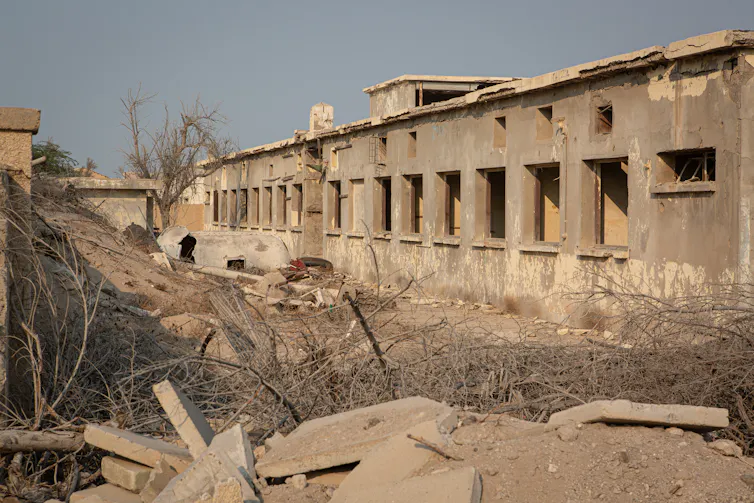
Failaka Island off Kuwait’s coast remains partially abandoned due to the heavy damage that was inflicted during the 1990 Iraqi invasion.Sebastian Castelier / Shutterstock
The northern Gulf state of Kuwait has also been hit hard during the conflict. Here, many attacks seem to have come from Shia militias based in Iraq. These attacks have revived traumatic memories of Iran-linked political violence in the 1980s, and Iraq’s invasion in 1990.
States that cannot bypass the closed Strait of Hormuz – such as Bahrain, Kuwait and Qatar – have experienced the most economic damage from the war. To balance its budget, Bahrain is already dependent on aid by wealthier Gulf states. The UAE, Saudi Arabia and Oman, on the other hand, have the geographical means to bypass Hormuz.
Oman, which controls one side of the strait, may well benefit in the long run. This could either be through a new arrangement with Iran to charge vessels a toll, or because its ports on the Arabian Sea will increase in significance – perhaps even resurrecting some of Oman’s former glory, when it was a major regional power. This is not something neighbouring UAE and Saudi Arabia would like to see.
The reckless US-Israeli attack on Iran has thus opened up old faultlines, and could create new ones between states around the Gulf. It is also undermining the few avenues of regional cooperation that remain. This makes a fragmented and dangerous region even more so.
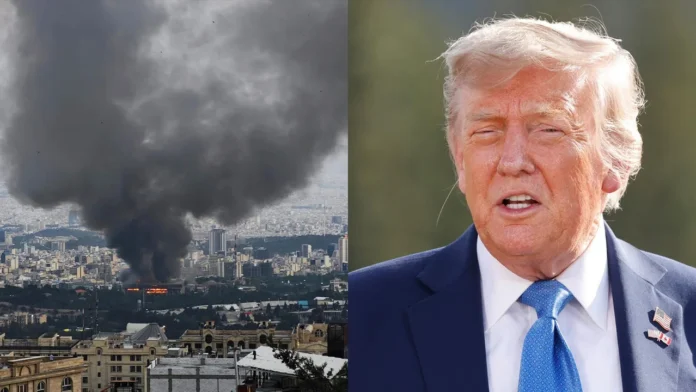
61% of Americans see Trump’s Iran war as ‘mistake’: new poll
More than 6 in 10 Americans now say President Donald Trump’s war in Iran was a “mistake,” according to a poll out Friday from the Washington Post, ABC News and Ipsos.
Within two months, the war – which has inflicted thousands of civilian deaths and caused gas prices to spike worldwide with little tangible gain – has reached levels of unpopularity that previous wars now seen as historic boondoggles took years to reach.
The Post has asked the “mistake” question when polling about other major wars in the past. However, CNN senior political reporter Aaron Blake explained, “In Iraq, it took more than three years to reach that high. In Vietnam, it took six years.”
Despite a massive protest movement, voters overwhelmingly supported President George W. Bush’s decision to invade Iraq, with 81% believing it was the “right thing” in April 2003 and just 16% believing it was a mistake.
But the occupation turned into a long, deadly, and costly disaster, and the administration’s pretexts for the war were revealed to be lies. Public opinion steadily eroded to the point where 64% viewed it as a mistake by January 2007.
Vietnam never had the overwhelming support of Iraq, but 60% of Americans still supported President Lyndon Johnson’s decision to begin direct US military involvement in 1965, while just 24% said it was a mistake.
While the protest movement against the war is as present in Americans’ memories today as the conflict itself, public opinion was still split until 1968 and only reached a high of 61% in May 1971, after more than 50,000 US soldiers had been killed in battle.
Trump’s war in Iran is unique in history in that it never enjoyed even a moment of consensus support. In a Reuters/Ipsos poll just days after the opening salvo of what the Trump administration dubbed “Operation Epic Fury,” just 27% said they approved of the strikes, which killed 555 Iranians including Supreme Leader Ayatollah Ali Khamenei and several other top Iranian officials.
At that point, 43% of Americans already said they disapproved of the strikes, far eclipsing Iraq and Vietnam. But 30% still said they had not yet made up their minds.
In the coming months, they would. It was revealed that an airstrike on a school, which killed at least 155 people, including 120 children, was a double-tap attack by the United States.
Iran retaliated by blocking oil shipments through the Strait of Hormuz, which sent US gas prices hurtling above $4 per gallon.
And Trump took on an increasingly erratic and at times what many critics termed an outright genocidal posture toward Iran that made any peaceful resolution appear increasingly impossible, even with the current fragile ceasefire.
Friday’s poll shows that while the war still maintains a core base of support – 36% of Americans who say it was the right decision, nearly all of them Republicans – that base is dwarfed by the 61% who say it was a mistake.
Majorities of respondents across all demographics show that they believe the war has increased the risks of “terrorism against Americans” (61%), of “the US economy going into a recession” (60%) and of “weakening relationships with US allies” (56%).
Looking beneath the surface shows an even more worrying sign for Trump: The war has almost no constituency outside of his biggest fans. Self-identified Democrats (91%) overwhelmingly say the war was a mistake. But 71% of independents – many of whom were undecided at the war’s outset – now disapprove too, with just 24% in support.
Even within the GOP, there is a decisive split: 86% of those who self-identify as “MAGA Republicans” are still baying for blood. But “non-MAGA Republicans” have grown uncertain – 50% still say war was the right decision, while 49% say it was a mistake.
They were particularly rattled by Trump’s threat last month that “a whole civilization will die tonight” if Iran should fail to negotiate a deal to his liking. The threat was too much even for the majority of Republicans, 53% of whom said they viewed it negatively.
What remains to be seen is whether even Trump’s most faithful backers will turn against the war as it drags on. If Defense Secretary Pete Hegseth’s appearance in Congress on Thursday is any guide, the country may soon find out.
On Thursday, when Senator Kirsten Gillibrand (D-NY) pressed Hegseth about why he has “not sought the support of the American people” and added that “three out of five Americans are against this war today,” he appeared in abject denial about the war’s unpopularity.
“I believe we do have the support of the American people,” he said. “I would remind you and this group that we’re two months into an effort, and many congressional Democrats want to declare defeat two months in.”
He specifically invoked lengthy past conflicts, repeatedly emphasizing that this one had only lasted “two months,” as if to urge patience with a war Trump had previously said was intended to last only “four to five weeks.”
“Iraq took how many years? Afghanistan took how many years? And they were nebulous missions that people went along with,” he said.
Rachel Goldberg-Polin Memoir on Son Hersh’s Captivity, Murder, and Family’s Loss Tops NYT Bestseller List
Rachel Goldberg-Polin’s memoir, When We See You Again, reached No. 1 on the New York Times bestseller list for hardcover nonfiction in the last week of April 2026, one week after its release. The book documents her experience following the abduction and murder of her son, Hersh Goldberg-Polin, by Hamas terrorists.
Published by Random House, the book tells the story of Hersh who was held in Gaza after being captured during the October 7, 2023, Hamas attack on the Nova music festival in southern Israel, as well as the period following his death. It has drawn widespread attention for its account of grief and resilience and has been described as a “searing portrait of a mother’s grief and strength.”
Hersh Goldberg-Polin was held in Gaza tunnels before being murdered by his captors. On August 29, 2024, Hamas terrorists executed Hersh and several other hostages in Gaza as Israel Defense Forces closed in during a rescue operation.
Following his abduction, Hersh’s parents, Rachel Goldberg-Polin and Jon Polin, emerged as prominent advocates for hostages and their families, meeting officials, addressing the public, and calling for sustained international pressure on behalf of all captives.
In the memoir, Goldberg-Polin describes writing as a means of coping after her son’s funeral. The book reflects on the period following Hersh’s burial, as the family dealt with loss while attempting to return to daily life. She presents her experience through a division between life “Before” and “After,” marking the change following her son’s death.
Goldberg-Polin also narrates the audiobook version of the memoir. A Hebrew-language edition of When We See You Again is scheduled for release in May.
Minnesota set to be first state to ban nudification apps
This week, Minnesota became the first state to pass a law banning nudification apps that make it easy to “undress” or sexualize images of real people.
Under the law, developers of websites, apps, software, or other services designed to “nudify” images risk extensive damages, including punitive damages, if a victim decides to sue. Their offending products could also be blocked in the state. Additionally, Minnesota’s attorney general could impose fines up to $500,000 per fake AI nude flagged. Any fines collected would be used to fund services for victims of “sexual assault, general crime, domestic violence, and child abuse,” the law stipulates.
On Wednesday, the Minnesota Senate unanimously voted 65–0 to pass the law. That vote came after the bill just as quickly passed in the House last week, the 19th News reported. Gov. Tim Walz is expected to sign the law when it reaches his desk, and if that happens, the state will start enforcing the ban this August.
Ars could not immediately reach Gov. Walz’s office for comment.
Minnesota man used one app to undress 80+ friends
Democratic Senator Erin Maye Quade introduced the bill in Minnesota after residents discovered that one man had nudified images of more than 80 women from his social circles. In a statement, she said that she looked forward to Walz signing the bill, which finally offers legal recourse to those victims, as well as others impacted by the mainstreaming of nudifying apps.
RAINN, the national nonprofit that runs the National Sexual Assault Hotline, also helped get Minnesota’s bill passed. To prevent any industry lobbying against it, RAINN consulted with tech companies when drafting the law, 19th News reported. That helped ensure there weren’t unexpected impacts on popular commercial products, like Photoshop, that could be used to nudify an image. Acknowledging that the state’s concern is more about how alarmingly easy undressing apps make it to harm an increasing number of mostly women and children globally, the law exempts products or services that require “the technical skill of a user to nudify an image or video.”
“Today, we led the nation protecting women, children, and everyone in public life from the harm caused by AI nudification technology,” Maye Quade said. “Companies that make this technology available for free online and in app stores will no longer be allowed to enable predators who abuse and victimize adults and children with the click of a button.”
Celebrating the law’s passage, Maye Quade thanked “the victim-survivors who made this bill a reality.”
“They have shared their story in committee, with reporters, and with law enforcement with dignity and courage,” she said. “Their power, brilliance, and advocacy is why we passed this bill today. They have had a singular focus on passing this legislation so that what happened to them does not happen to any Minnesotan, ever again.”
A lengthy CNBC report last September exposed how a group of Minnesota friends first learned that a mutual friend was creating fake nudes of dozens of women. The man apologized, but he seemingly did not help identify all the victims. There was no evidence he ever shared the images, so laws like the Take It Down Act did not apply, and proving the man’s ill intent made pursuing penalties under revenge porn laws unlikely, 19th News reported. Horrified that there was no way to ensure the images hadn’t left his computer and no path to stop the man from continuing to generate fake nudes, the women joined Maye Quade in advancing the law to shut down the problem at its source.
One of the Minnesota women targeted, Molly Kelley, told 19th News that she dedicated two years of her life to “finding a solution to mitigate the harm when it’s actually caused, which is at creation.”
“These images don’t exist without a third-party involvement and some sort of machine learning model,” Kelley said.
However, even if Walz signs the law, tensions remain that could frustrate enforcement.
Kelley told 19th News that she’s confident the law can overcome legal challenges, should any US firms sue to block it, but enforcing the law against app makers in other countries will likely be difficult, if not impossible for a single state. Notably, the service used to attack the Minnesota women, DeepSwap, is operated overseas, at times claiming bases in Hong Kong and Dublin, CNBC reported. Anticipated state struggles to regulate foreign apps is why a federal ban would be preferable, 19th News reported.
Additionally, if Donald Trump revives an effort to deregulate the AI industry by blocking state laws like Minnesota’s from requiring safeguards, the law could become toothless, advocates fear.
Unchecked US tools like Grok risk penalties
If Walz puts the law on the books, some US firms could be forced to make changes or face penalties.
Potentially even Elon Musk’s xAI may risk fines if Minnesotans can prove Grok was used to undress images without consent.
Grok’s lack of safeguards to prevent outputs with non-consensual intimate imagery or alleged child sex abuse materials have drawn government probes and proposed class actions from women and children. In January, X Safety claimed that Grok was updated to stop undressing images, but NBC News reported last month that their review found “dozens of AI-generated sexual images and videos depicting real people posted publicly on Musk’s social media app, X, over the past month.”
Musk has denied that he has seen a single instance of Grok-generated CSAM. But researchers’ estimates that Grok was generating thousands of harmful images an hour appear to be increasingly backed by lawsuits from victims surfacing non-consensual images.
At the same time, authorities are getting closer to closing cases with arrests linked to Grok. A week after NBC News’ report, Nashville cops charged a man for “sexual exploitation of a minor after he was identified as the suspect who utilized Grok AI to generate images of child sex abuse.”
According to the press release, cops were tipped off after “multiple CyberTips to the National Center for Missing and Exploited Children regarding possession of child sex abuse material in an online account” that was linked to Grok. Importantly, the cops noted that Grok generated the harmful images from September 2025 through March 2026, well after X claimed that the functionality had been removed.
Beyond Grok, researchers have flagged thousands of nudifying apps advertised on Meta platforms, prompting at least one lawsuit where Meta claimed a Hong Kong-based app maker violated advertiser terms, CNBC reported. Any services based in the US openly advertising on Facebook or Instagram could become targets of Minnesota-based lawsuits if the law takes effect.
Similarly, nudifying apps that manage to skirt reviews and appear in Google and Apple app stores despite violating terms could draw legal attention.
EU kickstarts Mercosur pact to counter US trade hit
The European Union and South American bloc Mercosur will implement on Friday a contentious free trade agreement that the EU in particular hopes will benefit exporters and calm critics, even if it cannot fully offset the blow from U.S. tariffs.
Backers including Germany and Spain say the agreement will help compensate for the hit from U.S. President Donald Trump‘s tariffs and reduce reliance on China for critical minerals. France and other critics argue it will increase imports of cheap beef and sugar and undercut domestic farmers, and environmentalists say it will increase rainforest destruction.
Either way, economists caution that the economic gains from this pact and others concluded in recent months by the EU will be modest and are unlikely to fully make up for lost U.S. trade.
The European Parliament, whose approval is required, voted in January to challenge the agreement in the EU’s top court, which could take up to two years to rule, but the European Commission decided to provisionally apply the deal from May 1.
Supporters hope the EU’s largest ever agreement in terms of tariff reductions, which took 25 years to negotiate, will swiftly benefit EU exporters so that when the EU assembly does vote, perhaps in two years’ time, the advantages will be clear.
TRUMP PROMPTS TRADE DEAL DASH
Alongside Mercosur, the EU has rushed to conclude trade agreements with India, Indonesia, Australia and Mexico since Trump’s re-election.
The accords help to shore up free trade at a time when Trump’s tariffs and Chinese export curbs on critical minerals undermine a rules-based global order.
The European bloc is also hoping the agreements will help offset a decline in exports to the United States of 15% or more and a hit to GDP of some 0.3% this year alone.
However, Carsten Brzeski, global head of Macro at ING Research, said it was hard to see the new trade relationships replacing the United States.
“Put simply, GDP per capita in the U.S. is by far larger than in these new trading partners,” he said.
The European Commission has estimated the Mercosur agreement will boost EU GDP by 0.05% in 2040, while the India agreement, which the EU has dubbed the “mother of all deals”, could add 0.1% to GDP, according to the Kiel Institute for the World Economy.
Those benefits are also at least a decade away, when the deals are fully implemented, whereas pain from Trump’s tariffs has been immediate.
CHINA ALREADY THERE
EU companies will also face fierce competition in these markets, where Chinese rivals have been steadily building a presence for two decades.
“The elephant in the room is China,” said Lucrezia Reichlin, professor of economics at the London Business School.
“And this is not just about tariffs. If you look at what China has done in Asia and in Africa, it has been about investment and the energy transition, too.”
Maximiliano Mendez-Parra, principal research fellow at ODI Global, said much had changed since he co-authored a report for the European Commission in December 2020 that forecast a 0.1% increase in EU GDP from the EU-Mercosur deal. Since then China has ramped up sales of vehicles and machinery, items that the EU wants to export, Mendez-Parra said.
Tariff reductions should help EU companies compete more effectively against often low prices of Chinese goods, but the challenges are increasing.
China has already begun the task of offsetting U.S. tariffs, reporting a record trade surplus of nearly $1.2 trillion in 2025, led by booming exports to non-U.S. markets.
Global Trade Alert estimated that U.S. tariffs led to some $150 billion of Chinese exports being redirected, with ASEAN countries absorbing more than $70 billion of extra Chinese goods, and sharp increases, too, for Latin America, sub-Saharan Africa and the Gulf.
So, while the EU’s trade accords should help, the EU will not offset lost U.S. exports without looking internally. Some 60% of EU exports are from one EU country to another and a more efficient and competitive single market could easily compensate.
Singer’s Murder Case Explodes as Prosecutors Say He Bought ‘Burn Cage’ to Destroy Evidence
New details in the case against David Anthony Burke—the singer known as D4vd—are leaving people stunned, as prosecutors lay out what they claim was a chilling and calculated attempt to cover up the death of 14-year-old Celeste Rivas Hernandez.
According to newly released court filings, investigators say Burke didn’t just act in the moment—he allegedly went online and began ordering a series of disturbing items in the days after the teen’s death, using an alias to avoid detection.
Prosecutors claim those purchases paint a step-by-step picture of what they describe as a deliberate cleanup operation.
Among the items listed: chainsaws, a shovel, a body bag, and even a blue inflatable pool. Authorities believe the pool was set up inside Burke’s garage and used to contain blood and other evidence during what they allege was the dismemberment of the victim’s body.
But the most disturbing detail may be what came next.
Investigators say Burke also ordered what’s known as a “burn cage”—a device capable of reaching extremely high temperatures. Prosecutors believe it was intended to destroy any remaining forensic evidence and eliminate traceable remains, though it’s still unclear if it was ever actually used.
To prosecutors, the sequence of purchases—from cutting tools to containment supplies and finally an incineration device—suggests something far more calculated than a panicked reaction. Instead, they argue it shows a methodical effort to erase evidence.
That digital trail could become a major piece of the case.
Burke is already facing first-degree murder charges, along with additional counts including sexual abuse of a minor and mutilation of human remains. Prosecutors allege the teen was killed inside his home, and that he then took what they describe as extreme measures to dispose of her body.
Authorities say the victim’s remains were later found inside a Tesla registered to Burke, where they had allegedly been kept for an extended period.
As for motive, prosecutors claim the killing may have been an attempt to silence the teen after she threatened to expose their relationship.
Burke has pleaded not guilty to all charges, and his legal team insists he is innocent.
But with investigators now pointing to a detailed timeline of online purchases, the case is quickly becoming one of the most disturbing—and closely watched—criminal proceedings in recent memory.
Imagine a place where every home has paraphernalia for distilling spirits, where there is a toast for nearly any occasion, and where your taxes – paid in grain, not cash – are deposited straight into a communal still.
Welcome to Nubri.
A valley in northern Nepal, Nubri is home to roughly 3,000 Tibetan Buddhist highlanders. Over the course of three decades, I have spent a lot of time in Nubri studying the interplay of demographic trends and social change. Often that has been in the company of an ethnomusicologist colleague, Mason Brown, who studies local musical traditions.
While conducting research, we both became aficionados of the local intoxicants chang and arak, and we were taught how to brew and distill them by Nubri resident and research collaborator Jhangchuk Sangmo Thakuri.
Other scholars of Tibetan and Himalayan societies have commented on the importance of chang for ritual purposes and as a social lubricant. In Nubri, which is predominantly ethnic Tibetan, we learned firsthand the integral role both drinks had in maintaining local rituals, the economy and developing social relationships.
The basics of brewing
Let’s start with the basics. Chang is a fermented, noncarbonated beverage made from corn, barley or rice. A starter culture, partially derived from a previous fermentation, is added to warm, boiled grain, which is then stuffed into a container with water and sealed. The fermentation process takes a few days to two weeks, depending on variables such as temperature and one’s preference for the brew’s strength.
To make arak, the mash of fermented grain is transferred to a still that is placed over an open fire. The evaporated liquid – essentially concentrated alcohol – condenses and drops into a catch basin when it contacts a vessel at the top filled with cool water. The distillation process takes roughly an hour.
Chang is unfiltered and often contains a fair amount of sediments. It is low in alcohol – roughly 3% to 6% ABV, or equivalent to a European lager – and is considered a refreshing drink, especially while working in hot weather. Although it varies by brew, chang is generally slightly sweet, with a tinge or sourness.
Arak, by contrast, is clear and dry, similar in flavor and mouthfeel to Japanese sake. Based on taste and effect, we estimate that most batches clock in at 15% to 25% ABV – stronger than a glass of wine, but less potent than, say, whiskey.
All but the poorest households in Nubri own a still; those who don’t borrow one from neighbors when they have surplus grain.
To hell … or glory?
Evidence suggests that chang has been consumed by Tibetans for centuries. A story purportedly from the seventh century describes how court officials were dispatched by an emperor to find a boy with magical powers. When they encountered a child and asked where his parents were, he responded, “Father has gone to search for words. Mother has gone to search for eyes.” The father showed up carrying chang and the mother bearing fire.
Despite chang’s antiquity, Tibetans have their share of teetotalers and prohibitionists. For example, 15th-century Buddhist lama Ngorchen Kunga Zangpo argued, “Since one (who drinks) created and accumulated the karma of a mad person, one’s body will come to ruin, and after one has died, one will be born among the hell-beings of the lower realms of existence.”
The message is elegant in its simplicity – drink and you’ll go to hell!
Nubri resident Tsewang Buti stokes a fire beneath a still.Geoff Childs, CC BY
Kunga Zangpo’s warning aside, intoxicating beverages have long been valued in Nubri society.
Writing in the mid-18th century, Pema Wangdu, a Nubri lama famous for composing songs of spiritual realization, recounts how when seeking guidance from a local lama, he needed to present an offering, so he filched chang from home while his family members were working in the fields.
Pema Wangdu’s main teacher, Pema Döndrub, also from Nubri, describes a visit to a neighboring valley in which an official asks local villagers to bring the lama and his entourage some chang. Apparently they brought more than enough, because Pema Döndrub retorted, “We kept the tasty chang and sent the unappealing stuff away.”
Pema Döndrup, local lama and chang connoisseur.Geoff Childs
Chang is also commonly mentioned in Nubri’s folk songs, which have been passed down for generations. In one, the singer rejoices that he has had multiple windfalls of good luck: He lives in a civilized country, inhabits a golden chamber and has an elegant foal and many sheep. Proclaiming that his prosperity is deserved, the singer commands his wife, “Don’t even think of giving me less chang!”
A drink for all occasions
Nowadays, people in Nubri prefer the more potent arak over chang. This is evident during Buddhist rituals where arak provides some participants with stamina and a bit of levity. Others, especially monks, abstain.
The drinks are procured through the local temple’s tax system. When a couple form a new household, they accept a mandatory loan of roughly 100 kilos of grain from the village temple. Every subsequent year they are required to repay one-third of the loan as interest.
Each ritual has an associated “Loan Document” that specifies what percentage of a household’s annual repayment is used to support that event. The system ensures that a tremendous amount of the harvest is acquired so that it can be fermented and then processed in the temple’s stills.
An associated document titled “Rules (Made By) the Monasteries” specifies when, how much and to whom arak should be distributed throughout the ritual.
Each serving event has a name. There is “connection chang” honoring the auspicious first gathering of ritual participants, “commencement chang” to mark the beginning of each day, and “bedtime chang” for the end of each day.
During an offering to the deities, participants are served “victory chang,” signaling a wish that their entreaties are successful, and “good fortune chang” in anticipation of positive outcomes.
Mason Brown, Jhangchuk Sangmo (right) and her mother, Tsewang Buti, mix a starter culture with boiled rice.Geoff Childs, CC BY
One more for the road
A final vignette helps illustrate how chang and arak are woven into Nubri’s social and religious fabric.
In May 2023, we departed Nubri after completing a long research stint. Dorje Dundul, an old friend, accompanied us to a religious structure marking the outer boundary of his village. From the depths of his tunic, he extracted a flask filled with arak, inserted the stem of a medicinal herb into the liquid while chanting prayers, then sprinkled droplets into the four directions as an offering to ensure our safe passage.
Afterward, he handed us the flask and urged, “Chö, chö” (“Drink, drink”). We each took a long draft of the warming liquid.
He then capped the flask, placed it into the side pocket of our backpack and said, “This is lamchang (road beer). Travel safely.”
During the grueling descent to the lowlands, the parting gift fortified us while providing a constant reminder of Dorje’s concern for our well-being. “One for the road” never felt so good.
Pakistan’s Hangor subs tighten China link, test India at sea
Pakistan is betting on Hangor-class submarines to sharpen its undersea edge as its deterrent increasingly rests on deepening military integration with China rather than any single platform.
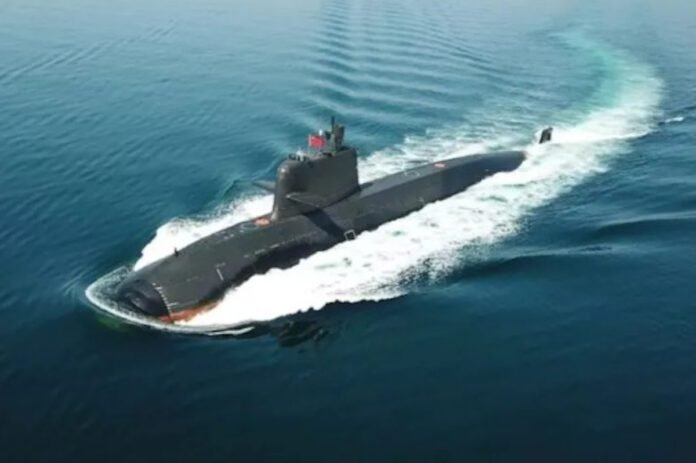
Last month, multiple mediasources announced the commissioning of Pakistan’s first Chinese-built Hangor-class submarine, PNS/M Hangor. The ceremony took place in Sanya and was attended by President Asif Ali Zardari and Navy Chief Admiral Naveed Ashraf, signaling an important advancement in Pakistan’s naval modernization efforts.
The induction forms part of a broader plan to acquire eight submarines—four built in China and four domestically under a technology-transfer program—aimed at strengthening maritime security and safeguarding vital sea lines of communication amid rising tensions and recent missile tests.
An export variant of China’s Yuan-class design, the Hangor-class submarines are equipped with air-independent propulsion, advanced sensors and modern weapons and are expected to strengthen Pakistan’s deterrence posture while improving its anti-access/area denial capabilities once the program is completed.
Officials described the program as a “historic milestone” to bolster fleet capabilities, though timelines have slipped from initial delivery targets, with the first vessel launched in 2024 and commissioned in 2026.
The move underscores the expansion of Pakistan-China defense cooperation following recent conflict dynamics with India and complements earlier Chinese arms transfers, including J-10C fighter jets.
The Hangor-class submarines’ tactical employment may focus on conventional torpedo and anti-ship missile operations, as the risk of escalation limits their practicality for sea-based nuclear deterrence.
Looking at the tactical capabilities of the Hangor-class submarines, the Nuclear Threat Initiative (NTI) notes in September 2024 that the class is equipped with 53-millimeter torpedo tubes, which enable the launch of heavy torpedoes such as the Chinese Yu-6, as well as anti-ship cruise missiles.
While Pakistan could opt to arm its new submarines with nuclear-tipped submarine-launched cruise missiles (SLCMs) to establish a sea-based nuclear deterrent, Betzalel Newman notes in an April 2025 Stimson Center article that Pakistan’s Babur-3 SLCM is suboptimal for such a role.
Newman points out that cruise missiles are less frequently employed for nuclear purposes, particularly at sea, because they have lighter payloads and shorter maximum ranges than ballistic missiles.
He also adds that Pakistan arming its submarines with SLCMs could create a problem of nuclear ambiguity, as it would be difficult for India to determine whether an incoming weapon is nuclear or conventionally armed, risking escalation. As such, Newman says Pakistan is likely to deploy its new submarines in more conventional roles.
From an operational perspective, however, their impact remains limited, with Namita Barthwal noting in a January 2026 report for the Manohar Parrikar Institute for Defense Studies and Analyses (MP-IDSA) that Pakistan’s Hangor-class submarines represent an incremental capability gain rather than a decisive shift in the naval balance.
She suggests that they could progressively enhance Pakistan’s capacity to maintain an underwater presence, which would complicate crises, increase the need for anti-submarine efforts, influence merchant shipping advisories and increase the cost and difficulty for India in maritime reassurance and in managing escalations during rapid crises.
She notes that replacing older boats and increasing patrol frequency could allow Pakistan to monitor Indian ships more regularly during peacetime, keep India uncertain during crises, and threaten sea routes near Indian ports and naval bases.
This strategy would be especially effective if backed by Chinese training, spare parts, intelligence, surveillance and reconnaissance (ISR) and lifecycle support.
The operational role of the Hangor-class submarines is to enhance Pakistan’s underwater deterrence and support a sea-denial approach to offset India’s larger and more capable naval forces in the Indian Ocean.
Situating Pakistan’s submarines within the country’s broader operational strategy, Saad Riaz notes in a January 2026 article for the Center for Strategic and Contemporary Research (CSCR) that acquiring Hangor-class submarines is significant for deterring India’s expanding naval footprint and growing sub-surface capabilities in the Indian Ocean region.
Taken together, these assessments point to a strategy centered on offsetting structural naval disadvantages rather than achieving parity.
Looking at the military balance at sea between the two rivals, Rajeswari Rajagopalan and Linus Cohen note in a June 2025 report for the Australian Strategic Policy Institute (ASPI) that India has consistently had greater conventional military strength than Pakistan across major equipment categories.
They also indicate that India has two aircraft carriers and two nuclear-powered ballistic missile submarines (SSBNs), which Pakistan does not possess.
In that context, M. Usman Askari and Mudassar Ali Iqbal note in a June 2023 article in the peer-reviewed South Asian Studies journal that, as a navy with limited resources and a smaller fleet, Pakistan cannot match India’s superior conventional capabilities, necessitating a focus on alternative approaches.
Askari and Iqbal emphasize an asymmetric approach, using unconventional tactics and weapons — including submarines and coastal defense systems — to offset India’s larger fleet, alongside a “sea denial” doctrine aimed at restricting India’s use of surrounding waters and limiting its operational advantage.
The strategic significance of the Hangor-class program lies in its integration within a deepening Pakistan–China defense partnership, characterized by extensive arms transfers, interoperability and coordinated military alignment aimed at counterbalancing India.
Khalil Ahmad, in a January 2026 article in the peer-reviewed Advance Social Science Archive journal, notes that China has emerged as Pakistan’s primary arms supplier, providing advanced military systems that underpin its defense capabilities and reinforce bilateral military ties.
Supporting Ahmad’s points, data from the Stockholm International Peace Research Institute (SIPRI) indicate that from 2021 to 2025, China was the fifth-largest arms exporter, accounting for 5.6% of the global arms trade during that period. The data also shows that Pakistan was its top client, accounting for 61% of Chinese arms sales.
Ahmad adds that this military cooperation is complemented by joint exercises, training exchanges and intelligence sharing, which strengthen interoperability and operational coordination, reflecting Pakistan’s growing reliance on Chinese military support within an increasingly entrenched strategic partnership.
Furthermore, Harsh Pant and Rahul Rawat state in a June 2025 article for The National Interest that China–Pakistan military cooperation poses a strategic threat to India by creating an emerging “two-front” challenge rooted in longstanding territorial disputes, including Kashmir and contested areas along the China-India border.
Pant and Rawat say both countries align to counterbalance India and contest its sovereignty claims, particularly following developments in Jammu and Kashmir since 2019. They describe the relationship as a “threshold alliance,” enabling capability pooling, joint planning and interoperability.
They highlight the use of Chinese military technology, ISR support and efforts to emulate multi-domain warfare, producing a functional military synergy that translates geopolitical alignment into a “real-time” threat to India’s national security.
Such territorial disputes could extend into the maritime domain. As Hangor-class submarines integrate with Chinese systems, their cumulative effect may not overturn the naval balance but intensify great-power rivalry in the Indian Ocean, sharpening undersea operations as a key arena for deterrence and strategic competition among Pakistan, India and China.
Is your Purosangue SUV not sharp enough? Ferrari has you covered.
Did you know that SUVs now account for 6 in 10 new vehicles sold in Europe? That’s even higher than in the US or China, where market share for lifted hatchbacks currently runs at about 40 percent. So the fact that Ferrari decided to enter the segment with the Purosangue in 2023 should be seen clearly in that context. Anyway, Four-seat Ferraris aren’t entirely unheard of: I remain a big fan of the looks of the shooting brake FF and GTC4Lusso—if not the reliability of the latter.
But the test drivers in Maranello (where Ferrari’s factory is) must have found something a little lacking with the way the Purosangue drove because they got to work on an upgrade for the SUV, which debuted this week. It’s a new Handling Speciale option, featuring new active suspension calibration that better resists the body’s roll, pitch, and yaw, something Ferrari says makes the Purosangue feel more compact than its 16.3 feet (4.9 m) might suggest. Expect Ferrari’s always-quick steering to feel even sharper, then.
The control strategies for the double-clutch paddle-shift gearbox have also been improved, cutting shift times at the expense of a bit of refinement. But then that’s the point: If you want a soothing luxury SUV, many other companies will sell you one. Ferrari buyers want the feeling of the next gear engaging to be a little more brutal, particularly if they’re in one of the more permissive traction and stability control settings (or if those are disengaged entirely). In manual mode, that happens when you shift above 5,500 rpm, Ferrari tells us.
To let people know you spent an as-yet-unannounced sum on the Handling Speciale option (though if you need to ask…), there are some styling tweaks like diamond-cut wheels, carbon-fiber logo shields on the side, and black accents instead of chrome.
I note with interest that the wheel here has buttons, not capacitive panels. Hopefully we can arrange a test drive soon.
Ferrari
I note with interest that the wheel here has buttons, not capacitive panels. Hopefully we can arrange a test drive soon. Ferrari
Black exhaust tips and a black badge at the rear.
Ferrari
Black exhaust tips and a black badge at the rear. Ferrari
Carbon-fiber shields instead of yellow ones.
Ferrari
Carbon-fiber shields instead of yellow ones. Ferrari
Black exhaust tips and a black badge at the rear. Ferrari
Carbon-fiber shields instead of yellow ones. Ferrari
Next up for Maranello is the Luce, its first-ever electric vehicle. So far, we’ve seen details about its powertrain, sound, and user interface, with the full reveal scheduled for May 25.
Another Assassination Attempt, More Fertilizer for Conspiracy Theories
The White House Correspondents’ Dinner last weekend became the site of the third failed attempt to assassinate President Donald Trump. “I remember the feeling was very similar to when it was clear that the House had been invaded on January 6, 2021,” Rep. Jamie Raskin, D-Md., who was in attendance, tells The Intercept Briefing. “Everybody was afraid that somebody had come in with an AR-15 or something like that.”
This week on the podcast, host Akela Lacy speaks to Raskin about his experience at the dinner and later being asked by CNN’s Dana Bash about whether he’s thinking twice about his “heated rhetoric” toward Trump. “It was curious that, in the wake of this terrible episode, that she would try to equate the way that Democrats talk and the way that President Trump talks,” says Raskin. “He calls people crazy, insane. He calls people evil, wicked. He will buttonhole reporters and tell them that they’re stupid, they’re ugly. … But we try to keep it at the level of policies and their actions.” Some examples, which Raskin discusses, is his forthcoming investigation into Trump’s son-in-law Jared Kushner’s role in the administration and conflicts of interest, and his fight in Congress to stop the reauthorization of warrantless surveillance on Americans.
After this latest assassination attempt on Trump’s life, claims that it was staged flooded the internet, from comments section to social media posts to videos of influencers dissecting alleged evidence.
“We are so conditioned to distrust what we are being told by authorities that people immediately began concocting conspiracy theories about it even before we even knew what had happened. Whether it was a shooting or just dishes breaking,” says journalist Mike Rothschild. He’s the author of “The Storm is Upon Us,” the first complete book on the QAnon conspiracy movement, and more recently, a 200-year history of conspiracy theories called “Jewish Space Lasers.”
Rothschild joins Lacy to unpack the growing world of conspiracy theories that question whether the multiple assassination attempts against Trump were staged. They also dive into other conspiracy theories currently capturing the public imagination, such as the dead and missing scientists and a wildfire in Georgia. “This is one of our more fun and disturbing interviews,” says Lacy.
For more, listen to the full conversation of The Intercept Briefing on Apple Podcasts, Spotify, YouTube, or wherever you listen.
Transcript
Akela Lacy: Welcome to The Intercept Briefing. I’m Akela Lacy, senior politics reporter for The Intercept.
Katherine Krueger: And I’m Katherine Krueger, the Voices editor at The Intercept.
AL: Katherine, do you want to tell our listeners a little bit about what Voices is before we jump into the show today?
KK: Voices is basically The Intercept’s op-ed section we run. Things that are more narrative, things that are a little more first-person-driven, things that advocate for a specific point of view.
AL: An Intercept editorial board, if you will.
KK: Yes, I’m a one-woman editorial board. [Laughs.]
AL: Speaking of opinions on the news of the day, I am going to throw several topics at you. [Laughs.]
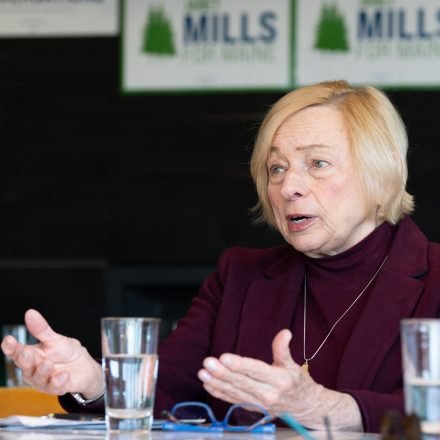
KK: So Janet Mills is the current governor of Maine, former attorney general, running against Graham Platner in the Democratic primary to be the next senator of Maine.
She was neck and neck with the upstart, insurgent, more-left candidate Graham Platner, who has certainly had his share of controversies during this race. But my jaw dropped when I saw the news that she was dropping out. It feels like all polling that I had seen was that her and Platner were pretty close in the polls.
In a statement she put out, she’s blaming a lack of money for not continuing the race, which is also strange to me because she had all of the backing of the Democratic Party. No one at DNC national was pulling for Platner.
AL: Yeah, this was pretty shocking to me. I also got an AP alert on Wednesday evening. The title was “Underdog Governor,” and the dek was “Democratic Maine Governor Janet Mills says she’s used to being underestimated even as she runs for Senate at age 78.”
Literally 12 hours later, Janet Mills is dropping out of the race for U.S. Senate.
I was also pretty shocked at the statement that Chuck Schumer and the Democratic Senatorial Campaign Committee Chair Kirsten Gillibrand put out after she dropped out of the race, which was “[Maine Sen. Susan] Collins has never been more vulnerable” — what? “We will work with the presumptive Democratic nominee, Graham Platner, to defeat her.” [Laughs.]
KK: Yeah, it’s a bit strange. Also, I just love the framing in that headline, which is “underdog governor” — don’t those things pull in opposite directions? Also, Hakeem Jeffries and Chuck Schumer were fully behind Janet Mills. It all strikes me as a bit strange. It also seems Platner had been in general polling ahead of Mills, but it does seem like the race was quite close. My jaw dropped when I saw the news. It seems out of nowhere.
AL: Also in midterms and voting rights news, on Wednesday, the Supreme Court issued a decision that rolled back voting rights. This was focused on a case in Louisiana. After that decision, Louisiana postponed its May 16 primary. Which is kind of insane, considering that that was supposed to happen in two weeks.
KK: It does seem like an existential threat for the Democrats to respond. Gerrymandering has been an issue for a long time. The Republicans are fully aware that without gerrymandering, the force of the electorate is against them. Democrats need to respond as other states, I’m sure, will look to redraw their maps in even more draconian ways.
“The Republicans are fully aware that without gerrymandering, the force of the electorate is against them.”
AL: In that vein, Democrats are also facing intense scrutiny over a series of key votes in the house this week, including on extending the Foreign Intelligence Surveillance Act, which 42 Democrats voted to support and 22 Republicans opposed on Wednesday. This version would authorize warrantless surveillance of Americans.
There’s also been some developments in the fight to end the partial shutdown of the Department of Homeland Security. After a monthslong shutdown, the House passed legislation to reopen DHS on Thursday.
After federal immigration agents killed Renee Good and Alex Pretti in Minnesota earlier this year, Democrats had attempted to block additional funding for DHS until the agency could make some very modest reforms to ICE and Border Patrol. Democrats’ demands have so far gone nowhere. Though some places are framing the vote on Thursday, which did not fund ICE, as a win for Democrats. Katherine, what do you make of all of this?
KK: Well, it does seem that the Republicans are pretty desperate to restore this funding. You know, as an op-ed editor — Democrats need to hold the line on this.
AL: It’s my understanding that this bill will pay for DHS operations except ICE and parts of Border Patrol through September 30. Those agencies are already being generously funded by the Trump so-called Big Beautiful Bill that approved a record $85 billion for immigration crackdowns.
KK: Right. So for now it appears to be all eyes on the Democrats to see what they can do, if anything, to gum up the works on billions in new funding for ICE and Customs and Border Protection.
AL: And of course, this is all coming on the heels of the third assassination attempt against President Donald Trump over the weekend, which we talk about with Rep. Jamie Raskin of Maryland, who was present at the White House Correspondents’ Dinner during the shooting attempt.
Later in the show, we hear from journalist Mike Rothschild about the world of conspiracy theories swirling around the shooting and other recent events in the U.S.
KK: Akela, you got really great details from Rep. Raskin from inside the Correspondents’ Dinner. So let’s listen to that conversation now.
AL: Welcome to the Intercept Briefing, Rep. Raskin.
Rep. Jamie Raskin: Great to see you, Akela.
AL: So you were at the White House Correspondents’ Dinner on Saturday evening. Tell us what you witnessed.
JR: I entered maybe 10 minutes before the incident happened and the violence and the confusion and the melee and the chaos. All of a sudden, we heard the loud noises, boom boom boom, glasses flying, plates flying — horrific noises taking place. And then people yelling, “Get down, get down.” Somebody, I think it maybe was a Secret Service agent or an officer, somebody threw me to the ground.
Then we stayed on the floor for two or three minutes before people started saying they got the guy, or it’s OK, you can get up. But there was a lot of confusion.
It was a scene of crowd chaos and fear in America, which means people are going to be thinking about the possibility of an assault weapon or some kind of deadly gun attack.
AL: The day after the shooting, you spoke to CNN’s Dana Bash about the incident in an interview where she asked you about the responsibility of Democrats whose rhetoric toward Trump she described as “heated.” Let’s hear that clip.
[Clip from CNN]
Dana Bash: And you have, and as many of your fellow Democrats have, used some heated rhetoric against the president. And do you think twice about that when something like this happens?
Rep. Jamie Raskin: What rhetoric do you have in mind?
DB: Just talking about some of the fact that he is terrible for this country and so on and so forth. I understand that’s your democratic right, but overall, do you have no responsibility?
JR: I have no personal problem with Donald Trump at all. I talk about the policies of this administration. The authoritarianism, like we saw on display in Minneapolis where two of our citizens were gunned down in the streets simply for exercising their First Amendment rights; Renee Good, Alex Pretti, and others have died in custody. I’m talking about policies. I don’t personalize it, and I certainly have never called the press the enemy of the people. I think the press are the people’s best friend, and that’s why it’s written right there into the First Amendment.
We need the press to be a vigilant watchdog against every level of government, federal, state, local, all of it.
[Clip ends]
AL: I also want to note that on Tuesday, White House press secretary Karoline Leavitt blamed Democrats who have criticized Trump for the shooting, naming several members of Congress, including House Minority Leader Hakeem Jeffries.
What did you make of Bash’s question to you and the idea behind it, that somehow the real problem here is criticizing the president and his policies, no matter what those policies are?
JR: The freedom of speech has to be wide open, vigorous, and uninhibited in America. But the point I was trying to make was that we should keep to policy matters and political matters, and not personalize it.
So I literally didn’t know what she was talking about. I do not use, or at least I try not to use, the kind of rhetoric that President Trump routinely and habitually uses where he calls people communists, he calls people terrorists. He calls people crazy, insane. He calls people evil, wicked. He will buttonhole reporters and tell them that they’re stupid, they’re ugly, all those kinds of things.
I just thought it was curious that, in the wake of this terrible episode, that [Bash] would try to equate the way that Democrats talk and the way that President Trump talks, because we are indeed very vigorous and aggressive in standing up to violent insurrections and attempts to overthrow elections. And we’re very vigorous and aggressive in opposing illegal wars because Congress has been cut out and so on. But we try to keep it at the level of policies and their actions.
“It was curious that, in the wake of this terrible episode, that she would try to equate the way that Democrats talk and the way that President Trump talks.”
AL: A letter that you sent a few weeks ago to the president’s son-in-law Jared Kushner opened by saying, “You are now reportedly participating as ‘Special Envoy for Peace’ in negotiations on behalf of the United States government to address the roiling conflicts in the Middle East. At the same time, you are soliciting billions of dollars from Gulf monarchies for your private business ventures while already managing billions of dollars of their money in your international investment firm.”
The letter is meant to notify Kushner about a forthcoming investigation into his role in the administration and conflicts of interest. What do you hope to investigate here, and can you talk about what you find most concerning about Kushner’s role in trying to negotiate an end to the war in Iran and being involved in other foreign policy ventures?
JR: Any reasonable person would see this as an absolute conflict of interest — that you can’t serve two masters at the same time.
It’s been reported widely that his interest — and therefore Saudi Arabia’s interest — is to keep the war going for as long as possible. There’s money to be made there, and they also want to do everything they can to degrade the power of Iran. That’s one set of interests that Jared Kushner is representing. Those are his business partners, those are his clients.
And at the same time, he’s representing the United States. And I asked him the question straight up: Are you representing, 100%, Saudi Arabia and United Arab Emirates and Qatar and your business with all of those people? Or are you representing, 100%, the people of the United States? Or do you think you’re doing 50/50? Everybody would see that as a dramatic, egregious conflict of interest to do it.
But, of course, in the Trump era, the Trump officials see it not as a conflict of interest but as a convergence of interest. The way they think of it is, “Oh, this is great. We can go over, and we can talk about the war, and we can also talk about our business deals and recruit more clients and get more money from them.”
“Trump officials see it not as a conflict of interest but as a convergence of interest.”
There was reportage about how he’s seeking to get even more billions of dollars from them, which obviously means they have additional leverage beyond the money that they’ve already put in. This has never happened in another presidency, anything remotely like it.
So we want to investigate, to get to the bottom of exactly who he’s representing. How is he representing himself? What is the mixture of private and public business he’s conducting when he goes on these trips?
AL: The BBC also just published a report on insider trading around Trump’s presidency amid questions about how markets have responded to the Iran war. The House Oversight Committee released a report earlier this year on Trump and his family profiteering from his administration.
Do you know if that’s going anywhere, and are you looking into any of those issues in your capacity on the Judiciary Committee?
JR: Yes, because his sons clearly are venturing into defense contracting and are participating in various ventures where they are selling goods to the Department of Defense.
So look, this is a president who started off in his first administration dipping his toes in the water to see what kind of reaction there would be to collecting millions of dollars from China and Saudi Arabia and Indonesia and Egypt and all of these countries at the Trump hotels, at the Trump golf courses, the Trump resorts, some other independent business ventures — but it was basically “ma and pa” brick-and-mortar-type ventures.
Now they’ve gone digital. They’ve gone from millions of dollars to billions of dollars with the crypto schemes and scams that they’ve put together, with the military–industrial complex. All bets are off at this point. They have thrown off any kind of guardrails or inhibitions.
I fault us for not having impeached him in the first term for violating the foreign emoluments clause and also the domestic emoluments clause, which says that the president is limited to his salary in office and cannot receive any other money from the United States — and yet was regularly billing the Department of Defense, the Secret Service, the Department of Commerce, every other federal department for staying at his hotels, making them stay there, then billing them for it, and the golf courses, and so on and so forth.
The Constitution tried to create a wall of separation between the president’s private businesses and the public Treasury and the public good. Congress has to act. Obviously, our friends on the MAGA side are not going to act on this. But the Democrats will. We need to reestablish that wall of separation.
AL: While I have you, I know you were on the floor on Wednesday for debate on extending FISA, the Foreign Intelligence Surveillance Act, and whether the government can conduct warrantless surveillance on the public. The House voted to pass the surveillance program extension in the face of fierce opposition from critics and civil liberties advocates. What is the latest here?
JR: It’s an interesting situation because Chairman Jim Jordan, my counterpart on the Judiciary Committee — I’m the ranking member, he’s the chairman for the Republicans — he represented. Nobody else was willing to speak for the FISA bill on the House side. He had no speakers participating in his roster.
I had tons of people who wanted to speak against it and was able to have several of them do it. He was even uncharacteristically subdued in his presentation because he had taken the position historically that there needs to be a warrant requirement and probable cause before you start searching the foreign intelligence database drawn from all the communications companies, emails, texts, phone calls. But he’s changed his position in working with the White House.
The press at least, is reporting this has to do with his desire to become the next minority leader. So I do not think he advanced the most coherent arguments for this.
Our position was simple, which is that before you go searching about in querying information that exists in a foreign intelligence database that was gathered without any Fourth Amendment standards — no probable cause, no search warrant, none of it — before you go searching for the information about hundreds of millions of Americans, you’ve got to go and talk to a judge first. The Fourth Amendment says search warrants have to be based on probable cause, and you need to interpose a neutral, independent magistrate between the government and its detective work and its searches.
They say, no, let’s just leave it up to the FBI director to be reasonable. Well, that’s Kash Patel. When there were complaints about that, even on the Republican side, they added something to say, Kash Patel has got to report what he’s doing to Tulsi Gabbard. So if you think having Kash Patel report to Tulsi Gabbard is a great substitute for the Fourth Amendment to the Constitution, go ahead and vote for this.
“If you think having Kash Patel report to Tulsi Gabbard is a great substitute for the Fourth Amendment to the Constitution, go ahead and vote for this.”
But if you want to stand by the Constitution, this is not legislation for you. So the wheel is still in spin as we work our way back and forth between the House and the Senate.
Kash Patel had been spending a lot of taxpayer money by getting FBI agents to shepherd and chauffeur his girlfriend around the country for security and for transportation. When the New York Times somehow got ahold of that, somebody leaked it and wrote a story about it, Kash Patel’s response was not, “Oh my God, I’ve made such a mistake, I’ve gotta apologize and stop using taxpayer money and SWAT teams to chauffeur my girlfriend around America.” No. His response was, let’s investigate her. Let’s search all the databases that we’ve got.
So if you think that’s the guy you want to trust to be respecting the privacy rights of the American people and the Fourth Amendment rights — fine, this is for you. But we had more than a dozen Republicans join us after our debate in opposing it, the vast majority of Democrats voted against it, but they were able to win that one on the floor. We’ll see where it goes, and whether our friends on the Senate side can hang tough.
AL: Thank you so much, Congressman Raskin.
JR: Thanks for having me, Akela.
Break
AL: After the latest assassination attempt on President Donald Trump over the weekend, claims that it was a false flag, another orchestrated and staged incident flooded the internet, from the comments section to social media posts to videos of influencers dissecting the alleged evidence.
Today I speak to journalist Mike Rothschild about the growing world of conspiracy theories that question whether the multiple assassination attempts against Trump were staged. We’ll also dive into other conspiracy theories currently capturing the public imagination, from dead and missing scientists to a wildfire in Georgia.
Mike writes Rough Edges for TPM, covering fringe groups, conspiracy theories, moral panics, and how the Internet broke our brains. He is the author of the first complete book on the QAnon conspiracy movement called “The Storm is Upon Us” and most recently a 200 year history of conspiracy theories called “Jewish Space Lasers.”
Mike, welcome to The Intercept Briefing.
Mike Rothschild: Thank you for having me.
AL: Last week’s attempt to assassinate Trump already feels far away. But this was the third such attempt after two other failed attacks in recent years. One in Butler, Pennsylvania and another in West Palm Beach, Florida. Mike, one of the reasons that we wanted to bring you on the show is to discuss a growing chorus of online chatter claiming these assassination attempts were staged.
Even before the latest attempt at the White House Correspondents’ Dinner on Saturday, prominent MAGA voices like Marjorie Taylor Green were raising questions. Greene wrote on X, “I’m not calling the Butler assassination a hoax. But there are a lot of questions that deserve public answers. I’m asking why won’t Trump release the information about Matthew Crooks?” Crooks being the 20 year old gunman, killed by secret service while trying to attack Trump at a campaign rally in Pennsylvania two years ago.
To start, can you lay out what we know so far about what happened on Saturday and the suspect, Cole Tomas Allen, the 31 year old from Torrance, California? And then we’ll get into the various conspiracy theories surrounding the shooting.
MR: For an incident that happened fairly recently, we know quite a bit. We know what his motive was because he sent a manifesto to his friends and family. We know what he did because it was caught on camera. He was armed with a shotgun and knives. He ran toward a medal detector on the floor above where the actual White House Correspondents’ Dinner was taking place. He never got in the room. He never actually fired a shot at Trump or was even close. And he was subdued by the Secret Service and security and taken away. This is not the kind of thing where you would think that there would be conspiracy theories about it being fake because we have a timeline of what happened almost immediately.
But we are so conditioned to distrust what we are being told by authorities that people immediately began concocting conspiracy theories about it even before we even knew what had happened. Whether it was a shooting or just dishes breaking.
AL: Let’s unpack some of the “fake shooting” claims. You wrote on BlueSky “Trump keeps staging assassination attempts’ is the same Infowars brainworm strain as ‘Obama keeps staging mass shootings.’ Different party, same paranoia.” What are the conspiratorial claims surrounding the assassination attempt on Saturday?
MR: The biggest one is that it was staged, that Trump hired this person and set all of this up and that everyone in the room who needed to know where they were going to go, knew about it, and you could tell from the looks on their faces and the way security acted, and he was staging all of this so that he could bump his approval ratings or that he could create more interest for his super mega ballroom bunker.
All of these are things that have been said about other incidents involving Trump. It’s just that it happened incredibly quickly. I don’t think we even had the name of the suspect before people started saying that it was staged.
AL: You also had Karoline Leavitt having said there will be shots fired tonight and people taking that and running with it as the verbal version of numerology. I don’t know what the word for that is.
MR: Right. There is actually a term for it. It’s this term called “predictive programming.”
AL: Thank you. Thank you.
MR: Yes, I wish I didn’t know that. In the conspiracy world, it means that the cabal that perpetrates these plots has to tell us what they’re going to do for karmic reasons, but they do it in a way that we won’t understand it. You get this a lot with the Simpsons ironically, or other pieces of entertainment where there’s a clue to some upcoming event that’s hidden in a cutaway on the Simpsons or in the plot of something, and it’s the cabal telling us what they have to do.
I once had somebody say, “Oh, it’s like vampires, they have to be invited into your house.” And I said, “well, vampires aren’t real either.” It’s like come on, what are we doing?
AL: [Laughs.] What are we doing? That is the question though. What makes these conspiracy theories take hold as opposed to coming out of something like this with more of a collective sense of an effort to address gun violence, or talk about how these incidents are used to police dissent and criticism of the president.
Last year we had the Minnesota lawmaker and her husband who were killed in their home by a Trump supporter who had radical anti-abortion views. This is in the vein of our longstanding inability to address mass shootings, but what makes it easier to respond to something like that with a conspiracy theory rather than some other kind of response?
MR: Conspiracy theories are easy. They don’t require any evidence. They don’t require any research or self-reflection looking at an incident where the highest ranked people in the United States are all in one room and the security isn’t as tight as it should be, and guns are too easy to get, and there’s too many people who have mental illness because they’ve been radicalized and brain poisoned on the internet.
Those are really difficult issues to solve. They go to the core of American politics and communication right now, but just deciding that it was staged so that the president could get his ballroom bunker or get five points on his approval rating that’s easy. That doesn’t take any effort.
And then you can do it immediately. If you do it well, you can get viral clout out of it. You get clicks, you make money. It’s a very easy solution to a very, very complicated problem.
AL: Right now, in the political environment that we’re in there’s always a rush after these shootings to ascribe either far-left or far-right extremism to the suspect or the assailant.
We saw that in this case, where it turns out he seems like a pretty normal centrist, liberal Democrat. After the Minnesota killing of Melissa Hortman and her husband, we spoke to journalist Taylor Lorenz about how quick prominent figures on the right took to social media to blame the left for their deaths.
Utah Senator Mike Lee said it was due to “Marxism.” Elon Musk claimed it was the “far left.” Donald Trump Jr., the president’s son, said it “seems to be a leftist.” Lorenz said, “There’s an entire right-wing media machine aimed at pushing disinformation around breaking news events and specifically attributing violence to the left.”
What’s your assessment of how this dynamic works and how it worked in this last shooting as well?
MR: There is. We don’t know how organized or coordinated this apparatus is, but it clearly exists. Minutes after this incident broke on social media, you already had people, “Oh, that’s why we need the ballroom. We gotta have more security around the president. He needs to have his bunker where he can never leave.” You had dozens of extremely popular influencers and politicians all saying this at the same time. These people they coordinate their messaging because that’s what you do in politics.
So I think there is a very real apparatus designed to push the blame onto a convenient scapegoat. Usually someone who is not aligned with the president’s values and to turn it into something that the president can use for his own ends. Some of that I think revolves around this particular president having a very vocal cult of personality around him.
But I think it’s also that we are so used to things happening very quickly and immediately being seized upon for political ends. We all do this now. It’s just that the right is a lot better at it.
AL: The other piece of this is that Donald Trump himself — his political career — has been fueled by conspiracy theories that propelled him to the White House. How has Trump in particular used that race that we’re talking about to ascribe blame and the current media environment that has elevated conspiracy theories to where they’re now shaping national discourse and even policy? We could talk about RFK, Jr. all day.
MR: Donald Trump was really the first conspiracy theorist presidential candidate. He rose to political power certainly based on his celebrity and his apparent wealth, but also because he was able to say things that had been very popular on the fringes for a long time that the mainstream right really didn’t want anything to do with.
Things like Barack Obama wasn’t born in the United States. Antonin Scalia was murdered. Obama is secretly a Muslim. Vaccines cause autism. These are things that mainstream Republicans wanted absolutely nothing to do with. But they were incredibly popular on the sort of fringes and sometimes not the fringes of the far-right.
If you look in the history of these things, you look at some of the more popular conspiracy theory books — and I’ve written about this before — you have the 1970s book, “None Dare Call It Conspiracy,” which was written by two members of the John Birch Society, the far right anti-communist group. It sold 5 million copies in the United States in the early ’70s. Clearly there is a market for this, and clearly there are a lot of people who believe this.
Trump was just the first person to say it in a way that made it mainstream grist for discourse. And of course, everybody’s now catching up to him. So when Trump spouts these insane conspiracy theories or pushes these ridiculous memes, he’s doing something that he’s been doing for the last decade and he’s very good at, and that people expect from him and want from him. He’s filling this niche that I think a lot of people didn’t want to believe was there.
AL: If you look at the current podcast charts in the news or politics category or the top YouTube shows, you’ll find shows swimming in conspiracy theories topping those charts like Candace Owens’s podcast. We know the media environment is fragmented. We have a problem with media literacy, yada, yada. But is there a way to come back from that level of saturation of conspiracy is now the most popular form of media consumption? What do we do with that?
MR: Unfortunately I don’t know if there’s a way to do it at scale. I don’t know if there’s a way to glue everyone’s brains back together after 10 years of this insanity, because I think it is extremely lucrative.
AL: What an image.
MR: Yeah. It’s extremely lucrative and it really fills a need that a lot of people have. These are very chaotic times. I think people flock to conspiracy theories and conspiracy theory content creators because these are the people who are saying, “Yeah, this is all crazy, but here’s what’s really going on.”
There is a kind of a smugness to the conspiracy theory world. This idea of I know something you don’t know. I’ve got the secret knowledge. I know what’s really happening and I’m going to share it with you because you think I’m the crazy one, but I think you’re the crazy one. And that’s just a very basic human nature kind of thing.
AL: When you talk about feeling this need, I think that’s really a key piece of it because it brings to mind what Cole wrote in his manifesto about feeling like he was filling this role that no one else was taking up — this responsibility to fight back against these sort of like raging evils in the administration, some of which is fueled by conspiracy. He writes a lot about the Epstein stuff, which we’ll get into, which is ironically the least conspiratorial part of this. It’s just real and horrible.
But he talks about feeling like nobody else was going to pick up the torch and do this. That is interesting to me that that sense of finding meaning in something or taking responsibility where no one else will take it, is also caught up in how we come to believe these conspiracy theories in the first place.
MR: There’s a grandiosity to this. There’s a messianic fervor to a lot of these things. You hear it if you listen to Alex Jones. I’m standing in the gap against evil and they’re all coming after me because they know I’m a threat. It’s the same thing, it’s the same delusions of grandeur.
Now with somebody like Alex Jones or Candace Owens or Tucker [Carlson], you wonder how much of that is a character. Not all of it, but some of it is.
With a guy like Cole, it’s not. He really believes this, and there is of course an inherent irrationality to strapping up a shotgun and going to try to kill the president. It’s not something a rational person does.
AL: In Trump’s second term, there are also some signs that some of these conspiracy theorists are breaking with him, including prominent figures that we’re talking about, like Candace Owens and Marjorie Taylor Greene. Where and when did you begin to see cracks in that part of Trump’s allies and what is driving those fractures?
MR: The Trump relationship with the conspiracy community it’s very hot and cold. They will turn on him, but then they’ll always come back. But when they really did start to lose faith, I think for good and much more vocally was Epstein.
This idea that we’re going to break open the Epstein files, we’re going to put everything out there. They had that infamous meeting at the White House with the Epstein files, phase one binders, and they’re all standing there looking very smug.
Then Trump goes, oh, there’s nothing there. There’s no Epstein files. It’s a hoax. The Democrats did that. Biden and Obama did the Epstein files. You know anyone who thinks that is an idiot.
These are influencers who helped get him back into office. Trump is now telling them they’re idiots for believing what he said he was going to do about Epstein. You can only humiliate somebody so many times before they actually start to have feelings.
So I think we started to see it happen with Epstein and then it really happened with Iran. The Iran war really was an abrogation of what Trump said he stood for. He said up and down, I’m the peace president. There’s not going to be any more stupid Middle East forever wars. We’re going to be America first. We’re going to go back to isolationism. We’re not getting involved. Maybe we’ll bomb them if we have to, but we’re not going to war.
Then we go to war. And we go to war for reasons nobody can articulate. The reason changes constantly. We don’t know what the objective is. We don’t know how we know if we’ve achieved the objective. It just looks like yet another Middle Eastern misadventure.
A lot of these people realized their audiences are turning on Trump. If you’re somebody like Tucker or Alex or Candace Owens, you know that you can’t trust Trump, but you still feel stupid. You have feelings, you’re still a person. So I think there is a sense of betrayal and of feeling dumb.
But more than that, they know their audiences are feeling betrayed and dumb. They know their audiences thought we were going to get $2 gas prices. That hasn’t happened. Our electric bills are going to get cut in half. That hasn’t happened. We were going to have so much tariff money we wouldn’t need to pay income tax. That hasn’t happened.
So these people are feeling the effect of Trump’s lying and storytelling in their pocketbooks and in their fuel tanks. And now they’re getting told, yeah, Iran, we gotta go to a war with Iran. You said you weren’t going to go to a war with Iran.
His audiences are feeling betrayed and the influencers are going where their audiences are going because they know they’ve got to start getting ready for a post-Trump world. They just have to do it a little bit faster than they thought they were going to have to.
AL: You’ve also written extensively about the right-wing conspiracy movement QAnon.
In a story you wrote for TPM recently, you wrote about how the movement differs from the Epstein case. You wrote, “Where QAnon was different, and where it failed spectacularly, was in promising that justice would finally be delivered to these untouchable insiders. It offered believers not nihilistic scapegoating, but a utopia that was just a few executions away. The basis of Q, and why it was so compelling to so many people, was that the monsters were finally going to be brought down by Donald Trump, a figure of outsider wealth beholden to nobody except those who elected him.”
Can you talk about how these worlds intersect — the Epstein and QAnon conspiracies — and what it says about both our political discourse, but also accountability and lack thereof?
MR: Lack thereof. Yeah. I don’t want to get too deep into the weeds on the Q drops because no one will survive that. But Epstein is a central figure in this world. This idea that he’s got this satanic temple and these tunnels and he’s trafficking all these girls on the planes with Bill Clinton and all these super elite power brokers and Trump is going to take them down. That was always the biggest part of it. That these people have been an untouchable cabal for thousands of years, and it’s Donald Trump who’s finally going to take them down.
But of course he’s not. So you need an explanation for why he’s not doing it. So something like QAnon invents an explanation of he’s doing it, it’s just in secret, and it’s happening in all of these ways that the public doesn’t know about, but I’m going to tell you about them so that you don’t lose faith.
At some point you have to start delivering. I think there was a sense when Trump came back into office of, “OK we’re going to get rid of all this. We’re going to undo the stolen election, we’re going to undo all the COVID stuff. We’re going to finally bring down the elite trafficking rings. Like no one’s standing in Trump’s way.” Then he just says, the whole thing is stupid and nothing’s going to happen, and you’re an idiot if you believed him.
So the idea of Q was right because there’s elite traffickers. Well, there’s always been elites who’ve gotten away with terrible things that the rest of us would all be in prison for. The point of QAnon was that they were going to go down, they were going to be punished, they were going to be executed, they were going to be mass arrests, and Trump was going to get rid of all of these people.
Trump hasn’t gotten rid of them. He’s protected all of them. You’re finally seeing some of the rank and file Trump believers who are still maybe hardcore conspiracy believers going, “Yeah, this guy lied to us. The whole time he’s lied to us.” It is a moment where everything that you have created for yourself over the last decade is starting to fall apart because there was never anything there.
That’s actually how a lot of deradicalization starts. One thing doesn’t make sense in the world of conspiracies. When you start looking into that one thing, the whole thing falls apart. Now, I don’t know that these people are going to be deradicalized.
I don’t think a lot of these conspiracy influencers are giving up on the precepts of Trumpism, but they’re giving up on Trump. That’s at least something for us to grab onto. Not with Tucker Carlson, but with the people who listen to Tucker Carlson.
AL: I want to move on to the other conspiracy theories that have been capturing the public’s attention right now.
We’ve been talking a lot about Trump-world conspiracy theories, many of which are now coming back to bite him. But there is a sort of unrelated conspiracy theory that’s been gaining momentum recently that the president is paying attention to and that Republicans are now trying to capitalize on, I would say. This is about the dead and missing scientists. Walk us through that. I know you’ve written about this recently.
MR: So this conspiracy theory is a very old one. There have been many other conspiracy theories that involve lists of people that are being bumped off by certain powerful figures because they knew too much or it’s part of a plot.
You had this with the Clinton body count, the Kennedy witnesses. You go all the way back to King Tut’s curse — people who were involved in the opening of King Tut’s tomb were all being killed. So in the case of the missing scientists, it’s this list of around a dozen people who are said to be scientists — not all of them are — who supposedly work in high technology, defense, aerospace, but also UFOs, free energy, anti-gravity, exoplanets.
It’s been turned into this, all of these scientists involved in alien technology are being kidnapped and what are they really doing? And oh my God, it’s so horrible. I’ve seen these things before and actually one of the clusters of these missing scientists is where I live in Pasadena, California at JPL.
I know a lot of people who work at JPL. I’ve toured JPL. Thousands of people work there. The idea that three or four of them over the course of a couple of years would have something unfortunate happen to them is not at all a conspiracy, just the same as a few people working at Los Alamos in New Mexico, bad things happening to a few people there. Not a conspiracy, it’s just statistics.
Linking all of these people together creates a conspiracy theory out of nothing and there’s no indication of what this plot actually is. So one of these people was an expert in plasma physics. One was an expert in exoplanets. One was a pharmaceutical executive. One of them was an administrative assistant who worked at Los Alamos. One was a construction foreman at JPL, I think. None of these people have anything to do with each other, except they all are science adjacent, like millions of other people in the United States.
So you have a conspiracy theory that is working purely on people’s lack of understanding about statistics, lack of understanding about science, and of course, this UAP craze that we’re going through right now. So it’s taking a fragment of pop culture and turning it into a dastardly plot.
And because of course, the White House is full of conspiracy theorists, they’re able to talk about this, and then they go, oh yeah we’re investigating that. We’re going to get to the bottom of it. There’s nothing to investigate, there’s nothing to get to the bottom of, except they need more content. They know that people are hungry for more conspiracies. Here’s a really juicy one that you can just serve up to people.
AL: So you mentioned JPL, that’s NASA’s jet Propulsion Laboratory and UAP is what we’re calling UFOs now?
MR: What we’re calling UFOs.
AL: The new term for UFOs.
I will mention that the FBI is now saying that it. Looking into connections between these missing and dead scientists. On Monday, the Republican led House Oversight Committee announced that it is also investigating reports of the deaths and disappearances.
They released a statement saying that “reports raise questions about a possible sinister connection between … [these] disappearances.”
MR: [Laughs.] Oh God.
AL: So, that is how the government is addressing this right now.
Then actually, I saw this as we were preparing for the show. I had not heard about this, but I don’t know if you’ve seen, there’s another story about conspiracy theories that this wildfire in Georgia was staged to clear the path for a data center.
Have you heard about that?
MR: I’ve heard a little bit about it. I am not surprised. I can tell you firsthand about wildfire conspiracy theories. We lost our home in the Eaton fire in January of 2025. I’m actually writing a book about it right now.
AL: Oh gosh. That’s awful. I’m sorry.
MR: Yeah. Not been my favorite couple of years, but hey, that’s OK. The exact same theories were spread about the fire that I went through that it was set to clear land for a smart city in Malibu that it was set to destroy evidence of trafficking or to build Olympic venues. It is the same strain of paranoia as the missing scientists.
It’s something that wasn’t supposed to happen, and we don’t understand why it’s happening, and therefore there must be a plot behind it. There is something behind it. It’s climate change.
AL: It’s climate change.
MR: But that’s the thing that people people don’t ever want to talk about. So they make up something so they don’t have to talk about the actual reasons why these things are happening more frequently. Climate change isn’t the only reason, but it’s a big reason. The more you create these fantastical conspiracy theories, the less you have to talk about the actual thing that’s happening.
It’s a psychology that we’re seeing over and over again.
AL: You wrote a 200 year history about conspiracy theories. They obviously aren’t new, but what does that history tell us about American political culture? Is this unique at all to the United States? How has it evolved over the centuries and how would you characterize the moment that we’re living in now?
MR: It’s a useful question in the context of the speed that everything is happening at. Conspiracy theories are not new to the United States. They’re not inherent to the U.S.. They have been part of human interaction always. If you go back to the great fire of Rome, there were whispers that Nero had set it on purpose for his own political ends.
That’s just how we look at things. We look at things we don’t understand that are dangerous, and we create a plot and we create reasons why these things are happening.
We live in these extremely chaotic times where a lot of things are happening very quickly. We don’t understand them. We don’t have the trust in the authorities who are supposed to tell us why these things are happening and break them out for us.
So we listen to people who are telling us what we want to hear, who are making us feel better, and making us feel like someone is in control of all of this. It hits on a very particular human need for patterns and for order and for understanding.
So yes, we are certainly in a time when conspiracy theories are much more mainstream than they’ve ever been, much more lucrative than they’ve ever been. But we’ve always had a strain of distrust and paranoia.
It’s very American, but it’s not exclusively American. It’s just that right now we are in a time when we can all connect with each other. These people used to be siloed and isolated. No one wanted to talk to them or be around them. Now they find each other and they create communities and they create Facebook groups and message boards.
Sometimes if they’re really good at what they do, they can get elected to office or write bestselling books. This stuff is just everywhere now. Everybody seems to know somebody who’s going through some version of this, and it’s very unfortunate.
AL: We’re going to leave it there.
Mike Rothschild, thank you so much for joining me on The Intercept Briefing. This is one of our more fun and disturbing interviews.
MR: Fun for me maybe. Thank you. This was great.
AL: And that does it for this episode.
This episode was produced by Laura Flynn. Ben Muessig is our editor-in-chief. Maia Hibbett is our Managing Editor. Chelsey B. Coombs is our social and video producer. Fei Liu is our product and design manager. Nara Shin is our copy-editor. Will Stanton mixed our show. Legal review by David Bralow.
Slip Stream provided our theme music.
This show and our reporting at The Intercept do not exist without you. Your donation, no matter the amount, makes a real difference. Keep our investigations free and fearless at theintercept.com/join.
And if you haven’t already, please subscribe to The Intercept Briefing wherever you listen to podcasts. And leave us a rating or a review, it helps other listeners to find us.
Let us know what you think of this episode, or if you want to send us a general message, email us at podcasts@theintercept.com.