2 Injured in Golders Green London Stabbing Attack; Suspect Targeted Jews, Patrol Group Says
Two people were injured after being stabbed Wednesday in Golders Green, a north London suburb with a large Jewish population, as authorities detained a suspect following reports he targeted Jews in the area.
Shomrim, a Jewish neighborhood patrol group operating in the neighborhood, said it apprehended a male suspect who was “attempting to stab Jewish members of the public.” The group reported that two victims were wounded and were receiving treatment from Hatzolah, a volunteer emergency medical service.
According to the patrol group, police arrived at the scene and at one point deployed a taser before taking the suspect into custody. An investigation into the incident is ongoing.
British Prime Minister Keir Starmer addressed the attack in Parliament, calling it “deeply concerning.” He said authorities were examining the circumstances and emphasized the need to be “absolutely clear in our determination to deal with any of these offences, the likes of which we’ve seen too much recently.”
Golders Green is home to approximately 15,000 residents, with about half identified as Jewish, according to 2021 census data. The area includes several synagogues as well as dozens of Jewish schools and restaurants.
The stabbing is another in a series of antisemitic incidents in the UK. Just weeks earlier, several Hatzolah vehicles were damaged in an arson attack, and there were a number of attacks on synagogues. An attempted arson was also reported in the area on Monday.
Attempt to repeal Colorado’s right-to-repair law fails
A controversial bill in Colorado that would have undone some repair protections in the state has failed. The bill had been the target of right-to-repair advocates, who saw it as a bellwether for how tech companies might try to undo repair legislation more broadly in the US.
Colorado’s landmark 2024 repair law, the Consumer Right to Repair Digital Electronic Equipment, went into effect in January 2026 and ensured access to tools and documentation people needed to modify and fix digital electronics such as phones, computers, and Wi-Fi routers. The new bill, SB26-090, would have carved out an exception to those repair protections for “critical infrastructure,” a loosely defined term that repair advocates worried could be applied to just about any technology.
SB26-090 was introduced during a Colorado Senate hearing on April 2 and was supported by lobbying efforts from companies such as Cisco and IBM. It passed that hearing unanimously. The bill then passed in the Colorado Senate on April 16. On Monday evening, the bill was discussed in a long, delayed hearing in the Colorado House’s State, Civic, Military, and Veterans Affairs Committee. Dozens of supporters and detractors gave public comments. Finally, the bill was shot down in a 7-to-4 vote and classified as postponed indefinitely.
“While we were making progress at chipping away at the momentum for it, we had still been losing,” Katz wrote in an email to WIRED after the hearing. “So, we took nothing for granted, and I believe the incredible testimony from the broad range of cybersecurity experts, businesses, repair advocates, recyclers, and people who want the freedom to fix their stuff made a big difference.”
Supporters of the bill, backed by companies like Cisco, had pointed to the potential for cybersecurity risks as their motivation for altering the law’s language. If companies were required to make repair tools available to anyone, the theory goes, what’s to stop bad actors from using those tools to reverse engineer critical technology like Internet routers? Withholding those tools, they posited, would make them less available to hackers who could misuse them. Advocates of the bill said that companies should be allowed to keep their secrets if it ensured security, though that argument starts to fall apart with a little scrutiny.
At one point in the hearing, Democrat Chad Clifford, a Colorado state representative and the House committee’s vice chair who was also a prime sponsor of the bill, pointed to what appeared to be a reference to Cloudflare’s very public use of a wall of lava lamps to help randomize Internet encryption, citing that as an example of the need for sensitive systems to be inscrutable to be secure.
“I don’t know why anybody has to have lava lamps on a wall to keep the Chinese from getting into a network, but it’s what they came up with that worked,” Clifford said. “How they do that, I believe they should be able to keep it a secret, even in Colorado.”
The problem with that argument, as cybersecurity experts pointed out during the hearing, is that the vast majority of hacks are not carried out via replacement parts or by taking apart individual machines. They’re remote hacks, where the attacker makes changes in real time, and the people defending have to make changes on the fly without worrying about acquiring permission from the company that makes the equipment.
“There is no time,” cybersecurity expert and white hat hacker Billy Rios said during the hearing. “It doesn’t work that way.”
Besides the cybersecurity argument, the other point of contention was the economics of angering the big tech companies that have invested in the state.
“They’re not going to comply and give away the keys to their kingdom for the things that are securing billions of dollars of interest for their customers over the law that we passed,” Clifford said. “What they’re going to do is just not have commerce on those items here.”
That argument didn’t carry enough weight to change the vote in supporters’ favor. By the end of the hearing, it was clear that everyone was exhausted and not entirely clear on how exactly the new bill and amendments would pan out.
“What are we really trying to do here?” said Colorado Representative Naquetta Ricks in her no vote at the end of the hearing. “Are we protecting just one company, or are we looking at really critical infrastructure? I’m not convinced.”
Nathan Proctor, senior director of US PIRG’s Campaign for the Right to Repair, said he was relieved to see lawmakers understand that repair isn’t inherently dangerous. But he knows this isn’t over. He fully expects lobbyists to keep up the fight in Colorado and more broadly. He points to recent repair laws in other states like Iowa and to the increasing number of states considering repair legislation, readying up for the inevitable battles there, too.
“The fact of the matter is, unfixable stuff is everywhere,” Proctor wrote. “This is a widespread problem, and it requires a widespread response.”
Gaza: six months of ceasefire have left the territory in rubble and little vision for the future of its people
Municipal elections in the occupied West Bank and in the central Gaza city of Deir al-Balah on April 25 have been quickly framed by Fatah, the dominant faction within the Palestinian Authority (PA), as a sweeping victory.
But it’s worth taking a closer look at how the election was organised. Candidates were required to commit to the political programme of the Palestine Liberation Organisation (PLO), which which includes the recognition of Israel, the renunciation of terrorism and the pursuit of a two-state solution. It was a condition that was widely seen as effectively excluding Hamas, which does not support these policies.
Hamas – which is understood to be preparing to hold elections for its leadership, which has been decimated during the 30-month conflict in Gaza – did not field candidates. A number of other groups, including the People’s Front for the Liberation of Palestine, the Democratic Front for the Liberation of Palestine, the Palestine People’s Party, FIDA, and Palestinian National Initiative, also opted not to field candidates in the election.
It’s important, when looking at the turnout and results, to bear this in mind. In the West Bank, turnout reached around 56%, but Fatah-affiliated lists were elected unopposed in 197 councils, roughly half of all municipalities in this round.
In the Gaza Strip, voting took place only in the central city of Deir al-Balah. Here, turnout was significantly lower, at around 23%, reflecting the mass displacement, incomplete voter registries and widespread loss of life. The Fatah-backed list won six of 15 seats. A list widely seen as aligned with Hamas secured two seats, with the remainder going to non-affiliated groups.
For the Fatah-dominated Palestinian Authority, these municipal elections serve several purposes. They are presented as a way to reaffirm a political link between the West Bank and Gaza, and to signal a continued role in Gaza’s future governance. They also offer a platform promising reforms to the watching world at a moment when the PA faces pressure to demonstrate political legitimacy.
While regular municipal elections have been held in the West Bank, presidential and legislative elections have not been held since 2005 and 2006. In the intervening two decades, concerns over the concentration of power under Fatah leader Mahmoud Abbas have intensified. In this context, the municipal elections represented a lower-stakes form of participation. It was a way to show electoral activity without reopening the broader question of national leadership.
Rather than a clear mandate, the results point to a constrained political landscape, shaped as much by exclusion and limited participation as by electoral competition. What these elections will change on the ground is unclear, particularly in Gaza, which remains stricken by 30 months of war.
Gaza in ruins
According to the UN, over 1.9 million people – between 80% and 90% of Gaza’s population – are displaced – six months into what is supposed to be a ceasefire. Families live in damaged homes, tents or overcrowded shelters, without reliable access to clean water, electricity, food or healthcare.
Children queue for water in Gaza City, April 27, 2026.Rizek Abdeljawad/Xinhua/Alamy Live News
According to the World Health Organization, only 19 of Gaza’s 36 hospitals function even partially and nearly half of essential medicines have run out. Conditions in displacement sites are deteriorating. Around 81% of sites show signs of rodents or pests, affecting 1.45 million people and increasing public health risks.
A recent joint World Bank–EU–UN assessment estimates that the recovery and reconstruction of the Gaza Strip will cost more than US$70 billion (£52 billion). The restoration of housing alone accounts for US$18 billion in damage, while more than 68 million tonnes of debris will need to be removed before rebuilding can begin.
But reconstruction depends on access to materials, land and infrastructure and Israel continues to control all of these. Israeli authorities control the entry of aid into Gaza, funnel deliveries through a single crossing, impose inspection regimes that delay or halt shipments, and close crossings altogether. Aid entering Gaza fell by 37% in the three months to April 2026, as raids and other ceasefire violations continue.
Reconstruction without Palestinians
While the people of Gaza remain in these conditions, outsiders are moving ahead with plans to shape Gaza’s future. In November 2025, the UN Security Council endorsed resolution 2803, backing a US-led initiative known as the Board of Peace to oversee the territory. When it first met on February 19, the Board of Peace pledged around US$17 billion – including US$10 billion from the US and additional commitments from Gulf states such as the UAE, Qatar, Saudi Arabia and Kuwait.
Donald Trump chairs the inaugural meeting on his ‘Board of Peace’ at the Donald J. Trump US Institute of Peace in Washington, February 19 2026.EPA/Alessandro Di Meo
Palestinians have no representatives on the Board of Peace, which is chaired by the US president Donald Trump, who also sets the agenda and calls meetings. Israel, however, does, as do Trump’s most prominent envoys, Jared Kushner and Steven Witkoff, who both have considerable business and real estate interests in the Middle East.
Palestinian civil society organisations have warned that the Board of Peace excludes Palestinians from meaningful decision-making and undermines their right to self-determination. European governments have also raised concerns about the concentration of authority in the hands of the US president and the lack of oversight.
Control over funding is also taking shape. The Gaza Reconstruction and Development (Grad) fund is structured as a World Bank Financial Intermediary Fund, with the bank acting as “limited trustee”. In practice, this means the World Bank manages donor money but has no say in how the money is spent. But World Bank president Ajay Banga also sits on the Board of Peace executive board, placing the institution inside the political structure that sets priorities.
In documents related to the Grad, the World Bank describes this moment as an opportunity to “fundamentally reshape” Gaza’s economy through private investment. The vision, as has been widely covered in the media, is to transform Gaza into a “hub” in the Imec development corridor that links India to the Middle East and beyond. The rebuilt Gaza would include a major port, high-tech industrial development, data centres and tourism resorts. Little provision has been made for the restoration of Palestinian homes, healthcare or water and power infrastructure.
Recent discussions with the Dubai-based port operator and logistics company DP World appear to highlight Board of Peace priorities. In April 2026, representatives linked to the board explored bringing the company in to manage key parts of Gaza’s supply chains, including warehousing, tracking systems and the movement of both humanitarian and commercial goods.
The talks also included proposals for a new port in Gaza or on the Egyptian coast, as well as a free-trade zone. It’s a plan for market-led development in its most concentrated form, which envisages the reconstruction of Gaza to serve regional and global economic interests. It reflects external priorities, not the needs on the ground in Gaza.
Trump’s Golden Dome exposed as false sense of security
As missile threats grow more numerous, diverse and technologically sophisticated, a recent US Senate hearing has exposed mounting concerns that the US’s homeland missile defenses are increasingly misaligned with the realities of modern warfare.
Assistant Secretary of Defense Marc Berkowitz delivered a stark assessment of current homeland capabilities, stating that the US relies on a “very limited” ground-based, single-layer defense system designed specifically to counter a small-scale rogue intercontinental ballistic missile (ICBM) attack from North Korea.
He emphasized that this architecture provides only “very limited capability” against other ballistic missile threats. Most critically, Berkowitz warned that the US currently has “no defense against hypersonic weapons or cruise missiles today,” later clarifying he was referring to advanced cruise missiles.
The Ground-Based Midcourse Defense (GMD) is currently the only system capable of defending the US homeland against ICBM attack. It utilizes integrated communication networks, fire control systems, globally distributed sensors, and Ground-Based Interceptors (GBIs) that can detect, track and neutralize ballistic missile threats.
However, the GMD’s performance may leave much to be desired. Data from the Missile Defense Advocacy Alliance (MDAA) indicate that between 1999 and 2023, 21 GMD tests were conducted, resulting in 12 hits and 8 misses, with a success rate of 57%.
Delving further into the limitations of the GMD system, Robert Peters notes in a March 2026 Heritage Foundation report that the US fields 44 GBIs for the GMD system. Peters points out that the GMD is limited both numerically and technologically, making it highly constrained in defending against more sophisticated or multi-missile attacks, including those with multiple warheads or advanced countermeasures.
A US Defense Intelligence Agency (DIA) assessment from March 2025 shows that traditional ICBMs remain the primary threat to the US homeland, with China fielding about 400, Russia about 350 and North Korea 10 or fewer, due to both their numbers and their ability to strike any part of the US. It notes that submarine-launched ballistic missiles (SLBMs) pose an additional risk, as no part of the US is beyond their reach.
The DIA assessment also indicates that hypersonic weapons — estimated at around 600 for China and 200 to 300 for Russia — complicate interception due to their speed and maneuverability, while land-attack cruise missiles (LACMs), estimated at 1,000 for China and 300 to 600 for Russia, exploit low-altitude flight and reduced signatures to evade detection.
It further highlights emerging systems such as fractional orbital bombardment systems (FOBS), which can approach from unexpected trajectories, including over the South Pole, to bypass early warning systems.
Together, these capabilities illustrate the scale and diversity of threats that current US missile defenses, such as the GMD, were not designed to handle.
Against such threats, US homeland missile defenses remain severely constrained. Using an ICBM attack as a performance indicator, a February 2025 American Physical Society (APS) report notes that, despite more than US$400 billion spent since 1957, no missile defense system is effective against realistic ICBM threats.
The report states that intercepting even a single nuclear-armed ICBM or its warhead in flight is extremely challenging, given short engagement windows and the difficulty of distinguishing warheads from decoys and other objects in space.
It adds that US missile defense systems are designed to address limited threats, such as small-scale attacks, and would face significant difficulties against more complex or larger-scale attacks.
The report emphasizes that missile defense must be nearly perfect to be effective, since even one nuclear warhead penetrating defenses would be catastrophic, yet current capabilities remain low and are likely to remain so for at least 15 years.
Taken together, these findings suggest that US missile defenses are structurally constrained not just by scale, but by fundamental technical limits. The Trump administration’s “Golden Dome” missile defense project aims to address these gaps but faces significant technical, cost and feasibility questions.
Golden Dome is a US initiative to build a layered “system of systems” integrating space-, air-, ground- and sea-based missile defenses to defend the US homeland against ballistic, hypersonic and cruise missiles, as well as other aerial threats.
However, Jeff Hecht writes in an article this month for Bulletin of the Atomic Scientists that Golden Dome faces severe timing constraints, with sensors unable to confirm an ICBM trajectory until about 75 seconds after launch, leaving only 25–35 seconds to decide and engage before an interceptor must be launched, while decoys and multiple warheads further complicate interception.
He adds that the system faces major feasibility challenges, noting that estimates suggest roughly 40,000 space-based interceptors would be required to counter even a limited salvo of 10 ICBMs, with satellites needing replacement every about 5 years due to orbital decay.
He also highlights the system’s potentially enormous costs, citing US estimates rising to about US$185 billion for initial deployment and analyses suggesting total costs could reach US$3.6 trillion over 20 years, raising serious doubts about affordability and practicality.
Against that backdrop, Jeffrey Lewis argues in a May 2025 Scientific American article that Golden Dome is “fantasy” rooted in the belief that the US can buy its way out of nuclear vulnerability. He argues that while nuclear vulnerability is difficult to accept, it is the logic of mutually assured destruction (MAD) that has prevented nuclear war.
Despite those criticisms, Kari Bingen argues in a January 2026 Center for Strategic and International Studies (CSIS) commentary that the Golden Dome can be justified because the threat environment has changed profoundly, leaving the US homeland increasingly vulnerable to a wider range of large-scale, diverse and coordinated missile and aerial threats.
Bingen contends that Golden Dome is not about perfect protection but about limiting damage, complicating adversary planning and raising the threshold for attack, thereby strengthening deterrence.
She adds that by integrating existing systems into a layered architecture, the system could provide policymakers with more response options short of nuclear retaliation, making it a necessary evolution rather than an unrealistic pursuit of invulnerability.
Going forward, US homeland missile defense will be defined less by its ability to stop attacks outright than by how effectively it reshapes adversary calculations in an increasingly complex and contested threat environment.
Yet the evidence points to a harsher reality: a defense architecture that must be nearly perfect to work is inherently vulnerable to failure, especially when faced with larger or more sophisticated salvos.
As even relatively unsophisticated missiles and drones have shown in the Iran war, US and Israeli defenses can be saturated and penetrated when attacked in sufficient numbers. At its core, this is a problem of physics and statistics — interceptor-based systems are finite, costly and vulnerable to being overwhelmed, while attackers can scale more cheaply.
Absent a shift toward fundamentally different technologies, such as directed-energy weapons, the current US approach to missile defense remains, in essence, a losing proposition — one that can mitigate risk but not eliminate it.
EP backs Daniel Attard’s proposals for sustainable tourism in Europe
The European Parliament has overwhelmingly backed proposals for Europe’s first sustainable tourism strategy, with Maltese MEP Daniel Attard saying the sector’s future must balance economic growth with the needs of residents, workers and local communities.
The report, approved by 439 votes in favour, 42 against and 129 abstentions, outlines a new approach for one of Europe’s largest industries, focusing on housing pressures, overcrowded destinations, worker protections and better connectivity.
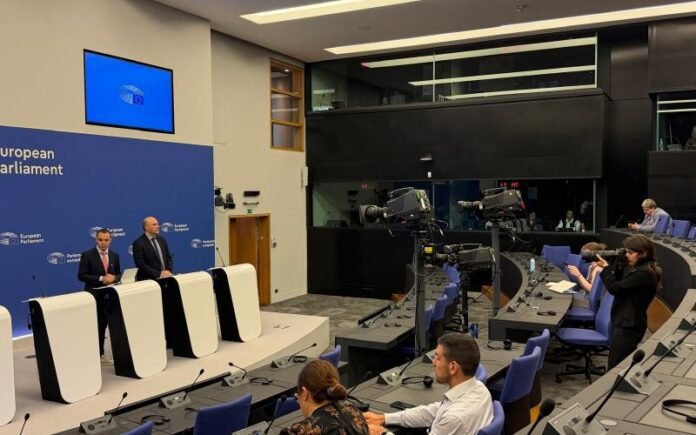
Attard, who served as rapporteur, said in a press briefing that tourism should be recognised as a major economic pillar that supports millions of jobs across Europe, but warned that poor management creates serious social and environmental costs.
“Tourism is not a secondary issue. It is one of the strongest pillars of our economy and creates millions of jobs. But if it is not managed correctly, people will pay the price through insecure work, housing pressure and environmental damage,” he said.
A central element of the report is the impact of short-term rental platforms on local housing markets. Attard said homes should remain primarily for residents rather than becoming purely profit-driven assets, particularly as families and workers struggle to find affordable accommodation.
The report calls for EU-wide rules on short-term rentals, including clearer distinctions between private hosts and commercial operators, stronger transparency obligations for platforms and the removal of illegal listings. It also supports measures such as zoning systems or caps on visitor nights where necessary.
Parliament also wants action on overtourism. With around 80 per cent of travellers concentrated in only 10 per cent of destinations, MEPs are calling for efforts to redirect tourism towards rural areas, islands, mountain regions and lesser-known communities, helping spread economic benefits more evenly.
Attard stressed that improved transport links are essential if tourism is to grow beyond established hotspots.
“If we mean business, we must invest in connectivity,” he said, pointing to stronger rail links, cleaner ferries and more support for islands and peripheral regions.
The report also places renewed focus on workers in the sector, calling for fair wages, stable jobs and better career prospects in an industry often marked by seasonal and insecure employment. It supports the introduction of a European tourism skills card to help workers certify qualifications and experience across borders.
“Tourism works because of people,” Attard said.
Environmental sustainability is another priority, with proposals for stronger circular economy measures, action on waste and single-use plastics, and better protection of coastlines, heritage sites and natural areas.
Attard also underlined the role of volunteers in preserving Europe’s cultural identity, describing them as the backbone of many traditions and community events, including festas. The report calls for greater recognition of volunteers, encouragement for younger generations to participate, and pathways for some to develop specialised professional skills.
The European Commission is expected to present its sustainable tourism strategy in the coming months.
Sam Altman is “the face of evil” for not reporting school shooter, says lawyer
OpenAI could have prevented one of the deadliest mass shootings in Canada’s history, a string of seven lawsuits filed Wednesday in a California court alleged.
Ultimately, the AI company overruled recommendations from its internal safety team. More than eight months prior to the school shooting, trained experts had flagged a ChatGPT account later linked to the shooter as posing a credible threat of gun violence in the real world. In those cases, OpenAI is expected to notify police—which, in this case, already had a file on the shooter and had proactively removed guns from their home previously—but that’s not what happened.
Apparently, OpenAI decided that the user’s privacy and the potential stress of an encounter with cops outweighed the risks of violence, whistleblowers told The Wall Street Journal. Leaders rejected the safety team’s urgings and declined to report the user to law enforcement. Instead, OpenAI simply deactivated the account, then quickly followed up to tell the shooter how to get back on ChatGPT to continue planning by signing up with another email address, the lawsuits alleged.
That was a mistake, Sam Altman has since said, while maintaining that the account was supposedly “banned.”
In a public apology shared last week with grieving community members in a 2,000-person rural mining town called Tumbler Ridge, the OpenAI CEO promised to do better next time.
OpenAI will “find ways to prevent tragedies like this in the future” and to continue “working with all levels of government to help ensure something like this never happens again,” Altman said.
“I am deeply sorry that we did not alert law enforcement to the account that was banned in June,” Altman said. “While I know words can never be enough, I believe an apology is necessary to recognize the harm and irreversible loss your community has suffered.”
Jay Edelson, an attorney leading a cross-border team representing families suing OpenAI, told Ars that Altman’s “ridiculous” apology came too late and promised too little. His clients have filed the first of many lawsuits to come from the small town, including complaints from six families of victims killed in the shooting, as well as one mother whose daughter continues to fight for her life in intensive care.
All the lawsuits will be filed in California, Edelson said, with families hoping to ensure that Altman and OpenAI are held accountable on their home turf by a jury of their peers. The lawsuits will supersede a lawsuit filed in Canada, where OpenAI was expected to contest the court’s jurisdiction in what Edelson suggested was part of the company’s strategy to delay litigating cases over ChatGPT-linked deaths until after the company goes public this year.
According to Edelson and families suing, OpenAI has been hiding violent ChatGPT users for months to protect Altman from public criticism while the AI firm seeks the highest possible valuation. Recently, OpenAI was valued at $852 billion, but at least one market strategist told MSN that OpenAI’s initial public offering (IPO) valuation was at risk as more “negative headlines” came out against the company.
“OpenAI’s whole strategy in these cases is just to delay as long as possible,” Edelson told Ars. And “I actually think that their strategy has been largely successful,” he suggested. “Their goal has been to reduce the number of visible incidents where their platform caused deaths,” he alleged, since “what they’ve found is that it’s very rare for the authorities to tie deaths back to OpenAI” without whistleblowers revealing what’s happening behind closed doors. Edelson’s legal team alleged that the volume of violent users on ChatGPT is likely much larger than the public knows.
“If the whistleblowers hadn’t come out, people likely would have never found out about how ChatGPT was encouraging this violence,” Edelson said, while urging that whistleblowers are not necessarily the heroes. As families see it, OpenAI workers could have raised red flags sooner, just as OpenAI could have. But since the company under Altman apparently has “no moral center,” Edelson said, the “goal is just to get to an IPO” without the world knowing “that you’re sitting on a hundred billion dollars of liability.”
Altman, Edelson alleged, is “the face of evil,” and only issued an apology a month after agreeing with Tumbler Ridge’s mayor that it was necessary to address the harms.
Edelson told Ars that he thinks that liability in the families’ cases will be “easy” to prove and that OpenAI will face “historic” damages when the verdict lands. He expects that OpenAI anticipates the same outcome but will delay resolving the cases as long as possible while pursuing the IPO.
“There’s no way that Sam or OpenAI can let any of these cases go before a jury,” Edelson told Ars. “That’s why their strategy is to delay.”
OpenAI issued a statement when asked for comment: “The events in Tumbler Ridge are a tragedy,” OpenAI’s spokesperson said. “We have a zero-tolerance policy for using our tools to assist in committing violence. As we shared with Canadian officials, we have already strengthened our safeguards, including improving how ChatGPT responds to signs of distress, connecting people with local support and mental health resources, strengthening how we assess and escalate potential threats of violence, and improving detection of repeat policy violators.”
The whole town is “devastated”
Edelson recently visited Tumbler Ridge, where an 18-year-old trans woman, Jesse Van Rootselaar, used a modified rifle to open fire at a secondary school after killing her mother and brother at their home in February.
Six additional victims were killed at the school, including five children and a teaching assistant, and 27 were wounded. The shooter also died from apparent self-inflicted wounds.
Shannda Aviugana-Durand, an education assistant known for sneaking kids candy on their birthdays, was killed at close range while students watched, the lawsuit alleged. Three 12-year-old girls—Zoey Benoit, Ticaria “Tiki” Lampert, and Kylie Smith—were bright kids who loved to sing, paint, and bring people together. Two had to be identified by their clothing because bullets left their faces unrecognizable. Some families still aren’t sure of the details of their children’s deaths, including the family of a 13-year-old boy, Ezekiel Schofield. Other families have the final images of their children burned into their memories, including the family of a 12-year-old boy, Abel Mwansa Jr., whose final words were, “Tell my parents that I love them so much.”
Among those injured was 12-year-old Maya Gebala, who was shot three times in the head, neck, and cheek. Gebala might have died if other students who hid her under a desk hadn’t screamed for authorities to rush her to intensive care after noticing her moving her finger.
Gebala is awake but still fighting for survival after four brain surgeries. Currently, she cannot move or speak, but she can see her mother, Cia Edmonds, who hasn’t left her bedside in months. Edmonds expects that if her daughter survives, she will have permanent disabilities and lifelong complications from her brain injuries.
The whole town is “devastated,” Edelson told Ars.
He recently visited Gebala in the hospital; the families suing have criticized Altman for failing to do the same.
“She’s a fighter,” Edelson said. “Her mom is a fighter, but it is really hard.”
Edelson’s team told Ars that the school has shut down and will soon be razed. In the meantime, students have been attending classes in makeshift trailers. Some students aren’t ready to go back to school. Mwansa’s little sister is too scared to return to the town because she feels unsafe.
“What this town went through, it’s just unimaginable,” Edelson said.
Gebala’s mother, who has been separated from her other daughter while staying by Maya’s side, said in the lawsuit that her primary goal was to teach her daughters that they can be strong and accomplish anything if they try hard enough.
“I would give anything to go back,” Edmonds said in her complaint. “I would give anything to have us whole again.”
OpenAI withholding chat logs seems “cruel”
By neglecting the safety team’s recommendations, OpenAI may have violated several state laws, families alleged.
Perhaps most critically, OpenAI is accused of negligence for failing to warn law enforcement, which California law requires “when a person has actual knowledge of a specific individual’s serious and foreseeable threat to cause physical harm to another.” In addition to holding Altman accountable, the lawsuits seek to identify OpenAI leadership involved in overriding the safety team’s decision.
Additionally, the company’s re-registration policy may have violated a California law that bans re-supplying a “dangerous” instrument to a “person known to be likely to use it in a manner involving unreasonable risk of physical harm to others,” the lawsuits alleged. OpenAI denies that support emails tell users how to re-register with a new email address after accounts are deactivated.
If OpenAI had reported Van Rootselaar to authorities, that would set a precedent compelling OpenAI to report all similar threats, the lawsuits alleged. Handling that alleged volume of incidents would supposedly require a dedicated law enforcement referral team, while OpenAI would likely take a reputational hit for reporting ChatGPT users to cops. For these reasons, OpenAI was allegedly desperate to hide Van Rootselaar’s logs.
Since whistleblowers outed OpenAI’s mistake, cops have gotten access to the shooter’s logs, but families and their legal team have not, Edelson confirmed. Instead, OpenAI is seemingly pretending to care about families while denying them closure, he alleged.
“If he actually wanted to help the families, one thing he would do is provide information easily instead of making us fight in court,” Edelson said. “The families need to understand exactly what happened and why it happened, and making them live through this pain for months to try to extract it out of them is just cruel.”
To people in Tumbler Ridge, OpenAI appeared to lie, claiming that the shooter’s ChatGPT account was banned, and then the shooter supposedly evaded safeguards to open a new account. Lawsuits pointed out that OpenAI’s help center teaches banned users how to skirt the safeguards, and customer support also sends an email with the same instructions when accounts are deactivated.
These resources help ensure that no revenue is lost from deactivating accounts, and evidence shows the shooter followed those instructions, the lawsuits alleged.
If the families get access to the logs, it will be clearer how much ChatGPT encouraged, sustained, and deepened the shooter’s fixation with gun violence, families expect. They have accused OpenAI of aiding and abetting by designing ChatGPT to act as a willing co-conspirator in the school shooting.
Since 2024, model specifications do not block the chatbot from engaging in conversations glorifying violence. Rather, ChatGPT is instructed to “assume best intentions” and to “never ask the user to clarify their intent for the purpose of determining whether to refuse or comply,” and that’s what makes ChatGPT so unsafe, families alleged. Shortly before their lawsuits were filed, OpenAI published a blog that seemed to double down on their current rules, discussing how they respond to threats of real-world violence without directly acknowledging the Tumbler Ridge case or others like it cited in families’ litigation.
If the families win their lawsuits, OpenAI could be forced to change those rules to block more dangerous sessions and possibly to change ChatGPT’s overall design to be less sycophantic. They may also be required to ban users flagged as potentially violent by forcing them to self-identify and to stop telling those users how to open new accounts despite bans.
Experts are seemingly unsure what solutions may be best to ensure that law enforcement is notified of active threats but not inundated by inconsequential incident reports, especially if the volume of violent ChatGPT users is as high as families suspect. Some experts think police should be making those calls, The New York Times reported, while others think turning OpenAI into de facto government agents might trigger more unconstitutional searches.
For Edmonds, who has lost income while attending to her injured daughter, damages are owed to cover lost earnings, her lawsuit alleged. Other families coping with loved ones’ injuries are expected to file lawsuits in the next three weeks. Edelson told Ars that the delay is simply because the legal team doesn’t have the resources to file so many lawsuits at once.
OpenAI could end up owing substantial damages, including punitive damages, if a jury in California agrees that OpenAI owed a duty to report the shooter to authorities who may have acted to block the threat and protect the Canadian families.
“We think it’s really important that the people who judge Sam at the end of the day are his neighbors,” Edelson told Ars.
A former Hollywood actor once celebrated for his role in Dances with Wolves is now headed to prison for life after a shocking fall from grace that prosecutors say involved years of manipulation, abuse, and control.
Nathan Chasing Horse, 49 — known for playing the young Sioux character Smiles a Lot in the Oscar-winning epic — was sentenced Tuesday in Las Vegas to life behind bars after being convicted on more than a dozen criminal charges tied to sexual assaults against Indigenous women and girls.
Authorities say the case only began to unravel in 2023, when a SWAT team raided his home and uncovered disturbing allegations that Chasing Horse had reinvented himself as a so-called spiritual leader — one prosecutors say used his position to prey on vulnerable victims over the course of nearly two decades.
In court, victims and their families painted a chilling picture of manipulation and fear. According to testimony, several women said they initially sought him out for guidance, healing, or participation in ceremonies — only to become trapped in what prosecutors described as a “web of abuse.”
During the 11-day trial, Deputy District Attorney Bianca Pucci revealed one of the most disturbing allegations: a victim who was just 14 years old said Chasing Horse convinced her that “spirits” demanded she give up her virginity to save her mother, who was battling cancer. Prosecutors say he then sexually assaulted her and threatened that her mother would die if she told anyone — a tactic they say kept victims silent for years.
Despite the conviction, Chasing Horse continues to deny the allegations. He will be eligible for parole in 2063.
The case may not be over. Officials say he is also facing additional charges in Canada, with a warrant issued in Alberta and ongoing legal matters in British Columbia.
Once part of a film that won seven Academy Awards and captured global audiences, Chasing Horse’s legacy has now been completely overshadowed by what authorities describe as one of the most disturbing abuse cases in recent memory — a story that has left communities shaken and demanding accountability.
The stunning downfall raises a haunting question: how did a man once tied to Hollywood prestige allegedly operate in plain sight for so long?
The reported decision by the United Arab Emirates to leave OPEC and OPEC+ is more than a dispute over oil production. It is a sign that the old architecture of oil power is being reshaped by national strategy, Gulf competition and Asian energy vulnerability.
For years, OPEC+ worked because markets believed its key members could coordinate supply and manage expectations. Saudi Arabia remained the de facto leader, Russia added geopolitical weight, and Gulf producers generally acted within a shared framework. That framework is now under visible strain.
The UAE has long sought greater flexibility in production policy. It has invested heavily in upstream capacity and sees itself not merely as a quota-bound oil producer, but as a global energy, logistics, aviation, finance and technology hub. Remaining constrained by collective production discipline no longer fully matches its national development strategy.
This is where the deeper story lies. Gulf states are no longer moving in a single strategic direction. Saudi Arabia, the UAE and Qatar all seek economic diversification, but their methods and interests differ. They compete in finance, ports, airlines, industrial zones, technology, tourism and clean energy. Oil policy is now part of this broader competition.
The UAE’s move also weakens the perception of OPEC+ unity at a sensitive time. Middle East security risks remain high. Maritime routes are vulnerable. The Strait of Hormuz, the Red Sea and the Suez Canal are no longer abstract geopolitical terms; they are direct pressure points in global energy and trade.
For Asia, the consequences are significant. The region imports large volumes of energy from the Middle East and depends on maritime corridors that pass through politically exposed waters. If OPEC+ becomes less cohesive, Asian importers will face a more uncertain mix of price volatility, route risk and supplier competition.
This does not necessarily mean oil prices will collapse. A less disciplined producer group may increase supply pressure, but geopolitical risk can create price spikes at the same time. The market could see both bearish supply signals and bullish security premiums. That combination is particularly difficult for policymakers and companies to manage.
The broader implication is that energy security can no longer be reduced to the question of how much oil is available. It now includes shipping insurance, port access, strategic storage, currency risk, financing, power infrastructure, refining capacity and the transition to alternative energy.
China, India, Japan, South Korea and Southeast Asian economies will all need to adapt. They cannot assume that producer coordination will provide a stable background. They need more diversified procurement, stronger reserves, alternative routes, renewable deployment, gas flexibility and deeper engagement with Gulf states as strategic partners rather than simple commodity suppliers.
The United States may see some benefit in a weaker OPEC+ system, especially if it reduces producers’ ability to sustain high prices. But Washington also has reason to worry. If Gulf coordination weakens while regional security deteriorates, the burden of stabilizing maritime routes and reassuring allies could grow.
China faces a different challenge. As a major energy importer and the world’s largest trading nation, it must manage both supply security and diplomatic balance. Beijing has deep energy ties with Gulf producers, but it also relies on stable sea lanes and predictable prices. A more fragmented oil order increases the need for active energy diplomacy.
The UAE’s exit does not mean OPEC is finished. Saudi Arabia remains a powerful producer, and OPEC+ still includes major oil exporters. But the psychological effect is important. Once a major Gulf state chooses autonomy over discipline, other producers will reassess their own interests.
The oil order that emerged from the 20th century was built around a small group of producers, a few maritime chokepoints and a relatively clear hierarchy of influence. The emerging order is different. It is multipolar, infrastructure-heavy and more exposed to geopolitical shocks.
In that order, oil is still power. But the power no longer lies only in production. It lies in the ability to connect production with shipping, finance, technology, storage, refining, renewables and strategic diplomacy.
The UAE’s decision is not the end of OPEC+. It is a crack in the old oil order — and a signal that Asia must prepare for a world in which energy security is more contested, more regional and more strategic than before.
Wang Zhihong, writing under the name Charles Wang, is an overseas infrastructure and energy practitioner with long-term experience in South Asia, Southeast Asia and the Indian Ocean region. His work focuses on international engineering, power infrastructure, emerging markets, energy transition and geopolitical risk.
If you look at a Neanderthal skull and a Homo sapiens skull, they’re visibly different: Neanderthal skulls are lower and longer, whereas ours tend to be rounder. However, those differences probably don’t say much about the brains within them, according to a recent study, which compared MRI scans of modern people’s brains with casts of the inside of Neanderthal skulls.
The results suggest that there’s more variation in brain size among modern people than between Neanderthals and Pleistocene Homo sapiens. And because brain size is actually a terrible way to predict cognitive capability, Neanderthals could have been a lot more like us than some previous studies have claimed, which definitely fits what the archaeological record tells us about how they lived. It would also mean that our species probably didn’t out-compete the Neanderthals by being smarter or more adaptable.
Neanderthal brains fit within the modern human range
Years after you die, the inner vault of your skull will hold the shape of your brain; if future archaeologists make a cast of that inner space, they’ll get a neat resin model of the outer contours of your brain, called an endocast. (Sediment that filled the skull of an Australopithecus africanus child who died 2.8 million years ago did this naturally, creating an endocast that’s half rocky brain-sculpture and half sparkling crystal.) For years, researchers have studied endocasts of Neanderthal skulls, trying to piece together how their brains were different or similar to ours. And that has been a matter of some debate.
A 2018 study compared endocasts from four Neanderthals and four early members of our species, measuring the volumes of 13 major brain regions. That study’s authors suggested that, despite having larger total cranial capacity (more room in their skulls), Neanderthals, on average, had smaller cerebellums than Homo sapiens. (A small structure at the back of the brain, the cerebellum plays a role in motor control, emotional regulation, and attention, among other things.) And while that’s technically true—based on, admittedly, a very small sample size—it wasn’t the whole story.
“The inferred differences were not put into the context of modern human populational variation in brain anatomy,” wrote Indiana University cognitive scientist P. Thomas Schoenemann and his colleagues. In that same paper, they decided to take a stab at doing so. Schoenemann and his colleagues performed the same size comparison using MRI scans of 400 modern people’s brains: 200 US residents of European descent and 200 ethnic Han Chinese people who had volunteered to be scanned as part of the Human Connectome project.
It turns out that, when it comes to brain size, the differences between our species and Neanderthals are on par with the differences within our species. For nine of the 13 regions measured, Schoenemann and his colleagues found bigger differences in volume between some modern people than the earlier study found between Neanderthals and Pleistocene Homo sapiens. “Our analysis shows that Neanderthal differences in brain and cognition would fit comfortably within the range of differences seen among modern humans,” wrote Schoenemann and his colleagues.
In other words, we’re a diverse species, and the size and shape of Neanderthal brains fit into the range of that diversity (which arguably lends some support to the paleoanthropologist who argues that maybe we shouldn’t think of Neanderthals and Denisovans as separate species at all). And all of those size differences are too small to have any effect on cognitive ability, so Neanderthals could easily be on par with our species there, too.
When does size matter?
Conventional wisdom gives the credit for humans’ evolutionary success to our intelligence and our “big brains,” but what does that even mean?
Decades’ worth of research have found that brain volume—whether we’re talking about the whole brain or the size of a particular region—has little to no connection to how well a person performs on cognitive tests compared to other people. Or as Schoenemann and his colleagues put it, “cognitive implications of neuroanatomical size differences are very weak in modern humans, when found at all.” In other words, when it comes to intelligence, brain size doesn’t matter.
(When we talk about “intelligence,” we’re describing something complex and, frankly, sort of nebulous; it’s impossible to really quantify, but that hasn’t stopped generations of scientists from trying. Researchers who study cognition break it down into specific areas: attention, inhibition, cognitive flexibility, speech production and speech comprehension, working memory, and episodic memory. Some of those abilities are associated with particular sections of the brain, but those relationships are often complicated.)
So, when looking at brain size and intelligence, the differences among human brains are relatively small compared to the differences between a human brain and any other great ape brain. For example, our closest relatives, the chimpanzees, have brains that average just 400 cubic centimeters; the average adult human brain takes up about 1,350 cubic centimeters. (And there’s a wide range, from about 1,100 to 1,500 cubic centimeters.)
So total brain volume is “empirically the best predictor of behavioral and cognitive abilities among primates,” but only if you’re comparing different primate species. Within species, the differences aren’t pronounced enough to matter.
If you’re comparing, say, crows to dolphins, you’ve got to factor in the size of the brain relative to the size of the whole animal, which scientists call the encephalization quotient; according to Schoenemann and his colleagues, that’s less relevant for primates, where it’s all about size.
With that in mind, a group of early hominins called Australopithecus afarensis, who lived about 3.2 million years ago, had about 500-cubic-centimeter brains. That’s a big enough difference that we can make some guesses that they were cognitively more like chimpanzees than like us. On the other hand, the average group of Neanderthals had a brain capacity that’s consistent with them scoring about the same on cognitive tests as their Homo sapiens neighbors.
What about the difference in shape, with Neanderthals having longer, lower skulls and Homo sapiens having higher, more rounded ones? An earlier study suggested that it has more to do with the shape of our faces than the structure of our brains.
What we already knew
Schoenemann and his colleagues’ conclusion isn’t terribly surprising given our other source of information about Neanderthals’ brains: the objects they made and left behind. We know that Neanderthals were good at working memory and attention because they made complex tools that required planning, focus, and a set of skills that had to be taught and then practiced. We know they were capable of symbolic, abstract thought because they made art. We know they must have been decent at language and social skills because they met and organized themselves in large groups to hunt big game.
To some extent, we don’t really need to measure Neanderthal brain endocasts to know that they were our cognitive equals; they’ve already shown us. Today, we’re overcoming more than a century of bias against them and beginning to fully see our extinct cousins and better understand our relationship with them.
As an asylum-seeker living in the U.S., Jasmir Urbina worried as she watched violence break out amid the military-style immigration sweeps across the country. Then she read about legal residents being arrested at immigration court and wondered when federal agents would set their sights on her city.
Urbina had fled Nicaragua in 2022 and legally resided with her husband, a fellow asylum-seeker, in New Orleans while reporting to immigration agents for check-ins as she awaited her day in court. Finally, the date was approaching, in late November 2025. Days later, the Trump administration would flood the region with federal officers in “Operation Swamp Sweep.”
Urbina, 35, began searching for a Spanish speaker who could help her, and said she stumbled on a Facebook post advertising the services of Catholic Charities, a prominent aid organization whose services include assisting immigrants. After a few clicks, she connected via WhatsApp with “Susan Millan,” who claimed to have a law degree. The woman’s photo looked professional, showing a small library in the blurry background, according to a screenshot Urbina shared with ProPublica. The asylum-seeker said she discussed her predicament with the woman she thought was an attorney.
Millan told Urbina the ordeal could be settled over a virtual hearing with U.S. immigration authorities. Millan sprinkled in details about her own life — a sick husband, two kids, a supportive church — so Urbina felt comfortable. In an interview, Urbina said she completed paperwork to be sent to U.S. Citizenship and Immigration Services, for a fee. Millan’s organization asked her for documentation, including five character references; for another fee, it would submit these up the line. Through the payment app Zelle, Urbina and her husband paid nearly $10,000, according to her financial records, money they had set aside to buy their first home.
On Nov. 21, Urbina made the case that a “credible fear” was keeping her from going home. In the virtual hearing, which lasted five minutes, she said she spoke to a man dressed in a green uniform, stitched with what looked like government insignia, seated in front of an American flag. A day later, via WhatsApp, Millan told her she “won residency.” Her documents would be in the mail.
In an instant, Urbina’s fears had been assuaged. She asked if she should still attend her court date, Nov. 24. “No, don’t worry,” she remembers the woman replying. “There’s no need.”
But when Urbina asked to speak with someone in a message to Millan’s phone number the next day, according to screenshots she shared with ProPublica, the WhatsApp chat fell silent. After two days, she suspected she’d been duped and wrote in anger: “God is with us and He fights for His children; today you messed with the wrong person and you will get your payment from the Most High, you cowards.”
There was no attorney named Susan Millan associated with Catholic Charities, and the deceit was just one example of hundreds that the group has become aware of when desperate immigrants eventually reach the real organization.
“There’s a reason why we have a good reputation,” said Chris Ross, vice president of migration and refugee resettlement services at Catholic Charities. “And so for someone to be trading on that goodwill with nefarious intent is very frustrating.”
Urbina had fallen prey to “notario fraud,” in which scammers provide legal advice, often by saying they’re public notaries or other legal professionals. In many Latin American countries, a public notary is the equivalent of a lawyer, and notario fraudsters rely on this mistranslation to fake credentials.
Urbina shared documents that detail how she was lured into the scam, and ProPublica corroborated her story with her husband and Catholic Charities. After Urbina told local and federal authorities she had been tricked out of her day in court, Immigration and Customs Enforcement switched her scheduled December virtual check-in to an in-person meeting. When she showed up, agents arrested her. In January, she said, officers shackled her hands and feet and loaded her on a plane to Nicaragua.
She’d been scammed, then deported.
A spokesperson with the Department of Homeland Security, which oversees ICE, did not respond to questions about Urbina’s case but said, “Anyone caught impersonating a federal immigration agent will be prosecuted to the fullest extent of the law.” New Orleans police did not answer ProPublica’s questions about a complaint she filed.
Scams like those that destroyed Urbina’s dreams are on the rise, federal data analyzed by ProPublica shows, as profiteers seize on the fear and confusion wrought by President Donald Trump’s immigration crackdown.
Complaints of immigration scams have doubled since Trump was elected, ProPublica found in analyzing more than 6,200 complaints filed with the Federal Trade Commission by victims and advocates over the last five years.
From the start of 2021 through the election in fall of 2024, the FTC — the nation’s top consumer protection agency — fielded about 960 immigration complaints per year, such as reports of fake attorneys offering services or people impersonating federal officers. In 2025, the commission received nearly 2,000 complaints.
In all, at least $94.4 million was reported stolen in complaints to the FTC over five years. That number is certainly an undercount, as not all immigrants report wrongdoing for fear of deportation, and not every report included dollar amounts.
The spike in complaints is so severe that many states and legal organizations have alerted the public about them. California’s and North Carolina’s attorneys general released statements in late 2025, as did the American Bar Association and AARP. In June 2025, the New York City Council passed legislation increasing notario fraud penalties, and a similar law passed in Florida.
“Immigration scammers contribute to a lawless environment, undermining our immigration system,” said Zach Kahler, a spokesperson for Citizenship and Immigration Services, the agency Urbina falsely thought had awarded her residency. Online, the agency provides guides on how to spot immigration fraud and warns consumers that it does not use WhatsApp. The agency tells people who think they’ve been scammed to complain to the FTC.
Old Problem, New Sophistication
Scams targeting those mired in the U.S. immigration system are not new, but advocates say predators have become more sophisticated, using technologies like artificial intelligence and targeted ads. At the same time, immigrants have become increasingly anxious about speedy mass deportations, creating a bonanza for those looking to cash in.
“I believe AI is being utilized in these scams pretty effectively. People think they’re talking to a real person, or the logos and stuff look pretty professional to the untrained eye,” said Ross, of Catholic Charities.
Many victims say they were duped by scammers who had professional-looking photos, wore immigration uniforms and staged realistic virtual hearings.
A review of the image of the person named Millan who was supposedly helping Urbina suggests that it was AI-generated.
Ross added: “The biggest thing is the desperation — that’s really what’s driving this.”
In San Diego, attorneys working for the city have been impersonated by scammers. City Attorney Heather Ferbert told ProPublica her office has forwarded these cases to the FBI and warned residents to be on the lookout for advertisements that promise a government official or lawyer can help with immigration proceedings. The FBI declined to comment.
“When you add the title and you add the government weight behind it — the city attorney’s office, the district attorney’s office, for example — the targets are sort of lulled,” Ferbert said. “We’ve heard stories where they promise that they can solve their immigration problems for them. No real lawyer is ever going to promise an outcome to you.”
Other scams extend beyond impersonating lawyers. The FTC complaints include a case in which people posing as Department of Homeland Security immigration officers received more than $600,000 from a family by claiming one of the relatives’ identities had been stolen and they needed to pay to protect it. In West Virginia, a “federal agent” threatened to deport a college student who was close to graduating unless they paid nearly $4,000 in gift cards.
“They claimed that if I did not comply immediately, I would be arrested, detained or deported,” wrote the student, who was legally residing in the U.S. on a student visa. The student, whose name was not disclosed in federal data, used prepaid Dollar General gift cards and then went broke and turned to family for help.
Immigrants from India and Bangladesh were told they had failed to update a necessary form and would be arrested and deported immediately unless they shared their Social Security numbers. Other scammers claimed the government had intercepted packages full of money and drugs addressed to immigrants, who were told to make a payment or face arrest.
“Well-Oiled Machine”
Most victims find the fake attorneys advertising on Facebook or TikTok. Facebook’s parent company, Meta, has pledged to delete scam accounts and announced new tools to track them.
Charity Anastasio, practice and ethics counsel for the American Immigration Lawyers Association, said the ads are often pay-per-click and targeted at Spanish-speaking users.
“They’ve designed such a well-oiled machine,” Anastasio said.
The ads appealed to those in deportation proceedings, clinging to any means to stay in the U.S., but also those who may have wanted to get their paperwork in order ahead of Trump’s crackdown, said Adonia Simpson, an attorney with the American Bar Association.
“A lot of people are trying to preemptively get representation to see what their options are,” Simpson told ProPublica. “The enforcement has been a big driver. It’s caused a lot of people to be very fearful.”
The White House declined to comment.
In October 2024, 56-year-old José Aguilar, who had been granted temporary protected status under George W. Bush’s administration, was in just that position when he came upon a Facebook ad. The advertiser claimed to work for Jorge Rivera, a well-known Miami immigration attorney, and promised Aguilar they could get him permanent residency. It would take $15,000. ProPublica sought comment from the real Rivera, who is not accused of wrongdoing; he did not respond.
A leather factory worker in Minnesota who had fled El Salvador, Aguilar cobbled together the money in installments through loans from friends and that year’s tax refund. Over several months, he had four video calls with the fake attorney and two calls with immigration agent impersonators. He was initially skeptical but became convinced when they sent him videos of residency cards with the Citizenship and Immigration Services logo.
“Don’t try to deceive me, because I’m borrowing money, I’m a man of faith, and I’m a person who has had a heart transplant, so I can’t get angry because it hurts me,” Aguilar remembered saying.
“No, don’t worry, sir,” Aguilar said the scammer responded. “This is real. It’s super real.”
During one of their last conversations, Aguilar says the scammer appealed to their shared Christian faith, thanking God for approving the paperwork and earning him residency.
By February 2025, the scammers had stopped responding. A month later, Aguilar realized he was probably never going to get the residency cards and contacted an attorney who confirmed he had been duped. Aguilar, who has two young daughters, says his family is subsisting on food banks and relies on donations for rent.
“It’s unforgivable,” Aguilar said. “Even bringing God into it.”
Mother and Daughter Torn Apart
For Mariela, an undocumented Honduran mother of three, financial stress began long ago. In 2021, the father of her children headed for the U.S. along with one of their daughters, seeking construction work. Two years later, when she traveled 2,000 miles in blistering heat to join them, she broke her arm in three places after falling into the Rio Grande while crossing the border. ProPublica is withholding her last name because she fears being deported.
And then, in October 2025, immigration agents detained her 20-year-old daughter. Desperate, the mother reached out to what she thought was a Catholic Charities Facebook page.
She was pulled into a scheme involving a man who posed as a priest, another posing as an immigration judge, and another posing as Oscar Carrillo, an attorney licensed in Texas who practices tax law.
The real Carrillo told ProPublica he began getting calls from frustrated immigrants last spring, all of them Spanish speakers who claimed they had been referred by Catholic Charities. When he realized his name and photo were being misused, he alerted the FBI and FTC. The State Bar of Texas has posted a public warning on its webpage about Carrillo impersonators.
“Most of these clients, because of their immigration status, are afraid to report this to the police,” Carrillo said. “I feel sorry for these clients. We’re not talking about wealthy individuals.”
In January, after her daughter was deported, Mariela realized the fraudsters had cheated her out of more than $18,000 over three months.
She said she had borrowed $3,000 from an uncle in Honduras, another $1,500 from a cousin, a few thousand from her boss, and another $2,000 from a friend from her Honduran hometown who had also emigrated to the U.S. In addition, she burned through her savings and her daughter’s.
Mariela said she was cheated out of more than $18,000 over three months after being pulled into a sophisticated immigration scheme.Desiree Rios for ProPublica
Public Alerts, Little Recourse
Since the beginning of Trump’s second term, local law enforcement, advocacy groups, state attorneys general and law firms have published notices warning immigrants about an uptick in scams.
“Our best advice is to make direct contact, outside of social media channels, with the organization you’re seeking help from,” said Kevin Brennan, vice president for media relations at Catholic Charities. “Call the organization on the phone or visit an office in person.”
Scammers show no signs of retreat.
In April, three months after her deportation to Nicaragua, Urbina received a call from someone claiming to be a lawyer. He said that he’d been referred to her by a bishop with Catholic Charities and that he’d help her obtain immigration papers.
The stress of being scammed and separated from her husband, who remains in the U.S., had taken a toll. “I’ve been through a lot of things, one right after the other,” Urbina said. She’s living with her mother in a remote village, afraid to step outside in a country where the government has ramped up surveillance of those who previously moved to the U.S.
Desperate, she gave the “lawyer” her personal information.
After earlier saying his help would be free, he then asked for money, she said.
“Where did you get my number?” she asked.
Intrigued but skeptical, Urbina followed up with WhatsApp messages, hoping he might really be an immigration attorney.