A former Hollywood actor once celebrated for his role in Dances with Wolves is now headed to prison for life after a shocking fall from grace that prosecutors say involved years of manipulation, abuse, and control.
Nathan Chasing Horse, 49 — known for playing the young Sioux character Smiles a Lot in the Oscar-winning epic — was sentenced Tuesday in Las Vegas to life behind bars after being convicted on more than a dozen criminal charges tied to sexual assaults against Indigenous women and girls.
Authorities say the case only began to unravel in 2023, when a SWAT team raided his home and uncovered disturbing allegations that Chasing Horse had reinvented himself as a so-called spiritual leader — one prosecutors say used his position to prey on vulnerable victims over the course of nearly two decades.
In court, victims and their families painted a chilling picture of manipulation and fear. According to testimony, several women said they initially sought him out for guidance, healing, or participation in ceremonies — only to become trapped in what prosecutors described as a “web of abuse.”
During the 11-day trial, Deputy District Attorney Bianca Pucci revealed one of the most disturbing allegations: a victim who was just 14 years old said Chasing Horse convinced her that “spirits” demanded she give up her virginity to save her mother, who was battling cancer. Prosecutors say he then sexually assaulted her and threatened that her mother would die if she told anyone — a tactic they say kept victims silent for years.
Despite the conviction, Chasing Horse continues to deny the allegations. He will be eligible for parole in 2063.
The case may not be over. Officials say he is also facing additional charges in Canada, with a warrant issued in Alberta and ongoing legal matters in British Columbia.
Once part of a film that won seven Academy Awards and captured global audiences, Chasing Horse’s legacy has now been completely overshadowed by what authorities describe as one of the most disturbing abuse cases in recent memory — a story that has left communities shaken and demanding accountability.
The stunning downfall raises a haunting question: how did a man once tied to Hollywood prestige allegedly operate in plain sight for so long?
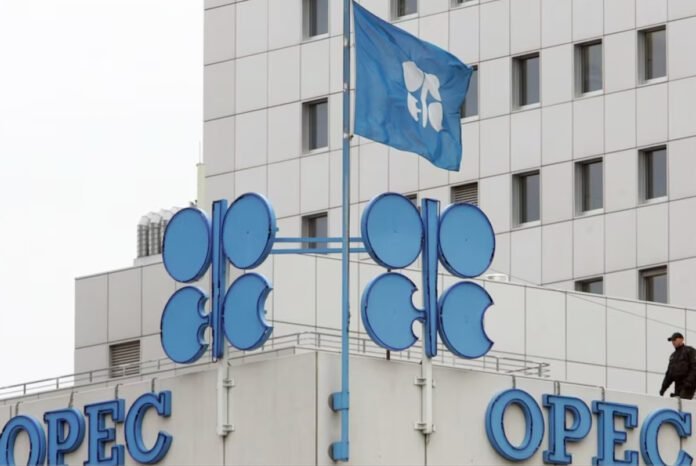
The reported decision by the United Arab Emirates to leave OPEC and OPEC+ is more than a dispute over oil production. It is a sign that the old architecture of oil power is being reshaped by national strategy, Gulf competition and Asian energy vulnerability.
For years, OPEC+ worked because markets believed its key members could coordinate supply and manage expectations. Saudi Arabia remained the de facto leader, Russia added geopolitical weight, and Gulf producers generally acted within a shared framework. That framework is now under visible strain.
The UAE has long sought greater flexibility in production policy. It has invested heavily in upstream capacity and sees itself not merely as a quota-bound oil producer, but as a global energy, logistics, aviation, finance and technology hub. Remaining constrained by collective production discipline no longer fully matches its national development strategy.
This is where the deeper story lies. Gulf states are no longer moving in a single strategic direction. Saudi Arabia, the UAE and Qatar all seek economic diversification, but their methods and interests differ. They compete in finance, ports, airlines, industrial zones, technology, tourism and clean energy. Oil policy is now part of this broader competition.
The UAE’s move also weakens the perception of OPEC+ unity at a sensitive time. Middle East security risks remain high. Maritime routes are vulnerable. The Strait of Hormuz, the Red Sea and the Suez Canal are no longer abstract geopolitical terms; they are direct pressure points in global energy and trade.
For Asia, the consequences are significant. The region imports large volumes of energy from the Middle East and depends on maritime corridors that pass through politically exposed waters. If OPEC+ becomes less cohesive, Asian importers will face a more uncertain mix of price volatility, route risk and supplier competition.
This does not necessarily mean oil prices will collapse. A less disciplined producer group may increase supply pressure, but geopolitical risk can create price spikes at the same time. The market could see both bearish supply signals and bullish security premiums. That combination is particularly difficult for policymakers and companies to manage.
The broader implication is that energy security can no longer be reduced to the question of how much oil is available. It now includes shipping insurance, port access, strategic storage, currency risk, financing, power infrastructure, refining capacity and the transition to alternative energy.
China, India, Japan, South Korea and Southeast Asian economies will all need to adapt. They cannot assume that producer coordination will provide a stable background. They need more diversified procurement, stronger reserves, alternative routes, renewable deployment, gas flexibility and deeper engagement with Gulf states as strategic partners rather than simple commodity suppliers.
The United States may see some benefit in a weaker OPEC+ system, especially if it reduces producers’ ability to sustain high prices. But Washington also has reason to worry. If Gulf coordination weakens while regional security deteriorates, the burden of stabilizing maritime routes and reassuring allies could grow.
China faces a different challenge. As a major energy importer and the world’s largest trading nation, it must manage both supply security and diplomatic balance. Beijing has deep energy ties with Gulf producers, but it also relies on stable sea lanes and predictable prices. A more fragmented oil order increases the need for active energy diplomacy.
The UAE’s exit does not mean OPEC is finished. Saudi Arabia remains a powerful producer, and OPEC+ still includes major oil exporters. But the psychological effect is important. Once a major Gulf state chooses autonomy over discipline, other producers will reassess their own interests.
The oil order that emerged from the 20th century was built around a small group of producers, a few maritime chokepoints and a relatively clear hierarchy of influence. The emerging order is different. It is multipolar, infrastructure-heavy and more exposed to geopolitical shocks.
In that order, oil is still power. But the power no longer lies only in production. It lies in the ability to connect production with shipping, finance, technology, storage, refining, renewables and strategic diplomacy.
The UAE’s decision is not the end of OPEC+. It is a crack in the old oil order — and a signal that Asia must prepare for a world in which energy security is more contested, more regional and more strategic than before.
Wang Zhihong, writing under the name Charles Wang, is an overseas infrastructure and energy practitioner with long-term experience in South Asia, Southeast Asia and the Indian Ocean region. His work focuses on international engineering, power infrastructure, emerging markets, energy transition and geopolitical risk.
If you look at a Neanderthal skull and a Homo sapiens skull, they’re visibly different: Neanderthal skulls are lower and longer, whereas ours tend to be rounder. However, those differences probably don’t say much about the brains within them, according to a recent study, which compared MRI scans of modern people’s brains with casts of the inside of Neanderthal skulls.
The results suggest that there’s more variation in brain size among modern people than between Neanderthals and Pleistocene Homo sapiens. And because brain size is actually a terrible way to predict cognitive capability, Neanderthals could have been a lot more like us than some previous studies have claimed, which definitely fits what the archaeological record tells us about how they lived. It would also mean that our species probably didn’t out-compete the Neanderthals by being smarter or more adaptable.
Neanderthal brains fit within the modern human range
Years after you die, the inner vault of your skull will hold the shape of your brain; if future archaeologists make a cast of that inner space, they’ll get a neat resin model of the outer contours of your brain, called an endocast. (Sediment that filled the skull of an Australopithecus africanus child who died 2.8 million years ago did this naturally, creating an endocast that’s half rocky brain-sculpture and half sparkling crystal.) For years, researchers have studied endocasts of Neanderthal skulls, trying to piece together how their brains were different or similar to ours. And that has been a matter of some debate.
A 2018 study compared endocasts from four Neanderthals and four early members of our species, measuring the volumes of 13 major brain regions. That study’s authors suggested that, despite having larger total cranial capacity (more room in their skulls), Neanderthals, on average, had smaller cerebellums than Homo sapiens. (A small structure at the back of the brain, the cerebellum plays a role in motor control, emotional regulation, and attention, among other things.) And while that’s technically true—based on, admittedly, a very small sample size—it wasn’t the whole story.
“The inferred differences were not put into the context of modern human populational variation in brain anatomy,” wrote Indiana University cognitive scientist P. Thomas Schoenemann and his colleagues. In that same paper, they decided to take a stab at doing so. Schoenemann and his colleagues performed the same size comparison using MRI scans of 400 modern people’s brains: 200 US residents of European descent and 200 ethnic Han Chinese people who had volunteered to be scanned as part of the Human Connectome project.
It turns out that, when it comes to brain size, the differences between our species and Neanderthals are on par with the differences within our species. For nine of the 13 regions measured, Schoenemann and his colleagues found bigger differences in volume between some modern people than the earlier study found between Neanderthals and Pleistocene Homo sapiens. “Our analysis shows that Neanderthal differences in brain and cognition would fit comfortably within the range of differences seen among modern humans,” wrote Schoenemann and his colleagues.
In other words, we’re a diverse species, and the size and shape of Neanderthal brains fit into the range of that diversity (which arguably lends some support to the paleoanthropologist who argues that maybe we shouldn’t think of Neanderthals and Denisovans as separate species at all). And all of those size differences are too small to have any effect on cognitive ability, so Neanderthals could easily be on par with our species there, too.
When does size matter?
Conventional wisdom gives the credit for humans’ evolutionary success to our intelligence and our “big brains,” but what does that even mean?
Decades’ worth of research have found that brain volume—whether we’re talking about the whole brain or the size of a particular region—has little to no connection to how well a person performs on cognitive tests compared to other people. Or as Schoenemann and his colleagues put it, “cognitive implications of neuroanatomical size differences are very weak in modern humans, when found at all.” In other words, when it comes to intelligence, brain size doesn’t matter.
(When we talk about “intelligence,” we’re describing something complex and, frankly, sort of nebulous; it’s impossible to really quantify, but that hasn’t stopped generations of scientists from trying. Researchers who study cognition break it down into specific areas: attention, inhibition, cognitive flexibility, speech production and speech comprehension, working memory, and episodic memory. Some of those abilities are associated with particular sections of the brain, but those relationships are often complicated.)
So, when looking at brain size and intelligence, the differences among human brains are relatively small compared to the differences between a human brain and any other great ape brain. For example, our closest relatives, the chimpanzees, have brains that average just 400 cubic centimeters; the average adult human brain takes up about 1,350 cubic centimeters. (And there’s a wide range, from about 1,100 to 1,500 cubic centimeters.)
So total brain volume is “empirically the best predictor of behavioral and cognitive abilities among primates,” but only if you’re comparing different primate species. Within species, the differences aren’t pronounced enough to matter.
If you’re comparing, say, crows to dolphins, you’ve got to factor in the size of the brain relative to the size of the whole animal, which scientists call the encephalization quotient; according to Schoenemann and his colleagues, that’s less relevant for primates, where it’s all about size.
With that in mind, a group of early hominins called Australopithecus afarensis, who lived about 3.2 million years ago, had about 500-cubic-centimeter brains. That’s a big enough difference that we can make some guesses that they were cognitively more like chimpanzees than like us. On the other hand, the average group of Neanderthals had a brain capacity that’s consistent with them scoring about the same on cognitive tests as their Homo sapiens neighbors.
What about the difference in shape, with Neanderthals having longer, lower skulls and Homo sapiens having higher, more rounded ones? An earlier study suggested that it has more to do with the shape of our faces than the structure of our brains.
What we already knew
Schoenemann and his colleagues’ conclusion isn’t terribly surprising given our other source of information about Neanderthals’ brains: the objects they made and left behind. We know that Neanderthals were good at working memory and attention because they made complex tools that required planning, focus, and a set of skills that had to be taught and then practiced. We know they were capable of symbolic, abstract thought because they made art. We know they must have been decent at language and social skills because they met and organized themselves in large groups to hunt big game.
To some extent, we don’t really need to measure Neanderthal brain endocasts to know that they were our cognitive equals; they’ve already shown us. Today, we’re overcoming more than a century of bias against them and beginning to fully see our extinct cousins and better understand our relationship with them.
As an asylum-seeker living in the U.S., Jasmir Urbina worried as she watched violence break out amid the military-style immigration sweeps across the country. Then she read about legal residents being arrested at immigration court and wondered when federal agents would set their sights on her city.
Urbina had fled Nicaragua in 2022 and legally resided with her husband, a fellow asylum-seeker, in New Orleans while reporting to immigration agents for check-ins as she awaited her day in court. Finally, the date was approaching, in late November 2025. Days later, the Trump administration would flood the region with federal officers in “Operation Swamp Sweep.”
Urbina, 35, began searching for a Spanish speaker who could help her, and said she stumbled on a Facebook post advertising the services of Catholic Charities, a prominent aid organization whose services include assisting immigrants. After a few clicks, she connected via WhatsApp with “Susan Millan,” who claimed to have a law degree. The woman’s photo looked professional, showing a small library in the blurry background, according to a screenshot Urbina shared with ProPublica. The asylum-seeker said she discussed her predicament with the woman she thought was an attorney.
Millan told Urbina the ordeal could be settled over a virtual hearing with U.S. immigration authorities. Millan sprinkled in details about her own life — a sick husband, two kids, a supportive church — so Urbina felt comfortable. In an interview, Urbina said she completed paperwork to be sent to U.S. Citizenship and Immigration Services, for a fee. Millan’s organization asked her for documentation, including five character references; for another fee, it would submit these up the line. Through the payment app Zelle, Urbina and her husband paid nearly $10,000, according to her financial records, money they had set aside to buy their first home.
On Nov. 21, Urbina made the case that a “credible fear” was keeping her from going home. In the virtual hearing, which lasted five minutes, she said she spoke to a man dressed in a green uniform, stitched with what looked like government insignia, seated in front of an American flag. A day later, via WhatsApp, Millan told her she “won residency.” Her documents would be in the mail.
In an instant, Urbina’s fears had been assuaged. She asked if she should still attend her court date, Nov. 24. “No, don’t worry,” she remembers the woman replying. “There’s no need.”
But when Urbina asked to speak with someone in a message to Millan’s phone number the next day, according to screenshots she shared with ProPublica, the WhatsApp chat fell silent. After two days, she suspected she’d been duped and wrote in anger: “God is with us and He fights for His children; today you messed with the wrong person and you will get your payment from the Most High, you cowards.”
There was no attorney named Susan Millan associated with Catholic Charities, and the deceit was just one example of hundreds that the group has become aware of when desperate immigrants eventually reach the real organization.
“There’s a reason why we have a good reputation,” said Chris Ross, vice president of migration and refugee resettlement services at Catholic Charities. “And so for someone to be trading on that goodwill with nefarious intent is very frustrating.”
Urbina had fallen prey to “notario fraud,” in which scammers provide legal advice, often by saying they’re public notaries or other legal professionals. In many Latin American countries, a public notary is the equivalent of a lawyer, and notario fraudsters rely on this mistranslation to fake credentials.
Urbina shared documents that detail how she was lured into the scam, and ProPublica corroborated her story with her husband and Catholic Charities. After Urbina told local and federal authorities she had been tricked out of her day in court, Immigration and Customs Enforcement switched her scheduled December virtual check-in to an in-person meeting. When she showed up, agents arrested her. In January, she said, officers shackled her hands and feet and loaded her on a plane to Nicaragua.
She’d been scammed, then deported.
A spokesperson with the Department of Homeland Security, which oversees ICE, did not respond to questions about Urbina’s case but said, “Anyone caught impersonating a federal immigration agent will be prosecuted to the fullest extent of the law.” New Orleans police did not answer ProPublica’s questions about a complaint she filed.
Scams like those that destroyed Urbina’s dreams are on the rise, federal data analyzed by ProPublica shows, as profiteers seize on the fear and confusion wrought by President Donald Trump’s immigration crackdown.
Complaints of immigration scams have doubled since Trump was elected, ProPublica found in analyzing more than 6,200 complaints filed with the Federal Trade Commission by victims and advocates over the last five years.
From the start of 2021 through the election in fall of 2024, the FTC — the nation’s top consumer protection agency — fielded about 960 immigration complaints per year, such as reports of fake attorneys offering services or people impersonating federal officers. In 2025, the commission received nearly 2,000 complaints.
In all, at least $94.4 million was reported stolen in complaints to the FTC over five years. That number is certainly an undercount, as not all immigrants report wrongdoing for fear of deportation, and not every report included dollar amounts.
The spike in complaints is so severe that many states and legal organizations have alerted the public about them. California’s and North Carolina’s attorneys general released statements in late 2025, as did the American Bar Association and AARP. In June 2025, the New York City Council passed legislation increasing notario fraud penalties, and a similar law passed in Florida.
“Immigration scammers contribute to a lawless environment, undermining our immigration system,” said Zach Kahler, a spokesperson for Citizenship and Immigration Services, the agency Urbina falsely thought had awarded her residency. Online, the agency provides guides on how to spot immigration fraud and warns consumers that it does not use WhatsApp. The agency tells people who think they’ve been scammed to complain to the FTC.
Old Problem, New Sophistication
Scams targeting those mired in the U.S. immigration system are not new, but advocates say predators have become more sophisticated, using technologies like artificial intelligence and targeted ads. At the same time, immigrants have become increasingly anxious about speedy mass deportations, creating a bonanza for those looking to cash in.
“I believe AI is being utilized in these scams pretty effectively. People think they’re talking to a real person, or the logos and stuff look pretty professional to the untrained eye,” said Ross, of Catholic Charities.
Many victims say they were duped by scammers who had professional-looking photos, wore immigration uniforms and staged realistic virtual hearings.
A review of the image of the person named Millan who was supposedly helping Urbina suggests that it was AI-generated.
Ross added: “The biggest thing is the desperation — that’s really what’s driving this.”
In San Diego, attorneys working for the city have been impersonated by scammers. City Attorney Heather Ferbert told ProPublica her office has forwarded these cases to the FBI and warned residents to be on the lookout for advertisements that promise a government official or lawyer can help with immigration proceedings. The FBI declined to comment.
“When you add the title and you add the government weight behind it — the city attorney’s office, the district attorney’s office, for example — the targets are sort of lulled,” Ferbert said. “We’ve heard stories where they promise that they can solve their immigration problems for them. No real lawyer is ever going to promise an outcome to you.”
Other scams extend beyond impersonating lawyers. The FTC complaints include a case in which people posing as Department of Homeland Security immigration officers received more than $600,000 from a family by claiming one of the relatives’ identities had been stolen and they needed to pay to protect it. In West Virginia, a “federal agent” threatened to deport a college student who was close to graduating unless they paid nearly $4,000 in gift cards.
“They claimed that if I did not comply immediately, I would be arrested, detained or deported,” wrote the student, who was legally residing in the U.S. on a student visa. The student, whose name was not disclosed in federal data, used prepaid Dollar General gift cards and then went broke and turned to family for help.
Immigrants from India and Bangladesh were told they had failed to update a necessary form and would be arrested and deported immediately unless they shared their Social Security numbers. Other scammers claimed the government had intercepted packages full of money and drugs addressed to immigrants, who were told to make a payment or face arrest.
“Well-Oiled Machine”
Most victims find the fake attorneys advertising on Facebook or TikTok. Facebook’s parent company, Meta, has pledged to delete scam accounts and announced new tools to track them.
Charity Anastasio, practice and ethics counsel for the American Immigration Lawyers Association, said the ads are often pay-per-click and targeted at Spanish-speaking users.
“They’ve designed such a well-oiled machine,” Anastasio said.
The ads appealed to those in deportation proceedings, clinging to any means to stay in the U.S., but also those who may have wanted to get their paperwork in order ahead of Trump’s crackdown, said Adonia Simpson, an attorney with the American Bar Association.
“A lot of people are trying to preemptively get representation to see what their options are,” Simpson told ProPublica. “The enforcement has been a big driver. It’s caused a lot of people to be very fearful.”
The White House declined to comment.
In October 2024, 56-year-old José Aguilar, who had been granted temporary protected status under George W. Bush’s administration, was in just that position when he came upon a Facebook ad. The advertiser claimed to work for Jorge Rivera, a well-known Miami immigration attorney, and promised Aguilar they could get him permanent residency. It would take $15,000. ProPublica sought comment from the real Rivera, who is not accused of wrongdoing; he did not respond.
A leather factory worker in Minnesota who had fled El Salvador, Aguilar cobbled together the money in installments through loans from friends and that year’s tax refund. Over several months, he had four video calls with the fake attorney and two calls with immigration agent impersonators. He was initially skeptical but became convinced when they sent him videos of residency cards with the Citizenship and Immigration Services logo.
“Don’t try to deceive me, because I’m borrowing money, I’m a man of faith, and I’m a person who has had a heart transplant, so I can’t get angry because it hurts me,” Aguilar remembered saying.
“No, don’t worry, sir,” Aguilar said the scammer responded. “This is real. It’s super real.”
During one of their last conversations, Aguilar says the scammer appealed to their shared Christian faith, thanking God for approving the paperwork and earning him residency.
By February 2025, the scammers had stopped responding. A month later, Aguilar realized he was probably never going to get the residency cards and contacted an attorney who confirmed he had been duped. Aguilar, who has two young daughters, says his family is subsisting on food banks and relies on donations for rent.
“It’s unforgivable,” Aguilar said. “Even bringing God into it.”
Mother and Daughter Torn Apart
For Mariela, an undocumented Honduran mother of three, financial stress began long ago. In 2021, the father of her children headed for the U.S. along with one of their daughters, seeking construction work. Two years later, when she traveled 2,000 miles in blistering heat to join them, she broke her arm in three places after falling into the Rio Grande while crossing the border. ProPublica is withholding her last name because she fears being deported.
And then, in October 2025, immigration agents detained her 20-year-old daughter. Desperate, the mother reached out to what she thought was a Catholic Charities Facebook page.
She was pulled into a scheme involving a man who posed as a priest, another posing as an immigration judge, and another posing as Oscar Carrillo, an attorney licensed in Texas who practices tax law.
The real Carrillo told ProPublica he began getting calls from frustrated immigrants last spring, all of them Spanish speakers who claimed they had been referred by Catholic Charities. When he realized his name and photo were being misused, he alerted the FBI and FTC. The State Bar of Texas has posted a public warning on its webpage about Carrillo impersonators.
“Most of these clients, because of their immigration status, are afraid to report this to the police,” Carrillo said. “I feel sorry for these clients. We’re not talking about wealthy individuals.”
In January, after her daughter was deported, Mariela realized the fraudsters had cheated her out of more than $18,000 over three months.
She said she had borrowed $3,000 from an uncle in Honduras, another $1,500 from a cousin, a few thousand from her boss, and another $2,000 from a friend from her Honduran hometown who had also emigrated to the U.S. In addition, she burned through her savings and her daughter’s.
Mariela said she was cheated out of more than $18,000 over three months after being pulled into a sophisticated immigration scheme.Desiree Rios for ProPublica
Public Alerts, Little Recourse
Since the beginning of Trump’s second term, local law enforcement, advocacy groups, state attorneys general and law firms have published notices warning immigrants about an uptick in scams.
“Our best advice is to make direct contact, outside of social media channels, with the organization you’re seeking help from,” said Kevin Brennan, vice president for media relations at Catholic Charities. “Call the organization on the phone or visit an office in person.”
Scammers show no signs of retreat.
In April, three months after her deportation to Nicaragua, Urbina received a call from someone claiming to be a lawyer. He said that he’d been referred to her by a bishop with Catholic Charities and that he’d help her obtain immigration papers.
The stress of being scammed and separated from her husband, who remains in the U.S., had taken a toll. “I’ve been through a lot of things, one right after the other,” Urbina said. She’s living with her mother in a remote village, afraid to step outside in a country where the government has ramped up surveillance of those who previously moved to the U.S.
Desperate, she gave the “lawyer” her personal information.
After earlier saying his help would be free, he then asked for money, she said.
“Where did you get my number?” she asked.
Intrigued but skeptical, Urbina followed up with WhatsApp messages, hoping he might really be an immigration attorney.
A slim majority of Swiss are backing an upcoming referendum proposal to limit Switzerland’s population to 10 million, and support for it is growing, an opinion poll showed on Wednesday.
The government has rejected the initiative backed by the right-wing Swiss People’s Party (SVP) being put to voters on June 14, saying it will hurt cooperation with the European Union and damage the economy by restricting the labour market.
But concern about rapid population growth and pressure on public infrastructure is encouraging many Swiss to support the proposal, the survey by media group Tamedia with newspaper “20 Minuten” and polling institute Leewas showed.
Switzerland’s population is now more than 9 million, with official data showing foreign nationals accounted for more than 27% by 2024.
The survey, conducted on April 22 and 23 and published in newspaper Tages-Anzeiger, showed 52% of 16,176 respondents in favour of the proposal or leaning that way, while 46% took the opposite view. The rest gave no opinion.
A previous poll from early March had shown 45% backing the initiative and 47% against it, the newspaper said, flagging the latest result as unusual in that Swiss referendum proposals generally lose support as the voting day comes closer.
The poll had a margin of error of plus or minus 3 percentage points.
Under the proposal, the permanent resident population must not exceed 10 million before 2050, and Switzerland should abandon its freedom of movement agreement with the EU.
Swiss lawmakers are debating a Swiss-EU deal struck in late 2024 to deepen economic ties, after a challenging 2025 that saw Switzerland unexpectedly hit with the highest U.S. trade tariffs in Europe.
The SVP, Switzerland’s biggest party, opposes closer integration with the EU, seeing it as a threat to Swiss sovereignty and a source of excess regulation.
King Dollar still reigns supreme in liquidity-starved Gulf
There is a certain irony in seeing some of the world’s richest countries quietly ask the United States for financial relief.
For decades, the Gulf monarchies cultivated an image of inexhaustible wealth: sovereign funds the size of nations, skylines raised from desert sands and hydrocarbon revenues so vast that deficits seemed like a problem for lesser states.
Yet history has a habit of humiliating assumptions. Wealth can evaporate into illiquidity. Rich countries, too, can run short of cash. And when the global system tightens, they often discover that real power still resides not in oil wells, but in the printing press of the US dollar.
That appears to be the logic behind recent discussions over currency swap lines between Washington and several Gulf states, particularly the United Arab Emirates.
A currency swap line is one of the least understood but most consequential tools in international finance. It allows a foreign central bank to temporarily exchange its currency for US dollars from the US Federal Reserve, then reverse the transaction later.
No grants. No bailout in the theatrical sense. Merely emergency liquidity. But in moments of crisis, liquidity is everything.
Ask Britain in 1931, when sterling’s weakness exposed the fragility of imperial finances. Ask South Korea in 2008, when dollar shortages intensified panic during the global financial crisis until the Federal Reserve restored calm with its swap lines.
Ask Europe in 2020, when pandemic-era disruptions again made the dollar scarce, forcing the Fed to reopen facilities to allied central banks. In each case, the issue was not long-term solvency. Immediate access to currency lubricates global trade. And that currency remains the dollar.
The Gulf economies understand this better than most. Their oil exports are priced overwhelmingly in dollars. Their currencies are formally or informally pegged to the dollar. Their reserves are invested heavily in dollar assets. Their domestic banking systems depend on dollar flows.
Remove those flows long enough, and even states with large balance sheets begin to feel strain. This is where geopolitics enters the ledger. Any conflict that disrupts shipping lanes in the Gulf — especially through the Strait of Hormuz — threatens not only energy supply but the monetary architecture built around it.
A prolonged interruption in exports means fewer incoming dollars, rising pressure on pegs, tighter domestic liquidity and nervous markets. It does not take insolvency to produce instability. It takes uncertainty.
So the Gulf states are behaving rationally by seeking insurance. The more interesting question is whether the United States should be the one to provide it.
Certainly, there is a strong argument in favor. If Washington wants to preserve the dollar’s leading global role, it must occasionally act as the system’s steward.
Reserve currency status is not maintained by speeches about American greatness. It is maintained by reliability. Nations hold dollars because they trust that in moments of stress, dollar markets will function and America will not weaponize access capriciously.
That was one lesson of the 2008 global financial crisis. The Federal Reserve’s swap lines did more than calm markets; they reaffirmed US centrality. At a time when many predicted American collapse, the crisis instead reminded the world that when panic strikes, everyone still runs for the dollar.
Today’s Gulf swap requests present a similar opportunity. By extending temporary swap facilities to key partners, Washington could reinforce alliances, stabilize markets and discourage a drift toward alternative payment systems dominated by Beijing.
Every time a country doubts access to dollars, it has an incentive to experiment with yuan settlements, gold mechanisms or regional clearing systems. None can yet rival the dollar. But erosion rarely begins dramatically. It begins gradually through hedging.
Still, caution is warranted. Swap lines are not costless diplomatic favors. To grant one is to imply institutional trust, policy confidence and strategic closeness.
Historically, the US Federal Reserve has reserved permanent swap lines for a narrow club: major advanced economies such as the eurozone, Japan, Britain, Canada and Switzerland. Extending such privileges more broadly raises questions of precedent.
If the UAE receives one, why not Saudi Arabia? If Saudi Arabia, why not Turkey? If Turkey, why not every strategically useful but financially pressured partner? Soon, a prudential instrument risks becoming a geopolitical bargaining chip.
There is also the moral hazard problem. States that assume Washington will provide dollar liquidity may take greater external risks, maintain rigid pegs longer than prudent or neglect domestic reforms. One reason financial crises can be so cleansing is that they expose and break entrenched bad habits. Easy rescues can preserve them.
Then there is the Trump factor. Donald Trump’s instinct in foreign policy has often been transactional: allies are clients, commitments are leverage and economics is theater. That can produce tactical wins, but it rarely builds durable trust.
If swap lines are handled as political favors — granted to flatterers, withheld from critics and linked to unrelated concessions — they cease to be stabilizing instruments and become yet another source of uncertainty.
Markets dislike uncertainty more than they dislike bad news. A neutral observer might conclude that both sides are trapped by the same reality.
The Gulf states dislike dependence on Washington, yet need access to the system America anchors. The US dislikes underwriting wealthy partners, yet benefits from the very dependence it complains about. Each resents the other’s leverage while relying on it.
That is the essence of empire in its late-modern form: not colonies, but balance sheets. The wiser course for Washington would be conditional generosity in the form of temporary, transparent, rules-based swap facilities tied to measurable market stress, not personal diplomacy.
For the Gulf, the lesson seems equally clear. Sovereign wealth is not the same as monetary sovereignty. Owning ports, football clubs, skyscrapers and foreign equities does not eliminate dependence on the currency in which global trade clears. If anything, such assets often deepen it.
Many countries have learned this the hard way. Argentina had resources but lacked credibility. Russia had reserves but found them vulnerable to seizure through sanctions. Britain had prestige but lost monetary primacy.
That is why one of the world’s richest regions may now be seeking what looks, to the untrained eye, like a bailout.
It all reaffirms that the dollar remains king, though perhaps a more contested king than before. Crises reveal hierarchies more honestly than peacetime rhetoric. Nations that were boasting independence often discover, in moments of distress, just how dependent they truly are.
The Gulf is asking for dollars because dollars still matter most. America should recognize the leverage that it has, while remembering that the misuse of leverage is how dominance eventually declines.
M A Hossain is a senior journalist and international affairs analyst based in Bangladesh.
Facing the Middle East with Felice Friedson, Episode 20: Sounding the Alarm on Iranian Regime’s Hidden Executions
From Arad to Tehran’s prisons, the conflict reveals both military reach and internal repression
Facing the Middle East opens with my framing of the US-Israel war against Iran as a conflict over Tehran’s nuclear ambitions, missile program, and support for proxy forces, while also warning of the human cost across the region. The episode moves between the strategic and the immediate: Iranian missiles striking Israeli cities, political prisoners facing executions inside Iran, and emergency responders racing to save lives under fire.
The program begins in Arad, where an Iranian ballistic missile attack wounded at least 84 people, including 10 seriously. The strike is presented as part of a wider missile campaign in which Iran has used long-range systems capable of reaching Israel, Europe, and possibly farther. The episode also examines Iran’s use of cluster warheads. Gabriel Colodro interviews Dr. Uzi Rubin, former director of the Israel Missile Defense Organization and a founder of the Arrow Project, who explains that cluster warheads disperse dozens of smaller bomblets over a wide area, making them especially dangerous to people in the open.
The episode then turns to Iran’s domestic repression. Omer Habibinia reports on the execution of three young protesters accused of killing police officers, as well as the execution of Swedish-Iranian citizen Koroush Kivani on espionage charges for Israel. Human rights activists warn that more than 500 Iranians have been detained since the war began, with families often unable to learn where their loved ones are being held or what charges they face. The report raises fears of rushed trials, forced confessions, secret executions, and worsening prison conditions as the Islamic Republic seeks to tighten control during wartime.
From Israel, Gabriel Colodro and Giorgia Valente describe reporting under repeated missile and drone attacks, moving in and out of shelters while covering the widening regional conflict. Their reporting shows the strain on civilians and journalists alike, while The Media Line’s regional coverage reaches beyond Israel to Iran, Syria, Yemen, Lebanon, and the Gulf.
The final major segment focuses on Magen David Adom, Israel’s national emergency medical service. At its Ramla headquarters, Colodro and I examine how MDA prepares for mass-casualty events, including advanced ambulance simulators, mixed-reality training, and a protected underground blood center designed to keep operating even under missile fire. Uri Shacham, MDA’s chief of staff, says the organization prepared for a war more intense than the June 2025 conflict, training crews to work independently when large numbers of ambulances cannot be sent to every impact site.
The episode also revisits the destruction I witnessed in Bat Yam during Operation Rising Lion, where Iranian ballistic missiles struck civilian neighborhoods. An MDA paramedic describes the confusion after impact: multiple addresses reporting damage, shattered windows and doors across a wide area, rubble, fire, water, and injured people emerging from surrounding blocks. The segment shows how MDA’s 39,000 personnel—about 90% volunteers—are embedded in Israeli communities and form a crucial part of the country’s wartime response.
I close by widening the lens again: the war is not only about military targets, but also civilians under missile fire, political prisoners inside Iran, Gulf states caught in the fallout, and the hope for a safer regional order.
A billion miles in less than a decade: GM’s Super Cruise reaches a milestone
When Super Cruise debuted in the Cadillac CT6 in 2017, it showed there was a responsible way to give drivers a hands-free assistance system. Unlike Tesla, General Motors geofenced the system to only work on restricted-access highways that had been lidar-scanned and HD-mapped ahead of time. What’s more, it added a driver-facing infrared camera to track their gaze and ensure their eyes remain on the road ahead for the system to stay active.
After starting out in the Cadillac flagship sedan, GM began adding Super Cruise to more and more of its models, and the system has just passed a billion miles driven (1.6 billion km) across almost 750,000 vehicles in the US and Canada. “And we’re continuing to grow that, both with the new sales and also we have a very high renewal rate,” said Rashed Haq, vice president of autonomous vehicles at GM.
That renewal rate is close to 40 percent for GM owners with Super Cruise, according to Haq, which is free for the first three years then is tied to an active OnStar subscription. “It really shows how Super Cruise is passing what I call the toothbrush test. The customers are using it continuously. Once they use it, they never go back. They continue to use it, and then they use it multiple times a day, just like a toothbrush. So it’s really past that kind of stickiness test,” Haq told me.
The mapped road network has grown quite a lot since the early days. When I first tested the system in a CT6 in 2018, it included more than 160,000 miles (258,000 km); now you can use Super Cruise on close to 700,000 miles (1.1 million km) of highways. According to GM’s statistics, it’s used an average of 17 miles (27 km) and for 24 minutes per trip, with more than half of Super Cruise-enabled drivers using it weekly or daily, the automaker says.
Its usage is escalating, doubling year on year, with 7.1 million hours of active use and 485.9 million miles (782 million km) across 28.7 million trips in 2025. For comparison, Tesla’s FSD—which can be used on all roads, not just restricted-access divided lane highways—has ~1.3 million active subscriptions and, according to Tesla, surpassed 8.4 billion miles (13.5 billion km) earlier this year, racking up roughly half of that in 2025 alone.
Instead, the more advanced version will retain the Super Cruise branding, and the focus here is on adding eyes-off capability on the highway, transforming Super Cruise from a “level 2+” driver assist to a more partially automated “level 3” system, debuting in a couple of years in the Cadillac Escalade IQ. “Customers should be able to use it sometime in 2028. We’re on track for that. And I think you’ve seen that about a month and a half ago, we started driving supervised in multiple states, so it’s in active testing already,” Haq told Ars.
You are here: Home/All RECIPES/ Savory Bacon and Cheese Quiche
Few dishes feel as cozy and satisfying as a homemade quiche, and this Savory Bacon and Cheese Quiche is the perfect example. With its golden, flaky crust and rich, creamy filling packed with crispy bacon and melted cheese, every bite is pure comfort.
Whether you’re serving it for brunch, lunch, dinner, or even a late-night snack, this easy recipe delivers big flavor with minimal effort. It’s a timeless dish that never goes out of style—simple, elegant, and always delicious.
✨ Why You’ll Love This Quiche
🥓 Rich, savory flavor with crispy bacon
🧀 Creamy, cheesy custard filling
🕒 Easy to prepare with simple ingredients
🍽️ Perfect for any meal—breakfast to dinner
💰 Budget-friendly and homemade goodness
🛒 Ingredients
1 (9-inch) pie crust (store-bought or homemade)
6 large eggs
1 cup milk
1 cup shredded cheese (cheddar, Swiss, or a mix)
1 cup cooked bacon, crumbled
½ cup green onions, chopped
Salt and pepper, to taste
👩🍳 Instructions
1. Preheat the Oven
Preheat your oven to 375°F (190°C).
2. Prepare the Crust
Place the pie crust into a 9-inch pie dish and set aside.
3. Cook the Bacon
Cook bacon in a skillet over medium heat until crispy. Drain on paper towels and crumble once cooled.
4. Make the Filling
In a large bowl, whisk together eggs and milk. Season with salt and pepper. Stir in bacon, green onions, and shredded cheese.
5. Assemble
Pour the filling into the prepared pie crust, spreading evenly.
6. Bake
Bake for 35–40 minutes, or until the center is set and the top is lightly golden.
7. Cool & Serve
Let the quiche rest for a few minutes before slicing. Serve warm or at room temperature.
🍽️ What to Serve with Quiche
Fresh green salad with vinaigrette 🥗
Tomato soup 🍅
Roasted vegetables 🥕
Fresh fruit 🍓
Coffee, tea, or mimosas ☕🥂
💡 Tips for the Perfect Quiche
Use room temperature eggs for a smoother filling
Let it cool slightly before slicing for clean cuts
Pre-bake the crust briefly to avoid sogginess
Add an extra egg for a firmer texture
🔄 Variations
🌱 Swap bacon for spinach, mushrooms, or peppers
🧀 Try different cheeses like mozzarella or Gruyère
🌶 Add a pinch of chili flakes for a little heat
🥓 Mix in ham or sausage for variety
🧊 Storage & Reheating
Fridge: Store covered for 3–4 days
Freezer: Freeze up to 2 months
Reheat: Warm in oven at 350°F (175°C) for 10–15 minutes
✨ Final Thoughts
This Savory Bacon and Cheese Quiche is the ultimate comfort dish—simple to make, endlessly versatile, and always satisfying. Whether you’re feeding a crowd or enjoying a quiet meal at home, it’s a recipe you’ll come back to again and again.
Orban’s departure shuts China’s back door into the EU
The recent electoral defeat of Viktor Orban has drawn widespread attention, with most commentary focused on its implications for Europe and the Russia-Ukraine war. Yet this emphasis overlooks a broader strategic consequence: the potential disruption of China’s approach to Europe.
For more than a decade, Hungary under Orban has functioned as a pivotal node in Beijing’s strategy, using its position within the EU and the union’s unanimity rules to dilute collective action on China.
His departure, therefore, raises a more fundamental question: whether China can continue to rely on internal EU divisions to sustain its influence.
China’s long-term strategy toward Europe is one of “divide and conquer,” aimed at preventing coalition formation. At the macro level, Beijing has sought stable economic ties with the EU as a whole, positioning itself as both a partner and an indispensable market.
At the micro level, however, it has cultivated bilateral relationships with select member states, particularly those willing to deviate from the Brussels consensus.
Hungary under Orban exemplified the latter approach. His government’s authoritarian political orientation, combined with the EU’s institutional design — especially the requirement of unanimity on key foreign policy decisions — created an opening that Beijing exploited.
Over time, this relationship evolved into something more than routine diplomacy. Orban’s Hungary became a reliable interlocutor for China within the EU, often acting as a brake on collective European responses to sensitive issues.
On multiple occasions, Budapest blocked or softened EU statements critical of China, including those related to Hong Kong and human rights concerns.
Similarly, Hungary resisted efforts to impose stricter trade measures, such as anti-dumping tariffs on Chinese electric vehicles. Hungary’s role as the rotating EU presidency from July to December 2024 further amplified its influence on China-related matters.
Economically, Hungary was the first European country to join the Belt and Road Initiative. China has strategically leveraged Hungary’s EU membership and central European location as a gateway for Chinese products to enter the EU market.
From Beijing’s perspective, this dynamic offered clear advantages. Rather than confronting a unified European front, China could engage a more fragmented landscape, leveraging internal divisions to its benefit. Hungary’s role was especially valuable because it combined political alignment with economic interdependence.
Hungary became a key site for Chinese manufacturing and infrastructure projects. Investments in battery production, electric vehicles and transport links were not only commercially significant but also strategically calibrated to anchor China’s presence within the European market.
In return, Orban also reaped tangible benefits. He viewed China as a valuable partner not only for its political alignment but also for its economic utility.
Beyond the ideological affinity between Hungary’s illiberal governance model and China’s authoritarian system, Hungary has relied on Chinese investment and economic engagement to stimulate domestic growth and consolidate Orban’s political base. China is Hungry’s largest trading partner outside Europe and its leading source of foreign direct investment.
Under the Belt and Road Initiative, China has made substantial investments in Hungarian infrastructure and key sectors, including electric vehicles and battery production, creating more than 20,000 jobs.
In December 2024, Chinese automaker BYD announced plans to build a new electric vehicle production base in Szeged, in southeastern Hungary — the first passenger car factory established by a Chinese company within the EU.
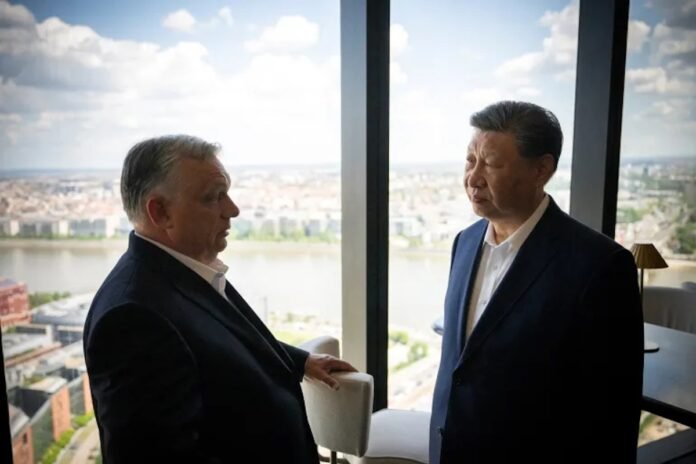
Under Orban’s leadership, China-Hungary relations were significantly strengthened. This was evident during Xi Jinping’s visit to Hungary in May 2024, when Orbn warmly received him.
During the visit, the two sides signed 18 bilateral cooperation agreements and jointly announced the elevation of their relationship to an “all-weather comprehensive strategic partnership” — a rare designation in Chinese diplomacy.
This dual logic — political leverage through institutional veto points and economic entrenchment through targeted investment — helped sustain China’s influence even as the EU’s overall posture toward Beijing hardened.
In recent years, Brussels has increasingly framed China as a “systemic rival,” alongside its roles as a partner and economic competitor. Yet the translation of this framing into concrete policy has often been uneven, in part because of internal divergences among member states.
Hungary under Orban stood out as one of the most consistent sources of such divergence.
Orban’s defeat, therefore, raises an immediate question: What happens when this node of resistance weakens or disappears? The rise of Peter Magyar, who is widely seen as more aligned with the EU mainstream, suggests the possibility of a recalibration in Hungary’s external posture.
While it would be premature to assume a wholesale reversal of policy, even incremental shifts could have meaningful consequences. If Hungary becomes less willing to block EU initiatives or more inclined to align with Brussels on China-related issues, the balance of decision-making within the EU could change.
One likely outcome is greater cohesion in EU policy toward China. Without a reliable veto player, efforts to coordinate responses on trade, technology and human rights may face fewer obstacles.
This does not mean the EU will suddenly adopt a uniformly hardline stance since divisions among member states will persist due to differing economic interests and strategic priorities. However, the removal or even attenuation of a particularly active spoiler could lower the threshold for collective action.
For China, this would represent a less favorable operating environment. The strategy of leveraging institutional fragmentation depends on the availability of actors willing and able to exercise veto power.
If Hungary becomes less cooperative in this regard, Beijing may find it harder to replicate past successes in delaying or diluting EU measures. In practical terms, this could translate into more consistent enforcement of trade defenses, firmer language on political issues and greater alignment between EU institutions and key member states.
That said, it would be a mistake to overstate the extent of the shift. China’s engagement with Europe has never been reducible to a single country, however important.
Other member states may still resist aspects of a more confrontational approach, particularly where economic interests are at stake — France and Germany foremost among them. For example, Beijing has leveraged France’s Gaullist tradition of strategic autonomy to weaken EU consensus on key China-related issues such as Taiwan and economic decoupling.
Moreover, the structural incentives that underpinned Sino-Hungarian cooperation — such as the appeal of Chinese investment for domestic development — have not disappeared. Even a more pro-EU Hungarian government may seek to preserve elements of this relationship, especially in sectors tied to growth and employment.
This points to a more nuanced implication of Orban’s defeat. Rather than marking a clean break, it may initiate a period of adjustment in which both China and the EU reassess their strategies.
For Beijing, this could involve diversifying its network of partners within Europe, placing greater emphasis on countries where economic ties can translate into political influence.
For the EU, the moment presents an opportunity, but not a guarantee, of greater strategic coherence. If member states can capitalize on the reduced risk of internal vetoes, they may be better positioned to articulate and implement a more consistent approach to China.
This would likely involve balancing economic engagement with concerns over security, technology and values — an equilibrium that has proven difficult to sustain in practice.
Ultimately, the significance of Orban’s defeat lies less in any immediate policy reversal than in the potential reconfiguration of the strategic landscape. For years, Hungary functioned as a critical hinge between China and the EU, enabling Beijing to navigate — and at times exploit — the union’s internal divisions.
As that hinge loosens, the dynamics of interaction may shift in consequential ways. Whether this leads to a more unified European stance or simply a different pattern of fragmentation will depend on how both sides respond.
What is clear is that China’s Europe strategy, long predicated on a coalition-prevention strategy, will need to adapt to a context in which one of its most dependable partners within the EU is no longer assured.
Linggong Kong is a PhD candidate in political science at Auburn University, where his research focuses on international relations, China’s grand strategy and Northeast Asian security. His commentaries have been published or republished in The Conversation, The Diplomat, Asia Times, China Factor and Newsweek Japan, among others.