20.8 C
London
Saturday, April 25, 2026
Home Blog

China’s rising threat looms over Japan-Australia frigate deal

0
china’s-rising-threat-looms-over-japan-australia-frigate-deal
China’s rising threat looms over Japan-Australia frigate deal

Japan’s decision to supply advanced frigates to Australia marks a major step in defense cooperation between the two countries as questions over US commitment in the Pacific coincide with China’s expanding naval reach.

Multiple media outlets reported that Australia and Japan signed contracts in Melbourne to launch an A$10 billion (US$6.5–US$7 billion) warship program to supply the Royal Australian Navy with next-generation frigates, marking Japan’s most consequential military export since lifting its arms export ban in 2014, according to statements by Australian and Japanese defense officials.

The agreement, signed by Australian Defense Minister Richard Marles and Japanese Defense Minister Shinjiro Koizumi aboard the Mogami-class frigate JS Kumano, covers an initial three ships to be built by Mitsubishi Heavy Industries in Japan, with the first due for delivery around 2029, followed by eight more to be constructed in Western Australia.

The vessels, designed for anti-submarine warfare, surface strikes and air defense, will replace Australia’s aging ANZAC-class fleet and are intended to secure vital sea lanes and northern approaches amid China’s expanding military presence in the Indo-Pacific.

The deal, first agreed in August 2025 after Japan beat Germany’s bid, underscores deepening bilateral security ties as Japan broadens partnerships beyond its alliance with the United States and Australia accelerates naval modernization, with both sides highlighting the project as a rapid, strategically significant upgrade to Australia’s maritime capabilities.

Looking at the possible motivations behind Japan’s sale of high-end frigates to Australia, George Friedman, in a Geopolitical Futures interview this month, frames it as part of a significant evolution in Pacific geopolitics, as Japan and Australia move to assume greater responsibility for regional security amid a reduced US role.

Friedman argues that both countries—maritime island nations positioned to the north and south of China—share a common strategic interest in maintaining control of surrounding sea lanes. He emphasizes that their cooperation is driven less by trust than by a “common fear” that China could expand its economic and potentially military influence if the US is not present to constrain it.

Delving into doubts over the US commitment in the Pacific, Zack Cooper said in a March 2026 interview for the Center for Strategic and International Studies (CSIS) that the US Pivot to Asia was long on rhetoric but short on action, noting that Washington has struggled to follow through on prioritizing the region.

He pointed to the continued pull of Middle Eastern conflicts, including the redeployment of US forces from Asia, as evidence that US policy has repeatedly fallen short of its stated ambitions in the region.

Against this backdrop, the frigate deal is less a procurement decision than a test case for how far regional powers can go in securing their interests without the US.

Such US shortcomings in the Pacific may have increased security anxieties in Japan. A December 2025 International Crisis Group (ICG) report notes that Japan fears a conflict over Taiwan could directly undermine its security amid China’s growing military power.

The report states that Japanese strategists worry China may seek to take Taiwan by force, potentially leaving Japan isolated in a region where China is increasingly dominant and projecting power beyond the first island chain.

It adds that tensions have intensified following Japanese Prime Minister Sanae Takaichi’s remarks that a blockade of Taiwan could constitute a “survival-threatening situation,” highlighting concerns over Japan’s proximity to Taiwan and the risk that a contingency there could escalate into a wider regional crisis involving US forces based in Japan.

Highlighting Australia’s concerns over China’s expanding naval reach, Zong He notes in a February 2026 China Maritime Studies Institute (CMSI) report that the February 2025 deployment of a Type 055 destroyer-led task force into the Tasman Sea — operating about 150 nautical miles off Sydney and circumnavigating Australia — demonstrated long-range navigation capabilities and sustained operational endurance.

He notes that while Australian officials stated the deployment complied with international law and posed no threat, they emphasized the need to “carefully study” the mission and conduct a “comprehensive assessment” of its objectives, reflecting caution over China’s growing ability to operate in Australia’s surrounding waters.

Regarding how Japan’s frigate sale to Australia could become a focal point of minilateralism between the two countries, Moyuru Tanaka notes in a November 2025 CSIS article that the Mogami-class frigate program could deepen Australia–Japan defense cooperation by strengthening interoperability, enhancing deterrence and reinforcing supply chain coordination.

He adds that operating common platforms and systems would support long-term sustainment over a roughly 40-year service life, enabling shared maintenance, spare parts production and closer industrial collaboration between Japan and Australia.

Furthermore, Alex Bristow notes in a December 2025 report for the Australian Strategic Policy Institute (ASPI) that Australia and Japan are pursuing a “partial division of labor” in the Pacific to better coordinate defense activities, particularly in securing sea lines of communication and preparing for potential conflict with China.

He adds that such coordination would improve efficiency, reduce duplication and strengthen deterrence, while still operating alongside the US, which remains central to both countries’ security planning in the region.

Yet this emerging minilateralism carries structural limits. Shiro Armstrong notes in a July 2025 article in Asia-Pacific Review that middle powers such as Australia and Japan are “lacking the power to unilaterally alter the global status quo” and depend on the US for security while relying on China as their largest trading partner for economic prosperity.

He adds that their coalition-building efforts are constrained by a “collective action problem,” as differing national interests, domestic constraints and competing priorities undermine coordination among like-minded states.

China is also likely to push back forcefully against minilateralism it perceives as containment. In a January 2026 report for the S. Rajaratnam School of International Studies (RSIS), Xue Gong notes that China uses economic punishment against Japan not primarily to compel an immediate policy reversal, but rather as a form of strategic signaling to demonstrate resolve and defend its core interests.

Gong adds that such measures are intended to impose visible costs and send a deterrent message to third parties, particularly US allies and partners, that crossing China’s sovereignty-defined red lines—such as in Taiwan—will carry consequences.

Similarly, Nathan Attrill notes in a March 2026 ASPI article that in a Taiwan contingency, China would seek to keep Australia “intimidated, distracted and internally consumed enough to stay put.”

He says China would likely “turn every coercive dial” simultaneously — political warfare, cyber operations, economic coercion, maritime pressure and diplomatic maneuvering — while deploying naval forces near Australia’s maritime approaches, probing critical infrastructure such as ports, energy grids, financial systems and communications networks and conducting disinformation campaigns highlighting economic costs, alliance entrapment and escalation risks.

Ultimately, the durability of the Japan–Australia security alignment depends less on shared threat perceptions than on both countries maintaining political will, economic resilience and industrial capacity to resist prolonged Chinese coercion and strategic pressure.

Artemis II broke Fred Haise’s distance record, but he is happy to pass it on

0
artemis-ii-broke-fred-haise’s-distance-record,-but-he-is-happy-to-pass-it-on
Artemis II broke Fred Haise’s distance record, but he is happy to pass it on

With the circumlunar flight of Artemis II, and the prospect of landing astronauts on the lunar surface within a few years, humanity is preempting an era where the imprint of visiting the Moon would be erased from living memory.

There are five men still alive who flew to the Moon on NASA’s Apollo missions. All are now in their 90s. Between 1968 and 1972, 24 astronauts visited the Moon, and 12 of them walked on its surface. We’ll have to wait a little longer to add to the roster of Moonwalkers, but there are four new names to etch on the list of lunar explorers.

The Artemis II astronauts, all in their 40s or 50s, flew a little more than 4,000 miles from the Moon, higher above the surface than the Apollo lunar missions. The four-person crew on Artemis II set a new record for the farthest humans have ever traveled from Earth: 252,756 miles (406,771 kilometers).

Artemis II broke the record set on the Apollo 13 mission in April 1970, when astronauts Jim Lovell, Jack Swigert, and Fred Haise soared to a maximum distance from Earth of 248,655 miles (400,171 kilometers). Ars recently visited with Haise to discuss his perspective on the record and the Artemis II mission, and we include the interview later in this story.

The Apollo 13 record stood for almost exactly 56 years. NASA officials, astronauts, and space enthusiasts alike hope the Artemis II record won’t last quite as long.

Parsing the numbers

When might Artemis II’s record actually be broken? Missions heading to the lunar surface won’t have to venture so far beyond the far side of the Moon. Artemis II followed a free-return trajectory, using the Moon’s gravity to slingshot the Orion capsule back toward the Earth for reentry.

But there are other factors that make calculating the distance of future Artemis missions a little complicated. These considerations center on orbital dynamics. The Moon’s 27-day orbit around the Earth is not a perfect circle. On average, the distance between the centers of the Earth and the Moon ranges between about 225,800 and 252,000 miles (363,400 to 405,500 km).

The Sun’s gravitational influence throws the Moon’s orbit into a constant state of change. Sometimes the Moon’s perigee, or nearest point to Earth, is closer than average. Similarly, the Moon’s apogee stretches farther from Earth on some orbits. The Moon’s apogee can reach as far as 252,727 miles (406,725 km). The Moon’s orbit only touches this distance about once every 5,000 years, but it routinely gets close (within 100 km, or 62 miles, three times between now and 2040). A NASA website explains all of this in extensive detail.

Suffice it to say, it is impossible to predict when humans might break the Artemis II distance record. NASA planned to place the Gateway mini-space station into a so-called near-rectilinear halo orbit looping as close as 1,900 miles (3,000 km) and as far as 43,500 miles (70,000 km) from the Moon, opening up opportunities for astronauts to reach greater distances from Earth than Artemis II.

This is where NASA planned to send future Artemis crews to meet up with lunar landers to carry them to the Moon’s south pole. The space agency has now canceled Gateway to focus on building a base on the lunar surface, where astronauts can learn to harvest resources like water, live in partial gravity, and prove out technologies for future expeditions to Mars.

The Artemis II astronauts captured this view of the Moon, showing the rugged lunar terrain, on April 6, 2026.

The Artemis II astronauts captured this view of the Moon, showing the rugged lunar terrain, on April 6, 2026. Credit: NASA

NASA hasn’t yet selected a new orbit for Artemis crews and their Orion spacecraft to rendezvous with human-rated landers, but the meetup point will certainly be closer to the Moon. The Orion spacecraft’s service module lacks the ability to reach a low-lunar orbit—Apollo missions circled the Moon at altitudes of below 70 miles (110 km)—and then safely return to Earth. Ars recently reported on the factors in NASA’s decision on a new orbit for Orion at the Moon, including the capabilities of Orion itself, a higher-performing upper stage on the Space Launch System rocket, and the ability of NASA’s Human Landing System vehicles—provided by SpaceX or Blue Origin—to shuttle between that orbit and the lunar surface.

The bottom line: Astronauts likely won’t exceed Artemis II’s distance from Earth on most lunar landing missions, but it’s conceivable that on some occasions, circumstances will align to propel a crew a little beyond the 252,756-mile mark. The sure bet will come when someone finally takes aim at Mars.

“Big disappointment”

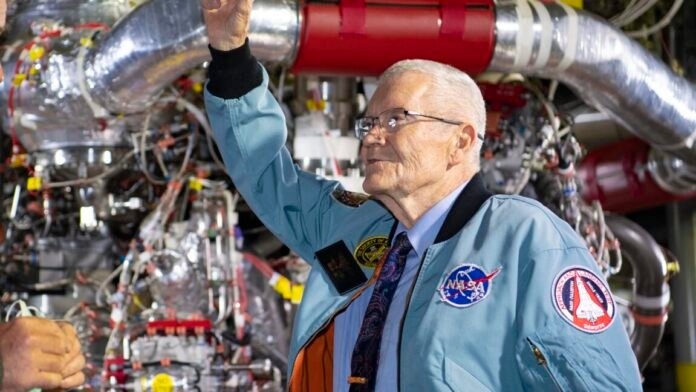
Haise, the only Apollo 13 astronaut still living, didn’t care much for the record he and his crewmates set in 1970. It was a consolation prize, of sorts, for Haise. You probably know the story of Apollo 13’s aborted lunar landing and the around-the-clock, high-stakes effort to bring the crew home.

Still, among the more than 100 billion people who have walked the Earth in human history, the Artemis II astronauts have ventured farther from the cradle than anyone else. Sure, it’s not walking on the Moon, but it’s something more than a piece of trivia.

Haise, 92, spoke with Ars as Artemis II made its way back to Earth earlier this month. We present our conversation below, lightly edited for clarity.

Ars: How closely have you followed the Artemis II mission?

Fred Haise: Not real close. Today, I have not seen anything. I just got home from my great-grandson’s baseball game. I noticed, from their projected flight plan, they’re past the Moon, sort of on their cruise back toward Earth for the reentry. I’ve seen the pictures they’ve shot, which are excellent. They have better cameras and better equipment than we had on Apollo, because it really looks like they got much higher-resolution pictures than we were able to from that altitude.

Ars: I presume this all brings back some memories for you.

Haise: Vaguely. When they splash down Friday, if you go to the next day, Saturday, the 11th, that’s when I launched, 56 years ago. So, yes, I’ve lived several lifetimes, the Shuttle program, then in the business world. It was a long time ago.

Ars: Was the distance record ever a big deal to you?

Haise: Somebody figured out how to get it in Guinness to make us feel better because we didn’t land. That was the big disappointment. I hoped to walk on the Moon, and that went away. If you look at the so-called distance record, all the orbits around the Moon, all the missions that went, were 60 miles or so [from the Moon]. If you take our flight, it just so happened that the Moon was a little farther away. The Moon doesn’t go in a circle. It’s an ellipse, so it was kind of at its farthest point from Earth, and we were only a little above the normal orbit. It wasn’t a big deal. It just coincided with the fact that the Moon was farther away from the Earth.

Ars: Are you surprised your record stood for as long as it did?

Haise: It’s a surprise, mainly because our US government hasn’t supported programs to get us back. The average citizen I know and talk to a lot, they somehow think NASA has a big pot of gold somewhere that they can just use to do whatever they want. They don’t realize that to get monies to do things, be it unmanned research, satellite programs or whatever, including any manned program, it requires getting money from Congress and through the annual budgeting cycle.

NASA spent [nearly] 25 or 30 years making this [Orion] capsule. They finally got it made. The Artemis I mission, when did they fly? It was two-and-a-half years ago, without people, right? And here it is, the first time it’s ever flown with people. That’s the nature of the business in space. Apollo was, uniquely, I would say, the only program that was fully funded, supported from the president through Congress from the start to achieving the goal, which was to land by the end of the decade. Even then, the funding started getting cut. That’s the nature of the business. But the average person I talk to, a lot of them are children, of course. I don’t expect them to know that. But a lot of the citizens I talk to, they have absolutely no idea of how a program is spawned and how it’s budgeted to keep it alive and make it happen.

Ars: It’s remarkable looking back at Apollo, when you guys were typically landing on the Moon every four to six months.

Haise: Actually, from the Apollo 7 launch through Apollo 11, we launched every two months. Every two months. Then we started slipping. After Apollo 11, when they made the landing in July of that year, they slipped. Apollo 12 was normally to be flown in September, but even then, they slipped it to November, so it waited four months to launch. Then they stretched us even further. On 13, we went all the way to the next April, because of budget cuts.

Ars: It’s been two-and-a-half years since Artemis I, and it will be another year or longer until Artemis III, an Earth orbit mission.

Haise: You could accomplish it faster if you had the program laid out and funded it. I mean, it’s that simple. It ain’t simple to plan it and everything. But if you had the program planned and laid out and done the technology trades and everything, and a preliminary design for where you’re headed with what you’re doing, if you fund it, you can go accomplish it. There’s no magic to it. It’s just you need to apply the money and the resources, the right people, the right engineering, and you can do it.

NASA astronaut Fred Haise, center, moments after exiting the Apollo 13 command module following splashdown in the South Pacific Ocean on April 17, 1970.

NASA astronaut Fred Haise, center, moments after exiting the Apollo 13 command module following splashdown in the South Pacific Ocean on April 17, 1970. Credit: NASA

Ars: What do you remember about being on the far side of the Moon?

Haise: We had done a maneuver earlier, approaching the Moon, because where our explosion happened, we were not on a path to get home. We were not on a free return, which they were on this [Artemis II] flight … When our capsule had the explosion and we had to shut it down, the very first thing to work on after getting the LM (Lunar Module) powered up was to use its rocket engine to change our path to get us sort of in a rough direction of heading home. And that first burn we did looped us around the Moon. Then we did a second maneuver, the biggest one, using the decent landing engine after we passed the Moon. That shaved 10 to 12 hours off our return time, which was helpful, because the LM didn’t have enough power if we kept it powered up, so we had to critically power it down and only had battery power.

Going around the Moon, after we finished that burn, and Jack [Swigert] and I were tourists. We got out our cameras and put color and black and white film packs in it, and shot a lot of pictures. We got pictures with a little better resolution, but still didn’t get anywhere near like they’ve taken on Artemis II. Hopefully, some of their pictures are near the South Pole, which is where it’s hoped that we’ll land someday and actually have a lunar base, close to the water ice in some of the craters near the South Pole.

Ars: Did you have an opportunity to take in the view at the Moon?

Haise: Jim (Lovell) wasn’t as interested as I was. He was too disappointed about not landing, and he had been already once. So he had seen the Moon quite a bit on Apollo 8, when they went around a number of orbits.

Ars: Did you have a chance to meet with any of the Artemis II astronauts before they flew?

Haise: I had lunch with Victor Glover one time after he had flown the Dragon capsule, the second flight in the Dragon. I wanted to know a little bit about Dragon. I met the commander [Reid Wiseman] at an event one time in Houston, and that was quite a while ago. It was before his wife passed away. In fact, she was at the luncheon also.

I met Christina Koch, the youngest member of the crew, a couple of times. She very nicely came to speak at the Memorial Tree ceremony for [Apollo 15 astronaut] Al Worden [at Johnson Space Center in Houston]. Al was head of the Astronaut Scholarship Foundation. He was the chairman when she was given an award that helped her with education funding. So she appreciated that, and came and spoke at Al’s event, and then I met her again at Jim Lovell’s son’s house. Jeffrey [Lovell], he lives in Houston here, and he hosted an event at his house, again, trying to draw in some people he had invited to help fund the Astronaut Scholarship Foundation, which gives out over 30 scholarships a year.

Ars: What else stands out to you about the Artemis II mission?

Haise: My commander, as you know, recorded a message for the crew with his son, Jeffrey, and his daughter, Susan. Unfortunately, Jim passed away, but the message was read up to them. I was FaceTiming with Jim at least once a week over the years, and he unfortunately passed away last year.

Ars: That was very poignant. There have been a lot of touching moments on this mission.

Haise: One of the biggest values, I feel, is the photography. Hopefully, they got good photography of the proposed eventual landing places. But the biggest value of all, and this is underplayed in the media, is this was a test flight. Who rode the rocket before? Nobody. How many humans have ridden in that capsule? Nobody. So they tested the capsule … to make sure it’s OK, testing all its variety of systems and making sure everything is working. To me, it was a great test pilot mission. Everybody’s got so excited about some pictures, which is good, but to me, I was a test pilot, so that’s the way I look at the mission. This was a great test pilot mission.

Ars: This mission seems to have captured a lot of public interest. I’m sure you can understand that after everything that’s been written about Apollo 13.

Haise: Apollo 13, to young people, when they hear a little bit about the story in school, it’s like a folktale, a survival folktale, much like many you may read about, like Shackleton’s sailing ship that got trapped in the ice. Apollo 13 has gotten to be in the same class as that. That makes it interesting.

Netanyahu’s Risky Bet on Strongmen Is Coming Due

0
netanyahu’s-risky-bet-on-strongmen-is-coming-due
Netanyahu’s Risky Bet on Strongmen Is Coming Due


Personal alliances with controversial leaders leave Israel exposed when political winds shift in Europe and beyond

“And a new Pharaoh arose who did not know Joseph.” This is the introductory sentence in the first chapter of Exodus, where the children of Israel were enslaved. Leadership changes often have dramatic consequences.

Hungary is about to undergo a major shift in leadership—almost a regime change—following its elections, and it will have major ramifications for Prime Minister Benjamin Netanyahu, Israel, and its relationship with Europe.

In politics and government, when elections result in the ruling party being replaced by the opposition, there often is a major departure from the policies and direction of the outgoing regime, driven by grievances and resentments.

Hungary was ruled by Viktor Orbán for 16 years. He was a controversial leader of the far-right Fidesz party and governed in a semi-authoritarian manner. While Hungary was a member of the European Economic Community, Orbán often adopted policies opposing it. He also opposed European support for Ukraine in its war with Russia.

Had Orbán been born 50 years earlier, he would have been the perfect prototype to lead Hungary’s communist regime under the tutelage of its Soviet patrons.

Although his Fidesz party was alleged to have had antisemitic roots, Orbán positioned himself as an outlier in his support of Israel. There was also a bromance between him and Netanyahu, which ran counter to the general disdain that many Europeans hold toward Netanyahu and his conduct in the current conflict between Israel and the Islamic Republic of Iran.

Orbán’s rule was also marked by his efforts to control the judiciary and restrict freedom of speech, as well as by accusations of corruption.

This culminated in his overwhelming defeat in the recent election, which saw the rise of Péter Magyar, a former member of his party who defected and established Tisza, a new center-right party whose platform advocated realignment with Europe.

In monitoring the reactions to his ascent to power, the soothsayers like to point out that his center-right party won’t alter direction in the same manner as would the election of a left-wing party. They are wrong.

One of Magyar’s first acts was to overturn Orbán’s rejection of the International Court of Justice based in The Hague.

Magyar is also likely to have taken umbrage with Netanyahu as a result of Netanyahu’s personal investment in strong ties with Orbán. Orbán’s other bromance was with President Donald Trump, who went so far as to send Vice President JD Vance on the eve of the election in an effort to boost him.

The US has already downgraded its relations with Europe, especially over the North Atlantic Treaty Organization, the Iranian conflict, and Europe’s disastrous economic, immigration, and social policies. Yet for the US, Hungary is largely irrelevant in its efforts to adjust its relations with Europe.

The same cannot be said for Israel. Israel’s relations with the major European powers have steadily eroded to varying degrees since October 7.

France and the UK, both with large Muslim constituencies, have already recognized the State of Palestine without predicating it on the disarmament of Hamas and the reform of the Palestinian Authority.

Embargoes on arms sales have been imposed by most European countries.

Antisemitism is rife, with synagogues being attacked and Jews being targeted in the streets. Anti-Israel demonstrations are occurring throughout Europe. Israeli tourists are being attacked in the streets, and Israeli artists are being canceled in the arts. Campaigns are ongoing to further isolate Israel in trade, commerce, and sports.

The cowboy-style diplomacy conducted by President Trump, first in relation to Greenland and later through the joint attacks with Israel on Iran, has further alienated Europeans. They have long adopted policies of appeasement toward Iran, often at Israel’s expense.

European leaders will grumble but succumb to President Trump. They will take out their frustrations on Israel.

France and the UK have already called on Israel to cease hostilities against Hezbollah in Lebanon, despite Hezbollah having entered the war on behalf of its Iranian patrons and against the wishes of the Lebanese government.

Italy, whose right-wing government was initially very supportive of Israel in 2023, has gradually shifted away. Cracks are even emerging in Germany, whose unique relationship with Israel has been a bulwark against European efforts to further isolate Israel.

The European Economic Community is one of Israel’s major trading partners because of trade agreements that provide Israel with access to European markets. Israel participates in numerous areas of cooperation in science, technology, research and development, and agriculture.

Europe’s embrace of human rights language and the redefinition of international law through the International Court of Justice and the United Nations Human Rights Council have caused major harm to Israel’s standing.

These bodies have adopted a pro-Palestinian approach. The outrageous arrest warrants issued against Netanyahu and former Defense Minister Yoav Gallant for alleged war crimes have left Netanyahu not only unable to visit most European capitals but also seeking to avoid flying over their territory.

Unlike Macron and Starmer, Orbán refused to recognize the International Court of Justice and pointedly hosted Netanyahu on a state visit to Hungary.

Retribution and revenge will prevail, and while Magyar will be eager to demonstrate that his government will not embark on a new radical agenda that will cause mayhem in Hungary, he will find Israel an easy target for venting pent-up frustrations after 16 years of Orbán’s rule.

For Netanyahu, his foreign policy of cavorting with controversial leaders such as Orbán carried huge risks. With Orbán’s departure, he will find it extremely difficult to nurture a similar relationship with Magyar. Orbán’s inclination to veto European Economic Community moves against Israel has been eliminated.

More worrying for Israel has been the manner in which Netanyahu has managed relations with the US.

On the one hand, the personal relationship he has fostered with President Trump has brought immediate and major results, especially in the current conflict with Iran and its proxies. For this, Netanyahu deserves credit.

Yet he has also echoed President Trump’s ongoing tirades against the Biden administration’s management of the conflict before President Trump’s return to office.

There was much to criticize in the Biden administration’s management of the conflict after the initial month. Its ongoing calls for a two-state solution, its restraint of Israel from entering Rafah, and its limits on sales of certain kinds of munitions were damaging.

It is nonetheless unseemly for Israel, and especially its prime minister, to be seen engaging in the same kind of rhetoric employed by President Trump. Former President Joe Biden was personally favorably disposed toward Israel throughout his term, as was his secretary of state, Antony Blinken. The US still provided a veto at the United Nations Security Council.

The concern is that if and when the Democrats return to power, they will also regard Israel as a soft target for venting their frustrations from the Trump years. Whether that happens in two years or later, the Democratic Party’s automatic support for Israel is being eviscerated.

The radical left is determined to purge the moderates and replace them with members who have adopted extremely hostile positions toward Israel. By attacking the Biden years, Netanyahu is alienating whatever support Israel can hope to receive from what remains of the moderate base of the Democratic Party.

The only saving grace is that by the time 2028 arrives, Israel will hopefully have eliminated many of the threats it has faced since October 7 and made itself an indispensable actor in the Middle East that no administration can ignore.

Global hunger crisis to worsen in 2026 as war, drought and aid cuts bite, United Nations report warns

0
global-hunger-crisis-to-worsen-in-2026-as-war,-drought-and-aid-cuts-bite,-united-nations-report-warns
Global hunger crisis to worsen in 2026 as war, drought and aid cuts bite, United Nations report warns


Conflict, drought and shrinking aid will keep global hunger at ​critical levels in 2026, with food insecurity expected to worsen in some of the world’s most ‌fragile countries, according to the 2026 Global Report on Food Crises.

The 10th edition of the hunger monitor, published by a coalition of development and humanitarian organisations, said that acute hunger had doubled over the past decade with two famines declared last year for the first ​time in the report’s history – in Gaza and Sudan.

See full report HERE

In total, 266 million people in 47 countries and ​territories faced high levels of acute food insecurity in 2025, while 1.4 million people faced ⁠catastrophic conditions in parts of Haiti, Mali, Gaza, South Sudan, Sudan and Yemen.

In 2025 alone, 35.5 million children worldwide ​were acutely malnourished, including nearly 10 million suffering from severe acute malnutrition.

Looking at this year, the report said severity levels ​remained critical, with only Haiti expected to escape from the worst “catastrophic” band thanks to a slight improvement in security and increased humanitarian aid.

“We are no longer seeing just temporary shocks, but persistent shocks over time,” said Alvaro Lario, head of the U.N. International Fund for ​Agricultural Development, which helps draw up the annual report.

“The main message is that food insecurity is not an isolated ​issue anymore, but is putting pressure on global stability,” he told Reuters.

WAR ON IRAN LIKELY TO WORSEN FOOD CRISES

The U.S.-Israeli war on Iran ‌has ⁠added to the alarm, Lario said, warning that prolonged disruption to energy and fertilizer trade could spill over into global food markets and worsen hunger in import-dependent countries already in crisis.

“Even if the conflict in the Middle East were to end right now, we know that a lot of the food price shocks and inflation will happen in the ​next six months,” he said.

Even ​before the added stress ⁠of this latest war, West Africa and the Sahel looked likely to remain under heavy pressure this year from conflict and persistent inflation, particularly in Nigeria, Mali, Niger and Burkina ​Faso.

Nigeria alone is projected to see one of the largest increases in food insecurity ​in 2026, ⁠with 4.1 million more people expected to face acute hunger.

In East Africa, failed rains across much of the Horn of Africa are expected to deepen suffering in Somalia and Kenya, where drought, insecurity, high food prices and reduced humanitarian aid are ⁠likely to ​drive worsening conditions.

The report also warned that humanitarian and development financing for ​food sectors in crisis fell sharply in 2025 and is projected to decline further.

Humanitarian food-sector funding is estimated to have dropped by some 39% ​last year from 2024 levels, while development assistance contracted by at least 15%.

AI boom is hiding Korea’s next crisis

0
ai-boom-is-hiding-korea’s-next-crisis
AI boom is hiding Korea’s next crisis

South Korean President Lee Jae Myung has an economic problem. Image: YouTube Screengrab

SEOUL — Few top economies are as surrounded by paradoxes in 2026 as South Korea.

As fallout from the Middle East sends shockwaves around the globe, Korea’s stock market is skyrocketing. This week, the Kospi index soared to new all-time highs as semiconductor giants Samsung and SK Hynix ride the artificial intelligence boom.

Making your way around Seoul, it’s easy to buy into the euphoria. Countless global conferences herald Korea’s place in the AI era. Across the city, young executives hover around laptops in WeWork-fashioned shared office spaces — the more tie-less, the better.

Indonesia reiterates call for UN probe after peacekeeper dies in Lebanon attack, condemns Israel

0
indonesia-reiterates-call-for-un-probe-after-peacekeeper-dies-in-lebanon-attack,-condemns-israel
Indonesia reiterates call for UN probe after peacekeeper dies in Lebanon attack, condemns Israel

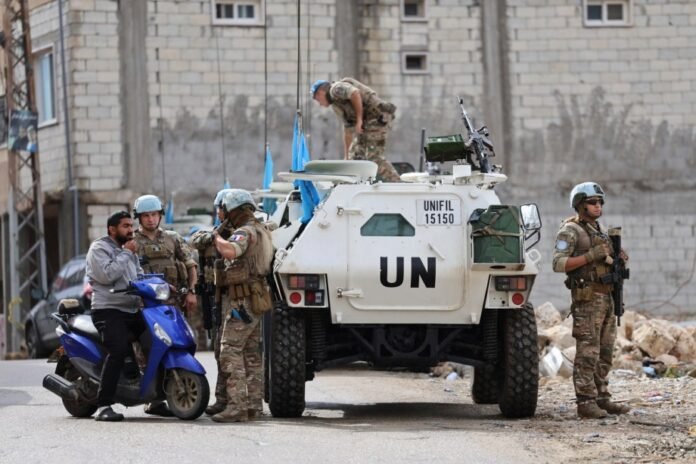
Indonesia on Saturday condemned the killing of another Indonesian peacekeeper in Lebanon in ongoing hostilities, reiterating its call for a UN probe into the killings, Anadolu reports.

Corp. Rico Pramudia, 31, serving with the UN Interim Force in Lebanon (UNIFIL), was critically injured in a “projectile explosion” at a base in Adchit al-Qusayr on the night of March 29 and died in a Beirut hospital on Friday.

The latest casualty brings the number of Indonesian peacekeepers killed in the ongoing conflict to four.

“Indonesia once again condemns the attack by Israel that resulted in the death of an Indonesian peacekeeper. Any attack against peacekeepers constitutes a serious violation of international law and may amount to a war crime,” Foreign Ministry spokesman Vahd Naby told Anadolu.

Indonesia, he said, reiterates its call for the UN to do an “immediate, thorough, and transparent investigation” to establish the facts, and stresses that full accountability must be ensured.

“Safety and security of the UN peacekeepers is not negotiable. Therefore, the government of Indonesia also continues its coordination with the United Nations and other troop- and police-contributing countries to strengthen the protection of peacekeepers, including through a comprehensive evaluation of their safety and security, as well as enhanced risk mitigation measures in UNIFIL’s area of operations,” the spokesman said.

The government of Indonesia extends its “deepest” condolences to the bereaved family, and expresses its highest respect for the deceased peacekeeper’s “dedication and sacrifice in maintaining international peace,” he added.

READ: Israeli warplanes strike southern Lebanon despite ceasefire

Following the attack, he further said, through “close and intensive” coordination with UNIFIL, the Indonesian government, the Lebanese government, and medical teams in Beirut ensured that immediate and optimum medical treatment was provided.

However, due to the severity of Pramudia’s injuries, he passed away despite all efforts to save his life, the spokesman said.

Jakarta, he added, continues its “close” coordination with UNIFIL to ensure that the repatriation of the deceased is carried out promptly and with full dignity.

With Pramudia’s death, six UNIFIL personnel have now been killed and several others seriously injured during the current escalation.

Israel has pounded Lebanon with airstrikes and launched a ground offensive in the south since a cross-border attack by Hezbollah on March 2. The region has been on alert since the US and Israel launched an air offensive on Iran on Feb. 28.

On Thursday, US President Donald Trump announced that a ceasefire between Israel and Lebanon had been extended by three weeks following ambassador-level talks at the White House.

The US-brokered 10-day ceasefire, which took effect April 16, had been set to expire Sunday.

Since March 2, expanded Israeli attacks on Lebanon have killed more than 2,200 people and displaced over 1 million, according to Lebanese authorities.

READ: Israeli tank fire killed UN peacekeeper in Lebanon, UNIFIL investigation finds

Palantir employees are talking about company’s “descent into fascism”

0
palantir-employees-are-talking-about-company’s-“descent-into-fascism”
Palantir employees are talking about company’s “descent into fascism”

It took just a few months of President Donald Trump’s second term for Palantir employees to question their company’s commitments to civil liberties. Last fall, Palantir seemed to become the technological backbone of Trump’s immigration enforcement machinery, providing software identifying, tracking, and helping deport immigrants on behalf of the Department of Homeland Security, when current and former employees started ringing the alarm.

Around that time, two former employees reconnected by phone. Right as they picked up the call, one of them asked, “Are you tracking Palantir’s descent into fascism?”

“That was their greeting,” the other former employee says. “There’s this feeling not of ‘Oh, this is unpopular and hard,’ but ‘This feels wrong.’”

Palantir was founded—with initial venture capital investment from the CIA—at a moment of national consensus following the September 11, 2001, attacks, when many saw fighting terrorism abroad as the most critical mission facing the US. The company, which was cofounded by tech billionaire Peter Thiel, sells software that acts as a high-powered data aggregation and analysis tool powering everything from private businesses to the US military’s targeting systems.

For the past 20 years, employees could accept the intense external criticism and awkward conversations with family and friends about working for a company named after J. R. R. Tolkien’s corrupting all-seeing orb. But a year into Trump’s second term, as Palantir deepens its relationship with an administration that many workers fear is wreaking havoc at home, employees are finally raising these concerns internally, as the US’s war on immigrants, war in Iran, and even company-released manifestos has forced them to rethink the role they play in it all.

“We hire the best and brightest talent to help defend America and its allies and to build and deploy our software to help governments and businesses around the world. Palantir is no monolith of belief, nor should we be,” a Palantir spokesperson said in a statement. “We all pride ourselves on a culture of fierce internal dialogue and even disagreement over the complex areas we work on. That has been true from our founding and remains true today.”

“The broad story of Palantir as told to itself and to employees was that coming out of 9/11 we knew that there was going to be this big push for safety, and we were worried that that safety might infringe on civil liberties,” one former employee tells WIRED. “And now the threat’s coming from within. I think there’s a bit of an identity crisis and a bit of a challenge. We were supposed to be the ones who were preventing a lot of these abuses. Now we’re not preventing them. We seem to be enabling them.”

Palantir has always had a secretive reputation, forbidding employees from speaking to the press and requiring alumni to sign non-disparagement agreements. But throughout the company’s history, management has always at least appeared to be open to engagement and internal criticism, multiple employees say. Over the last year, however, much of that feedback has been met by philosophical soliloquies and redirection. “It’s never been really that people are afraid of speaking up against Karp. It’s more a question of what it would do, if anything,” one current employee tells WIRED.

While internal tensions within Palantir have grown over the last year, they reached a boiling point in January after the violent killing of Alex Pretti, a nurse who was shot and killed by federal agents during protests against Immigration and Customs Enforcement (ICE) in Minneapolis. Employees from across the company commented in a Slack thread dedicated to the news demanding more information about the company’s relationship with ICE from management and CEO Alex Karp.

“Our involvement with ice has been internally swept under the rug under Trump2 too much,” one person wrote in a Slack message WIRED reported at the time. “We need an understanding of our involvement here.”

Around this time, Palantir started wiping Slack conversations after seven days in at least one channel where most of the internal debate takes place, #palantir-in-the-news. Because the decision wasn’t formally announced before the policy rolled out, one worker who noticed the deletions asked in the channel why the company was removing “relevant internal discourse on current events.”

A member of Palantir’s cybersecurity team responded, writing that the decision was made in response to leaks.

This period led Palantir management to release an updated wiki, or a collection of blog posts explaining the ICE contract, where the company defended its work with Homeland Security. Management wrote that the technology the company provides “is making a difference in mitigating risks while enabling targeted outcomes.”

Palantir management ran defense by holding a handful of AMA (ask me anything) forums across the company with leadership like chief technology officer Shyam Sankar and members of its privacy and civil liberties (PCL) teams.

At least one of these AMAs was organized independently of PCL leadership by two team leads, including one who worked directly on the ICE contract for a period of time. “This was very rogue,” a PCL employee who worked on the ICE contract said in a February AMA, a recording of which was obtained by WIRED. “Courtney [Bowman, head of the privacy and civil liberties team] doesn’t know that I’m spending three hours this week talking to IMPLs [Palantir terminology for its client-facing product teams], but I think this is the only real way to start going in the right direction.”

Throughout the lengthy call, employees working on a variety of Palantir’s defense projects posed hard questions. Could ICE agents delete audit logs in Palantir’s software? Could agents create harmful workflows on their own without the company’s help? What is the most malicious thing that could come out of this work?

Answering these questions, the PCL employee who worked on the ICE contract said that “a sufficiently malicious customer is, like, basically impossible to prevent at the moment” and could only be controlled through “auditing to prove what happened” and legal action after the fact if the customer breached the company’s contract.

At one point during the call, one of the employees tried to level with the group, explaining that Palantir’s work with ICE was a priority for Karp and something that likely wouldn’t change any time soon.

“Karp really wants to do this and continuously wants this,” they said. “We’re largely at the role of trying to give him suggestions and trying to redirect him, but it was largely unsuccessful and we seem to be on a very sharp path of continuing to expand this workflow.”

Around the time of these forums, Karp sat down for a prerecorded interview with Bowman, seemingly to discuss Palantir’s contracts with ICE, but refused to broach the topic directly. Instead, Karp suggested that employees interested in the work sign nondisclosure agreements before receiving more detailed information.

Then came the deadly February 28 missile strike on an Iranian elementary school on the first full day of the Trump administration and Israel’s war in Iran. The US is the only known country in the conflict to use that specific type of missile. More than 120 children were killed when a Tomahawk missile struck the school, kicking off a series of investigations that concluded that the US was responsible and that surveillance tools like Palantir’s Maven system had been used during that day’s strikes. For a company full of employees already reeling over its work with ICE, possible involvement in the death of children was a breaking point.

“I guess the root of what I’m asking is … were we involved, and are doing anything to stop a repeat if we were,” one employee asked in the Palantir news Slack channel. Some employees posed similar questions in the thread, while others criticized them for discussing what could be considered classified information in a Slack channel open to the entire company. The investigation is ongoing.

The Palantir spokesperson said the company was “proud” to support the US military “across Democratic and Republican administrations.”

In March, Karp gave an interview to CNBC claiming that AI could undermine the power of “humanities-trained—largely Democratic—voters” and increase the power of working-class male voters. While critics reacted to the piece, calling the statements concerning, so did employees internally: “Is it true that AI disruption is going to disproportionately negatively affect women and people who vote Democrat? and if it is, why are we cool with that?” one worker asked on Slack in a channel dedicated to news about Palantir.

Palantir’s leadership incensed workers yet again this week after the company posted a Saturday afternoon manifesto reducing Karp’s recent book, The Technological Republic, to 22 points. The post—which includes many of Karp’s long-standing beliefs on how Silicon Valley could better serve US national interests—goes as far as suggesting that the US should consider reinstating the draft. Critics called the manifesto fascist.

Internally, the post alarmed some workers who huddled in a Slack thread on Monday morning, questioning leadership over its decision to post it in the first place.

“I’m curious why this had to be posted. Especially on the company account. On the practical level every time stuff like that gets posted it gets harder for us to sell the software outside of the US (for sure in the current political climate), and I doubt we need this in the US?” wrote one frustrated employee. The message received more than 50 “+1” emojis.

“Wether [sic] we acknowledge it or not, this impacts us all personally,” another worker wrote on Monday. “I’ve already had multiple friends reach out and ask what the hell did we post.” This message received nearly two dozen “+1” emoji reactions.

“Yeah it turns out that short-form summaries of the book’s long-form ideas are easy to misrepresent. It’s like we taped a ‘kick me’ sign on our own backs,” a third worker wrote. “I hope no one who decided to put this out is surprised that we are, in fact, getting kicked.”

These conversations involving shame and uncertainty from workers have seemingly popped up in internal channels whenever Palantir has been in the news over the last year. “I think the only thing not different is a lot of folks are still incredibly wary about leaks and talking to the press,” one current employee tells WIRED, describing how the internal company culture has evolved over the last year.

All of this dissent doesn’t seem to bother Karp, who recently told workers that the company is “behind the curve internally” when it comes to popularity. Here, he’s been consistent; in March 2024 Karp told a CNBC reporter that “if you have a position that does not cost you ever to lose an employee, it’s not a position.”

But for employees, the culture shift feels intentional. “I don’t want to assert that I have knowledge of what’s going on in their internal mind,” one former worker tells WIRED. “But maybe it’s gotten to a place where encouraging independent thought and questioning leads to some bad conclusions.”

This story originally appeared on wired.com.

US chasing AGI myth while China builds the AI future

0
us-chasing-agi-myth-while-china-builds-the-ai-future
US chasing AGI myth while China builds the AI future

The United States is increasingly organizing its artificial intelligence strategy around a concept it cannot clearly define, cannot reliably measure and may never achieve in the singular, decisive form imagined.

That concept is Artificial General Intelligence, or AGI.

In Washington and Silicon Valley, AGI has become the policy anchor and rhetorical North Star. Lawmakers invoke it to justify massive investments. Tech executives tie timelines to presidential terms or national dominance. Analysts warn that the first country to reach it will shape the global order. The language is urgent: a race, a finish line, a winner-take-all victory.

There is only one problem: no one agrees on what AGI actually is.

Moving target

Ask ten AI researchers for a definition, and you will likely get ten different answers. Some describe human-level performance across all cognitive tasks. Others frame it economically — the automation of the most valuable human labor. Still others emphasize autonomy, continuous self-improvement or the capacity for original scientific discovery.

These are not interchangeable. A system that excels at writing code, generating essays or solving benchmarks is not the same as one that can redesign its own architecture, conduct groundbreaking research or reliably operate in open, unpredictable environments.

Yet public debate and policy routinely collapse these distinctions into a single, shifting target. As observers have long noted, AGI often seems to mean “whatever the next system cannot yet do.”

‘Situated’ intelligence

Even leading figures acknowledge the issue. OpenAI’s Sam Altman has at times called AGI “not a super useful term” because definitions vary so widely. The goalposts keep moving, making any strategy built around hitting them inherently unstable.

The confusion runs deeper than semantics. AGI rests on an implicit and rarely examined assumption: that intelligence is a unitary capability that can be reproduced in a single system, and that it would closely resemble human cognition.

This is a category error.

A bird and an airplane both fly, but they do so through entirely different mechanisms. The similarity is in the outcome, not the underlying process. Today’s AI systems are like airplanes: they perform tasks that resemble human cognition — reasoning, diagnosing, optimizing, creating — through statistical pattern matching on vast amounts of data, not through experience, intention, emotion or embodied understanding.

Human intelligence is “situated.” It emerges from bodies, cultures, social relationships, context and lived reality. AI simulates tone without feeling it, reproduces patterns without inhabiting them, and generates language without genuine intention. This gap is not a temporary shortfall awaiting more scale. It is structural.

Current systems, for all their impressive advances, still show persistent limitations: shallow reasoning in novel situations, brittle generalization, lack of robust long-term memory and dependence on human-curated data and architectures. Progress is real and valuable, but it looks more like iterative improvement in powerful tools.

AI is likely to evolve more like electricity or the internal combustion engine: transformative through diffusion, integration and widespread application, not a single breakthrough moment.

Strategic miscalculation

By framing AI competition as a sprint to a decisive AGI finish line, US policy risks distorting priorities. Resources concentrate on ever-larger frontier models developed by a handful of private labs, sometimes at the expense of broader adoption, infrastructure, workforce development and institutional integration.

This creates a winner-take-all mindset that history does not support. General-purpose technologies — electricity, the automobile, the internet — diffuse across borders and contexts.

Value accrues to those who integrate and apply them effectively, not merely to those who invent them first. There is no single “owner” of electricity; its impact came from decades of engineering, infrastructure and adaptation by many players.

Meanwhile, China has pursued a different emphasis. While not ignoring advanced research, Beijing has prioritized rapid deployment: embedding AI at scale across manufacturing, logistics, urban systems, education and industry.

Chinese models have narrowed performance gaps dramatically, and the country leads in areas like AI publications, patents and industrial robot adoption. The US retains an edge in frontier capabilities and private investment. But the deeper contest is increasingly about who can turn powerful tools into systemic advantage through diffusion and integration.

The real danger for America is not “losing the AGI race.” It is winning on speculative breakthroughs while falling behind in the practical, economy-wide application of AI, producing the world’s most advanced models yet failing to fully embed intelligence into its institutions, workforce and infrastructure.

Hype cycles compound the risk. Overpromising imminent AGI already has a long track record of disappointment, potentially leading to “AI winters” of disillusionment and disinvestment.

A more realistic strategy

None of this means abandoning frontier research. Breakthroughs in models, algorithms and efficiency matter enormously. But they should not define the entire strategy. A saner approach would prioritize steps China has already taken:

– Accelerating adoption and integration across government, industry and society.

– Modernizing data infrastructure, computing capacity and energy systems.

– Investing heavily in workforce training, AI literacy and education at all levels.

– Supporting a broader research ecosystem beyond a few large private firms, including open approaches that promote diffusion.

These steps lack the drama of a Manhattan Project for AGI. They are also far more likely to determine long-term competitive outcomes.

The future of AI will not be decided by a single invention or the crossing of a mythical finish line. It will be shaped by how intelligence is embedded, distributed and governed across economies and societies.

America faces a clear choice. It can continue chasing an ill-defined phantom that shifts with every new model and headline, or it can recognize the transformation already underway: AI is not becoming a mind. It is becoming infrastructure.

In rare chickenpox case, itchy blisters mushroom into large, rubbery nodules

0
in-rare-chickenpox-case,-itchy-blisters-mushroom-into-large,-rubbery-nodules
In rare chickenpox case, itchy blisters mushroom into large, rubbery nodules

Those who suffered through chickenpox as kids likely remember the agony of its itchy rash. Oven mitts or snow gloves may have been used to prevent you from inadvertently clawing your skin off, while dips in oatmeal may have offered some temporary relief. But in the end, you just had to endure the full cycle of the rash—from the breakout of the first raised, itchy papules that inflate into fluid-filled blisters that then break and leak, to the scabs that form over the crusty remains. More papules emerge as blisters burst, prolonging the torment.

For one 15-year-old in Nepal, the misery continued long after the blisters burst. After some of her crusty scabs began to form scars, they mushroomed into large, uncontrolled skin growths, which were also painful and itchy—and permanent. One on her chest, the largest, measured 4 by 4 cm (about 1.6 by 1.6 inches).

These rubbery, firm nodules are called keloids, which are poorly understood skin growths that result from wound healing that goes awry and expands beyond the borders of the original wound. In the teen’s case, five large keloids abruptly burst from her chickenpox scars, breaking out in different places on her body—on her right jaw, chest, abdomen, and right flank. The simultaneous emergence of the growths aligns with the diagnosis of “eruptive keloids,” an ultra-rare outcome of a chickenpox infection. Only five such cases appear to exist in the scientific literature. Her case, marking the sixth, was published this week in the journal Clinical Case Reports.

Masses on her abdomen and side

Masses on her abdomen and side

Mass on her jaw

Mass on her jaw

Her doctors noted that the teen was otherwise healthy after recovering from the chickenpox several weeks prior. She had been seen at a clinic for the infection, where her chickenpox (varicella) case was confirmed, and she was treated with the anti-viral medication acyclovir. It’s unclear why keloids erupted in the teen—or why they form in any patient. But it’s clear something was going wrong in her healing rashes.

Unwieldy wounds

Healing from wounds has three main phases. The first is an inflammatory phase that prevents or limits further damage. There’s a proliferative phase during which new tissue is formed. Among the many things that occur in this phase, specialized cells called fibroblasts produce collagen that helps create structural suppors for new tissue. This proliferative phase isn’t discreet; it can go on in the background throughout the healing process. Last, there’s a maturation phase when the new tissue settles into its final form and gains maximum strength.

When keloids form, it means something went wrong in the proliferative phase of healing. Specifically, the fibroblasts of keloids are thought to be more active, survive longer, and produce more collagen and more signaling molecules that promote growth. Collagen production in keloids can be 20 times larger than in typical skin.

It’s unclear what triggers this uncontrolled tissue growth, but genetics and environmental factors are thought to play a role. Keloids are seen more often in people with darker skin. In the teen’s case, her doctors note that varicella infections are known to trigger certain pro-inflammatory cellular signals and speculate that they could potentially induce a hyperproliferative state. But, for now, it’s just a hypothesis.

Treatment for keloids is, unfortunately, difficult. When the problem is faulty wound healing, any treatment that creates new wounds risks failing or worsening the problem. Surgical removal, for instance, has recurrence rates between 45 percent to 100 percent. Cryotherapy can sometimes be used to kill off scar tissue, but it can also leave undesirable skin alterations. Laser and radiotherapy have been used, but with clear risks and sometimes limited results. Successful treatment often requires a combination of methods. The mainstay treatment, however, is injections with corticosteroids, which help with the itching and burning.

In the teen’s case, doctors monitored her keloids for three months and found they were relatively stable, with no rapid growth—though they could potentially continue to grow over time. Given preferences and financial limitations, she decided to forgo aggressive treatment and live with the growths, managing symptoms with antihistamines and over-the-counter painkiller acetaminophen.

While keloids remain a menace, chickenpox has an effective prevention. The varicella vaccine was released in the US in 1995, and two doses offer 97 percent protection. Since its debut, chickenpox cases—and complications—have declined dramatically.

David Hasselhoff’s Tragic Final Days Exposed

0
david-hasselhoff’s-tragic-final-days-exposed
David Hasselhoff’s Tragic Final Days Exposed


Hollywood icon David Hasselhoff is raising serious health concerns after a rare public appearance showed the once-unstoppable star struggling just to stay on his feet.

The 73-year-old legend — best known for his role on Baywatch — was spotted in Los Angeles this week looking noticeably frail, relying on a walker to stand as he stepped out with his wife, Hayley Roberts.

And insiders say the heartbreaking scene is the result of a brutal recovery following major knee and hip replacement surgeries that have taken a heavy toll on his mobility.

“He’s rehabbing and determined to bounce back,” a source revealed, adding that Hasselhoff is still holding onto big dreams — including returning to acting and even making another appearance connected to Baywatch once he’s fully recovered.

But behind the optimism, the reality has been tough.

For a man who built his career on a larger-than-life, physically demanding image, the adjustment hasn’t come easy. “Getting old sucks,” the insider admitted bluntly, noting the surgeries hit him harder than expected. Still, they insist he’s improving and feeling better than he has in a while, even if the road back is slow.

This isn’t the first sign of his declining health.

Last summer, Hasselhoff was seen limping through an airport before later being pushed in a wheelchair, already hinting at the struggles he’s now facing more publicly.

Sources also point to his hard-living past as a factor catching up with him. Years of heavy partying and well-documented battles with alcohol have reportedly contributed to his current condition.

“David lived a life most people could only dream of,” an insider said. “But it came with consequences.”

His personal life has also been marked by tragedy.

Hasselhoff’s former wife, Pamela Bach, whom he met during his rise to fame on Knight Rider, died by suicide in her Hollywood Hills home. The two were married for 17 years before divorcing, with his struggles with alcohol cited as a major factor in their split.

The actor later shared through a spokesperson that his family was “deeply saddened” by her death.

Now, as he focuses on healing, Hasselhoff appears to be facing one of the toughest chapters of his life — trading red carpets and beach rescues for physical therapy and slow steps forward.

But if there’s one thing fans know about “The Hoff,” it’s that he’s never been one to stay down for long.

0FansLike
0FollowersFollow
0FollowersFollow
0SubscribersSubscribe
- Advertisement -
Google search engine

Recent Posts