8.1 C
London
Saturday, April 25, 2026
Home Blog

Preparation, not pacifism, defines Japan’s defense policy

0
preparation,-not-pacifism,-defines-japan’s-defense-policy
Preparation, not pacifism, defines Japan’s defense policy

Originally published by Pacific Forum, this article is republished with permission.

Enough! Yes, this week’s decision by the Japanese Cabinet to relax restrictions on arms exports is a landmark in the country’s postwar history. It is not, however, the end of Japan’s pacifism as every headline screams.

Defense policies have been guided by constraints on the use of force and there is a powerful suspicion of the military, but that is not the same as pacifism.

Demanding accuracy in the description of Japanese security policy is not pedantry. It is the foundation of an understanding of the evolution of Tokyo’s defense policy and will prevent hyperventilating about and overreacting to a much-needed adaptation to a changing security environment.

This week, the government of Prime Minister Takaichi Sanae approved revision of the “Three Principles” that govern transfers of defense equipment and technology. Previously, Japan could only export nonlethal equipment that could be used for rescue, transport, warning, surveillance and minesweeping, and the equipment could not be sent to countries engaged in active conflict.

Now, Japanese companies can sell gear to countries with which Japan has an arms export agreement. That list includes 17 countries, the United States among them, and the number is expected to soon grow to 20.

The National Security Council will review all sales, ensuring that the equipment ends up in the right hands, and the Diet will be notified after a decision is made. The restriction on exports to countries with active combat will continue, although there can be exceptions if the Japanese government finds a compelling national security reason.

Prime Minister Takaichi explained that the policy shift was necessary because of an “increasingly challenging security environment,” adding that “No single country can now protect its own peace and security alone.”

Most important, Takaichi wrote that “There is absolutely no change in our commitment to upholding the path we have taken as a peaceful nation over the past 80 years since the end of the war, as well as our fundamental principles.”

Every major news outlet has explained that the new regulations break with the country’s “pacifist” orientation. (In some cases, Takaichi’s phrase is translated as “Japan’s postwar path as a pacifist nation.”) Indeed, every time Japan revises defense policy, this charge is batted about. It dominated reporting a little over three years ago when Tokyo issued three new national security documents.

Japan’s constitution does restrict war-fighting capabilities. Article Nine famously forbids the country from using force to settle international disputes and from possessing the tools to wage war. That is why Japan has “Self Defense Forces” (SDF), not a so-called military. It’s the rationale for the previous restrictions on arms exports and it has become the cornerstone of the country’s postwar identity.

But Japan isn’t pacifist in the sense that it isn’t willing to use force at all. Existence of the SDF – since 1954 – is repudiation of that position. It will use force to defend itself. Note, too, that successive Japanese governments regularly call on the US to reaffirm that Article 5 of the Mutual Defense Treaty applies to the Senkaku Islands, meaning Tokyo wants its ally to use force to defend it.

Japan has slowly improved both its military capability and the ability to use it.

In 1992, Japan passed laws that enabled SDF participation in United Nations peacekeeping operations.

In 1997, revisions to the Guidelines for Japan-US Defense Cooperation extended the jurisdiction of the SDF to address “situations in areas surrounding Japan.”

The SDF joined international efforts after the Sept. 11, 2001, terrorist attacks, supporting Operations Enduring Freedom and Iraqi Freedom.

In recent years, the SDF has reorganized its forces to make them more capable.

As Christopher Hughes detailed in Japan as a Global Military Power, the country has the world’s third- or fourth-largest military budget, the largest F-35 advanced-jet fighter inventory outside the US, military satellite constellations, mini-aircraft carriers and amphibious forces. And it has pursued counterstrike capabilities, the right to partake in collective self-defense operations and a proactive cyber defense.

Every action has been circumscribed or slowed by national law and political consensus, but those actions were not those of a “pacifist” nation. Eagle-eyed observers argue that Japan has used Article 9 to avoid being pushed into military action except on its own terms.

I checked in with Andrew Oros, professor of political science at Washington College and author of Japan’s Security Renaissance: New Policies and Politics for the Twenty-First Century. He explained how Japan’s leaders have clouded the picture, making reference to former Prime Minister Shinzo Abe, Takaichi’s mentor and avatar for conservatives who chaff against postwar constraints:

[Abe] framed this greater military role for Japan within the long-standing language of “pacifism,” calling for a more “proactive pacifism” in the 21st century — which really looks nothing like the actual philosophy of pacifism, so much so that in English-language translations of his speeches, translators used the term “proactive contributions to peace” rather than the literal translation “proactive pacifism.”

None of this supports the claim that Japan is embracing military revanchism, a charge that Chinese officials have been making with increasing urgency as relations between Tokyo and Beijing continue their downward slide. After this week’s Cabinet decision, a Chinese Foreign Ministry spokesman called the move contradictory to Japan’s identity as a peaceful nation and evidence of “new militarism.”

Hughes would disagree. In an earlier email exchange, he insisted that Japan’s overall evolution in defense policy “in no way implies a rewind to the wartime period of Japanese military adventurism and imperialism, as is the knee-jerk reaction of some to the term who would like to overly-relativize and thus obfuscate the extent of contemporary change in Japan’s security policy.”

Japanese sentiment is best described as antimilitarist. As Oros put it, the public “views active military solutions to security challenges suspiciously.” That explains the high number of Japanese – 67% in an Asahi poll – who said that they oppose exports of lethal equipment. That is why Japan has been characterized at various times as a country of “reluctant realists,” “resentful realists” or “pragmatic realists.”

Their hesitance reflects begrudging acknowledgement that the region is becoming more dangerous. They worry about arms racing and potential instability. But there is no appetite to ignore the risks or to acquiesce to foreign pressure or threats. Japan is being vigilant and responsible: prepared, and never pacifist.

Brad Glosserman (brad@pacforum.org), senior advisor and director of research at Pacific Forum, is the author of Peak Japan (Georgetown University Press, 2019) and, with Gil Rozman, Japan’s Rise as a Regional and Global Power: 2013-2023 (Routledge, 2024). His new book on the geopolitics of high tech will come out from Hurst this summer.


Israel approves Jewish religious school project in East Jerusalem’s Sheikh Jarrah

0
israel-approves-jewish-religious-school-project-in-east-jerusalem’s-sheikh-jarrah
Israel approves Jewish religious school project in East Jerusalem’s Sheikh Jarrah

Israeli authorities have approved a plan to build a Jewish religious school on a large plot of land in the Sheikh Jarrah neighborhood of East Jerusalem, a move condemned by the Palestinian Foreign Ministry as a violation of international law and an attempt to impose new realities on the ground, Anadolu reports.

The Israeli rights group Ir Amim said on Thursday that a Jerusalem district planning committee officially approved the project earlier this week to construct a Jewish religious school, or yeshiva, known as “Ohr Somayach” in the Palestinian neighborhood.

The organization said objections submitted jointly by Ir Amim and the Sheikh Jarrah community association were rejected.

According to the group, the planned complex will include an 11-story building with housing for hundreds of ultra-Orthodox Jewish students, along with residential units for faculty members.

Ir Amim warned that implementing the project “would significantly” increase the presence of occupiers in the area, raising “security concerns for Palestinian residents and altering the character of the neighborhood.”

The plan covers around five dunams (5,000 square meters) at the southern entrance of Sheikh Jarrah, directly opposite the neighborhood’s mosque.

The organization said the location, near existing settlement clusters, “could threaten dozens of Palestinian families with eviction and facilitate the takeover of their homes by occupiers.”

It noted that the land had originally been designated for public use, including educational facilities, but in 2007 the municipality transferred it to the Israel Land Authority to allocate it for the construction of a religious school.

The land was later handed over to the Ohr Somayach institutions without a transparent tender process, which then advanced the current construction plan, it added.

It warned that Israeli authorities and occupier groups are using such mechanisms “to bypass legal protections granted to Palestinian tenants under protected lease arrangements, enabling the displacement of entire families to make way for Jewish settlements.”

​​​​​READ: 11 Palestinians killed in Israeli strikes across Gaza despite ceasefire

– Palestinian condemnation

The Palestinian Foreign Ministry condemned on Friday the approval of the project, rejecting what it described as Israeli measures aimed at “Judaizing Jerusalem” and altering its Palestinian identity.

It said such steps “seek to impose illegal facts on the ground by manipulating the city’s historical and legal status, erasing its identity and distorting facts.”

The ministry reiterated that “Israel, as an occupying power, has no sovereignty over Jerusalem and that sovereignty belongs to the State of Palestine.”

It also described Israeli actions in Jerusalem as “violations of international law, the advisory opinion of the International Court of Justice, and relevant United Nations resolutions.”

The ministry called on the international community and international organizations to “take a firm stance to compel Israel to comply with international law and legitimacy resolutions.”

Since Oct. 2023, Israel has intensified offensive in the occupied West Bank and East Jerusalem, including killings, home demolitions, displacement of Palestinians and expansion of settlements.

Sheikh Jarrah is among the neighborhoods most targeted by settlement activity in East Jerusalem, with occupier groups having previously taken over several Palestinian homes after evicting their residents.

Palestinians warn that such actions could pave the way for Israel to formally annex the West Bank, effectively undermining the two-state solution envisioned in UN resolutions.

In a landmark opinion in July 2024, the International Court of Justice declared Israel’s occupation of Palestinian territory illegal and called for the evacuation of all settlements in the West Bank and East Jerusalem.

The Palestinians regard East Jerusalem as the capital of their future state, based on international resolutions that do not recognize Israel’s occupation of the city in 1967 or its annexation in 1980.

Google will invest as much as $40 billion in Anthropic

0
google-will-invest-as-much-as-$40-billion-in-anthropic
Google will invest as much as $40 billion in Anthropic

Google will invest at least $10 billion in Anthropic, and that amount could rise to $40 billion if Anthropic meets certain performance targets, Bloomberg reports.

The investment follows Amazon’s $5 billion initial investment in Anthropic a few days ago; the Amazon deal also leaves the door open to further investment based on performance. Both investments value Anthropic at $350 billion.

Anthropic has seen rapid growth in the use of its Claude models and related products, such as Claude Code, which promises to significantly increase the speed and efficiency with which companies or individuals can develop software. (The reality varies from big improvements to setbacks, depending on the nature of the project and company, how Claude Code is used, and many other factors.)

Several factors contributed to Anthropic’s success in recent months, including controversies around OpenAI and its ChatGPT product and models, more robust agentic workflows, and new products like Claude Cowork, which does some of the same things for general knowledge work tasks as Claude Code does for software development.

The result has been a dramatic increase in demand for Anthropic’s services, leading to outages and other problems. Anthropic has been testing solutions to reduce demand, like imposing limits during peak hours, or exploring removing some of the most compute-intensive tools from cheaper service plans.

These investments are meant to help close the gap between demand and supply of compute for Claude Code and its ilk. Amazon and Google are providing chips suitable for AI training and inference and cloud compute capacity to help Anthropic scale up quickly.

This has become a common scheme for investment in AI companies like Anthropic; established companies like Microsoft have products and services that can help new AI companies like Anthropic scale, so the former invests in the latter so the latter can, in turn, pay for the former’s products and services.

This is not the first time Anthropic has received investment from Google, even though Google is ostensibly competing with Anthropic over AI models.

EU Institutions agree Roadmap to achieve “One Europe, one Market” by end of 2027

0
eu-institutions-agree-roadmap-to-achieve-“one-europe,-one-market”-by-end-of-2027
EU Institutions agree Roadmap to achieve “One Europe, one Market” by end of 2027


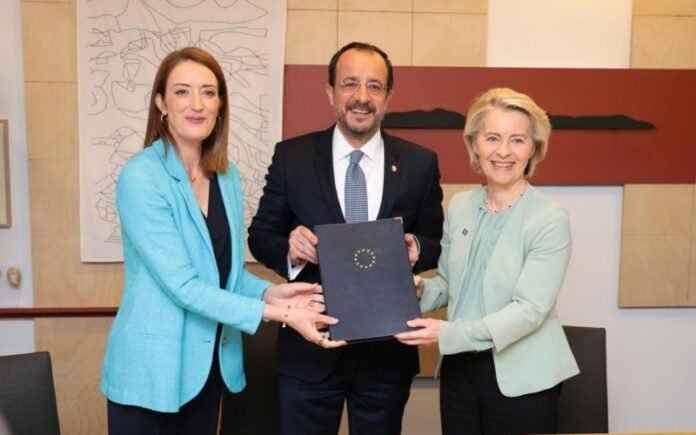
The Presidents of the European Parliament, the Council of the EU, and the European Commission have signed a Joint Declaration committing to the “One Europe, One Market” roadmap, aimed at strengthening the EU’s internal market and economic competitiveness.

The agreement was signed on the sidelines of the Informal Meeting of EU Heads of State or Government in Cyprus, under the country’s rotating Presidency of the Council of the European Union. The initiative signals a coordinated effort by the EU’s main institutions to advance reforms under a shared strategic framework.

The roadmap sets out concrete targets for legislative proposals and agreements between co-legislators, with a deadline of end-2027. It also introduces quarterly progress reviews, clear institutional responsibilities, and regular transparency reporting.

European Parliament President Roberta Metsola said the plan reflects the Parliament’s push for a stronger and more resilient Europe, stressing the need for predictability for citizens and businesses.

Cypriot President Nikos Christodoulides called the initiative a turning point for competitiveness and long-term prosperity within a more integrated Single Market.

European Commission President Ursula von der Leyen said the roadmap will support economic growth, digital transformation, and industrial resilience.

“We Knew They Were Paying Informants”: SPLC Donors Reject Trump DOJ Fraud Claims

0
“we-knew-they-were-paying-informants”:-splc-donors-reject-trump-doj-fraud-claims
“We Knew They Were Paying Informants”: SPLC Donors Reject Trump DOJ Fraud Claims


More than a dozen donors to the Southern Poverty Law Center feel that a recent Department of Justice indictment accusing the group of defrauding contributors by paying informants is farcical, the donors told The Intercept.

“It’s simultaneously infuriating and laughable that they’re charging the SPLC with funding hate groups,” said Mary Wynne Kling, an Alabama native and longtime supporter of the group. Pointing to the SPLC’s long-standing work battling extremist groups, which included bankrupting the United Klans of America, she added, “We knew they were paying informants.”

The indictment, filed Tuesday in the SPLC’s home state of Alabama, charged the group with fraud for funding hate groups and with money laundering for setting up fictitious business entities to route payments to informants. SPLC leadership has denied the allegations.

Kling and over a dozen other donors to the group told The Intercept that by using its money to root out information on hate groups, the SPLC was doing exactly what they hoped it would with their dollars.

Originally founded in 1971 as a civil rights-focused legal clinic, the SPLC struck on a lasting strategy of direct confrontation with hate groups in 1979. It soon shifted its focus entirely toward combating the far right and documenting extremism in its “Hatewatch” project, which identifies hate groups and their leaders — a practice that has drawn the ire of right-wing figures enraged at being labeled as purveyors of hate.

The Trump administration is taking aim at SPLC’s image by accusing the group of lying to its donor base and propping up the very groups it claims to fight in order to stay in business.

“The SPLC is manufacturing racism to justify its existence,” said Acting Attorney General Todd Blanche in a statement released on Tuesday. “Using donor money to allegedly profit off Klansmen cannot go unchecked. This Department of Justice will hold the SPLC and every other fraudulent organization operating with the same deceptive playbook accountable. No entity is above the law.”

FBI Director Kash Patel accused the group of taking advantage of the esteem in which its donors held the SPLC.

“They raised money by lying to their donor network — thousands of Americans — to go ahead and pay the leadership of these supposed violent extremist groups,” Patel said the same day at a press conference.

The Intercept put out a call for responses and sent a survey seeking reactions to the indictment, verifying that 20 respondents were SPLC contributors with proof of donation. Seven of them spoke to The Intercept in interviews; 13 others submitted responses to the survey. All 20 verified SPLC donors said they continued to support the organization and felt their money had been put to good use — including when used to pay informants inside groups like the Klan.

Far from feeling defrauded, Ellie Wilson, a donor from Texas, said the indictment prompted her to make a new contribution to the group.

“If my donation was used to pay for the people who are infiltrating these groups, I see no problem with it.”

“I read up on the story this morning, before I made my donation, and to me, it doesn’t sound unusual,” Wilson told The Intercept on Wednesday. “There’s overhead costs associated with either joining these groups or doing their proper research and due diligence. If my donation was used to pay for the people who are infiltrating these groups to, you know, cover their expenses to join, to add to their cover, I see no problem with it.”

According to the indictment against the group, some of the funds used to pay informants went to existing members of hate groups, including people who were already on the SPLC’s list of extremists. One such individual, identified in court documents as a former chair of the National Alliance with the code name “F-42,” allegedly received more than $140,000 from the SPLC while being featured on its “Extremist File” page, according to prosecutors.

But according to Maya Lenox, a donor based in Texas, it’s only by working with such individuals that the SPLC is able to get the granular and encyclopedic information on the groups in its “Hatewatch” and “Hate Map” projects.

“This is an organization that has been providing very detailed information about how these hate groups have been moving, and of course, in order to have that information, you essentially are going to need spies,” said Lenox. “In order to obtain this information, you’re going to have to make it worth their time.”

In addition to the 20 verified donors, dozens of other self-identified donors to the SPLC, whose contributions were not independently verified, responded to The Intercept’s survey and expressed their support for the group and their skepticism of the indictment against it. Some respondents expressed mild criticisms of the group, pointing to controversy over its labor practices or accusations that its work chills free speech, but no respondent reported feeling deceived or defrauded by its use of paid informants in extremist groups.

All seven people who spoke with The Intercept for this story rejected outright the claim that the actions outlined in the indictment amounted to fraud. Multiple donors added that they found the current Department of Justice difficult to trust given the agency’s documented history over the past year of politically motivated indictments against the perceived foes of President Donald Trump and the MAGA movement.

“Anything that comes out of this administration, this FBI, or this Department of Justice, I have to take it with a level of incredulity that I find really unfortunate,” said donor Joe O’Donnell of Buffalo. “We’ve seen this administration truly pick and choose where they want to be and how they want to enforce.”

The SPLC did not respond to a request for comment from The Intercept, but the group is receiving support from fellow civil rights organizations and other organizations on the left. In an open letter published Tuesday, the American Civil Liberties Union, the AFL-CIO, and more than 100 other civil rights groups, labor unions, and religious coalitions agreed to a mutual defense pact and committed to defend one another against attacks by the Trump administration.

“We have the right to assemble—and we will continue to do just that, and we will encourage and support people and allied organizations to do the same, uniting across communities, sectors, issue areas and identities,” the pact declared. “We will not be silenced. We will continue to do the work that puts people over power.”

Tuesday’s indictment against the SPLC is just the latest shot in a long-running war between elements of the MAGA right and the civil rights group. In 2019, the Center for Immigration Studies — a hard-line anti-immigration group whose platform mirrors many of the Trump administration’s platform — sued unsuccessfully to get their group removed from the SPLC’s list of hate groups. In October, Patel and the FBI cut ties with the SPLC, which had been a longtime FBI partner, pointing to the work of his agency’s “Anti-Christian Bias Panel” and calling the SPLC a “partisan smear machine.”

“The SPLC has spent their entire existence fighting a lot of the things that it appears this administration supports.”

Many of the donors who spoke with The Intercept cited this long history of animosity between the MAGA movement and the SPLC as a reason to be suspicious of the indictment.

“They’re in bed with groups that the SPLC has, in my opinion, rightly identified as hate groups,” said Kling, the donor from Alabama. “The SPLC has spent their entire existence fighting a lot of the things that it appears this administration supports.”

Orbán’s election loss frees up €90 billion for Kyiv but raises thorny question of EU membership for Ukraine

0
orban’s-election-loss-frees-up-e90-billion-for-kyiv-but-raises-thorny-question-of-eu-membership-for-ukraine
Orbán’s election loss frees up €90 billion for Kyiv but raises thorny question of EU membership for Ukraine
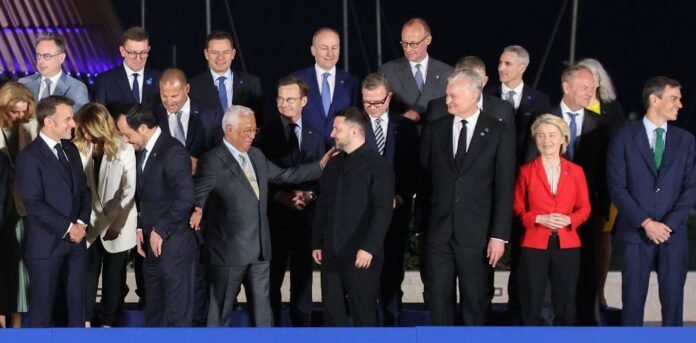
Family photo of EU leaders including Ursula von der Leyen, president of the European commission, and president of the European Council Antonio Costa with Ukrainian president Volodymyr Zelensky in Cyprus, April 23 2026.

Friends in need: EU leaders including Ursula von der Leyen, president of the European commission, and president of the European Council Antonio Costa meet with Ukrainian president Volodymyr Zelensky in Cyprus, April 23 2026. EPA/George Christoforou

As widely expected, the EU has unlocked the disbursement of its previously agreed €90 billion (£78 billion) loan to Ukraine.

Together with the approval of the 20th package of sanctions against Russia, this is good news for Brussels. It became possible after Hungary dropped its opposition following a change of government after recent parliamentary elections.

How many more such decisions the union will be able to make, and how fast, remains to be seen. Former Hungarian prime minister Viktor Orbán may have been the most vocal disrupter of the EU’s Ukraine policy, but he was not the only one. Former close allies of his – Andrej Babiš in the Czech Republic and Robert Fico in Slovakia – stay in power.

Another election in Bulgaria on April 19 returned the arguably Russia-leaning former president, Rumen Radev, as the likely next prime minister in Sofia. None of these are as explicitly hardline as Orbán was. But their combined ability to at least water down EU policy – limiting or conditioning aid for Ukraine and potentially delaying or softening sanctions on Russia – remains real.

So, for Ukraine the news is also rather more mixed than the headline of the end of the Hungarian veto would suggest. Granted, the disbursement of the €90 billion will help Kyiv plug critical financing gaps over the next several years.

Orbán’s exit doesn’t deal with other critical challenges in the EU-Ukraine relationship, especially regarding the divergent views on Ukraine’s path to EU membership.

Apart from Kyiv’s most ardent Baltic supporters, scepticism about Ukraine’s membership abounds. Some EU member states – like France and Germany – have already made it clear where they stand regarding the union’s future relationship with Ukraine. For them, it’s about due process and avoiding shortcuts. At best, they seem to contemplate a somewhat enhanced status for Ukraine within the EU in the interim.

Others hold more Ukraine-sceptical positions, especially regarding certain policy areas that they consider core national interests. For example, with parliamentary elections in Poland scheduled for 2027, it is unlikely that even the current clearly pro-European government of Donald Tusk will endorse the early and full access for Ukrainian agricultural products to the EU market or the application of the bloc’s common agricultural policy.

This scepticism in national capitals potentially also complicates relations between member states and EU institutions in Brussels. After a meeting on the sidelines of the EU leaders summit, European Council president António Costa, European Commission president Ursula von der Leyen and Ukrainian president Volodymyr Zelensky called “for the opening of negotiation clusters without delay”. But the power to decide on this lies with member states’ foreign ministers who are likely to vote on the issue at the end of May. If they approve, this will be the next important move in Ukraine’s accession process. But it’s only the first step in what could be a prolonged journey.

Common cause

Zelensky’s ambition to achieve membership by 2030 now seems more unrealistic than ever. With his timeline knocked off course and even the terms of membership unclear, the question arises how Ukrainians will respond to this.

The EU and Ukraine both see Russia as an existential threat. And both agree that Ukrainians’ defence of their country is crucial for European security. This has made it easy to reach an understanding that Europe will financially and politically support Ukraine’s effort to defeat Russia and open the doors to EU membership.

Ukrainian firefighters battle a blaze in Kyiv, APril 16 2026.

Russian attacks continue to pound Ukraine’s cities and recently launched the biggest aerial bombardment of the war, involving 948 drones and 34 missiles in the space of 24 hours. EPA/Sergey Dolzhenko

This basic understanding remains intact. But translating it into concrete policies has revealed important divisions about the (affordability of) financial commitments and the timelines and conditions for Ukraine’s EU accession.

Compromise position?

As always, the EU will hash out a compromise that articulates the lowest common denominator between those that prefer a swift accession for Ukraine, and those that oppose the watering down of accession conditions. It remains to be seen whether this compromise will be palatable to Ukrainians. Individual Ukrainians would gain access to the benefits of EU citizenship – the ability to live and work in the EU. But Ukraine as a country would not enjoy the benefits of full and equal state membership – including voting rights on EU legislation and the automatic disbursement of EU structural funds.

It’s questionable whether this is economically viable for Ukraine. The country has already suffered a serious loss of human capital – on the frontlines and through emigration. If this were to continue, let alone accelerate if Ukraine’s young people were offered free movement, it would seriously weaken the country’s resilience in the face of Russia’s continuing onslaught.

This, in turn, could add to narratives inside and outside Ukraine that question the possibility of continued resistance and urge seeking a settlement with Russia. Pro-Russian arguments could well be strengthened by blaming the EU for weakening Ukraine by luring its young and talented workforce into the bloc while denying full membership to Ukraine as a country, casting further doubt about the dependability of the west as a credible partner.

Declining trust in the EU and a desire for rapprochement with Russia would ultimately reinforce the idea of positioning Ukraine as a bridge between Russia and the west. This was the approach tried, under significantly better circumstances, in the first two decades after Ukraine’s independence.

As the EU-27 decide how to move forward, they need to remember that this Ukraine-as-a-bridge approach already failed once in 2014 – with the devastating consequences of this failure only becoming fully apparent in 2022. There is nothing to suggest that this approach would fare any better if it were tried again.

Want to write?

Write an article and join a growing community of more than 224,400 academics and researchers from 5,507 institutions.

Register now

Trump administration investigation of Fed chair Powell scrapped

0

Jerome Powell. Photo: Shawn Thew / EPA

WASHINGTON — The Department of Justice dropped its investigation Friday of the Federal Reserve and Chair Jerome Powell over building renovation costs, a move that could open the door for new Fed leadership next month — and signaled a victory for North Carolina Sen. Thom Tillis.

U.S. Attorney Jeanine Pirro said her office closed the probe after a request to the Fed’s inspector general to examine the cost overruns.

“The IG has the authority to hold the Federal Reserve accountable to American taxpayers. I expect a comprehensive report in short order and am confident the outcome will assist in resolving, once and for all, the questions that led this office to issue subpoenas,” Pirro wrote on X just after 10 a.m. Eastern.

Pirro said she “will not hesitate to restart a criminal investigation should the facts warrant doing so.”

Powell, whose term expires in May, has been the target of repeated public criticism from President Donald Trump, who threatened to fire the central bank’s chair if he did not lower interest rates.

The Trump administration’s criminal inquiry into Powell for a $2.5 billion renovation project at the Fed’s offices has been eyed with suspicion, including from his own party.

Tillis, R-N.C., said he would not vote for Trump’s pick to replace Powell, former Fed Board Governor Kevin Warsh, unless the administration dropped its “bogus” investigation.

A favorable vote by Tillis on the closely divided Senate Committee on Banking, Housing and Urban Affairs is necessary to advance Warsh’s nomination, as all panel Democrats oppose him.

Tillis’s office did not immediately respond for comment.

A federal judge last month blocked the administration’s subpoenas to probe the Fed and Powell.

The Department of Justice declined to comment and referred States Newsroom to Pirro’s social media post.

Sen. Elizabeth Warren, D-Mass., issued a statement dismissing the DOJ’s announcement as “an attempt to clear the path for Senate Republicans to install President Trump’s sock puppet Kevin Warsh as Fed Chair.”

“Let’s be clear what the Justice Department announced today: they threatened to restart the bogus criminal investigation into Fed Chair Powell at any time while failing to drop their ridiculous criminal probe against Governor (Lisa) Cook. Anyone who believes Donald Trump’s corrupt scheme to take over the Fed is over is fooling themselves,” she wrote on X and Bluesky late Friday morning, referring to Trump’s abrupt August firing of Feb Board Governor Cook over alleged financial fraud.

Cook successfully challenged her firing in two lower courts. The U.S. Supreme Court is reviewing whether Trump legally dismissed Cook.

Trump, who routinely posts about news of the day on his own social media platform Truth Social, had not commented on the announcement as of 12:30 pm Eastern.

During an unrelated Oval Office event Thursday, Trump sidestepped a question about what he hoped to learn from Pirro’s investigation into Powell and the Fed.

Instead, Trump responded by saying he could have completed the Fed’s Washington, D.C., headquarters renovation for $25 million and “had money left over.”

“On top of that, he’s been terrible on interest rates because he should have lowered interest rates. That’s why call him Jerome ‘too late.’ ‘Too late’ — that’s his nickname — Jerome ‘too late’ Powell. He likes me a lot,” Trump said.

Jennifer Shutt contributed to this report.

-States Newsroom

Europe—not US—first to authorize Moderna’s combo mRNA flu-COVID vaccine

0
europe—not-us—first-to-authorize-moderna’s-combo-mrna-flu-covid-vaccine
Europe—not US—first to authorize Moderna’s combo mRNA flu-COVID vaccine

Moderna’s mRNA-based combination vaccine against both flu and COVID-19 has gotten the green light in Europe—but it continues to be shelved in the US, where it was developed.

This week, the European Commission authorized Moderna to market the vaccine, mRNA-1083 or mCOMBRIAX, making it the world’s first authorized combination shot for the two respiratory viruses. The decision follows a positive review in February from a key European Medicines Agency’s committee, which paved the way for the approval.

Moderna CEO Stéphane Bancel welcomed the news. “By combining protection against two significant respiratory viruses in a single dose, our vaccine aims to simplify immunization for adults, particularly those at high risk,” Bancel said in a press release. “mCOMBRIAX offers an important new option for Europeans, while also aiming to strengthen the resilience of healthcare systems across Europe.”

mCOMBRIAX combines Moderna’s COVID-19 vaccine with an investigational influenza vaccine called mRNA-1010, which is still under review in Europe. The combination shot was authorized based on findings from a Phase III clinical trial of around 4,000 adults. The trial contained two groups, one with participants aged 50 to 64 that included a comparison of a standard flu vaccine, and another aged 65 and up that included a comparison of a high-dose flu vaccine. In both groups, mCOMBRIAX spurred statistically-significant higher immune responses against common flu strains (A/H1N1, A/H3N2, and B/Victoria) and against SARS-CoV-2 than the comparator vaccines. There were no concerns over safety or adverse events.

US anti-vaccine policies

The authorization allows the vaccine to be available in all 27 European Union members, as well as Iceland, Liechtenstein, and Norway. It could hit pharmacy shelves this upcoming flu season. Moderna said it was working closely with national authorities to support local access.

Meanwhile, availability is not yet on the horizon for the US. Since the second Trump administration took office last year and Health Secretary Robert F. Kennedy Jr. began aggressively implementing his anti-vaccine and anti-mRNA agenda, Moderna has faced significant obstacles. Under Kennedy, the government has canceled hundreds of millions of dollars in grants to Moderna that would have supported the development of mRNA vaccines.

Moderna had previously submitted mCOMBRIAX for approval from the Food and Drug Administration. But in May 2025, Moderna announced that it had withdrawn its application, saying it did so in consultation with the agency. At the time, the company said it expected to resubmit the application later that year after it collected more data on the investigational flu vaccine, mRNA-1010. But, while more data came in, Moderna has still not resubmitted the combination shot.

Meanwhile, in February this year, the FDA shockingly refused to review Moderna’s application for mRNA-1010—a decision made by political appointee Vinay Prasad over objections by FDA staff.  A week later, it reversed the decision. The FDA is now expected to issue a decision on the flu vaccine by August 5. Prasad is set to exit the agency at the end of this month.

Plot to Kill Tucker Carlson and Candace Owens EXPOSED

0
plot-to-kill-tucker-carlson-and-candace-owens-exposed
Plot to Kill Tucker Carlson and Candace Owens EXPOSED


A bombshell new investigation is sending shockwaves through political media circles, claiming outspoken conservative figures Tucker Carlson and Candace Owens may have been targets in a chilling assassination plot following the shocking killing of Charlie Kirk.

According to insiders, the alleged threat surfaced in the chaotic hours after Kirk was gunned down on September 10, 2025, during a TPUSA campus event at Utah Valley University. While authorities quickly arrested suspect Tyler Robinson, whispers of something far more sinister began to spread behind the scenes.

Kirk’s close associate and executive producer of his show, Andrew Kolvet, claimed he received alarming information suggesting Carlson and Owens were next in line.

“I passed along the information… because who wouldn’t, given everything that had happened that day,” Kolvet said.

Owens later confirmed the fear was very real.

“It was supposed to be me… I was on his list, and so was Tucker Carlson,” she revealed, as speculation swirled that foreign actors — including Iran — could be tied to the alleged plot.

But the mystery only deepens.

Former National Counterterrorism Center director Joe Kent has cast doubt on the official narrative, suggesting Robinson may not have acted alone. Kent even claimed an investigation into potential foreign involvement was abruptly shut down.

“We were stopped from continuing,” he alleged, raising eyebrows about what may still be hidden from the public.

Meanwhile, questions surrounding the forensic evidence are fueling even more intrigue. Defense attorneys for Robinson argue that ballistics testing failed to conclusively match a bullet fragment from Kirk’s autopsy to the suspect’s rifle — a detail that could point to a second shooter.

Private investigator Jason Jensen says the case is quickly spiraling into something much bigger.

“If there’s no ballistics match, it opens the door to the possibility of another gunman,” Jensen explained. “And now you’re talking about a potential coordinated plot involving multiple targets.”

Adding another layer of drama, Carlson himself has recently become a lightning rod within conservative circles after distancing himself from Donald Trump — even apologizing for previously supporting him. Critics like Mark Levin have publicly blasted Carlson, calling him a “traitor” in a fiery rant earlier this year.

At the same time, Owens has been making headlines for her ongoing feud with Kirk’s widow, Erika Kirk — a clash that insiders say now takes on a darker tone given the alleged threats.

With unanswered questions piling up, one thing is clear: what started as a shocking assassination has now morphed into a tangled web of suspicion, power, and potential danger — and the full truth may be far from revealed.

October 7 Bereaved Father Criticizes Court Hesitation on Inquiry: ‘That’s the Easy Way Out’

0
october-7-bereaved-father-criticizes-court-hesitation-on-inquiry:-‘that’s-the-easy-way-out’
October 7 Bereaved Father Criticizes Court Hesitation on Inquiry: ‘That’s the Easy Way Out’


As Israel’s High Court weighs forcing a state commission of inquiry, families, lawmakers, and petitioners clash over how to investigate the massacre—and who has the authority to decide

On Thursday, Israel’s High Court of Justice confronted a question that has been building for more than two years: whether the government may continue delaying a full investigation into the failures surrounding October 7, 2023, or whether the court must intervene and order one.

That’s the easy way out

“That’s the easy way out,” Ruby Chen, the father of Itay Chen, an American Israeli soldier killed on October 7 whose body was returned only in November 2025, told The Media Line, referring to the suggestion raised in court that the issue could be left to voters ahead of elections. “We need to make a decision, not just for this time, but maybe for other times as well,” he said.

Asked whether he thinks the judges understood the families’ position, Chen responded, “I think they understand, but they understand it’s a hot potato.”

The tension inside the courtroom reflected a broader rupture outside it. The proceedings were halted briefly after protesters attempted to force their way into the hearing, while outside, bereaved families confronted one another over the kind of inquiry Israel should pursue.

For Chen, the scene showed how far the situation has escalated. “If something similar would have happened in the US Supreme Court, you would see the FBI and people handcuffed,” he said. Then he paused. “We are living in a different place.”

At the center of the case is a petition asking the court to order the government to establish a state commission of inquiry under existing law. Stav Livne Lahav, a member of the legal department at the Movement for Quality Government in Israel, told The Media Line that the request itself is straightforward, even if its implications are not.

“We asked the court to order the government to use the authority it already has and establish a state commission of inquiry into the failures of October 7,” she said.

Livne Lahav described the legal process as structured and methodical. “In Israel, this kind of proceeding is a two-stage process,” she explained. “First, we have to show there is a real legal basis. If the court agrees, it issues an order requiring the government to explain why it is not acting. At this stage, the burden is on the government.”

That part of the process, she said, has already been met. “The court issued a conditional order. That means the government now has to justify why it is not establishing a commission, under a law that clearly exists for this purpose,” she said.

For Livne Lahav, the central issue is not whether the government has authority, but how it is using that authority. “No one disputes that the authority is with the government,” she said. “But authority in a democracy is not unlimited. It must be exercised reasonably, without improper considerations, and without conflicts of interest.”

At some point, inaction becomes a decision

She argued that the prolonged delay itself has become legally significant. “You cannot wait two-and-a-half years after the biggest failure in the country’s history and claim that nothing has been decided,” she said. “At some point, inaction becomes a decision.”

The government, for its part, has pointed to a proposed alternative: a politically appointed inquiry body. Livne Lahav dismissed that option outright.

“First of all, this is not even law,” she said. “It has not passed the legislative process. You cannot ask a court to rely on something that does not exist.”

Beyond that, Livne Lahav questioned the structure itself. “A state commission of inquiry is designed to reach the truth,” she said. “It is headed by someone with judicial experience, usually a retired judge, with the tools and the independence to investigate complex events.”

By contrast, she warned, the government’s model risks turning the process into a political negotiation. “What they are proposing creates a situation where there will be negotiations over the truth,” she said. “Instead of finding out what actually happened, you will have competing versions, shaped by political positions.”

Livne Lahav stressed that the stakes go beyond legal theory. “The public should go to elections knowing what happened,” she said. “If we prevent the establishment of a body that can examine this, we are blocking the public’s ability to know.”

That concern echoed directly in Chen’s remarks. “Who knew? What did they do? What did they not do?” he asked.

Chen also pointed to what he described as shifting explanations from the government. “At the beginning, it wasn’t time because we were at war,” he said. “Now they say the court is not authorized. So, what is it? You can’t change each time and give a different excuse.”

For Chen, the delay is not abstract. It affects how families process loss. “We are still waiting,” he said. “How can you move forward without answers? We’re here at the cemetery now.”

On the other side, Likud lawmaker Tally Gotliv, who was removed from the courtroom during the hearing after repeated disruptive outbursts, framed the events in entirely different terms. Speaking after her removal, she accused the court not only of overreach but also of deepening the rifts it claims to manage.

The Supreme Court cannot look bereaved families in the eye

“The Supreme Court cannot look bereaved families in the eye,” she said. “It cannot bear their pain, their criticism, the accusations people feel toward it.”

Gotliv argued that the justices were actively excluding those voices. “The court distances and removes bereaved families from the hall,” she said. “And what is worse, it creates division between them.”

According to Gotliv, that division is not incidental. “There are families who want a state commission and families who do not,” she said. “And the court is fueling that conflict.”

She went further, accusing political actors of exploiting the situation. “Left-wing organizations are using this pain, using this division, to advance political interests,” she claimed.

Gotliv argued that her removal was part of the same pattern. “Expelling me is a violation of parliamentary immunity,” she said. “The law is clear. You cannot remove a member of Knesset like that.”

For Gotliv, the issue is not only procedural but symbolic. “When they remove me, they remove the people,” she said. “This is part of the contempt the court shows toward the government and the coalition.”

She rejected the premise of the hearing altogether. “The court should not be dealing with this issue at all,” she said. “This is not a question of whether it has authority or not. It simply should not be discussing it.”

Instead, Gotliv called for a structural response. “This is exactly why the power of the court needs to be restrained through legislation,” she said. “There needs to be clear limits on what it can and cannot do.”

Gotliv also pushed back on the idea that the government is avoiding action. “The government has already agreed to establish a mechanism,” she said, referring to the proposed political inquiry. “The question is not whether there will be an investigation, but what kind.”

For her, the answer should not come from the judiciary. “This is a decision for the elected government,” she said. “Not for the court.”

The contrast between the two positions could hardly be sharper. For petitioners like Livne Lahav, the absence of a state commission represents a failure of governance that requires judicial intervention. For lawmakers like Gotliv, judicial involvement itself represents a breakdown of democratic boundaries.

Caught between those positions is a public that is still processing October 7—and, increasingly, is divided over how the events before, during and in the aftermath of the massacre should be examined.

The court has not yet ruled. But Thursday’s hearing made clear that the question is no longer only about how October 7 should be investigated. It also concerns whether Israel’s institutions—and its society—still agree on who has the authority to define the truth, and when the inquiry must begin.

0FansLike
0FollowersFollow
0FollowersFollow
0SubscribersSubscribe
- Advertisement -
Google search engine

Recent Posts