It’s primary season, this time against a backdrop of heightened concerns and awareness of powerful figures skirting accountability for sexual abuse and misconduct. Survivors of convicted sex offender Jeffrey Epstein have “made accountability for sexual abuse and sexual violence an electoral issue,” says Intercept politics reporter Jessica Washington.
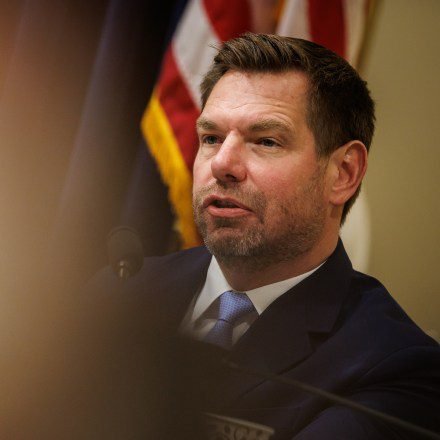
One of the biggest stories to shake up politics in recent weeks are sexual assault allegations that upended Rep. Eric Swalwell’s bid to become the next governor of California, forcing the Democratic front-runner to also resign from his House seat. “You also have to give some credit to Democrats as well for immediately moving on these allegations very swiftly,” says Washington.
This week on The Intercept Briefing, Washington and Intercept senior politics reporter Akela Lacy speak to host Jordan Uhl about the themes emerging this midterm election season. They talk about how the crowded California gubernatorial race is boosting Republicans to the top of the ticket to why powerful factions of the Democratic Party are hyperfixating on Twitch streamer Hasan Piker, rather than leveraging Trump’s sinking approval rating. “This is about not wanting to share power with the left,” notes Washington.
They also discuss what makes a candidate or elected official a progressive. “We’ve seen a lot of candidates, particularly 2028 candidates, whether senatorial or gubernatorial, who have had long-standing relationships with AIPAC or demonstrated pro-Israel policy records like Rahm Emanuel, Cory Booker, Josh Shapiro, Ruben Gallego, all come out now against AIPAC or distancing themselves from AIPAC,” says Lacy. “It doesn’t really matter if you’re rejecting AIPAC money, if you aren’t changing any of the policies that you adopt with respect to how the U.S. treats Israel.”
For all that and more listen to the full conversation of The Intercept Briefing on Apple Podcasts, Spotify, YouTube, or wherever you listen.
Transcript
Jordan Uhl: Welcome to The Intercept Briefing. I’m Jordan Uhl, an Intercept contributor and your host today, joined by my co-hosts.
Jessica Washington: I’m Jessica Washington, politics reporter for The Intercept.
Akela Lacy: And I’m Akela Lacy, senior politics reporter at The Intercept.
JU: Today we’re bringing you a midterm elections update. Except rather than diving into the various horse races, we’re going to talk about some crucial themes emerging that we’re reporting on here at The Intercept.
Jessie, let’s start with you. One of the biggest stories to shake up politics in recent weeks are sexual assault allegations that upended California congressman Eric Swalwell’s bid to become the next governor of California, and appears to have completely ended his political career, forcing him to resign from his House seat. We’ll get into the California governor’s race in a bit. But to start, Jessie, remind us of the sequence of events that led to Swalwell dropping out of the race.
JW: It was a really swift turnaround. In late March, we began to hear on social media from mostly influencers who were talking about stories they had heard from friends, from other women involved in politics, related to allegations against Swalwell. But many of those allegations online were incredibly vague.
That all shifted on April 10, which was a Friday when a San Francisco Chronicle article dropped accusing Swalwell of sexually assaulting a former staffer. Shortly after that, CNN dropped another story, labeling the former staffer’s accusations as rape and also detailing sexual harassment allegations from other women. Within hours of that story dropping, over a dozen Democrats pulled their endorsements, including a really high-profile endorsement from Adam Schiff. We also began to hear reports that Nancy Pelosi and Hakeem Jeffries — top Democratic leadership — had called Swalwell to tell him that he should drop out of the governor’s race.
Then over that weekend, on Sunday [April 12] I believe, he dropped out of the race. By Monday, he had resigned from office.
JU: You write in your story that The Intercept has not been able to independently verify the allegations. In a statement posted last week, Sara Azari, a criminal defense attorney representing Swalwell, wrote that the former congressman “categorically and unequivocally denies each and every allegation of sexual misconduct and assault that has been leveled against him,” calling the accusations “a ruthless and shameless attempt to smear Congressman Swalwell.”
I think that’s something that has been interesting to me. He’s trying to frame all of this as an attempt to stop his candidacy for governor. For me, I see that and think, OK, then why did you resign from Congress? How do you thread that needle, Jessie?
JW: I think that is obviously a question for Eric Swalwell. But I will say that these allegations have been in the ether for years. These are not new allegations, although they are new to much of the public. You talk to people on the Hill, and these are things that they have heard for years.
JU: Now, Jessie, you said it was an unusually swift fallout in part due to the public sentiment around the Epstein files. Could you talk about that?
JW: When I was writing this story, originally, I hadn’t thought about the role of the survivors themselves as much in the story. I’m speaking specifically about Epstein survivors. But we have to give a lot of credit to those women for making sexual abuse, sexual assault, sexual harassment, making these issues electoral issues — issues that the public really cares about.
The Epstein survivors “made accountability for sexual abuse and sexual violence an electoral issue.”
So you have two things going on. You have the fact that these survivors have made this an electoral issue — made accountability for sexual abuse and sexual violence an electoral issue. And you also have to give some credit to Democrats as well for immediately moving on these allegations very swiftly. From their perspective, it is incredibly hypocritical for them to not hold Swalwell accountable while also running simultaneously on the Epstein files, running on accountability, running on this idea that we have to hold the Epstein class — people who are abusers — accountable. I think they couldn’t run on that effectively and also not hold Swalwell accountable once these allegations were made public.
JU: Now, on Monday, the House Committee on Ethics published a list of 28 representatives who have been investigated by the committee for alleged sexual misconduct. The oldest case dates back to 1976. Recent investigations include Swalwell; Tony Gonzales, Republican of Texas; Cory Mills, Republican of Florida who is facing allegations of “sexual misconduct and/or dating violence.” That investigation is ongoing; he denies the charges. And notably a few years have passed but also on the list is Matt Gaetz, Republican and former congressman of Florida.
Jessie, are you seeing more efforts to take allegations more seriously and hold members of Congress accountable?
JW: There definitely is a shift in Congress, and obviously that shift has to do a little bit with Swalwell. We’ve talked about the Epstein files in terms of more of an effort to hold these members accountable for their abuse of women. I will say the fact that there was no movement on Gonzales or Mills until after Swalwell allegations came forth, one could question whether or not Republicans are a faithful partner in this, or if they just see another political opportunity. But there does seem to be at least a rhetorical shift on the Hill when it comes to taking these problems seriously.
AL: I would agree that I think the speed of Democrats consolidating around “Get this guy out of Congress” is new. But I would also say, we did see this moment of reckoning in 2017, 2018, with the first round of “Me Too,” when it appears that a lot of these allegations were already known around that time or had happened prior to that.
JW: That actually came up in my piece when I was speaking to people who had worked both on the Hill and also as campaign staffers. The fact that a lot of these rumors — about Swalwell, but also obviously there are rumors about other politicians, Democratic politicians as well — that these rumors were known, and that people didn’t do anything. What we’re seeing is a reaction to the public being aware of these allegations, and also I would say the severity of the allegations.
We’re talking about really horrific allegations of sexual assault — we do have to acknowledge again that Swalwell denies — but I think it’s the severity of the allegations and the fact that they were made public. But it is a little soon for Democrats to be patting themselves on the back when many of these allegations were floating around the ether on the Hill.
JU: Interestingly, on Monday, Rep. Nancy Mace, a Republican of South Carolina, introduced a resolution to expel Mills from Congress. I’m curious to see how that goes.
But for both of you, this is actually a sizable potential shakeup in Congress. And we haven’t even talked about others who were facing possible expulsion. Like Rep. Sheila Cherfilus-McCormick, a Florida Democrat who was found guilty by the Ethics Committee for financial misconduct, which she denied. On Tuesday, she announced her resignation.
What does this all mean for Republican’s majority in Congress? What effect, if any, might it have on which party will hold the majority next?
AL: So right now, Republicans have a slim majority in the House — 217, and one Independent who caucuses with Republicans — to Democrats, who have 213. Democrats are optimistic that they’re going to win back the House in midterms even prior to all of this.
There’s two Republicans that are facing these allegations right now, so off the bat, that doesn’t give Democrats the majority, obviously, but it could potentially help. We don’t know what’s happening with Tony Gonzales or Cory Mills at this point. The fact that two Democrats have now resigned obviously factors into that, but midterm watch, they are expected to potentially win back the House and are even looking at possibly the Senate, obviously, as we’ve been talking about on this show.
I think, if anything, I don’t know that this really plays well for Democrats because Eric Swalwell is the face of this at this point. I don’t know if the floodgates have opened yet, maybe you could say that we’re talking about four or five people at this point. Obviously, Sheila Cherfilus-McCormick is not a sexual misconduct allegation, but obviously, a shakeup is happening. Who knows what else can happen?
We’re in the height of primary season right now, and it’s going to be a long summer. I imagine that we’re going to see more things continue to come up, especially because the “oppo” people are going crazy right now, so it remains to be seen. But again, the baseline prior to this was: It’s a possibility for Republicans to lose the House. I don’t see this necessarily changing that, but it could complicate things for Democrats if more of them come under fire.
JW: The “oppo” angle is actually really interesting. It’s something that people who aren’t journalists or aren’t in the political world aren’t that aware of.
Campaigns research each other. They research their opponents, and they come up with these spreadsheets of documents against the opponents — all of their different weak points, including these various allegations that are floating around against them. So during campaign season, you do see people digging up a lot more — I don’t want to call something like sexual harassment “dirt” — but these negative allegations about people. So that’s something that you see a lot in campaign season. That’s why we might end up seeing more and more come out about these candidates.
JU: Now, I want to pivot back to Swalwell and the California governor’s race. This is something I’ve been watching closely as a Californian. It’s a crowded race, even with Swalwell exiting. Former Secretary of Health and Human Services, Xavier Becerra who was previously California’s attorney general, got a boost from Swalwell’s departure, making him tied with billionaire Tom Steyer. Former congresswoman Katie Porter is not far behind them.
Akela, you wrote about a progressive group that is trying to rally Democrats around Steyer. Can you tell us about this group and why they’re endorsing him over other candidates in the race?
AL: Xavier Becerra was polling in single digits pretty much up until Swalwell’s exit. Some polls have shown him pulling ahead or tied. The Emerson poll that everyone was looking at right after Swalwell dropped out, had him at 10 percent — well behind the first two Republican candidates and Tom Steyer, but tied with Katie Porter.
The article that you’re talking about, Jordan, we wrote an exclusive about Our Revolution endorsing Tom Steyer. This is the progressive group that Bernie Sanders founded after his 2016 presidential campaign. They have built their mission around attacking wealth and power in politics, and so endorsing a billionaire raised a lot of eyebrows and questions about that — how endorsing Steyer advances that mission, which I spoke at length with their executive director about.
This is the first billionaire Our Revolution has endorsed. It was fun fact checking that because we were like, how many billionaires have run for office? We pretty much know all of them. It wasn’t JB Pritzker, it wasn’t Michael Bloomberg. That in itself is historic for a group that has fashioned itself in the way that Our Revolution has.
They have recently tweeted [in 2025], “We shouldn’t have billionaires,” so this is what we’re talking about. They were very open about that being a big contradiction, to their credit, I will say. Their view is that in this field, which is extremely crowded, the fact that two Republicans have been leading the race basically since January should give pause to progressives and Democrats about whether they’re going to consolidate behind a candidate or risk handing the seat to a Republican.
Another initial question that I had: What about Katie Porter? She has the longest record in office of a progressive official of the candidates in the pool and the highest name recognition for a progressive. They basically said that she was the first candidate to jump into the race, but she still hasn’t pulled ahead or demonstrated a clear path to victory in polling.
They didn’t speak to this, but I will mention that Katie Porter has faced backlash in recent years after a video surfaced of her yelling at a staffer. I don’t know how much that’s affecting her race right now, but I think that tarnished her image a little bit for some people. I don’t know that the average California voter knows that happened necessarily, but they seem to think that she did not have a chance of winning, basically, was the bottom line.
So they were like, yeah, there are concerns about us endorsing a billionaire, there are questions about how that aligns with our broader project. But in this instance, if the alternative is having a Republican run California for the first time in the last two governors, then they would rather back someone who they say has used his wealth and power to advance progressive ideals, investing in advocacy around climate change and electing progressive officials.
“If the alternative is having a Republican run California … then they would rather back someone who they say has used his wealth and power to advance progressive ideals.”
I will say Tom Steyer has also faced criticism for benefiting from the policies that help billionaires pay lower taxes. Although he himself has said that he and billionaires should pay more in taxes. But I think a lot of people have a lot of questions, which I think are fair, about what he will do in office.
This is also someone who has spent the most on his own race. He spent over $120 million on his gubernatorial campaign so far. This is coming off of spending $300 million on a failed presidential bid in 2020.
They also said that Steyer aggressively sought Our Revolution’s endorsement throughout the entire race and that Katie Porter did seek their endorsement but did so later in the race. They had endorsed against her in the California Senate race in 2020. They endorsed Barbara Lee against Katie Porter, and they said that her campaign’s performance in that race did not inspire confidence that she would be able to win another statewide race.
[Break]
JU: It is a crowded and confusing field for the dynamics you just laid out. The policy differences, the disparity in personal wealth, all of those things make for a tough decision for many people in California on the left. But because of the way the election works here with a jungle primary, the two leading candidates advance to the general election, regardless of party affiliation.
Right now, if polling remains the same before the primary in June and more Democrats don’t drop out, California could end up with two Republicans at the top of the ticket come November. Who are those Republican candidates?
AL: Buckle up. [Laughs] Number one, the person who is in first place, we’ll start with Steve Hilton, who is a former Fox News analyst and a former Conservative Party adviser in the U.K.. He worked under Margaret Thatcher, for context. Steve Hilton was born in the U.K. and immigrated to the U.S. He is endorsed by Donald Trump. Pretty run-of-the-mill Republican dude who’s close with Trump.
I’ll leave it at that because the next person is even more interesting. [Riverside County] Sheriff Chad Bianco was a dues-paying member of the Oath Keepers, the group that you may remember from leading the attack on the Capitol on January 6. He was a dues-paying member in 2014; he was not at January 6. He also endorsed Trump. Trump has not endorsed him, obviously, he endorsed Steve Hilton. But those are the two top candidates in the gubernatorial race at this point in time.
JU: Now, I want to mention that this sheriff, Chad Bianco, took it upon himself to seize 650,000 ballots in March to investigate alleged voter fraud. A CalMatters probe found that “his sprawling investigation was based on the thinnest of evidence and raise alarms over how the November elections could be disrupted by the unproven claims of fringe groups and ideologically aligned officials.” For both of you, what do you make of this, and are there other cases of attempts to undermine voters through so-called “election integrity” efforts that you’re watching?
AL: Bianco — people know that he was in the Oath Keepers, but like he’s obviously distanced himself from that, he’s no longer a dues paying member, yada, yada, yada. But that is a direct outgrowth of that kind of extremist, militant, anti-government ideology that that group is built on. That runs as an undercurrent in a lot of these MAGA figures, in terms of undermining democratic institutions in the name of election integrity and this warped, very dangerous dystopian framing of our election system that leads to things like people storming the Capitol on January 6 and trying to overturn the results of the election and trying to hang the vice president. Just want to put a finer point on that.
He’s also part of the “constitutional sheriffs” movement, which sounds scary. They believe that they have more power than the president and the courts and that they’re some of the most powerful officials in the country.
I think this sort of campaign of election interference that we’ve seen balloon, particularly during Trump’s first term, and again, taking shape in his second term under the guise of election integrity is one of the harder things to cover, for us. But it’s one of the most insidious forces that have far reaching ramifications for democratic elections and voting rights more broadly. But it’s one of the hardest things to cover until after it happens.
“It’s one of the hardest things to cover until after it happens.”
So we’re at the point right now where this is not a huge issue in primary season. There’s already been some reporting on how Trump officials are talking about this and not necessarily about what’s being done, but that they’re definitely open about talking about sending ICE to polls. Talking about getting rid of voter protection measures or election integrity measures at the state level. We’ll likely see more of that ramp up between when primary season ends and in November. So it’s a little hard to say right now, but this is definitely part of their playbook.
JW: We’ve definitely seen Trump and his allies really talk about voter integrity and try and shift this narrative.
Obviously, I think as most of our listeners know, voter fraud is incredibly rare. The measures that the Trump administration is suggesting wouldn’t really target any of those, again, incredibly rare instances of voter fraud. We’ve also seen allies of the Trump administration, obviously on Capitol Hill, try and push through the Save Act, which would make it much harder for many different groups to vote because of the increased requirements on documentation. That failed this week in the Senate.
As Akela mentioned, the Trump administration has been floating the idea of sending ICE to the polls. We know that former Attorney General Pam Bondi had asked for the voter rolls in Minnesota as well. So there’s this confluence of different groups connected to the Trump administration, connected to some of these more fringe movements that are working to make this election much more difficult for many different groups to vote.
JU: In 2024, we saw Democrats running to the center on issues like immigration and transgender rights. But this year we’ve seen more Democrats style themselves as progressives, especially when it comes to immigration and issues like AIPAC funding. Are candidates paying a penalty for appearing inauthentic on those issues?
JW: I did a story about this earlier this year, focused on Seth Moulton and the fact that in 2024, he was one of the main Democrats really coming out and pushing anti-transgender rhetoric, saying that Democrats supporting transgender rights publicly had led to a backlash among voters.
Now he’s running in 2026 in Massachusetts against one of the most progressive senators in the country, Ed Markey. So we’re seeing a different shift of tone from him. He’s obviously not making those same comments that he was making in 2024, but he’s also talking about his record on LGBTQ rights, trying to shift the narrative around him. It’s not only not working, there’s a backlash that we’re seeing toward inauthenticity. Now, whether or not the average voter is paying attention in that way, I’m not sure. But certainly when you’re looking at people who are more politically plugged in — and primary voters tend to be much more politically plugged in — there is more of a backlash for inauthenticity and for shifting on issues without a sincere apology or a sincere conversation about why your viewpoints have changed.
JU: There’s a lot of discourse online around who is a progressive candidate and whose questionable past or background or lack thereof should be overlooked because they are saying the right things currently. What do you both think? Do you think these criticisms are just unhelpful purity tests or that people should be taking a more critical look at the candidates they are championing?
AL: I feel like this question about purity tests is a little bit ill-fitted to what we’re actually talking about, which is, what are candidates’ policies? It’s not so much about a purity test. It’s a question of, is what you’re running on actually what you do in office? That’s not a purity test, I don’t think.
Candidates who have been very vocal about abolishing ICE or rejecting AIPAC money or these clear litmus tests — which they are litmus tests — know that is something that’s going to be on their record. It’s not something that they can waffle on once they’re in office. If you say you’re not going to take AIPAC money and then you take AIPAC money, people are going to find out. If you say I’m going to abolish ICE, and then you don’t abolish ICE, people are going to find out.
Whereas, incumbents who may have voted for moderate or conservative immigration policy in the past who are now coming out and saying, “Abolish ICE,” or candidates like Cory Booker who have taken tons of AIPAC money and boasted about texting with their president and been to their annual policy conferences — coming out and saying that he’s no longer taking AIPAC money as part of a broader pledge to reject corporate PAC money, not singling out AIPAC because he obviously doesn’t want to draw their ire. That is a fair case for people to ask questions about “OK, what does this actually mean?” And again, that’s not a purity test because he’s adopting the purity test. It’s like, what is he actually going to do?
We’ve seen a lot of candidates, particularly 2028 candidates, whether senatorial or gubernatorial who have had long-standing relationships with AIPAC or demonstrated pro-Israel policy records like Rahm Emanuel, Cory Booker, Josh Shapiro, Ruben Gallego, all come out now against AIPAC or distancing themselves from AIPAC.
In Josh Shapiro’s case, he says like, they don’t give to governors, I’ve never taken AIPAC money. But he has a very pro-Israel policy record and has fashioned himself as someone who is resisting the wave of criticism of Israel in the Democratic Party and standing firm in his pro-Israel bonafides, while still saying that he’s critical of Netanyahu and stuff like that.
Cory Booker was asked about this recently on Pod Save America, where they were pressing him on why he refused to call Benjamin Netanyahu a war criminal. It doesn’t really matter if you’re rejecting AIPAC money, if you aren’t changing any of the policies that you adopt with respect to how the U.S. treats Israel.
Cory Booker did vote for Sen. Bernie Sanders’s measures to block the sale of bombs and bulldozers to Israel. So that was a shift in his position. That’s the kind of thing where you can say, well, this litmus test worked; if he’s actually changing his policy on this, then people don’t have a reason to necessarily question the proclamations that he’s making.
But I do think people should be asking questions beyond “Does this person take AIPAC money?” They should be asking where do they stand on all of these other policy questions that they’ll be voting on once they’re elected or reelected.
“It doesn’t really matter if you’re rejecting AIPAC money, if you aren’t changing any of the policies that you adopt with respect to how the U.S. treats Israel.”
JW: To Akela’s point, you can’t have Democrats who voted for the Laken Riley Act, which makes it much easier to deport people in the United States, who are then now decrying what Trump and ICE are doing in the streets and saying they’re going to hold Trump accountable when in office — when they haven’t been holding ICE accountable while in the legislature.
JU: On the topic of online discourse, for several weeks now, powerful factions within the Democratic Party have been going after Twitch streamer Hasan Piker. It started to pick up about a month ago after he participated in a convoy to deliver food, medicine and solar panels to Cuba, a country in which President Donald Trump’s oil embargo has led to a humanitarian crisis.
I really can’t believe that attacks on Piker’s character are continuing for this long. If you Google his name, multiple stories come up that are just a few days old, from The Hill and The Atlantic and the New York Post. There are real issues that the party establishment could focus on, like Trump’s sinking approval rating, the war, the economy, and ongoing threats to our democracy. But yet, they appear to be hyperfocused on Piker’s influence. What do you all make of this?
AL: It’s mind-numbingly stupid. This is just a straw man thing, I don’t know how to say it better than that. Hasan Piker is a straw man. He has never spoken for the Democratic Party. He’s a streamer that candidates are either going on his show or campaigning with. And yes, you can say well the left or Democrats often criticize shows that candidates go on, because they’re outright Nazis or they were at the Capitol on January 6 or something and that’s just not what we’re talking about. I think the false equivalence between someone like a Nick Fuentes or like an outright white nationalist working with or campaigning with Republicans, and somehow drawing a parallel between that and Democrats talking to Hasan Piker — it’s insulting to people’s intelligence to try to make that comparison.
I think because a lot of people don’t know who he is, or the context, unfortunately gets swept up in thinking that this is something that they should actually be paying attention to and trying to make a decision about. It is an illustration of how broken our media and political ecosystems is that national outlets spending air time covering this as if it’s a real news development — because that fuels the fire. That’s why we’re still talking about it, and that’s why we’re talking about it on this show. But hopefully with a better take.
JW: This is about not wanting to share power with the left. This isn’t about the comments that Hasan Piker made. This isn’t about, oh, Democrats shouldn’t be on this platform or that platform. These are some of the same people who were pushing Democrats to go on Joe Rogan.
“This is about not wanting to share power with the left.”
So it doesn’t hold water. This is about not wanting to share power with the left, wanting to weaken one of its, to them, one of its strongest and loudest voices. It’s an attack on the left. It’s not about Hasan Piker or about Twitch or anything else.
JU: You can’t tell me that Democrats have a problem reaching young men and then when you have somebody who does reach young men and has pulled them to the left — you will see in his audience, in his chat, in his fans’ comments, many people will admit to being sucked into the right-wing pipeline and admitting and thanking him for pulling them out. You can’t tell me that you have a problem and he is not part of the solution, and expect me to think that is a sound argument.
It is about narrative control. It is about preserving legacy institutions and part of it is about weaponizing hollow accusations of antisemitism, and that’s why you see groups like the Anti-Defamation League take shots at him.
In parallel, there’s also a threat to the status quo and their corporate ties. That’s why centrist group Third Way has been pushing this. And then it’s about where the party sits, like you say, both of you — it’s about not ceding power to the left, not including the left in this “big tent.” That’s why you have never-Trumpers who they say they’re former Republicans, but by their acts demonstrate, at least to me, that they still are Republicans also joining that growing chorus.
It is, in my opinion, misguided and shortsighted.
JW: Third Way pushing this is just— the fact that this was a group that was earlier saying, we can’t talk about diversity, we have to move against transgender rights, let’s take away actual rights in order to win. But now the line is, oh, well, if we win, but we win with Hasan Piker, that’s going to be the worst thing in the world. The whole thing is a little bit laughable. They’re willing to sacrifice actual human rights, but what they’re not willing to do is have anyone sit down with Hasan Piker.
AL: It’s easier to blame someone who isn’t responsible for your policy failures for being popular. That’s not the reason that Third Way is unpopular. It’s because they’re bad at what they do.
JU: So when it comes to actual issues people are unhappy about, a new AP poll shows that Trump’s approval rating on the economy is sinking even more, due to his policies from tariffs to new wars in the Middle East. That’s on top of violent immigration raids, the handling of the Epstein files, and more signs of a weakening economy as the Fed reports zero net job creation in the private sector, and the Wall Street Journal reporting we’ve entered an “era of mega-layoff[s].” Meanwhile, the Trump family’s business empire is growing exponentially this term. Is Democratic leadership leveraging any of this? How is it showing up in campaigns? What are you both seeing? And are there signs that any of this will cost Republicans control of the House and maybe Senate?
JW: I think this is really coming up in Democratic campaigns in this word “affordability.” We’re hearing every single campaign talk about the fact that the United States is not affordable for working-class people. That’s clearly a shot at Trump’s economy. That’s really how I see Democrats capitalizing on it, mostly in campaign season.
AL: Senate Minority Leader Chuck Schumer has been talking about how many federal jobs the Trump administration has lost or cut with various cuts to different agencies. And yes, as Jessie said, this is showing up as an affordability chorus among different Democratic campaigns. Affordability, sure, is a unifying message — but I think being able to tie the fact that there is a net zero job creation to Trump seems like something that they should be screaming from the hilltops all together at once.
It’s hard to tell in situations where they are hitting the message correctly because we have spent a lot of time on this show criticizing Democrats for not having a clear or focused messaging campaign. But when leaders might be getting the message out, like what is the party doing as a whole to have a unified front on that or directly tie it to Trump, I think is something that they’re still not quite on par with Republicans on.
I keep thinking about the first federal government shutdown under Trump, when you went to the White House website, and it was like, “Democrats have shut down the government.” We don’t see that kind of succinct counter-messaging from Democrats.
I’m reading this headline from a Schumer press release, and it’s so long. I’m just going to read it to you: “SCHUMER REVEALS: AS TRUMP ATTACKS & EVISCERATES FEDERAL WORKFORCE, NEW YORKERS PAY THE PRICE WITH OVER 8,000 FEDERAL JOBS LOST IN THE PAST YEAR ALONE ACROSS NY – WITH DAMAGING CUTS TO LOCAL SOCIAL SECURITY OFFICES, VETERANS AFFAIRS, USDA OFFICES, AND OTHER VITAL FEDERAL SERVICES.”
Like, that’s not a slogan. That’s the Senate minority leader’s press office putting this out. It feels like there should be some sort of unified campaign. I’m not a political strategist, but when you look at the messaging next to each other, what Republicans are doing and what Democrats are doing, it seems like a missed opportunity to really hit the nail on the head on who’s responsible for this.
JW: You see Democrats talking about affordability hitting on Trump, but I think you’re right that there’s a real opportunity for Democrats to hit Republicans over the head with this, and we’re not seeing it as aggressive as we know Republicans would be in this alternate situation.
JU: This is going to be an interesting midterm, and I will look to both of you for guidance and clarity as things get even more chaotic. I want to thank you both for joining me on The Intercept Briefing.
AL: Thank you, Jordan.
JW: Thank you.
JW: And that does it for this episode.
This episode was produced by Laura Flynn. Ben Muessig is our editor-in-chief. Maia Hibbett is our Managing Editor. Chelsey B. Coombs is our social and video producer. Fei Liu is our product and design manager. Nara Shin is our copy editor. Will Stanton mixed our show. Legal review by David Bralow.
Slip Stream provided our theme music.
This show and our reporting at The Intercept doesn’t exist without you. Your donation, no matter the amount, makes a real difference. Keep our investigations free and fearless at theintercept.com/join.
And if you haven’t already, please subscribe to The Intercept Briefing wherever you listen to podcasts. Do leave us a rating or a review, it helps other listeners to find us.
Let us know what you think of this episode, or If you want to send us a general message, email us at podcasts@theintercept.com.
Until next time, I’m Jordan Uhl.