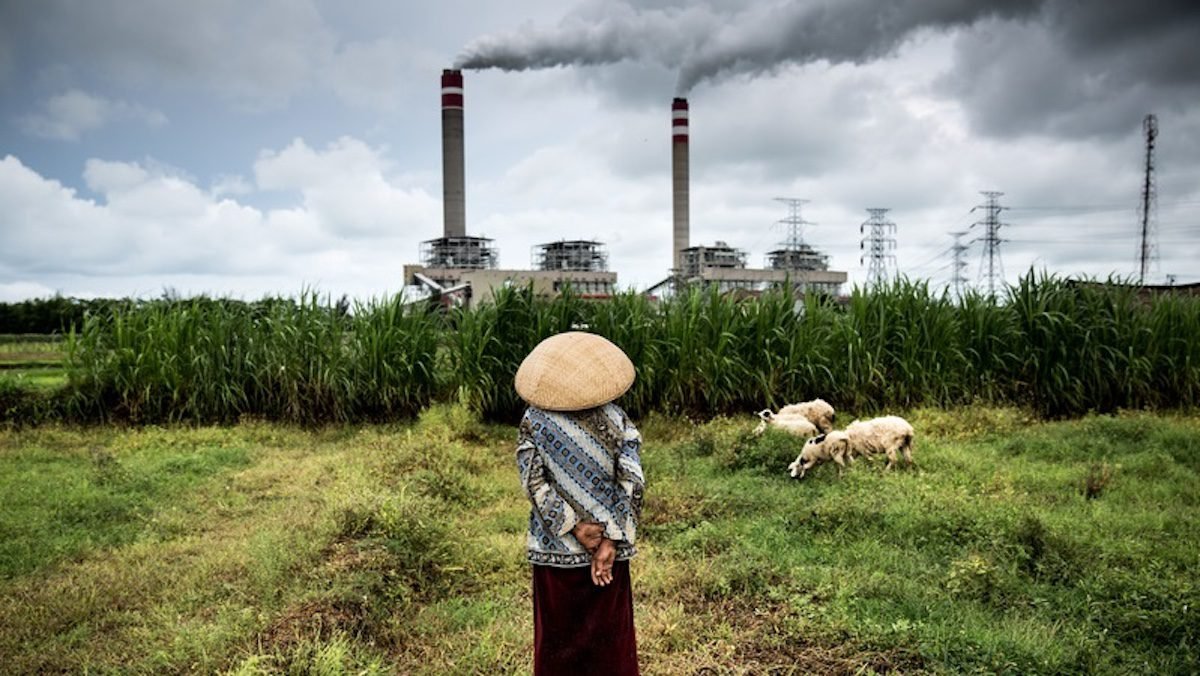
In the global race to decarbonize, Indonesia sits at a crossroads.
It is one of the world’s largest coal producers and consumers, and its economic geography tells a stark story: entire provinces — from West Java’s industrial corridors to East Kalimantan’s mining heartlands—are deeply tied to coal.
Any serious attempt to phase out fossil fuels will not just shutter power plants; it will reshape livelihoods, local economies and political realities.
That is precisely why Indonesia and Japan should move beyond fragmented energy cooperation and establish a bilateral just transition fund—targeted specifically at coal-dependent communities in West Java and East Kalimantan. Without such a mechanism, the energy transition risks becoming economically disruptive, socially unjust and politically unsustainable.
The need is urgent. Coal is not a marginal industry in Indonesia; it is foundational. In regions like East Kalimantan, coal underpins government revenues, employment and local development pathways.
When mines close or plants retire, the consequences ripple outward: job losses, declining public services and weakened regional economies. The transition to clean energy, if not carefully managed, can deepen inequality rather than reduce it.
Indonesia has already signaled its ambition to shift away from coal. It has committed to achieving net-zero emissions and significantly expanding renewable energy over the coming decades. But ambition alone is not enough. The country’s transition will require vast sums of financing—tens of billions of dollars—to replace coal capacity, modernize grids and scale up clean energy industries.
Yet most existing financing mechanisms focus overwhelmingly on infrastructure and emissions reduction. They are designed to retire coal plants, build renewables and attract private investment. What they largely overlook is the human dimension of transition: the workers, families and communities whose futures are tied to coal.
This gap is not just a moral issue; it is a strategic one. Transitions that ignore social realities tend to stall. Workers resist plant closures. Local governments push back against lost revenues.
National leaders hesitate, fearing political backlash. Indonesia’s ongoing reliance on coal—still a dominant source of energy—reflects these constraints as much as it does economic necessity.
This is where Japan’s role becomes pivotal. Japan has long been a major economic partner for Indonesia and has played a significant role in financing energy infrastructure across the country. It also positions itself as a leader in Asia’s energy transition, promoting low-carbon technologies and regional cooperation.
A bilateral just transition fund would allow Japan to align its financial and technological strengths with Indonesia’s development needs. More importantly, it would mark a shift in approach: from financing projects to supporting people.
What would such a fund look like?
First, it must be place-based. National-level commitments often fail to reach the communities most affected. West Java and East Kalimantan face distinct challenges—industrial workforce displacement in one, resource-dependent economic restructuring in the other. A bilateral fund should allocate resources directly to these regions, working closely with local governments and stakeholders.
Second, it must prioritize economic diversification. Coal-dependent regions cannot simply “switch off” one industry and “switch on” another. They need sustained investment in alternative sectors—manufacturing, sustainable agriculture, tourism and emerging green industries. Without this, coal phaseouts risk leaving behind economic voids.
Third, it must invest in people, not just projects. A just transition requires large-scale reskilling programs, education initiatives and social protection systems. Workers need pathways into new industries; communities need support during periods of economic adjustment. These are not side issues—they are central to whether the transition succeeds.
Fourth, the fund must be governed jointly and transparently. Trust is essential. Local communities must see that resources are being used effectively and equitably. A bilateral framework, co-designed by Indonesia and Japan, can provide both accountability and flexibility.
Critically, such a fund would also address a broader geopolitical reality. Energy transitions are no longer purely domestic affairs; they are shaped by international partnerships, finance flows and strategic interests.
Indonesia needs capital and technology. Japan seeks to maintain economic influence while meeting its own climate commitments. A bilateral fund would align these interests in a way that is both pragmatic and forward-looking.
Skeptics may argue that new funds risk duplicating existing initiatives. But the problem today is not duplication—it is fragmentation. Current efforts are scattered across institutions and objectives, with insufficient coordination and limited focus on social outcomes. A dedicated bilateral fund would fill a clear gap by integrating economic, social and environmental priorities into a single framework.
The alternative is a transition that falters. Without targeted support, coal regions may resist change, national policies may slow and climate goals may drift further out of reach. Indonesia’s path to decarbonization is not just about replacing energy sources; it is about reshaping an economy.
History shows that industrial transitions succeed when they are inclusive. When they fail, it is often because communities are left behind.
Indonesia and Japan have an opportunity to do this differently. By establishing a bilateral just transition fund focused on West Java and East Kalimantan, they can demonstrate that climate action and economic justice are not competing goals, but mutually reinforcing ones.
In the end, the success of the energy transition will not be measured only in megawatts of renewable power or tons of carbon reduced. It will be measured in whether the people most affected are given a fair chance to build new futures. And that is something no infrastructure project alone can deliver.
Bhima Yudhistira Adhinegara is executive director of the Jakarta-based Center of Economic and Law Studies (CELIOS) independent research institute. Muhammad Zulfikar Rakhmat is director of the institute’s China-Indonesia Desk.