Review: Supergirl is not the disaster its low box office suggests
Pour one out for Supergirl, the latest installment in the DCU’s Gods and Monsters chapter, which has been beset by online troll attacks, mixed reviews, and a very disappointing opening weekend box office—not the outcome Warner Bros. was hoping for with this follow-up to last year’s Superman. It’s actually a pretty good movie, as such films go, but it’s not a great movie. And in today’s over-saturated superhero market, that’s just not sufficient to get people out of their homes and into theaters, rather than waiting for the film to come to streaming platforms.
(Some spoilers below but no major reveals.)
The studio tapped Ana Nogueira to write the script, a holdover from the former DCEU plans for a standalone Supergirl film. (The character appeared in the finale of 2022’s The Flash, played by Sasha Calle.) The project was reimagined when James Gunn and Peter Safran took over and launched the “soft reboot” DCU. Director Craig Gillespie (Lars and the Real Girl, I Tonya) signed on to direct.
The story is adapted from the comic book miniseries Supergirl: Woman of Tomorrow, which was partially inspired by the 1968 classic Western, True Grit. Gillespie envisioned his film as a kind of interplanetary road movie, with Kara Zor-El/Supergirl (Milly Alcock) teaming up with Jason Momoa’s wild bounty hunter, Lobo, in a dynamic reminiscent of Mattie Ross and Rooster Cogburn. Lobo ended up being more of a cameo appearance; he is not featured at all in the comic miniseries, which focuses on Kara’s budding friendship with a vengeance-seeking alien child. That’s the arc the film settled on, one that harkens back to the DC Comics Silver Age.
The film opens with a montage showcasing a rebellious Kara celebrating her 23rd birthday by bar-hopping around red star planets with her space dog, Krypto—because she can actually get drunk there, as opposed to healing/empowering yellow star worlds. (Green star worlds will kill her, which predictably becomes relevant later on.) She mostly ignores the concerned calls from her cousin Kal-El/Superman/Clark Kent (David Corenswet). She’s breezily cynical, while he embraces a naive optimism and keeps encouraging her to return to Earth and try to make it her home. But for Kara, home is wherever Krypto is.
Kara also isn’t inclined to be a superhero, although she does help young Ruthye Marye Knoll (Eve Ridley) when some bar lowlifes try to steal Ruthye’s father’s sword. But she declines Ruthye’s plea to help her find the man who slaughtered her family: a Brigand leader named Krem of the Yellow Hills (Matthias Schoenaerts). Kara changes her tune when Krem hijacks Kara’s ship and shoots Krypto with a poison dart. Poor Krypto will die in three days if she can’t retrieve the antidote from Krem. The two team up, one seeking a cure, the other revenge. There’s also some sex trafficking thrown in, just to drive home the villainy of the Brigands.
A super antihero?
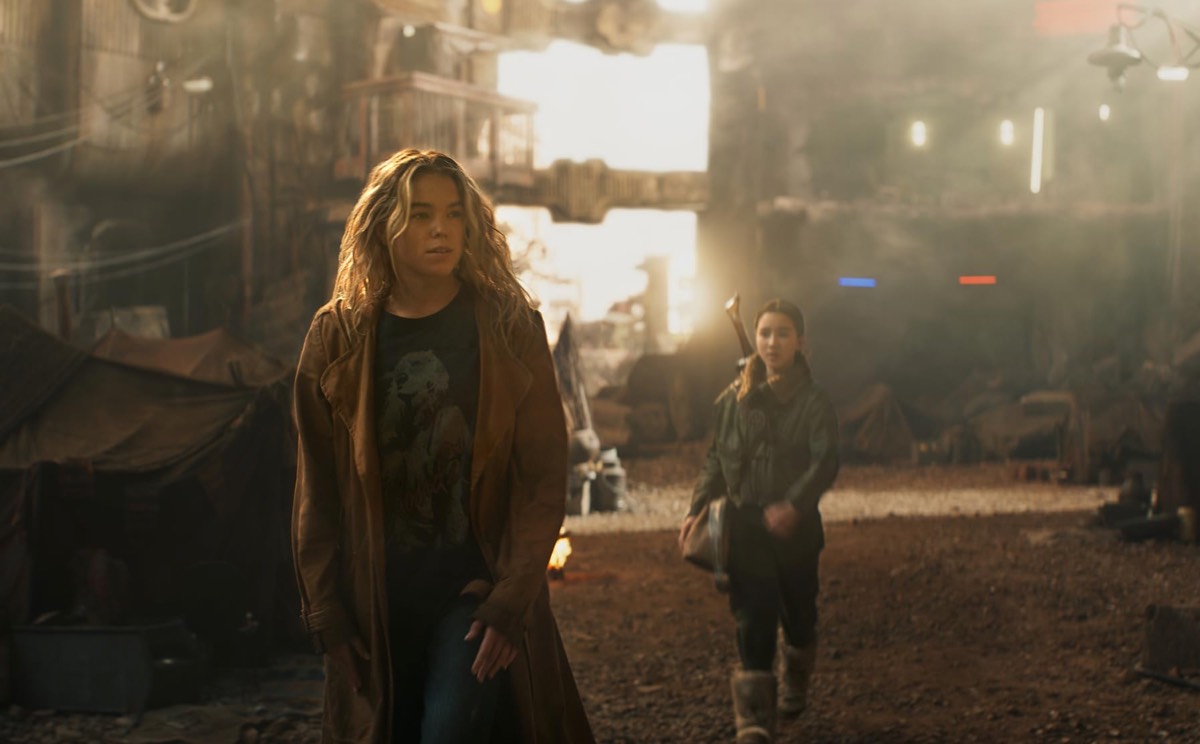
Kara Zor-El (Milly Alcock) reluctantly teams up with Ruthye (Eve Ridley)
Warner Bros.
Kara Zor-El (Milly Alcock) reluctantly teams up with Ruthye (Eve Ridley) Warner Bros.
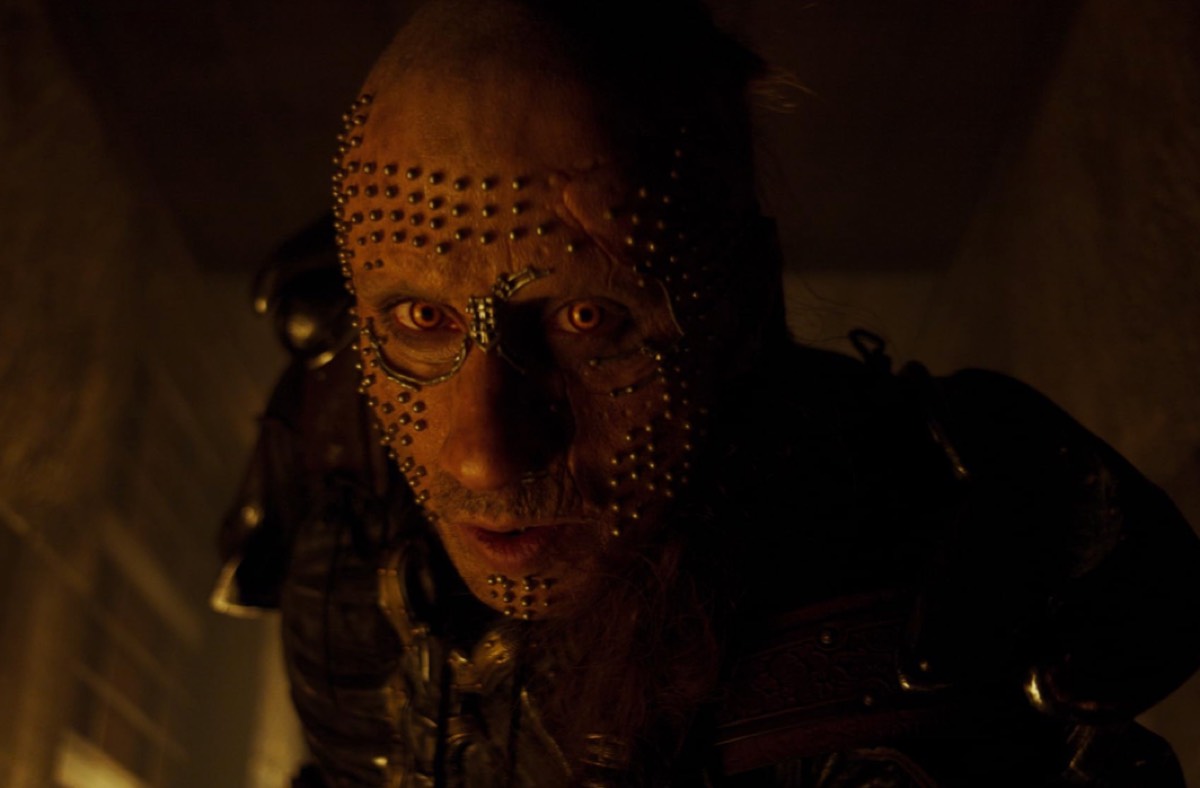
They’re after Brigand leader Krem of the Yellow Hills (Matthias Schoenaerts)
Warner Bros.
They’re after Brigand leader Krem of the Yellow Hills (Matthias Schoenaerts) Warner Bros.
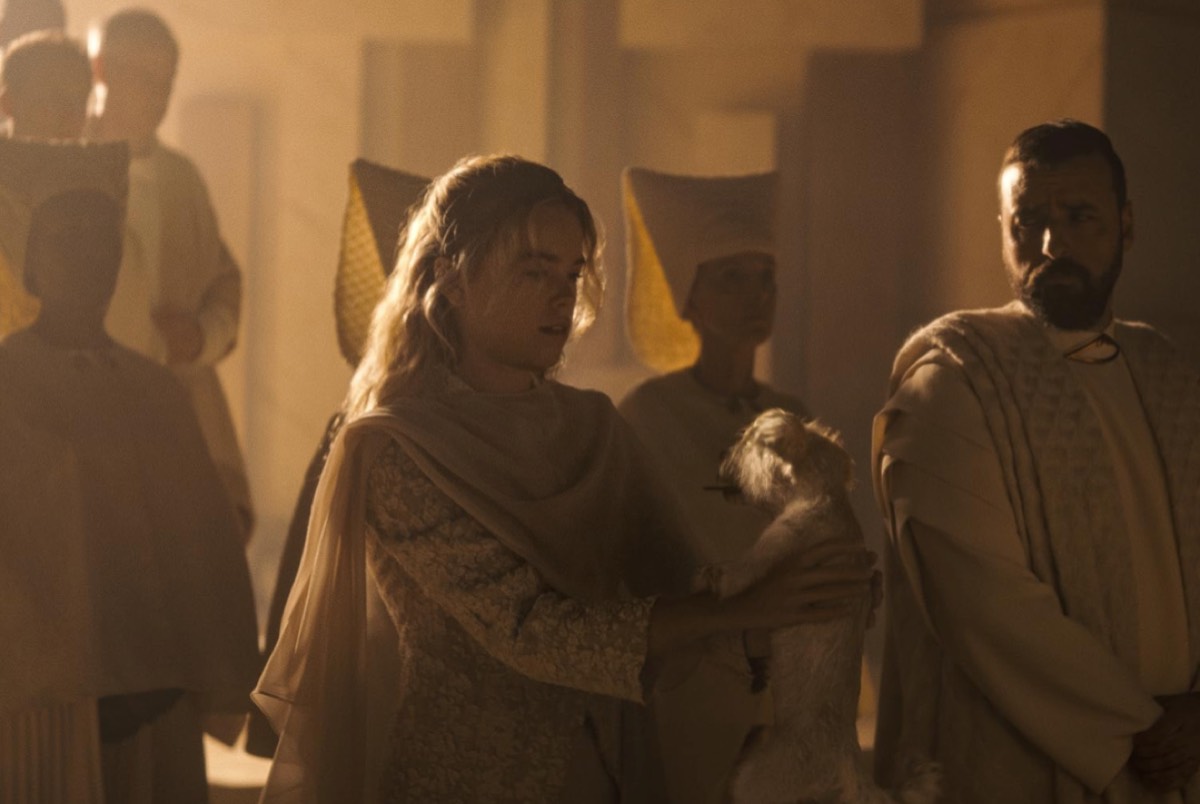
A flashback to when Kara met Krypto
Warner Bros.
A flashback to when Kara met Krypto Warner Bros.
They’re after Brigand leader Krem of the Yellow Hills (Matthias Schoenaerts) Warner Bros.
A flashback to when Kara met Krypto Warner Bros.
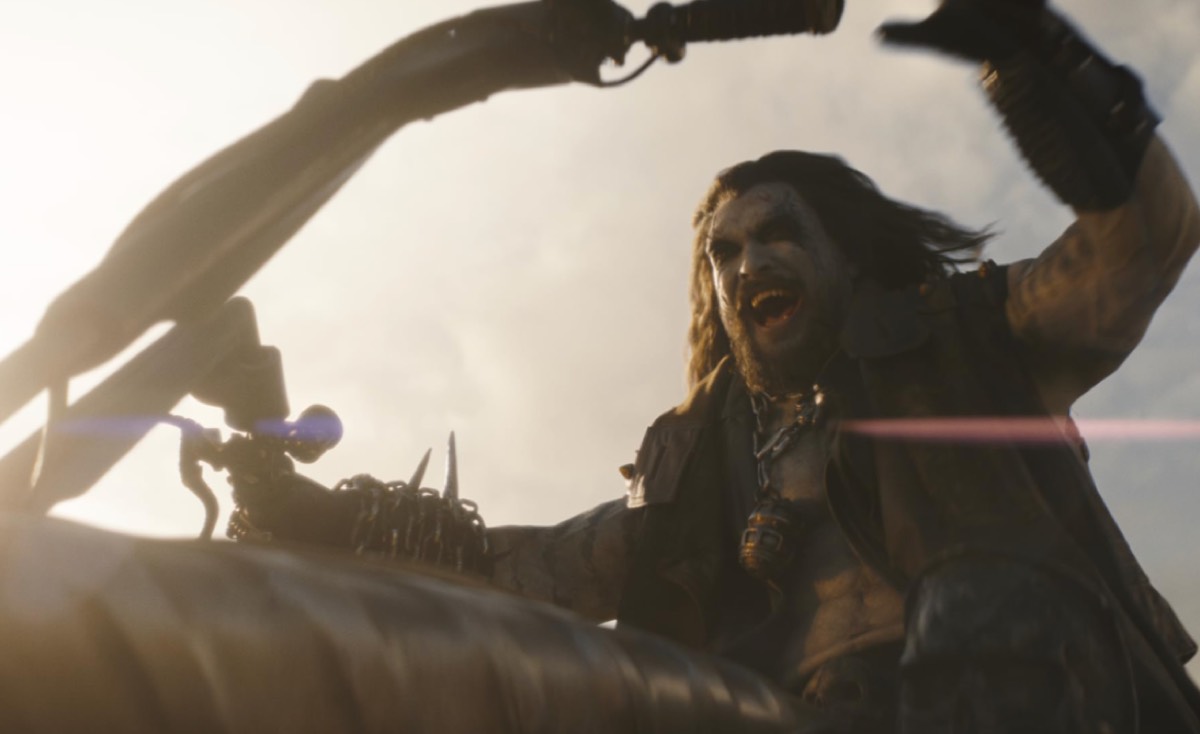
Jason Mamoa makes a couple of cameos as bounty hunter Lobo.
Warner Bros.
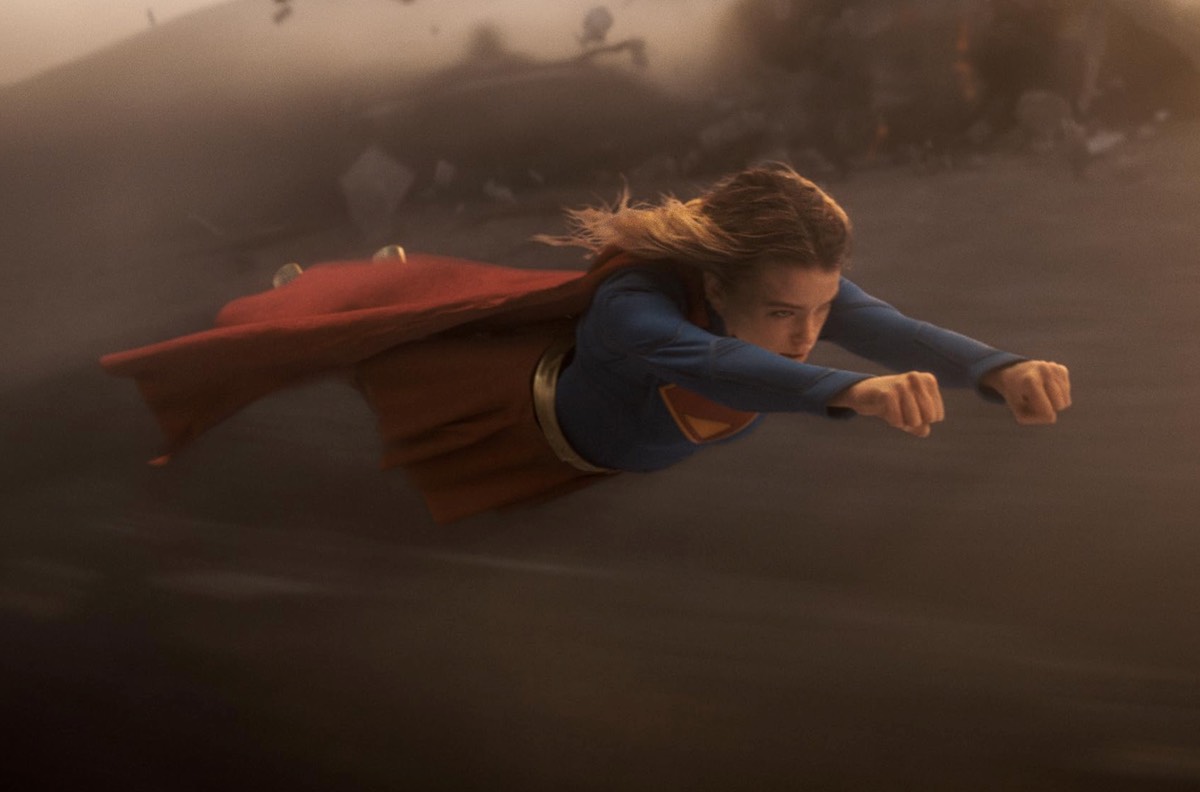
You’ll believe a girl can fly.
Warner Bros.
As with last year’s Superman, I was initially skeptical and then pleasantly surprised by how entertaining Supergirl proved to be. The plot is refreshingly straightforward without overpacking itself with super-character cameos like its predecessor. Like Kal-El, Kara must make peace with her past, but it’s a darker past, and hence so is the overall tone of the film. There are some humorous beats but Supergirl works best when it’s not trying too hard to be funny.
The strongest segments were the flashbacks to Kara’s childhood on Argo City. In this telling, while Kal-El was evacuated to Earth as a baby right before Krypton was destroyed, Kara’s father, Zor-El (David Krumholtz), figured out how to dome off the city in a separate chunk so it survived; Kara was born under the dome. But the surviving Kryptons eventually start dying of radiation sickness from kryptonite under the city, including Kara’s mother, Alura (Emily Beecham). After her mother’s death—Krypto adopts Kara during the funeral procession—Zor-El sends them both off to join Kal-El on Earth. She’s more of a super antihero than her clean-cut cousin.
Alcock, best known as the young Rhaenyra Targaryen on House of the Dragon, is terrific as Kara, combining manic pixie/burnout energy with hidden depths and vulnerability, plus she has a solid onscreen rapport with Ridley’s Ruthye. And Krypto naturally dominates his brief scenes. While Momoa’s appearances are welcome comic relief, he’s really just here to sow a bit of colorful chaos; he’s not a fleshed-out character. And Krem of the Yellow Hills is a rather dull one-note villain, despite Schoenaerts’ valiant efforts to make him something more.
Those are pretty minor dings. So why isn’t the film measuring up financially? Everyone seems to have an opinion, but there are likely several contributing factors, ongoing superhero fatigue chief among them. Fans weren’t exactly clamoring for a standalone Supergirl movie; the character barely appeared in Superman last year. Plus the trailers pretty much gave away the entire plot, which is completely predictable anyway. And the Hollywood Reporter cites competing versions and the proverbial “creative differences” between Gillespie and Gunn as contributing factors. But I think we can safely say the low box office is not because of “anti-woke” sentiments, misogyny, or Milly Alcock’s teeth.
While it’s received the lion’s share of hand-wringing commentary in the media (and invective from online trolls), Supergirl isn’t the only big-budget film to underperform at the box office this year. Masters of the Universe, The Mandalorian and Grogu, and Disclosure Day all fell short of expectations, although the latter at least recouped its production budget. Backrooms and Obsession are the big breakout hits thus far. Audiences are clearly hungering for something different, and while enjoyable, Supergirl just didn’t deliver on that. It’s that simple.
Supergirl is currently playing in theaters. It might not be an instant DCU classic—although I think retrospective assessments will be kinder—but on a scorching hot Fourth of July across a large swathe of the country, it’s a great way to beat the heat for a couple of hours. And we’ll see Alcock’s Supergirl again in next year’s Man of Tomorrow.
Medvedev says Strait of Hormuz gives Iran leverage comparable to ‘nuclear weapon’
Russian Security Council Deputy Chairman Dmitry Medvedev said Iran’s influence over the Strait of Hormuz gives it leverage comparable to a “nuclear weapon,” arguing that restricting passage through the waterway showed Tehran’s strategic reach, Anadolu reports.
Speaking to journalists after a visit to Iran, Medvedev said Tehran could disrupt shipping through the Bab el-Mandeb Strait in the event of a wider regional conflict, warning that such a move could halt oil and commercial transport.
“I hope it does not come to that, but all countries seeking conflict in the region should remember this,” he said.
Medvedev also criticized recent US strikes on Iran, calling them “completely unprovoked” and arguing that Tehran posed no threat to the US while negotiations between the two sides were underway.
He said the attacks undermined international law and claimed Russia had previously proposed a peaceful solution to concerns over Iran’s nuclear program.
On a US-Iran memorandum of understanding, Medvedev said negotiations were preferable to conflict but warned that reaching a final agreement would be “extremely difficult,” particularly on sanctions relief and funding for Iran’s reconstruction.
Medvedev also said he discussed with Iranian President Masoud Pezeshkian the idea of creating a platform for countries under sanctions to coordinate efforts against what Moscow calls “illegal” restrictions.
He said the proposal, first put forward by Tehran several years ago, could take the form of an agreement or organization bringing together sanctioned states.
Medvedev held talks with Pezeshkian in Tehran on Friday on the sidelines of funeral ceremonies for slain former Supreme Leader Ali Khamenei.
Medvedev visited Iran as a special envoy of Russian President Vladimir Putin to convey Moscow’s condolences.
Khamenei was killed in a joint US-Israeli attack on Iran on Feb. 28, an event that triggered nearly three weeks of war and sharply escalated tensions across the Middle East before a ceasefire was reached under a US-Iran memorandum brokered by regional mediators.
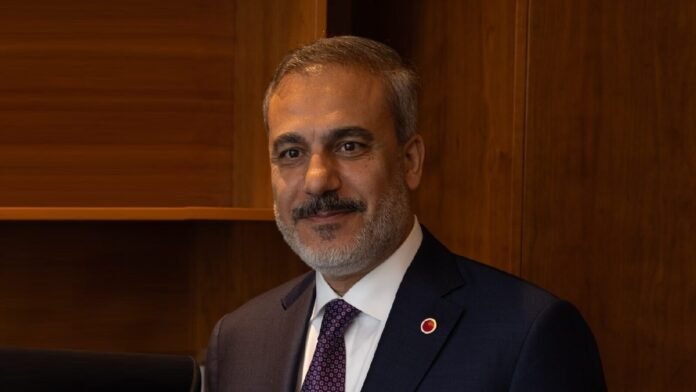
‘Incitement to Genocide’: Sa’ar Condemns Turkish FM’s Remark That Israel Is a ‘Burden That Humanity Can No Longer Bear’
Israeli Foreign Minister Gideon Sa’ar said Turkish Foreign Minister Hakan Fidan is engaging in “incitement to genocide” after Fidan remarked in a CNN Turk interview that Israel had become a “burden that humanity can no longer bear” and urged the international community to take action against Israel.
In a post on X, Sa’ar said Fidan’s remarks amounted to a call for Israel’s destruction.
“Fidan’s sickening words are textbook incitement to genocide,” Sa’ar wrote. “Dehumanizing the Jewish people as an ‘unbearable burden’ is the classic, horrific language of history’s worst eliminationist regimes.”
Turkish FM @HakanFidan’s sickening words are textbook incitement to genocide.
Dehumanizing the Jewish people as an “unbearable burden” is the classic, horrific language of history’s worst eliminationist regimes.
The civilized world and Turkey’s NATO allies must unequivocally…
— Gideon Sa’ar | גדעון סער (@gidonsaar) July 2, 2026
He also called for an international response, writing: “The civilized world and Turkey’s NATO allies must unequivocally condemn this explicit call for the erasure of Israel.”
During the CNN Turk interview, Fidan said Israel had become a “burden that humanity can no longer bear” and urged countries to impose sanctions on Jerusalem.
“No matter which framework you use, there is no parameter under which these people can be sustained,” Fidan said, adding that “the human conscience cannot bear it,” and that “political systems cannot sustain it, and economic systems cannot sustain it.”
Fidan also said Turkey “may be the only country” speaking out loudly and argued that “this is a problem for all of you,” urging other governments to “take a diplomatic stance.”
His remarks came after Turkey condemned the Israeli Cabinet’s unanimous decision to recognize the Armenian genocide perpetrated by the Ottoman Empire.
In a statement earlier this week, Turkey’s Foreign Ministry said: “The Israeli government, which has systematically persecuted the Palestinian people before the eyes of the entire world and is being tried at the International Court of Justice on charges of committing genocide against the people of Gaza, is seeking to cover up its own crimes through the political decision it has adopted regarding the events of 1915.”
The ministry added, “Turkey will continue to work resolutely to bring an end to Israel’s expansionist and destabilizing policies in the region.”
The proposal recognizing the Armenian genocide, introduced by Sa’ar, was unanimously approved by the Cabinet on Sunday and will proceed to the Knesset for final approval. It recognizes the mass killing of Armenians under the Ottoman Empire and calls on Israel to condemn efforts to deny or minimize the atrocities. The accompanying explanatory text states that the genocide began in April 1915 and resulted in the killing of 1.5 million Armenians.
Relations between Turkey and Israel, once marked by robust trade, deteriorated shortly after Hamas’ invasion on Oct. 7, 2023, with Turkey imposing a trade embargo and adopting increasingly harsh rhetoric.
A martian rock has lots of carbon on it, and it’s not clear why
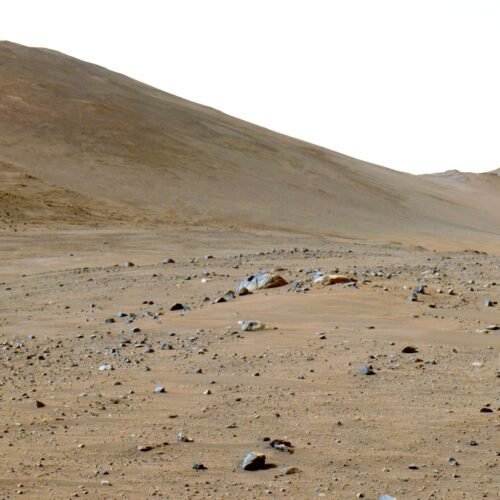
NASA’s Perseverance rover has spent five years traversing Jezero Crater looking for the chemical leftovers of whatever processes were at work on Mars billions of years ago. The rover has found organic carbon, but it has mostly been inside rocks that had to be drilled or abraded to expose it. But now, at an outcrop on the edge of an ancient river channel named Neretva Vallis, Perseverance detected complex macromolecular carbon sitting right on the rock’s surface.
“To our knowledge, that’s the shallowest detection of organic matter on Martian surface to date,” said Ashley E. Murphy, a researcher at the Planetary Institute in Tucson, Arizona, and lead author of the study of the rock, which was found at a site called Bright Angel. On Earth, this much macromolecular carbon usually suggests a biological origin. But to learn what this Bright Angel carbon is and where it came from, we might need to bring samples back to Earth.
Carbon on the rocks
The detection of Bright Angel carbon came from SHERLOC (Scanning Habitable Environments with Raman and Luminescence for Organics and Chemicals), a UV Raman spectrometer fitted on Perseverance’s robotic arm. SHERLOC fires a deep-ultraviolet laser at a target and reads the light that bounces back at shifted energies, a signal that enables scientists to identify specific molecular bonds.
Between sols 1180 and 1218, the rover pointed this UV laser at four targets at Bright Angel. One, called Steamboat Mountain, was an ordinary rock the team used as a control. The remaining three (called Cheyava Falls, Apollo Temple, and Walhalla Glades) returned a spectroscopic signature of macromolecular carbon. This signal, called the graphitic band (G-band), indicates the presence of a tangled, cross-linked network of mostly reduced carbon atoms that is resistant to chemical and thermal breakdown.
At least within the precision limits of the Perseverance’s instruments, the material roughly matches terrestrial kerogen. Using the word “kerogen,” though, was a no-go, the researchers decided. On Earth, kerogen is made almost exclusively of biological matter, mainly fossilized microbes that were buried millions of years ago. “The term kerogen implies biogenic source,” Murphy explained. “Macromolecular carbon implies we don’t know whether its origin is biotic or abiotic.”
The material found on Martian rocks, Murphy’s team warns, might have originated from non-biological processes as well.
A result like this usually invites two major questions, and the team immediately got busy trying to answer them.
Artifacts and stowaways
The first concern was that the signal could have been light bouncing off SHERLOC’s own fused-silica front window. Bright Angel was the first site SHERLOC examined after a dust-cover anomaly disabled its focusing mechanism, forcing the team to adopt a new operating mode.
To characterize the new mode, Kyle Uckert, SHERLOC’s deputy principal investigator at NASA’s JPL, and his colleagues collected spectra from spare flight optics in their own lab. They also pointed SHERLOC at nothing in particular on Mars and at known calibration targets. All these were used to confirm that SHERLOC was working properly.
The final confirmation of the data came when the team pointed it at Steamboat Mountain. “Other rock targets nearby do not exhibit the G-band spectral signal,” Uckert said. The Bright Angel signal was not coming from hardware.
The second concern was contamination—perhaps the rover itself dragged the organic material from Earth? Scientists pointed out that the abrasion bit the rover used to expose the rocks was sterilized before launch and has cut into other rocks across Jezero without ever producing a G-band this strong.
Also, the Cheyava Falls rock was never touched by the hardware; the rover just blew the dust off its surface with a nitrogen puff. On top of that, the Steamboat Mountain scientist used as a control again came up empty. “It did not exhibit spectral evidence of organic matter,” Uckert explained.
Chemical company
Once it was clear that the finding was most likely real, the team took a closer look at the chemistry of the material nearest to the Martian macromolecular carbon. “It suggests the carbon emplacement may have occurred during at least two different events over geologic time,” Murphy said.
At Apollo Temple, the signal clustered with carbonate and sulfate minerals–the kind that precipitate out of water moving through older rock. At Walhalla Glades, the carbon instead sat within silicate-rich sediment.
Murphy sees that split as evidence for at least two separate windows in which carbon could have been locked into these rocks. First, as organic matter settled into mud at the bottom of an ancient lake and was buried alongside the sediment and again when groundwater later moved through this buried rock and left behind new carbonate and sulfate minerals.
In the end, though, the question of whether Bright Angel carbon is a remnant of ancient Martian life will remain open for quite a while. “The science payload of the Perseverance rover was not designed to distinguish between abiotic and biotic processes but to identify compelling rocks to be collected for possible return to Earth,” says Uckert.
The unanswered question
“Perseverance rover has an incredible instrument payload, but those instruments pale in comparison to world-class techniques that could be used to analyze these samples when they get back to Earth,” said Kevin P. Hand, the Perseverance principal investigator at JPL.
Hand is especially interested in the isotopic signature of Bright Angle’s carbon, which might provide some indications of life. Another thing he wants to look into is chirality—a preference for one type of molecular handedness over another that is strongly associated with biotic origin. “We could also use some of the most powerful microscopes on Earth to search for ancient microbial fossils, if you will, that could be indicative of past life on Mars,” Hand explained.
There is no shortage of abiotic mechanisms that could create such a material. Fluid-rock reactions in some environments are known to synthesize organic compounds with no life involved. Murphy notes that carbon found near carbonate minerals on Earth can be traced back to either water-rock chemistry or microbes, depending on the setting. Hand, though, hopes Perseverance still has a lot to discover on Mars before we ship the samples it has collected to Earth.
“Now we are exploring the region outside of Jezero crater—the rocks over which we’re currently roving are perhaps some of the oldest rocks ever investigated by a rover on Mars,” Hand said. “There’s a chance that if life arose early on in the history of Mars, we might find some hints of it in the rocks we’re looking at now,” he added.
Hollywood Star Accused of Hiding Two ‘Secret Kids’
Hollywood is buzzing over a stunning rumor that a major star may have secretly welcomed two more children — and allegedly went to extraordinary lengths to keep them out of the spotlight.
Speculation has erupted online after claims surfaced that an unidentified A-lister asked for references to two of their children to be removed from an interview.
The mysterious celebrity is publicly believed to have two children. However, the explosive account claims the star casually mentioned having four during an interview conducted amid the previous awards season.
According to the story, the celebrity’s publicist later stepped in and allegedly requested that the published article mention only the two children already known to the public.
The claim has not been independently verified, and no evidence has emerged confirming the identity of the star involved.
That has not stopped internet sleuths from launching a frenzied hunt for answers.
Social media users and entertainment forums have begun examining the private lives of famous actors and actresses, attempting to determine who might secretly be raising a family twice the size the public has been led to believe.
“The fascination isn’t really about how many children a celebrity has,” one entertainment industry source said. “It’s about how effectively some public figures can maintain boundaries around their personal lives in an era when almost everything else becomes public.”
Another media insider warned that keeping children away from the cameras should not automatically be viewed as suspicious.
“Many actors make deliberate decisions to shield their children from public attention,” the insider said. “That shouldn’t automatically be treated as evidence that they’re hiding something.”
“Privacy and secrecy are not the same thing,” the source added. “But rumors are now rife that a very well-known actor is actually a parent of four — not two.”
Felicity Jones Pulled Into the Mystery
One name repeatedly raised by online commentators is British actress Felicity Jones, although there is no concrete evidence connecting her to the claim.
Jones, 42, has fiercely guarded her private life while maintaining a successful Hollywood career.
She and her husband, filmmaker Charles Guard, are publicly known to have two young children. The couple has not revealed their children’s names or shared photographs of them.
Jones has also spoken only occasionally about motherhood, while Guard has remained similarly quiet about their home life.
The couple is rarely photographed with their children, an approach shared by many celebrities who want to protect their families from unwanted attention.
Jones received a 2025 Academy Award nomination for Best Supporting Actress for her performance in The Brutalist.
She was also nominated for an Oscar for The Theory of Everything and starred as Jyn Erso in the blockbuster Rogue One: A Star Wars Story.
The actress has built a reputation for understated performances and an intensely private life away from movie sets and red carpets.
Rumor Raises Questions About Celebrity Privacy
The alleged “secret children” story has also sparked a wider debate about how far the media should go when reporting on the families of public figures.
“The media landscape has evolved,” one source explained. “Editors now frequently weigh the public interest against the potential impact of publishing details involving children who have not sought public attention.”
The insider said the frenzy demonstrates how quickly speculation can spread when celebrities refuse to discuss their private lives.
“This rumor serves as a reminder that celebrity culture often encourages speculation in the absence of verified information,” the source said, “while many public figures continue to draw firm boundaries between their professional careers and their private family lives.”
For now, the identity of the supposed Hollywood parent of four remains a mystery — and there is no proof that the explosive claim is true.
But with online detectives digging into the family histories of some of Hollywood’s biggest stars, the rumor mill is unlikely to slow down anytime soon.
Much has been said about the importance of the West Philippine Sea for Manila’s sovereignty, territorial integrity and resource access. However, there is a gap between those goals and the means to achieve them.
The West Philippine Sea is Manila’s term for the portion of the South China Sea within its exclusive economic zone (EEZ) — waters also claimed, in whole or in part, by China, Vietnam, Malaysia, Brunei and Taiwan.
Of these overlapping claims, the rivalry between Manila and Beijing has proven the most volatile, marked by recurring standoffs at sea, water-cannon incidents and diplomatic protests.
In any assessment of the effectiveness of the Philippines’ sea strategy, the metrics should be clear. Is it able to develop its Kalayaan outposts beyond Thitu Island (Pag-asa), as China did and Vietnam is doing with their Spratly possessions?
Is the Philippines able to extract offshore petroleum from Recto Bank or other promising fields to replace the aging Malampaya, the way Malaysia is doing? Is it able to increase its wild fisheries catch or expand mariculture in its EEZ?
Is it able to reduce untoward incidents and political-security risks to attract more economic activity in the area? Manila should go for tangibles and enduring results, not simply settle for sound bites and optics.
The Philippines should not confine itself to counting the number of ships or aircraft from other claimants entering its EEZ or the airspace above it. Manila should not be satisfied with conducting more maritime exercises with other allies and partners in choppy waters.
While that may be good for posturing, it risks fostering reliance on external support, even for routine measures such as resupply and patrol sorties in the face of interference. And such foreign support is contingent on an ally’s evolving domestic political calculations.
Knowing what is going on out there and getting more partners invested in freedom of navigation and peaceful resolution of disputes are important. Passing relevant municipal laws is also a sovereign act that bolsters one’s case in a flashpoint.
But these do not necessarily translate into improvements in structures in the country’s administered reefs, tapping indigenous hydrocarbons to lessen dependence on imported fuel, or increasing food security by catching more fish in rough waters.
Disputes had not been an impediment to other claimants, such as fellow ASEAN neighbors Malaysia and Vietnam, in achieving their objectives in the semi-enclosed sea. Countries modernize their militaries and coast guards, undertake drills with partners and file diplomatic protests for intrusions and incidents.
These are regular, done professionally and discreetly, with no fanfare. With satellite, aerial reconnaissance and ship tracking technology, nothing significant – whether reclamation or suspicious ship movements – goes unnoticed.
Broadcasting them is a decision parties consider. Exposure for exposure’s sake and engaging in wars of words to score political points can be done. The question is whether they advance the country’s interests and, if so, to what extent?
The Philippines is a pioneer in occupying and administering some of the largest land features in the Spratly Islands. However, this first-mover advantage has been eroded by decades of neglect, a focus on counterinsurgency at home and reliance on external support, not least US security guarantees outlined in the two sides’ mutual defense treaty.
The Sampaguita well, drilled by a consortium of firms led by US company Amoco, confirmed the presence of petroleum in Recto Bank as early as 1976. However, this discovery did not proceed to development, and Malampaya, farther east, would not begin commercial operations until 2002.
Filipino fishers had been operating in the Scarborough Shoal and Spratly Islands for generations, but no major fish port or fish processing facility had been put in western Palawan facing the West Philippine Sea.
Likewise, despite the obvious geographic advantage, there is no major coast guard or naval base in western Palawan, a handicap that has only recently been addressed by upgrading minor stations and detachments in the area.
These lost opportunities are already water under the bridge, but the lesson should not be lost – assigning blame to external factors cannot excuse domestic lapses.
The South China Sea dispute is a multiparty row. Each claimant has its own security calculation and a strategy to pursue it. Most have clear priorities and redlines. It can be oil and gas works for Malaysia, developing infrastructure in the Spratlys for Vietnam or responding to perceived US containment for China.
Differences and incidents aside, other disputants still get what they want in contested waters. In 2024, Malaysia opened its new Kasawari gas field, which is poised to be one of the world’s largest offshore carbon capture and sequestration projects.
Vietnam is completing its second Spratlys airfield in Barque Canada Reef and expanding facilities in its other outposts in the contested chain. After a decade-long hiatus, China is embarking on a major reclamation project – this time at Antelope Reef in the Paracel Islands, where it has overlapping claims with Vietnam.
Any map of offshore oil and gas blocks in the South China Sea shows which countries are most active in extracting petroleum from the semi-enclosed sea. Regrettably, the Philippines is a laggard in this regard, declaring force majeure and being unable to attract major investors.
Multinationals Shell and Chevron have already left Malampaya. No wonder the Philippines is one of the most exposed in the region to the global oil shock caused by the Iran war and blockade of Hormuz.
Unlike China National Offshore Oil Corporation (CNOOC), Malaysia’s Petronas, Indonesia’s Pertamina or PetroVietnam, the Philippine National Oil Company (PNOC) relies more on foreign partners for most upstream works.
Aerial photos reveal how other littoral states have fortified their occupied features, while Manila’s remain the most environmentally exposed. Some of the country’s strategic shoals in the so-called Dangerous Grounds are being lost not to rival claimants but to the elements, with waves chipping away at their shores.
Obviously, the real test of whether a strategy works is whether it delivers. Whether it is quiet or loud is secondary to whether it gets the job done. The Philippines should not settle for the legal or moral high ground, joint military drills or aggressive transparency.
The Philippines’ sea strategy should have clear goals and yardsticks, and a better-calibrated mix of defense and diplomatic tools to achieve them.
Lucio Blanco Pitlo III is president of the Philippine Association for Chinese Studies and research fellow at the Asia-Pacific Pathways to Progress Foundation. The views expressed here are his own.
The Horrifying Lessons of 250 Years of American History
A History of Violence
I’ve lived through the last 51 of America’s 250 years. For much of it, I’ve believed that the United States was sick beyond salvation. And yet, I never quite imagined the U.S. would be where it is today. That was a failure of vision because America at 250 is, in my estimation, exactly where it deserves to be. It’s a nation gone rancid, a country polluted by its past, and more so, by the abject failure to reckon with it.
Once, it seemed open to question. Would America be the land defined by Jim Crow? Or by the civil rights movement? The country that made war on innocent people half a world away? Or one that owned up to the criminality of that slaughter and turned swords into ploughshares? A nation that jailed women for sending information about birth control through the mail? Or a country that gave people autonomy over their bodies? The odds were always stacked against the U.S., poisoned at the root as it is by twin original sins: settler colonialism and chattel slavery. From these evils, so many other offenses to humanity have flowed. Maybe no country could overcome such a legacy.
Still, many Americans broke their bodies and laid down their lives trying to atone for the sins of the founders and those that followed them. Ordinary people pressed and struggled to gain some measure of the liberties, equality, and the chance at happiness promised, but not delivered, at America’s birth. In return, they faced terror, truncheons, and tear gas. Year after year, people denied supposedly inalienable rights faced down, for themselves and their neighbors, white-hooded nightriders and bayonet-bearing troops and robber barons and monied interests and hateful bigots and vicious police and craven politicians and foolish experts and infinite hordes of functionaries and good-German-type neighbors willing to do the bidding of oppressors or just look the other way. But because of all these shattered skulls and cracked ribs, endless abuse and arrests and incarcerations, there was a chance for redemption.
You could almost see it if you squinted hard enough. That fleeting moment when a panoply of rights movements appeared ascendant, and that long arc of the moral universe was straining hard toward justice, and the volunteers of America — an unarmed army of the better angels of our nature — were on the march. For an instant, it was there: a shining wave of promise about to swamp the forces of America’s decrepit order. Maybe you glimpsed it in the raucous joy of an occupied campus or park or city block, on a graffiti-scribbled wall, in the smoke of a burning tire, in the frenzied talk of a comrade, in the pages of a banned book, wherever; you sure knew it if you saw it.
But that shimmering wonder crested, collapsed, and consumed itself. Now you need to crane your neck and strain your eyes to see the bare trace of that high-water mark — the cruel evidence of the last, best hope for America’s redemption just before it was swept back into the depths. We’ve been drifting ever further from it since.
If the question of which America would prevail hadn’t been settled earlier, the reelection of a megalomaniacal, racist, war-mongering, bigoted, vulgar, anti-democratic, authoritarian, inveterate liar, and would-be tyrant to preside over America’s semiquincentennial seemingly resolved it.
America is the “greatest, strongest, and most exceptional nation the world has ever known,” said President Donald Trump recently in celebrating the country’s 250th birthday with a rally on the National Mall. He added that it was “superior to any nation that’s ever been built no matter how many years it took.”
While Trump’s demented, deteriorating mind might not recall George Orwell’s warning in 1984 — “Who controls the past controls the future; who controls the present controls the past” — he or his minions certainly understand the concept on some level. Immediately upon taking office last year, Trump began efforts to whitewash — quite literally — American history to match his boasts. An executive order issued last March took aim at a supposed “widespread effort to rewrite our Nation’s history” to “undermine the remarkable achievements of the United States by casting its founding principles and historical milestones in a negative light.”
It’s Trump, however, who has been rewriting history to comport with his claims. For months, to take one example, Trump has fought a pitched battle to censor the history of his presidential predecessor George Washington, whom he calls “our foremost American hero.” For his exploits at Trenton and Valley Forge, for his leadership in the turbulence of the Revolution’s wake, the capital bears Washington’s name and in it a giant obelisk stands in his honor. Most Americans have literally, if not figuratively, long embraced his visage since his face adorns the quarter and the dollar bill.
In January 2026, crowbar-wielding workmen descended on the President’s House site on Philadelphia’s Independence Mall, where Washington and his wife Martha lived in the 1790s — when the city was briefly the nation’s capital — with nine of their slaves. On orders from the Trump administration, the workers pried off panels discussing the ownership of people by our foremost American hero™, details about the lives of those enslaved men and women, and information about the broader history of slavery. Recently, a federal appeals court discarded an injunction ordering the National Park Service to restore the site, allowing the Trump administration to replace the slavery exhibit. “It is an attempt to sanitize history and present a version of the past that is more comfortable, but far less truthful,” wrote the Avenging the Ancestors Coalition, which led the movement to craft the original display.
No country can be great, much less the “greatest,” if it’s afraid of its own people knowing the story of their nation. Trump looks at America and sees an “unparalleled legacy of advancing liberty, individual rights, and human happiness,” according to that executive order. He claims that malevolent forces have “reconstructed” America’s past as “inherently racist, sexist, oppressive, or otherwise irredeemably flawed,” fostering “a sense of national shame.” But no one need rewrite U.S. history to foster a sense of unrelenting disgrace. It’s everywhere, if we have the courage to call it out.
In 1779, for example, Washington ordered a scorched-earth campaign against native peoples, to bring about the “total ruin” of the so-called Six Nations across hundreds of miles of Pennsylvania and New York. “The immediate objects are the total destruction and devastation of their settlements,” he told Maj. Gen. John Sullivan. When the operation was over, Sullivan’s army had destroyed more than 40 villages.
Such sins of America are legion. Given the time and space, one could name 250 or 250,000 or 2.5 million of them. On this Fourth of July, it’s worth recalling some of those inconvenient truths that Trump would rather you forget and future generations never know.
Col. John Chivington, the head of the Colorado military district led more than 700 troops to attack Cheyenne and Arapaho groups at dawn on November 29, 1864. In what he called “an act of duty to ourselves and to civilization,” his men unleashed gunfire and artillery on a sleeping village at Sand Creek. For almost four hours, they slaughtered the camp’s inhabitants, two-thirds of them women and children. Many Native women were also raped, and Native American scalps, breasts, and genitalia were taken as souvenirs. In a letter to Maj. Gen. Samuel Curtis, Chivington stated: “It may, perhaps, be unnecessary for me to state that I captured no prisoners. Between five and six hundred Indians were left dead upon the field.”
In 1914, striking miners in Ludlow, Colorado, were celebrating Greek Easter when the Colorado National Guard and a private security company opened fire on their camp with a machine-gun-equipped armored car that the miners called “the Death Special.” Those miners fought the National Guard for 10 days before President Woodrow Wilson ordered in federal troops. Almost 200 people were killed, according to some estimates.
A two-day attack by white mobs on Tulsa, Oklahoma’s Greenwood district in 1921 began after Black Tulsans attempted to prevent a man’s lynching. Rioting white people, in response, killed hundreds, and more than 30 city blocks were destroyed, including a community known as Black Wall Street. Viola Ford Fletcher, a survivor, recalled piles of bodies in the streets and watched a white man execute a Black man and then shoot at her family.
During the 20th century, coerced and forced sterilization became a method of controlling “undesirable” populations: disabled people, immigrants, people of color, the poor, unmarried mothers, those with mental illness, and others. This included federally funded sterilization programs in 32 states. Over 70 years in California, for example, approximately 20,000 men and women were sterilized in state institutions, often without their full consent.
From 1932 to 1972, 399 black men, many of them sharecroppers and poor, in Alabama were denied treatment for syphilis and deceived by doctors from the U.S. Public Health Service as part of the Tuskegee syphilis study. Despite the availability of penicillin beginning in the 1940s and the fact that syphilis can damage the heart, brain, and other organs, government officials ensured the men received no medical care while telling them they were being treated for “bad blood.” 128 of the men are estimated to have died from syphilis and related complications.
In a horrifying echo of the Tuskegee syphilis study, U.S. government and Guatemalan doctors in the 1940s intentionally infected more than 1,300 Guatemalan soldiers, prisoners, hospital patients, and sex workers with three sexually-transmitted infections — chancroid, gonorrhea, and syphilis — to study potential treatments. The researchers also paid sex workers to transmit the diseases. Left untreated, all three can be fatal.
The U.S. government conducted thousands of radiation experiments on Americans, including children, from 1944 to 1974. They included the injection of plutonium into people’s bodies, marching troops into the wake of a nuclear explosion, and releasing radioactive substances into the air to track their movement or effects.
U.S. troops from the “Greatest Generation” committed tens if not hundreds of thousands of rapes in Europe during and after World War II. Around 190,000 German women alone were raped between the U.S invasion of Nazi Germany and 1955, when West Germany regained its sovereignty, according to one estimate. In reports compiled by Bavarian priests in the summer of 1945, the youngest victim mentioned was a 7-year-old child. The oldest was a woman in her 60s.
On August 6, 1945, the U.S. launched the world’s first nuclear attack on the Japanese city of Hiroshima. Around 70,000 people, nearly all of them civilians, were vaporized, crushed, burned, or irradiated to death almost immediately. Another 50,000 probably died soon after. As many as 280,000 were dead, many of radiation sickness, by the end of the year. An atomic strike on the city of Nagasaki, three days later, is thought to have killed as many as 70,000.
The FBI’s infamous COINTELPRO program targeted the civil rights movement, the New Left, and anti-Vietnam War protesters, among others in the 1960s and 1970s. According to a 1976 Senate report, it “turn[ed] a law enforcement agency into a law violator.” The FBI, the committee found, “went beyond the collection of intelligence to secret action designed to ‘disrupt’ and ‘neutralize’ target groups and individuals,” using “wartime counterintelligence” techniques that “would be intolerable in a democratic society even if all of the targets had been involved in violent activity,” which they were not.
On March 15, 1968 in South Vietnam, U.S. troops were briefed by their commanding officer, Capt. Ernest Medina. The Americans were told they would find enemy troops in the village of My Lai and, as one unit member recalled, Medina “ordered us to ‘kill everything in the village.’” When the troops arrived, they encountered only civilians: women, children, and old men. Nonetheless, Medina’s order was carried out. More than 500 civilians were slaughtered over the course of four hours. The soldiers even took a break to eat lunch amid the carnage. Along the way, they also raped women and young girls, mutilated the dead, and systematically burned homes.
There is no way not to view these “historical milestones in a negative light.” Nor the sins of the Afghanistan War, the Iraq War, the global war on terror and the countless crimes they spawned. In the five-plus years Trump has been in the White House, alone, the U.S. has been embroiled in more than 20 military interventions, armed conflicts, and wars. We’ve also watched as Black women and men were murdered in cavalier fashion and anti-ICE protesters were gunned down in the streets. We’ve seen immigrants deported to foreign prisons, war zones, and human rights-violating pariah states for spite, and rights disappeared as if they were panels detailing historical truths.
“There has never been anything like the United States of America,” Trump said recently. It’s lucky for the world. Because for every landing at Normandy, there is a massacre at Bear River or Sand Creek or Samar or No Gun Ri or My Lai or Le Bac 2 many times over. I’ve spoken with hundreds of survivors of these types of atrocities. I know the story of America’s impact abroad better than most.
Trump believes that he resuscitated the U.S. “A short time ago we were a dead country,” he said during semiquincentennial festivities. “We were dead.” Those comments about America’s death resonated with me — even if I don’t think they’re true — because the other side of that coin is rebirth. While I don’t believe this country can be redeemed, that doesn’t mean it can’t be reborn.
Washington isn’t the only predecessor Trump loves. He’s also besotted with, as he put it, “the late, great Thomas Jefferson, one of our most important Founding Fathers.” Although in Trump’s version of history, Jefferson was a “principal writer of the Constitution.” (He actually authored the Declaration of Independence — the anniversary Trump is celebrating these days.) Perhaps if Trump knew what Jefferson, another slaveholder, actually wrote, he would be less enamored. Whatever his grave faults, Jefferson offered a prescription for an ailing nation. What country “can preserve its liberties if their rulers are not warned from time to time that their people preserve the spirit of resistance?” he asked in a 1787 letter. Noting the necessity of “rebellion,” he continued, “The tree of liberty must be refreshed from time to time with the blood of patriots and tyrants.”
Two hundred and fifty years in, during the presidency of a sick-minded, wanna-be despot, and despoiler of history, it’s worth considering the endless sins of America, its sheer brutality, its staunch resistance to reform, and how one of Trump’s favorite founders thought about sending a message to “rulers.” A country that won’t face its crimes and instead tries to disappear them can’t be saved. Even rebellion, at this late date, might be only a half-measure. But if there is any wisdom left in Jefferson’s words, it could be somewhere to start.
About 14 years ago, Chrissi Kelly lost her sense of smell. She had traveled to the Czech Republic to visit family and caught some virus. Months later, when she still couldn’t smell, she made the rounds to doctors, including her general practitioner and an ear, nose and throat specialist, trying to find answers.
She was diagnosed with anosmia (smell loss), and like many patients with her condition, was told she’d have to learn to live with it. But for her, the loss was catastrophic. “After about six months of complete loss, I was just climbing the walls, and I did not feel like myself anymore,” she says.
Researchers estimate that up to 22 percent of the population lives with smell impairments, like hyposmia (partial smell loss) or anosmia (complete smell loss). And many others live with smell disorders like phantosmia, in which a person picks up phantom smells, or parosmia, where typically pleasant scents like coffee or shampoo begin to register as highly unpleasant (think feces or vomit). Yet the conditions have been poorly understood, underdiagnosed and often minimized by clinicians.
The pandemic changed that. Covid brought unprecedented attention—and research interest — to the sense of smell. There have been 780 million reported cases of Covid-19 since December 2019 (and many more unreported), according to the World Health Organization, and smell loss is a well-known symptom. In one 2023 survey published in the journal Laryngoscope, 60 percent of individuals with Covid experienced smell loss, most temporarily, but some over the longer term.
With Covid causing millions of noses worldwide to malfunction at roughly the same time, the virus spurred newfound appreciation for, and research into, this critical sense. As scientists learn more about the way that the sense of smell operates, evidence is mounting that smell is deeply tied not only to quality of life but also to brain health.
The undervalued sense
In the 19th century, French brain researcher Paul Broca argued that humans had traded a keen sense of smell for higher intellect, labeling olfaction “the bestial sense.” His ideas led to decades of scientific neglect. Modern research has proved him wrong. Smell enriches life and directs our behavior. It helps parents and children to bond, warns us of environmental dangers, and anchors emotional memory. “Humans are actually quite good at smelling,” says Swedish psychologist Jonas Olofsson, author of The Forgotten Sense: The New Science of Smell and the Extraordinary Power of the Nose.
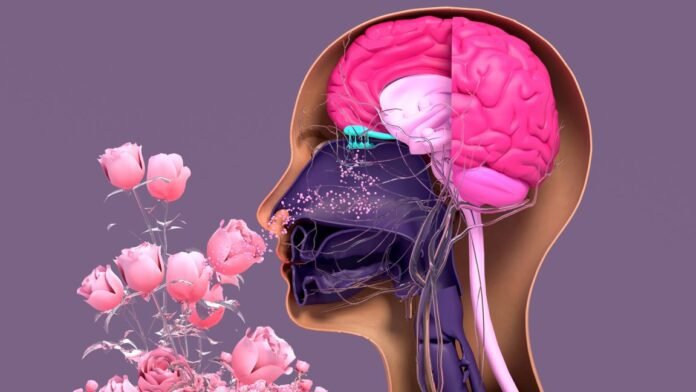
We smell by detecting airborne molecules that bind to specialized receptors in the nasal cavity. Millions of olfactory neurons in the upper nose detect these odorants, then send electrical impulses via the olfactory bulbs, which create a sensory map in the brain—basically, a system to identify, distinguish, and remember scents. Unlike vision or hearing, smell directly signals brain areas responsible for emotion (the amygdala) and memory (the hippocampus), which could be why smells can strongly trigger memories.
Furthermore, the olfactory bulbs are now known to be among the few brain regions that create new neurons during adulthood. This is thought to help the brain deal with constantly changing environments. The olfactory bulbs are also the most vulnerable part of the brain—a potential entry site for viruses, bacteria, toxins and perhaps even microplastics.
After losing her sense of smell, Kelly searched for insight and commiseration. Finding neither, she founded two nonprofitpatient groups. Along the way, she also became a community scientist, co-publishing more than 30 academic papers with researchers.
Kelly describes our olfactory bulbs as “two little earthworms lying in their crypts,” located on the bottom surface of the brain’s frontal lobes, directly above the nasal cavity. “These crypts have got little holes underneath, through which the olfactory nerves grow, like roots coming through the bottom of a pot in the garden,” she says. Hair-like extensions from the olfactory nerves protrude into the inside of the nose’s mucous membrane. Olfactory support cells surround and nourish each nerve cell.
Reasons for smell loss
Some people lose their sense of smell for no known reason. Others lose it after a virus attacks the olfactory support cells. When the support cells regenerate (four to six weeks later, on average), smell returns. Smell loss can also be due to a head injury that damages the olfactory nerves or causes inflammation. Allergies and sinus infections can cause swelling and inflammation that lead to smell loss. Sometimes the problem clears when the inflammation does. Less fortunate folks, like Kelly, suffer assaults to their olfactory nerves that cause lasting damage.
And sometimes, smell loss can be a harbinger of deeper trouble. Dave, a wine lover living in the Midwest who asked that his last name be withheld for privacy, says losing his sense of smell 20 years ago was an inconvenience, but he managed. “I faked it,” he says, of taking wine tours in the Napa and Sonoma Valleys with his wife, and on a cruise that kicked off with wine-filled days in Nice, France. After years of doctors telling him they couldn’t find anything wrong with him, he began to experience a slowed gait and tremors, and was diagnosed with Parkinson’s disease.
There are a lot of unknowns about the earliest—or prodromal—stages of Parkinson’s, says Ethan G. Brown, a neurologist at the University of California, San Francisco’s Movement Disorders Clinic. “We don’t know when neurodegeneration actually starts,” he says.
A defining feature of the disorder is a major loss of dopamine-producing cells in a brain region called the substantia nigra, and new imaging tools suggest the damage begins years before clear symptoms. Scientists suspect toxic proteins that damage the substantia nigra may first build up in the olfactory bulbs and create smell loss as one of the earliest signs of Parkinson’s.
Loss of smell also can be an early sign of various other neurodegenerative diseases, including Alzheimer’s and Lewy body dementia, says Zara M. Patel, director of the Stanford Initiative to Cure Smell and Taste Loss. And it shows up in other conditions, too. “So, for example, people with depression have altered olfactory ability, people with schizophrenia have altered olfactory ability, people with autism have altered olfactory ability,” she says. Changes in all kinds of central nervous system processes can show up as a kind of olfactory dysfunction, Patel says.
In fact, researchers have associated smell disorders with an astounding 139 neurological, physical, and congenital/hereditary conditions, from alcoholism to Zika/Guillain-Barré syndrome. The nature of these associations is not yet clear. Smell loss might be an early indicator of a condition that affects the olfactory bulbs as well as other parts of the brain, as appears to be the case for Parkinson’s. It’s also possible that smell loss contributes to some disorders. Researchers suspect that the olfactory system helps regulate higher brain functions involved in cognition, memory, and emotion, which are involved in many psychiatric disorders, and smell loss could exacerbate those conditions.
Scientists are also exploring whether inflammation in the olfactory system may contribute to brain changes in schizophrenia. In any case, a lack of smell puts people at risk of missing environmental warnings, like smoke or spoiled food, leading some researchers to call smell loss a public health issue.
Cracking the code
Scientists estimate that humans can perceive millions—perhaps even a trillion—distinct odors. “We’re surrounded by molecules floating around us,” says Dmitry Rinberg, a neuroscientist at New York University’s Grossman School of Medicine. “But we still haven’t cracked the code of how the brain turns them into perception.”
In the early 1990s, Linda Buck and Richard Axel discovered a vast family of around 1,000 different genes in mammals (making up a significant percentage of the genome) that produce an equivalent number of specialized olfactory receptors. This work won a Nobel Prize in 2004 and kicked off the modern age of smell research.
We now know that olfaction initially bypasses the thalamus—the brain’s central relay station. While all other senses are filtered through the thalamus before reaching the cortex, olfactory signals travel directly into the limbic system (the amygdala and hippocampus). The brain interprets a unique code—or mosaic of activated receptors—to identify specific smells. Ongoing research is mapping how signals from these nasal receptors are systematically organized and sent to specific locations in the brain to evoke smells, memories, and behaviors.
Another interesting tidbit: In processing odor information, “what’s coming in from your two nostrils doesn’t just become one big blob of activity in the brain,” says Naz Dikecligil, a postdoctoral researcher at the University of Pennsylvania who cowrote an in-depth overview of the human olfactory system in the 2024 Annual Review of Psychology. “They’re maintained as separate channels of information.” That means the brain may track which nostril detected an odor, helping to determine where a smell originates in space.
Can the sense come back?
For smell loss patients, the most pressing question is whether smell can be restored.
Kelly first learned about olfactory training when a doctor mentioned it in passing. The method works sort of like physical therapy, but for smell. Someone practices smelling a set of familiar scents—traditionally lemon, rose, clove, and eucalyptus—twice daily, focusing on recognizing the labeled scents and remembering the smell. The goal is to use repetition and training to generate new receptor cells and harness neuroplasticity, the brain’s ability to rewire neurons for new tasks.
For every cause of smell loss her team has studied, about 30 percent of patients improve after months of training, says Patel, who ran the first randomized controlled trial of olfactory training in the United States. In that study, 35 patients with loss of smell as measured by the field’s standard metric, called the University of Pennsylvania Smell Test, were randomized to olfactory training or a control group for six months.
Only patients with loss of smell for more than a year, and whose loss was associated with post‐infectious or unknown causes, were included. Their baseline score was compared to their six‐month score, and an improvement of 10 percent or better was rated as significant; of 19 patients in the experimental group, six showed significant improvement, while only two of 16 control patients improved. In other studies, Patel and her colleagues have found that as much as 50 percent of patients see changes if they pair their training with a steroid sinus rinse.
A 2024 meta-analysis of 36 olfactory training studies cited a “a notable and statistically significant positive impact of olfactory training on the enhancement of all domains of olfactory function.” Individual studies included in the meta-analysis found a range of improvements spanning 11 percent to 68 percent after 12 to 16 weeks, while one paper found that more people benefited with longer training (58 percent vs. 71 percent).
Patel acknowledges that olfactory training isn’t a sure bet, but it appears to be effective for some people—and it’s simple and inexpensive. She’s developed easy-to-follow instructions for people to use on their own. There’s also early evidence that olfactory training may improve depression and cognitive functioning. UK researchers recently looked at 23 studies of people age 55 and older who participated in olfactory training for smell loss, concluding that it was associated with “measurable changes in olfactory function, improved cognitive function, specifically semantic verbal fluency and working memory, reduced depressive symptoms, and protection from cognitive decline.” But they say more studies are needed to draw firmer conclusions.
Kelly credits olfactory therapy with giving her back some capacity to smell. About two years into her recovery, she was in the Austrian Alps when something shifted. She caught the scent of pine trees and sawdust from a nearby logging site. “There was this flutter in my stomach, this sort of quickening of my insides,” she says. “It was like, ‘I’m alive.’”
Each new discovery about olfaction brings scientists closer to understanding how smell connects to the brain—and how this crucial sense might help reveal or even prevent disease. Kelly counts herself among the lucky ones. Her sense of smell isn’t completely back, but it’s there. And for patients like her, regaining smell isn’t just about detecting odors. It’s about returning to the world.
When the Pentagon made Palantir’s Maven Smart System a formal “program of record” in March, it did more than approve software.
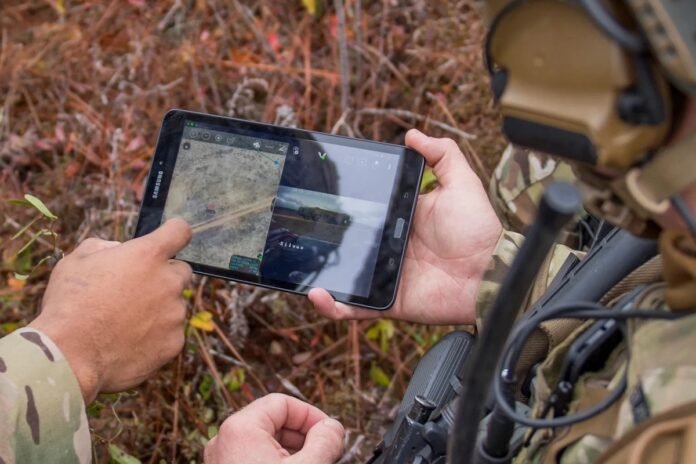
It gave long-term status to a platform that analyzes data from satellites, drones, radars, sensors, and intelligence reports to identify potential targets. Maven supported almost all of the 13,500 US strikes in Iran. The designation is meant to secure funding and extend its use across the military.
That decision came while the United States was still investigating the February 28 strike on the Shajareh Tayyebeh girls’ school in Minab, Iran. An initial US military inquiry found that US forces were likely responsible, but the Pentagon has not released a final public conclusion.
Iranian authorities have reported between 155 and more than 175 deaths, most of them students and teachers. The question is why a military system designed to move faster from information to action has no equally clear public requirement to slow down after grave civilian harm.
In software engineering, an “error budget” is meant to protect users. When a service exceeds an agreed level of failure, new releases stop until the problem is understood and fixed. War is obviously not software.
But in Washington’s AI-assisted operations, civilian deaths do not automatically trigger a temporary suspension of the relevant tools, an independent review of the data, or a public account of the decisions that led to the strike.
Advocates of military AI argue that better data and faster analysis can make attacks more precise. That is possible in principle. But precision is not something software simply possesses. It depends on the quality and age of the data, what a system treats as suspicious, and whether people have enough time to challenge its output.
AI does not turn stale or biased information into truth. It can make bad information travel faster.
Human Rights Watch has warned that Israeli digital tools used in Gaza relied on incomplete data and inexact estimates that could raise the risk of civilian harm. The lesson is not that every use of AI is unlawful. It is that speed can magnify the consequences of a bad premise before anyone can catch it.
The familiar assurance that a “human remains in the loop” does not solve this problem. A person who sees only a final recommendation, cannot inspect the data trail, and has seconds rather than hours to decide is not exercising meaningful independent judgment.
AI can shape lethal force without pulling a trigger. It can determine what appears urgent, which people or places rise to the top of a list, and which facts never appear at all.
The Iran campaign makes this concern immediate. Maven and Anthropic’s Claude were used to process classified intelligence, suggest coordinates, rank targets, and turn planning that once took weeks into real-time operations. That does not establish that AI independently chose every target or that every AI-supported strike was unlawful.
Reuters later reported that Palantir faced the task of removing Anthropic technology from Maven. But the larger point remains: the Pentagon is institutionalizing systems built to compress the time for human deliberation before force is used.
The Minab tragedy represents the human cost of treating speed as a virtue in itself. The school had a public website, posted student photographs, and was visible in satellite imagery. It also reported that targeting officials appeared to have used outdated intelligence.
The exact role of AI in the strike has not been disclosed. But information apparently did not distinguish the school clearly enough from the adjacent military compound, and the Pentagon has not publicly explained how that failure traveled through the targeting process. That is an accountability problem, not just a technical one.
Congress should establish a civilian stop rule for AI-assisted targeting. Credible evidence of grave civilian harm should trigger a temporary suspension of the relevant system in comparable missions, an independent review of the data and approval process, and a public explanation of the system’s role.
This would not treat every civilian casualty as proof of a crime or ban every military use of AI. It would mean families do not have to wait through months of secrecy to learn whether a database, a contractor, or a command decision helped turn a civilian site into a target.
Congress has begun to consider broader guardrails. The House Armed Services Committee’s FY2027 defense bill would direct the Pentagon to extend its AI policy to systems that support or materially influence operational planning, target development, weaponeering, and engagement recommendations.
That is a start. But it is not a civilian stop rule. It does not automatically pause a system after a devastating incident or guarantee a public answer.
Such a rule would reinforce the law of war. Customary international humanitarian law requires militaries to take all feasible precautions to verify targets and reduce foreseeable civilian harm. It also requires them to cancel or suspend attacks when it becomes clear that a target is not military or an attack would be unlawful.
The Red Cross has recommended after-action reviews and re-testing or suspending AI systems when reliability, safety, or legal compliance concerns emerge. Recent scholarship points in the same direction.
Renato Wolf emphasizes precaution throughout AI-assisted target verification, while Jessica Dorsey warns that over-reliance on computational systems can weaken the human judgment needed to protect civilians. If an AI-enabled process makes verification harder because it rewards speed, the problem is a failure to meet an existing legal duty.
Palantir can say it supplies the platform. The Pentagon can say software only supports decisions. An operator can say the data arrived already ranked.
But people grieving outside a destroyed school are left with no clear answer about who is accountable. Until Washington creates a publicly disclosed civilian stop rule, “precision warfare” will remain a technical phrase that conceals a political choice: to accelerate force without a meaningful way to stop, inspect and answer for its failures.
Brian Hudson is a political analyst and an independent journalist.
This article first appeared on Foreign Policy in Focus and is republished under a Creative Commons license
Iran rejects UK-France Hormuz statement, warns against foreign military presence
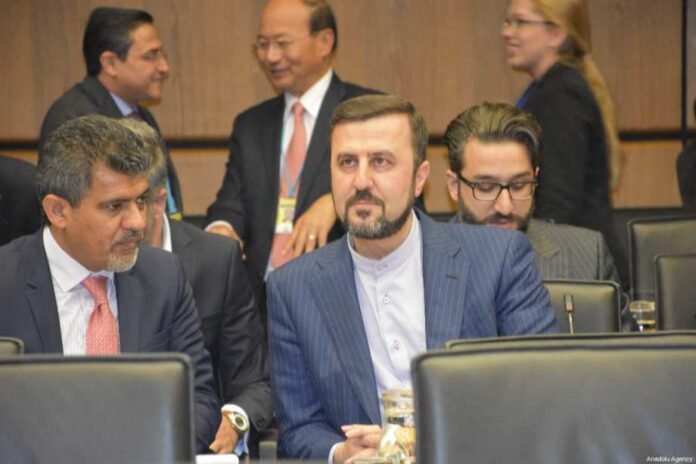
Iran’s Deputy Foreign Minister Kazem Gharibabadi on Saturday said the Strait of Hormuz “is not a stage for extra-regional powers to display military force,” warning against “any military activity” in the key waterway, Anadolu reports.
“The Strait of Hormuz is not a stage for extra-regional powers to display military force.
“As a responsible power and the guarantor of security in the strait, Iran warns against any military activity in this sensitive waterway,” Gharibabadi wrote on US social media company X.
His remarks came in a post in which he shared a UK-France joint statement on the Strait of Hormuz, saying the two countries “stand ready to deploy the wider Multinational Military Mission to support freedom of navigation” in the waterway.
In response, Gharibabadi said the strait’s security “rests with the littoral states.”
“Those who create crises will bear responsibility for the consequences of their adventurism. This is a serious warning,” he added.
A memorandum of understanding between Iran and the US, brokered under Pakistani mediation, entered into force on June 18 after being electronically signed by Iranian President Masoud Pezeshkian and US President Donald Trump.
It provides a framework for ending the conflict and addressing outstanding issues between Tehran and Washington through negotiations, including a cessation of hostilities, sanctions relief, the nuclear issue, the reopening of the Strait of Hormuz, and broader regional security arrangements.