11.9 C
London
Tuesday, April 28, 2026
Home Blog

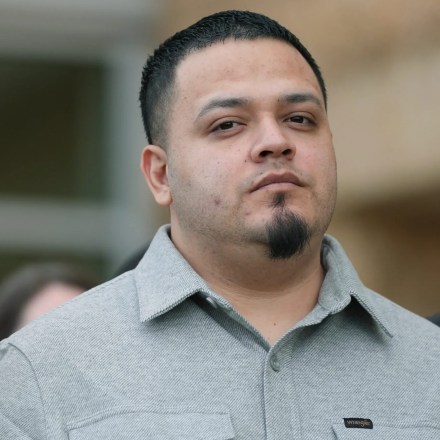
Who Decided to Indict Kilmar Abrego Garcia Over a Years-Old Traffic Stop?

0
who-decided-to-indict-kilmar-abrego-garcia-over-a-years-old-traffic-stop?
Who Decided to Indict Kilmar Abrego Garcia Over a Years-Old Traffic Stop?


More than a year after Kilmar Abrego Garcia won at the U.S. Supreme Court — forcing the Trump administration to bring him back from El Salvador — federal officials can’t seem to decide what, exactly, they want to do with him.

On the one hand, Trump officials continue to insist that Abrego must be deported to Africa, recently settling on Liberia. At the same time, the Department of Justice has pressed forward with its prosecution of Abrego for human smuggling — a criminal case that must be resolved before the government deports him.

“You can’t have it both ways,” Maryland District Judge Paula Xinis, who first ordered Abrego’s return to the U.S. and who is still presiding over his immigration case, recently told the DOJ. “He physically needs to be in this country to be prosecuted.”

The criminal case against Abrego stems from a 2022 traffic stop in Tennessee, which, according to federal prosecutors, was proof he was enmeshed in a human smuggling plot. The case was set to go trial in Nashville this year but presiding District Judge Waverly Crenshaw of the Middle District of Tennessee canceled the trial date to consider a key question: whether Abrego is the target of a “selective and vindictive prosecution.” The answer will determine whether the case moves forward; Crenshaw is expected to rule any day.

Defense attorneys argue that the Trump DOJ brought the charges against Abrego as revenge for his successful legal challenges, which freed him from the notorious Salvadoran prison known as CECOT. “This case results from the government’s concerted effort to punish him for having the audacity to fight back, rather than accept a brutal injustice,” they wrote in their motion to dismiss the case.

Crenshaw has already found some evidence to support these allegations, writing last fall that there was a “realistic likelihood of vindictiveness” against Abrego. He pointed to numerous public statements made by top Trump officials, particularly that of then-Deputy Attorney General Todd Blanche, formerly Trump’s personal defense attorney, who told Fox News that the Justice Department began investigating Abrego after “a judge in Maryland” interfered with Trump’s decision to deport him.

Still, proving their case has been a challenge for Abrego’s defense. The DOJ has refused to turn over evidence that would illuminate its decision-making — and tracing the prosecution to its roots requires untangling the Tennessee case from a previous probe originating in Baltimore. The Maryland investigation, which was linked to Abrego’s immigration case, probed Abrego’s 2022 traffic stop and stayed open for more than two and a half years, only to be closed after Abrego was shipped to El Salvador.

After Abrego prevailed at the Supreme Court, however, the Maryland investigation was suddenly reopened to great fanfare. The Department of Homeland Security sent out press releases trumpeting the “bombshell” revelations supposedly derived from the traffic stop – namely that Abrego was a human smuggler and a member of MS-13. It was in the wake of this publicity that the U.S. attorney’s office in the Middle District of Tennessee began its case, repackaging the evidence from the Baltimore investigation and indicting Abrego in May 2025.

To further probe the government’s motivations, Crenshaw ordered an evidentiary hearing, where the DOJ would be required to present “objective, on-the-record explanations” for Abrego’s prosecution. If the DOJ could not rebut his previous finding that there was a “likelihood of vindictiveness” against Abrego, he would have to throw out the case.

That hearing took place in late February, with lawyers on both sides filing post-hearing briefs earlier this month. In its 24-page filing, which contained the word “undisputed” 20 times, the DOJ insisted that it proved once and for all that Abrego’s prosecution was rooted in evidence of criminality rather than revenge. “Regardless of the tale Defendant invites this Court to believe,” wrote Associate Attorney General Stanley Woodward, “any narrative of animus has been affirmatively disproven by the Government’s undisputed evidence.”

In reality, the testimony offered by the government raised more questions than answers — while revealing that DOJ higher-ups were involved at every step leading up to Abrego’s indictment. Though Woodward cast the prosecution as one steered by law enforcement officers duty-bound to the evidence and their own moral compass, this was hard to take seriously. Donald Trump, after all, has spent the past 15 months trying to transform the DOJ into his personal law firm, demanding that prosecutors go after his political enemies.

In their own post-hearing brief, Abrego’s lawyers argued that the government has “tried to sanitize the origins of this prosecution.” Its story is “at odds with both the documentary record in this case and common sense.”

Abrego arrived at the hearing on February 26 in a black pea coat, black zip-up sweater, and black shirt. It was a gray, humid morning in downtown Nashville as TV cameras set up outside the federal courthouse plaza. While a line formed at security, Abrego, 30, headed toward the elevators with his legal team and supporters. Crenshaw’s fifth-floor courtroom quickly filled up; Abrego was given headphones to listen to the hearing in Spanish. An overflow area was provided for press.

Representing the federal government was Woodward, a former assistant to Trump who previously helped orchestrate his defense in the classified documents case. He sat alongside three members of Task Force Vulcan, a multiagency body created by the Trump administration to go after international gangs.

Woodward called Rana Saoud, a former special agent at the Nashville office of Homeland Security Investigations, which is part of the Department of Homeland Security. According to Saoud, who retired last December, she first heard that Abrego had been stopped by the Tennessee Highway Patrol through an article in the conservative Tennessee Star. She did not remember who sent it to her. “I don’t have my phone anymore,” she said.

The story was published on April 23, 2025 — five days after DHS announced its reopening of the Baltimore investigation — and was heavily based on the government’s claims. While it was not clear when Saoud read the article, she called Robert McGuire, the acting U.S. Attorney for the Middle District of Tennessee, the following Sunday, April 27. McGuire apparently was not yet aware of the traffic stop or the Baltimore investigation either. He agreed they should take a closer look.

Although Abrego was famous by then for his exile to CECOT, Saoud testified that this had no bearing on her actions. “We’re not waived by political attention or political posturing,” she said.

On cross-examination, one of Abrego’s lawyers asked Saoud if she’d seen the DHS press releases publicizing the traffic stop. She said no. Nor did she apparently see Trump boast about it in the press. Saoud said she had “stopped listening to the news. … I had other priorities to investigate and focus on.”

Saoud conceded that she was not privy to the decision-making process at DOJ. But she insisted that the evidence supported charges against Abrego. “The facts were leading us towards an individual who was involved in a human smuggling crime,” she said.

In a list of witnesses in advance of the hearing, the DOJ had included a second HSI investigator, Special Agent John VanWie, who led the investigation in Baltimore. But since then, Woodward had apparently changed his mind. Rather than calling the man who could explain why his office reopened the investigation into Abrego after the Supreme Court ruling, Woodward went straight to his second and last witness: Assistant U.S. Attorney McGuire.

Wearing a dark suit and his hair parted to the side, McGuire took the stand with the air of a seasoned but humble public servant. Once an unsuccessful candidate for local district attorney, McGuire found himself in charge of the Nashville U.S. attorney’s office by chance. He joined the office in 2018, working as a line prosecutor until back-to-back resignations catapulted him to the top just weeks before Trump was inaugurated in 2025. “Here I am, kind of the accidental acting U.S. attorney,” he told the Tennessee Banner that February. A few months later, he was in charge of the Abrego prosecution.

“I’d like to get right to the heart of the matter everyone is here for,” Woodward began. “Who made the decision to seek an indictment of Mr. Abrego?”

“Who made the decision to seek an indictment of Mr. Abrego?”

“I did,” McGuire said.

“Did Deputy Attorney General Todd Blanche direct you to do so?”

“No.”

“Anyone at Main Justice?”

“No sir.”

“What about the White House?”

“Absolutely not.”

McGuire reiterated what he’d previously written in a sworn affidavit, insisting that the decision to prosecute Abrego was his alone. He said he recognized signs of human smuggling in the footage from the traffic stop, which showed Abrego driving eight other Latino men in a van with no luggage, and decided to pursue the case personally.

Yet McGuire’s written narrative contained a key omission. Email records had subsequently revealed that another DOJ prosecutor played an active role — a man with a reputation as Trump’s “brashest enforcer when it comes to clamping down on US attorneys’ autonomy”: Associate Deputy Attorney General Aakash Singh.

Singh, it turned out, had written to McGuire about Abrego’s case on the same Sunday he got the call from Saoud — the first of several emails from the D.C.-based prosecutor. Singh wanted to meet the next morning with McGuire and two other AUSAs who’d been involved in providing evidence for the Baltimore investigation. There was nothing unusual about this, McGuire maintained. Singh was simply a point person for U.S. attorneys across the country when it came to communicating with the deputy attorney general’s office in Washington. “If there was a noteworthy case — if there was an important matter that happened in the Middle District of Tennessee — he would be my conduit to let them know what was going on,” he said.

McGuire insisted that he was in charge of Abrego’s prosecution at every step. His correspondence with Singh was simply intended to provide updates on his work. But Abrego’s lawyers zeroed in on the emails as proof that the prosecution was being driven by officials in D.C. On cross-examination, defense attorney David Patton went through the correspondence one email at a time. The first message concerned a confidential informant who would later testify against Abrego before the grand jury. Singh “knew about that witness before you did,” Patton pointed out. In another, Singh wrote to McGuire thanking him for his work on the case, writing, “It’s a top priority for us.”

Who was the “us” in this email?

“I presumed it was Main Justice leadership,” McGuire replied.

In another email, Singh pressed McGuire for an update on the timing for a possible indictment even though McGuire had already updated him earlier that day. “He’s pretty eager here isn’t he?” Patton asked. McGuire demurred. It was pretty typical for the DAG’s office to ask for updates “in any high-profile matter,” he said. Yet “high-profile” — a term McGuire repeatedly invoked on the stand — did not begin to capture the extent of the Trump administration’s particular fixation on Abrego.

Patton also grilled McGuire about his correspondence with his own staff. In one email, McGuire wrote to several members of the Nashville U.S. attorney’s office to provide them with a memo laying out the potential charges against Abrego, noting that he’d heard anecdotally that Blanche and then-Principal Deputy Attorney General Emil Bove “would like Garcia charged sooner rather than later.” According to McGuire, this was merely an attempt to keep his colleagues in Nashville apprised of the situation. “I just wanted to be transparent with my team that I hadn’t been told to do anything but there was some interest,” he said.

Yet, in the same message, McGuire told the recipients not to put their thoughts on the matter in an email. “Isn’t it true that you didn’t want people putting in writing that they opposed the prosecution?” Patton asked. McGuire said he just preferred to hash things out face to face.

One person, however, had replied in writing: Ben Schrader, chief of the criminal division at the Nashville U.S. attorney’s office, who firmly opposed the prosecution. He sent back a memo of his own, asking McGuire to “please pass it along to relevant parties in D.C.” McGuire said he didn’t recall if he did. On the day that Abrego was indicted, Schrader resigned.

Although McGuire denied ever discussing his decisions with the highest Trump officials, Patton pointed to at least one conversation. Records showed that, on June 6, the same day Abrego was returned from El Salvador, Blanche personally called McGuire. It was a “very brief phone call,” McGuire said. The deputy attorney general simply wanted to notify him that Abrego was headed back to the country. “I’ll be honest, I don’t totally remember all the things he said.”

Over the past year, Abrego’s case has faded amid the constant chaos and upheaval of Trump’s second term. Today it is impossible to keep track of all the resignations and firings across the federal government. The DOJ has itself lost thousands of employees.

Yet Abrego’s ordeal was one of the first shocks of Trump’s second term, revealing the chilling lengths to which his administration would retaliate against employees who failed to fall in lockstep behind the president. It was Abrego’s case that spurred veteran prosecutor Erez Reuveni to become a whistleblower after he was punished for conceding that Abrego had been erroneously deported to El Salvador.

This recent history loomed large over the hearing — and will inevitably inform Crenshaw’s ultimate decision. At one point, Patton pulled up the infamous February 2025 memo issued by Pam Bondi, which cast DOJ attorneys as the president’s lawyers. It warned that “any attorney who, because of their personal political views or judgments, declines to sign a brief or appear in court, refuses to advance good faith argument on behalf of the administration, or otherwise delays or impedes the department’s mission will be subject to discipline and potentially termination.”

“It wasn’t very subtle, was it, Mr. McGuire?” Patton asked.

“I understood the policy,” McGuire replied.

Three ways South Korea can buy alliance insurance

0
three-ways-south-korea-can-buy-alliance-insurance
Three ways South Korea can buy alliance insurance

The case for South Korea hedging its relationship with the United States may have become harder to dismiss.

Washington’s trade policies and the economic consequences of the US-Israeli war on Iran have raised the cost of close alignment at the same time they have weakened confidence in US commitments.

Seoul has options short of rupture that include joining regional trade frameworks, arming Ukraine directly and pursuing its own diplomacy with Iran on energy shipments.

“While the biggest threat to the alliance remains North Korea, the biggest challenge to the alliance now comes from the United States,” argues long-time Korea watcher Bruce Klingner.

“Having bullied Seoul into a disadvantageous trade deal that violated the US-South Korea free trade agreement and the US Constitution, the Trump administration is demanding more – and promising less to its security and economic partners.”

Klinger said that the United States “may have degraded military deterrence by undermining the perception – in the minds of both allies and opponents – that Washington is a dependable security partner.”

This sense of unreliability is hardly confined to South Korea – it is felt by all US allies. As Washington Post columnist Fareed Zakaria wrote recently, the United States has used allied security dependence “to squeeze them hard.”

The response is not to break ties with the United States, writes prominent British historian and commentator Lawrence Freedman, “but to accept that our interests are no longer as close as they once were, and that in current circumstances it cannot be a high priority to accommodate American wishes.”

The result, wrote Zakaria, is that allies “have decided to buy insurance, to protect themselves from an unreliable America.”

In that spirit, below are three ideas for South Korea to develop an insurance policy against US uncertainty.

Accelerate application to join CPTPP

The most urgent – and, in some ways, easiest – step toward greater independence for South Korea is to expedite its application to join the Comprehensive and Progressive Agreement for Trans-Pacific Partnership (CPTPP).

The twelve-member economic and trade pact can be the kernel of an alternative free trade system – particularly if it partners with the European Union, an option that is under discussion. It offers a comprehensive framework for addressing not only traditional trade markets but also supply chain cooperation, digital trade and state-owned enterprises.

There are several advantages for South Korea in joining CPTPP.

“The Iran war, rising protectionism and a deepening divide between the United States and China have reshaped the international economic order,” Asan Institute for Policy Studies President Choi Kang wrote in Joongang Ilbo. “For Korea, a mid-sized trading nation, survival now depends on diversifying markets and stabilizing supply chains. The CPTPP offers a network well suited to those goals.”

Aside from market gains, CPTPP membership would also cement the strategic partnership between South Korea and Japan, as well as with other partners who share similar issues with the United States, such as Australia, Canada, and the United Kingdom.

South Korean membership in CPTPP has been under discussion for some time. “Earlier this decade, Japan had given South Korea its very cold shoulder on entry,” Michael Beeman, former Assistant US Trade Representative for Japan, Korea and APEC, told this writer. “Kishida-era warming in Japan-ROK ties seemed to have turned that around.”

The recent joint statement following the meeting between South Korean President Lee Jae Myung and Japanese Prime Minister Sanae Takaichi indicated Japanese support for South Korea’s membership. “I don’t sense Japan’s posture is any longer a top obstacle,” says Beeman, author of Walking Out, an authoritative book on US trade policy.

The greater obstacle seems to stem from South Korean domestic politics, driven by fears among agricultural producers and auto manufacturers that CPTPP membership would lead to greater competition from Japanese and other foreign producers. But supporters argue that structural adjustment assistance for vulnerable sectors could mitigate those effects and that the CPTPP could catalyze much-needed restructuring of South Korean industries.

Lift restrictions on arms sales to Ukraine

A more controversial step would be for South Korea to lift long-standing restrictions on the sale of lethal weapons to countries engaged in active combat, and in particular to Ukraine. South Korea has provided indirect weapons support by selling weapons to allied states such as Poland and non-lethal systems to Ukraine, as well as other forms of aid and participation in NATO mechanisms to finance US weapons to Ukraine.

But there is an urgent need to intensify support for Ukraine, particularly in areas such as missile defense systems, because of the Trump administration’s decision to cut US military assistance to Ukraine and divert weapons to the Iran war.

Changing South Korea’s policy on arming Ukraine would signal its readiness to take positions that differ from those of the United States and would immensely strengthen its ties with the European Union. Rather than acting on behalf of the United States, as some South Korean progressives argue, this would demonstrate South Korean independence of action and self-defense.

By bolstering Ukraine’s defense, South Korea would also strengthen its own security interests by preventing a Russian victory that would only drive North Korea and Russia closer together. Morally and strategically, it would balance the impact of North Korea’s participation in the Ukraine war.

Take an independent approach to Iran and maritime security

The Lee administration has taken initial, though still tentative, steps toward shaping an independent policy response to the US-Israeli war against Iran and maritime security in the Strait of Hormuz. But there are grounds to argue that South Korea, perhaps in tandem with Japan, should negotiate directly with the Iranian regime to seek exemptions for the passage of its stranded vessels.

One important initiative underway is President Lee’s decision to participate in the European-led multilateral mission to secure the free passage of ships through the strait once the war is over. Lee attended the recent international summit led by France and the United Kingdom and stated that South Korea was ready to make “substantive contributions” to this mission, including using South Korean military forces to clear mines and escort passage following a stable ceasefire.

If the Islamabad talks fail, the alternative may be a “broad based international coalition” that strikes a deal with Iran, wrote British strategist Freedman.

Given the uncertain outcome of the war and the collapse of even the pretense of direct talks, Seoul should accelerate its own diplomacy toward Tehran. Earlier this week, South Korean special envoy Chung Byung-ha traveled to Iran to meet with Iranian Minister of Foreign Affairs Abbas Araghchi to request cooperation on the safe transit of all vessels, particularly Korean ships, through the Strait of Hormuz.

So far, Seoul has decided not to pay the toll fee requested by Tehran for ship passage. It may be time, however, to reconsider that decision, though paying the fee would be likely to anger the Trump administration. The most effective approach would be to coordinate with Japan, which not only shares South Korea’s extreme dependence on Middle Eastern oil and gas but also maintains its independent ties and diplomacy with Iran.

None of these three steps is without cost. But the pressures driving them are unlikely to ease over the next three years – and the question for Seoul is not whether to create distance from Washington but how much, and on what terms.

Daniel C. Sneider is a non-resident distinguished fellow at the Korea Economic Institute of America (KEI), which originally published this article, and a lecturer in East Asian studies at Stanford University. The views expressed here are the author’s alone. The article is republished with permission.

Flesh-eating bacteria devour man’s arm and leg in just three days

0
flesh-eating-bacteria-devour-man’s-arm-and-leg-in-just-three-days
Flesh-eating bacteria devour man’s arm and leg in just three days

A 74-year-old man went to an emergency department in Florida with rapidly rotting limbs after jumping into the waters off Florida’s Gulf Coast.

Just three days earlier, the man was otherwise healthy and active on the coast. But at one point when he jumped into the water, he got a cut on his right leg. It quickly became painful and bruised. Two days later, the skin on his right arm also started changing color.

According to a case report in the New England Journal of Medicine, by day three, when he arrived at the hospital, he was in dire shape. The lower half of his leg was darkly colored, indicating bleeding under his skin. Doctors noted a crackling sound, suggesting gases bubbling out of his dying flesh, and some of the outer layers of skin were peeling off. His arm wasn’t much better. It appeared red, discolored, and swollen. A large blood blister (a hemorrhagic bulla) had formed, suggesting a severe flesh-eating infection. (You can see a graphic image here, including an end image of his arm.)

While the man was rushed into surgery to start cutting out the dead and infected tissue, doctors also began tests to find the cause of the infection. Blood and tissue samples turned up positive for Vibrio vulnificus, a flesh-eating bacterium found in warm, brackish waters.

V. vulnificus can infect people two ways: through wounds exposed to contaminated water—as in the man’s case—or, more commonly, through contaminated seafood. The bacteria can take up residence in the stomachs of shellfish, particularly oysters, as well as the intestines of fish. Either route can be gruesome. When ingested, the bacteria can release enzymes that neutralize stomach acids, then from there storm the intestines and can enter the blood.

Deadly threat

These bacteria have a large arsenal of molecular munitions, including various toxins, that all help the bacteria hijack cells, siphon nutrients, degrade structural proteins, break down tissue linings, make blood vessels leaky, fuel destructive inflammation, suppress immune defenses, and generally lay waste to their victims.

The overall mortality rate of V. vulnificus infections is about 35 percent. But for anyone infected who also has an immunocompromising condition or a liver condition, mortality reaches 50­–60 percent. Likewise, for those who develop sepsis—a life-threatening reaction to an infection—mortality is also about 50 percent. For patients like the man in this case, if antibiotics or surgical removal of necrotic tissue is delayed, mortality jumps to 100 percent.

In this case, the man did not die. But his right leg was so far gone by the time he reached the hospital that he needed to have it amputated above the knee. His forearm, meanwhile, required extensive skin grafting, which was collected from elsewhere on his body. After an antibiotic regimen and six months of healing, doctors reported that he had healed well.

The case highlighted that the threat of V. vulnificus is only increasing amid climate change, and medical experts see its rise as an urgent public health concern. Warming waters, geographic spread, and increases in antibiotic resistance are increasing risks. Between 1998 and 2018, US cases of V. vulnificus increased eightfold, including expanding into areas where the bacteria is considered rare, including Massachusetts, New Hampshire, and Maine.

“The abundance and geographic range of V. vulnificus is projected to increase owing to factors related to climate change, including rising water temperatures, storm surges, salinity changes, and algal blooms,” the man’s doctors wrote.

The Centers for Disease Control and Prevention advises that to avoid a Vibrio infection, only eat thoroughly cooked seafood and wash your hands after handling raw seafood. If you have an open wound, avoid going into brackish water or at least cover it tightly. If wounded while in brackish water or if an existing wound is exposed, wash it with soap and clean, running water.

MEPs Back Bigger EU Spending Plan but Funding Question Still Open

0
meps-back-bigger-eu-spending-plan-but-funding-question-still-open
MEPs Back Bigger EU Spending Plan but Funding Question Still Open


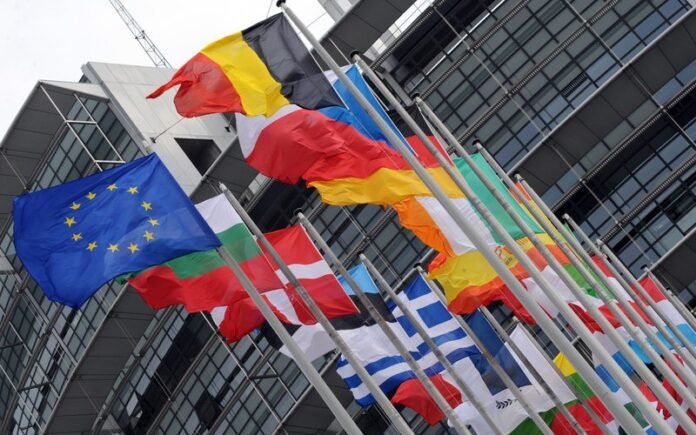
The European Parliament has thrown its weight behind demands for a bigger long-term EU budget, approving its position for negotiations on the bloc’s next seven-year financial framework for 2028 to 2034.

Lawmakers endorsed the stance by 370 votes to 201, with 84 abstentions, showing clear backing for increased spending in the coming years. The result is likely to sharpen tensions with several member states that remain reluctant to send more money to Brussels.

MEPs want the next Multiannual Financial Framework (MFF) set at 1.27% of EU gross national income, while repayments tied to the post-pandemic recovery fund would sit outside the main budget limits. If accepted by governments, total EU expenditure could rise above €2 trillion over the period.

That level would be roughly 10% above the European Commission’s proposed figure. Parliament argues the increase is necessary if Europe is to meet challenges such as war on the continent, economic strain, climate pressures and falling competitiveness.

In a resolution adopted on Tuesday, MEPs said the next budget should prioritise investment and support for citizens, companies, farmers and regions, while ensuring clear added value at EU level.

Although Parliament appeared more open to Commission plans giving states greater flexibility over spending, it insisted funding for areas such as health, cohesion and social policy must remain clearly earmarked. Members also called for stronger backing for programmes including Erasmus+, Horizon Europe, the Connecting Europe Facility and EU4Health.

However, while pushing for higher spending, MEPs were less united on how to finance it. They supported proposals for new EU “own resources”, including revenue from the Emissions Trading System, uncollected e-waste and a tobacco levy, but divisions remain sharp.

Parliament also repeated that access to EU funds must depend on respect for democratic standards and the rule of law.

The vote gives MEPs a firm mandate ahead of talks with governments and the Commission, with difficult negotiations expected as countries such as Germany and the Netherlands favour tighter spending limits.

He’s the only lead tester in this contaminated neighborhood. He graduates next month.

0
he’s-the-only-lead-tester-in-this-contaminated-neighborhood-he-graduates-next-month.
He’s the only lead tester in this contaminated neighborhood. He graduates next month.

This story was produced by Grist and co-published with NJ Spotlight News.

Kim Booker never thought much about lead during her roughly 27 years living in Trenton, New Jersey. Born and raised in the once-industrial powerhouse, she first heard about the heavy metal at community meetings organized by the East Trenton Collaborative, a local nonprofit that works on environmental health and safety issues. There, she learned that the prevalence of lead-laden pipes and paint, a legacy of the city’s industrial past, could have contaminated the drinking water in her home and the soil around her property. 

She knew that her three-bedroom home was old, making it likely it had lead pipes. Booker noticed the paint on the walls chipping off. And she realized, too, that her late grandmother and sister were both diagnosed with Alzheimer’s, which researchers have tied to lead exposure. She wanted to know if she was being poisoned by the lead in her environment. 

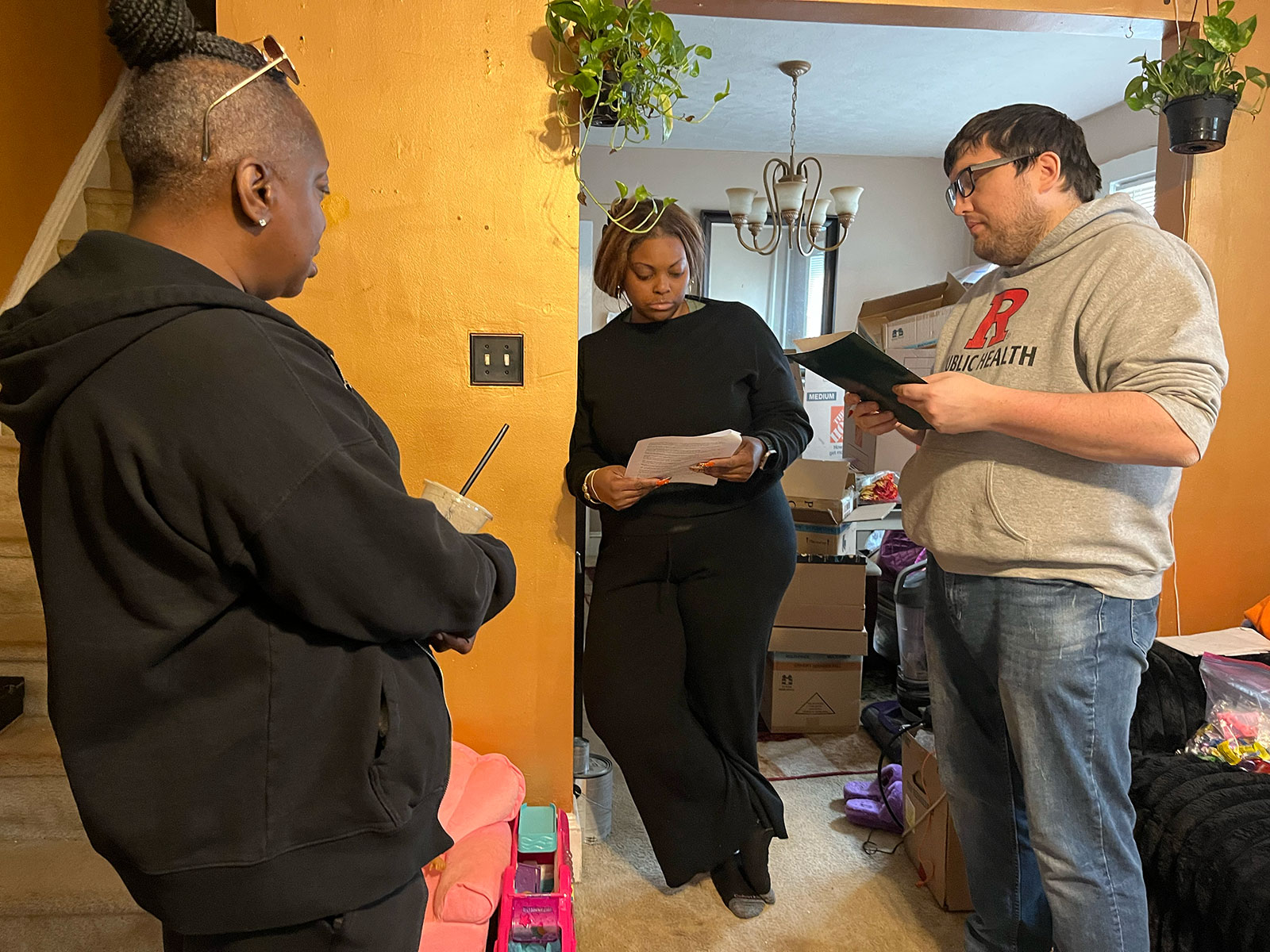
With few free, comprehensive testing resources available to her, Booker turned to Shereyl Snider, one of the leaders of the collaborative, who in turn connected her with Sean Stratton, a doctoral student in public health at Rutgers University in late 2023. At the time, he was taking samples of lead to get a clear picture of how lead had contaminated Trenton homes for his dissertation work. Once Booker agreed, Stratton was soon at her home, testing for lead in her paint, yard, and water.  

Two women and a man standing in a living room

Stratton visits Amber DeLoney-Stewart’s home in October to provide a full inspection with Shereyl Snider, a community member with East Trenton Collaborative. Anna Mattson

When the results came back, Booker learned that her home was — as she’d suspected — contaminated with lead and that she had low but detectable levels of lead in her bloodstream. Stratton’s testing revealed that lead levels in her yard were more than 450 parts per million, above the Environmental Protection Agency’s hazard level. If not for Stratton, she would not have known. 

“The city shouldn’t rely on a student to do this work,” Stratton said.

Comprehensive lead testing of the kind that Stratton provided costs upwards of $1,000. Over the past two years, Stratton has tested the soil, water, or paint in more than 140 Trenton homes and has been assembling the clearest, most cohesive picture yet of a crisis that permeates the state. Last July, the EPA added the entire neighborhood of East Trenton to the Superfund National Priorities List after testing found widespread soil contamination in residential yards, schools, and parks. Despite the designation, there has been no comprehensive door-to-door testing effort, leaving residents like Booker to rely on Stratton.

But Stratton’s project is coming to a close. He defended his dissertation in February and will graduate in May, leaving uncertain who — if anyone — will continue the work. Community groups like East Trenton Collaborative worry the neighborhood could lose its only accessible source of household testing.

“We don’t want to stop working together,” Snider said. “I don’t see it ending, but I don’t know how we can continue unless we have big supporters to help support our future endeavors together.”

    New Jersey has some of the highest legacy lead burdens in the country. The state has an estimated 350,000 lead service lines — placing it among the top 10 states, behind Illinois and Texas. It has received more than $100 million in federal funds for lead pipe replacements, but it doesn’t address legacy soil contamination, interior lead paint, or proactive household-level screening.

    Despite the patchwork of testing options available — blood lead screening through the health department, water sampling through Trenton Water Works, and occasional environmental assessments from state or federal agencies — Stratton said the system rarely functions as a coherent whole. 

    The state health department conducts home paint surface inspections, but only after a child has been poisoned, which is often first detected by mandatory lead testing. In New Jersey, children are required to test for lead at 1 and 2 years of age. Testing is free from local health departments for kids who are underinsured or uninsured. But older children and adults have to pay their own way.

    Trenton Water Works provides lead water test kits for homes built before 1986, but residents must coordinate testing with a private lab and pay for the cost of the analysis, which can run from $20 to $100. No agency reliably tests for lead in soil unless the EPA steps in to investigate. 

    Each test only addresses a narrow slice of the problem, leaving families with fragmented or incomplete information. Results can take weeks to arrive, if they arrive at all. One resident, Amber DeLoney-Stewart, said she never received her home inspection results from the city, even after blood tests revealed her child was lead-burdened. 

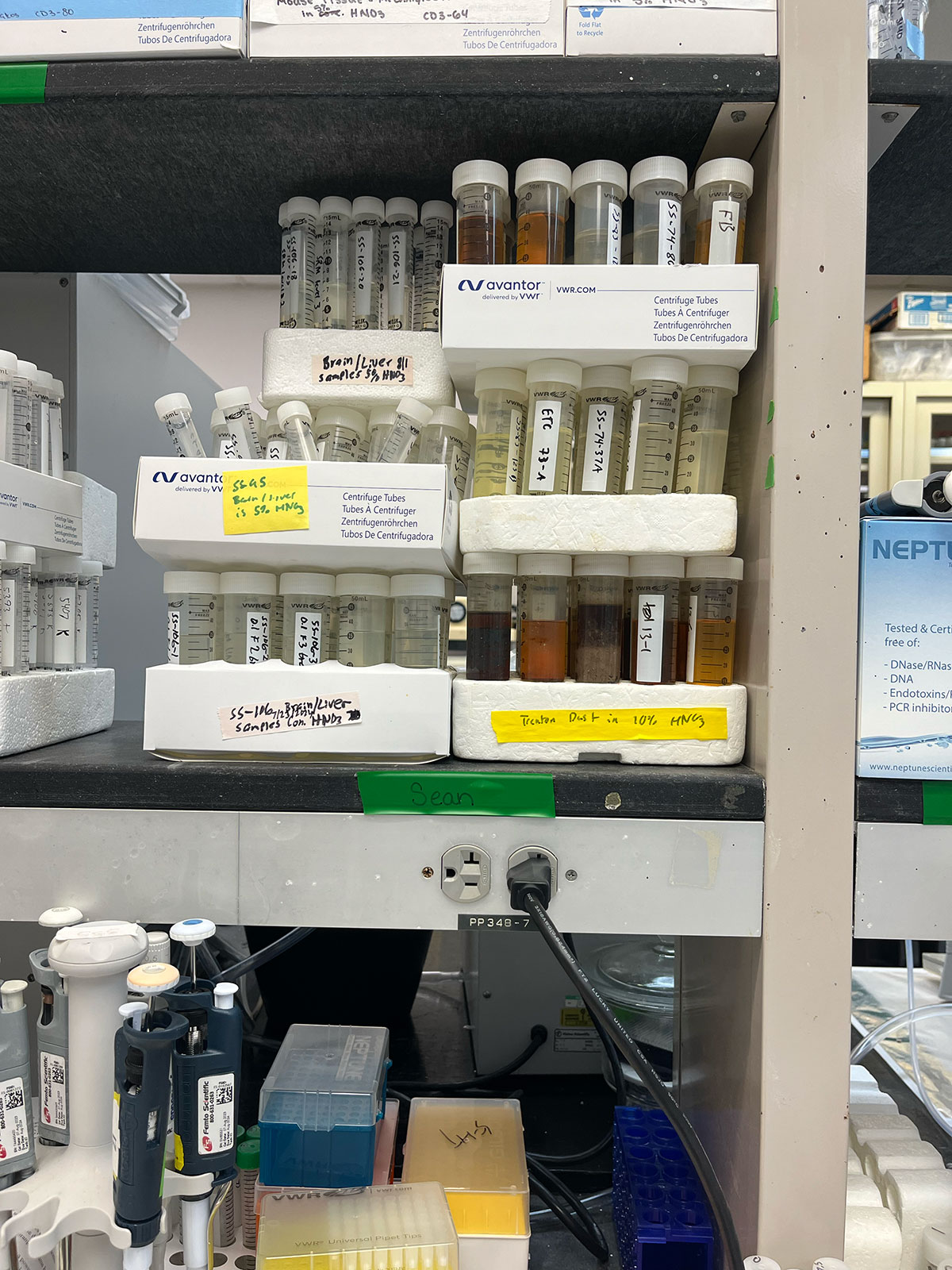
    Vials of samples on a shelf

    Stratton takes his vials of samples back to his lab at Rutgers University for processing. Anna Mattson

    Without coordination, door-to-door outreach, or a mandate for proactive household-level screening, the burden falls on residents to navigate a maze of programs — and too often, Stratton said, people who need the information most don’t receive it. 

    “It just doesn’t ever seem to be enough,” Stratton said. “It’s very siloed.”

    Stratton’s work reflects a broader pattern in environmental health research across the United States. In some communities concerned about pollution, residents turn to university researchers for help testing soil or water when government monitoring is limited. In Atlanta, for example, a soil-testing project launched by a graduate student at Emory University and community partners uncovered elevated lead levels in residential yards, prompting a federal investigation. And last year, the University of California, Los Angeles, offered free soil testing to residents affected by wildfires. Efforts like these often depend on temporary research projects, meaning they can end when students graduate or grant funding runs out. 

    Read Next

    Stratton’s research in East Trenton has been supported by two grants — one from the National Institute of Environmental Health Sciences and another directly from the federal government. As the Trump administration cuts billions of dollars of grant money, Rutgers’ Environmental and Occupational Health Sciences Institute saw some grants rescinded entirely. Other projects remain in limbo. But Stratton’s grants somehow made the cut, even with “environmental justice” in their titles. Brian Buckley, the institute’s executive director, said further budget cuts mean far fewer opportunities to continue future research.

    “We’ve been playing dodge the bullet,” he said. 


    Stratton didn’t originally set out to investigate lead contamination. After graduating from Rutgers University with a bachelor’s degree in environmental science in 2015, he worked in environmental consulting in New Jersey, sampling soil, air, and water and designing remediation strategies for contaminated sites. Around that time, Flint, Michigan, switched its water supply from Detroit to the Flint River, and triggered a public health crisis when corrosive water from the river caused pipes to leach lead, exposing more than 140,000 people to dangerous levels of the metal.

    A friend who was concerned about the events asked Stratton to sample water at his New Jersey home and send it to a lab to test for lead. The results came back extremely high: more than 78 parts per billion of lead — more than five times the EPA’s action level

    Confused, Stratton began digging through public records, water reports, and federal regulations. He noticed that his own town of East Brunswick was not testing the correct location type. Federal rules require that cities test homes that are most likely to have lead service lines, but Stratton said the agency was largely testing homes less likely to have them. Alarmed at the discrepancy, he began filing public records requests with water utilities across the state to see whether similar gaps existed elsewhere. 

    “I started arguing with the DEP,” Stratton said, referencing the New Jersey Department of Environmental Protection. “And then I decided I needed to go back to school, because I felt like I needed to get more credibility.” 

    A spokesperson for the state agency said in a statement that East Brunswick’s lead testing plan follows federal rules that require water systems to prioritize homes most likely to have lead service lines. It added that when there are not enough of these higher-risk homes available or willing to participate, utilities can test lower-risk homes to meet the required sample sizes. 

    Spurred by what he’d learned about the prevalence of lead contamination, Stratton ran for State Assembly as the Green Party candidate for East Brunswick in 2017. His candidate profile says that he will “continue to fight to ensure that our water is suitable to drink.” Stratton lost the race, but he returned to Rutgers three years later to earn a master’s degree in public health and then continued into a doctoral program.

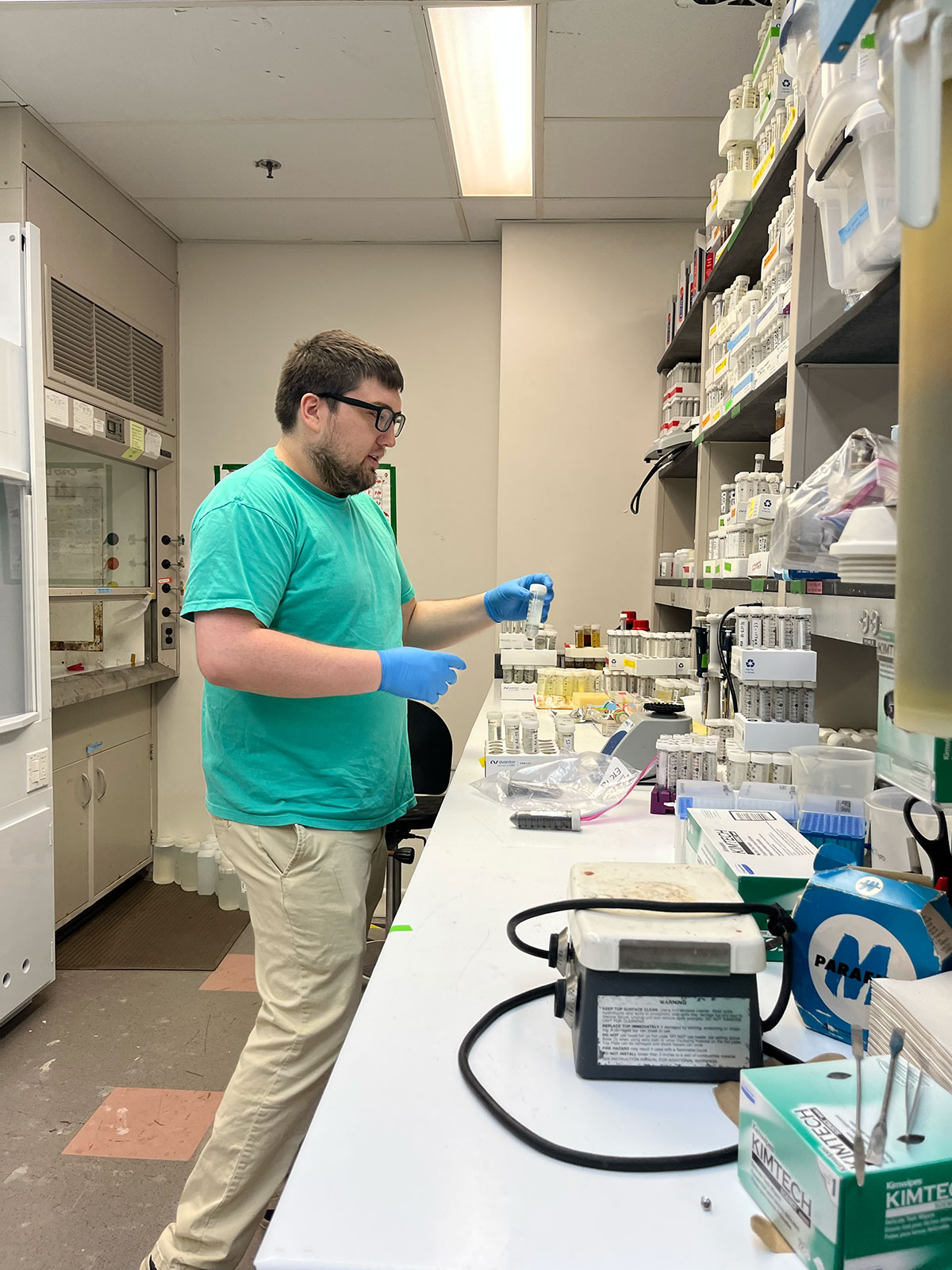
    Man standing in a laboratory

    Stratton has sampled more than 100 New Jersey homes for traces of lead in pipes, soil, and paint. Anna Mattson

    Stratton’s doctoral project had three main objectives: verify whether Trenton residents are exposed to lead, determine where the exposure was coming from, and uncover how residents can reduce exposure. In his testing, Stratton used an X-ray fluorescence gun to scan every wall in a willing volunteer’s home to see how much lead was in the paint. He dropped off water vials for residents to fill in the morning from the kitchen sink — first thing in the morning, before using any water. Out in the yard, he took a small vial and filled it with soil.

    Then he packed up his bag, put it all in the trunk of his car, and made the drive back to the cluttered Rutgers lab, where he would run tests. Afterward, Stratton provided residents with full results, information on what to do next, medical information about where to get blood lead checked, and his phone number, along with his supervisor’s at Rutgers, to call if they had questions. 

    In late February this year, Stratton presented his findings to a team of Rutgers professors during his official dissertation defense. His findings were stark. Most homes he tested had lead, whether it be in the dust, paint, or pipes. All homes measured for floor dust had detectable levels of lead, with 86 percent of them exceeding the EPA’s action level. 

    He also found that homes without lead-based paint in Trenton are still at risk of elevated levels because of the legacy lead dust outside. That outside dust in Trenton comes from a myriad of sources, including gasoline, atmospheric aerosols, and coal and soil contamination from its history of lead-based ceramics manufacturing.

    He also found that running the tap for five minutes before using the water — a common recommendation from public health experts — was still not an adequate amount of time to flush traces of lead. He suggested, in his results, that lead safety guidelines should expand to include reduction strategies, like using a water filter. 

    A week later, he welcomed more than 30 people into a Rutgers classroom for a presentation of his findings. He wanted collaborators and community members to celebrate with him. As gifts, he handed out little square 3D printed urban maps of East Trenton, with streets and raised buildings, to those he’d worked with over the years. Among those in attendance were partners who helped connect Stratton with residents, including Snider of East Trenton Collaborative and Anthony Diaz of the Newark Water Coalition. 

    A room full of people sitting at desks

    In early March, more than 30 friends, family, and colleagues gathered in a Rutgers conference room to celebrate Stratton’s work on lead contamination in New Jersey. Anna Mattson

    The EPA’s decision this summer to list East Trenton as a Superfund site means a cleanup is coming — but slowly, and only for the soil, not the pipes or the paint. The designation triggers more sampling, long-term soil removal plans, and years of federal oversight. Still, none of that has started yet. A remediation plan hasn’t been developed. And in a state dotted with Superfund sites that have languished for decades, residents know what a long wait can look like. 

    For now, Stratton’s research has offered immediate answers for concerned residents. Since learning about the lead in her home, Booker has tried to reduce her exposure. 

    “I use a vacuum to clean my floors and carpets instead of stirring up dirt and dust particles by sweeping,” Booker said. “When my nieces come over and want to run around in the yard, I make sure they remove their shoes when they come inside and wash their hands.”

    She said Snider, Stratton, and the East Trenton Collaborative have sounded the alarm on the lead issue in Trenton. Now, she hopes that the community will continue to fight so that the city can be a place where children and families can be healthy and thrive.

    “Knowledge is only powerful and beneficial if its effects change,” Booker said. “We can know there is a problem, but without action, the problem simply remains.”


    Humanoid robots start sorting luggage in Tokyo airport test amid labor shortage

    0
    humanoid-robots-start-sorting-luggage-in-tokyo-airport-test-amid-labor-shortage
    Humanoid robots start sorting luggage in Tokyo airport test amid labor shortage

    Humanoid robots are getting a new gig as baggage handlers and cargo loaders at Tokyo’s Haneda Airport—part of a Japan Airlines experiment to address a human labor shortage as airport visitor numbers have surged in recent years.

    The demonstration, set to launch in May 2026, could eventually test humanoid robots in a wide range of airport tasks, including cleaning aircraft cabins and possibly handling ground support equipment such as baggage carts, according to a Japan Airlines press release. The trials are scheduled to run until 2028, which suggests that travelers flying into or out of Tokyo may spot some of the robots at work.

    This marks the latest foray for humanoid robots after they have already begun pilot-testing in workplaces such as automotive factories and warehouses. Most robotic productivity so far has relied on robotic arms and similarly specialized robots that perform the same predictable tasks on assembly lines and in warehouses. By comparison, humanoid robots face a much stiffer challenge in dealing with more open and unpredictable work environments, and it remains to be seen whether the latest robotic software and hardware will be up to the task.

    Japan Airlines is interested in testing whether humanoid robots powered by some of the latest AI models can adapt more readily to human work environments—such as airports—without requiring dedicated work stations or other significant workplace modifications. The airline’s subsidiary, JAL Ground Service, has teamed up with GMO AI & Robotics Corporation to oversee the demonstration.

    The Japanese companies will test the G1 robot and Walker E robot from Chinese companies Unitree Robotics and UBTECH Robotics, according to The Asia Business Daily. Humanoid robots still typically cost tens of thousands of dollars per unit despite Chinese robotics manufacturers scaling up mass production, although the Unitree G1 robot costs as low as $13,500 for the baseline model.

    A new video from an apparently staged demonstration in an aircraft hangar shows one of the humanoid robots tottering up to a large, metal cargo container and making a vague pushing gesture. But the cargo container only begins to move once a human worker starts the conveyor belt to move the container toward the aircraft.

    Humanoid robot demonstration with airport cargo.

    Presumably, the robots will need to put in much more effective work if they’re to prove as productive as human airport workers. Having robots working directly alongside humans will also introduce new safety considerations for airports like Haneda Airport, which is Japan’s second-largest airport, with flights arriving approximately every two minutes. The first step in the pilot program will involve identifying which airport areas will be safest for humanoid robots.

    Cost-effective robotic assistance could prove welcome for Japan’s airports, which have struggled with a worsening human labor shortage. In December 2023, Tokyo’s Narita Airport was reportedly unable to respond to more than 30 percent of requested flights each week because of staff shortages involving cargo handlers and other ground crew, according to The Mainichi. Japanese government data showed that ground crew numbers across Japan fell from 26,300 to 23,700 between March 2019 and September 2023.

    Under Trump, record numbers say personal finances getting worse

    0

    Just over a year after President Donald Trump promised the US was entering a “golden age,” Americans are expressing unprecedented pessimism about the state of the economy.

    Gallup on Tuesday released a poll showing that 55% of Americans say their personal finances are getting worse, which is a record high over the last 25 years of data.

    For comparison, 49% of Americans said their finances were getting worse at the outset of the Great Recession in 2008, while 50% reported their finances were getting worse at both the start of the Covid-19 pandemic in 2020 and at the height of the post-pandemic inflation crisis in 2023.

    “Affordability continues to be the main financial challenge for US households, with concerns about various costs far outpacing all other financial worries,” Gallup wrote. “Combined with the lingering effects of sustained inflation during and after the pandemic, Americans’ financial perceptions and outlook remain cautious.”

    The poll was conducted between April 1 and April 15, and the financial pressures facing Americans have only grown in the two weeks since.

    The price of Brent crude oil futures, which stood at $95 per barrel on April 15, has since spiked upward to more than $111 per barrel. Likewise, the average price of gas in the last week has grown from $4.02 per gallon to $4.17 per gallon, according to data collected by AAA.

    The cost of oil surged starting in March after President Donald Trump launched an illegal war of choice with Iran, which responded by shutting down the Strait of Hormuz to most commercial shipping.

    The war has also led to shortages of fertilizer during planting season, which has led some experts to warn of a global food crisis unless the strait opens in the very near future. The prospective food crisis could be further exacerbated by what scientists are projecting will be a “super El Niño,” a global climate phenomenon that would result in lower than average rainfall.

    Taxpayers buying $400 million White House ballroom won’t help

    At the same time, a group of Republican lawmakers, led by Sen. Lindsey Graham (R-SC), on Tuesday pushed for US taxpayers to foot the bill for Trump’s planned $400 million luxury ballroom.

    Hours after Graham unveiled his plan to fund the ballroom with taxpayer money, Rep. Riley Moore (R-W.Va.) appeared on Fox Business to bang the drum on building the ballroom.

    “You would think this town would be tired of Donald Trump being right all the time,” Moore said in response to critics of the project. “This president has always had the ability to see around corners and make decisions that are best for the country or his business. We need to have that ballroom built. God bless the president for doing it.”

    Sarah Longwell, a former Republican pollster who left the party over her disgust with Trump, pointed to polling averages aggregated by data analyst Nate Silver showing that nearly 69% of Americans disapprove of the president’s handling of the cost of living, and suggested the push for the ballroom was wildly out of touch with Americans’ concerns.

    “You know what’ll turn these numbers around? A taxpayer-funded ballroom,” she wrote sarcastically.

    Sens. Lindsey Graham (R-SC), Katie Britt (R-Ala.), and Eric Schmitt (R-Mo.) held a press conference late Monday to announce their intention to expedite a bill to the Senate floor to use public funds to pay for the construction of a secure ballroom, joining Trump in insisting that a shooting at the White House Correspondents Association (WHCA) dinner on Saturday proved the project is a national security priority.

    Trump has demanded the construction of the ballroom for months, ordering demolition work to begin last year as he insisted the project would be paid for entirely by private donations from companies with government contracts like Amazon, Lockheed Martin, and Google – a plan that has raised alarm over significant conflicts of interest.

    The construction was halted recently after a federal court ruled the project must be approved by Congress, but an appeals court this month allowed the building to continue while it reviews the ruling.

    On Monday evening, the US Department of Justice also filed a motion – which observers noted appeared to be written in the same style the president frequently uses in his social media posts – demanding that US District Judge Richard Leon dissolve his previous injunction blocking the project.

    The motion started by claiming the name of the National Trust for Historic Preservation, the nonprofit that sued over the ballroom construction, is “FAKE.”

    “They suffer from Trump Derangement Syndrome, commonly referred to as TDS,” reads the filing.

    Graham said Monday that the ballroom should be paid for with $400 million in taxpayer funds collected in the form of national park fees and customs fees, with the private funding Trump secured going to extra costs like fine china.

    The senator insisted the American public, whose approval of the president stood at 40% in one monthly survey in March, would support the bill.

    “If you don’t think $400 million of taxpayer money is a good investment to create a secure facility at the White House, then I disagree. I bet you 90% of Americans would love to have a better facility,” said Graham.

    Rep. Pramila Jayapal responded: “Nope. Ninety percent of Americans would love to have affordable healthcare, housing, and childcare. Or lower gas prices. Or lower grocery prices. Not a frigging illegally constructed ballroom.”

    Graham explained that beneath the ballroom there would be “a lot of military stuff” and “infrastructure that is national security-centric,” and suggested the construction of the facility would allow Trump and future presidents to stay on the White House grounds instead of leaving for public events.

    The WHCA has held its annual dinner at the Washington Hilton for decades, and it’s unclear whether it would ever change the venue to the White House in order to hold the event in a “secure” ballroom.

    The press conference came two days after a man armed with multiple guns and knives tried to break into the WHCA dinner and exchanged gunfire with Secret Service personnel before being tackled and disarmed. Just hours after being evacuated from the chaotic scene, Trump held a press conference with his top administration officials and declared the incident had proven that “we need the ballroom.”

    -Common Dreams

    Israeli Study Finds Plants Absorb Nutrients From Airborne Dust, Challenging Root-Only Theory

    0
    israeli-study-finds-plants-absorb-nutrients-from-airborne-dust,-challenging-root-only-theory
    Israeli Study Finds Plants Absorb Nutrients From Airborne Dust, Challenging Root-Only Theory


    Researchers at Ben-Gurion University of the Negev have found that plants can absorb essential nutrients directly from atmospheric dust through their leaves, challenging the long-held understanding that plant nutrition depends solely on root uptake from soil, the university said Tuesday.

    The study, published in the journal New Phytologist and reported by Xinhua, shows that leaves can take in minerals including iron and phosphorus from airborne dust. Researchers said this process occurs as the slightly acidic surface of leaves helps break down dust particles, releasing nutrients that can then be absorbed.

    Field experiments conducted in Mediterranean conditions, including in the Judean Hills, demonstrated the effect. Native plants such as cistus creticus and salvia fruticosa exposed to simulated dust events showed higher concentrations of iron and phosphorus in their shoots, while nutrient levels in their roots remained largely unchanged.

    The researchers said their findings indicate that leaves play an active role in nutrient uptake, rather than serving only as passive surfaces. By combining field observations with global estimates, the team concluded that dust-derived nutrients can make a measurable contribution to plant nutrition.

    In some regions, the study found that nutrients absorbed through leaves accounted for up to 17 percent of iron intake and 12 percent of phosphorus intake relative to soil-based sources. During heavy dust events, the amount of nutrients absorbed from the air can match or exceed those taken up from the soil.

    The findings suggest that this mechanism may be particularly important in environments where soil nutrients are limited or difficult to access. Researchers said the process could play a significant role in arid and nutrient-poor ecosystems.

    The study also indicated that the importance of airborne nutrient absorption may increase as climate change affects global dust patterns, potentially altering how plants access essential minerals in different regions.

    Man ‘Accidentally’ Shoots His Girlfriend on Metro Bus

    0
    man-‘accidentally’-shoots-his-girlfriend-on-metro-bus
    Man ‘Accidentally’ Shoots His Girlfriend on Metro Bus


    A routine bus ride in Houston turned into a terrifying scene when a man accidentally fired his gun — hitting his own girlfriend in the leg.

    The shocking incident unfolded Monday, April 29, aboard a Houston METRO bus on Route 29, according to local reports. What started as a normal commute quickly spiraled into chaos when the weapon suddenly discharged.

    At first, investigators feared the worst — a possible domestic dispute playing out in public. But after reviewing surveillance footage, authorities say the situation appears to have been a dangerous accident.

    Video from inside the bus allegedly shows the man casually talking while fumbling with the firearm before it suddenly went off, striking the woman in the leg. Despite the frightening moment, officials confirmed her injuries are non-life-threatening.

    The suspect didn’t stick around.

    According to police, the man fled the scene immediately after the gun went off, leaving stunned passengers behind. But his escape didn’t last long — authorities were reportedly able to identify him later when he showed up seeking medical treatment himself.

    Officials say the two were known to each other and were in a relationship, adding another layer to the already bizarre ordeal.

    The woman’s identity has not been released, and investigators stress the case is still in its early stages as they work to determine exactly what led to the gun going off inside a crowded public bus.

    Both Houston Police Department and transit officials have yet to release further details, but one thing is clear — what should have been an ordinary ride turned into a moment passengers won’t soon forget.

    EU enlargement is often deeply political – as Ukraine and Montenegro show

    0
    eu-enlargement-is-often-deeply-political-–-as-ukraine-and-montenegro-show
    EU enlargement is often deeply political – as Ukraine and Montenegro show

    The EU formally unblocked a €90 billion (£78 billion) loan for Ukraine on April 23 after Hungary and Slovakia dropped their opposition. This move came over a week after defeat in parliamentary elections brought the 16-year tenure of Hungary’s prime minister, Viktor Orbán, to an end. He will be replaced by Péter Magyar of the pro-Europe Tisza party.

    But at a summit simultaneously taking place in Cyprus, EU leaders struggled to agree on a membership timeline for Ukraine. This is despite the exceptional pace of the war-torn candidate country’s accession-related reforms. The hesitation of EU member states also comes even though the bloc has prioritised its enlargement agenda since Russia invaded Ukraine in 2022.

    Meanwhile, another candidate country, Montenegro, is making progress on joining the bloc. Ambassadors from all EU member states said on April 22 that they had decided to set up an “ad hoc working party” to draft an accession treaty for the Balkan nation. The president of the European Council, António Costa, described this as “a big step” towards membership.

    Montenegro wants to become the EU’s 28th member by 2028, concluding a process that began when it applied nearly two decades ago. It is aiming to close formal negotiations by the end of 2026 so the accession treaty can then be adopted and ratified by each of the EU’s 27 member states.

    However, despite this formal progress, there are reservations about the quality of the reforms Montenegro is carrying out to align with EU standards. These reservations relate to the country’s efforts to combat corruption, ensure judicial independence and guarantee a free and pluralistic media environment.

    The accession treaty is thus expected to include extensive transitional arrangements, a period after accession during which a new member does not fully participate in certain EU programmes and policies. This will give Montenegro time to adapt.

    A map showing EU members and candidate countries.

    Four frontrunners currently stand out in the EU membership queue: Montenegro, Albania, Moldova and Ukraine. European Union, 2025, CC BY-NC-ND

    Formally, EU enlargement is a merit-based process driven by a candidate country’s compliance with political, economic and legal standards. But politics play a role, too. This is showcased by the contrasting progress Ukraine and Montenegro have made towards EU membership.

    Montenegro’s small size and membership of Nato make consensus among member states on its accession relatively easy to achieve. The same cannot be said for Ukraine. Its larger size, wartime context and the scale of its potential accession make Ukraine a far more contentious decision for member states.

    Politicisation of enlargement

    The politicisation of the enlargement process, where individual member states shape the accession process in line with their domestic preferences, is perhaps the main factor explaining why the EU has struggled to replicate Montenegro’s progress across other candidate countries.

    Despite their readiness to move forward with opening negotiations, Ukraine and neighbouring Moldova’s formal accession progress has been stalled for several months. Decisions related to Ukraine’s EU membership, in particular, have been vetoed multiple times by Orbán.

    The outgoing Hungarian prime minister leveraged bilateral disputes with Ukraine to justify blocking progress in accession talks. He linked concerns over energy security, as well as a disagreement over disrupted Russian oil supplies through Ukraine, to the country’s EU path. Orbán used these disputes to veto the opening of negotiations.

    Even Montenegro may not enjoy a smooth path to EU membership if Croatia continues to link bilateral issues such as maritime disputes to enlargement. The disagreement between the two countries primarily concerns the Prevlaka peninsula. This is a strategically significant area, which controls access to Montenegro’s only deep-water bay and main naval base.

    According to Zvezdana Kovač of the Centre for Civic Education, an organisation that monitors Montenegro’s progress towards joining the EU, Croatia is a “manageable risk” in Montenegro’s accession process. In a 2025 interview with the New Union Post website, she noted that Croatia’s responses “are not driven by a strategic desire to block Montenegro” and it retains “a clear interest” in having EU member states as its neighbours.

    Vetoes driven by bilateral disputes have contributed to disillusionment in some candidate countries. In North Macedonia, which first applied for EU membership in 2004, Bulgaria’s continued veto over deep-seated language and identity disputes has helped bring to power a government led by Hristijan Mickoski that no longer prioritises accession at all costs.

    The EU’s varied responses to protests and its contrasting relations with governments in Georgia and Serbia, two other candidate countries, have also alienated many particularly in Belgrade.

    While the EU’s response to democratic backsliding in Georgia has been strict, targeting the ruling party by imposing visa restrictions for diplomatic passport holders, the approach to Aleksandar Vučić’s government in Serbia has been more cautious. Serbian opposition groups have reacted to this with dismay.

    Protestors march during a student demonstration in Belgrade.

    The EU responded to Serbia’s handling of student-led protests with caution, remaining largely silent about the unrest. Andrej Cukic / EPA

    If the EU sees enlargement as central to its security, decisions cannot risk being derailed by one or two member states. Moving from unanimity to qualified majority voting in enlargement-related decisions would help speed up decision-making in the Council.

    But, at the same time, the EU must ensure it does not admit countries that later fail to uphold its standards – a lesson drawn from Hungary’s increasingly authoritarian trajectory over the past 16 years of Orbán’s rule.

    While Montenegro appears to be entering the final stage of its path to EU membership, disagreements over Ukraine’s timeline show that some member states have not fundamentally shifted their approach to using enlargement as a geopolitical tool.

    For now, the EU is managing rather than overcoming politicisation in its accession process. This risks an enlargement policy that remains inconsistent and unreliable.

    0FansLike
    0FollowersFollow
    0FollowersFollow
    0SubscribersSubscribe
    - Advertisement -
    Google search engine

    Recent Posts