26.7 C
London
Friday, July 3, 2026
Home Blog

“He Didn’t Need to Die.” How an Immigration Detention Center Repeatedly Failed to Address a Mental Health Crisis.

0
“he-didn’t-need-to-die”-how-an-immigration-detention-center-repeatedly-failed-to-address-a-mental-health-crisis.
“He Didn’t Need to Die.” How an Immigration Detention Center Repeatedly Failed to Address a Mental Health Crisis.

Guards at an immigration detention center in El Paso, Texas, could see a detainee in his cell with one end of a bedsheet wrapped around his neck and the other tied to the door handle. If they opened the door, the sheet would tighten and strangle him. 

The detainee, Geraldo Lunas Campos, had been in detention at Camp East Montana for a month by then. The facility itself was still relatively new and had been opened as part of the Trump administration’s plans to house and quickly deport thousands of immigrants at a time.

Almost immediately after being admitted, the 55-year-old Cuban immigrant began expressing frustration about his care, according to a nearly 300-page unpublished medical examiner’s investigative report. 

The report, reviewed by ProPublica and The Texas Tribune, includes dozens of notes that detail medical staff interactions with Lunas Campos, who had a history of mental illness and had been previously institutionalized in New York. 

The report and the records it contains offer a rare and disturbing look at how immigrant detention facilities — erected rapidly and with little oversight — manage detainees with serious mental health needs. The records paint a portrait of a man in a crisis and a facility whose staff, on several occasions, discussed transferring him to a facility where he could get a higher level of care. 

According to the records, he complained at least eight times to staff about skipped or late doses of antipsychotic drugs to treat his depression, anxiety and hallucinations. He “expressed frustration regarding his medication dosage,” says a Sept. 9 entry from medical staff. 

A cropped excerpt from a typed clinical document. A section titled
Medical staff notes  from Sept. 9 indicate Lunas Campos complaining to staff of Camp East Montana in El Paso, Texas, about his medication dosage. Reviewed and highlighted by ProPublica and The Texas Tribune

They point to moments of exasperation that led to self-harm. He banged his head against the wall after he couldn’t afford to pay the charges to talk with his children in New York. That left him with a black eye. In response, staff simply noted that they spoke with him about “not hitting his head against the wall bc he must take care of his brain and his eyes.” 

The incident with the noose and the doorknob came in early October. A mental health provider eventually coaxed him to untie it. Notes detailing the incident stated that Lunas Campos affirmed he wasn’t suicidal. The notes dismissed what occurred as a “suicidal gesture made to force security staff to release him” from the isolation room where he had been segregated from the rest of the detainees. Hospitalization, the notes stated, was “not clinically indicated at this time based on assessed risk and protective factors.”

A cropped document detailing a
Medical staff notes from October cite suicidal ideation and behavior by Lunas Campos, which they attribute to attempts at being released. Reviewed and highlighted by ProPublica and The Texas Tribune

Lunas Campos died in detention nearly three months later, after an altercation with guards over his medication. The Trump administration initially claimed that he had experienced medical distress, but a coroner later ruled his death a homicide. 

The conflicting accounts over the cause of his death have drawn significant media attention and served to rally advocacy groups who have alleged that it is one of the more shocking pieces of evidence of the dangerous conditions endured by immigrants in federal detention facilities. 

But little had been reported about Lunas Campos’ condition and treatment before that day. On Monday, Lunas Campos’ three children sued the companies running the facility at the time of his death. The lawsuit alleged that guards killed him and argued negligence, including missed medication doses and the improper use of force and restraint. The Washington Post on Thursday reported that Lunas Campos had repeatedly sought treatment for his mental illness, pointing to the medical examiner’s investigative report. The companies have not responded to the allegations in court filings and did not return emails and phone calls seeking comment.

ProPublica and the Tribune reviewed the contents of the report several weeks ago. Two doctors, who are experts on mental health and deaths in detention, also reviewed the report at the news organizations’ request. The takeaway was clear: The detainee asked for help, the facility staff failed to adequately respond.

The news organizations separately reviewed more than 160 emergency calls, as well as records and interviews with staff and government officials familiar with the detention center. They show medical and mental health emergencies beyond those experienced by Lunas Campos, as well as staff indicating they felt ill-equipped to respond. Detainees had little access to recreational activities and time outside, which mental health experts say exacerbates their despair. Staff also ignored warning signs, such as detainees’ previous efforts to harm themselves.

“It’s civil detention,” said Will Horowitz, an attorney representing Lunas Campos’ adult children in the lawsuit. “They’re not in detention because they’ve committed a crime.”  

The White House declined to comment. Immigration and Customs Enforcement didn’t respond to multiple requests for an interview and did not answer a list of written questions. The administration has previously dismissed detainee accounts of inadequate medical care and poor conditions at Camp East Montana and other detention centers as “false” and called them “fearmongering clickbait.” Federal officials have repeatedly said that for many immigrants, the medical care they receive in detention is the best in their lives.

In Lunas Campos’ case, officials from the Department of Homeland Security, which oversees ICE, initially minimized the incident that led to his death, pointing to his criminal history. Later, in response to news reports that the medical examiner planned to rule the death a homicide, a DHS spokesperson said guards had used force to keep him from killing himself

Lunas Campos was sentenced to a year in jail after a 2003 conviction for sexual contact with a child under the age of 11, according to The Associated Press. The news organization also reported that he was convicted of attempting to sell a controlled substance and sentenced to five years in prison and three years of supervision in 2009.

Horowitz said Lunas Campos’ criminal history is irrelevant to his detention. Lunas Campos’ children declined to comment on the failures highlighted in the medical examiner’s report or on his criminal history, but, Horowitz said, “They want people to know that he was a person like anyone else and that he didn’t need to die.” 

In a report issued after Lunas Campos’ death, DHS officials said he received regular medical and psychiatric evaluations, with staff adjusting his medication as needed. They also contended that he was monitored for suicidal ideation. Investigative records from the El Paso medical examiner show a period during which facility staff checked on him every 15 minutes following his suicide attempt, as required by the federal government. 

But the medical examiner’s report also brings into focus a series of breakdowns in care, according to Dr. Sanjay Basu, an epidemiologist at the University of California, San Francisco. He said Lunas Campos’ case is a model of how such moments compound, creating crisis after crisis with dire outcomes.

“The clinical trajectory documented in his chart — escalating agitation, self-harm, pressured speech, repeated confrontations with staff over medication — is the predictable result of erratic psychotropic medication administration in a patient with serious mental illness,” Basu said.

He pointed to records that show staff didn’t transfer Lunas Campos to a facility that could better treat his mental health, even after noting that they were working to move him as early as Oct. 8. Lunas Campos was also repeatedly placed in segregation cells, separate from the rest of the camp population, which had little more than a bed in them. The government’s own detention standards say staff should generally make every effort to avoid placing detainees with a serious mental illness in segregation. 

Most critically, instead of taking his previous suicide attempt seriously, staff interpreted it as an effort to manipulate them, Basu said.

The records, Basu said, clearly show “systemic neglect.” 

A row of orange traffic cones lines a dry, scrubby dirt field in the foreground. In the background, long, white tent-like buildings and a prominent orange-and-white striped water tower stand under a clear blue sky.
Camp East Montana sits inside Fort Bliss in the desert of far east El Paso. Paul Ratje for ProPublica and The Texas Tribune

A System Unraveling

Camp East Montana was supposed to be the model for how detention centers across the country would operate under President Donald Trump’s administration. It was near the U.S.-Mexico border and had easy access to a highway and an airfield to quickly transport and deport unauthorized immigrants. Its location on barren, massive Fort Bliss land also allowed for a space that could hold up to 10,000 unauthorized immigrants at a time, more than any other facility in the country.

Instead, the detention center became an example of what could go wrong. 

Within months of the camp’s opening, the American Civil Liberties Union, which is now suing the federal government, published accounts from immigrants who said they were beaten by guards, denied lifesaving medication and kept in squalid conditions with sewage at times spilling into their eating areas. Detainees commonly caught measles or tuberculosis. The government hasn’t responded formally to the lawsuit, but in statements to the media a DHS spokesperson said claims of inhumane conditions and detainees being abused are “categorically false.” 

The problems treating people with mental health challenges were not as visible but stacked up in ways that experts said added mental distress and could contribute to more suicide attempts. In the worst cases, they said, detainees unnecessarily died.

The facility was never set up to house detainees struggling with serious mental health conditions, a DHS official and a medical provider who worked there told ProPublica and the Tribune. They spoke on the condition of anonymity because the government did not authorize them to discuss conditions at the camp. 

Several staffers told the news organizations that they had a lot of relevant information they could share, but they had signed nondisclosure agreements.   

The DHS official said immigrants didn’t have adequate space to read, pray, write or get legal services. They were kept inside windowless cells with nothing to do. Detainees were also granted little time outside, partly because the facility’s outdoor space was not big enough for all of them, a government report later found. The federal government requires detention centers to provide detainees at least one hour of outdoor time per day, but many got only a couple of hours a week, detainees told ProPublica and the Tribune. 

“Recreation and amenities, games, books, TVs, are all lifelines for people in detention,” the DHS official, who did not participate in the report, said. 

Prolonged confinement made detainees more anxious and desperate, at times leading to hunger strikes and fights. Immigrants were only supposed to remain at Camp East Montana for a maximum of two weeks, according to contract documents and statements from federal officials. When Lunas Campos died, the typical detainee had spent 38 days in the facility, according to a ProPublica analysis of government data provided to the Deportation Data Project, which collects and posts immigration enforcement information. He had been there far longer, more than 100 days.

Dr. Katherine Peeler, a medical adviser for the advocacy group Physicians for Human Rights who has studied healthcare in immigration detention centers, said that the conditions reported at Camp East Montana signal that it is not a safe place for any detained individual. 

“You’ve been detained. You don’t know what the process is going to be. You don’t know when you’re going to be released,” Peeler said. “It’s really hard to trust people who are in charge to give you accurate information and so, as a result, you’re going to have a lot more despair and a lot more kind of anguish.” 

The situation is worse for people with a history of mental illness, Peeler said. Solitary confinement can cause post-traumatic stress disorder, self-harm and suicide risks, according to a 2024 report that Peeler co-authored with partners, including students and staff at Harvard University. 

“We are creating a mental health crisis that does not need to be there,” Peeler said.

Some detainees at Camp East Montana who showed signs of potential self-harm were placed in isolation rooms that were not suicide-proof. They had doorknobs and mesh ceilings to which detainees who wanted to harm themselves could tie a bedsheet, the DHS official said. 

National detention standards don’t specify the number of suicide-proof rooms needed in each facility but make clear that detainees who are suicidal should be placed in rooms “free of objects and structural elements that could facilitate a suicide attempt.” 

“It’s insane,” said the medical provider who spoke to ProPublica and the Tribune. “If somebody wants to kill themselves, there’s nowhere to put them that’s actually safe.” 

A large crowd of people gathers in an urban plaza for an outdoor demonstration. Activists hold large cutout letters spelling
Several postcards with handwritten supportive messages rest on a pink tablecloth, held down by smooth stones.
Protesters rally against the Trump administration’s immigration crackdown on Valentine’s Day in El Paso. Some people wrote Valentine’s Day cards to detainees with notes of support. Paul Ratje for ProPublica and The Texas Tribune

“They Just Didn’t Do It”

Lunas Campos was in such a room when he first tried to commit suicide. By then, staff had reported at least three other suicide attempts to 911.

There were the two calls in September, one about a detainee who lay on the floor holding his stomach in agony and unable to speak after swallowing an unknown object. The other about a man biting his arms and trying to cut his wrists with a piece of cardboard and a comb. 

Another call came in October, the day before Lunas Campos was spotted with a sheet tied around his neck. A man being kept in a medical isolation room to rule out tuberculosis tried to hang himself, the caller told the 911 operator. 

Suicide attempts are warning signs of a larger problem at a detention center, which could include inadequate strategies for observing or flagging self-harm or more general medical issues, said Claire Trickler-McNulty, a former senior official at ICE who served in the Obama, first Trump and Biden administrations. 

Out of 53 deaths in ICE custody since Trump returned to the White House, at least 10 have been reported as presumed suicides. The United Nations High Commissioner for Human Rights has called for independent investigations into the ICE deaths and expressed alarm over the reported use of solitary confinement.

“You would hope that if you have a number of negative outcomes of problematic incidents like that, that they would do critical incident reviews, figure out what was going on and try to take corrective action,” Trickler-McNulty said.

Last week, DHS’s inspector general launched probes into detainee deaths and whether the department was following its own standards on the use of force, citing a rise in ICE custody fatalities since 2022. 

Other problems were already identified in a report released last month by the Government Accountability Office. The GAO found millions of dollars had been wasted, pointed to gaps in medical care and noted unsanitary conditions at the El Paso facility. The report mentions that in October, ICE officials raised concerns with the contractors running the facility about the lack of windows on some doors in medical holding rooms, which prevented staff from easily seeing what was happening inside. 

The DHS official flagged several other problems that the government could have worked to improve. It could have assigned more ICE agents to help with chronic staffing shortages, created more opportunities for recreational activities and built special tents with suicide-prevention rooms, the DHS official said. 

“There was no lack of money or space and there was an obvious incentive to do it,” the official said, referring to the suicide attempts at the facility. “They just didn’t do it.”

There seemed to be a push-pull between career ICE staff and political appointees, the DHS official told the news organizations. 

“The political side didn’t want to give the appearance that it was so chaotic, they wanted to pretend it wasn’t happening,” the official said. 

Even without the proposed changes, staff at the detention center should have done more to treat Lunas Campos’ mental illness, said Joanne Ahola, a psychiatrist who has spent 17 years evaluating immigrants inside detention centers for Physicians for Human Rights’ volunteer Asylum Network. She also reviewed his records at the request of ProPublica and the Tribune.  

Lunas Campos’ early pleas for help continued throughout his detention. Nearly two weeks after his suicide attempt, he again flagged that he wasn’t getting his medications.

“Pt reported being very frustrated and anxious because he had not received his medication for a couple of days,” a medical note from Oct. 19 read. It noted that Lunas Campos was visibly “irritated and yelling.”

Another note on Nov. 10, said Lunas Campos “had not gotten his medications since Nov. 6.” 

And, on Nov. 11, more than a month after staff told Lunas Campos that they were working to move him to a facility with a higher level of care, shorthanded as HLOC, he was still waiting. Continues to request transfer to HLOC stating conditions at current facility are adversely affecting his mental health,” according to a note from that date.

A compilation of three patient history excerpts shows various entries regarding Geraldo Lunas Campos. The text contains three highlighted sections:  First section:
Notes from East Camp Montana staff from October and November show Lunas Campos’ repeated requests for medication, attempts at suicide and requests to be transferred to facility with a higher level of care. Reviewed and highlighted by ProPublica and The Texas Tribune

Lunas Campos was temporarily moved to another facility, but it was another detention center that experts say did not provide the higher level of care he needed.

On Jan. 2, a day before his death, he returned to Camp East Montana. A note from medical staff at 9:42 p.m. said they “provided emotional support,” “reviewed grounding and breathing techniques to manage anxiety,” encouraged him “to seek ongoing mental health support as needed,” and added his name to the medical sick call for a psychiatric evaluation. 

“This is a man who needed regular medications, a full evaluation, mental health clinicians and, no doubt, re-hospitalization,” Ahola said.  

“Instead, it almost seems like it was brushed off or brushed under the rug,” she added. 

Less than two weeks after Lunas Campos’ death, the health administrator at Camp East Montana called 911 again.

Victor Manuel Díaz, a 36-year-old Nicaraguan native, was found in a cell with his pants tied around his neck. He was in a room with no windows.The staff found him as they were doing routine checks.

An ambulance was needed, the health administrator told the operator, explaining where emergency responders should go upon arrival at the facility. Without hesitation, he added, “They’ve been out here many times.” 

Díaz, who cooked chicken and washed dishes at a Minneapolis Korean restaurant, had been picked up and flown to Camp East Montana a week earlier. The GAO noted that ICE itself later acknowledged in a report that staff had not properly followed procedures after he “exhibited risk factors for suicide.” Staff placed him in a medical holding room — not a suicide-resitant cell — and left him unattended for periods longer than 15 minutes, the GAO stated. 

His autopsy, which was conducted by the military, has not been made public. 
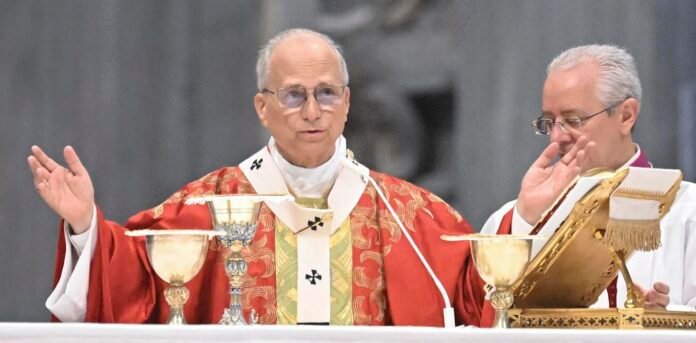
Why Pope Leo has excommunicated a group of conservative Catholics

0
why-pope-leo-has-excommunicated-a-group-of-conservative-catholics
Why Pope Leo has excommunicated a group of conservative Catholics

The decision by Pope Leo XIV to excommunicate members of the Society of Saint Pius X (SSPX) is the latest twist in a long-running saga between the Vatican and this contentious traditionalist group. It is yet more evidence of the deep polarisation between conservatives and progressives within the Catholic church.

The Vatican issued a statement on July 2 to the effect that SSPX had “committed an act of a schismatic nature” by ordaining four bishops the previous day at a ceremony in Écône, the village in Switzerland where SSPX was founded in 1970.

The society was established and named after Pope Pius X by the controversial French archbishop Marcel Lefebvre. He was an adherent to the uncompromising positions Pius (who reigned from 1903 to 1914) held against “modernism” – the attempts by some Catholics to apply contemporary intellectual and moral trends to the teachings of the church.

In 1907, Pius X had declared modernism to be an attack on all elements of the church by those who “vaunt themselves as reformers”.

Those who joined the SSPX reacted specifically to reforms brought about within the church by the Second Vatican Council (often known as Vatican II).

Convened between 1962 and ’65, Vatican II was reportedly described by Pope John XXIII as an attempt to “open the windows and let in the fresh air”. It sought to recognise the rapidly shifting world of the 20th century, and reaffirm the role of the church in guiding Catholics by interpreting these events “in the light of the Gospel”.

Many reforms occurred within the church as a result, including the introduction of worship in vernacular languages, replacing the older Latin Mass (often referred to as the “Tridentine Mass”, as it was standardised after the Council of Trent in the 16th century).

Lefebvre and his supporters saw this as a Modernist revolution. But they were the ones who came under suspicion for this divergence in such important matters of dogma. In 1975, the society was “suppressed”, meaning it was no longer recognised by the Church as legitimate.

This proved the start of a much longer struggle, as members of the SSPX continued to act regardless of instruction from the Holy See.

In 1976, Pope Paul VI described Lefebvre and his movement as suffering from “a bitter deafness” which had placed them “outside of obedience and communion with the Successor of Peter and therefore of the Church”. He implored them to “reflect calmly, without prejudice” and “to become aware of the deep wounds they otherwise cause the Church”.

“We invite them again to think,” he concluded. But his appeal appeared to fall on deaf ears.

The struggle between the SSPX and the Vatican boiled over in 1988 when – as at the ceremony a few days ago – four priests were consecrated as bishops at Écône. The event occurred despite a warning from John Paul II, and resulted in the excommunication of Lefebvre and the four bishops.

The pope viewed the act as a grave disobedience not only against his authority, but “the unity of the Church”.

But as a concession, he acknowledged the “feelings of all those who are attached to the Latin liturgical tradition”, and opened a commission to attempt to return those in the SSPX to the church while “preserving their spiritual and liturgical traditions”.

An acknowledgement of a wider conservative desire to retain the Latin Mass and the forms of worship used before Vatican II came in 2007, when Pope Benedict XVI decreed that these older forms could be celebrated under specific conditions.

Four new  bishops are consecrated in a Catholic church.

Bishop of the Society of Saint Pius X, Alfonso de Galarreta, consecrating four new bishops in Econe without permission from the Vatican. EPA/Cyril Zingaro

Two years later, Benedict lifted the excommunication of the four bishops from 1988, believing a productive dialogue had emerged. Talks continued between the SSPX and the Vatican in the hope of achieving a reconciliation.

In 2012, however, the Vatican declared: “We cannot put the Catholic faith at the mercy of negotiations. Compromise does not exist in this field. I think that there can now be no new discussions.”

Discussions did in fact continue during the papacy of Francis, but the SSPX was considered to have “departed from communion with the Church”. Archbishop Gerhard Müller, head of the Congregation for the Doctrine of the Faith which decides matters of doctrine, said that “they must change their attitude and accept the Catholic Church’s conditions”.

A Church divided

The decision by Leo XIV to excommunicate the SSPX follows several months of warnings from the Vatican not to proceed with the consecration of the new bishops.

In a letter addressed to Father Davide Pagliarani, superior general of the SSPX on June 30, Leo wrote: “I urge you to consider carefully the spiritual good of the faithful, because the schismatic act you are about to undertake would deprive them of the licit and, in some cases, even valid reception of the Sacraments, which they love and seek for their sanctification.”

But the SSPX proceeded and the pope has acted.

This episode reflects the considerable tension among conservative Catholics over the reforms of Vatican II. While the size of the SSPX is tiny compared with the global number of Catholics (some 600,000 members in a global community of 1.4 billion), the polarisation of opinions within the church are arguably of a much larger scale.

Pope Francis recognised as much in 2022, when – to mark 60 years since the opening of Vatican II – he argued for the need to “overcome all polarisation and preserve our communion” in light of divisions since the 1960s.

While Leo XIV is still relatively early into his pontificate, the renewed excommunication is a stark reminder that polarisation remains a pressing issue for the Catholic church, particularly when it comes to modernisation.

But like the saga of the SSPX, this issue shows no sign of resolving itself anytime soon.

At least 3,700 excess deaths reported during heatwave in France, Belgium and Netherlands

0
at-least-3,700-excess-deaths-reported-during-heatwave-in-france,-belgium-and-netherlands
At least 3,700 excess deaths reported during heatwave in France, Belgium and Netherlands


France, the Netherlands and Belgium have recorded 3,700 excess ​deaths during the June heatwave that sent temperatures soaring ‌across Europe, with authorities warning that the numbers are preliminary and could rise.

Experts have said the heatwave, which lasted from about June ​20-28, was the worst recorded in Europe, causing disruption to ​power generation, damaging infrastructure and overwhelming healthcare systems. The ⁠extreme heat was almost certainly driven by climate change, scientists ​said.

There were 2,025 excess deaths recorded in France during the ​heatwave, with a particular increase in deaths among people aged over 45, French Health Minister Stephanie Rist told local television on Friday.

Deaths at home ​rose 91% between June 22-28 compared to the previous ​week, while deaths in nursing homes and healthcare facilities also increased, the ‌country’s ⁠public health authority said in a bulletin.

“Mortality will … be higher than these initial figures suggest,” the authority warned.

‘UNPRECEDENTED’ MORTALITY DATA

In Belgium, the Health Ministry said on Thursday it had registered ​excess mortality of ​about 1,200 ⁠deaths between June 18 and June 29, adding that 530 of the deaths were among people ​aged 85 or older. People aged under ​65 accounted ⁠for 180 of the excess deaths.

“Such excess mortality during a heatwave is unprecedented in our country,” the ministry said in ⁠a statement.

Authorities ​in the Netherlands said the heatwave led ​to about 480 excess deaths, mainly among the over 80s.

Source:  Reuters
 

Tech bro Thiel says Pope, by criticizing AI, serves as CCP agent

0
tech-bro-thiel-says-pope,-by-criticizing-ai,-serves-as-ccp-agent
Tech bro Thiel says Pope, by criticizing AI, serves as CCP agent

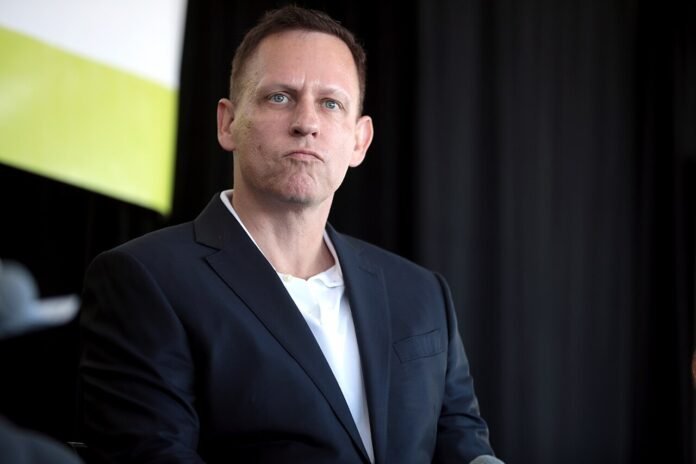
Peter Thiel. Photo: Wikimedia Commons

Right-wing tech billionaire Peter Thiel is accusing Pope Leo XIV of doing the work of the Chinese Communist Party with his criticisms of artificial intelligence.

According to a Thursday report from CNN, Thiel told the Aspen Ideas Festival in Colorado on Tuesday that the pope was inadvertently serving as a “Chinese communist agent” when he released a 42,000-word encyclical that called for strict regulation of AI, a technology that the pontiff said heightens the “risk of dehumanization” throughout the world.

Thiel argued that this sort of thinking was dangerous, CNN reported, because it could result in the US losing the “race” to build more advanced AI to China. Because of this, Thiel continued, the pope is essentially “working for the Chinese communists” by trying to tap the brakes on AI development.

Thiel, a co-founder of PayPal and Palantir, has long decried AI critics in harsh terms. Over the last year, he has been delivering a series of lectures in which he has said that opponents of AI development are working as agents for the Antichrist.

Journalist Christopher Hale, who writes the Letters From Leo newsletter, noted on Friday that Thiel in the past has even speculated that Pope Leo could be “a manifestation of the Antichrist.”

Thiel has said that he instructed Vice President JD Vance, a longtime political ally who received major funding from the tech billionaire for his 2022 Senate campaign, to ignore the pope’s moral guidance despite influencing Vance to convert to Catholicism, Hale added.

“Thiel seeded the vice president’s Catholic faith,” Hale wrote, “and he now tells wealthy festival audiences that the leader of that faith works for a communist government.”

In addition to his attacks on the pope, Thiel also warned about “a democratic-socialist takeover of the Democratic Party,” pointing to recent victories in New York and Colorado of candidates backed by the Democratic Socialists of America.

Thiel said that this “takeover” would doom the US, arguing that “when the Democratic Party goes, this country is over,” according to CNN.

The New York Times reported in May that Thiel has grown so concerned about the political situation in the US that he’s created a “foothold” for himself in Argentina, which is currently being governed by ideologically like-minded libertarian President Javier Milei.

“Thiel, who has a history of collecting backup countries as he hedges his bets against the United States, is considering making Argentina another Plan B,” the Times reported. “Born in Germany and raised in the United States, he received citizenship in New Zealand in 2011, and applied for a passport in Malta in 2022.”

-Common Dreams

The geopolitics of energy storage: Who will control the batteries of the Middle East?

0
the-geopolitics-of-energy-storage:-who-will-control-the-batteries-of-the-middle-east?
The geopolitics of energy storage: Who will control the batteries of the Middle East?

For more than a century, geopolitical influence in the Middle East has been defined by oil reserves, natural gas resources and the strategic waterways that connect them to global markets. Pipelines, shipping lanes and export terminals have shaped alliances, driven conflicts and determined the economic fortunes of states across the region. Yet the global energy transition is quietly introducing a new strategic variable that could redefine regional power: energy storage.

The rapid expansion of renewable energy is transforming the fundamentals of energy security. Unlike hydrocarbons, electricity generated from solar and wind sources cannot always be consumed when it is produced. Solar and wind generation are inherently intermittent, creating a growing need for technologies capable of balancing supply and demand. In this emerging landscape, batteries are no longer merely industrial products; they are becoming strategic infrastructure.

This shift has implications that extend far beyond engineering. Just as oil storage facilities once became essential elements of national energy security, large-scale battery systems are increasingly shaping the resilience of electricity networks, digital infrastructure and critical industries.

The geopolitics of energy is therefore evolving from a competition centered on extraction and transportation to one that increasingly values storage, flexibility and system reliability.

The geopolitics of energy storage

The significance of energy storage lies not simply in its technological function but in its ability to reshape strategic relationships. Control over large-scale storage capacity increasingly translates into greater grid flexibility, improved electricity reliability and enhanced resilience against supply disruptions. In future electricity markets, storage capacity may become an important source of geopolitical leverage, particularly for countries seeking leadership in the post-hydrocarbon economy.

The pace of this transformation is already visible. According to the International Energy Agency (IEA), global battery deployment more than doubled in 2023, making energy storage one of the fastest-growing segments of the global energy industry. Battery systems are now being deployed alongside renewable energy projects, electricity grids and industrial facilities at unprecedented speed.

For the Gulf states, this development represents both an opportunity and a strategic challenge. During the twentieth century, regional influence was largely derived from abundant hydrocarbon reserves. In the twenty-first century, however, competitive advantage may increasingly depend on the ability to convert renewable electricity into reliable, dispatchable energy through advanced storage technologies. This explains why energy storage has become an integral component of national development strategies across the region.

READ: The Next Energy War Will Be Over Rules, Not Resources

Saudi Arabia’s Vision 2030 aims to generate half of the Kingdom’s electricity from renewable sources by the end of the decade. Achieving such an ambitious objective will require not only large-scale solar and wind generation but also substantial investments in battery storage capable of stabilising the national grid. Likewise, the United Arab Emirates has expanded investment in utility-scale battery systems to complement some of the world’s largest solar power projects, recognising that reliability has become as important as generation capacity itself.

These investments are not merely environmental initiatives. They are strategic decisions designed to strengthen economic competitiveness, support industrial diversification and increase regional influence in future electricity markets.

Countries capable of combining low-cost renewable electricity with advanced storage infrastructure will possess an important advantage. Electricity itself may emerge as an exportable strategic commodity, particularly as regional electricity interconnections continue to expand.

The growing integration of Gulf electricity markets illustrates this transition. Regional grid connectivity has traditionally been viewed as a mechanism for improving energy security during periods of peak demand. In the coming decade, however, interconnected electricity systems supported by advanced storage technologies could evolve into new instruments of regional influence, enabling countries to export both electricity and energy resilience.

Critical minerals: The hidden geopolitics behind batteries

Behind every battery lies another strategic competition that receives far less public attention. The race to dominate energy storage is also a race to secure access to critical minerals such as lithium, cobalt, nickel and graphite. These materials have become essential components of modern battery technologies, transforming global supply chains into arenas of geopolitical rivalry.

China currently occupies a dominant position in many stages of battery manufacturing and mineral processing, while the United States and the European Union are investing heavily in alternative supply chains to reduce strategic dependence.

As competition over critical minerals intensifies, partnerships between technology providers, mining companies and energy-producing states are likely to become increasingly important.

For Middle Eastern governments seeking to diversify their economies beyond hydrocarbons, participation in these emerging industrial ecosystems may prove as strategically valuable as investment in renewable generation itself. The future of regional energy influence may therefore depend not only on the ownership of oil and gas resources but also on integration into global battery supply chains.

Artificial intelligence is reshaping energy demand

The strategic importance of energy storage extends well beyond renewable electricity. The rapid expansion of artificial intelligence is creating an unprecedented surge in electricity demand, fundamentally changing the relationship between digital infrastructure and energy policy.

Every major AI model, cloud platform and high-performance computing facility depends on uninterrupted electricity. Modern data centres cannot tolerate frequent voltage fluctuations or prolonged outages without significant economic consequences. As governments compete to establish themselves as regional AI hubs, the reliability of electricity systems becomes a strategic consideration rather than a purely technical one.

This is particularly relevant in the Gulf, where countries are investing simultaneously in artificial intelligence, digital infrastructure and renewable energy. These ambitions are closely interconnected.

Without reliable storage infrastructure, efforts to develop large-scale AI ecosystems may face serious limitations. Stable electricity systems are rapidly becoming a prerequisite for technological competitiveness.

Energy storage therefore serves two strategic purposes. It supports the transition towards cleaner electricity while simultaneously enabling the digital economy that many Middle Eastern governments envision for the coming decades.

China, the United States and the new battery rivalry

The competition over energy storage is no longer confined to commercial markets. It has become an important dimension of strategic rivalry between major powers. China has established a dominant position across much of the global battery value chain, including mineral processing, battery-cell manufacturing and large-scale deployment. This leadership has been reinforced by extensive investment in industrial capacity and long-term access to critical raw materials.

The United States and its allies, meanwhile, have responded through industrial policy, supply-chain diversification and strategic partnerships intended to reduce dependence on Chinese manufacturing. Legislation such as the US Inflation Reduction Act and similar European initiatives reflects growing recognition that battery technology has become an issue of economic security.

For Middle Eastern countries, this rivalry presents both opportunities and strategic dilemmas. Rather than serving solely as energy exporters, Gulf states are increasingly positioning themselves as investment destinations for advanced manufacturing, clean-energy technologies and battery supply chains. Partnerships with both Western and Asian firms are expanding, allowing regional governments to diversify their economies while strengthening their technological capabilities. This emerging competition may prove as consequential as previous rivalries over oil production, LNG infrastructure or pipeline routes.

Critical minerals: The next energy battle in West Asia

Iran’s position in the emerging energy storage order

Despite sanctions-related constraints, Iran retains significant engineering capacity, an established industrial base and considerable renewable energy potential that could support future advances in energy storage technologies.

Although international investment remains limited, domestic research institutions and engineering industries possess the technical foundation needed to expand indigenous capabilities in battery technologies, smart grids and electricity management systems. For Iran, strengthening energy-storage capabilities is not simply about supporting renewable energy generation. It also offers an opportunity to improve grid resilience, reduce transmission inefficiencies and enhance greater technological self-sufficiency in a rapidly changing global energy landscape.

As neighbouring countries accelerate investments in clean-energy infrastructure, maintaining technological competitiveness will require increased attention to storage technologies alongside traditional energy assets.

From oil fields to battery banks

For more than a century, the Middle East’s geopolitical influence has rested on its vast hydrocarbon resources. Oil and natural gas will undoubtedly remain central to the region’s economy for decades to come. Yet the global energy transition is steadily broadening the foundations of power. Energy storage is emerging as a strategic capability that extends well beyond electricity. It underpins renewable energy systems, strengthens critical infrastructure, supports artificial intelligence, enhances economic resilience and increases national security. Countries that recognise this transformation early—and invest accordingly—will be better positioned to shape the next phase of regional energy politics.

The future balance of power in the Middle East may therefore depend not only on who possesses the largest energy reserves, but increasingly on who can store, manage and distribute energy most effectively.

In the twentieth century, strategic influence flowed through pipelines. In the twenty-first, it may increasingly flow through batteries.

The views expressed in this article belong to the author and do not necessarily reflect the editorial policy of Middle East Monitor.

Visiting the stars (and planets, and telescopes) in VR

0
visiting-the-stars-(and-planets,-and-telescopes)-in-vr
Visiting the stars (and planets, and telescopes) in VR

Having a computer strapped to my face for 40 minutes was one reason to feel a little sweaty. But the tour of the Universe I had just received in virtual reality—including visits to the near vicinity of the Sun, the giant black hole at the center of our galaxy, and a hellscape of an exoplanet 41 light-years distant—provided another excuse for sensing some heat.

Smithsonian Starstruck: An Immersive Experience is a 40-minute astronomy walk-through. It debuted in Washington, DC, in May with solo adult tickets now ranging from $29 to $35 and group tickets for four or more starting at $18 each (all now discounted by 15 percent); it will also open in Denver, Orlando, Florida, and San Antonio, Texas, later this year. I stopped by on a Monday in June to take it in.

After some onboarding that included setting such preferences as closed captioning and signing a waiver, I had enough time to sit on a bench next to the exhibit space (which has hosted other VR experiences) to enjoy watching another attendee with a VR headset blurt out, “Oh my God!”

After putting on an HTC Vive Focus 3 headset and receiving introductory coaching about how to move through the exhibit space, the tour began. My virtual self was standing below a glittering night sky at the Multiple Mirror Telescope at the Smithsonian Astrophysical Observatory’s Whipple Observatory.

The stars in my VR night were big and bright, but they blurred noticeably when I moved my head. I had to wonder how a headset more recent than this 2021-vintage model would have performed; in other cities, Starstruck patrons will don a newer HTC product, the Vive Focus Vision, and the DC exhibit will move to that model at some point.

From there, we walked from one viewing spot to another in Starstruck’s room, occasionally bumping into each other as we followed the lead of a virtual tour guide wearing what looked like an approximation of SpaceX’s spacesuits and voiced by narrator James Seawood. We strolled to watch a re-creation of the Universe’s self-birth via the Big Bang, then ambled over for a close-up look at a stellar nursery that the Hubble Space Telescope made famous as the Pillars of Creation.

Seawood described the scene of star formation floating before our perch as “a cosmic pressure cooker” and “beautiful chaos.”

VR vistas

As we stood on a virtual set of glowing hexagonal blocks, the VR vistas zoomed as far out as a view of thousands of galaxies and as close as a dangerous proximity to the Sun—with NASA’s Parker Solar Probe keeping us company. Starstruck features three other of NASA’s farthest-seeing observatories: Hubble, the Chandra X-Ray Observatory, and the James Webb Space Telescope.

Each spacecraft’s close-up in the tour comes with a chance to press a “Take a picture” button that didn’t seem to do anything, plus an opportunity to play with a small model of it. I could not resist a chance to inspect JWST’s intimidatingly complex design, so I picked up a gossamer version of the observatory 1.5 million kilometers away from my real-world spot and gently turned it in my virtual hand.

Rendering of a group of people with VR goggles sitting on the protective lid of the Hubble Space Telescope.

Credit: Smithsonian Starstruck

Much of Starstruck focuses on the life cycles of stars and their planets, and a particularly evocative segment transported us to the hellish surface of Janssen, an exoplanet also known as 55 Cancri Ae that’s in an orbit so close to its star Copernicus that its year lasts about 17 hours.

The experience’s depiction of that planet’s surface as rugged rock outcrops with lava flowing around them (and stashes of diamonds crushed into being by the intense heat) may understate Janssen’s brutal environment—some analyses suggest that its entire surface is molten rock.

Many exoplanets are stuck in inhospitable orbits that make life or just the presence of liquid water impossible, and this stop on the tour brings home Earth’s good fortune. As Seawood put it: “We hit the stellar jackpot.”

Two other stops provided an up-close look at the death throes of stars.

A visit to Betelgeuse showed that the late-stage red supergiant in the constellation Orion was looking distinctly lumpy as it had begun to fuse higher elements. The visit then took us into the future with the star going supernova, putting on a show that no one on Earth has seen for centuries.

The last stop in space took us to just outside the event horizon of Sagittarius A*, the unimaginably enormous black hole at the center of the Milky Way. Starstruck made its most effective use of VR’s potential here; I raised my virtual hand to direct a beam of light toward the black hole, then saw it bend into that inescapable gravity well and shift into the red.

The tour ended by taking us back to a particularly remote corner of Earth and another sky full of stars: Chile’s Atacama Desert, the future site of the Giant Magellan Telescope (SAO is among its founding partners). It depicts that still-under-construction observatory as finished, with its enclosure open and its seven primary mirrors angled up to see a little farther into the Universe.

For a VR connoisseur with an Apple Vision Pro at home, the experience here might not deliver enough technical wow. But if you’re a space nerd or astronomy enthusiast—especially if you can assemble three like-minded friends as an away team to qualify for the group discount and make it less awkward when you walk into each other mid-tour—it provides an engaging escape.

A city councilman pursues purpose and dignity in suburban Japan

0
a-city-councilman-pursues-purpose-and-dignity-in-suburban-japan
A city councilman pursues purpose and dignity in suburban Japan

The city of Kashiwa, in Chiba Prefecture, is quiet for its size. Lying less than an hour’s train ride to the northeast of mega-metropolis Tokyo, Kashiwa – home to many commuters and their families – presents a calm contrast to the hectic pace of its big-city neighbor. Politics in Kashiwa is milder, too.

Tokyo is not just an urban giant, with all the political cut and thrust that comes with millions of competing interests. It is also Japan’s political capital, a fact intensified by Japan’s close relationship with the United States and the geopolitical complexity that that entails. When one is talking politics in Tokyo, one is talking about intrigue with international resonance.

When one is talking politics in Kashiwa, one is talking about building playgrounds and keeping fire departments properly funded. But because Kashiwa is much less visible than Tokyo, and much freer of partisan straitjacketing, there is room for those who practice a politics of purpose over a high-profile act of national and international performance.

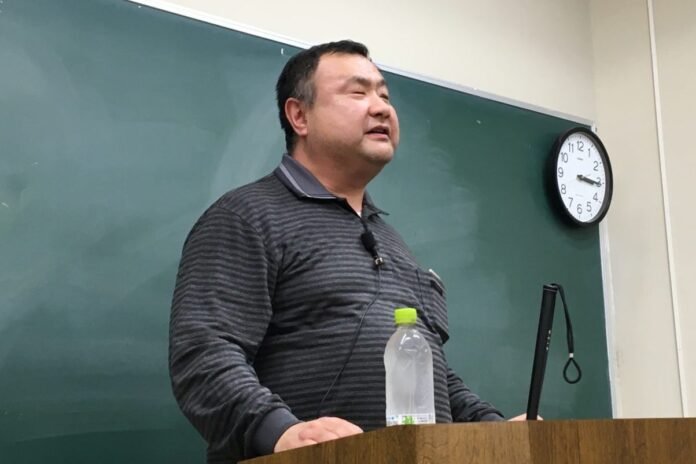
In the relative calm of Chiba, Hiroki Uchida, a Kashiwa City Council member, spends his days fighting not to be seen but to be heard. He speaks also on behalf of others whose voices have often been squelched in the political arena. I recently spoke with Uchida about his political work. What I found was a man who puts human dignity over partisan politics.

Q: Please tell me a little about your background.

A: I was born not far from Kashiwa in Noda, Chiba Prefecture, in 1971. I was born with a visual impairment, completely blind in my right eye, but able to discern some visual information, although very weakly, with my left eye. Now, however, I have no sight in either eye.

I had perfect attendance in my third year as an elementary student, but as a fourth-year student I was very severely bullied by my teacher. This bullying continued through much of my time in elementary school. Because I was often not in class, my teacher had a kind of funeral for me, putting my photo on my classroom desk and burning incense in front of it as though I had died.

As a result, I stopped going to school – except on days when we had music lessons. I was very fond of music.

I had some friends in middle school, but as high school entrance exams approached they became busy with studying and we drifted apart. I thought sometimes of suicide, and attempted suicide as well.

I also was studying, though, and was able to enter high school. There, I met other people with visual impairments like myself. I also met people with hearing impairments, people with psychological conditions, people from foreign countries and others who might have been subjected to bullying as I had.

I entered high school in 1985. The next year, 1986, there was a nuclear accident in Chernobyl, in the Soviet Union, in what is now the country of Ukraine. My friends and I began working to ensure that there would be no such accidents in Japan, and that Japan would use renewable energy resources instead.

We also fought against discrimination, often as part of the disabled liberation movements of the day, and on behalf of hisabetsu burakumin [descendants of hereditary outcastes], women, people of African descent and other groups facing social exclusion. I found that the problem of discrimination, at root, lay in the social structure.

When I graduated from high school I began to work in rehabilitation at a hospital. In addition, I was volunteering at a night school that a friend had started, helping twice a week with students with various disabilities and from various disadvantaged social backgrounds.

It was also around this time that I decided to work in a more dedicated way toward eliminating discrimination in society. And, I discovered the great danger that discrimination poses to society. Fighting for one’s rights is fighting for one’s survival.

Q: Sadly, this has been proven true in recent years.

A: Yes. Ten years ago, in July, 2016, Satoshi Uematsu, an employee of the Tsukui Yamayuri En care home in Sagamihara, Kanagawa Prefecture, murdered nineteen people with disabilities who were residents there. The murderer said that such people’s lives had no value.

Q: You work as a politician in Kashiwa. Please tell me about the history of discrimination here in our part of Chiba Prefecture.

A: A very unfortunate historical example from right here in Kashiwa also illustrates the dangers of discrimination. This is the Fukudamura incident of more than a century ago. This incident was the culmination of many different kinds of discrimination, most prominently against people thought to be from the Korean peninsula.

The Fukudamura incident happened on September 6, 1923, five days after the Kanto earthquake on September 1 of that year. In the immediate aftermath of that natural disaster, while fires were blazing in Tokyo, a baseless rumor started to circulate that Koreans had been poisoning wells. Chiba Prefecture was placed partially under martial law on September 4.

In Fukudamura, a village near the Tone River later incorporated into Noda City – next door to today’s Kashiwa – a group of fifteen medicine salespeople traveling from Kagawa Prefecture, in Shikoku, had stopped to rest before crossing the Tone and continuing on into Ibaraki Prefecture.

Impromptu militias formed after the earthquake were on high alert. Militias from Fukudamura and Tanakamura, later part of Kashiwa City, rounded up the salespeople on the suspicion that they were Koreans who had been poisoning wells as rumored.

The salespeople were not Koreans, however, but hisabetsu burakumin. Discrimination against them meant that they often could find no other work besides traveling sales. This is why they were in Chiba at the time, far from Kagawa.

But because they spoke a dialect of Japanese very different from that spoken in Chiba, some of the militia members jumped to the conclusion that they were Koreans. Of the fifteen people in the group, the guards killed nine. Three of the murdered people were small children. Eight people drowned after being thrown in the Tone River, while the ninth, also thrown in the river, was cut down after managing to swim to shore.

These murders sprung entirely from discrimination—against Koreans, against hisabetsu burakumin and against traveling salespeople.

Q: I believe one of the murdered women was pregnant, so her unborn child would be the tenth person killed. It seems that the people who killed the traveling salespeople from Kagawa were prosecuted, but later pardoned and released from prison. One of the murderers became the head of Tanakamura village, and later a member of the Kashiwa City Council. He had murdered people thought to be Koreans, and because of that he was lionized by some in Kashiwa.

A: It is a very dark chapter in Chiba history.

Q: How has the Fukudamura incident affected your political career?

A: I do my political work in Kashiwa today rooted in the lessons that must be learned from this history. I think that everyone working in politics in Kashiwa, and all of us who live here as well, must learn these lessons, too. People with disabilities, people from foreign countries – there are many today whose rights and dignity are violated by discrimination.

I likely would not have known about the Fukudamura incident had I not myself experienced discrimination. Even if I had learned about it, I would not have seen it in the way that I do had I not also been discriminated against.

Today, Kashiwa has developed into a big and prosperous city. It is just for this reason that I think the Fukudamura incident must not be forgotten. As immigrants come into Kashiwa, especially from neighboring countries in Asia, discrimination comes again to the fore here. This calls to mind not just the Fukudamura incident but also the eugenics ideology that was used to justify discrimination against disabled people and others in the postwar. We must remember that eugenics has had influence in Japan, and in the world. We must never forget it.

I want to continue fighting so that no one, for any reason, is discriminated against in Kashiwa. Peace and human rights are always a set, and we cannot have one without the other.

Jason Morgan is an associate professor of global studies at Reitaku University, Kashiwa, Japan.

Israel Unseals Thousands of Operation Entebbe Records Ahead of 50th Anniversary

0
israel-unseals-thousands-of-operation-entebbe-records-ahead-of-50th-anniversary
Israel Unseals Thousands of Operation Entebbe Records Ahead of 50th Anniversary


Prior to the 50th Anniversary of Operation Entebbe, Israel State Archives released thousands of pages of newly available government records documenting Israel’s response to the 1976 Air France hijacking, including complete transcripts of Cabinet and Security Cabinet meetings, records of a special security team established by Prime Minister Yitzhak Rabin, and additional files made public for the first time.

The release, issued by the Israel State Archives in the Prime Minister’s Office, also makes public all archive files relating to Operation Entebbe, including documents that had previously been released separately, presenting what the archives described as the full record of the government’s handling of the crisis.

The documents trace the government’s deliberations from the first reports that contact had been lost with the Air France flight after its stopover in Athens through the rescue mission carried out a week later.

Cabinet records show Rabin interrupting a government meeting to announce that the aircraft had apparently been hijacked. During the session, ministers were informed the plane had landed in Benghazi, Libya, although officials still did not know the hijackers’ identities, intentions, or final destination.

After Eli Mizrahi, Rabin’s chief of staff, suggested ministers remain available for updates later that day, Rabin responded: “There is no need whatsoever for that. My intention is to hold the government of France responsible for the fate of the Israelis flying on the Air France plane and not to absolve the government of France from this responsibility.”

The archive also includes, for the first time, recordings of 26 telephone conversations held by Eli Mizrahi with Rabin, the Foreign Ministry director general and other officials during the hostage crisis, as well as transcripts of five conversations between Col. Baruch Bar-Lev and Ugandan ruler Idi Amin.

Additional material includes diplomatic correspondence with France and other governments whose citizens were aboard the hijacked aircraft, records relating to UN Security Council deliberations after the operation, hundreds of letters sent to Rabin following the rescue, photographs whose copyrights have expired, files concerning films about Operation Entebbe, and documents related to the commemoration of Lt. Col. Yonatan Netanyahu, commander of the General Staff Reconnaissance Unit, who was killed during the raid.

Among the newly released documents is an interview with hostage Yitzhak David, who was wounded during the rescue operation and recalled that being separated from the non-Israeli hostages revived traumatic memories from his experience as a Holocaust survivor.

Rocket Report: Indian startup nears first launch; SpaceX’s millenary milestone

0
rocket-report:-indian-startup-nears-first-launch;-spacex’s-millenary-milestone
Rocket Report: Indian startup nears first launch; SpaceX’s millenary milestone

Welcome to Edition 9.01 of the Rocket Report! Back in January, I wrote about the 20 launches and landings we were most excited about in 2026. The list included things that were, at the time, officially scheduled to occur this year. I also gave my own view of the probability of each of these events actually happening before December 31. Halfway through the year, we can only count one of the events as completed, and that was NASA’s Artemis II mission in April. Many are now scheduled for next year, proving again that delays are a constant in the space industry. A couple of them—such as the launch of NASA’s Roman Space Telescope—do appear to be on track to happen soon.

As always, we welcome reader submissions. If you don’t want to miss an issue, please subscribe using the box below (the form will not appear on AMP-enabled versions of the site). Each report will include information on small-, medium-, and heavy-lift rockets, as well as a quick look ahead at the next three launches on the calendar.

Swift Boost Mission reaches orbit. A pioneering commercial mission to reboost the orbit of NASA’s Swift astronomy satellite launched early Friday after attempts earlier in the week were thwarted by bad weather and a technical issue. The Link servicing satellite developed by Katalyst Space Technologies soared to orbit on the tip of a Northrop Grumman Pegasus XL rocket that dropped from the belly of a modified L-1011 jetliner over the remote Pacific Ocean. Mission managers called off two launch attempts Tuesday and Wednesday due to poor weather around the L-1011’s staging base on Kwajalein Atoll in the Marshall Islands. On Thursday, “a launch vehicle issue temporarily prevented teams from deploying the rocket” after takeoff of the L-1011.

A rarity these days… This was the last scheduled flight of the air-launched Pegasus rocket, which had success in the 1990s and 2000s as a small satellite launcher for NASA and the US military. Usage of the Pegasus rocket has declined amid the rise of more affordable commercial launch options, especially SpaceX and Rocket Lab. Upon reaching orbit, Katalyst’s Link satellite will spend several weeks approaching the Swift observatory, which is unable to counter atmospheric drag and is likely to reenter the atmosphere and burn up later this year. Launched in 2004, Swift was never designed to be serviced in orbit. The Link mission will attempt to raise the satellite’s altitude and extend its mission.

The Ars Technica Rocket Report
The easiest way to keep up with Eric Berger’s and Stephen Clark’s reporting on all things space is to sign up for our newsletter. We’ll collect their stories and deliver them straight to your inbox.

Sign Me Up!

Launch window set for India’s first commercial rocket. Skyroot Aerospace is set to launch the first test flight of its Vikram-1 rocket between July 12 and August 4 from the Satish Dhawan Space Center, marking India’s first private attempt to place a launch vehicle into orbit, the Economic Times reports. The mission aims to gather critical in-flight performance data across propulsion, stage separation, guidance, navigation and control, and overall vehicle performance. The test flight will originate from a launch pad originally built for India’s government space program.

The sky’s the limit... Skyroot has raised approximately $160 million to date, including a $60 million fundraising round announced in May, boosting its valuation over $1 billion. The Vikram-1 rocket is powered by three stages burning solid propellant and a fourth stage with liquid-fueled engines for the final maneuvers to place payloads into orbit. It is designed to place nearly a half-ton of payload mass into low-Earth orbit.

Rocket engines delivered for Rosalind Franklin. NASA has delivered the braking engines for the European Space Agency’s Rosalind Franklin mission to Mars, European Spaceflight reports. The braking engines are one of three major contributions NASA has committed to the mission, along with launch services and Radioisotope Heater Units (RHUs) to keep the rover’s instruments warm during cold Martian nights. The Rosalind Franklin rover is set for launch in late 2028 after years of delays, most of which were caused by geopolitical tensions and not technical issues.

American-made... NASA is providing the braking engines as part of the US contribution to the ESA-led mission, which aims to place the first European rover on the surface of Mars. The throttling MR-80 engines, which burn hydrazine fuel, were manufactured by L3Harris, formerly Aerojet Rocketdyne. Four of them will control the lander’s final descent. NASA and L3Harris will deliver a fifth spare engine to Europe to round out the propulsion contribution. The same kinds of engines were used for the landings of NASA’s Curiosity and Perseverance rovers on Mars in 2012 and 2021.

NASA taps Rocket Lab for three launches. NASA has selected Rocket Lab to launch a pair of science missions on three Electron rockets in 2027, Space News reports. One of the missions is the Polarized Submillimeter Ice-cloud Radiometer, or PolSIR, which consists of two suitcase-sized satellites to measure the rise and fall of ice crystals in tropical clouds. The PolSIR satellites will launch on back-to-back Electron rockets from Rocket Lab’s spaceport in New Zealand no earlier than June 2027.

Going solo... The other launch NASA awarded to Rocket Lab is for the Total and Spectral Solar Irradiance Sensor-2, or TSIS-2, mission set to fly from New Zealand in early 2027. The TSIS-2 spacecraft will be the successor to TSIS-1, an instrument mounted on the outside of the International Space Station to measure the amount of solar energy entering the Earth’s atmosphere. NASA decided to build a dedicated satellite for TSIS-2 and launch it on a rideshare mission on a SpaceX Falcon 9 rocket. Now, TSIS-2 will also get a dedicated ride to space with Rocket Lab.

Isar Aerospace announces all-German mission. Planet Labs is placing a bet on startup Isar Aerospace, signing up to launch at least one of its satellites on the Spectrum rocket that has yet to make orbit, Aviation Week & Space Technology reports. The launch from northern Norway could come as early as this year, Isar Aerospace said in an announcement Thursday. It would involve one of Planet’s Pelican high-resolution Earth observation satellites assembled in the US-based company’s new Berlin manufacturing facility. “With both satellite and rocket being built in Germany, this launch will be a national first for the country, demonstrating rapid advancements in the nation’s sovereign space capabilities,” Isar said in a statement.

How about that next launch?... Isar has not provided any update on the next test flight of its Spectrum rocket, which has missed several opportunities to launch since January. Officials scrubbed the most recent launch attempt June 15 after “detecting off nominal behavior in the vehicle’s fluid systems.” This mission will attempt to place a batch of CubeSats into orbit after lifting off from Andøya Spaceport in Norway. The first Spectrum launch failed in March 2025.

End of an era for Atlas V. The final flight of United Launch Alliance’s Atlas V rocket is still several years off, but an important era for the once-dominant launch company came to a close early Thursday, Ars reports. The final flight of an Atlas V for the Amazon Leo broadband constellation lifted off from Cape Canaveral Space Force Station, sending 29 satellites to orbit to move the network closer to providing initial services. It marked the ninth Atlas V flight for Amazon Leo and the fourth Atlas V launch in less than three months, hitting a career-ending cadence the rocket has rarely seen in nearly a quarter-century of service.

Farewell to the Bruiser... This was also the final launch of an Atlas V rocket with a payload fairing. Six more Atlas Vs in ULA’s inventory are assigned to launch Boeing’s Starliner crew capsules to the International Space Station, and those missions will fly without a fairing. Additionally, Thursday morning’s mission was the last to use the Atlas V’s most powerful configuration with five strap-on solid rocket boosters. ULA’s next launch will be the return to flight of its newer Vulcan rocket, which has been grounded since February due to problems with its solid-fueled boosters.

A millenary milestone for SpaceX. With multiple launches each week, it’s easy to lose sight of just how impressive the Falcon 9 rocket is. The Falcon 9 and Falcon Heavy have flown 671 times, and the majority of those missions flew with reused boosters and engines. This week, SpaceX announced on X that it has manufactured the 1,000th Merlin 1D engine for the Falcon rocket’s first stage. Nine of these kerosene-fueled engines power each Falcon 9 launch, and 27 of them fly on the Falcon Heavy. A modified version of the Merlin engine flies on the upper stages of both rockets.

Refurbishment over production… The production of 1,000 Merlin 1D engines is a remarkable milestone for any rocket engine, but it’s important to note that the Merlin 1D is reusable. The Merlin 1D has logged more than 6,000 engine flights with 1,000 units. “With Falcon’s reusability, recovering these engines has enabled continued reliability enhancements, making Merlin one of the most reliable rocket engines ever manufactured,” SpaceX wrote on X. Another highly reliable, but single-use, rocket engine with similar thrust is Russia’s RD-107/108. Five of those have powered each variant of Russia’s R-7 rocket family since the 1950s, a legacy now carried on by the Soyuz launch vehicle. With more than 2,000 flights by Soyuz and its kin, that amounts to more than 10,000 RD-107 and 108 engines produced at a plant in Samara, Russia.

SpaceX launches rare GEO mission. A SpaceX Falcon 9 rocket launched Sunday carrying a multi-ton radio broadcasting satellite for SiriusXM to replace two aging satellites in geostationary Earth orbit, Spaceflight Now reports. The SXM-11 satellite is a behemoth as far as spacecraft go, with a launch mass of about roughly 7 metric tons (15,000 pounds). The satellite is destined for a position over the equator at an altitude of more than 22,000 miles (nearly 36,000 kilometers), where its velocity will match the Earth’s rotation to provide continuous radio broadcast coverage over the United States.

Still in business… Of SpaceX’s 78 launches of the Falcon 9 and Falcon Heavy this year, this was just the third carrying a payload heading for geostationary orbit, once the preferred destination for nearly all commercial communications satellites. Today, the trend is decidedly bending toward low-Earth orbit with megaconstellations like Starlink. But SiriusXM remains in business, as does the manufacturer of the SXM-11 satellite: Lanteris Space Systems, a subsidiary of Texas-based Intuitive Machines. The company, formerly branded as Maxar, was acquired by Intuitive Machines in January 2026 for about $800 million.

NASA pleased with Blue Origin’s pad cleanup. NASA Administrator Jared Isaacman said this week that Blue Origin has been putting significant resources into the cleanup of its launch pad since the explosion of its New Glenn rocket there in late May, Ars reports. “Blue Origin’s response to the situation is almost beyond impressive, and that’s not just a NASA assessment,” Isaacman said in response to questions from reporters on Wednesday afternoon. The explosion May 28 took out Blue Origin’s only launch pad. NASA has a significant stake in Blue Origin’s return to flight. It is counting on the company’s Mk. 1 lander to carry dozens of cargo missions to the Moon, and its Mk. 2 lander to eventually ferry people to the lunar surface. The company’s New Glenn rocket was expected to play a critical role in launching both of those landers.

New concept of operations… Blue Origin says it plans to return to flight with New Glenn before the end of the year, but the launch pad will look different. Dave Limp, Blue Origin’s CEO, said the investigation into the explosion is still underway. “Early analysis points to the aft section of the first stage,” he wrote on the company’s website. During the anomaly, Blue Origin lost the lightning tower at its launch site as well as the massive transporter-erector, which moved the rocket from a nearby integration hangar out to the launch site and lifted it vertically for takeoff. For return to flight, Blue Origin will not rebuilding the transporter-erector, but will instead use a crane to lift the rocket vertical on its launch mount. Once there, and after pre-flight testing, a payload fairing would be placed atop the vehicle ahead of launch.

Next three launches

July 4: Long March 6A | Unknown Payload | Taiyuan Satellite Launch Center, China | 09:31 UTC

July 5: Falcon 9 | Starlink 10-50 | Cape Canaveral Space Force Station, Florida | 10:36 UTC

July 7: Falcon 9 | Transporter 17 | Vandenberg Space Force Base, California | 07:10 UTC

Meghan Markle Wants to be ‘Royal Again’ as U.S. Fame Fades

0
meghan-markle-wants-to-be-‘royal-again’-as-us.-fame-fades
Meghan Markle Wants to be ‘Royal Again’ as U.S. Fame Fades


Meghan Markle may be preparing for a dramatic return to the United Kingdom — but one royal commentator claims her reasons have little to do with repairing family relationships.

The Duchess of Sussex, 44, is expected to accompany her husband, Prince Harry, when he travels to England during the week of July 6 to promote the countdown to the 2027 Invictus Games in Birmingham.

While Harry, 41, reportedly views the visit as an emotional homecoming, commentator Mark Dolan claims Meghan sees the trip as a carefully calculated career move.

According to Dolan, Harry misses his family, his former royal duties and life in Britain. Meghan, however, allegedly wants to remind the world that she is still a duchess as her celebrity power in the United States begins to cool.

“I think that Harry wants to come back to the UK because he misses his family,” Dolan said during an appearance on Matt Wilkinson’s The Royal Exclusive podcast.

“He misses his royal activities, and he misses England. He misses the UK.”

Harry is scheduled to attend several events connected to the Invictus Games, including a reception in London marking one year until the international competition begins.

The trip could also offer Harry another opportunity to reconnect with his father, King Charles III, whom he has reportedly seen only twice since 2022.

But Dolan believes Meghan’s motives are far more strategic.

“For Meghan, it’s business,” he claimed. “I believe that Meghan is pathologically transactional, and so I think this trip is strategic for her.”

Dolan argued that Meghan may see the return as an opportunity to revive her royal image at a time when her American brand is reportedly struggling to maintain momentum.

“I think Meghan sees a return to the UK as a chance to recalibrate those royal credentials, to go back to the royal well so she can be ‘Duchess’ again, because that’s fading in the U.S.,” he said.

He also suggested the couple may want very different things from their relationship with Britain.

“I think it’s emotional and nostalgic for Harry, which I think is, by the way, a big tension within the marriage,” Dolan added.

Harry and Meghan stepped away from their roles as senior working royals in 2020 and moved to California with their children, Prince Archie and Princess Lilibet.

Following their stunning royal exit, commonly known as “Megxit,” the couple signed a series of high-profile deals worth millions of dollars.

Their agreement with Spotify later ended, while their Netflix partnership produced the explosive 2022 documentary series Harry & Meghan.

The series included several damaging accusations about life inside the royal family.

One of the most controversial moments came when Meghan recalled learning that she would need to curtsy before meeting Queen Elizabeth II.

Meghan demonstrated the curtsy with a deeply exaggerated bow as Harry sat beside her looking visibly uncomfortable. The scene sparked fierce backlash, with critics accusing her of mocking royal tradition.

Now, Meghan could be preparing for her first visit to England since attending the late Queen’s funeral in September 2022.

Her possible return has already fueled speculation that she wants to reclaim some of the royal glamour she once enjoyed before leaving palace life behind.

The trip is also expected to reignite the bitter debate over security for Harry and his family.

Harry has repeatedly argued that he does not feel safe bringing Meghan and their children to Britain without official police protection.

However, Dolan claimed Princess Diana’s former bodyguard, Ken Wharfe, believes the Sussexes’ security demands may have more to do with status than actual danger.

“He said there’s no way the U.K. authorities or the King would allow Harry to come to harm while he’s in Britain,” Dolan said.

According to Dolan, Wharfe suggested Harry may miss the visible signs of royal importance, including flashing blue lights, police escorts and helicopters.

“It’s the status that comes with royal armed protection that Harry, burdened with the self-image of being ‘the spare,’ wants,” Dolan claimed.

Neither Harry nor Meghan has publicly confirmed that Meghan will make the trip or responded to Dolan’s accusations.

But should the Duchess return to British soil, all eyes will be watching to see whether the visit becomes a genuine royal reconciliation — or Meghan’s bold attempt to put the “royal” back into her fading Hollywood brand.

0FansLike
0FollowersFollow
0FollowersFollow
0SubscribersSubscribe
- Advertisement -
Google search engine

Recent Posts