Imagine a poker game in which one player has spent decades mastering every bluff, every tell, every hidden card.
Their opponent, playing for the first time, relies on instinct, bravado and the vague hope that sheer force of will can substitute for skill. Now imagine that the novice is the United States and the veteran is Iran.
The prize is not a pot of chips but nuclear weapons, the flow of oil through the Strait of Hormuz and the stability of an entire region. That is the scene in early 2026, as back-channel talks between Washington and Tehran lurch towards collapse.
On one side of the table sit Iranian diplomats who have handled the nuclear file for more than two decades. On the other hand, a real-estate developer, a president’s son-in-law with no foreign-policy training and a former venture capitalist turned politician.
The outcome is almost preordained. Without a dramatic change in personnel and approach, the US cannot win these talks. It cannot even reach a durable agreement. The reason is brutally simple: knowledge, skills, expertise and negotiation skills matter, and the American side has almost none.
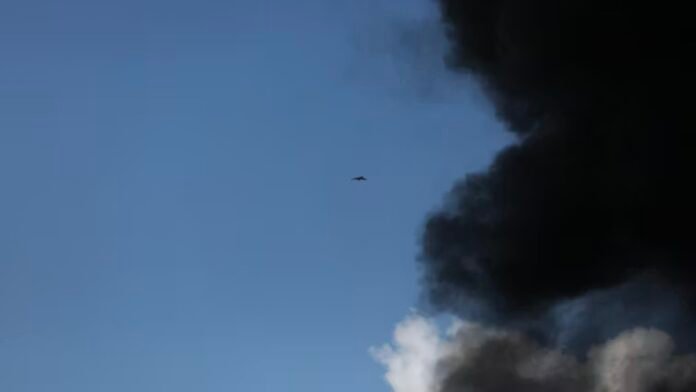
The negotiations that preceded — and, by multiple accounts, helped trigger — the American military strikes on Iran on February 28, 2026, are a case study in asymmetry. The ceasefire that followed is now teetering and was set to expire this week until US President Donald Trump extended it indefinitely.
The same American team is expected to return to the negotiation table in Pakistan. Veteran diplomats, arms-control experts and even some participants say the result is a foregone conclusion.
Begin with the Iranian negotiating team. Abbas Araghchi, the foreign minister, has been at the center of every major nuclear negotiation since the crisis began. He was deputy chief negotiator under Mohammad Javad Zarif during the 2015 Joint Comprehensive Plan of Action (JCPOA), the most detailed arms-control agreement in modern history.
Araghchi holds a doctorate in political thought from the University of Kent, UK, and has spent his entire career mastering every technical clause, every verification mechanism, every leverage point.
Beside him sits Mohammad Bagher Ghalibaf, parliamentary speaker, a former Islamic Revolutionary Guard Corps (IRGC) general and ex-mayor of Tehran — a man with direct access to the new supreme leader, Mojtaba Khamenei. Flanking them are Esmaeil Baghaei Hamaneh, Iran’s former permanent representative to the UN in Geneva, and Behzad Saberi Ansari, who holds a doctorate in international law and advised the JCPOA team in the past.
These are not political appointees. They are institutional memory incarnate on the Iranian side. They know the difference between a reactor and an enrichment cascade, the way a heart surgeon knows the difference between an artery and a vein.
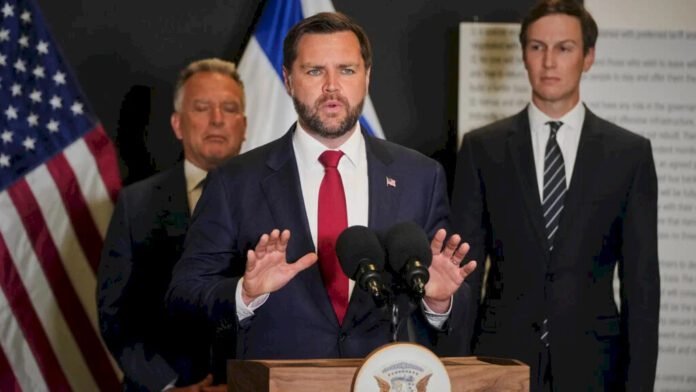
Now contrast that with the American delegation. Steve Witkoff, the president’s special envoy, made his career in New York real estate. Jared Kushner, the president’s son-in-law, is likewise a real-estate heir whose most famous diplomatic reflection was that he “wasn’t interested in the history” of previous Middle East agreements.
Vice President JD Vance, who led the first round in Islamabad, served in the Marines and worked in venture capital before entering politics. None had any professional background in nuclear nonproliferation, arms control or Iranian internal politics before being handed one of the most technically complex issues at the table.
According to multiple participants and subsequent media reporting, Araghchi gave Witkoff repeated tutorials on the basic stages of nuclear fuel production — the difference between an enrichment facility and a reactor — during early rounds in the Omani capital, Muscat.
The lead American negotiator required on-the-job nuclear physics lessons from his Iranian counterpart while talks were already underway. This was not a minor briefing. It was the foundation on which every subsequent discussion of enrichment levels, stockpile limits and verification timelines rested.
The story doesn’t end there. The Americans did not treat the exercise as a traditional negotiation at all. Career diplomats describe their approach as “presenting demands and waiting for surrender” rather than the painstaking exploration of trade-offs that produced the 160-page JCPOA.
Real negotiation requires understanding what each side truly needs versus what it publicly demands. The current team, analysts say, skipped that step. Aaron David Miller, who advised six secretaries of state on Middle East talks, noted that the advisers around the president have shown little willingness to confront him with the likely consequences of maximalist positions.
The most damning evidence came in the days before the February 28 strikes when, according to reporting by Responsible Statecraft and the Arms Control Association, Witkoff and Kushner briefed Trump that the Iranians were “buying time” and that a deal was impossible. They told the president that Tehran had boasted of possessing enough enriched uranium for eleven nuclear bombs.
Third parties in the room, however, described the same statement very differently: the Iranians were offering to hand over their entire stockpile as part of a comprehensive deal in exchange for sanctions relief: the same words, two opposite meanings. One interpretation pointed to war; the other to a breakthrough.
The man responsible for interpreting Iran’s position for the US president got it wrong — or at least framed it in a way that those present called inaccurate. Oman’s foreign minister, the official mediator, was reportedly so alarmed that he flew to Washington for an emergency briefing to set the record straight. By then, the decision to strike had already been made.
The Americans are negotiating with Iran using the poker approach: a game of hidden cards, bluffs and short-term bets. It assumes that a single winning hand — a maximalist demand, a threat of using force, a surprise move — can sweep the table.
Iran plays a different game, deeply rooted in their national psyche. In Persian koshti (wrestling, their national game), victory comes not from a single knockout blow but from relentless leverage, positional awareness and the ability to absorb pressure while slowly turning an opponent’s weight against them.
The wrestler studies their adversary’s balance, waits for overextension and then exploits it. That is exactly how Iran has conducted its diplomacy for two decades. More surprisingly, at the negotiating table, Iran also uses poker tactics — feints, delays, ambiguous signals — but within the framework of wrestling.
When the Americans demanded a total cessation of enrichment, Iran offered partial freezes. When Washington walked out of the JCPOA in 2018, Tehran methodically breached its limits, building leverage step by step. Each breach was a wrestling move: not a tantrum but a calculated increase of pressure, designed to force the other side to re-engage.
The American poker approach, by contrast, treats every concession as Iranian weakness. It cannot abide the slow, iterative grind of wrestling. Hence, the pattern: maximalist opening demands, frustration, then either collapse or next military action.
Iran’s internal political dynamics — the IRGC’s gunboats firing on vessels even as its civilian diplomats announce the Strait of Hormuz is open — only underscores the depth of Iranian institutional knowledge. The professionals know exactly who holds real power and what red lines cannot be crossed.
The American team, lacking that map, keeps walking into the same walls. The 2015 JCPOA required years of work by experts from six world powers. The current talks are being asked to produce something potentially more complex — under active military tension — in a matter of days, led by people who needed uranium enrichment explained to them.
Even a modest framework agreement on general principles would be an achievement, but it would only kick the hardest questions down the road. Global shipping and insurance markets will not resume full Strait of Hormuz traffic on the basis of a press release; they need verifiable, sustained calm.
Both sides fundamentally prefer avoiding full-scale war. That creates an opening. But openings are worthless without people who know how to walk through them. The US has repeatedly sent amateurs into a seminar room full of lifers.
Until that changes — until experienced diplomats, nuclear scientists and regional experts are given real authority — America cannot win at the negotiation table. It can only lose time, credibility and, as February 28 proved, perhaps even the chance to avoid the next war.
Follow Bhim Bhurtel on X at @BhimBhurtel and subscribe to his Substack here.