European natural gas prices surge more than 8% amid Hormuz closure tensions
European natural gas prices rose sharply Wednesday as tensions between the US and Iran persisted and markets saw no concrete progress toward fully reopening the Strait of Hormuz, Anadolu reports.
May-dated natural gas futures at the Dutch Title Transfer Facility (TTF), Europe’s benchmark gas trading hub, climbed more than 8% to €47.2 ($55.1) per megawatt-hour as of 1735GMT.
Markets were supported by the lack of clear progress in reducing tensions between Washington and Tehran, as well as uncertainty about when energy flows through the Strait of Hormuz could return to normal.
US media reports said Washington is considering increasing pressure on Iran, with a focus on limiting oil exports and restricting maritime traffic linked to Iranian ports. The approach is seen as a lower-risk but longer-term pressure tool compared with large-scale military operations.
Although a temporary ceasefire had earlier halted fighting between the sides, tensions in the region remain elevated and no lasting settlement has been reached.
The Strait of Hormuz, through which around 20% of global liquefied natural gas (LNG) trade passes, remains a key concern for energy markets.
Analysts said uncertainty about the waterway has intensified supply-security concerns in Europe, which remains heavily dependent on LNG imports, keeping prices above pre-war levels.
READ: Trump rejects Iranian proposal to open Strait of Hormuz until nuclear concerns met
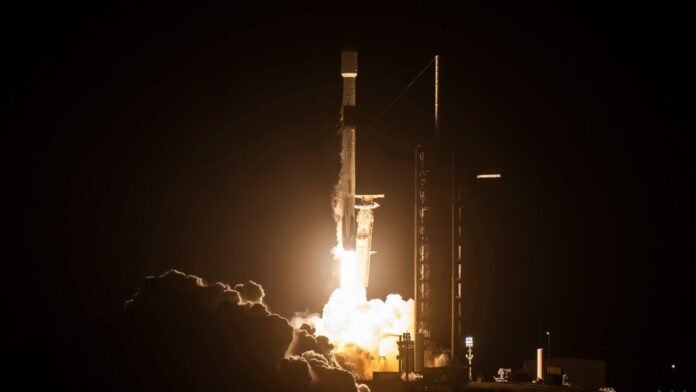
A Falcon 9 rocket will hit the Moon this summer at seven times the speed of sound
Astronomers say the upper stage of a Falcon 9 rocket that launched in early 2025 will strike the Moon later this summer, likely on the near side of the Moon.
Bill Gray, who writes the widely used Project Pluto software to track near-Earth objects, has published a comprehensive report on the impact expected to occur at 2:44 am ET (06:44 UTC) on August 5. The Falcon 9 rocket’s upper stage is 13.8 meters (45 feet) tall and has a 3.7-meter (12 feet) diameter. Since the Moon has no atmosphere, it will strike the lunar surface intact.
Although the Moon will be visible to the eastern half of the US and Canada, and in much of South America, Gray said he believes the impact will probably be too faint to be seen by Earth-based telescopes.
Highly confident in its origin
Gray said he and other astronomers are highly confident that this object is the second stage of the Falcon 9 rocket that launched two lunar landers, Firefly’s Blue Ghost and ispace’s Hakuto-R, on January 15, 2025. After the launch, the two landers, a payload fairing, and the upper stage were all tracked following their separation. The two landers reached the Moon (only Blue Ghost successfully touched down), and the fairing reentered Earth’s atmosphere.
“The upper stage, 2025-010D, also kept orbiting the Earth, but was a bit higher and didn’t re-enter,” Gray wrote. “It’s had a few close passes by the Moon and Earth, but nothing that was close enough to look like a possible impact. The asteroid surveys observed it whenever it wasn’t too close to the Sun or Moon to see. As of 2026 February 26, we had accumulated 1053 observations of it.”
Gray estimates the object will be traveling at 2.43 km a second, or 5,400 mph, when it strikes the Moon in or near the Einstein Crater. This is about seven times the speed of sound. It will create a small crater, but otherwise should do no damage.
Not the first time this has happened
Four years ago, Ars reported that astronomers believed another Falcon 9 upper stage would strike the Moon. However, subsequent analysis revealed that the object was, in fact, an upper stage from the Chinese Chang’e 5-T1 mission. Gray said there is no doubt that this object is the Falcon 9 upper stage because it has been tracked since launch.
There is no risk from its impact to anything on the Moon. It is a dead world, and there are no human-landed objects nearby.
However, both NASA and China are deep in the planning stages for establishing semi-permanent outposts near the South Pole of the Moon. As part of that, the cadence of launches on Falcon 9 and other rockets to the Moon is likely to increase by something like a factor of 10 due to the need to land rovers, supplies, habitats, communications equipment, and much more to support human activities.
There is a relatively easy fix for this: With some extra planning and sparing a little fuel, launch companies can put these stages into “disposal” orbits around the Sun and in a path that will avoid hitting Earth or the Moon in perpetuity. For the safety of future operations on the Moon, this probably should become standard operating procedure.
Microbes Coordinate Activity To Reduce Competition, Israeli Researchers Discover
Researchers at Ben-Gurion University of the Negev have found that microbes living in communities actively adjust their behavior in response to one another, reducing competition and enabling coexistence, according to a study published in Nature Microbiology.
The research, led by Dr. Sarah Moraïs under the supervision of Prof. Itzhak Mizrahi, examined how microorganisms behave when grouped together rather than in isolation. The findings indicate that microbes do not only respond to environmental conditions such as food sources, but also to the presence and identity of neighboring microbes, sometimes with a stronger effect on protein production than nutrients themselves.
The study addresses a longstanding question in ecology regarding how multiple microbial species coexist despite expectations that they would compete for the same resources. The researchers found that microbes can detect one another and shift their functional roles, reducing overlap and limiting direct competition. This process allows diverse communities to persist and function more efficiently.
To reach these conclusions, Moraïs and Mizrahi constructed controlled microbial communities using gut-associated bacteria. Instead of focusing solely on which species were present, they analyzed protein production to determine the roles each microbe performed.
“A microbe is not defined only by its genome, which represents its potential, but also by its community. The same bacterium can behave very differently depending on who surrounds it,” Moraïs said.
The findings suggest that microbial communities function as dynamic systems in which organisms coordinate activities, dividing tasks rather than competing directly. Researchers said this could help explain how complex microbiomes develop and remain stable.
The study points to potential applications in multiple fields. Prof. Mizrahi said that in human health, designing probiotics may depend on selecting combinations of microbes that naturally divide functions. In agriculture, understanding microbial organization could improve feed efficiency and reduce emissions, while in biotechnology it may support the development of multi-microbe systems instead of single engineered organisms.
Additional contributors to the research included scientists from Ben-Gurion University and the University of Greifswald. The study was supported by the European Research Council, the Israel Science Foundation–Swiss National Science Foundation, and the Israel Science Foundation.
Italy Warns of Major Flight Disruption as May 11 Strikes Loom
Travellers heading to Italy next month are being warned to expect widespread disruption as airport and air‑traffic control staff prepare for coordinated strikes that could halt flights for hours.
Italian media reported that May 11 is expected to be a “black day” for air transport, with multiple unions staging localised protests across major airports. According to Il Sole 24 Ore, walkouts are planned among airport service and security workers in Cagliari, ENAV air‑traffic controllers in Rome and Naples, ADR Security staff at Rome Fiumicino, and handling crews in Palermo.
The industrial action will coincide with an eight‑hour national strike by EasyJet pilots and cabin crew, scheduled from 10 a.m. to 6 p.m., raising the likelihood of significant delays and last‑minute cancellations.
Travel management firm Cisalpina Tours said ENAV staff at Rome’s area control centre will also strike during the same period, warning of “delays and cancellations” across the sector.
Travel specialist Kate Donnelly said the Rome and Naples air‑traffic control stoppages are expected to have the biggest impact, urging passengers to monitor airline alerts closely.
Further disruption is expected May 29, when a nationwide strike affecting public services — including rail and road transport — is set to begin, with train delays likely from the evening of May 28.
Under EU and UK regulations, passengers whose flights are cancelled are entitled to a refund or rebooking, though compensation is not available when delays stem from “extraordinary circumstances” such as strikes by airport or air‑traffic control staff.
SNL Writer’s Sister Found Dead After Alleged Digital Cover-Up Tried to Erase Her
What started as a desperate search has spiraled into a chilling mystery with disturbing new details — and a family demanding answers.
Saturday Night Live writer Jimmy Fowlie has revealed that his missing sister, Christina Lynn Downer, is dead — and police are now investigating her case as a homicide after what he claims was a calculated effort to cover up her disappearance.
Downer, 38, vanished in Los Angeles late last year. For months, loved ones clung to hope. But on April 29, that hope was shattered when Fowlie announced authorities confirmed the worst: his sister “is no longer alive.”
And then came the detail that’s turning heads.
According to Fowlie, someone may have been using Downer’s phone and social media accounts after she disappeared — allegedly crafting a fake storyline that she had chosen to “go off the grid.” The accounts were even reportedly used to ask for money, creating the illusion she was still alive while masking what may have already been a deadly crime.
“I believe whoever is responsible is hoping to erase her in every way possible,” Fowlie wrote in a gut-wrenching statement.
Let that sink in: a woman vanishes — and instead of silence, her digital life continues… possibly in the hands of someone trying to buy time.
Downer was last heard from on November 26 and was later reported missing in December. She was believed to have been in the Koreatown area of Los Angeles and was often seen with her beloved dog, Rex. As days turned into weeks, and weeks into months, her brother repeatedly begged the public for help, insisting something wasn’t right.
He made it clear: this was not someone who would just disappear.
Now, with the case officially upgraded to a homicide investigation, the focus has shifted from finding Christina… to finding who may have silenced her — and why.
Fowlie shared a series of personal photos alongside his announcement, remembering his sister as someone who “matters in this world,” while urging anyone with information to come forward.
“My sister can no longer advocate for herself,” he wrote. “But I can.”
Police have not yet revealed how or where Downer’s body was found, leaving a cloud of unanswered questions — and one deeply unsettling possibility:
Was her disappearance being hidden in plain sight the entire time?
Professional school grads from diverse classes get higher salaries
Even before the Trump administration went to war against DEI and attempts to address historical discrimination, diversity efforts in the US were controversial. A pivotal moment came in 2023, when the Supreme Court ruled that race-based affirmative action programs violated the Constitution. The decision partly rested on universities’ inability to clearly measure the benefits of diverse student bodies and the lack of defined standards to determine when equity had been achieved and such programs should end.
A new paper highlights the uncertainty. “Learning theory argues that racial diversity promotes student learning, which should increase salaries,” its authors write. “However, well-documented racial wage discrimination indicates that higher racial diversity should decrease salaries.”
But the authors—Debanjan Mitra, Peter Golder, and Mariya Topchy—have developed a metric suggesting that graduates benefit financially if they graduate with a diverse peer group. The researchers argue that this evidence should be sufficient to prompt courts to reconsider earlier rulings.
Diversity and salaries
Doing this sort of research is challenging, largely because there are no clear metrics. Outcomes also vary widely based on factors like school quality, baseline diversity, and the economic conditions at graduation, which can overshadow potential benefits. So while some research has suggested advantages to more diverse cohorts, the evidence remains limited.
The new paper responds to these challenges by both narrowing and expanding its focus. It narrows the analysis to business and law schools, tracking only a single outcome: starting salary. At the same time, the researchers broaden the research, drawing on decades of data from nearly 350 schools, including nearly 3,000 business school grads and even more from law schools, spanning over 20 years of graduating classes.
The data doesn’t include every graduate of these programs, typically covering about 75 percent of each class. But Mitra, Golder, and Topchy assess diversity by analyzing the available student data and examining the overall diversity of the school’s admitted classes.
The authors took a deceptively simple approach, examining the correlation between racial diversity in a school’s cohort and graduates’ starting salaries. In business schools, high-diversity cohorts earned starting salaries that were a standard deviation or more above the median 966 times out of 3,964 cohorts. For low-diversity cohorts, that number was just 534. For relatively low starting salaries, high-diversity cohorts showed up 531 times, while low-diversity ones appeared 933 times, largely reversing the numbers.
The pattern held for law schools. High-diversity groups saw high salaries in 1,128 of 3,386 opportunities, compared with 490 for low-diversity cohorts. The same was true for both types of graduate programs when the authors measured diversity using data for the entire entering class rather than only the students being analyzed.
Plenty of confounding factors could still explain the results, so Mitra, Golder, and Topchy implemented a few controls. More than a few, actually—it’s not often you see the word “thirteenth” in a paper’s list of potential caveats.
The alternative explanations
The authors provided a long list of possible confounders. For example, they removed the top and bottom 5 percent of starting salaries to rule out outliers (which didn’t affect the results). They gave each school a separate time trend to see if there were local economic factors, but the results stayed largely the same. They also tested various measures of diversity, examined different diversity thresholds, and controlled for university prestige, size, and urban settings. None of those changed the trends.
They also plotted each school’s cohorts individually and found that the diversity/salary correlation was positive and significant 40 times and negative and significant 19 times. For law schools, the numbers were 64 positive and 28 negative. Switching from median starting salary to mean starting salary had no effect.
Only one of the 13 added any nuance to the big picture. In that case, the trend was stronger for students entering the public sector or joining large companies. Otherwise, there was little evidence of factors that might be throwing off the results.
Is there a way these two factors are linked that isn’t causal and wasn’t considered by Mitra, Golder, and Topchy? Possibly. But the effect appears robust and seems to show up no matter how the analysis is done.
The big unanswered question is how this effect arises. It’s unlikely to be driven simply by employers’ preference for schools with historically diverse student bodies or by the fact that prestigious schools tend to have more diverse classes, as both are accounted for in the analysis. It’s entirely possible that people who experience more diverse perspectives present as more impressive during the hiring process, but it’s not clear how.
Advocating change
It’s obvious that the study was motivated by the Supreme Court ruling blocking affirmative action. The authors note that the court’s decision rested on three points: that the benefits of diversity were difficult to quantify, that they weren’t directly connected to the goals of education institutions, and that there was no clear standard for determining when an affirmative action program had accomplished enough to be ended.
The authors argue that they’ve cleared those objections by providing a measurable goal that serves as a valid endpoint for professional education. They also note that the measurement itself provides an indication of when diversity is sufficient that all entering classes benefit from it. On that basis, they argue that the ruling ending these programs should be reconsidered.
“Courts should revisit affirmative action on the basis of our evidence and also because previous courts, business executives, military leaders and university leaders have consistently affirmed its benefits, which only the most recent Supreme Court has rejected,” they wrote.
While the current Supreme Court has proven willing to revisit many past precedents, it seems unlikely it would do so for one of its own decisions.
You are here: Home/All RECIPES/ Quick Spinach and Mushroom Crustless Quiche
Easy, Healthy & Perfect for Any Meal
Looking for a simple, satisfying dish that brings everyone to the table? This Quick Spinach and Mushroom Crustless Quiche is the answer! Packed with fluffy eggs, savory mushrooms, and vibrant spinach, it’s a wholesome meal that’s as delicious as it is easy to make.
Perfect for breakfast, brunch, or even a light dinner, this crustless version skips the pastry but keeps all the flavor. It’s quick, budget-friendly, and ideal for busy days when you want something homemade without the hassle.
What Is a Crustless Quiche?
A crustless quiche is essentially a baked egg dish—similar to a frittata—but softer and creamier thanks to the addition of milk. Without the crust, it’s lighter, lower in carbs, and quicker to prepare.
This version combines spinach and mushrooms for a classic, comforting flavor that never disappoints.
Why You’ll Love This Recipe
1. Light Yet Filling Fluffy eggs and hearty vegetables create a satisfying dish without feeling heavy.
2. Quick & Easy Ready in about 30 minutes with simple ingredients you probably already have.
3. Super Versatile Swap veggies, add protein, or change the cheese—this recipe adapts to you.
Quick Overview
Prep Time: 10 minutes
Cook Time: 20–25 minutes
Total Time: 30–35 minutes
Servings: 6
Ingredients
6 large eggs
1 cup spinach, chopped (fresh or frozen)
1 cup mushrooms, sliced
1 cup milk (or plant-based alternative)
1 cup shredded cheese (cheddar or mozzarella)
1 medium onion, finely chopped
1 tablespoon olive oil
Salt and black pepper to taste
Instructions
1. Preheat the Oven
Preheat your oven to 350°F (175°C) and grease a 9-inch baking dish.
2. Cook the Vegetables
Heat olive oil in a skillet over medium heat. Sauté onions for about 5 minutes until soft. Add mushrooms and cook until browned. Stir in spinach and cook until wilted. Remove from heat.
3. Prepare the Egg Mixture
In a large bowl, whisk together eggs and milk. Season with salt and pepper.
4. Combine Everything
Add the cooked vegetables and shredded cheese to the egg mixture. Stir well.
5. Bake
Pour into the prepared dish and bake for 20–25 minutes, until set and lightly golden on top.
6. Cool & Serve
Let it rest for a few minutes before slicing. Serve warm and enjoy!
What to Serve With It
Fresh green salad
Toast or crusty bread
Roasted vegetables
A glass of juice, tea, or coffee
Tips for Perfect Quiche
Don’t overbake – it should be set but slightly soft in the center
Drain veggies well to avoid excess moisture
Use room temperature eggs for better texture
Customize freely – add peppers, zucchini, or cooked chicken
Storage & Reheating
Fridge: Store in an airtight container for up to 3 days
Freezer: Freeze slices for up to 3 months
Reheat: Microwave for 30 seconds or warm in the oven at 350°F
This Quick Spinach and Mushroom Crustless Quiche is the perfect mix of convenience and comfort. It’s easy, flavorful, and endlessly adaptable—once you try it, it’ll become a regular in your meal rotation.
Iran war caused shortage of tungsten, most of which is from China
The US and Israel’s conflict with Iran has drained munitions at an astonishing rate. This is placing pressure on the supply of a crucial metal: tungsten.
Tungsten is used in armor-piercing munitions and in components that need to withstand high levels of heat. It is an important additive in steel. Militaries around the world would grind to a halt without this strategically important element.
In addition, most of the world’s tungsten comes from China, which has recently placed restrictions on supplies. For some countries, including the UK, the push to secure new tungsten resources has never been more vital.
The English name for tungsten, comes from the Swedish “tung sten”, meaning heavy stone. Tungsten’s extreme hardness and resistance to thermal shock are what make it sought after for military technology.
In armour piercing munitions, dense tungsten alloy rods use the sheer velocity of their impact to tear through the armour on fighting vehicles and other hardened targets.
Tungsten’s properties mean it is widely used in munitions. Photo: US Navy
When purified, tungsten has the highest melting point of all metals: 3,422°C (6,192°F). Unsurprisingly, it is used in components that need to withstand high temperatures, such as those inside aircraft engines.
Tungsten, along with other metals such as molybdenum, is added to steel to improve its “hot hardness.” Where normal steel would deform at high temperatures, adding the other metals improves steel’s resistance to deformation at high temperatures.
They form carbides with the carbon in steel, making it more resistant to wear – and resistant to “creep,” in which where steel deforms in response to constant stress at high temperatures.
Because the tungsten and molybdenum atoms are significantly larger than iron atoms, they improve the “yield strength” of steel, preventing defects in the metal lattice from spreading. Steel is used to make lots of military hardware, so tungsten is vitally important.
Limited availability
All that being said, the global tungsten market is small. Tungsten is what is known as a “minor metal,” because it isn’t traded openly on exchanges like the London Metal Exchange. This makes pricing data opaque. While mining operations around the world produce around 2.6 billion metric tons of iron ore every year they only produce around 84,000 tonnes of tungsten.
Tungsten is also considered (alongside tin, tantalum and gold – which form a group often known as the 3TG metals) a conflict mineral. A significant quantity is mined in regions plagued by violence, forced labor and human rights abuses.
China produces around 80% of global tungsten – and does it so cheaply that it is hard for Western firms to compete. In the US, commercial tungsten mining ceased in 2015.
China produces around 80% of global tungsten – and does it so cheaply that it is hard for Western firms to compete. In the US, commercial tungsten mining ceased in 2015.
Beijing is leveraging its dominant position to control tungsten supply through a sophisticated state trading and licensing regime. Exports of critical derivatives are restricted to a “whitelist” of authorized state-owned firms.
This funnels a huge supply of the metal through a government monitored pipeline. In February 2026, China imposed export controls and reduced mining quotas, limiting tungsten availability. Beijing’s actions have introduced significant friction into Western supply chains for military and aerospace applications of tungsten.
Draining stockpiles
Amid the geopolitical turmoil that is unfolding in the Middle East, there is a newfound gargantuan appetite for tungsten, with every bomb, missile and kinetic interceptor further draining stockpiles.
This presents an intractable problem for the defense industry. There has been a 12% increase in the use of military tungsten this year alone – in helicopters, fighter jets and munitions. This is hard to accommodate in a market with no availability.
Global logistics are further complicated by the challenges to global shipping created by the war. This puts a strain on the movement of mining equipment and supplies for processing by the handful of mines outside of China.
UK is getting back in the game
The Hemerdon Mine in Devon,UK, hosts the fourth-largest tin-tungsten deposit in the world. Southwesterner / Wikimedia
Today, there is an economic and strategic opportunity for the UK. The Hemerdon mine in Devon hosts the fourth-largest tin-tungsten deposit in the world, and is a “shovel ready” project being revived by Tungsten West, a mining development company.
Farther south, Cornwall Resources’ Redmoor site has revealed high-grade tungsten, tin and copper deposits. This could give the UK a competitive edge in mining and primary extraction, given the current market conditions.
Tungsten also has a recycling rate of 42%, which is higher than for many other critical materials. The recycling rate is the proportion of end-of-life tungsten that is diverted from landfill and made available for reuse. Around 30-35% of the global tungsten supply is derived from scrap (which is to say the proportion of new material made from recycled content).
However, supply shortages can often be a catalyst for innovation. In the second world war, metallurgists faced a critical shortage of molybdenum. German U-boat attacks on shipping convoys stymied supplies of this material. This forced metallurgists at UK engineering company Vickers to innovate, and recycle molybdenum from mining drill bits.
In the past, war has forced innovation to ensure the flow of critical materials. We can learn lessons from Britain’s response to molybdenum shortage in the second world war.
The limited global tungsten supply continues to present significant challenges for many countries. One factor that limits stocks is deteriorating ore grades from primary supply (which is to say the concentration of valuable metal inside mined rock is dropping over time). Another is the restrictive export licensing from China.
The current situation has pushed prices to historic highs and challenges the just-in-time nature of many supply chains.
Hegseth Brags of a Deadlier War Machine as U.S. Unleashes “Devastating Civilian Harm Globally”
President Donald Trump has imperiled civilians across the globe in an unprecedented fashion, outpacing his record of civilian harm during his first term in just the first 15 months of his second, according to experts. The spike in civilian casualties comes as Trump wages wars across the world from Africa to South America and as Secretary of War Pete Hegseth repeatedly brushed off questions by members of Congress on Wednesday about civilian casualties, the U.S. military’s adherence to the laws of war, and the Pentagon’s coordinated campaign to erode civilian harm mitigation efforts.
Trump has embroiled the U.S. in more than 20 military interventions, armed conflicts, and wars during his five-plus years in the White House, including a furious blitz during his second term. In March, for example, the United States made war on three continents over three days, conducting attacks in Africa, Asia, and South America. During that span, the U.S. also struck a civilian boat in the Pacific Ocean.
On Wednesday, Hegseth repeatedly dismissed congressional concerns about civilian harm and respect for the laws of war in testimony before the House Armed Services Committee. “The Department of War fights to win,” Hegseth replied when asked if he stood by his statement that the U.S. would afford enemies “no quarter” — a war crime.
“Secretary Hegseth has presided over an expansion in U.S. military operations that has caused devastating civilian harm globally, from Yemen, Iran, and Somalia to extrajudicial killings in the Caribbean and Pacific,” said Annie Shiel, U.S. director at the Center for Civilians in Conflict. “This is against the backdrop of a serious reduction in the United States’ capacity and will to prevent civilian harm, including statements from administration officials threatening civilian infrastructure and decrying ‘stupid rules of engagement,’ and the slashing of U.S. military offices and staff tasked with preventing civilian harm.”
The U.S. has killed more than 2,000 civilians across the world during Trump’s second term from Latin America to Africa to the Middle East. “This is unprecedented in terms of the sheer number of theaters where harm to civilians has been reported within such a short space of time,” Megan Karlshoej-Pedersen, a policy specialist with Airwars, a U.K.-based organization that tracks civilian harm across the world, told The Intercept, referencing attacks in the Caribbean Sea, the Pacific Ocean, Iran, Nigeria, Somalia, Syria, Venezuela, and Yemen.
“This is unprecedented in terms of the sheer number of theaters where harm to civilians has been reported within such a short space of time.”
“Even excluding Iran, we saw that at least 381 civilians were killed by the Trump administration so far, with harm recorded across seven different theaters,” Karlshoej-Pedersen, who is also the co-founder of the Civilian Protection Monitor, explained. “Even if the Trump administration is only responsible for a proportion of those deaths, it looks as if the first year-plus of this Trump administration has been even more deadly for civilians than his whole first term,” she said.
Adding in the 1,700 civilians killed in Iran, according to the Human Rights Activists News Agency, pushes the death toll — and the overall threat to civilians — to a historic level.
Other counts of civilian casualties in Iran push the death toll even higher. “U.S.–Israeli airstrikes have killed at least 2,362 civilians, including 383 children, and injured over 32,314 civilians, according to official figures,” Raha Bahreini, a regional researcher with Amnesty International’s Iran Team told The Intercept and other journalists during a press briefing. This includes an attack on the Shajarah Tayyebeh elementary school that killed at least 175 people, most of them children.
The preliminary findings of a U.S. military investigation revealed by The Intercept and other outlets determined that the United States conducted the attack on the elementary school in Minab, contradicting assertions by Trump that Iran struck the school.
“The girls’ school that got hit in the first days of this war, there is absolutely no question at this point what happened. We made a mistake,” said Rep. Adam Smith, D-Wash., the top Democrat on the House Armed Services Committee, on Wednesday. “We identified this target based on earlier charts. And yet, two months after it happened, we refused to say anything about it, giving the world the impression that we just don’t care.”
The Pentagon has deflected questions on the Minab attack for almost two months. “This incident is currently under investigation,” Hegseth’s office told The Intercept on Wednesday, while the war secretary said the same to members of Congress, refusing to answer questions about the attack.
“U.S. authorities must ensure that the investigation they announced into the unlawful strike on Minab school is impartial, independent and transparent,” said Bahreini, adding that America “must also repudiate all threats to commit war crimes and other crimes under international law and commit publicly to full respect for international humanitarian law, particularly the prohibition of directing attacks at civilians and civilian objects.”
Earlier this month, President Donald Trump threatened to commit genocide in Iran, ahead of warnings of a wave of attacks on civilian infrastructure. After backing off, Trump lobbed new threats on Truth Social on Wednesday. “Iran can’t get their act together,” Trump wrote, above an AI-generated image of himself, donning sunglasses and carrying an automatic rifle, with explosions going off in the background. The caption of the image reads, “No more Mr. Nice Guy!”
During his testimony on Wednesday, Hegseth lobbed his own bellicose threats. “The days in which these narco-terrorists — Designated Terrorist Organizations — operated freely in our hemisphere are over,” he said. “We are tracking them. We are killing them.” Under Operation Southern Spear, the U.S. military has conducted 55 attacks on so-called drug boats in the Caribbean and Eastern Pacific Ocean, destroying 56 vessels and killing more than 185 civilians since last September. The latest strike, on April 26 in the Pacific, killed three people. The Trump administration claims its victims are members of at least one of 24 or more cartels and criminal gangs with whom it claims to be at war but refuses to name.
The casualties in Yemen include an attack on an immigrant detention center last year, killing and injuring dozens of Ethiopian civilians, according to an investigation by Amnesty International. “The Trump administration’s Yemen campaign, and this attack in particular, should have set off alarm bells for anyone invested in how the U.S. military operates, and the amount of care or disdain it shows for civilian life,” said Kristine Beckerle, Amnesty’s deputy regional director for the Middle East and North Africa. “One year on, not only has there been no discernible progress towards justice and reparation, but we’re still lacking basic information about what happened in the Yemen attack, why it happened and what steps if any the U.S. military has taken to address it.”
When it comes to the Trump administration’s neglect for civilian harm, experts say Yemen was the canary in the coal mine. Airwars tracked reports of at least 224 civilians in Yemen killed by U.S. airstrikes during the Trump administration’s campaign of air and naval strikes — codenamed Operation Rough Rider — against Yemen’s Houthi government in the spring of 2025. This nearly doubled the civilian casualty toll in Yemen from U.S. attacks since 2002, meaning that almost as many civilians were reportedly killed in 52 days as the previous 23 years of airstrikes and commando raids. The Yemen Data Project put the death toll at 238 civilians, at a minimum, and another 467 civilians injured.
Hegseth spent Wednesday defending the Pentagon’s civilian harm mitigation machinery in the face of evidence that he has consistently taken steps to undermine it.
“I know that there is no country on Planet Earth that takes more measures to ensure that civilian harm or civilian casualties are minimized than the United States of America and this War Department. And that is a fact,” he told the House Armed Services Committee. But Hegseth has gutted the Pentagon offices responsible for civilian harm mitigation and fired the Air Force’s and Army’s top judge advocates general to avoid “roadblocks to orders that are given by a commander in chief.” Distinguished former JAGs and members of Congress have repeatedly spoken out about Hegseth’s efforts to undermine the independence of military legal counsel and subvert military justice.
The Intercept also found that U.S. Southern Command is unable to cope with the volume of civilian casualty reports stemming from the military mission to abduct Venezuelan President Nicolás Maduro, according to two government officials. Instead, the Pentagon itself is accepting reports directly.
On Wednesday afternoon, Rep. Jill Tokuda, D-Hawaii, raised the issue of the war secretary’s cuts to Civilian Harm Mitigation and Response efforts. “You eliminated the department’s civilian harm reduction staff,” she said, then asking, “Would you not agree something failed because almost 200 children died in Iran as a result of our bombing?”
Hegseth replied, “You’re insinuating something where an investigation is not complete.”
Motorola reveals 2026 Razr lineup with modest upgrades and higher prices
Motorola is crazy about foldables. With each passing year, the company has beefed up its folding phone lineup, and in 2026, there will be four devices launching on May 21. At the top end is the company’s first tablet-style foldable, the Razr Fold. Below that, Motorola will again offer three flip-style foldables: the Razr Ultra, Razr+, and Razr. These phones get a few modest upgrades over last year’s phones, along with price increases. Motorola is unfortunately not immune to the rising cost of components.
Specs at a glance: 2026 Motorola Razr series
Razr 2026 ($800)
Razr+ 2026 ($1,100)
Razr Ultra 2026 ($1,500)
Razr Fold ($1,900)
SoC
MediaTek Dimensity 7450X
Snapdragon 8s Gen 3
Snapdragon 8 Elite “Pro”
Snapdragon 8 Elite Gen 5
Memory
8GB
12GB
16GB
16GB
Storage
128GB
256GB
512GB
512GB
Display
External: 3.6-inch 1056 x 1066 OLED, 90 Hz, 1700 nits; Internal: 6.9-inch 1080 x 2640 OLED, 120 Hz, 3000 nits
External: 4-inch 1272 x 1080 OLED, 165 Hz, 2400 nits; Internal: 6.9-inch 1080 x 2640 OLED, 165 Hz, 3000 nits
External: 4-inch 1272 x 1080 OLED, 165 Hz, 3000 nits; Internal: 7-inch 1224 x 2992 OLED, 165 Hz, 5000 nits
Hematite, Violet Ice, Sporting Green, Bright White
Mountain View
Orient Blue, Cocoa
Blackened Blue, Lily White
The Razr Fold represents a big step for Moto. Its foldable flip phones have revived the Razr name and offered a good alternative to Samsung’s Z Flip line, but people buying foldables are generally more interested in the large format. As prices at the lower end of the spectrum ratchet up, there’s less and less distance between premium flip phones and bigger foldables. At $1,900, the Razr Fold is not a cheap phone, but it’s roughly in line with the pricing of 2025 foldables (right between Google and Samsung). Given the current state of things, that’s a small win for 512GB of storage and 16GB of RAM.
Moto’s first big foldable is almost here.
Credit: Motorola
Moto’s first big foldable is almost here. Credit: Motorola
Motorola is not reinventing the wheel with the Fold, so you can expect a device that looks and feels similar to other big foldables like the Pixel 10 Pro Fold. It’s about the same size as Google’s foldable but slightly thinner and lighter. Samsung’s Z Fold 7, however, is much thinner and lighter. Motorola does have the advantage of stylus input, which Samsung has dropped from its foldables. The Moto Stylus will launch at $99 alongside the Razr Fold on May 21.
The Razr Fold’s displays are a little larger than the competition, with a 6.6-inch external screen and an 8.1-inch inner foldable panel. While the external screen has a 165 Hz refresh, the inner one is only 120 Hz. The listed brightness ratings and resolution are at or above the level of other big foldable phones. You should see solid battery life on this phone, which has a silicon-carbon battery rated at 6,000 mAh, which is higher than either Google’s or Samsung’s foldables.
The camera situation is hard to judge at this point. Motorola’s devices have struggled to keep up with Google and Samsung in image quality, but the hardware looks solid. All three rear cameras are 50 MP, including a Sony Lytia with gargantuan 2.44μm pixels for the primary.
Initially, the Razr Fold will only be available unlocked directly from Motorola, but it will eventually come to T-Mobile, Verizon, and Xfinity Mobile. The stylus will only be sold by Moto, but it’s strictly an optional accessory—there’s no slot in the phone.
Flip for foldables
If larger foldables aren’t your thing, Motorola still has three flip phones available for 2026. All three phones have big external displays with enough real estate to use apps and reply to messages. They’re also great for taking selfies with the main cameras. The Ultra has Gorilla Glass Ceramic 3, while the other models have Gorilla Glass Victus, an upgrade over last year’s.
The 2026 Razr Ultra has an updated primary 50 MP sensor that can apparently collect more light for sharper, faster captures. The Razr+ also swaps from a secondary 2x telephoto to an ultrawide. Meanwhile, the base model gets a higher-resolution ultrawide (50 MP up from 13 MP). The rest of the camera hardware appears unchanged.
The Razr 2026 has a smaller external screen, but it comes in the most colors.
Credit: Motorola
The Razr 2026 has a smaller external screen, but it comes in the most colors. Credit: Motorola
The Razr Ultra again packs a customized Qualcomm Snapdragon 8 Elite with 16GB of RAM, making it a match for any non-folding flagship phone. However, it looks like there won’t be a 1TB storage option for the Ultra in 2026 like there was last time. The Razr+ steps down to the Snapdragon 8s Gen 3 and 12GB of RAM (unchanged from last year), and the Razr has a MediaTek Dimensity 7450X (slight upgrade) and 8GB of RAM.
Last year’s Razr phones marked a significant expansion of Motorola’s AI efforts, and all those features remain in 2026’s models. The Moto AI system contains features from three different AI providers. Gemini is integrated throughout the experience, but there are also elements of Microsoft Copilot and Perplexity. The phones can summarize your notifications, create meeting notes, and offer contextual recommendations based on screen content. The phones will also debut a Google Photos feature that scans your wardrobe and suggests new outfits.
AI privacy is already a problem if you use a single platform, but integrating three of them with a phone just means your data is going more places. While the most powerful Razrs have the hardware to do at least some processing on-device, the base model will probably have to export more data to the cloud for processing. So keep that in mind when you mash the Moto AI key on these phones.
Yes, the Razrs still have that quirky camcorder mode.
Credit: Motorola
Yes, the Razrs still have that quirky camcorder mode. Credit: Motorola
All four Motorola phones will launch with Android 16. Motorola says the phones will get five years of security patches and three OS updates. That’s far short of what you get from Samsung or Google (seven years for both).
Probably the most notable hardware upgrade comes in the battery setup—all three phones get slightly larger silicon-carbon batteries, with the Ultra reaching 5,000 mAh. These batteries have higher capacity without adding additional weight, so even the Ultra isn’t getting any heavier this year. Little by little, foldable drawbacks are being addressed. The price is moving in the wrong direction, though.
The most expensive of the flips, the Razr Ultra, is even more spendy than its predecessor. Motorola has increased the price by $200 to $1,500. The Razr+ is up $100 to $1,100, and the base model Razr is also $100 more expensive at $800. The Ultra will only be available from Motorola on May 21, but the Razr+ will also launch on AT&T next month, with T-Mobile coming later. The Razr will have the widest carrier availability, including Verizon, T-Mobile, Google Fi, Spectrum, and more.