Home Blog

Kushner downplays Gaza suffering, blaming Hamas disarmament, Israeli politics for stalled Gaza talks

0
kushner-downplays-gaza-suffering,-blaming-hamas-disarmament,-israeli-politics-for-stalled-gaza-talks
Kushner downplays Gaza suffering, blaming Hamas disarmament, Israeli politics for stalled Gaza talks

Jared Kushner, US President Donald Trump’s son-in-law and negotiator on Middle East affairs, has justified the faltering talks on the next steps in the fragile ceasefire agreement in Gaza, saying that the Strip had been a “miserable place for a long time”, in remarks that appeared to overlook the scale of the humanitarian suffering caused by Israel’s war on Gaza. 

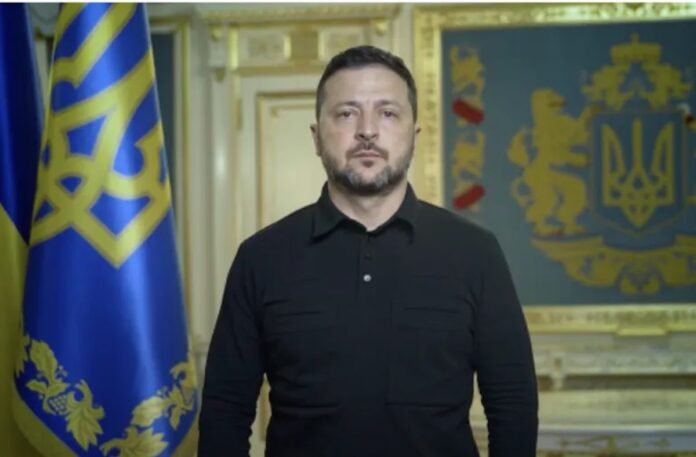
Speaking at a press conference in Ukraine on Sunday, Kushner said disarming Hamas would not be easy, describing the group’s “militarisation” in the Palestinian territories as “beyond our comprehension”.

He added that the Trump administration is “extremely determined” to resolve outstanding issues and said it agreed with Israel on the territory’s desired end state, saying: “I think we agree with them on the end state.” 

But he attributed some difficulties to Israel’s election, saying: “They just have a crazy election and that makes them a little irrational in certain regards but we’re very determined and we’re working through these things.” 

READ: Israeli media claim Kushner warned Hamas during meeting with its leader

Can decentralized energy prevent the next crisis?

0
can-decentralized-energy-prevent-the-next-crisis?
Can decentralized energy prevent the next crisis?

After International Energy Agency executive director Fatih Birol labeled the ongoing global energy turmoil the “biggest energy security threat in history” in April, events over the summer vindicated his warning.

The United States authorized the grid operator Southwest Power Pool, Inc. to use backup generation resources in 17 states it serves amid growing demand and extreme heat in late July, while droughts forced European nuclear plants to reduce or halt operations in August.

EU gas stocks reached a record low during the last week of August, and Bangladesh further tightened restrictions on business operating hours as its gas shortage worsened.

Weather extremes continue to disrupt energy production and supply routes, alongside wars in the Middle East and Ukraine. Additionally, rising global electricity demand resulting from economic development, growth of electric vehicles, and the AI boom is adding pressure on systems meant for a more energy-stable era.

After decades of expanding supply and security, the 2020s have brought a more strained energy system amid a fragmented global political order, affecting countries across the economic and resource spectrum.

The strain is also renewing interest in rethinking how to overhaul the centralized, aging 20th-century energy systems. Many national electricity grids were built as urbanization and industrialization made it economical to generate electricity at massive power plants and transport it over long distances, despite the fact that “up to 35.655% of the energy transmitted is lost throughout this process,” a 2025 study in the Journal of Electrical Systems and Information Technology found.

The development of solar panels, batteries, smaller generators, and digital control has allowed energy production and storage to be partly decentralized. Some of these smaller technologies are classified as distributed energy resources (DERs), which can operate independently or feed electricity into the main grid, and be combined into microgrids to keep local areas powered when the wider grid goes down.

Most advanced decentralized energy development has occurred in wealthier countries with stable governments. Major private companies such as General Motors and Tesla can meanwhile use their own software to connect household batteries and solar panels to the grid.

But poorer countries and territories facing conflict, disasters, and general economic hardship are now testing whether DERs and distributed energy can help maintain electrification as older systems buckle.

Ukraine under attack

After more than four years of war, Russia has destroyed much of Ukraine’s larger power plants and transmission systems. “Russia has systematically targeted energy infrastructure with missile and drone strikes, destroying or occupying roughly two-thirds of Ukraine’s prewar power generating capacity,” states Ukrainian international investment company System Capital Management (SCM).

Amid constant rebuilding efforts, Russia is increasingly targeting smaller facilities as well. Having also severed its connections to Russian energy, Ukraine’s prewar generation capacity has fallen by almost half, from 56.1 gigawatts (GW) to 27 GW, according to a 2025 report by the Center for Strategic and International Studies.

Ukraine’s integration with the Continental European Grid has provided some relief via imports. But Ukraine is also building locally supported microgrids to reduce its dependency on vulnerable transmission networks while ensuring they are widely dispersed to make individual installations less attractive targets. Solar microgrids are keeping critical infrastructure such as hospitals and water systems running when the main grid fails.

Smaller gas turbines have proven useful, but renewable energy has become essential to maintaining energy supply. In 2025, Ukrainian company DTEK Renewables partnered with British clean energy company Octopus Energy Group to install rooftop solar and battery storage at 100 business and public sector sites over three years, according to SCM.

Ukrainian cities have meanwhile established “‘invincibility points,’ or earmarked emergency shelters equipped with heat, communication, and basic necessities,” states Business Insider.

The central Ukrainian city of Vinnytsia currently has five microgrids combining local generation such as solar, gas, and hydropower with storage, while five wind farms are to be added within the next two years.

Ukraine is also ensuring that its larger energy projects are geographically distributed. The pace of deployment in Europe’s poorest country amid the war has been striking. In 2025, DTEK and American company Fluence brought Ukraine’s largest battery storage online, with a total capacity of 200 megawatts; it is spread across six sites.

The approximately US$145 million project was built in just six months, a quarter of the time it takes comparable projects in Europe. Ukraine’s urgency has made it “one of the fastest-developing renewable markets in Eastern Europe,” according to the German-Ukrainian Energy Partnership.

The results are promising, if uneven. On sunny days, Ukraine’s solar capacity can produce large electricity surpluses, followed by severe deficits when conditions change or Russia attacks. The coming winter will test how far Ukraine’s emerging network of smaller generators, storage systems, and microgrids can reliably support the vulnerable centralized network.

Puerto Rico and self-reliance

Since 2017, a series of natural disasters have repeatedly exposed Puerto Rico’s vulnerable energy system. Hurricanes Irma and Maria devastated the grid in 2017, leading to a blackout for 11 months, the longest in US history. This was followed by earthquakes in 2019 and 2020 and Hurricane Fiona in 2022.

The repeated shocks have produced blackouts, including a two-day island-wide blackout in 2025. “Puerto Ricans experience about 15 percent more service interruptions and about 21 percent longer outages than their fellow Americans on the mainland,” according to Politico.

Puerto Rico, the poorest US jurisdiction, has also faced an inconsistent response from Washington. After Maria, federal efforts initially focused on rebuilding the centralized grid and supporting fossil fuel generation.

The Biden administration later gave more emphasis to renewable energy and distributed systems, but bureaucratic delays slowed progress. The second Trump administration reversed course again, canceling up to $450 million in funding for grid resilience and distributed energy programs in January 2026.

Puerto Ricans, however, made early pushes toward self-generation. Rooftop solar nearly doubled in the year after Hurricane Maria. By 2020, engineering professor Agustín Irizarry Rivera told The Intercept that it had become cheaper for most energy users to “rely on solar panels than it is to pay PREPA’s [Puerto Rico Electric Power Authority] rates.”

He is also a member of Queremos Sol, or “We Want Sun,” one of several community coalitions advocating distributed solar adoption.

In 2023, rooftop solar and home battery and generator systems had become so popular that Puerto Rico’s private grid operator, LUMA Energy, began integrating them into the wider system through its Customer Battery Energy Sharing (CBES) program.

Privately owned batteries and other DERs are now integrated into a virtual power plant, allowing electricity stored in homes and businesses to be dispatched during peak demand or emergencies.

In June, during a power outage, for example, residential solar and home battery storage company Sunrun worked with LUMA to use energy from more than 33,000 homes to produce 30 MW during four-hour periods over two evenings.

In July, more than 70,000 household batteries provided 48 MW to the grid and helped avert a widespread blackout, showing how DERs can “respond to and help stabilize a stressed grid faster and more flexibly than centralized generation,” according to Pew Research.

Rooftop solar now supplies more than 10 percent of the territory’s electricity and has become Puerto Rico’s second-largest power generation source after petroleum liquids. By looking beyond the centralized system and failed attempts to repair it, Puerto Rican households and businesses have steadily constructed their own limited alternatives.

Cuba caught between decay and US pressure

Like nearby Puerto Rico, Cuba’s grid has been battered by natural disasters, but its aging centralized system, fuel shortages, and increased US pressure under the Trump administration have compounded its problems. On August 3, Cuba’s national electrical grid collapsed for at least the sixth time in 2026, after suffering another nationwide blackout the day before.

More than 90% of Cuba’s electricity has traditionally come from 16 major oil-fired thermoelectric plants, mostly built between the 1960s and 1980s. The collapse of the Soviet Union triggered severe oil shortages in the 1990s, until later support from Venezuela and Russia helped the system recover.

But Venezuelan oil exports to Cuba dropped sharply after 2015, and the grid began suffering repeated major failures from late 2024 onward, as fuel supplies dwindled and US restrictions further constrained access to imports.

With nine thermal plants offline due to breakdowns and maintenance, a system with roughly 3,000 MW of installed capacity was producing just 1,278 MW at peak demand in April, Electric Choice reports.

Even Cuba’s long-used distributed diesel generators, meant to keep critical systems running, are mostly paralyzed due to their reliance on imported diesel and fuel oil, while a US waiver allowing a Russian tanker to deliver about 700,000 barrels of crude to Cuba in March provided enough fuel for only a few weeks.

China has emerged as a crucial partner to fill the gap. Beijing unveiled a plan with the Cuban government in 2024 for 92 mid-sized solar parks with a combined capacity of 2,000 MW by 2028, with dozens online already. Spread across the island, alongside at least 18 smaller models, the parks are relatively quick to build and have reduced some of Cuba’s dependence on its handful of crumbling large power plants.

Chinese companies are also supplying equipment commercially: solar panel exports from China to Cuba rose from $3 million in 2023 to $117 million in 2025, according to energy think tank Ember. Households are also joining the movement — in Havana’s wealthier areas, residents are installing their own solar and battery systems to escape the unreliable grid, but upfront cost limits adoption in poorer areas.

Cuba’s decaying grid and pressure from Washington give it few options. Household systems have been able to reduce reliance on the old grid and distributed solar parks have begun to spread electricity production across the island, but growing uncertainty over Cuba’s energy security appears set to remain for the foreseeable future.

A decentralized future?

Ukraine, Puerto Rico, and Cuba all face different challenges, but collectively are struggling to keep their electricity systems functioning. Their problems also mirror developments emerging elsewhere.

Observing Ukraine, Taiwan is decentralizing its energy grid in response to potential Chinese threats. With Chinese companies manufacturing around 80% of the world’s solar panels, Latin American countries are similarly looking to China for alternatives to US political and economic dominance.

Ukraine and Cuba have become testing grounds for Western countries and China as both promote their energy technologies abroad as part of geopolitical competition. But the transformation is visible at the local level, with Puerto Rico showing how unreliable centralized systems and overlooking community needs can spur rapid adoption of distributed energy solutions.

Countries across the Global South are experimenting with localized energy systems, “leapfrogging” centralized grids that were never going to serve the remote rural communities in these regions.

Even the United States, despite its wealth and abundant energy resources, can benefit from the same approach. When some residents of Gary, Indiana lost power for up to two weeks in August, distributed systems could have provided valuable local backup.

Scaling challenges, particularly for local DERs, remain. But these examples show how to make electricity systems more resilient by expanding generation and storage across smaller networks; they are not just suitable for countries facing war and geopolitical pressure but can be adopted in any country where centralized systems leave communities vulnerable to disruption.

John P. Ruehl is an Australian-American journalist living in Washington, DC, and a world affairs correspondent for the Independent Media Institute. He is a contributor to several foreign affairs publications, and his book, Budget Superpower: How Russia Challenges the West With an Economy Smaller Than Texas’, was published in 2022. Follow him on X @john_ruehl.

This article was produced by Economy for All, a project of the Independent Media Institute, and is republished here with permission..


Ship fuel shortage looms as refiners strained by war favour other products

0
ship-fuel-shortage-looms-as-refiners-strained-by-war-favour-other-products
Ship fuel shortage looms as refiners strained by war favour other products


A shortage of fuel oil used in ships ​and power plants looms in the third quarter as refiners increasingly squeezed by wars that have disrupted both crude processing and tanker traffic ‌prioritise output of diesel and other products at its expense.

While crude oil has avoided major price spikes in recent months, refined product prices have soared as strikes damage refineries in Russia and the Middle East and curbs on ship traffic choke flows. China has also cut refining capacity and exports to avoid burning stocks.

Tightening supply threatens to further raise costs for shipowners and power generators already ​dealing with war-related disruptions. Higher bunker fuel costs could also in turn feed into shipping rates.

Asia will be hardest-hit as it is most reliant on ​Gulf flows disrupted by the Iran war, with Singapore, the world’s largest bunker hub, importing more than half its nearly 1 million ⁠barrels a day of demand, according to import data from Kpler. Consultancy Rystad has a similar outlook.

The deficit is expected to hit 218,000 barrels per day in ​the third quarter, consultancy Energy Aspects has forecast, the first shortfall it has estimated since the third quarter of 2025, when it was a marginal 6,000 bpd.

“Due to the ​protracted supply disruption in the Middle East, we expect fuel oil supply to remain critically tight in the third quarter,” Rystad analyst Valerie Panopio told Reuters.

Fuel oil joins gasoline, diesel and jet fuel among the refined products struggling to keep up with demand. U.S. diesel prices hit record highs on Friday as renewed U.S.-Iran hostilities and Ukrainian attacks on Russian refineries increased supply disruptions.

Refiners opting ​to produce some of those other products to tap fatter profits has meant fuel oil has been hit harder.

Nigeria’s 650,000-barrel-per-day Dangote refinery, for example, has ramped up ​diesel, gasoline and jet fuel exports, while its fuel oil exports have dropped, according to Kpler.

Dangote and other refineries can use fuel oil as feedstock in secondary refining units to make ‌other fuels.

“Record-low ⁠gasoline and diesel inventories will incentivise refiners globally to maximise secondary unit runs with more fuel oil feedstock barrels, in turn tightening fuel oil balances,” Energy Aspects analyst Royston Huan said.

Gasoline stocks independently held in the Amsterdam-Rotterdam-Antwerp hub hit their lowest level in nearly five years on August 27. U.S. East Coast distillate inventories, which include diesel, fell to a record low in the week to August 28.

PRICE UP 76% IN TOP HUB SINGAPORE

Fuel oil storage levels and prices already reflect the pressure.

Stocks are some 30% ​below three-year seasonal averages in top ​hubs Singapore, Amsterdam-Rotterdam-Antwerp and Fujairah, data compiled ⁠by Reuters shows.

Ships sailing longer routes to avoid key oil chokepoint the Bab el-Mandeb strait or the Red Sea altogether due to threats by Houthi militants also increase demand, Panopio noted.

The price of the main shipping fuel, very low sulphur fuel oil, ​is up 76% since the Iran war started to just under $825 a metric ton, or $130 a barrel, in Singapore as ​of September 1, data ⁠from bunker price platform ZeroNorth shows.

That outstrips a 40% rise in benchmark Brent crude oil in the same period.

HITS TO RUSSIA, MIDDLE EAST OUTPUT

Ukrainian drone attacks have affected Russia’s refinery output, with its fuel oil exports in August hitting a record low 591,000 bpd, down from an average of over 860,000 bpd in 2025, according to Kpler data going ⁠back to ​2017.

Middle East fuel oil exports were down by 45% year on year to an average of 447,000 ​barrels per day in March-August, Kpler data showed.

Refinery outages in the Middle East have included the Al-Zour refinery in Kuwait, a top fuel oil exporter, which has only exported one 26,000 bpd cargo since ​March versus around 191,000 bpd in January-February, Kpler data showed.

Source:  Reuters

Yemen Fighting Leaves More Than 300 Dead as Houthis Cut Key Supply Route 

0
yemen-fighting-leaves-more-than-300-dead-as-houthis-cut-key-supply-route 
Yemen Fighting Leaves More Than 300 Dead as Houthis Cut Key Supply Route 


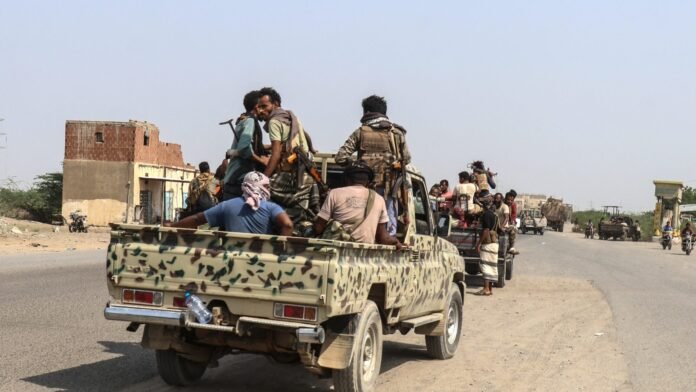
More than 300 fighters and civilians have been killed in renewed fighting in southwest Yemen after the Houthis launched a major offensive targeting a key government supply route near the Red Sea coast and the Bab el Mandeb Strait, according to an AFP tally. 

The fighting has centered on western Taiz and southern Hodeidah, where Houthi forces have sought to cut the main supply route between the city of Taiz and the government-held port city of Mokha. 

Rebel forces succeeded in severing the strategic highway as part of an effort to advance toward the Bab el Mandeb Strait, a vital global shipping route at the southern entrance to the Red Sea, military officials said. 

Two military officials with Yemeni government forces told AFP that 84 troops were killed between midday Saturday and early Sunday morning, most of them in missile attacks. Four Houthi military sources said 57 militia fighters were killed during the same period. 

The deaths pushed the overall toll from the renewed fighting above 300, including combatants and civilians, according to an AFP tally.  The current violence began with a large-scale Houthi push in the southwest. Fighting in July ended a ceasefire between the Houthis and Yemeni forces that had been in effect since 2022. Escalating battles have also displaced thousands of civilians from affected areas. 

Nearly 1,800 households have been forced from their homes by heavy artillery fire and ground fighting, according to the United Nations Office for the Coordination of Humanitarian Affairs. 

Civilians sought shelter Saturday at Al-Bareen camp for internally displaced people. On Sunday, AFP journalists saw additional displaced residents arriving at another camp in the area and setting up shelters after bringing mattresses, livestock, and other possessions with them. 

Dozens Rushed to Hospital During Concert in California

0
dozens-rushed-to-hospital-during-concert-in-california
Dozens Rushed to Hospital During Concert in California


Fourteen people were rushed to hospitals after a Chainsmokers concert in California was hit by a wave of medical emergencies, with police saying some of the cases involved suspected alcohol intoxication and drug-related issues.

The frightening scene unfolded Friday night, Sept. 4, at Discovery Meadow in San Jose, where the electronic music duo was performing an outdoor show.

According to authorities, at least 10 people were transported to hospitals during the final 30 minutes of the concert alone.

The San Jose Fire Department said crews were called to the venue at about 8:22 p.m. after receiving reports that multiple people needed medical attention.

The situation quickly became serious enough that firefighters called for an Ambulance Task Force, two additional advanced life support units and a battalion chief to help manage the growing number of patients.

Police said those taken to hospitals were suffering from a variety of medical problems, including suspected alcohol intoxication and drug-related issues.

Paramedics treated some concertgoers at the venue before transporting patients to nearby hospitals as the show was coming to an end.

A total of 14 ambulances responded to Discovery Meadow, according to fire officials. Video from outside the concert showed a long line of emergency vehicles, including ambulances and a fire truck, gathered near the venue.

The San Jose Police Department also responded to help control traffic around the emergency scene.

Fire crews remained at the location for roughly two hours before officials announced that all fire department resources had returned to service at approximately 10:34 p.m.

No arrests were reported in connection with the incident.

The Chainsmokers concert had begun around 5 p.m. The Grammy-winning duo, best known for hits including “Closer,” appeared to continue with their scheduled performances, taking the stage at Encore Beach Club at Wynn Las Vegas the following morning.

Police did not immediately release additional details about the conditions of those hospitalized or specify what substances may have been involved.

Representatives for The Chainsmokers and the San Jose Fire Department were contacted for additional comment.

China’s WZ-X drone hints at an unmanned stealth bomber

0
china’s-wz-x-drone-hints-at-an-unmanned-stealth-bomber
China’s WZ-X drone hints at an unmanned stealth bomber

China’s WZ-X points to a future in which stealth, endurance, surveillance and strike converge in a new class of unmanned aircraft built for sustained operations across the vast distances of the Pacific.

This month, The War Zone (TWZ) reported that newly surfaced aerial imagery has confirmed the unusual wing design of China’s secretive WZ-X stealth drone, revealing a stepped-down geometry engineered for high-altitude endurance.

The revelation builds on commercial satellite imagery from May 2025, which first captured the massive, twin-engine flying wing parked outside newly constructed high-security hangar bays at the People’s Liberation Army’s (PLA) remote test base in Malan, Xinjiang.

With an estimated 51.82-meter wingspan rivaling the US B-2 bomber and a 14.02-meter length, the unmanned aircraft transitions abruptly from a wide-chord inner body to slender outboard wings, creating a shallow, semi-serrated trailing edge. It is estimated to have a range of 19,000 kilometers and an operational altitude between 17,000 and 20,000 meters.

Its aerodynamic layout maximizes aspect ratio and curbs cruise-induced drag to sustain long-range intelligence, targeting, and communications missions across contested Pacific airspace, despite potential radar-signature trade-offs caused by the distinct planform discontinuities.

While China has officially disclosed no performance specifications or fielding timelines, the prototype’s progression from static display outside specialized hangars to active flight testing underscores China’s accelerated push to deploy very large, low-observable unmanned platforms alongside next-generation crewed combat systems.

The WZ-X may therefore represent China’s effort to extend unmanned operations deeper into contested Pacific airspace by combining long endurance with the survivability needed for intelligence, surveillance, and reconnaissance (ISR), target cueing, communications support and potentially strike missions.

The drone’s stealth design may be an effort to improve survivability, as legacy designs may not last against contemporary air defenses. The Washington Post reported in August 2026 that the US military has lost 45 MQ-9 drones – about 25% of an 185-unit pre-war fleet – in the ongoing Iran War.

According to unnamed US officials cited by the Washington Post, not all downed MQ-9 drones were shot down; some crashed due to a loss of communication between the drone and its operator.

The MQ-9 was designed in an era of uncontested US air superiority. It was designed for maximum loitering time in relatively permissive airspace. While effective against technologically unsophisticated adversaries with no capability to counter it, its low speed, lack of maneuverability, non-stealthy design, and significant thermal signature may have made it vulnerable to relatively advanced adversaries such as Iran and its Houthi proxies.

While early in the conflict, initial US and Israeli strikes using sophisticated aircraft such as the F-35 decimated Iran’s long-range air defense systems, including the S-300, follow-on operations such as close-in surveillance, battle damage assessment, combat search and rescue, and special operations may require aircraft that operate at much lower speeds and altitudes, such as MQ-9s and helicopters.

Those missions make them vulnerable to small, numerous, concealable, and easily dispersed systems such as man-portable air defense systems (MANPADS) or air-to-air infrared-guided missiles repurposed as surface-to-air missiles.

China operates several drone designs similar to the MQ-9, most notably the Wing Loong 2, which could be similarly vulnerable. Highlighting the possible vulnerability of the type, the South China Morning Post (SCMP) reported in April 2026 that Iran had shot down a Wing Loong 2 drone over the city of Shiraz.

According to SCMP, Iran then demanded an explanation from Saudi Arabia and the UAE, as those two countries are the only known operators of the type in the region.

The loss illustrates the vulnerability of legacy UAV designs in increasingly contested environments and helps explain the PLA’s interest in lower-observable alternatives such as the WZ-X and carrier-capable GJ-21.

Although the WZ-X’s specific role remains unclear, Catherine Welch and her co-authors note in a July 2026 CNA report that Chinese military-affiliated researchers increasingly view uncrewed platforms as important nodes in distributed, resilient kill processes linking sensors, communications networks, command systems, and weapons.

According to Welch, Chinese studies indicate that uncrewed systems provide cost-effective platforms for expanding wide-area sensing and early warning without risking crewed aircraft.

She also notes that Chinese researchers assess that attritable drones can penetrate contested airspace to deliver real-time targeting coordinates for standoff weapons launched from non-stealth platforms, while serving as distributed communications relays and edge-computing nodes that connect disparate units and reduce data latency across multi-domain environments.

Jonathan Caverley notes in a June 2025 Texas National Security Review (TNSR) article that China could use large uncrewed surveillance aircraft as alternative find-and-fix nodes against US carrier strike groups if its space-based ISR were degraded. He argues that such airborne sensors could help preserve China’s ability to cue long-range missile forces even when satellite coverage is disrupted.

Although China’s H-20 stealth bomber program has been publicly known for a decade, Harry Kazianis notes in a June 2026 article for 19FortyFive that it faces technical and industrial hurdles in propulsion, low-observable materials, large flying-wing aerodynamics, and systems integration.

If China’s H-20 program remains delayed, the WZ-X could offer the PLA a parallel path to developing some of the technologies and operational concepts associated with long-range penetrating airpower.

In a US-China conflict over Taiwan, China could see value in a stealth bomber able to penetrate US and allied air defenses protecting forward bases and staging points, such as those located in South Korea, Japan, the Philippines, Guam, and other Pacific islands.

The dispersal of US forces across numerous Pacific bases could strengthen the case for reusable, penetrating aircraft capable of revisiting targets and delivering comparatively inexpensive munitions, rather than relying exclusively on finite inventories of long-range ballistic and cruise missiles. Such aircraft could also offer greater payload flexibility and retargeting options than preplanned missile strikes.

China’s interest in unmanned stealth bombers could stem from the static US forward bases and staging areas in the Pacific. Their fixed locations would at least simplify the targeting problem for an autonomous or heavily automated strike aircraft compared with attacks against mobile or time-sensitive targets.

By contrast, US forces hunting mobile Chinese missile launchers would face a far more dynamic targeting problem, requiring rapid identification, retargeting, and engagement decisions that remain considerably harder to delegate fully to autonomous aircraft.

If the WZ-X proves operationally viable, it could mark the point at which China begins shifting part of its strategic airpower from scarce crewed bombers and expendable missiles toward reusable, uncrewed platforms capable of sustaining reconnaissance and strike pressure across the Pacific.

Lebanese president condemns renewed Israeli strikes on Nabatieh, urges international action

0
lebanese-president-condemns-renewed-israeli-strikes-on-nabatieh,-urges-international-action
Lebanese president condemns renewed Israeli strikes on Nabatieh, urges international action

Lebanese President Joseph Aoun on Sunday condemned renewed Israeli attacks on the southern city of Nabatieh and surrounding towns, saying the targeting of state institutions and health facilities marked a “dangerous escalation,” Anadolu reports.

In a statement posted by the Lebanese presidency on US social media company X, Aoun said the attacks caused civilian casualties, severely damaged a Finance Ministry building and destroyed Ghandour Hospital.

He said the attacks went beyond repeated violations of the cessation-of-hostilities arrangement and the framework agreement by attacking Lebanese state institutions, public service facilities, a hospital and health centers.

Aoun said the attack on the Finance Ministry building, following an earlier strike on a State Security center that caused fatalities, demonstrated “a continuing pattern” of attacks extending beyond alleged military targets to civilian government and health facilities.

He accused Israel of seeking to disrupt the functioning of Lebanese institutions and services provided to the public.

The Lebanese president held Israel fully responsible for the continuing escalation and called on the US and the international community to act urgently to halt the attacks and hold those responsible accountable.

He said Lebanon remained committed to measures aimed at preserving its sovereignty, stability in the south and the safety of its citizens.

The remarks came after a series of Israeli airstrikes on Nabatieh and surrounding areas on Sunday killed four people and injured 20 others, according to a preliminary toll from the Lebanese Health Ministry.

The ministry said the strikes completely destroyed Ghandour Hospital in Nabatieh al-Fawqa. It said 17 hospitals across Lebanon have been damaged by Israeli strikes since March 2, while three hospitals in southern Lebanon have been put out of service.

The attacks came despite a US-sponsored framework agreement signed on June 26, which provides for a gradual Israeli withdrawal from Lebanese territory in exchange for the deployment of the Lebanese army.

​​​​​​​Since March 2, Israeli attacks on Lebanon have killed 4,358 people and injured 12,359 others, while displacing more than 1 million people, according to Lebanese authorities.

Facing the Middle East with Felice Friedson, ep. 25: Power Shifts From Tehran to Baku

0
facing-the-middle-east-with-felice-friedson,-ep.-25:-power-shifts-from-tehran-to-baku
Facing the Middle East with Felice Friedson, ep. 25: Power Shifts From Tehran to Baku


Professor Pejman Bijan assesses the Iran war and a new regional defense pact, while an Afghan anchor and Azerbaijani visitors describe struggles for freedom, security, and influence

In this edition of Facing the Middle East, I examine a region being reshaped by the Iran war, rival security blocs, the suppression of Afghan women, and Azerbaijan’s careful diplomacy between powerful neighbors.

Professor Pejman Bijan, an Italian-Iranian scholar and political analyst, joins me to assess the new Mecca Joint Defense Agreement linking Saudi Arabia, Turkey, and Pakistan. Bijan portrays the pact as part of a wider contest over the Middle East’s future, setting it against the Abraham Accords, the India-Middle East-Europe Economic Corridor, and the prospect of a post-regime Iran joining a more commercially integrated regional order.

Our conversation moves from Gulf power politics to Europe’s divided approach to Iran. Bijan argues that European leaders have long differed between engagement with elements of the Islamic Republic and support for political change. He warns that mounting economic pressure on Tehran could lead the regime to seek instability beyond its borders, including against American interests in Europe.

We also examine Pakistan’s growing role as a regional mediator. Bijan sees Islamabad’s deeper ties with China and its partnership with Saudi Arabia and Turkey as part of a shifting balance that has reduced Qatar’s centrality and complicated Western influence in the Gulf. He praises President Donald Trump’s broader approach to Iran while arguing that Washington moved too slowly at a critical moment for Iranian opponents of the regime.

The episode then turns to Afghanistan, where former television anchor Tahmina Usmani recounts the restrictions imposed on women journalists after the Taliban returned to power. Usmani says she was required to cover her face on air and faced censorship in her reporting before ultimately leaving Afghanistan. Speaking from Paris, she describes her hope for a future in which Afghan women can again live and work freely.

In a third segment, The Media Line’s Gabriel Colodro and Giorgia Valente meet a Sharaka delegation of Muslim professionals from Azerbaijan and Kazakhstan visiting Israel. Interviews with Azerbaijani researchers and policy specialists explore Baku’s effort to maintain ties with Israel, Turkey, Arab states, Russia, and Iran without becoming entangled in regional wars.

Participants describe Azerbaijan’s security concerns over Iran, its close cooperation with Israel, and its interest in preserving ties with Turkey despite strains between Ankara and Jerusalem. They also point to energy links, including the Baku-Tbilisi-Ceyhan pipeline, as a durable shared interest.

From Iran’s internal power struggle to Afghan women’s fight for visibility and Azerbaijan’s balancing act, I bring together three stories that show how national choices are being shaped by a rapidly changing Middle East.

Student Dragged Across 7-Eleven Floor in Wild Video

0
student-dragged-across-7-eleven-floor-in-wild-video
Student Dragged Across 7-Eleven Floor in Wild Video


A late-night snack run turned into a nightmare for an 18-year-old college student after a wild brawl erupted inside a Hollywood 7-Eleven, with shocking surveillance video showing her being dragged to the floor and brutally attacked.

Destiny Valderrama said she and two friends stopped at the convenience store at 6702 Hollywood Blvd. around 12:30 a.m. Sunday after attending a quinceañera.

They had gone inside to grab some snacks when Valderrama says she was suddenly ambushed by two people she did not know.

Surveillance footage from inside the store appears to show a female suspect approaching Valderrama from behind before grabbing her and violently yanking her to the ground.

Moments later, a male suspect allegedly joined the attack and repeatedly slammed the teenager’s head against the floor.

Valderrama said she eventually lost consciousness.

The horrifying confrontation did not end there.

When her two friends tried to step in and help, Valderrama said they were also knocked to the floor and dragged during the chaos.

“My friends tried helping by intervening, and they ended up getting dropped to the floor and dragged as well,” Valderrama told OnScene.TV.

She said she was so terrified afterward that she struggled to even stand.

“I couldn’t even stand up to walk properly out of fear, and I continuously begged the 7/11 workers for help and to call the cops,” she said.

Valderrama claimed the workers refused to intervene or contact authorities.

“None of them called or were willing to help and instead kicked us out and told us to leave,” she alleged.

Photos taken after the attack showed bruising and marks around Valderrama’s neck and chest, along with injuries to her arm.

Police said Valderrama filed a report following the incident. An LAPD spokesperson confirmed the department received the report and said the investigation remains ongoing.

Valderrama, a second-year student at California State University, Dominguez Hills, said she had been returning from a 15th birthday celebration with her friends when the attack happened.

She said she does not recognize either of the alleged attackers and is now hoping police track them down.

“I hope they can catch them soon,” she said.

The disturbing incident comes just weeks after another 7-Eleven in California was targeted by a large group of teens.

Last month, nearly 20 teenagers allegedly stormed an Oakland 7-Eleven, stealing merchandise and damaging the store before some reportedly returned and attempted to force their way back inside.

One employee said someone ripped a metal door handle from the store and hurled it through a glass door, striking the manager in the face.

Ukraine war update: It will be a brutal fall and winter

0
ukraine-war-update:-it-will-be-a-brutal-fall-and-winter
Ukraine war update: It will be a brutal fall and winter

In a war, length is far more important than ferocity. Trying to keep a war from escalating might seem like a prudent thing (and academic theory, which simply does not understand history, says as much). However, clamping down on escalation can actually make things far worse.

What such a move can do, in a vain attempt to keep a war under control, is lengthen a war out of all expectation. And length of war is almost always the key variable in how horrible a war becomes. Short escalation if it can be effective is far preferable to the kind of long and grotesque war we are now seeing in Ukraine.

I was struck by that this week when President Volodymyr Zelensky did something that would have seemed shockingly escalatory a few years ago, but which actually people passed over quite quickly now – he announced the “de facto” closing of Russian commercial airspace.

In other words, we are escalating now and people have stopped caring. It brings us back to the opening phase of the full-scale invasion, when people believed such escalation could be controlled.

Now, I am always amused when people accuse me of being a great Biden supporter because I criticize Trump. For the first two years of my Substack (more than half of the time of its existence) I spent much of my time pointing out the great flaws in the Biden administration’s escalation policy.

By trying to restrain escalation, what the Biden administration was actually doing was protecting Russia and lengthening the war. They were at best simply delaying any escalation and in doing so they would actually make that escalation worse and cause more damage. I wrote pieces on just this theme in January 2024 and May 2024.

Now, under Trump, US policy has been revealed as the real disaster that it was. Putin is now free to escalate without any fear that the US will do anything to stop him – and that means the Ukrainians are left playing a brutal game of catch-up. This past week we saw a prime example of this when the Ukrainians announced that they will now ‘de facto’ threaten civil aviation in Russia. They have had to deal with their airspace being a wild west for years and now they are trying to turn the tables. 

All that is indicative of what we are going to see this fall and winter. Both Ukraine and Russia are now, more than four and a half years into the war, facing the reality that this war is going to get even more intense and horrible, setting up a reality where life itself for all people will become increasingly hard. And both sides at the same time have the ability to do more and more damage with their ranged campaign—far more than they could have done a few years ago.

This is what not helping Ukraine to win the war quickly has done – lengthened the war and made it worse. Trying to artificially restrain escalation has led the war to be far more horrible and extensive than it needed to be.

Other stories in this weekend update include a spate of different stories from the US administration about US positioning and the war. The upshot is that Trump is explicit now that Russia is the friend and Ukraine is despised.

Finally, General Drapatyi released a new set of principles for the Ukrainian military. They are worth reflecting on – for all militaries. And they say nothing about needing to give all soldiers a testosterone shot.

It will be a brutal fall and winter

During his evening address on September 1, President Zelensky made a very pointed statement about what he believes will happen in the war against Russia. He believes now that the meaning of the number and type of drones/missiles that the Ukrainians are firing against Russia (and in particular against cities like Moscow and St Petersburg which have large international airports) is that Ukraine is “de facto” closing much of Russian air space to “civilian aircraft”. Here is a story about what he said

Zelensky was so determined to get the message out, that he tweeted out the warning in English right after the address.

As the above statement showed, Zelensky believes that Ukraine “effectively” closing Russian air space is a direct result of Russia being allowed to escalate with impunity over the last few years – continuing this week. 

And of course Zelensky is right. This week has shown just how Russia is able and willing to attack whatever it wants in Ukraine without worry about being accused of escalating, without worrying about being accused of escalating, and without Ukraine’s partners being willing to help Ukraine (let alone do anything strong to deter Russia).

It is worth noting what did happen this week. The Russians killed more civilians, 38, in one air strike than they have done at any other time this year. To reinforce the point that what the Ukrainians are doing in threatening air traffic is part and parcel of how Russia has waged this war, on Friday night the Russians hit two major Ukrainian airfields.

Both sides are also engaging in campaigns of targeted assassination which were reconfirmed this week. The Russians put a drone into the office of the head of Ukrainian military intelligence – which is in one of the most central and prominent positions in Kyiv. The Ukrainians, meanwhile, seem to have assassinated a Russian military officer in St Petersburg, an officer who had been accused of war crimes.

And this is just the start of what we are about to see. As both sides understand, this winter could be quite determinative in shaping the end of the war, particularly if it is as cold and terrible as last winter. The Ukrainians I know are already starting preparations, on the assumption that they may lose power and heating for large stretches of the winter. 

The Ukrainians admitted in August that up to 80% of their pre-war power generation facilities have been either completely or partially destroyed. Zelensky even stated that Ukraine had “virtually no intact thermal power plants” and that “Russian missiles are aimed precisely at making the lives of Ukrainians unbearable.” What is left is to a large degree based on nuclear power plants that Russia for reasons of self-interest is reluctant to attack. However there are signs that even this reluctance is breaking down.

In other words, this winter could see major power and heating cuts, making the lives of millions of Ukrainians extremely hard.

The Ukrainians’ response will be fascinating. It could potentially be to hit back in a similar way. So far the vast majority of Ukrainian attacks of this kind have been against Russia’s fuel industry – primarily its refineries. What it has not tried to do, though conceivably it could, is turn the lights and heat out in Moscow or St Petersburg.

By warning that civilian aviation is not safe in Russia, Zelensky is “de facto” warning that all such infrastructure is potentially now at risk. If airfields are not safe, neither are power plants, etc. 

The Russians’ response has been to threaten even greater attacks on Ukrainian power generation but as they have basically done as they can, they cannot really escalate in that regard.

The upshot of all of this is that we are poised for a pretty harsh fall and winter. The policy of trying to control and stop escalation has failed utterly. It might have delayed escalation for a little while, but has made it now far worse when it happened. It has already led to great suffering and will lead to much more. 

Trump speaks his truth about Russia and Ukraine

At times Donald Trump speaks the truth. It can happen when he loses control and gets so angry that he blurts out what he really thinks. He did that this past week on Twitter when he started a rant about the US reporting of his war with Iran – a rant that he then turned into a whine about how the US needs to be paid back for giving Ukraine aid under the Biden Administration.

It seems he could not control himself and Natalie could not either, so he just had to let his resentment towards Ukraine come out.

Note that this aid was all Congressionally sanctioned, so actually the US cannot demand any money back. Trump cares so little for Congress that he overlooks that. However the truth is there that, if Trump could make Ukraine pay back the aid, he would.

At the same time that Trump could not control himself about Ukraine, he revealed his instinctive respect and affection for Putin by defending the Russian dictator from the charge that it was Russians who had orchestrated the attack on Germany’s Leipzig airport (which is now what the German government is stating clearly). When Trump was asked about the German government’s claim, he instinctively jumped to Putin’s defense, and, as he often does with the Russian dictator, talked up the fact that the two of them have a close personal relationship:

“I don’t think that Putin will be… I speak to him. I know him very well. Putin’s not looking to attack NATO territory.”

This instinctive Trumpian affection for Putin and Russia was shown in the other big story of the last few days, the visit of Steve Witkoff and Jared Kushner to Moscow and Kyiv. That trip (which started when the two reached Moscow and which should soon see them in Kyiv) reveals just how deep the affection runs between Trump and Putin.

When Witkoff and Putin sat down with Putin, the Americans could not have been more positive. Witkoff gushed about his repeated pleasure at meeting Putin, saying that when he retires he will look back on all these “incredible stories and incredible memories and yours will be right at the top.”

Witkoff can barely contain his glee at meeting again with Putin

Beyond Trump’s and Witkoff’s obvious affection for Putin, the staging of the visits reveals a great deal. Even though the two have never before visited Ukraine, Trump felt the need for them to go to Moscow first, to show Putin he is, always, the number 1 priority. Only after seeing Putin, and presumably working out a plan with him, can they be allowed finally to visit Ukraine. Remember, the last time they presented a “compromise” plan to the Ukrainians, it was practically word for word a dictation of a Russian plan. 

So, once again, the US government seems to need to agree on a position with Putin before it can talk with Ukraine. 

Such behavior, by the way, makes me doubt that the real reason behind the Ratcliffe visit was to somehow tell Putin the war was going badly for Russia. The US government remains in Putin’s thrall. 

So the last few days reveal once again the instinctive position of Donald Trump and, through him, the US government. He/they want to help and work with Putin and believe that Ukraine needs to do what it is told. 

And it has always been thus.

Drapatyi’s Principles

On September 2, Commander-in-Chief of the Ukrainian Armed Forces Major General Mykhailo Drapatyi publicly released a document entitled “Principles of Leadership and Military Development in Wartime.” If you want to read the full text in English (and I recommend that you do) here is a link to a translatable version

By the way, here is the piece that I wrote about Drapatyi when he was first appointed. Since then I can happily report that everything I have heard from Ukrainians has been extremely positive about what he is doing. He might be an even better selection than he seemed at the time.

What Drapatyi writes is fascinating and heartening. It gives an indication of what Drapatyi believes are the key tenets of how Ukraine needs to fight the war and how the Ukrainian army needs to be run. Foundationally, he believes that the Ukrainians must out-think and out-adapt the Russians. Key elements that will make this possible are keeping Ukrainian casualties down, keeping morale high and demanding accountability from Ukraine’s officer corps. 

The first part of the document has a subhead that starts: “People are the most valuable combat capability..

It is very well reasoned. Drapatyi does not talk about saving lives through not fighting or taking no risks. He sees this happening by taking the right risks and always trying to stay ahead of the Russians in the adaptation and innovation cycle. To do that, he calls on Ukrainian officers not just to give orders, but to listen. He is saying to them, “it is your responsibility to put your soldiers in the best possible position to achieve their objectives and save their lives.” 

Here was a fascinating reflection on precisely that point.

A separate priority is accelerating adaptation and the implementation of innovation. The purpose of this work, as set out in the Principles, is linked to people: technologies are needed where they enable tasks to be accomplished with fewer casualties and less risk to those directly holding the front line. The source of change is not limited to headquarters: commanders are required to create an environment in which “good ideas can come from any service member, regardless of military rank or position.

And you know what he says is the linchpin of all of this: It is truth. Drapatyi calls for truth from the top of the Ukrainian military on down. Sorry for all the quotes, but the whole document is really worth digesting. Note—translating the text from Ukrainian to English can lead to some awkward phrasing.

  • Truth makes us stronger
  • The document requires commanders and headquarters to provide honest assessments and not allow optimism, fear or personal ambitions to distort reality. 
  • “Problems that are ignored only grow.” “Healthy professional debate strengthens decisions; silence weakens them.”
  • The same standards of conduct apply to generals, officers, sergeants and civilian leaders: there is no place in the Armed Forces for corruption, abuse of authority, harassment, discrimination or injustice. A separate requirement for everyone commander is the responsible use of state resources.

In reading this I was struck how different it is from the values not only of the Russian military, but also those of the present leadership in the Pentagon. In the latter, truth is considered a useless commodity. A focus on brains and adaptability over brainless bravery is considered the sign of being a sissy. And accountability has been thrown out of the window.

The US military is being run by a group that apes the Russians and not the Ukrainians – when we have in front of us, from the latter, one of the best statements of command principles I have ever seen. It is a tragedy.

The USA is going to have to change so many things in the future, and that will start with understanding that it needs to learn from others and that the present US ethos is one that fosters failure. The US military could do far worse than to start its rebuild based on Drapatyi’s principles of command.

And as I said above, there are no testosterone shots or cosplay warriors in sight.

Phillips O’Brien is professor of strategic studies at the University of St. Andrew.

This article, originally published by Phillips’s Newsletter, is republished with permission.

0FansLike
0FollowersFollow
0FollowersFollow
0SubscribersSubscribe
- Advertisement -
Google search engine

Recent Posts