Doorbell cam filmed alleged Tesla Autopilot crash that killed woman in her home
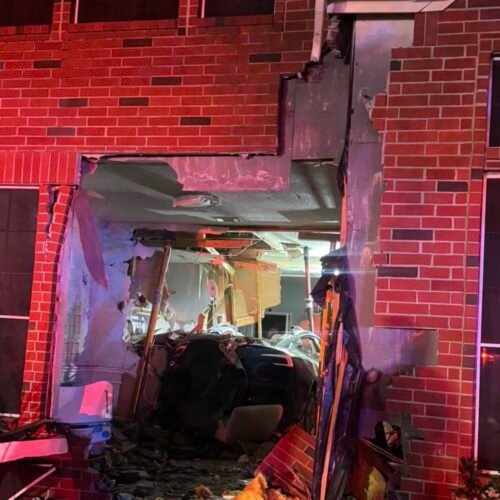
An elderly Texas woman tragically died Friday after a man relying on his Tesla Model 3’s automated driver-assistance mode lost control and crashed his car into her family’s home.
In a statement, the Harris County Sheriff’s Office confirmed to Ars that Michael Butler said that “he was operating with an automated driving assistance system engaged at the time of the crash.” Police are currently investigating whether the autopilot feature in any way caused the crash but confirmed that Butler was not intoxicated and is cooperating, partly by helping cops understand how Tesla’s Autopilot feature works.
“Butler failed to drive in a single lane, left the roadway, and struck the residence” at a “high rate of speed,” the sheriff’s office said.
It remains unclear how fast the car was going, but The New York Times shared a disturbing doorbell camera video of the crash showing the moment when the Tesla plowed through the brick home’s front. On Facebook, the Office of Constable Terry Allbritton shared photos showing the destruction to the home.
Martha Avila, 76, was standing in the front room of the house, where she lived with her daughter, son-in-law, and three young grandkids. Her daughter, Jennifer Barbour, told a local news outlet that no one else was hurt. The family remains “devastated” by the loss, with Barbour emphasizing that Avila was on no medications and in otherwise good health when she passed suddenly from her injuries. She thought her mother might live to 100, the way her grandmother did, she said, and feels Avila was robbed of significant time with her grandkids.
“She didn’t deserve to go that way,” Barbour said.
The family is in mourning while living in a hotel and waiting for answers, stuck in a state of uncertainty over whether the Tesla or the driver is to blame.
“I don’t know if it’s his fault or the car’s fault or what really happened,” Barbour said. “I’ve never seen a car go that fast.”
Tesla did not immediately respond to Ars’ request to comment.
Tesla claims Autopilot saves lives
Tesla’s Autopilot feature is popular, but it cannot be fully trusted, with the owner’s manual reminding drivers that “they should keep their hands on the wheel and take over if anything goes wrong,” the Times noted.
However, Tesla’s marketing often sends a mixed message, critics think. As recently as May, Tesla’s X account posted an ad showing drivers with their hands off the wheel, goofing off while waving their fingers in the air or sipping a hot coffee from a ceramic mug with two hands. The day after Butler’s crash, the Tesla X account reposted a gushing comment from a Tesla fan who shared a pic of himself taking a photo of a sunset while driving. His caption claimed that Tesla’s technology “is both magical and life changing, relaxing and maybe even lifesaving!”
For years, Tesla has claimed that automated self-driving features will make roads safer by eliminating human errors that commonly cause crashes. And under the Trump administration, Tesla seems best positioned to rapidly advance its technology and get more cars on the road with fewer human controls and without regulatory delays.
Currently, the company is pushing for the National Highway Traffic Safety Administration (NHTSA) to relax two rules.
One proposed rule change would allow automated vehicle (AV) makers like Tesla to remove displays that let drivers view transmission shift positions. In support, Tesla claimed that automated driving systems (ADS) make such displays obsolete because humans don’t need this information, but Advocates for Highway and Auto Safety warned that “it is critically important that passengers of a vehicle operated by an ADS can determine if the vehicle is in the proper gear before exiting or entering the vehicle.” According to Advocates, NHTSA has shown no research proving that the update would improve road safety.
The other rule change follows similar logic: NHTSA proposed that AVs relying on ADS don’t need windshield wipers or defogging controls for humans to operate. As Tesla commented, “there is no safety need” because the ADS relies on cameras to operate, “not transparency of the windshield zones.”
If Tesla gets its way, NHTSA would approve that rule change not just for smaller vehicles but also for mid-sized and large SUVs. However, Advocates are recommending that NHTSA instead drop the rule change, since there are a “multitude of safety reasons” why it’s critical to ensure “passengers can observe their surroundings to exit or enter a vehicle during a routine operation.” Imagine if the car is involved in a serious crash or there’s a major obstruction in the road that passengers otherwise may not be able to see, Advocates suggested.
In both comments, Advocates emphasized that features like Tesla’s Autopilot remain “unproven,” while motor vehicle deaths remain “historically high.” Advocates urged NHTSA to consider that even a single fatality, such as Avila’s death, has a “horrific ripple effect forever changing the lives of children, parents, friends and communities.”
The group also took time to contradict claims from AV makers like Tesla, which often rely on a 2019 NHTSA study finding that 94 percent of car accidents are due to human error in order to suggest that AVs will make roads safer.
According to Advocates, these claims are “misleading” because NHTSA emphasized in that study that human error was documented as a “critical reason” linked to the crashes, but “it is not intended to be interpreted as the cause of the crash nor as the assignment of the fault to the driver, vehicle, or environment.”
“Many promises have been touted about AVs bringing reductions in motor vehicle crashes and resultant deaths and injuries, lowering traffic congestion and vehicle emissions, expanding mobility and accessibility, improving efficiency, and creating more equitable transportation options and opportunities,” Advocates said. “However, as auto industry leaders have acknowledged, these outcomes are far from certain.”
Trump’s NHTSA more aligned with Musk
In 2023, Tesla recalled more than 2 million vehicles—every car with Autopilot—after regulators found the carmaker had not deployed the feature in a way that required drivers to remain attentive. That recall followed a 2021 NHTSA investigation into crashes and fatalities involving the technology.
It’s unclear if the Texas crash will get Tesla into more hot water. NHTSA did not respond to Ars’ request for comment, but the agency appears more aligned with Musk on deregulating AVs.
In January, NHTSA Administrator Jonathan Morrison confirmed in a speech that the agency considers 2026 a “big” year for AV rulemaking. He said that NHTSA was moving fast to change the rules to pave the way for the future Tesla envisions, coming soon, where he expects human intervention won’t be needed “when they see things go weird.”
“I’m talking about vehicles that would never require human intervention—vehicles you can take a nap in,” Morrison said.
Morrison suggested the technology “is one of, if not the, most challenging engineering problems humanity has ever attempted” and acknowledged that it was “safety critical.” But he criticized the Biden administration for focusing too much on “enforcement against AV developers and safety research” and said that under the Trump administration, advancing American AVs would be a top priority.
“We’re not going to be shy when we see something that we believe presents a risk to the public,” Morrison said. “But the promise of this technology to society is far too great to ignore, or worse, discourage, or prohibit.”
According to Morrison, the “pathway” to this future requires prioritizing safety, while “moving with a sense of urgency” to remove “unnecessary regulatory barriers” and “enable the commercial deployment of AVs to enhance safety and mobility for the American public.”
“To be clear, this includes the commercial deployment of purpose-built AVs without traditional controls such as steering wheels or brake pedals,” Morrison said.
ProPublica and The Connecticut Mirror, two nonprofit newsrooms, are examining the state’s emergency medical services and what it takes to provide lifesaving care across the state. If you work or volunteer for emergency medical services in Connecticut, we need your help.
We know that the state’s emergency medical services have been strained for years, but that doesn’t stop paramedics, emergency medical technicians and emergency medical responders from working around the clock to serve community members in crisis. We have data on ambulance response times, but we know it doesn’t tell a full story about what is happening behind the scenes.
If you work or volunteer for a Connecticut ambulance corps, a fire department, a law enforcement agency or an emergency room, we want to hear your experience and understand what resources you need to do this lifesaving work.
What has changed about emergency medical services since you started? If your ambulance corps needs more staff, what are the challenges to hiring or retaining new people? What do you wish Connecticut residents or lawmakers knew about the state of EMS?
Your input is crucial and will help guide our reporting. We want to understand the issue in all its complexity — from training limitations to worker housing needs to budget cuts, and what that means for your vital work every day.
You can fill out our brief form to share your experience. Our reporters read through every response and may follow up with you. You can also email CT Mirror reporter Jenna Carlesso and ProPublica reporter Cassandra Garibay at [email protected] if you have any questions or concerns.
Don’t work for emergency medical services in Connecticut but know someone who does? You can also help by sending this form to them.
If you have called 911 for a medical emergency, we also want to hear from you. Please fill out our patient experience form.
Will the US-Iran talks in Switzerland deliver peace? It’s unlikely
When it was signed at the end of the G7 summit on June 17, the US-Iran memorandum of understanding (MoU) was hailed as a diplomatic breakthrough. By reopening the Strait of Hormuz, easing sanctions and launching a 60-day negotiating process, it felt like a positive step on the road to ending a conflict that has threatened regional stability and the global economy.
Yet the past weekend’s events have exposed the agreement’s fragility. While US and Iranian negotiators reported progress in the first round of talks in Switzerland, the US president Donald Trump’s renewed threats of military action against Iran and the physical security of Iranian negotiators prompted fears that the diplomatic process may break down and the conflict resume in earnest.
The status of the Strait of Hormuz, arguably the only positive takeaway for the US from the MoU, also remains uncertain.
So as it stands, the agreement is better understood as enabling a pause in hostilities than an actual settlement. It largely restores pre-war conditions while leaving tensions between the US, Iran and Israel unresolved.
Israel remains the elephant in the room. It is deeply affected by the deal but is not a party to it. And it’s still capable of undermining any diplomatic progress with its continuing assault on Lebanon in contravention of the MoU.
The most likely outcome is a return to grey-zone conflict, meaning hostile measures that stop short of outright shooting warfare. In this case, proxy warfare, cyber operations, economic coercion and periodic military escalation. The shooting may have stopped – but the forces that ignited the conflict remain.
None of which looks good for Washington. Trump entered the confrontation promising to dismantle Iran’s nuclear programme, curb its regional influence and restore American deterrence. Instead, the MoU grants Tehran economic relief while leaving unresolved key issues – missile capabilities, proxy networks and long-term limits on uranium enrichment.
For Iran, survival itself is a strategic victory. Despite sustained US and Israeli pressure, the regime remains intact and negotiating rather than capitulating.
Public sentiment in Iran remains resolutely anti-US.EPA/Abedin Taherkenareh
The conflict also exposed the limits of regional security arrangements. Gulf states felt and witnessed how even America and Israel’s overwhelming military superiority and expensive advanced weapons systems do not necessarily translate into decisive political outcomes. Nor do they guarantee protection from escalation.
For the US, the agreement appears to reflect the mounting costs of escalation: US$132 billion (£100 billion) and counting. Disruption in the Strait of Hormuz raised energy prices, strained alliances and exposed the limits of military coercion. While sanctions relief and restored oil flows may ease immediate pressures, they also risk reinforcing the perception that sustained pressure and proxy warfare can force even a superpower to negotiate.
Perceptions matter in international politics. For America’s gulf partners, the MoU may raise doubts about Washington’s willingness to sustain ambitious objectives when the economic and political costs become too high.
Iran, meanwhile, appears to have been strategically strengthened by the conflict. The MoU creates space for economic recovery and strategic adaptation, making it likely that Iran will continue pursuing influence through cyber operations, proxy networks and other forms of grey-zone competition.
Israel faces perhaps the most difficult strategic recalibration. For decades its security policy has rested on military superiority backed by close US support to the tune of some US$4 billion a year. The MoU shows how its strategic priorities are now at loggerheads with those of its main ally and sponsor. It raises questions about how far Washington is willing to align its regional priorities with those of Jerusalem.
Israel’s strategic culture has always prioritised self-reliance. This suggests it will continue to pursue covert operations, targeted assassinations and strikes against perceived Iranian threats.
While there has been no actual fracturing of the US-Israeli security relationship, the clear strategic differences could make future coordination more transactional – even as Israel remains heavily dependent on US military and diplomatic support.
Criticising members of the Israeli cabinet who had denounced the MoU, the US vice-president, J.D. Vance, told a White House briefing on June 19 that “Donald J Trump is the only head of state in the entire world who is sympathetic to the nation of Israel at this moment in time”.
Grey zone warfare: the modern default for conflict
But the broader significance of the agreement struck at Versailles on June 17 lies in what it reveals about conflict in the contemporary geopolitical situation. Rather than producing clear victories or defeats, modern confrontations increasingly become prolonged competitions in the grey zone between peace and war. As escalation becomes too costly, states regroup and compete through alternative means.
As far as the Middle East is concerned, this means that significant risks remain. A comprehensive agreement within 60 days appears unlikely given persistent disputes over sanctions, enrichment and regional security. Continued Israeli operations in Lebanon could quickly unravel the fragile pause. America’s allies in the gulf could respond to all this uncertainty by deepening ties with China and Russia.
The MoU is less a peace agreement than a diplomatic holding pattern. It lowers tensions and stabilises markets but leaves the underlying drivers of conflict intact. US-Iran-Israeli relations are therefore likely to continue oscillating between confrontation and accommodation.
Addressing deeper sources of instability – regime security concerns, ideological rivalry and regional proxy networks – would require a far more ambitious settlement than any 14-point memorandum can provide.
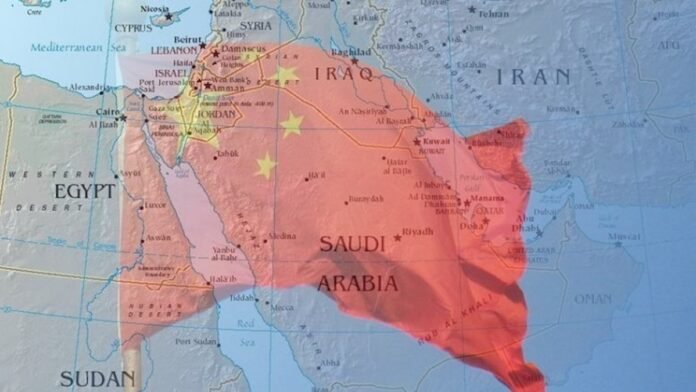
Peace or not, the Middle East will now lean more toward China
The most important question about the US-Israel-Iran war is no longer one of who has lost. It is obvious that everyone has lost but that Iran has lost less badly than the others.
Nor is it important to ask how humiliating the peace “memorandum” Iran and the US signed this week is for Donald Trump, nor how big a failure the war represents for America. It is obviously very humiliating, but Trump doesn’t care and the problems the failure creates will mostly be passed on to future administrations.
The most important question now is what the future holds for the whole Middle East. The answers to that question do not lie in the text of the memorandum itself but in the behavior in response to it of Israel and Iran. Neither the United States nor its volatile, aging, perhaps weakened President Trump will now be irrelevant, of course, but America and Trump have made themselves secondary players in whatever drama now lies ahead.
Israel, and especially its Prime Minister Benjamin Netanyahu, have been primary players in this drama right from the start but are now feeling the failure of the war especially strongly. For the past half-century – ever since 1979 brought a peace deal with Egypt, previously Israel’s most dangerous enemy, but also brought Ayatollah Ruhollah Khomenei and his Islamic regime to power in Tehran – the biggest threat to Israel’s security and even survival has always been Iran.
This war, from the bombing of nuclear facilities in Iran one year ago to the broader bombing campaign that began on February 28, has been promoted by Netanyahu as being vital to overthrowing Iran’s theocratic regime and to eliminating the regime’s chances of acquiring a nuclear weapon. Meanwhile, Israel wanted to further reduce the threat posed by the two most powerful militias trained and supplied by Iran, Hamas in Gaza and Hezbollah in Lebanon.
But now, two and a half years since Hamas’s deadly atrocities in Israel in October 2023, both Hamas and Hezbollah remain intact and capable of killing Israeli citizens; the theocratic regime remains in power in Tehran; and Iran’s nuclear program, although it is severely damaged, is potentially repairable.
The memorandum signed last week states that Iran will not seek to acquire or develop nuclear weapons, but that is no different from what the Iranian regime has always said.
Israeli troops are sitting in southern Lebanon to prevent Hezbollah from launching attacks on Israel from there, but Trump is telling Netanyahu that he must stop attacking supposed Hezbollah targets in Beirut. If the memorandum is to be taken literally, Trump should also be telling Netanyahu to withdraw Israeli forces from Lebanon altogether.
Israel is not a direct signatory to the memorandum so it will feel even less bound by it than will Iran or the United States. If it wants to keep on fighting Hezbollah, it can and will do so. But it is nevertheless faced with a very difficult situation. Netanyahu’s longstanding strategy towards Iran has failed. He faces a general election in September or October which, on current polling, he is likely to lose.
Nonetheless, none of Netanyahu’s political opponents has yet come up with a new plan for how to deal with Iran. Whatever government is elected may well opt for a period of damage limitation. But that is not a long-term strategy. It does not resolve the situation in Gaza or the occupied West Bank. And it leaves unanswered the question of Israel’s future relationships both with the United States and with the Arab states of Saudi Arabia, the United Arab Emirates and the rest of the Gulf.
Moreover, if the peace does hold with Iran, Israel’s new government will now find it very hard not to accept and follow the terms of the 20-point plan for Gaza laid down by Trump last October, not least because it has support and potential finance from the Gulf Arab countries.
Even Hillary Clinton, the Democrat who Trump defeated in 2016 and who remains one of his most implacable opponents, wrote last week in the Financial Times that Israel, Europe and everyone else should adopt the Gaza plan because it is the only plan that is available. Where it leaves the question of the creation of a viable Palestinian state remains, however, a mystery.
Iran, too, would be well advised to keep its head down and to spend the next months or even years rebuilding its cities and its economy. The regime has proved that it is able to resist powerful external attacks and to remain in brutal control of its domestic population.
Iran has no immediate need to be provocative externally but a clear need to make its 92-million population less discontented. That means that its likeliest priorities will be to exploit the peace deal’s permission to resume exports of oil and other products, to secure the return of frozen Iranian assets overseas and to encourage Trump to carry out his promises to relax other economic and financial sanctions – all in order to raise funds to improve economic conditions.
One important and still open question is whether Iran will seek to impose tolls on ships passing through the Strait of Hormuz. The memorandum states only that there will be no fees charged for the next 60 days and leaves it to Iran and Oman, the countries on either side of the strait, to work out how to proceed after then.
It may be tempting to humiliate Trump by charging high fees, but it would be quite short-sighted for Iran to do so as that would simply encourage the Gulf Arab countries to invest in other routes for their products, including pipelines, railways and roads.
In the longer term, the biggest question is whether Iran will seek to reactivate its nuclear-weapons program. The United States in the negotiations following the memorandum seek to discourage such a resumption, both through the positive incentives of sanctions relief and through threats of renewed attacks.
Yet the belief that Iran would never have been attacked in the first place if like North Korea it had already had a nuclear weapon will remain a powerful incentive to resume the nuclear program covertly, and a powerful reason for outsiders, especially Israelis, to remain suspicious.
In the end, much may depend on how the reintegration of Iran into the world economy proceeds if, indeed, sanctions really are lifted. The memorandum talks about a supposed US$300 billion fund to rebuild Iran, though this looks more aspirational than a practical reality. But a more open Iranian economy would nonetheless be quite attractive to international investors, for there is ample scope to exploit its natural resources and modernize many of its industries.
It is a fair bet that if such a reconstruction and development process takes place, it will be led by Chinese companies, for they have the skills and the capital as well as being less at risk of future retributions than American ones, for instance.
The connections between Iran and indeed the whole of the Middle East with China are now likely to get even stronger, which also means that China will be the main superpower keeping an eye on Iran’s nuclear program. The region can never entirely stop looking westward, but from now on it will now look eastward. more and more every year.
This article was originally published in Italian translation by La Stampa. Republished with permission, it can also be found on Bill Emmott’s Global View.
What happens next? How the UK will choose Starmer’s successor
Prime Minister Keir Starmer said on Monday he would resign, with a new leader to be in place by the time parliament returns in September, paving the way for Britain to have its seventh leader in 10 years.
Here’s what happens next:
HOW DOES A LEADERSHIP CONTEST WORK?
Any candidate wishing to replace Starmer would need to secure the support of 20% of Labour members of parliament. With Labour currently holding 403 seats, that equates to 81 lawmakers, including the challenger.
Candidates also must hit thresholds for support from grassroots Labour Party organisations, and from affiliated organisations such as trade unions.
WHO GETS TO DECIDE THE WINNER?
If more than one candidate qualifies, the winner is decided by a ballot of all Labour Party members and affiliates. The winner then becomes prime minister.
HOW LONG WOULD IT TAKE?
Though the timeline is officially decided by the party’s governing body, Starmer said nominations would open on July 9 and close before parliament goes into recess, which is scheduled for July 16.
He said if there were to be a contest, it should be completed by the time parliament returns, which is scheduled for September 1.
WHAT HAPPENS IF THERE’S ONLY ONE CANDIDATE?
If only one candidate meets the threshold for support, there is no vote: the candidate is elected unopposed as Labour leader and becomes prime minister.
Israeli army kills 2 Palestinians in southern occupied West Bank
The Israeli army killed two Palestinians and wounded two others in the southern occupied West Bank early Monday, the Health Ministry said.
A ministry statement said Reda Awad, 15, and Issa Awad, 19, were killed by Israeli fire in the town of Beit Ummar, northwest of Hebron.
The official news agency Wafa, citing security sources, said Israeli forces left both victims bleeding for an extended period before withholding their bodies.
Two other young men were also wounded by Israeli gunfire and transferred to a hospital, with their condition reported as stable.
In a statement, the Israeli army claimed the individuals had thrown Molotov cocktails toward the illegal settlement of Karmi Tzur.
READ: Olmert: Israel is running a state-funded campaign of settler terrorism in West Bank
Karmi Tzur is built on Palestinian land belonging to the town of Beit Ummar, north of Hebron.
According to the Health Ministry, at least 70 Palestinians have been killed by Israeli army fire in the West Bank since the start of this year.
Palestinian group Hamas denounced the new deaths as part of “Israel’s policy of systematic killing” in the occupied West Bank.
Since the start of Israel’s war on the Gaza Strip in October 2023, the occupied West Bank has seen a sharp rise in raids and attacks by Israeli forces and occupiers against Palestinians.
According to Palestinian figures, at least 1,173 Palestinians have been killed, 12,666 injured, around 23,000 arrested, and roughly 33,000 displaced in the territory during that period.
READ: Protest in West Bank over illegal settler outpost as Israeli forces intervene and detain protesters
Trump-Backed De la Espriella Wins Colombia Presidency by Narrow Margin
Abelardo de la Espriella won Colombia’s presidential runoff election by a narrow margin, defeating left-wing candidate Iván Cepeda after campaigning on promises to combat crime, reduce bureaucracy and strengthen the economy.
Results released by Colombia’s National Registry showed that with 99.99% of polling stations counted, De la Espriella, 47, received 49.66% of the vote, compared with 48.7% for Cepeda, 63.
More than 41 million Colombians were eligible to vote in the election. The National Registry reported that 26.3 million ballots were cast in the runoff, including 12.9 million votes for De la Espriella.
The president-elect was backed by President Donald Trump during the campaign. Following the result, President Trump posted on Truth Social: “He Won, BIG.”
Supporters celebrating the outcome included some wearing hats modeled on those popular among President Trump’s supporters, bearing the slogan “Make Colombia Great Again!”
De la Espriella, a defense attorney who branded himself as the law-and-order candidate and adopted the nickname “El Tigre,” or “The Tiger,” celebrated the victory in Barranquilla alongside vice president-elect José Manuel Restrepo, a former finance minister.
Addressing supporters, De la Espriella said, “Tonight marks the beginning of a new story for the nation, tonight a new era begins, a change of order.”
He also pledged to govern on behalf of all citizens regardless of how they voted.
“I’m going to govern for all Colombians. For those who voted for me, and for those who chose the other candidate,” he said.
In a separate statement, De la Espriella said that “today begins a new stage for our country, a stage built on the free and democratic will of millions of citizens who chose to believe in a great, safe, prosperous Colombia full of opportunities”.
Cepeda, a close ally of President Gustavo Petro, had not conceded as of Sunday night. While acknowledging the preliminary count, he said the results had not yet been finalized.
“Once the official canvass takes place and its final result is produced, and the corresponding verifications have been carried out, we will recognize the official result that emerges from that structure.”
The final certification process remained pending following the release of the preliminary results.
Lucid lays off 1,500 workers in second big cut of the year
Just three months ago, Lucid Motors showed off a new midsize electric vehicle platform that it said would give rise to a number of new vehicles in the coming years. The Saudi-backed startup is now selling its Gravity SUV alongside the ever-improved Air sedan and plans to reach profitability with smaller and cheaper models sold in higher volumes. But things are far from rosy at Lucid; today, the automaker is laying off approximately 1,500 workers—18 percent of its workforce.
These aren’t the first layoffs of the year, either; In February, Lucid let go of 12 percent of its workforce.
In a filing with the Securities and Exchange Commission, Lucid wrote that the layoffs were “designed to advance the Company’s path toward profitability and positive cash flow generation by streamlining its organizational structure, optimizing operating expenses, and aligning production plans with anticipated demand.”
Lucid is also ending the second shift at its factory in Casa Grande, Arizona, and says that together, the measures will save it $158 million, albeit after paying out $32 million in “severance, employee benefits, and employee transition.”
Among those receiving severance will be Marc Winterhoff, Lucid’s COO and previously acting CEO, who took the helm in February after the original CEO, Peter Rawlinson, abruptly stepped down. Lucid named a new CEO—Silvio Napoli—in April, and with Winterhoff’s departure, the company is eliminating the COO role altogether.
Iranian foreign minister declares ‘major progress’ in peace talks
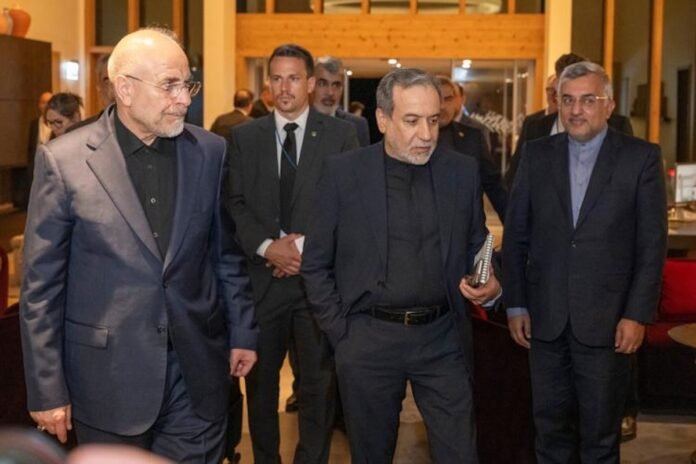
Iranian Foreign Minister Seyyed Abbas Araghchi, center, and Speaker of the Islamic Parliament Mohammed Bagher Ghalibaf, left, arrive Sunday for the peace talks at Lucerne, Switzerland. Photo: Urs Flueelera / Keystone
Iran’s top diplomat said late Sunday that peace negotiations in Switzerland have produced “major progress” despite US President Donald Trump’s belligerent military threats and Israel’s continued assault on Lebanon, both of which have risked derailing the high-stakes talks.
Abbas Araghchi, Iran’s foreign minister, credited “tireless Pakistani and Qatari mediation” with securing commitments to establish a “deconfliction cell” to ensure “the termination of military operations in Lebanon,” as required under the recently signed memorandum of understanding (MOU).
Araghchi added that negotiators agreed to an end to the US blockade on Iran, the release of some of Iran’s frozen assets, and a “major reconstruction and development plan” for Iran.
The Iranian delegation reportedly left the Swiss negotiating venue on Sunday in response to Trump’s threat to assassinate Iranian diplomats and “take over” the Middle East country. The threats violated the terms of the MOU, which requires parties to “refrain from the threat or use of force against each other.”
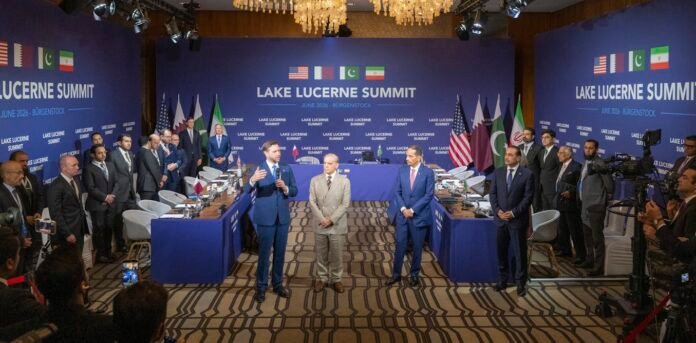
In a joint statement late Sunday, the governments of Pakistan and Qatar said that negotiators agreed on “a roadmap toward reaching a final deal within 60 days, laying the foundation for the immediate commencement of further technical talks.
“In addition, a communication line between the parties has been formed … to avoid incidents and miscommunication with the aim of safe passage for commercial vessels through the Strait of Hormuz,” the statement continued. “The mediating parties will continue to do their utmost to ensure that the negotiations continue to be conducted in a constructive atmosphere with the aim of reaching a final deal.”
The optimistic comments from Iran’s foreign minister and mediators came after the first round of formal talks in Switzerland got off to a shaky start, with Iran’s delegation postponing its arrival due to a deadly barrage of Israeli airstrikes in southern Lebanon late last week.
Israel’s leadership, which is not a party to the peace negotiations, has refused to end its occupation of Lebanon, a major obstacle in the way of a final deal to end the war on Iran that the US and Israel launched in late February. Iran has said the Trump administration must force the Israeli government to end its assault on Lebanon.
In a social media post on Sunday amid the negotiations in Switzerland, Israeli Defense Minister Israel Katz declared that “Israel has no intention of withdrawing from the Beaufort, which is an integral part of the security zone in Lebanon and essential for the defense of the Galilee settlements and IDF forces.”
“As Prime Minister [Benjamin] Netanyahu and I have clarified – Israel will not withdraw from the security zone in Lebanon,” Katz added.
This former hacker saw the light—and now wants to collect all of it
BLUEMONT, Va.—From an overlook in the foothills of the Blue Ridge Mountains, Dan Roelker gazed across the green splendor of the Shenandoah Valley. With the pleasant spring afternoon drawing toward evening, the Sun lazily crossed the sky, casting light all around.
The pleasing environs had put Roelker, who was drinking rye whiskey procured from a local distillery called Catoctin Creek, in an expansive mood to talk about one of his favorite subjects, light.
“If you can control light, you can control space,” he said. “So it’s basically a race for who is collecting the most light.”
And Roelker, now 48 years old, finds himself firmly in a race to collect the most light. He has followed an improbable career path, moving from hacker to video game coder to head of software development at SpaceX, then into crypto and NFTs, and now, of all things, to building telescopes and advanced optics while writing the software that brings them to life.
As he sipped whiskey, Roelker shared his vision for the future of spaceflight. Since the dawn of our existence, humans have observed light from distant stars and galaxies to make sense of the universe. Later, we devised telescopes for deeper observations of the heavens, and as we took to the stars, we used their light for navigation.
More recently, our telescopes have carefully tracked the movement of a growing number of satellites buzzing around the planet to ensure they avoid collisions. And now, engineers have harnessed laser light to dramatically increase the amount of data that can be beamed down from space, a technology all the more urgent due to the advent of orbital data centers.
“The new space race is going to be on the ground,” Roelker said. And the winners, he believes, will be those who can harness the light in powerful new ways.
Engaging in cyberwarfare
To control the light, Roelker cofounded a company in 2025 called Observable Space. He struggled to explain how he wound up here. His parents didn’t go to college. His dad died when Roelker was fairly young. His mom cooked school lunches. When Roelker left this working-class life in small-town Pennsylvania to attend a private Seventh-day Adventist university in Maryland, his family was stunned when he said he would study mathematics and philosophy.
“My family was like, ‘What are you going to do with that? How are you going to be able to build a house with that?’” he recalled.
But beyond his formal classes, what intrigued Roelker most were computers, particularly hacking. This was the late 1990s, and he had grown up with books like The Anarchist Cookbook and realized the power of computers and the growing influence of the Internet on society.
Even before graduating, he took a research job at the nearby Johns Hopkins Applied Physics Laboratory. He could envision a four-decade career stretching out before him, providing the kind of financial stability he had not enjoyed growing up, a comfortable retirement with a public school’s 403(b) plan, and more. But this wasn’t enough. He sought adventure and excitement and, amid the dot-com boom, a chance at greater riches.
So he left academia for the private industry, working as a software engineer at a small networking company before becoming a founding developer at Sourcefire in May 2002, a startup focused on network security. It would later be acquired by Cisco for $2.7 billion. Seeking to move from cyber defense to offense, he took on cyberwarfare jobs at companies later acquired by BAE Systems and Raytheon. These activities brought Roelker to the attention of the US government.
In early 2011, the US Defense Advanced Research Projects Agency recruited him to manage its cyberwarfare initiatives. In his early 30s, he was one of the agency’s youngest-ever program managers. While working for the government, Roelker’s biggest project was called Plan X, which in military parlance sought to dominate the cyber “battlespace.” For years, the US Department of Defense had spoken about defending itself in cyberspace, but now, for the first time, it was taking about offensive capabilities. Roelker helped develop the tools to automate the execution of cyberattacks.
“It was a pretty big deal because it was one of the first public acknowledgements that the military was engaging in offensive cyberwarfare,” Roelker said.
After three years at DARPA and more than a decade in cyberspace and hacking, Roelker was ready for a reset.
Space is the place?
At the beginning of 2014, Roelker left DARPA to try something rather different, working on the most popular PC game in the world. At the time, League of Legends had an enormous, global player base but faced problems with the “client” used to join games. He moved across the country to the Los Angeles area to work on this software.
He liked the game (Roelker played mid, with Diana as a main), but found the workplace too laid-back, since its developer, Riot Games, was swimming in cash. So about a year after joining developer Riot, Roelker began looking around for something with a greater urgency. He’d been into space in his younger days and was an avid sci-fi reader, but he felt the field didn’t pay well. By 2015, SpaceX was starting to do some pretty interesting things with launch, however, and he lived near the company’s headquarters in Hawthorne. He made inquiries through connected friends and found out that the company needed someone to lead software engineering.
The hiring process at SpaceX is brutal; for software positions, it includes a six-hour coding test. But Roelker got through and was excited to join in September. Just a couple of months earlier, the company had blown up a Falcon 9 rocket for the first time, and it was all hands on deck to get the rocket flying again. But SpaceX founder Elon Musk didn’t just want to return to flight; he also wanted to do so with a significantly upgraded version of the booster (using densified propellant) and to attempt a land-based landing of the first stage for the first time.
On his first day on the job, Roelker met the Falcon 9 software team as their new manager. He was told the team was eight months behind schedule and represented the long pole for the vehicle’s return to flight, which Musk wanted to achieve before the end of the year. Half of the rocket’s software team was on the brink of quitting. “Good luck,” he was told.
The new vice president of software engineering took up the challenge, seeking to pare back the department’s scope to focus solely on Falcon 9 flight software and the first stage landing. The rocket ultimately returned to flight successfully on December 21, and the first stage did indeed land. After, Roelker earned the confidence of Musk and a key lieutenant, Mark Juncosa, who began entrusting him with increasingly important projects, including flight software for Falcon Heavy, Crew Dragon, early versions of Starship, and, of course, the Starlink Internet constellation. By the late 2010s, work on the Internet constellation became all-consuming.
“It was all in on Starlink because we had to get that revenue generating engine going,” Roelker said.
During this time, Roelker learned all about the space industry, the importance of vertical integration, and the many technical challenges involved in launching and managing hundreds, and eventually thousands, of satellites. One of SpaceX’s greatest challenges, he realized, was simply knowing the precise location of both its satellites and everything else in orbit. Every day, the Air Force would send a list of about a thousand potential collisions, but most were false positives.
As the Starlink work piled up, Roelker left SpaceX in 2019. He was more interested in space exploration than building a massive telecommunications network in orbit.
For a couple of years, he dabbled in crypto and emerging areas like non-fungible tokens. He was one of the first employees at OpenSea, leading engineering there. The company was printing money, and in January 2022, it raised $300 million at a $13.3 billion valuation. “I cashed out after that, and then crypto tanked,” Roelker said.
After the cryptocurrency side quest, he was ready to get back into space. And he knew the problem he wanted to solve.
Seeing the light
By this time, Roelker was in his early 40s, and he had already dabbled in a lot of areas. “I like to start companies, or join companies, where I learn something,” he said. At SpaceX, he’d learned about the importance of tracking the movement of satellites and that, in an increasingly crowded space environment, humans weren’t good enough at it.
So in October 2022, he co-founded a company called OurSky to leverage his software skills. He hired a computer scientist from the scooter company Bird, Connor Poole, to lead software engineering. They set about writing code to essentially mesh the observations of dozens of telescopes to track objects as they moved around the planet. The goal was to provide satellite operators the location of their spacecraft with sub-arcsecond precision within 90 seconds of a request.
This worked well enough, but Roelker and Poole soon realized that to really do this right, they needed more than good software; they had to build hardware as well. Neither had much experience with telescopes, and by then, most telescope manufacturing had moved offshore, primarily to China, including big players like Celestron.
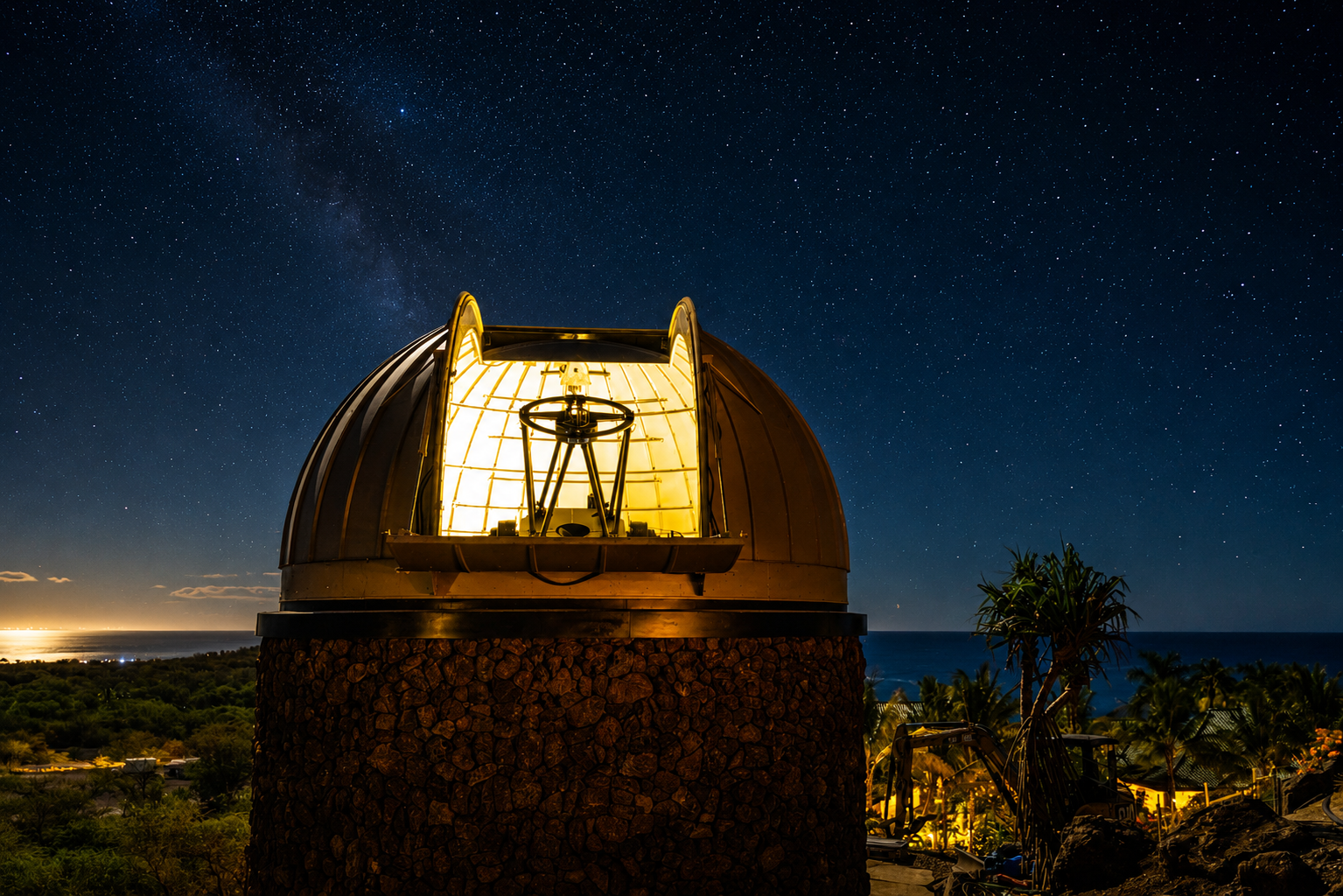
The Lānaʻi Observatory features this powerful 1-meter telescope built by Observable Space.
Credit: Observable Space
The Lānaʻi Observatory features this powerful 1-meter telescope built by Observable Space. Credit: Observable Space
Eventually, they connected with a small Michigan company called PlaneWave Instruments. It was founded in 2006 by a senior engineer from Celestron, Richard Hedrick, who had watched as that company’s manufacturing base was slowly moved to China. PlaneWave made its telescopes in Adrian, a small town in southeastern Michigan.
About 18 months ago, OurSky and PlaneWave essentially merged into a company cofounded by Roelker, Poole, and Hedrick, known as Observable Space. The company has quietly grown into a powerhouse by offering sophisticated software, developing advanced adaptive optics and becoming the largest US-based telescope manufacturer.
The company’s instruments are useful to astronomers and are often found in remote observatories like Starfront. Additionally, in January, former Google chief executive Eric Schmidt announced plans to fund several large observatories, including an array of 1,200 telescopes, each with 11-inch mirrors, to mimic the effect of an 8-meter optical telescope. It will image the entire Northern Hemisphere sky. Observable Space won the contract to build all 1,200 telescopes for this project, called Argus Array.
But for all that, astronomical telescopes remain a fairly niche industry.
Tracking moving objects
“Everything we know about the universe comes from telescopes,” Roelker said. “So while the total addressable market of that is not super big or attractive to VCs, I don’t know of a bigger question we can answer as humans outside of that. So we kind of want to have it both ways. We want to build this amazing technology that helps us understand the universe, but we also know that same technology can be used for extremely big markets that are powering the space ecosystem.”
The ways in which the US military tracks satellites are changing quickly, largely in response to a rapidly growing number of satellites. Over the last half-decade, the number of active satellites has grown from about 3,000 in low-Earth orbit to more than 15,000, and the number continues to grow with each launch of Starlink satellites, Amazon Leo satellites, and China’s Guowang and Qianfan constellations.
This explosive growth has led the US military to increasingly rely on commercial data and to integrate it directly into routine military operations. The Space Force has also been seeking to acquire more ground-based sensors of its own to maintain coverage of crowded orbits.
Last month, the US Space Force awarded a $94 million contract to Observable Space to expand its production of high-performance optical telescopes. “The Department is acting on the urgent need for mobile, off-grid robotic telescopes,” said Jeremy Verbout, assistant secretary for mission capabilities, in a statement. “These systems will provide the Joint Force with high-fidelity space domain awareness.”
Observable Space is also developing new, lower-cost optics for use on spacecraft in orbit. Its Iguana space telescope, with a 200 mm aperture, allows operators to perform space domain awareness and astronomical observations and navigate for rendezvous and proximity operations.
The first of these Iguana telescopes is set to fly on a spacecraft bus built by Apex later this year as part of its Project Shadow mission to demonstrate space-based interceptors.
Psyche calls home
Nearly three years ago, a Falcon Heavy rocket launched the Psyche mission for NASA. The fairly small spacecraft needed a high-energy launch because its destination was an orbit around the distant, metal-rich asteroid 16 Psyche in the asteroid belt.
As a secondary part of its mission, the NASA spacecraft also carried a laser transceiver. It would be the space agency’s first test of truly long-distance optical communications, using photons to transmit more data than conventional radiofrequency transmissions. The benefits are significant: 10 to 100 times as much data from a transmitter that is smaller than an RF one, and it requires less power. But there’s a catch: These lasers can’t transmit through clouds back on Earth.
About one year into its mission and far from Earth, in October 2024, the Psyche spacecraft linked up communications with the 5-meter aperture Hale Telescope at Caltech’s Palomar Observatory in San Diego County. With this breakthrough, NASA had just successfully used laser communications to talk to a spacecraft 290 million miles (460 million km) away, about the distance Mars reaches at its furthest point from Earth.
“The milestone is significant,” Meera Srinivasan, the project’s lead at NASA’s Jet Propulsion Laboratory, said at the time. “The techniques we use to track and point have been verified, confirming that optical communications can be a robust and transformative way to explore the Solar System.”
Companies like Observable Space are now racing to commercialize this technology.
Gathering light, decoding data
At a high level, the concept is fairly straightforward. A spacecraft encodes data onto a laser, which sends a narrow beam toward Earth. Large optical telescopes on the ground collect the incoming photons, and detectors convert the light back into electrical signals. Sophisticated error-correction software reconstructs the original message as many photons are lost.
The greater the distance, the more daunting the challenge. A laser beam from geostationary orbit, about 22,000 miles (36,000 km) above Earth, starts out about the diameter of a coffee cup, and when it reaches Earth, it’s about 1km across. The further away, the further the beam spread, so ground-based telescopes can capture only a tiny fraction of the signal from distant spacecraft.
The future of communication throughout the heavens will therefore probably be based on relay spacecraft, which are essentially like Internet routers here on Earth. “We’re going to be building the systems that get deployed in space, and become the fiber optics infrastructure of communication across the Solar System,” Roelker said.
That’s the vision, at least.
But it is starting to happen. Observable Space played a key role in facilitating optical communications on Artemis II in April as it flew around the Moon. This type of high-bandwidth communications is expected to become standard for future Artemis missions and will enable lunar landings in high definition.
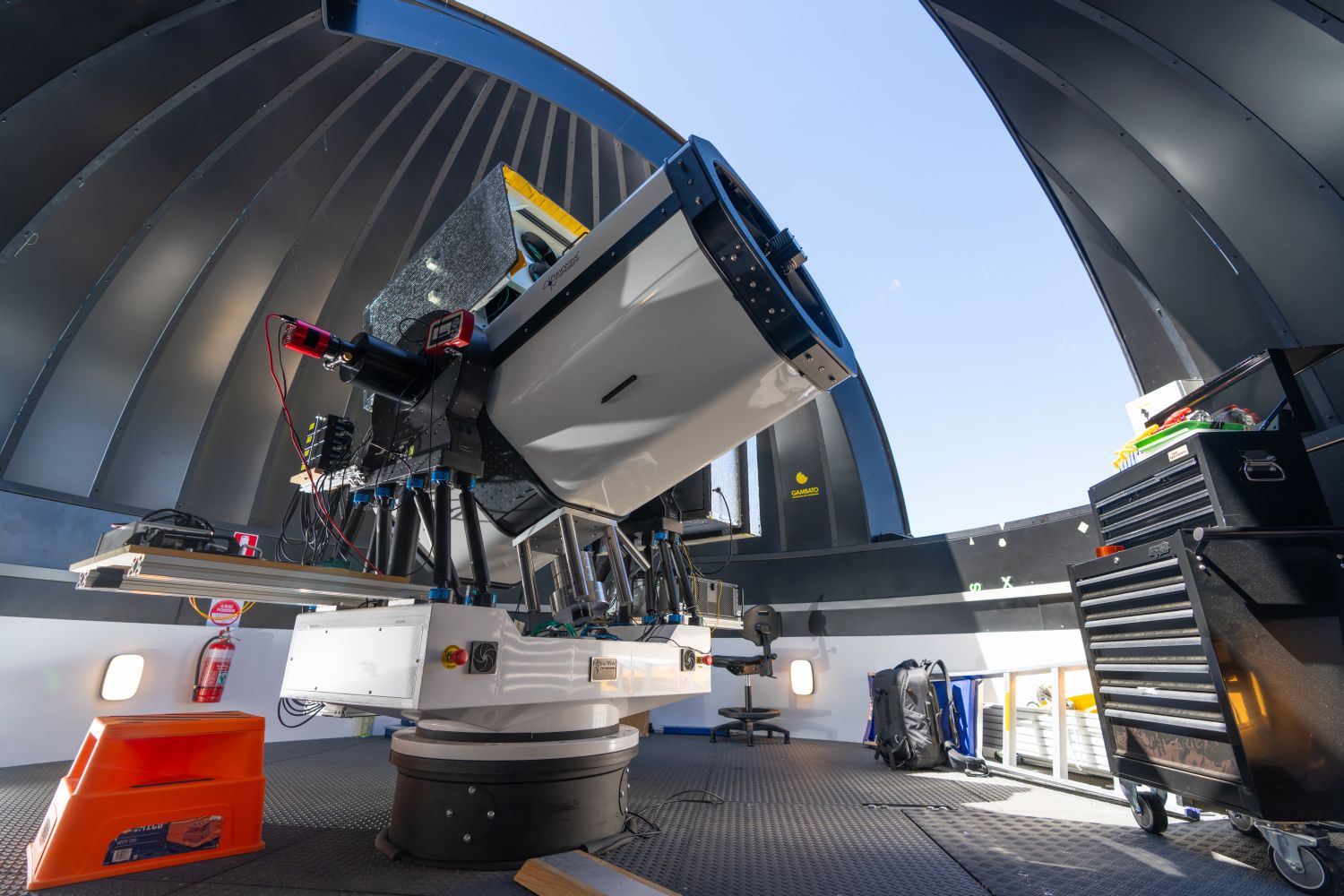
Australia National University provided space-to-ground laser communications for Artemis II with an Observable Space RC700 lasercom-optimized system at Mount Stromlo Observatory, Canberra, ACT, Australia.
Credit: Nic Vevers/ANU
Australia National University provided space-to-ground laser communications for Artemis II with an Observable Space RC700 lasercom-optimized system at Mount Stromlo Observatory, Canberra, ACT, Australia. Credit: Nic Vevers/ANU
Observable Space is also talking to SpaceX and everyone else interested in developing orbital data centers because that technology needs high-bandwidth links from space to ground. And the way to get around clouds is to have lots of ground stations around the planet. That’s why Observable Space is focused on scaling up telescope production and lowering costs.
Investors are buying in. In late May, the company announced it had closed a $90 million Series A funding round and would use that money largely to accelerate its laser communications business.
Roelker is happy to leave it to other companies to launch into space. He’s seen SpaceX from the inside and knows he could never compete with that. Likewise, there are many companies building spacecraft and satellite buses.
What those vehicles all need is the command of light. Rockets, and particularly spacecraft, need it to navigate. They need to see objects to avoid collisions. And somehow, with all of the data they are collecting and processing, they need to get it back to Earth. Because, otherwise, what’s the point?