Home Blog

Four-Year-Old Girl Killed in Freak Tractor Accident on Family Farm

0
four-year-old-girl-killed-in-freak-tractor-accident-on-family-farm
Four-Year-Old Girl Killed in Freak Tractor Accident on Family Farm


A 4-year-old girl was killed in a heartbreaking accident after falling from a tractor on her family’s farm and being run over by the vehicle.

Hellayna Michelle King was riding on a trailer attached to the back of a tractor in Clark County, Nevada, when tragedy struck on Sept. 2.

According to a report from Clark County Coroner Neal Oliver, the tractor suddenly came to a stop, causing Hellayna to fall from the trailer.

The tractor then reversed and ran over the little girl.

Family members who witnessed the accident immediately called for emergency help.

But relatives say a nearby bridge closure delayed the ambulance’s arrival.

Hellayna’s family reportedly stayed by her side for nearly 45 minutes before emergency crews reached the farm.

Her aunt, LaDonna Lovings, said there is no way of knowing whether a faster response could have saved Hellayna, but the lengthy wait made an already devastating situation even more painful.

“They had to sit there for 45 minutes with her, and it was just a tragic, tragic loss,” Lovings told WKYT.

She said emergency responders might have been able to reach the farm within about 15 to 20 minutes if the bridge had been open.

“It may have made a difference and it may have not made a difference,” she said. “But the fact that somebody was there to try and help her would’ve made a difference.”

Hellayna was just weeks away from celebrating her fifth birthday in October.

Instead of planning a birthday celebration, her devastated family was forced to prepare for her funeral.

“Nothing can prepare you for having to say goodbye to your niece, your daughter, bonus daughter, or whatever she was to us,” Lovings said.

She added that the family wishes they could turn back time, saying accidents happen every day but families never imagine such a tragedy will happen to them.

Hellayna’s obituary remembered her as a “bright and lively little girl” who brought tremendous joy to the people around her.

She loved being outside, spending time on the farm and singing.

Her family said Hellayna would often fill their days with her “sweet voice and happy spirit.”

Whether she was playing outdoors, helping around the farm or singing one of her favorite songs, relatives said she embraced life with an energy and happiness they will never forget.

Hellayna’s sudden death has left her family mourning a little girl who was supposed to be celebrating her fifth birthday next month.

A new BRICS is emerging — can it deliver?

0
a-new-brics-is-emerging-—-can-it-deliver?
A new BRICS is emerging — can it deliver?

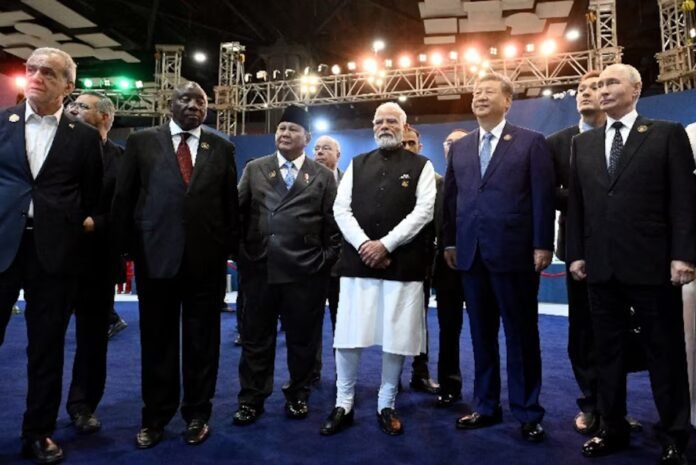
The New Delhi Declaration, adopted unanimously at the 18th BRICS Summit on September 12, will be read mostly through a geopolitical lens: Gaza, Security Council reform, sanctions, the drift toward a multipolar order. That reading isn’t wrong. It just misses the bigger story buried in the document’s sheer bulk.

Of the more than 130 paragraphs BRICS leaders signed off on, only about a third concern geopolitics and security. The rest — nearly a hundred paragraphs — sketch an increasingly dense architecture spanning health, food security, energy, industrial cooperation, science, finance, trade, climate and human development.

In other words, BRICS is no longer just a forum where major emerging economies coordinate positions on a fragmenting global order. It is becoming something closer to a parallel development institution, assembling an alternative economic architecture for the Global South, paragraph by paragraph, one working group at a time.

India’s chairmanship theme this year — “Building for Resilience, Innovation, Cooperation and Sustainability” — was operationalized through a dedicated Task Force on Growth and Development, built explicitly around those four pillars. BRICS is thus being reorganized, in real time, around a development mandate that now rivals — arguably exceeds, in sheer volume — its original geopolitical purpose.

For emerging and developing economies, including those outside the bloc entirely, that broadening matters. The New Development Bank, described in the declaration as entering its “second golden decade,” is expanding local-currency lending and courting new members.

A proposed BRICS Multilateral Guarantees mechanism aims to lower financing costs for development projects across BRICS and the wider Global South. A Global Value Chains Action Plan running to 2030 commits BRICS to addressing the specific difficulty developing economies face in moving beyond low-value assembly and into higher-value production — precisely the structural transformation problem that has stalled industrial upgrading across much of Asia and Africa.

A proposed BRICS Grain Exchange, still in early discussion, could give food-import-dependent countries a hedge against the kind of price shocks that hit hardest when energy and fertilizer markets seize up simultaneously, as they did in 2022 with the Ukraine war and have since again with the Iran conflict.

Together, it all represents finance, technical cooperation and market access outside the traditional Bretton Woods channel — genuinely useful ballast for smaller economies navigating a more fragmented, more coercive global economy.

That all said, ambition is not capacity to deliver – this is where the New Delhi declaration deserves more skepticism than the celebratory coverage will trumpet. A close look at the operative language across the development chapters and the same handful of verbs do nearly all the work: “welcome”, “note”, “encourage”, “look forward to”, “acknowledge.”

These are the words of an organization announcing activity, not committing resources. Strip away the New Development Bank, which has an actual balance sheet, and a customs cooperation agreement still awaiting member signatures, and almost everything else in the document is a voluntary framework, a compendium of best practices, a working group, a “dialogue,” or a memorandum of understanding with no binding force and no deadline.

This is an old, not new, problem for grand Global South coalitions. The declaration itself invokes the 1955 Bandung Conference as a touchstone for a fairer multilateral order. But Bandung — and the Non-Aligned Movement and G-77 coordination that followed — foundered on exactly this defect: solidarity rhetoric standing in for delivery because no one outside the coalition was tracking specific commitments against specific dates.

Fourteen science and technology working groups, seven industrial cooperation working groups, dozens of new “networks” and “centers of excellence.” That’s a lot of institutional machinery for a grouping with no monitoring framework and no mechanism to hold any member accountable for non-delivery.

This is the trap waiting for any ambitious multilateral bloc once it moves from coordinating positions to building institutions: launching a working group is cheap; funding one is not. Issuing a compendium is easy; changing an outcome is not. The proliferation of soft, voluntary instruments in the New Delhi Declaration isn’t evidence that BRICS has failed. It’s evidence that the organization still hasn’t decided what kind of institution it wants to be.

But that choice can’t be deferred indefinitely. If BRICS wants its development agenda to amount to more than an annually renewed list of good intentions, it needs three things the rhetoric doesn’t yet supply.

Those include dedicated implementation financing, not voluntary best-efforts cooperation; a handful of prioritized, sequenced initiatives carried out well, rather than dozens launched at once; and some form of monitoring — even a simple annual scorecard — against which members and outsiders alike can measure whether the promises made in New Delhi were kept by the time the chairmanship passes to China and beyond.

For countries watching from outside the bloc, the sensible posture is neither dismissal nor uncritical enthusiasm. An additional pole of development finance and technical cooperation is plainly useful in a world where the Bretton Woods institutions remain slow to reform and where unilateral tariffs and sanctions increasingly disrupt trade for economies that had no hand in the disputes that produced them. But usefulness is conditional, and it should be tested rather than taken on faith.

Three benchmarks are worth naming now, precisely because each can be checked with ordinary tools rather than rhetoric: whether export and value-added data show developing economies actually climbing global value chains by the plan’s 2030 horizon; whether guaranteed sovereign or project borrowing shows measurable spread compression against comparable unguaranteed debt; and, at the simplest end, whether the Grain Exchange ever executes a single verifiable trade.

None of these requires access to BRICS’s internal deliberations — only the discipline, largely absent from summit commentary, to name the claim now and come back to grade it later. Until then, the honest verdict is that BRICS has drafted an ambitious development agenda, but has not yet built the institutions capable of delivering it.

Golam Rasul is a professor of economics at the International University of Business Agriculture and Technology (IUBAT), Dhaka. He contributes regularly on political economy, globalization, and development transitions in Asia. His commentary has appeared in East Asia Forum, South Asia Monitor, Asia Times and leading South Asian newspapers.

Sheet Pan Parmesan Chicken & Broccoli

0
sheet-pan-parmesan-chicken-&-broccoli
Sheet Pan Parmesan Chicken & Broccoli
Sheet Pan Parmesan Chicken & Broccoli with breaded chicken cutlets, roasted broccoli, parsley, and lemon wedges.
Sheet Pan Parmesan Chicken & Broccoli brings golden Parmesan-crusted chicken, roasted broccoli, and fresh lemon together in one easy sheet pan dinner.

Print Friendly, PDF & Email

Sheet Pan Parmesan Chicken & Broccoli turns a handful of familiar ingredients into one dinner that feels a little special. Thin chicken cutlets bake under a golden Parmesan-panko crust while broccoli roasts around them until tender with caramelized edges. A light Dijon-mayo layer keeps the chicken juicy and gives the topping something to cling to, while lemon zest and parsley brighten the savory finish.

The timing is intentionally staggered, so the broccoli gets a head start and everything finishes together on one pan. That means no underdone vegetables, dry chicken, or last-minute juggling. It is simple enough for a weeknight, yet polished enough to serve when dinner deserves a little extra care. Add lemon wedges at the table for a fresh finish, and you have a colorful meal with minimal cleanup and plenty of texture.


Sheet Pan Parmesan Chicken & Broccoli with breaded chicken cutlets, roasted broccoli, parsley, and lemon wedges.
Sheet Pan Parmesan Chicken & Broccoli brings golden Parmesan-crusted chicken, roasted broccoli, and fresh lemon together in one easy sheet pan dinner.

Recipe Yield: 4 servings

INGREDIENTS

1 1/2 lb boneless, skinless chicken breast cutlets, about 1/2-inch thick
5 cups medium broccoli florets
1/2 cup panko breadcrumbs
1/2 cup finely grated Parmesan cheese
3 tbsp olive oil, divided
1 tsp kosher salt, divided
1/2 tsp black pepper, divided
1 tsp garlic powder, divided
1 tsp Italian seasoning
1/2 tsp smoked paprika
3 tbsp mayonnaise
1 tbsp Dijon mustard
1 tsp finely grated lemon zest
2 tbsp chopped fresh parsley
Lemon wedges, for serving

INSTRUCTIONS

1. Preheat the oven:
Preheat oven to 425°F. Line an 18×13-inch rimmed sheet pan with parchment paper.

2. Start the broccoli:
Toss broccoli with 2 tbsp olive oil, 1/2 tsp salt, 1/4 tsp pepper, and 1/2 tsp garlic powder. Spread in a single layer, placing cut sides down where possible, and roast for 8 minutes.

3. Make the Parmesan crust:
Meanwhile, combine panko, Parmesan, Italian seasoning, smoked paprika, remaining 1/2 tsp garlic powder, lemon zest, and remaining 1 tbsp olive oil. Toss until evenly moistened.

4. Prepare the chicken:
Pat chicken dry and season both sides with remaining 1/2 tsp salt and 1/4 tsp pepper. Stir mayonnaise and Dijon together, then spread a thin layer over the tops of the cutlets. Press the Parmesan mixture firmly onto each piece.

5. Finish on the sheet pan:
Move broccoli toward the sides and arrange chicken in the center without overlapping. Bake for 12–16 minutes, until the crust is golden, broccoli is tender with browned edges, and chicken reaches 165°F in the thickest part.

6. Finish and serve:
Sprinkle chicken and broccoli with fresh parsley. Serve immediately with lemon wedges for squeezing over the top.


Helpful Tips to Perfect This Recipe

  • Keep the chicken evenly thin: Cutlets around 1/2-inch thick cook quickly enough to finish alongside the broccoli. Gently pound any thicker areas so the chicken cooks evenly.
  • Give everything room: An 18×13-inch sheet pan gives the broccoli enough space to roast instead of steam. Keep the florets in one layer for the best browned edges.
  • Press the crust on firmly: The Dijon-mayo coating should be thin rather than heavy. Gently pressing the Parmesan-panko mixture into it helps the crust stay attached as it bakes.
  • Check the chicken early: Thin cutlets cook quickly, so begin checking around 12 minutes. Remove the pan as soon as the chicken reaches 165°F to keep it juicy.

Rate This Recipe

Tried this recipe? Your rating helps others and means so much.

The Media Line Has Been Hacked—We Need Your Help!

0
the-media-line-has-been-hacked—we-need-your-help!
The Media Line Has Been Hacked—We Need Your Help!


The Media Line’s website has been hacked by malicious and still-unknown parties who are preventing us from posting important content on 9/11, the upcoming Jewish holiday of Rosh Hashanah, and crucial news affecting the Middle East.

We have often reported on bad actors around the world, and now we have been targeted in an attack that is designed to hinder our ability to provide information and analysis and to cause us significant financial losses that will be challenging to recoup. In the meantime, repairs are underway.

This is where you can help. Now more than ever, The Media Line needs your assistance to help us recover from this ruinous attack and restore our ability to once again provide you with the thought-provoking, informed stories you have come to expect from our website.

Don’t let the malicious cyber-attackers win. Donate today and help make the internet safe for authentic journalism.

Here is the link to donate: https://themedialine.org/donate/

Super Sparta: Israel’s new military dependence on America

0
super-sparta:-israel’s-new-military-dependence-on-america
Super Sparta: Israel’s new military dependence on America

Is Israel really moving towards military self-reliance – or is the US-Israel “special relationship” being transformed into something even more deeply integrated?

Benjamin Netanyahu’s declaration that Israel must become a “Super Sparta” was presented as a response to growing international isolation. The message was stark: if Israel could no longer depend upon an international order willing to arm it, finance it and defend its policies indefinitely, then it would have to become sufficiently militarised and economically self-reliant to withstand the pressure. Israel, Netanyahu suggested, would have to produce more of what it needs and reduce its vulnerability to foreign governments that might eventually impose arms restrictions or other forms of pressure.

But there is a fundamental contradiction at the heart of this vision. Israel may be capable of producing an extraordinary range of sophisticated weapons, surveillance systems, drones, missiles, cyber technologies and air-defence systems. It is, after all, one of the world’s major arms exporters. Yet the idea that Israel can simply withdraw into military autarky and continue its present scale of warfare is considerably less convincing.

The more interesting possibility is that “Super Sparta” does not mean separation from the United States at all. It may mean something almost opposite: the transformation of the old US-Israel relationship from one based primarily on military assistance into a much more deeply integrated military-industrial partnership. Israel would manufacture more, but within a technological, financial and procurement ecosystem increasingly intertwined with the American defence establishment. Dependence would not disappear. It would become institutionalised.

This distinction matters enormously.

For decades, US military assistance has helped preserve Israel’s qualitative military edge. The existing ten-year US memorandum of understanding provides $3.3 billion annually in Foreign Military Financing, alongside $500 million for cooperative missile-defence programmes. Washington has also supplied Israel with aircraft, missiles, bombs, armoured vehicles and other major systems. The latest SIPRI figures make the structural dependence even clearer. Between 2021 and 2025, the United States supplied 68 per cent of Israel’s imports of major arms, with Germany supplying most of the remainder. That is hardly the profile of a country preparing to wage an indefinitely sustained regional war in complete independence from foreign military support.

Yet Israel possesses something that makes the relationship different from a conventional client-state arrangement. Its military-industrial sector is highly developed and technologically sophisticated. Israel itself was the world’s seventh-largest exporter of major arms in 2021–25, according to SIPRI, while its exports rose substantially during this period.

Israeli companies such as Israel Aerospace Industries, Rafael and Elbit Systems have become major international defence suppliers. Israeli air-defence and missile technologies are now being marketed around the world, with Greece recently agreeing to a €3 billion air-defence programme involving Israeli systems.

This creates the apparent paradox: Israel is simultaneously a major arms exporter and a major arms importer.

There is no contradiction once the nature of contemporary warfare is understood. Producing sophisticated weapons does not mean possessing every component, raw material, engine, aircraft platform, semiconductor, guidance technology, production line or financial mechanism required to sustain a modern military. Israel can design and manufacture remarkable systems while remaining embedded in international supply chains on which those systems depend.

The F-35 is the clearest example. Israel cannot manufacture its own equivalent of the F-35 independently of the United States. Nor does its indigenous defence industry eliminate its need for American aircraft, American munitions, American components or American logistical and technological support. SIPRI records continued US transfers of F-35 combat aircraft, guided bombs and missiles during the 2021–25 period.

The same principle applies more broadly. Modern warfare is not simply about whether a state can manufacture a missile. It is about whether it can sustain the entire ecosystem required to fight a prolonged multi-front war: intelligence, satellites, electronics, precision-guidance systems, aircraft, spare parts, software, communications, logistics, maintenance, fuel, replenishment and financing. It also requires access to international markets and political relationships.

Israel’s war economy has demonstrated considerable resilience. Its sophisticated technology sector, high savings, natural-gas resources and military-industrial base have enabled it to absorb enormous wartime disruption. But even analyses describing the Israeli economy as remarkably resilient acknowledge the enormous financial cost of prolonged warfare and the central importance of US military support.

This is where the concept of “integration” becomes more significant than the language of self-reliance.

Instead of Washington simply writing a cheque for Israeli purchases, the future relationship could involve Israeli companies becoming increasingly embedded in the US defence-industrial ecosystem; joint production; shared research and development; American investment in Israeli defence manufacturing; co-production of weapons; common supply chains; technology-sharing arrangements; and Israeli systems becoming components of wider US and allied military architectures.

In other words, Israel could become less like a recipient of American military assistance and more like an integrated node within the American military-industrial complex.

That would change the political equation.

Under the old model, Israel’s dependence upon US aid theoretically gave Washington leverage. If an American administration decided that Israeli conduct had become politically or strategically intolerable, military assistance could, in principle, be conditioned or suspended. The relationship therefore contained at least the possibility of leverage.

But if Israeli and American defence industries become deeply integrated, the relationship becomes harder to disentangle. Israeli companies become suppliers to American programmes. American companies become suppliers to Israeli systems. Production lines cross borders. Research becomes collaborative. Technologies become mutually dependent. Investment and employment become distributed through both economies.

The political cost of cutting Israel off would consequently rise for the United States itself.

This is the deeper meaning of the proposed transformation from “military aid” to “integration”. It could make the US-Israel relationship more resistant to precisely the kind of political pressure now growing around Israel’s conduct in Gaza and the occupied Palestinian territories.

The irony is extraordinary. “Super Sparta” is presented as Israel becoming independent from an increasingly hostile world. Yet the practical alternative may be deeper incorporation into the very US military-industrial system that has sustained Israel’s military power for decades.

This would also explain why Israel’s indigenous defence industry matters so much. The objective would not necessarily be to replace America. It would be to make Israel more indispensable to America.

That is a very different conception of self-reliance.

Israel would manufacture more of its own weapons, expand domestic production and reduce vulnerabilities in particular supply chains. But it would simultaneously become a technological partner, subcontractor, testing ground and weapons innovator within the wider US military system. The result could be a relationship of deeper symbiosis rather than diminished dependence — precisely the shift identified in recent Palestinian policy discussions of the future of US aid to Israel.

There is another dimension that should not be overlooked. Israel’s wars have become a laboratory for weapons and surveillance technologies. Systems developed and refined through Israeli military operations can subsequently be marketed internationally as “battle-tested”. The enormous growth of Israeli defence exports therefore creates a feedback loop: warfare generates technologies; warfare demonstrates those technologies; demonstrated technologies generate exports; exports strengthen the defence industry; and the strengthened defence industry provides greater capacity for further warfare.

That is not merely a military cycle. It is a political economy of permanent conflict.

The danger is therefore not that Israel will become a hermit state incapable of surviving without the world. The greater danger is that it could become a heavily militarised state whose international isolation is compensated for by an increasingly integrated military relationship with the United States and other defence markets.

“Super Sparta” would then not be an escape from dependence. It would be dependence redesigned as partnership.

And that raises the most important question of all. If the objective of international pressure is to persuade Israel to end occupation, halt the destruction of Palestinian life and accept political accountability, what happens when its military-industrial infrastructure is deliberately reorganised to make such pressure less effective?

The answer cannot be to admire Israel’s technological ingenuity or to debate whether it can manufacture enough missiles on its own. The political question is who pays for the machinery of occupation, who supplies it, who profits from it, who protects it diplomatically — and whether the United States is now contemplating a system in which Israel’s military capacity becomes so deeply woven into the American defence establishment that restraining Israel becomes structurally more difficult.

That would make “Super Sparta” far more than Netanyahu’s rhetoric about economic isolation.

It would represent an attempt to build an Israeli war machine that can withstand international condemnation by becoming indispensable to the military-industrial system of the world’s most powerful state.

And that is why the future of the US-Israel relationship may no longer be about how much aid America gives Israel.

It may increasingly be about how deeply the two military-industrial systems become one.

The views expressed in this article belong to the author and do not necessarily reflect the editorial policy of Middle East Monitor.

As extreme weather worsens, Black and Hispanic homeowners are paying more for insurance

0
as-extreme-weather-worsens,-black-and-hispanic-homeowners-are-paying-more-for-insurance
As extreme weather worsens, Black and Hispanic homeowners are paying more for insurance

This story was originally published by Inside Climate News and is reproduced here as part of the Climate Desk collaboration.

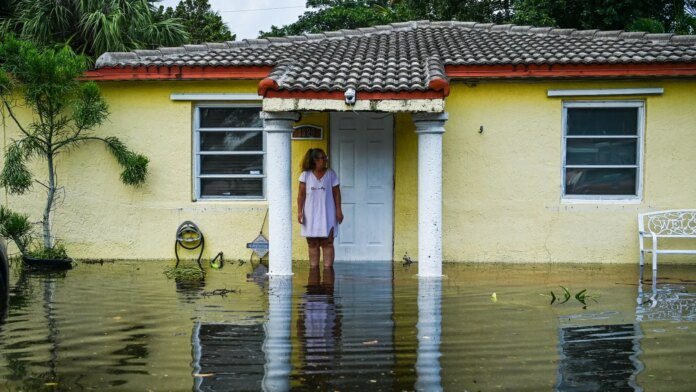
Homeowners in Hispanic and Black communities nationwide are paying a disproportionate share of skyrocketing home insurance costs, according to a recent report. The disparities leave communities of color at greater risk as climate change increases the frequency of billion-dollar disasters.  

The report, released in July by the Consumer Federation of America, a nonprofit representing nearly 250 consumer groups, concluded that homeowners in predominantly Hispanic ZIP codes pay on average a 30 percent higher premium ($950 more annually) compared with homeowners in white communities. In predominantly Black ZIP codes, homeowners pay, on average, a 16 percent higher premium ($500 more annually).

The findings were based on an analysis of identical policies across communities, eliminating the possibility the inequities were related to differences among homeowners, their homes or what they chose to insure, the report said. Local risk factors could be responsible for some of the disparities, although even when such factors were accounted for the gap remained large.

“We’ve talked a lot about our insurance affordability crisis,” said Sharon Cornelissen, director of housing at the Consumer Federation of America and a co-author of the report. “What we haven’t really talked about is sort of the racially inequitable impacts of that, and that Black and Hispanic homeowners are particularly struggling.”

The inequities add up to at least $28,500 in additional insurance costs over the span of a 30-year mortgage for homeowners in Hispanic communities and $15,000 for homeowners in Black communities, according to the report. The situation points to a legacy of redlining in home insurance that continues to challenge communities of color when it comes to homeownership and exposure to risk, although the discrimination today may be inadvertent.

Read Next

The historical practice of redlining involved the designation of certain neighborhoods as “hazardous” for mortgage lending, based largely on the race of residents. People in these neighborhoods were denied home loans, leading to lower home values and less homeownership. Although redlining ended in 1968 with the Fair Housing Act, the practice has left a legacy of segregation and disparities in these neighborhoods that endures today when it comes to health care, education, incarceration, access to nutritious food and public investment in infrastructure. The inequities also have left these communities more vulnerable to climate impacts such as heat. 

Mark Friedlander, spokesman for the Insurance Information Institute, an industry group, said premiums are based on risk and not race or ethnicity and that the system used to establish premiums is actuarially grounded and heavily regulated.

“Using race, or any proxy for race, to set insurance rates is illegal in every U.S. jurisdiction, and state insurance regulators review and approve the rating factors insurers use precisely to guard against that,” he said in a statement provided to Inside Climate News. “Many of the communities cited in reports like this are located in areas with objectively higher catastrophe exposure or higher costs to rebuild and repair after a loss.”

The report found the most acute home insurance disparity among homeowners in predominantly Hispanic ZIP codes in Florida, where they pay on average 58 percent more ($5,014 annually) for the same coverage as those in white communities. In the next four states, the gap was pronounced, but smaller: 20 percent ($431) in New York, 18 percent ($278) in Washington, 16 percent ($244) in Massachusetts and 15 percent ($633) in Kansas.

The inequities in Florida, where homeowners have been particularly hard-hit by insurance costs, represent “an enormous amount of money,” said Moira Birss, senior fellow at the Climate and Community Institute, a progressive think tank. “And so when we’re thinking about how we’re having an affordability crisis in this country … that’s unconscionable.”

Read Next

When it comes to predominantly Black ZIP codes, the inequities are greatest in Michigan at 74 percent ($1,768 annually), followed by Pennsylvania at 57 percent ($1,048), New Jersey at 22 percent ($332), Massachusetts at 20 percent ($321) and New York at 19 percent ($417).

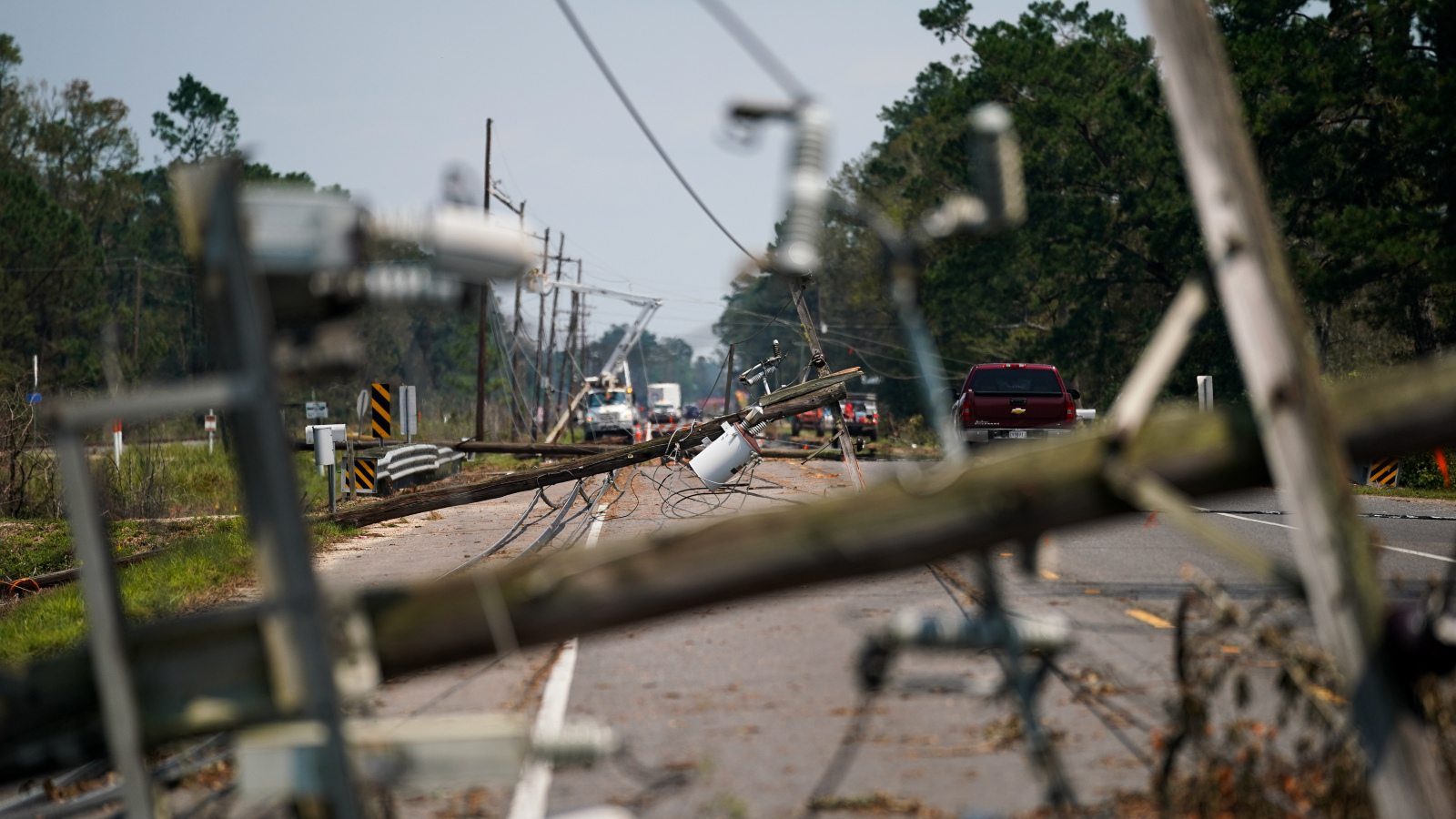
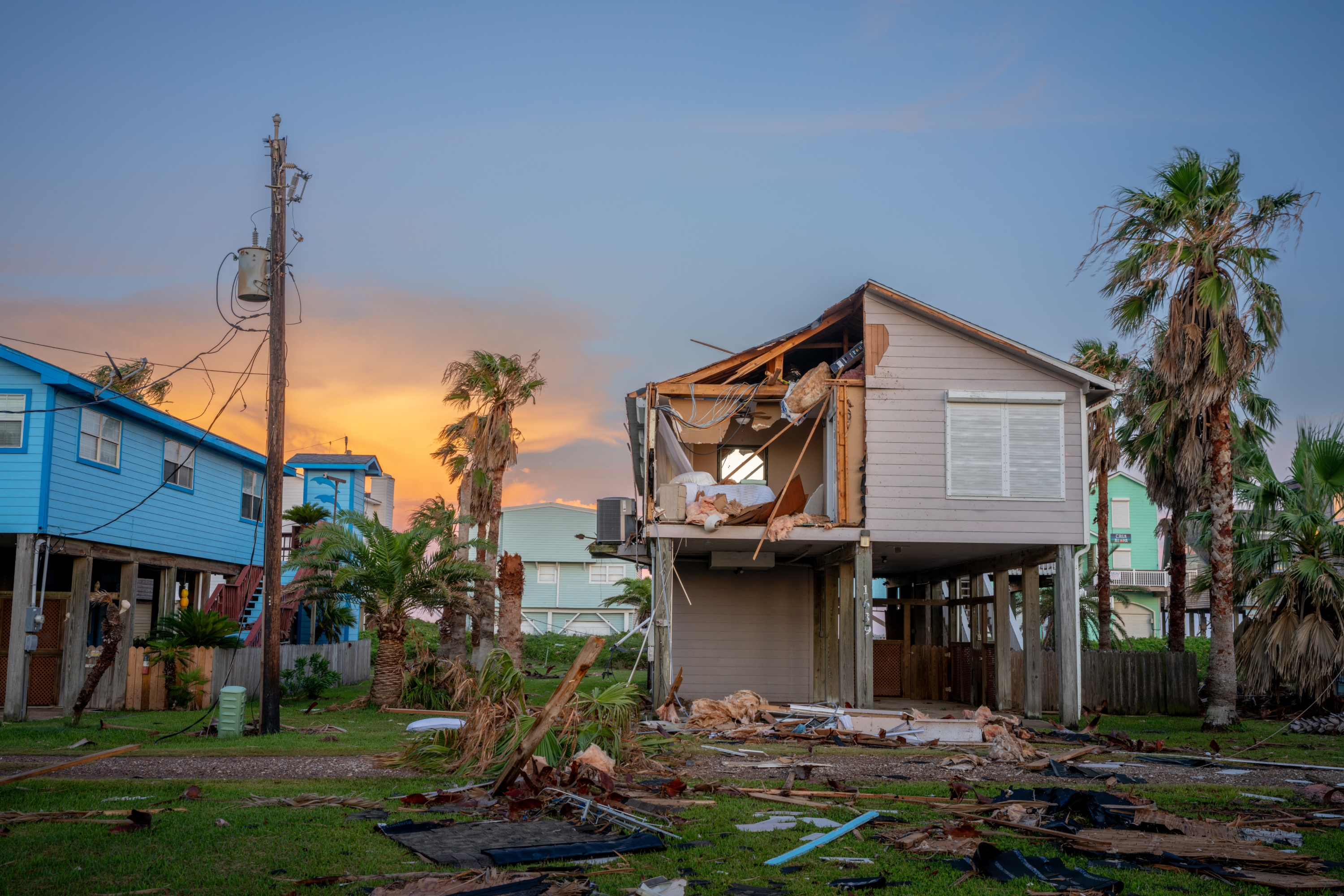
Meanwhile, the cost of insurance for the typical homeowner jumped by 24 percent between 2021 and 2024, according to the report, based on previous research by the Consumer Federation of America. Greenhouse gas emissions, primarily those associated with fossil fuels, are heating the global climate, shifting weather patterns and leading to more extreme disasters such as hurricanes and wildfires. That risk is moving insurance companies to raise rates.

Insurance companies have provided fewer and more expensive options in communities of color compared with white communities, the report said. It highlighted a $17.5 million settlement from the 1990s over a lawsuit alleging the insurance company Nationwide discouraged agents from selling coverage in Black neighborhoods, labeled Black ZIP codes as undesirable and used racial profiling to deny insurance to Black homeowners. American Family Mutual Insurance Company similarly agreed to pay more than $16 million in a settlement to Black homeowners who were provided inferior policies and, in some cases, denied coverage based on race.

More recently insurers have adopted new proprietary methods for determining premiums and claims payments, including some incorporating artificial intelligence, that raise concerns about possible discrimination, according to the report. For instance, previous research by the Consumer Federation of America found that homeowners with lower credit scores pay an average penalty of $1,996 annually, or 99 percent more, for insurance, a concern considering longstanding structural factors that have meant communities of color tend to have lower credit scores.

“I’m not saying that they have some secret race factor that they put into their model,” Cornelissen said. “A lot of this bias can kind of creep in if they’re not paying attention to potential unequal impacts. A lot of this could be through AI models or other factors that have a disproportionate impact on Black and Hispanic communities.”

Friedlander said the best way to make insurance more affordable and equitable is by reducing risk through resilience efforts such as strengthening building codes and increasing mitigation funding. 

The report called on states to enforce fair housing laws and demand more transparency and accountability.

“Unless the insurance industry wants to give us more information about why this is happening,” Birss said, “it’s pretty hard not to interpret this as pretty serious racial discrimination.”


Beloved Grandmother Brutally Killed by Ex-Boyfriend Before Deadly Police Showdown

0
beloved-grandmother-brutally-killed-by-ex-boyfriend-before-deadly-police-showdown
Beloved Grandmother Brutally Killed by Ex-Boyfriend Before Deadly Police Showdown


A beloved Long Island grandmother who was found dead inside her home last week was stabbed to death by her ex-boyfriend, who was later killed by police in Massachusetts, authorities said.

Rachel Frislid, 62, was found dead by a family member inside her Sayville, New York, home around 8:30 p.m. last Thursday.

Police say her ex-boyfriend, Brandon Hampson, 55, was responsible for the killing.

Hampson fled New York after the attack and was eventually tracked to Massachusetts.

On Wednesday night, Suffolk County police, along with Massachusetts state and local officers, located Hampson outside the French King Restaurant and Motel in Erving.

Authorities said he was outside smoking cigarettes when officers ordered him to surrender.

Instead, Worcester County District Attorney Joseph D. Early Jr. said Hampson pulled a knife from his clothing and charged toward officers.

Police repeatedly ordered him to stay on the ground and stop moving forward, but authorities said he refused.

“He got up with the knife and continued to go towards the officers where he was shot several times,” Early said.

Hampson was pronounced dead following the confrontation.

Massachusetts State Police Superintendent Geoff Noble described him as a “very dangerous individual” whose presence in the area posed a serious threat to the public.

Noble said Hampson was armed with a deadly weapon, ignored police commands and left officers with a split-second decision to use deadly force to protect themselves and others.

The deadly confrontation ended a manhunt that began after Frislid’s body was discovered on Long Island.

Frislid was a grandmother, longtime business owner and was reportedly preparing for retirement when she was killed.

Friends and members of the Sayville community remembered her as an incredibly kind woman devoted to her family.

“A heart of gold. Nicest woman you could have ever met. I don’t understand it,” Eileen Tyznar, president emeritus of the Sayville Chamber of Commerce, previously said.

Tyznar said Frislid frequently talked about her son, daughter and the rest of her family.

Frislid had taken over the family business, Academy Tent Rentals of Bohemia, after her husband died several years ago.

She had reportedly been planning to retire soon and move to Tennessee so she could live closer to her daughter and grandchild.

Those plans ended tragically when she was killed inside her home.

Peter Woram, who knew Frislid through a neighboring workplace, said news of her death left him heartbroken.

The investigation into Frislid’s killing and the fatal police shooting of Hampson remains ongoing.

President Trump Rejects Saudi Call for US Strikes on Houthis as Red Sea Tensions Escalate

0
president-trump-rejects-saudi-call-for-us-strikes-on-houthis-as-red-sea-tensions-escalate
President Trump Rejects Saudi Call for US Strikes on Houthis as Red Sea Tensions Escalate


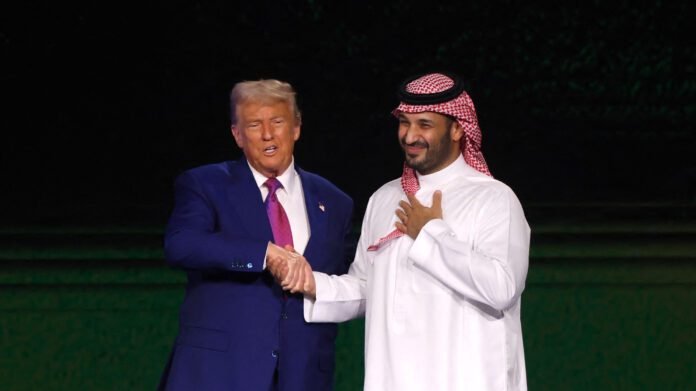
US President Donald Trump declined an appeal by Saudi Crown Prince Mohammed bin Salman for American military strikes on Yemen’s Iran-backed Houthi movement, according to reports published Friday.

Axios, citing two US officials, said Mohammed bin Salman spoke to President Trump twice on Thursday as Houthi forces pushed along Yemen’s Red Sea coast. The Saudi leader reportedly sought US intervention as the group moved nearer to the Bab el Mandeb Strait, the narrow waterway linking the Red Sea and the Gulf of Aden.

The passage is a major route for international shipping and Saudi oil exports. Concern over its security has increased after the Houthis captured the strategic coastal city of Mokha.

Despite the decision not to directly strike Yemen, the United States is increasing its support for Saudi Arabia. More than 100 US military advisers are in the kingdom, providing intelligence and target-selection assistance to Saudi operations, CNN reported, with one official putting the overall US deployment connected to the effort at roughly 200 personnel.

The support does not include US participation in airstrikes, refueling for Saudi warplanes or other direct operational roles, according to CNN. US personnel are instead helping Saudi forces use real-time battlefield and geospatial intelligence.

Admiral Brad Cooper, head of US Central Command, travelled to Saudi Arabia on Thursday for urgent coordination talks.

A senior US administration official said Washington’s priority is protecting freedom of navigation in the Red Sea while leaving the wider confrontation to regional partners. “The United States is focused on protecting our core national security interests,” the official said.

MEPs seek binding EU rules on workplace stress, burnout and harassment

0
meps-seek-binding-eu-rules-on-workplace-stress,-burnout-and-harassment
MEPs seek binding EU rules on workplace stress, burnout and harassment


The European Parliament’s Committee on Employment and Social Affairs has called on the European Commission to draft legislation establishing minimum EU requirements to prevent, eliminate or reduce work-related psychosocial risks and stress.

MEPs agreed on a series of recommendations covering risks that can contribute to workplace stress, burnout and mental and physical disorders. The proposed legislation should be preceded by an impact assessment, including a review of existing EU legislation.

The International Labour Organisation estimates that more than 840,000 people die each year from health conditions linked to psychosocial risks. Such risks can also contribute to occupational diseases.

MEPs are seeking binding obligations for employers to protect workers’ mental and physical health and provide safe and dignified working conditions. They also want the European Commission and EU member states to explicitly recognize that work-related psychosocial risks can give rise to occupational diseases.

The request for a legislative initiative was adopted by 41 votes to 12, with four abstentions.

Focus on violence, harassment and workplace monitoring

The recommendations call on employers to establish policies defining and prohibiting violence, harassment, bullying and discriminatory behavior that undermines workers’ dignity or physical and mental health.

MEPs also want early-detection mechanisms and risk-based prevention protocols addressing violence by third parties, as well as timely support for workers exposed to psychosocial risks.

Employers should conduct regular psychosocial risk assessments covering factors such as excessive workloads and high work intensity, followed by action plans containing concrete measures.

Significant restructuring or reorganization, including changes involving teleworking, automated decision-making or automated monitoring systems, should undergo a prior psychosocial risk assessment in cooperation with workers and their representatives.

MEPs further say algorithmic systems should not impose excessive workloads or monitoring on employees and that human oversight must always be maintained. They also reiterated workers’ right to disconnect from work.

Support for returning to work

Workers who have been absent because of work-related psychosocial risks should have the right to a supported and sustainable return to employment, according to the recommendations.

Employers should establish individual return-to-work plans covering possible adjustments to working hours, work organization, duties and workloads.

The recommendations also state that when a worker establishes that an injury or damage to health resulted from exposure to work-related psychosocial risk factors, it should be presumed to be work-related unless the employer demonstrates that it was not linked to working conditions.

Rapporteur Estelle Ceulemans, a Belgian Socialists and Democrats lawmaker, said the report represented a step toward addressing burnout, depression, stress and harassment, which she said were becoming more prevalent across Europe and were being exacerbated by digital technologies and artificial intelligence in the workplace.

Ceulemans said tackling these structural problems was both an occupational health obligation and an economic issue, citing an estimated annual cost of €100 billion for work-related depression in the EU.

Next steps

The European Parliament is expected to vote on the legislative initiative during its October 2026 plenary session.

If approved, the European Commission would have three months to respond, either outlining the steps it plans to take or explaining why it would not propose legislation along the lines requested by Parliament.

Indonesia must not become a platform for Israeli business

0
indonesia-must-not-become-a-platform-for-israeli-business
Indonesia must not become a platform for Israeli business

Israeli companies are increasingly operating in Indonesia. They are using Indonesian locations, Indonesian creative talent and Indonesian commercial networks to promote their businesses in a country that does not recognise Israel and has stood with Palestine for decades. This growing commercial presence deserves far more scrutiny than it has received.

SwiftOptics provides a clear example. The Israeli eyewear company describes itself as an “extreme eyewear” brand and has produced promotional content in Indonesia, including a video filmed in Nias with Indonesian creator @frank_videography. Its vice president, Yehonatan Dadon, has also posted photographs and videos from Nias, Lombok and Bali.

This is not simply about an eyewear advertisement. It is about the increasingly visible presence of Israeli business in Indonesia and the gap between that reality and Indonesia’s longstanding policy towards Israel.

Indonesia has refused to establish diplomatic relations with Israel and has consistently supported Palestinian statehood and Palestinian rights. It has opposed occupation and colonialism and maintained its support for the Palestinian struggle despite decades of international pressure to normalise relations with Israel.

That position should not be undermined by commercial activity taking place largely outside public attention.

The issue is particularly urgent as Palestinians continue to endure the devastating consequences of Israel’s genocide in Gaza. Thousands of Palestinian civilians have been killed, millions have faced displacement and civilian infrastructure has been destroyed on a massive scale. In that context, the increasing operation of Israeli companies in Indonesia cannot simply be dismissed as ordinary business.

Indonesia’s immigration system already demonstrates how porous its restrictions can be. Because Indonesia does not recognise Israel, Israeli citizens cannot use the ordinary visa arrangements available to many other nationalities. They must instead apply for a “calling visa”, a more restrictive process intended for nationalities Indonesia considers security risks.

Yet Indonesian immigration authorities have acknowledged that Israel ranked fourth among nationalities receiving the calling visa, behind Nigeria, Somalia and Afghanistan. Of 470 applications during one recent period, only 22 were rejected. Approximately 95 per cent were approved.

There is another route around the system. Israeli citizens who hold passports from countries such as Portugal, Germany or Greece can enter Indonesia using those passports, meaning their Israeli nationality may not necessarily appear in Indonesian immigration records.

There was a case involving two people with reported past ties to the Israeli military who were operating a luxury villa business in Bali using European passports. Their Israeli background reportedly did not appear in Indonesian records. The case illustrates a wider problem: Indonesia’s restrictions can be weakened when nationality and commercial activity are separated across different documents and corporate arrangements.

The increasing presence of Israeli companies raises the same concern from another direction. Even when Israeli commercial activity does not involve formal diplomatic recognition, it can still create the practical conditions of normalisation.

A company enters the market. It hires local talent. It films in Indonesian locations. It builds commercial relationships. Its products appear in Indonesian media and social-media feeds. Over time, Israeli business becomes familiar and ordinary.

That is how normalisation happens.

Israel’s international presence is not built through diplomacy alone. Consumer brands, tourism, technology, culture, sport and lifestyle marketing all contribute to an image of Israel as an ordinary, globally integrated country. The political reality of occupation and Palestinian dispossession can then be pushed into the background.

Indonesia should not help build that image.

The government should urgently examine the scale of Israeli commercial activity in Indonesia, including advertising, business partnerships, investment and other commercial operations. It should determine whether existing restrictions are being circumvented through foreign passports, corporate structures, local partnerships or other arrangements. Indonesian authorities should also make the relevant information available to the public.

The issue is not whether every Israeli company operating in Indonesia has violated Indonesian law. The issue is whether Indonesia is allowing a broader process of commercial normalisation to develop without examining what it means for the country’s foreign policy.

If Indonesia rejects normalisation with Israel because of its commitment to Palestinian rights, that position cannot end at diplomatic relations. It must also be reflected in how Indonesia approaches Israeli commercial activity.

Indonesians deserve to know which foreign companies are operating in their country, where those companies come from and how they are using Indonesian territory and resources to expand their businesses. An Israeli company using Nias, Bali or Lombok as a commercial asset is not merely participating in an economic market. It is also benefiting from Indonesia’s natural and cultural capital.

Indonesia has no shortage of local companies, creators or international commercial opportunities. It does not need Israeli businesses to develop its tourism industry, promote its beaches or give its creative sector global exposure.

What Indonesia does have is a clear political position on Palestine.

That position should carry weight.

As Israeli companies increasingly operate in Indonesia, Jakarta must ensure that its foreign policy is not quietly hollowed out by commercial normalisation. Supporting Palestine cannot mean one thing in international statements and another thing in the marketplace.

Indonesia should not become a platform for Israeli business to establish itself as ordinary, acceptable and permanent while Palestinians continue to pay the price of genocide.

Indonesia has stood with Palestine for decades. Its commercial policies should stand there too.

The views expressed in this article belong to the author and do not necessarily reflect the editorial policy of Middle East Monitor.

0FansLike
0FollowersFollow
0FollowersFollow
0SubscribersSubscribe
- Advertisement -
Google search engine

Recent Posts