Two Israel Defense Forces soldiers (IDF) were moderately wounded, and 10 others sustained light injuries after a Hezbollah drone struck a military vehicle in the community of Shlomi in the Western Galilee, the IDF spokesperson reported.
The drone, launched from Lebanon, hit a military cargo carrier that later caught fire. Several artillery shells in the area detonated following the impact. The vehicle involved was an M548, known in the IDF as the Alfa, which is used to transport artillery shells. The military is examining whether the drone was guided by a fiber optic cable.
Separately, the IDF said it launched interceptors toward suspicious aerial targets identified in southern Lebanon in areas where forces are operating. According to the IDF spokesperson, the Air Force responded to three separate incidents and successfully intercepted most of the targets. In all cases, the targets did not cross into Israeli territory and no sirens were activated.
IDF Arabic-language spokesman Lt. Col. Avichay Adraee issued an evacuation warning for villages in southern Lebanon, instructing residents to move at least one kilometer away from those areas.
On Wednesday, IDF Chief of Staff Eyal Zamir said during a visit to southern Lebanon that the military had fulfilled objectives set by Israel’s political leadership, including preventing direct fire on northern communities, while directing forces to continue operations.
“The mission assigned by the political leadership to prevent direct fire on the communities – has been achieved,” Zamir said. “Everything the political leadership defined for us regarding the current campaign in Iran and Lebanon we achieved and even beyond. And with this we created the operational conditions for the processes now being led by the political leadership.”
He added, “On the combat front there is no ceasefire – you continue to fight and remove direct and indirect threats from the communities of the north.”
Microsoft open-sources “the earliest DOS source code discovered to date”
Several times in the last couple of decades, Microsoft has released source code for the original MS-DOS operating system that kicked off its decades-long dominance of consumer PCs. This week, the company has reached further back than ever, releasing “the earliest DOS source code discovered to date” along with other documentation and notes from its developer.
Today’s source release is so old that it predates the MS-DOS branding, and it includes “sources to the 86-DOS 1.00 kernel, several development snapshots of the PC-DOS 1.00 kernel, and some well-known utilities such as CHKDSK,” write Microsoft’s Stacey Haffner and Scott Hanselman in their co-authored post about the release.
To understand the context, here’s a very brief history of what would become MS-DOS: Programmer Tim Paterson originally created 86-DOS (previously known as QDOS, for “quick and dirty operating system”) for an Intel 8086-based computer kit sold by Seattle Computer Products. Microsoft, on the hook to provide an operating system for the still-in-development IBM PC 5150, licensed 86-DOS and hired Paterson to continue developing it, later buying the rights to 86-DOS outright. Microsoft then licensed this operating system to IBM as PC-DOS while retaining the ability to sell the operating system to other companies. The version sold by Microsoft was called MS-DOS, and the proliferation of third-party IBM PC clones over the ’80s and ’90s made it the version of the operating system that most people ended up using.
This source code is old enough that it hadn’t been stored digitally. “A dedicated team of historians and preservationists led by Yufeng Gao and Rich Cini,” calling itself the “DOS Disassembly Group,” painstakingly transcribed and scanned in code from paper printouts provided by Paterson. This process was made even more difficult because modern OCR software struggled with the quality of the decades-old printout.
For students of early PC history, this isn’t even the first piece of 86-DOS history that has been newly rediscovered this decade. Just two years ago, the earliest known version of 86-DOS was rediscovered and uploaded to the Internet Archive.
ICE Watchers Worry Democrats Are Trying to Co-Opt Their Movements For Votes
A seventeen-second video shows a dark-haired man rapping his pale knuckles gently below the tinted windows of a silver minivan. He stands back, shoving his hands into the pockets of his puffer coat, his boyish face twisted into a severe expression. The car drives off, and the camera pans to follow it down the suburban Minneapolis road. No words are spoken.
Splashed across the screen, a bright red and white caption reads, “ICE was circling a local elementary school. I knocked on their door to have a conversation, but they ran away instead.”
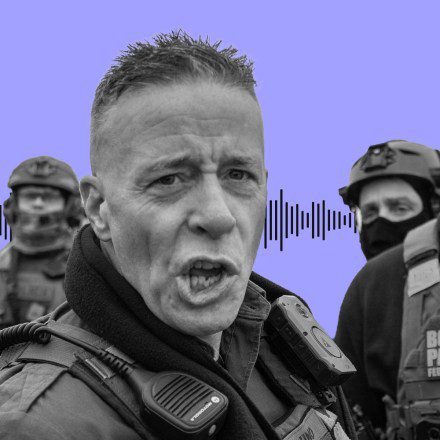
The man is Matt Little, 41, a former mayor and state senator from nearby Lakeville seen as the front-runner to replace outgoing Democratic Rep. Angie Craig in Minnesota’s 2nd Congressional district.
He’s staking much of his campaign on one of the most politically salient issues in the Twin Cities. In a series of videos pinned to his campaign Instagram under the name “GET ICE OUT,” Little documents himself at protests and in encounters with immigration enforcement agents. “When I’m elected to congress,” wrote Little in a January post, “we will hold ICE accountable.”
Not everyone in his district is buying it.
“For me, it smells like, ‘I’m going to try to use this to bolster my chances in a time of crisis,’” Paul Peterson, a local ICE rapid responder, told The Intercept. “Never let a good crisis go to waste, right?”
In his mostly suburban Minneapolis district, Little’s top political issue is at once highly motivating and highly fraught. As 3,000 federal agents descended on Minnesota for “Operation Metro Surge,” killing Alex Pretti and Renee Good and wounding or abducting scores more, Minnesotans who had not so much as lifted a protest sign a year ago joined ICE rapid response networks. Given the gravity of agents’ often unpredictable violence, many saw their work as putting their lives on the line.
Democratic politicians are eager to turn engaged protesters and observers into door-knockers and voters. Nationwide examples point to a proof of concept: Newark, New Jersey, Mayor Ras Baraka’s approval ratings skyrocketed after he was arrested for trespassing while monitoring an immigration detention facility. Brad Lander, then a New York City mayoral candidate who is now running for Congress, saw his star rise after his arrest outside of a Manhattan immigration court. Illinois congressional candidate Kat Abughazaleh finished second in a crowded primary after generating high-profile headlines for her federal indictment over a protest outside an ICE processing center near Chicago. (Baraka’s charges were dropped days after his arrest, and on Wednesday, federal prosecutors said they planned to dismiss felony charges against Abughazaleh. Lander rejected a deal to drop his charges last year and said he’d prefer to go to trial.)
“That was kind of personal for me because my wife is an immigrant.”
In the area around Minneapolis, the surge was “surreal,” Little told The Intercept in a joint interview with his wife, Coco. “It was kind of all-encompassing there for many months. We knew we had to be out there. That was kind of personal for me because my wife is an immigrant.”
The Intercept spoke with nearly a dozen people involved in ICE rapid response networks in and around the Minneapolis suburbs, including in leadership positions, several of whom felt that Little was “cosplaying” as an observer and overstating his activism for political clout. Others speculated that the outrage was manufactured to ruin his chances at the nomination.
There’s an inherent tension between enraged protesters who take matters into their own hands, outside of official political channels, and politicians who want to harness their rage into electoral energy. It raises the question of who gets to wear the mantle of resistance and blurs the line between when politicians are supportive — and when they’re extractive.
“There are many different legitimate ways for politicians to amplify our movements, like resistance to ICE,” said Justin Hansford, executive director of the Thurgood Marshall Civil Rights Center at Howard Law School, “but how they do it is of the utmost importance.”
In the suburbs of Minneapolis, the question of “how” would eventually tear a small community in half.
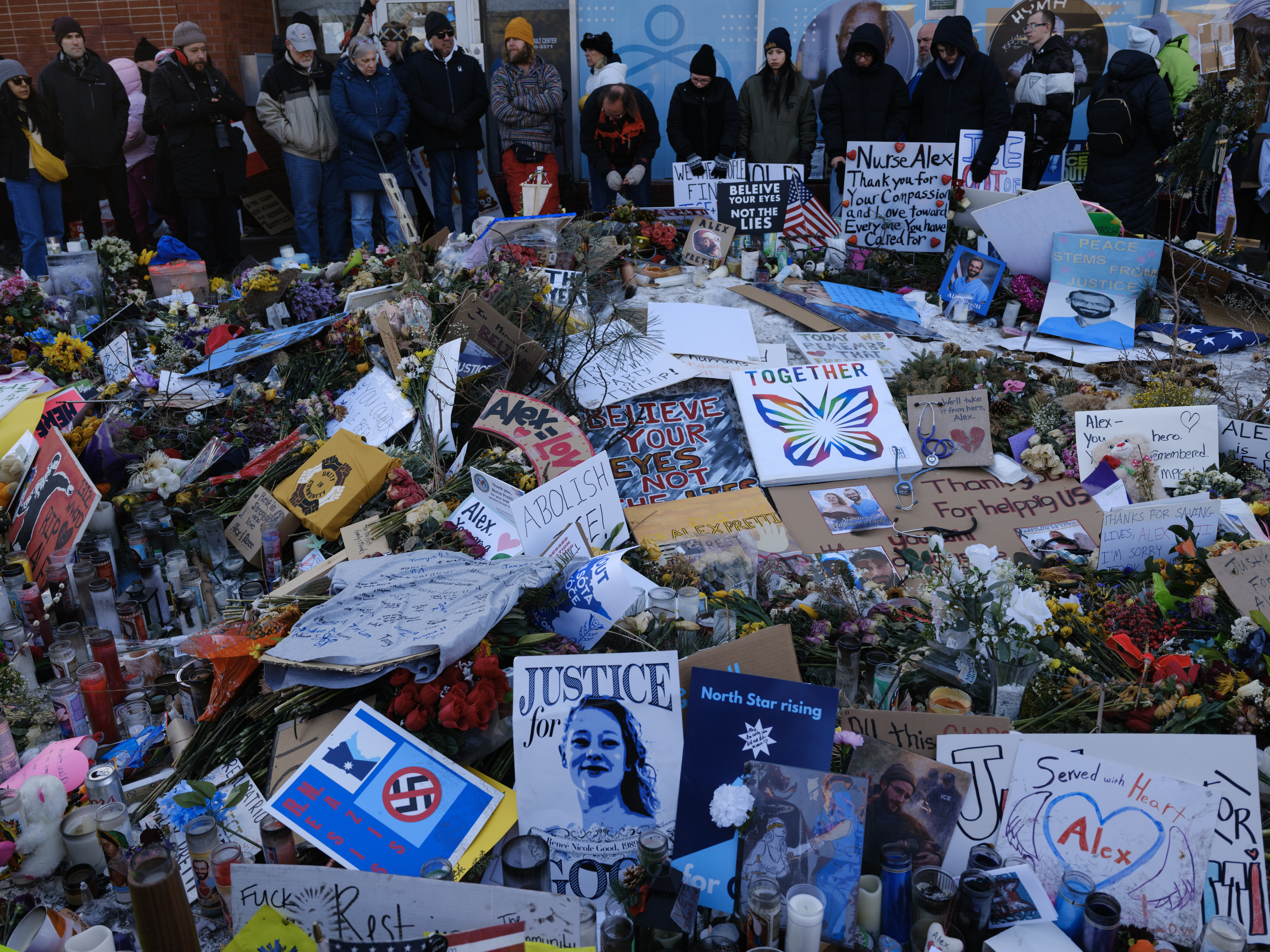
The street memorial site where Alex Pretti was shot and killed by two federal agents, seen on Jan. 31, 2026, on Nicollet Avenue in Minneapolis.Photo: Andrew Lichtenstein/Corbis via Getty Images
Jessica Vinar carries with her the hallmarks of progressive Minnesota politics. She’s a teacher, wearing a school lanyard adorned with pride pins, political buttons, and a small 3D-printed whistle, the preferred ICE-alerting tool seen on residents’ keychains and in small bowls at cafe entrances across the city.
In a bustling coffee shop in the heart of Minneapolis’s South Side, Vinar recounted the events of February 17, when she joined a group watching the roads for blacked-out SUVs in the once-sleepy Minneapolis suburb of Savage. An online ICE-monitoring website had reported multiple federal agents armed with weapons and clad in tactical gear.
Vinar learned that one of her companions was congressional candidate Matt Little, and the others were journalists from the New York Times. Dashcam videos from the scene shared with The Intercept show Little standing with two other people next to a dark gray car that appears to be his, and one white SUV, which he identifies as ICE’s. “There’s two more down that way,” Vinar tells Little in the video. He responds: “All right, will you hang out here with us for a little bit?”
There’s a six-minute gap in the dashcam video, when Vinar’s car is off and she’s standing outside. Vinar said she watched as the journalists photographed Little interacting with ICE agents and standing outside of a home. Then, “I hear him say something like, ‘I’m gonna see if they’ll chase me,’” Vinar recalled. “And they all pile into his vehicle, and they drive off.”
The day’s events received coverage in the New York Times and The Intercept, and Little confirmed this version of the events. But Vinar and Little disagree on what happened next.
In Vinar’s telling, she was left standing outside, alone, with an ICE vehicle behind her. When she gets back in her car and turns the camera back on, Little’s gray SUV is gone, and three other cars she identified as ICE’s are present. Masked people who appear to be federal agents drive past Vinar in the white SUV, waving and recording her. Then Little returns, following the white ICE vehicle as it drives past Vinar’s car a second time. The whole thing is over in a matter of minutes.
Little, who said he has not seen the dashcam video himself, told The Intercept that he thought the only ICE vehicle in the area had pulled out to follow him when he left, so he didn’t believe he’d left Vinar with the agents by herself. Vinar claims he did know and notes that, as captured in her video, she told him. Little told The Intercept that he believed that the additional vehicles she’d mentioned had left.
Several rapid responders in the area told The Intercept they have a strict protocol to never leave another observer alone with ICE, though one said people do get left alone from time to time. (Several activists spoke to The Intercept on the condition of anonymity for fear of retaliation from federal officials.)
Peterson, who patrols for rapid response throughout the wider region and was in the chat, said he “isn’t politically involved,” and did not know who Little was ahead of the incident. “I don’t care about the theatrics of it,” he said, “[but] he put one of my people at risk, and that’s not OK.”
The incident blew up across an intricate network of Signal chats, the local rapid response groups’ digital, decentralized town square. Was Little “trying to be helpful,” one chat member posed to The Intercept, or, as some suspected, “was Matt just staging a photo op?”
In a message reviewed by The Intercept, one person accused Vinar of changing her story after realizing it was Little. In Vinar’s initial message, she said that ICE agents had followed Little and circled back to harass her; she then clarified that Little had left the scene with agents still present. Another observer wrote that Little was claiming Vinar’s story was “typical last-minute misinformation.”
Little told The Intercept he “can only speak from” his own experience, but he and his wife are framing the activists’ anger as a manufactured political play. Vinar caucused for his opponent, state Rep. Kaela Berg, at a convention following the incident, Little added in a written statement after his interview. Pointing to his wife, he wrote, “Coco believed and still believes this is being spread as a political attack.”
Coco also reached out to Savage resident Mark Kloempken and his wife, whose home was at the center of the February 17 incident. Kloempken said he was enjoying the day’s mild weather, unconcerned about the ICE agent parked by his driveway.
“I’m waving to them and saying ‘hi,’” he said. “They seem friendly. They’re not a big deal.” Kloempken left to get some lunch, playing “Ice, Ice, baby,” as he drove off.
“[She] hates that I did that,” he said, indicating his wife, who asked to remain anonymous when they spoke to The Intercept over Zoom from their Savage home.
The couple had met Little a week prior to the incident. They said the politician was handing out whistles in their neighborhood when he offered to take Kloempken’s wife along with him to an immigration raid on a nearby apartment building.
“I’m old,” she told The Intercept — meaning, she’s not in any of the Signal groups. But she believes that Little was not being performative. “The day I went on that impromptu ride with him, there were no pictures, no photos taken of anything,” she said, adding, “he had me film what was going on so that he could drive.”
She said Little instructed her not to go out alone. “You always have to have two people,” she recalled him saying.
At what point do politicians’ shows of solidarity become performative, or even counterproductive? It’s a question that has troubled Hansford of Howard Law for years.
Hansford, 45, got his start in activism in earnest in Ferguson, Missouri, shortly after police officer Darren Wilson shot an unarmed Black teenager, Michael Brown, igniting a firestorm of activism across the country. Over the years, Hansford has worked closely with politicians and movement organizers on shaping policy and finding common ground.
“If you look up ‘extractive’ in the dictionary, it will be a picture of Nancy Pelosi with kente cloth on.”
Those relationships can end up being exploitative, said Hansford, pointing to the aftermath of the protests against police brutality after the killings of George Floyd and Breonna Taylor. In 2020, after Democrats harnessed the energy of Black Lives Matter and other mass mobilization efforts to win a trifecta in the White House, the Senate, and the House, they failed to pass any of the signature legislation that movement leaders were calling for, instead favoring stunts like an infamous photo of Democratic leadership kneeling in red and green Ghanaian kente stoles.
“If you look up ‘extractive’ in the dictionary, it will be a picture of Nancy Pelosi with kente cloth on,” said Hansford.
Still, “it’s smart for [Democratic] candidates to tap into the energy around ICE,” said Nina Smith, a political communications strategist and former senior adviser to Stacy Abrams. “Their constituents are being harmed and impacted by this financially, mentally, and at times physically. So they have to talk about this issue.”
In Minnesota, activists did point to examples of politicians who were quietly protecting the community without looking for a political moment. Many cited Aurin Chowdhury, a 29-year-old Minneapolis City Council member who speaks with the exasperation of someone who is as tired of the political establishment as she is committed to challenging it. By the time the federal occupation had ended, Chowdhury had been tear-gassed several times and became a mainstay in anti-ICE activities throughout the city.
“When you have masked men and guns occupying your city by the thousands, killing people, taking children, separating them from their families, terrorizing pregnant women — that reality becomes right in front of your face,” Chowdhury said. “It felt impossible to just sit at my computer and answer emails, or try to hold, like, a constituent meeting.”
Tucked away in a quiet corner of city hall, Chowdhury seems aware of how easily popular movements can be used for individual political gains.
“Just listen to what people are saying.”
“I worry that that’s something that can happen when the struggle of people is co-opted by high-level Democratic leaders who are seen as elites and are only willing to take incremental steps versus, like, actually addressing the heart of the issue,” she said. She urged Democratic party leadership to worry less about questions like “What is the message? And how do we get the American people on our side?”
“Maybe it’s just listen to what people are saying,” Chowdhury said, “and be bold and take risks.”
Anti-ICE demonstrators seen in Minneapolis on Jan. 31, 2026. Photo: Madison Thorn/Anadolu via Getty Images
Matt Little is polite. He says “whoa” with a Midwesterner’s elongated O-sound, revealing more surprise than irritation when met with a new accusation.
He has spent most of his adult life on the political scene. He was elected to serve on the Lakeville City Council in 2010, when he was 25 years old. Two years later, while in law school, he became the youngest mayor in Lakeville’s history, defeating heavy outside spending from the Koch brothers’ super PAC Americans for Prosperity with a large war chest largely from labor unions. After one term as mayor, he was elected to the state Senate as a member of the Democratic–Farmer–Labor Party representing Lakeville, Farmington, and southern Dakota County, where he also served one term before he was unseated by Republican Zach Duckworth.
As a congressional candidate, Little has positioned himself as a standard-fare progressive, focusing his campaign on largely local issues like affordability and “getting ICE out of Minnesota.” His website boasts a section on an “Anti-ICE Bill of Rights,” which calls for a series of reforms, including banning federal agents from wearing masks and cutting ICE funding to pre-Trump levels. Little has not joined calls from other progressive candidates to “Abolish ICE” — instead calling to “replace” the agency with a different federal immigration agency.
Not unlike in his mayoral campaign over a decade prior, Little received endorsements from several labor unions, including the Minnesota Postal Workers Union and National Nurses United.
Little says that he’s “only posted a small margin” of the work he’s done on ICE and seemed confused by accusations that he was chasing clout. He sent The Intercept a list of roughly a dozen instances over the last six months where he claims he responded to ICE activity — some of which were documented on his social media.
“When you are in a leadership position in the community, and you have a platform to highlight the awful things that ICE is doing. You should use it,” he told The Intercept.
In addition to his political work, Matt Little is a practicing attorney with a personal injury firm called Little Law. In 2021, he represented Kami Sanders, then on the local school council, in a case where she accused a school board member of campaign finance violations. In February, she called him to ream him out.
“It would be super helpful if you would get your ass out here and actually help us,” she recalls telling Little over the phone, adding, “and leave your camera crews at home!”
Sanders is one of the older activists in the network of rapid responders. She has salt-and-pepper hair, vibrant and commanding eyes, and a face worn with decades of political work. She didn’t grow up in Minnesota, and instead carries a prominent East Texas accent and a homegrown personality to match. She answers questions by telling long, profanity-laced stories that crescendo into fiery one-liners like, “You can go fuck yourself until the cows come home.”
In the southern suburbs, four Minnesota state senators established one of the first rapid-response networks in the area and later designated themselves as the sole administrators of the group’s Signal thread — an unusual format for Minnesota anti-ICE resistance. According to Sanders, who administers the Dakota County Signal group, which includes Lakeville, while many elected officials were valuable participants in rapid response activities, power imbalances among some leaders and residents quickly created a rift within the network.
“They would only dispatch in the areas that they were elected,” said Sanders. “That feels political to me.”
Still, she credits them for showing up and for not publicizing their involvement for political gain. Sanders said she cannot say the same for Little.
“There are other politicians in this who actually have been boots on the ground and are not using it. I mean, one of his opponents has been boots on the ground, and you never hear her talk about it,” said Sanders, referring to Berg.
The fact that the congressional candidate received coverage in the country’s premier mainstream newspaper appears to have further riled some of the activists. “When the New York Times article came out,” said Peterson, “everybody was kind of like, wait, do you guys see him around here? Because I sure haven’t.”
Peterson, a former military member, police officer, and longtime Republican from Kentucky, espoused a persistent suspicion of American politics. He said the occupation of the Twin Cities prompted a shift in his political beliefs — just not the sort that you can vote for. His deep skepticism of politicians extends to Little, whom he accused of “grifting” off the movement.
By March, Little’s campaign was in crisis management mode. At a meet-and-greet at a crowded local restaurant, dodging plates of chicken fingers and quesadillas, Little admitted that he had “some apologies to make.”
“I got incredibly defensive,” Little said, his hands hovering by his heart as he spoke, “and I thought it was just a political attack. It became very clear to me from conversations today and yesterday that there was no political motivation.”
Supporting Vinar’s version of the story, he added, “It also became very clear to me that ICE was still in the neighborhood. And had I communicated better with observers that were there, I would have known that.”
A month later, however, Little is adamant that he led “the only remaining ICE vehicle away” from the house that day.
“If [Vinar] is saying that ICE drove by that house again after I left, then yes, I believe her and have told her that directly and multiple times,” he wrote in a statement to The Intercept on Monday. “But when I left, there were no ICE vehicles remaining.” He added that he was frustrated Vinar had not released her videos from the scene.
“If this isn’t about politics, then just release the full dash cam video so everyone can see what actually happened,” Little wrote.
“It is campaign season,” his wife said in the couple’s joint interview. Coco, who is active in the rapid response Signal chats and has been heavily involved in her husband’s campaign, said that Vinar “probably was very concerned on that day because of what happened, but I think some are definitely using it for political gain.”
“I hate to see her being used this way,” Coco added.
Vinar said she was originally hesitant to speak out for fear of dividing the movement. But she couldn’t stomach the idea of the months of fear and work she and her friends had done in the district to be co-opted.
“It feels like he’s using residents here as props,” she said. “And that doesn’t speak well to anyone, but it really doesn’t speak well to someone who is promising to represent us in our government.”
Correction: April 29, 2026, 6:23 p.m. ET This story has been updated to clarify which of Little’s confrontations with ICE on February 17 received media coverage.
Every Tuesday, almost like clockwork, the U.S. Department of Education would update a public list of schools and colleges it was investigating for possible violations of students’ civil rights.
Every Tuesday, that is, until Jan. 14, 2025, six days before President Donald Trump was inaugurated for his second term. Today, that online list remains as it was that week before inauguration: frozen in time.
My colleagues Jodi Cohen and Jennifer Smith Richards, both longtime education reporters, used that list regularly in their work. “You would get a call or a tip about a school district, and you would go and look up the school district to see if it was under investigation,” Cohen told me recently.
The data also allowed the public to spot patterns in what types of investigations were being opened and where, Smith Richards said.
For decades, the Office for Civil Rights has worked to uphold students’ constitutional rights against discrimination based on disability, race, national origin and gender. Now, without a publicly accessible way to track the office’s investigations, journalists, education watchdogs and parents could be left in the dark.
Early last year, Cohen and Smith Richards reached out to sources inside the Department of Education. They learned the department had significantly cut back its efforts to investigate some types of discrimination in schools. They published a story about how the department, under the Trump administration, is now focused on investigations relating to curbing antisemitism, ending participation of transgender athletes in women’s sports and combating alleged discrimination against white students. Complaints about transgender students playing sports and using girls’ bathrooms at school had been fast-tracked while cases of racial harassment of Black students last year were ignored.
Throughout last year, the reporters asked the new Department of Education leadership for updates on investigations. And they filed Freedom of Information Act requests, seeking records regarding new investigations and those related to agreements with universities and school districts that detailed their plans to stay in compliance with federal anti-discrimination law. They also requested communications with specific private groups.
Although the department selectively sends press releases about some cases, the work mostly remains hidden. We have no definitive way of knowing which types of civil rights complaints it is prioritizing.
By late February 2026 — a year after we published our first story about the issue and after asking repeatedly for information — the department had failed to produce a single record. ProPublica sued.
The Education Department asked a judge this month to dismiss the case. It said in a court filing that it was still evaluating the reporters’ requests and searching for “potentially responsive” records.
Suing government agencies is not a first choice for most reporters and news organizations. It’s costly, time consuming and may not produce records for months or even years — longer than most reporters spend on a story or project.
Prying records from government agencies has been challenging for a long time, in both Democratic and Republican administrations. But we do it because these records belong to us, the public. And they’re a critical tool for the journalism we do to expose abuses of power.
One particular challenge journalists face today is that layoffs across the federal government under Trump have hit FOIA offices particularly hard. And FOIA requests appear to be going into what seems like a black hole. Regardless, we don’t intend to back down. We will continue to fight for data and information to which we believe the public is entitled, and we are fortunate to have outstanding lawyers and outside law firms ready to help us.
I asked Cohen and Smith Richards why the Department of Education data was so important. Smith Richards gave me a concrete example: The department has been terminating civil rights resolution agreements with schools and other educational institutions, but it sometimes hasn’t told the public it has done so. For example, the department had ruled in 2024 that the bullying of a Washington sixth grader was based on race and sex, and amounted to a civil rights violation. The school district then entered into an agreement with the department to protect students from sex- and race-based discrimination. But this year, the department ended the agreement. And though it did announce the change via press release, there’s no indication in its online database that the original settlement is no longer in force. In many cases, there are no press releases, either.
So how would the public even find out about situations like this, I asked. “Either a school district has raised their hand and said the federal government has terminated its resolution agreement,” Smith Richards said, “or it’s gotten whispered to somebody.”
How often has this happened? It’s almost impossible to know the full scope. “There’s not some sort of transparent process here,” Smith Richards said.
The loss of data goes beyond new investigations and resolution agreements. For example, through the department’s Civil Rights Data Collection, Cohen and Smith Richards were able to determine that a special-education district in Illinois had the highest rate of student arrests of any school in the country. Knowing this allowed them to dig deeper into what was causing the high arrest rate. They ultimately published an investigation that also found that in one school, more than half of its students were arrested during the 2017-18 academic year.
But the most recent data on the department’s website is from 2020-21, at the peak of the COVID-19 pandemic. And given that the Trump administration plans to shut down the Department of Education, it’s unclear if future data will be released.
Cohen and Smith Richards continue to seek information from the Education Department. In late March, they filed another FOIA request for what they described as “very basic information.”
The Education Department acknowledged receiving the request. Here’s roughly when it told them to expect a response: 262 BUSINESS DAYS.
ProPublica needs your help to track how the upheaval of public education is affecting schools and colleges in your community. Take a few minutes to join our source network and help guide our coverage.
Indonesia should think twice about China’s bauxite rush
Indonesia has seen this movie before. It begins with a surge of foreign capital, accelerates with a rush to build smelters and ends with an industry struggling under its own weight.
This time, the metal is not nickel – it’s bauxite. And the driving force is not just global demand – it’s China.
Chinese industrial giants are rapidly expanding their footprint in Indonesia’s aluminum value chain, drawn by a simple reality: they can no longer grow at home.
China, already the world’s largest aluminum producer, has hit domestic production limits tied to energy use and environmental controls. The solution is to move outward — toward countries with abundant resources, cheaper energy and accommodating policy environments. Indonesia fits that description nearly perfectly.
The scale of this push is striking. A flagship example is the planned US$3 billion aluminum smelter at Weda Bay, led by China’s Tsingshan Holding Group. The project alone is expected to produce up to 800,000 tons annually, with additional facilities already under construction or fast-tracked.
China’s broader industrial ecosystem — including companies like China Hongqiao Group — has been steadily embedding itself in Indonesia for years, building refineries, power plants and export infrastructure.
China’s aluminum sector is effectively exporting its constraints. Faced with caps at home, its companies are recreating capacity abroad — locking in supply chains while maintaining influence over production. Indonesia, in turn, risks becoming an offshore extension of China’s industrial policy.
At first glance, the benefits are obvious. Indonesia gains capital, infrastructure and a pathway to move up the value chain. For a country that has long exported raw minerals and materials, the promise of domestic processing and higher-value exports is compelling.
But the nickel experience offers a warning that should not be ignored. Indonesia’s aggressive push into nickel downstreaming, powered largely by Chinese investment, succeeded in transforming the country into a global powerhouse.
Yet it also led to a glut of processed nickel, contributing to falling prices and raising questions about long-term sustainability. The speed and scale of development outpaced both market absorption and regulatory oversight.
There is a real risk that bauxite will follow the same trajectory — only faster. Unlike the nickel sector, Indonesia’s bauxite downstream sector remains relatively underdeveloped. That gap is precisely what makes it attractive to Chinese investors.
But it also means that a sudden influx of large-scale projects could overwhelm the sector before it has time to mature.
Early signs of strain are already emerging. Analysts warn that if current investment plans proceed unchecked, Indonesia could deplete its bauxite reserves within a decade. At the same time, surging smelter capacity could create supply-demand mismatches, repeating the oversupply dynamics seen in nickel.
This is where the China factor matters most.
Chinese firms are not investing incrementally. They are investing at scale, with integrated ecosystems that include mining, refining, smelting and logistics. That model is efficient — but it is also difficult for host countries to regulate once it gains momentum.
Industrial parks can expand faster than policy frameworks can adapt. Environmental oversight becomes reactive rather than proactive. And national resource strategies risk being shaped by external timelines.
There is also a deeper structural concern. If Indonesia’s aluminum industry becomes too closely tied to Chinese capital and offtake agreements, it may limit Jakarta’s ability to diversify its markets and move further downstream into manufacturing.
In effect, Indonesia could capture less value than it expects, even as production volumes rise.
None of this suggests that Indonesia should reject Chinese investment, which would be neither realistic nor desirable. China remains an essential partner in global supply chains, and its companies bring expertise and speed that few others can match.
But partnership is not the same as passivity. Indonesia needs to set the terms of engagement more carefully this time. That means aligning smelter construction with resource availability, rather than allowing capacity to expand ahead of supply.
It means ensuring that downstream development extends beyond alumina into finished aluminum products, where more value is created. And it means strengthening regulatory oversight before — not after — the next wave of projects breaks ground.
Most importantly, it means recognizing that China’s urgency is not Indonesia’s. For Chinese firms, expanding abroad is a necessity driven by domestic limits.
For Indonesia, developing its bauxite sector is a choice — one that should be guided by long-term national interest, not short-term investment flows. The lesson from nickel is not that industrial policy fails. It is that success without control can create new vulnerabilities.
Indonesia still has time to get bauxite right. But only if it approaches China’s rush with clear eyes — and a firm hand on the pace.
Muhammad Zulfikar Rakhmat is director of the Jakarta-based Center of Economic and Law Studies (CELIOS) independent research institute‘s China-Indonesia Desk.
Tunisia’s Ennahda says its leader Rached Ghannouchi hospitalized after health deteriorates in prison
Tunisia’s Ennahda movement said Thursday that its leader Rached Ghannouchi suffered a sharp deterioration in his health while in detention and was transferred to a hospital, Anadolu reports.
In a statement, the movement said Ghannouchi, 84, “experienced a severe decline in his health condition, which forced prison authorities to urgently transfer him to a hospital for treatment and medical monitoring for several days.”
“In light of this serious development, the movement renews its call for Ghannouchi’s immediate release, considering his detention to be arbitrary,” the statement added.
Citing a UN expert panel decision, the movement said Ghannouchi is being prosecuted over freedom of opinion and expression and that the charges against him “lack any legal and factual basis.”
In March, the movement said the UN Working Group on Arbitrary Detention “had adopted an opinion in November 2025 concluding that Ghannouchi’s detention was arbitrary and calling for his immediate release.”
There has been no comment from Tunisian authorities on the statement as of yet.
READ: Tunisia court sentences Ghannouchi to 20 years in prison
On April 17, 2023, security forces raided Ghannouchi’s home and detained him before a court ordered his imprisonment on charges of making statements “inciting chaos and disobedience.”
On April 15, 2026, a Tunisian court sentenced him to 20 years in prison, along with three other Ennahda leaders, in a case known in local media as the “Ramadan gathering” case.
Ghannouchi has received multiple prison sentences in separate cases. In February, an appeals court increased a previous sentence from 14 to 20 years in a case referred to as “conspiracy against state security 2.”
A month earlier, a court sentenced him to three years in prison in a case related to “foreign funding.”
In November 2025, another court sentenced him to two years in prison “over donating prize money from an international award” he received in 2016 to the Red Crescent.
Ghannouchi has refused to attend court hearings, describing them as “political settling of scores,” while authorities maintain that the judiciary is independent and that detainees are being tried on criminal charges.
Opposition groups and rights organizations, however, say the cases are “politically driven” and are being used to target critics of President Kais Saied.
READ: Tunisian human rights league: jailing judges signals collapse of justice
Unilever to hike prices as Iran war drives up costs
Unilever said on Thursday it would raise prices to soften the hit from higher-than-expected costs driven by the Iran war, even as it reported first-quarter underlying sales growth ahead of analysts’ forecasts.
The London-listed maker of Dove soap and Axe deodorant, which has a market valuation of more than $120 billion, kept its 2026 sales and profit margin forecast unchanged, indicating it hopes to weather the impact of heightened economic uncertainty.
Consumer goods companies are navigating one of the most challenging cost environments in years due to surging commodity prices and supply chain disruptions from the U.S.-Israeli war with Iran.
Unilever said it expects full-year total cost inflation of about 750 million to 900 million euros ($876 million to $1.05 billion), including higher logistics and factory costs.
“That will be about 350-500 million euros higher than our prior expectations when we began the year,” Unilever finance chief Srinivas Phatak said. “It may not be possible for us to just cover it from cost actions, so we will take pricing.”
“There will be frequent price increases but in small doses,” Phatak said on an analyst call. The increases will be in select markets and categories, notably home care, and mainly take effect in the second half of the year, he added.
“It will be calibrated and it will be done in a competitive manner.”
Unilever rivals from Nestle to Procter & Gamble have warned of higher costs from the Iran war, with Reckitt flagging margin pressure, though French rival L’Oreal beat expectations as shoppers bought more premium products.
HOME AND BEAUTY BRANDS DRIVE SALES GROWTH
Companies are also grappling with the possibility of softening demand as household budgets could get squeezed if oil prices remain elevated and the conflict drags on.
Unilever raised prices sharply during the COVID-19 pandemic and in the wake of Russia’s invasion of Ukraine in 2022, passing commodity cost increases on to consumers and alienating many in the process who turned to cheaper private label brands.
It has only recently started winning back shoppers by slowing the pace of price increases and investing in marketing and innovation.
The company’s sales growth in the first quarter was driven by stronger-than-expected volumes – particularly in its beauty and home business – even as pricing was softer than forecast, marking a shift back to volume-driven growth after years of relying on price hikes.
“We have started the year well with volume-led growth driven by our Power Brands and a positive performance across all Business Groups,” CEO Fernando Fernandez said in a statement. He was promoted to CEO from finance chief last year to hasten a years-long restructuring started by his predecessor, Hein Schumacher.
He is reshaping Unilever to focus on personal care and beauty after spinning off its ice cream business last year and announcing plans last month to hive off its food division and merge it with spice maker McCormick.
The British company posted underlying sales growth of 3.8% in the three months to March, ahead of the 3.6% growth expected by analysts in a company-compiled consensus.
The volume rise was led by so-called power brands, which are its biggest including Dove, Axe and Dermalogica, which grew underlying sales by 5%, with 4% volume growth.
Florida Republicans reject plan to weaken childhood vaccine requirements
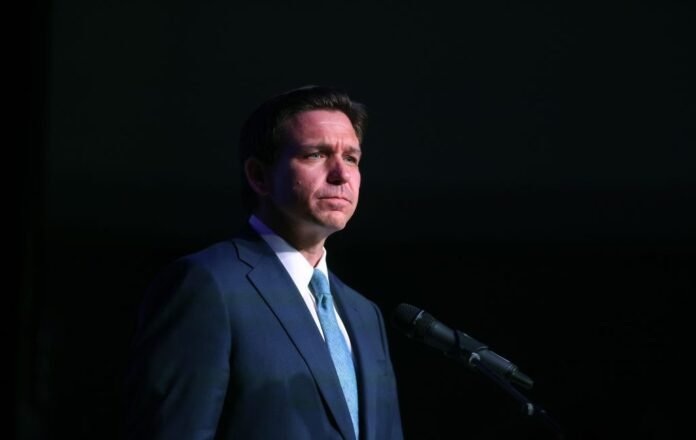
Florida Governor Ron DeSantis’ plans to upend childhood vaccination requirements continues to be thwarted by his fellow Republicans.
Just minutes into a special session on Tuesday, Florida House Speaker Daniel Perez announced that the Republican-led chamber would not take up a proposal from DeSantis to allow children to opt out of certain school vaccination requirements. The move effectively killed the proposal, which had been backed by the Senate.
Perez, a father from Miami with three young children, said he was concerned by the idea of “children being in school without measles and mumps and polio and chickenpox vaccines that have been working for decades,” according to The New York Times, which reported from the State Capitol. “That was something that I was uncomfortable with.”
Specifically, the proposal—the Medical Freedom bill—would have given parents the option to exempt children from required vaccinations based on their “conscience.” The state already allows for medical- and religious-based exemptions.
DeSantis’ efforts to make it easier for children to attend school unvaccinated follow an announcement last September by Florida Surgeon General Joseph Ladapo that he and DeSantis would work to end all vaccine mandates in the state.
“All of them, all of them, all of them, every last one of them,” Ladapo said. “Every last one of them is wrong and drips with disdain and slavery.”
But ending some mandates would require legislative changes, and so far, support for such changes has not been forthcoming—or popular among the public. In October, a poll by the University of North Florida found that 63 percent of Floridians are against ending vaccine mandates. That includes 48 percent who were strongly opposed.
On social media, DeSantis responded to the House’s rejection by calling it “typical political shenanigans.”
Ladapo also responded, saying: “The governor’s agenda to defend freedom, whether from medical tyranny or tech oligarchs, is something Floridians and Americans everywhere want and value. Members of the Florida House should be leading that effort, not standing in the way.”
According to the Times, Ladapo is still working with the state health department to repeal mandates for vaccines against: varicella (chickenpox); hepatitis B; pneumococcal bacteria; and Haemophilus influenzae type B, or Hib, a bacterium that can be deadly. Requirements for vaccinations against measles, mumps, rubella, pertussis (whooping-cough), diphtheria, and polio would require legislation to change.
In an interview with NBC News in January 2026, Donald Trump said: “Maga is me. Maga loves everything I do.” Until recently, this statement was true. But over the past several months, cracks have begun to appear in the loyalty of the US president’s “Make America Great Again” base.
Two of the movement’s most prominent figures – former congresswoman Marjorie Taylor Greene and conservative political commentator Tucker Carlson – have voiced their discontent with the leader they previously lavished with unconditional support.
Greene’s falling out with Trump was rooted in her advocacy for releasing the investigative files related to late child sex offender Jeffrey Epstein. But it also centred on her discomfort with US support for Israel and a sense that Trump had abandoned his “America first” campaign promises.
In December 2025, Greene told CNN that “the dam is breaking” on Trump’s grip over the Republican party. As an example, she pointed to the 13 Republicans who voted with Democrats that month to overturn an executive order that allowed Trump to fire federal employees. Greene resigned from the House of Representatives in January.
Carlson’s more recent break with Trump was equally dramatic. “I don’t hate Trump,” he told the Wall Street Journal in an interview released on April 25. “I hate this war [in Iran] and the direction this US government is taking.” Carlson went so far as to apologise to the public for “misleading” them into voting for Trump in 2024.
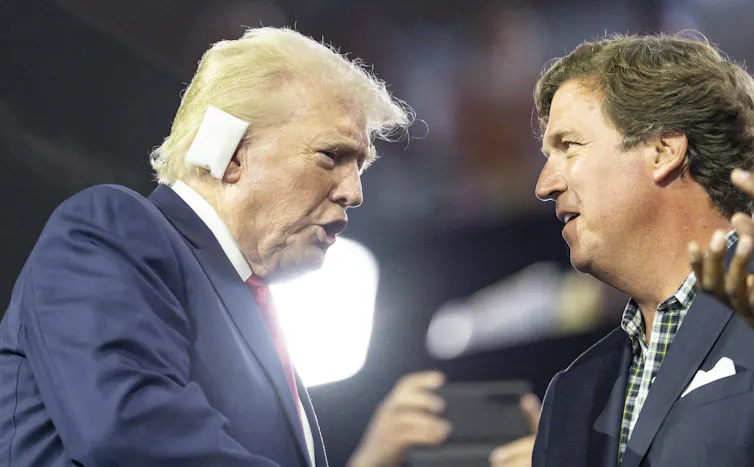
Trump speaks with Carlson at the Republican National Convention in Milwaukee, Wisconsin, in July 2024.Allison Dinner / EPA
In a week when an attempt to assassinate Trump is once again headline news, we are reminded of Carlson’s take on a previous attempt on the US president’s life in 2024. Carlson had invoked “divine intervention” to explain Trump’s survival of that attempt, declaring “something bigger is going on here”.
At that point, the president had religious-right elites firmly on his side. This fervour has dissipated in recent times. But are Greene and Carlson representative of a broader problem for the Maga movement, or are they just a pair of high-profile defections and nothing more?
Putting ‘America first’
The grievances and concerns outlined by Greene and Carlson are real. When Trump ran for president in 2016, he broke with Republican orthodoxy by denouncing the Iraq war as a catastrophic mistake. He promised to extract the US from costly foreign wars and put America ahead of global policing commitments.
His first-term record was somewhat mixed, but the key takeaway was that no new major wars were initiated. On the 2024 campaign trail, Trump repeated these earlier pledges. He said he would end the Ukraine war within 24 hours and keep the US out of new conflicts. Trump has clearly reneged on these commitments.
The Iran war is broadly unpopular with the US electorate. Polls show that more people are against the war than support it. On average, 15% more people oppose than back it, and in some recent surveys that gap is even bigger, with up to 27% more people against than in favour. About 75% of US adults also now describe the economy, which is being affected by higher prices, as “very” or “somewhat” poor.
This dissatisfaction is visible among Republicans voters, though probably not to an extent that suggests support for Trump is in danger of imminent collapse. Recent polling by the Associated Press and NORC Center for Public Affairs Research indicates that, while dropping by 13 percentage points compared to a year ago, 38% of Republican voters still “strongly” approve of Trump’s presidency.
At the same time, there are some signs that Trump’s core Maga base remains largely steadfast in its support, despite the very vocal dissent from some. The same poll found that roughly 90% of Americans who self-identify as “Maga Republicans” approve of Trump’s overall job performance. Another survey by NBC suggests that 87% of these people currently approve of his handling of the war in Iran.
While these surveys are unlikely to capture the full range of sentiment within the Maga movement, they still indicate that Trump retains a solid core of support from members of this group. However, if the conflict drags on and economic pain deepens, the room for elite dissatisfaction to percolate down to the base is likely to widen.
Presidential ambitions
There may be other reasons explaining why Carlson, in particular, has broken with Trump. As Jason Zengerle, a journalist at the New Yorker magazine and the author of a biography of Carlson, put it recently when discussing Carlson’s reversal on Trump: “He’s also sort of making a political move.” Various media outlets have suggested that Carlson may be eyeing a 2028 presidential run.
Some commentators, including White House counterterrorism adviser Sebastian Gorka, have drawn parallels between Carlson and Pat Buchanan. In the 1990s, Buchanan challenged President George H.W. Bush over the Gulf war and reshaped the Republican party’s ideological trajectory even without winning its presidential nomination.
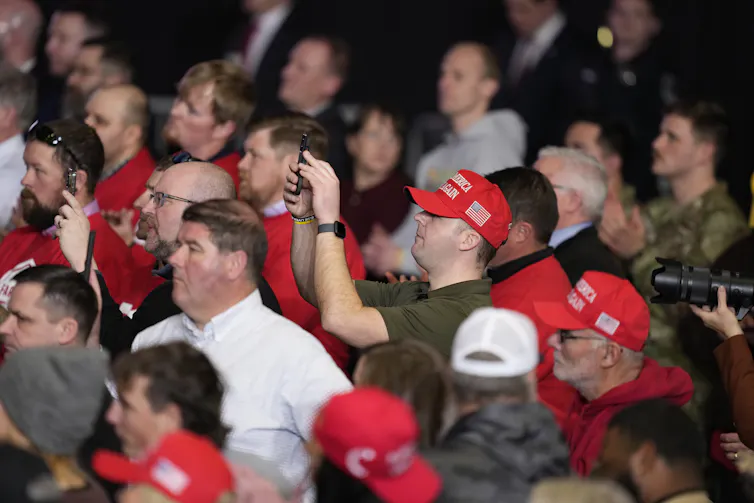
Maga supporters watch as Trump delivers remarks on the economy in January 2026.Matthew Putney / EPA
Greene has floated Carlson for president. In a social media post in March, she wrote: “I SUPPORT TUCKER. Trump doesn’t even know what Maga is anymore.” Carlson, for his part, has publicly dismissed a presidential bid.
But this rebranding exercise, of attempting to seize the Maga label from Trump and attach it to a new vessel, is a significant development. It suggests that “America first” is no longer exclusively synonymous with one figure.
The looming question is whether this seed of elite discontent can grow into something organisationally meaningful before 2028, when Americans elect their next president.
Reality TV Star’s Cousin Guns Down Grandmother After Chore Fight
Execution-Style Killing Rocks Reality TV Orbit: Man Accused of Gunning Down His Own Grandmother After Explosive Argument
A horrifying, almost unthinkable crime is now colliding with the world of reality TV — and you don’t have to watch Summer House to be stunned by this one.
The cousin of reality personality West Wilson has been arrested in a cold-blooded murder that investigators say unfolded inside a quiet home — and ended with a grandmother executed at point-blank range.
Dakota Sweeney, 28, is now facing first-degree murder charges after authorities say he shot and killed his 75-year-old grandmother, Gayle R. Wilson, in Missouri on April 22.
According to chilling court documents, this wasn’t a spur-of-the-moment outburst — at least not on the surface.
Investigators say Sweeney sat next to his grandmother on a couch for nearly 30 minutes. Then, without warning, he allegedly pulled out a gun and shot her in the head.
Just like that.
Even more disturbing? A family member — Sweeney’s own grandfather — was inside the home and witnessed the entire thing, according to authorities.
Officials say the violence may have been sparked by something shockingly ordinary: an argument over chores. Earlier that evening, Sweeney and his grandmother had reportedly clashed about him not helping around the house — a dispute that may have escalated into deadly rage.
When police arrived, they found Gayle dead inside the home. Sweeney was still there and taken into custody, with officers reportedly recovering a holster at the scene.
Prosecutors are now pushing to keep him locked up without bond as the case moves forward. His next court appearance is set for May 6.
Meanwhile, the timing has only added to the eerie headlines.
The killing happened just one day before Wilson — whose name is now being pulled into the story due to family ties — filmed a reunion episode for Summer House, thrusting the tragedy into the broader pop culture spotlight.
But beyond the reality TV connection, this is a deeply personal loss.
Gayle is being remembered as a devoted wife of 50 years and the heart of a large family, leaving behind seven grandchildren and a great-grandchild. A memorial service is scheduled for May 2.
Now, as investigators dig deeper, one question hangs over this case: how does a routine family argument spiral into an execution-style killing — and could anything have stopped it before it was too late?