11.8 C
London
Monday, April 27, 2026
Home Blog

China’s sovereign debt to debut in SE Asia’s largest economy

0
china’s-sovereign-debt-to-debut-in-se-asia’s-largest-economy
China’s sovereign debt to debut in SE Asia’s largest economy

A landmark agreement allowing China to issue sovereign bonds in Indonesia’s domestic market on a reciprocal basis signals a deliberate push for regional financial integration.

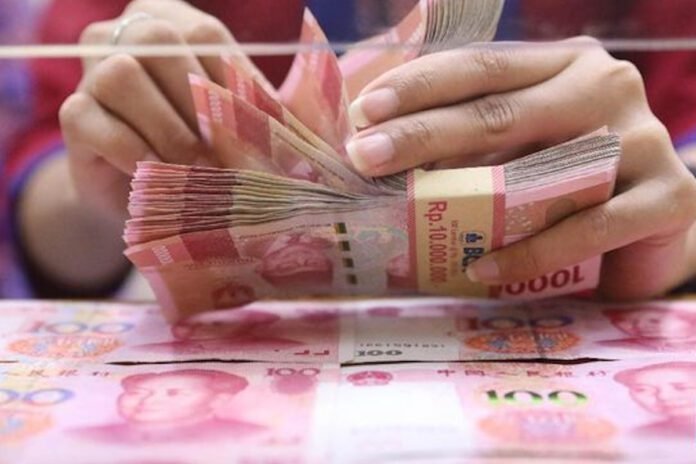
The reciprocal sovereign bond issuance agreement between China and Indonesia marks a strategic breakthrough. For the first time, China will be allowed to issue yuan-denominated sovereign bonds directly in Indonesia’s domestic capital market, with Indonesia receiving similar rights in China’s market.

This goes beyond typical swap lines or cross-listings; it represents an institutionalized opening between two of Asia’s largest debt markets.

Historically, investors fleeing geopolitical turmoil have gravitated toward the deep liquidity and perceived stability of US debt. However, the prolonged Middle East conflict has introduced a dual shock: energy price spikes that rekindle inflation in Western economies, and a growing realization that US fiscal trajectories are themselves under strain.

In this context, Chinese government bonds offer a compelling alternative. China’s relatively contained inflation, a current account surplus and a managed exchange rate provide stability that contrasts with the volatility seen in commodity-driven emerging markets.

Moreover, the People’s Bank of China has maintained a more predictable monetary policy than the Federal Reserve, which is caught between rate-cut expectations and sticky inflation.

As global funds — sovereign wealth funds, central banks and institutional investors — reallocate portions of their portfolios into CGBs, Beijing can finance its domestic restructuring, including deleveraging local government debt and supporting strategic sectors, at lower yields.

This influx of safe-haven demand effectively subsidizes China’s transition toward a consumption- and technology-driven economy, reducing its reliance on volatile foreign direct investment.

Energy market volatility has also accelerated interest from Gulf oil exporters who, seeking to diversify their dollar-denominated assets, view CGBs as a hedge against both Middle East instability and potential US sanctions. This creates a positive feedback loop: China gains stable financing while energy-supplying nations gain a geopolitical hedge.

The geoeconomic consequences for China are immediate and multi-layered. First, the agreement creates a direct channel for absorbing Indonesian rupiah liquidity into yuan-denominated assets, deepening offshore yuan markets without requiring full capital account convertibility.

Second, it reduces transaction costs for bilateral trade and investment, as Indonesian institutions can hold Chinese government paper as collateral for rupiah-yuan settlement.

Third, it sets a precedent for other ASEAN nations. If Indonesia — a notably protectionist economy with a history of resource nationalism — accepts Chinese sovereign issuance, it signals to Malaysia, Thailand and Vietnam that financial integration with China is compatible with national economic sovereignty.

For China, the agreement advances the long-term goal of internationalizing the renminbi. Unlike swap lines that merely provide emergency liquidity, a reciprocal bond market creates a durable, two-way asset relationship.

Indonesian pension funds, insurers and banks that buy CGBs become structural holders of yuan assets, creating natural demand for hedging instruments, custody services and eventually a deeper renminbi bond ecosystem across Southeast Asia.

This moves China closer to its ambition of building an alternative Asian financial architecture that operates parallel to — and potentially independent of — the dollar-based system.

The combination of CGBs as a safe haven and the Indonesia agreement carries significant geopolitical weight. At the strategic level, China is steadily eroding the dollar’s “exorbitant privilege.”

When Middle Eastern oil exporters and Southeast Asian central banks shift reserves into CGBs, they reduce their need to hold US Treasuries for liquidity purposes. While the shift is incremental, the trajectory is clear: China is offering a politically risk-diversified asset to a world weary of weaponized finance — following the freezing of Russian assets — and US fiscal brinkmanship.

In the Asia-Pacific, China gains enhanced leverage over regional financial governance. Indonesia’s agreement is not merely technical; it reflects Jakarta’s strategic calculation that deeper integration with China’s financial system offers stability and growth.

For China, this translates into soft power: being able to issue debt on another nation’s home turf signals trust and institutional equivalence. It also complicates any potential US-led financial decoupling.

If ASEAN central banks already hold CGBs as reserves, they face prohibitive costs in joining coalition-style sanctions against China. Reciprocal bond issuance thus acts as a financial insurance policy against geopolitical coercion.

However, the consequences are not uniformly positive for China. Greater safe-haven status invites scrutiny. Global investors will demand transparency about China’s local government debt, shadow banking risks and property sector troubles.

Any default or forced restructuring in the provincial bond market could rapidly reverse CGBs’ safe-haven status, triggering capital flight. Additionally, the Indonesia agreement exposes China to competition: Indonesian sovereign bonds issued in China’s market might offer higher yields, potentially diverting domestic Chinese savings away from local government projects.

For the broader international system, China’s rise as a debt safe haven and its deepening Asian financial integration signal the emergence of a multipolar reserve-asset landscape. Global safety will no longer be synonymous with US Treasuries alone.

The geoeconomic consequence is potentially more resilient global liquidity — investors have alternatives — but also greater fragmentation. Two distinct spheres of safe assets could emerge: a dollar bloc anchored in New York and London, and a renminbi bloc anchored in Shanghai and Hong Kong, with Indonesia acting as a bridge.

China’s global interest lies in managing this transition without provoking a dollar crash or a destabilizing reversal in capital flows. The prudent path involves continued reciprocity: as Indonesia opens its market to Chinese bonds, China must further open its capital account, allowing foreign investors to hedge and exit without friction.

If Beijing succeeds, it will have transformed its debt from a source of domestic concern into a tool of geoeconomic statecraft — one that offers stability to a volatile world while quietly reshaping the financial order in its favor.

The Middle East crisis and the Indonesia agreement are not isolated events; they are accelerants of a long-term shift whose consequences will define the next decade of global finance.

Bob Savic advises on sanctions, supply chains and geopolitical risk and is co-author of the new book “Multipolarity and the Changing Global Order” published by Springer.

Sheikh Jarrah: How ceasefires enable Israel’s quiet annexation

0
sheikh-jarrah:-how-ceasefires-enable-israel’s-quiet-annexation
Sheikh Jarrah: How ceasefires enable Israel’s quiet annexation

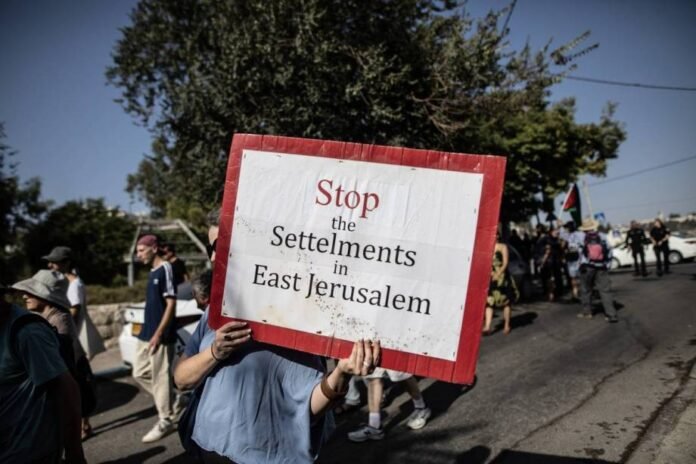
On 20 April 2026 the Jerusalem District Planning Committee approved an 11-storey ultra-Orthodox Jewish religious school known as Or Somayach, or the Glassman Yeshiva, in the heart of Sheikh Jarrah. The project will rise on five dunams of land at the southern entrance to the neighbourhood, directly opposite Sheikh Jarrah Mosque. It includes dormitories for hundreds of students and residential units for teaching staff. Palestinian officials immediately condemned the move, saying it deliberately exploits the current regional distractions.

While fragile ceasefires hold in Gaza and Lebanon and attention shifts to Iran, Israel is pressing ahead with its settler-colonial project in occupied East Jerusalem and the West Bank. This latest step in Sheikh Jarrah is no isolated event. It is part of a systematic drive to displace Palestinians and implant settlers, killing off any realistic two-state solution and breaking international law. Palestinian families are bearing the brunt.

The decision is the latest chapter in a decades-long campaign. Occupation authorities seized the land years ago under the pretext of “public needs” and handed it in 2007 to the US-linked Or Somayach Institutions.

If the complex is built, it will sharply increase the settler population, tighten security controls and change the character of the neighbourhood beyond recognition. Residents already endure daily harassment, restricted movement and the constant threat of eviction.

Rawhi Fattouh, head of the Palestinian National Council, called the approval part of a calculated colonial strategy. “The approval of the Or Somayach project is part of a systematic colonial project that uses regional turmoil to impose unlawful changes in occupied Jerusalem,” he said. In his view, the timing is no accident. The move takes advantage of the focus on ceasefires elsewhere to push through facts on the ground that would otherwise face stronger resistance.

This single project is only one piece of a much wider land grab. Last August Israeli authorities finalised the controversial E1 plan, which clears the way for thousands of new housing units linking East Jerusalem to the Ma’ale Adumim settlement bloc. When completed, it will cut East Jerusalem off from the rest of the West Bank and create an unbroken Israeli corridor. In February this year the government restarted formal land registration across large parts of Area C, the first time since 1967. Critics rightly label it de facto annexation, a process that could transfer vast tracts of Palestinian land to the Israeli state.

Buffer zones around settlements keep expanding, new outposts keep appearing and bypass roads keep multiplying. All these measures restrict Palestinian access to their own farmland and homes. Taken together, they make a contiguous Palestinian state geographically impossible and lock in permanent occupation.

The regional ceasefires have handed Israel the political cover it needed. Six months after the Gaza ceasefire began in October 2025, the humanitarian crisis continues, restrictions, disease outbreaks and reconstruction remain stalled.

Yet attention has moved on. The Lebanon ceasefire that started in mid-April and the uneasy pauses around Iran have pulled diplomatic and media focus away. Palestinian officials have directly linked the Sheikh Jarrah decision to this distraction.

The Israeli rights group Ir Amim warned that the yeshiva plan will sharply increase pressure on Palestinian residents. If it goes ahead, daily insecurity will rise for families who have lived in Sheikh Jarrah for generations. Children will grow up in neighbourhoods deliberately redesigned to exclude them. Parents will watch their heritage and future prospects disappear under concrete and ideology.

Every one of these steps violates international law. Settlement activity in occupied territory breaks the Fourth Geneva Convention. The E1 plan and the land registration process amount to annexation and forcible transfer, both banned under the convention and repeated UN resolutions. The International Court of Justice has repeatedly declared such actions illegal.

By moving forward Israel undermines the legal protections that should safeguard Palestinian rights in East Jerusalem. It also destroys any realistic chance of the city serving as the capital of a future Palestinian state, a demand rooted in international consensus and Palestinian national aspirations.

The human cost falls on ordinary Palestinian families. Many already carry the scars of repeated eviction threats and home demolitions.

The new yeshiva will bring hundreds more settlers into their midst and make daily life even harder. These families are not abstract statistics. They are the living proof of the dispossession that international law was meant to prevent.

The message from Sheikh Jarrah and the parallel moves in the West Bank is unmistakable. Ceasefires that leave the occupation untouched do not bring peace. They simply open the door to the next phase of dispossession. While the world watches fragile truces elsewhere, Israel continues to bury the two-state solution and impose a one-state reality of apartheid and inequality.

Real security and stability in the region demand more than temporary pauses in violence. They require genuine accountability, an immediate end to settlement expansion and the full restoration of Palestinian rights, including the right of return and Jerusalem as the capital of Palestine. Only by confronting the occupation’s relentless continuity can the international community uphold international law and advance the equality and justice the Middle East so urgently needs.

The views expressed in this article belong to the author and do not necessarily reflect the editorial policy of Middle East Monitor.

Only one way to stop accelerating nuclear arms race

0
only-one-way-to-stop-accelerating-nuclear-arms-race
Only one way to stop accelerating nuclear arms race

This week in New York, diplomats from almost every nation will convene for a four-week review of the Treaty on the Non-Proliferation of Nuclear Weapons (NPT), the most comprehensive nuclear arms agreement in the world.

The stakes could hardly be higher. Russia, Israel and the United States, all nuclear-armed, are conducting illegal wars of aggression against countries without nuclear weapons.

Nuclear-armed India and Pakistan engaged in conflict last year across their disputed border, raising the specter of nuclear escalation.

In February, the last remaining agreement constraining Russian and US nuclear weapons lapsed, with nothing to replace it. The two countries account for nearly 90% of the world’s nuclear weapons.

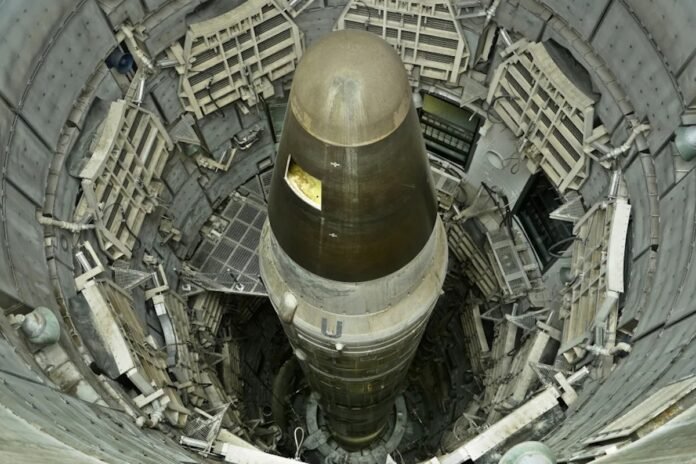
And all nine nuclear-armed states are investing vast sums in modernising their arsenals with more capable and dangerous weapons. Deployed nuclear weapons and those on high alert, ready to be launched within minutes, are also rising.

All these developments have brought the Doomsday Clock, which assesses how close the world is to existential catastrophe, closer to midnight than it has ever been since 1947.

What is the NPT?

The NPT is considered a cornerstone of international law in relation to nuclear weapons and disarmament. It has the widest membership of any arms control agreement, with 190 states.

These include five countries that manufactured and exploded nuclear weapons before 1967 – China, France, Russia, the United Kingdom and the United States. All other members do not have nuclear weapons.

North Korea is the only state to have joined the NPT and then renounced it. India, Israel and Pakistan, all nuclear-armed, along with South Sudan, are the only countries that have never joined.

The NPT is essentially a bargain struck in the late 1960s between the states that had nuclear weapons and those that did not. The first five nuclear-armed states – also permanent members of the UN Security Council with veto rights – committed to end the nuclear arms race and eliminate their arsenals.

In exchange, states without nuclear weapons agreed to forego acquiring them, with the sweetener of assistance in developing peaceful uses of nuclear technology.

The International Atomic Energy Agency (IAEA) was established to ensure non-nuclear states did not acquire weapons. However, the treaty did not establish any timeframes, defined processes, or verification or enforcement mechanisms for nuclear-armed nations to disarm.

The NPT entered into legal force in 1970, initially for 25 years. It was hoped the task of nuclear disarmament would be accomplished by then.

When this was clearly not the case in 1995, the treaty was indefinitely extended, thereby removing an important source of pressure on nuclear-armed states to fulfil their side of the bargain. Since then, there have been reviews every five years to debate implementation of the treaty.

Rarely consensus

These conferences, however, have been fraught.

In 2015, for example, Canada, the UK and US blocked adoption of a painstakingly negotiated text at the behest of Israel, a non-member of the treaty. And in 2022, Russia blocked adoption of the final text, mainly due to references to the Zaporizhzhia nuclear power plant in Ukraine, which it attacked and occupied.

Since 1995, only two review conferences have produced an agreed outcome document.

In 2000, the members agreed to 13 practical steps to progress nuclear disarmament, but these remain almost completely unimplemented. And in 2010, the members agreed to a 64-point action plan, but implementation has been variable and weak, particularly for the 22 actions relating to disarmament.

The NPT has been moderately effective, though, in discouraging additional states from acquiring nuclear weapons. A number of countries, such as Canada, Germany, Sweden, Switzerland, South Korea and Australia, gave up nuclear weapons programs or ambitions after joining.

But when it comes to disarmament, the treaty has failed dismally. The head of this year’s conference, Do Hung Viet, has stressed the risk of failing to find consensus again at this year’s review.

It may not put an end to the NPT itself but […] it may hollow out the NPT. We may lose the credibility of the NPT itself.

Two main challenges ahead

In the current dysfunctional international environment, expectations for this year’s conference are low.

Nuclear-armed states have not only failed to disarm, they are growing, modernizing and threatening to use their arsenals in an accelerating arms race. And two recent developments are likely to cast further shadows over the debate.

The first is Russia’s unprecedented weaponization of nuclear facilities in Ukraine, including operating nuclear power plants with huge quantities of radioactive materials in the reactor cores and in spent fuel ponds. Russian forces have engaged in a number of reckless actions, including:

  • attacking and damaging the facilities
  • interfering with their operation and terrorising staff
  • using some as military bases
  • and jeopardising the power and water supplies critical to the essential cooling of reactors and spent fuel.

These actions risk a radiological disaster extending far beyond Ukraine’s borders. A major failing of the last review conference in 2022 was that no measures were passed to protect nuclear facilities from attack.

The second major issue confronting this year’s review: the US–Israeli attacks on Iran’s nuclear facilities.

Both countries have cited Iran’s imminent acquisition of nuclear weapons as a pretext for their attacks, despite the fact US intelligence officials and the head of the IAEA said this wasn’t the case.

The might-is-right attacks by the US and Israel raise profound questions for the world’s non-nuclear nations in the value of adhering to the NPT. Why should they comply with the treaty’s stringent requirements when nuclear-armed states can use illegal force against them, at their will?

Non-proliferation cannot be secured by war. In fact, for the surviving members of Iran’s regime (and leaders of other nations), the war likely reinforces the opposite lesson: preventing military aggression is best assured by having nuclear weapons.

The risk of other states now following the North Korean model – leaving the NPT and developing an initially clandestine nuclear weapons program – is much higher.

In the nuclear age, security is either shared or nonexistent. The only safe and sustainable future is predicated on eliminating nuclear weapons. This can only be achieved through cooperation, negotiation and international law, backed up by equitable verification.

Tilman Ruff is honorary principal fellow, School of Population and Global Health, The University of Melbourne

This article is republished from The Conversation under a Creative Commons license. Read the original article.

David Hasselhoff Shocks Fans as Frail-Looking Star Spotted with Walker in LA

0
david-hasselhoff-shocks-fans-as-frail-looking-star-spotted-with-walker-in-la
David Hasselhoff Shocks Fans as Frail-Looking Star Spotted with Walker in LA


David Hasselhoff has fans doing a double take — and not in a good way.

The Baywatch legend, now 73, looked almost unrecognizable during a low-key daytime outing in Los Angeles this week, leaning heavily on a walker as he shuffled across a parking lot with his much-younger wife, Hayley Roberts, 45.

Dressed down in a gray T-shirt, black sweatpants, and a beige Nashville cap, Hasselhoff clutched the walking frame with both hands while Roberts stayed close by his side in sporty athleisure gear. The pair kept a low profile, but the photos quickly sparked concern online, with many wondering if the iconic TV star’s health had taken a serious turn.

But before fans panic, there’s more to the story.

A rep for Hasselhoff insists the actor is simply in recovery mode following knee and hip replacement surgery. According to the spokesperson, he’s currently undergoing physical therapy and is “doing well and feeling good” despite the alarming images.

Still, this isn’t the first time the Hoff has raised eyebrows recently.

Back in May 2025, he was spotted being pushed through Los Angeles International Airport in a wheelchair while heading to Cancun with Roberts. At the time, he revealed he was preparing for knee surgery and admitted he was dealing with intense pain.

The latest sighting only adds to growing concern among fans who have watched the once larger-than-life star slow down in recent years.

Hasselhoff and Roberts have been together since 2011 and tied the knot in a romantic Italian ceremony in 2018. She’s often praised him publicly, calling him “kind, thoughtful” and someone with a “huge heart.”

But behind the scenes, the past year has been anything but easy.

In March 2025, Hasselhoff’s ex-wife, actress Pamela Bach, tragically died by suicide at age 62. The actor later released a statement saying his family was “deeply saddened” and asked for privacy as they grieved.

Despite the difficult chapter — and the shocking new photos — insiders say Hasselhoff is staying positive and focused on his recovery.

Still, fans can’t help but wonder: is this just a temporary setback… or a sign of something more serious for the once unstoppable Hoff?

Israeli Soldier Killed in Hezbollah Drone Attack in Southern Lebanon

0
israeli-soldier-killed-in-hezbollah-drone-attack-in-southern-lebanon
Israeli Soldier Killed in Hezbollah Drone Attack in Southern Lebanon


Sgt. Idan Fooks, a 19-year-old Israeli soldier from Petah Tikva, was killed Sunday in southern Lebanon when a Hezbollah explosive drone struck troops during an operation inside an Israeli-declared security zone, the Israel Defense Forces said. Six other soldiers were wounded.

Fooks served in the 7th Armored Brigade’s 77th Battalion and was posthumously promoted from corporal to sergeant. The wounded included one officer and three soldiers in serious condition, one soldier in moderate condition, and one lightly wounded.

According to an initial IDF probe cited by Israeli media, a tank from Fooks’ battalion became stuck near Taybeh in southern Lebanon. As troops worked to repair it, a Hezbollah drone packed with explosives struck beside them. An Israeli Air Force helicopter was sent to evacuate the wounded, and Hezbollah launched two additional drones during the evacuation. One was intercepted, while the other landed nearby without causing further casualties.

Hezbollah claimed responsibility for the attack, calling it a response to alleged Israeli violations of the ceasefire. Prime Minister Benjamin Netanyahu accused Hezbollah of “dismantling the ceasefire” and said Israel would continue acting in accordance with agreements reached with the United States and Lebanon. He said Israel would respond to attacks, thwart immediate threats, and act against emerging ones.

The incident came despite a fragile Israel-Lebanon ceasefire that took effect on April 17 and was extended last week by US President Donald Trump for three weeks. Under the arrangement, Israel says it retains the right to act against planned, imminent, or ongoing attacks.

After the drone strike, the IDF said it launched airstrikes and artillery fire against Hezbollah operatives and infrastructure in southern Lebanon, including rocket squads, a weapons depot, and buildings used by the group. Fooks’ funeral is expected to be held on Monday in Petah Tikva.

Bangladesh risks new inflation surge by printing money

0
bangladesh-risks-new-inflation-surge-by-printing-money
Bangladesh risks new inflation surge by printing money

Bangladesh, South Asia’s second-largest economy and one of the world’s fastest-growing garment exporters, has spent much of the past two years trying to tame inflation after a prolonged cost-of-living squeeze. Now it risks undoing some of that work the old-fashioned way — by printing money.

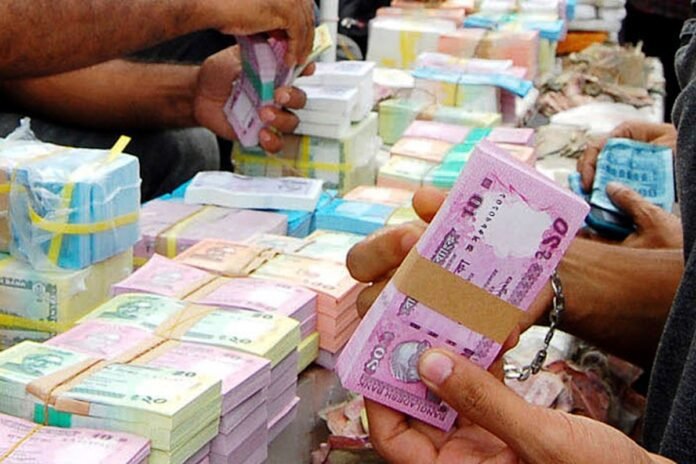
Fresh concern has followed reports that the stock of “high-powered money” — reserve money created by the central bank — has risen sharply, with year-on-year growth reaching 13.35% in February, more than double the 6.16% recorded a year earlier.

Economists cited by The Financial Express newspaper say Bangladesh Bank recently injected around 200 billion takas (US$1.65 billion) into the economy to meet government expenditure needs. That may sound technical. It is not.

Reserve money is the raw material from which commercial banks create broader credit. When it expands quickly, inflation often follows.

The timing is awkward. Bangladesh’s inflation has eased only slowly after a bruising spell of price rises that eroded household incomes and weakened confidence.

Food inflation remains politically sensitive in a country where millions still spend a large share of earnings on staples such as rice, lentils and edible oil.

Fuel-price adjustments linked to the Iran war, exchange-rate pressures and supply bottlenecks have already made disinflation harder than officials hoped. Into that mix comes a burst of liquidity.

Why print in the first place? The likely answer is politics as much as arithmetic.

The new BNP-led government under Prime Minister Tarique Rahman has inherited a squeezed fiscal position that includes weak revenue mobilization, subsidy demands, state-enterprise liabilities and public expectations for relief. Bangladesh’s tax-to-GDP ratio remains among the lowest in Asia, leaving the state chronically short of resources.

New administrations rarely arrive promising austerity. They arrive promising action. Among the early priorities are reported welfare-style initiatives such as expanded family-card support, social transfers and broader cost-of-living assistance for lower-income households.

Such programs may be politically popular and socially defensible. They are not free.

If tax receipts lag and foreign budget support is slow, governments face an unpleasant menu: cut spending, borrow expensively from banks, or finance deficits indirectly through the central bank.

Printing money is the least visible option in the short run. No new tax is announced. No dramatic spending cut is televised. Cash simply appears in the system. But the bill often arrives later through prices.

That is why economists worry. As M Masrur Reaz of the think tank Policy Exchange said, the 200 billion taka injection could be amplified through the banking system’s money multiplier, adding to persistent price pressures.

Another economist, Md Ezazul Islam, argued the situation remained manageable, especially if private-sector imports rise and absorb some liquidity. Both views can be true: the danger is not immediate hyperinflation, but renewed inflation persistence.

Bangladesh’s policymakers may reply that reserve money also rose because Bangladesh Bank purchased more than $5.5bn from the market this fiscal year, boosting foreign assets and reserves.

That is plausible. When a central bank buys dollars, it releases taka unless it sterilizes the effect by withdrawing liquidity elsewhere. Inflows from multilateral lenders such as the World Bank and Asian Development Bank may also have lifted foreign assets.

Yet for households, the source of money creation matters less than the consequence. If more taka chase constrained supplies of rice, transport, rent and services, then prices rise. Inflation is especially punishing in Bangladesh because poorer households spend a larger share of their income on essentials.

A few percentage points on paper can mean fewer meals, delayed medicine or canceled school expenses.

There is also a credibility issue. Bangladesh Bank has spent months defending a tighter monetary stance. If markets conclude that fiscal needs will repeatedly override monetary discipline, expectations can shift quickly.

Businesses raise prices in anticipation. Workers demand higher wages. Savers flee into land, dollars or gold. Once inflation psychology hardens, bringing it down becomes costlier.

The government’s dilemma is real. Welfare expansion after years of strain has merit. Family-card schemes and targeted transfers can cushion the vulnerable and stabilize politics.

But financing them with the printing press is a blunt instrument. It taxes everyone through inflation while directly helping selected groups. That is poor targeting disguised as generosity.

A better route would be more mundane but more durable: widen the tax base, trim wasteful spending, reform loss-making state entities, improve subsidy targeting and secure concessional external financing. If temporary liquidity support is unavoidable, it should be transparent, limited and offset elsewhere.

Bangladesh does not face a monetary crisis. But it does face a familiar temptation. Governments everywhere prefer benefits now and costs later. High-powered money offers exactly that bargain—until prices expose the trick.

For a government eager to prove it can govern better than its predecessors, there is a simple test. If it wants to help families, it should do so honestly through budgets and reform, not quietly through the central bank’s balance sheet. Inflation, after all, is the most regressive tax of all.

Faisal Mahmud is a Dhaka-based journalist

Over 2,500 killed in Lebanon in Israeli attacks since March 2

0
over-2,500-killed-in-lebanon-in-israeli-attacks-since-march-2
Over 2,500 killed in Lebanon in Israeli attacks since March 2

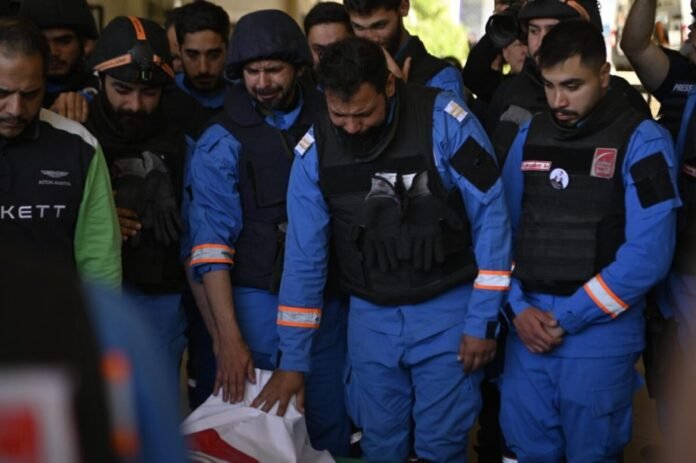
Healthcare workers and Lebanese citizens attend the funeral ceremony for volunteer medic Mehdi Abu Zabad, who was killed in an Israeli airstrike, in Sidon, Lebanon on April 16, 2026. Abu Zabad’s body was later laid to rest in the town of Kfar Reman. [Santiago Montag - Anadolu Agency]

Healthcare workers and Lebanese citizens attend the funeral ceremony for volunteer medic Mehdi Abu Zabad, who was killed in an Israeli airstrike, in Sidon, Lebanon on April 16, 2026. Abu Zabad’s body was later laid to rest in the town of Kfar Reman. [Santiago Montag – Anadolu Agency]

Lebanon said Sunday that 13 people have been killed and 30 more injured in the past 24 hours, Anadolu reports.

The death toll from Israeli attacks in Lebanon surged to 2,509 killed and 7,755 injured since March 2, said the Lebanese Health Ministry.

Israel has pounded Lebanon with airstrikes and launched a ground offensive in the south since a cross-border attack by Hezbollah on March 2. The region has been on alert since the US and Israel launched airstrikes on Iran on Feb. 28.

A 10-day truce was first announced on April 16 but was repeatedly breached by Israel.

On Thursday, US President Donald Trump said Israel and Lebanon agreed to extend their ceasefire by three weeks following a second round of high-level negotiations at the White House.

Elections Reach Gaza for First Time in 22 Years, With Hamas on the Sidelines

0
elections-reach-gaza-for-first-time-in-22-years,-with-hamas-on-the-sidelines
Elections Reach Gaza for First Time in 22 Years, With Hamas on the Sidelines


Municipal elections in Deir al-Balah offered rare political participation in Gaza while raising questions about Hamas’ influence, voter freedom, and the Palestinian Authority’s reach

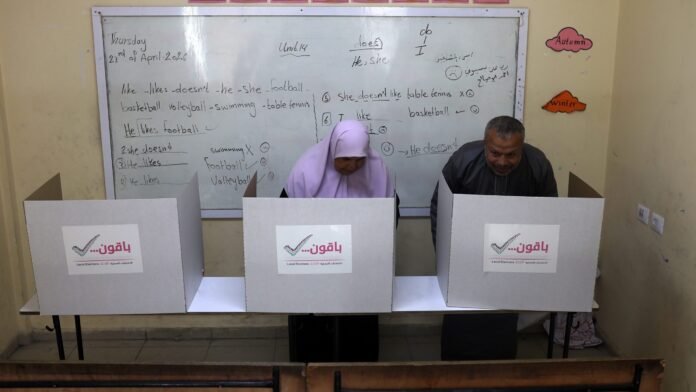
Palestinians voted Saturday in municipal elections in the West Bank and, for the first time in more than two decades, in the Gaza Strip, where voting was held only in the city of Deir al-Balah. The vote marked a rare moment of political participation in Gaza after years of division, war, and the absence of elections. It is also being read as a proxy gauge of Hamas’ standing two years into the war.

Polling stations opened across Deir al-Balah on Saturday morning. The Central Elections Commission operated 12 voting centers out of fiberglass tents. The campaign ran for 14 days, from April 10 to the evening of April 24.

Deir al-Balah was selected for two overlapping reasons. The central Gaza city sustained less war damage than Gaza City, Khan Yunis, or Rafah, making the logistics of polling possible. It also sits in the part of the Strip that Hamas still administers, on the western side of the Yellow Line that bisects Gaza, giving the Palestinian Authority a way to plant a flag in Hamas territory without contesting the roughly 53% of the Strip the Israeli military now holds.

No vote took place in the Israeli-controlled half.

The stakes were higher than the size of the city suggests. An entire generation of Gazans has come of age without ever casting a ballot. Anyone under 39 has never had the chance to vote.

Since 2007, Hamas has appointed every mayor and council member in every Gaza municipality, treating local governance as a function of the movement’s internal patronage rather than as a matter for residents to decide. Saturday was the first time in 22 years that a Gaza city chose its own leadership at the ballot box. Hamas, which still polices the streets of Deir al-Balah, stood aside while it happened. Its uniformed police nonetheless secured the perimeter of every polling station, even as the commission said it had not coordinated directly with either Hamas or Israel ahead of the vote.

Gazans are being arrested, jailed, tortured, shot, and killed daily for social media posts and anything they say that’s perceived as being critical of Hamas

Critics of the timing said standing aside was not the same as letting voters speak freely. Ahmed Fouad Alkhatib, a Gazan-born senior resident fellow at the Atlantic Council who heads the council’s Realign for Palestine project, called the decision to hold the vote now “extremely reckless and irresponsible.” Writing on social media in the days before the vote, Alkhatib argued that “Gazans are being arrested, jailed, tortured, shot, and killed daily for social media posts and anything they say that’s perceived as being critical of Hamas,” and said the elections should have been postponed until after the disarmament process the Board of Peace is trying to enforce.

“I’m very happy to be voting in local elections for the first time in my life

“I’m very happy to be voting in local elections for the first time in my life,” Ahmed al-Buhaisi, a resident of Deir al-Balah, told The Media Line. “This is a moment we have been waiting for a long time, because every citizen has the right to have a voice in choosing who represents them. This right has been denied to us for more than two decades. Today, I feel I am exercising my natural role as a citizen. I hope this step marks a real beginning for change.”

The vote covered 183 West Bank councils and Deir al-Balah. About 522,000 of roughly 1.03 million eligible Palestinians cast ballots, the Central Elections Commission said. Another 197 councils returned uncontested lists, mostly Fatah.

Commission Chair Rami Hamdallah announced final results Sunday. In Deir al-Balah, the “Deir al-Balah Renaissance” list, backed by Abbas’ Fatah movement, secured six of the 15 council seats. The “Future of Deir al-Balah” list took five. The “Peace and Building” list won two. A fourth list, “Deir al-Balah Brings Us Together,” which residents and analysts widely view as aligned with Hamas, won two. The new council will choose the mayor from among its elected members.

For the Palestinian Authority, the simultaneous vote in the West Bank and Deir al-Balah was an opportunity to display unified governance across both territories. The Fatah-led authority has not exercised real influence in Gaza since Hamas pushed it out in 2007. The PA used the day to assert that it remains the only Palestinian institution capable of organizing a vote in both territories at once.

Turnout in Deir al-Balah stood at 22.7%, with 15,962 of 70,449 eligible voters casting ballots, the lowest rate among Palestinian voting areas. Hamdallah blamed the low figure on an outdated civil registry that does not reflect the thousands of residents killed in the war or the entire families that fled the city. West Bank turnout reached 56%, slightly below the 58% recorded in the previous local cycle in 2022, the last time West Bank Palestinians went to the polls. Salfit Governorate posted the highest turnout at 71%.

Voting closed at 5 p.m. in Deir al-Balah, two hours earlier than in the West Bank, to allow counting to finish before dark in a city without reliable electricity. Workers in Gaza built roughly 100 wooden ballot boxes from materials available inside the Strip and printed ballot papers locally after Israeli authorities blocked standard election materials at the crossings, the commission said. To mark voters’ fingers, the commission used blue ink left over from a polio vaccination drive last year.

The vote took place under a new election law that Abbas signed on November 19, 2025. Decree-Law No. 23 of 2025 lowered the candidacy age to 23 to widen youth participation, set a four-year council term, and required candidates to pledge commitment to the program of the Palestine Liberation Organization, which carries with it recognition of Israel and the framework of past PLO agreements.

Hamas, which fielded no list, condemned the legislation in December as an attempt to exclude the movement and independents from local government. Twenty-eight Palestinian civil society organizations called the PLO-pledge requirement a restriction on political expression. Each of the four Deir al-Balah lists fielded 15 candidates, with at least four women on each slate, as the new law required. Across the West Bank, 3,773 candidates competed for municipal seats and 1,358 for village councils. Women made up about a third of declared candidates and headed eight lists. Women won 33% of contested council seats overall.

President Mahmoud Abbas, 90, cast his ballot at the al-Mustaqbal al-Saleh School in al-Bireh, the West Bank city adjoining the Palestinian Authority’s Ramallah headquarters. “We are very pleased that we are able to practice democracy despite all the difficulties we face locally and internationally,” he told reporters at the polling station. He said the local cycle would be followed this year by Fatah movement elections and a Palestinian National Council vote, his first public commitment to a national-level electoral calendar in two decades. Abbas was last elected to a four-year term in 2005. He has not faced a presidential vote since then.

Yusuf al-Slaibi, who directed the polling station at Anan Stadium in Deir al-Balah, told the Palestinian Authority’s official Wafa news agency that turnout was “satisfactory” given the conditions. Wafa reported that participation was heavier in the city’s western neighborhoods, including the refugee camp, the central mosque area, and Nakhil Street, than at polling stations to the east near Salah al-Din Street, which runs along the Strip’s main north-south axis closer to the Yellow Line.

The vote took place in a city that buried its previous mayor a year and a half ago. In December 2024, an Israeli airstrike destroyed the Deir al-Balah municipality building, killing Mayor Diab al-Jarou and members of his staff. The new council will inherit a city of about 75,000 residents that now hosts hundreds of thousands of displaced Palestinians from across the Strip.

The Media Line interviewed Faten Harb, a winning candidate on the Renaissance list, who said holding elections simultaneously in the West Bank and Gaza was “an important development and reflects Palestinian unity.” She pointed to pressing needs in the city, including basic services and humanitarian conditions.

“We face major challenges in Deir al-Balah, with urgent priorities such as securing water and electricity, improving sewage services, tackling the spread of rodents, and dealing with solid waste,” Harb said.

“In addition, the displacement crisis remains one of the most pressing challenges,” she added. “The city hosts more than 40,000 displaced people, which requires special attention to ensure they are accommodated and that their basic needs are met.”

The elections also revived longstanding questions about political control in Gaza and the role of Hamas, which has governed the Strip since its armed takeover in 2007.

The previous local vote in Gaza took place in late 2004 and early 2005, before Hamas won the January 2006 legislative election. International donors refused to recognize the Hamas-led government, and in June 2007, the movement seized full control of the Strip after armed clashes with Fatah forces. The territories have held no national vote of any kind since then. The split between Hamas and the Palestinian Authority has delayed or blocked municipal voting in Gaza repeatedly over the years.

Despite boycotting the current vote and not fielding official candidates, Hamas remained a central presence in how many residents interpreted the election. Two of the candidates on “Deir al-Balah Brings Us Together” had previously been photographed with Hamas officials or members of the Hamas-run police, according to the Center for Peace Communications.

Hamas spokesman Hazem Qassem described the Deir al-Balah vote as “an important step” and called for broader elections at all levels to “rebuild Palestinian legitimacy” after more than two decades without national polls. He said the process should reflect “the will of the people” and emphasized coordination to ensure a “fair and transparent vote.”

Qassem’s call for democratic renewal came from a movement that took power in Gaza by force. After winning the January 2006 legislative election, Hamas refused to share governance with Fatah and, in June 2007, routed Palestinian Authority security forces in six days of street fighting that killed more than 160 Palestinians. Fighters threw rivals from rooftops in Gaza City. In the years that followed, Hamas held no further elections of any kind, jailed Fatah organizers, beat journalists who covered internal dissent, and shot demonstrators during the 2019 “We Want To Live” protests against the cost of living. Alkhatib, of the Atlantic Council, said this month that Gazans critical of the movement on social media are still “arrested, jailed, tortured, shot, and killed daily.” Qassem’s statement made no mention of the movement’s December opposition to the underlying election law.

The statement came two days before Hamas negotiators were set to resume talks in Cairo on Monday with Nickolay Mladenov, the Board of Peace’s envoy for Gaza, on the group’s weapons.

Hamas officials have signaled they will hand over thousands of automatic rifles and other small arms carried by the police and internal security services of the Hamas government. Those weapons would pass to the National Committee for the Administration of Gaza and to a new Palestinian police force operating under the Board of Peace. The same officials say they have already laid the groundwork to fold former Hamas government employees into the new security apparatus.

Hamas has not put on the table the arsenal of its armed wing, the Izzadin al-Qassam Brigades. Negotiators have offered no commitment on the tunnel network, the rockets, drones, and anti-tank missiles the wing still holds, or the underground workshops that produce heavy weapons. Israeli officials estimated this week that the Qassam Brigades have rebuilt their ranks to roughly 27,000 fighters during the ceasefire, while Hamas continues paying monthly salaries to about 49,000 administrators who run the Strip’s day-to-day governance across 13 municipalities, including ministries handling the economy, education, health, and welfare.

The disarmament talks come after two weeks of renewed tensions and mutual accusations of ceasefire violations. Israeli authorities reported multiple incidents involving Palestinian factions between April 8 and 16, while continuing targeted strikes in Gaza. Palestinian officials and residents say some of those strikes have hit populated areas, including an April 23 attack on a police vehicle in Khan Yunis that killed eight people, among them three civilian bystanders.

According to Gaza’s Health Ministry, 984 Palestinians have been killed since the October ceasefire took effect. Israeli authorities say attacks by Palestinian fighters during the same period have killed four Israeli soldiers.

Hamas is also fighting other Palestinian armed groups, including the Popular Forces, which Israel began arming in 2024 and which has remained active despite the December killing of the network’s original founder, Yasser Abu Shabab of the Tarabin tribe. Smaller groups led by former PA security officers Hussam al-Astal and Shawqi Abu Nasira operate in eastern Khan Yunis.

On April 20, Astal’s fighters crossed from Israeli-controlled territory into a Hamas-held area east of Khan Yunis and traded fire with Hamas, which struck the retreating armed group’s vehicle with an anti-tank grenade.

“It is unfortunate to see individuals known for supporting Hamas included on one of the lists,” Hala Saeed, a resident of Deir al-Balah who decided not to vote, told The Media Line. “This raises doubts about attempts by Hamas to return to power through indirect means and increases the sense of concern and mistrust among residents.”

I don’t believe these elections will change anything on the ground or improve people’s current conditions

“I don’t believe these elections will change anything on the ground or improve people’s current conditions,” Saeed said, “especially with the war ongoing and casualties falling every day.”
MLB Pitcher’s Pregnancy Joy Turns into a Nightmare

0
mlb-pitcher’s-pregnancy-joy-turns-into-a-nightmare
MLB Pitcher’s Pregnancy Joy Turns into a Nightmare


What should have been one of the happiest chapters of their lives quickly spiraled into a terrifying ordeal for Kody Funderburk and his wife Alicia.

The Minnesota Twins reliever and his wife were riding high after learning they were expecting their first baby in September — until doctors delivered a gut-punch diagnosis that changed everything. Shortly after discovering she was pregnant, Alicia was told she had Hodgkin lymphoma, a form of blood cancer.

The shocking news turned their dream pregnancy into a high-stakes battle, forcing Alicia to undergo ongoing chemotherapy treatments while carrying their unborn child.

“Fundy is back from the Paternity List, and we want to take a moment to share more of his and his wife’s story,” the Twins said in a statement, revealing the emotional rollercoaster the couple had been quietly enduring. Despite the frightening circumstances, doctors remain optimistic about her recovery.

Against all odds, the couple finally got their miracle moment.

On April 20, Alicia gave birth to a healthy baby girl, Murphy Jo — a bright light at the end of a dark and uncertain journey.

In the days following the birth, Alicia shared a glimpse into their emotional high, writing on Instagram that the couple has been “on cloud 9… enjoying so many newborn snuggles.” She also thanked supporters, adding that the prayers and encouragement “mean the world” to them.

But behind the joy is a story of resilience few could imagine.

In a candid post, Alicia admitted the journey was nothing like they had envisioned, but said the overwhelming support kept them going. “We have been constantly reminded of how blessed we are every step of the way,” she wrote, calling their baby already “so loved.”

For Funderburk, the ordeal became a test of focus and faith — one he approached the same way he handles pressure on the mound.

“We caught it early enough,” he told the St. Paul Pioneer Press. “It was just more about, ‘OK, what do we need to do?’… ‘What’s next?’”

Now back in the bullpen after time on the paternity list, the lefty pitcher returns to baseball with far more than wins and losses on his mind — carrying a deeply personal victory that transcends the game.

What began as a nightmare has turned into a powerful story of survival, love, and a newborn who arrived right on time.

Strange New Worlds S4 teaser strikes a more serious tone

0
strange-new-worlds-s4-teaser-strikes-a-more-serious-tone
Strange New Worlds S4 teaser strikes a more serious tone
.

Paramount+ unveiled a new teaser for the upcoming fourth season of Star Trek: Strange New Worlds at CCXP in Mexico City over the weekend.

(Some spoilers for prior seasons below.)

The third season of Strange New Worlds was admittedly a bit uneven, with serious plot lines mixed in with some downright silly ones that divided fans.  Arguably the most significant moment was bidding farewell to Melanie Scrofano’s Marie Batel, Pike’s (Anson Mount) love interest. Her parting gift to Pike: an illusory alternate life where she and Pike got to grow old together. So expect Pike to be dealing with her loss in the upcoming season, among other challenges.

A four-and-a-half minute clip from the S4 was unveiled last October at New York Comic-Con. It was an extended sequence in which Pike and his crew responded to a distress signal from another ship, only to encounter a massive space storm that knocked out almost all their systems. They decided to take a shuttle to a nearby planet to gather some much-needed iridium to power their warp drive. We also know there will be a puppet episode, and if the new teaser is any indication, there will be a Wild West-like setting and even dinosaurs, because why not? On the whole however, the new teaser seems to confirm a return to a more serious Trekkie tone.

Star Trek: Strange New Worlds premieres on July 23, 2026, on Paramount+. The series will have a truncated fifth and final season of six episodes (which has already completed production). While it’s possible a few crew members might not survive the series finale—we hear La’An (Christina Chong) say the “any mission could be our last”—we will see the introduction of Leonard “Bones” McCoy (Thomas Jane) and Hikaru Sulu (Kai Murakami) in S5. That pretty much brings the show in line with The Original Series in the Star Trek chronology.

With the cancellation of Starfleet Academy after its second season airs next year, that should bring the current crop of streaming shows in the franchise to an end. The producers had pitched another series, Star Trek: Year One, focused on Kirk’s first year as Enterprise captain, but that looks unlikely in light of recent news that the SNW‘s Enterprise sets have been dismantled.


0FansLike
0FollowersFollow
0FollowersFollow
0SubscribersSubscribe
- Advertisement -
Google search engine

Recent Posts