9 C
London
Wednesday, October 28, 2026
Home Blog

Israel’s inconclusive election reveals a sharply divided nation

0

<

article id=”post-951916″>

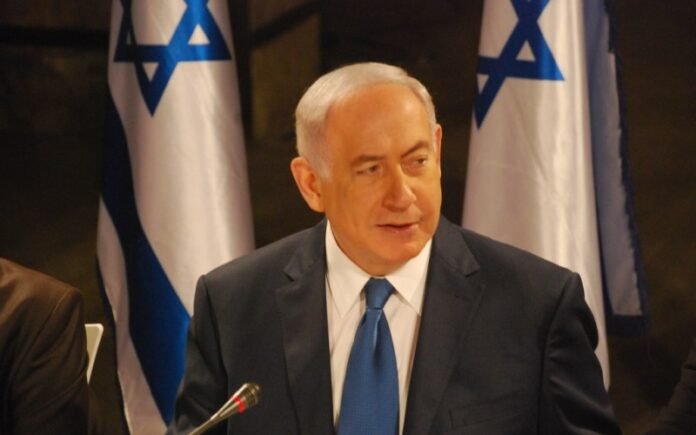
Israelis turned out in numbers not seen in a generation, and handed both of their would-be prime ministers the same verdict: not enough. On the partial count this morning, neither Benjamin Netanyahu’s bloc nor Gadi Eisenkot’s reaches the 61 seats needed to govern.

Both men have nonetheless claimed the night. Eisenkot told supporters the old era was over and a new one beginning. Netanyahu answered that Likud is the largest party by a wide margin and that the right holds a decisive majority among Jewish and Zionist voters.

Each is describing something real. The result is less a winner and loser than a map of a divided country, and the bargaining that follows will matter more than the ballots themselves.

With roughly 55% of votes counted, the outgoing coalition holds 56 seats, the opposition “change” bloc 49, and the Arab-led parties 15. Likud leads all lists with 27 seats; Eisenkot’s new Yashar party is second with 21.

Behind them sit Naftali Bennett and Yair Lapid’s joint list Together and the Arab-led Joint List at 11 each, Yair Golan’s Democrats and United Torah Judaism at nine and Avigdor Liberman’s Yisrael Beytenu at eight. Shas and Itamar Ben-Gvir’s Otzma Yehudit have seven each, Bezalel Smotrich’s Religious Zionist list six and Ra’am four.

The count has drifted toward Netanyahu overnight. Exit polls on the main channels had the blocs roughly level, with Channel 12 and Kan putting Eisenkot’s side narrowly ahead. The overnight tallies have since moved the coalition up by several seats.

Two things are true at once. Likud remains comfortably Israel’s largest party, as it has been for most of a decade. But 27 seats would be a sharp fall from the 32 it won in 2022, and the coalition as a whole is down from the 64 that made Netanyahu’s last government possible.

Arab vote at the center

Turnout reached 77.7%, the highest since 1999 and seven points higher than in 2022. Whatever else this election was, it was not an apathetic one.

The sharpest rise came among Arab citizens, roughly a fifth of the population, where turnout was put at about 80%. Exit polls gave Ra’am and the Joint List a combined 17 to 19 seats, which would be their strongest showing ever; the partial count has them at 15.

That surge is the hinge of the whole result. It is the main reason Netanyahu’s bloc sits short of a majority. Yet it doesn’t hand one to Eisenkot either, because two of his own partners have ruled out relying on Arab parties.

The campaign’s final day showed how charged this is. Netanyahu warned supporters about heavy Arab turnout; Arab party leaders called that incitement meant to frighten right-wing voters to the polls. Ra’am’s Mansour Abbas, in turn, credited the record vote to resentment of the outgoing government.

Four doors, all of them heavy

On today’s numbers, every route to a government requires someone to break a campaign promise.

A Netanyahu government. The coalition needs five more seats. The obvious candidates are hard to reach: Liberman has refused to serve under Netanyahu or alongside the ultra-Orthodox parties, and Bennett told supporters last night that Netanyahu had lost. A late shift in the count is Netanyahu’s simplest path.

An Eisenkot government. The opposition parties together are well short of 61. A majority exists only if Arab parties are counted in, and Bennett and Liberman reject that. Eisenkot himself has said partners must accept Israel as a Jewish state and the dismantling of Hamas, terms most Arab lawmakers are unlikely to accept. A minority government with outside Arab support has been floated inside his camp, but his allies oppose it.

A unity government. Likud and Yashar together would clear 61 comfortably. TIME reported before the vote that Netanyahu would prefer such a deal, and Liberman has accused Eisenkot of seeking one. For Eisenkot, it would mean propping up the leader he campaigned to replace.

Another election. If no one can form a government, Israel returns to the polls, with Netanyahu staying on as caretaker prime minister. After five elections between 2019 and 2022, few Israelis would welcome a sixth round so soon, but it is a live possibility.

This was the first national vote since the Hamas-led attack of October 7, 2023, and it was widely framed as a referendum on Netanyahu’s leadership through it and the wars that followed in Gaza, Lebanon and against Iran.

The two camps read that record very differently. Netanyahu’s supporters see a wartime leader who struck Israel’s enemies hard and kept close ties with Washington. His opponents blame him for the failures that preceded October 7 and for the divisions of the years since, from judicial reform to the ultra-Orthodox draft dispute that helped bring this government down.

Notably, the main challengers did not run as a left. Eisenkot, Bennett and Liberman are security hawks; the contest was as much about trust and governance as about policy toward the Palestinians.

Washington was also on the ballot, in a way. Donald Trump publicly endorsed Netanyahu nine days before the vote, reportedly the first explicit endorsement by a US president in an Israeli election. Analysts doubted it would move many votes, citing Israeli frustration over how the Iran war ended. Eisenkot’s response was that only Israelis choose their leader.

What to watch

The final tally is expected by Friday (October 30), and official results are scheduled to be published on November 4. In a race this close, a seat or two can change which doors are open, especially for lists near the threshold.

President Isaac Herzog will then consult party leaders and task whoever has the best chance of forming a government, who gets up to 42 days. Watch the recommendations of Bennett, Liberman and the two Arab parties: they, more than either frontrunner, now set the terms.

The big picture is this. Israelis voted in huge numbers, and they voted to deny anyone a clean mandate. Netanyahu’s era has not ended, and Eisenkot’s has not begun. What comes next will be decided less by who won than by who is willing to compromise, and with whom.

Leon Hadar is a journalist, blogger, analyst, author and consultant. Read his Global Zeitgeist Substack here and become a subscriber here.

Knife-Wielding Assailant Killed After Terror Attack Outside Israeli Embassy in Belgrade

0
knife-wielding-assailant-killed-after-terror-attack-outside-israeli-embassy-in-belgrade
Knife-Wielding Assailant Killed After Terror Attack Outside Israeli Embassy in Belgrade


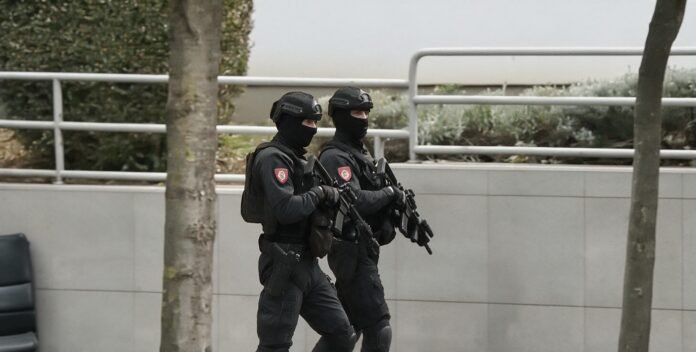
An unidentified assailant armed with two knives attacked a police officer guarding the Israeli Embassy in Belgrade just after midnight before the officer shot and killed him, Serbian authorities said. Police are treating the incident as a terrorist attack.

Interior Minister Ivica Dacic said that “a minor, so far unidentified … shouting Allahu Akbar, attacked the member of Gendarmerie and attacked him with two knives.”

The officer suffered light wounds in the attack. Dacic said the policeman “liquidated” the assailant in “self-defense.”

Authorities subsequently raised Serbia’s terror threat to the highest level and increased the police presence at sensitive locations.

Dacic said security agencies had been monitoring the attacker and identified him as a supporter of the Islamic State group. Referring to the assailant’s social media activity, Dacic said that “he kept the black flag in support of the Islamic State on his Instagram” account.

Wednesday’s attack occurred days after Serbia’s President Aleksandar Vucic, who has led the country since 2014, was defeated by a youth-led movement. Vucic and his allies retain control of the police while the new government has yet to be formed.

Serbia has become one of Israel’s closest allies in Europe during Vucic’s administration. In August, Vucic inaugurated an assembly factory for Israel-made drones in the Balkan country to boost its military.

Cooperation has also extended to diplomatic and economic ties. Israeli Foreign Minister Gideon Sa’ar and Serbian Foreign Minister Marko Đurić announced steps toward a free trade agreement and the launch of a new strategic dialogue during an April meeting in Jerusalem.

Google begins certifying Registered App Stores for Android, but not in the US

0
google-begins-certifying-registered-app-stores-for-android,-but-not-in-the-us
Google begins certifying Registered App Stores for Android, but not in the US

Running an app ecosystem has gotten a lot more complex for Google after its loss in the Epic Games antitrust case. While US users can access app stores in Google Play by court order, international users will use Google’s voluntary Registered App Stores program. Google has announced that stores wishing to be part of that program are now free to apply, and support will roll out to some Android devices later this year.

App stores accepted into the program will enjoy preferential treatment on the Android platform. Users of approved stores will be able to install apps with a single click, similar to the experience in the Play Store. These stores will also be allowed to update apps silently in the background like Google’s store does.

“In March, we announced the Registered App Stores program to give third-party app stores a more streamlined way to reach users while maintaining the safety and security of the Android ecosystem,” said a Google spokesperson. “Eligible app stores outside the US can now apply to register their stores ahead of the new simplified installation experience rolling out to users later this year.”

The Android Registered App Stores program was initially Google’s backup plan. After losing its appeal of Judge James Donato’s verdict, Google was faced with a number of remedies, like allowing third-party billing and sharing app catalogs with rival stores. The most dramatic shift was the court’s requirement that Google distribute third-party stores within Google Play.

Google and Epic, having patched things up following the trial, attempted to settle the case in a way that gave Google more control. Registered App Stores were intended as a replacement for hosting the stores in Google Play, provided they could adhere to a baseline level of trust and safety. Google intended to use this program in the US and internationally, but the companies withdrew the settlement when the court signaled it would not be approved.

Registered App Stores are still happening on Android, but they won’t be supported in the US—you can go to Google Play for alternative stores stateside, but so far, Aptoide remains the only one listed. Those operating Android app storefronts who want to be included in the international program can now review the program and begin the enrollment process.

Strict requirements, narrow support

Any store hoping to get approval will have to adhere to a number of requirements, including protecting intellectual property, removing illegal content, and publishing a privacy policy for both users and developers. Google also requires several ongoing security measures to ensure the stores do not give malware easier access to Android devices. As part of the application process, store operators must provide documentation for all these points (in English) and upload copies of all their apps.

It costs $10,000 per year to participate in the Android Registered App Stores program, and that fee must be paid before Google will review the application. Google says this fee covers the additional support necessary to run the program. There may also be additional review fees if Google detects a store has a problem with malware.

Google plans to roll out support in dozens of nations, which includes most of the world outside of the US and Europe. The program goes live on December 1, but it will only work on Android devices running the latest builds of Android 17. Google says support will start with Android 17 QPR2, which is expected to arrive on Pixel phones in the coming weeks. Google doesn’t even sell those in most of the supported regions, and the devices people do use in such places tend to have much slower updates. A substantial number of Android devices in supported countries may never even see an update compatible with the Registered App Stores program.

Dollar General Hit with Shocking Lawsuit

0
dollar-general-hit-with-shocking-lawsuit
Dollar General Hit with Shocking Lawsuit


Dollar General is facing a major legal battle after federal regulators and 20 states accused the discount retailer of systematically overcharging customers, raising troubling questions about whether Americans struggling to afford everyday essentials have been paying more than they should.

The Federal Trade Commission filed the sweeping lawsuit Monday, October 26, alleging that Dollar General repeatedly charged shoppers higher prices at checkout than those advertised on store shelves, product labels and promotional materials.

And according to investigators, this wasn’t simply a handful of isolated mistakes.

The 95-page complaint describes years of widespread pricing discrepancies that allegedly affected millions of purchases across the country, potentially costing unsuspecting customers millions of dollars.

The accusations are particularly concerning because Dollar General markets itself as an affordable shopping destination for families, seniors and Americans living on limited incomes.

With more than 21,000 stores nationwide, the retailer has become a familiar presence in small towns, rural communities and neighborhoods where residents sometimes have few convenient alternatives for groceries and household essentials.

For shoppers carefully stretching every dollar, even a seemingly minor difference between the shelf price and the register total can quickly add up.

Federal regulators say that is precisely why the alleged violations are so serious.

Christopher Mufarrige, director of the FTC’s Bureau of Consumer Protection, accused the company of betraying customers who trusted its advertised prices, saying the alleged practices caused significant financial harm to people already struggling to make ends meet.

But perhaps the most disturbing allegation is that Dollar General allegedly knew about the problems long before the federal lawsuit was filed.

According to the complaint, the company received more than 29,000 customer complaints about failing to honor marked prices between January 2023 and March 2026.

Despite those warnings, investigators allege that Dollar General failed to establish adequate safeguards to prevent customers from being charged more than advertised.

The problem was also uncovered during undercover shopping trips conducted by federal investigators earlier this year.

At stores in Ohio, Pennsylvania, Missouri and Maryland, investigators reportedly found multiple items ringing up at higher prices than those displayed on shelves during every undercover purchase.

At one Cleveland location, eight of 58 items purchased cost more at checkout than their advertised prices, a discrepancy affecting nearly 14 percent of the products tested.

Those findings have intensified concerns that shoppers may not realize they are being overcharged until after leaving the store, particularly when purchasing multiple items or checking out in a hurry.

And the warning signs reportedly extend much further back.

A December 2025 investigation by The Guardian found that Dollar General stores had failed more than 4,300 government price-accuracy inspections across 23 states during a three-year period.

Former employees also described difficulties keeping shelf labels updated amid staffing shortages and competing responsibilities, suggesting that operational problems may have contributed to the discrepancies.

The new lawsuit argues that Dollar General’s existing procedures were inadequate to ensure customers consistently received the prices they were promised.

The legal action also follows years of earlier enforcement efforts.

Between 2019 and 2026, Dollar General entered into seven settlements across six states over inaccurate pricing, paying approximately $6 million in penalties, according to the federal complaint.

And just days before the latest lawsuit, the retailer agreed to a separate $1.875 million settlement in New York involving allegations that customers had been charged more than advertised.

The growing number of cases has put renewed attention on a fundamental consumer protection principle: Shoppers should be able to trust the price they see before reaching the register.

Illinois Attorney General Kwame Raoul, one of the officials participating in the new lawsuit, emphasized that overcharging is especially harmful when families are already coping with the rising costs of basic necessities.

The case has brought together a bipartisan coalition of states, including California, Florida, Michigan, Ohio, North Carolina and Wisconsin, underscoring the widespread concern surrounding the allegations.

Dollar General, however, is strongly disputing the government’s account.

In a statement released Monday, the company rejected suggestions that it had deliberately disregarded customers’ financial needs, insisting that its goal is complete accuracy between shelf prices and checkout totals.

The retailer acknowledged that occasional pricing discrepancies can occur but maintained that employees are instructed to correct mistakes when customers identify them.

Company officials also argued that they cooperated extensively with the FTC investigation, providing hundreds of thousands of documents and substantial amounts of electronic data.

Dollar General further challenged the government’s calculations of potential customer compensation, arguing that regulators had proposed an unreasonable financial settlement.

The company says it intends to vigorously defend itself in court.

The lawsuit, filed in federal court in Tennessee, seeks financial relief, civil penalties and changes designed to prevent future pricing violations. The potential financial consequences could be substantial, although no court has determined that Dollar General violated the law or established what penalties, if any, it must pay.

For consumers, the allegations serve as a reminder that bargain prices aren’t necessarily bargains if the amount charged at checkout is different from what was advertised.

Consumer advocates generally recommend checking receipts, comparing register totals with shelf labels and requesting corrections when discrepancies appear.

Customers who believe they have been repeatedly overcharged can also file complaints with their state attorney general’s consumer protection office or the FTC.

With Americans continuing to feel the pressure of expensive groceries, household supplies and other necessities, the case places a national spotlight on whether large retailers are doing enough to protect the shoppers who can least afford unexpected charges.

And as federal regulators and 20 states pursue their case, Dollar General faces a question that could prove more damaging than any financial penalty: Can customers still trust the discount chain to honor the prices it promises?

Netanyahu faces calls to quit as exit polls point to deadlock

0
netanyahu-faces-calls-to-quit-as-exit-polls-point-to-deadlock
Netanyahu faces calls to quit as exit polls point to deadlock


Israeli prime minister Benjamin Netanyahu is facing calls to step aside after exit polls predicted an election deadlock between his and a rival bloc.

Exit ⁠polls ⁠by major ​television networks ⁠showed neither Netanyahu nor ‌his main ⁠rival Eisenkot secured the 61 seats needed for a parliamentary majority. Gadi Eisenkot, leader of the Yashar party and the rival “change” bloc, told party workers in Tel Aviv they “have made history”.

“This morning the people of Israel went to a referendum on the leadership that will lead Israel in the coming years. Tonight we received an answer. The public decided in favour of change,” he said.

With actual results still being counted, the exit polls indicated that Netanyahu’s bloc won 50 seats, the opposition won 52-53 and Arab parties won 17-18. The strong showing by Arab-led parties could allow them to decide the next prime minister, but both blocs have until now refused to partner with them.

Netanyahu, addressing a crowd in Jerusalem, said the election provided Israel a “historic opportunity” to eliminate the “Iranian threat” as he called for the formation of a “strong, right-wing” government.

Exit polls project Israel’s ultra-Orthodox parties, Shas and United Torah Judaism, to win 12-13 seats.

They may find themselves playing the role of kingmakers. If they do, the issue of military service will be crucial.

Also known as Haredim, the ultra-Orthodox have been largely exempted from military service, which they say would compromise their way of life of studying religious scripture.

But the exemption is a source of increasing anger.

Nearly all anti-Netanyahu parties have vowed to pass a new law that would see more Haredim obliged to serve.

Ahead of the election, Netanyahu maintained his political alliance with the ultra-Orthodox parties by keeping the exemption.

But it is unclear whether the ultra-Orthodox parties would join Eisenkot’s bloc or continue their coalition with Netanyahu.

Both Netanyahu and Eisenkot oppose an independent Palestinian state and appear to have ruled out working with Israel’s Arab parties.

Arab Israeli citizens, mostly of Palestinian heritage, live within Israel’s borders and not in the occupied West Bank or in Gaza, which are claimed by Palestinians as part of a future independent state.

They make up about 21% of Israel’s population of 10 million and have traditionally voted ​at lower rates than Jewish Israelis.

The community is represented by parties including the Joint List and Ra’am.

Netanyahu, in a last-ditch push on Tuesday to get his ​supporters to the polls, warned of surging Arab voter turnout.

Israeli Arab politicians denounced the tactic as racist ‌and inflammatory.

Minor shouting ‘Allahu Akbar’ attacks guard outside Israeli embassy in Serbia

Serbian police said this morning an unidentified assailant attacked a guard with knives outside the Israeli Embassy in Belgrade and was killed just after midnight.

Interior minister Ivica Dacic said that police were treating the incident as a “terrorist attack” and had raised the terror threat to the highest level and stepped up police presence at key locations.

Dacic said that “a minor, so far unidentified … shouting Allahu Akbar, attacked the member of Gendarmerie and attacked him with two knives”.He added that the police officer “liquidated” the assailant in “self-defence” and was lightly wounded.

Dacic said that Serbia’s security agencies had been monitoring the attacker, who he said was a supporter of the Islamic State group. Dacic said that “he kept the black flag in support of the Islamic State on his Instagram” account.

Manila’s closer ties to Tokyo not aimed at containing Beijing

0
manila’s-closer-ties-to-tokyo-not-aimed-at-containing-beijing
Manila’s closer ties to Tokyo not aimed at containing Beijing

<

article id=”post-951910″>

For decades after World War II, Japan was seen in Southeast Asia chiefly as an economic partner, a development donor and a source of investment. Security played a minor role in its relations with ASEAN.

Today, Japan is a significant security partner for many Southeast Asian states, especially the Philippines. This shift is not driven by militarism or bloc politics. It reflects a shared desire for regional stability at a time of growing geopolitical uncertainty.

To understand Japan’s role, it helps to recall the Fukuda Doctrine of 1977. In it, Prime Minister Takeo Fukuda pledged that Japan would never become a military power, would build relations of mutual trust with Southeast Asian nations and would act as an equal partner in promoting regional peace and prosperity.

Nearly five decades later, that spirit still shapes Tokyo’s engagement. Japan’s expanding security role does not abandon the doctrine’s legacy; it adapts a longstanding commitment to peace and cooperation to new strategic conditions.

From Manila’s perspective, the deepening partnership with Japan is neither a strategy to contain China nor an effort to divide the region into rival camps. It is a pragmatic response to evolving security challenges, and a recognition that stronger partnerships are needed to maintain stability, safeguard maritime interests and uphold international law.

Over the past decade, relations between the two countries have been transformed. A relationship built on postwar reconciliation, trade and development aid now spans maritime security, defense modernization, disaster response, humanitarian assistance and regular policy dialogue. It is among the most dynamic security relationships in Southeast Asia.

The reason is convergent interests. As an archipelagic nation, the Philippines struggles to protect its maritime domain, monitor its vast territorial waters and modernize its armed forces.

Japan, for its part, has taken a more active role in regional security while continuing to champion a rules-based international order. Those shared concerns have drawn Manila and Tokyo together.

Recent agreements show how far cooperation has gone. The Reciprocal Access Agreement, the Acquisition and Cross-Servicing Agreement and the elevation of ties to a Comprehensive Strategic Partnership have strengthened its institutional foundations.

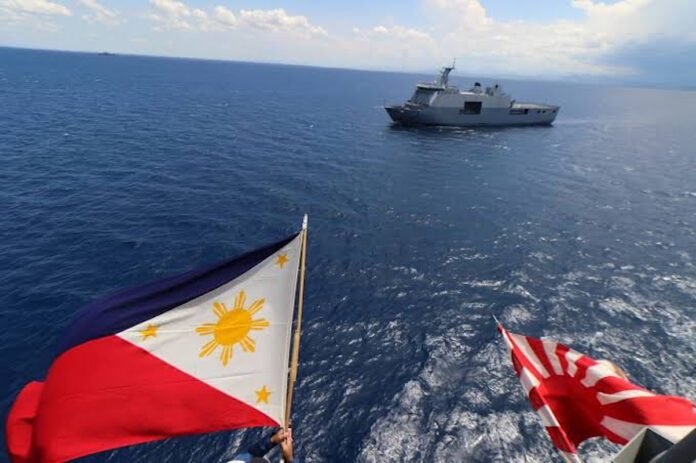
Japan has supported Philippine defense modernization with surveillance systems, coastal radars, aircraft, training and capacity-building programs. Talks on transferring retired Abukuma-class destroyer escorts underscore how sophisticated the ties have become.

Still, these developments should not be read solely as major-power rivalry. Japan’s vision of a Free and Open Indo-Pacific is often portrayed as a response to China’s rise.

Yet while the concept stresses freedom of navigation, adherence to international law, connectivity and a rules-based order, Japanese leaders have consistently said that cooperation with China is essential to regional stability and prosperity.

A stable Indo-Pacific cannot be built through exclusion. It requires constructive engagement among all major players, including China, whose economic and strategic influence is indispensable to the region’s future.

That has implications for the Philippines. Security cooperation with Japan should not be mistaken for the foundation of a formal alliance aimed at any country.

Rather, it is part of Manila’s broader strategy of calibrated balancing: strengthening national security while preserving diplomatic flexibility, enhancing deterrence without courting needless confrontation, and widening strategic options without sacrificing autonomy.

Perceptions are a major challenge. Beijing may see closer Philippine-Japanese security ties as an attempt to constrain Chinese influence. Whether that view is accurate matters less than its consequences, because misunderstanding breeds mistrust and can heighten tensions at sea.

For that reason, deeper security cooperation must be paired with sustained dialogue with China. Strategic competition need not rule out diplomacy, and deterrence should not come at the expense of communication.

The Philippines has no interest in treating security partnerships as a zero-sum game. China remains a major economic partner; Japan has become an increasingly important security partner. Philippine foreign policy must be able to engage both.

Strengthening ties with Tokyo while keeping constructive relations with Beijing are not contradictory goals. They are complementary parts of a balanced strategy to protect national interests and contribute to regional stability.

ASEAN centrality must remain at the heart of this approach. Bilateral and minilateral initiatives should reinforce, not replace, ASEAN-led mechanisms.

Maritime cooperation, humanitarian aid, disaster response, cybersecurity and confidence-building measures all stand to benefit from closer ASEAN-Japan collaboration. Anchoring bilateral gains in broader regional frameworks will help ensure that expanding security cooperation promotes inclusion rather than polarization.

The success of Philippine-Japanese security cooperation should not be measured by the number of agreements signed, military assets transferred or exercises held. Its value lies in what it contributes to regional stability, maritime security, respect for international law and the prevention of conflict.

For the Philippines, the goal is neither containment nor confrontation but strategic diversification. That approach is consistent with the spirit of the Fukuda Doctrine and compatible with Japan’s vision of a Free and Open Indo-Pacific.

Both rest on a basic reality: lasting peace in Southeast Asia depends not on choosing sides but on deepening cooperation, managing differences responsibly and keeping dialogue open among all regional players, China included.

Rommel C. Banlaoi, PhD, is director of the Philippines China Studies Center at Diliman College and president of the Philippine Society for International Security Studies. He also served as president of the Philippine Association for Chinese Studies.

The Mecca Pact Courts Iran: Containment Comes Full Circle

0
the-mecca-pact-courts-iran:-containment-comes-full-circle
The Mecca Pact Courts Iran: Containment Comes Full Circle

For nearly half a century, Iran’s adversaries have tried to isolate it, intimidate it, sanction it into submission and bomb it into irrelevance. Now, in a remarkable inversion of regional power politics, three countries historically invested in its containment have arrived in Tehran to discuss their security with the very state they were supposed to marginalise.

The country they could not defeat is becoming the country they cannot afford to ignore.

Yesterday, Saudi Defence Minister Prince Khalid bin Salman, Pakistan’s army chief Field Marshal Asim Munir and Turkish intelligence chief Ibrahim Kalın met Iranian officials in an encounter whose diplomatic courtesies barely concealed its strategic significance.

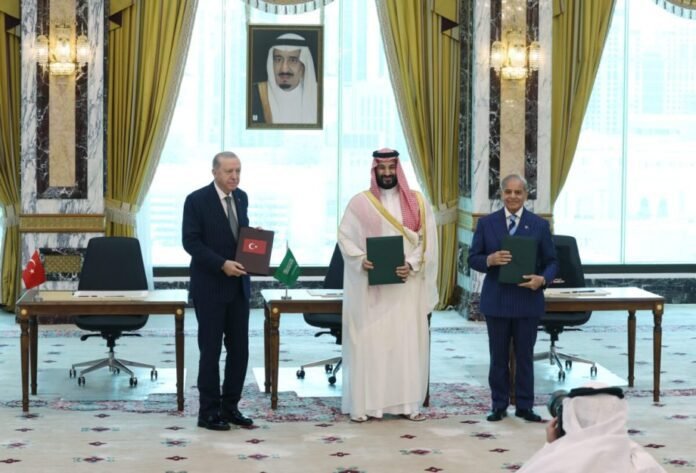
The Mecca Pact, the joint defence agreement that Saudi Arabia, Türkiye and Pakistan signed in Mecca in August, was supposed to consolidate a formidable Sunni-led defence alignment. Yet its representatives have come to Tehran confronting an inconvenient reality: Iran cannot be excluded from regional security merely because Washington and its partners find its independence intolerable.

Apparently, the Islamic Republic has become considerably more respectable since demonstrating that it cannot be conveniently eliminated.

This is the distinction between military destruction and strategic defeat that Washington and Israel persistently confuse. Overwhelming firepower can devastate infrastructure, assassinate officials and inflict enormous suffering. It cannot manufacture political submission.

Iran has survived military confrontation, retained retaliatory capabilities and forced neighbouring governments to reconsider the potentially catastrophic consequences of another war.

Survival becomes strategic victory when your adversaries must reorganise their calculations around it.

For Saudi Arabia, the reckoning is particularly humiliating. Riyadh spent decades treating American military supremacy as an insurance policy against Iranian influence. Yemen exposed the bankruptcy of that assumption.

Ansar Allah, Yemen’s Houthi movement, demonstrated that superior arsenals cannot guarantee security against an adversary capable of imposing disproportionate costs. The Saudi monarchy possesses spectacular weaponry, immense wealth and powerful patrons. Yet none of these has eliminated its vulnerability to Yemeni retaliation.

Now Riyadh finds itself seeking Tehran’s cooperation to manage a conflict that its military superiority has failed to resolve.

Evidently, purchasing American weapons is considerably easier than purchasing strategic security.

Pakistan’s predicament is scarcely less revealing. Munir presides over a military establishment accustomed to presenting strategic dependency as diplomatic sophistication. Islamabad’s defence commitments to Riyadh now threaten to entangle Pakistan in confrontations with Iran and Yemen that serve neither its geography nor its national interests.

The Mecca Pact promises collective security. Its less advertised feature is collective exposure to somebody else’s strategic miscalculations.

Munir must now reconcile his obligations to Saudi patrons with the inconvenient realities of Iranian power. It is an awkward assignment for an establishment that has repeatedly mistaken proximity to foreign power for genuine strategic independence.

Türkiye confronts a different calculation but reaches a similar conclusion. Ankara understands that NATO membership, military capabilities and regional ambitions cannot abolish geography. No credible security architecture can be constructed by pretending Iran is dispensable.

The deeper contradiction, however, lies within the Mecca Pact itself.

Its members seek the reassurance of collective defence while attempting to avoid being dragged into another American-Israeli confrontation. An attack on one may formally constitute an attack on all. But such commitments become considerably less attractive when Iranian retaliation, Yemeni escalation and vulnerable Gulf infrastructure enter the equation.

Collective defence sounds magnificent until someone presents the collective bill.

Iran’s achievement is not that its neighbours have embraced its revolutionary worldview. They have not. Saudi Arabia remains deeply connected to Washington, Pakistan continues its elaborate balancing act, and Türkiye remains embedded in NATO.

The significance runs deeper: these governments increasingly recognise that excluding Iran from regional security may expose them to greater dangers than engaging it.

That realisation strikes at the foundations of the American security paradigm.

For decades, Washington cultivated regional dependence on American protection while organising strategic anxieties around Iranian power. Now those same governments are exploring cooperation with the country they were encouraged to regard as an existential threat.

The irony is devastating. Decades of attempting to contain Iran may have helped establish its indispensability.

And Tehran, displaying the composure of a state conscious of its diplomatic leverage, has welcomed its visitors graciously. No triumphalist declarations are necessary. The spectacle speaks adequately for itself.

The Mecca Pact arrived ostensibly to discuss regional stability. What it encountered was the strategic consequence of its own failed assumptions.

Iran did not have to join the alliance. The alliance had to come to Iran.

The views expressed in this article belong to the author and do not necessarily reflect the editorial policy of Middle East Monitor.

Code-execution flaw in UEFI firmware affects most servers on planet Earth

0
code-execution-flaw-in-uefi-firmware-affects-most-servers-on-planet-earth
Code-execution flaw in UEFI firmware affects most servers on planet Earth

Defenders across the world face the burden of responding to yet another botched code-execution vulnerability, this time in boot-time firmware used by most of the world’s server vendors and data centers.

The vulnerability, with a severity rating of 9.5 out of 10, resides in the TianoCore EDK II, an open source codebase that hardware makers and cloud providers use to create the UEFI firmware that runs during the boot-up sequence. Last year, a representative of the UEFI Forum called EDK2 the “preeminent solution / implementation of the UEFI specifications.” Virtually all UEFI suppliers (sometimes still called IBVs or independent BIOS vendors), including AMI, Insyde, and Phoenix, use the reference code extensively. Project Mu, Microsoft’s hardened EDK2 fork, used the code containing the vulnerable component as well.

The vulnerability, tracked as CVE-2026-97631, is a memory-corruption flaw in an ICMP component that attackers can exploit to execute malicious code that runs before the operating system and firmware can implement defenses like Secure Boot, which establishes a chain of trust for all code, including the Trusted Platform Module (TPM), loaded during boot. While final payloads delivered by CVE-2026-97631 have no persistence—meaning they run only once—they can give attackers a wide opening to install other payloads that also run each time early in the boot process.

The cat has left the bag

The parties that discovered CVE-2026-97631—Alex Matrosov of Anthropic and Dan Holmes of Google—had arranged for it to stay under wraps until a coordinated disclosure that was scheduled for January. AMI, a maker of motherboards and other hardware, published this pull request last month that detailed the vulnerability and included a code fix. Once the post came to the attention of the discovering parties, TianoCore Project members published a public advisory last week.

With publicly available patch code, it will be trivial for advanced hackers to learn how the vulnerability is triggered and to build working exploits. Further compounding the urgency, patching UEFI code vulnerabilities in millions of end devices sold and used by thousands of hardware makers and cloud providers is cumbersome and time-consuming. Word of the vulnerability comes six days after another botched disclosure, this one involving a critical code-execution vulnerability in the PHP programming language.

“This vulnerability in the ICMP parser of the EDK2 network stack is interesting in terms of how it affects the chain of trust and the broader ecosystem,” said HD Moore, creator of Metasploit and chief research officer at security firm Dragos. “An attacker intent on compromising a nearby endpoint or server could use this bug to hijack program flow at a point where the boot process still has access to sensitive components, like the endpoint’s TPM. This could be used to break disk encryption for cases where an attacker has short-term network access (and it would be even easier in a theft scenario).”

CVE-2026-97631 is a 16-year-old buffer overflow in the PXE-Base Code driver (NetworkPkg/UefiPxeBcDxe), which is responsible for allowing servers, storage equipment, and other devices to boot using code downloaded from a local network. During this process—known as the pre-execution environment boot—the driver uses a network listener to monitor for ICMP errors. Because the driver doesn’t enforce a memory copy limit of 504 bytes, overwriting adjacent data, a malicious insider or a hacker who has gained low-level access to a local network can send an error message that appends code past this limit. The IUEFI module running on the CPU then becomes corrupted.

As the official advisory puts it:

During network boot, the PXE Base Code driver (NetworkPkg/UefiPxeBcDxe) keeps a receive request open for ICMP error messages and copies each received message into the fixed 504-byte field Mode.IcmpError of its private context structure. The copy loop’s bounds handling is incorrect in both the IPv4 and IPv6 handlers (PxeBcIcmpErrorDpcHandle and PxeBcIcmp6ErrorDpcHandle): for a message longer than 504 bytes it still copies bytes into the field, and it advances the destination pointer by the cumulative rather than the per-fragment length, so an oversized message writes attacker-controlled bytes past the field. Nothing earlier on the receive path restricts the message length.

The malicious error can be delivered through a simple unicast sent from any network distance to a target device’s IP address, as long as it’s sent during the PXE boot sequence. An attacker can deliver a denial-of-service by causing the boot sequence to hang. When the attacker knows what the target firmware build is, it can plant a “counterfeit event” that executes the malicious code on the CPU in its UEFI firmware environment. The code runs in ring 0, a CPU’s most privileged execution level. Because exploits bypass attestation processes designed to cryptographically prove to remote servers that the hardware is secure, they present a key opportunity for elevating limited privileges.

Yet another forever day

CVE-2026-97631 joins a long list of previously discovered vulnerabilities in UEFI or code that works closely with it. The most severe of them, LogoFail, stemmed from logo images included in the UEFI of just about every hardware maker. Rendering bugs allowed attackers to subvert the chain of trust UEFI enforces and go on to install malicious components before the OS loaded or Secure Boot ran. PixieFail was a vulnerability similar to CVE-2026-97631. It, too, was the result of faulty PXE boot flaws in EDK2. Following discovery of the vulnerability, researchers embarked on multiple fuzzing projects designed to surface other critical flaws in the open source code library. It appears those efforts failed to find this latest flaw.

Other recently discovered UEFI flaws include:

  • PKFail, a supply-chain failure resulting from non-production test platform keys, public for more than a decade before they were discovered, used in hundreds of device models
  • BootHole
  • Bootkit and
  • BlackLotus

Like CVE-2026-97631, exploitation or use of these payloads is appealing because it allows attackers to infect machines early in the boot process, before TPM and other defenses load, so they can inflict maximum damage. Given the ubiquity of CVE-2026-97631, Moore said it’s likely a “forever” bug that will live on in end-of-support systems.

There are important caveats and limitations to exploiting this latest vulnerability. As noted, some level of control over a local network is a prerequisite. That likely limits exploitation to insiders or attackers, such as nation-states or ransomware operators, who manage to gain low-level access inside a network and are looking for a way to elevate system rights. There’s no evidence yet that CVE-2026-97631 provides an initial entry point into a network. There are other hurdles to clear.

“For exploiting the vulnerability itself, an attacker needs to guess specific addresses within the target system, so it’s not something that you can throw a single exploit at any target and get RCE across a diverse range of devices, but it needs to be tuned for each target model/version/configuration since the addresses will change based on those,” Jesse Michael, a principal researcher at firmware security firm Eclypsium, told Ars. “Unlike some of the previous, high-profile vulnerabilities like BootHole, Black Lotus, and Baton Drop, this vulnerability can be fixed with a basic code fix, which will require deploying a BIOS/UEFI update, but they don’t need to deal with revocations, pk/kek/db/dbx key management updates, or making sure to update OS and provisioning media like you do with Secure Boot bypasses in the bootloader itself.”

CVE-2026-97631 doesn’t affect home and small office users, or any other users who boot their devices solely from disk drives. Instead, it applies only to organizations with machines that boot from local networks, or conceivably from Internet-connected resources. Even then, the targeted firmware must rely on EDK2, as opposed to a different reference implementation, and use the PXE functionality (which is turned on by default).

In an email, Intel said that none of its “commercial products currently under security support” are known to be affected. “Intel does not include the affected EDK2 functionality in its reference code, though it may be integrated by an OEM board vendor or system manufacturer,” the company added. It advised customers to check with their system manufacturer for specific guidance. Publicly available Intel reference code, however, makes reference to EDK2. Further, TianoCore has said that each Intel-supplied UEFI development kit “is a fully validated implementation… for a specific revision of the EDK II source.” Many other Intel documents reference EDK2 as well.

Arm, meanwhile, responded to a list of questions with: “CVE-2026-97631 is not directly applicable to Arm’s product portfolio.” Like Intel, firmware the company makes available also borrows heavily from EDK2. TianoCore has also documented Arm’s reliance on EDK2.

While it’s possible some platforms are free of EDK2 code, it’s prudent for users of all servers to investigate if CVE-2026-97631 affects them.

Questions sent to AMD, Phoenix Technologies, AMI, Microsoft, and Amazon—likely some of the other biggest organizations affected—went unanswered when this post went live. Without concrete answers to questions about the use of EDK2 by organizations like these, it’s impossible to say what or how devices are affected and what actions, if any, these organizations, or their users, should take. Representatives from the TianoCore Project also didn’t respond.

Some readers are likely to be unhappy at the lack of detail. Sometimes—particularly in cases involving botched disclosures that break embargoes months before they’re scheduled to lift—there’s no escaping the lack of actionable information in initial reporting.

Those affected should check with the maker of the firmware being used to boot their systems and ask for guidance. Beyond that, they should consider turning off network boot capabilities at least temporarily if possible. Firmware configurations should always enable security features such as TPM and Secure Boot whenever possible, although those defenses don’t protect against this particular threat. It’s also a good idea to monitor logs for signs of exploitation attempts.

The Bolsonaro Family Playbook: Lose, Cry Fraud, and Run to Trump’s America

0


Andrew Fishman is an investigative journalist based in Rio de Janeiro and the president of The Intercept Brasil.
“I never thought about leaving the country,” Flávio Bolsonaro, a Brazilian senator and son of the deposed, disgraced leader, told his 16 million Instagram followers on Monday. It was the day after he lost the presidential election to President Luiz Inácio Lula da Silva by a margin of more than 4 million votes. 

Flávio promised to stay in Brazil to “organize the opposition” during Lula’s next term. 

“I’m the last obstacle to the Workers’ Party’s plan to destroy the country,” Flávio warned, referring to the party of Lula, who defeated his father four years earlier.

A few hours later, he left his mansion in Brasilia and sought asylum in the U.S. The Trump State Department told the Associated Press that it will grant him and his family visas.

The affinities become obvious when you watch Bolsonaro’s failsons end up in Trump’s America.

“I didn’t take ​sides, but it looked like another rigged election,” President Donald Trump told reporters on Monday, echoing Flávio’s election night talking points without providing any credible evidence that casts doubt on Lula’s come-from-behind victory — even as Flávio’s own party put out a statement acknowledging the results later that day.

It is no coincidence that the Trumps and the Bolsonaros are so fond of each other. Their modus operandi is nearly identical. 

Both wrap themselves in the rhetoric of patriotism and moral righteousness, while treating their political offices as personal get-rich-quick schemes. And, when their lies finally catch up with them, you can be sure that they will jump ship to save themselves first and abandon their followers.

The affinities become obvious when you watch Bolsonaro, his failsons, and co-conspirators all end up in Trump’s America, where Flávio is about to join his brother, and in the denialism and violence that follow their failures. 

Coups and Flight Risks

Flávio Bolsonaro’s election denial and hasty escape are his version of Trump’s infamous January 6 speech: Rile up the troops to do your dirty work and get the hell out of the way.

It’s not the first time a Bolsonaro ran this playbook. After Jair Bolsonaro became the first modern Brazilian president to lose a reelection bid, he refused to attend the January 2023 inauguration ceremony. Instead, he also fled to the U.S., staying in a Minions-themed children’s bedroom in the Orlando, Florida, home of retired UFC fighter José Aldo.

A week later, on January 8, the ex-president’s allies laid siege to the capital, Brasília, vandalizing Congress, the presidential palace and the Supreme Court, as foot soldiers in a larger coup plot to overthrow the Lula government. Nearly four decades of Brazilian democracy was only spared when key military leaders blinked before they could finish the job.

Jair Bolsonaro eventually returned to Brazil and was sentenced to 27 years in prison for leading the plot, which included a plan to assassinate Lula, Vice President Geraldo Alckmin, and Supreme Court Justice Alexandre de Moraes. Allies, including top military brass, were also convicted. Jair remains under house arrest — widely thought to be pinning his hopes for freedom on a Flávio presidency that wasn’t to be. 

Flávio, however, will not be lonely in the States. His brother, former Brazilian Congress member Eduardo Bolsonaro, just received green cards for his family and is living in a $1.2 million McMansion in Southlake, Texas, in the Dallas-Fort Worth area, as we revealed in The Intercept Brasil earlier this year. Eduardo, who is a regular on the Trumpworld circuit, was sentenced in absentia to four years and two months in prison for lobbying the U.S. government to interfere in his father’s trial. 

Flávio, too, seems poised to receive news of his own prison sentence while sitting on a couch in a Texas suburb. In May, our reporting at The Intercept Brasil put the first nail in the coffin of his presidential campaign when we published chat logs and audio recordings of the senator negotiating $24 million — and being wired $10 million — from disgraced billionaire banker Daniel Vorcaro, who is a sort of Brazilian cross between Charles Ponzi and Jeffrey Epstein. 

The payments, wired to a U.S. account, were supposedly meant to finance “Dark Horse,” a biopic about Jair Bolsonaro starring Jim Caviezel. Brazilian Federal Police, though, have already poked holes in Flávio’s story as they investigate whether the money was actually used to bankroll Eduardo’s treasonous lobbying of the Trump administration to sanction Brazil and help his brother’s electoral chances. 

Flávio is also being investigated for his alleged ties to a billion-dollar money-laundering scheme through an online betting company run by Willer Tomaz. The two are not only close friends but also business partners. Flávio even had unfettered access to one of Tomaz’s offshore bank accounts. You will not be surprised to learn that Tomaz left Brazil in August and is now living in Miami.

Police argued that, after losing the election, Flávio would pose a flight risk, especially in light of his closest associates’ recent actions. They asked the Brazilian Supreme Court to order Flávio to turn over his passport, which is permitted under Brazilian law. A top justice granted the request and, when the deadline passed, canceled the senator’s travel documents. 

By then, Flávio was already gone.

Deeper India-Philippines ties boost US aims in South China Sea

0
deeper-india-philippines-ties-boost-us-aims-in-south-china-sea
Deeper India-Philippines ties boost US aims in South China Sea

<

article id=”post-951897″>

This article first appeared on Pacific Forum and is republished with kind permission. Read the original here.

With so much media focus in recent months on the war in Iran, it’s no surprise that Under Secretary of War for Policy Elbridge Colby’s speech in Manila received so little coverage. That means very few know what the US and its allies are doing to deter China from launching any hostilities of its own.

In April, Filipino marines undertook one of the most expansive iterations of Balikatan, the annual bilateral US-Philippines military exercise. They took part in simulated firing of the BrahMos anti-ship missile during the joint maritime strike phase of the exercise.

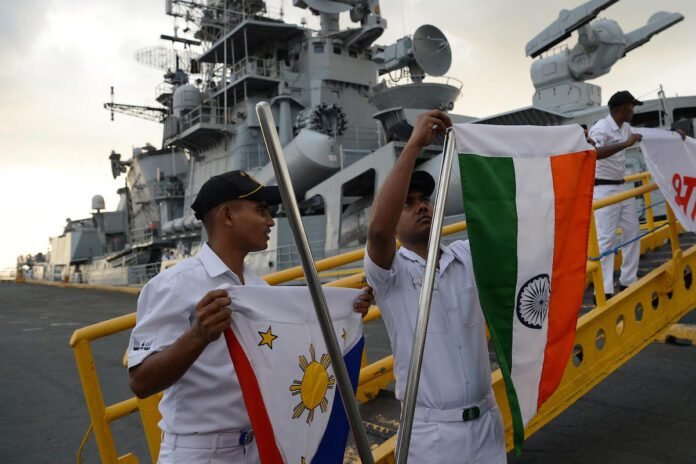
The BrahMos is an Indian missile, and while India was not a participant in Balikatan, it joined as an observer. The image of a US-Philippine drill with an Indian weapons platform aptly captures India’s role in the South China Sea.

India is not explicitly present and may never put boots on the ground, and yet its presence is felt in how it strengthens the deterrence of Southeast Asian partners through hardware, intel sharing, and strategic diversification.

This is not necessarily a case of policy alignment but of strategic convergence: India’s pursuit of its own interests produces outcomes that complement Washington’s regional objectives.

Washington’s strategy in the first island chain rests on a strategy of denial by making it too costly for China to strike against a partner nation. The Trump administration has emphasized burden-sharing, pushing allies and partners do their part in ensuring that they can defend themselves.

This was captured best and most recently by Colby’s speech. He not only spoke about the importance of maintaining a favorable balance of power in the Indo-Pacific, but also how partners are expected to do their part.

“When we ask our allies and partners to step up, to invest more in their own defense,” he said, “we are not signaling abandonment.” Colby argued that deterrence along the first island chain cannot rest on American power alone but must also rely on capable partners able to defend their own territory.

The Philippines has been doing its part, despite a rather small budget of approximately US$6.12 in 2024 and $6.7 billion in the proposed 2027 budget — some of its highest figures to date.

Manila also adopted Comprehensive Archipelagic Defense Concept in 2024 to focus on territorial and maritime defense. And the Self Reliant Defense Posture Law hopes to build indigenous defense capabilities, reinforced by the Horizon I, II and III plans.

India is playing its own role, albeit for its own interests of expanding defense exports, deepening its Act East Policy, and perhaps even hedging against China—a known challenge for India as much as it is for the United States and the Philippines.

India is doing so through three levers: hardware, intel sharing, and enabling a strategic diversification strategy; all of which allow the Philippines to burden share and reinforce denial strategies.

Regarding hardware, India sold to the Philippines three shore-based batteries for $375 million in 2022. India even offered a $100 million line of credit for the sale, though Manila decided to finance it from its defense appropriations.

The batteries arrived on time in April 2024, and the first became operational in November in Zambales (in West Luzon) under the Marine Corps Coastal Defense Regiment, providing a strike capability of 290 kilometers that reaches Scarborough Shoal.

India has since also offered extended-range variants of 400 km, with future batteries reaching up to the Spratlys when deployed from Palawan.

Recently, the Philippines ambassador to India Josel F. Ignacio remarked how the BrahMos missiles Manila imported from New Delhi are a game changer and provide the Philippines with “real credible deterrence” as territorial challenges continue to rise in the South China Sea.

India has also offered Akash surface to air missiles, Tejas LCA fighter jets, helicopters, and submarines and naval vessels. The sale of these platforms is commercially useful to India, but its second-order effect is also to strengthen the same maritime denial architecture Washington is pursuing in the region.

Regarding intel, India invited the Philippines to the Information Fusion Center for the Indian Ocean Region (IFC-IOR) in 2025. The IFC-IOR is India’s maritime domain awareness hub, which tracks activity in the Indian Ocean region.

The move builds on a 2023 coastal guard agreement and white shipping arrangement where the two navies are already collaborating on information sharing, maritime training, exchanges, joint search and rescue operations, and more.

Greater maritime domain awareness improves Manila’s ability to identify, track, and respond to Chinese activity, complementing the strike capabilities India is helping provide.

Last year, India and the Philippines also had their warships conduct their first joint maritime activity inside the Philippine Exclusive Economic Zone (EEZ) and the South China Sea. Notably, Chinese vessels were shadowing them during the joint sail.

India has also publicly backed Manila’s position in the South China Sea, including the 2016 arbitral award in the Philippines favor, which China has ignored by continuing to extend its territorial claims through artificial islands and the nine-dash line.

There are limitations. India is highly unlikely to ever put boots on the ground for the Philippines, but this may actually matter less. By providing strategic diversification, India strengthens the Philippines’ deterrence, making regional balancing look less like simply joining an American bloc.

And that is the paradox here: The same strategic autonomy that limits how far India will pursue formal alliances also increases the value of what it does do.

Because New Delhi is neither a US nor Philippine treaty ally, its cooperation is harder to portray simply as an extension of American alliance politics. By pursuing its own interests, India is in the process also reinforcing American interests.

Kriti Upadhyaya (ku@industechcenter.org) is a visiting fellow for India at The Heritage Foundation.

0FansLike
0FollowersFollow
0FollowersFollow
0SubscribersSubscribe
- Advertisement -
Google search engine

Recent Posts